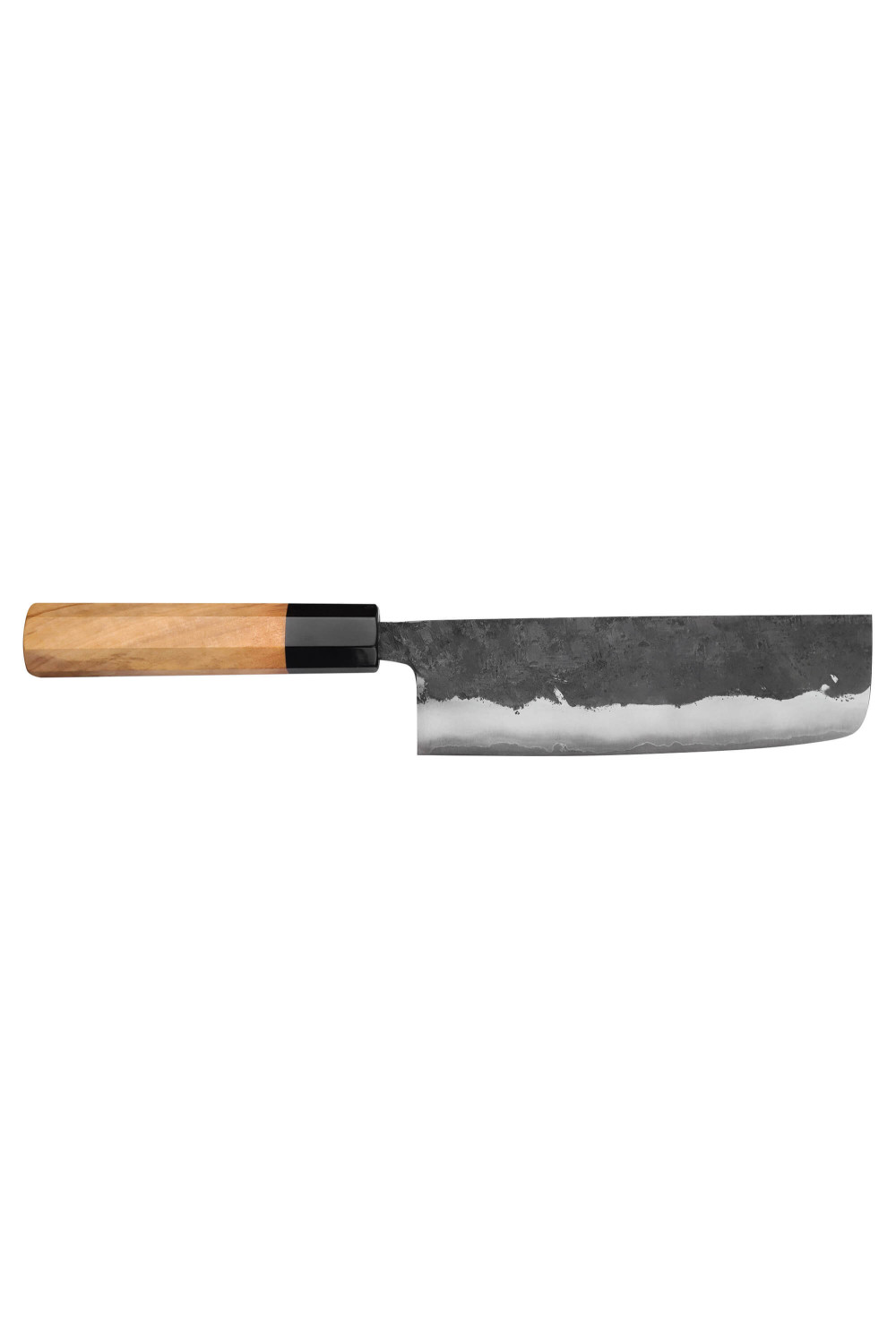
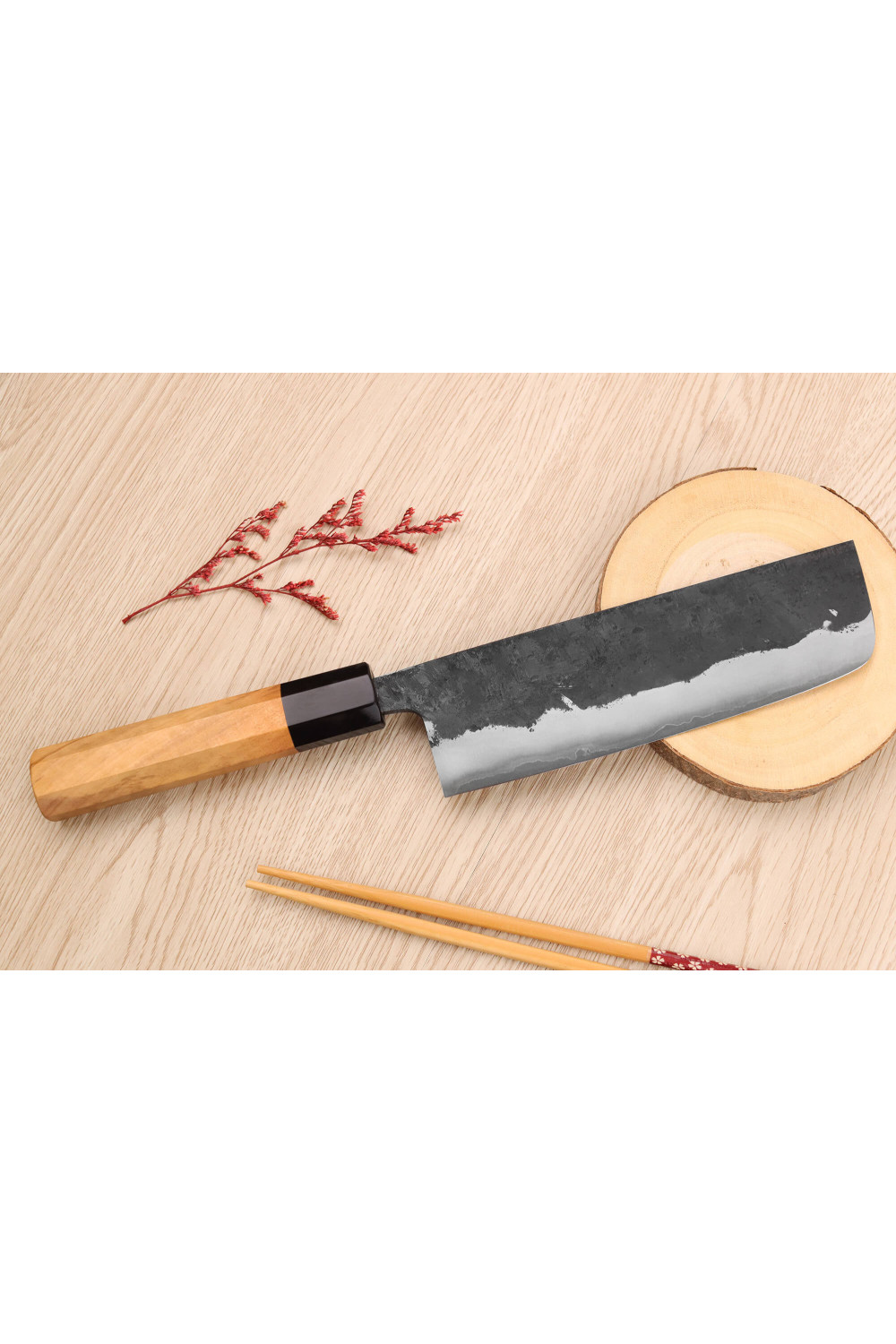
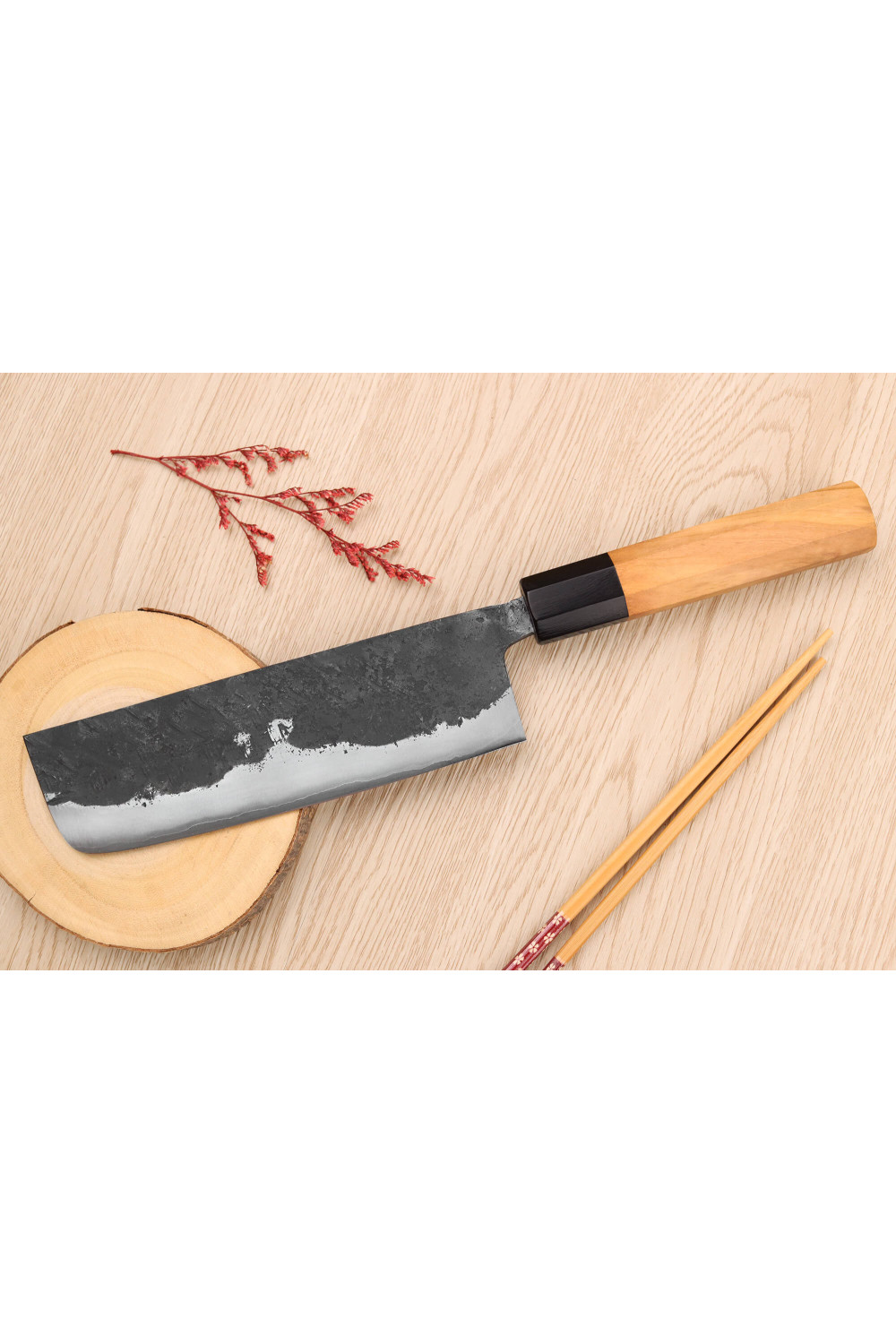
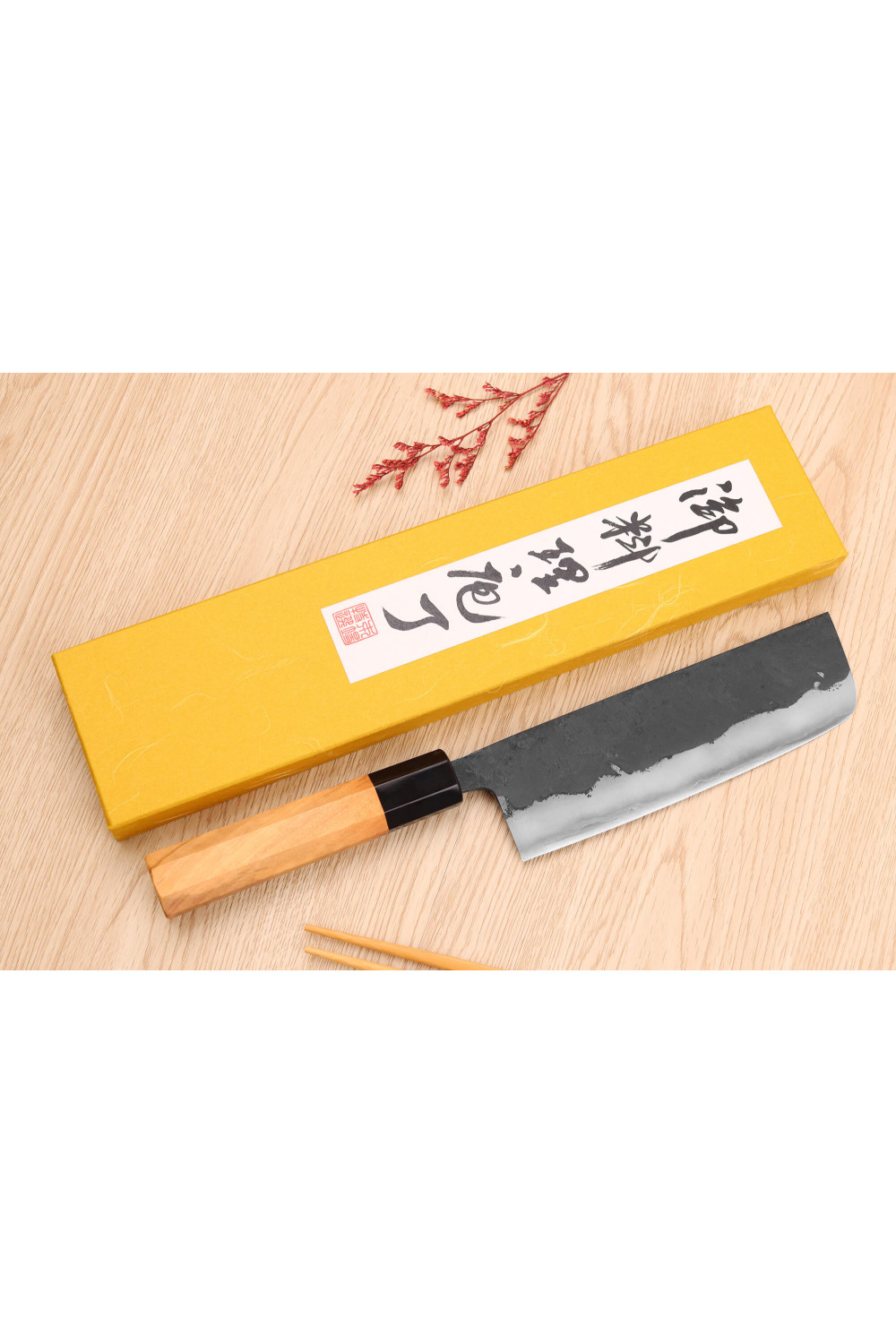
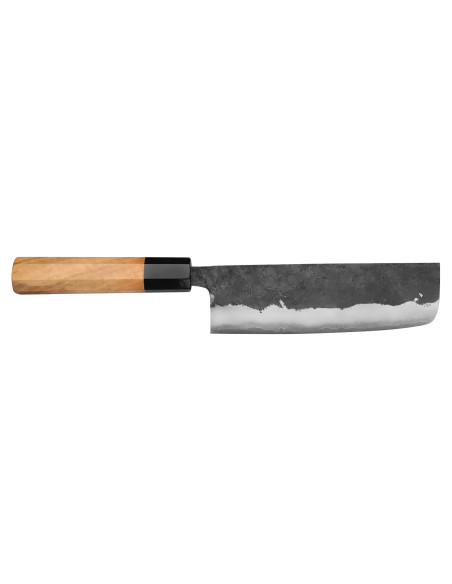
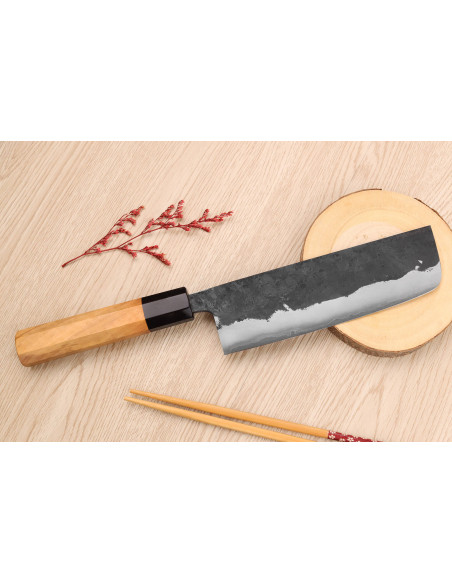
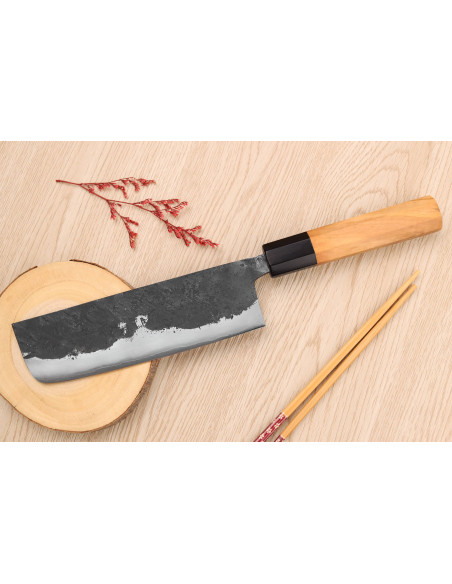
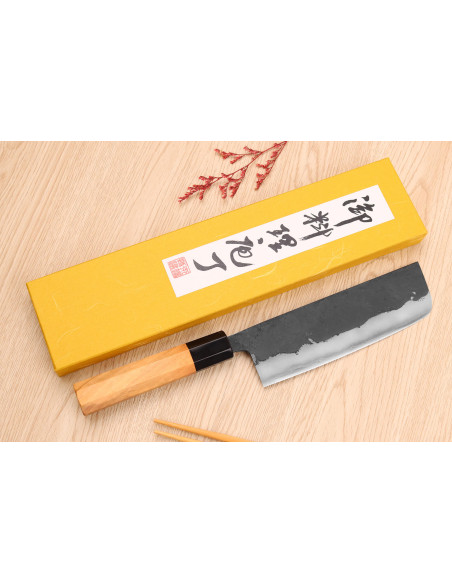
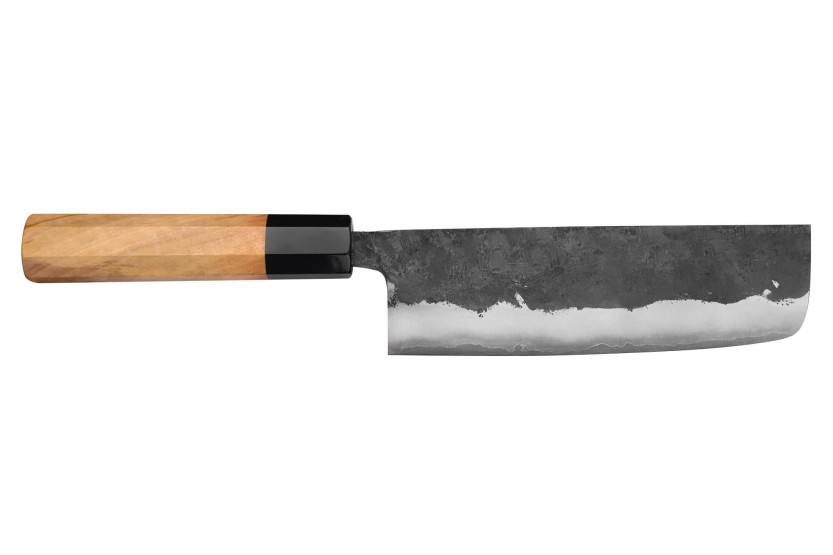
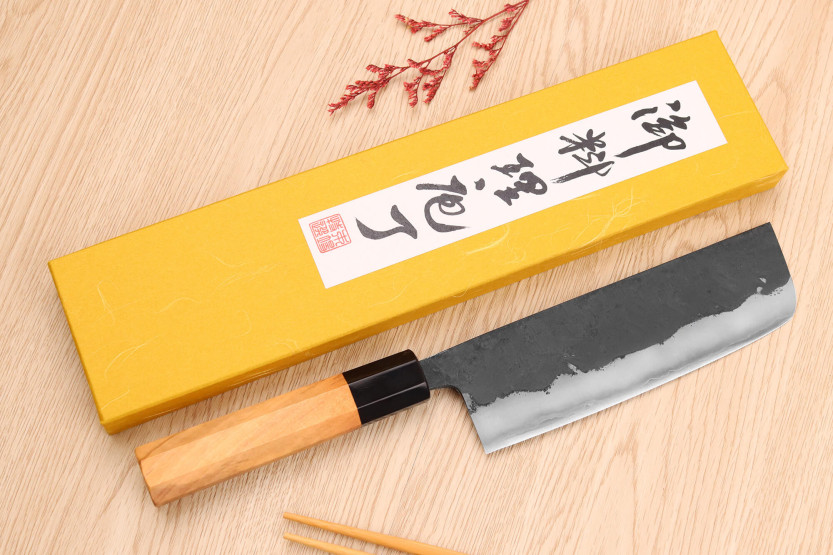
This rough forged knife was handcrafted by Japanese craftsman Sumio Kawamura for the Yoshimune brand. With over 50 years' experience in the art of Japanese cutlery, Kawamura san is renowned for his quality craftsmanship. His workshop, located in the town of Sanjo in Japan, is the place where he alone creates a variety of knives with the traditional, rustic design that are his specialty.
An efficient blade for this Japanese knife
This nakiri knife features a blade with a San Mai structure, a typically Japanese method. This technique involves forging a core of rigid steel, then wrapping it in a layer of softer, folded-over steel. This process ensures optimal blade balance while protecting the core.
The core of this blade is forged fromJapanese Shirogami 2 steel (also known as White Paper Steel 2), produced by the prestigious international steelmaker Hitachi. This alloy has a high carbon content, reaching 1.2%, which contributes to increasing the steel's hardness. With a hardness of 62HRC on the Rockwell scale, this blade offers excellent edge retention and cutting performance.
One of the main advantages of Shirogami 2 alloy lies in its "pure" micro-structure. Indeed, the uniform distribution of micro-carbides in this structure helps reduce the risk of micro-cracking due to impact and wear.
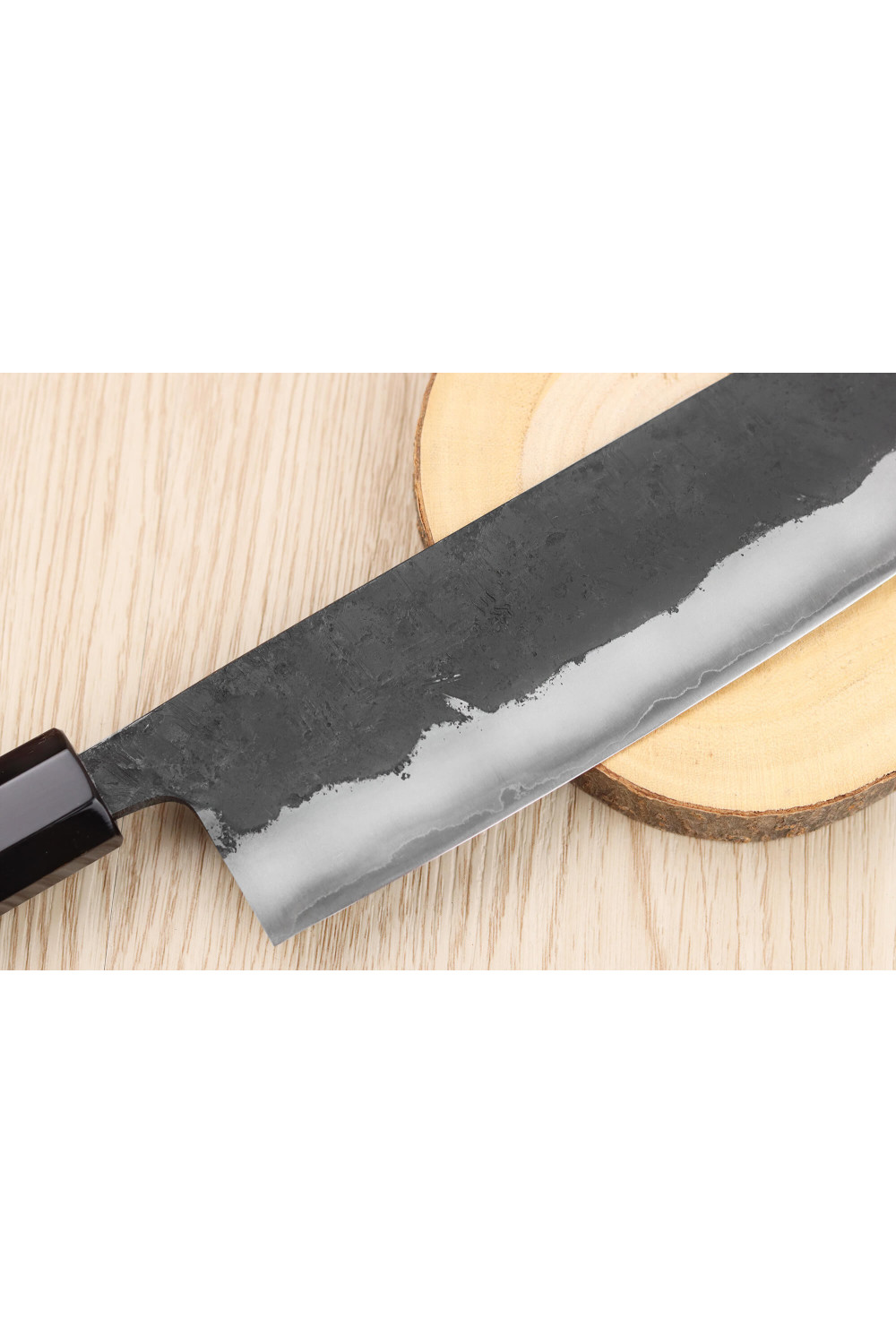
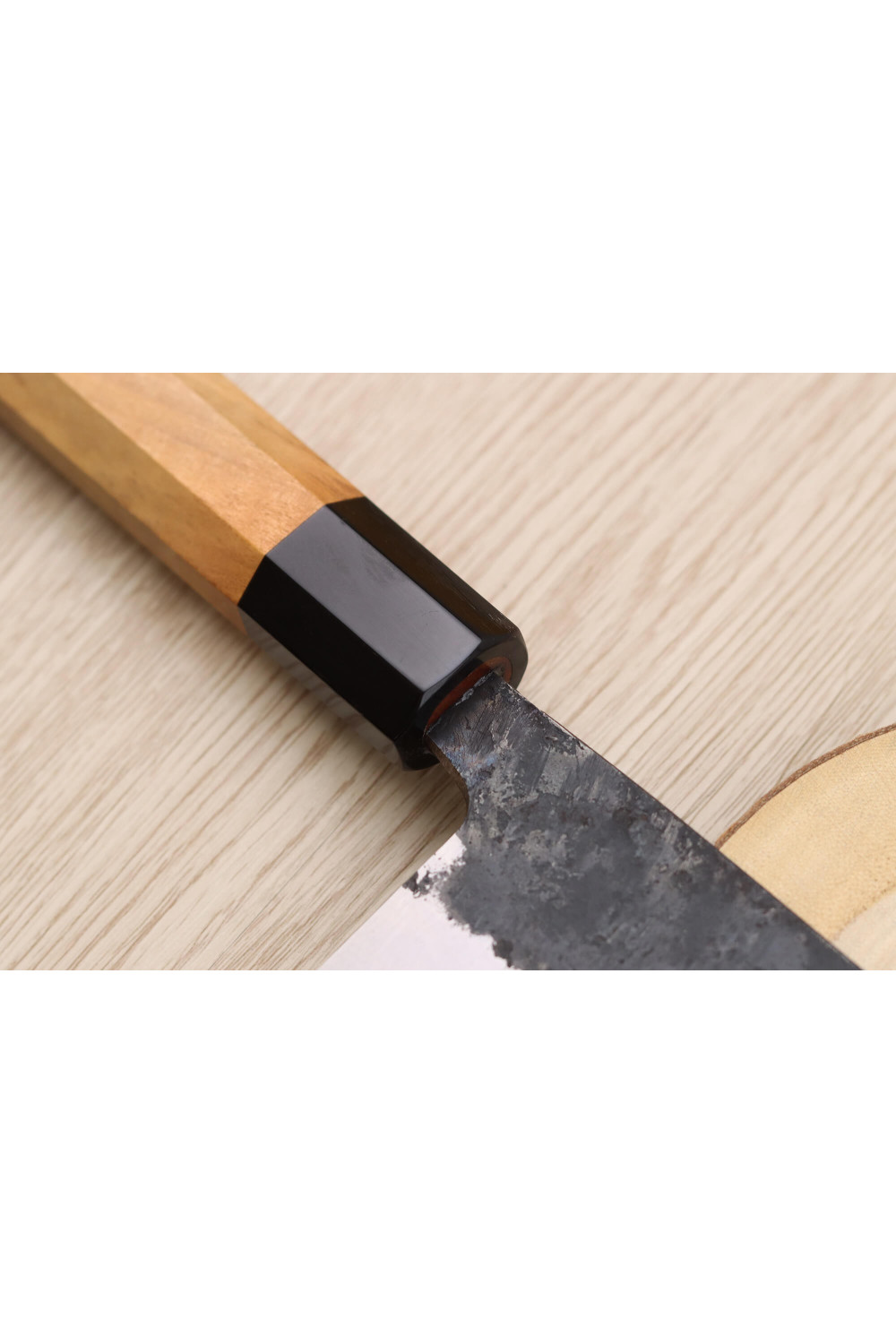
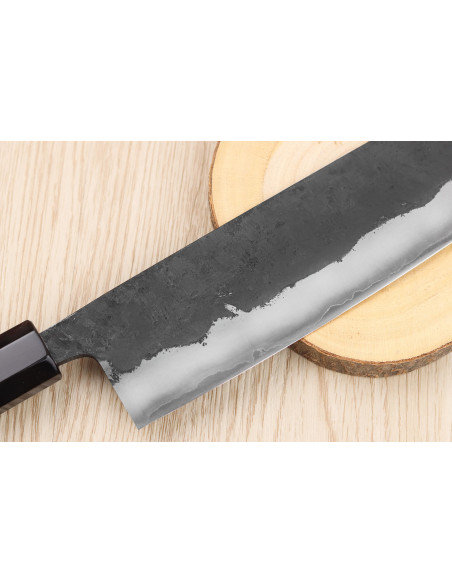
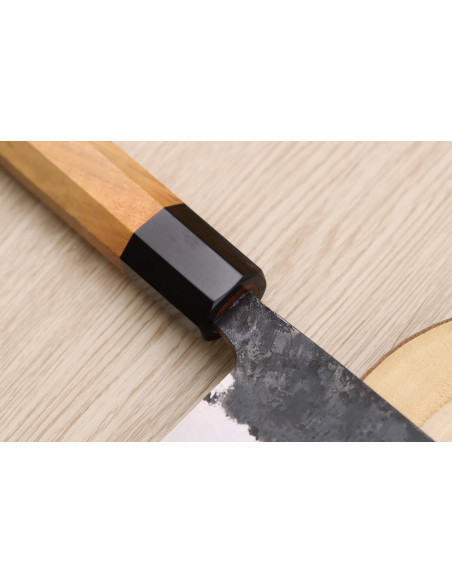
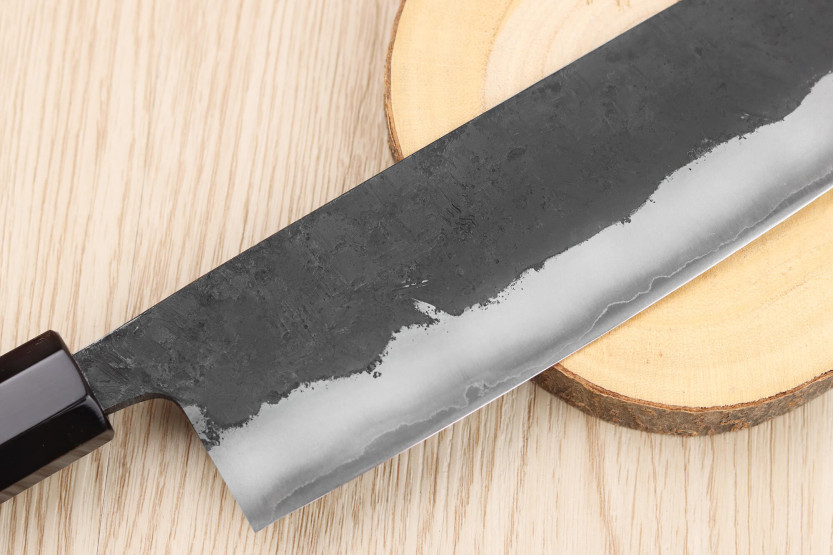
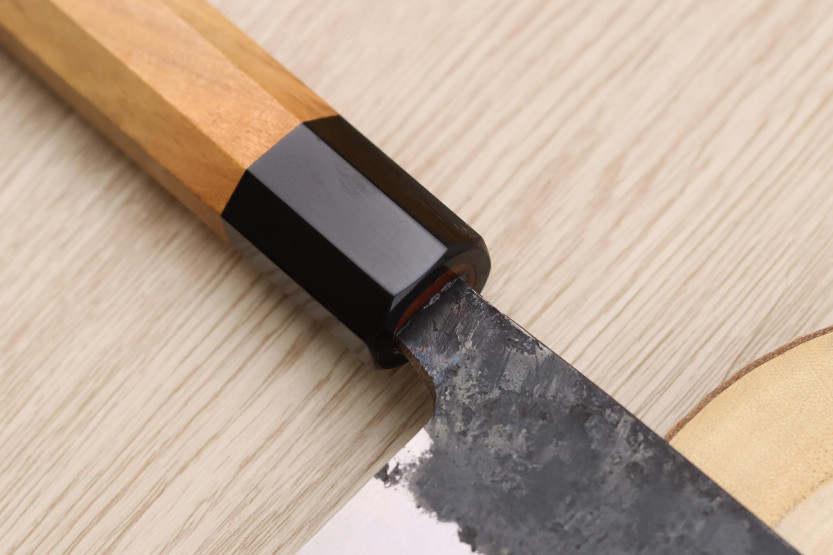
To complete the San Maï structure, a layer of softer stainless steel envelops the core, offering optimum protection. The superimposition of the different steels creates a delicate wave of random patterns, visible throughout the blade.
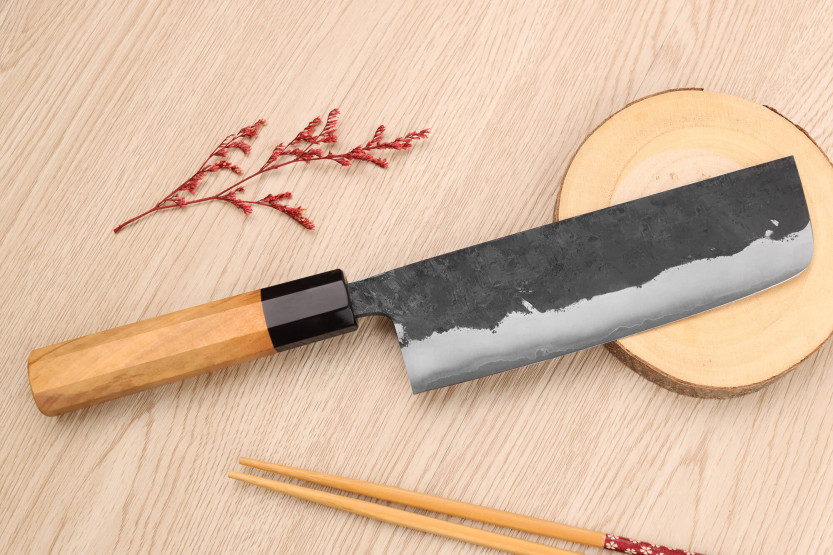
The blade of this handcrafted Japanese knife has not been polished and features a rough forged finish, giving it a darker appearance and more character. This aesthetic, highly prized by Japanese chefs for its authentic, rustic feel, is reinforced by the refined hammering on the blade's surface.
A handcrafted Japanese knife with a sturdy handle
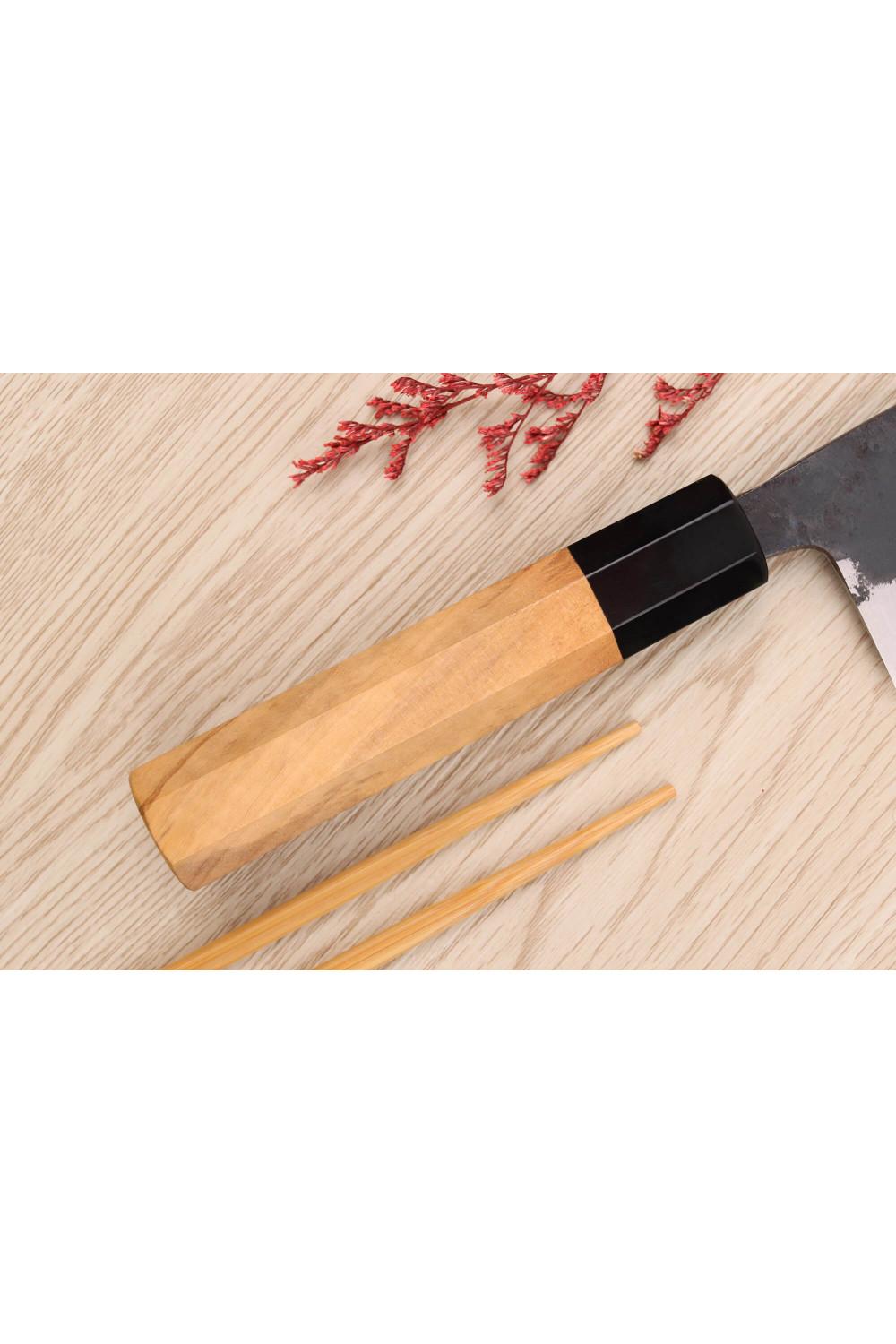
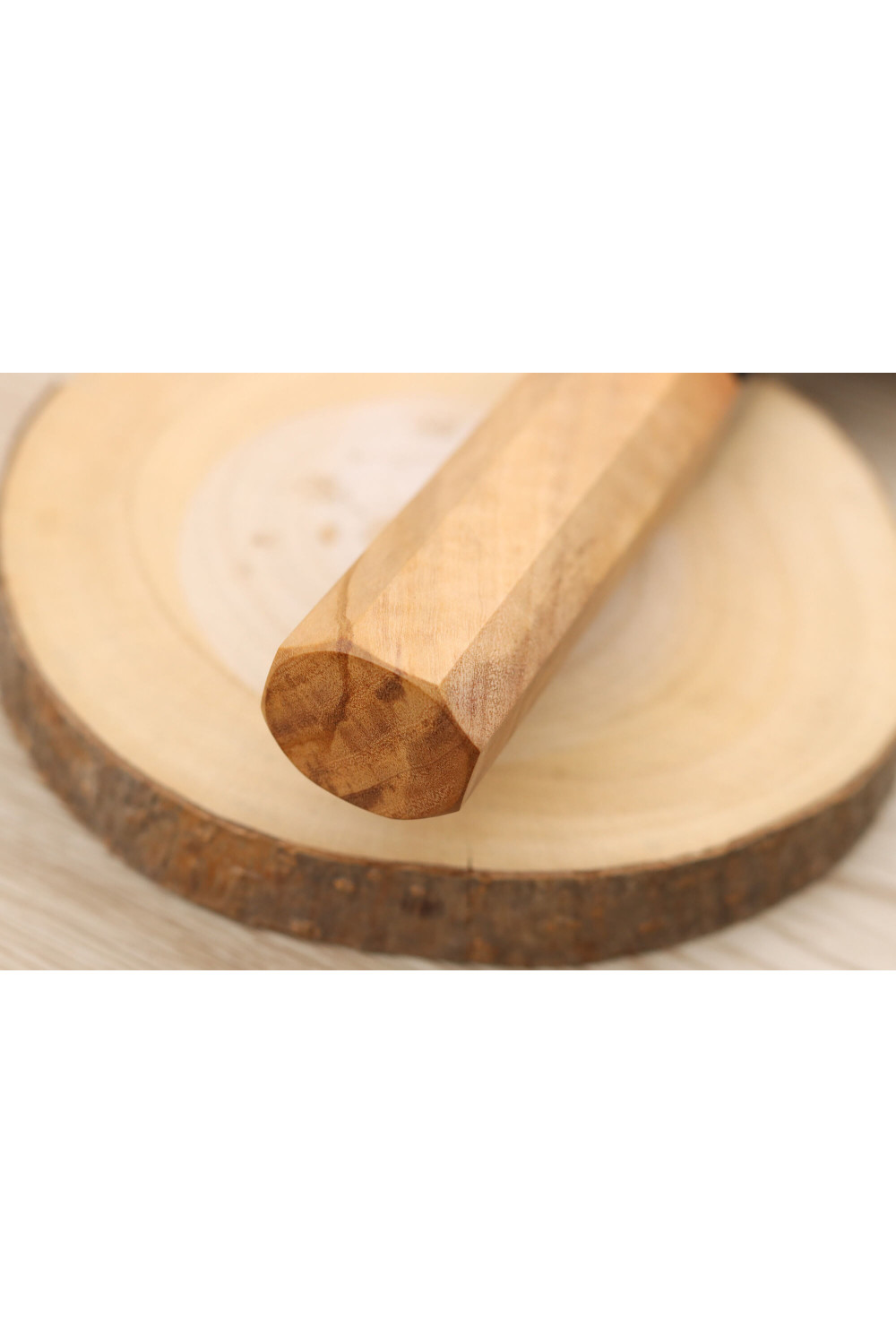
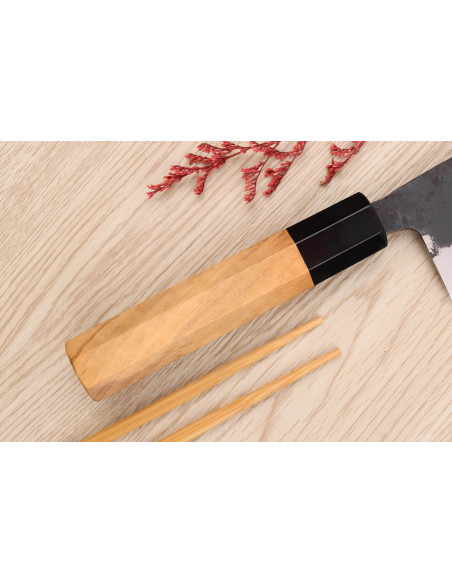
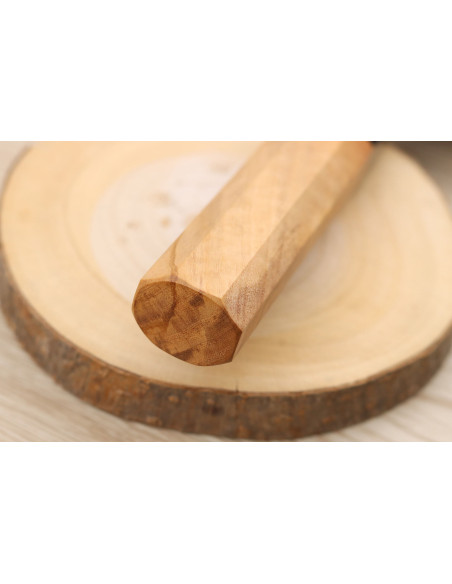
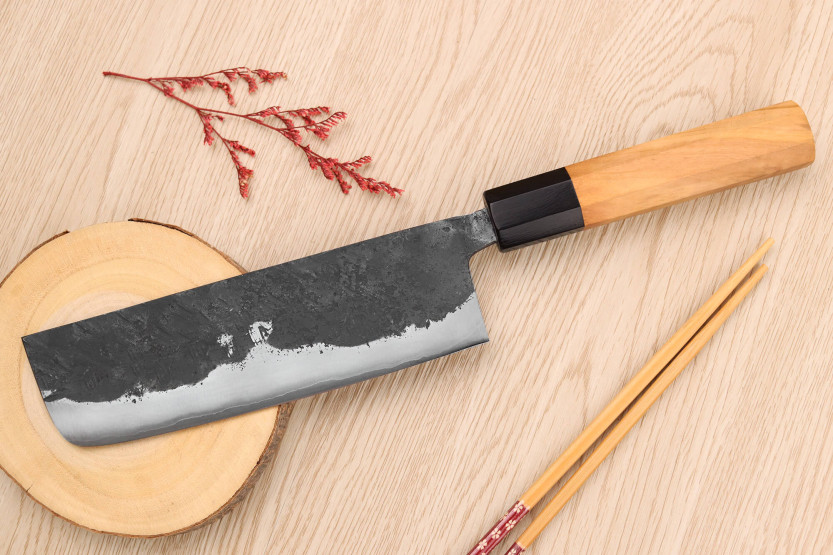
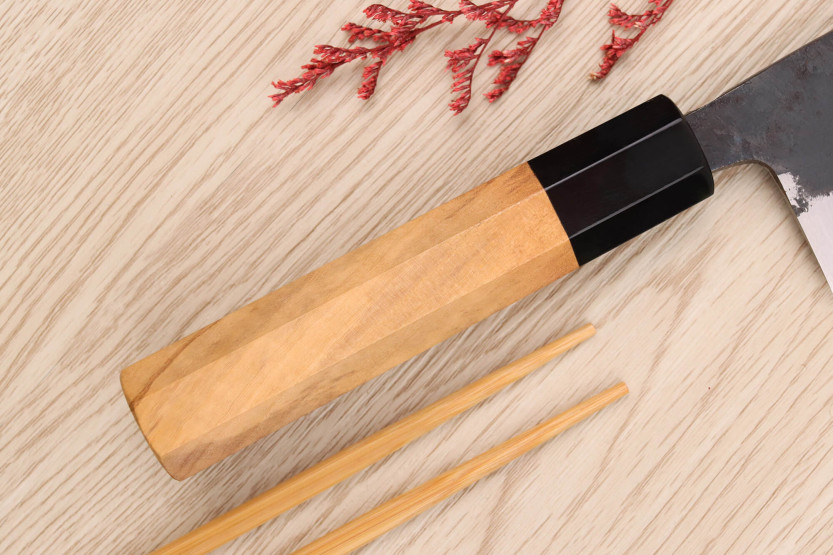
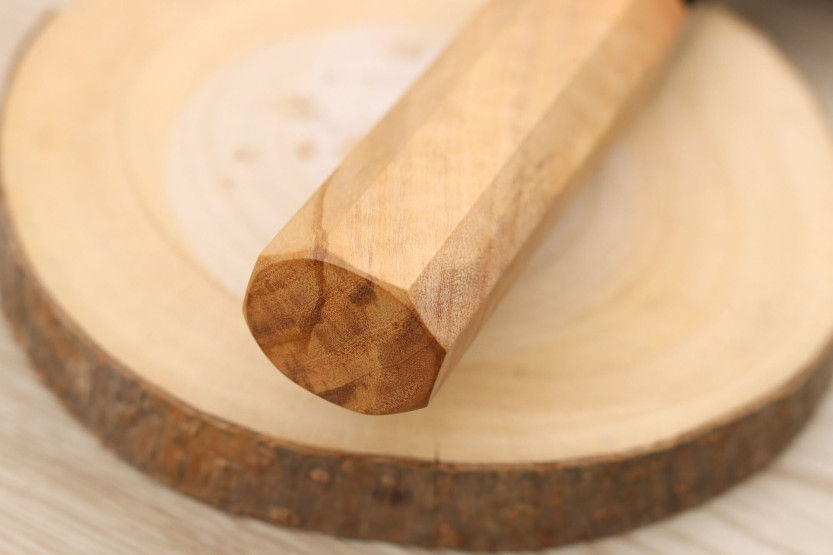
The handle of this Japanese knife is made of olive wood, a strong, dense species that resists moisture, shock and deformation. With its warm nuances and elegant grain, olive wood lends a natural, elegant touch to your Japanese kitchen knife.
To link the handle to the blade, a black horn bolster has been added, offering both strength and uniqueness. Indeed, each bolster is unique by virtue of its organic nature.
The octagonal shape of the handle ensures a comfortable, ergonomic grip. It is suitable for both right-handed and left-handed users, offering optimal control during prolonged use!
Finally, to guarantee your knife's watertightness, wood paste has been added to the junction between the blade and the handle. This prevents water infiltration and ensures the durability of your knife.
How do I care for a brut de forge knife?
To care for your carbon knife, wash it exclusively by hand with a soft sponge, avoiding immersing the handle in water. After cleaning, be sure to dry the blade well to avoid any traces of moisture, then store it in a dry place. It's important to note that dishwashing is not recommended, nor is prolonged soaking in the sink.
Even with meticulous care, it is normal for the color of the blade to change slightly over time. This is due to the natural reaction of carbon to acids in food and ambient humidity. However, this in no way affects the performance or use of your Japanese knife.
Find a wide range of handcrafted Japanese knives on KnifeLeader.eu!




 By buying this product you can collect up to