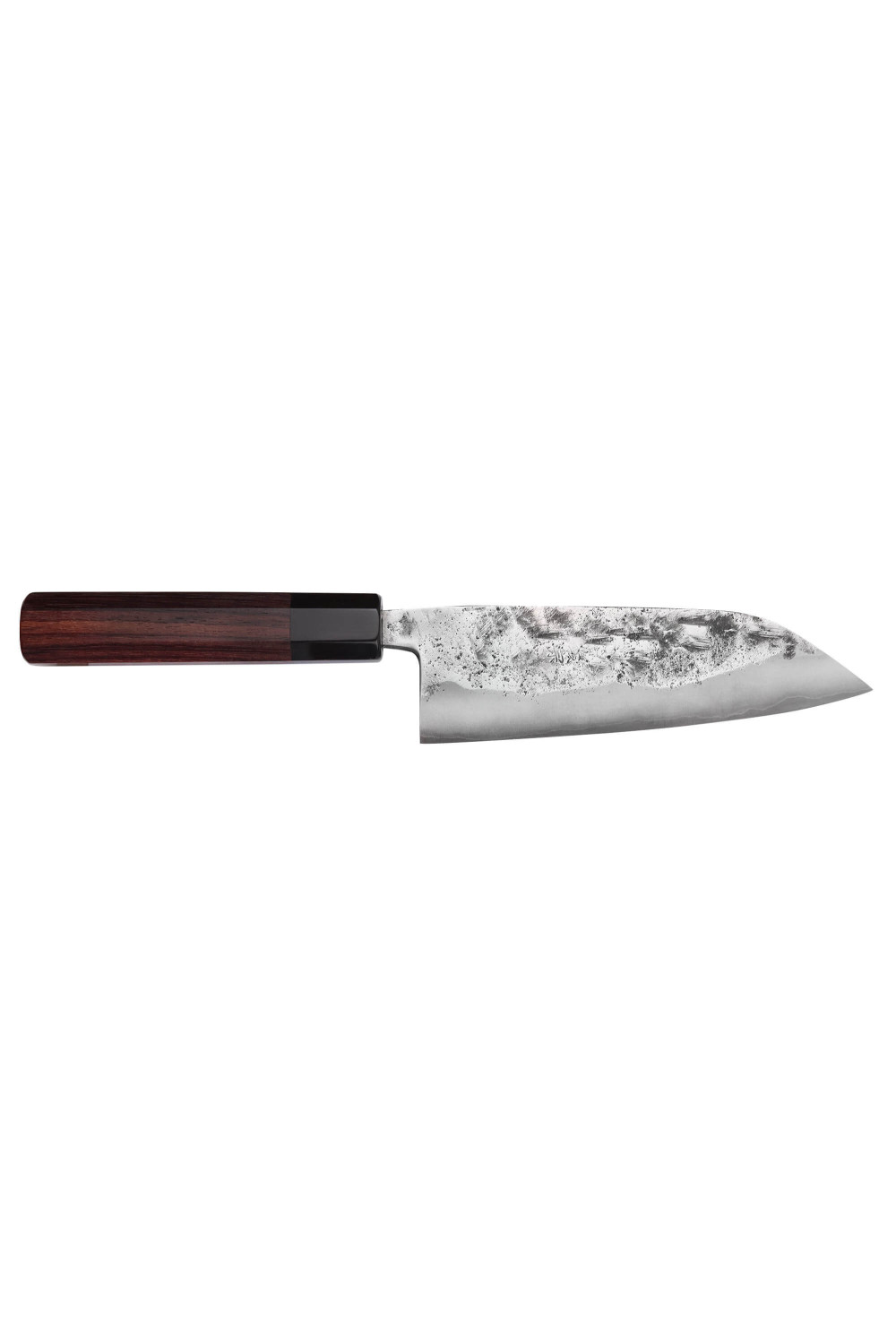
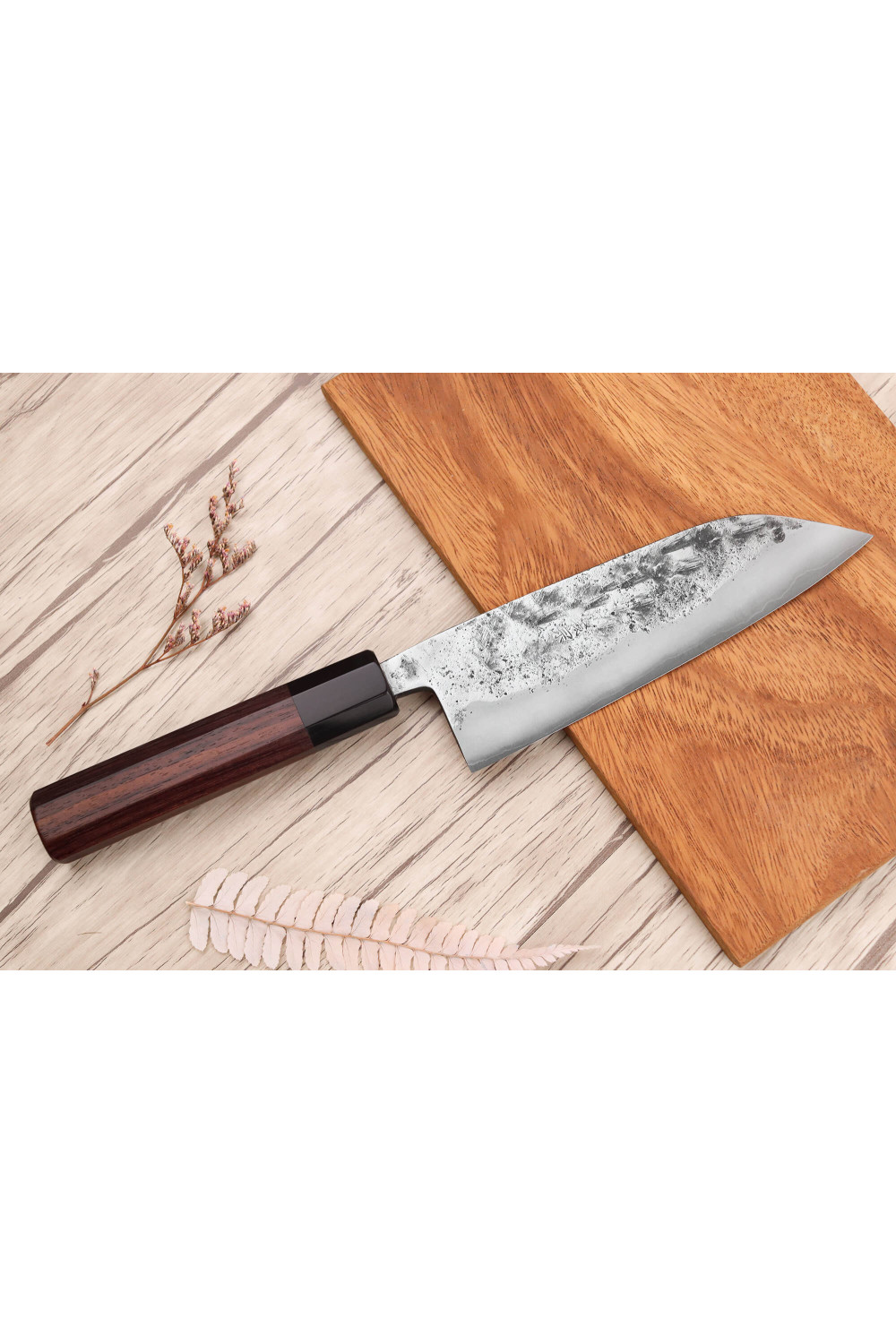
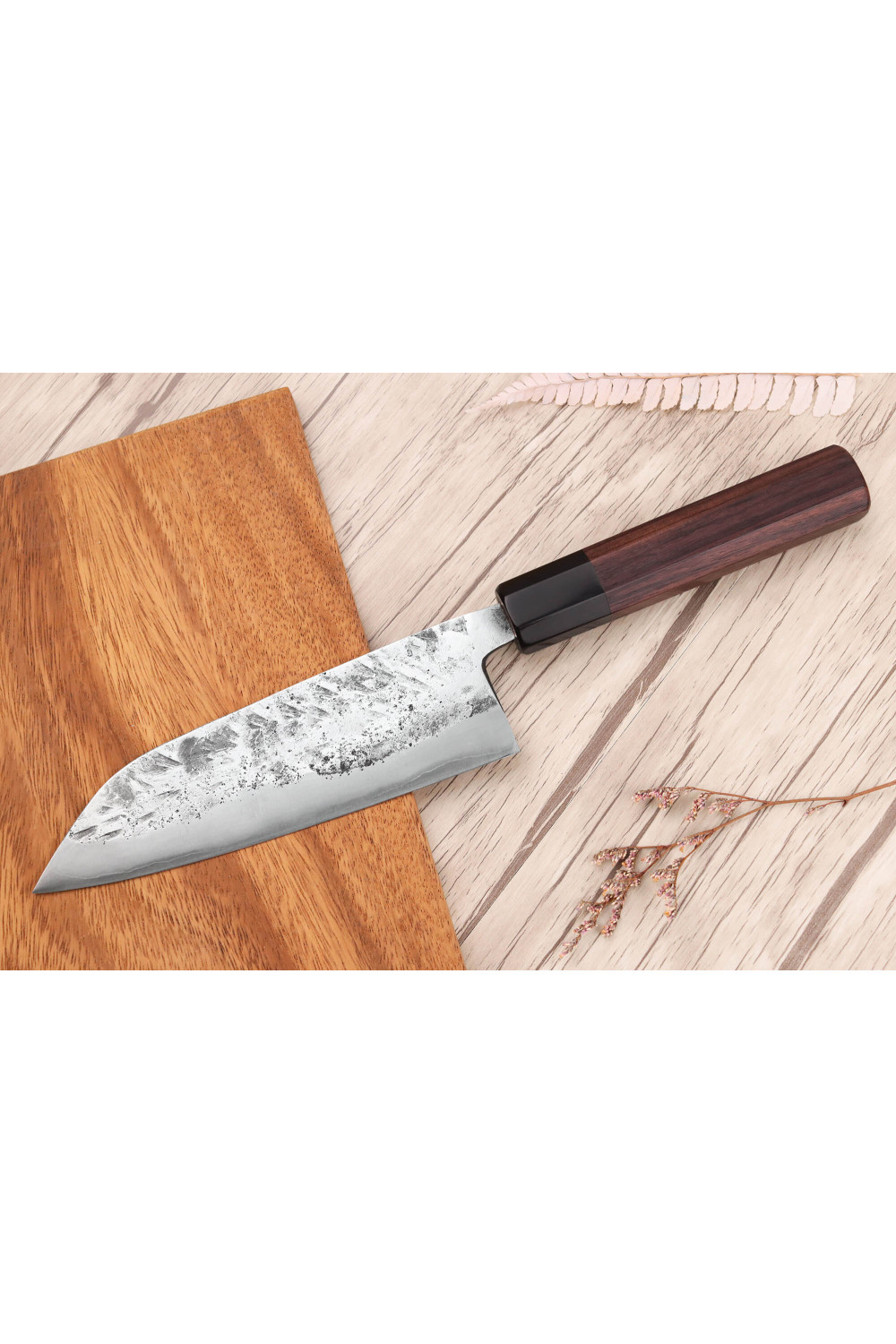
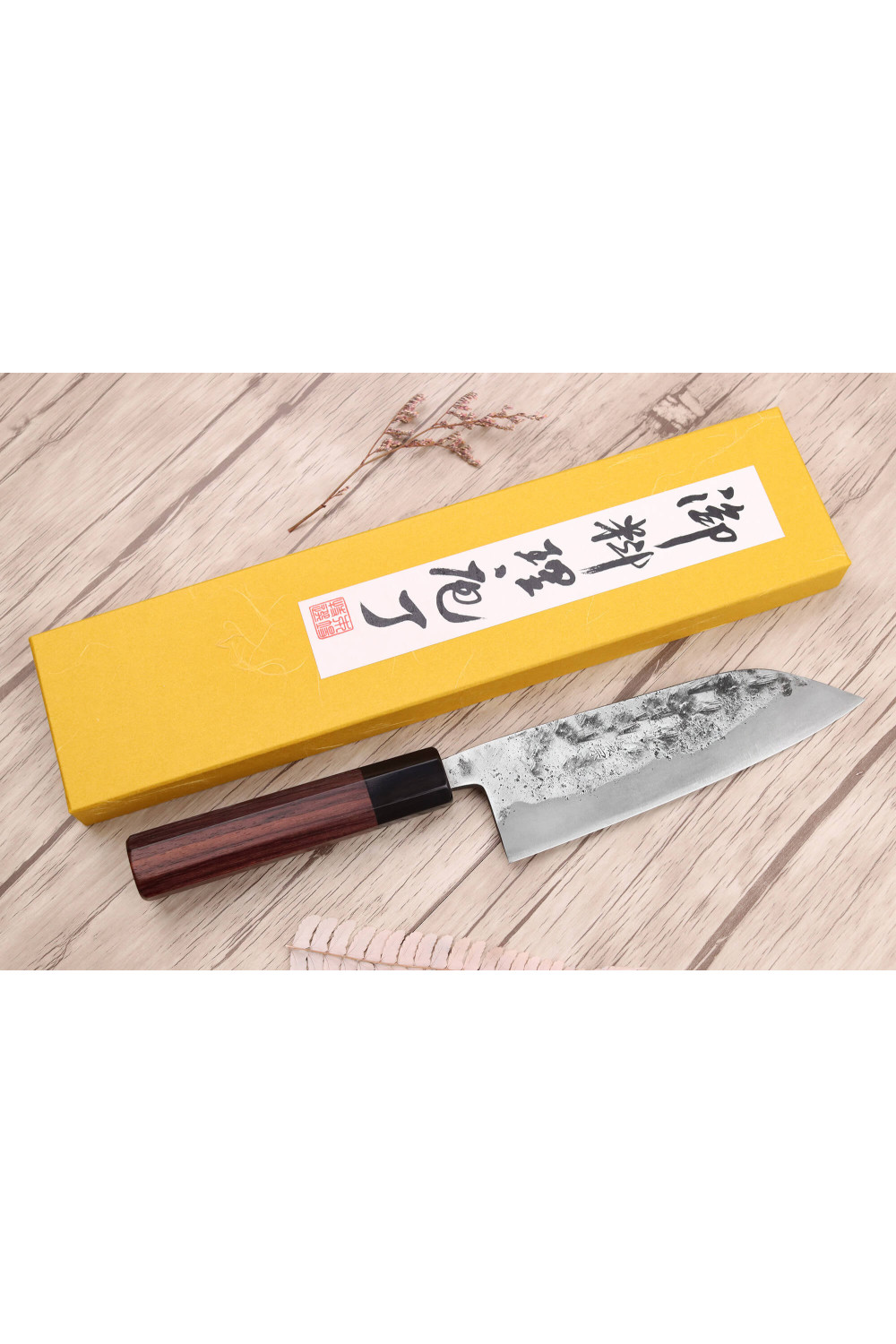
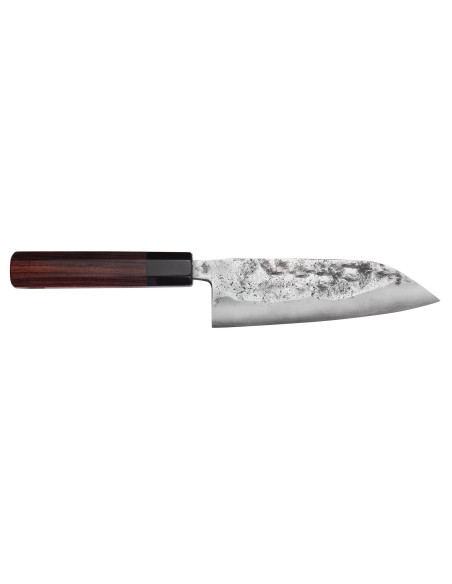
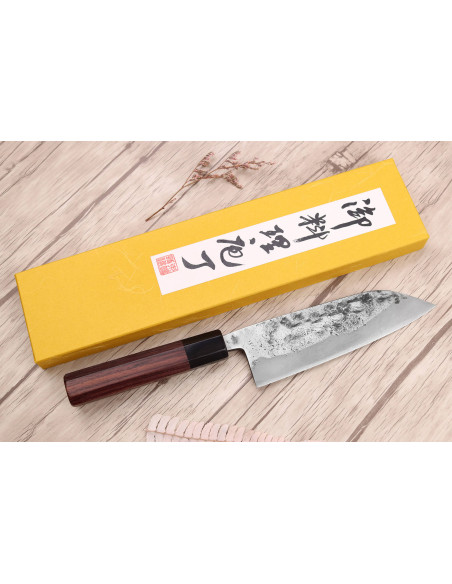
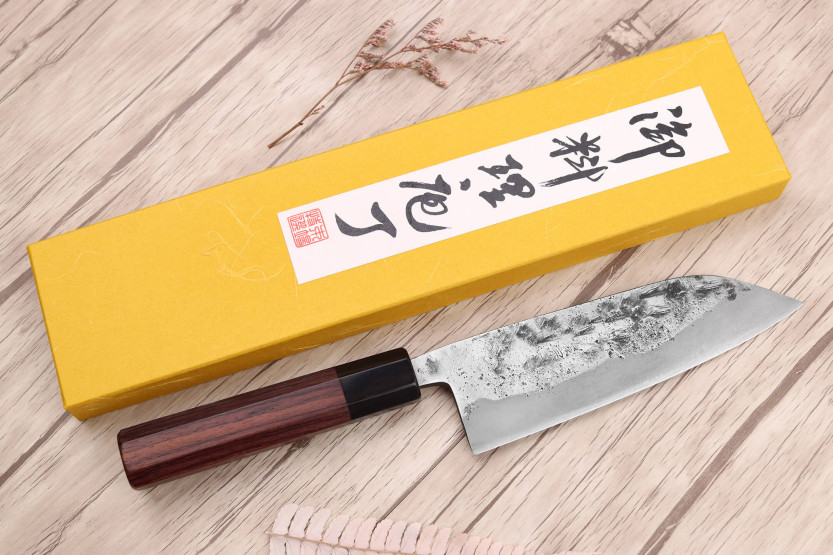
Japanese blacksmith Sumio Kawamura, with over 50 years' experience in traditional cutlery, has handcrafted this hammered knife for the Yoshimune brand. Based in the Japanese town of Sanjo, his workshop has produced a wide variety of knives with a rustic design, his recognized specialty.
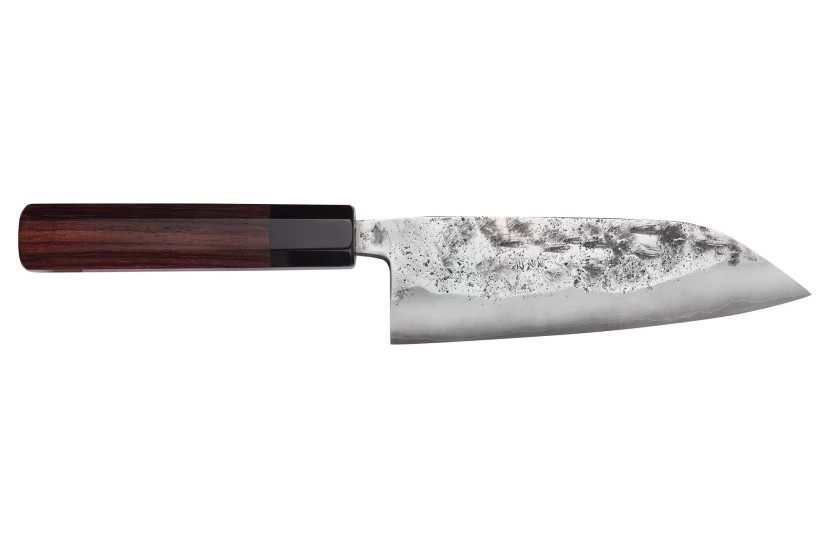
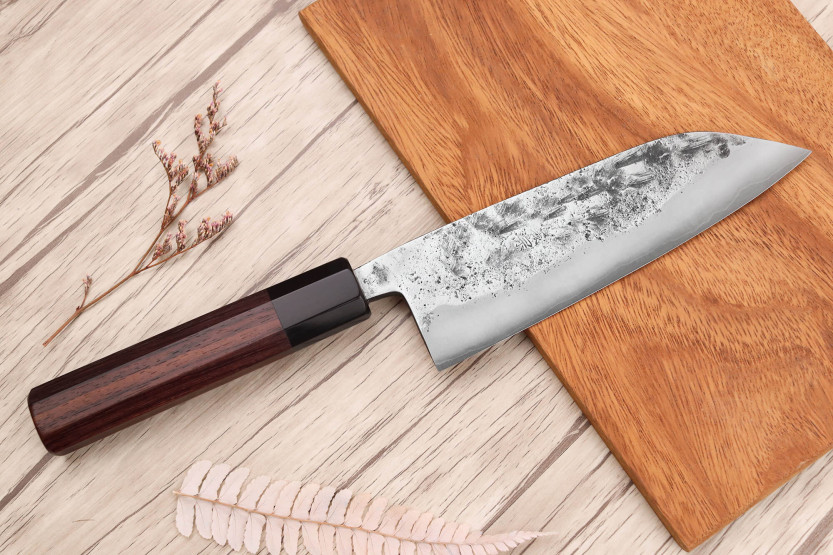
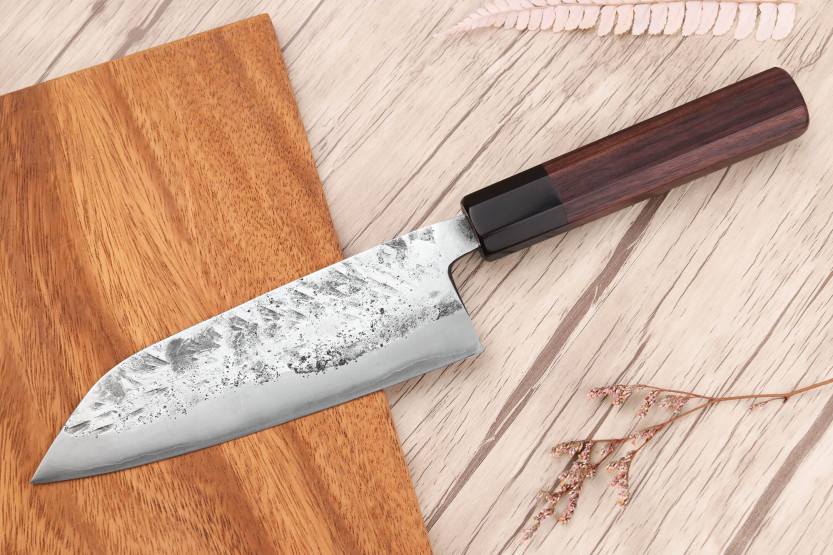
An original blade with character for this santoku knife
This santoku knife features a blade made using the traditional San Mai method, emblematic of Japanese cutlery. This technique consists of forging a core of rigid steel, which is then surrounded by a layer of softer steel folded in on itself. Thanks to this process, the blade achieves an optimum balance between strength and flexibility, providing ideal protection for the central core.
The core of this blade is forged fromJapanese Shirogami 2 steel (also known as White Paper Steel 2), produced by internationally renowned steelmaker Hitachi. With a high carbon content of 1.2%, this alloy has a hardness of 62HRC on the Rockwell scale, ensuring excellent edge retention and outstanding cutting performance.
One of the main advantages of Shirogami 2 alloy lies in its "pure" microstructure. Indeed, the micro-carbides are homogeneously distributed, reducing the risk of micro-cracking resulting from impact and wear.
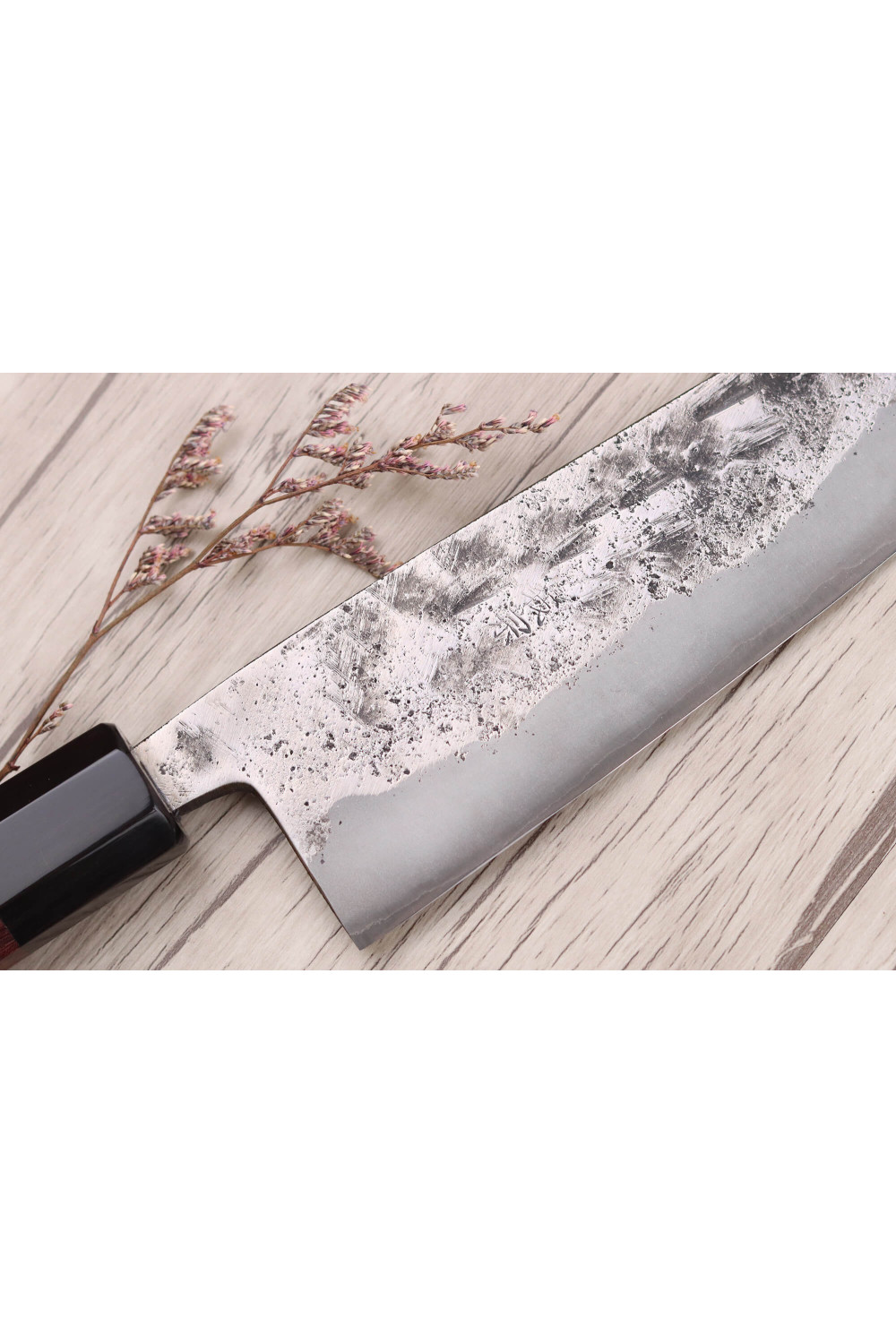
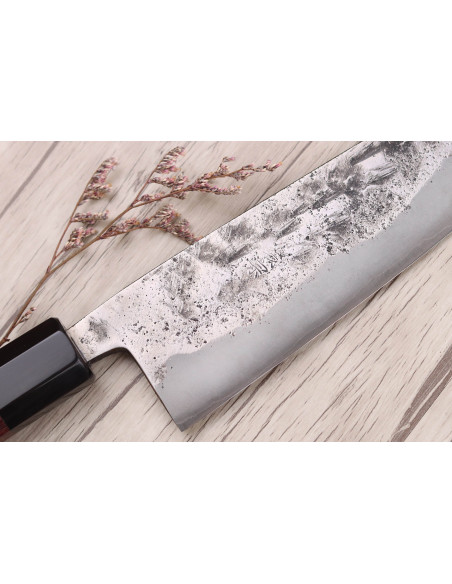
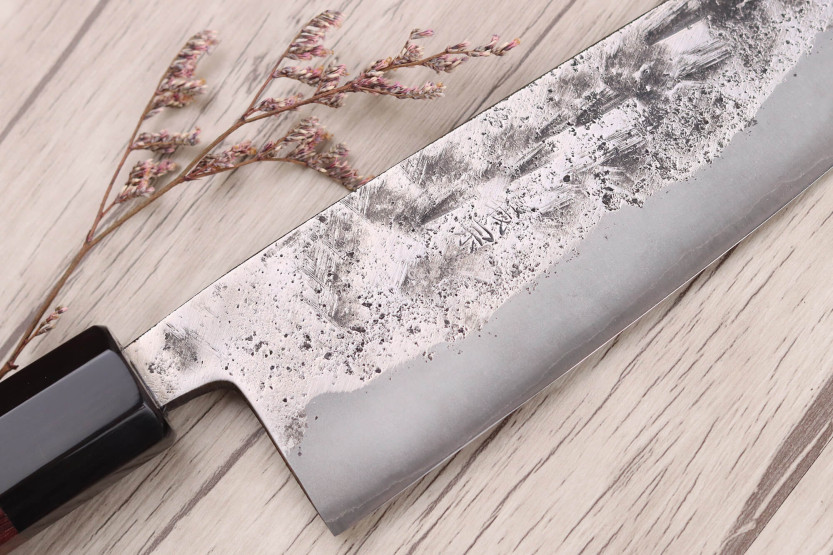
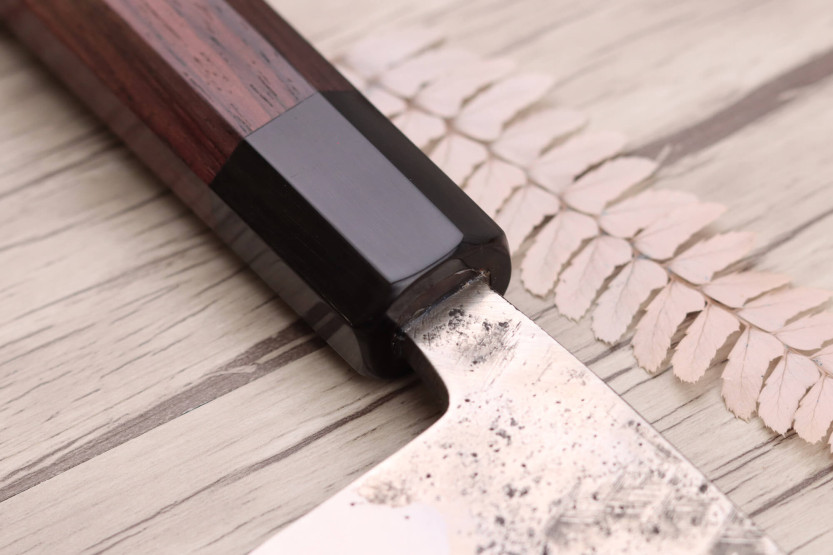
To finish the San Maï structure, a softer layer of stainless steel covers the core, ensuring optimum protection. The superimposition of the different steels can be seen throughout the cutting edge, creating a randomly patterned undulation visible on the blade.
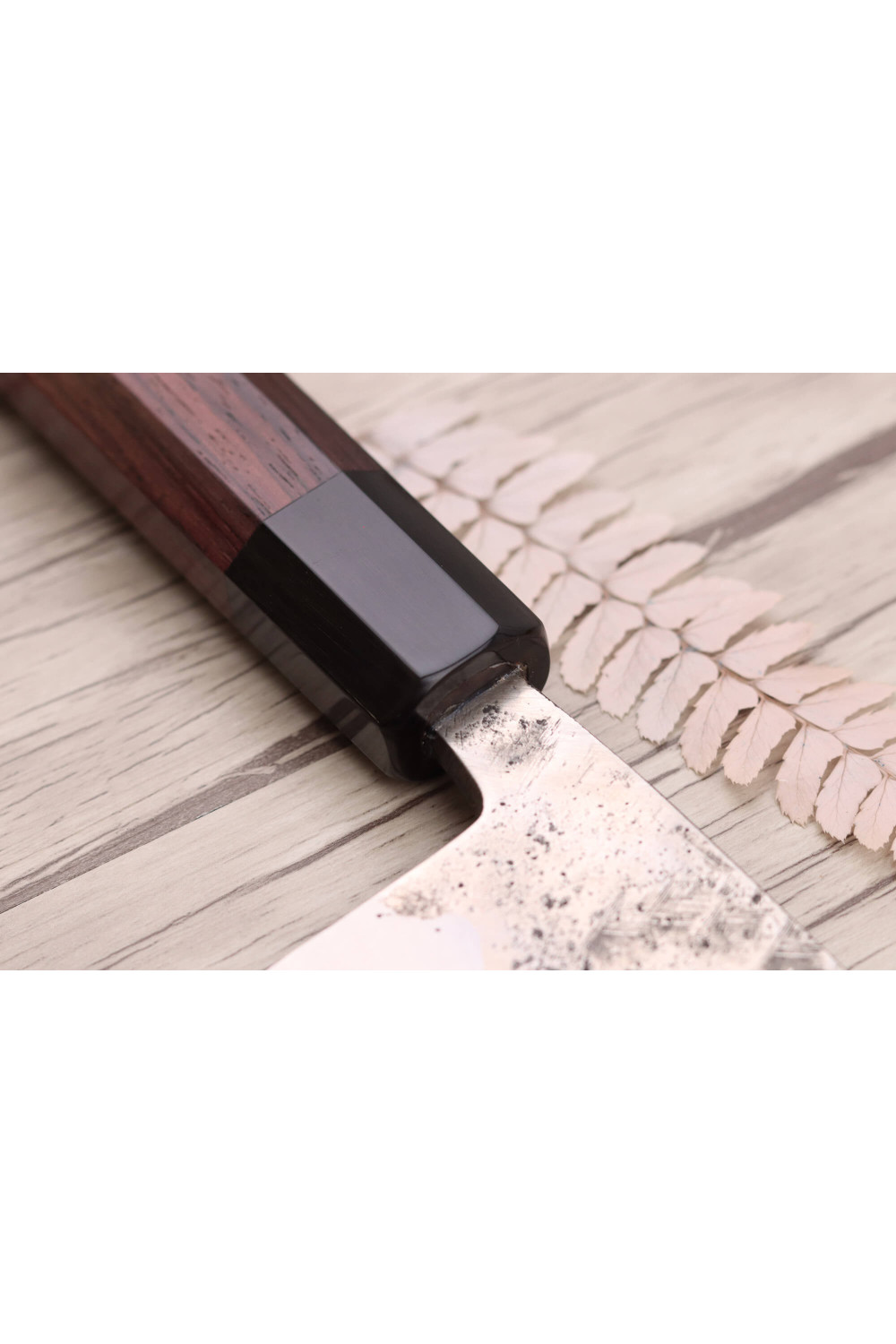
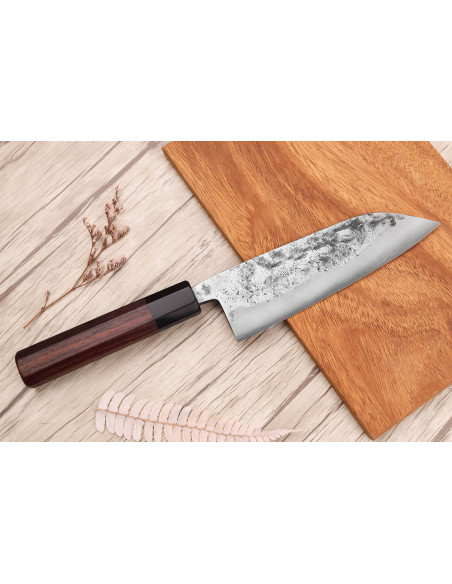
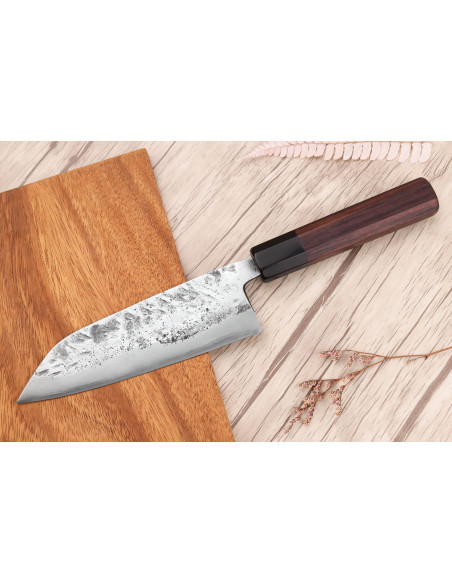
The blade of this handcrafted Japanese knife has been polished, giving it an elegant appearance. The blade has been authentically hammered to give your santoku a raw look, an aesthetic much appreciated by Japanese chefs!
An elegant, dark handle for this Japanese knife
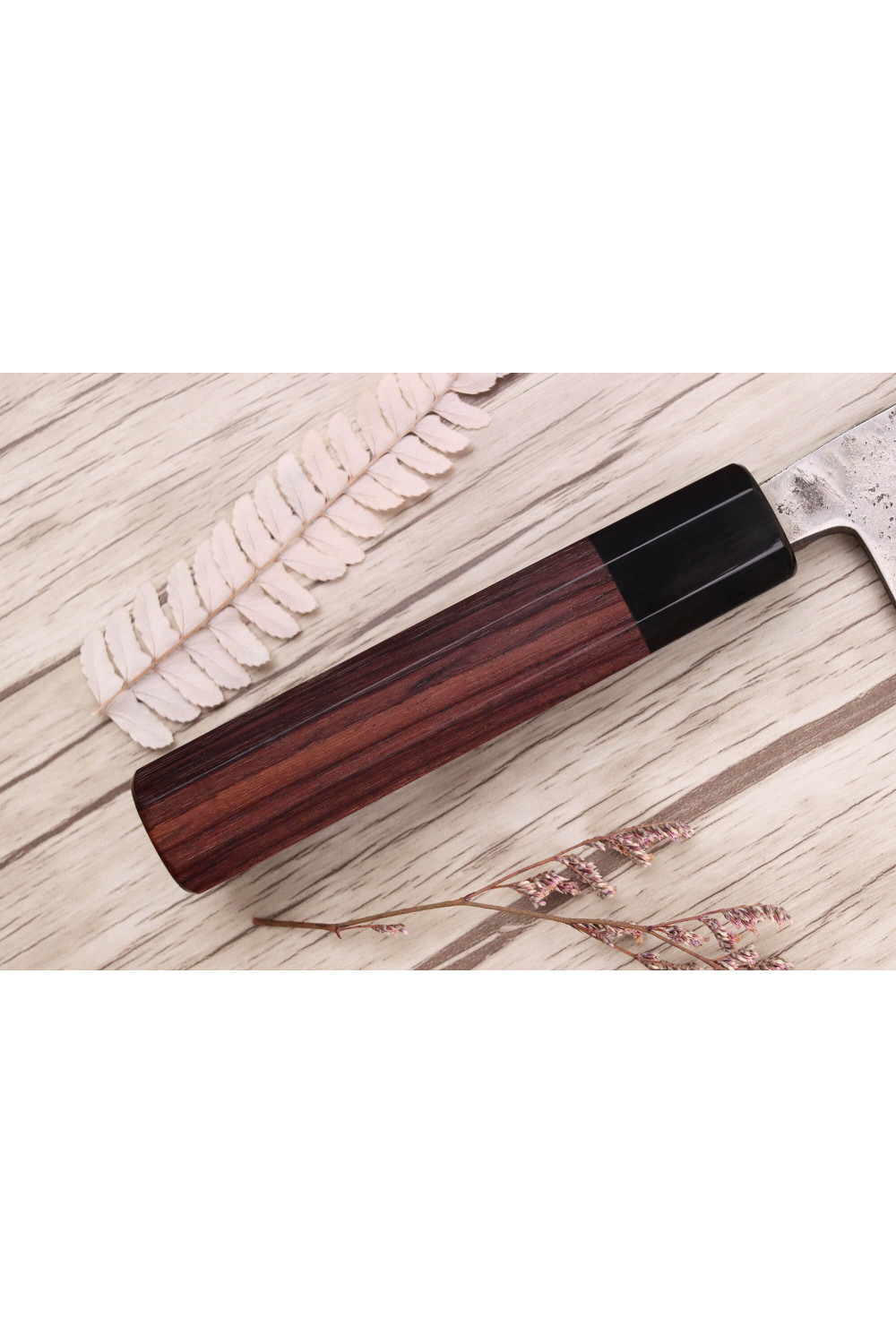
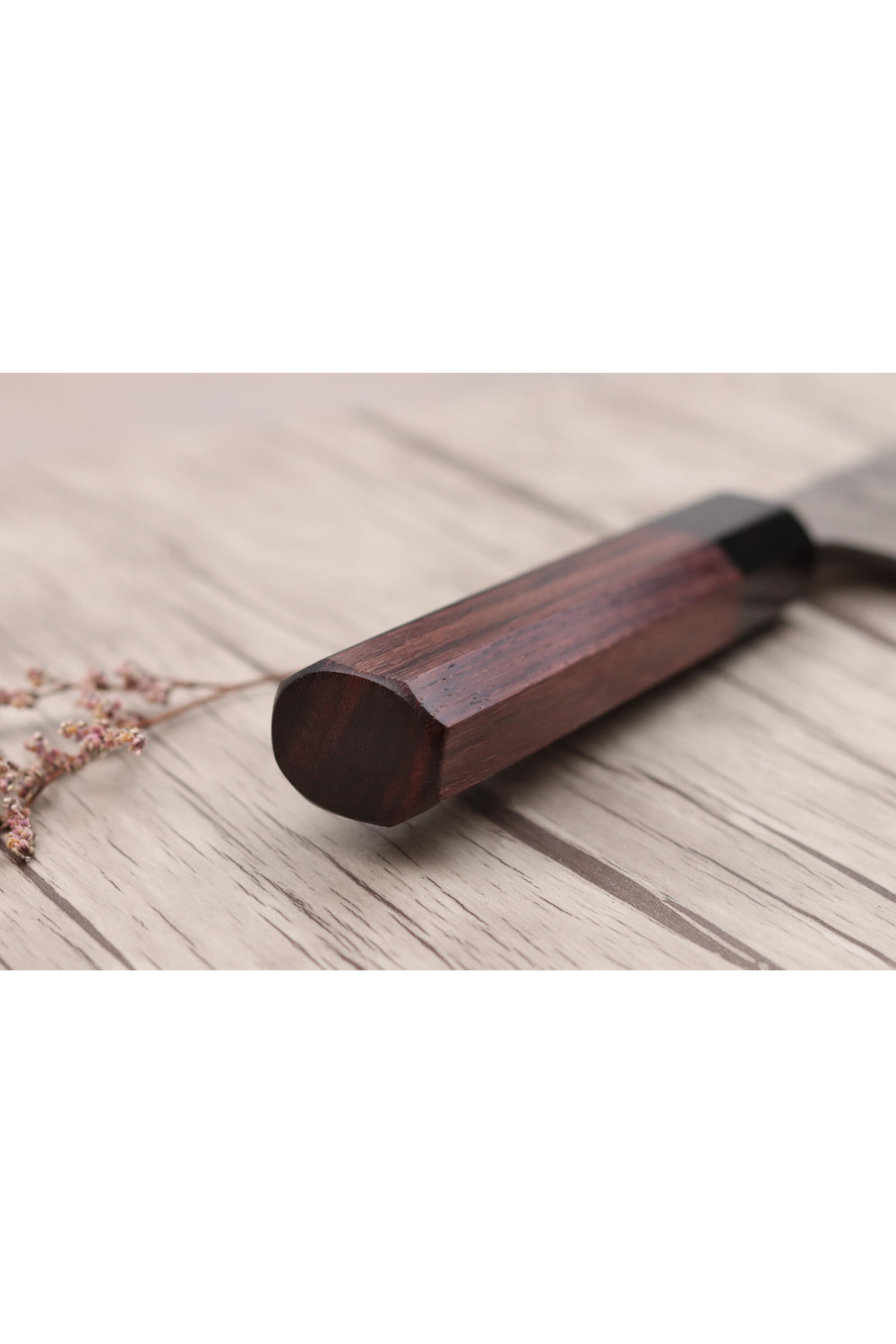
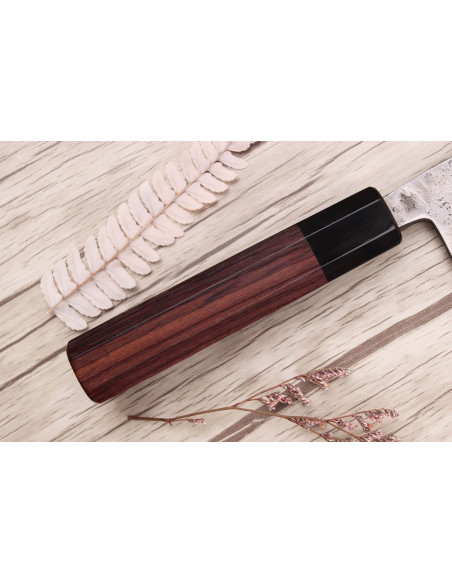
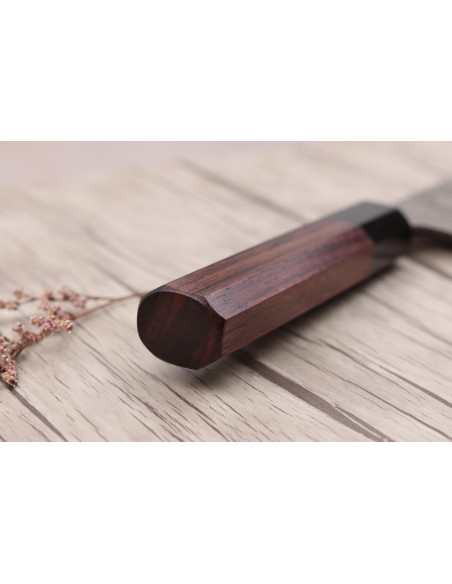
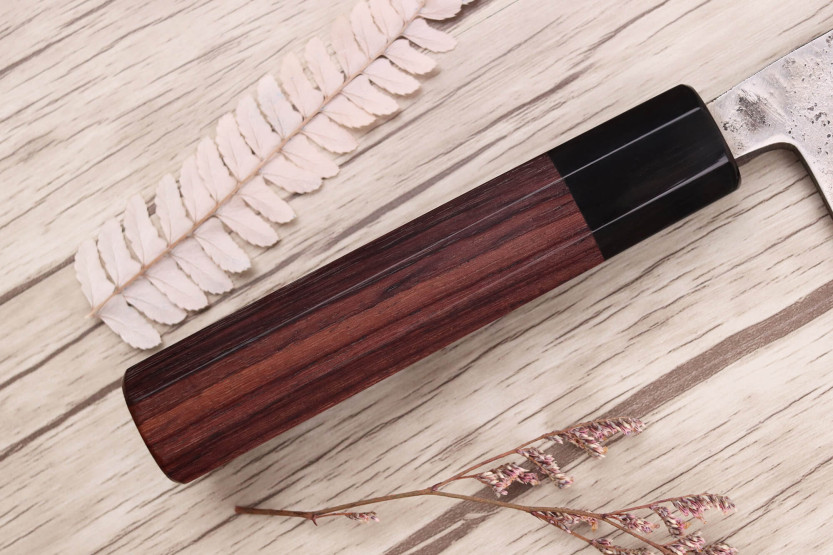
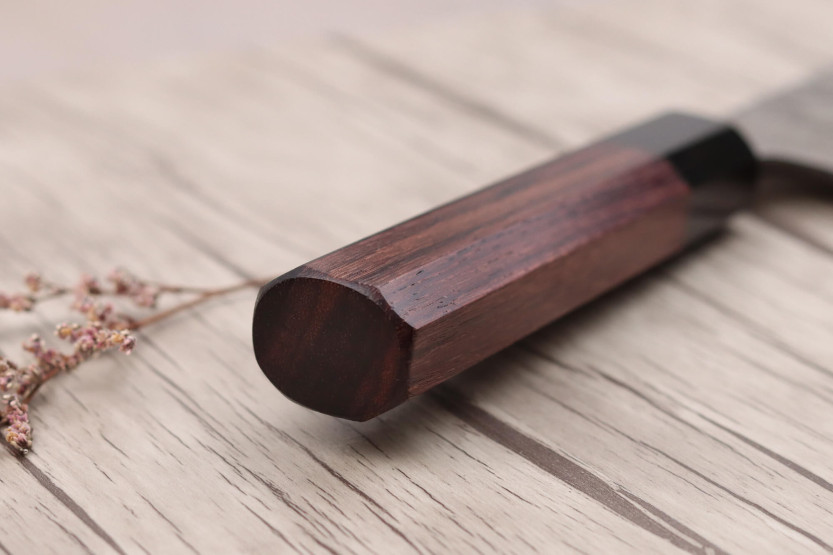
Made from rosewood, the handle of this Japanese knife offers natural strength and resistance to moisture, shock and deformation. The dark nuances and elegant grain of this wood add a natural touch to the whole.
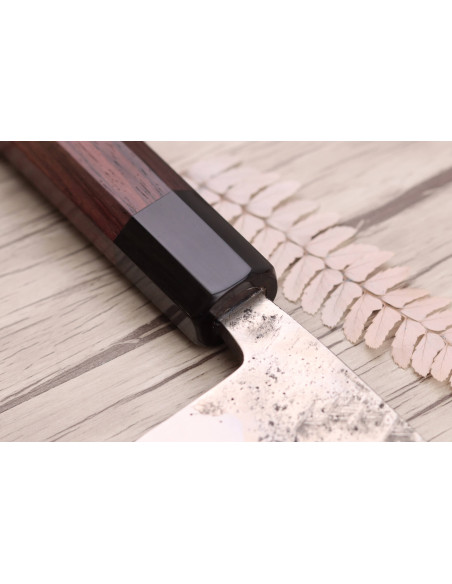
To connect the blade to the handle, a black horn bolster has been integrated, offering both strength and uniqueness. As horn is a living material, each bolster is unique!
The octagonal shape of the handle guarantees a comfortable, ergonomic grip, suitable for both right-handed and left-handed users! As a result, it offers optimum control, even during prolonged use.
Finally, to ensure your knife is watertight, wood paste has been added to the junction between handle and blade. This prevents water infiltration and guarantees the durability of your Japanese kitchen knife.
Care and maintenance of a Japanese santoku knife
To care for your carbon knife, it's essential to wash it only by hand with a soft sponge, avoiding immersing the handle in water. After cleaning, be sure to dry the blade thoroughly to remove all traces of moisture, then store it in a dry place. Do not put in the dishwasher or leave to soak in the sink.
Despite meticulous care, the color of the blade may change slightly over time: this is normal! This variation is a natural reaction of carbon to food acids and ambient humidity. However, this in no way affects the performance or use of your Japanese knife!
Discover many damask Japanese knives on KnifeLeader.eu!




 By buying this product you can collect up to