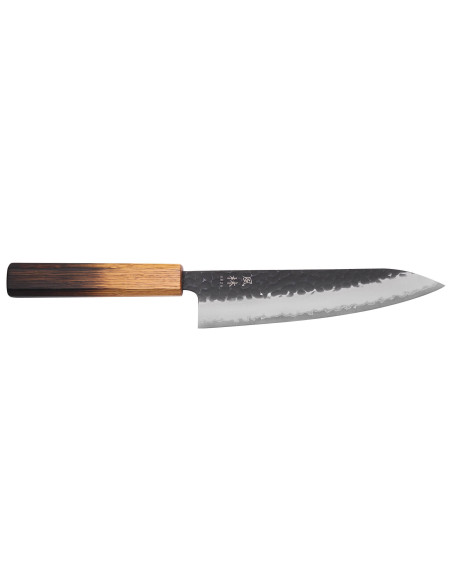
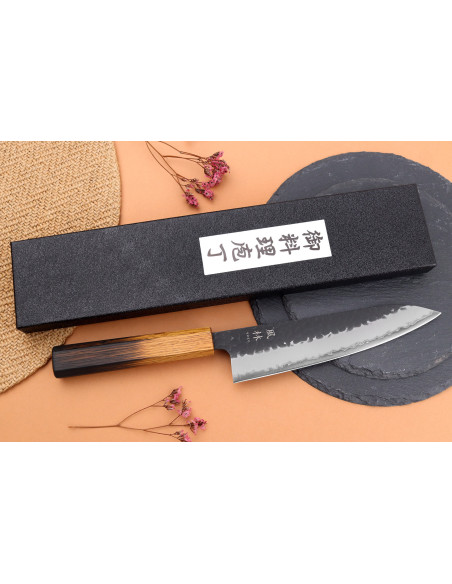
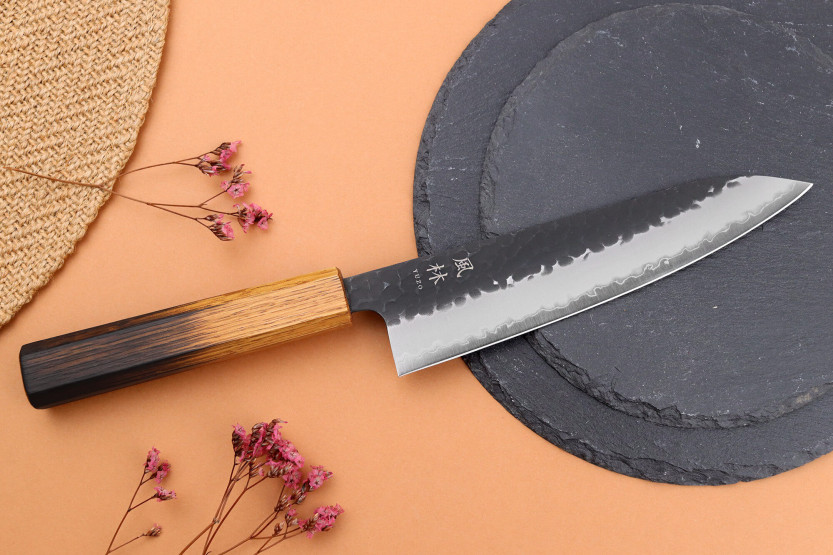
The chef knife is a versatile tool, perfect for everyday use in the kitchen! It enables you to cut a wide variety of foods with precision, including meat, fruit and vegetables. Whether you're chopping herbs, mincing meat or mincing vegetables, it's got what you need! However, it should not be used on very hard foods such as bones or squash.
The Japanese knives in this range are made in Japan by Tsunehisa Cutlery, renowned for its craftsmanship.
A Japanese chef's knife with an authentic design
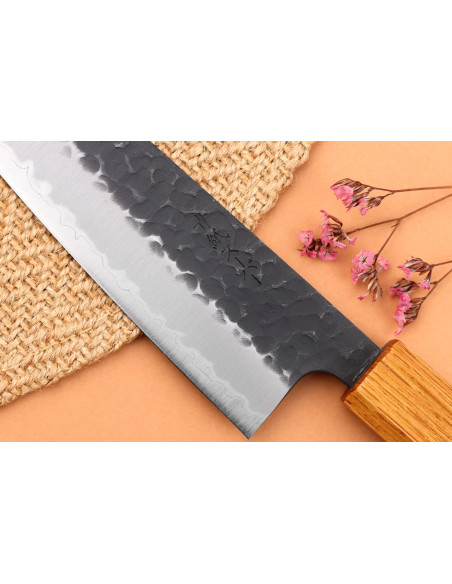
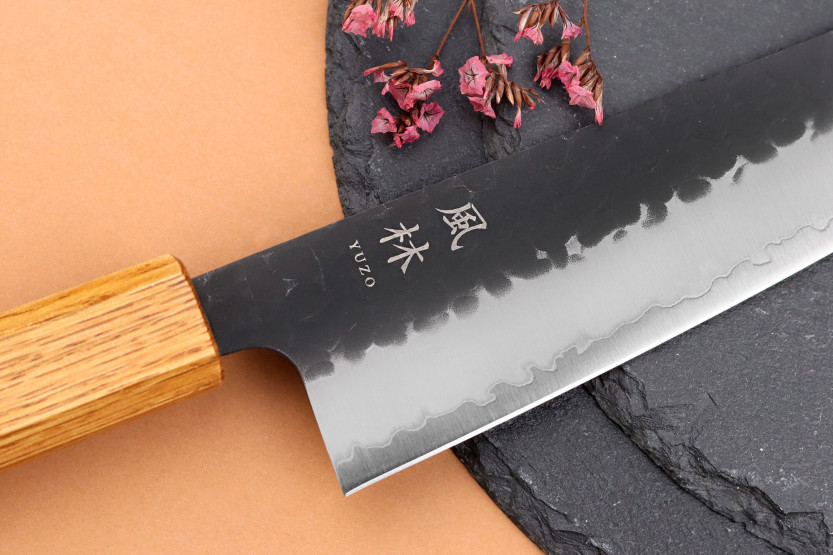
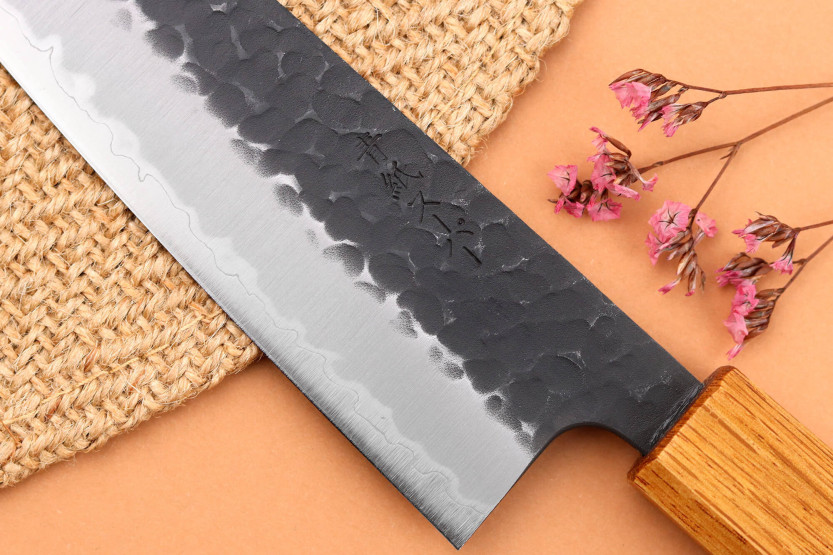
This Japanese kitchen knife features a blade designed according to the San Maï structure, a traditional Japanese technique based on the assembly of three layers of steel. A central core of hard steel is sandwiched between two layers of softer steel, providing an excellent balance between strength and flexibility, while effectively protecting the core of the blade.
The core is made from Japanese Aogami Super steel, also known as Blue Super Steel. This high-quality alloy is produced by the world-renowned steelmaker Hitachi, renowned for the excellence of its steels.
Aogami Super (AS) steel is distinguished by its high carbon content of around 1.5%, which considerably enhances the alloy's hardness. Thanks to this characteristic, the blade achieves a high hardness of 65HRC on the Rockwell scale, ensuring excellent edge retention and outstanding cutting performance, even over the long term.
Despite its high hardness, this steel remains relatively easy to sharpen, making it easy to maintain when sharpening becomes necessary. What's more, theflat edge of this handcrafted Japanese knife is easy to reproduce, which is a real advantage!
To balance this hardness and protect the core of the blade, a softer layer of stainless steel surrounds it. This structure enhances corrosion resistance while giving the blade a slight suppleness, making it less brittle in use, without being flexible.
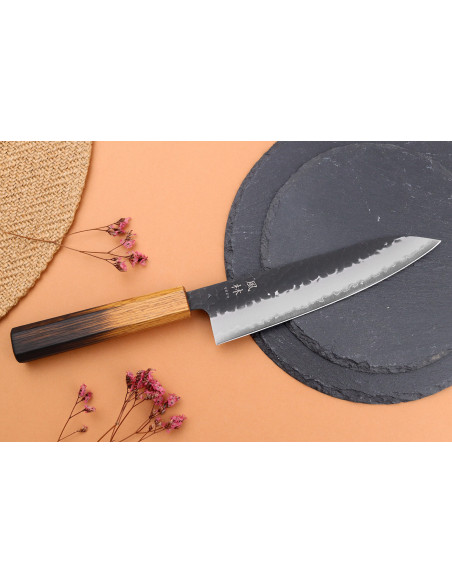
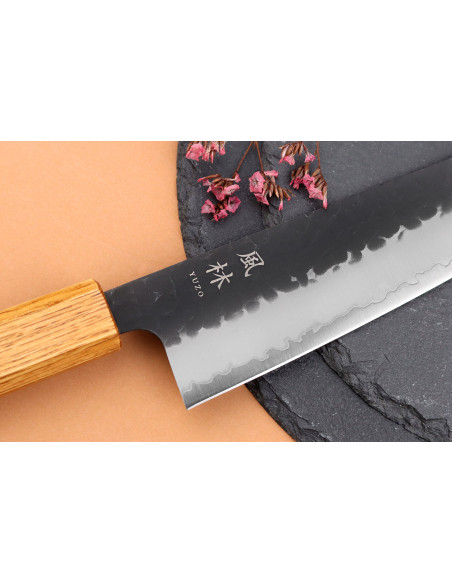
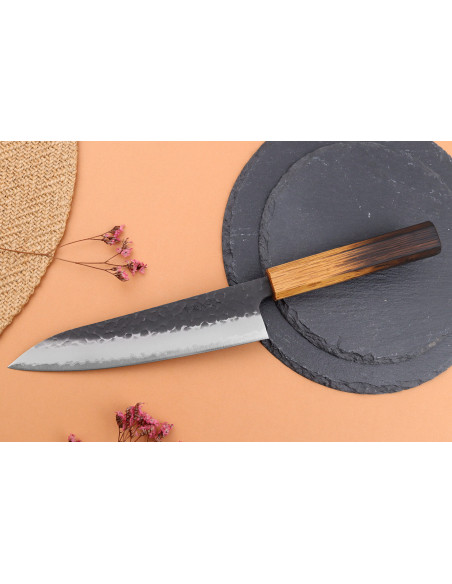
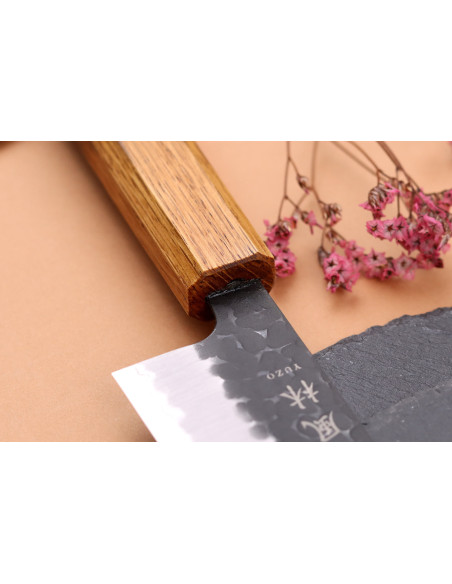
Last but not least, the blade features a rough-forged finish that lends it an authentic character. Its dark, unpolished appearance enhances its traditional design, while the hammer marks add a unique aesthetic touch and reinforce its artisanal identity.
An ergonomic, ambidextrous handle for this Japanese kitchen knife
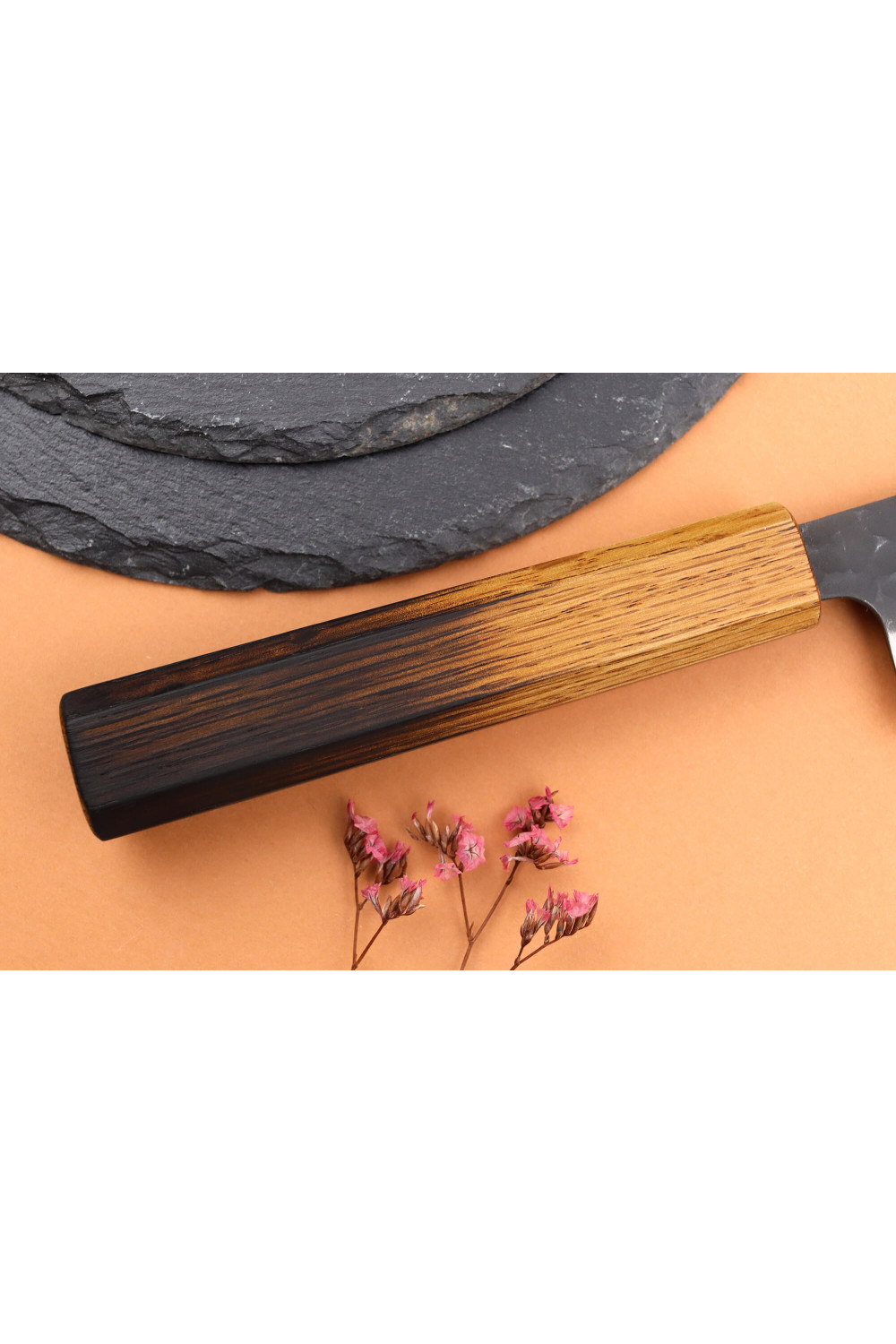
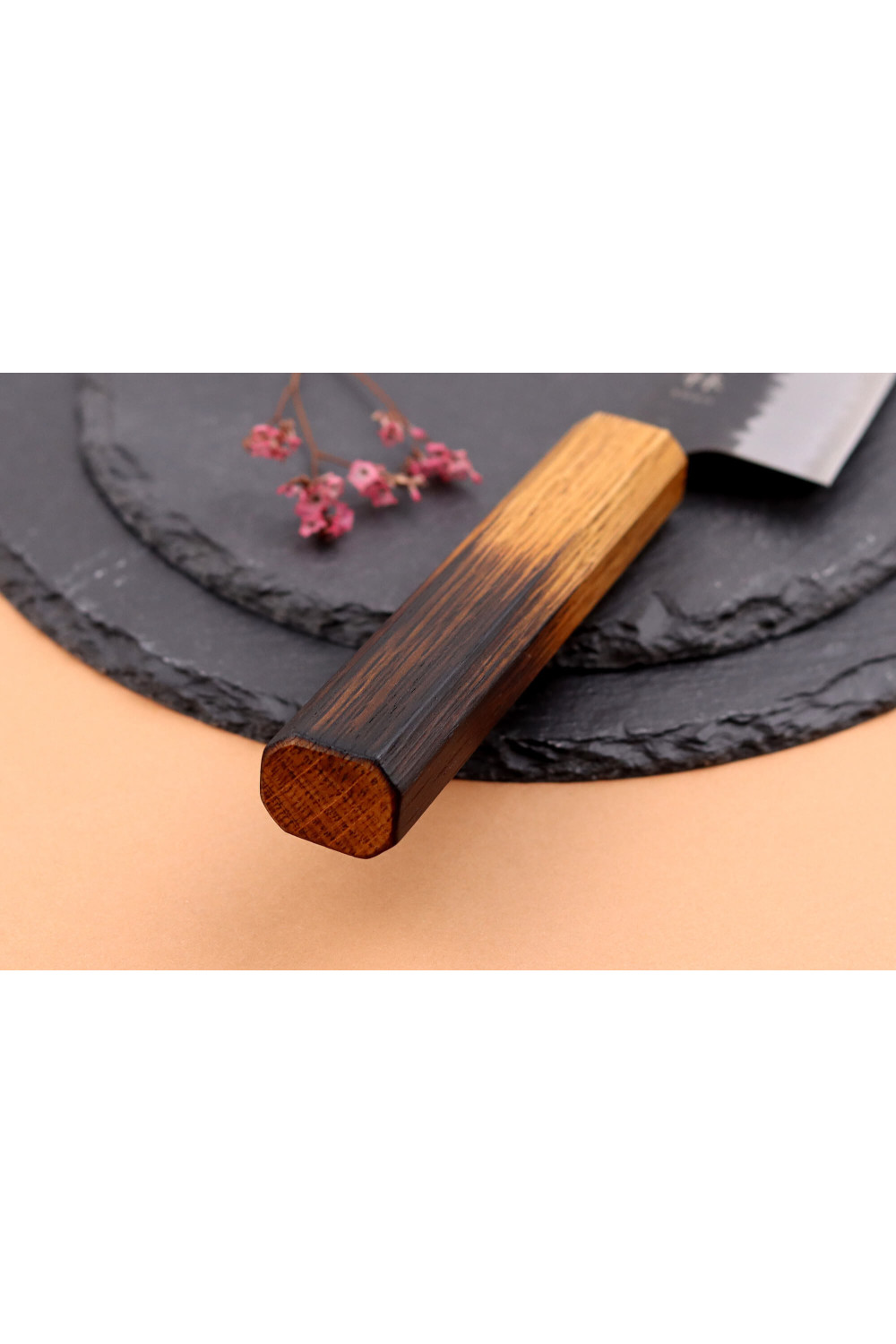
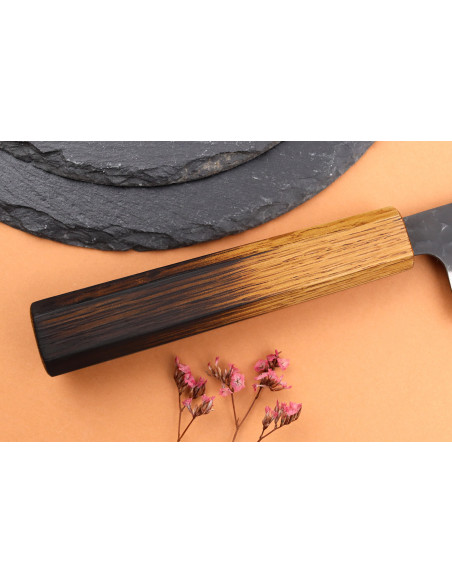
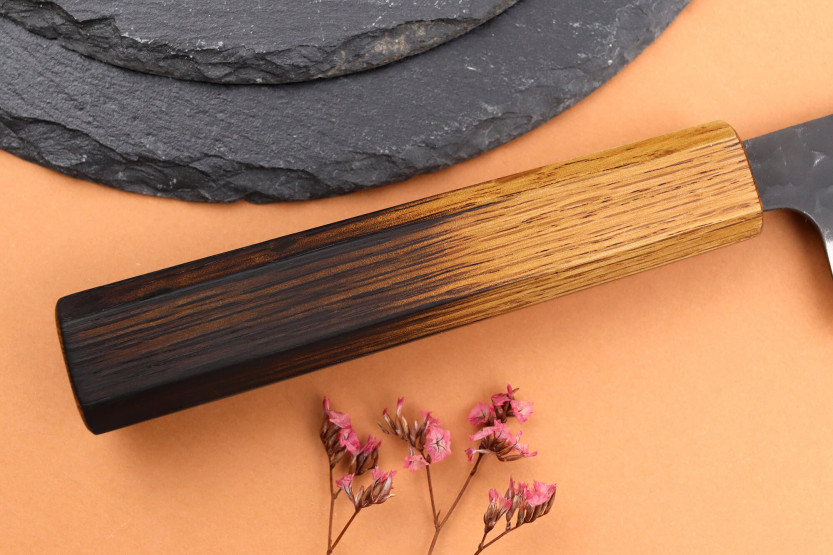
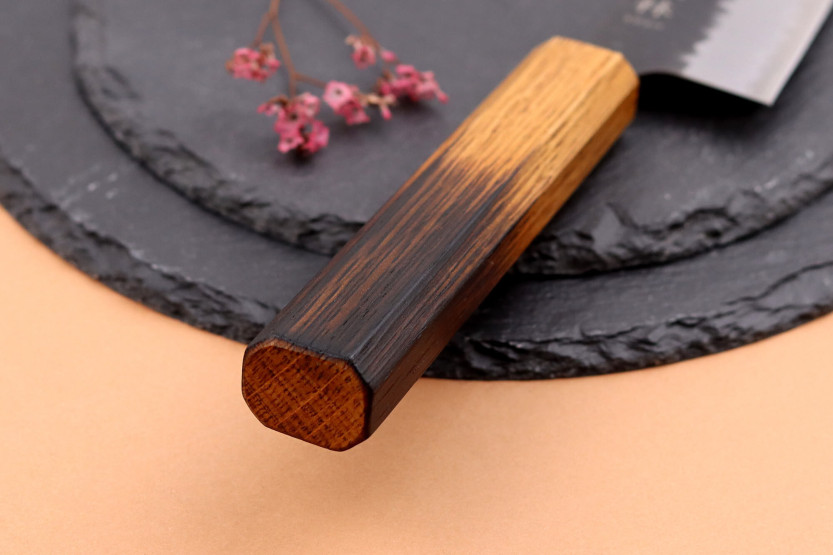
The handle of this Yuzo knife is made from oak wood from the island of Kyûshû, a species renowned for its high resistance to shock, vibration and humidity. This resistance to condensation effectively limits the risk of deformation over time.
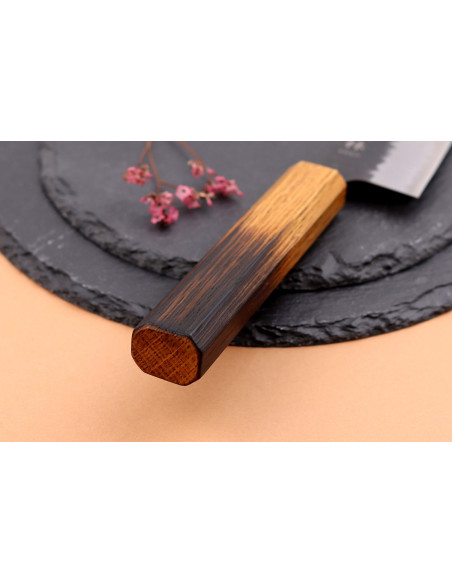
For a touch of contrast and refinement, the end of the handle has been subtly burned, enhancing its handcrafted aesthetic.
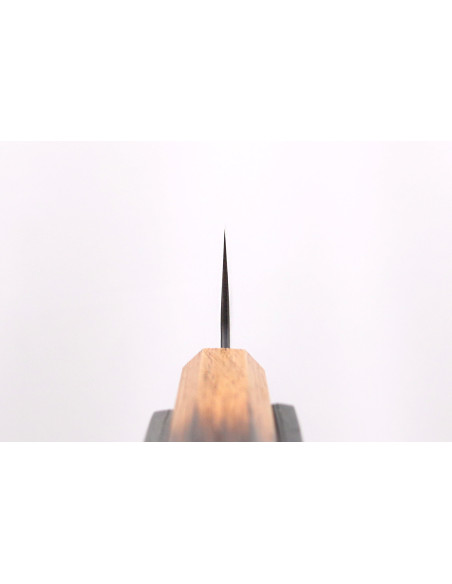
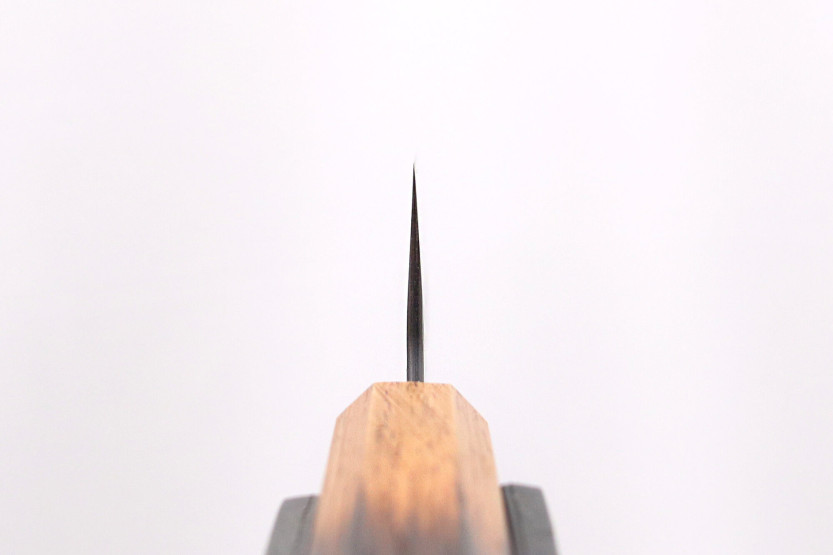
Its octagonal shape has been designed to suit both right- and left-handed cooks! It ensures an ergonomic and comfortable grip, offering optimal control even during prolonged use in the kitchen.
Finally, wood paste has been applied to the junction between blade and handle to fill any gaps. This finish guarantees optimum perfection, preventing the infiltration of water or food residues.
How do you care for your handcrafted Japanese knife?
To preserve the quality of your carbon knife, only clean it by hand with a sponge and mild soap, taking care not to over-wet the handle. After washing, dry immediately with a clean cloth and store in a dry place away from humidity.
It is essential not to put it in the dishwasher, and never to leave your Japanese knife to soak in water.
Over time, the blade may develop a slight patina, which is perfectly normal. This natural phenomenon results from the reaction of carbon to the acidity of food and ambient humidity. This patina in no way alters the performance of your gyuto knife, and in fact contributes to its uniqueness!
Discover damask knives on Knifeleader.eu!







 By buying this product you can collect up to