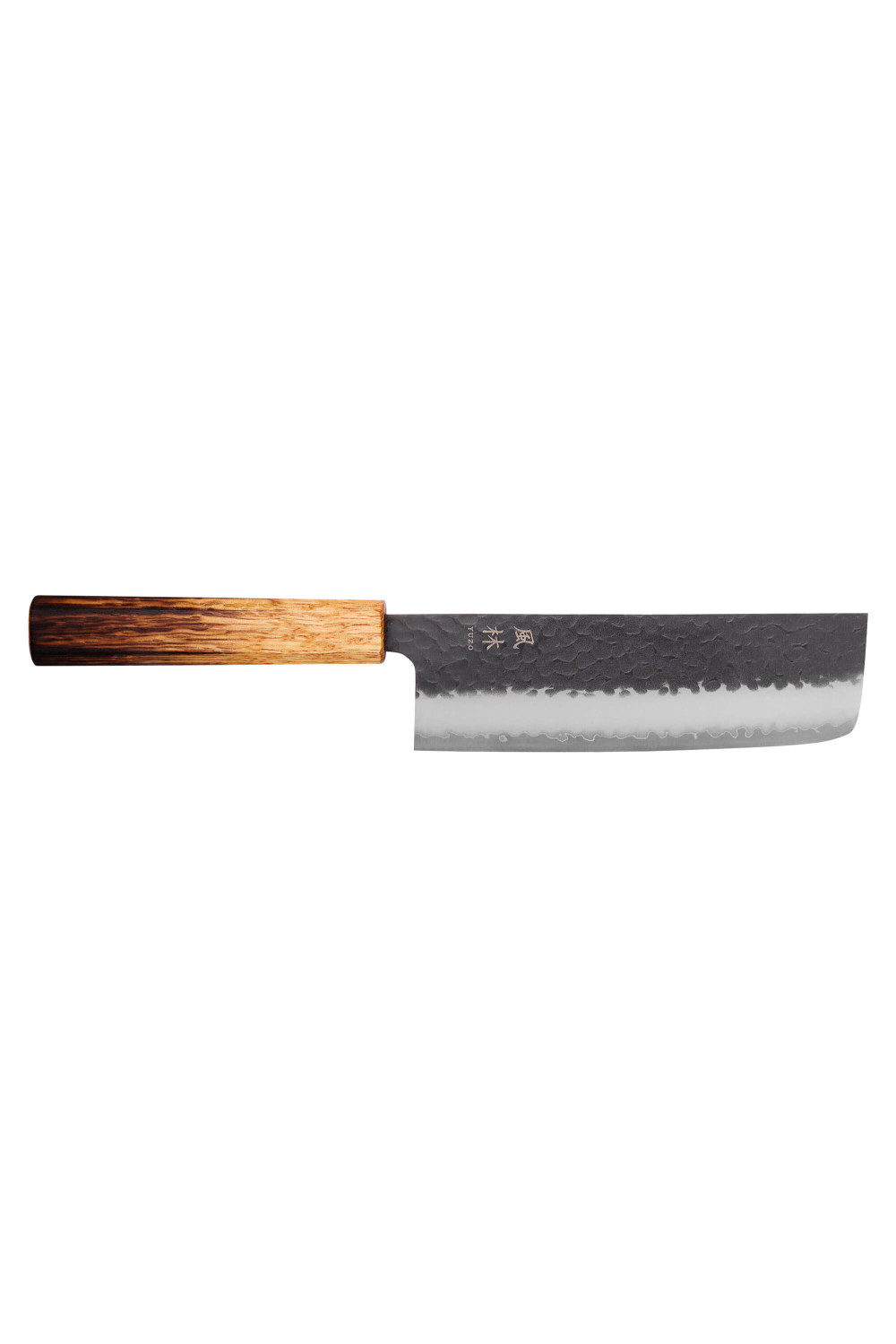
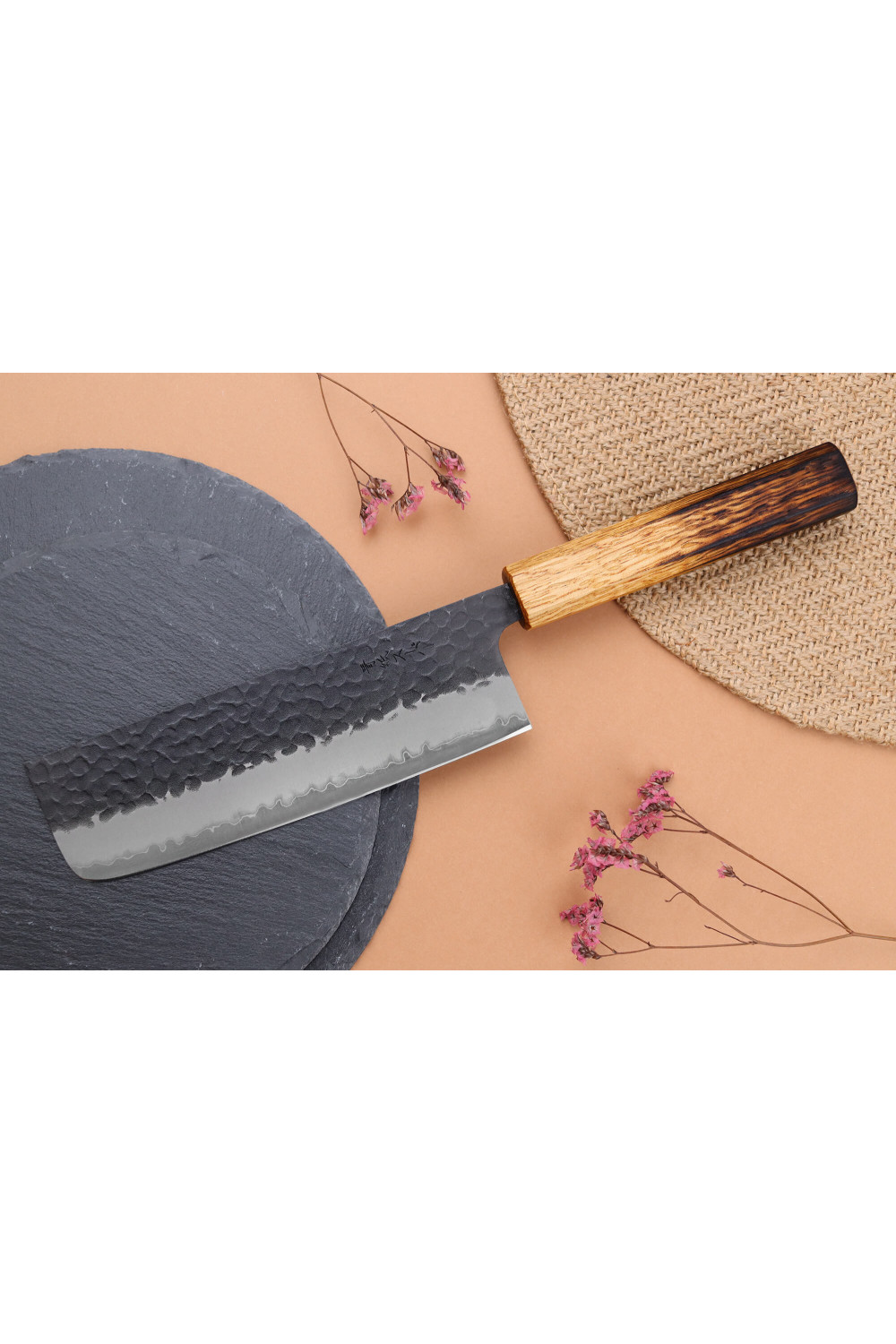
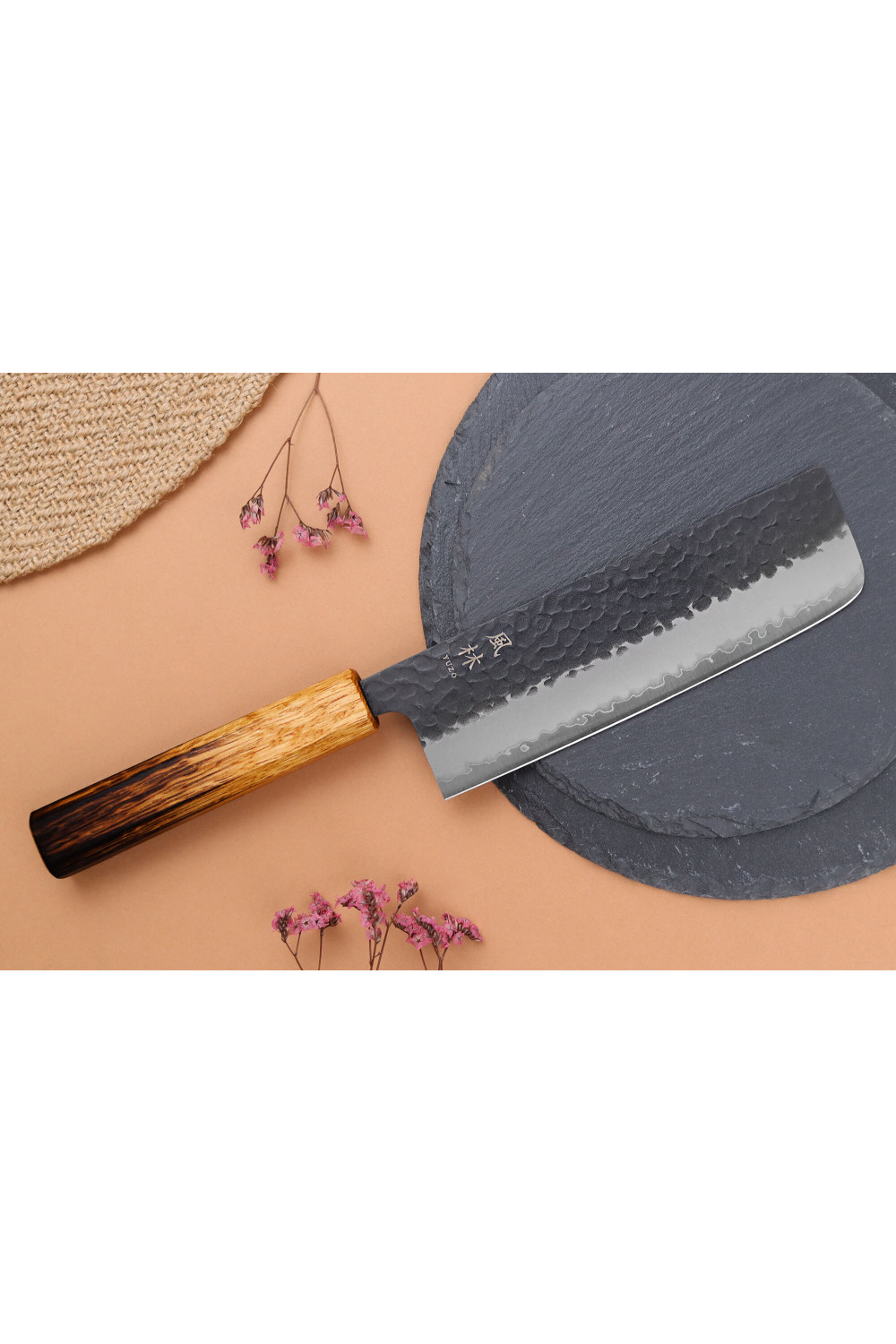
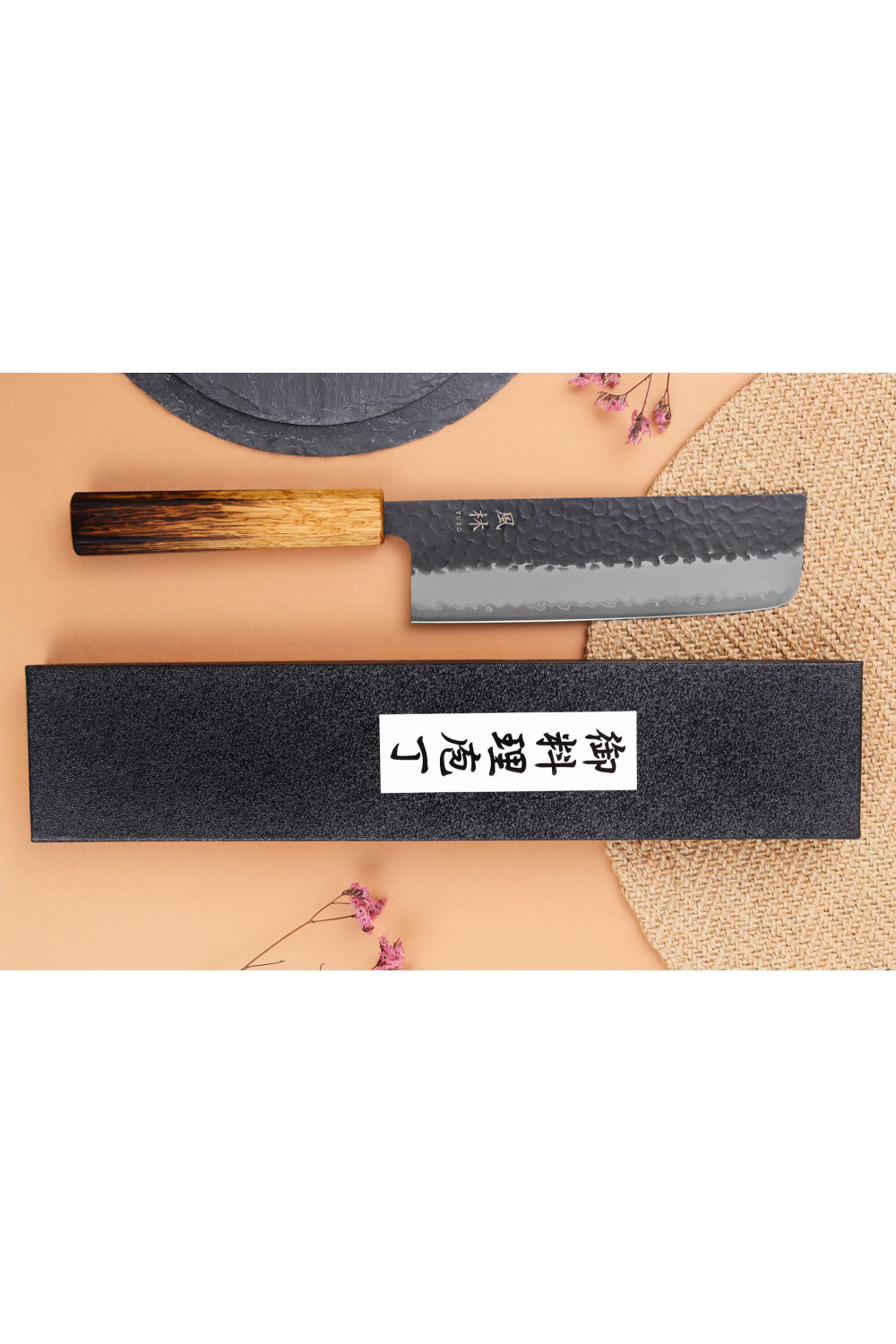
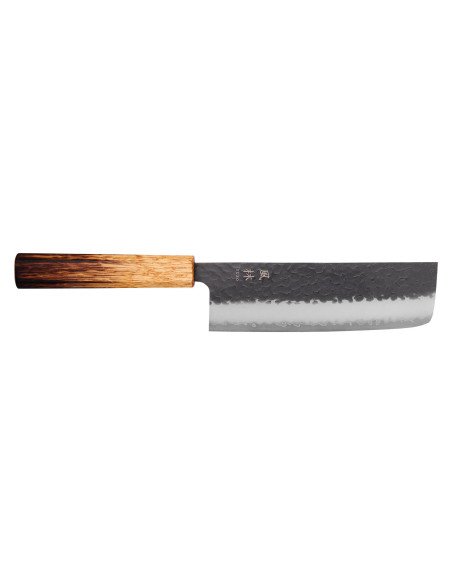
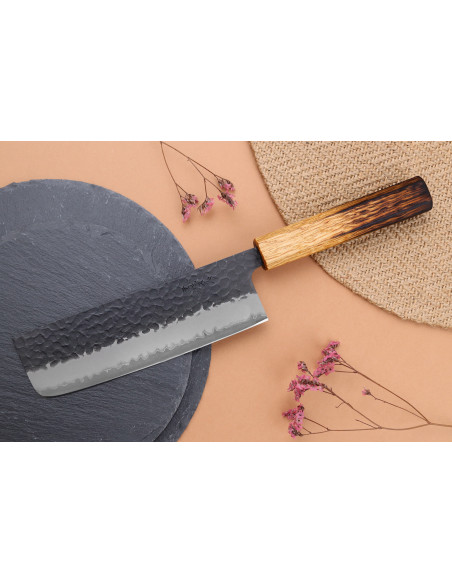
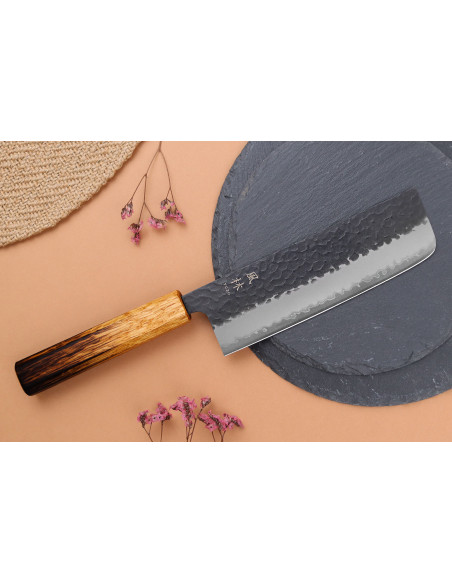
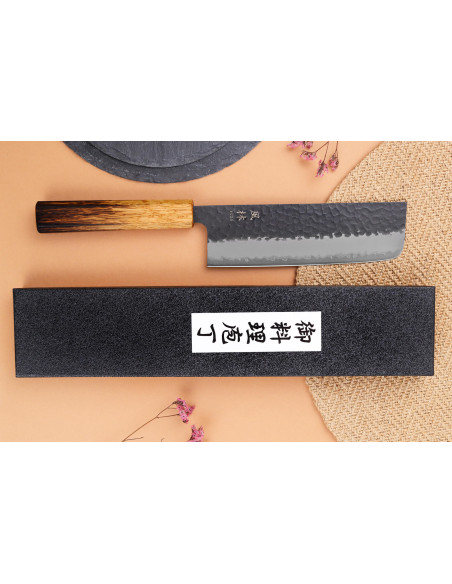
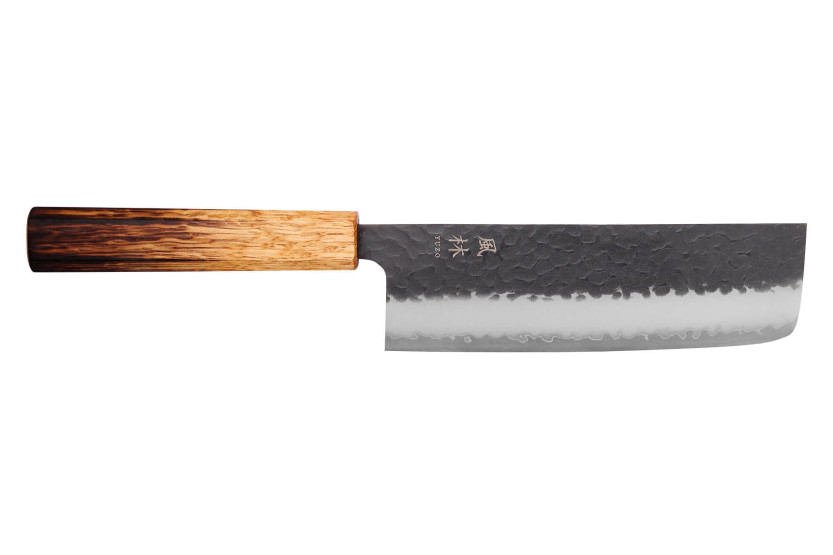
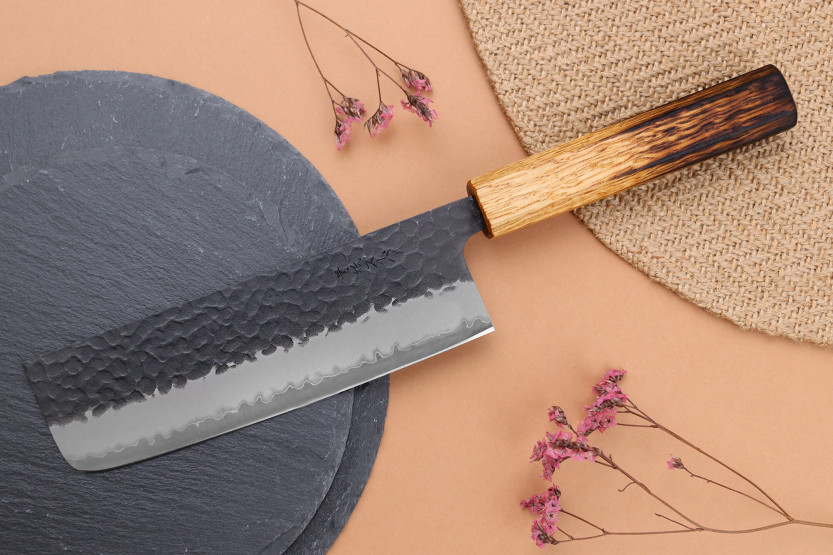
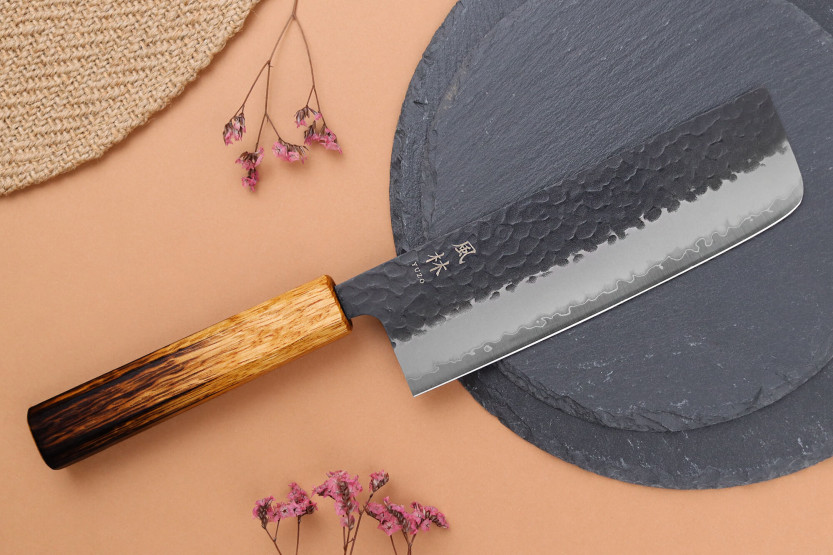
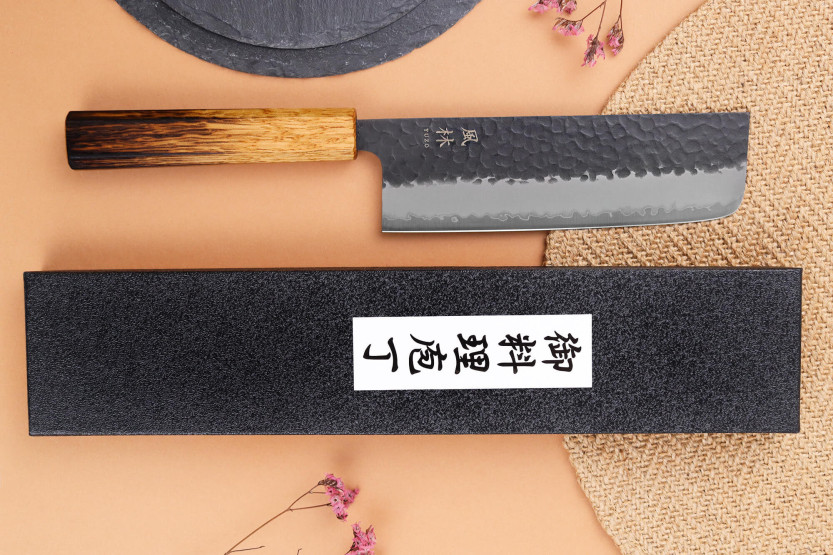
The Yuzo Hamono Black AS nakiri knife is the ideal choice for preparing all your vegetables! It makes peeling, slicing and dicing fruits and vegetables a breeze. Its high-performance, long-lasting blade will last you a long time! Note that it should not be used on particularly hard foods, such as squash, cheese wheels or bones...
The knives in the range are made by the Tsunehisa forge, directly in Japan.
A blade in Japanese Aogami Super steel
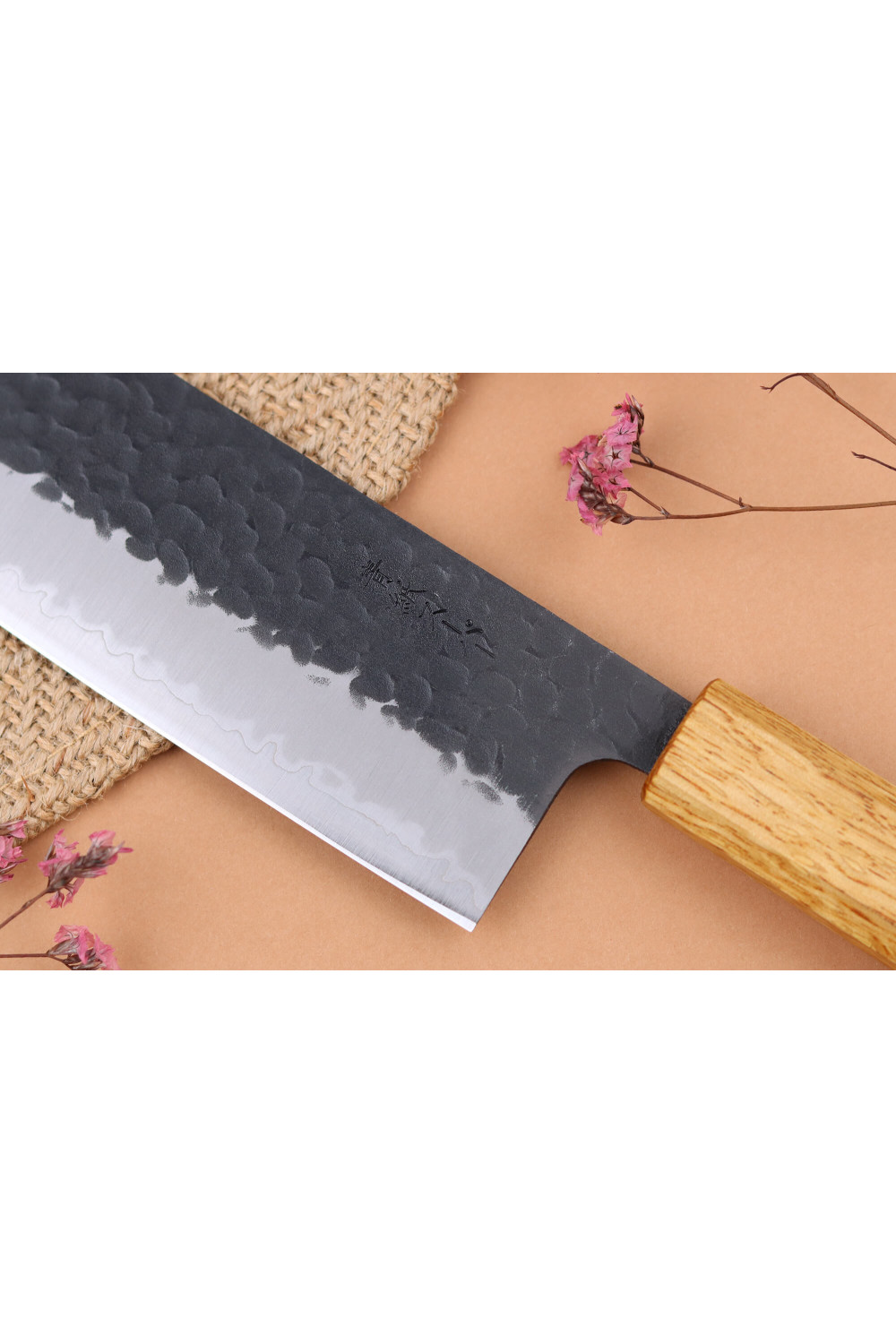
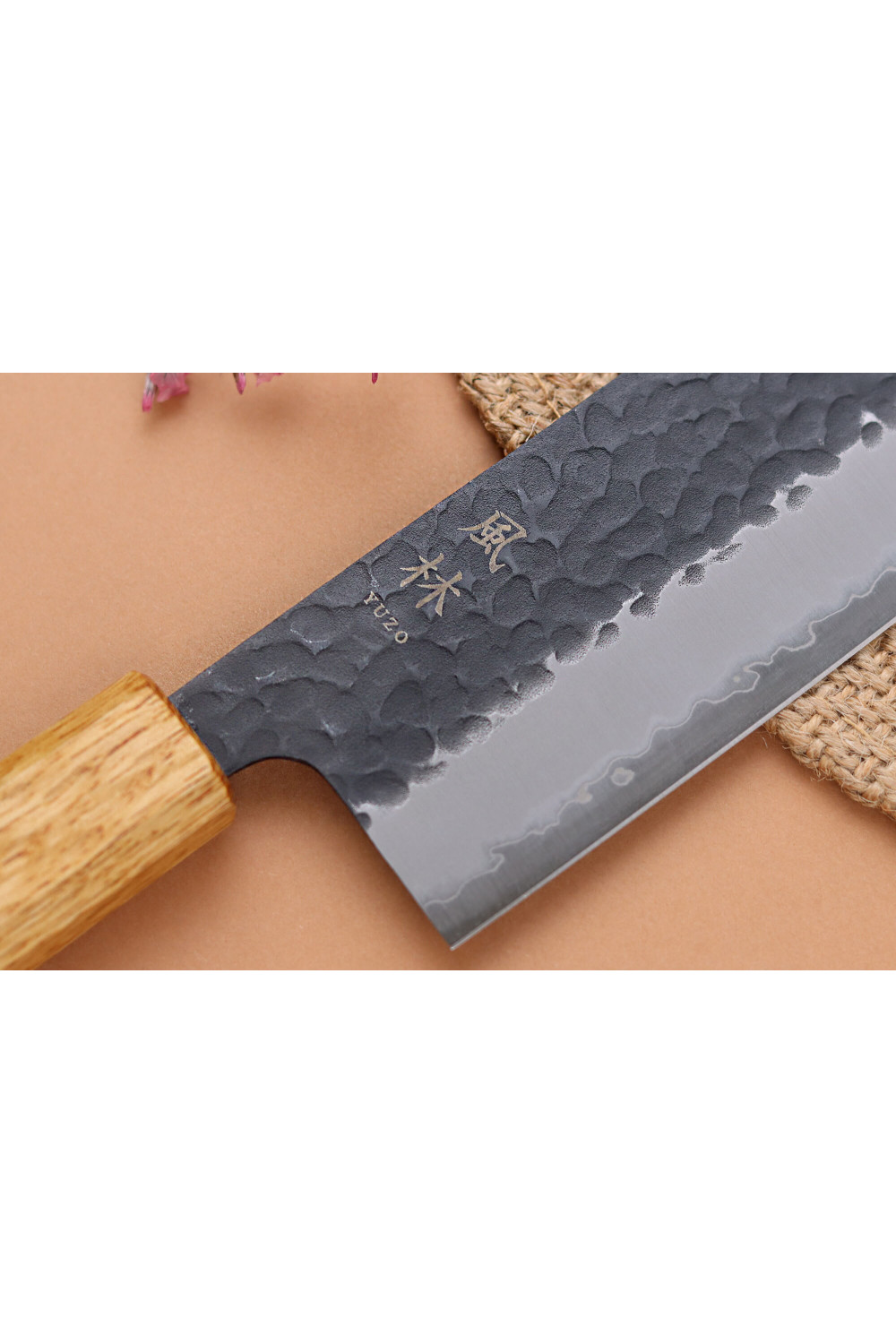
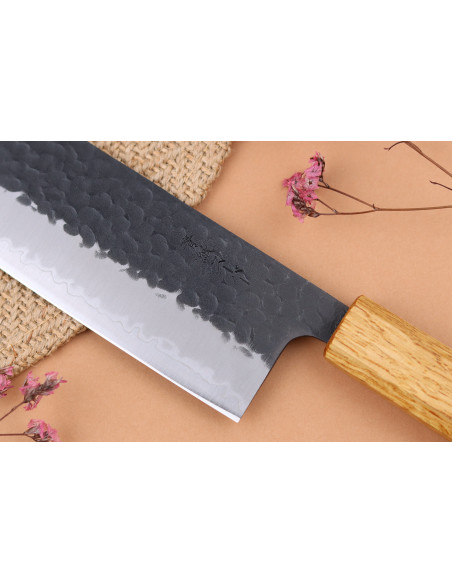
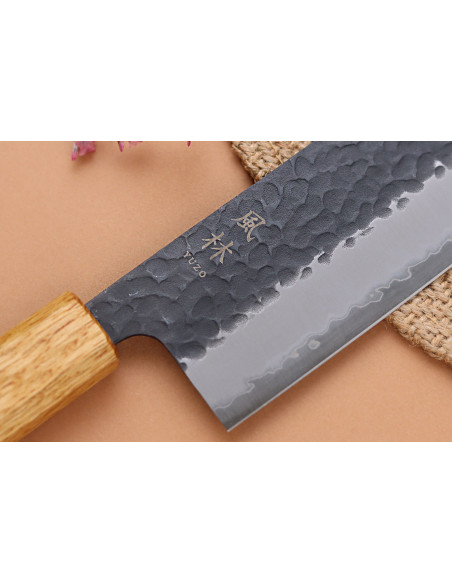
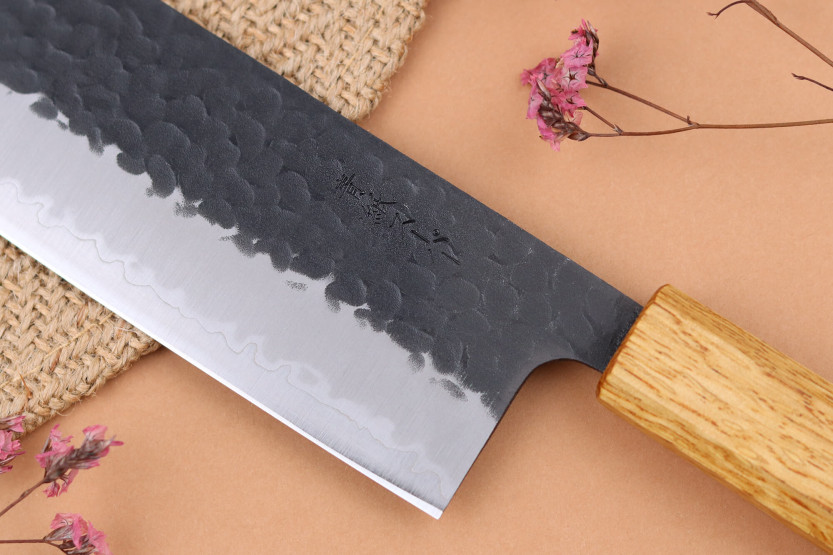
Your nakiri knife features a blade designed in the Japanese tradition, with a structure called San Maï: this technique consists of superimposing three layers of steel. At the heart of the blade is a hard core, surrounded by a layer of softer steel, offering enhanced protection and optimal strength. Thanks to this method, the blade combines the qualities of both types of steel, guaranteeing optimal balance.
The core of this blade is made ofJapanese Aogami Super steel, also known as Blue Super Steel. It is manufactured by the world-renowned steelmaker Hitachi, renowned for its many innovations in the field of alloys.
Aogami Super (AS) is distinguished by its high carbon content, reaching 1.5%. This is a real advantage, since carbon confers optimum hardness for excellent performance. What's more, a harder alloy guarantees superior edge retention over time. With its high carbon content, this blade achieves a hardness of 65HRC on the Rockwell scale, enabling it to perform many cuts without losing its efficiency.
Despite its high hardness, this alloy remains easy to sharpen when necessary, a real asset.
As previously mentioned, to create the San Maï structure, the core is wrapped in a layer of stainless steel. This layer provides greater resistance to corrosion, while preserving the blade's flexibility. The blade does not become flexible, but it does offer greater resistance to impact than steel that is too rigid, which would tend to become brittle.
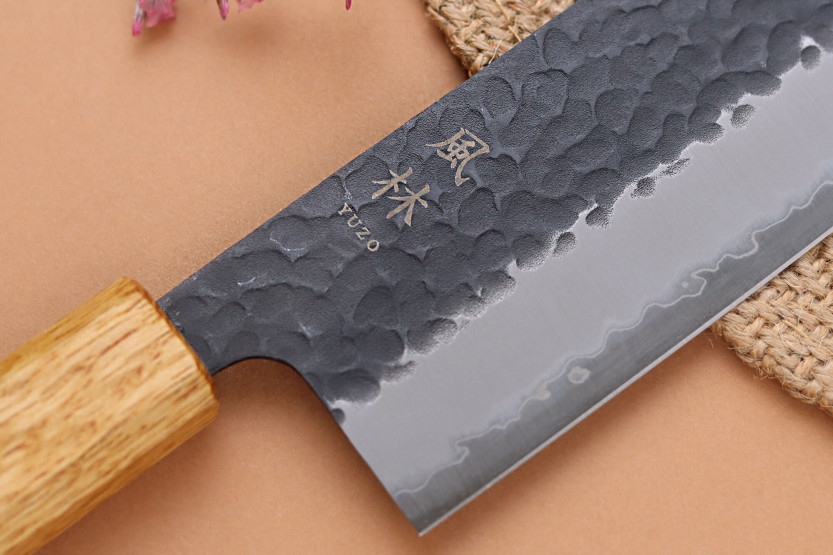
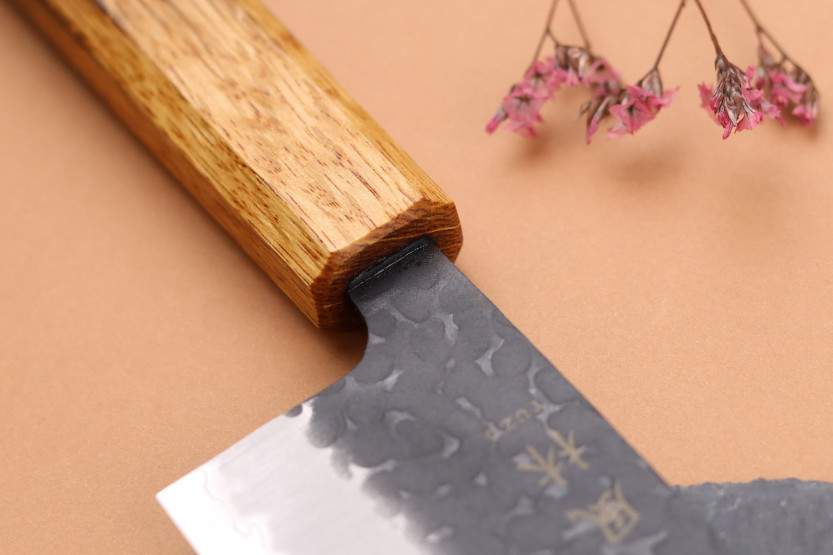
Last but not least, this blade boasts arough forged finish that lends a traditional character to your handcrafted knife. It is not polished, which gives it its distinctive dark look. What's more, the blade is hammered, adding an extra touch of personality.
A Yuzo knife with an authentic wooden handle
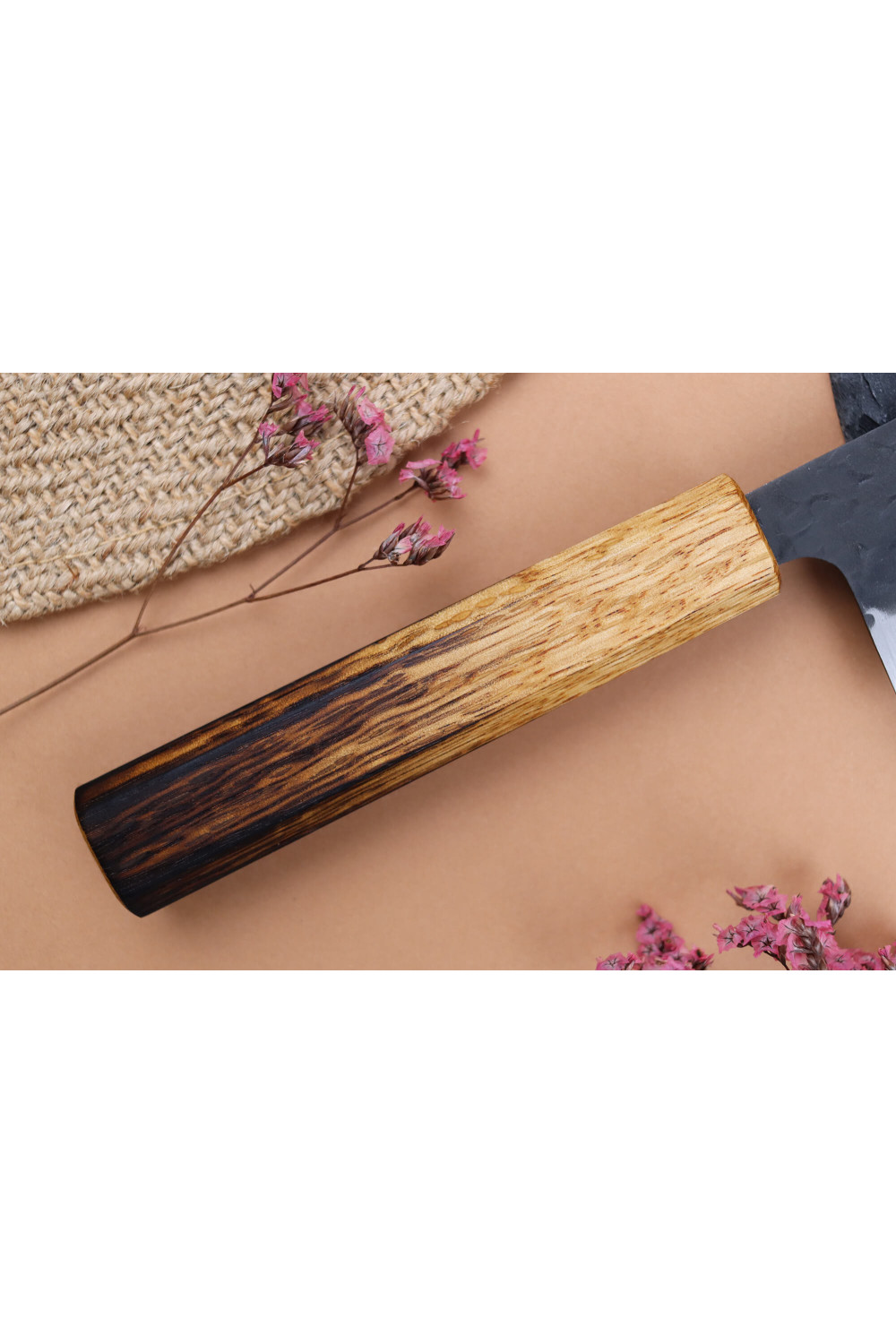
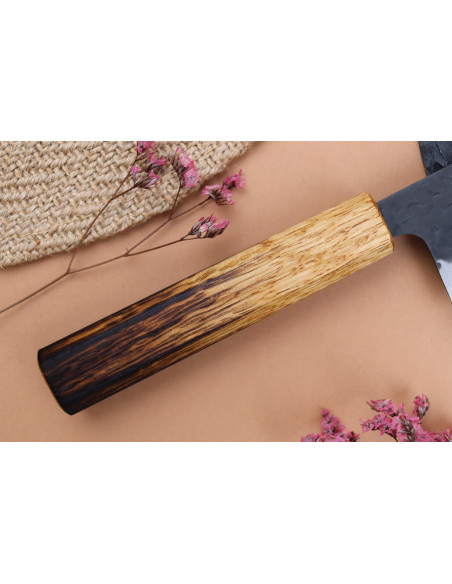
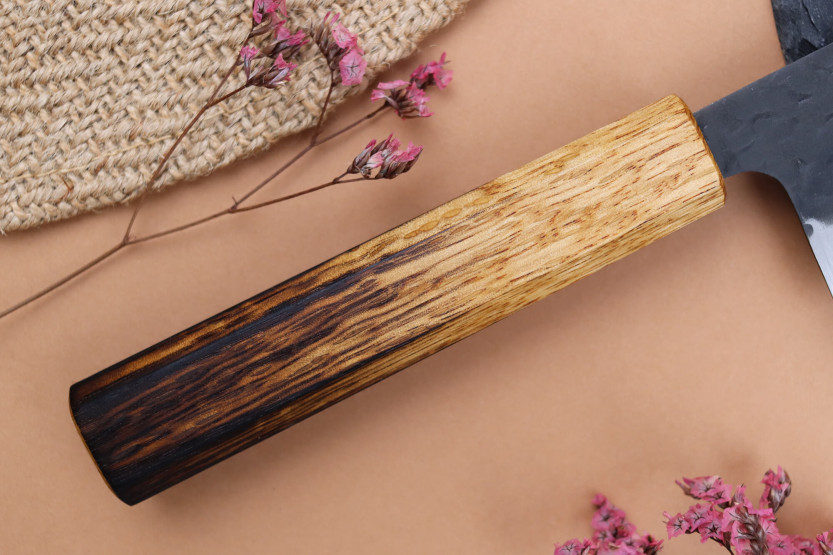
We chose oak wood from the island of Kyūshū for the handle of your Yuzo Japanese knife. This variety of wood, renowned for its durability, endures the years without suffering deformation, making it a material frequently used in furniture design. Oak is distinguished by its resistance to moisture, shock and vibration, enabling it to retain its original shape over the long term.
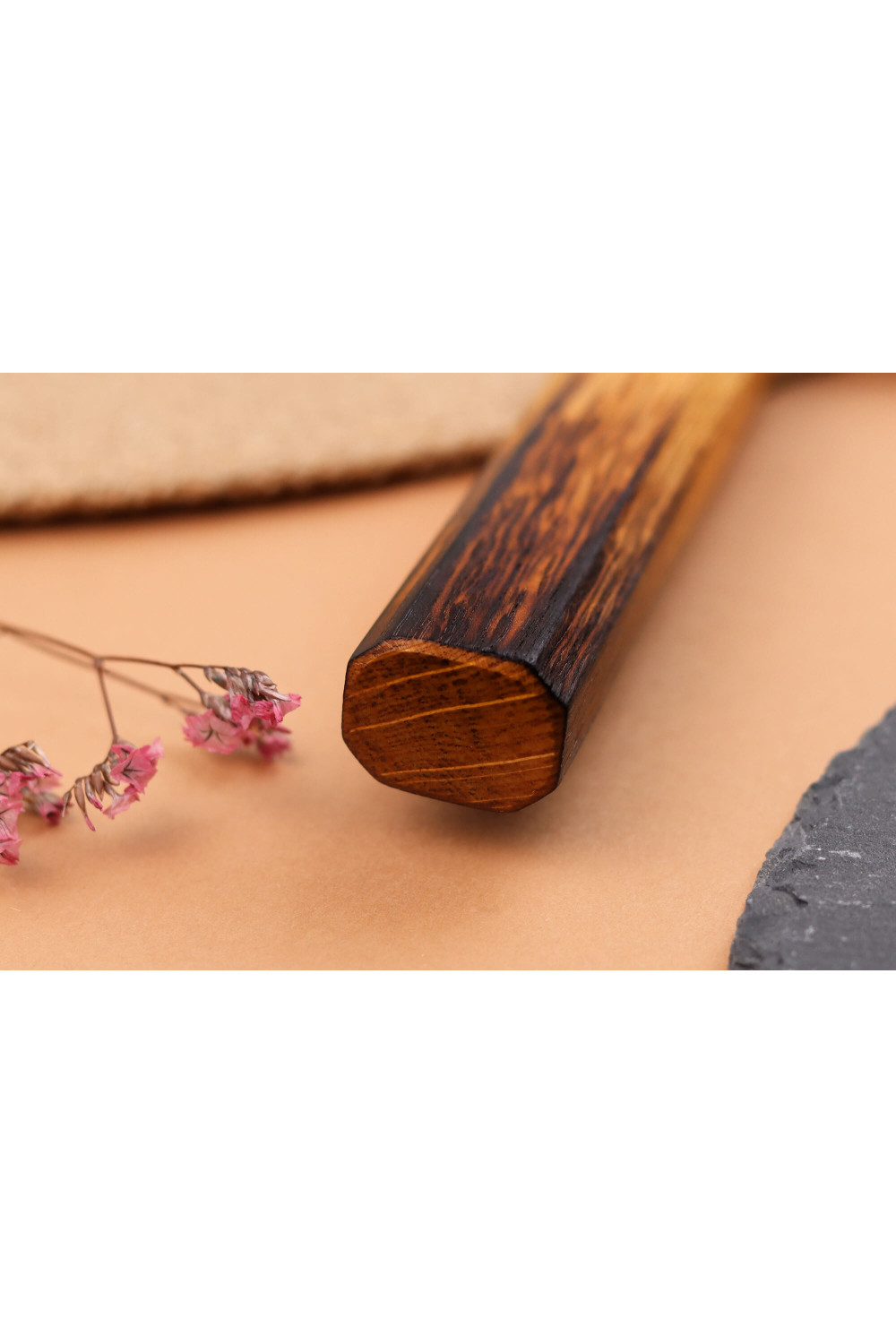
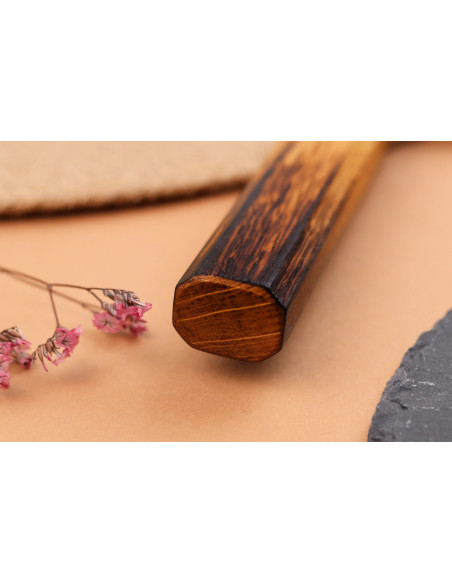
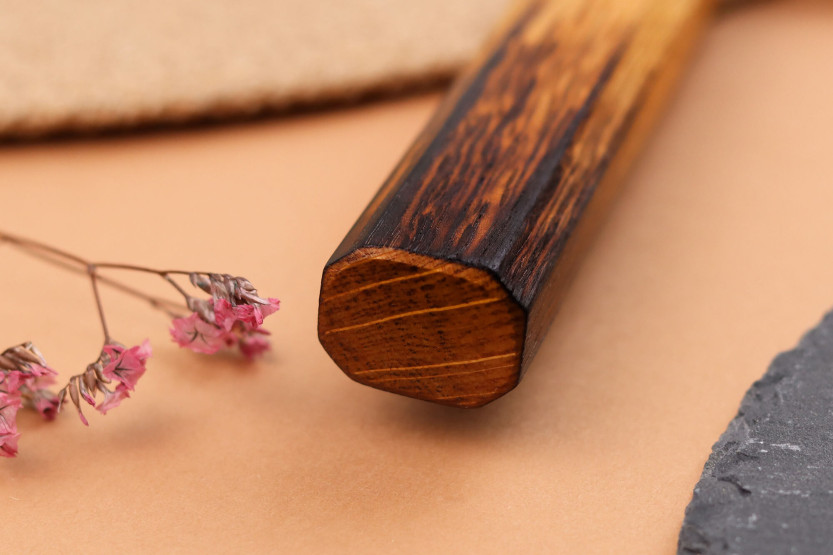
The end of the handle has been burnt, resulting in a darker hue. This technique reinforces its resistance while adding a traditional touch that is much appreciated by chefs. The resulting color contrast is impeccable.
The handle of your Yuzo knife is octagonal in shape with eight sides, offering ergonomics suited to both right- and left-handed cooks. Lightweight and easy to handle, it's a pleasure to use, even for long cuts.
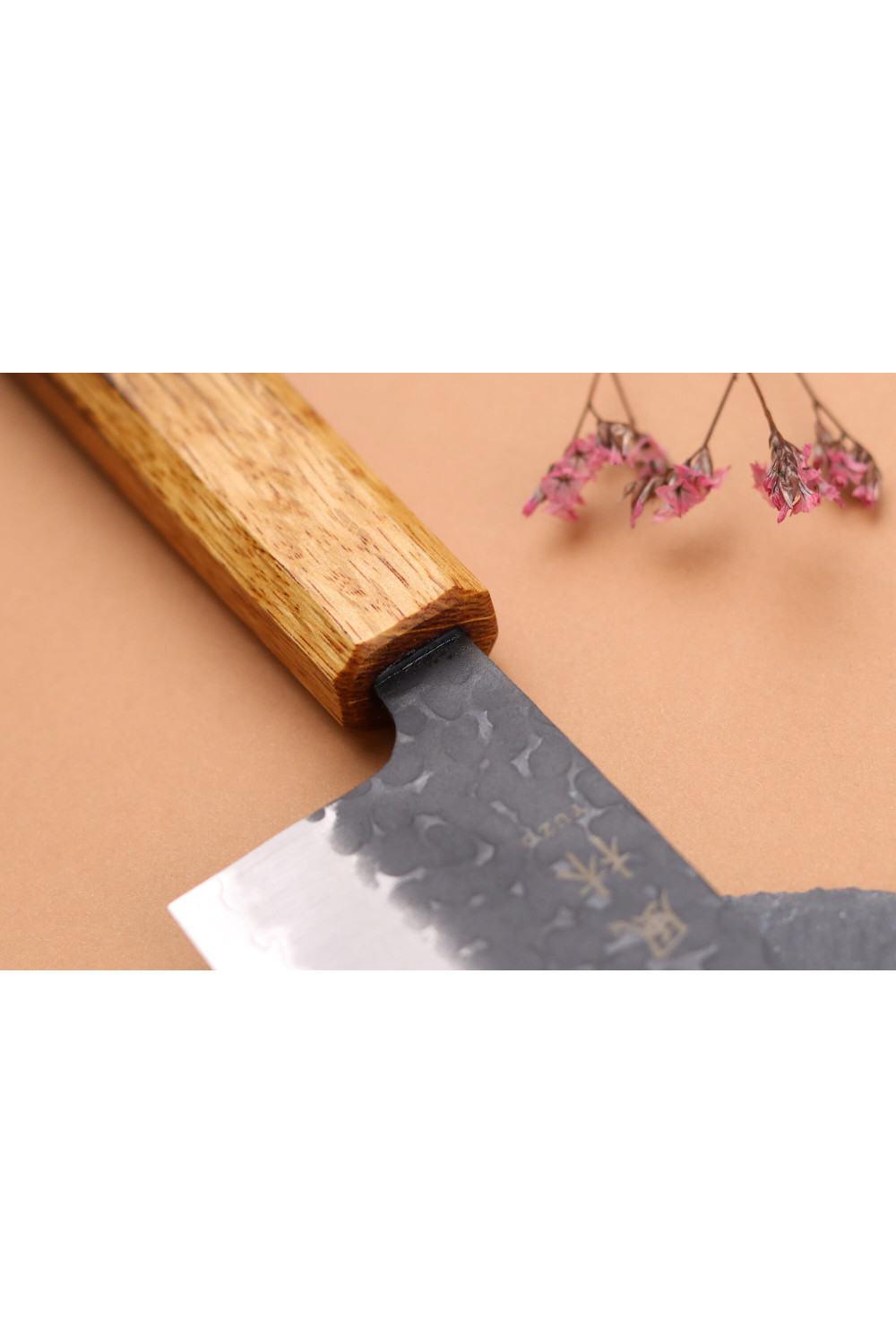
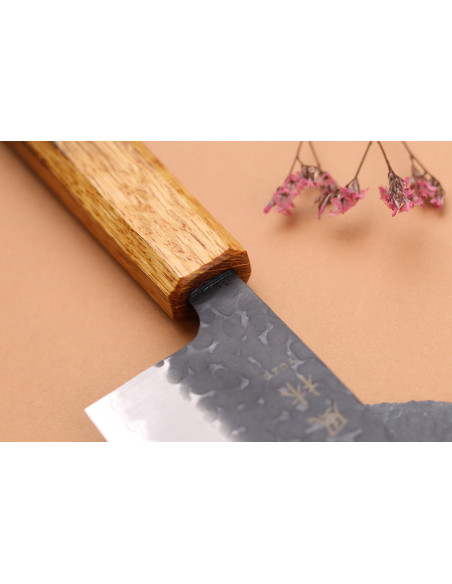
To ensure a watertight seal against moisture or food residues, wood paste is used to fill the gaps where the blade meets the handle. This technique preserves the durability of your Japanese kitchen knife.
Our maintenance tips for your carbon knife
To preserve the quality of your carbon knife, you should only wash it by hand, using a sponge and a mild detergent. Avoid soaking it in the sink, and do not put it in the dishwasher. As it is oxidizable due to the presence of carbon, it is essential to protect it from moisture. Likewise, take care not to get the handle of your nakiri knife knife too wet.
During use, wipe the blade regularly to avoid prolonged contact with the acidity of food.
It's important to note that the color of the blade may change over time, which is perfectly normal. This variation in hue is the result of interaction with the acidity of the food and the humidity in the air, a natural reaction that in no way affects the performance of your knife.
Discover other Yuzo Black AS knives on KnifeLeader.eu!




 By buying this product you can collect up to