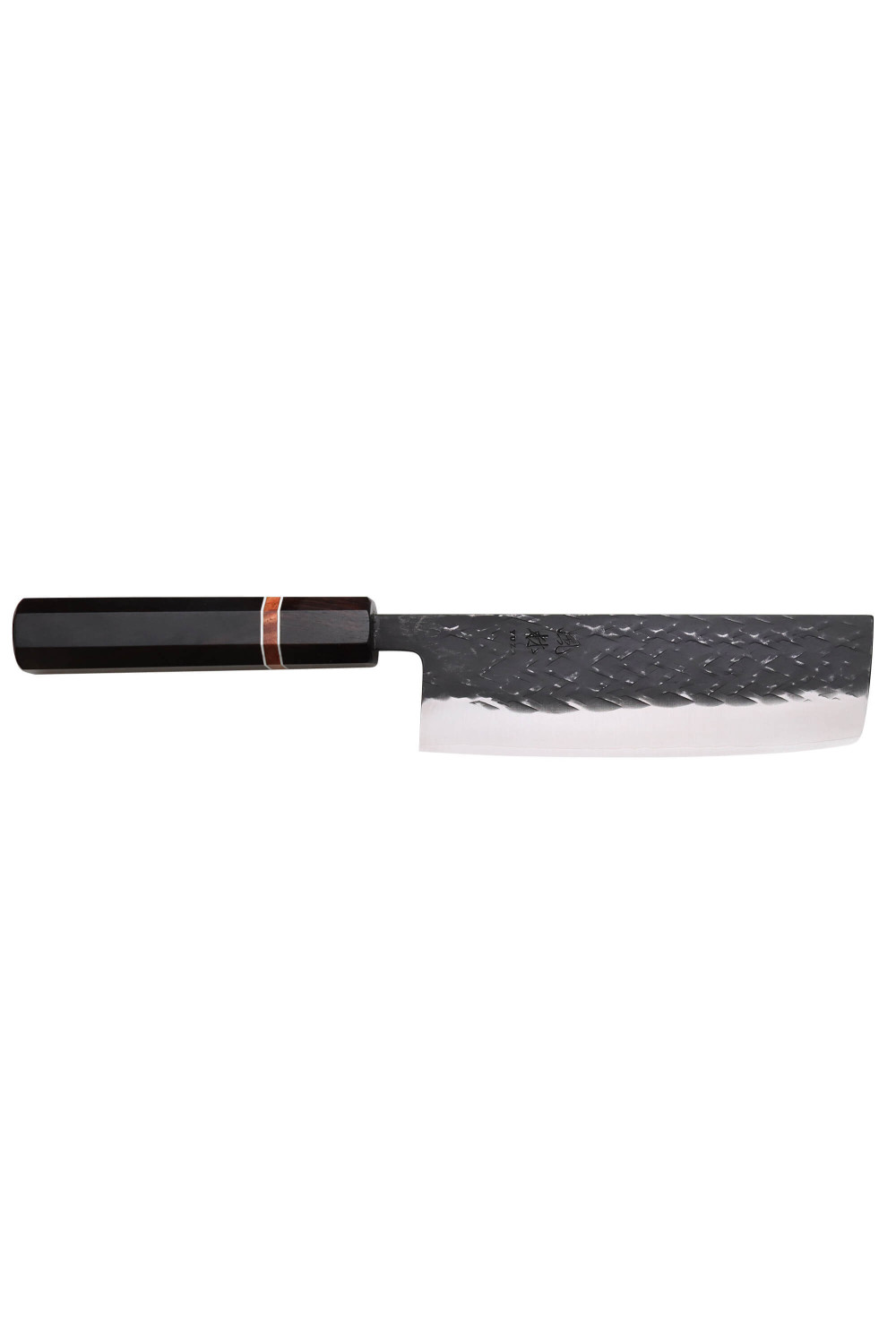
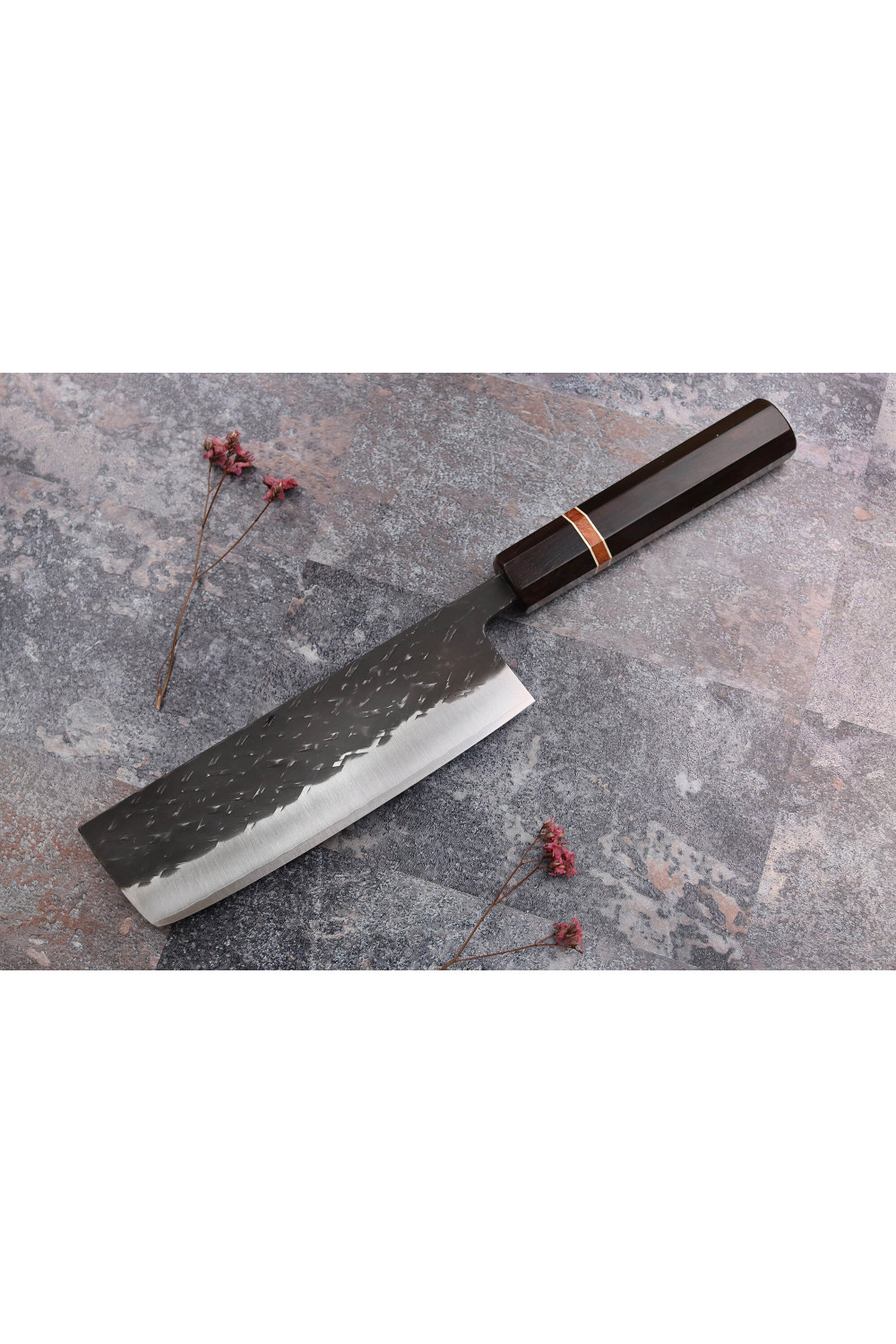
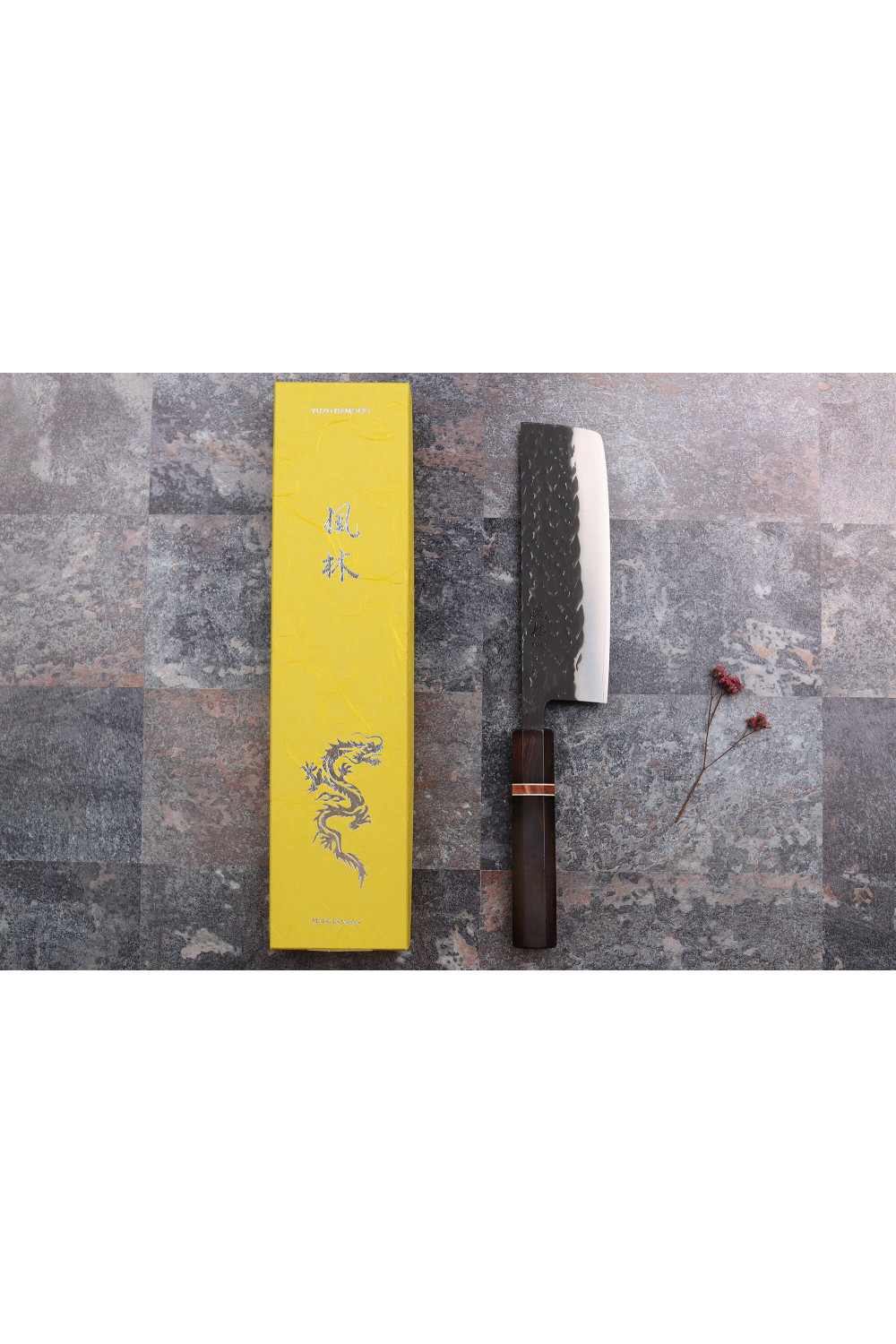
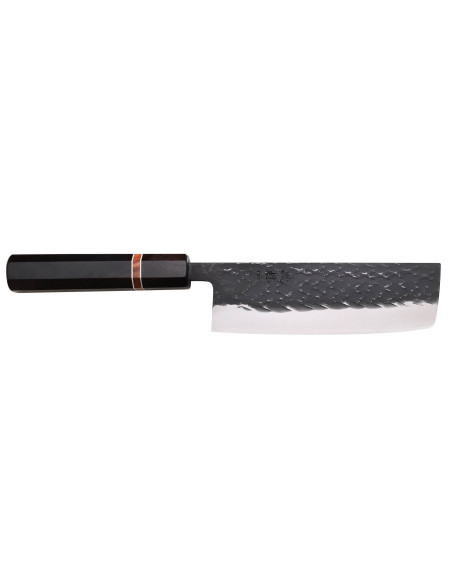
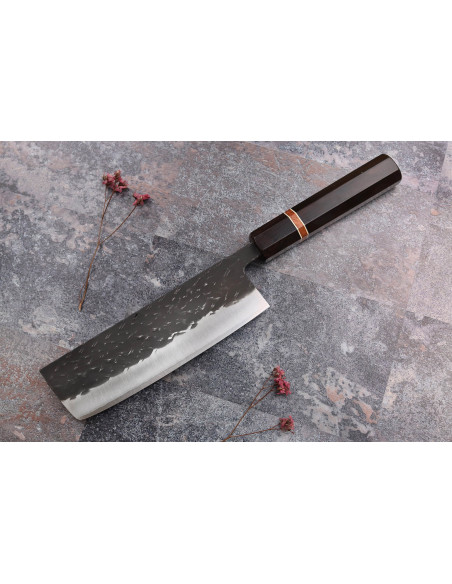
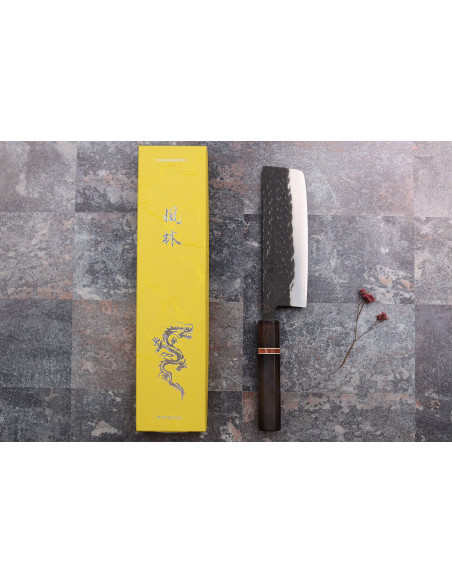
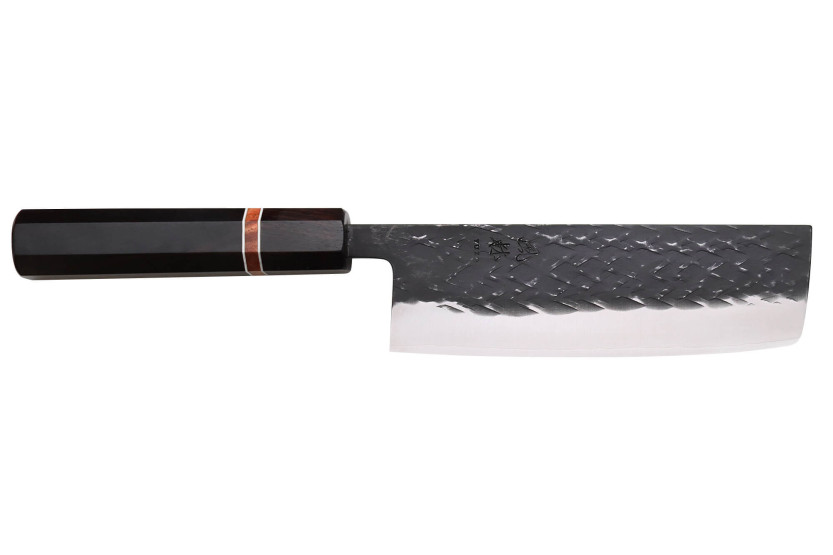
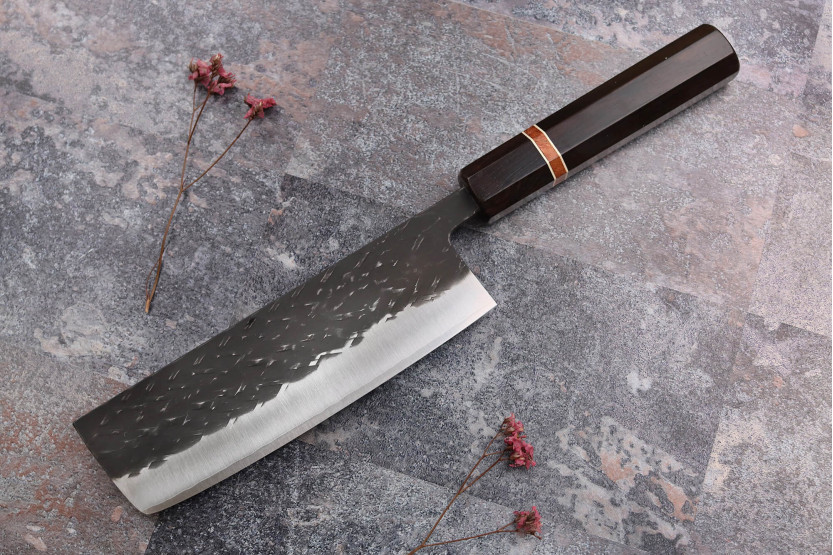
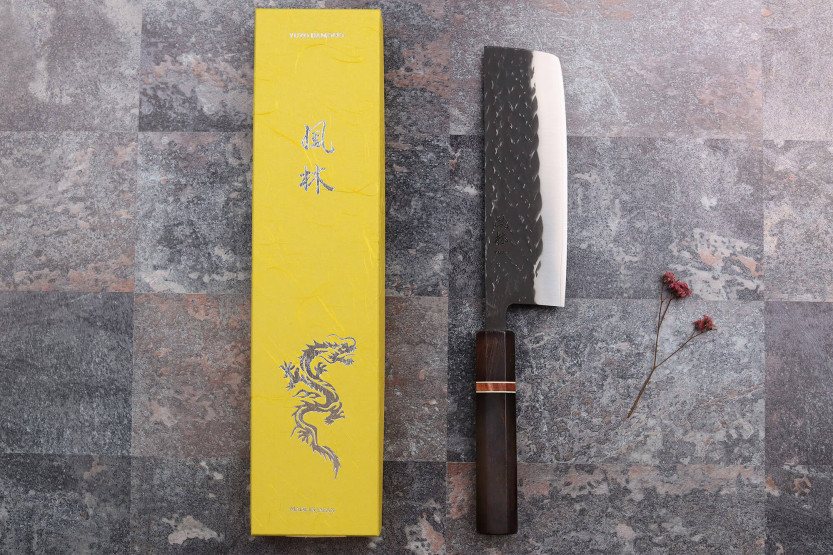
The Yuzo Hamono Black SLD nakiri is the ideal knife for preparing all your vegetables! With it, you can peel, slice or cut your fruit and vegetables in a variety of ways without difficulty. Be careful not to use it on hard foods such as squash, cheese wheels or bones.
This Yuzo Japanese knife is forged by the renowned Tadafusa cutlery factory in Sanjo, Japan.
The high-performance Japanese knife in SLD steel
The blade of your knife is designed with a typically Japanese San Maï structure (meaning "3 layers"). This specific composition is built around a core of hard steel, which is then surrounded by a layer of softer steel to protect it. As the core is surrounded by the outer layer, we speak of 3 layers, two of which are made of the same steel. This technique results in a well-balanced blade, since the rigid core is made softer by the top layer.
This series of knives features cores made from Japanese SLD steel. This steel is produced by the world-renowned steelmaker Hitachi.
For the record, SLD steel was originally intended as a material for machines used to slice other steel alloys to create various parts, for example, for mechanical engineering. Given the qualities of SLD alloy, Hitachi soon decided to make it an alloy in its own right! For example, SLD can retain its sharpness for a long time, but is easy to sharpen when necessary.
As for its composition, SLD steel has a high carbon content of around 1.6%. Carbon is a crucial element for enhancing the hardness of an alloy, since a hard alloy will benefit from a high-performance cutting edge over time: a real advantage! On the Rockwell scale, the blade reaches 63HRC thanks to its high carbon content: proof that this is a knife that will last, despite multiple uses.
This steel also contains around 13% chromium: an element that improves corrosion resistance. However, this steel should still be considered oxidizable. In fact, it's a hybrid steel, somewhere between stainless and oxidizable, but one that needs to be maintained with the same care as if it were made entirely of carbon.
Even at the microscopic level, SLD alloy has qualities! You can see the micro-carbides evenly distributed to create a well-balanced micro-structure. It's perfect for improving your blade's resistance to wear and micro-cracks.
The core of the blade is then coated with a layer of stainless steel that further improves resistance to oxidation, but still without rendering it stainless. It's this top layer that gives your knife its "suppleness": it doesn't become flexible, but it is more resistant to the shocks caused when cutting.
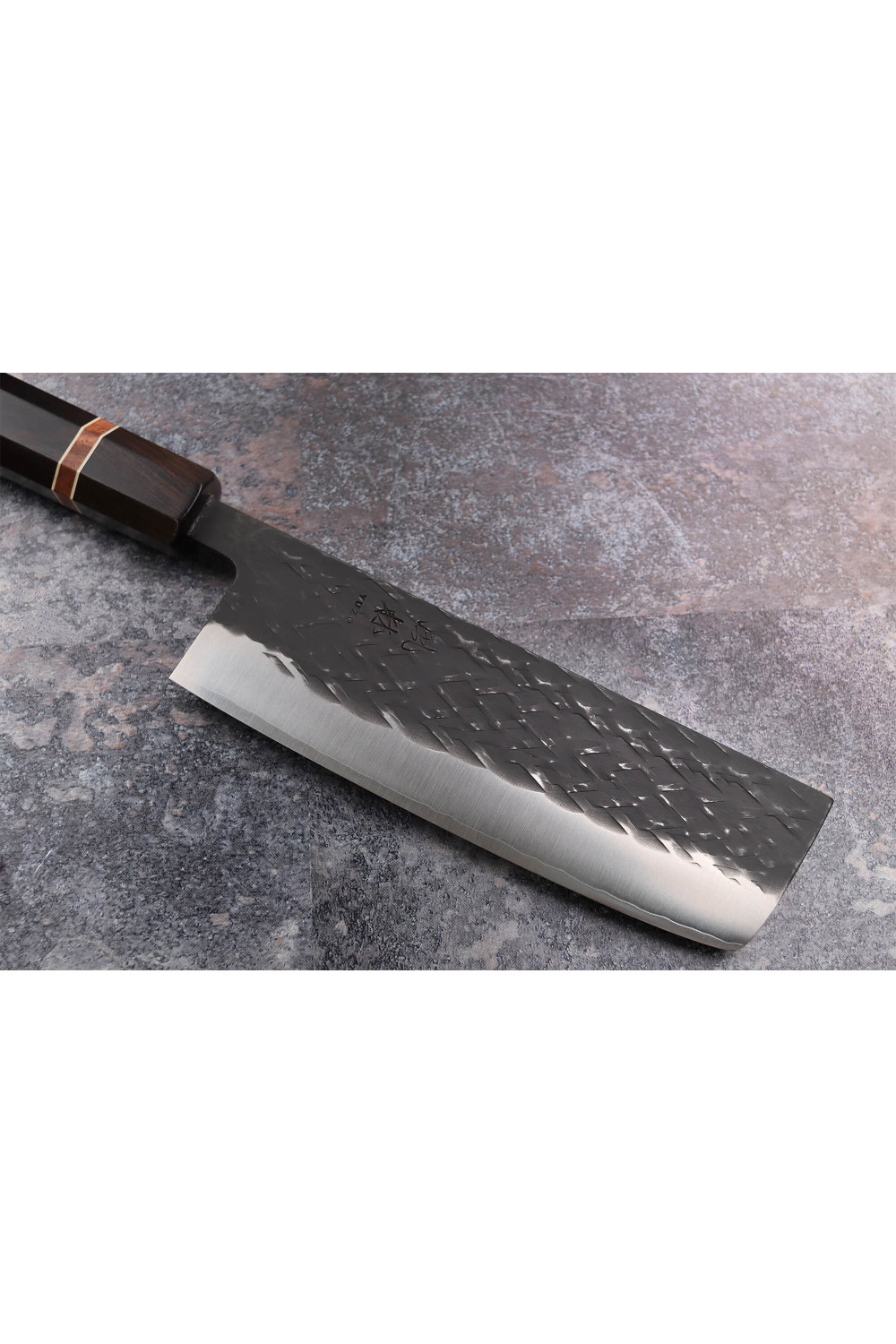
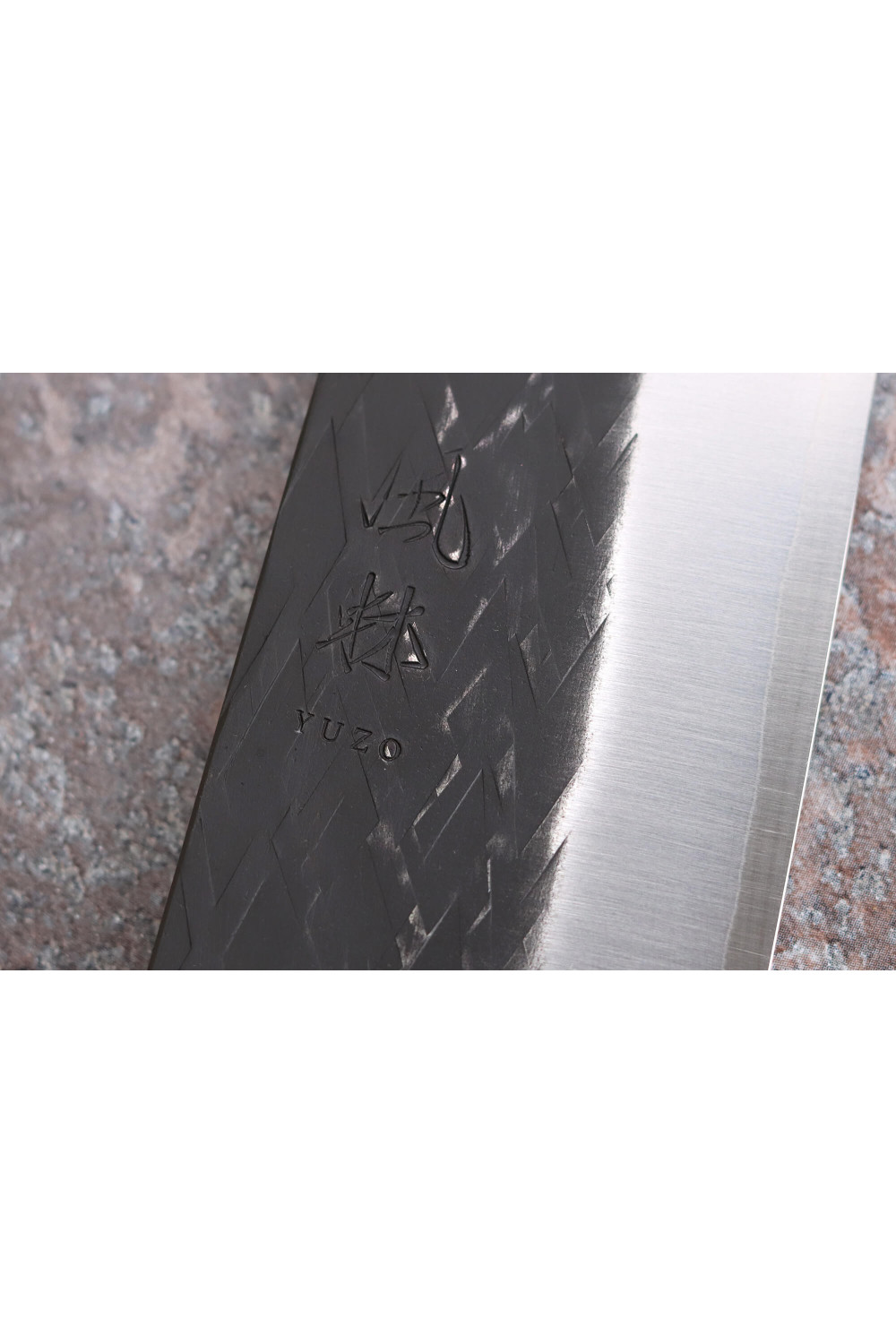
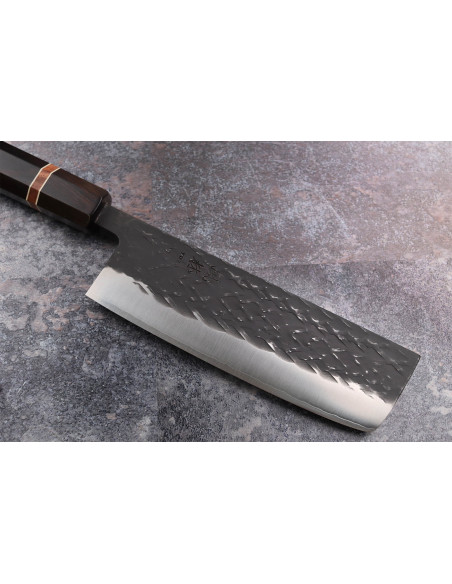
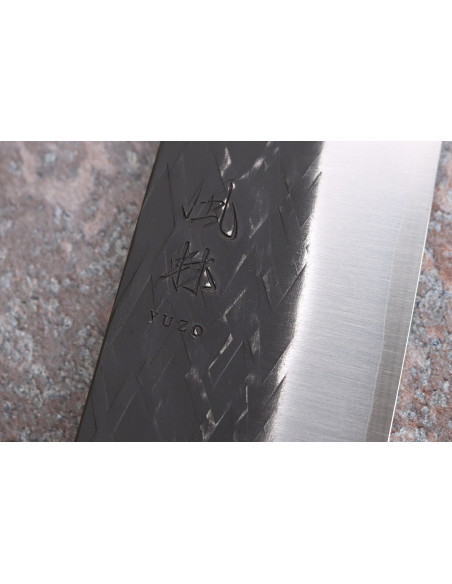
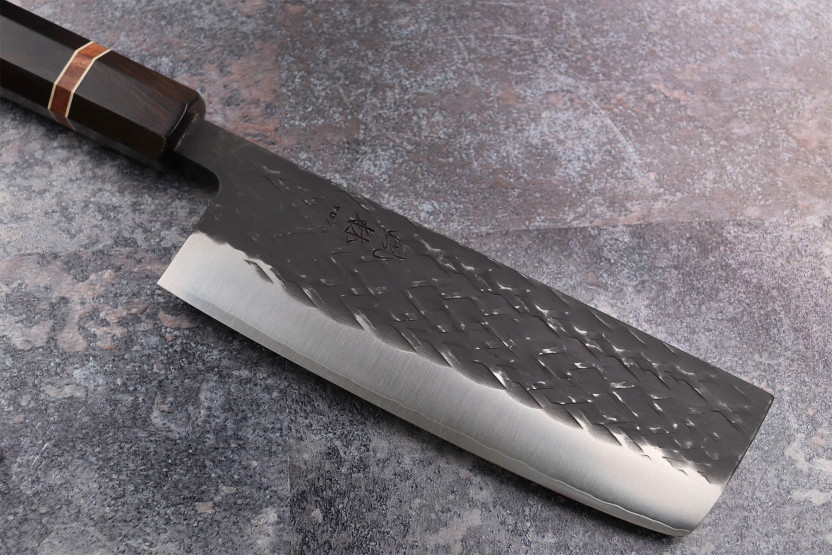
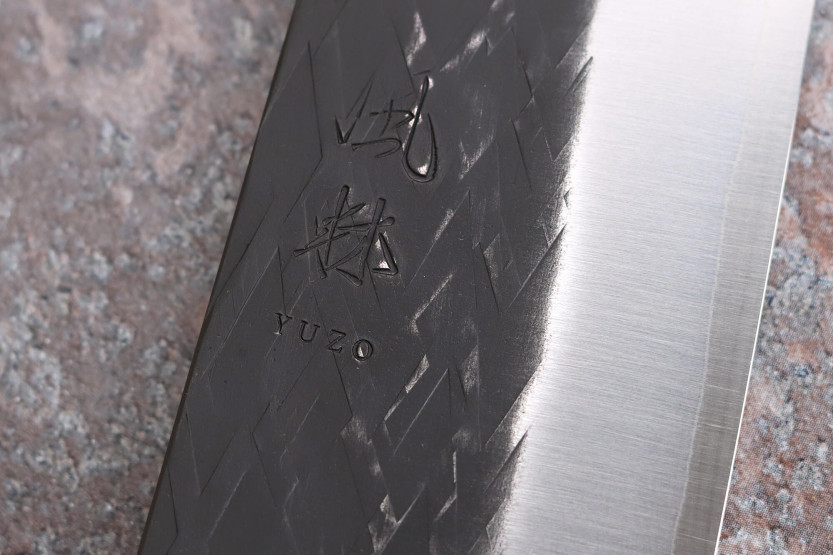
Last but not least, this blade has a rough forged quality finish that will darken it. This is an unpolished knife, to give the blade a more traditional appearance. For added character, the blade has been hammered with unusual criss-cross patterns for an original design.
A traditional knife with an ebony handle
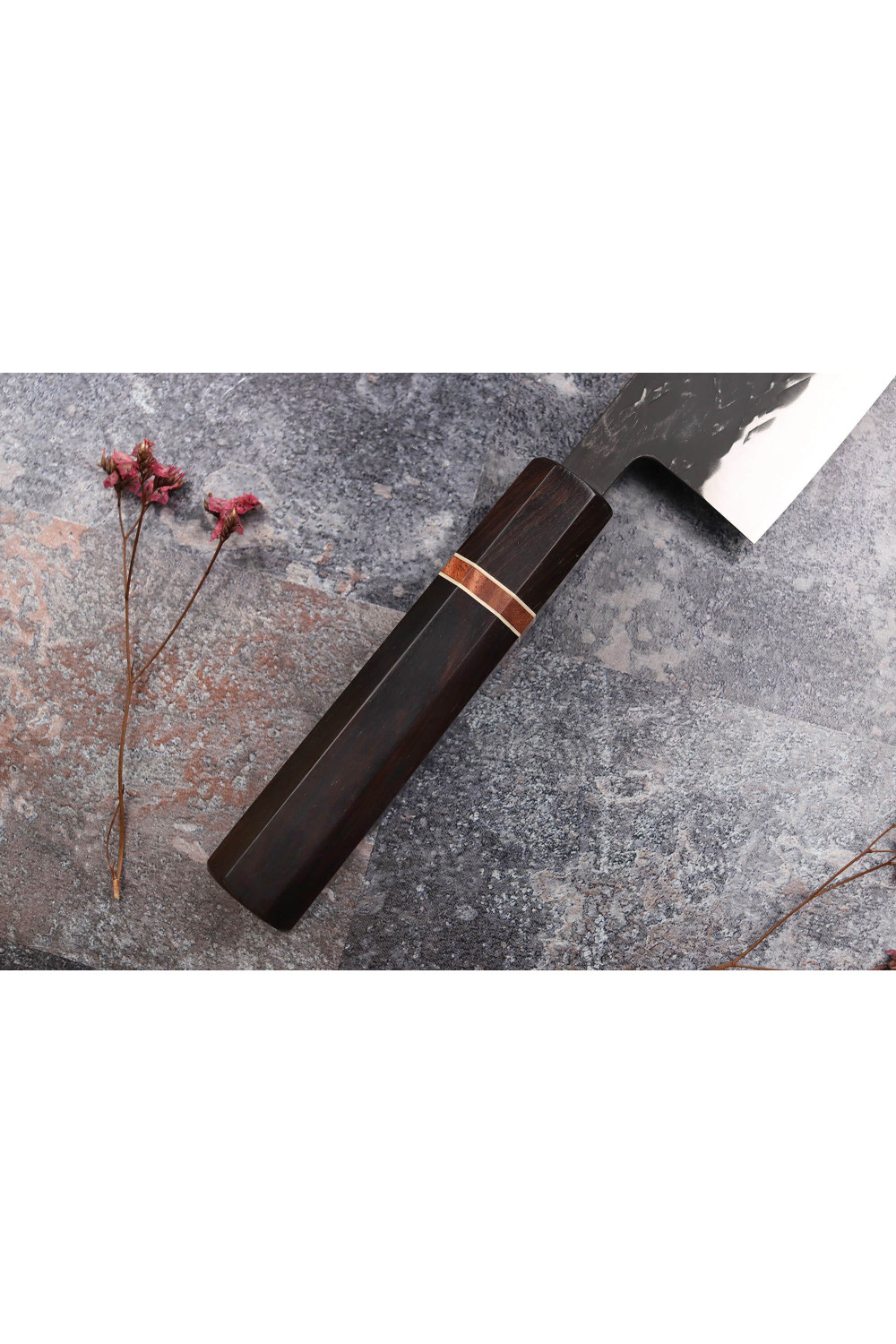
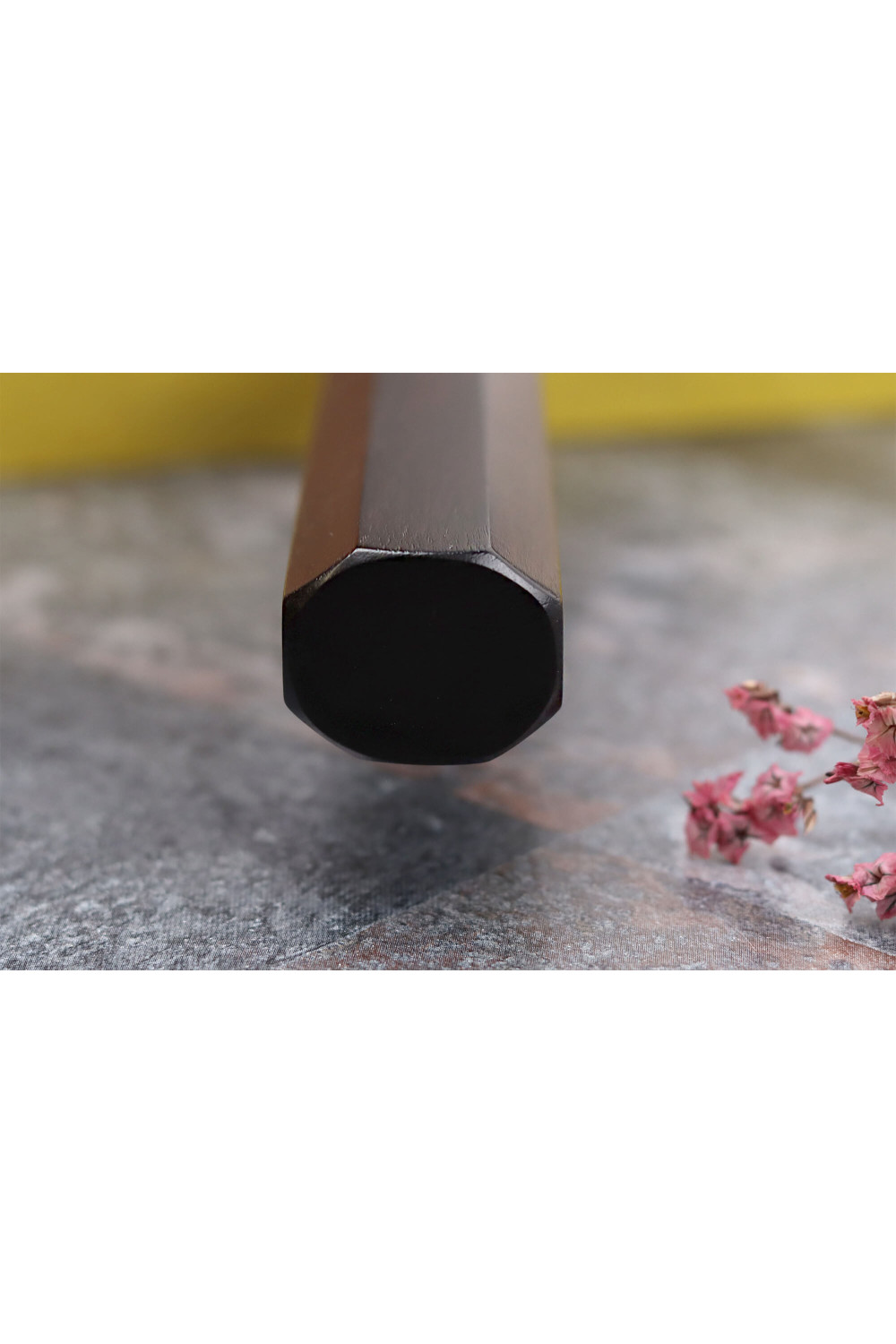
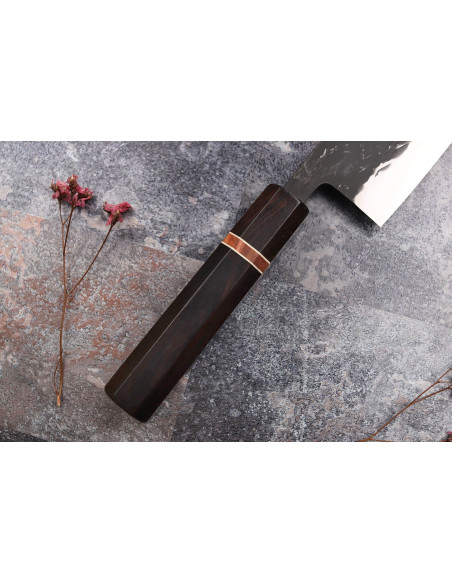
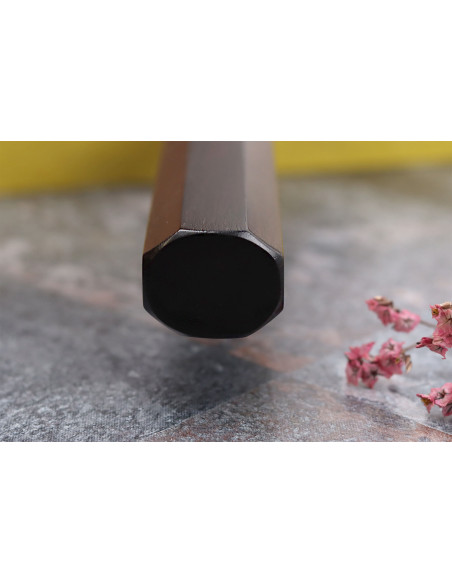
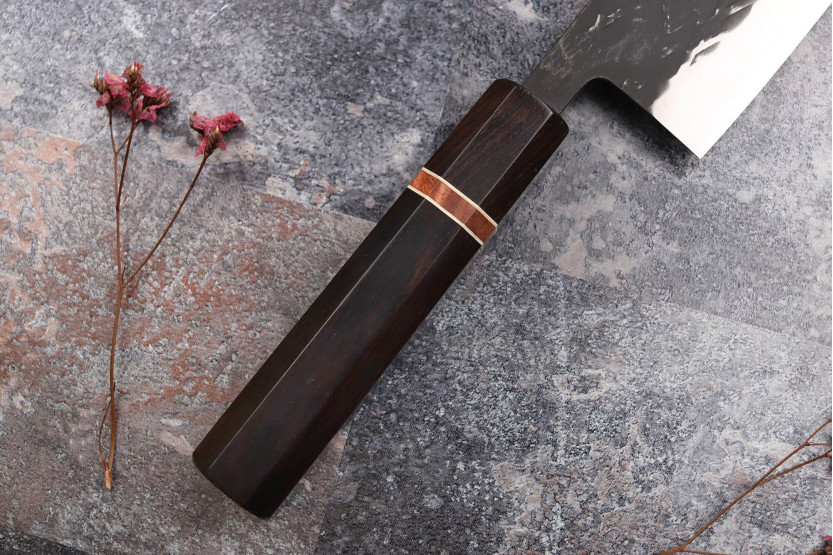
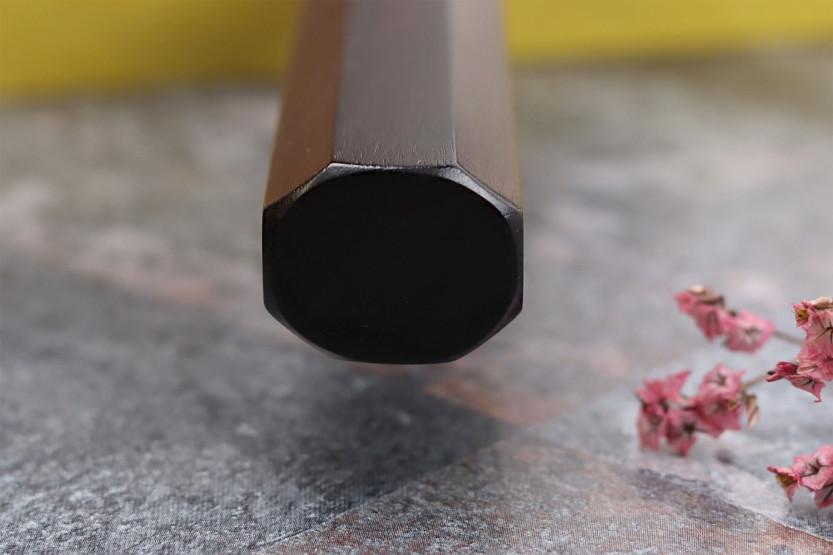
The handle is made of ebony with red hues, a dense wood that is resistant to the risk of cracking over time and is well suited to frequent use. Octagonal in shape for optimum ergonomics, it is suitable for all cooks, whether right- or left-handed.
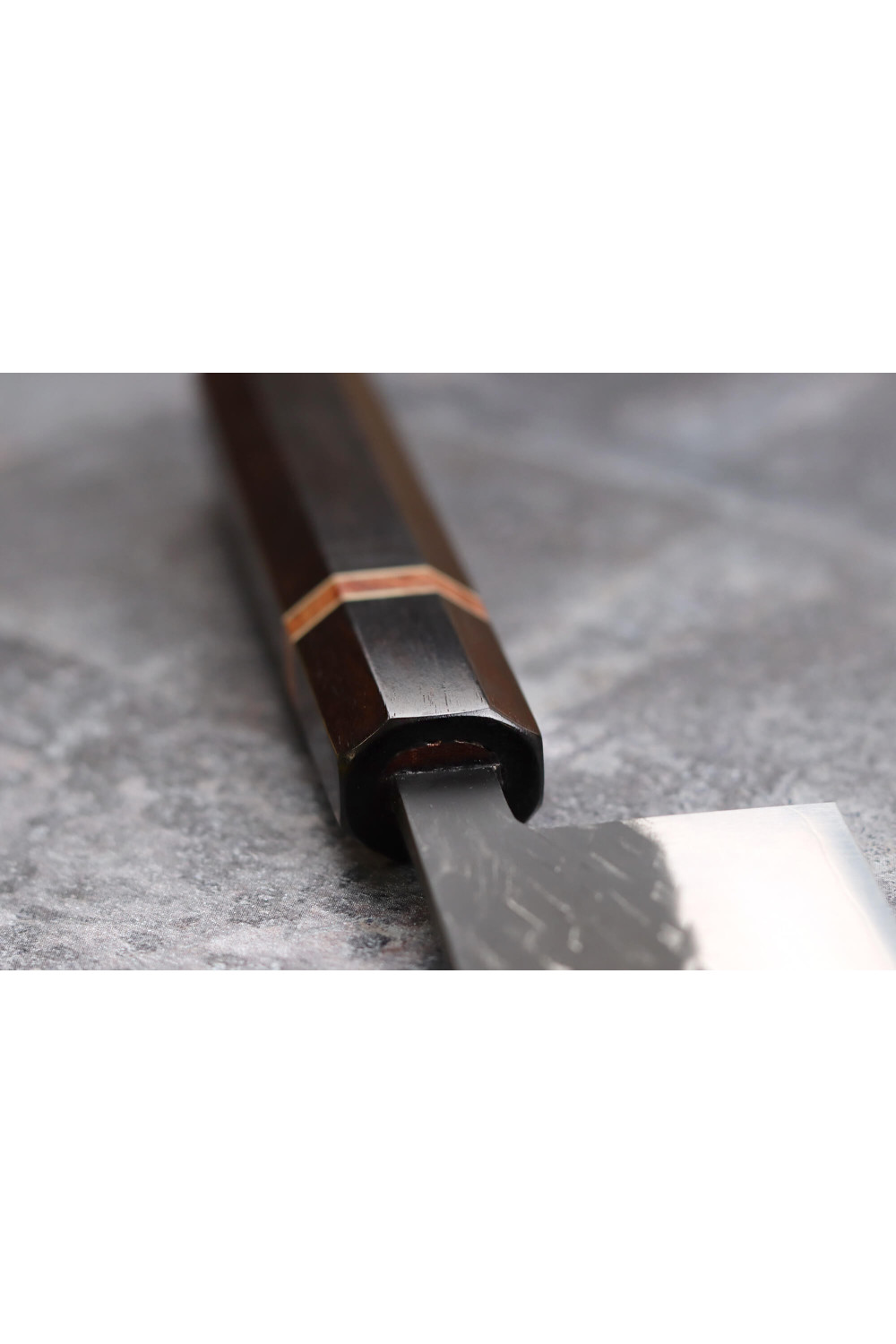
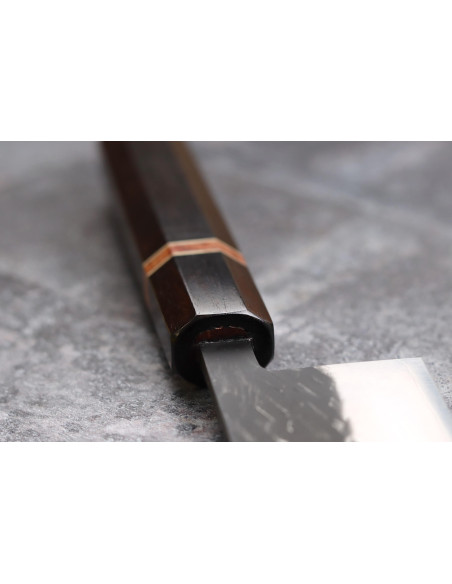
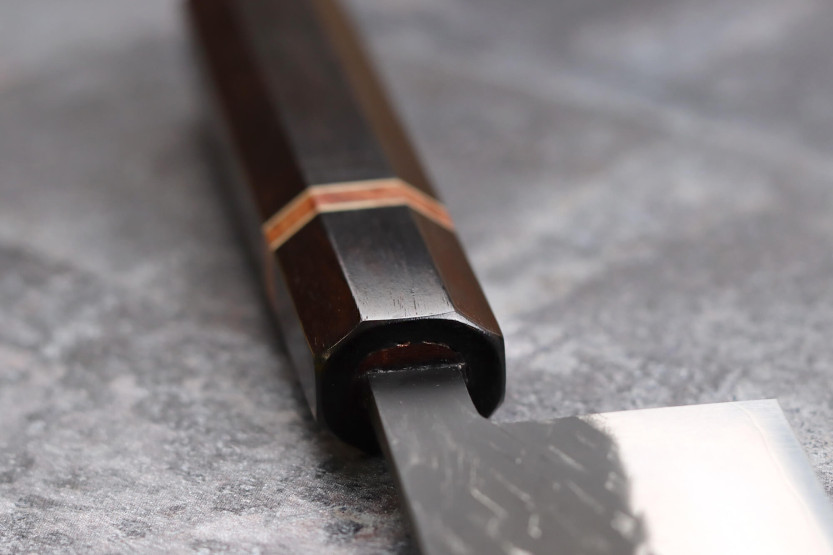
It also features a darker ebony bolster for an elegant look.
At the center of the ebony parts is a ring of quince wood: a robust species that handles temperature changes very well. Its lighter color contrasts perfectly with the darker ebony. Finally, two white micarta edgings surround the quince ends.
Finally, to fill the gaps between the different materials and make them watertight, wood paste was added. This prevents moisture from seeping inside, and prevents the small food items you're cutting from slipping into the middle.
How to care for your carbon knife
For optimum care, your knife should be hand-washed with a sponge and a mild detergent. Don't put it in the dishwasher, or leave it to soak in the sink. What's more, ebony should not be left in prolonged contact with water, so avoid getting the handle wet. Once the knife has been washed, wipe it dry before storing it in a dry place.
Knives are considered oxidizable, so it's important to store them in a dry place. Over time, the blade may change color: this is a natural reaction! In fact, it's the acidity of the food and the humidity in the air that can have an impact on its color.
Discover many Yuzo knives on KnifeLeader.eu!




 By buying this product you can collect up to
.png)
.png)