Choice materials for this Yuzo Japanese knife
The design of this handcrafted Japanese knife is based on San Mai, a traditional Japanese method. It consists of forging a rigid steel core, which is then covered by an outer layer of steel that folds in on itself. The aim of this technique is to protect the core while balancing the blade's suppleness.
The core of this blade is made ofJapanese Shirogami #2 steel (also known as White Paper Steel #2), produced by the internationally renowned steelmaker Hitachi. This material has a high carbon content, reaching 1.2%: this element is crucial for high hardness, guaranteeing a high-performance cutting edge.
The hardness of this blade is 61HRC on the Rockwell scale, ensuring both excellent edge retention and an efficient cutting edge.
What's more, its microstructure is described as "pure" due to the homogeneous distribution of its micro-carbides. This gives the blade enhanced resistance to wear and microcracking.
To complete the San Maï structure, a layer of soft iron is folded over the core, forming the two outer layers: these ensure optimum protection and balance of hardness. However, due to the high carbon content of the Shirogami alloy, your Japanese knife requires careful maintenance to avoid oxidation.
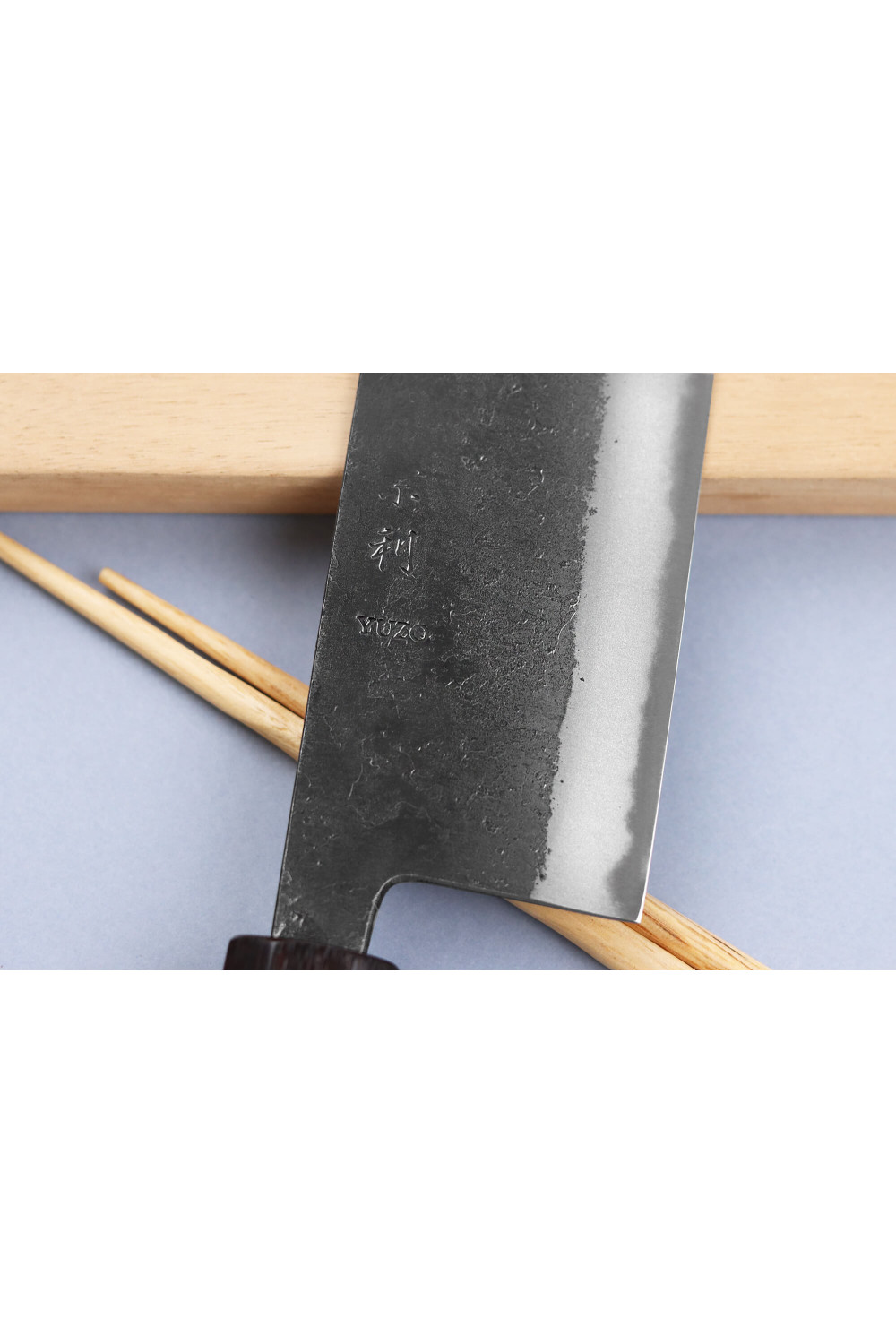
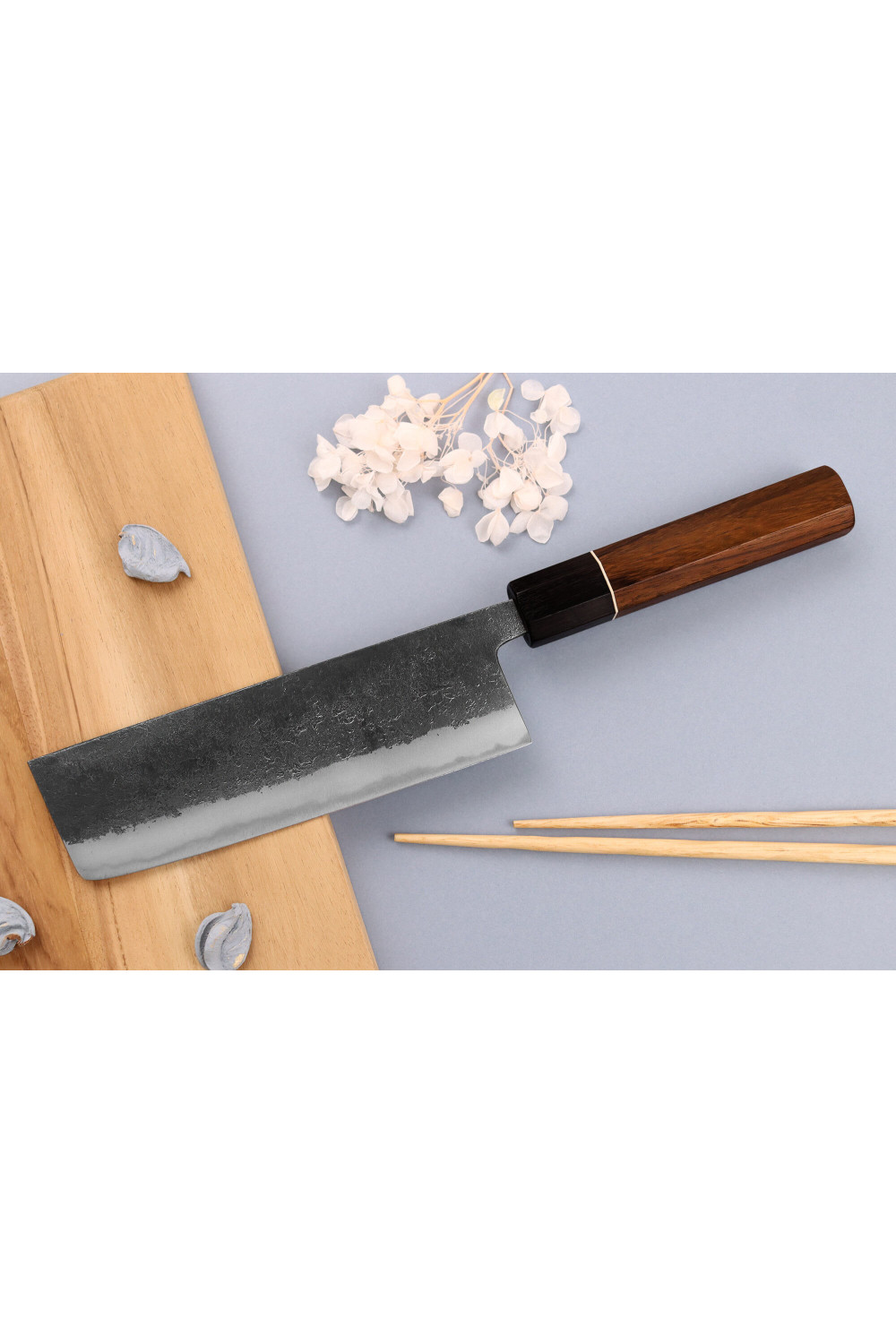
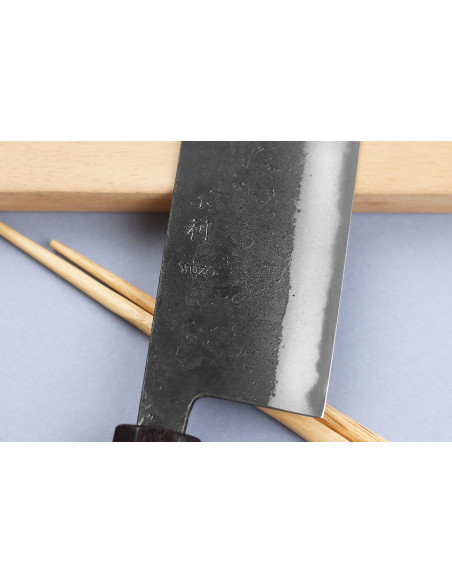
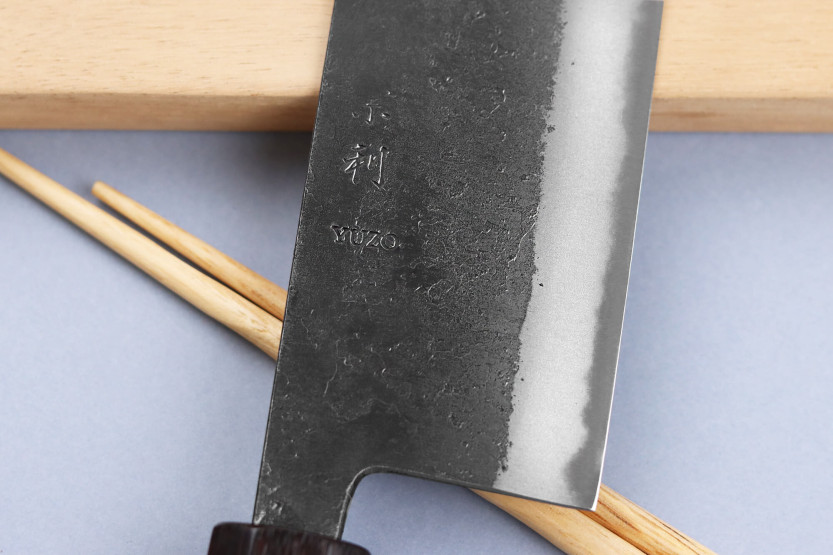
The superimposition of these different layers creates a fine wave with random patterns that you can observe all along the cutting edge: each piece is unique!
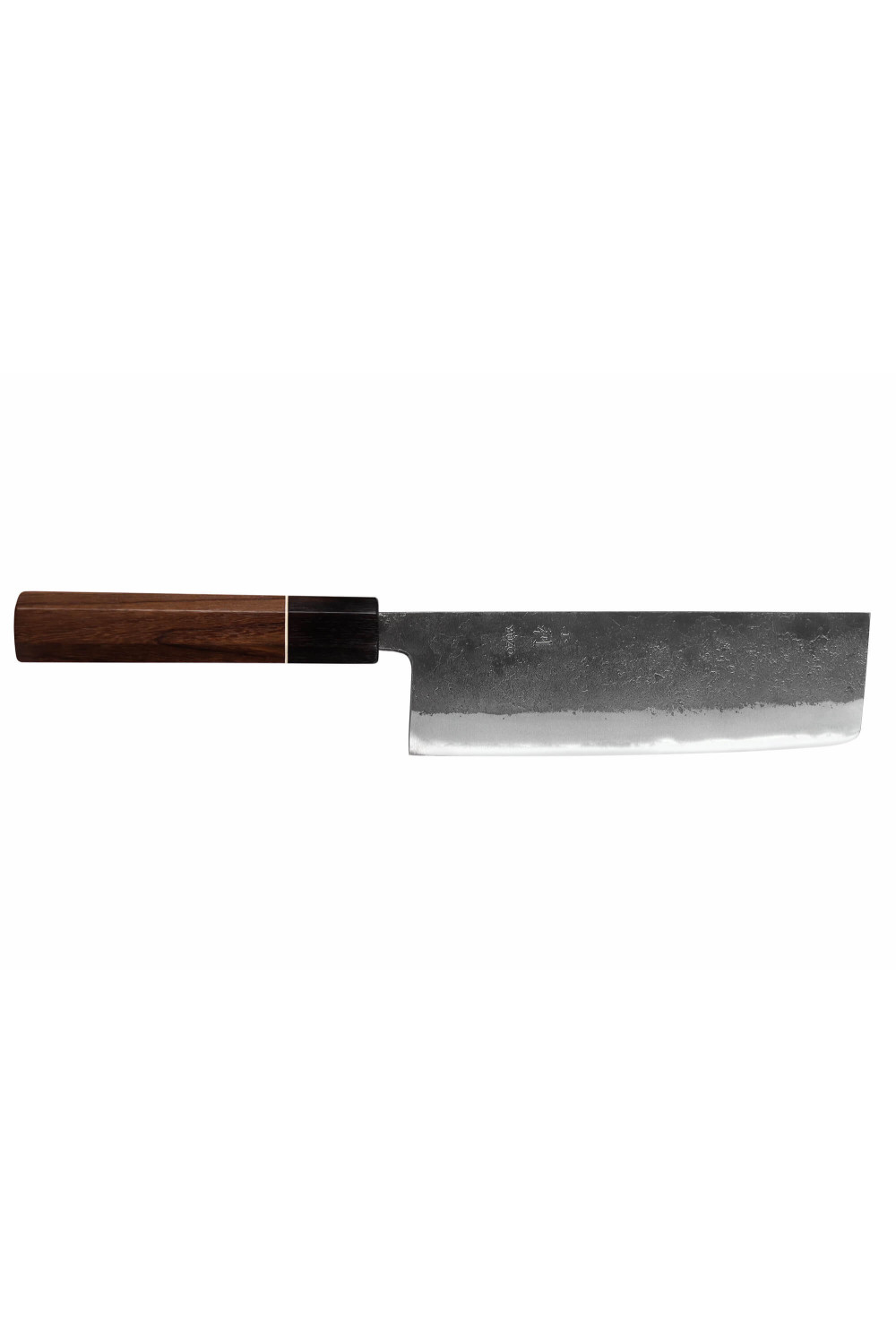
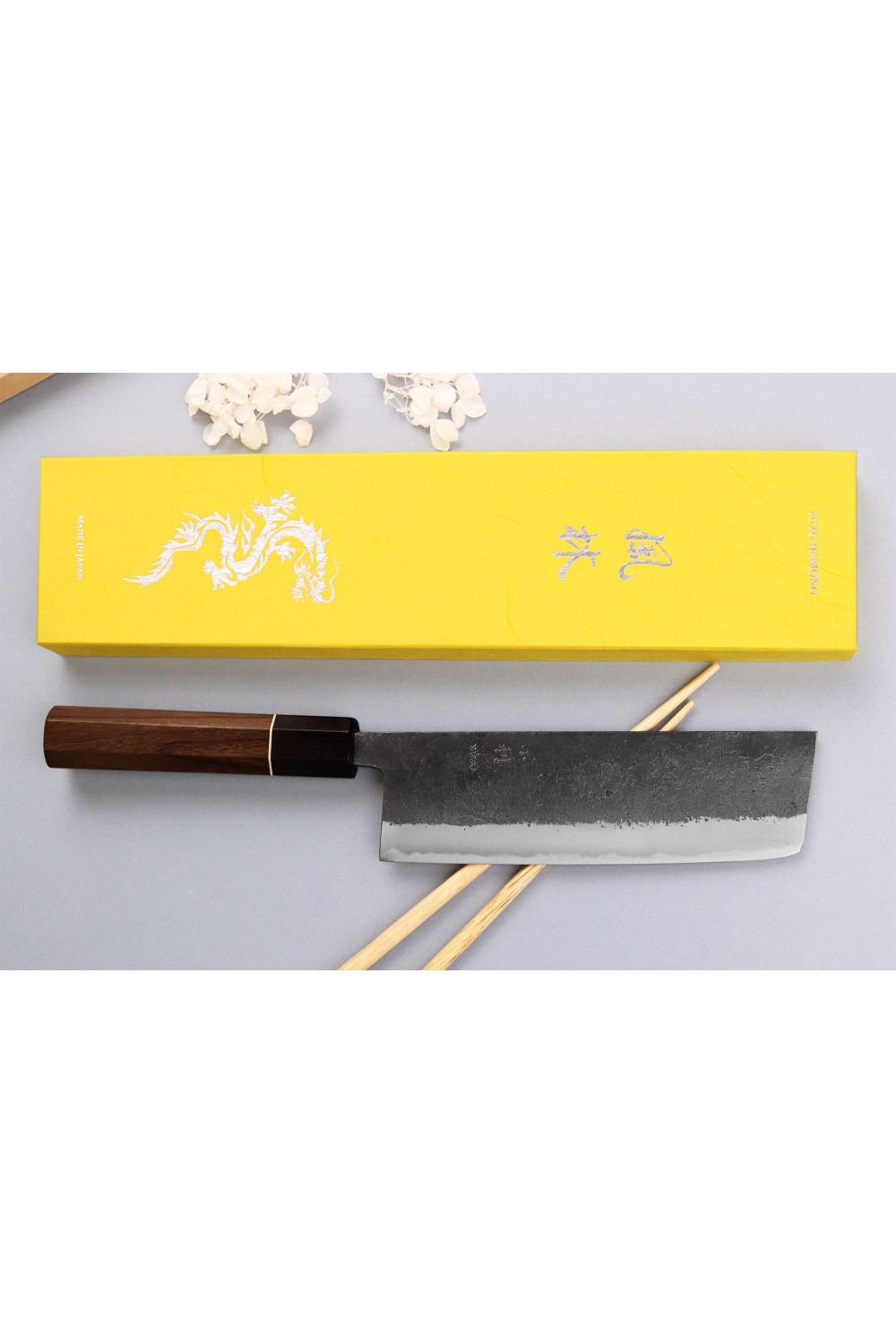
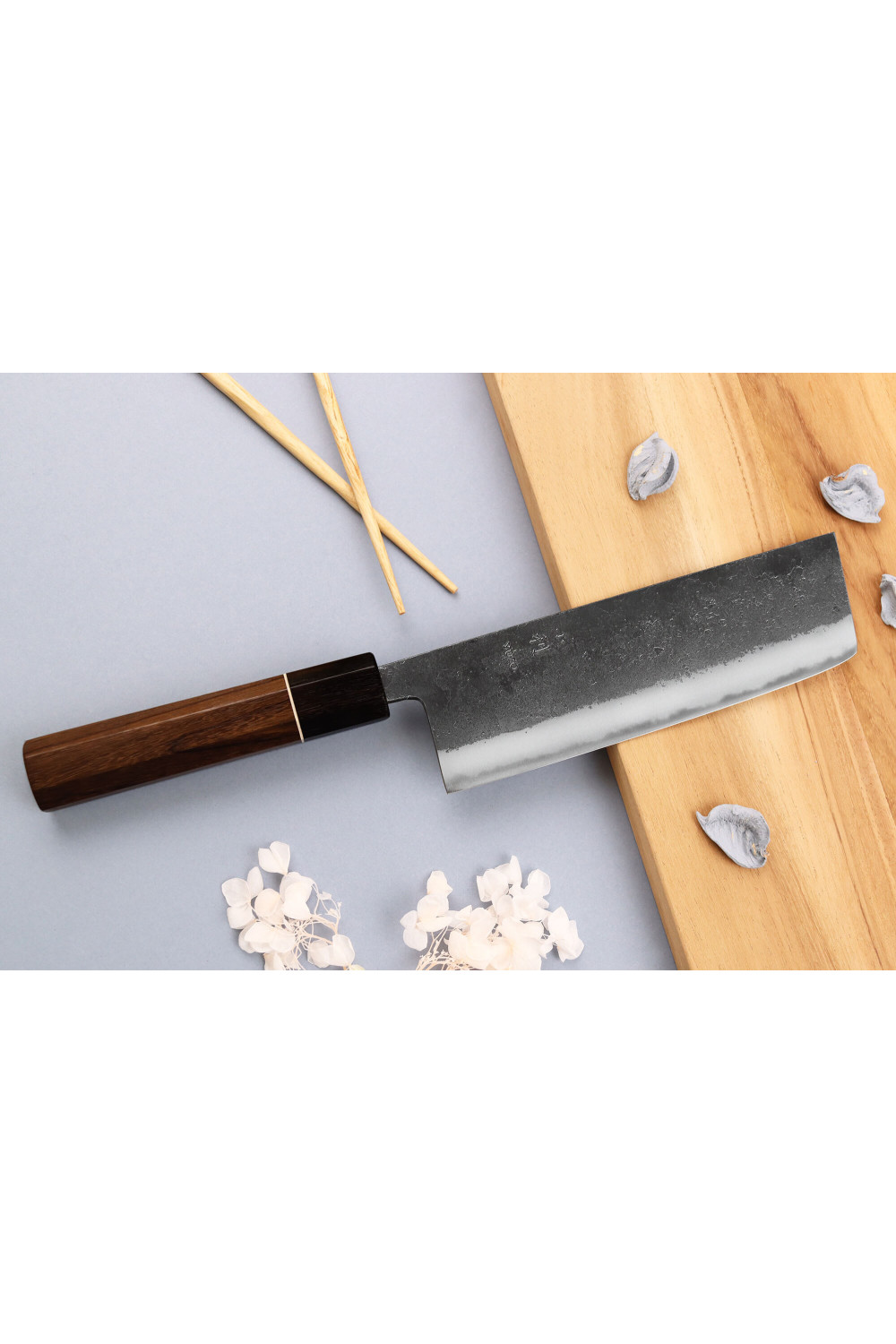
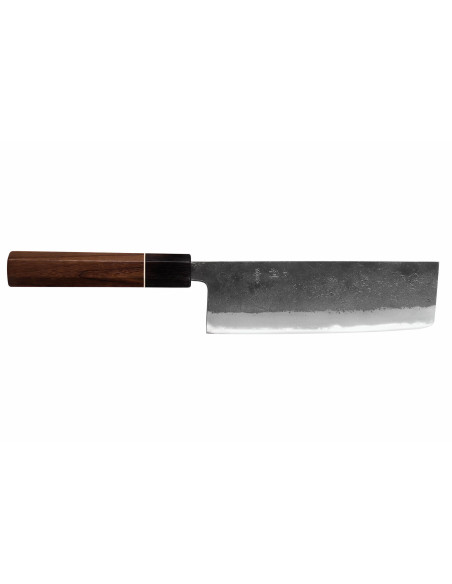
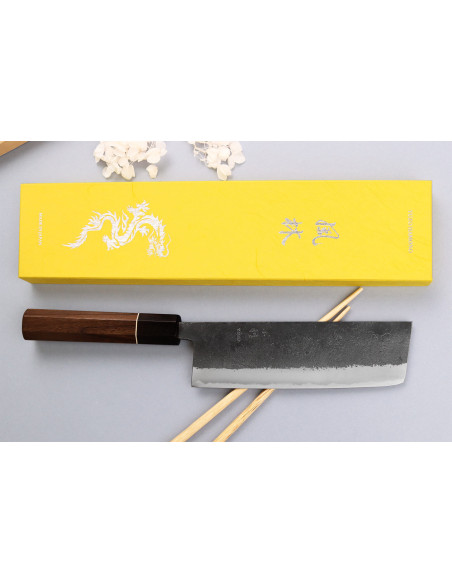
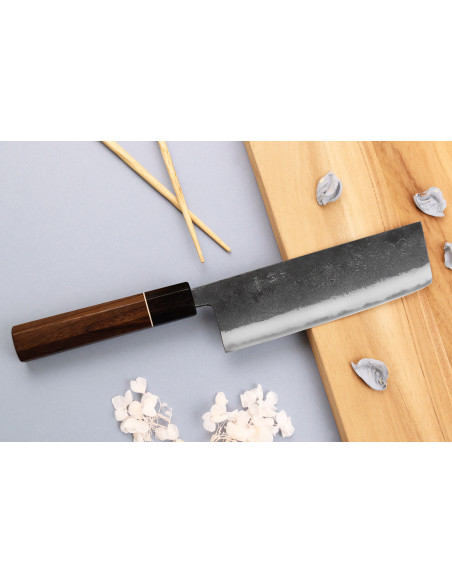
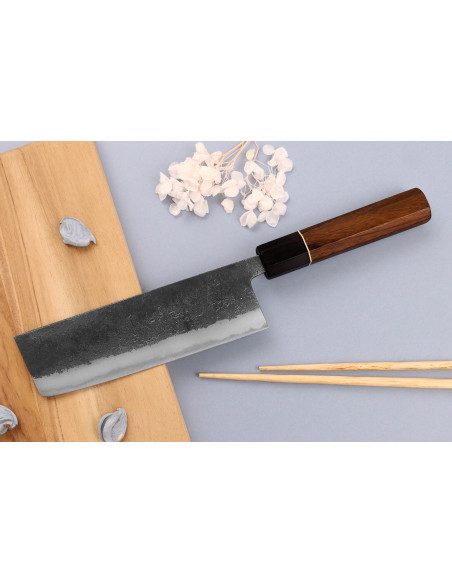
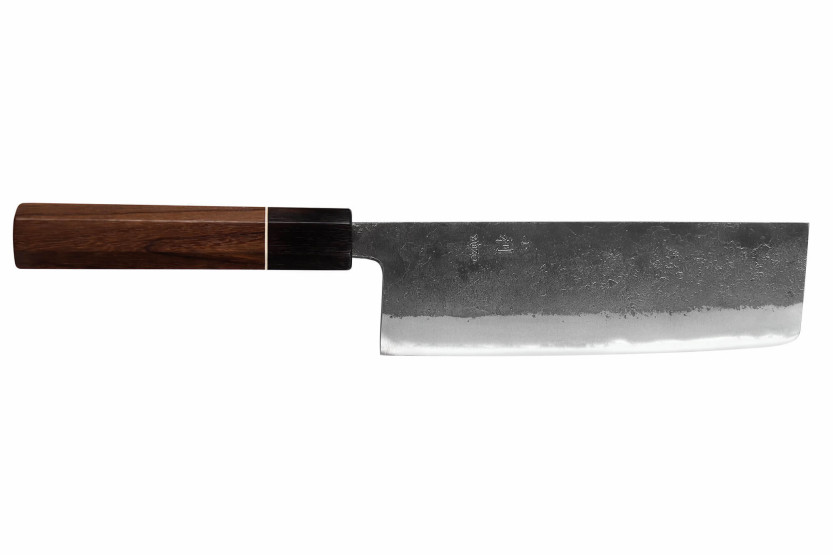
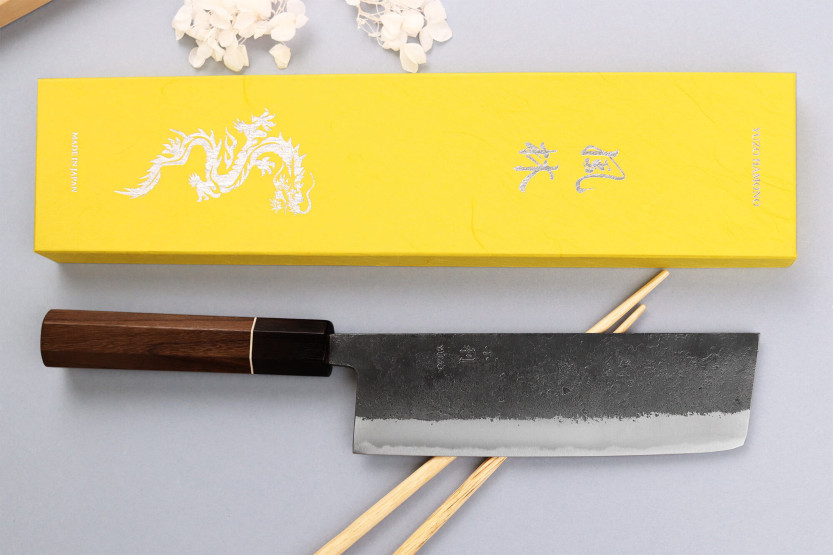
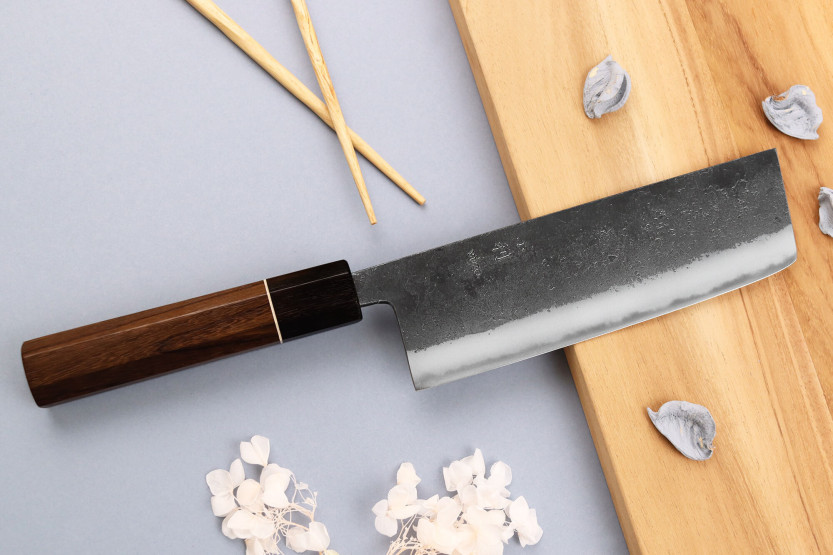
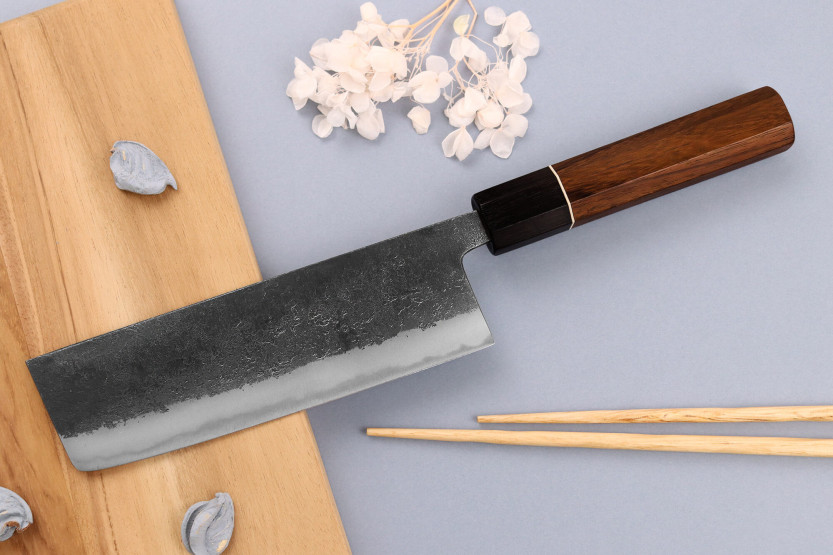
The blade of this handcrafted knife has a Black Nashiji finish, giving it a rough, forged appearance. This is achieved through a steel hardening technique, giving the blade an authentic, traditional appearance, particularly appreciated by Japanese chefs. It is this singular finish that inspired the name of the Yuzo Black Nashiji knife range.
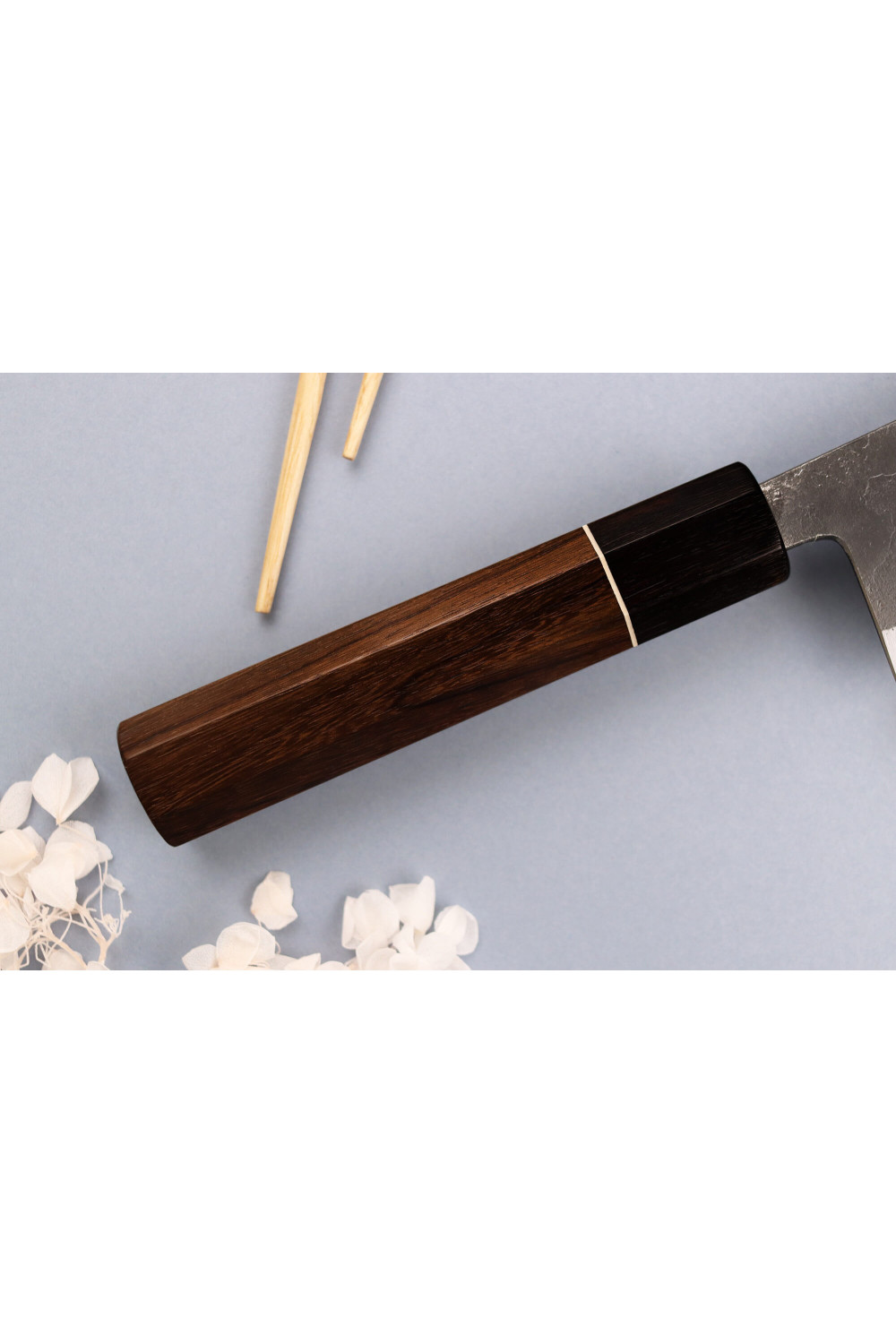
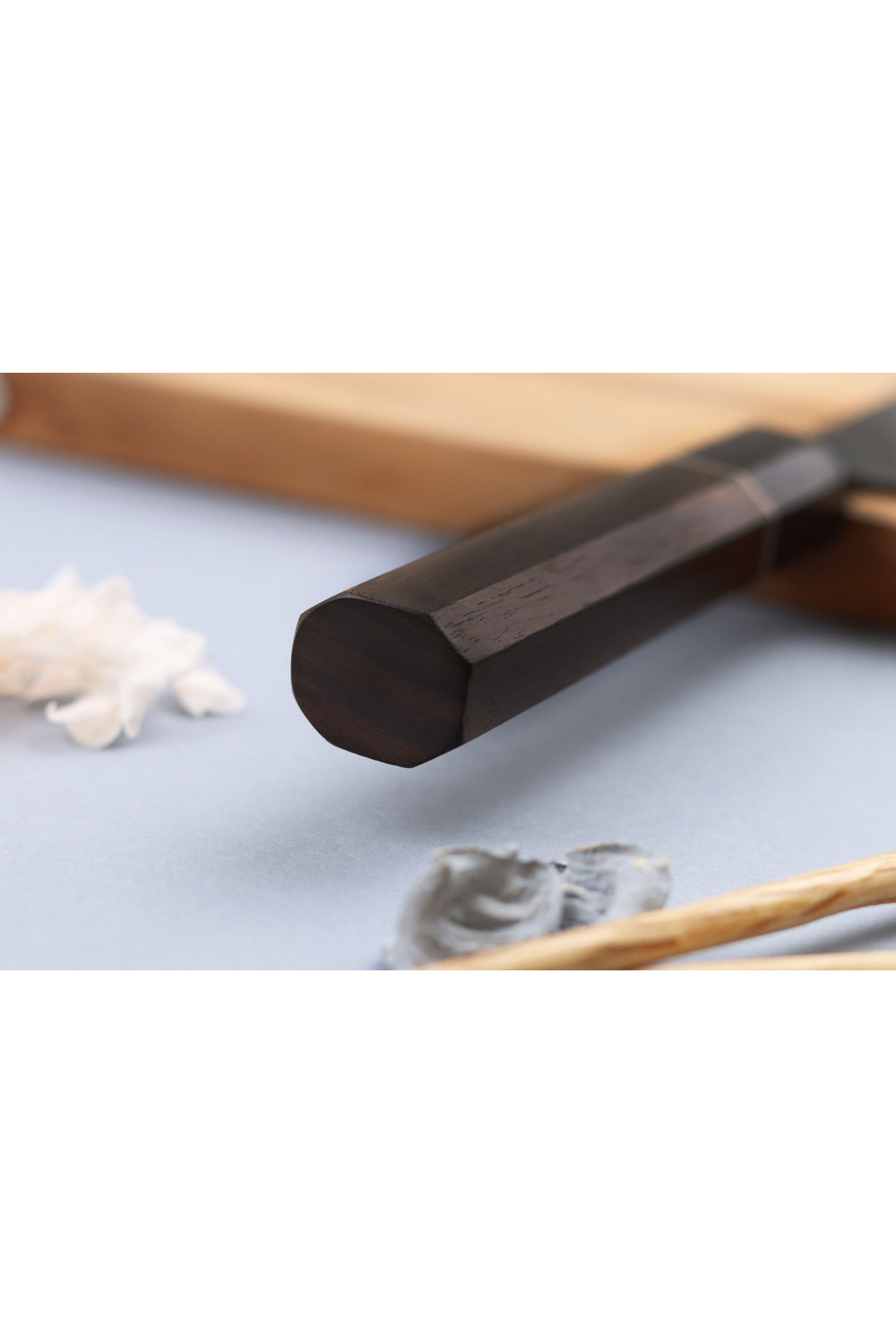
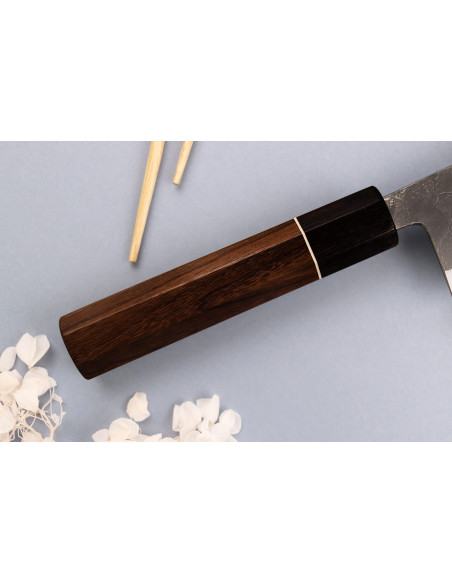
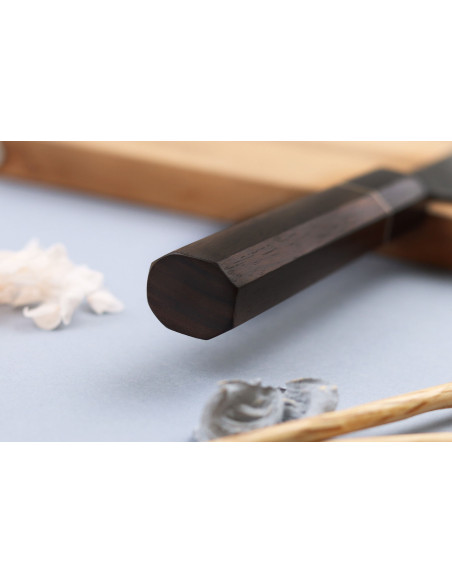
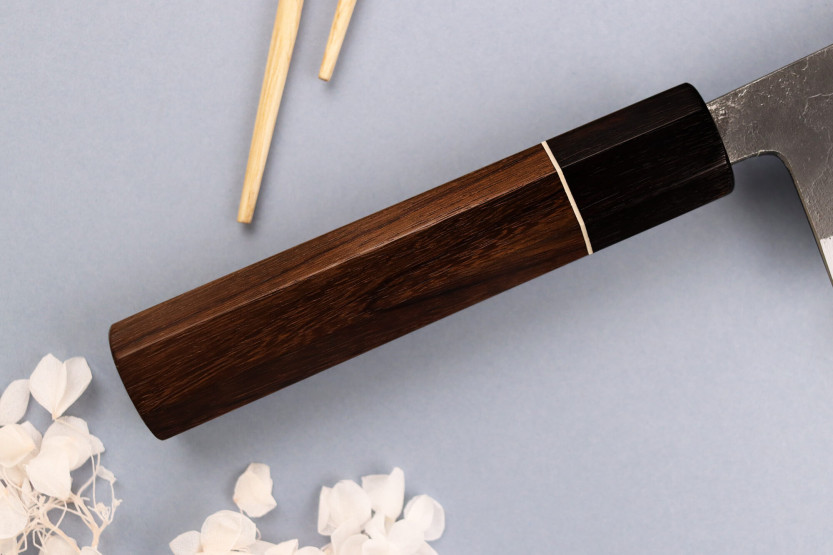
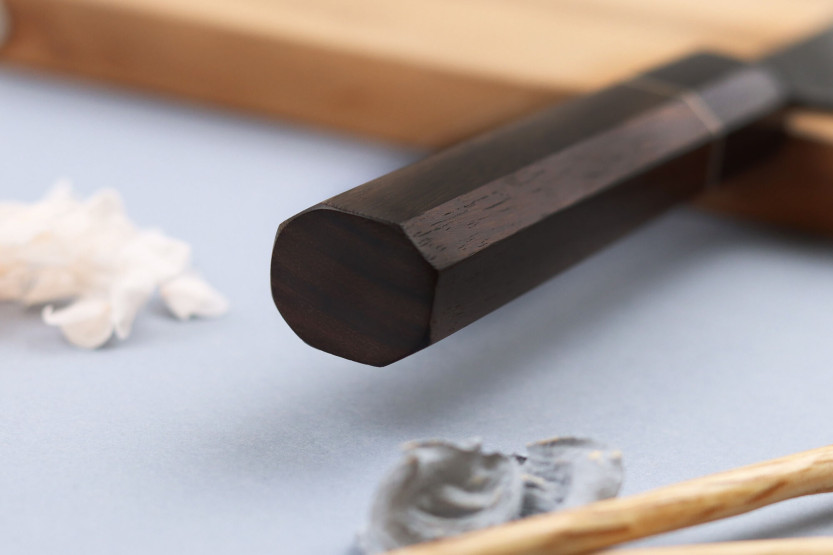
The handle of this Japanese knife is made from rosewood, a robust and durable species. Its high density makes it resistant to humidity and condensation, preventing warping.
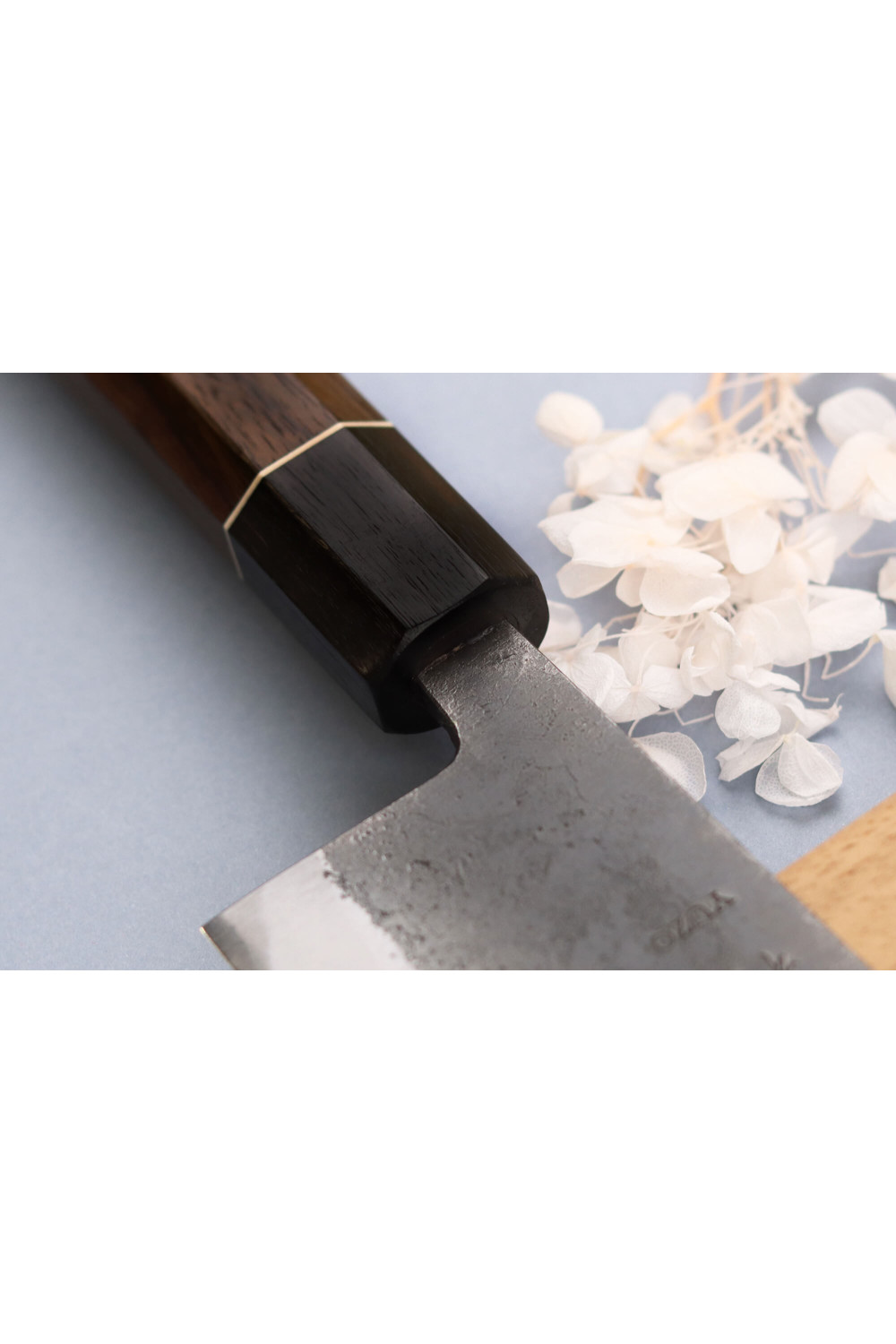
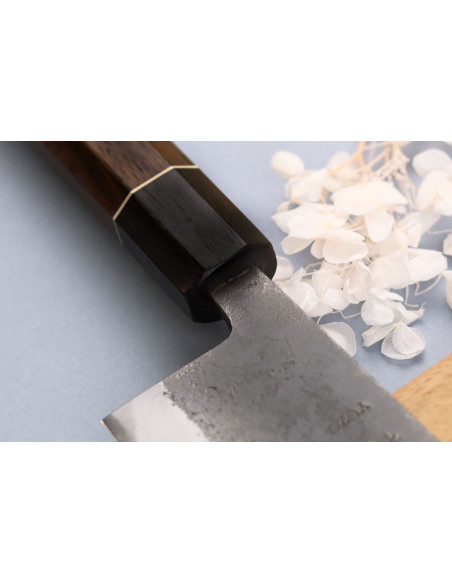
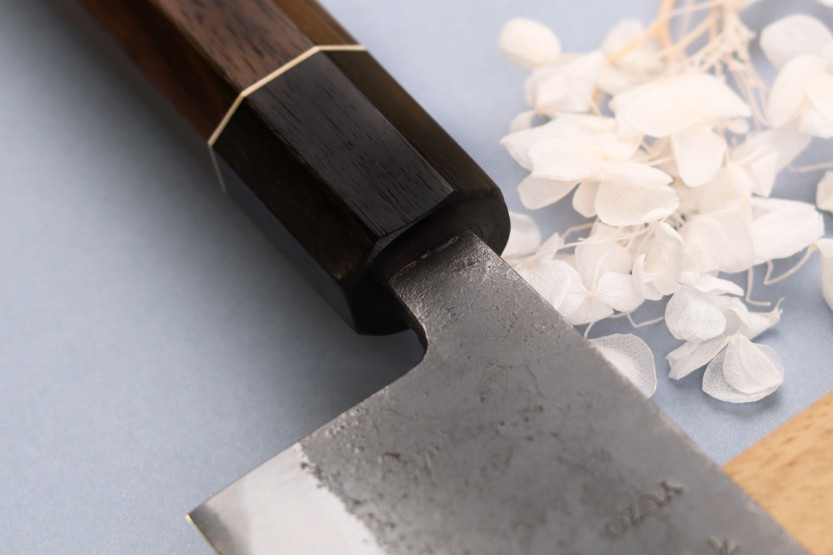
To add a touch of elegance, an ebony bolster perfectly complements the dark wood, while a white micarta ring adds a touch of finesse.
The handle is octagonal in shape, guaranteeing an ergonomic grip that's equally comfortable for right- and left-handed users. It ensures optimum comfort, even during prolonged use.
To reinforce the whole, wood paste has been added to the junction between blade and handle, ensuring a total seal and preventing any unwanted infiltration of food or water.
Authentic craftsmanship by a Japanese master blacksmith
This handcrafted Japanese knife was made by master craftsman Kouichi Tsurumaki, a Japanese blacksmith born in the late 1940s. Originally specializing in the creation of sickles and axes for use in the fields, over the decades he has developed considerable expertise in the art of cutlery. With decades of experience behind him, he has forged numerous knives, notably for renowned brands such as Munetoshi.
The nakiri knife lets you prepare fruit and vegetables effortlessly! Use it to make a wide variety of cuts: dice, slice, stick, etc. Its wide blade makes slicing and moving your cuts a breeze. Be careful not to use it on hard foods such as squash, bones, etc.
How to look after your Yuzo knife
The care of your carbon knife must be meticulous. It must be cleaned exclusively by hand, using a non-abrasive sponge and a mild detergent, taking care not to over-moisten the wooden handle. Wipe dry immediately after washing to keep it in a dry place. Do not put in the dishwasher or leave to soak in the sink.
Over time, the color of the blade may change slightly: this is normal! This is the result of a natural carbon reaction caused by the acidity of the food you're cutting and the humidity in the air.
Find the rest of the Yuzo Black Nashiji range on KnifeLeader.eu!




 By buying this product you can collect up to