A Yuzo knife with a high-performance blade
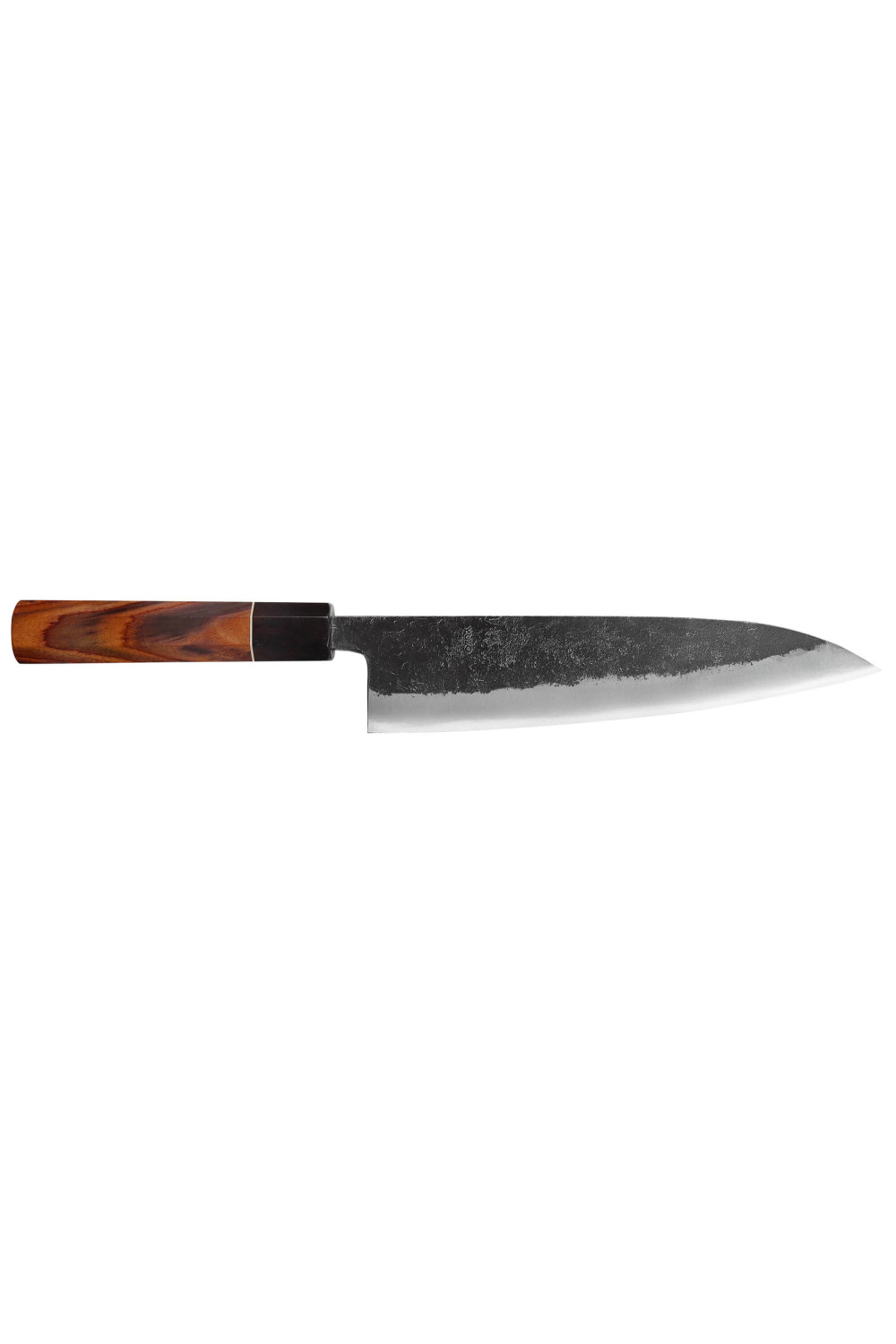
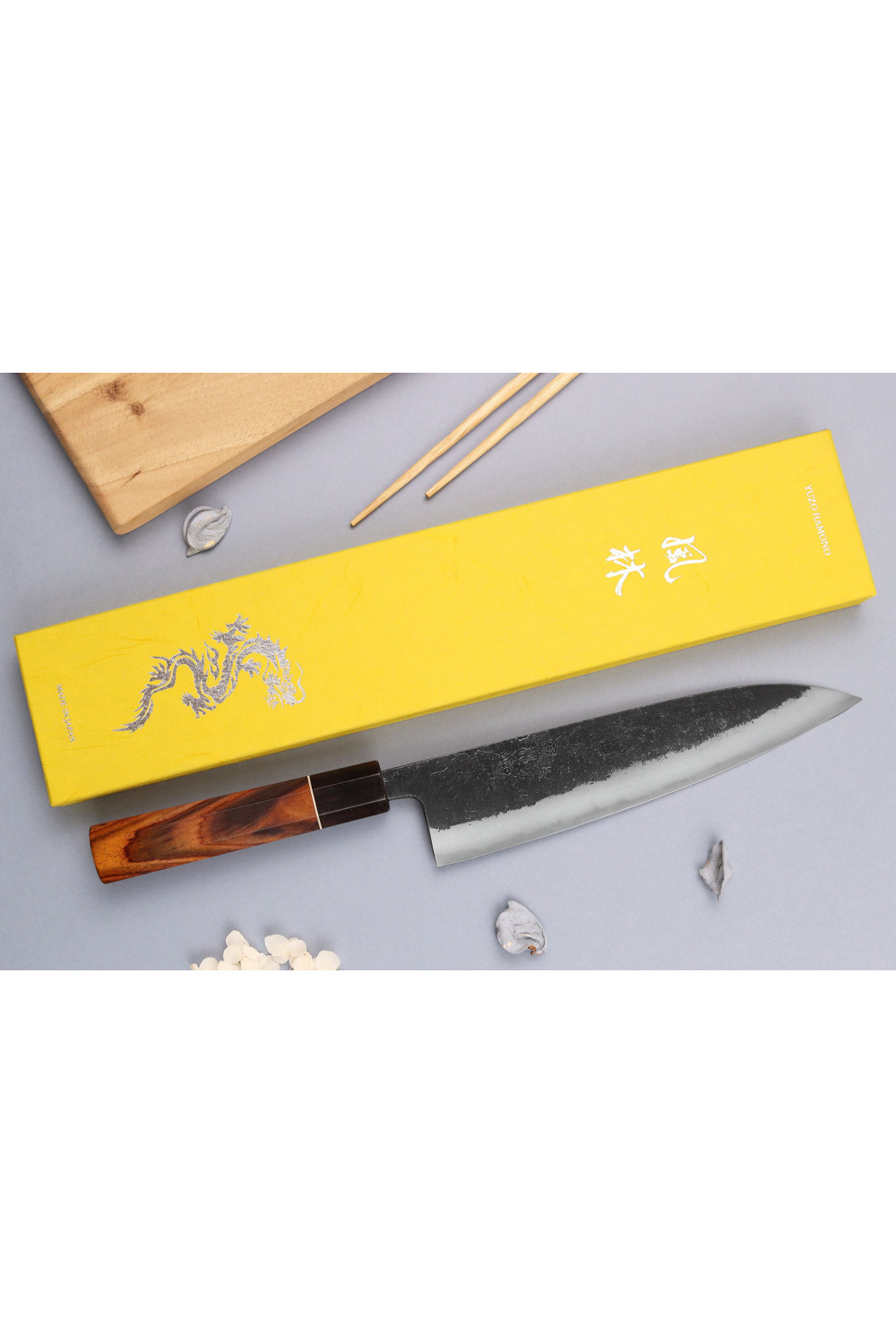
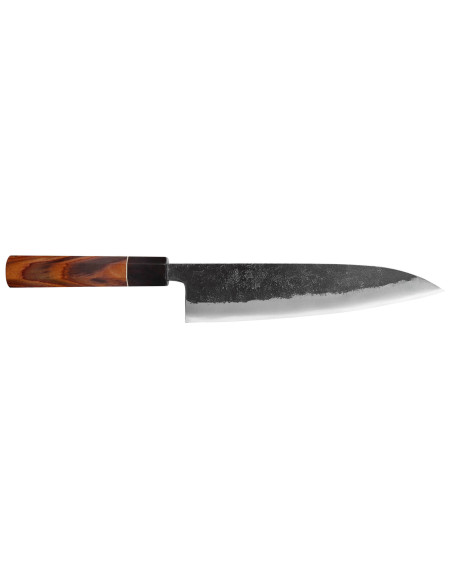
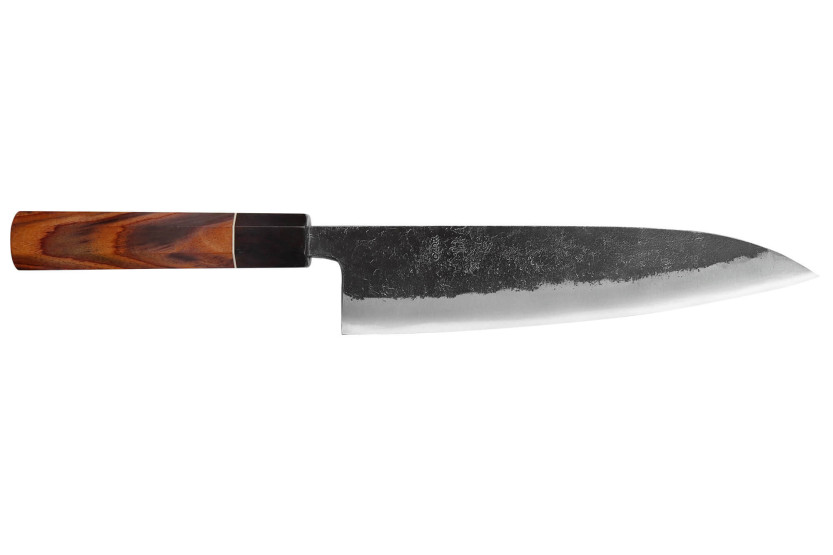
The blade of this chef's knife has been crafted with a typically Japanese San Maï (meaning "3 layers") structure: this technique consists of forging a rigid steel core and covering it with a softer layer that folds in on itself. This process balances the blade's hardness while protecting its core.
To forge the core of this blade,Japanese Shirogami #2 steel (also known as White Paper Steel #2) was chosen. This alloy is produced by the internationally renowned steelmaker Hitachi. This steel contains a high carbon content of 1.2%: this is the essential element that increases the alloy's hardness, giving your blade a long-lasting edge.
As proof, this blade has a hardness of 61HRC on the Rockwell scale, a high-performance cutting edge and excellent edge retention.
The micro-structure of the Shirogami #2 alloy is also an advantage! Indeed, its composition is said to be "pure" because its micro-carbides are evenly distributed. As a result, your blade is more resistant to the risk of micro-cracking and wear.
Finally, with San Maï construction, the blade core is wrapped in a layer of soft iron that folds in on itself to form the remaining 2 layers and protect the core. Due to its high carbon content, this Japanese knife remains oxidizable and requires careful maintenance to avoid corrosion.
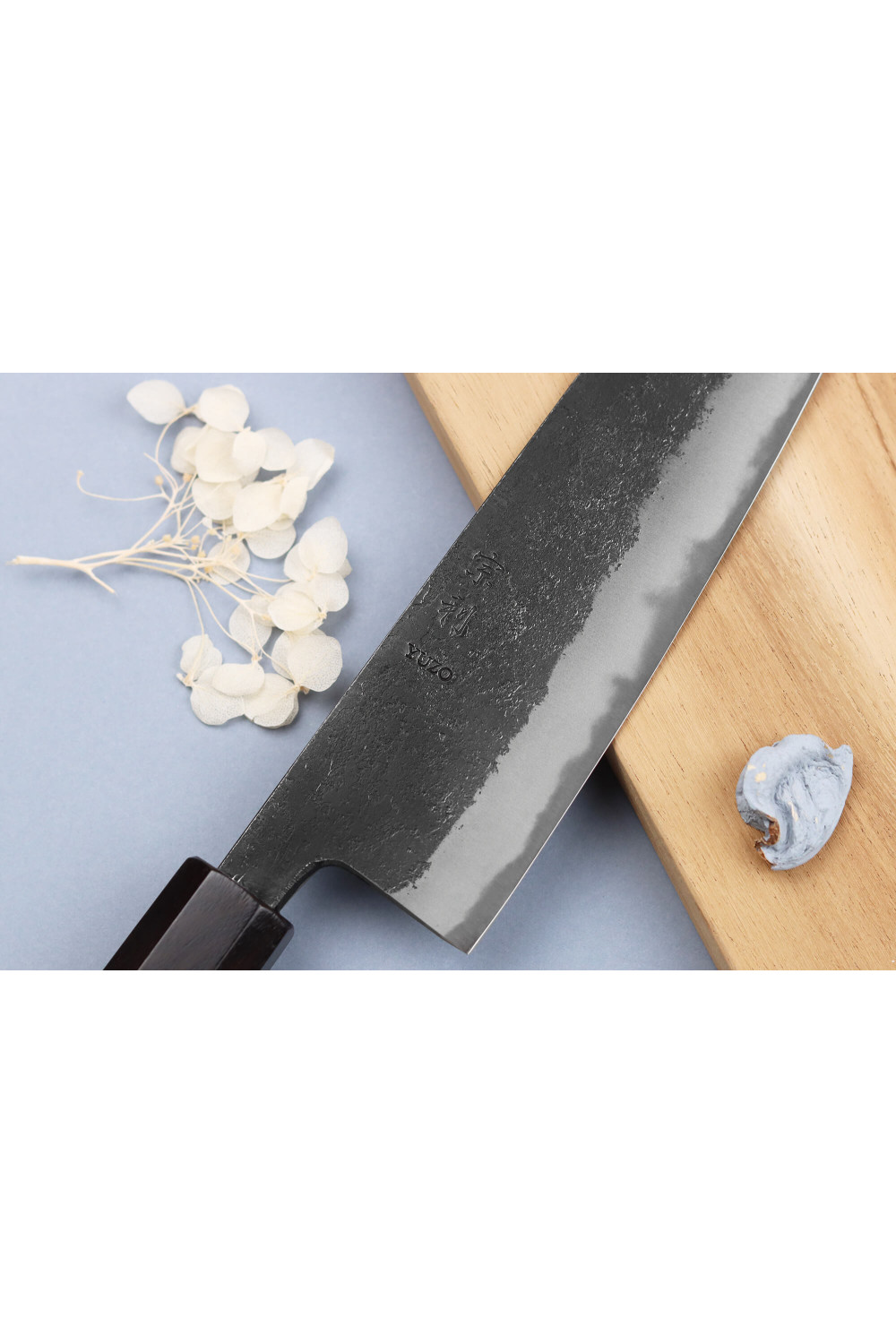
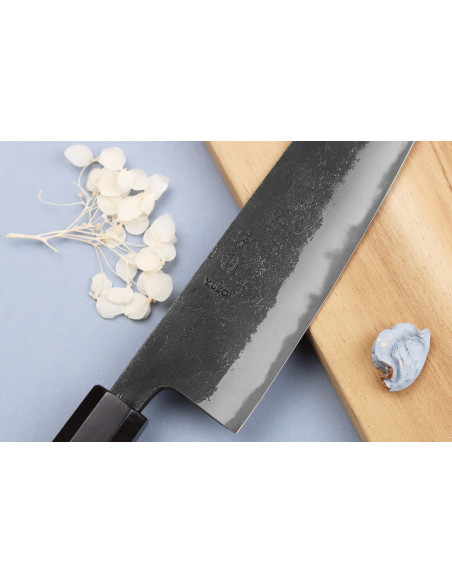
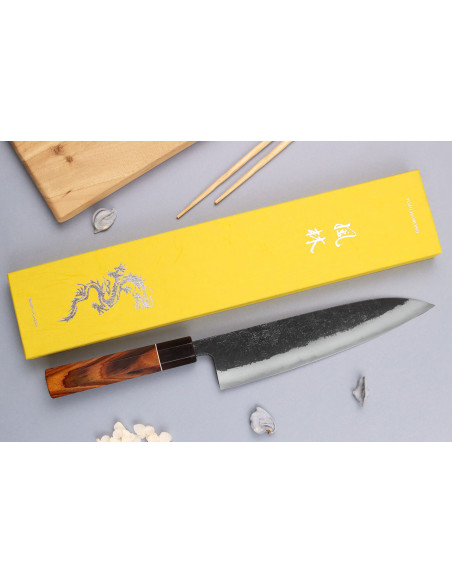
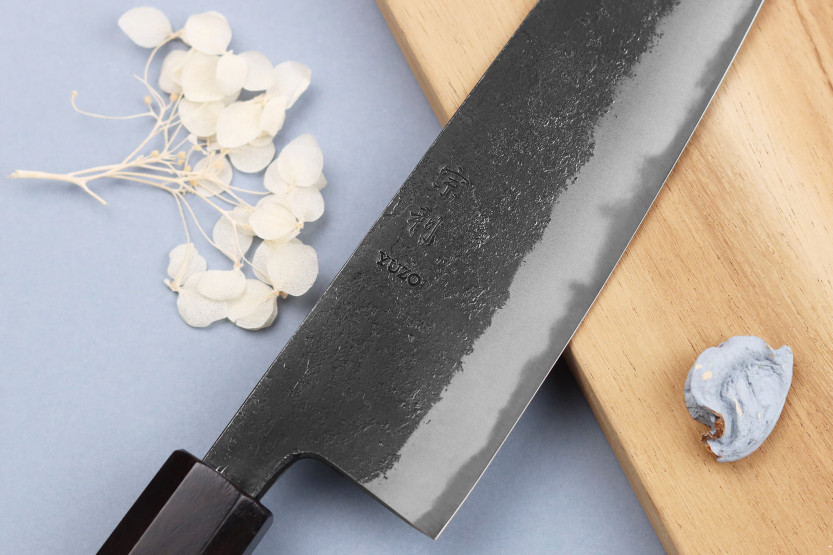
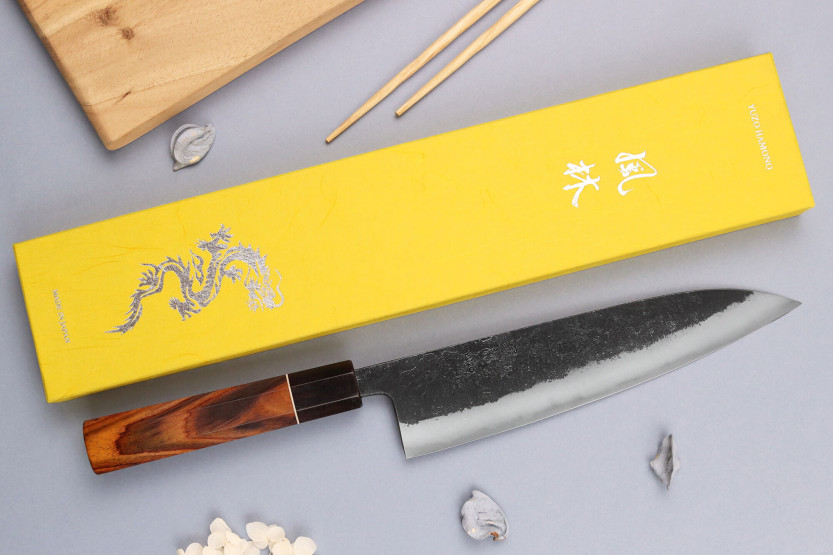
All along the cutting edge, you can see the superimposition of the different steels forming a fine wave with random patterns that are unique to each piece!
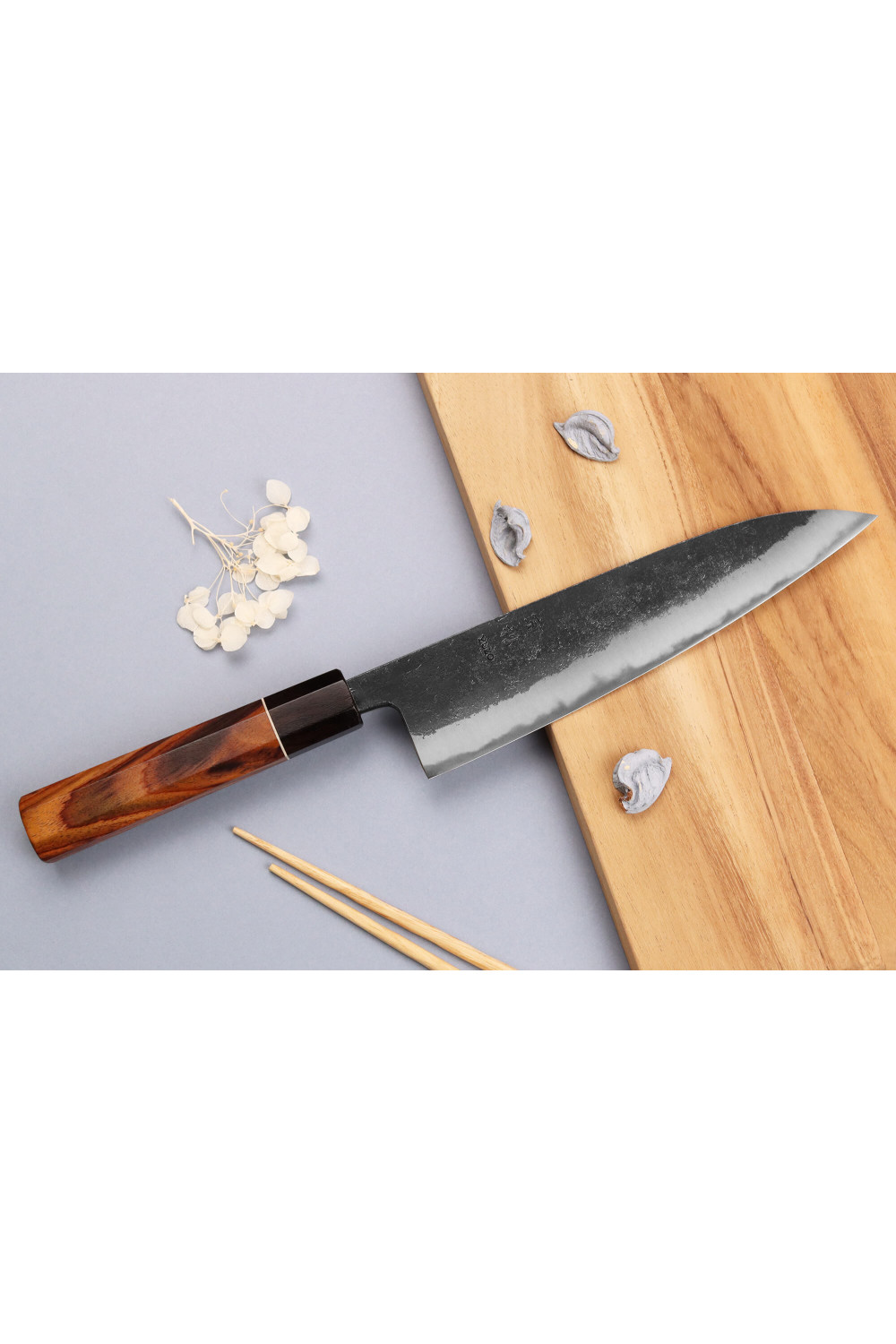
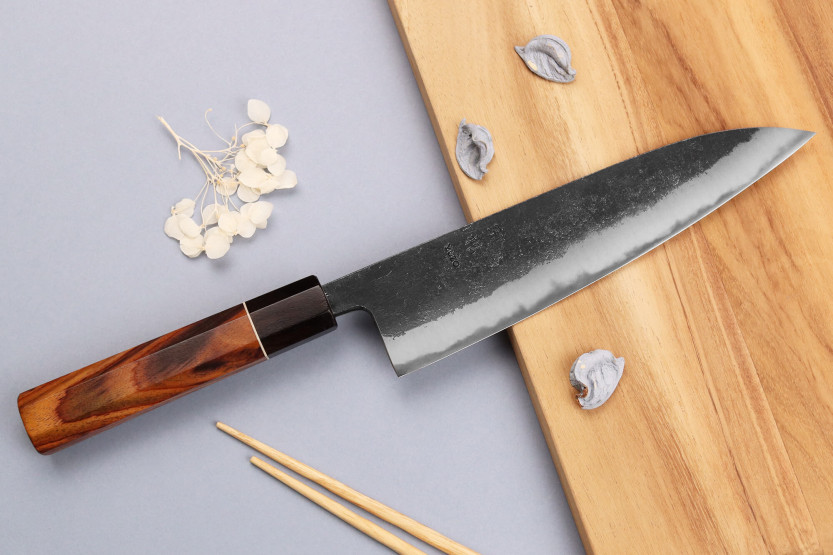
Finally, the blade surface features a Black Nashiji finish, which is similar to brute forging. This technique is achieved by hardening the steel, and is what gives your handcrafted Japanese knife its traditional, authentic style. This unpolished blade surface effect is much appreciated by Japanese chefs! In fact, it's from this finish that the name of this range of Japanese knives derives.
A solid, durable rosewood handle
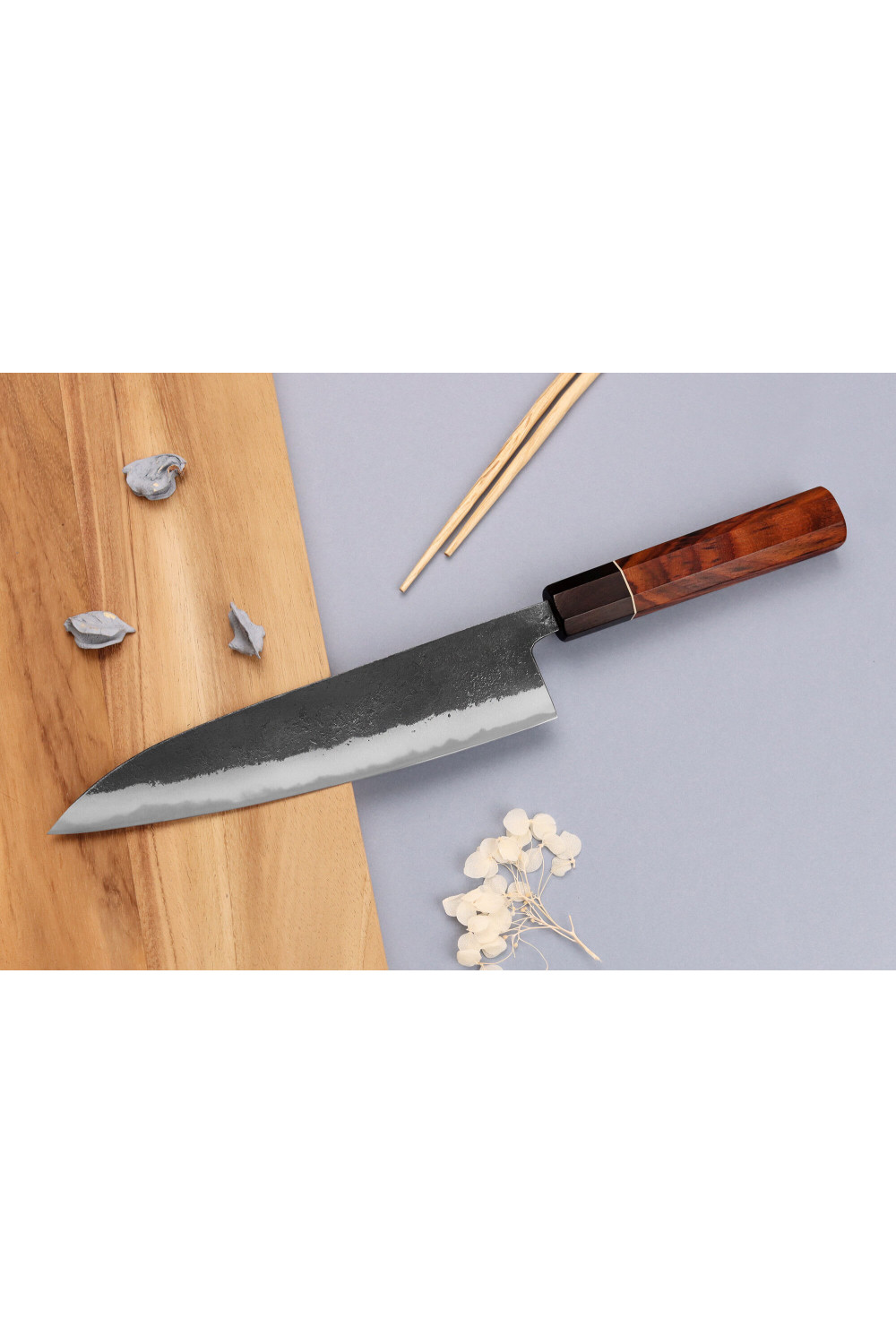
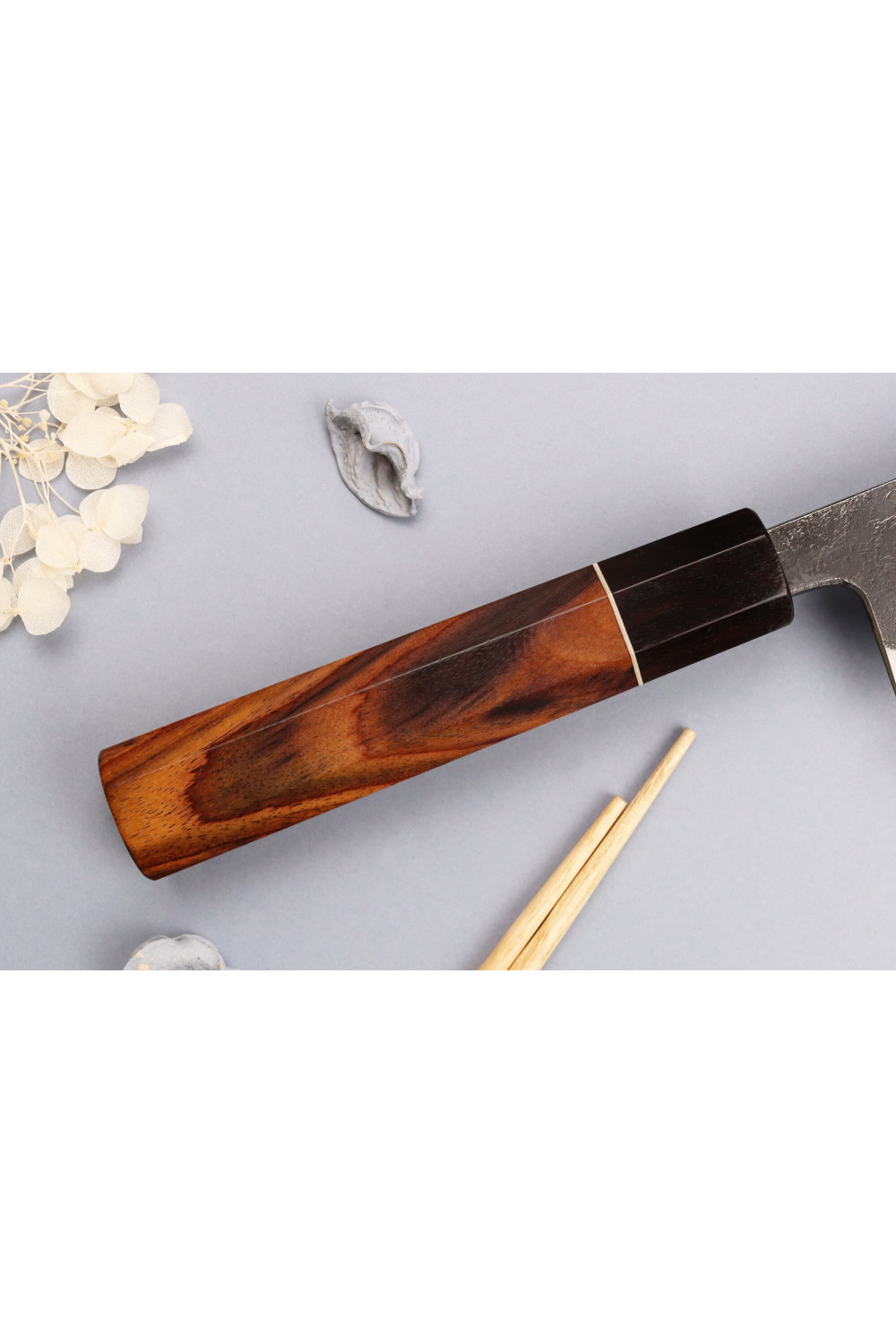
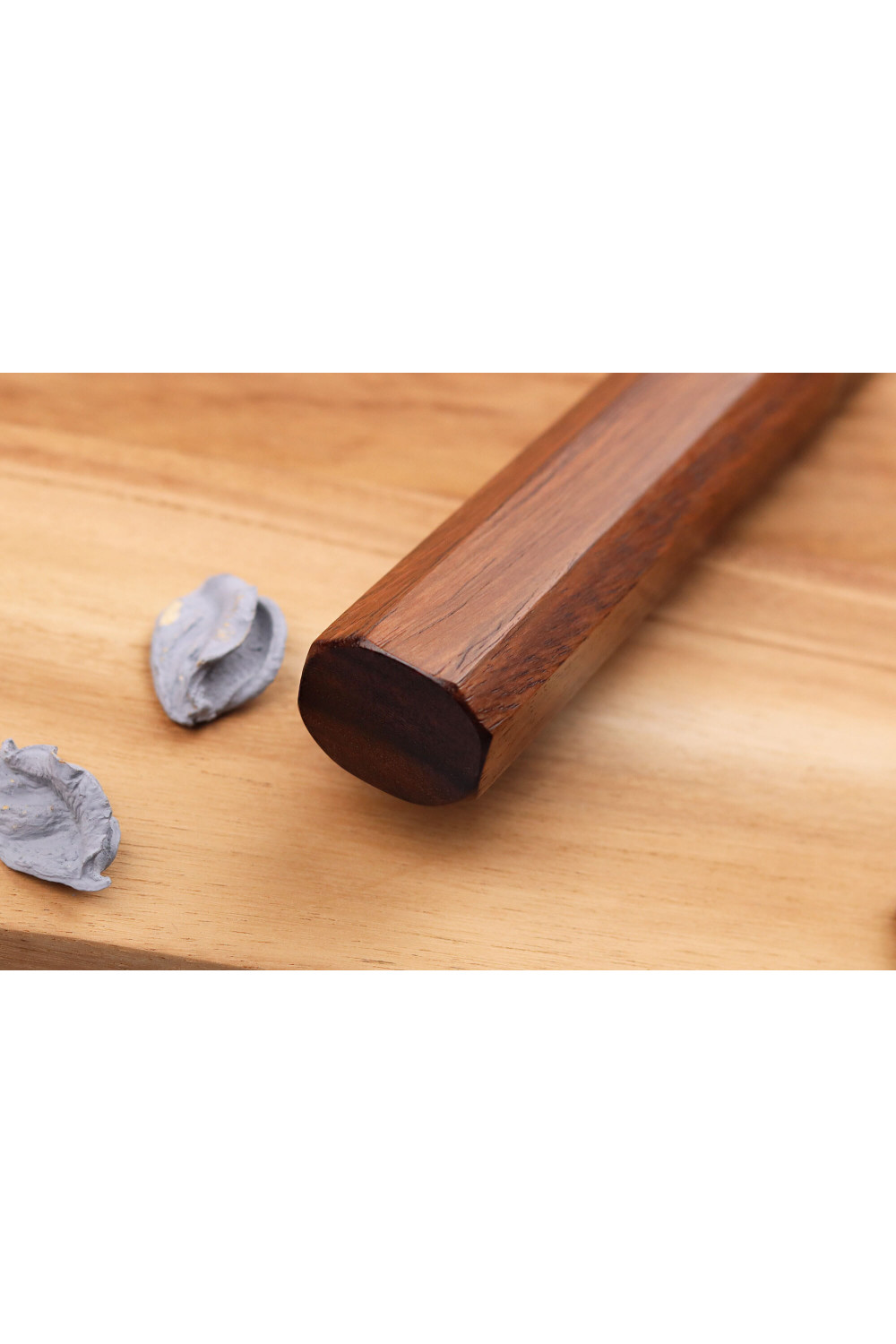
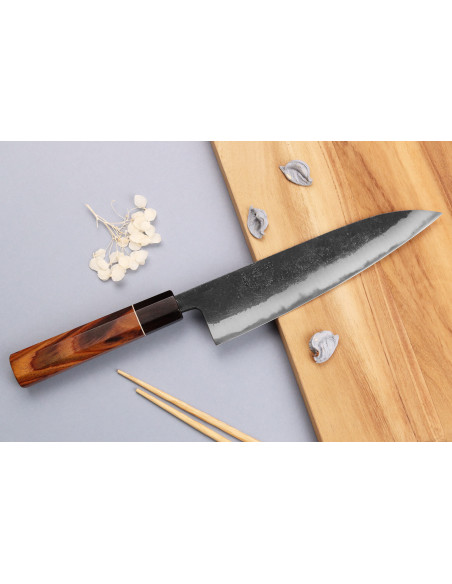
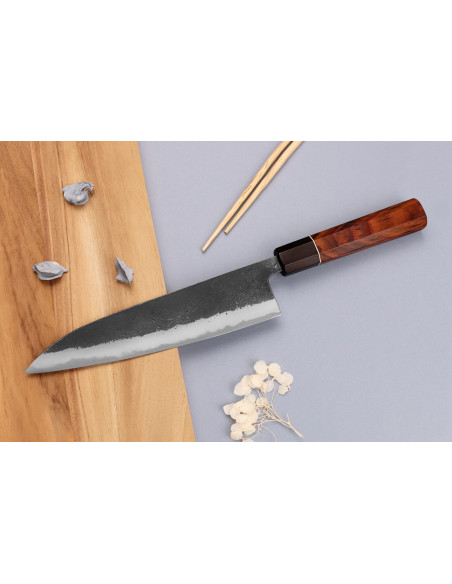
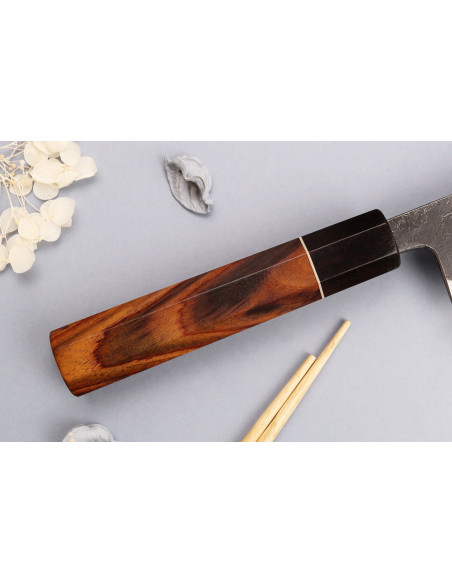
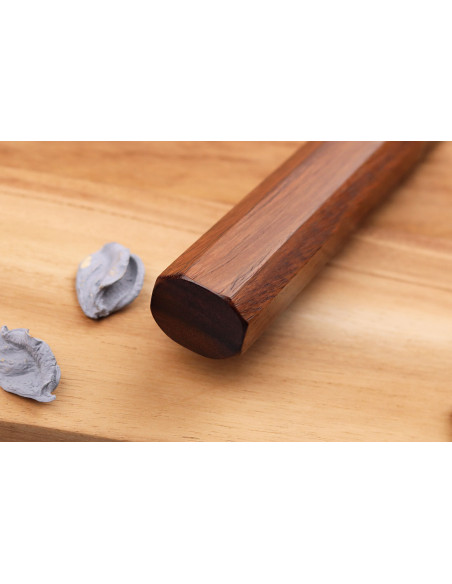
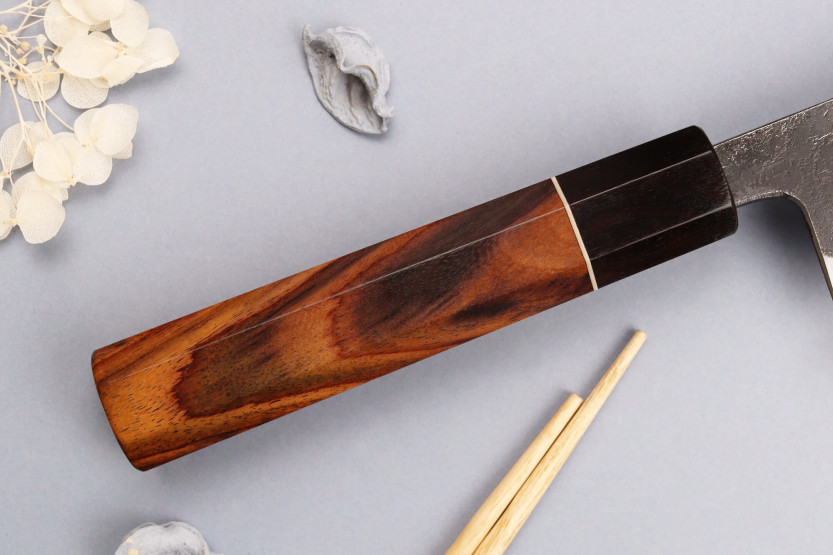
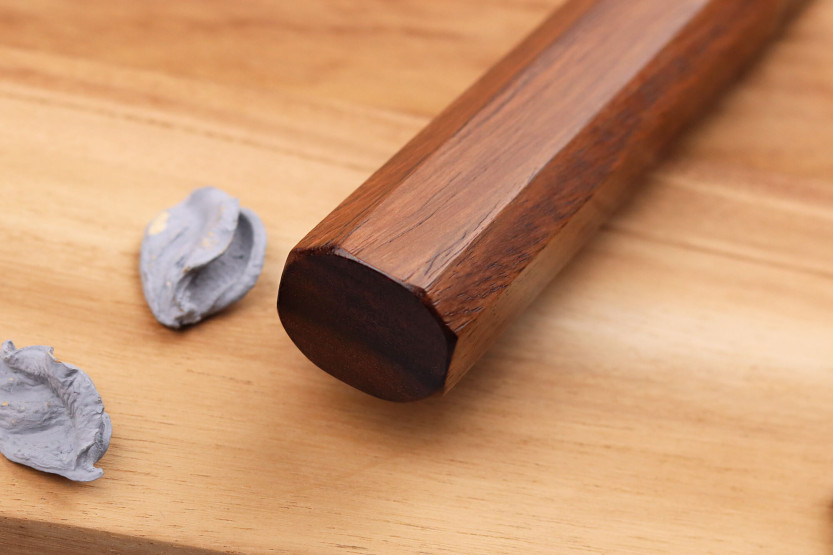
The handle of your handcrafted knife is made of rosewood, a robust species that lasts over time. Its high density makes it resistant to condensation and humidity: it does not warp easily.
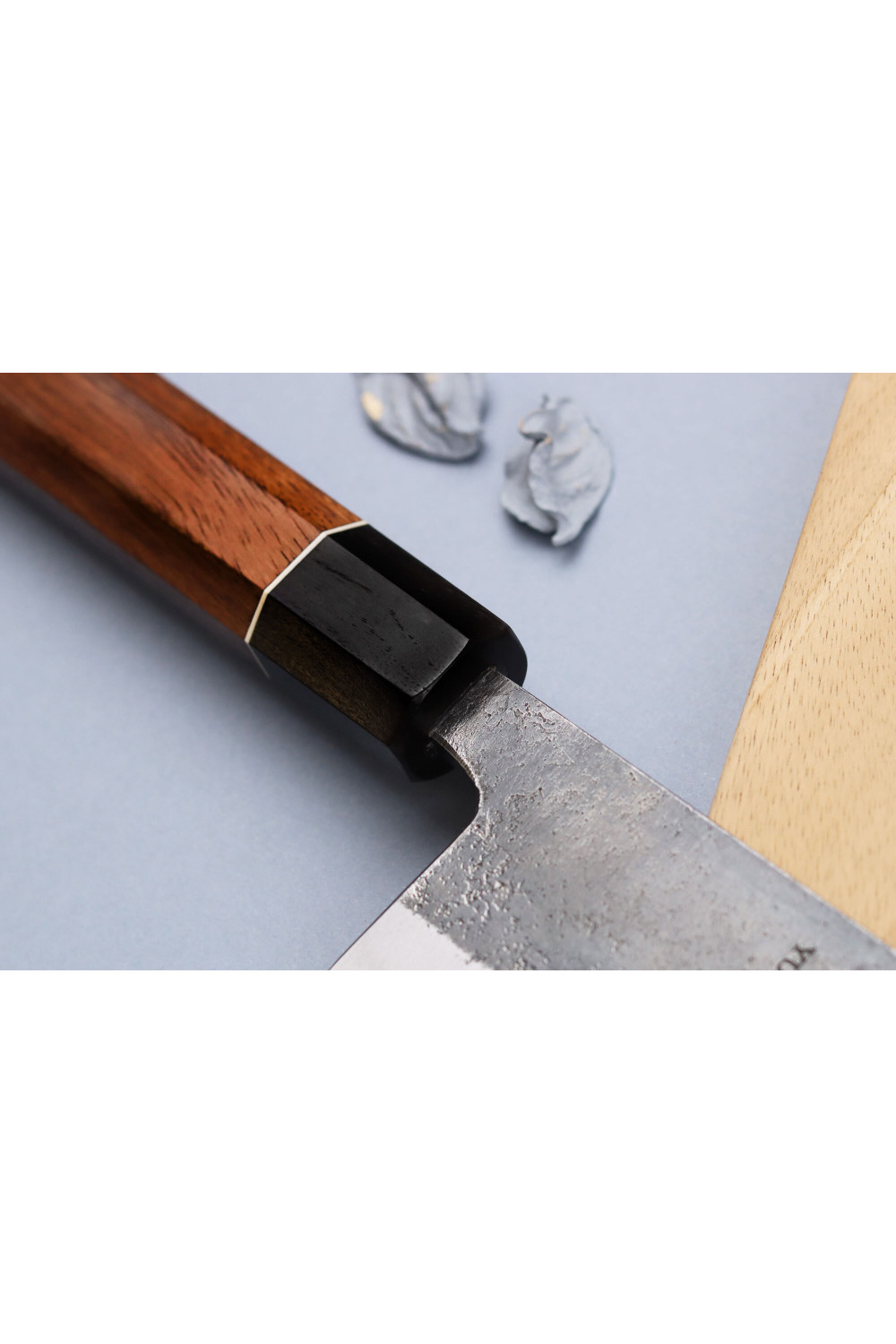
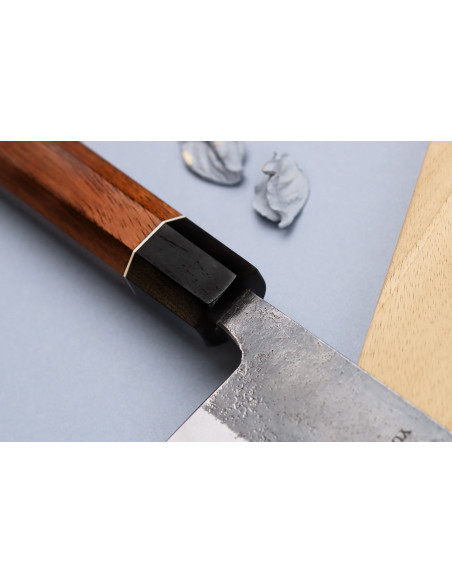
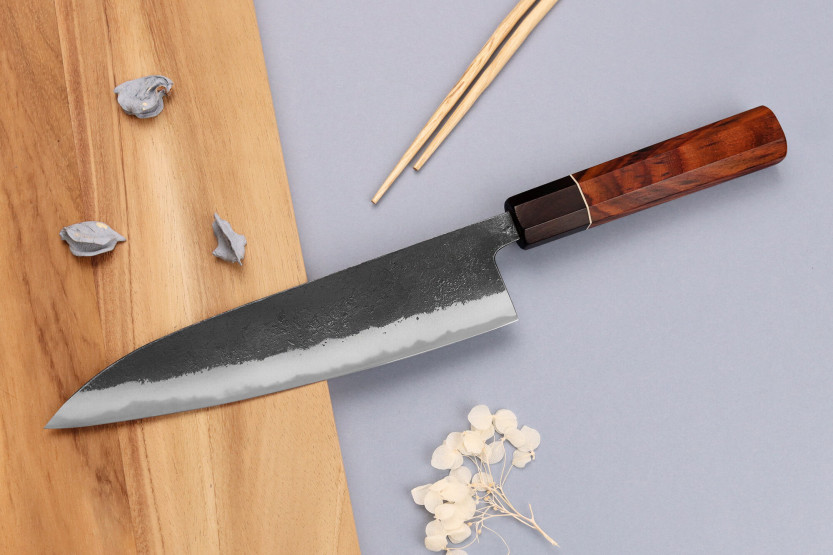
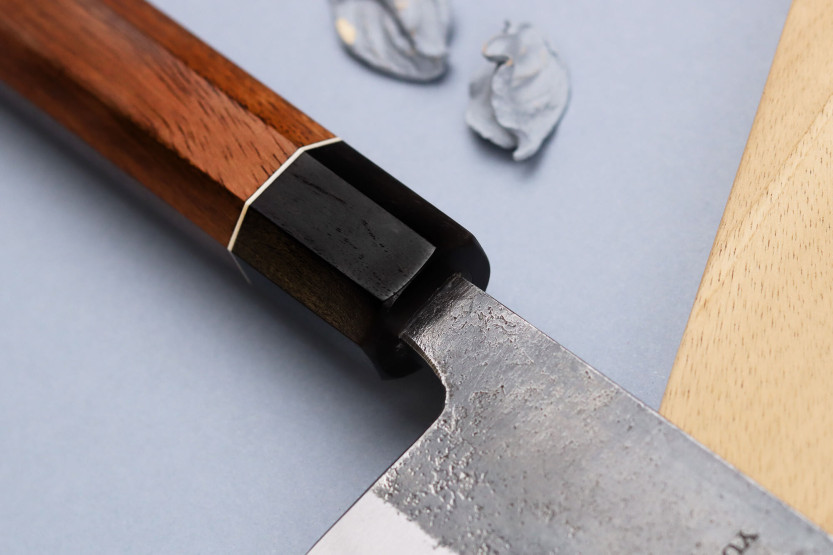
An ebony bolster completes the handle. A refined white micarta ring links the bolster and the handle, both of which contrast beautifully!
The handle is octagonal in shape to suit all cooks, right- and left-handed alike! Its ergonomic grip makes it easy to handle, especially over long periods of use.
Finally, wood putty is added to fill the small gaps where the blade meets the handle. This makes it watertight and prevents water infiltration.
The chef's knife, also known as the gyuto knife, is a versatile model that lets you make a wide range of cuts! With it, you can easily mince meat, slice vegetables or chop aromatic herbs. Its high-performance blade ensures efficiency and precision! Do not use on hard foods such as squash, bones, ...
More about your Yuzo knife and how to care for it
This Yuzo knife was made by blacksmith Kouichi Tsurumaki in Japan. Born in the late '40s, he began his career making sickles and axes for field work. Later, he moved into the field of cutlery, where he was able to develop a wealth of knowledge. Today, he has decades of experience, which has enabled him to develop his own forging techniques. In the course of his career, he has forged many Japanese knives, for example, for Munetoshi.
To care for your carbon knife, wash only by hand with a non-abrasive sponge and mild detergent, avoiding wetting the handle. Do not soak in the sink or put in the dishwasher. Once washed, wipe dry and store in a dry place.
With the passage of time, the color of your blade may vary slightly: this is normal. This is a natural reaction of the carbon caused by the acidity of the food being cut or by the humidity in the air.
Discover the rest of the Yuzo Black Nashiji range on KnifeLeader.eu!




 By buying this product you can collect up to