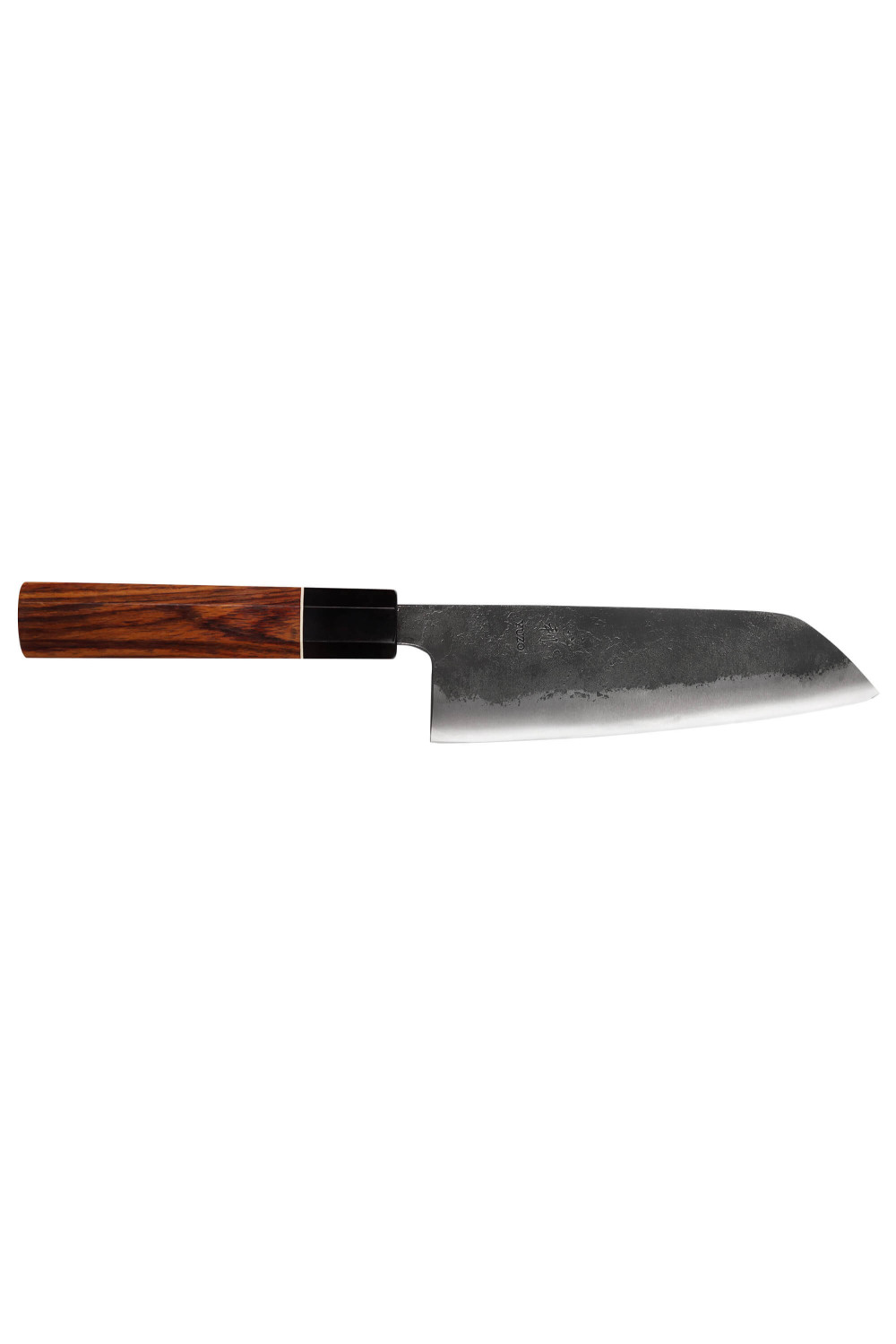
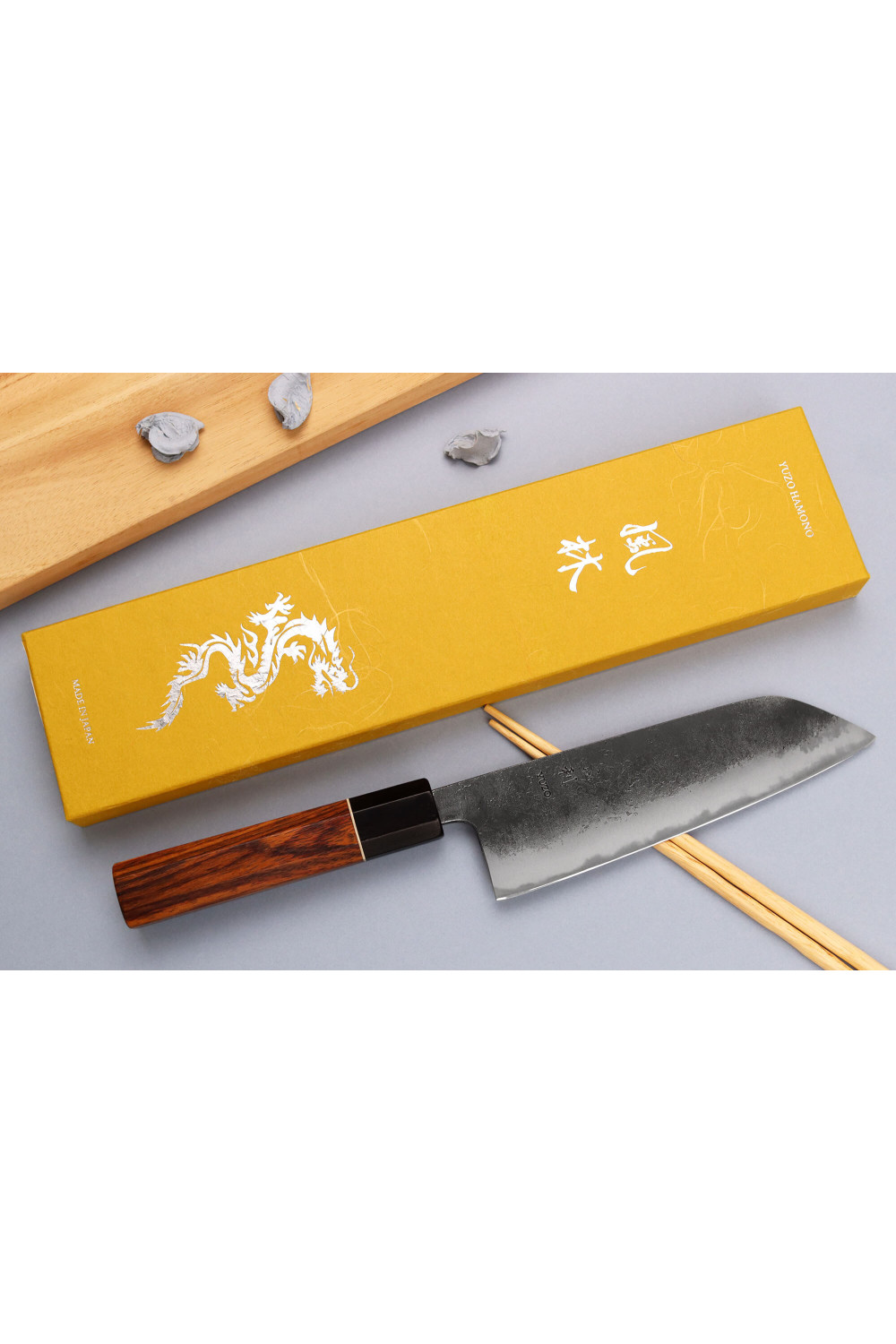
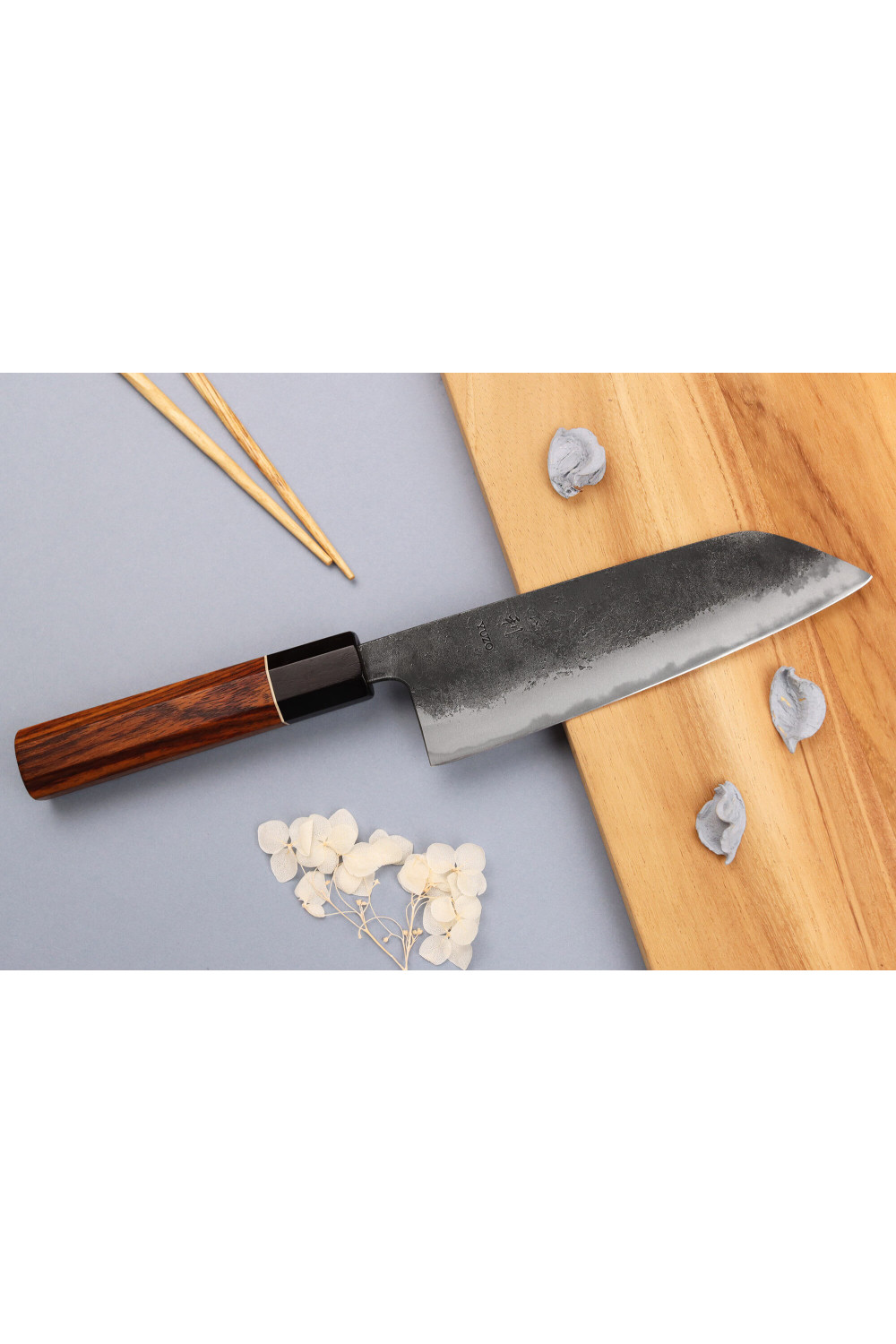
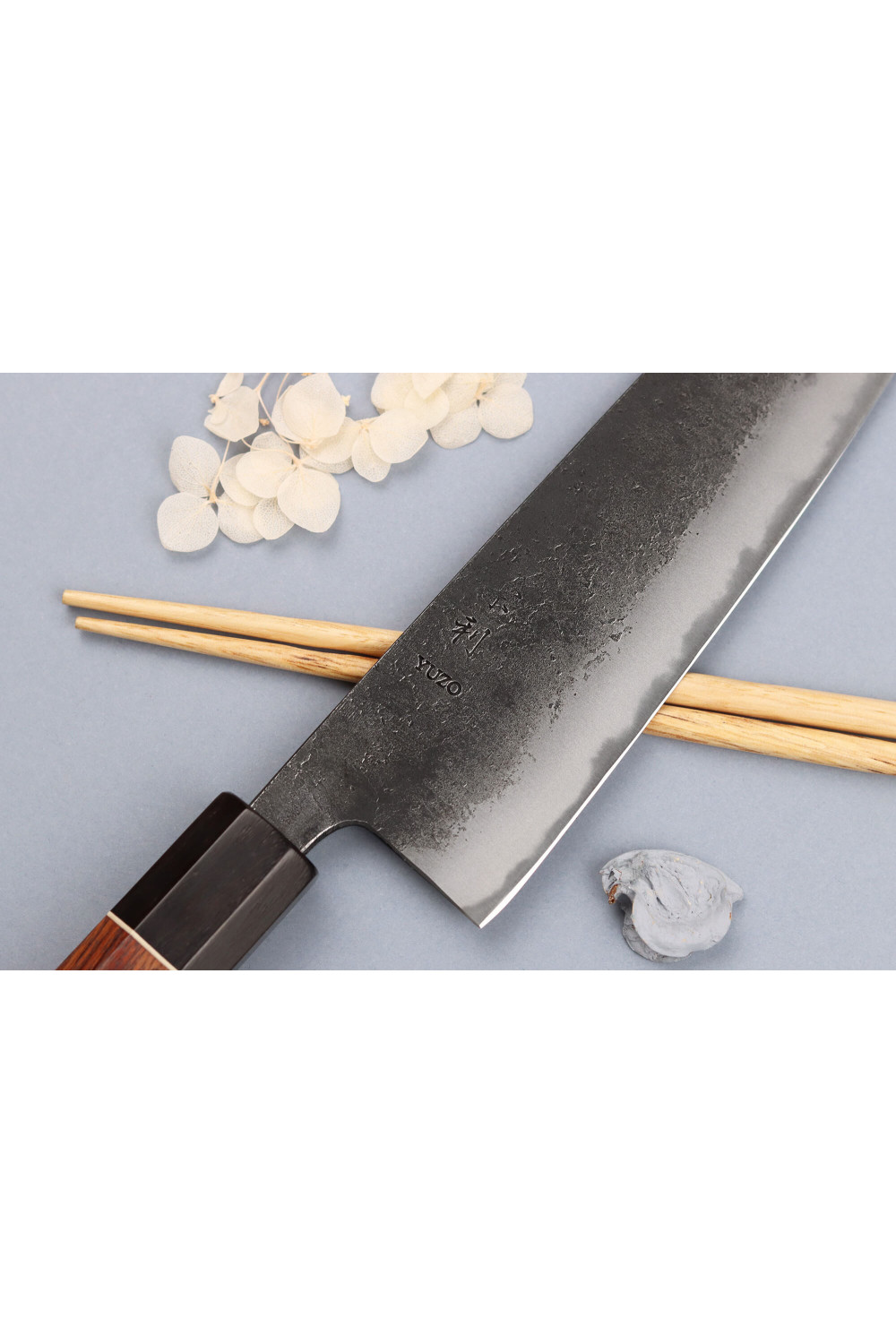
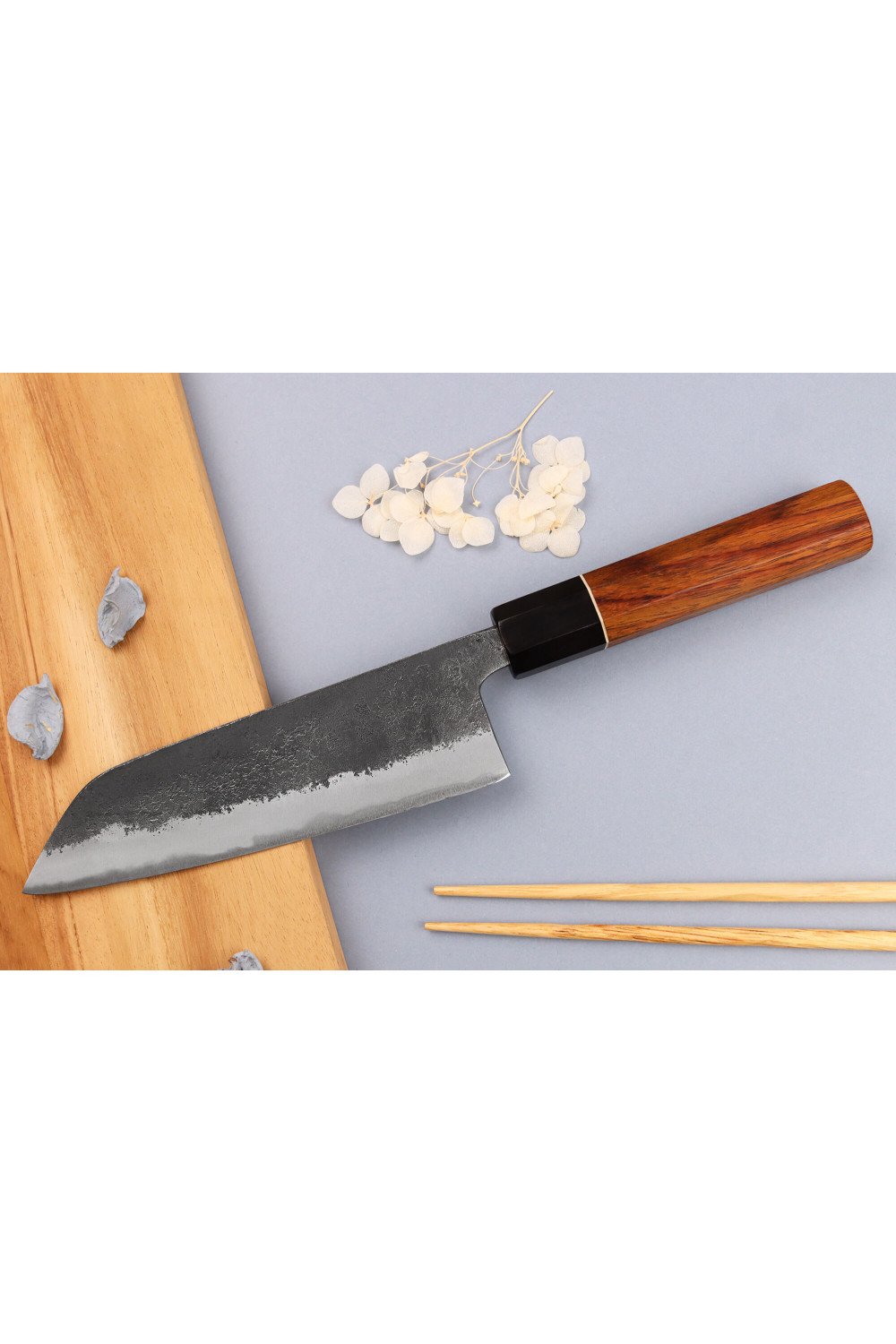
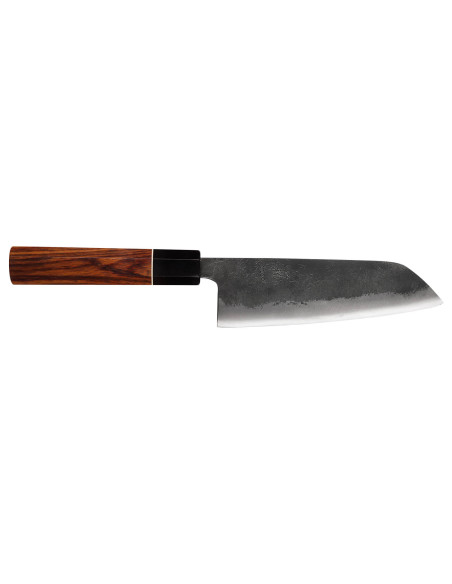
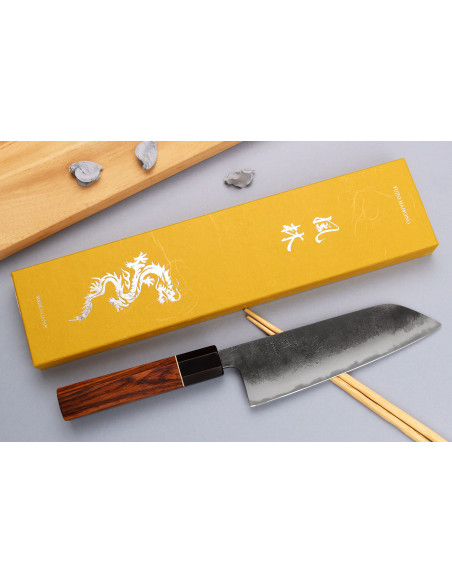
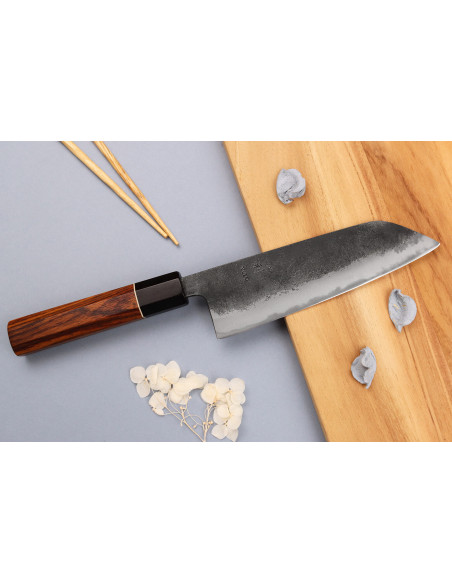
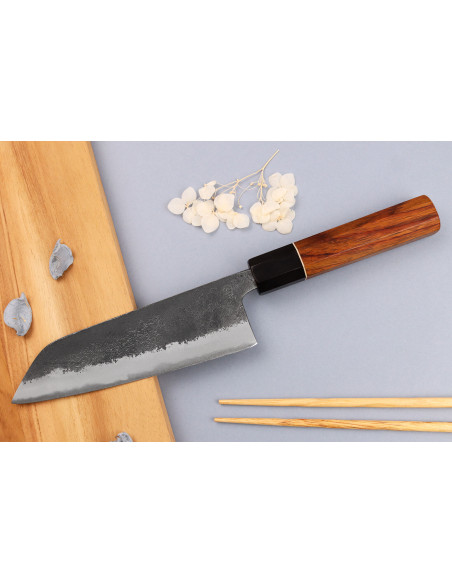
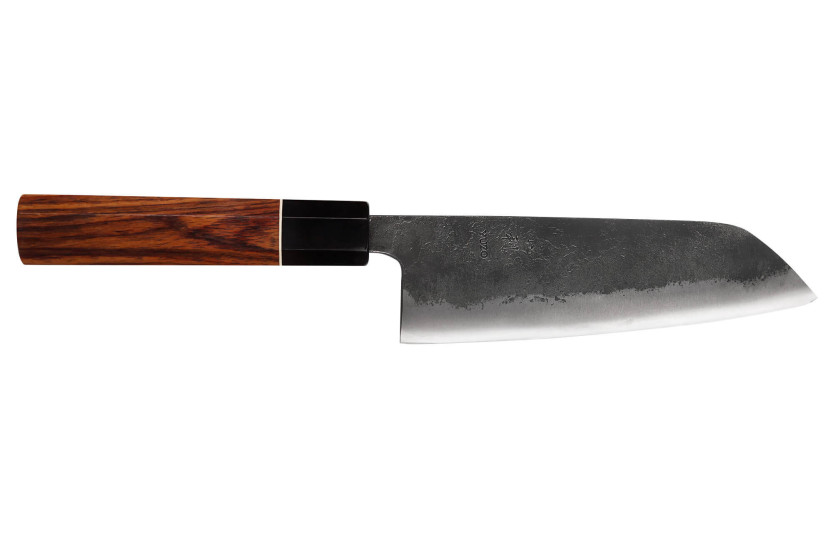
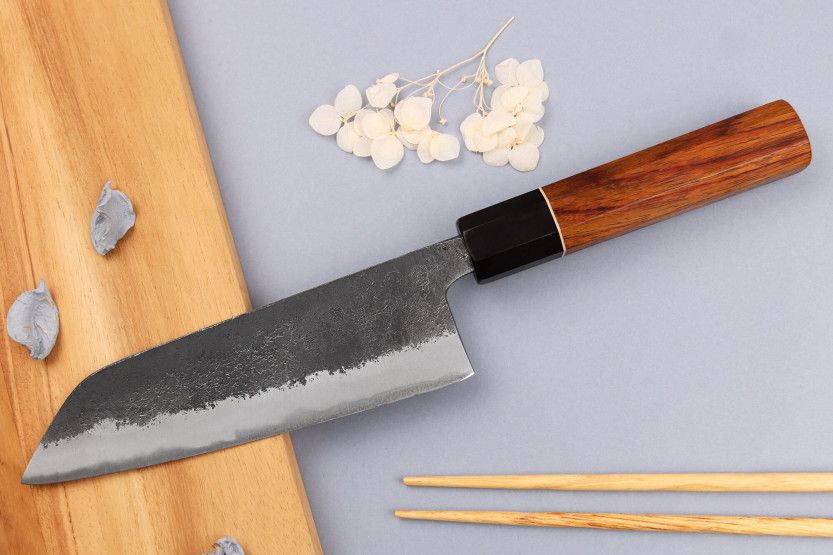
With the santoku knife, you can make a wide variety of cuts! It's a versatile knife that lets you cut all kinds of foods: chop your meat, chop your herbs or slice your fruit and vegetables with ease. Do not use on hard foods such as squash, bones, ...
This Yuzo knife was designed by master blacksmith Kouichi Tsurumaki in Japan, a craftsman born in the late 40s. Initially specializing in the manufacture of sickles and axes for agricultural work, he then extended his expertise to the field of cutlery, where he developed remarkable know-how. With decades of experience behind him, he has perfected his own forging techniques throughout his career. He has forged numerous knives, including some for Munetoshi.
An efficient shirogami #2 steel knife
The blade of this Japanese kitchen knife is shaped using the traditional San Maï technique (meaning "three layers"). This method consists of forging a rigid steel core, then covering it with a softer outer layer that folds in on itself. Thanks to this process, the core of the blade is protected, ensuring balance for optimum hardness.
The core of this blade is forged fromJapanese Shirogami #2 steel (also known as White Paper Steel #2), a renowned material produced by the renowned steelmaker Hitachi. This alloy has a high carbon content, reaching 1.2%, which is essential for increasing the steel's hardness, giving your Japanese knife a high-performance cutting edge. The hardness of this knife reaches 61HRC on the Rockwell scale: your edge is durable and the cutting edge is remarkable!
The microstructure of Shirogami #2 steel is a real advantage! Its "pure" composition is characterized by an even distribution of its micro-carbides. This gives the blade greater resistance to micro-cracking and wear, ensuring optimum durability.
To complete the San Maï construction, the core of the blade is enveloped by a layer of soft iron folded in on itself to form the two outer layers. This top layer provides protection to the core while contributing to optimum hardness. However, due to its high carbon content, this handcrafted knife remains oxidizable and therefore requires meticulous maintenance to avoid corrosion.
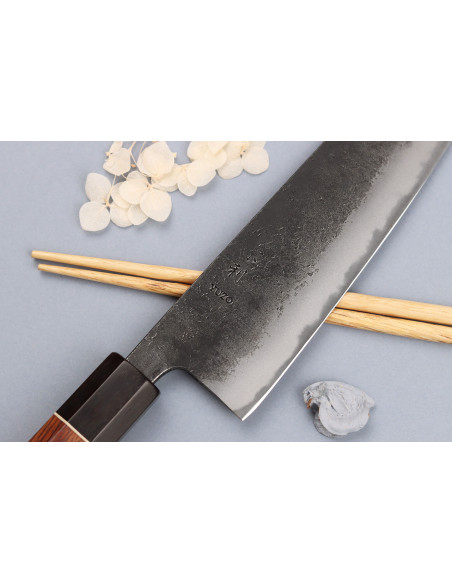
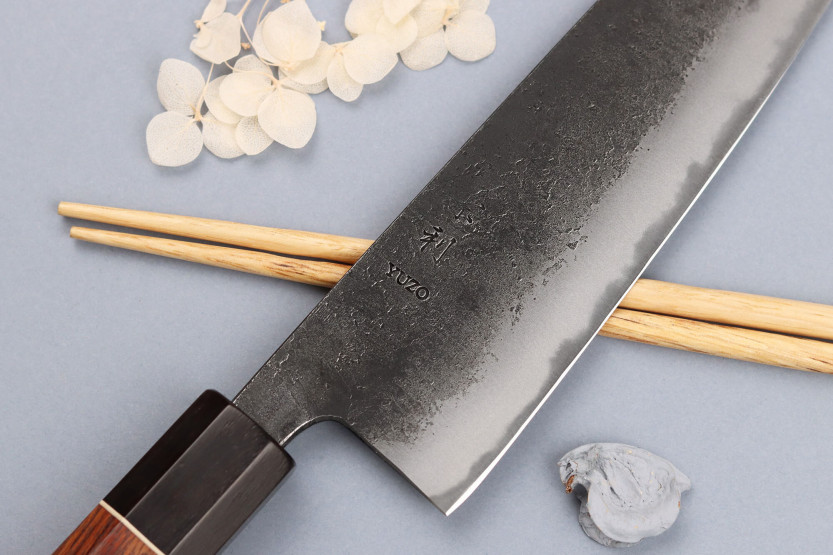
The various superimposed layers create a fine wave with unique patterns, visible all along the cutting edge of your Japanese craft knife!
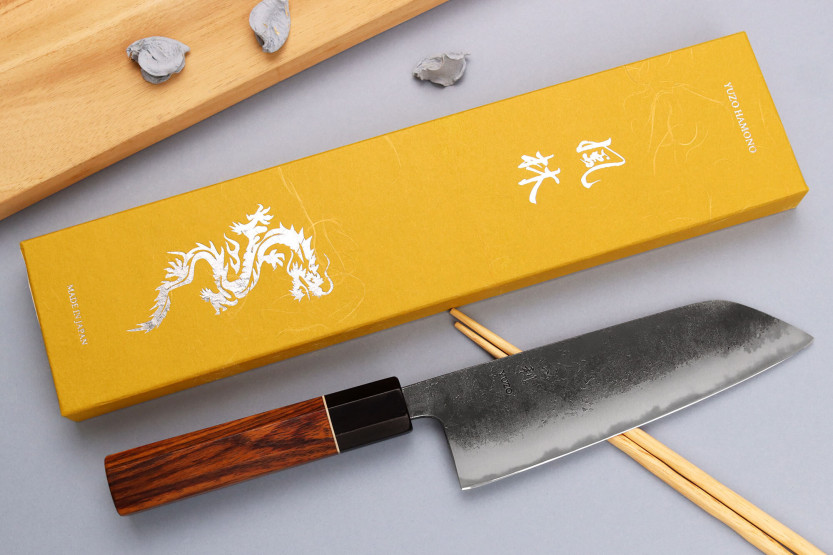
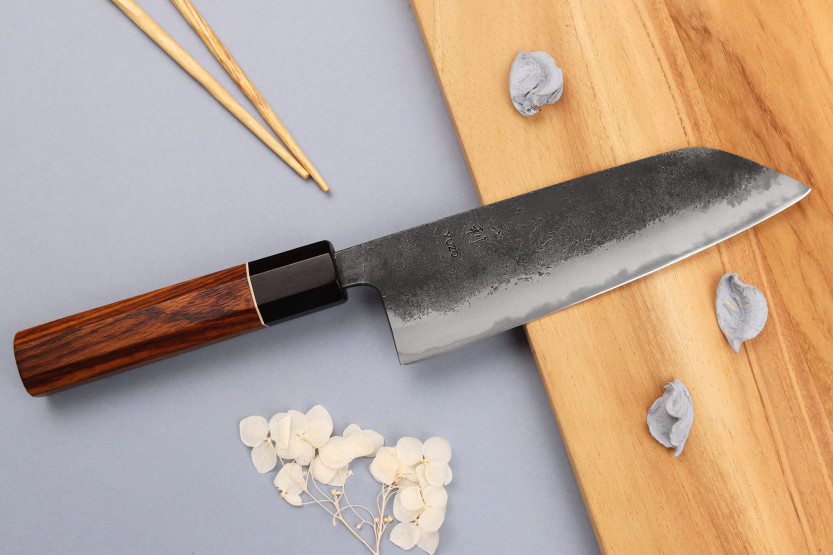
Last but not least, the blade features a Black Nashiji finish similar to a rough forged surface. This finish is achieved through a steel hardening technique, giving the blade an authentic, traditional style. The unpolished blade effect of this finish is particularly appreciated by Japanese chefs. In fact, it was this finish that inspired the name of the Yuzo Black Nashiji knife range.
A wooden handle with a traditional design
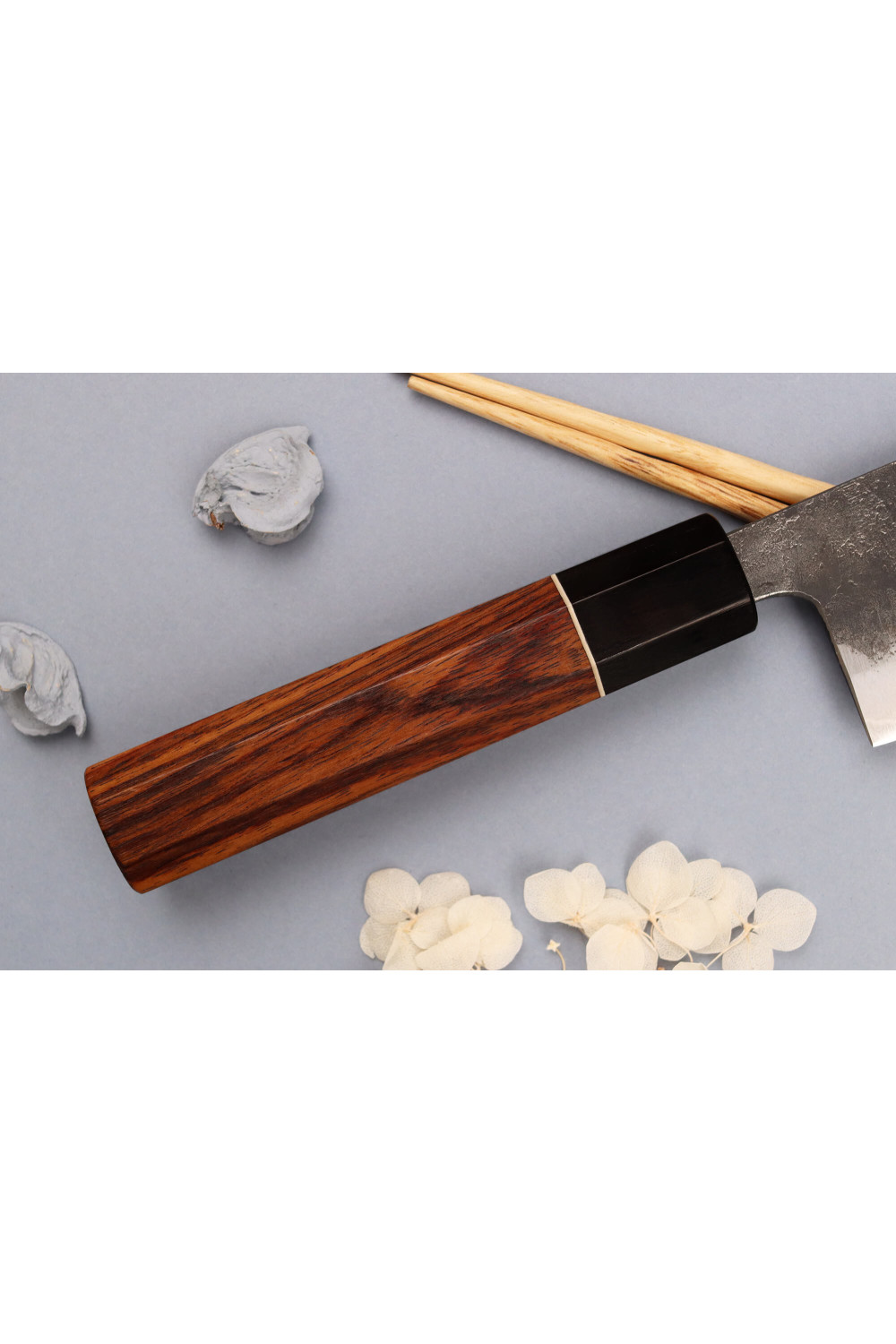
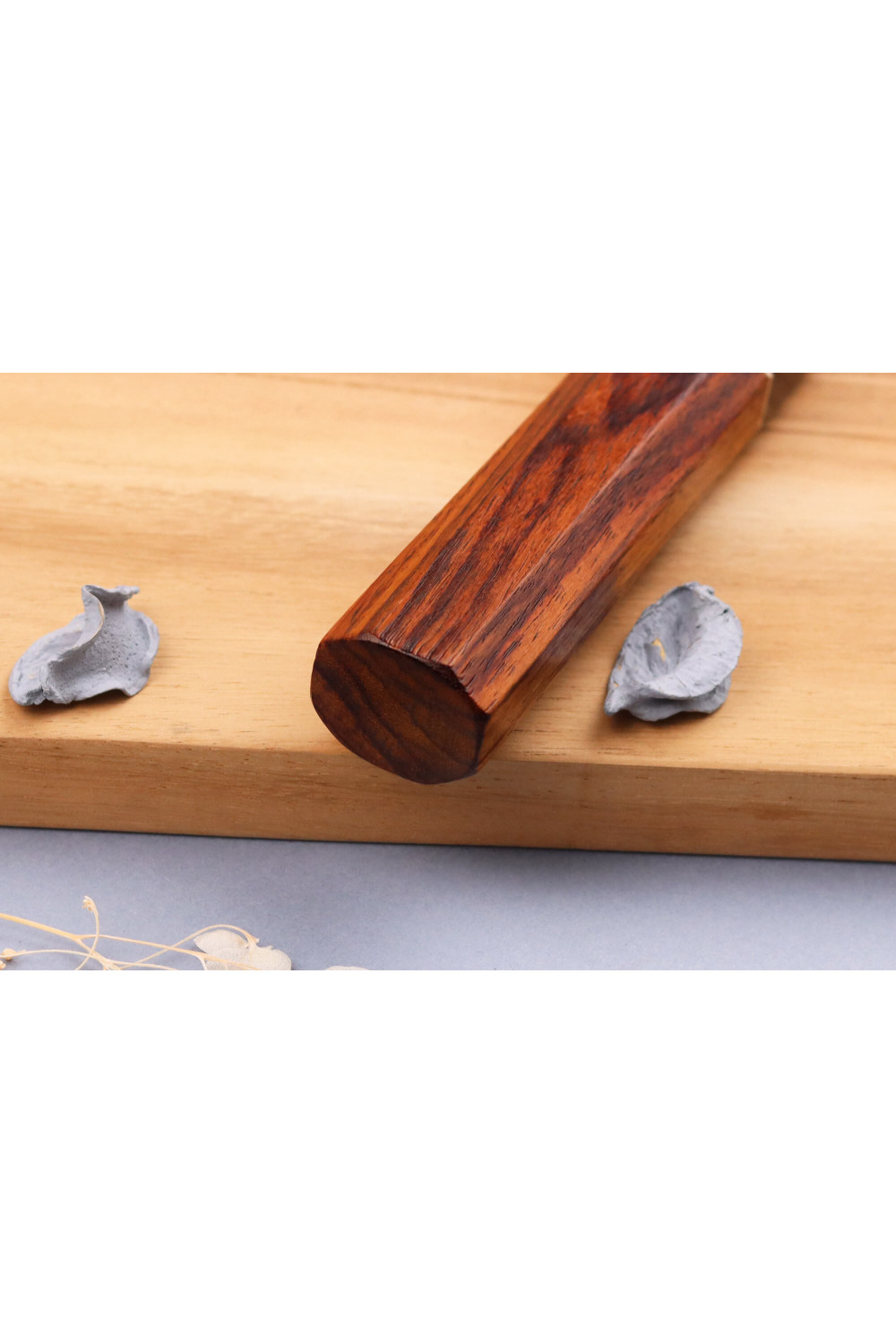
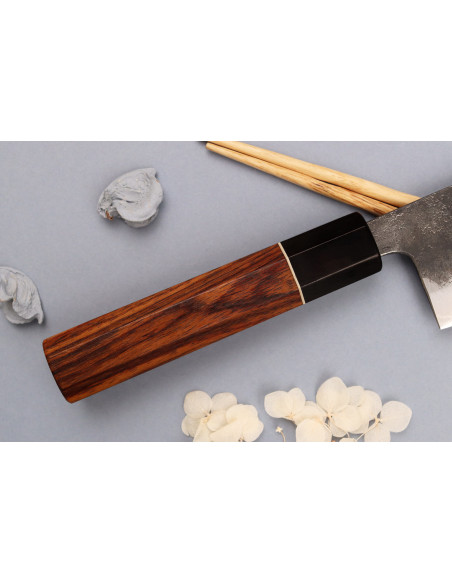
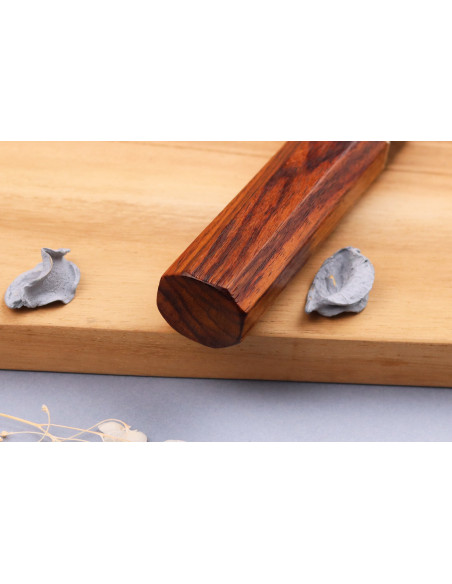
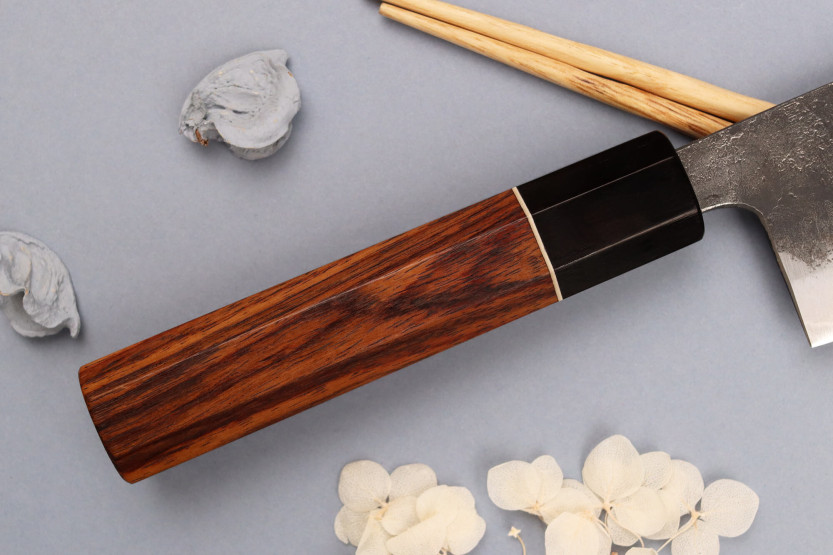
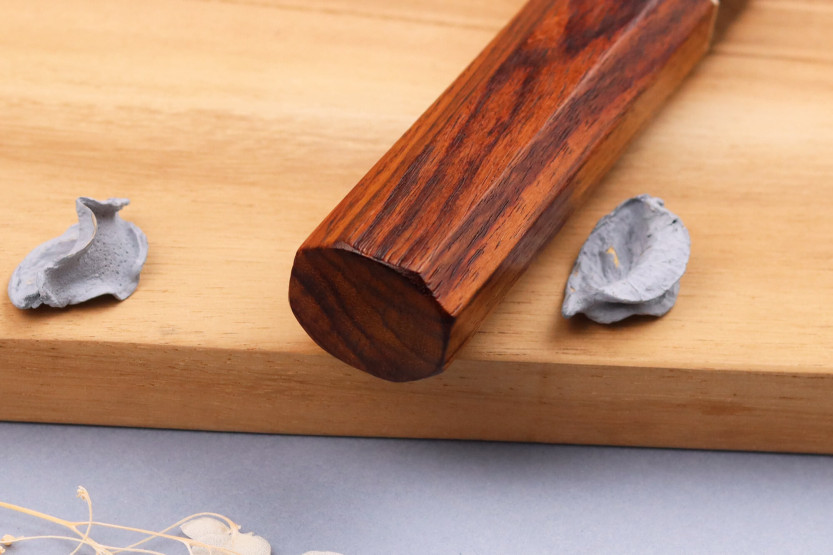
The handle of this handcrafted Japanese knife is made from rosewood, a species renowned for its strength and durability. Thanks to its high density, this wood effectively resists humidity and condensation, thus limiting the risk of warping.
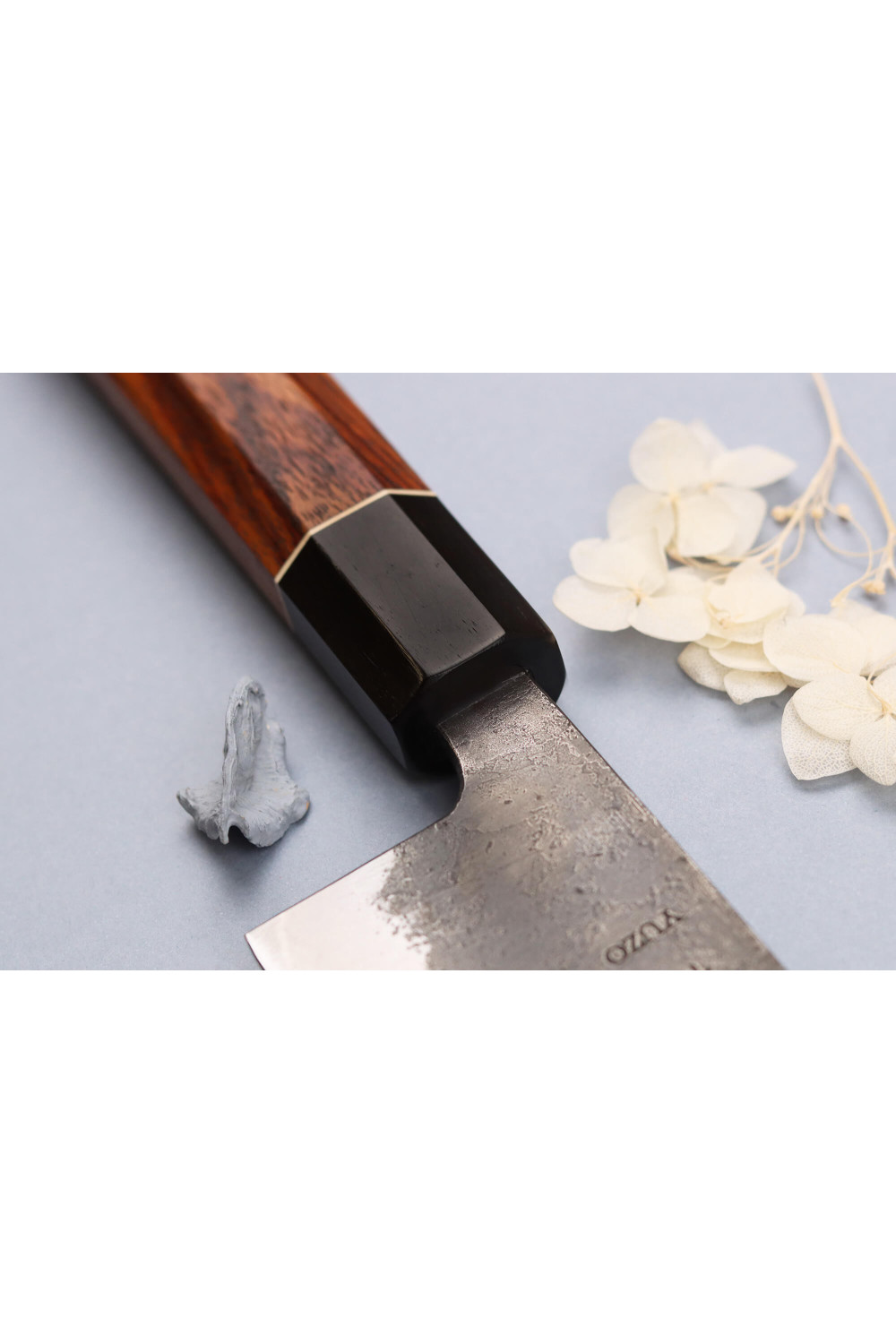
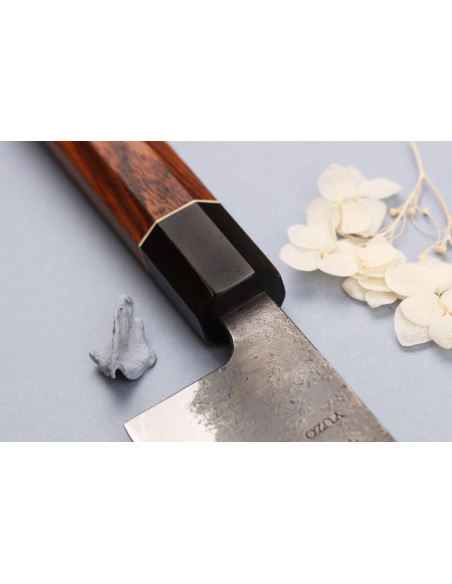
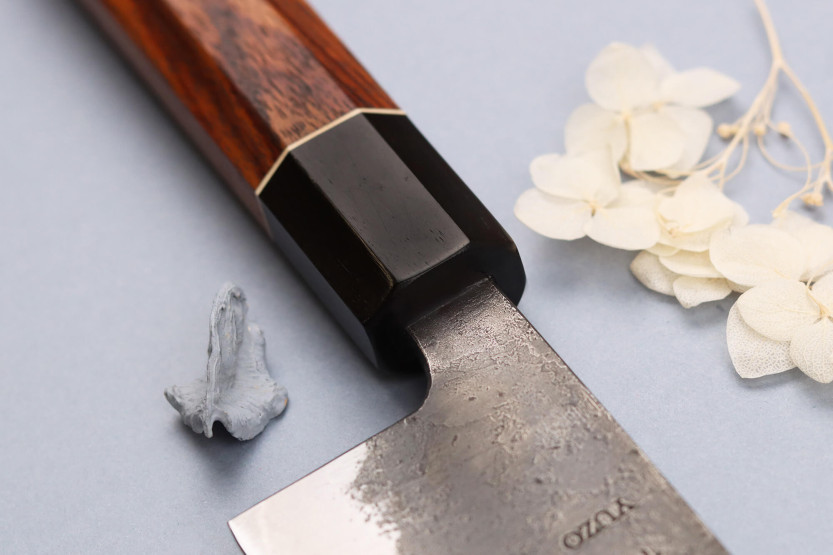
To complete the handle, an ebony bolster has been added to perfectly match the dark hue of the rosewood. A white micarta ring links the two parts, adding a touch of refinement to the whole.
The handle is octagonal in shape, offering a comfortable grip suitable for all cooks, whether left- or right-handed. This ergonomic design ensures optimum comfort, especially during prolonged use.
Finally, wood putty is added to the junction between the blade and the handle to fill any small gaps, ensuring optimum watertightness.
How to care for this Yuzo knife
To care for your carbon steel knife, you should wash it exclusively by hand using a non-abrasive sponge and mild detergent, avoiding wetting the handle. Do not use the dishwasher, and do not leave the knife to soak in the sink. After cleaning, wipe dry immediately and store in a dry place.
Over time, it is normal for the color of the blade to vary slightly. This natural evolution is caused by the carbon reacting to the acids contained in cut food or to the humidity in the air.
Find the rest of the Yuzo Black Nashiji range on KnifeLeader.eu!




 By buying this product you can collect up to