Your cart
There are no more items in your cart
The paring knife: For which foods, how to use it?
Paring knife features
Although you may be unfamiliar with the name paring knife, it's the most common and basic of kitchen knives. It's the most widely used kitchen utensil, by professionals and private individuals alike. It's the essential multi-purpose knife for every cook.
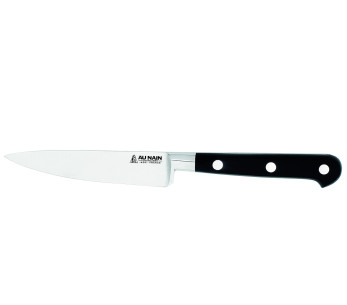
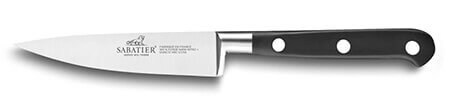
The paring knife is renowned for its small size. Handy and lightweight, it features a short blade measuring between 7 and 11 cm. The blade is extremely sharp, even at the tip, and is generally toothless. A paring knife, like any other knife for that matter, needs to be perfectly sharp for every use: this reduces the risk of injury, because if the blade doesn't cut, it will remain stuck in the food and won't slip!
The blade of this versatile kitchen knife comes in two different shapes. Some have a straight, rigid blade for peeling or dicing vegetables. Others have a shape with a slightly upward-pointing tip, for easier slicing and dicing of fruit and vegetables.
How to use a paring knife 
The rigidity of the blade on this kitchen utensil is ideal for working on fruit and vegetables, as well as meat. The paring knife lets you :
Peel thin-skinned foods (such as tomatoes or potatoes) or thick-skinned foods (such as citrus fruits).
Remove stalks andseeds from fruit and vegetables with precision.
Cut into thin or thick slices, dice, mirepoix or brunoise.
Turn zucchini, carrots, artichokes etc. to give them a regular shape for even cooking.
Trim fruits and vegetables, such as mushrooms, but also meats, to remove unnecessary parts such as skin, sinews and fat.
An essential little knife in your kitchen, the paring knife is just waiting for you ;) Discover our incredible selection of paring knives on KnifeLeader.eu!