A damask knife in the Japanese tradition
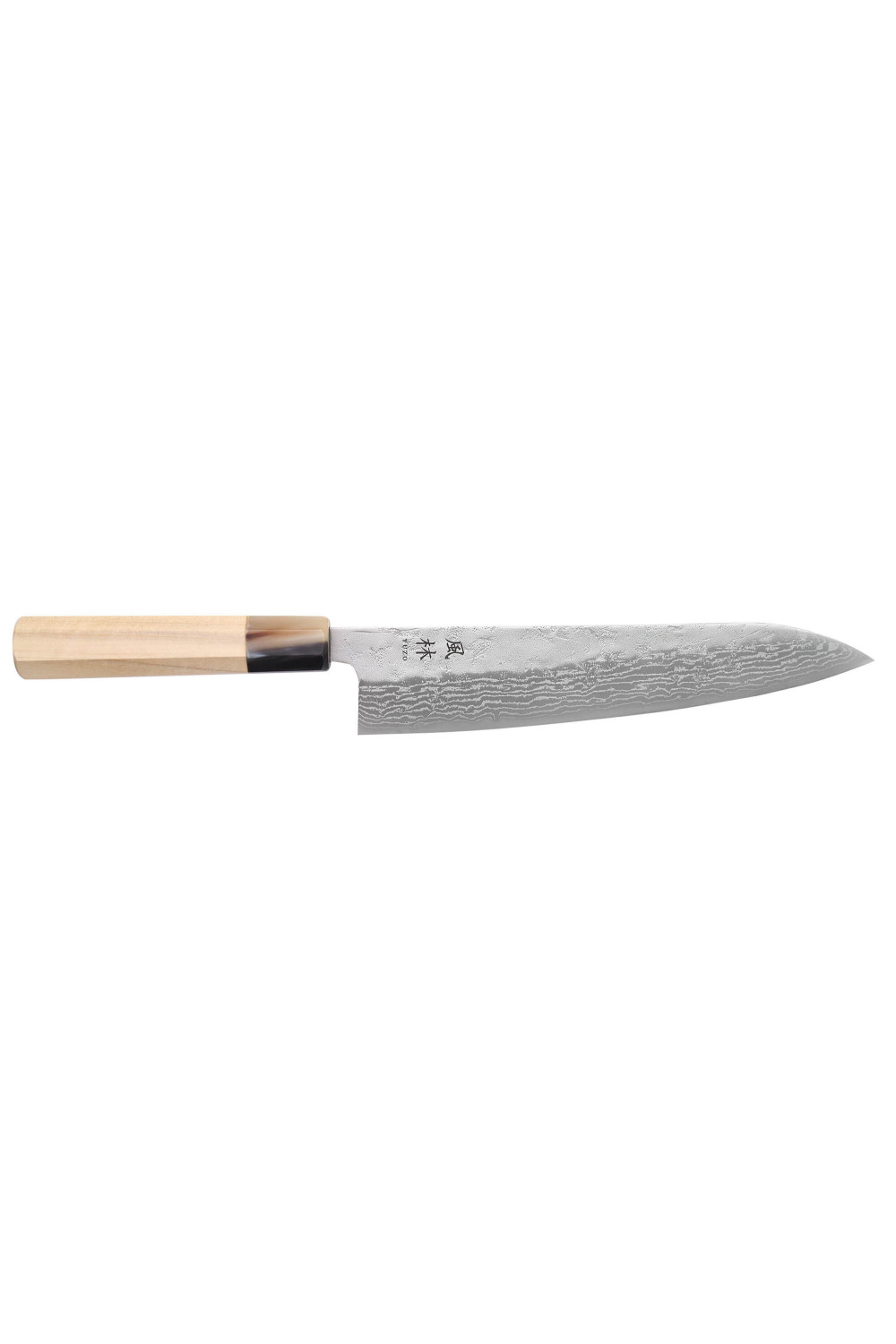
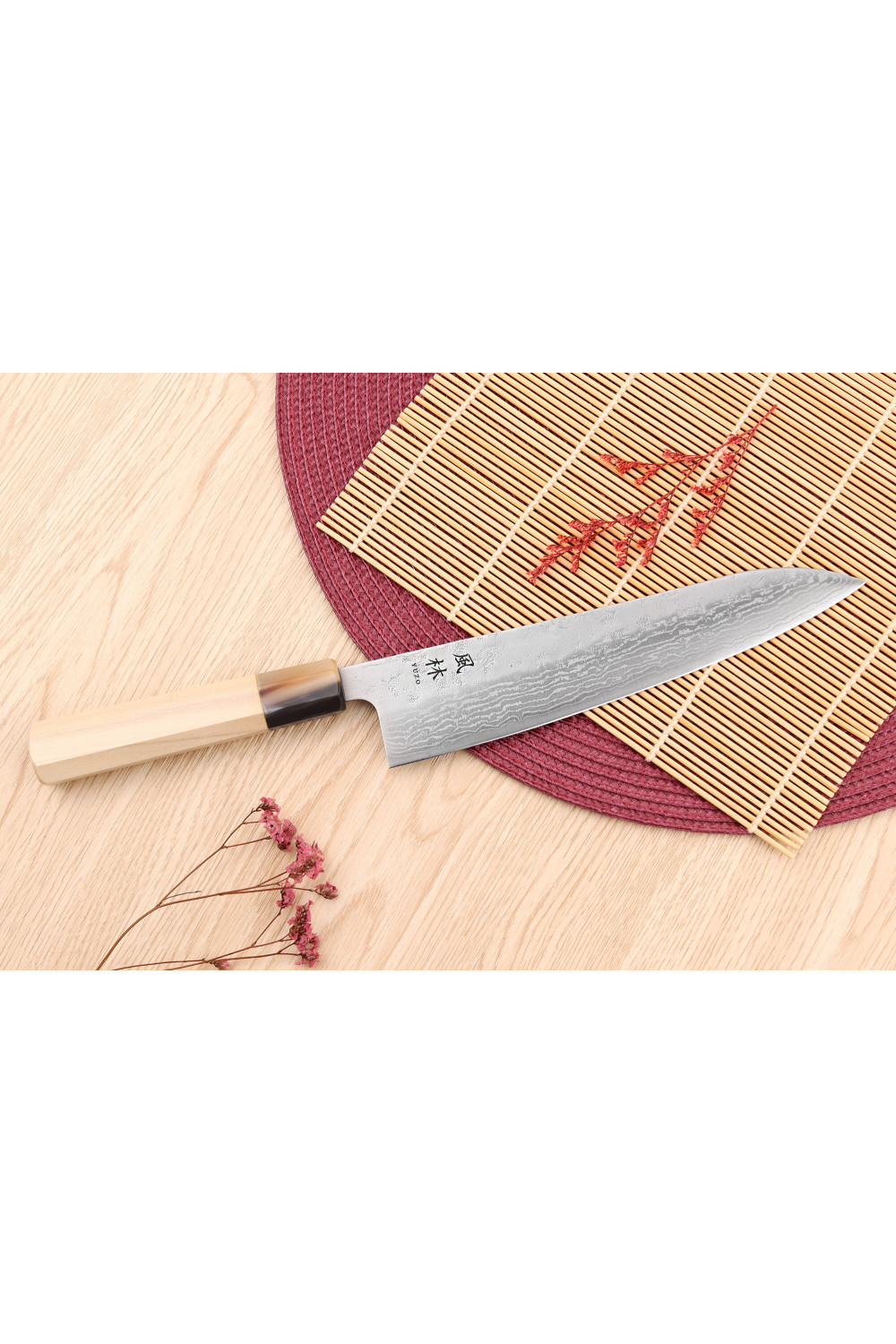
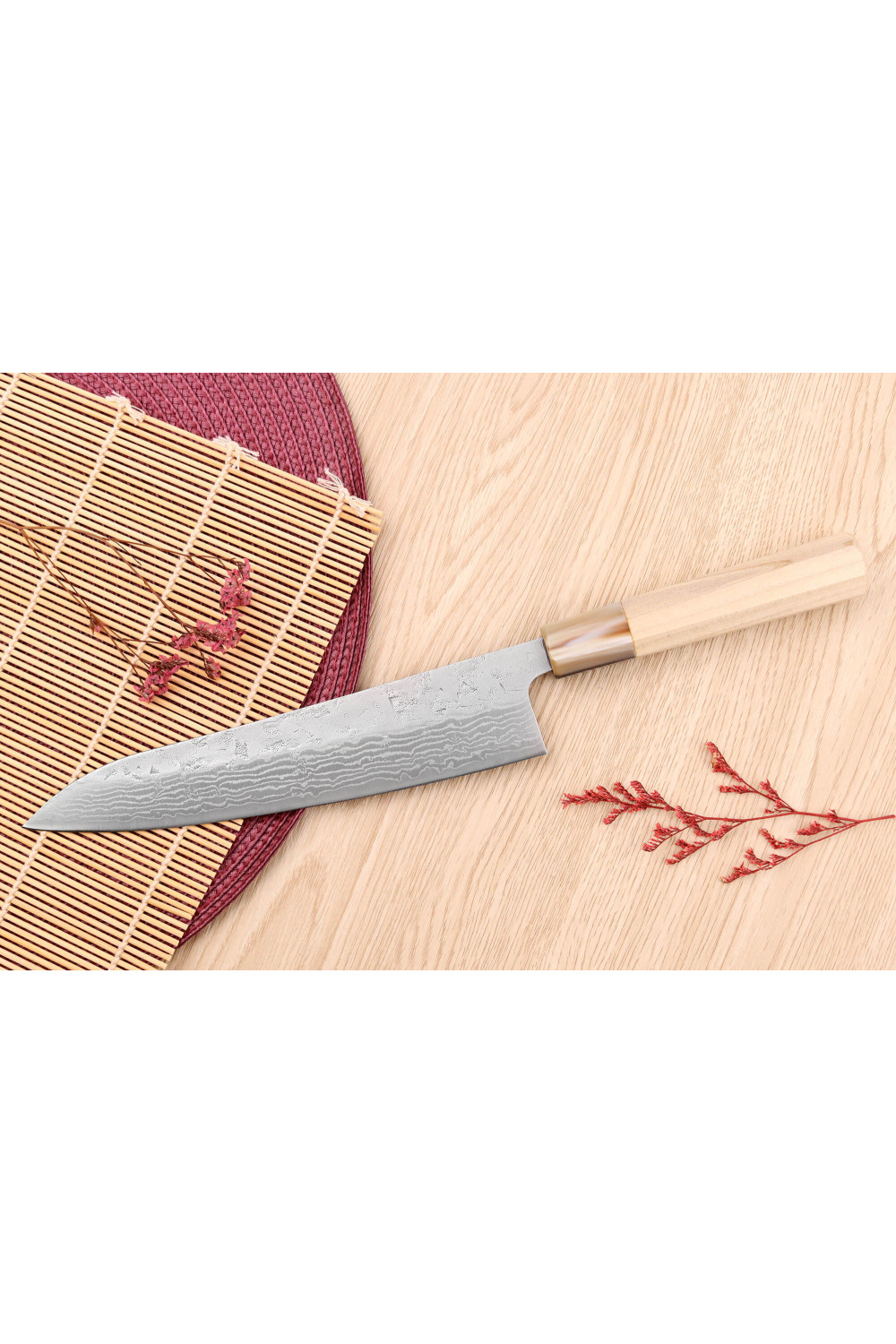
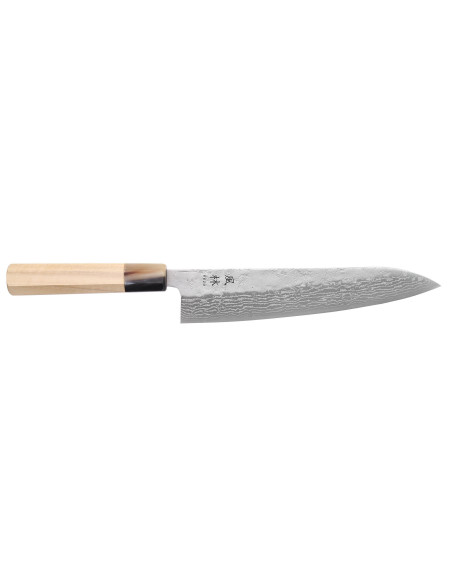
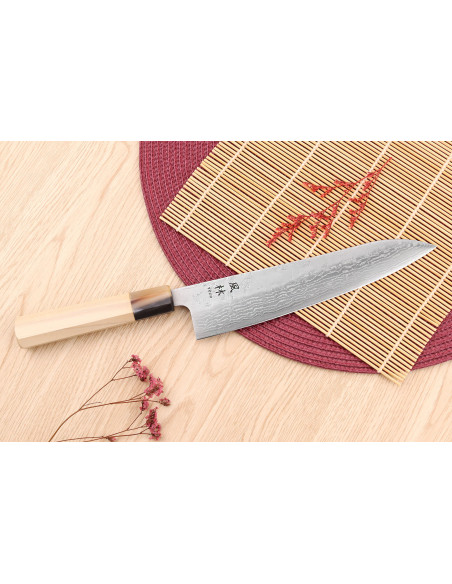
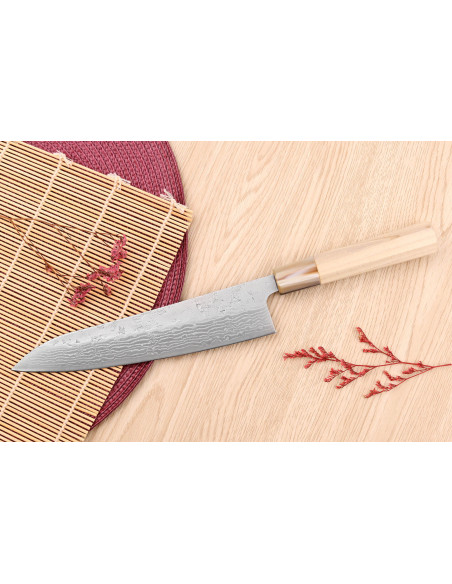
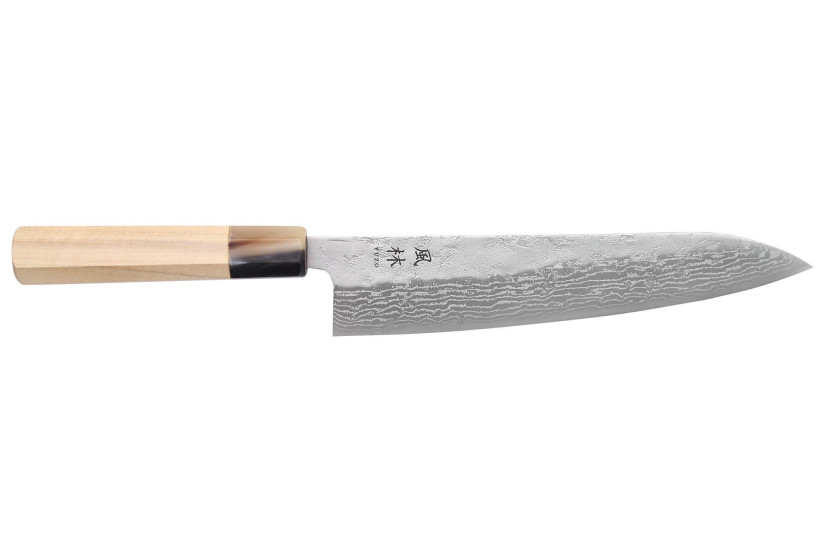
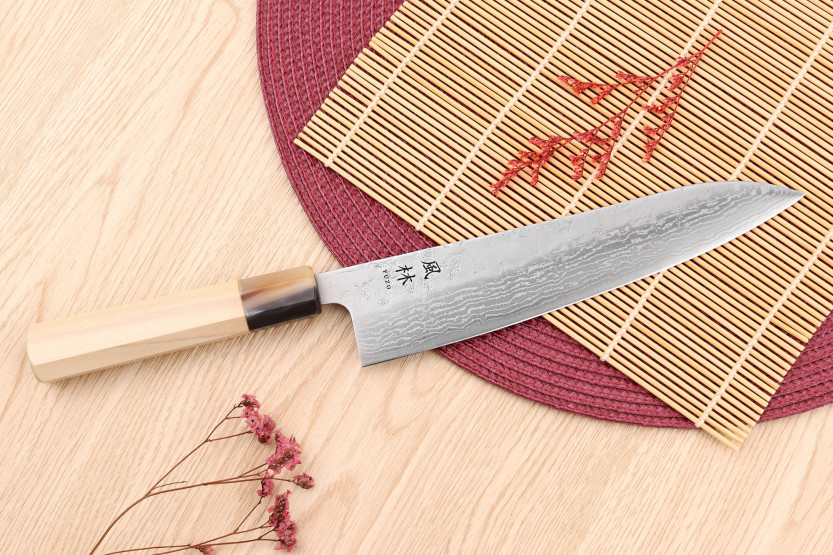
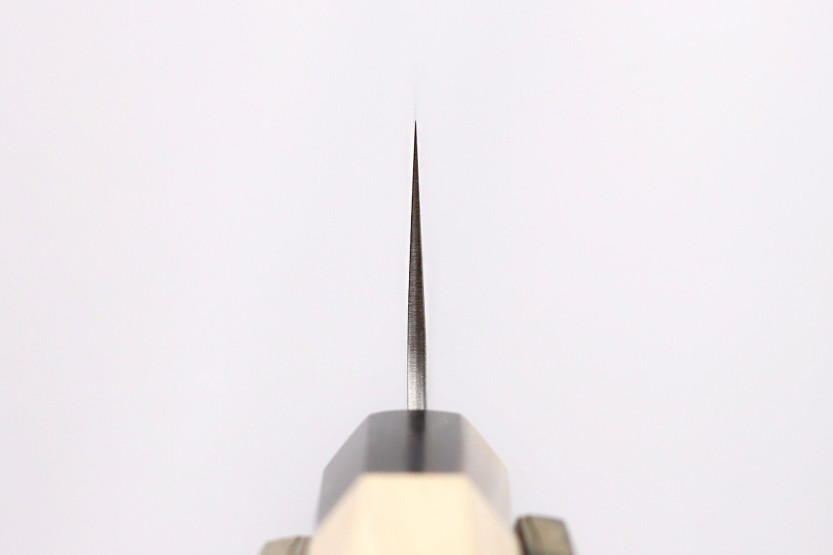
Your Japanese chef's knife features a 21 cm blade, forged in a multi-layer damascus structure around a core of Swedish stainless steel. This steel is renowned for its quality and precision cuts, while retaining good corrosion resistance. This compromise between sharpness and maintenance facilitates daily use.
This alloy is a steel hardened to around 59HRC on the Rockwell scale: a hardness that enables the blade to stay sharp longer, while being easier to sharpen than ultra-hard Japanese steel. An excellent choice for all-purpose use.
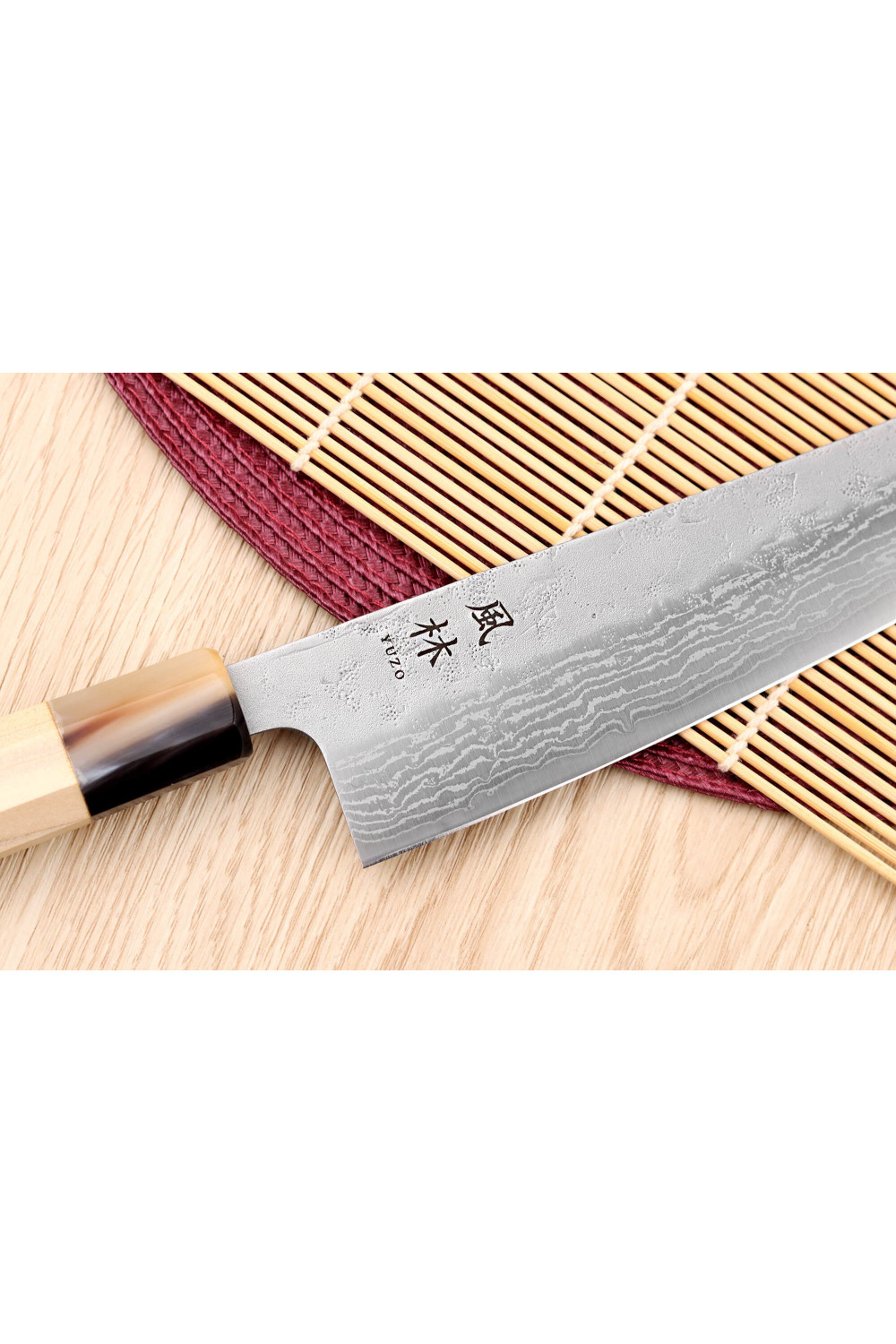
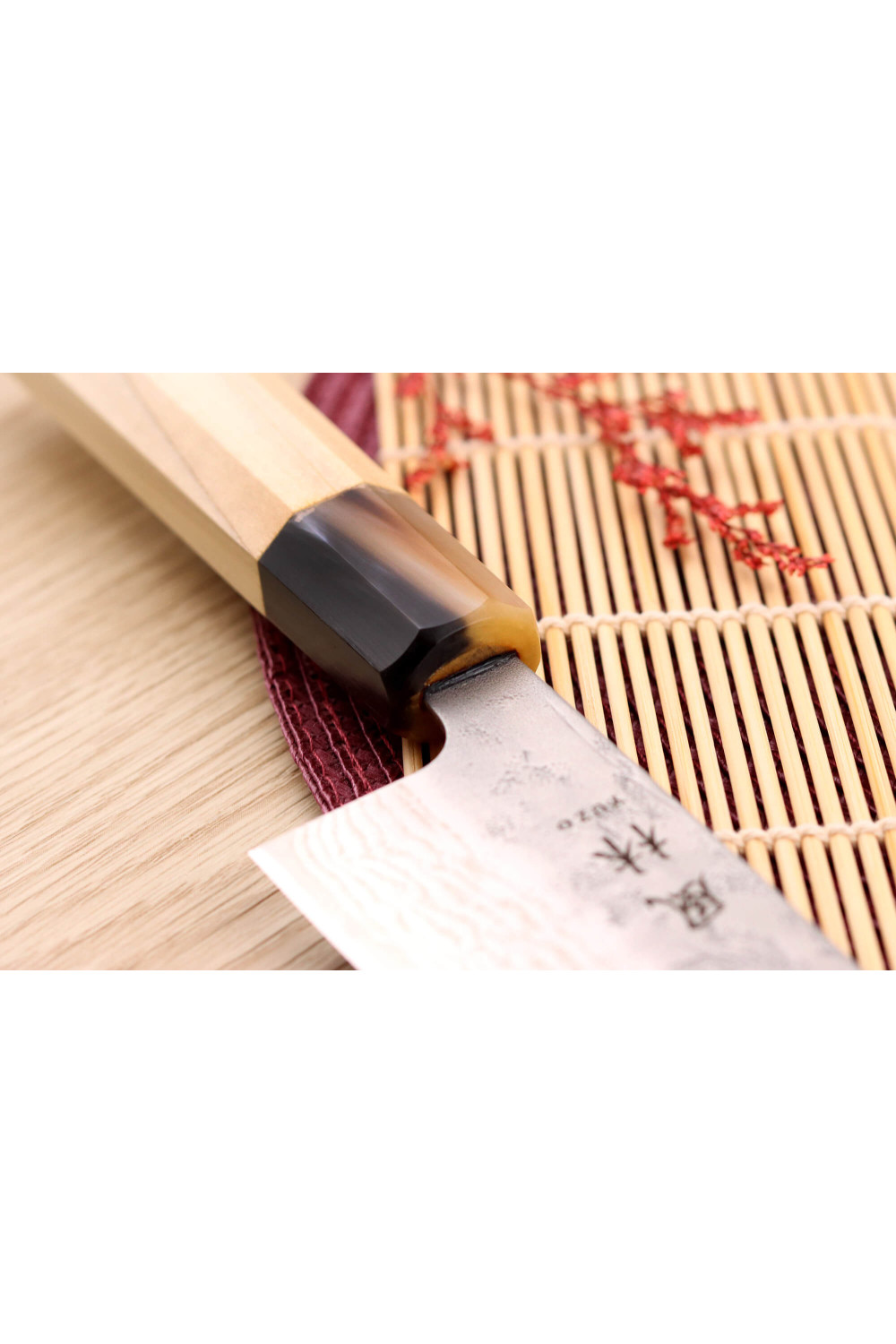
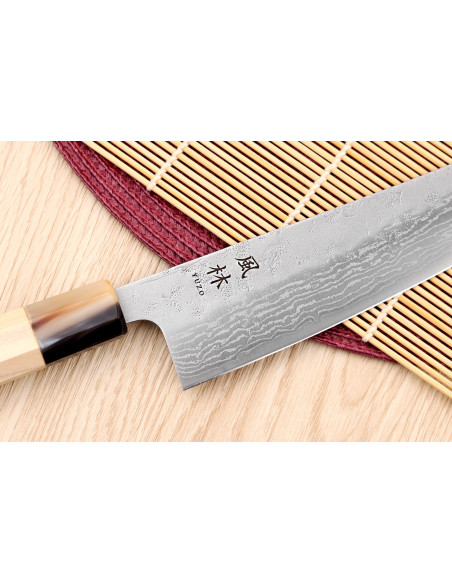
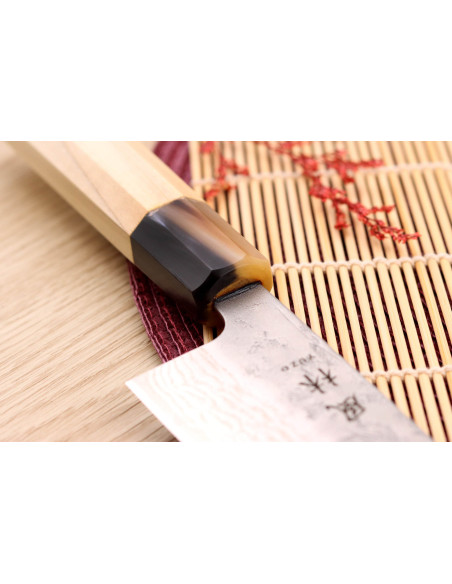
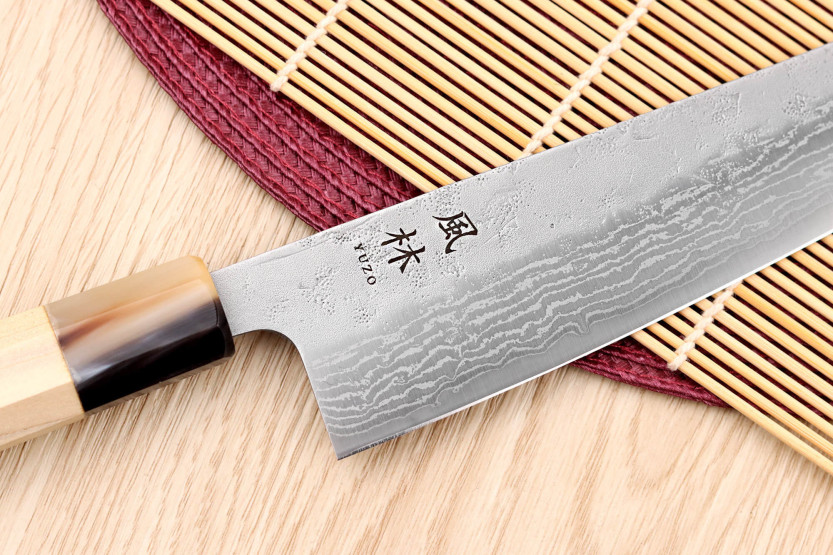
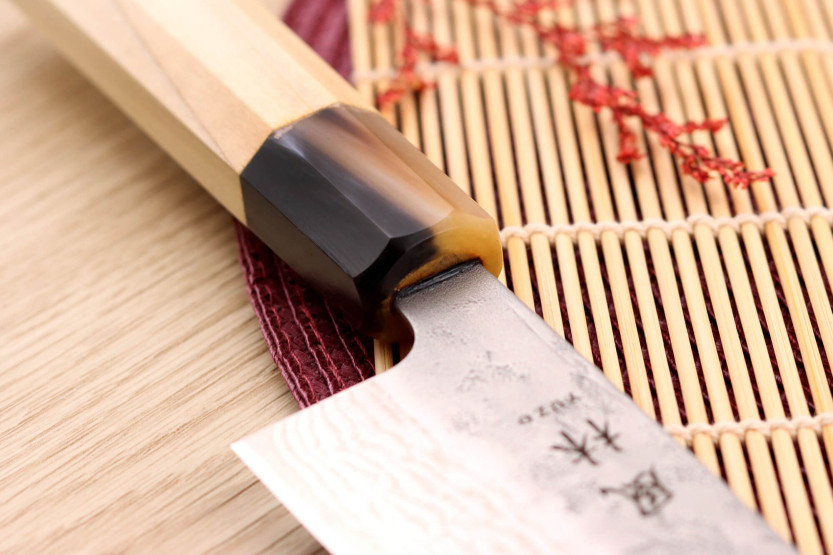
The blade also features a hand-applied hammered finish. As well as being aesthetically pleasing, this reduces the adherence of food to the blade during cutting.
The damask pattern visible on the surface of your Japanese kitchen knife is the result of alternating layers of steel with slightly different compositions, welded together. It's not just a coating, but a real forging operation, guaranteeing your blade's enhanced strength . Each Japanese kitchen knife is therefore unique, with its own specific corrugations.
A traditional handle in natural Japanese wood
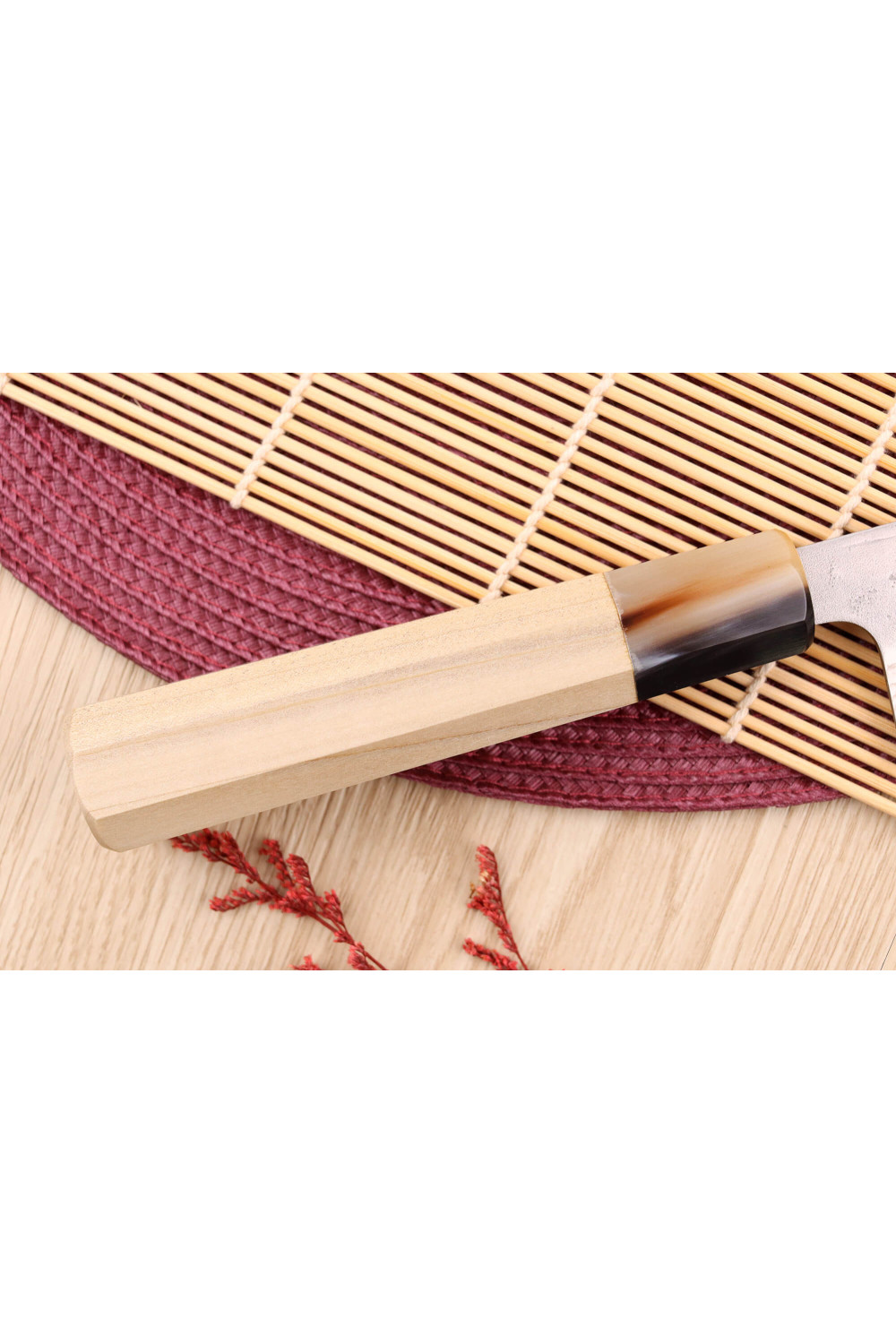
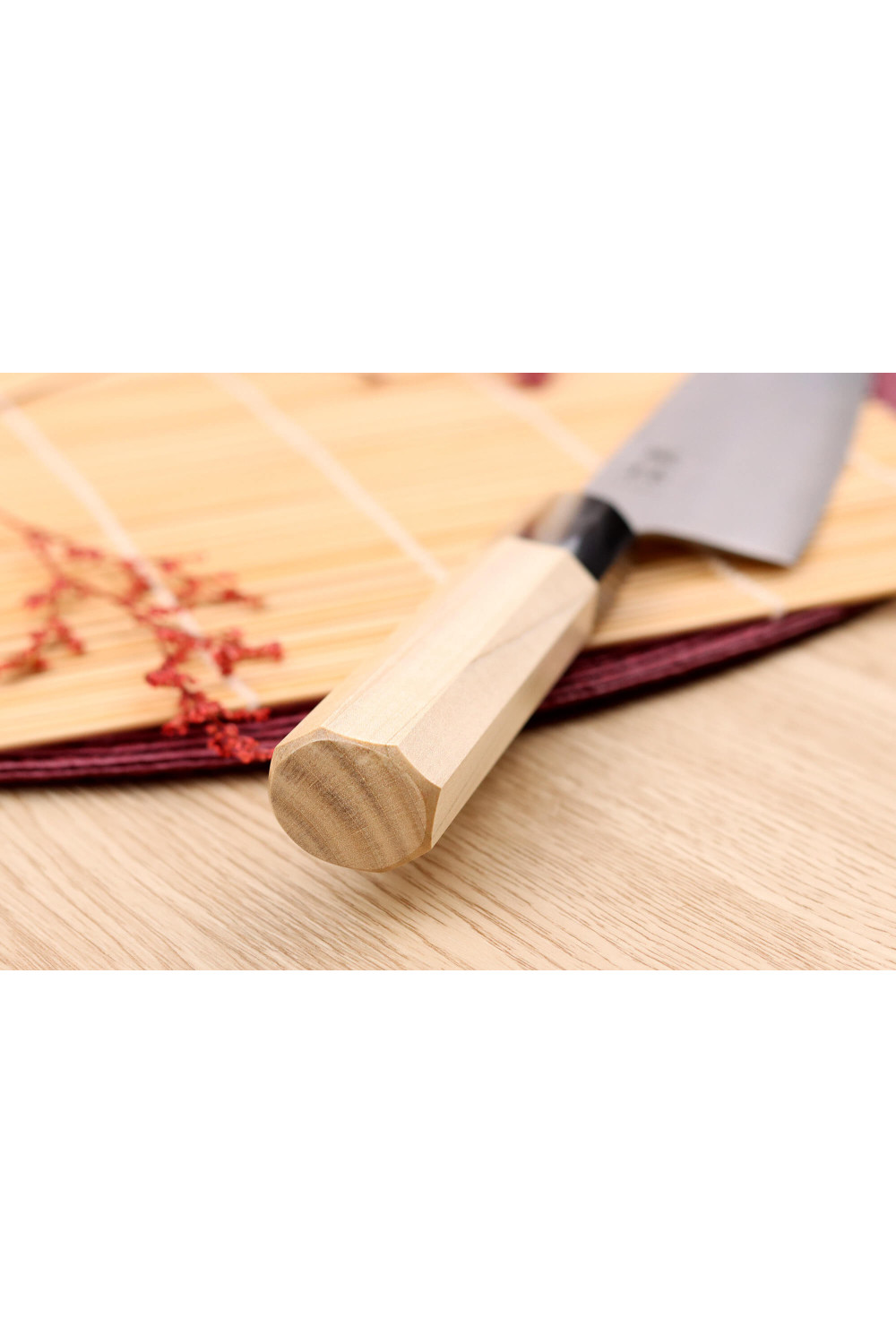
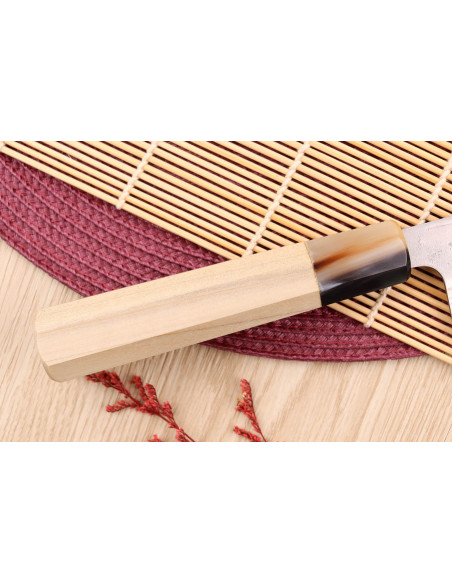
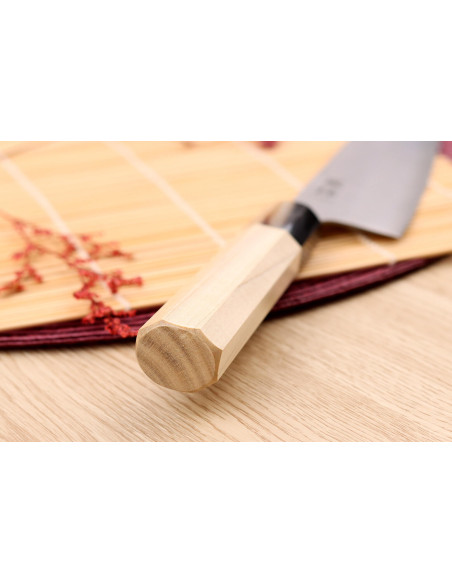
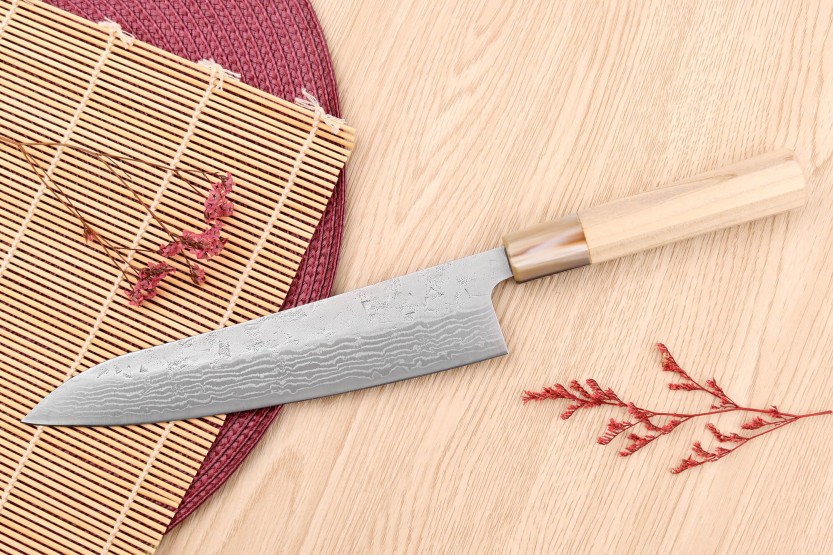
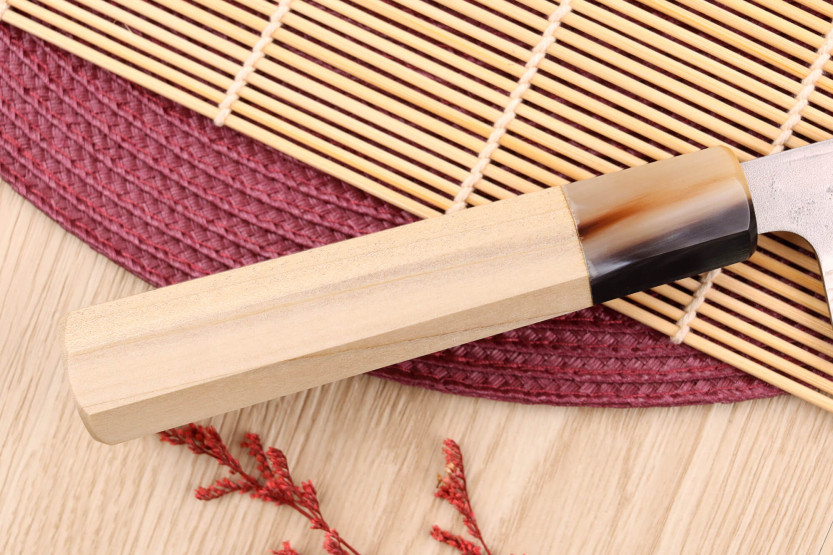
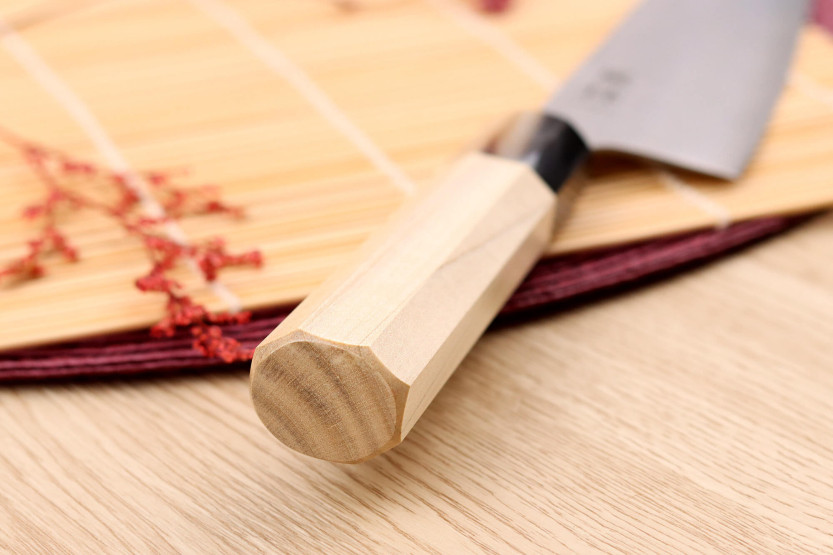
The handle of your Damascus knife is made from magnolia wood, a light-colored species widely used in traditional Japanese cutlery. Appreciated for its natural resistance to humidity and its stability over time, magnolia is also pleasant in the hand, even with prolonged use.
This handle is combined with a white buffalo horn bolster, which provides a fluid transition between the wood and the blade. This bolster reinforces the structure of the handle while adding a touch of refinement typical of Japanese knives.
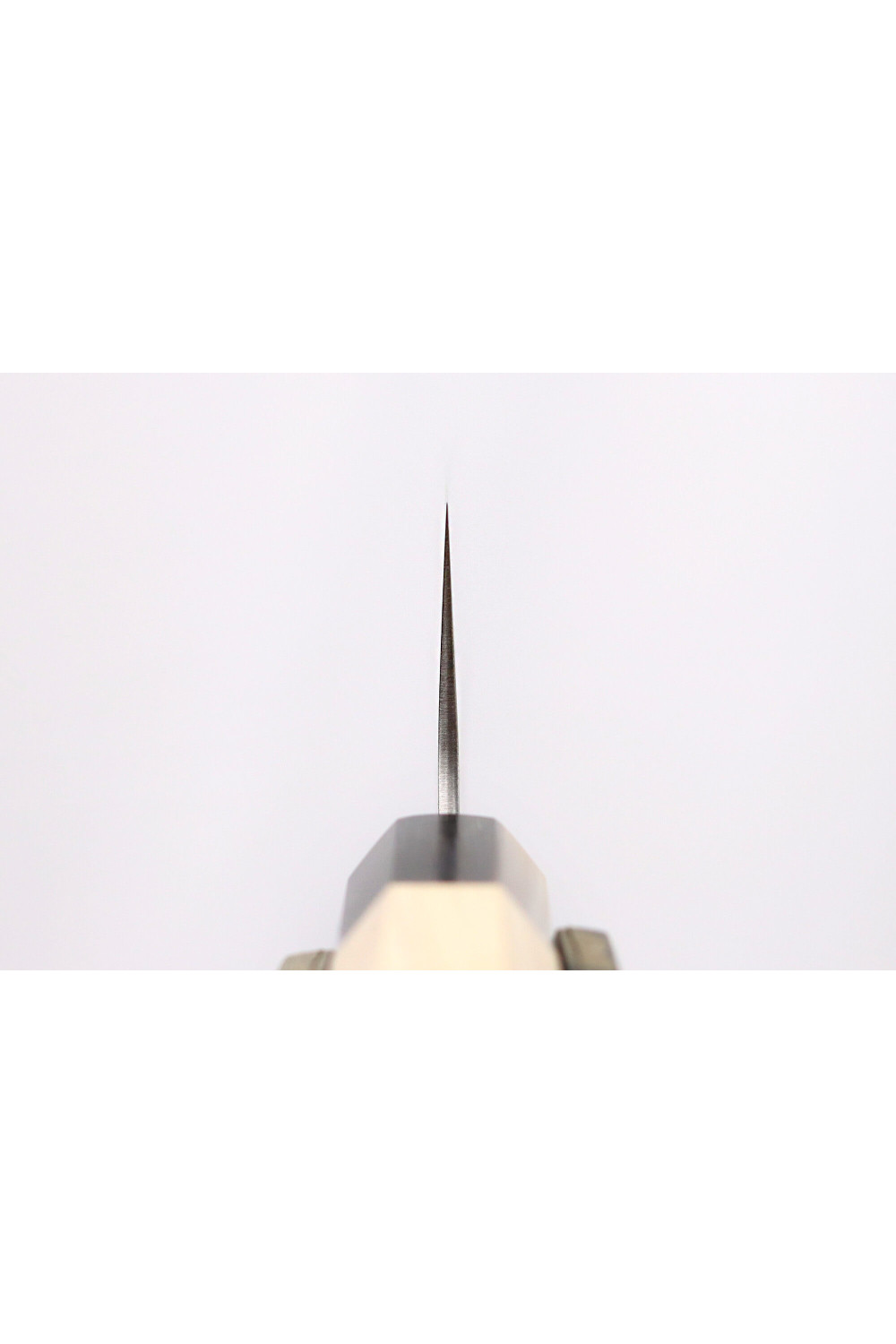
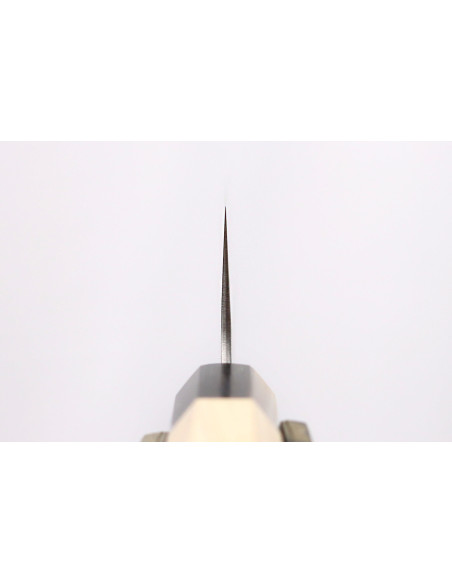
Your gyuto knife is octagonal in shape, a traditional design that ensures an ambidextrous, perfectly balanced grip whether you're right- or left-handed. This geometry favors a natural grip and excellent stability during cutting, without causing fatigue.
Technical summary and advantages of your handcrafted Japanese knife
-
Multi-layer damascus blade : unique, aesthetic patterns
-
Swedish steel
core: strength and durability
-
Rockwell
hardness59 HRC: good compromise between hold and sharpness
-
Magnolia and buffalo horn handle: moisture stability, elegant color
-
Ambidextrous octagonal grip: comfort for all
-
Tsunehisa craftsmanship: traditional Japanese know-how
To preserve your Damascus knife, wash only by hand, using a soft sponge and a little lukewarm water. Avoid getting the wooden handle too wet. Once cleaned, wipe immediately with a dry cloth and store in a dry, well-ventilated place. Never use the dishwasher or leave it to soak in water.
Tsunehisa cutlery in the spotlight
The crafting of this handmade Japanese knife is based on the expertise of the Tsunehisa workshop, one of the small Japanese artisans renowned for their mastery of damascus and handwork. Each piece is shaped by hand, with meticulous attention to balance, finish and harmony between blade and handle. The workshop perpetuates ancient techniques to create useful Japanese knives.
Explore our collection of Damascus Japanese knives on Knifeleader.eu!




 By buying this product you can collect up to