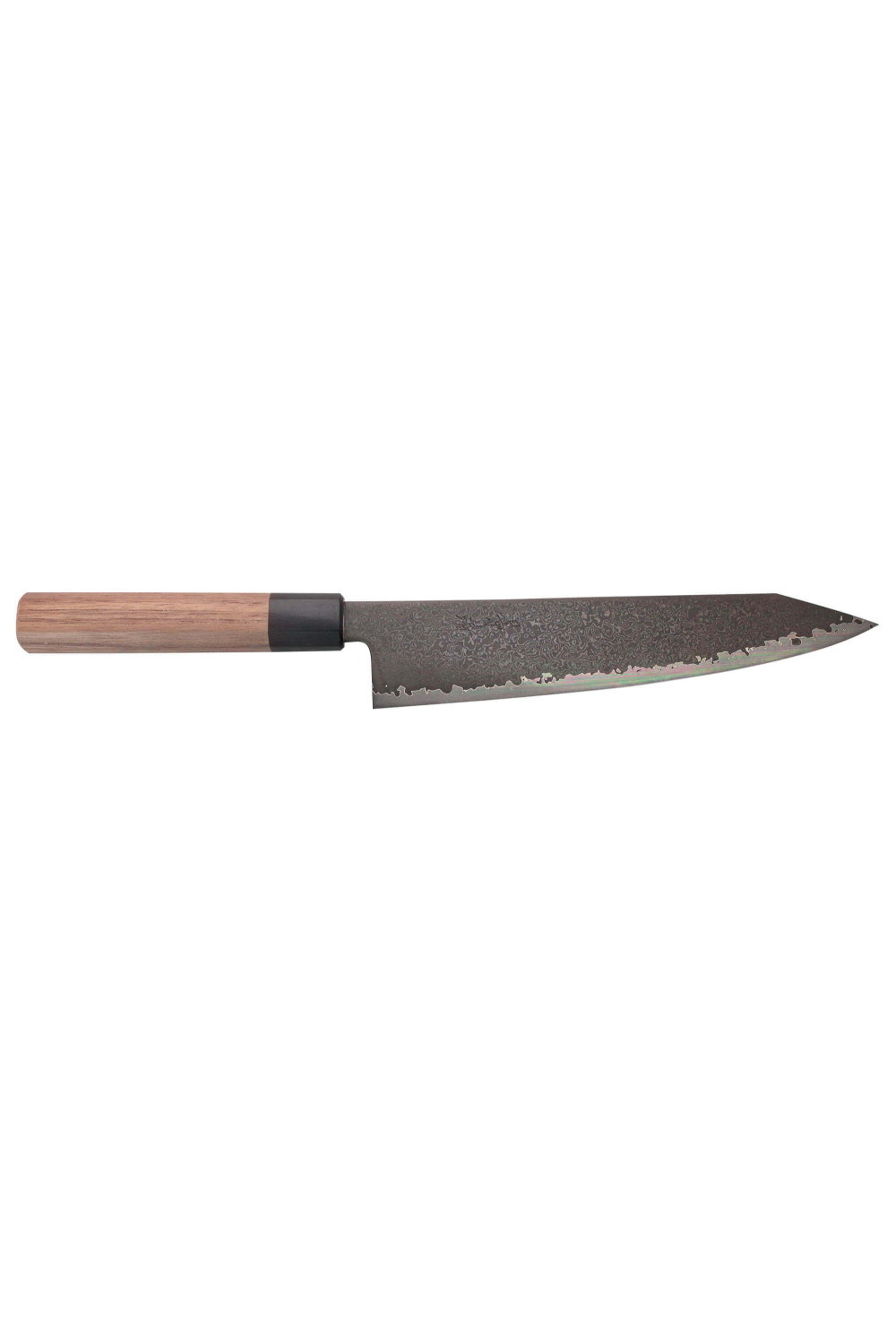
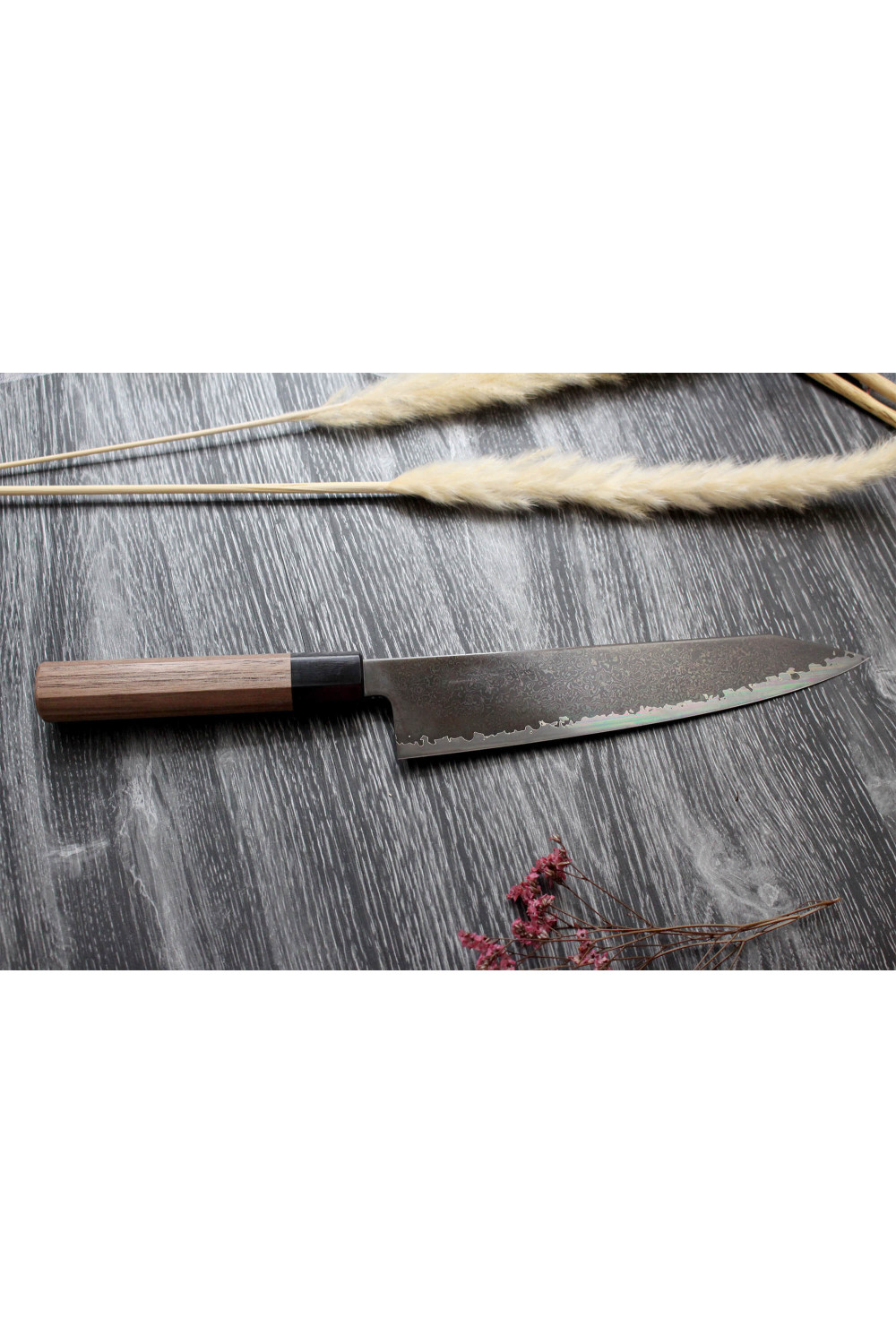
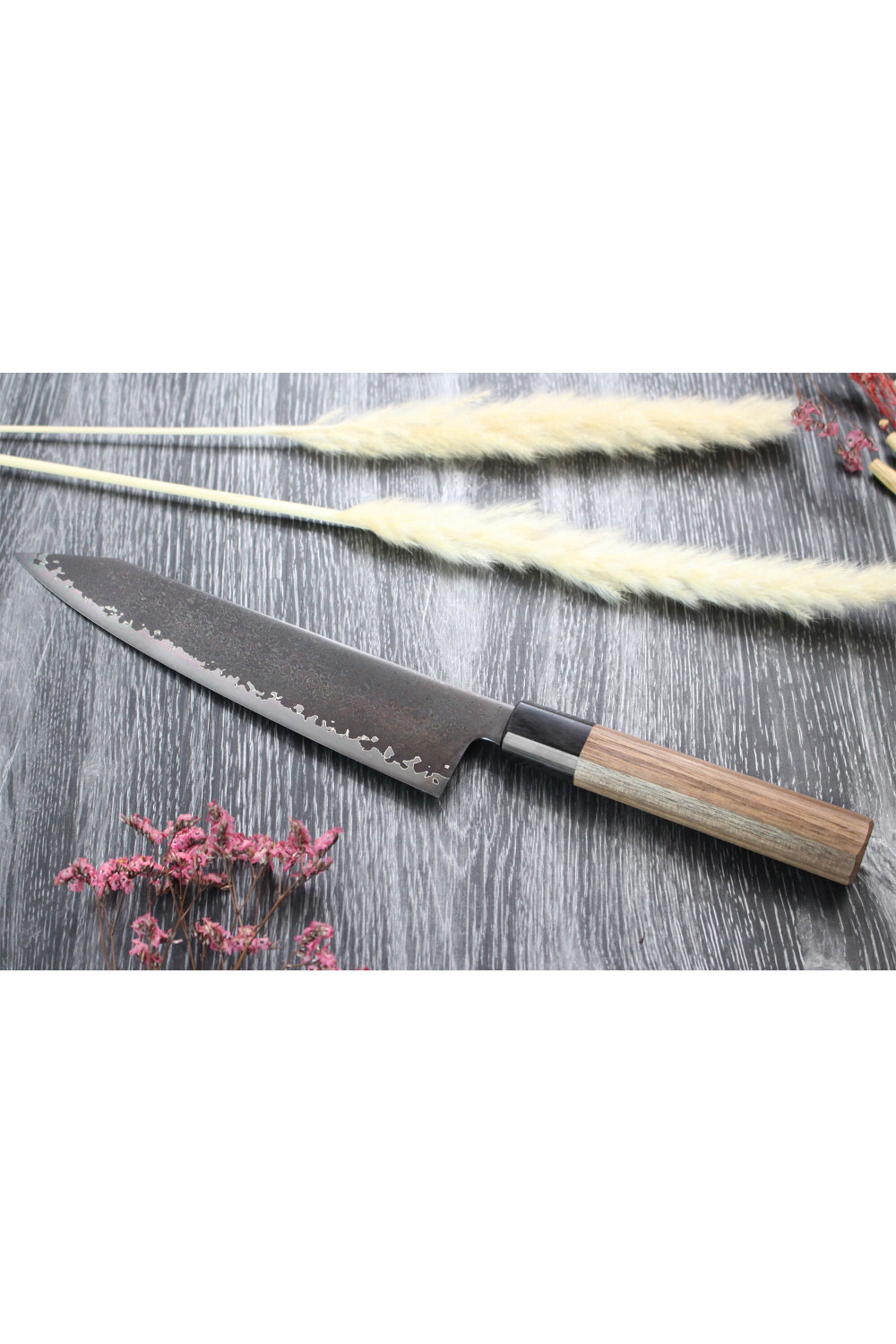
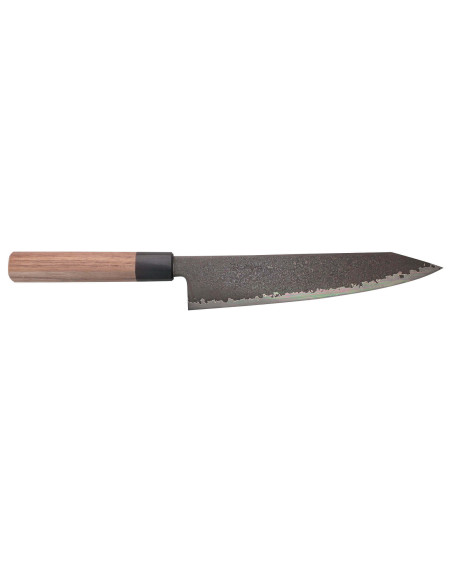
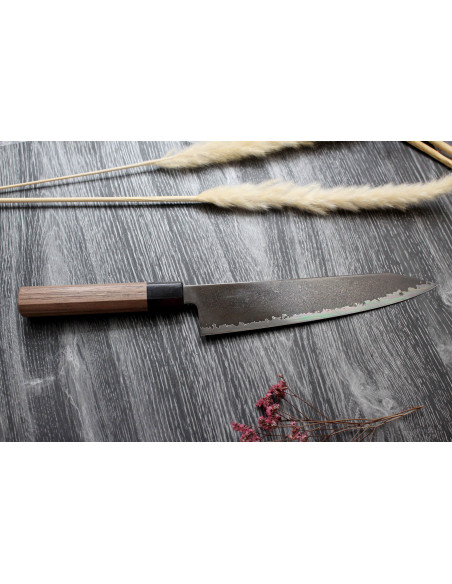
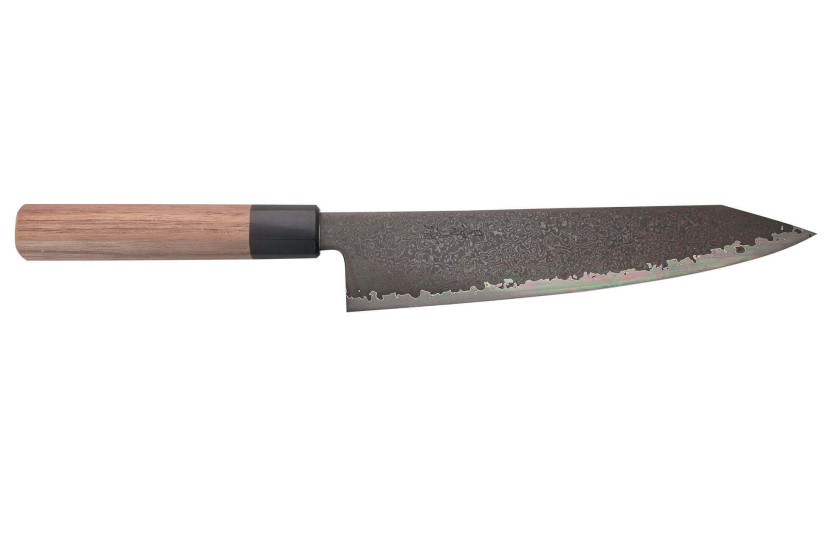
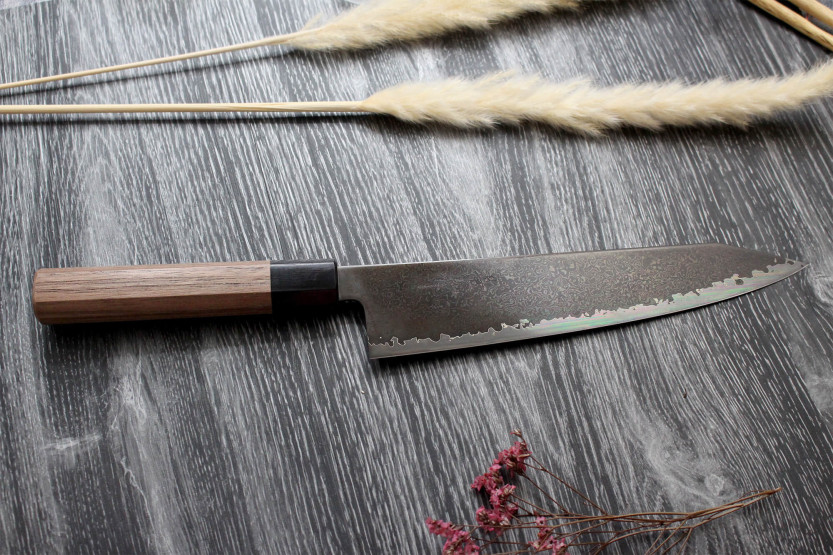
This Kagekiyo Damascus VG10 21cm chef's knife lets you vary your cuts: with it, you can slice an eggplant, mince a piece of beef (boneless) or chop your chives. It's truly versatile, and if you had to buy just one, this would be it.
Knife specifications :
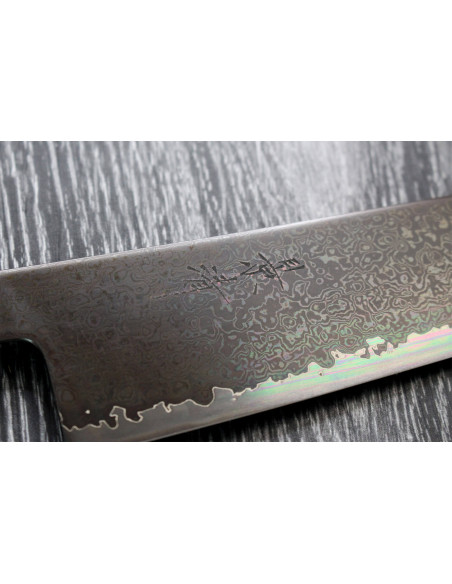
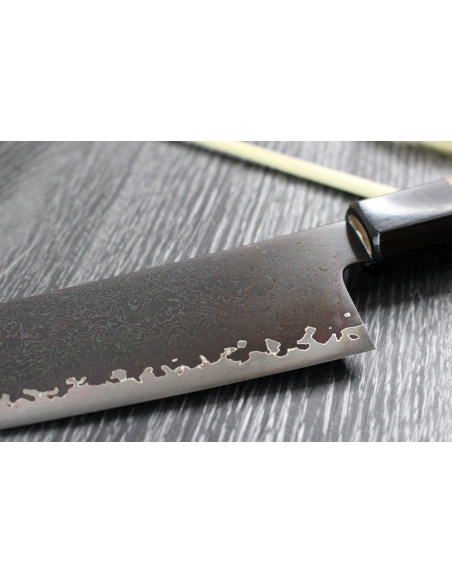
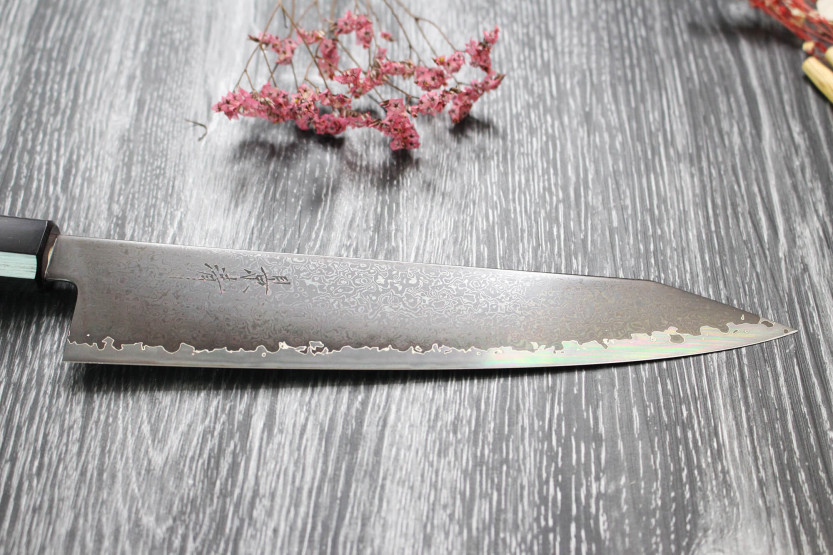
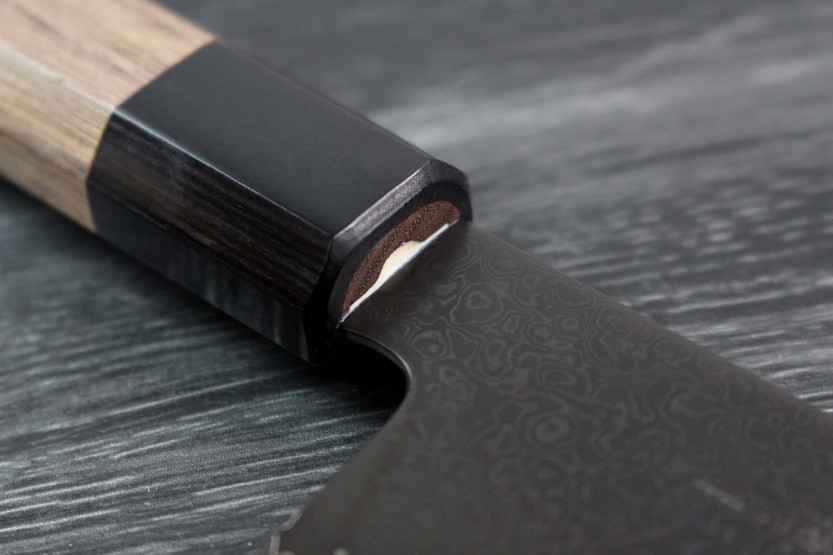
The blade of this knife is damascened, meaning that its structure is based on a solid core surrounded by several layers of softer steel, which balance it out. For this particular model,VG10 steel is used in the center of the knife. This Japanese steel contains 1% carbon, which makes it very rigid, and rigid steel means long-lasting sharpness. This means fewer sharpening sessions, despite repeated use. Thanks to its 15% chromium content, it is also corrosion-resistant, despite its carbon content (which makes the knife oxidizable). It makes an excellent base for damascened structures, and is found on professional knife ranges.
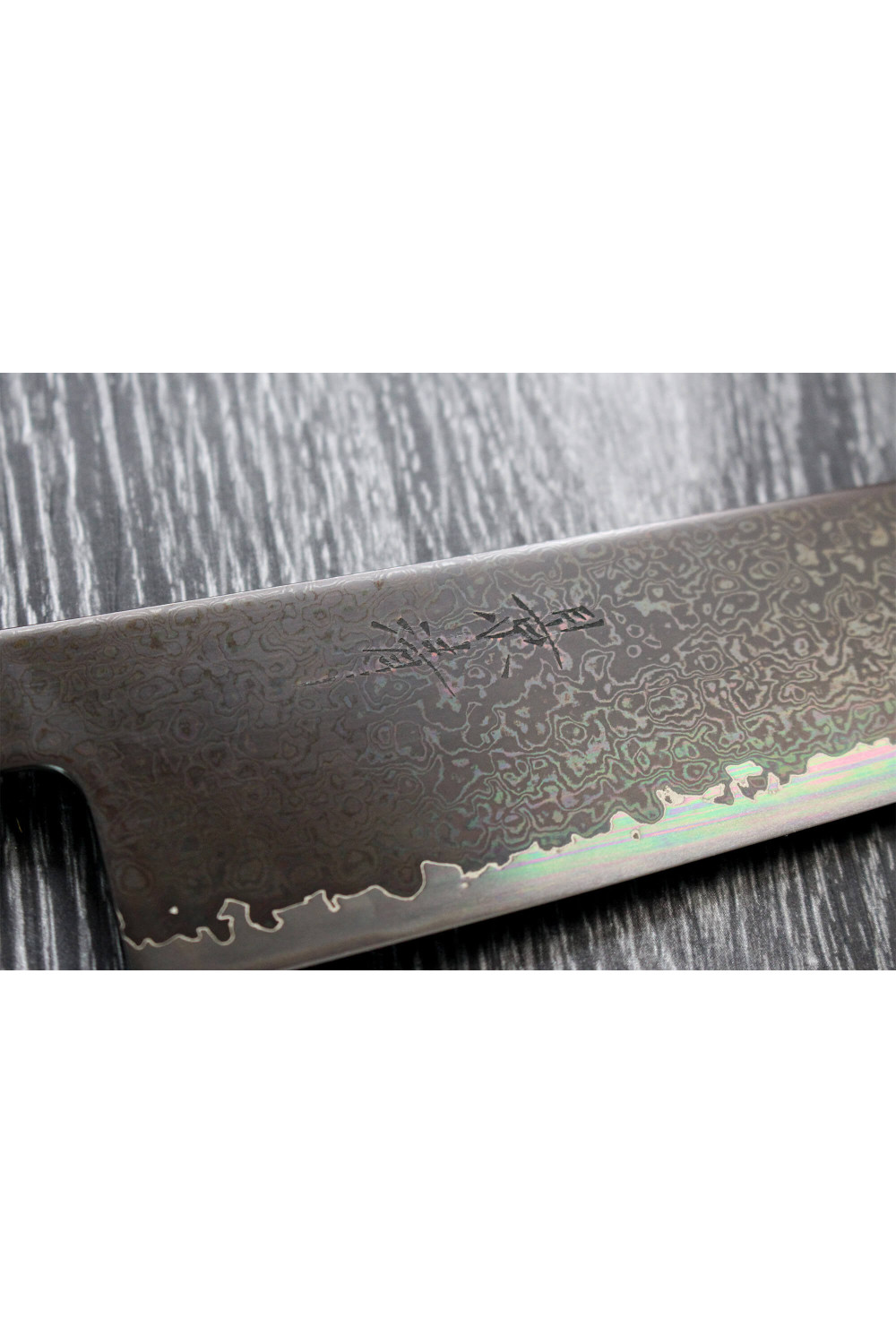
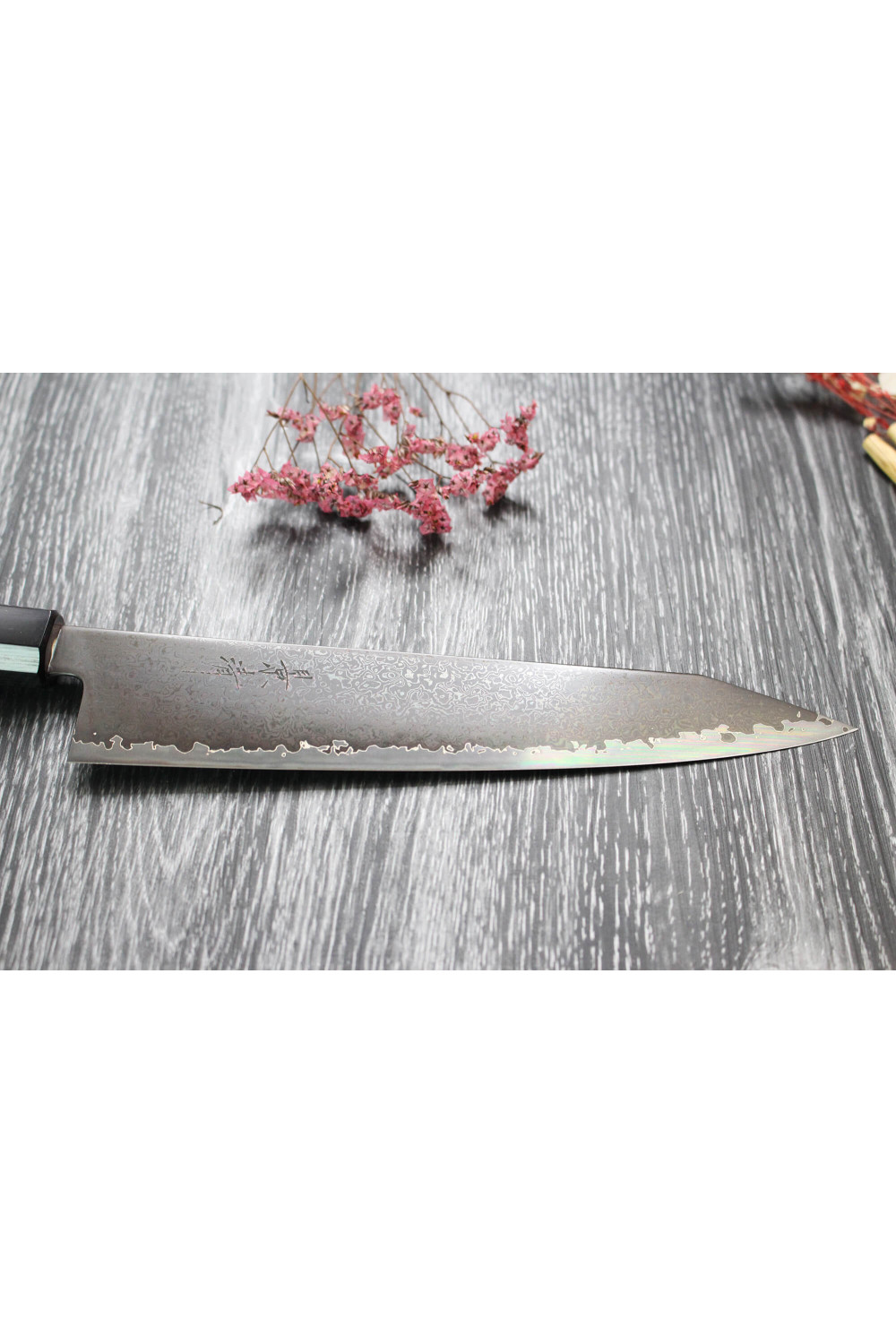
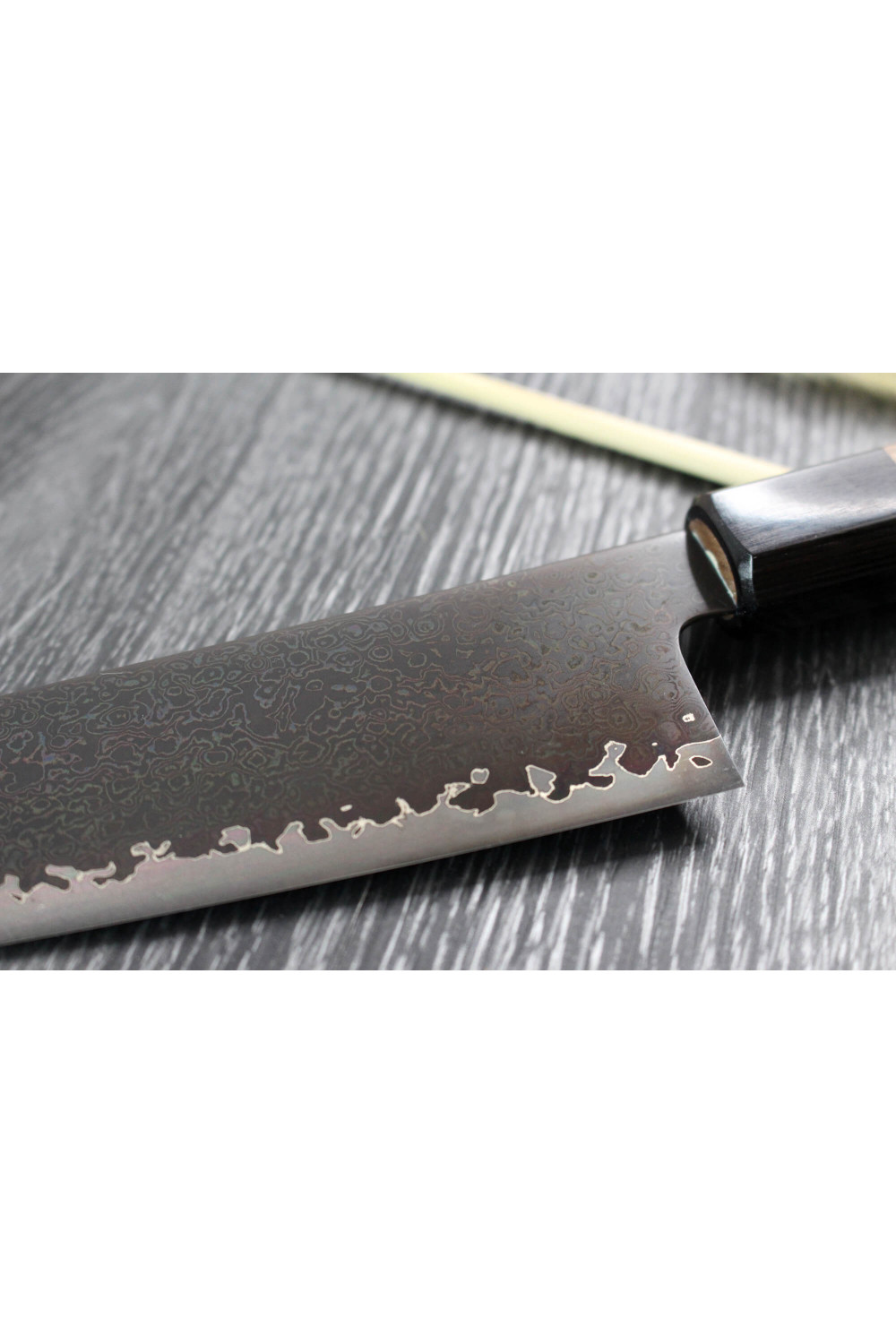
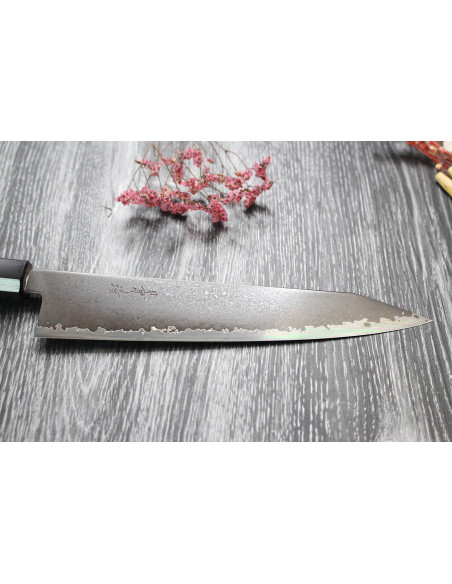
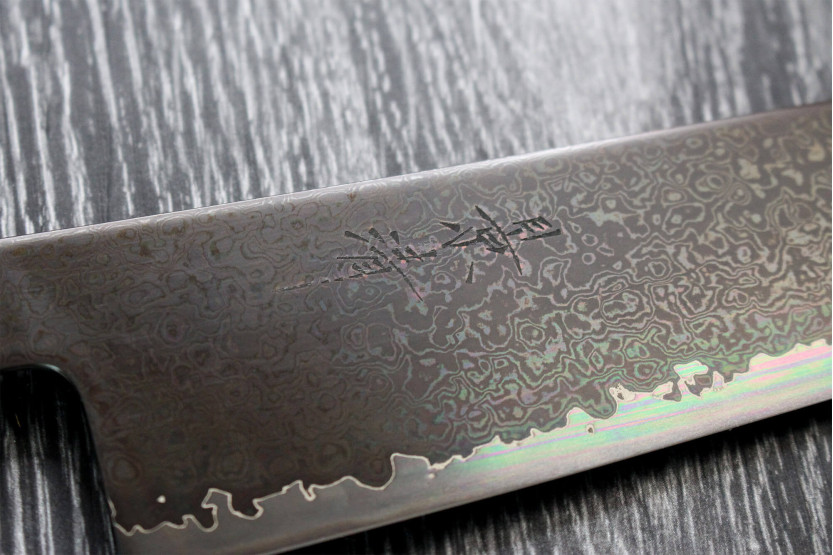
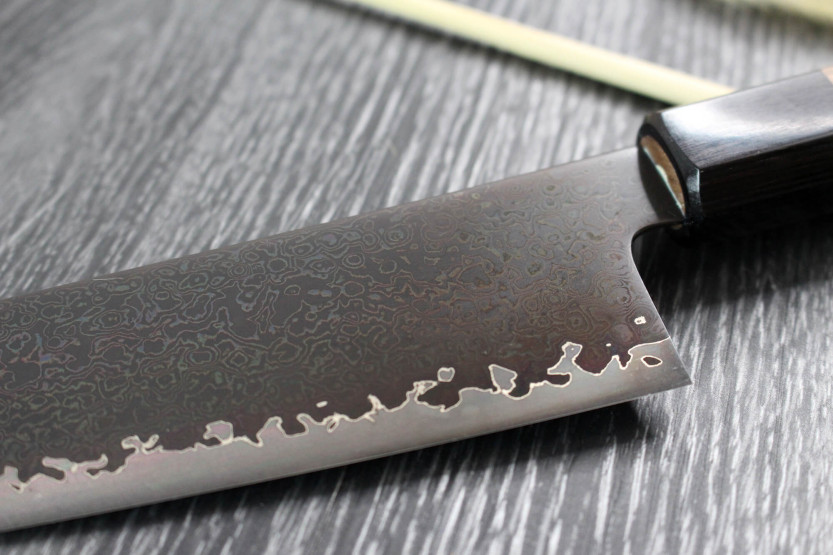
Various layers of steel softer than VG10 are applied on top. By softer, we mean less rigid, and therefore more "flexible", not in the literal sense of the word. The fact that the upper layers are "softer" balances the hardness of the core, to prevent it from becoming too brittle. Damascus is also a real visual asset: the superimposed layers of steel create waves of color on the blade, and each knife will have its own damascus!
The blade benefits from a dark coating that gives it originality, dressing up the damascus with elegance. It also protects the blade.
Finally, the upper edge of the knife has been polished to make it more pleasant to the touch. Indeed, some cooks take their knife very high up on the handle, and can even rest their index finger on the back of the blade. This feature improves grip.
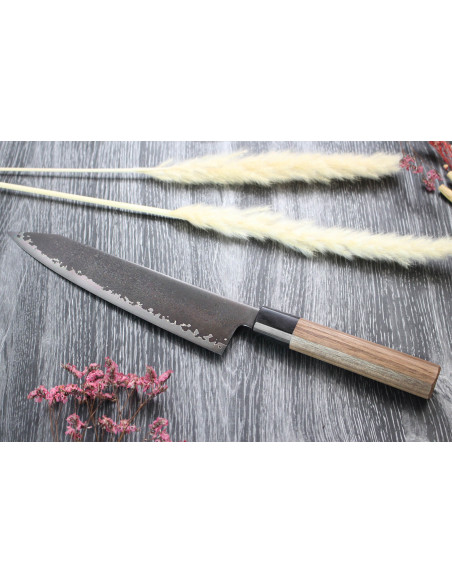
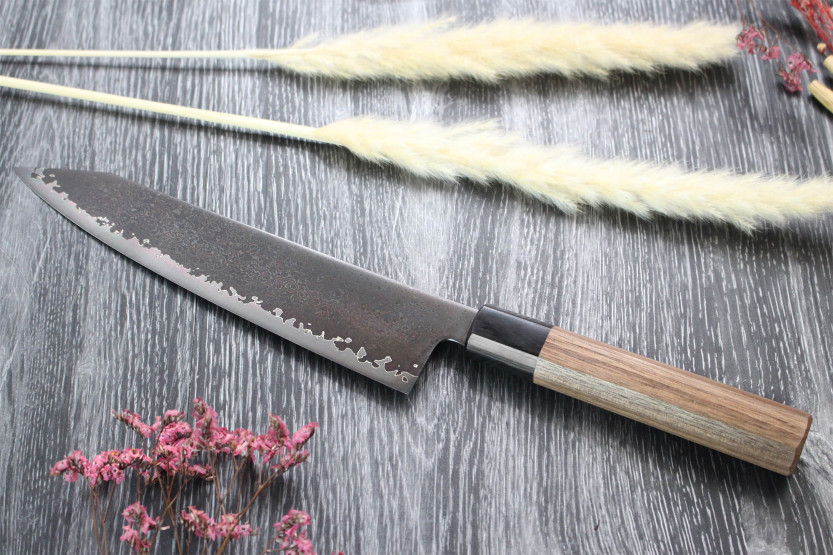
The handle is made of walnut wood. This is a high-density species in brown tones. Its grain is unique to each model. Its density makes it more resistant to shock and deformation. It is also naturally resistant to humidity.
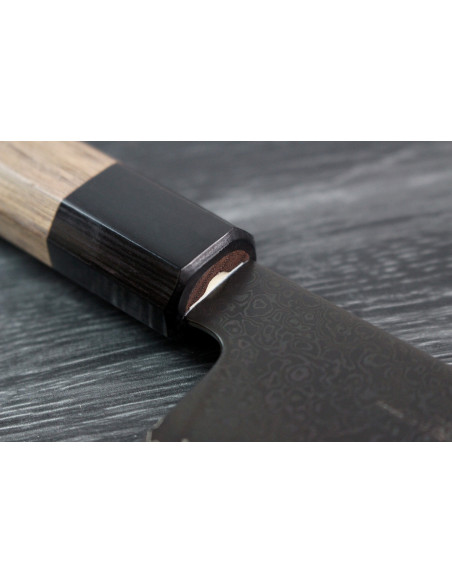
Octagonal in shape, it is pleasant in the hand, and can be used by both right- and left-handed cooks.
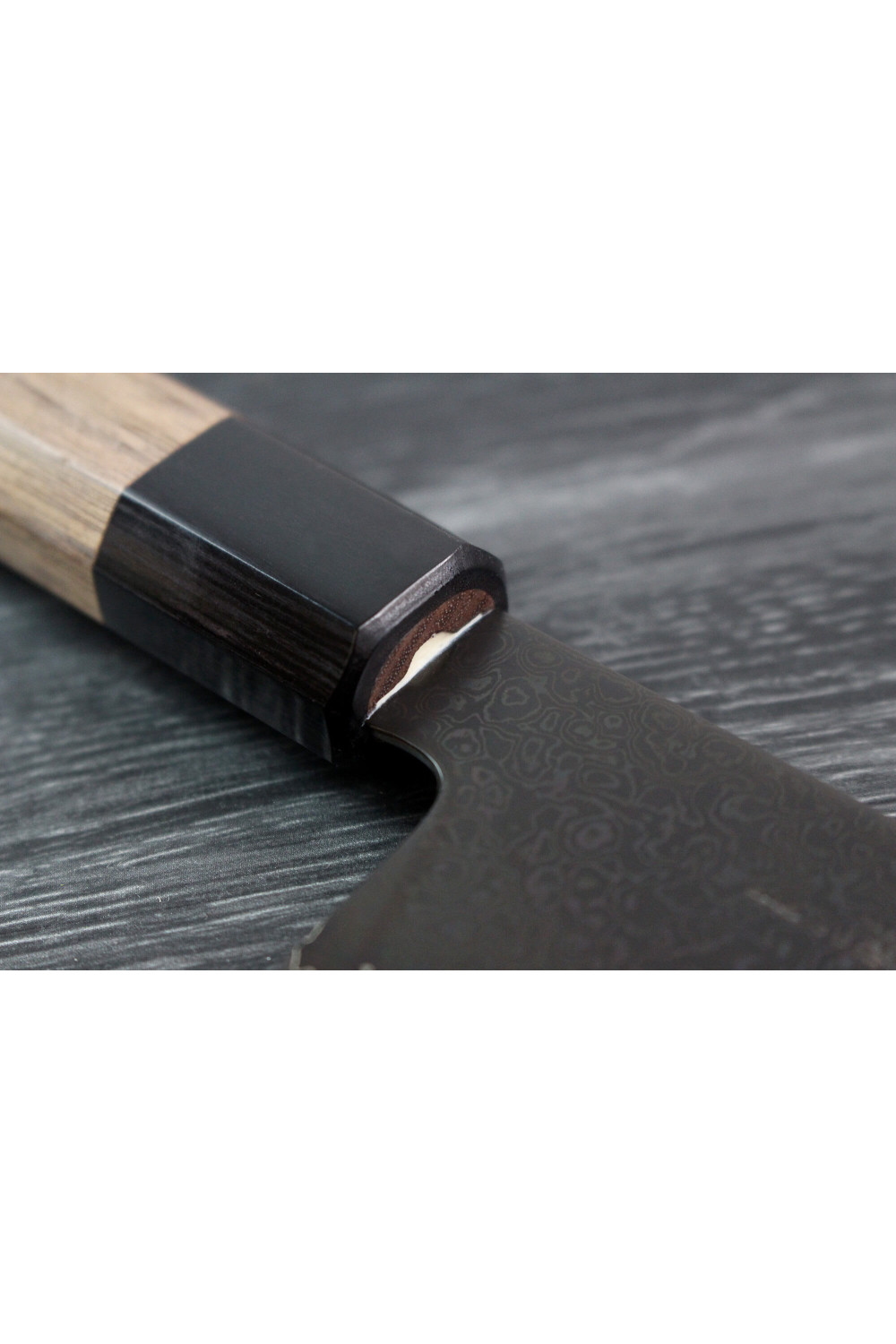
It is joined to the blade by a black pakka wood ferrule. This composite material is not pure wood, but laminated wood heat-fixed with resin. The result: a material with long-term resistance to impact, moisture and bacteria. A real asset in the kitchen.
Last but not least, the blade is blocked with wood pulp, making the handle watertight and preventing bits of food from getting inside.
Cleaning and storing my Japanese knife :
The carbon content of the knife makes the cutting edge more reactive to oxidation. The knife should therefore be maintained strictly by hand. You can use a mild soap and run it under hot water, without using an abrasive sponge. Then wipe with a soft cloth to remove all traces of moisture from the blade and handle.
The cutting edge may change color over time, as its alloy is highly reactive, but this is normal (all things considered). For maximum protection, you can oil the blade from time to time to maintain its beauty.
Note also that you should not soak the handle.
Learn more about your Japanese knife
Kagekiyo Japanese knives have been made by the Baba family for over 100 years. The Baba family names its knives Kagekiyo, after the commander Akushichibe "Fujiwara" Kagekiyo, who lived during the Heian era, around the 10th century.
The workshop is now run by the third generation of the family, thanks to the know-how handed down from previous generations. One of the family members, Baba Ichiji, even received a medal from the Emperor: theOrder of the Rising Sun, in recognition of his active involvement in knife-making. He was also awarded the Yellow Ribbon Medal, a distinction given to those who persevere in their field and become role models for others. Just goes to show the brand's expertise!
Discover the full range of kagekiyo knives available from our team of cutters!




 By buying this product you can collect up to