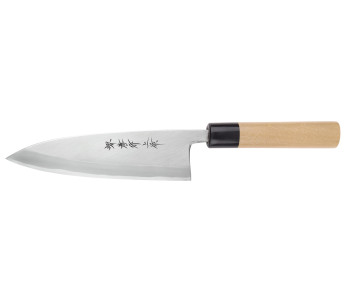
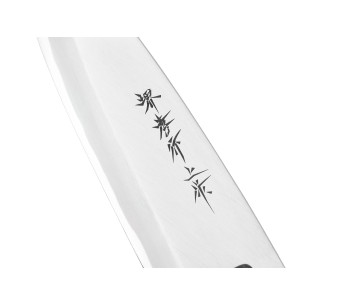
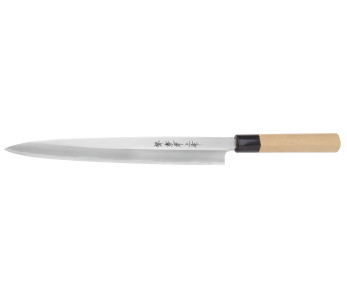
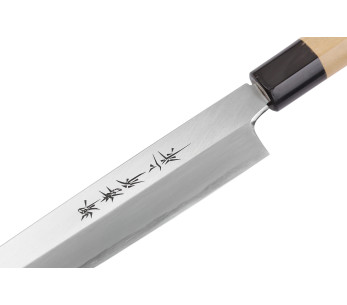
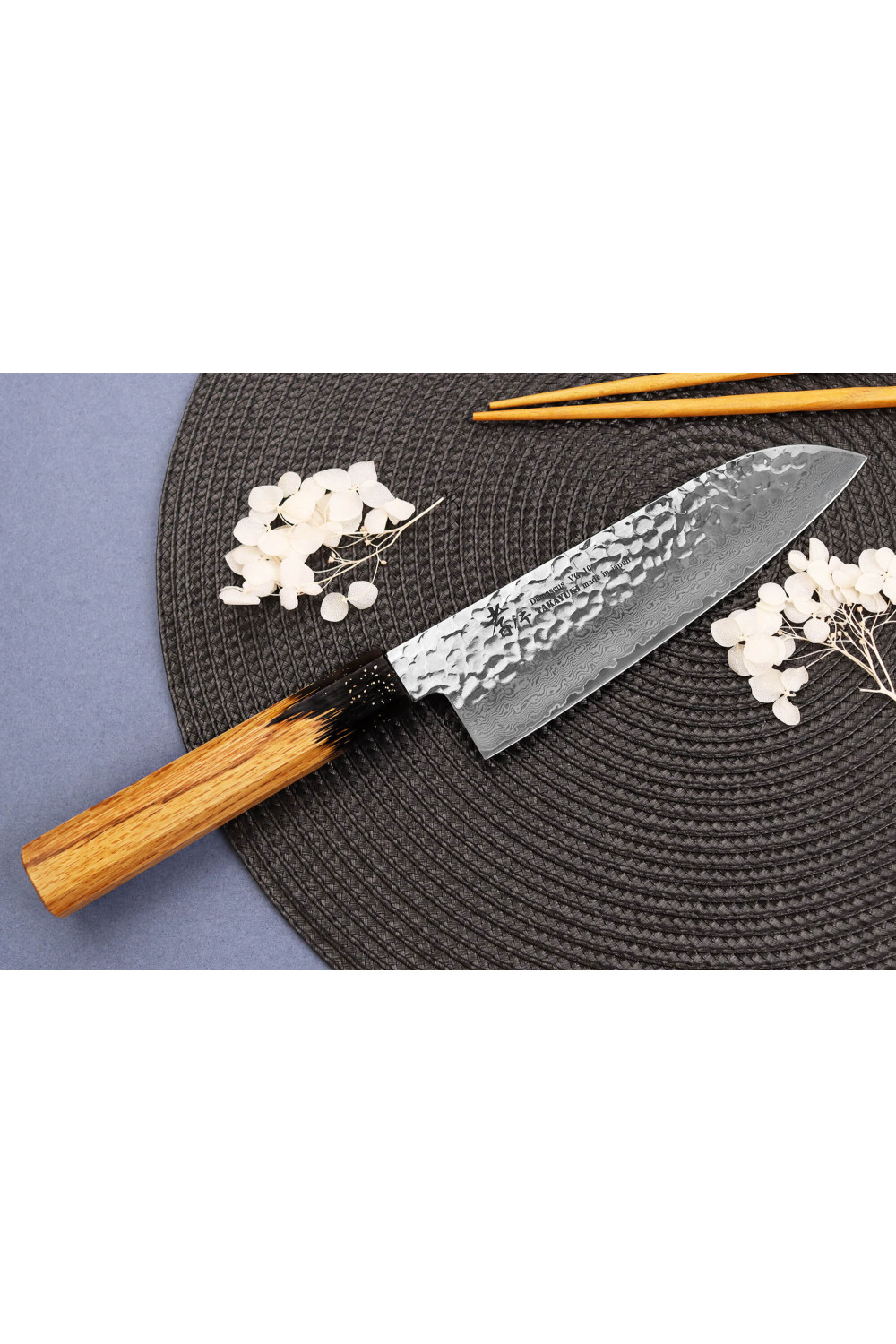
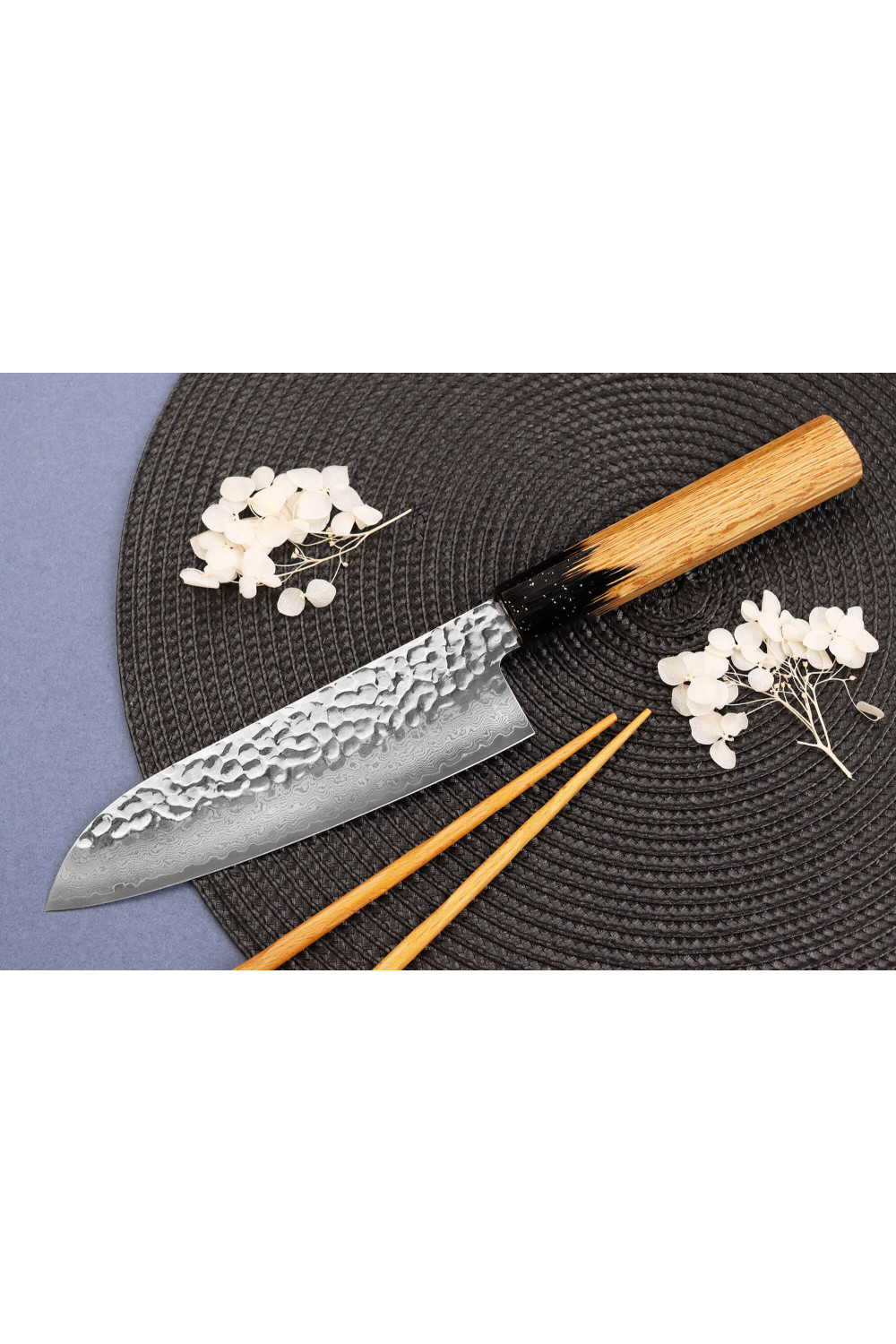
Located in the Japanese town of Sakai, Sakai Takayuki has been an expert in the field of cutlery since the 1950s. It's thanks to this long history, but also to the Sakai region, that the company has acquired such expertise in the art of knife-making. Indeed, hundreds of years ago, Sakai was known for its exceptional blacksmiths who forged the famous katanas. Now, the Sakai Takayuki brand offers authentic knives, designed in the Japanese tradition with a modern twist.
A quality blade in VG10 damascus steel
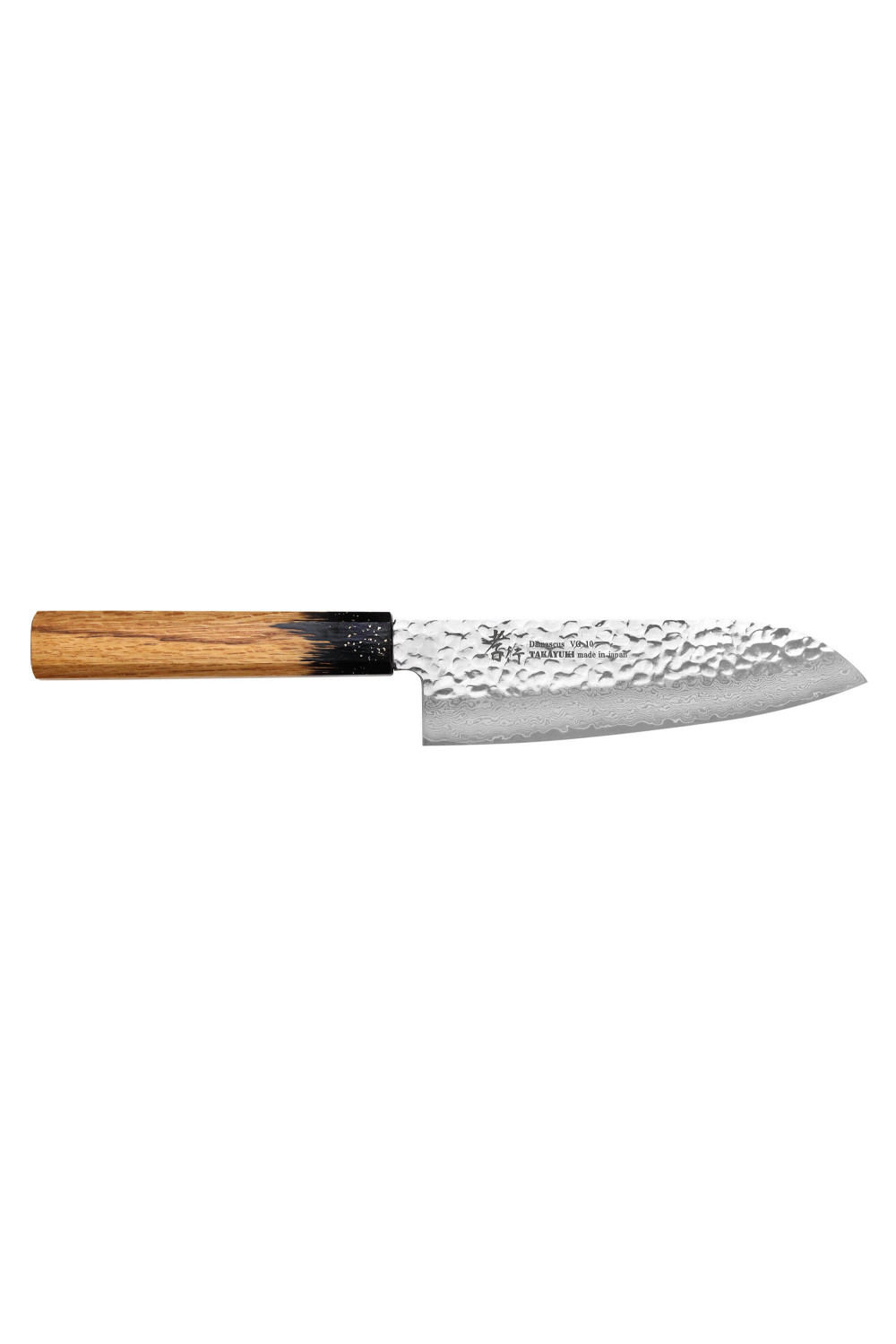
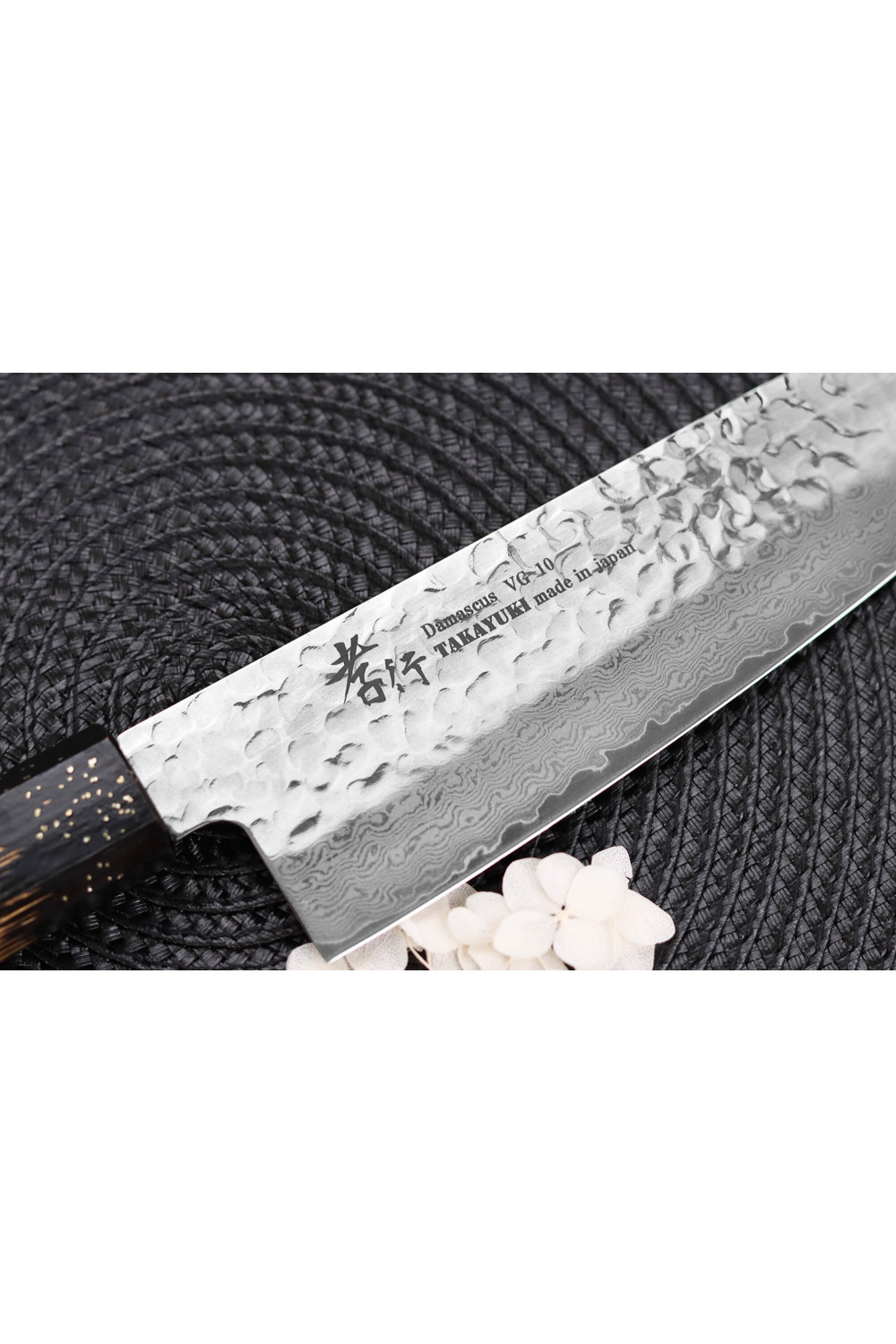
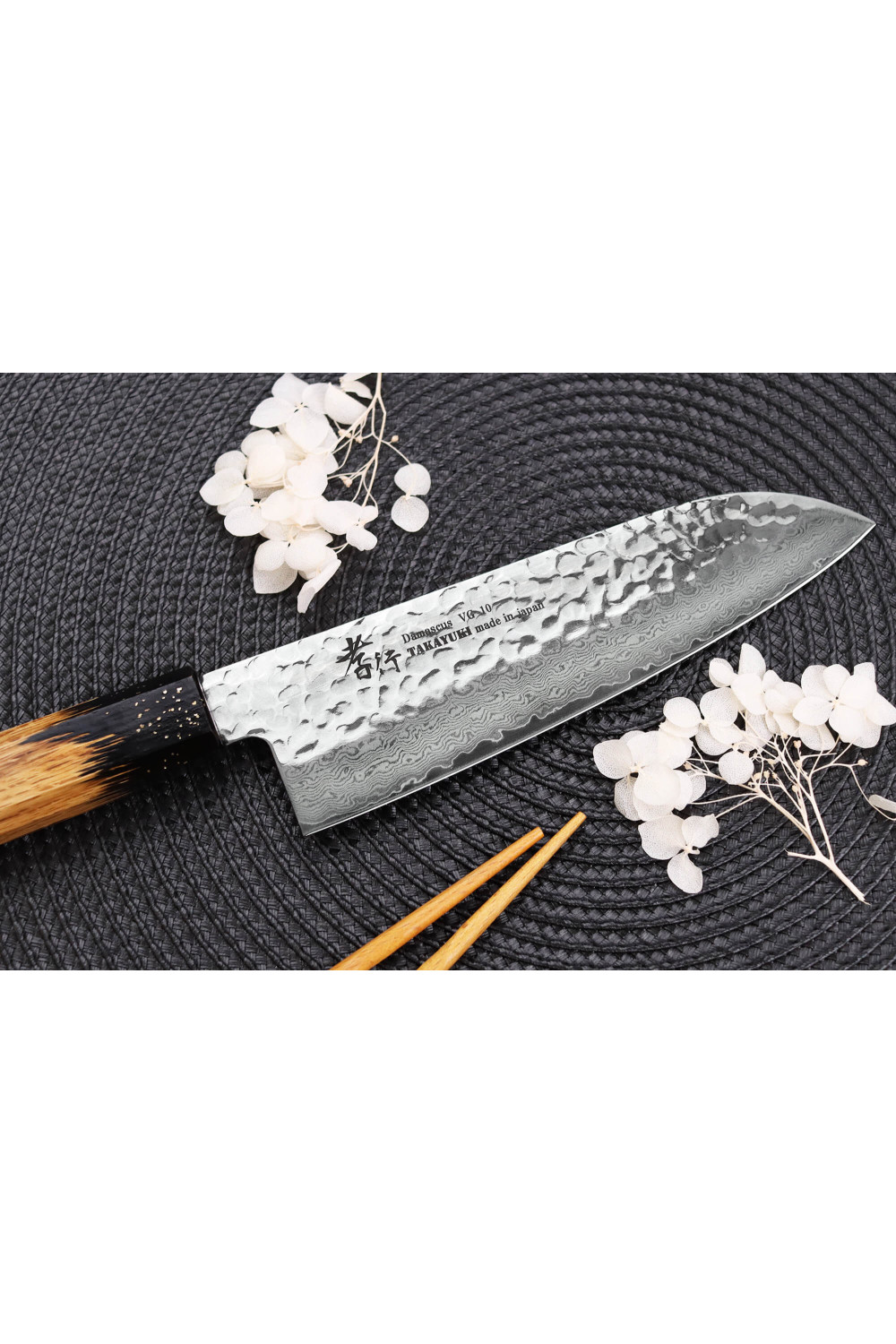
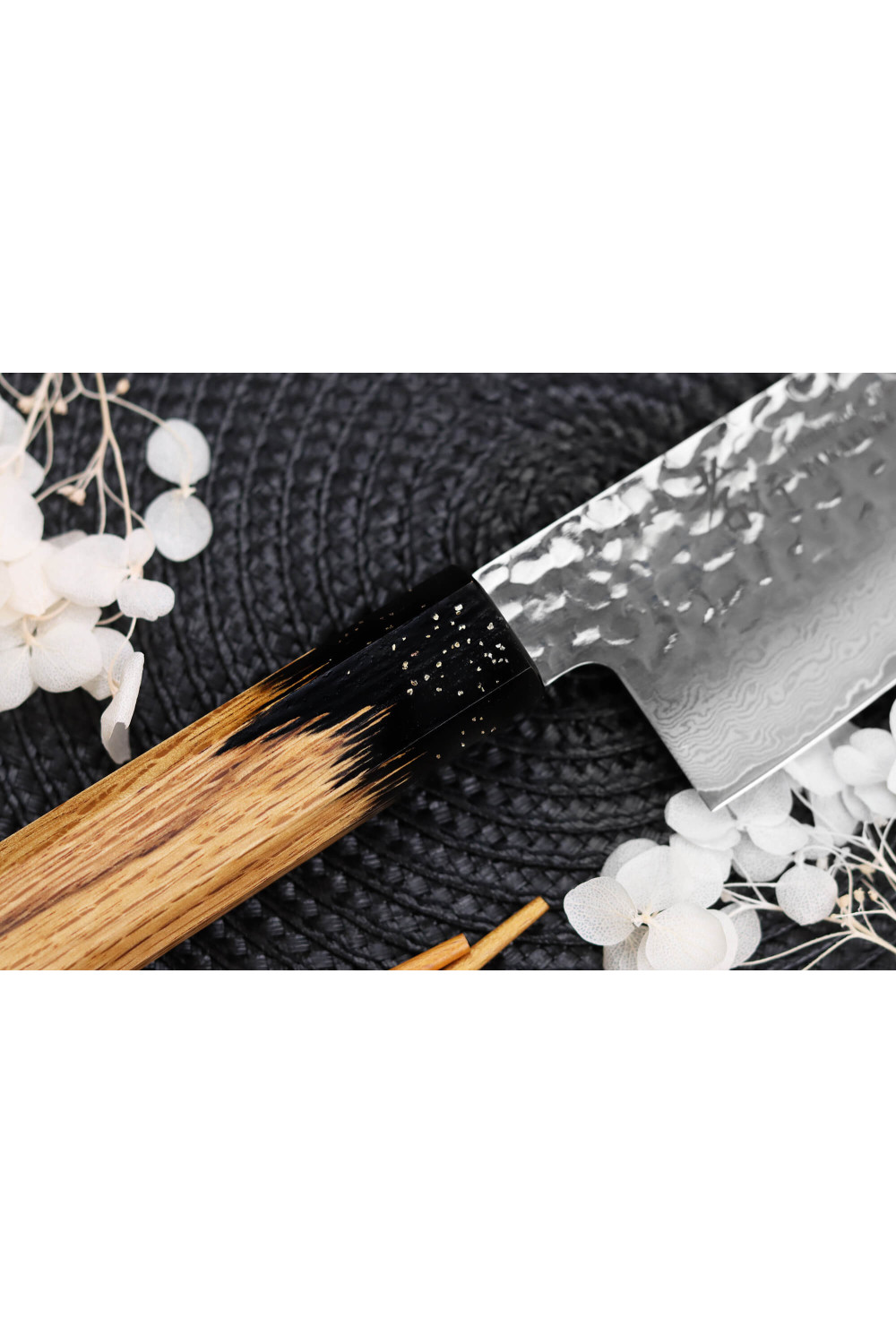
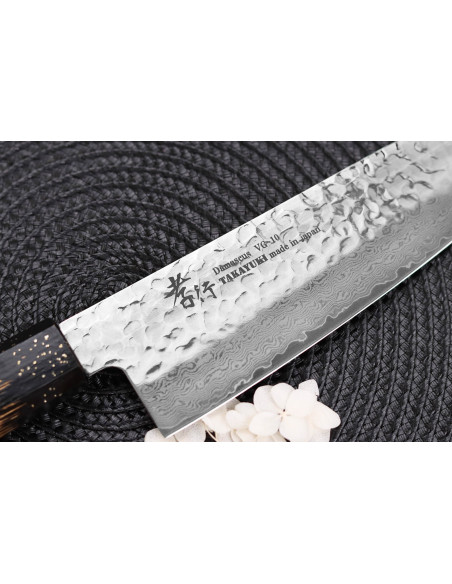
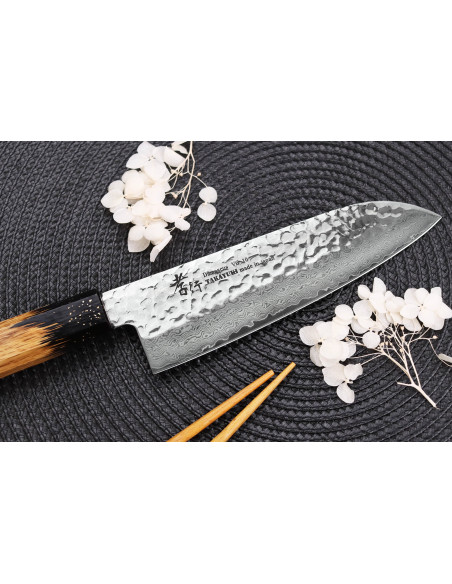
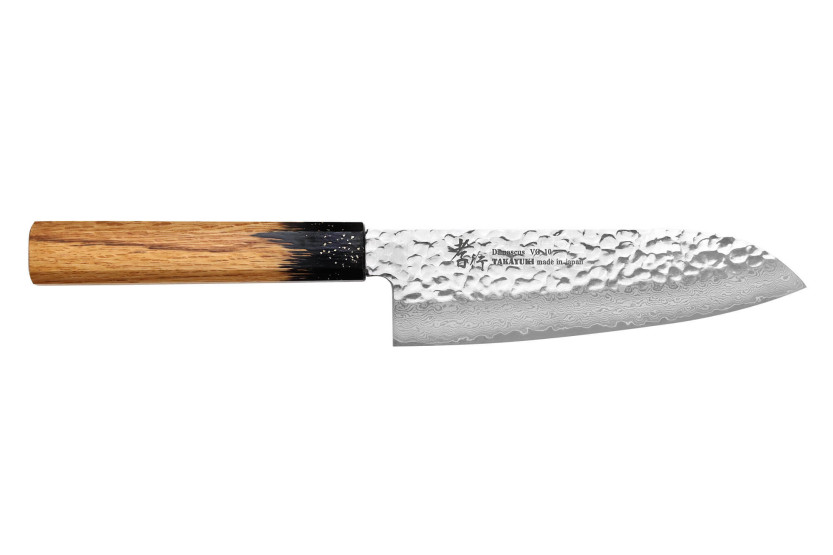
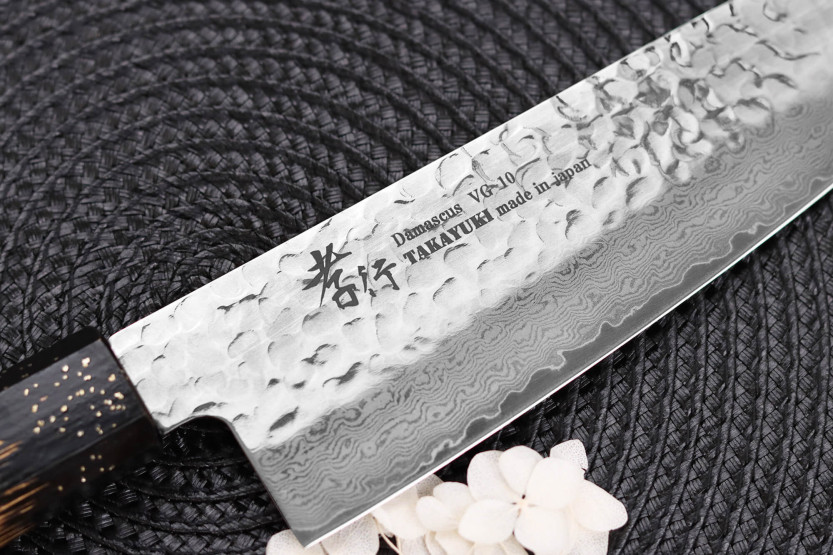
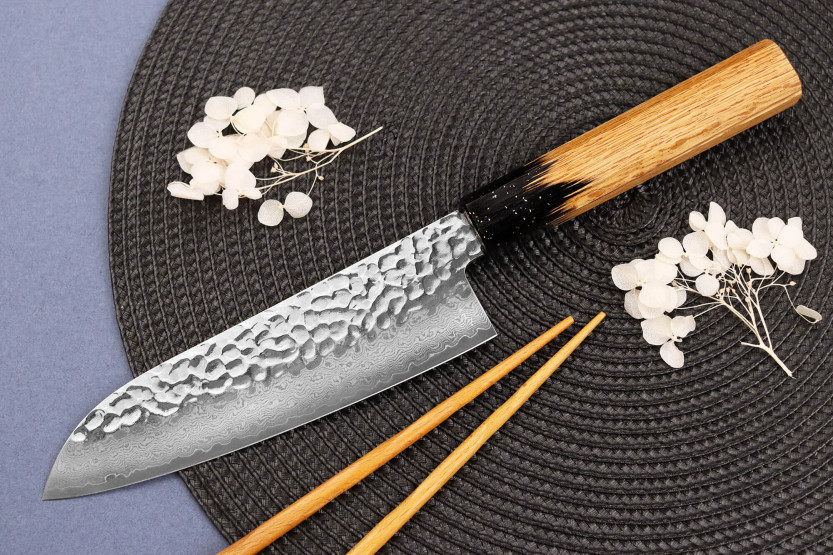
This santoku knife features a damascus steel blade, a typically Japanese structure. In the center, a rigid steel core is forged, then covered with several layers of softer steel to create optimal balance and strength. With this technique, the core is protected and the blade is less brittle in the event of micro-shocks.
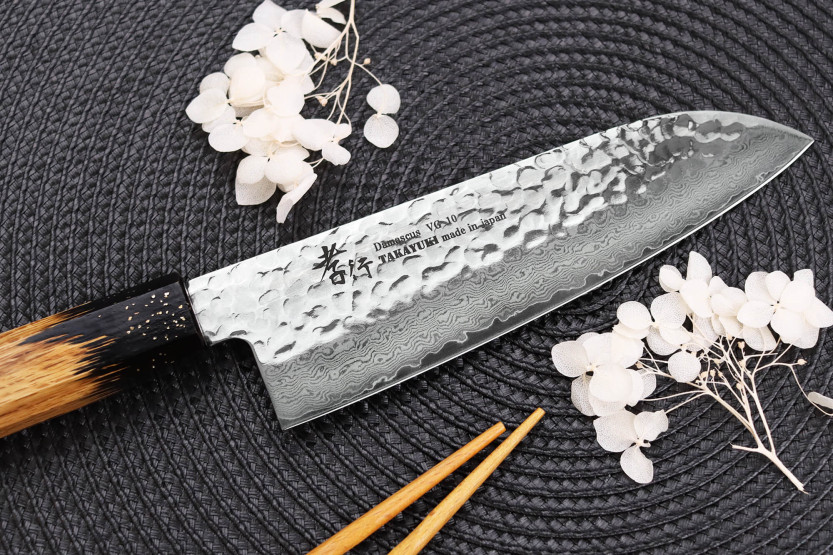
What's more, damascus also looks great! All along the blade, you can see the superimposition of different layers of steel, forming elegant patterns. Each one is unique!
Japanese VG10 steel has been chosen for this blade. This is a high-end alloy with a high carbon content of around 1%. Carbon is the essential element that increases a steel's hardness, since high hardness is associated with excellent edge retention. The hardness of this blade reaches 60HRC on the Rockwell scale, proof that the cutting edge is easily retained and that the cutting edge is effective.
The VG10 alloy also contains around 15% chromium, the element that enhances protection against corrosion. Please note, however, that this knife is carbon-enriched and therefore requires careful maintenance to prevent damage.
Next, 33 layers of softer steel surround the core to create the damascus. They protect the core, improve the blade's flexibility and reinforce its resistance to oxidation.
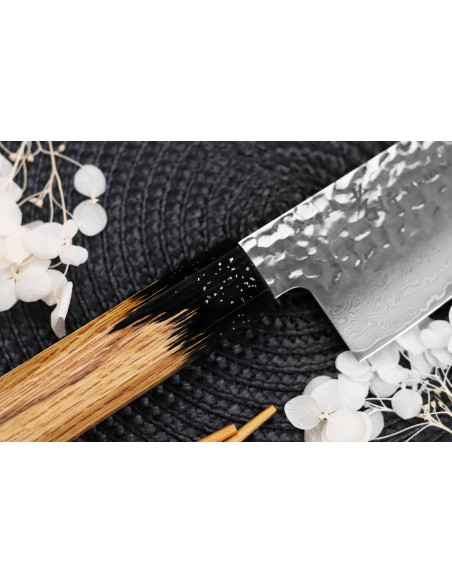
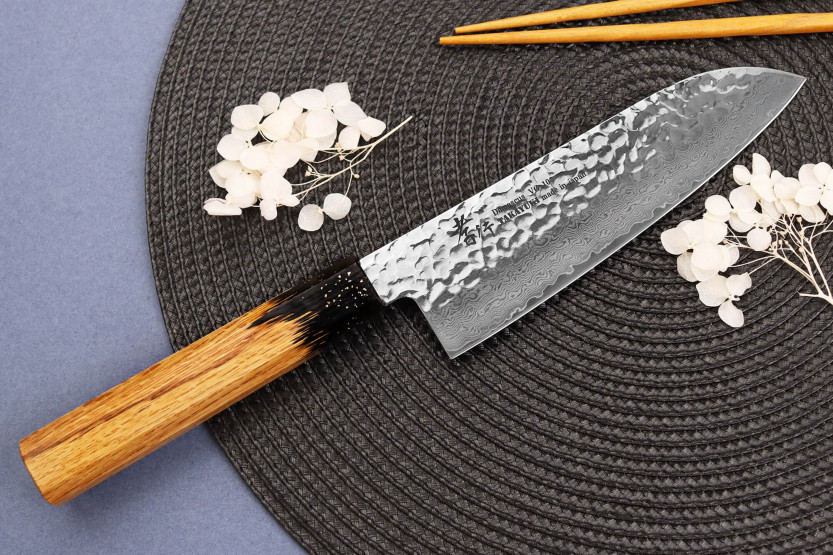
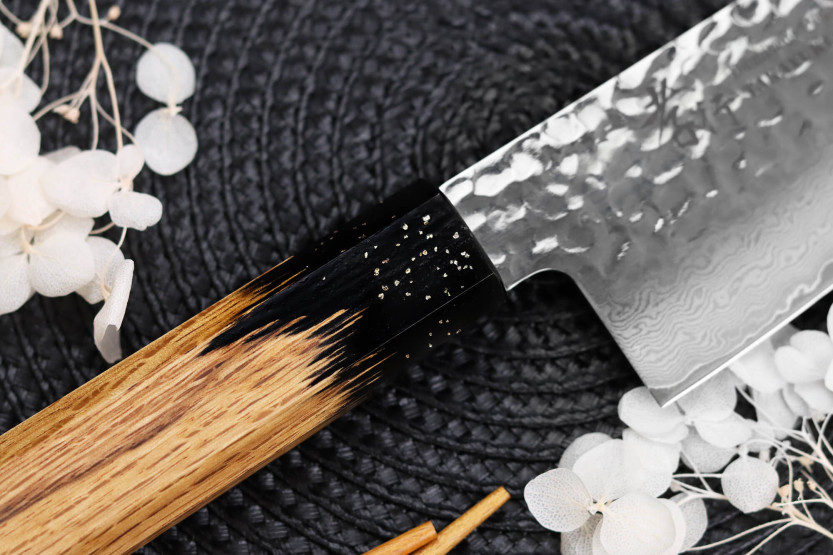
Finally, the blade has been polished for an elegant mirror effect! It has also been hammered for added contrast and authenticity. Hammering also prevents your food from sticking to the surface when cutting, in the manner of honeycombing.
A knife that represents Japanese know-how
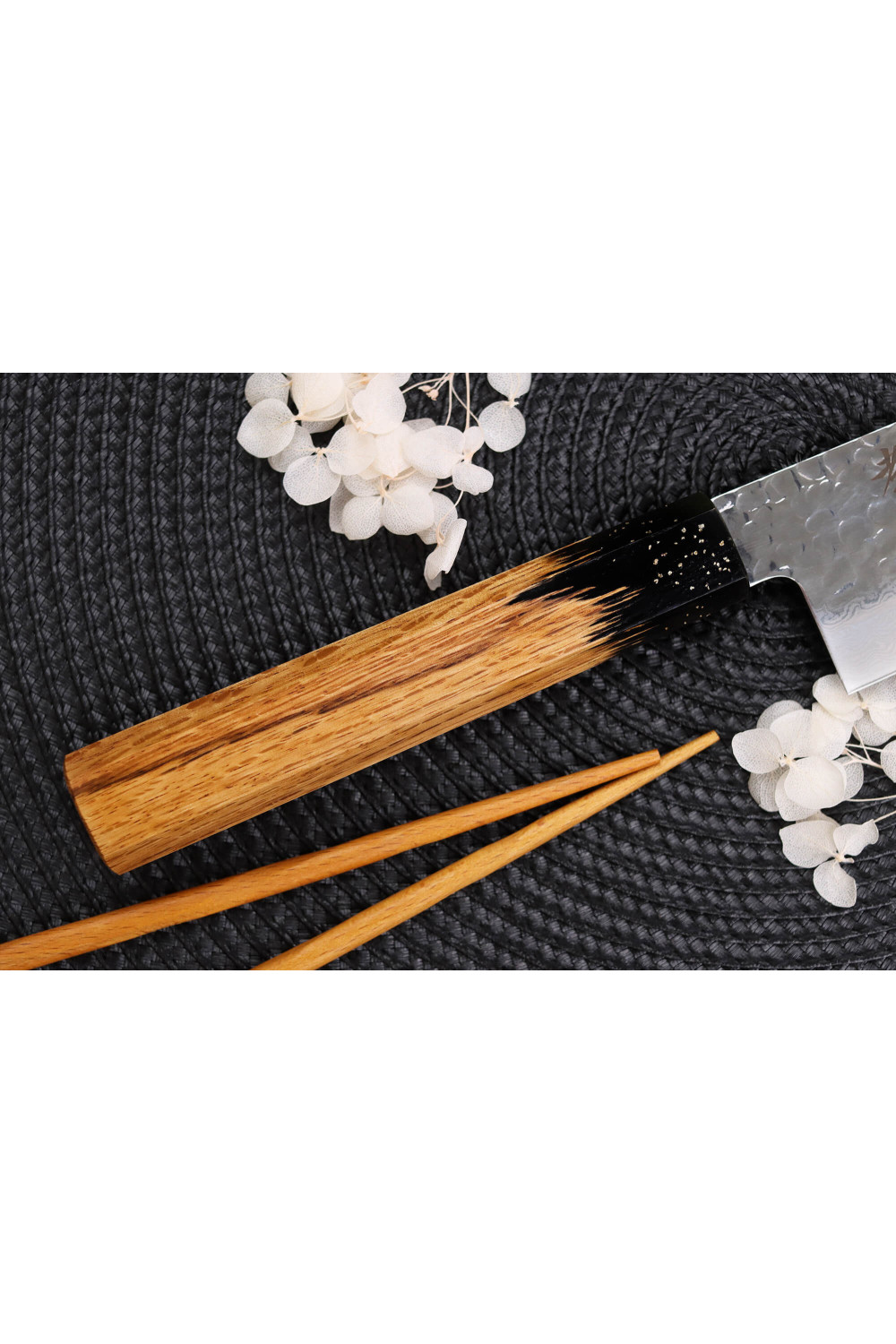
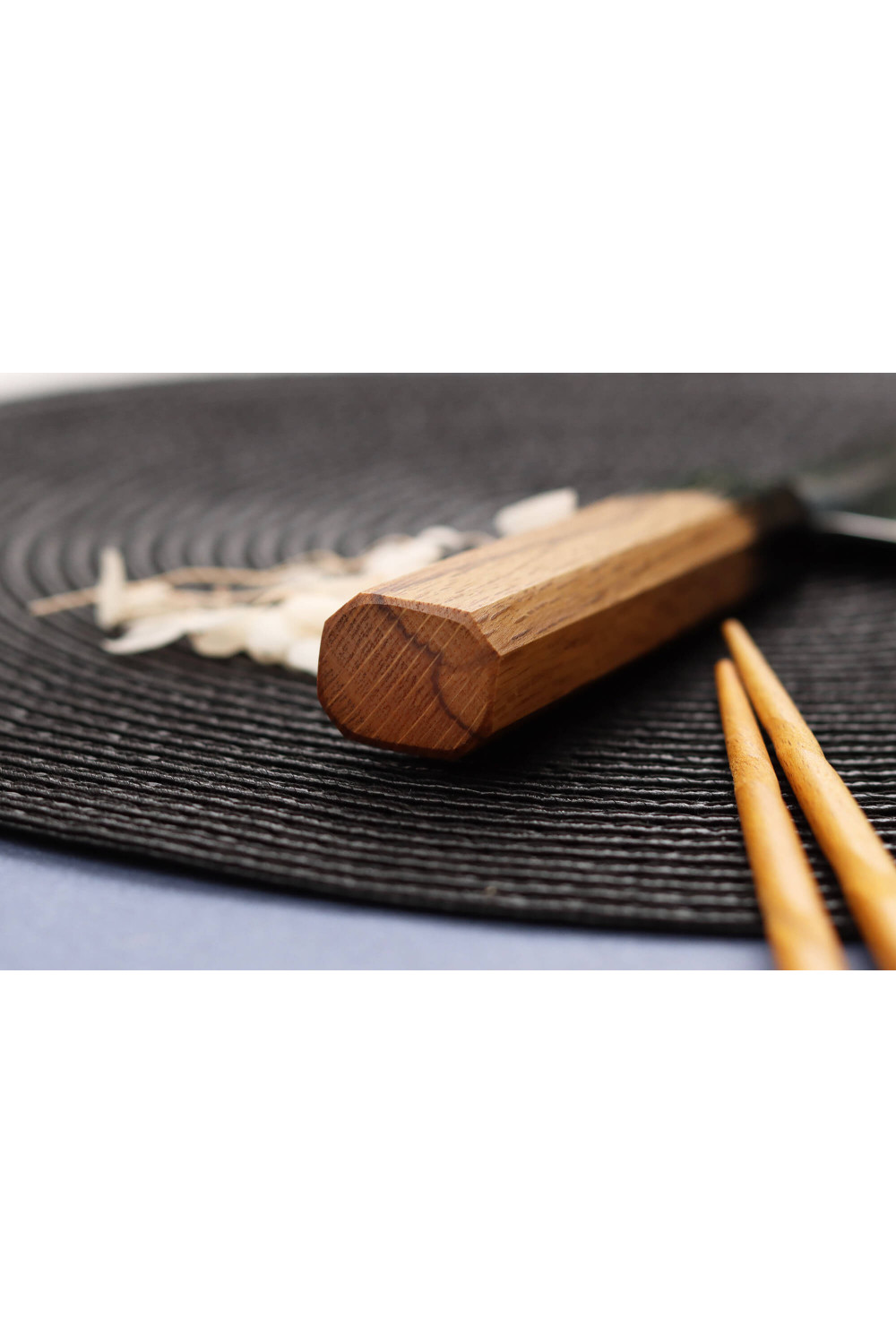
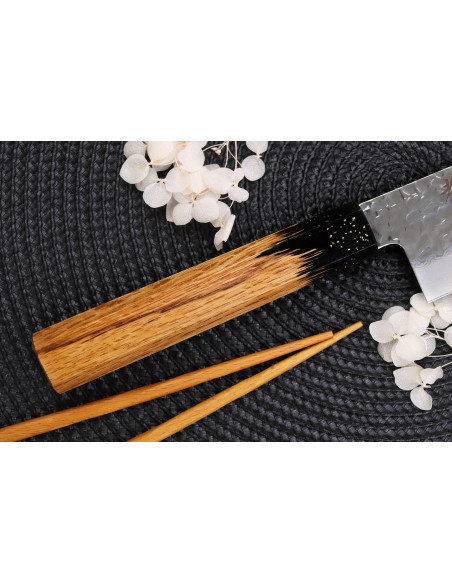
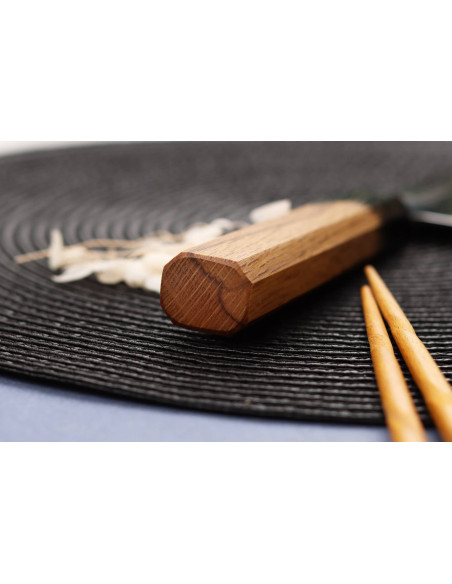
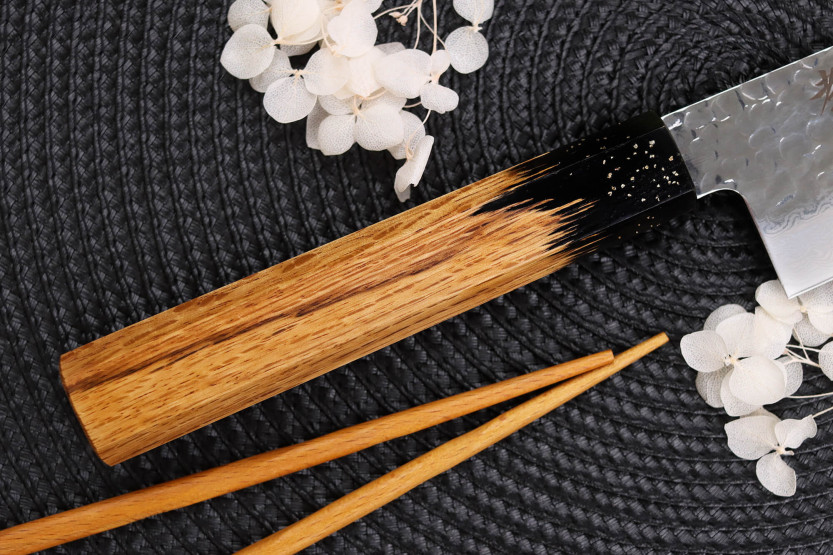
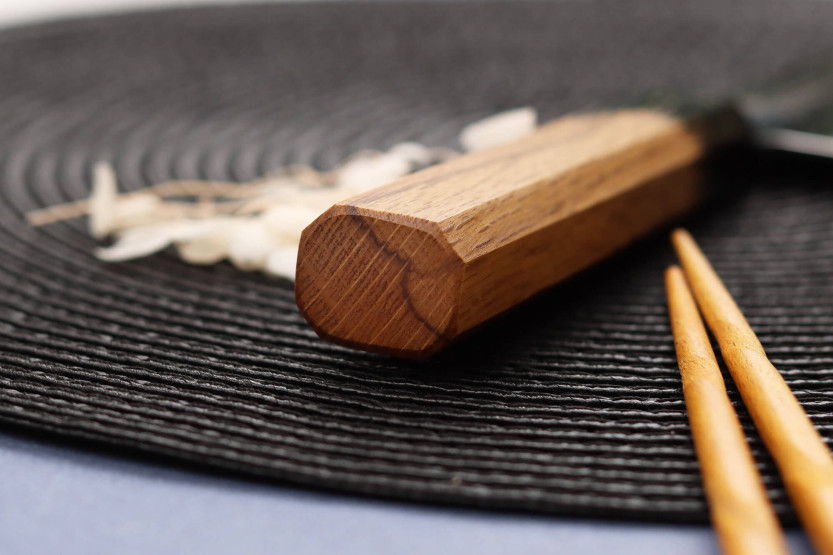
The handle of your Japanese knife is made of oak wood: a strong, durable wood. This wood is resistant to humidity, shock and vibration, so it doesn't warp easily.
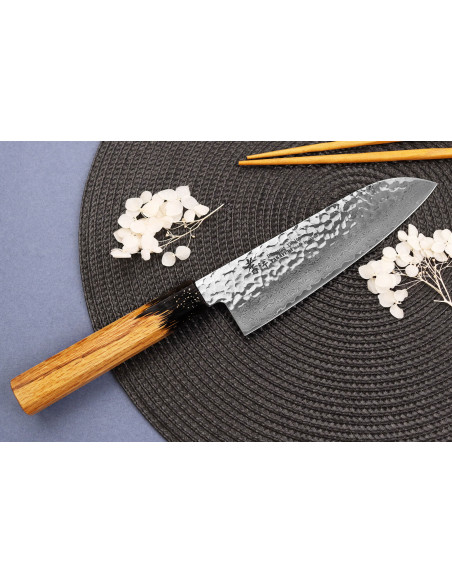
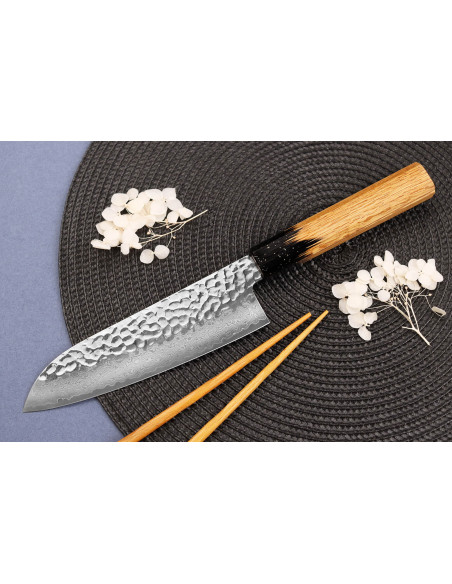
This wood has been lacquered in the Urushi style: an ancestral technique much appreciated and used on decorative objects. The varnish is natural, non-toxic and long-lasting. On this knife, black varnish is used to contrast with the lighter wood color. Gold flecks dress up the black hue, a metaphor for a starry night. Poetic, this knife is contrasted in the manner of day and night.
With its octagonal shape, this knife fits the hands of all cooks, right- and left-handed alike. Its pleasant, comfortable grip ensures optimum maneuverability, especially for prolonged use.
Wood pulp has been added where the blade meets the handle to fill in the small gaps. This makes it watertight and prevents small foodstuffs or water from getting inside.
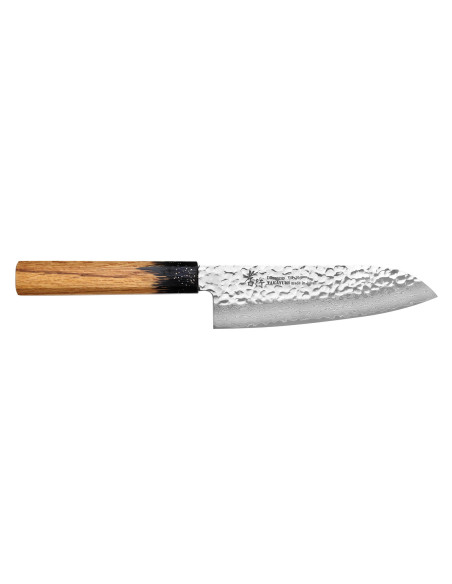
A santoku knife is a multifunctional knife that can be used for a wide range of cuts! It's the equivalent of our Western chef's knife, and can perform the same tasks. You can slice, chop or mince all kinds of food with ease! Just don't use it on hard foods such as squash, bones, ...
To maintain your santoku, wash it only by hand with a sponge and mild detergent. Once cleaned, wipe dry immediately and store in a dry place. It is important not to soak it in the sink or put it through the dishwasher.
Find everything you need to maintain your blades on KnifeLeader.eu!




 By buying this product you can collect up to