Masakage Yuki Japanese knives are the fruit of the artisanal skills of blacksmith Yoshimi Kato san. This talented craftsman practises his art at the Takefu Cutlery Village, a place that brings together numerous blacksmiths working according to traditional methods. A place where skills, materials and experience can be exchanged, it's a popular spot for apprentice blacksmiths. They have the opportunity to be mentored by experienced masters who share their expertise to teach the knife-making process.
Yoshimi Kato has benefited from the instruction of several renowned blacksmiths, including Hiroshi Kato San, a respected figure in Japan who happens to be his father-in-law. Hiroshi Kato San, one of Japan's most famous master blacksmiths, has devoted almost 50 years to the creation of knives, testifying to his exceptional level of expertise. Now retired, he shares his knowledge with the new generation of blacksmiths by teaching his art. He is one of the founding members of the Takefu Cutlery Village.
Yoshimi took over the workshop, continuing the tradition by creating not only his master's knives, but also launching his own knife ranges. He began his apprenticeship in 2013, and Yoshimi Kato San is proving to be an exceptional, fast-learning blacksmith. He continues Hiroshi Kato San's work, while introducing innovative ideas that will appeal to chefs.
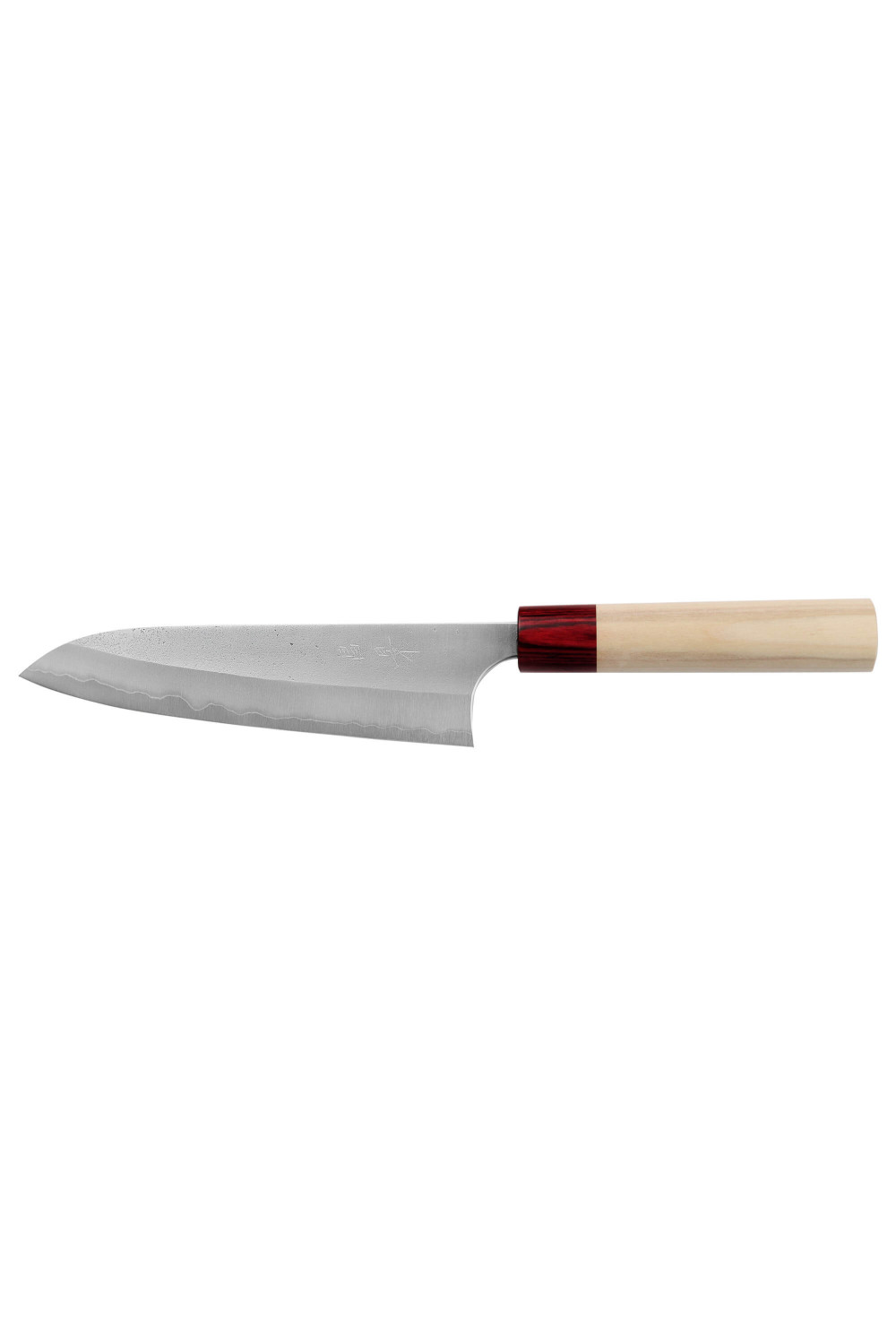
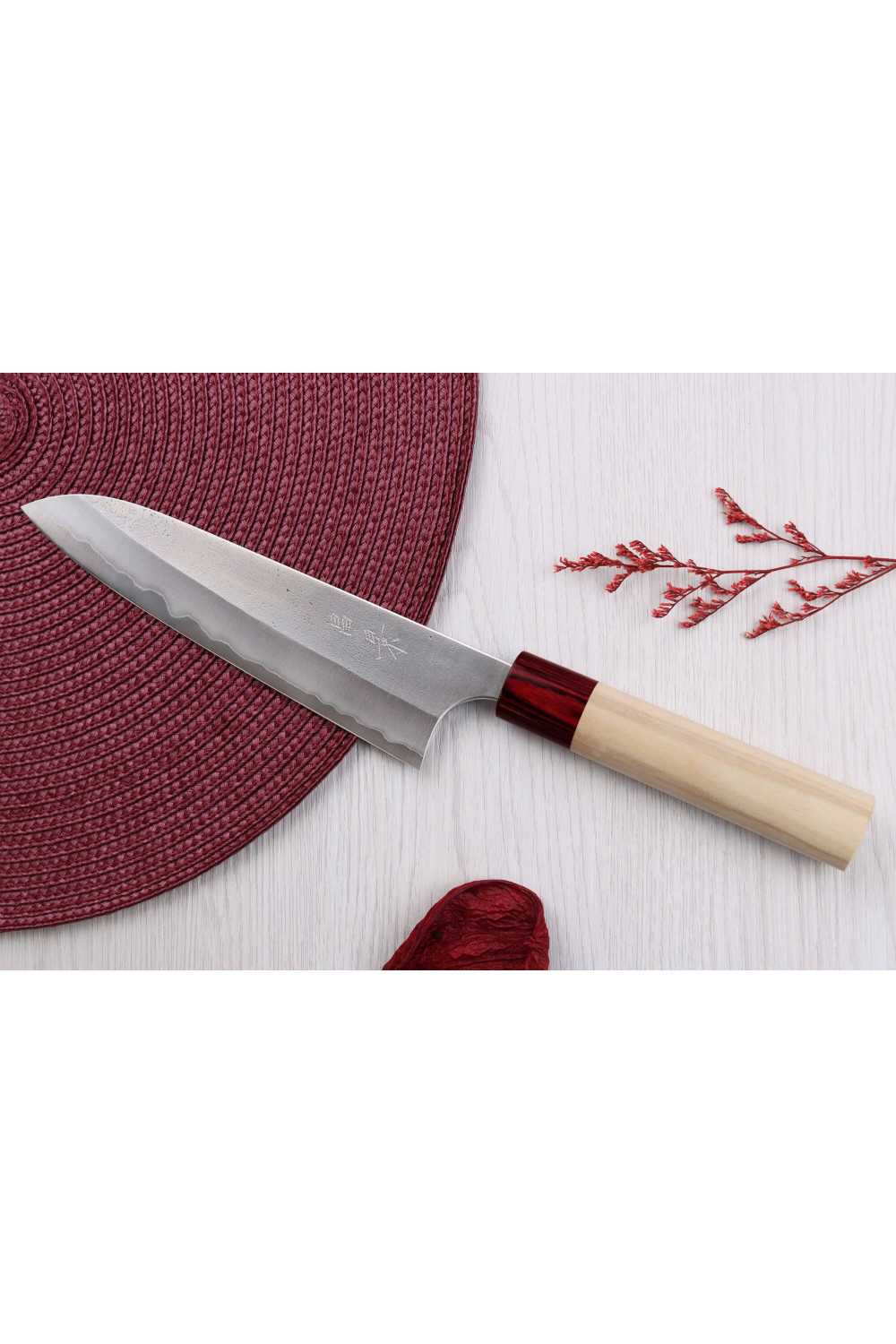
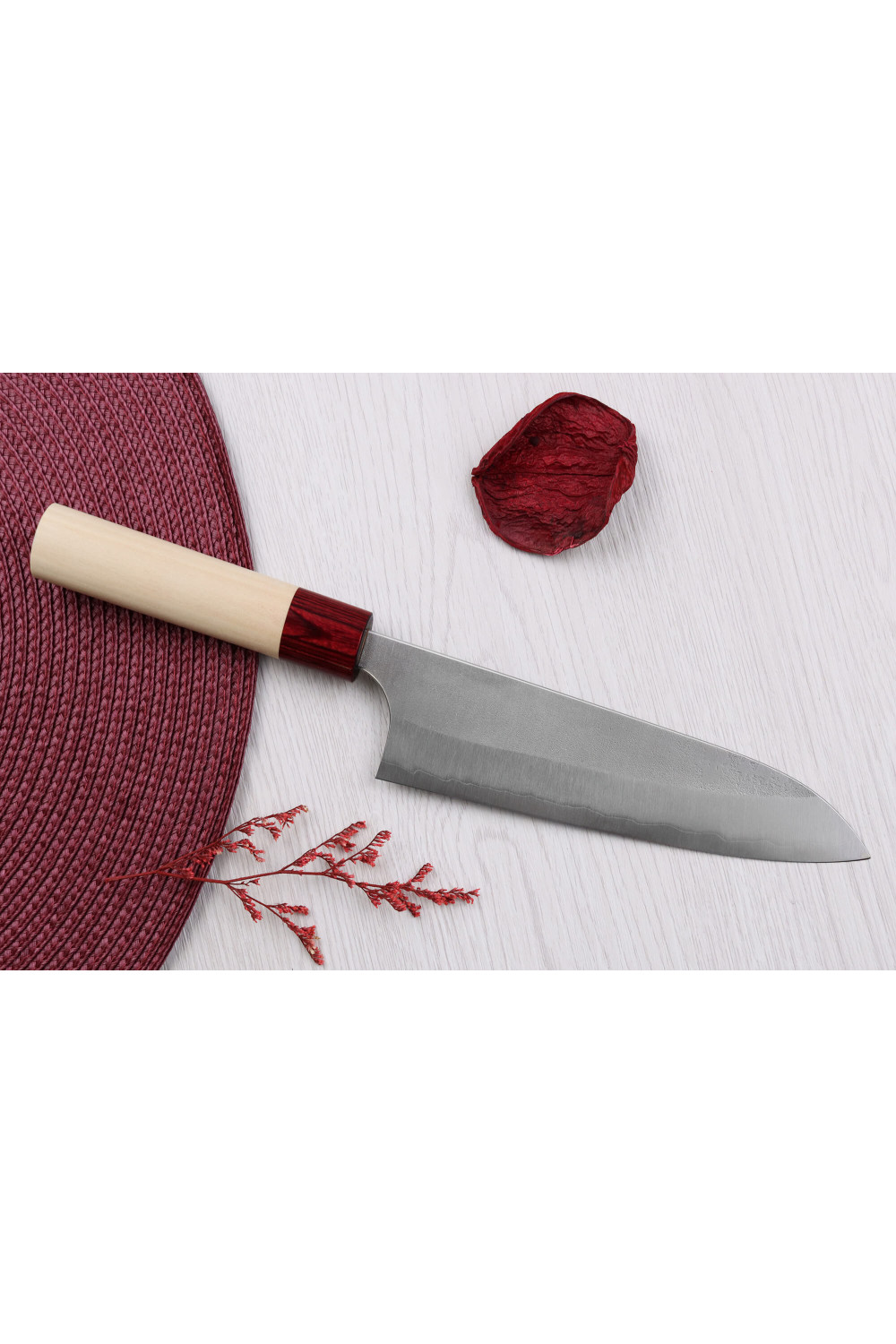
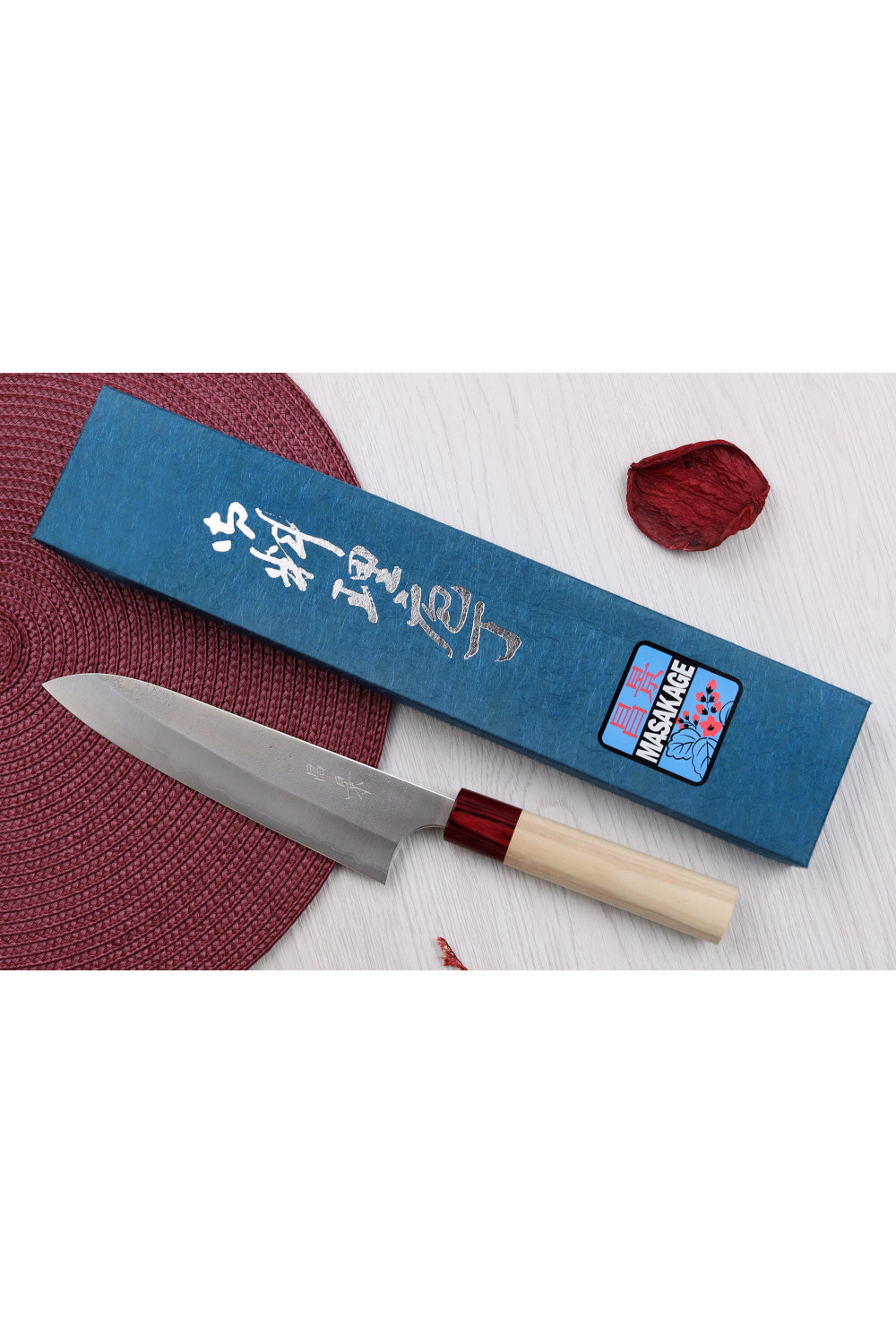
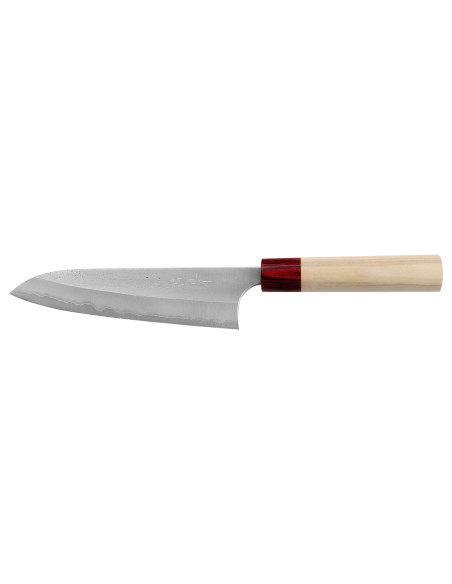
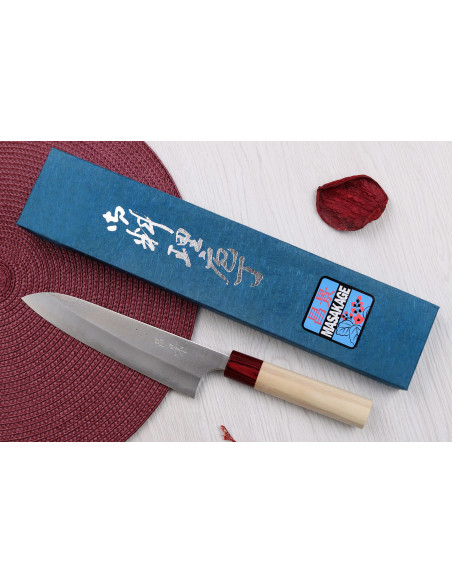
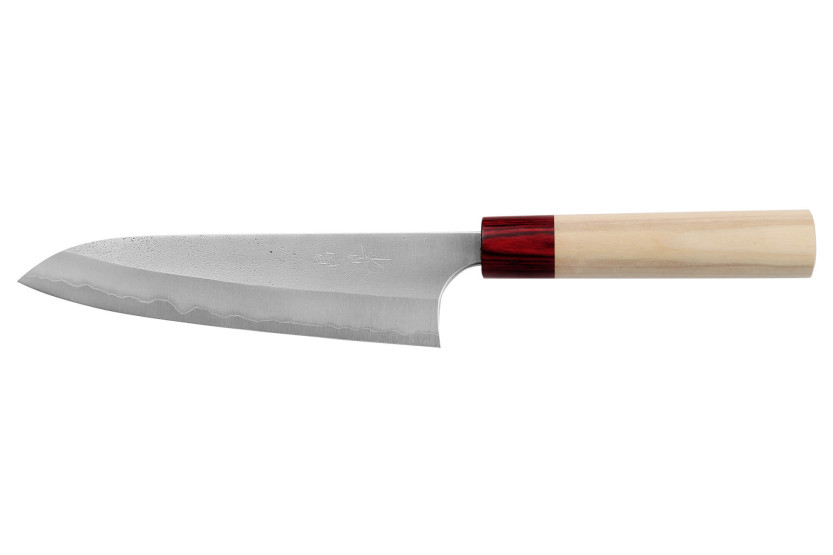
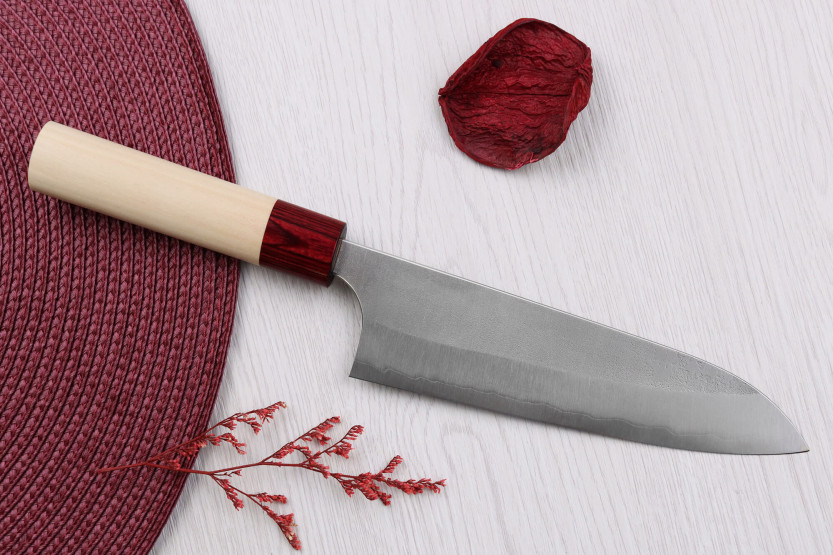
A high-performance Japanese gyuto knife forged by an expert
This Japanese chef's knife features a blade with a San Maï structure, emblematic of Japan. It contains a core of rigid steel, enveloped between two layers of softer steel, forming a protection around the core. This design ensures optimum protection of the core, while imparting a balanced suppleness to the blade.
The blade core is forged from Japanese Shirogami 2 steel (also known as White Steel 2), an alloy prized by chefs in the kitchen. This alloy is produced by the Hitachi steel mill, which supplies many Japanese blacksmiths.
Shirogami 2 steel is reputed to be the closest alloy to tamahagane steel, traditionally used to make samurai swords. Its ease of sharpening gives a razor-sharp edge. With a carbon content of around 1.3%, this alloy achieves a hardness of around 62HRC on the Rockwell scale, giving it a high-performance, long-lasting edge.
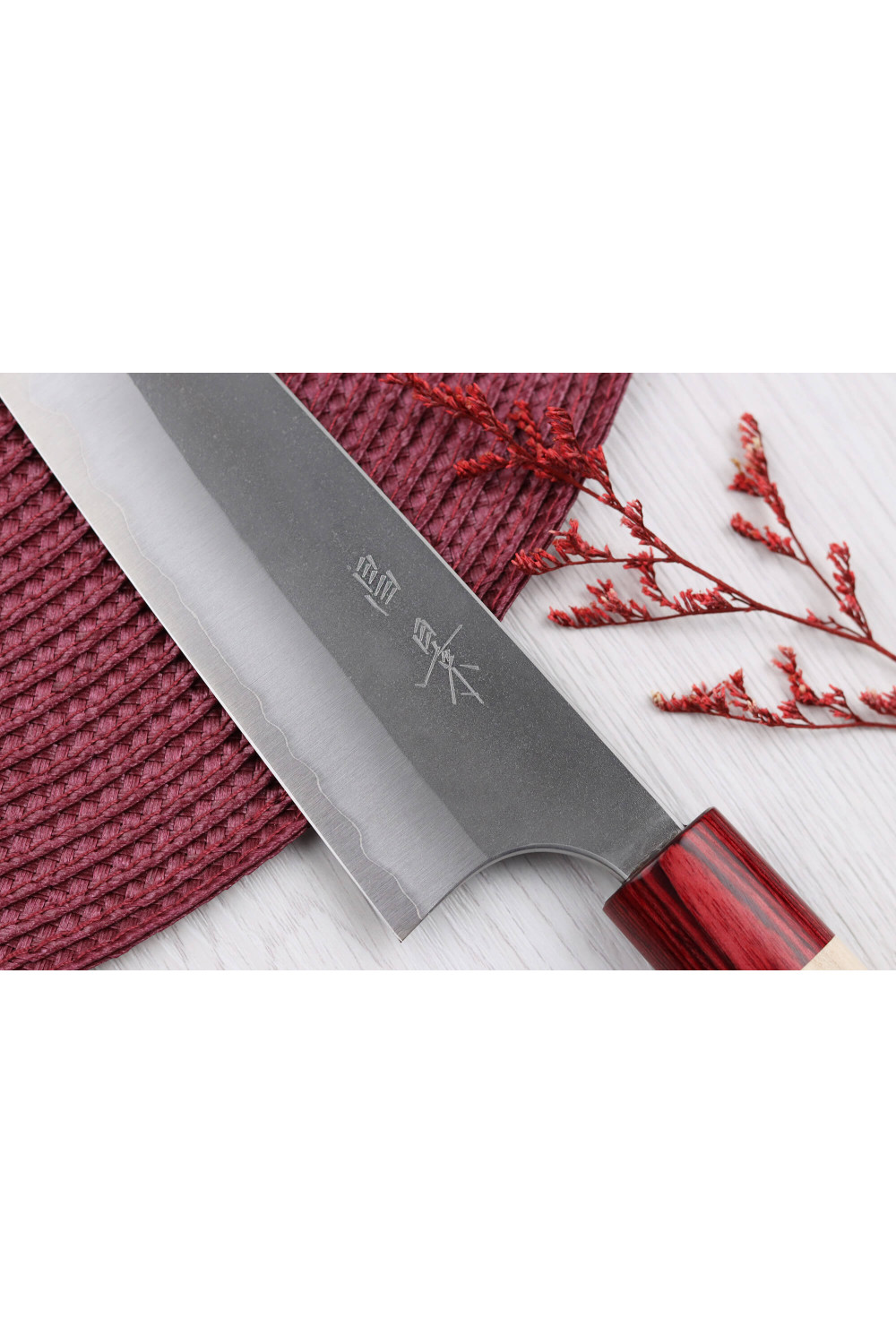
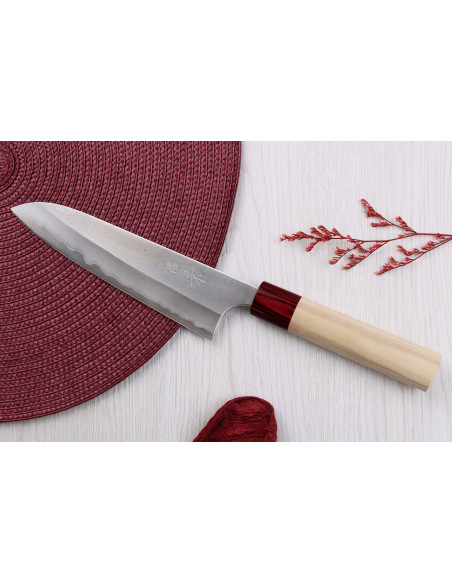
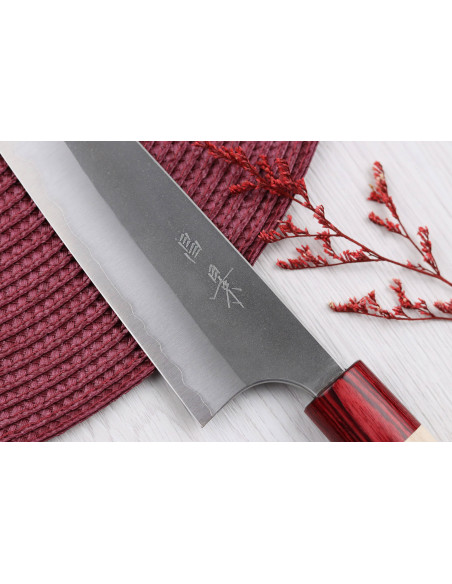
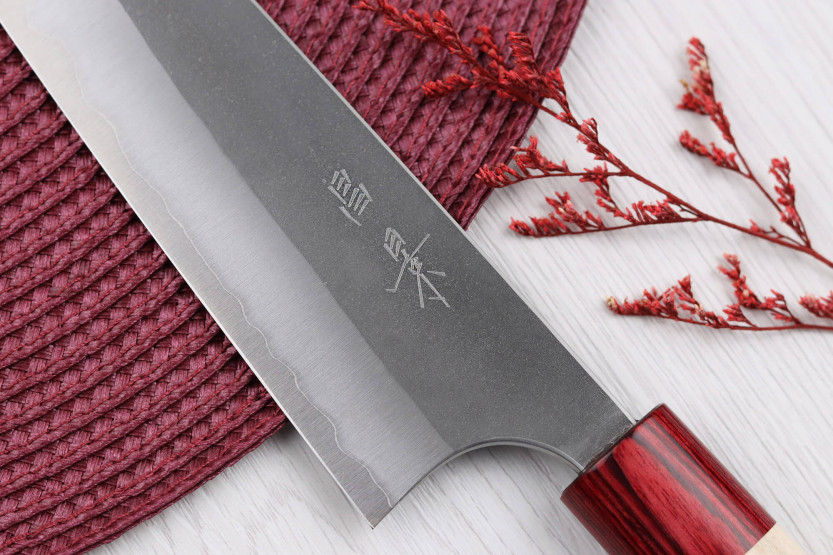
Next, the core is wrapped in a layer of softer stainless steel. This less rigid layer adds protection to the core, while providing "flexibility" and therefore better balance. This construction gives the blade greater resistance to breakage and impact during cutting. The superposition of steels can be seen all along the cutting edge of the blade, forming an irregular wave that undulates in a random and unique manner.
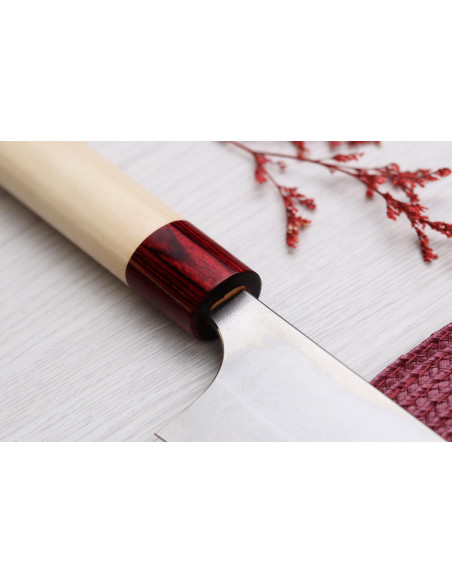
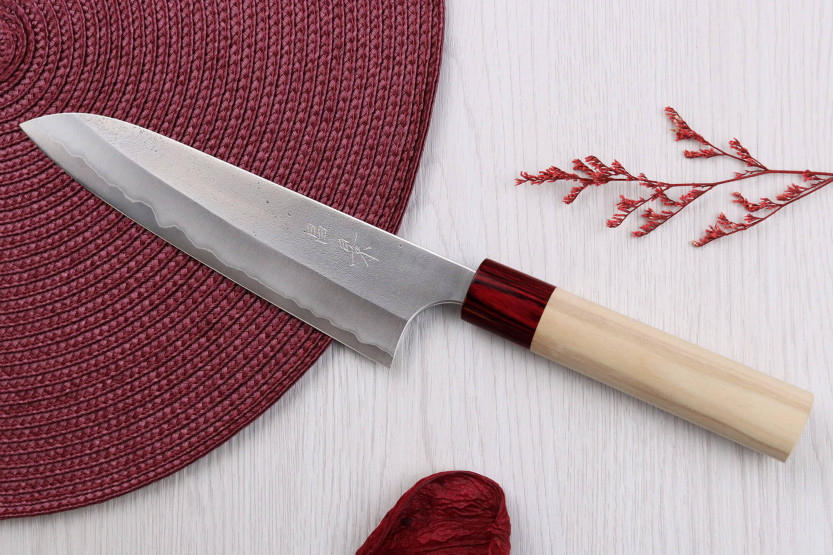
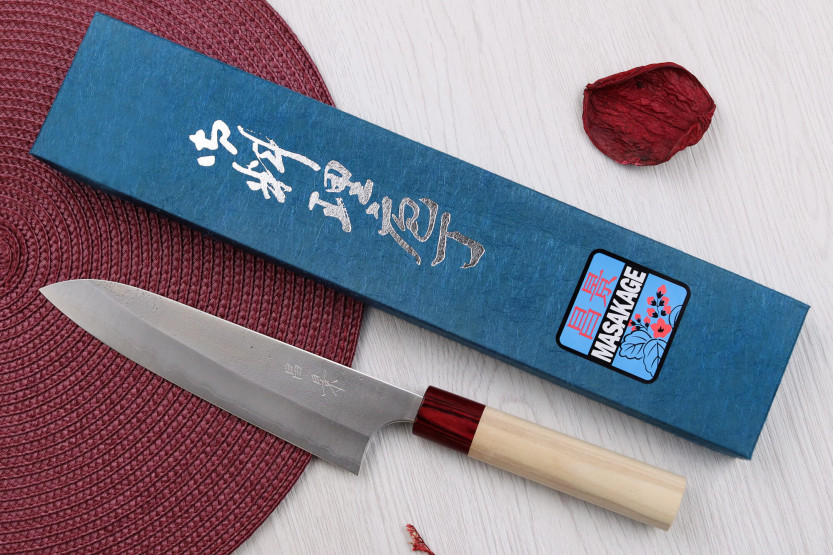
Kanjis have been engraved on the upper part of the blade, reinforcing the authenticity of your knife. Your blade has a nashiji finish, which has not been polished to retain its traditional look. This finish has a cool appearance, as does the light wood handle, which refers to the range's name "Yuki", meaning "snow" in Japanese.
A handcrafted Japanese knife with an elegant handle
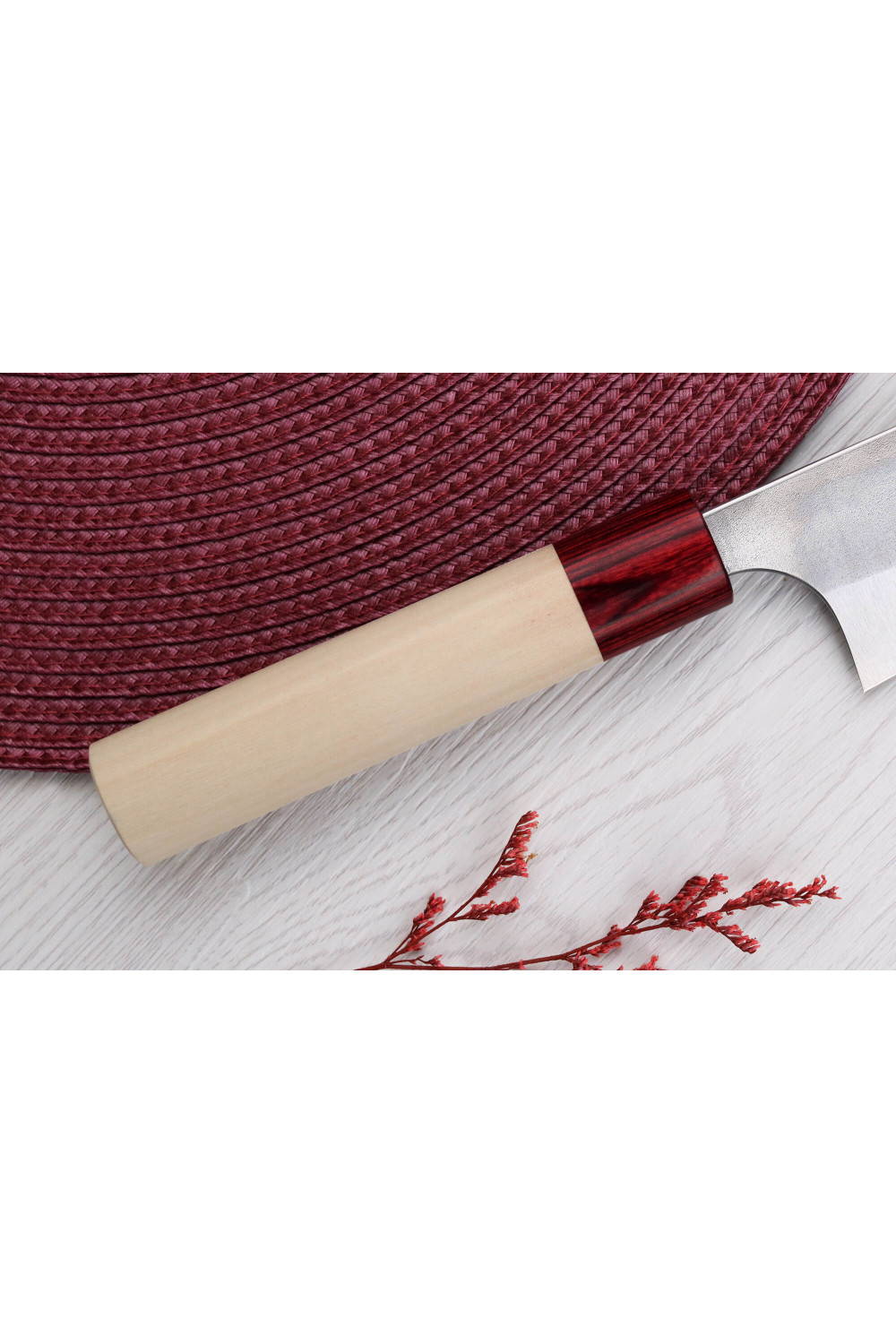
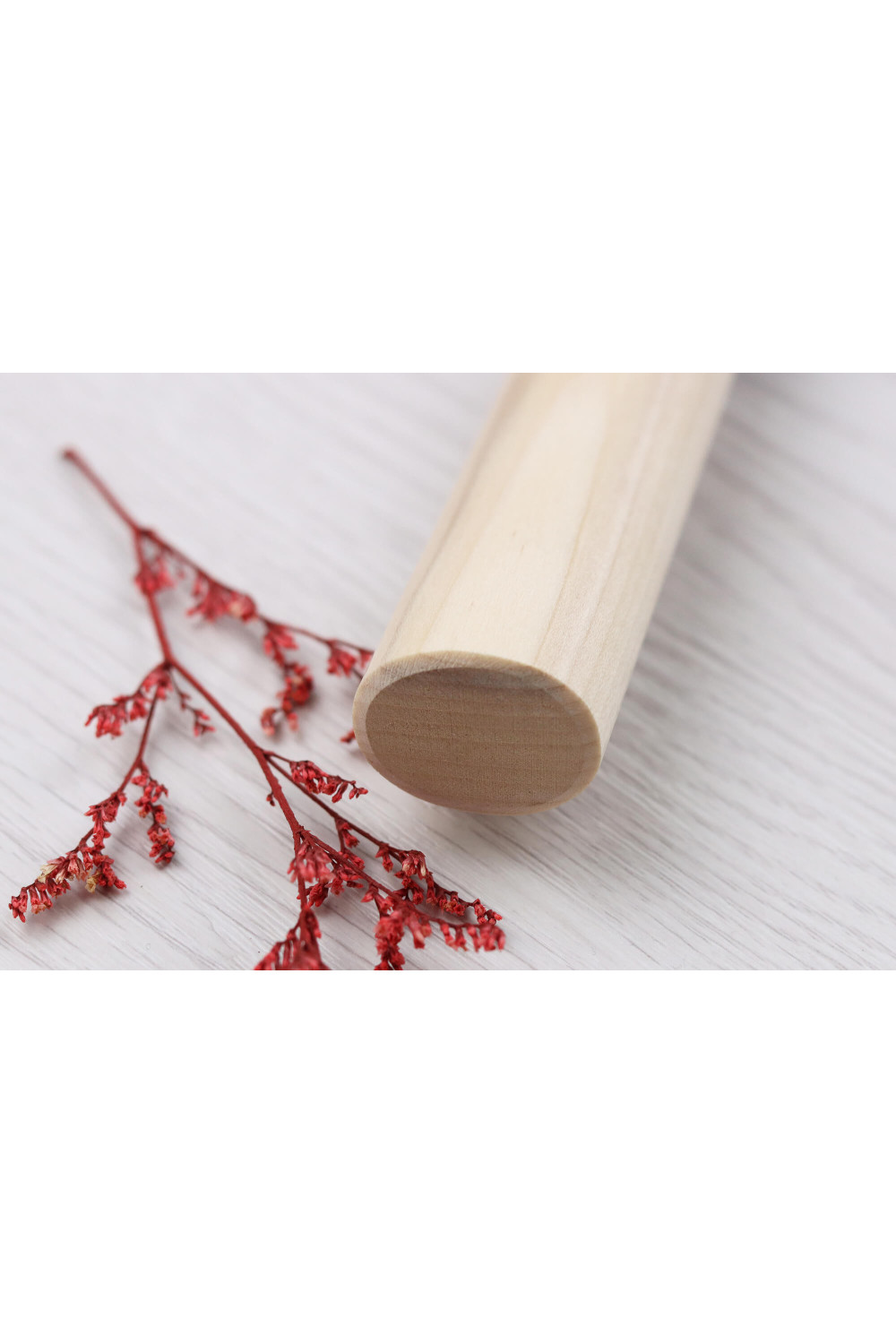
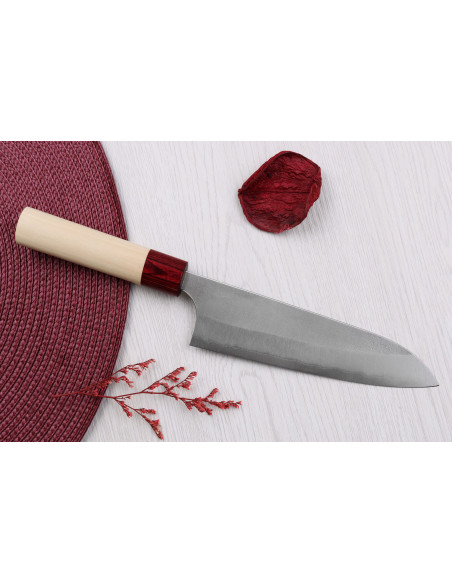
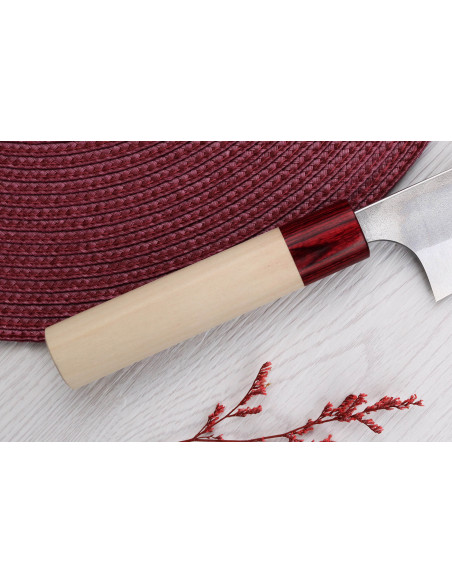
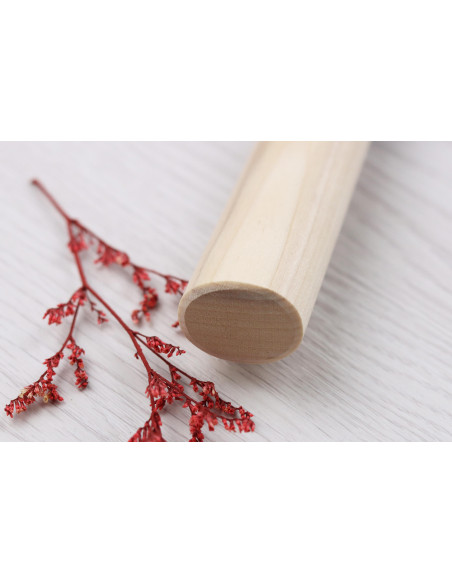
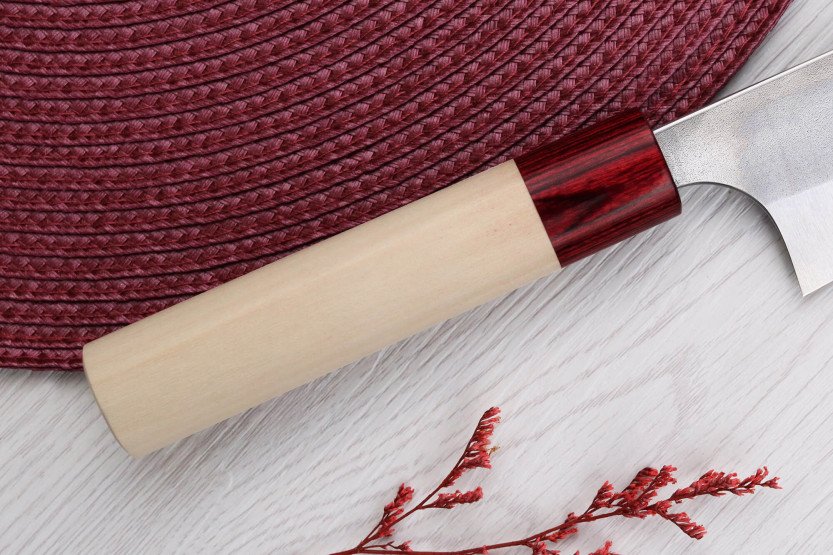
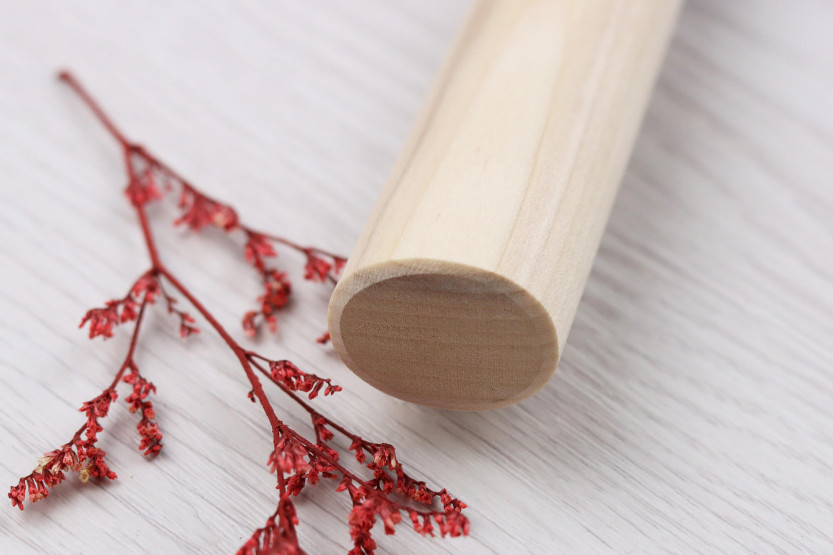
The handle of this handcrafted knife is made from magnolia wood, a grit species that is soft to the touch and appreciably light. Its oval shape is ergonomically suited to all chefs, right- and left-handed alike!
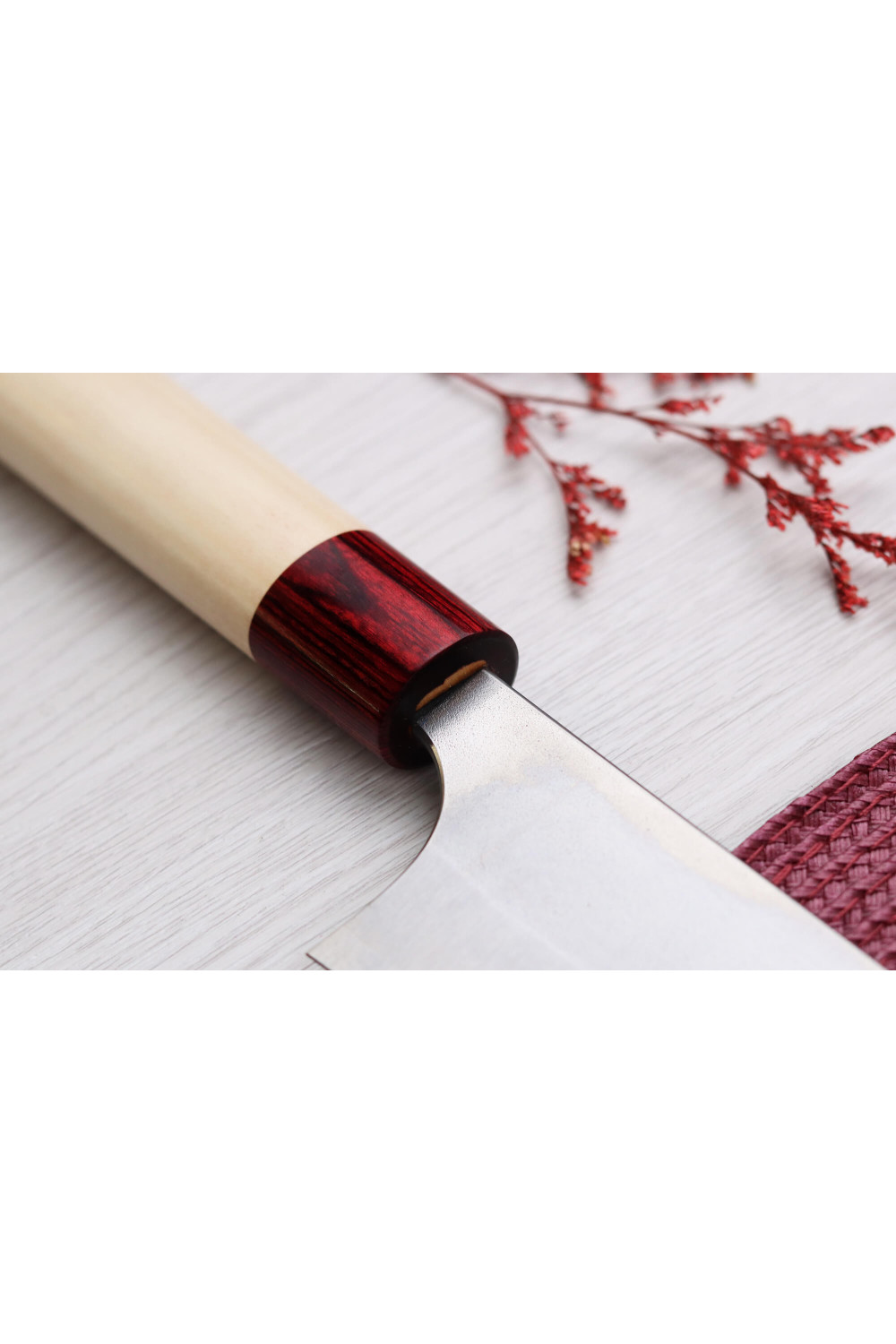
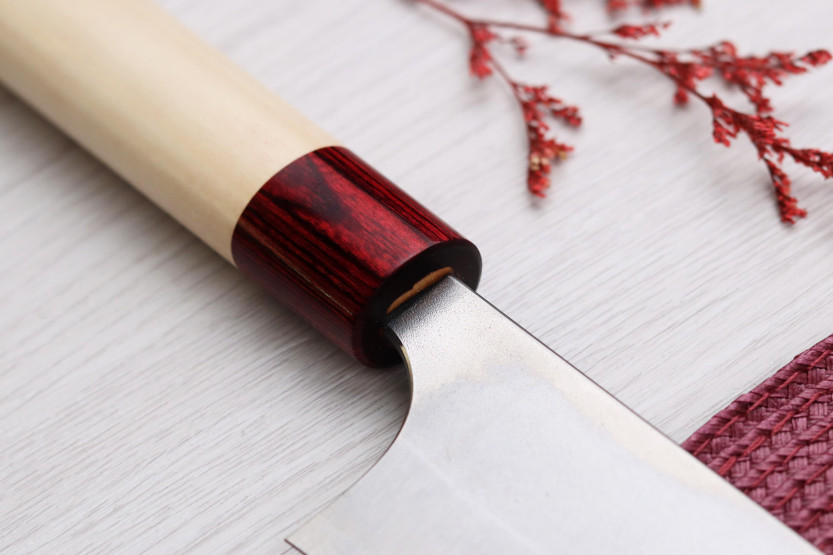
A red pakkawood bolster provides a harmonious link between blade and handle, adding an elegant aesthetic contrast. This is a moisture-resistant, antibacterial composite material.
The junction between blade and bolster is fixed with wood paste, guaranteeing a complete seal. This method prevents water infiltration during cleaning, thus preserving the handle.
How do I maintain a high-quality Japanese knife?
Your gyuto knife must be treated with care. Don't put it in the dishwasher, and don't let it soak in the sink.
Wash by hand only, using a non-abrasive sponge and mild detergent. Take care not to get the handle wet. After washing, be sure to dry the knife thoroughly to remove all traces of moisture and store it in a dry place.
Due to the high carbon content of the blade, it may undergo a slight variation in color over time. However, this in no way affects the knife's performance, as it is a natural reaction.
Discover all Masakage Yuki knives on KnifeLeader.eu!


 By buying this product you can collect up to