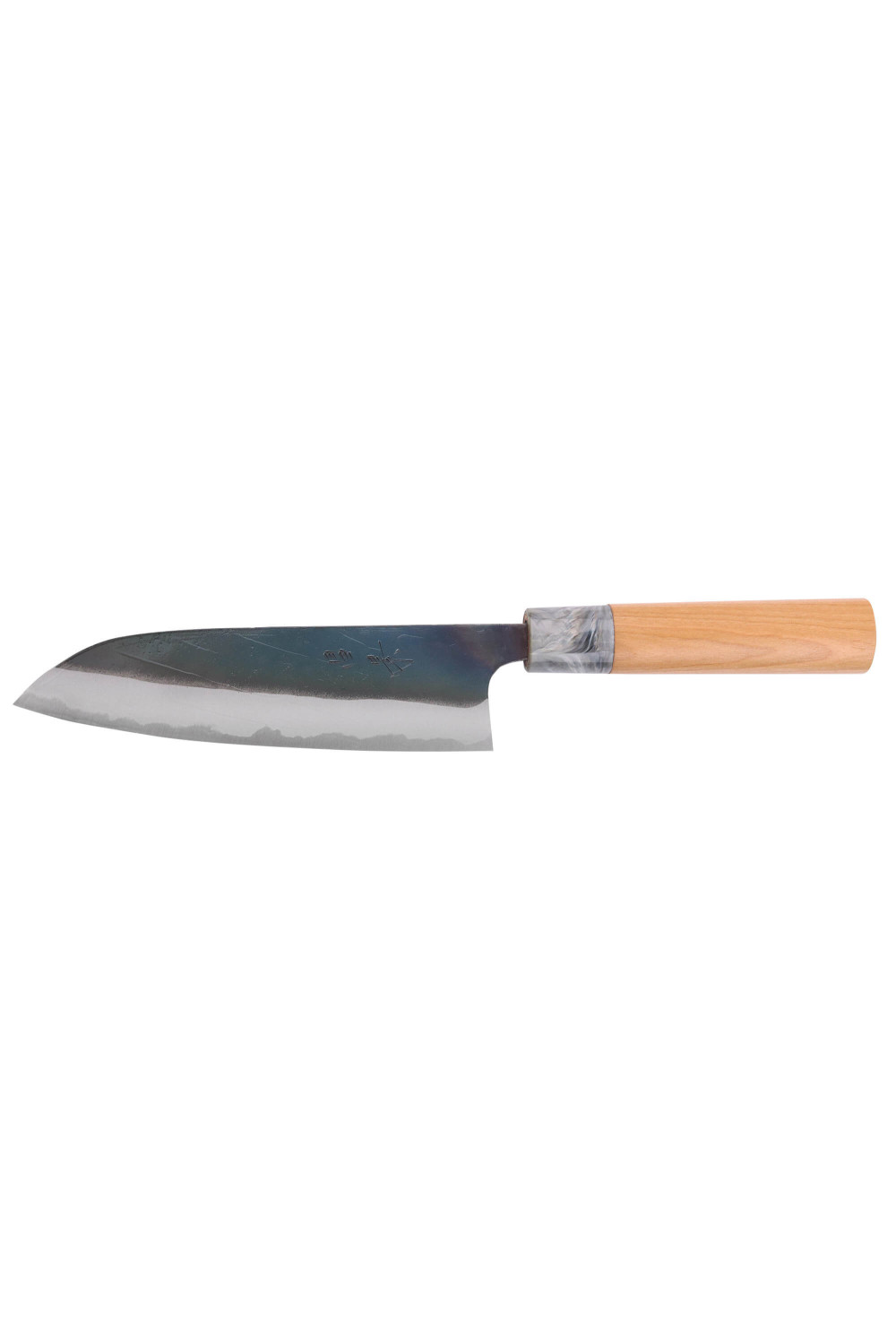
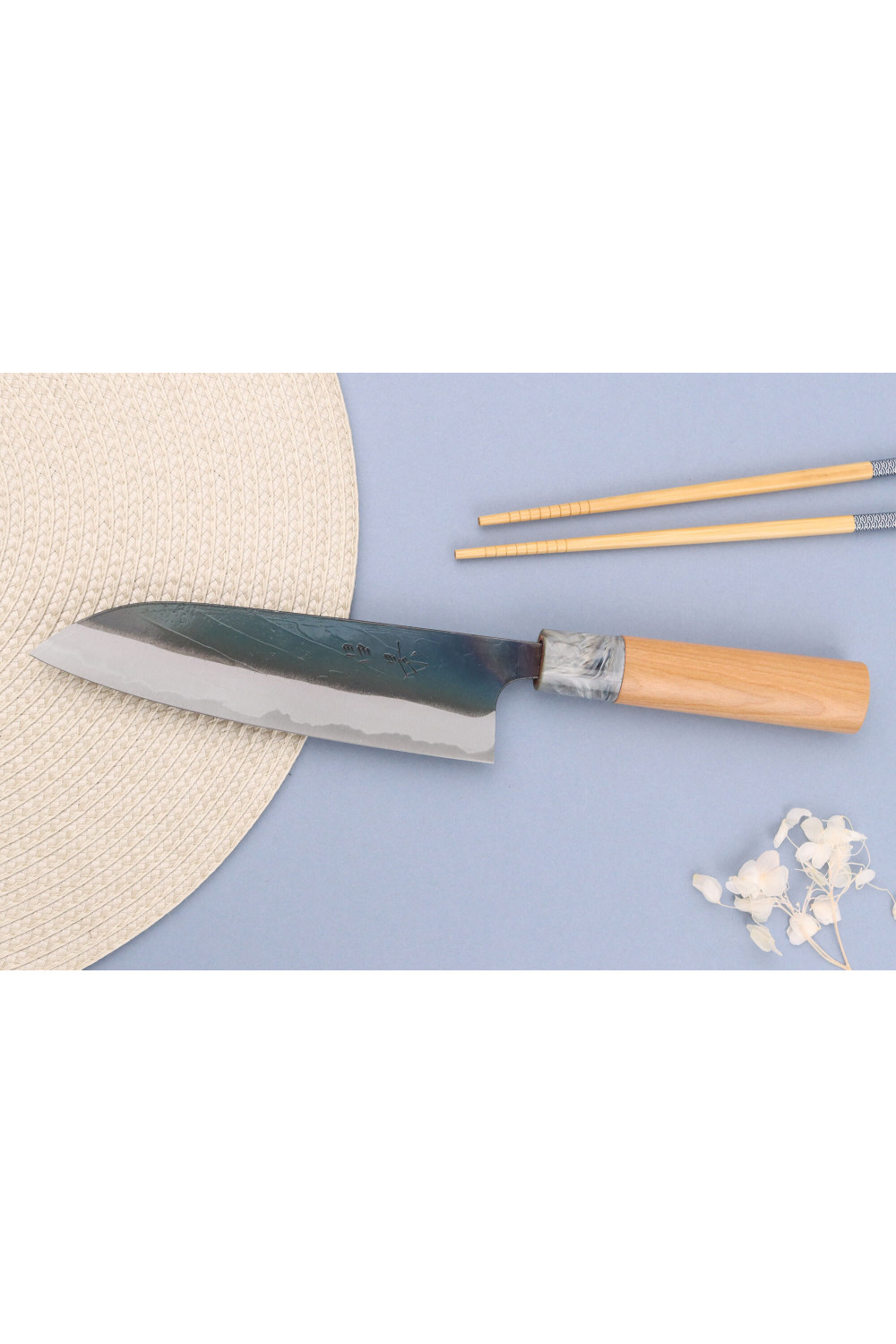
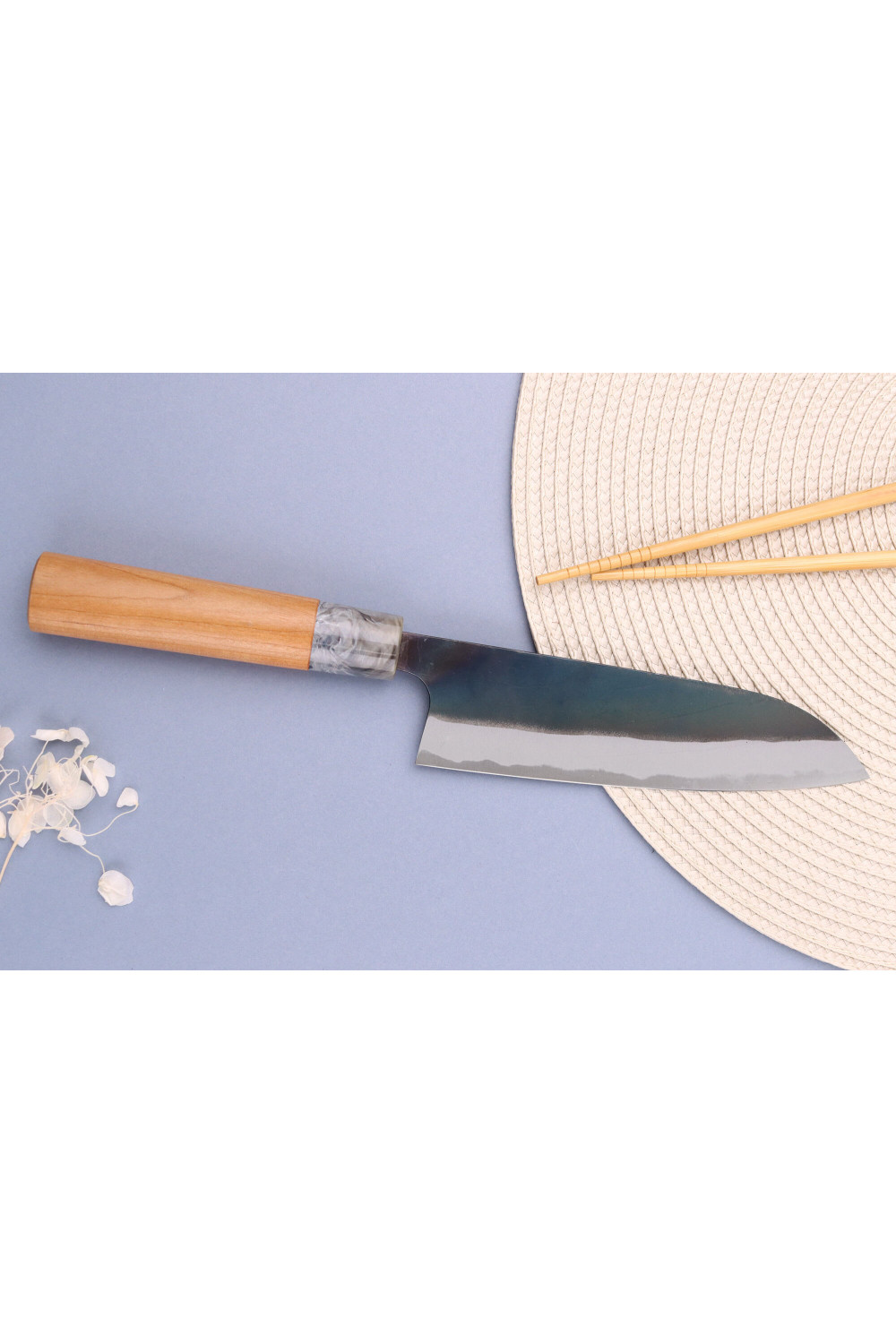
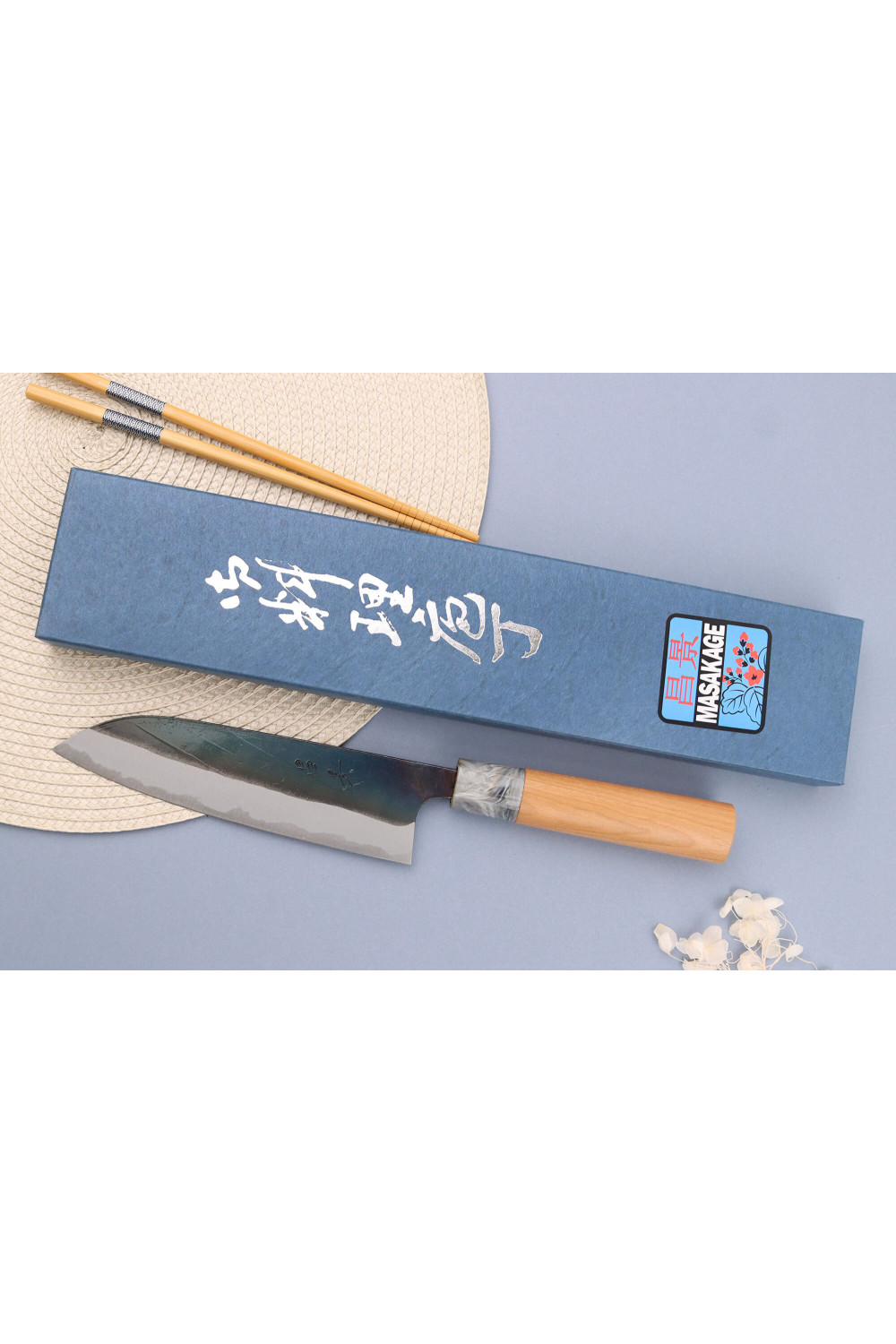
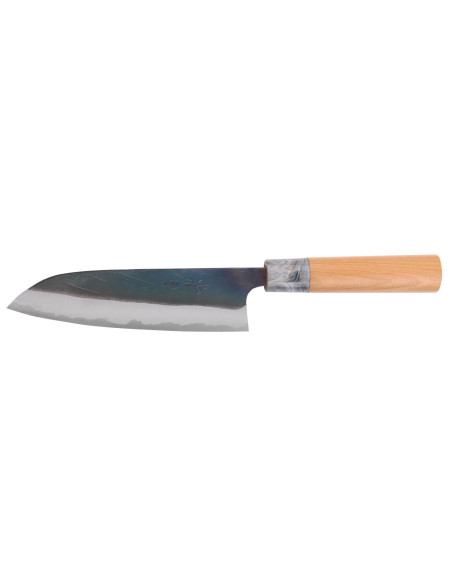
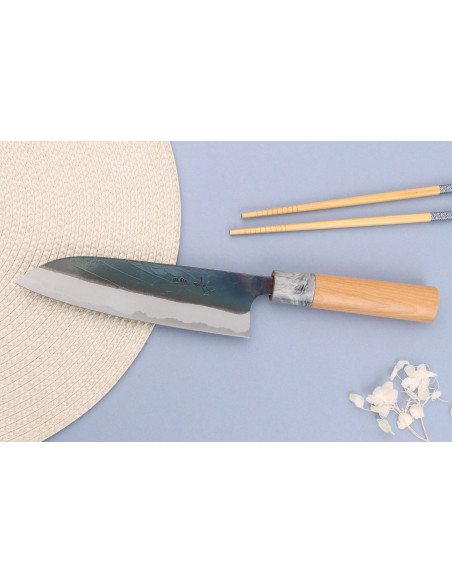
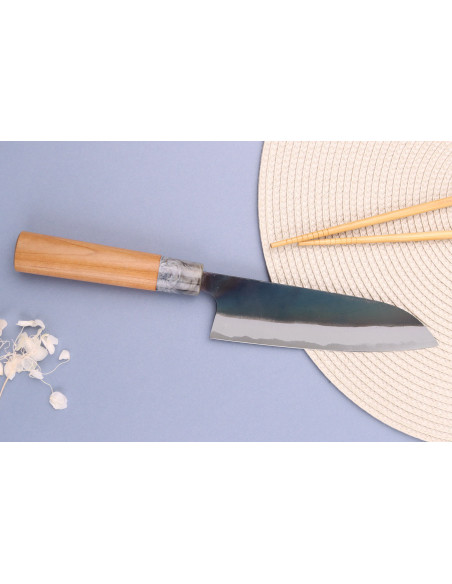
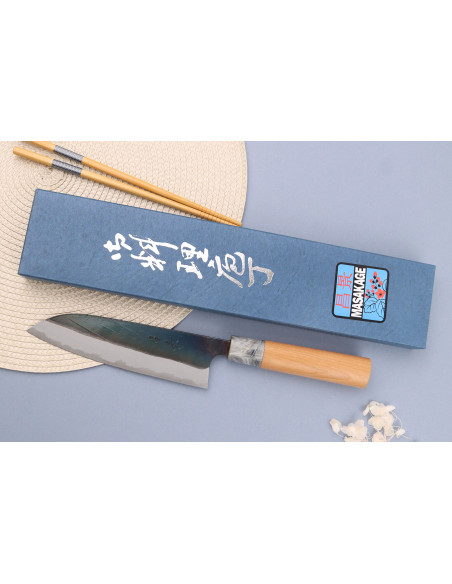
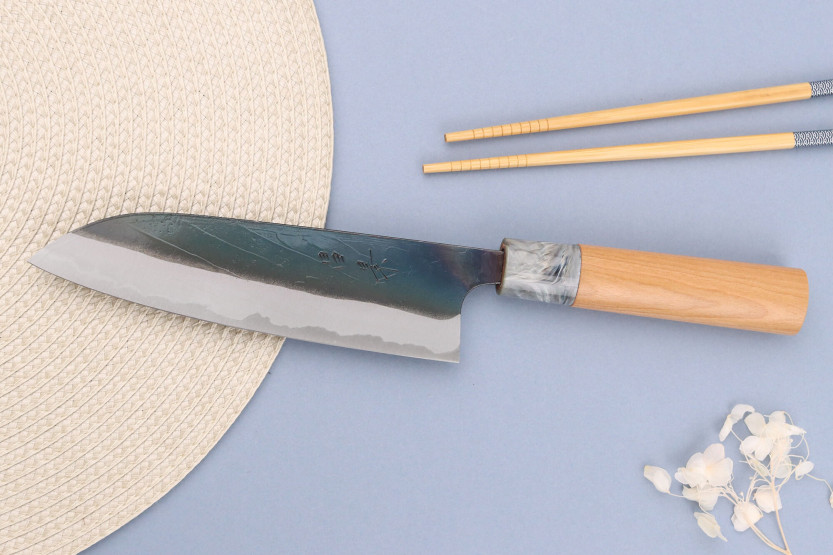
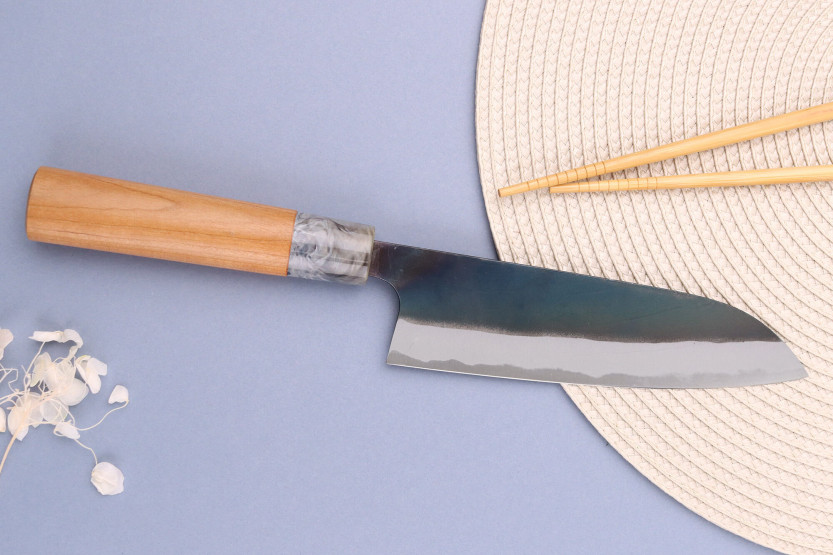
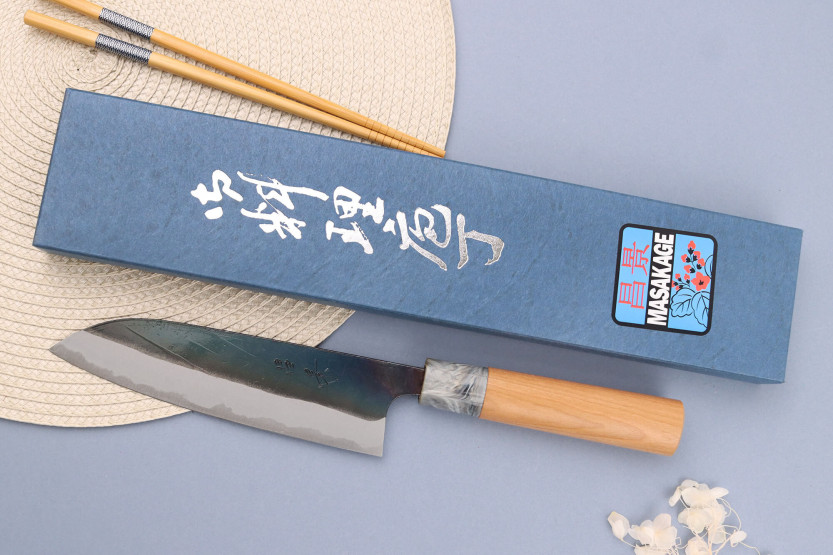
The santoku knife is a handy, multi-functional Japanese knife that excels in everyday use! You can use it to slice meat, chop vegetables or mince herbs with precision. Thanks to its well-balanced shape, it's just as suitable for quick cuts as it is for precision work. We advise you to use it only on soft foods, and to avoid very hard products such as bones or squash.
This model is part of the Masakage Mizu range, an artisanal series handcrafted in Japan by blacksmith Takumi Ikeda. A student of master blacksmith Katsushige Anryu (his uncle), he perpetuates traditional know-how, making it a point of honor to forge each blade with care and precision! His training began in the 2000s and lasted some twenty years. In 2021, Ikeda san took over the reins of his uncle's workshop. The latter is located in Takefu Knife Village, a place where the best Japanese blacksmiths gather to exchange experiences, techniques and know-how! It's an ideal place to train the next generation of craftsmen.
The Masakage Mizu range (which means "water" in Japanese) can be recognized by its raw lines and dark, water-like finish. Each Masakage knife bears the hallmark of authentic craftsmanship, combining high technical standards with aesthetic appeal.
A santoku knife combining tradition and originality
This santoku knife is forged using the San Maï method, an ancestral Japanese technique that consists of surrounding a hard steel core with a layer of softer steel folded in on itself. This process protects the core while ensuring a good balance between strength and flexibility.
The central core is made of Aogami #2(Blue Paper Steel 2), a high-quality alloy developed by the Japanese company Hitachi. It contains around 1.2% carbon, giving it a remarkable hardness of 62HRC on the Rockwell scale. This hardness guarantees excellent edge retention: the cutting edge remains effective for longer, for a clean cut every time!
Despite its sturdiness, Aogami is easy to sharpen, making it easy to maintain the edge when necessary.
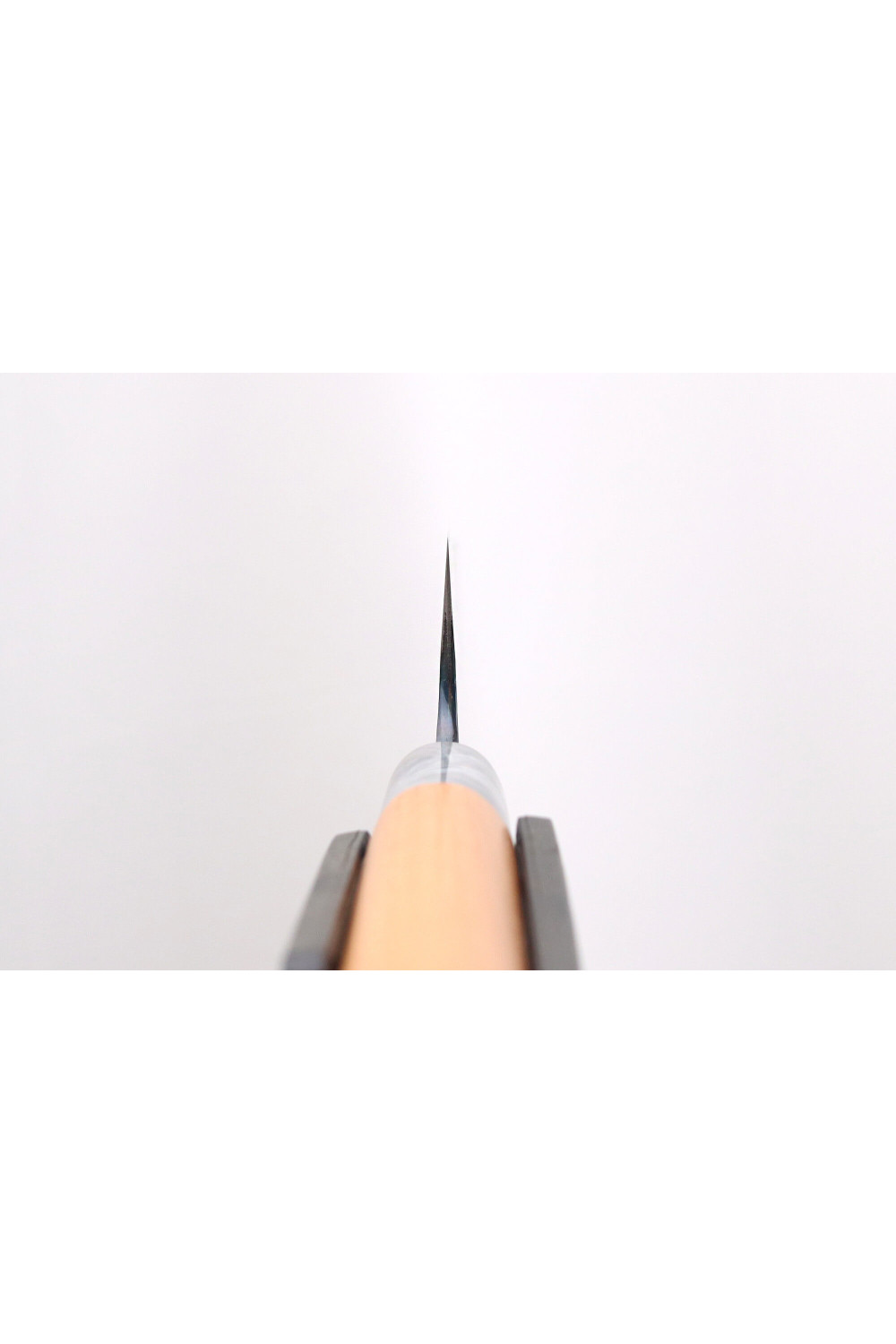
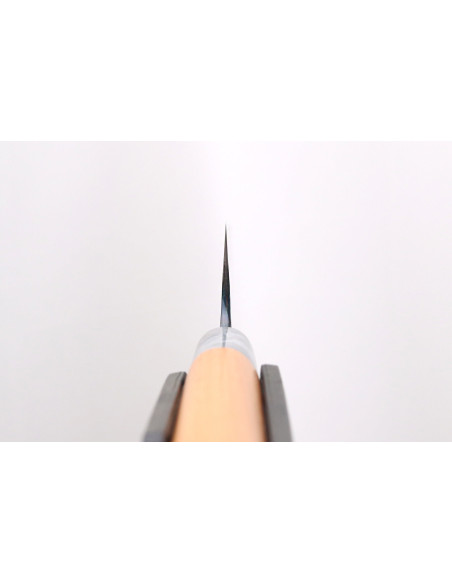
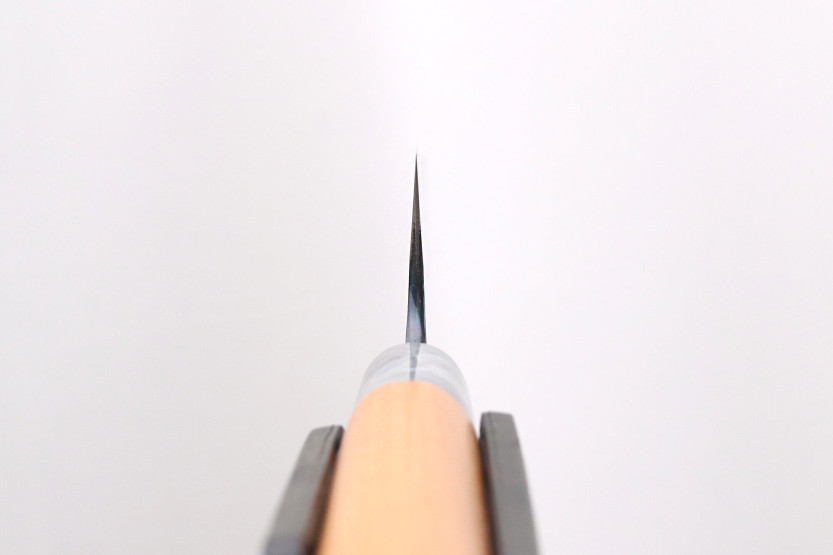
This Japanese kitchen knife features a flat grind for a particularly fine, precise cutting edge, ideal for clean, even cuts. It also offers better penetration into food, with less resistance during cutting, making it even more comfortable to use!
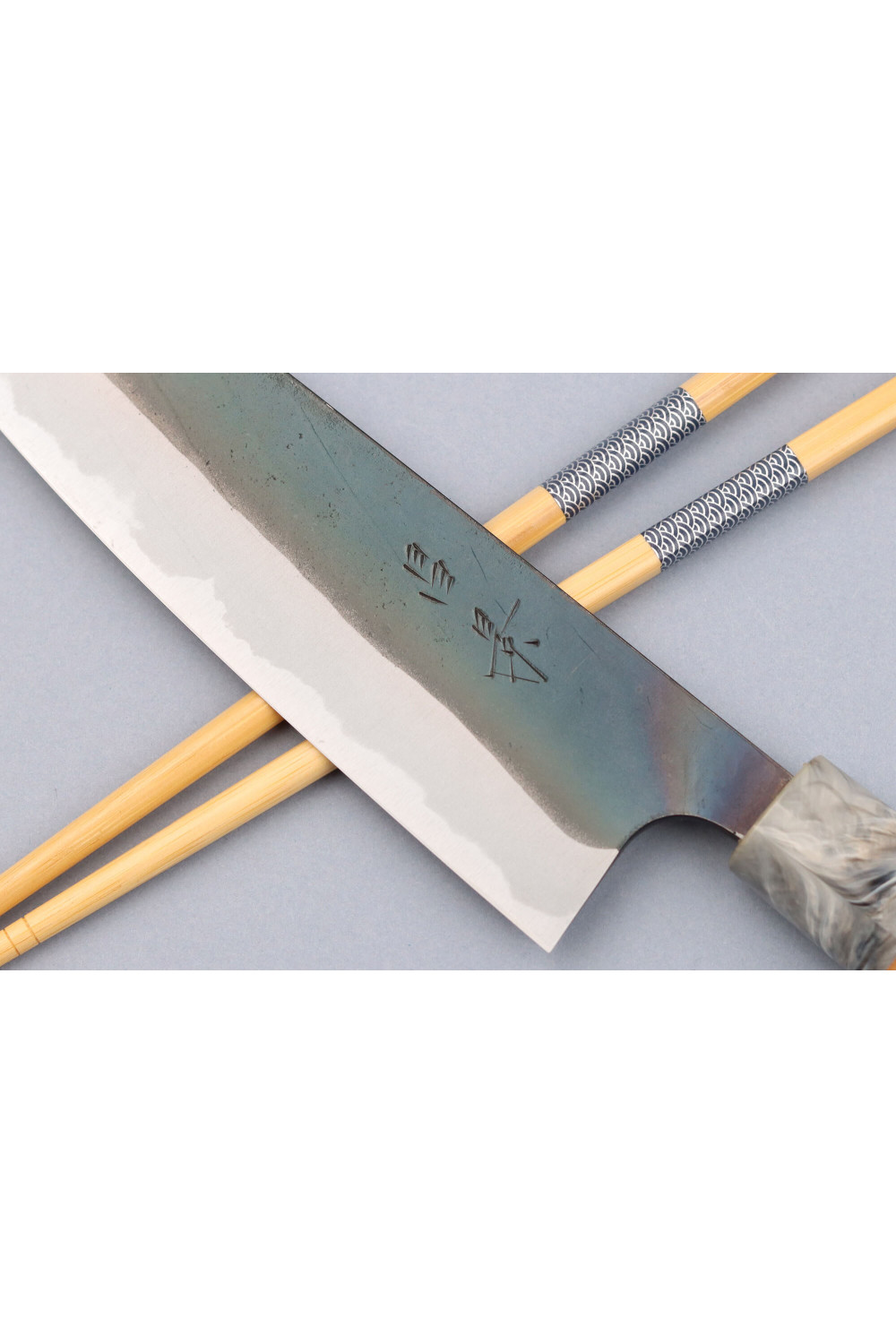
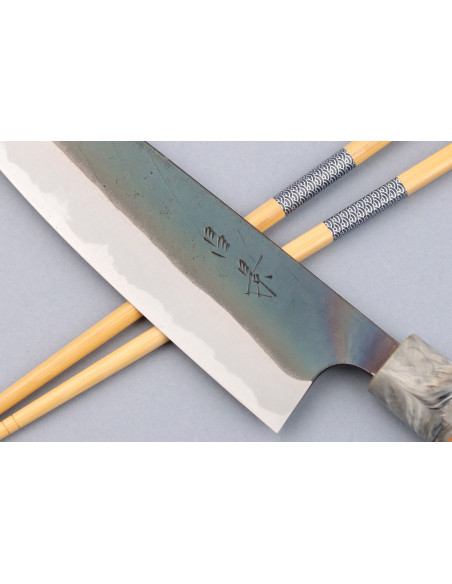
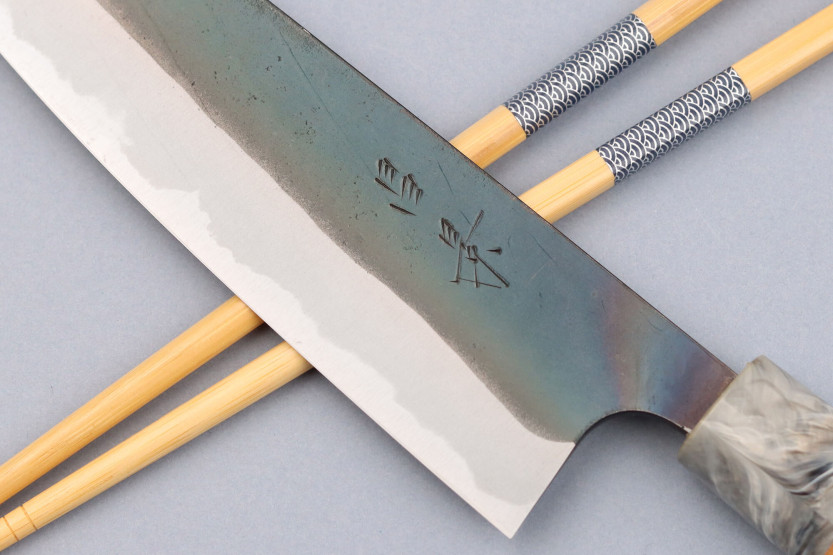
To complete the San Maï, a layer of soft iron wraps around the core. This provides a certain suppleness that prevents the blade from becoming too brittle during use. You can see the superimposition of the steels all along the cutting edge.
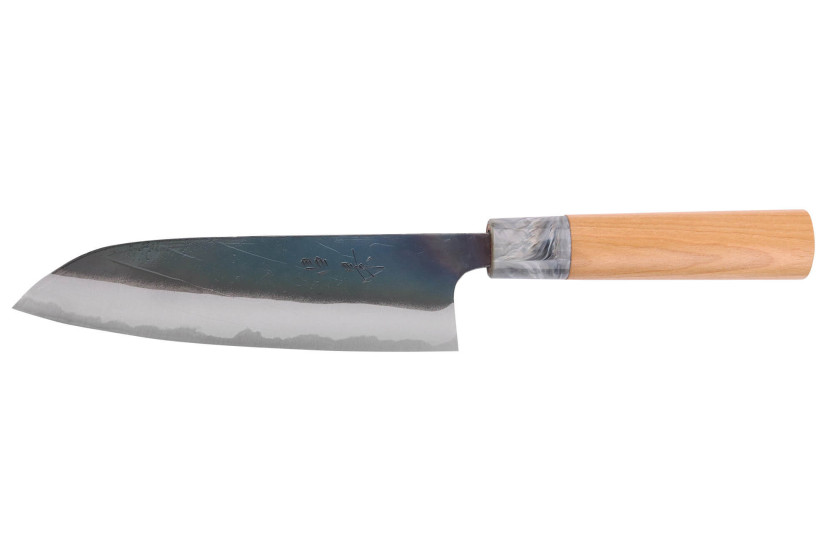
The blade's rough-forged finish accentuates its artisanal identity. Its surface retains its original dark hue, combined with the blue of the Aogami steel, recalling the theme of this range of Japanese knives. A layer of lacquer has been added to smooth the surface and evoke the look of water.
An elegant handle for this handcrafted Japanese knife
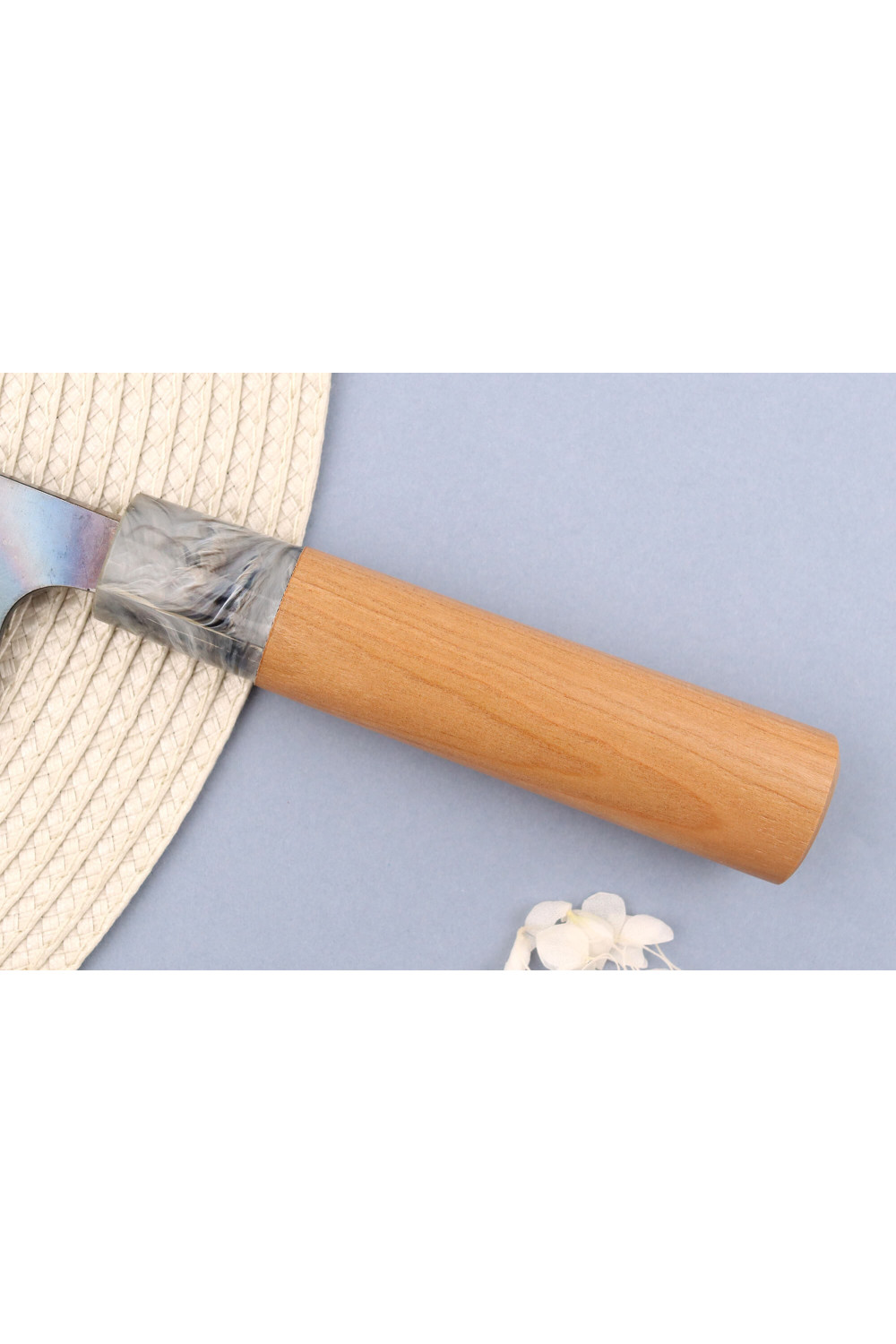
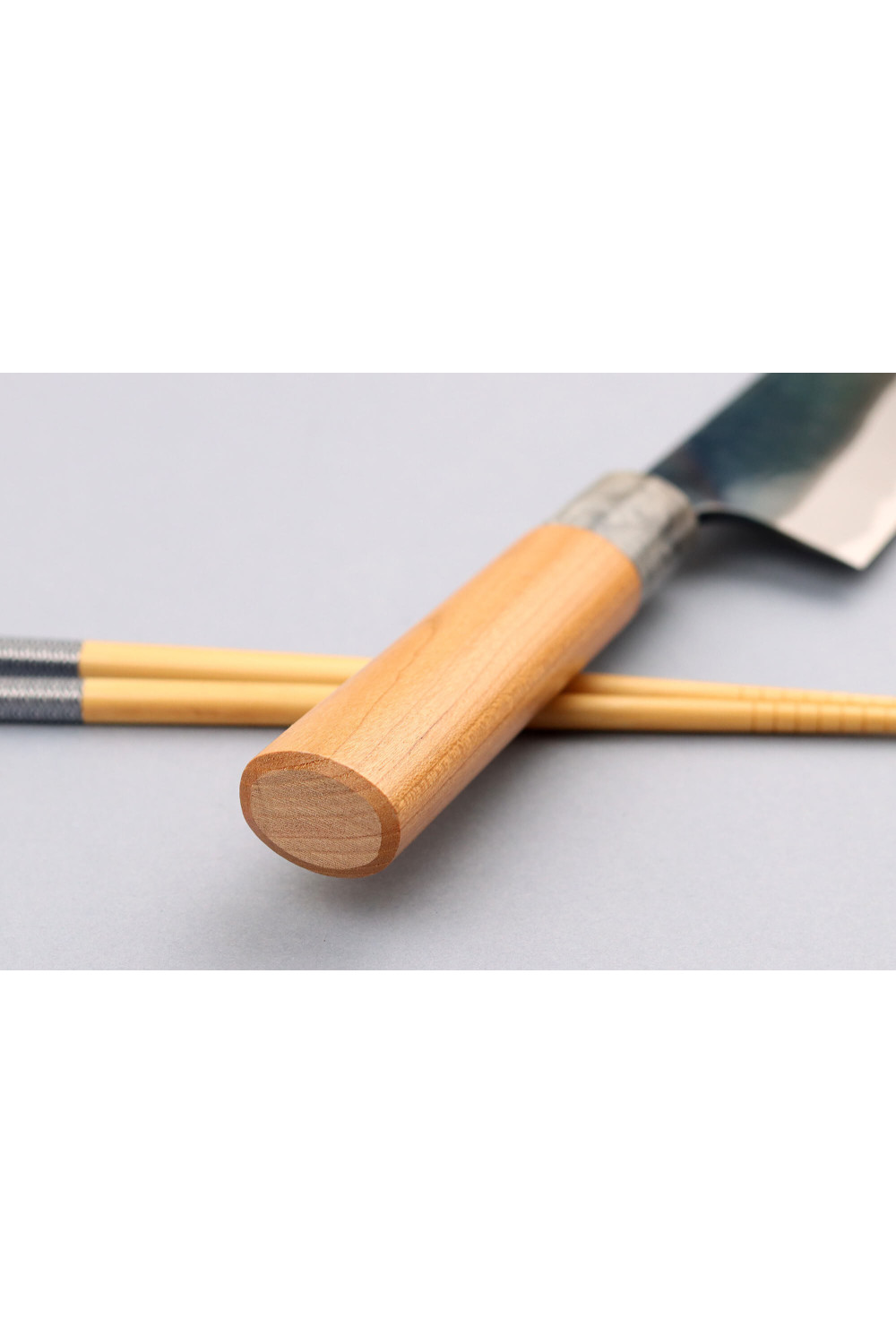
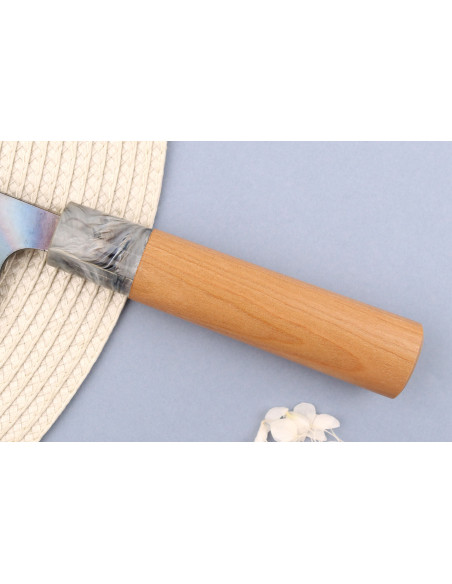
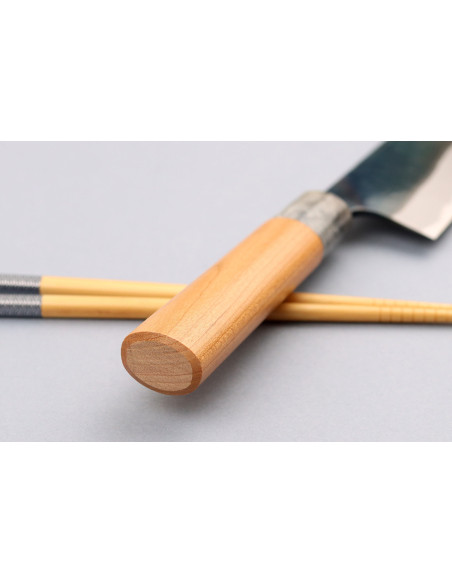
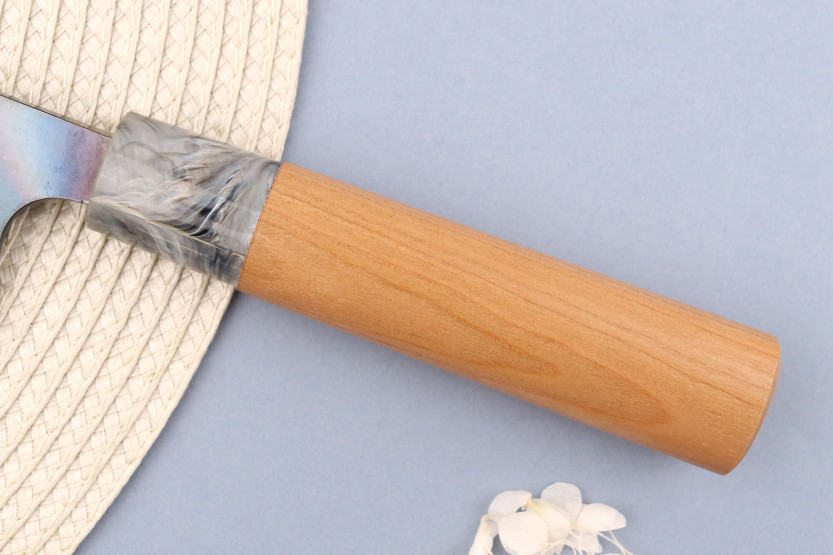
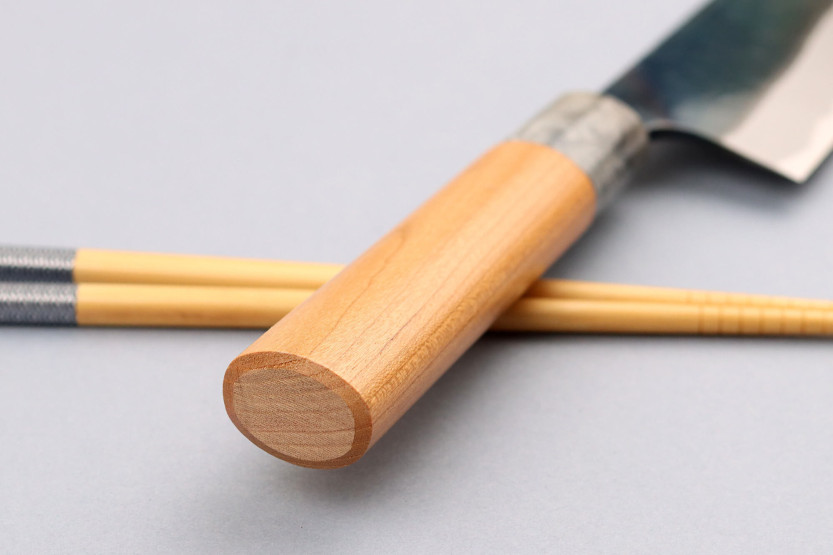
The handle of your Japanese kitchen knife is made of cherry wood, a naturally resistant species emblematic of Japanese culture. It features lovely warm tones and soft, harmonious graining, for a warm, refined look in the kitchen.
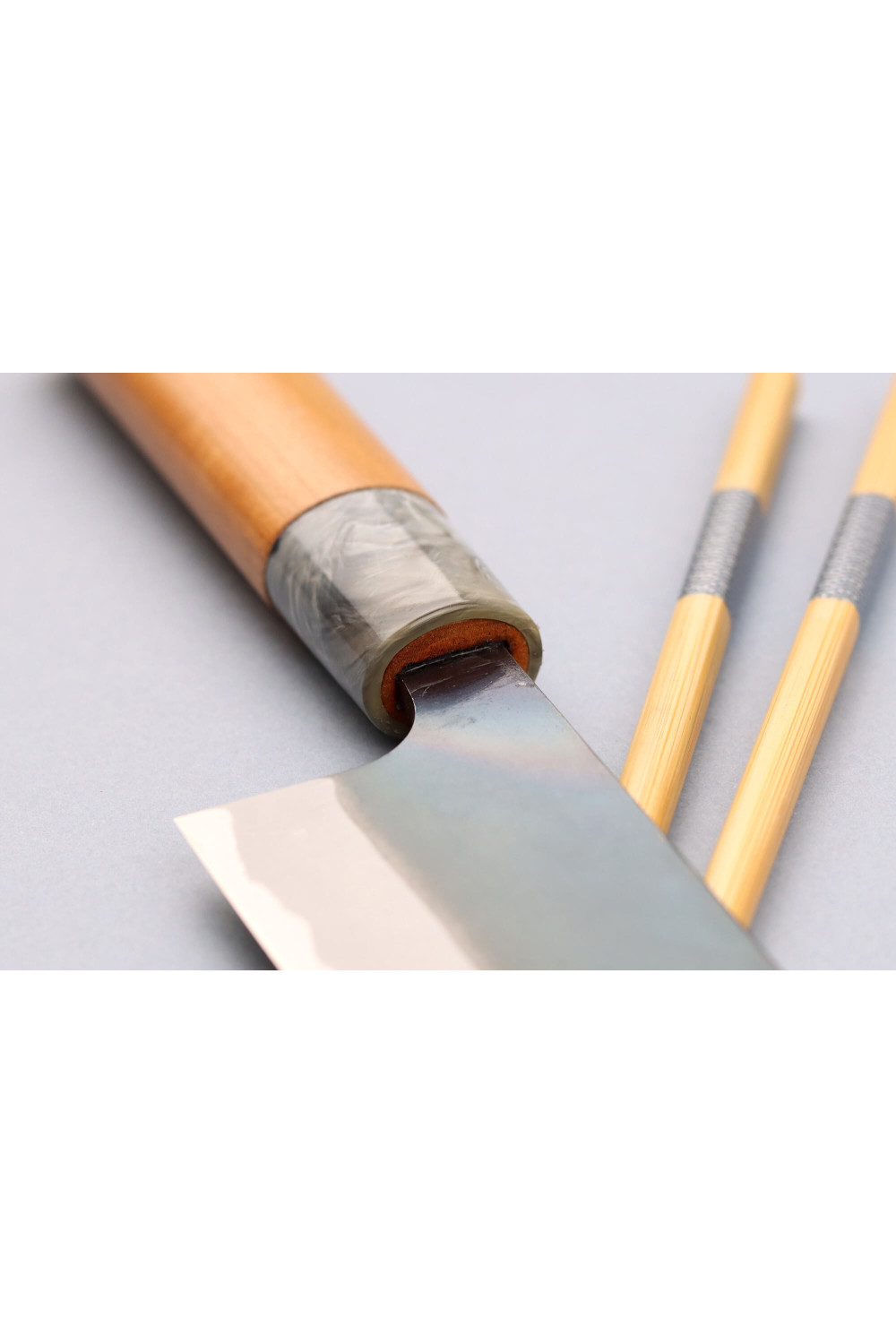
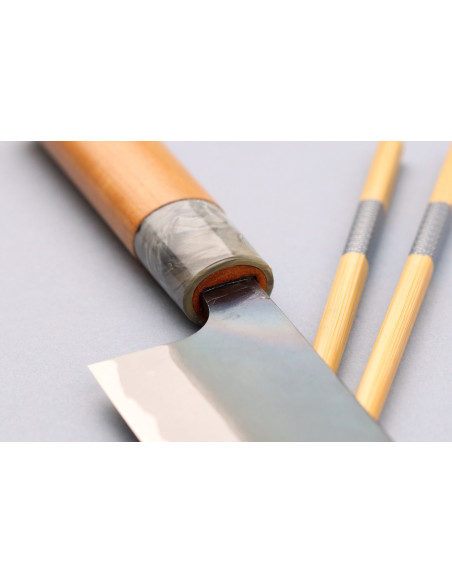
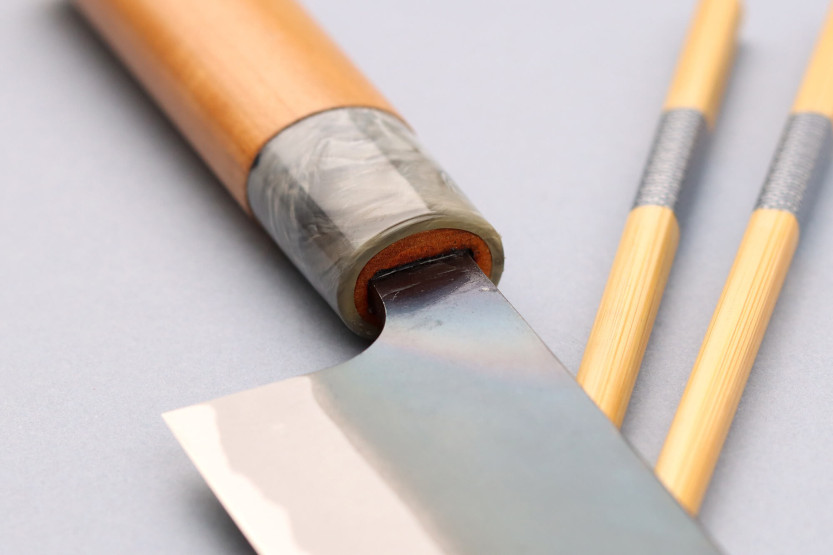
A gray resin bolster between blade and handle adds a further aesthetic touch. This durable material adds a touch of originality and contrast to your Masakage knife.
The oval shape of the handle is designed to suit all users, whether right- or left-handed. It ensures a comfortable, stable grip, even during long cutting sessions in the kitchen!
Finally, wood paste is applied to the junction between blade and handle. This small technical detail prevents the ingress of water or food residues, ensuring better hygiene on a daily basis.
Maintenance tips for your carbon knife
As this is a carbon steel knife, proper care is essential to preserve its quality. Hand-wash only, with a soft sponge and neutral soap, taking care not to over-wet the handle. Dry immediately after use, then store in a dry place away from moisture.
We strongly advise against putting it in the dishwasher or soaking it in the sink, as this may damage the blade and handle.
Over time, a natural patina may appear on the blade. This is completely normal and in no way affects the cutting performance of your santoku knife. It bears witness to the use of your Japanese kitchen knife and its living material.
Discover all Masakage knives available on Knifeleader.eu!




 By buying this product you can collect up to