A precise and durable SG2 blade
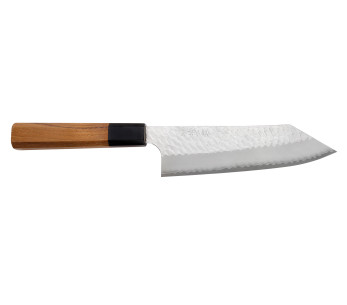
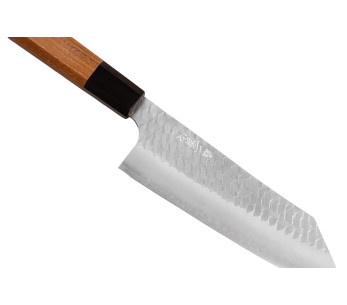
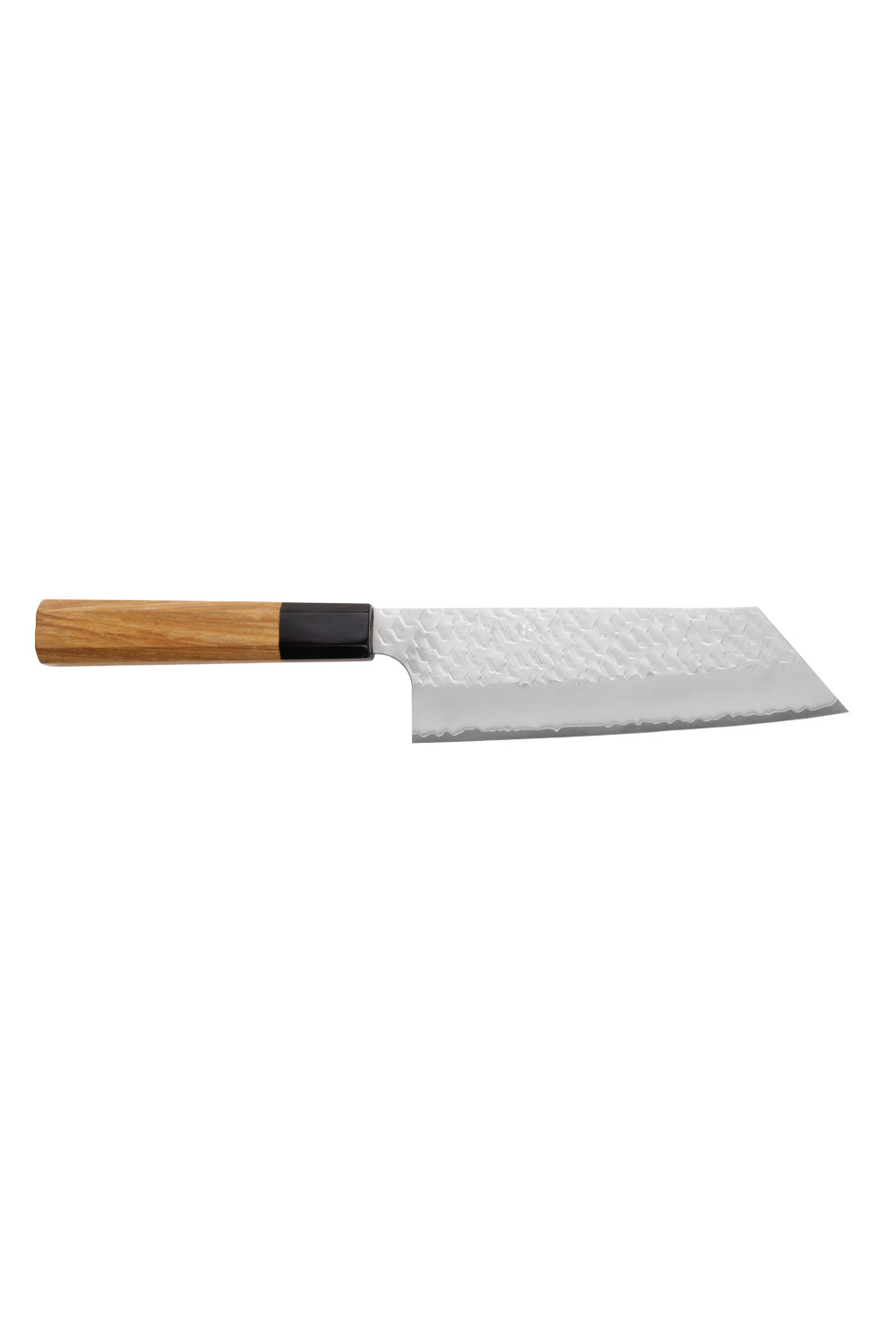
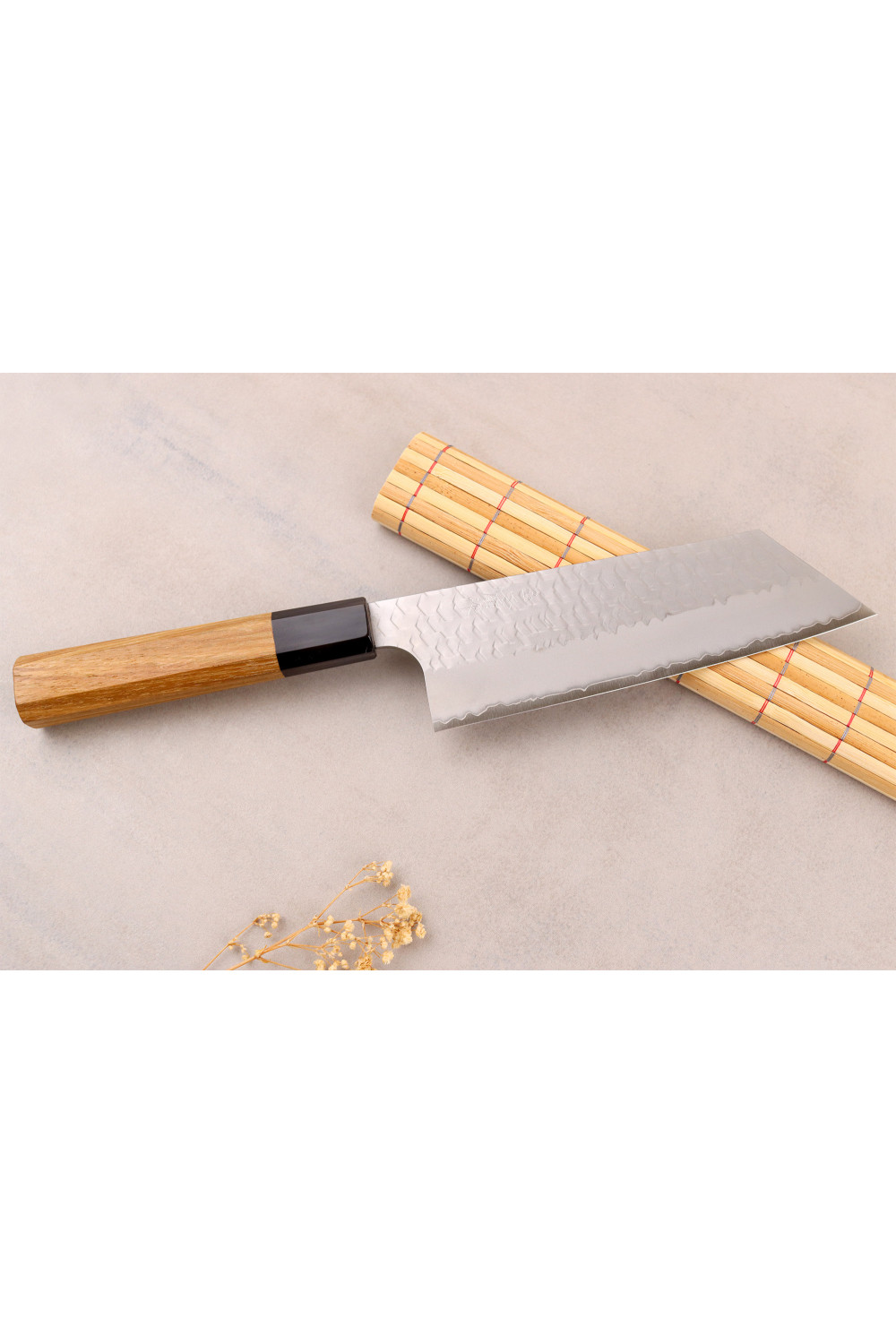
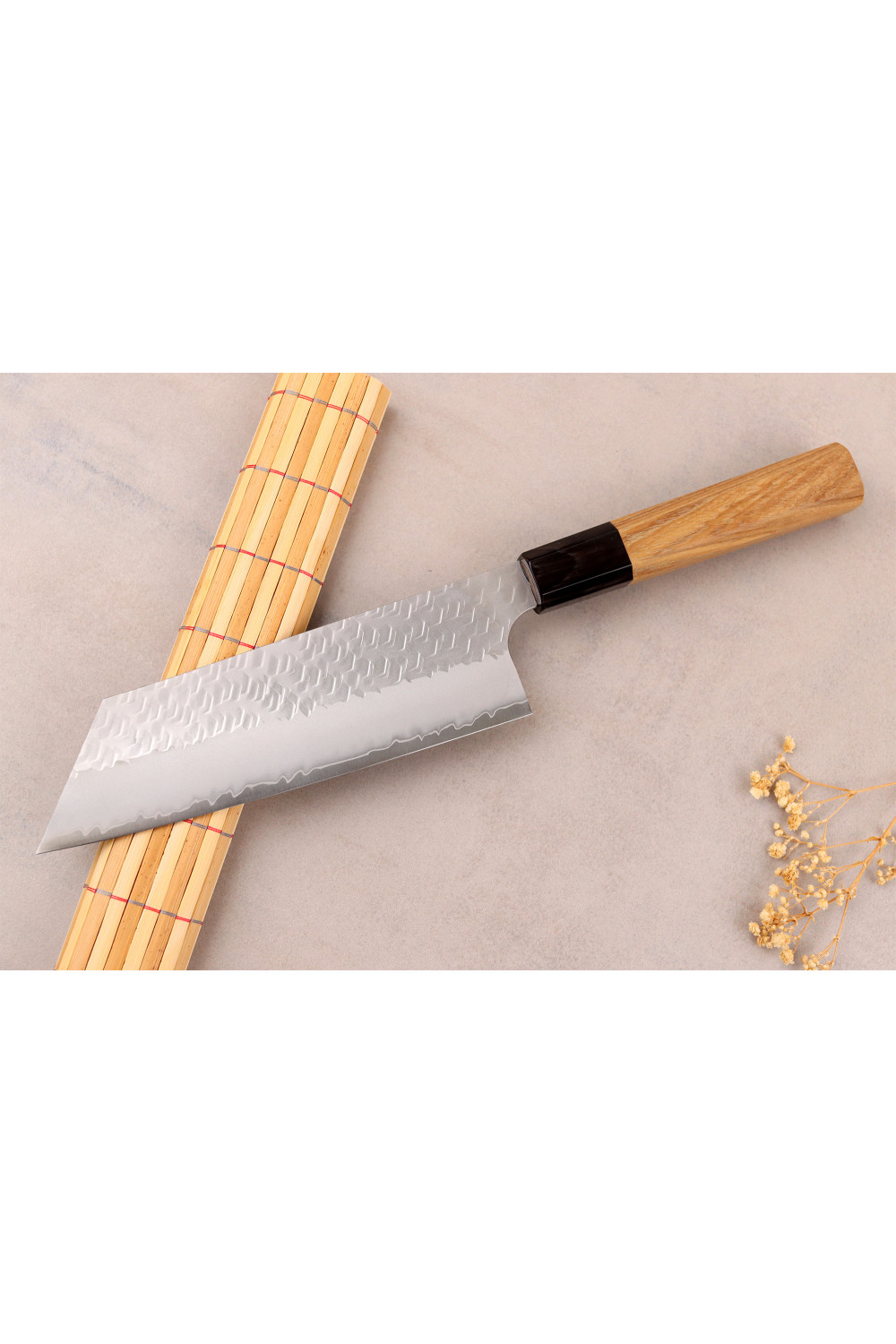
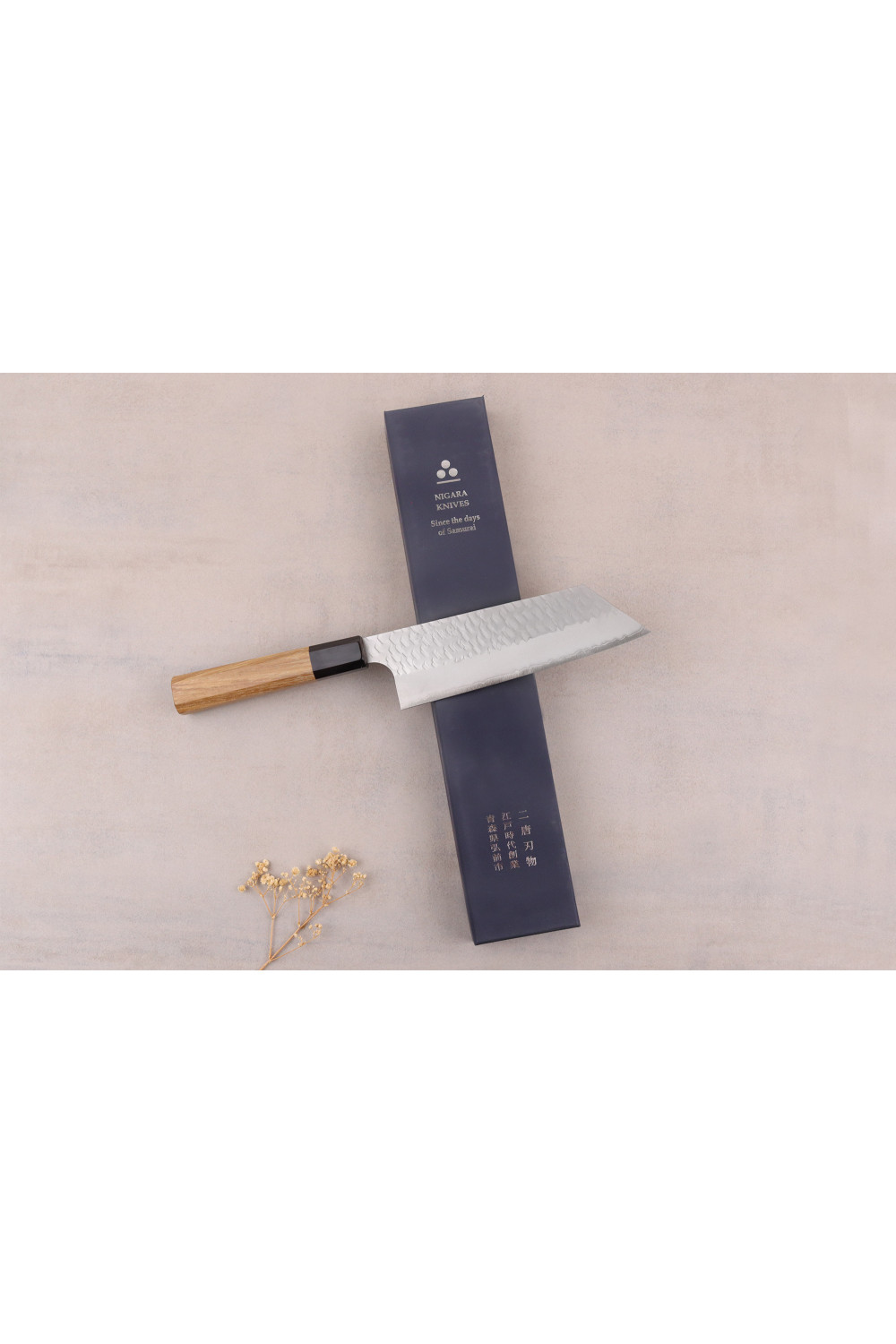
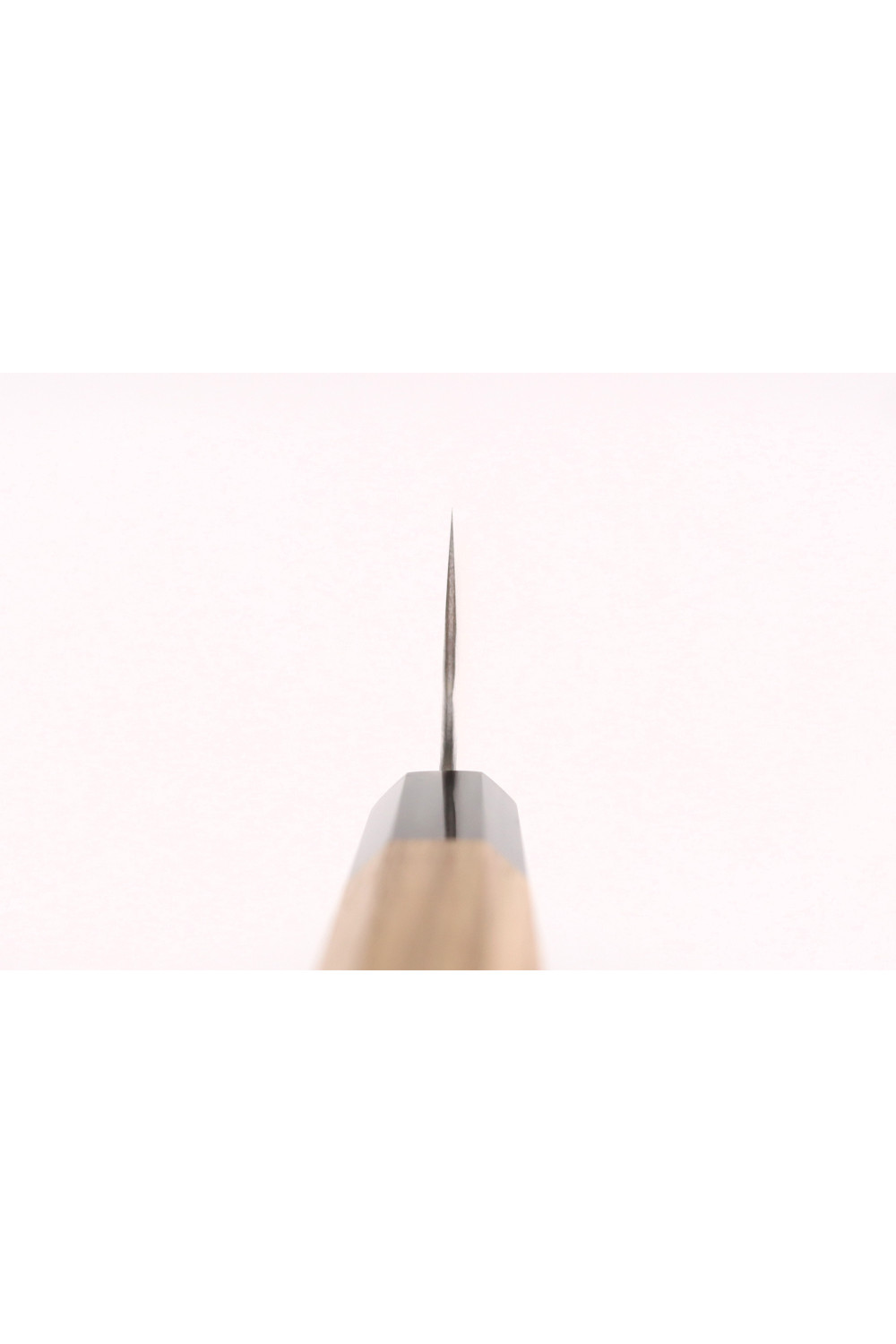
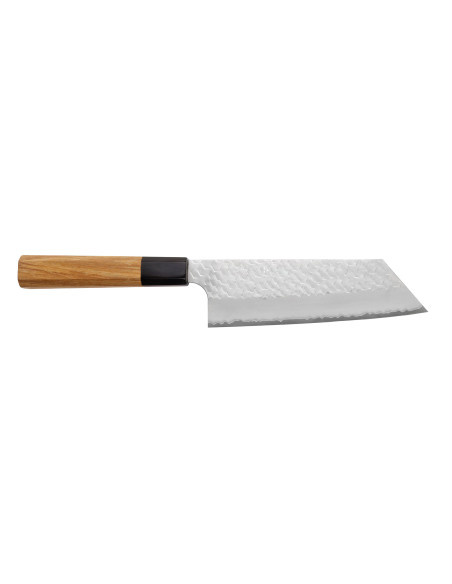
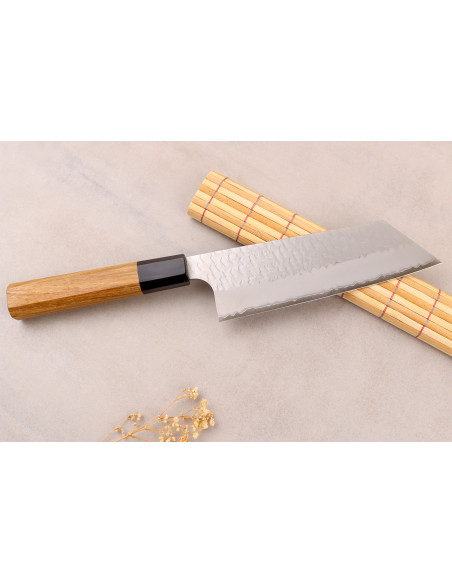
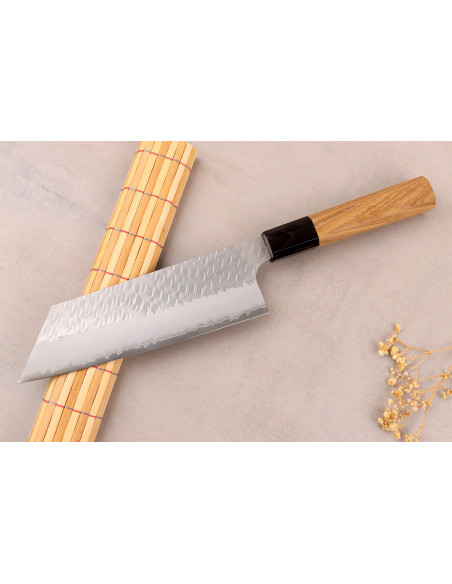
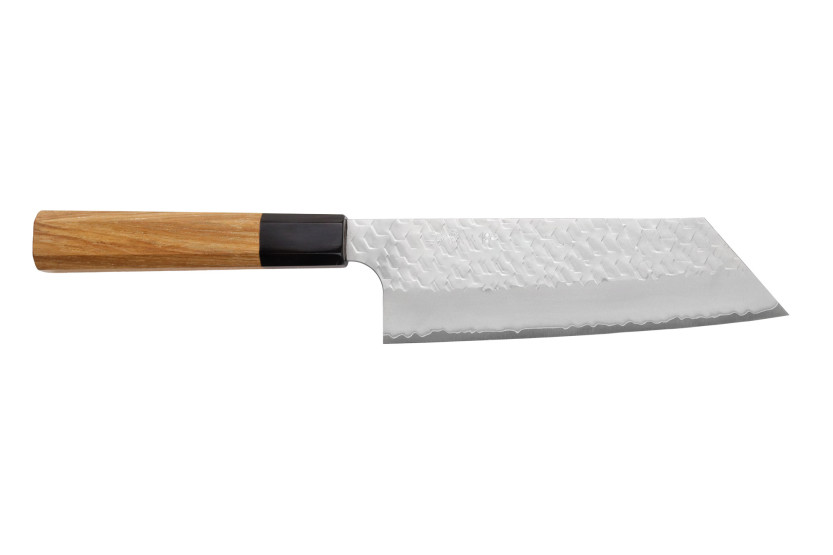
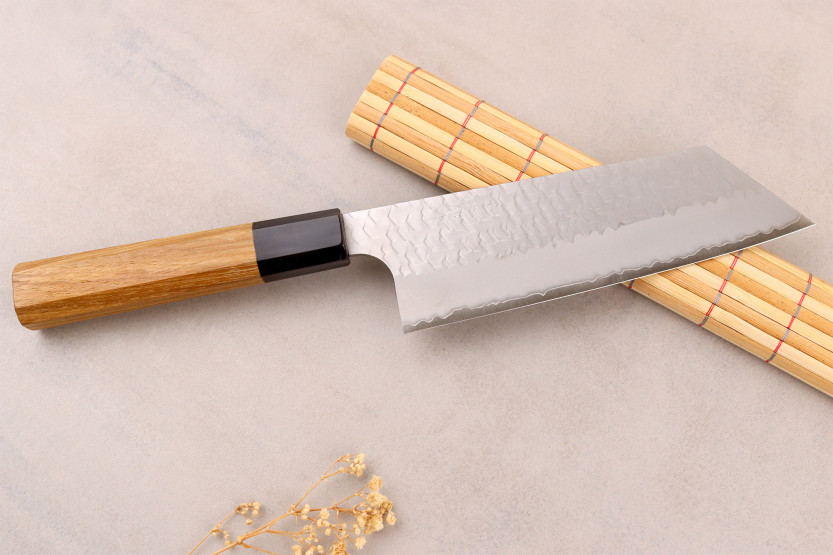
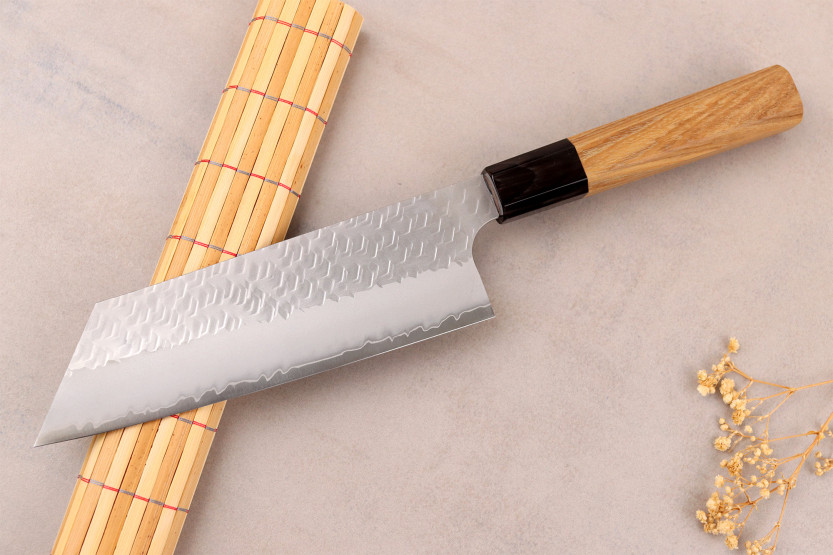
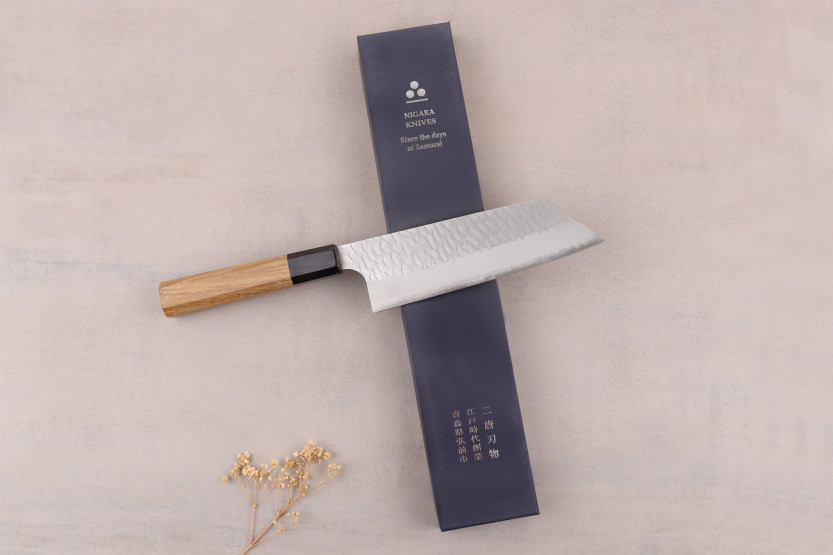
Handcrafted in Hirosaki, Japan, this 17-cm blade combines the kiritsuke profile with the nakiri shape. It is particularly well-suited for preparing vegetables thanks to its straight edge and precise silhouette.
Its San Mai construction consists of three alternating layers of steel. The central core, made of SG2 powder steel, contains a total of approximately 1.3% carbon. This composition results in a fine, long-lasting edge, ideal for clean cuts.
With a hardness of 63 HRC on the Rockwell scale, the edge retains its cutting power for a long time.
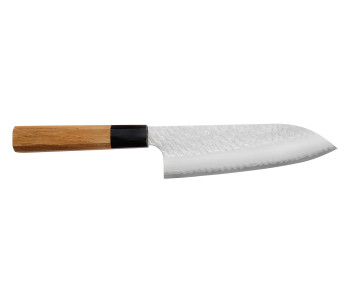
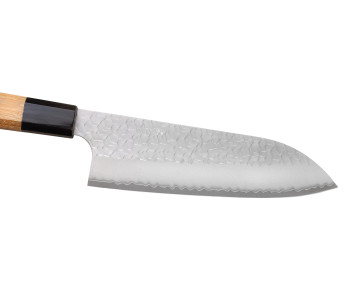
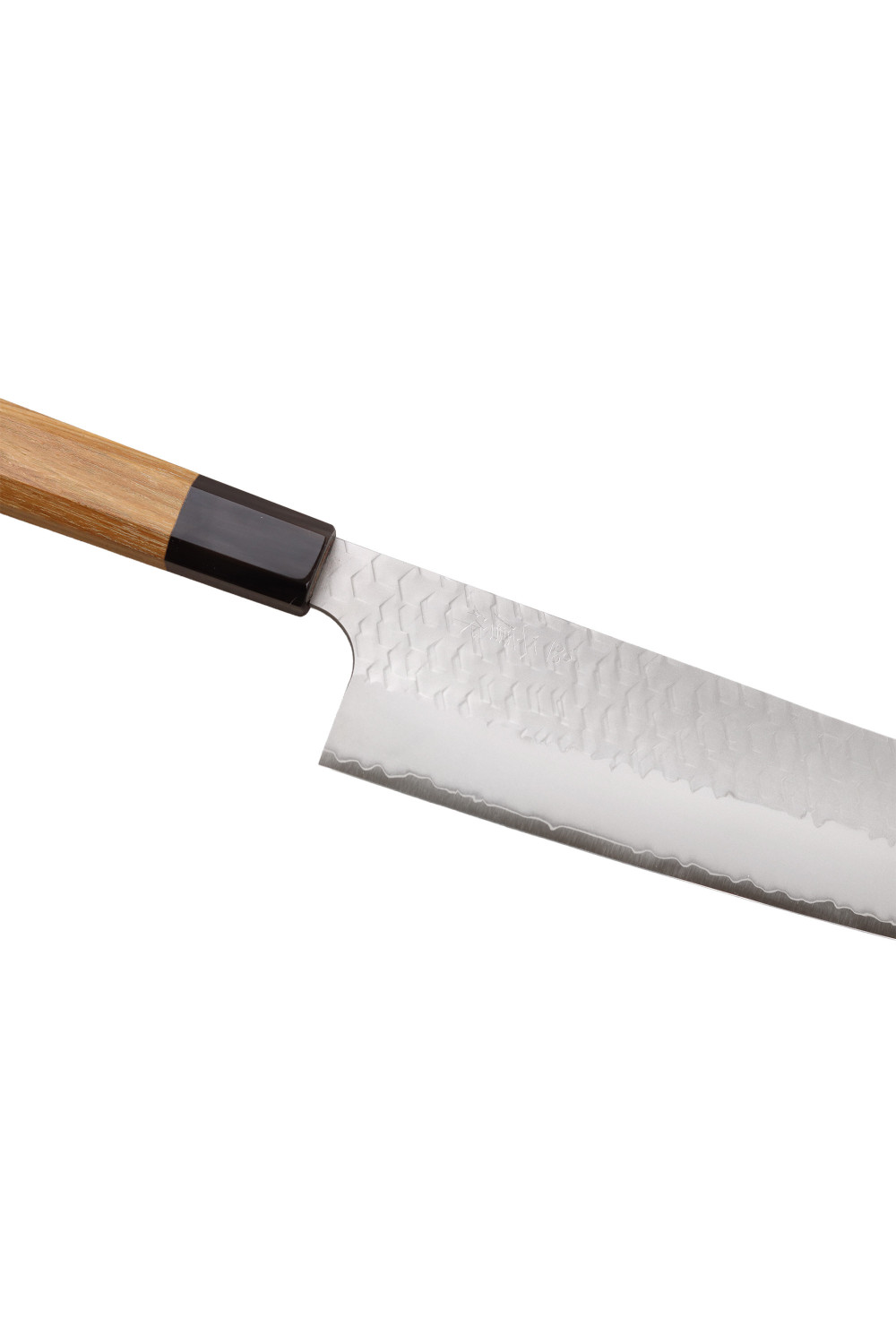
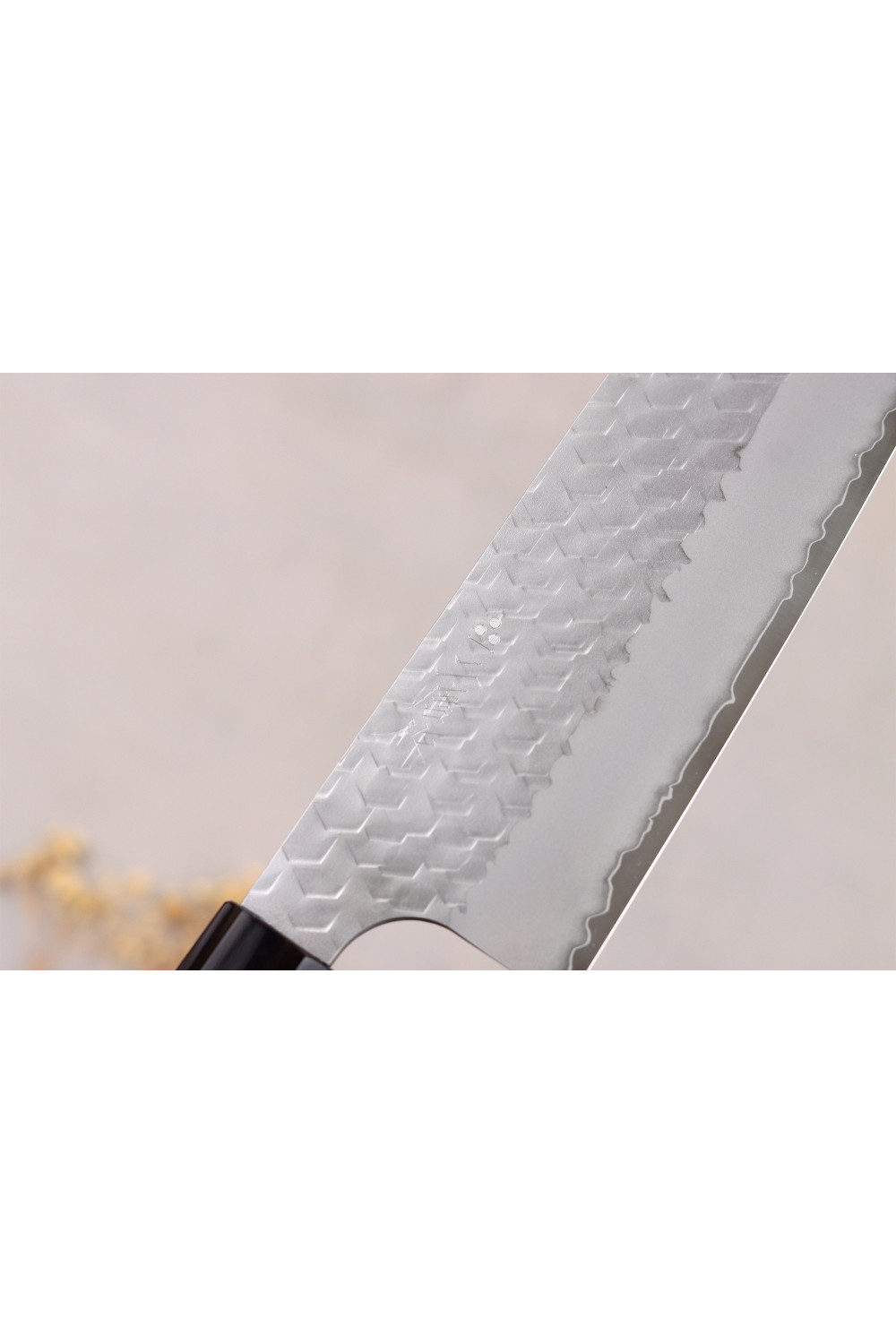
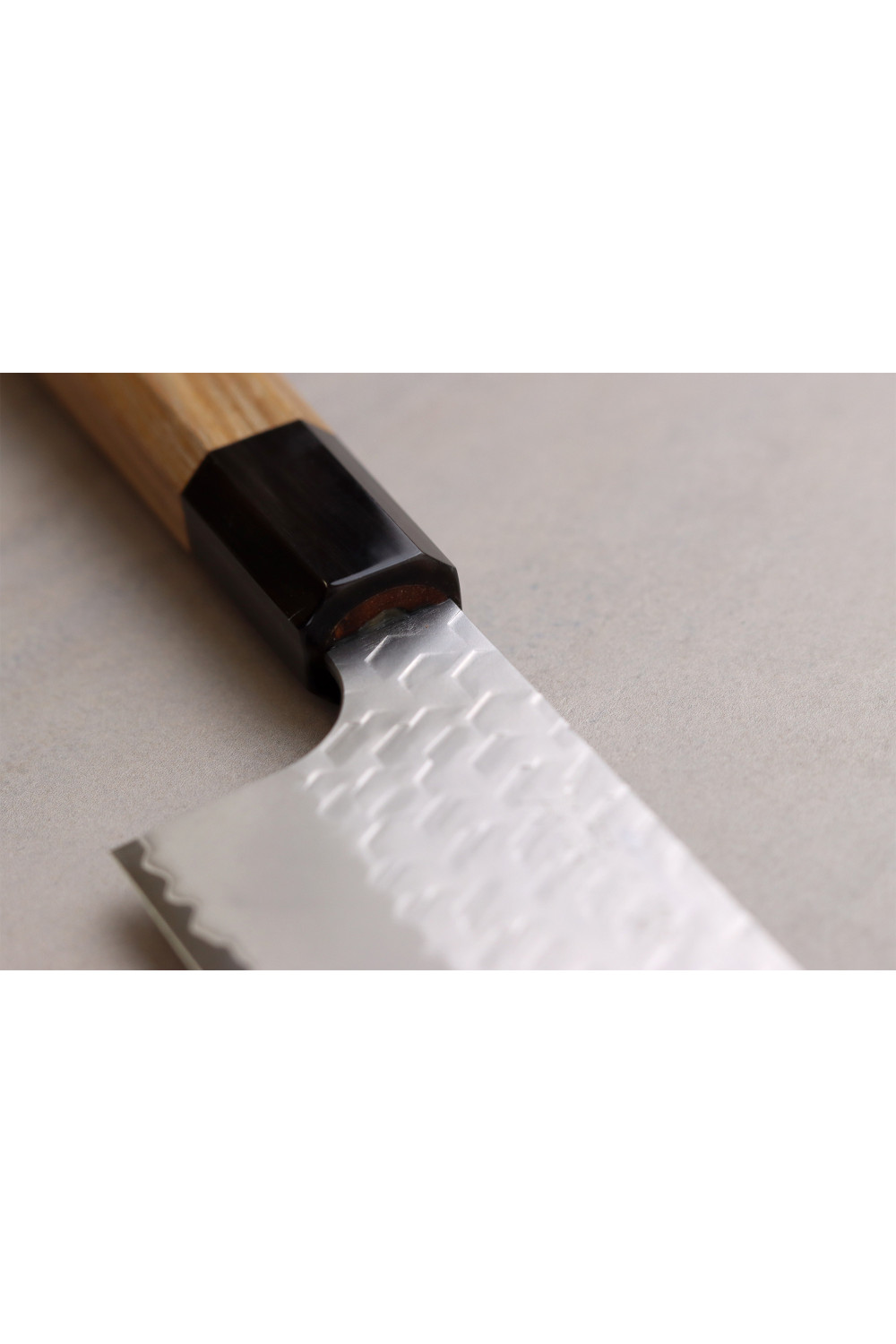
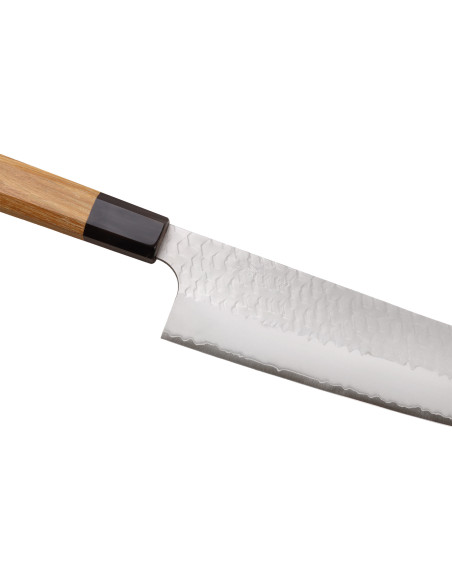
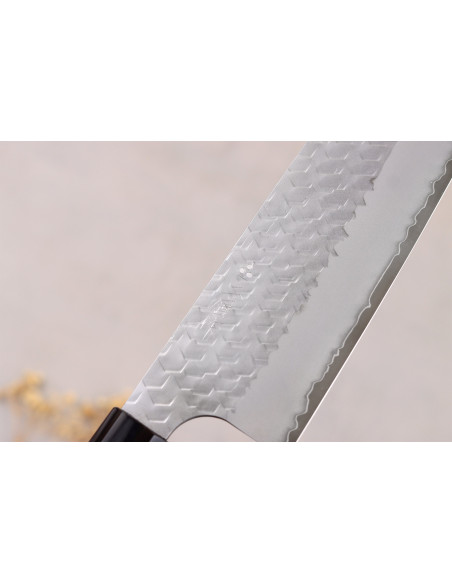
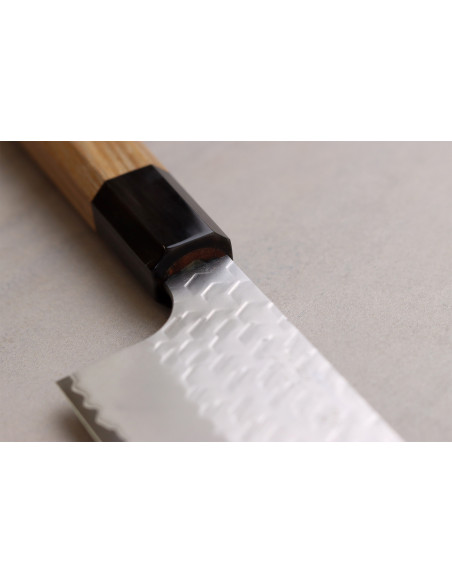
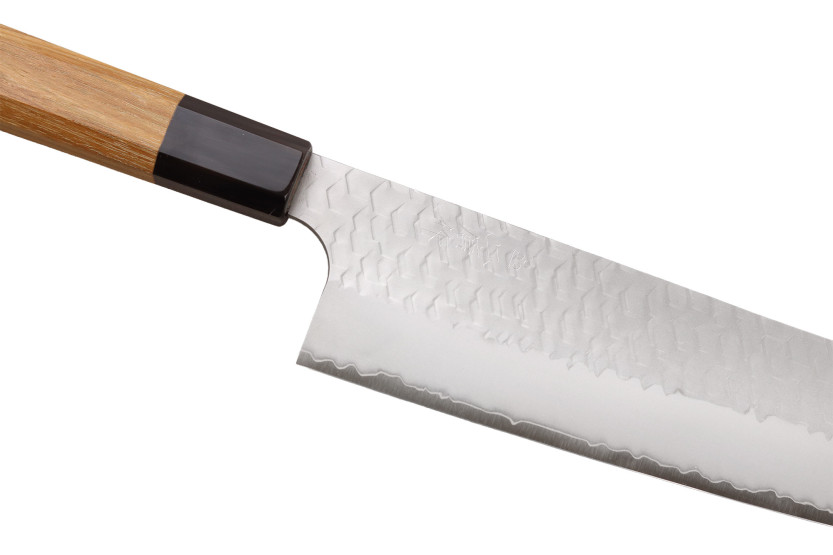
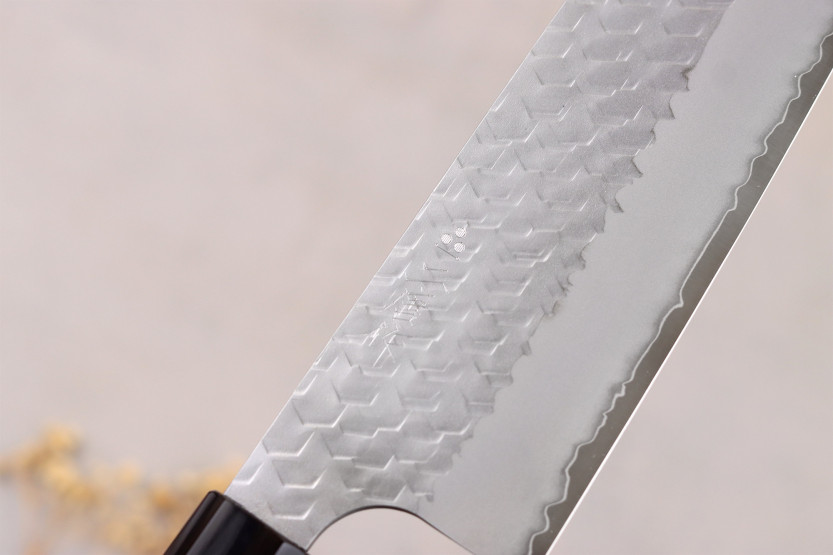
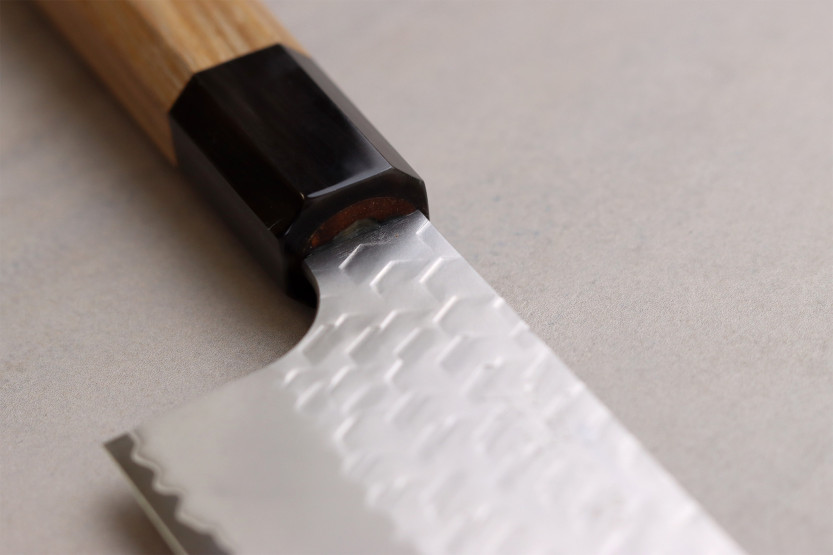
The top layer of stainless steel enhances corrosion resistance along the blade’s edge. Its Tsuchime hammered finish creates a honeycomb-like pattern. These raised patterns give the surface a unique appearance and can help prevent food from sticking during cutting.
A comfortable teak handle suitable for everyone
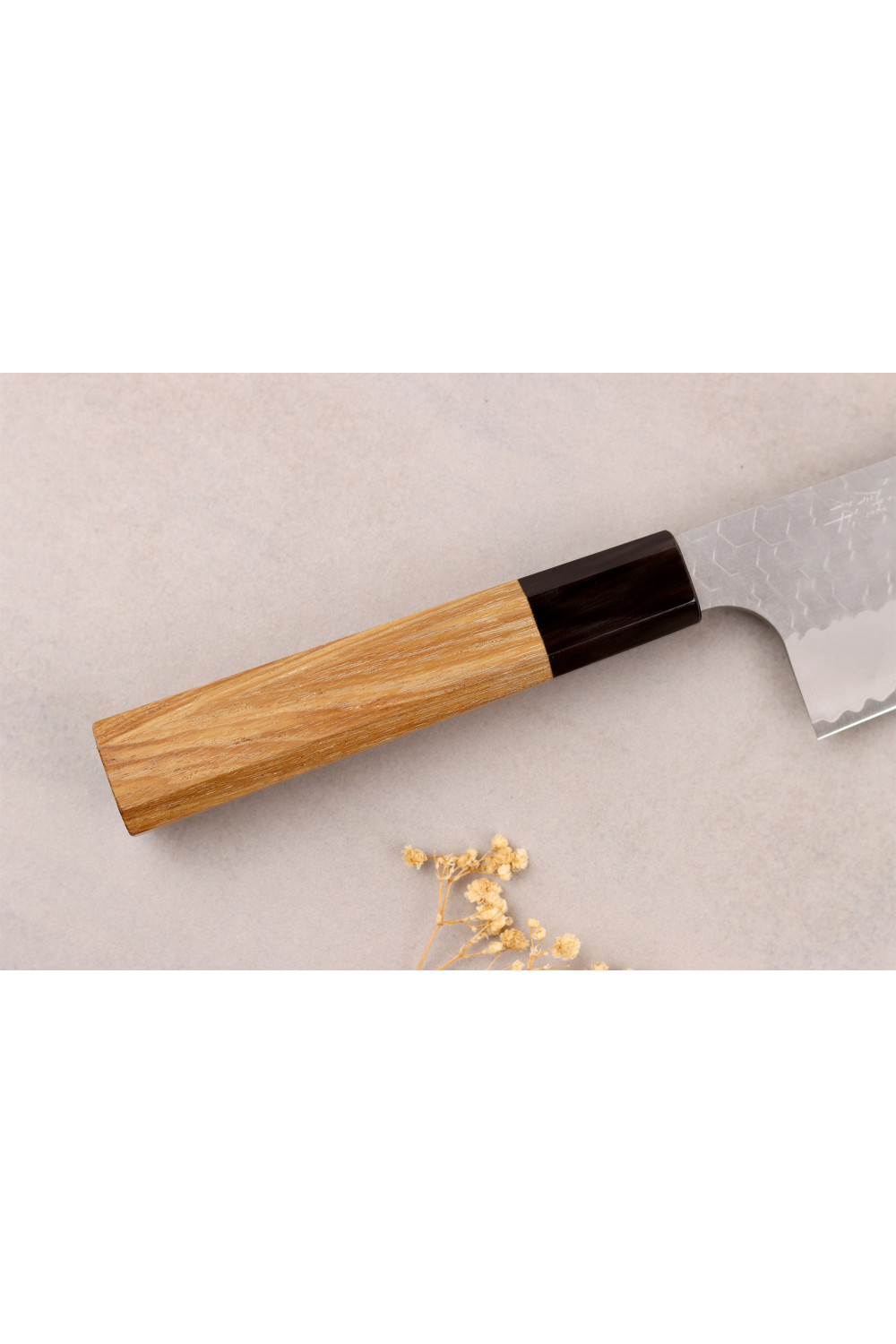
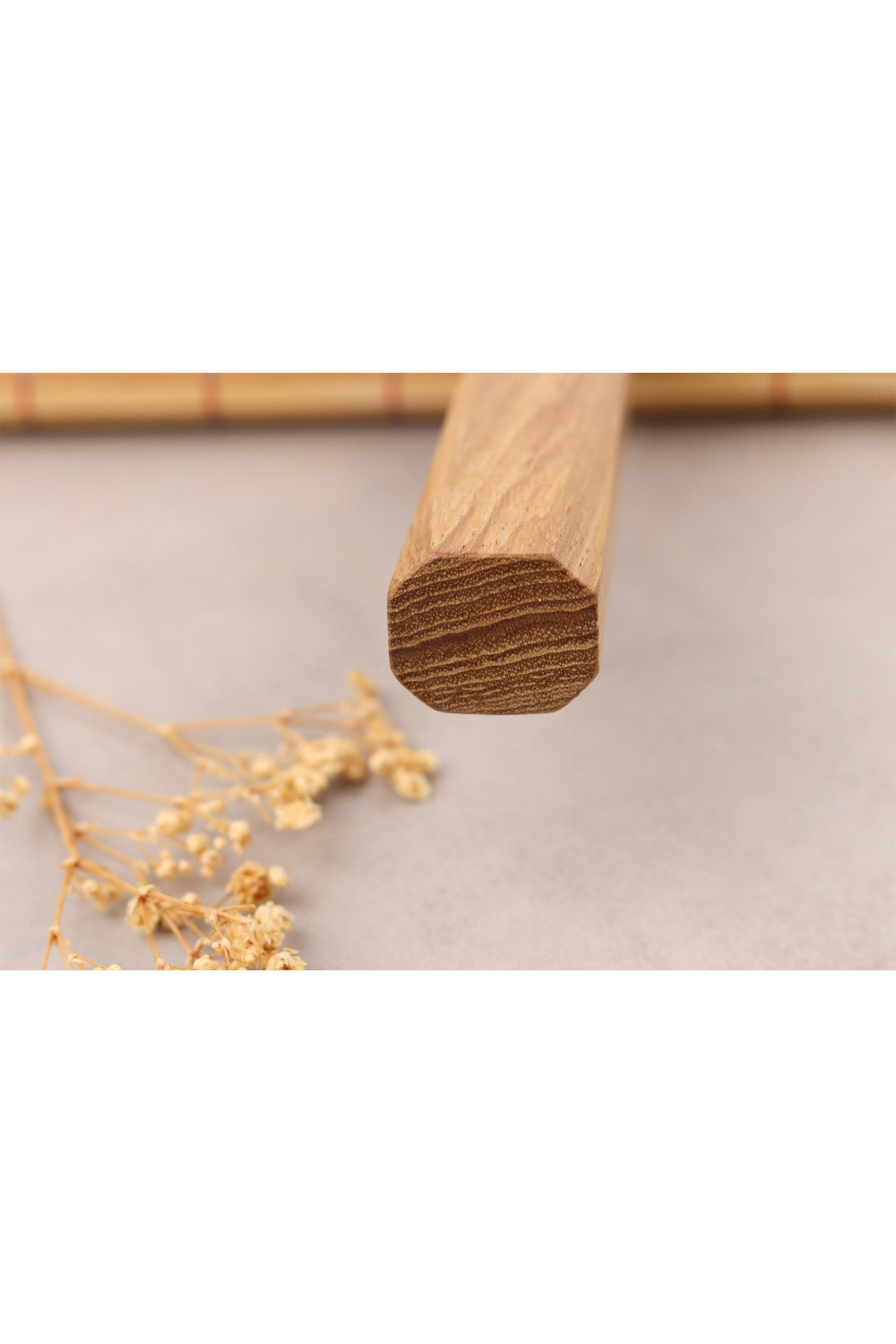
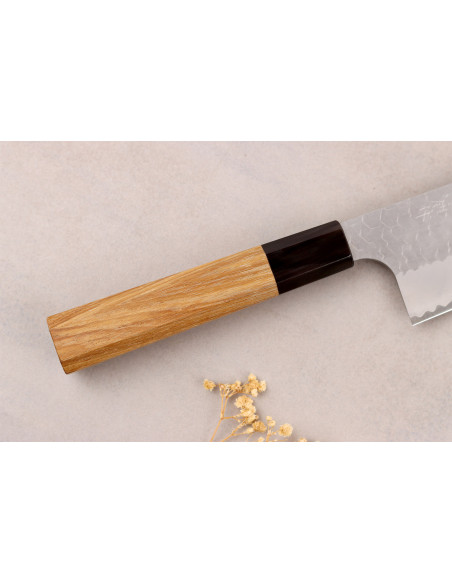
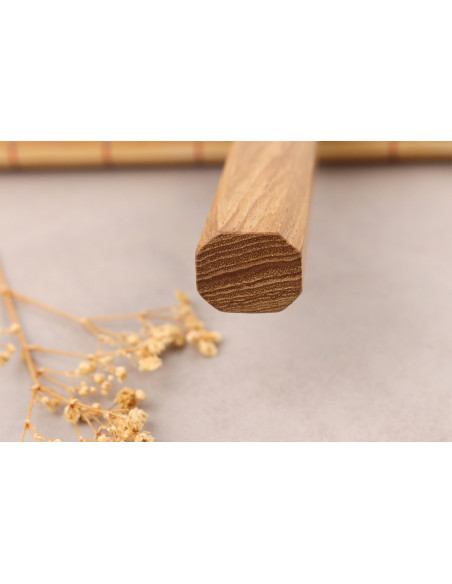
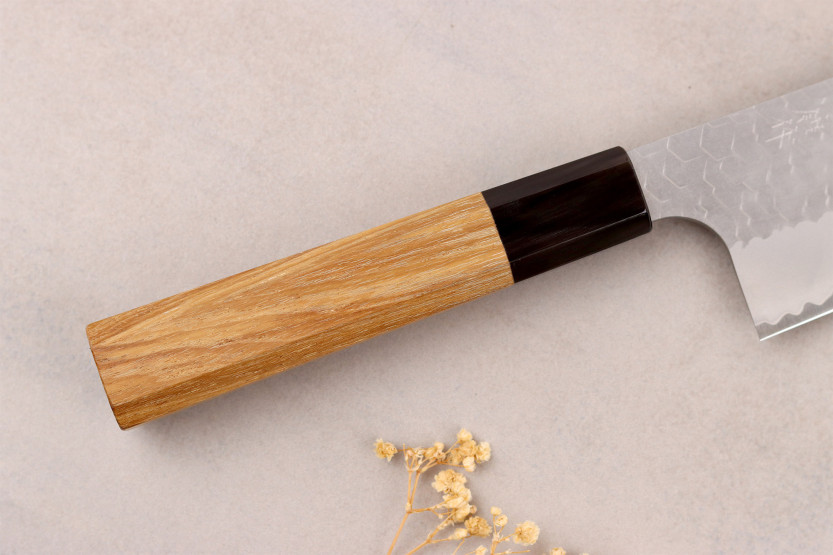
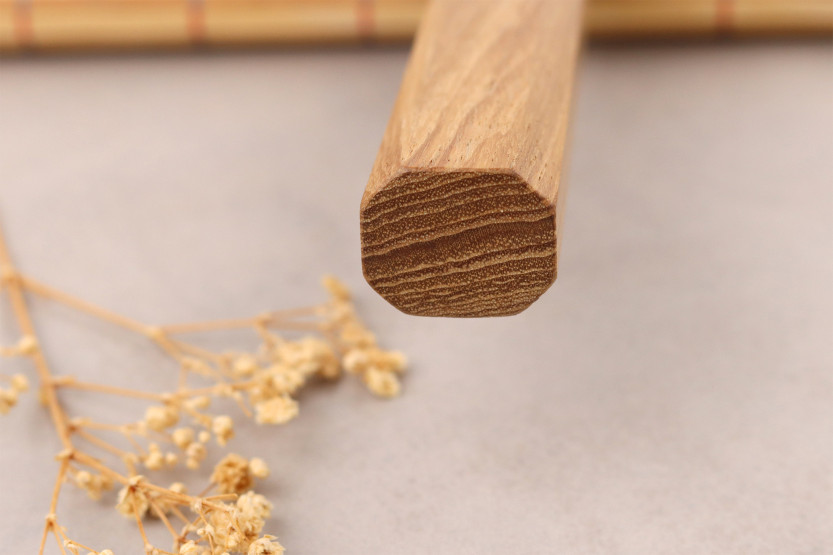
The teak handle feels warm and natural in the hand. This dense wood is highly resistant to moisture, though it requires careful drying after each use.
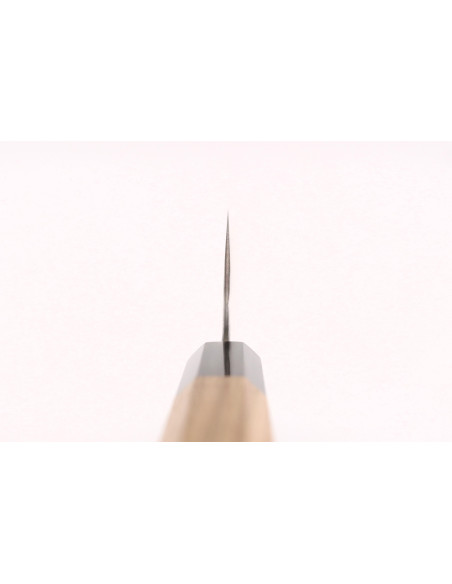
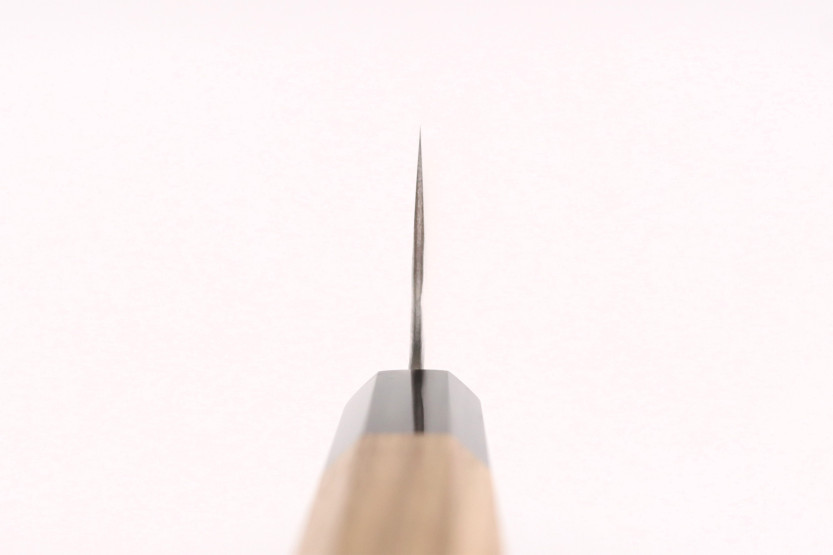
Its octagonal shape features multiple facets that allow your fingers to rest naturally. It promotes a stable grip and is suitable for both right- and left-handed users.
The dark buffalo horn bolster provides an elegant transition between the handle and the blade. Its contrasting color complements the teak and highlights the handcrafted appearance of the knife as a whole.
Key Points to Remember
-
- 17 cm blade: a versatile size for everyday food prep
- San Mai construction: a balanced combination of three layers of steel
-
- SG2 core with approximately 1.3% carbon: a fine, durable edge
- Hardness of 63 HRC: excellent edge retention
- Stainless steel outer layer: enhanced corrosion resistance
- Honeycomb Tsuchime hammering: a textured and distinctive surface
-
- Teak handle: natural and comfortable feel
- Octagonal shape: stable grip for both right- and left-handed users
- Dark buffalo horn bolster: elegant, contrasting finish
- Made in Hirosaki: Japanese artisanal craftsmanship
Usage and Care Instructions
Use this knife on a wooden cutting board or a soft surface. Avoid glass, stone, ceramic, bone, frozen foods, and twisting the knife sideways.
After each use, hand-wash the blade with a soft sponge, then dry it immediately. Do not put it in the dishwasher due to the hardness of the steel, the teak handle, and the buffalo horn bolster. To sharpen the blade, use a whetstone suitable for hard steels, maintaining a consistent angle. Store the blade in a knife block, a protective sheath, or on a magnetic strip.
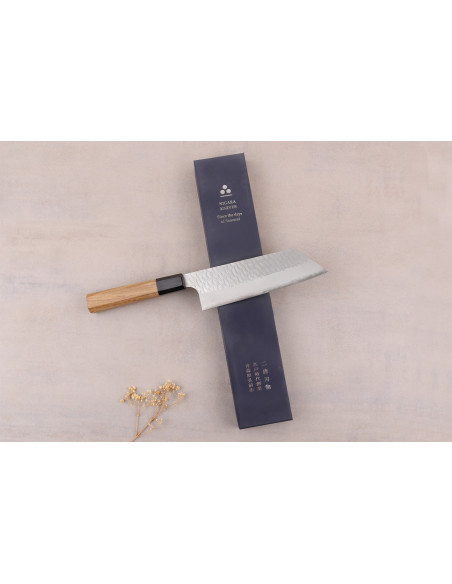
Nigara Hamono, a blacksmith’s workshop located in Hirosaki
Nigara Hamono is located in Hirosaki, in Aomori Prefecture, in northern Japan. The company boasts a family tradition spanning several centuries, with origins rooted in blade work and sword making.
Today, the workshop carries on this craftsmanship through Japanese kitchen knives made with modern steels and featuring various finishes. Its products include polished and hammered blades, as well as those crafted using a variety of metallurgical techniques.
Check out our complete selection of handcrafted Japanese knives!


 By buying this product you can collect up to