An elegant, high-performance blade
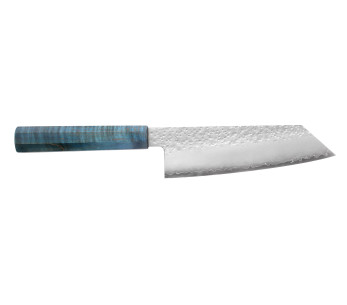
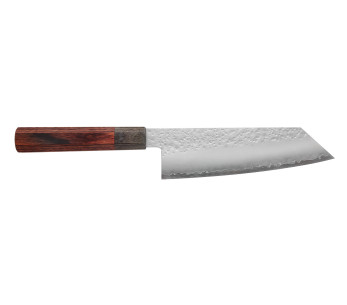
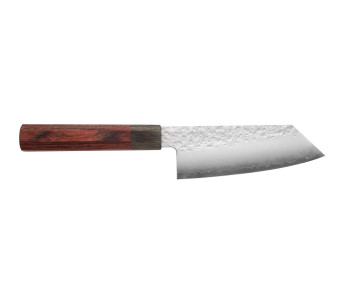
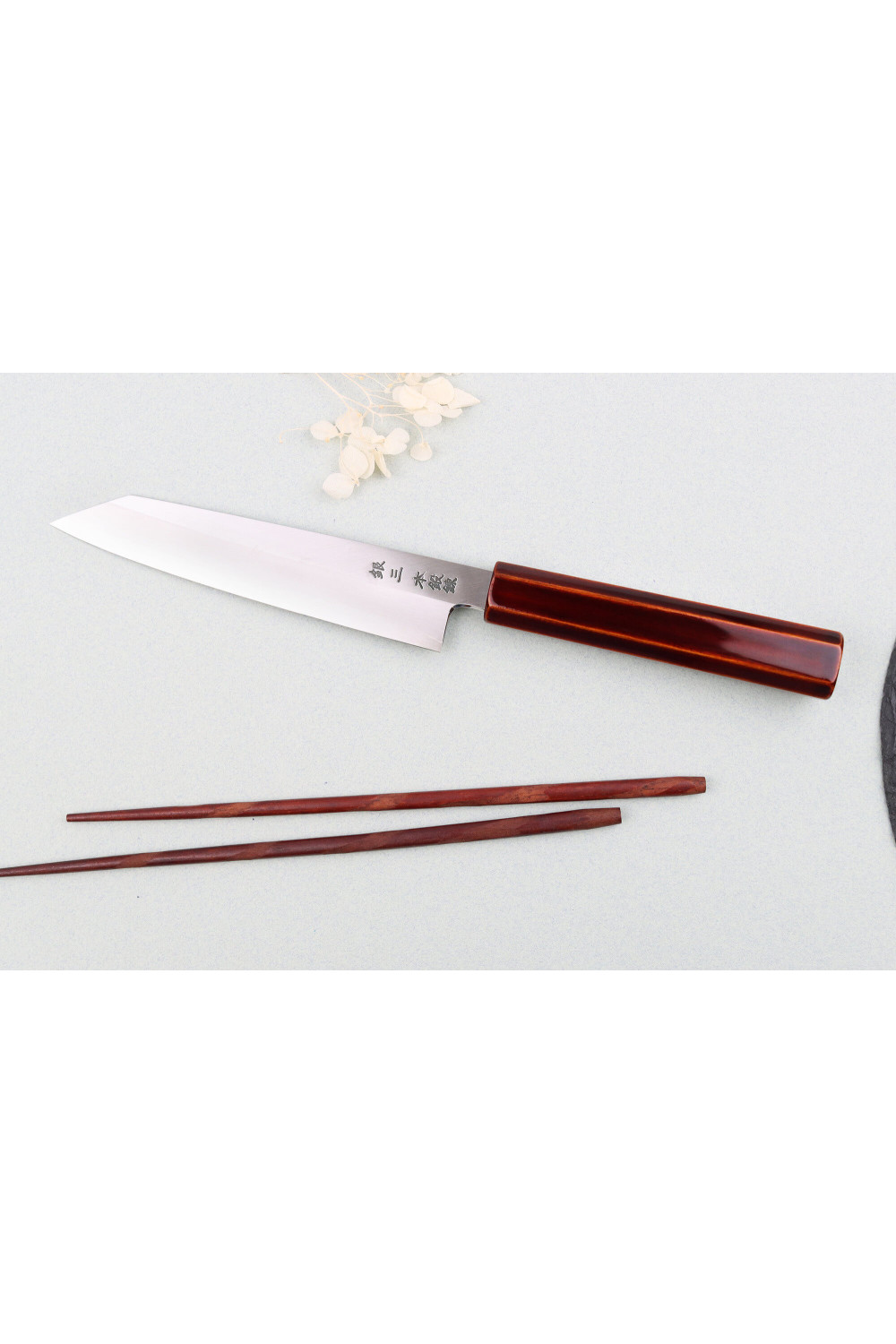
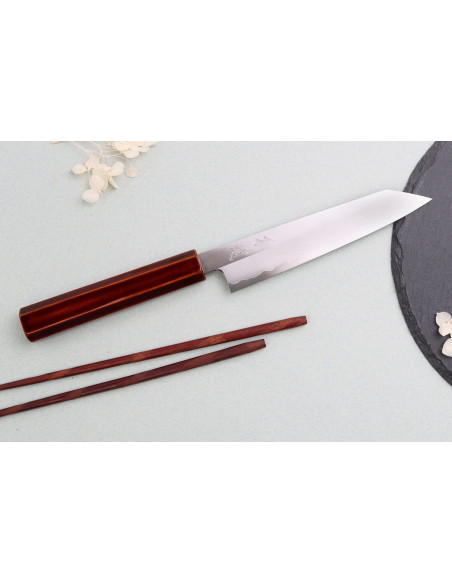
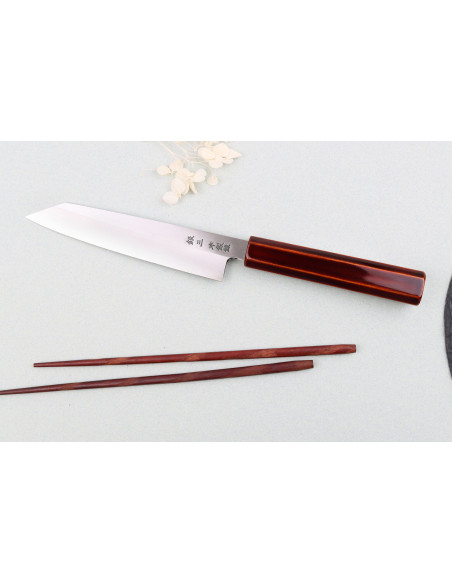
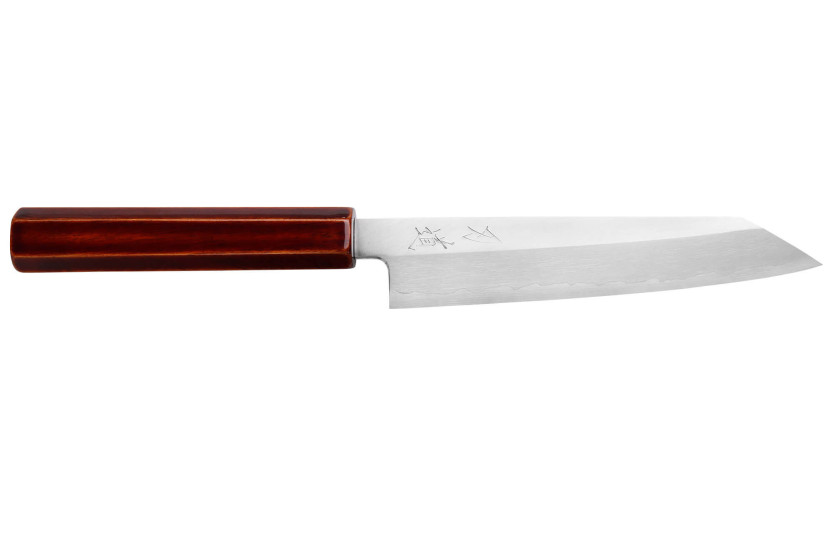
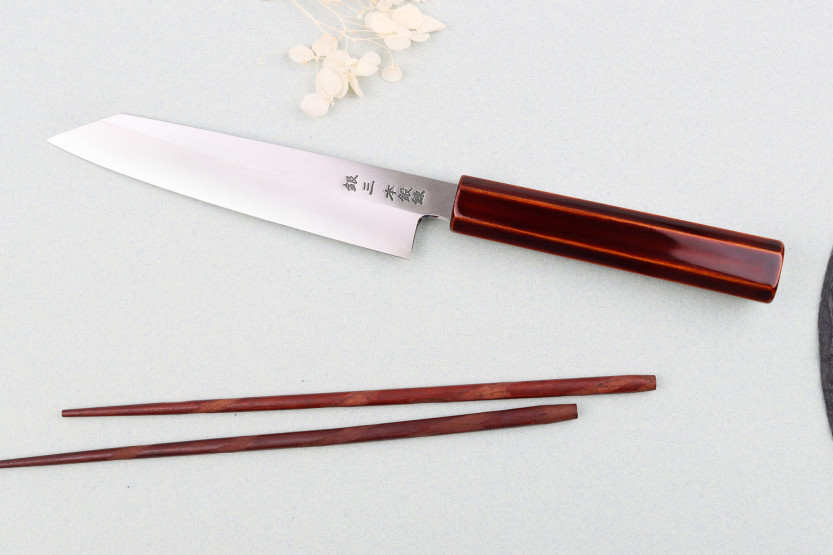
This handcrafted knifefeatures a 15cm blade built according to the San Maï structure, which means "3 layers" in Japanese. This design consists of surrounding a rigid steel core with a layer of softer steel that sandwiches it. In this way, the core is protected and the blade is perfectly balanced.
The core of the blade is made of Japanese Ginsan stainless steel, also known as Silver 3 or G3. This steel contains around 0.95% carbon, giving it increased hardness and rigidity, enabling the blade to maintain a long-lasting edge. It also contains around 13.5% chromium for good corrosion resistance. The knife achieves a hardness of 59/60 HRC, ensuring an easy-to-maintain blade that will require simple stone sharpening when the need arises.
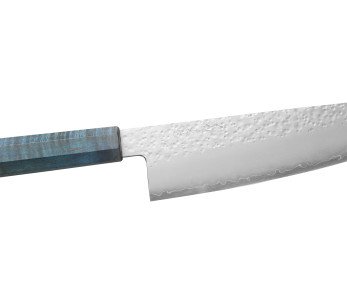
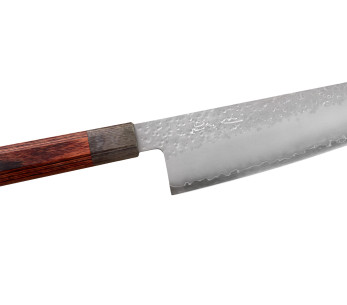
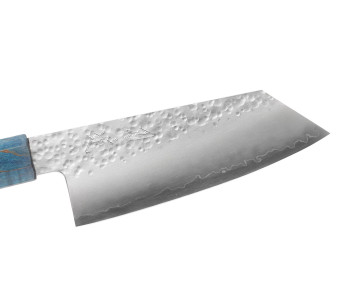
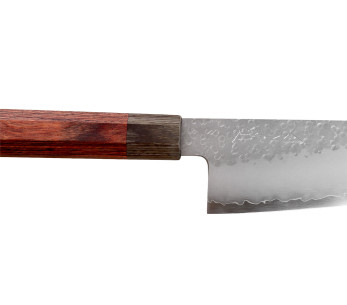
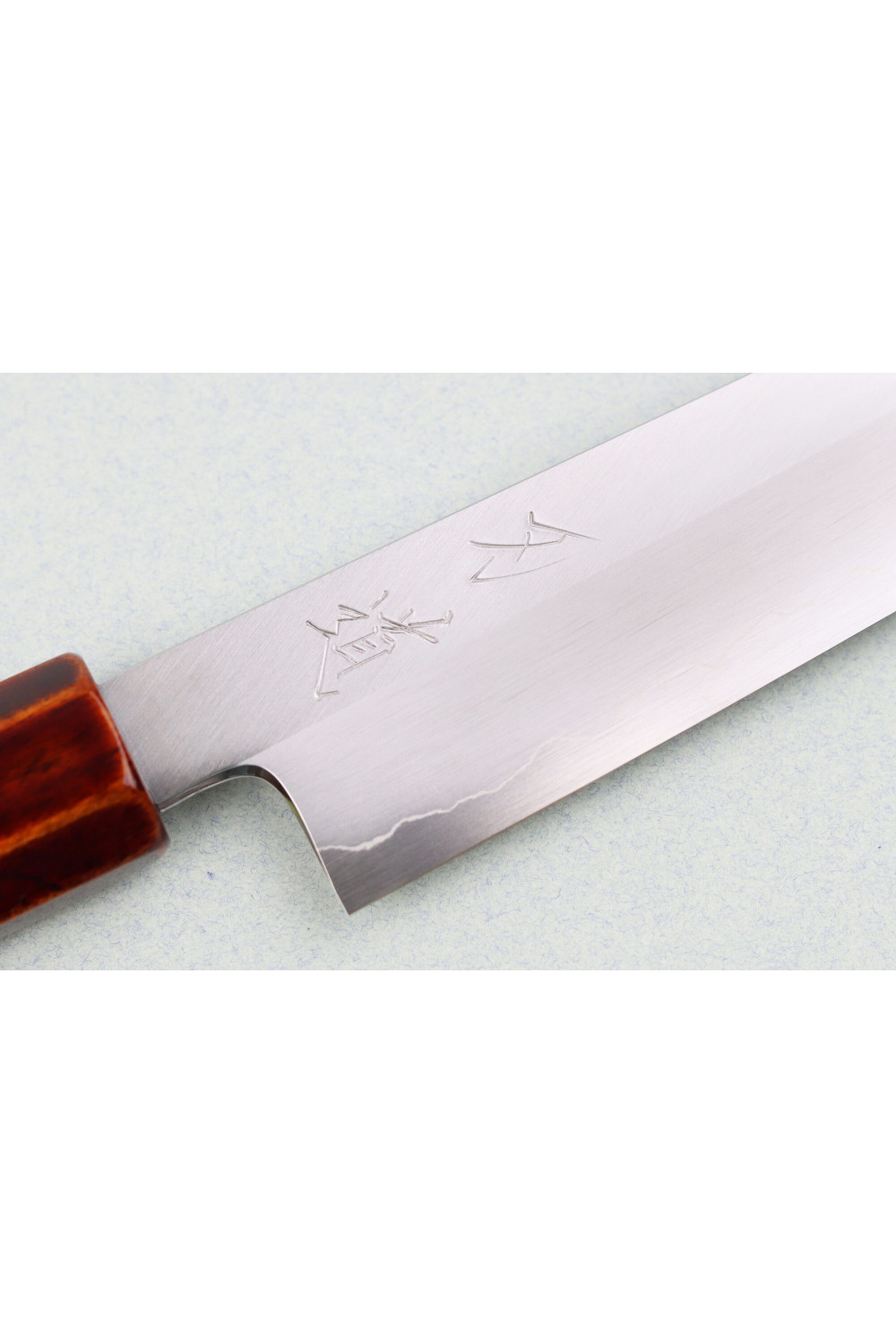
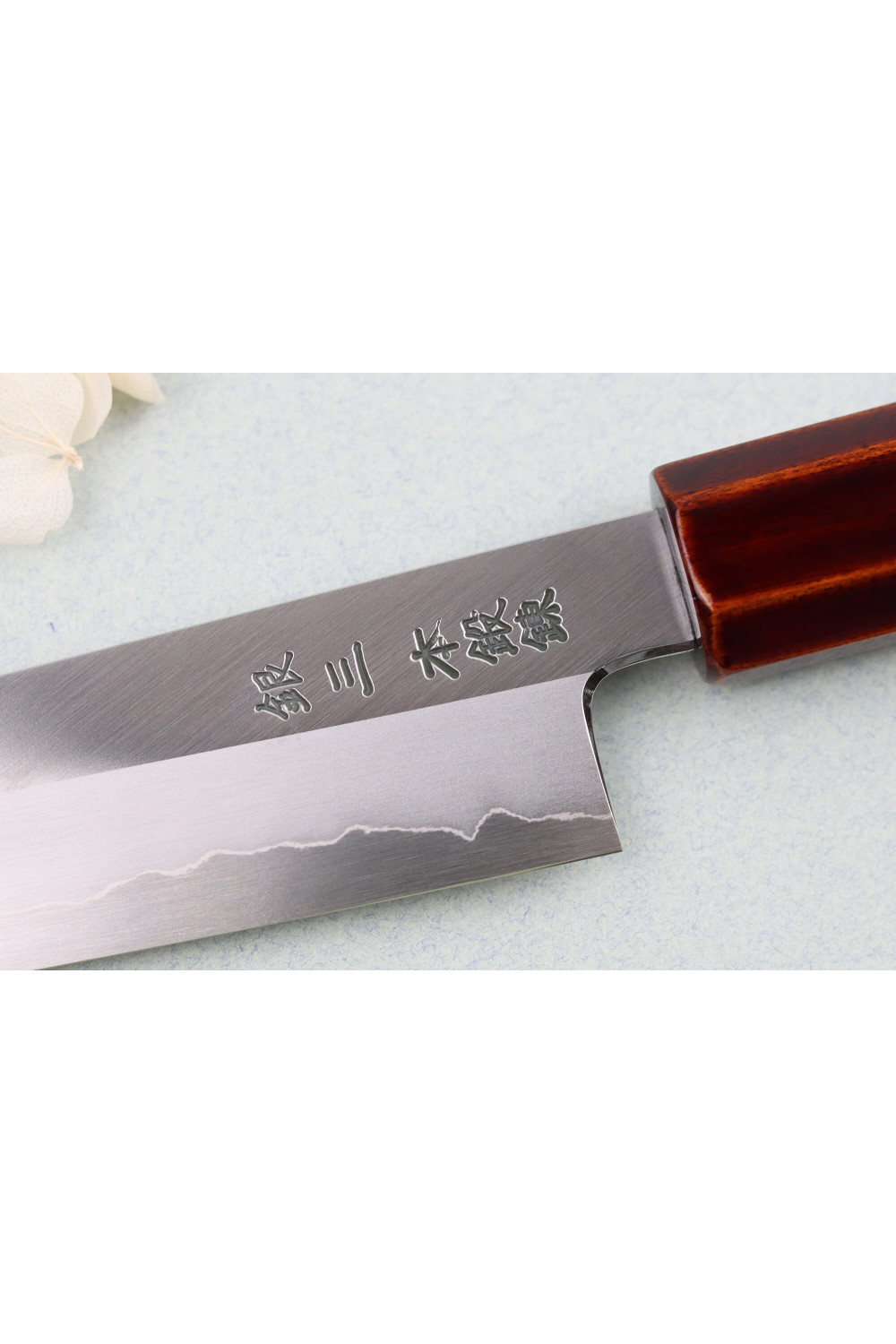
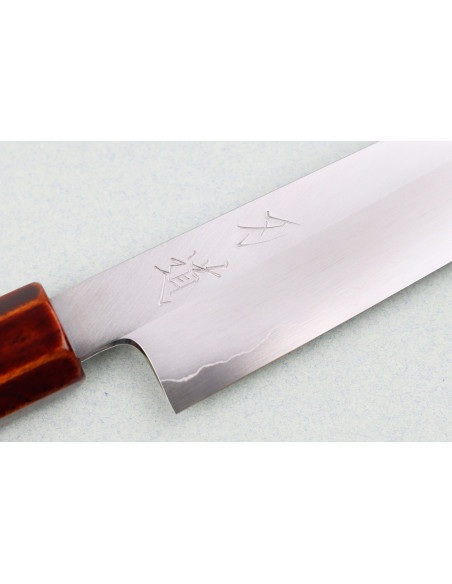
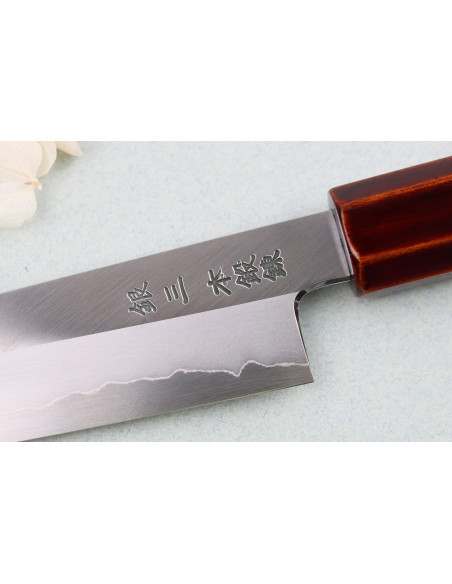
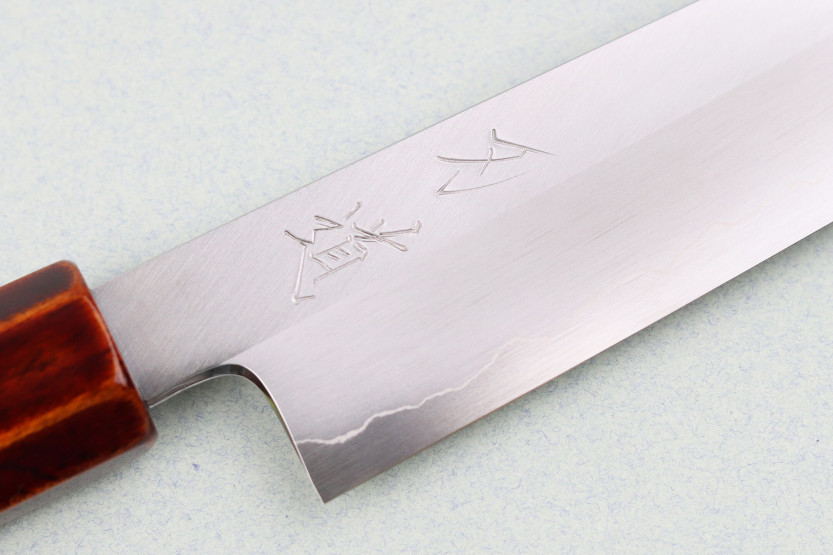
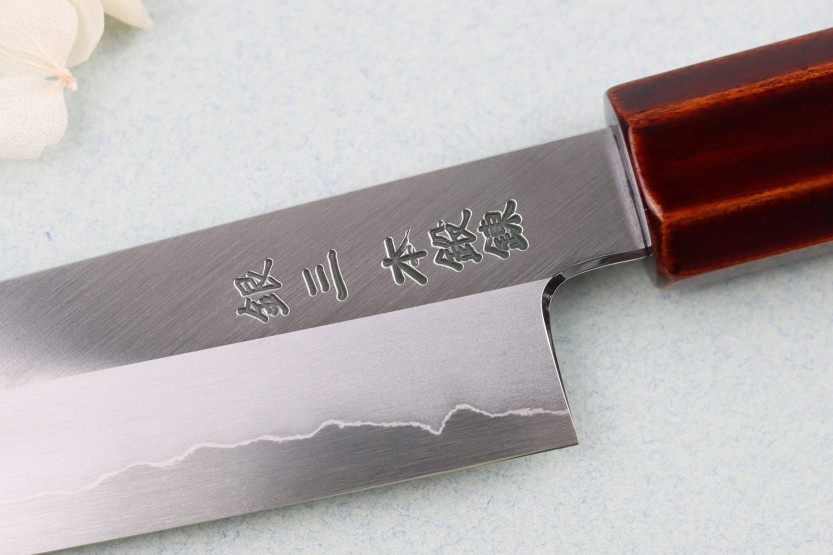
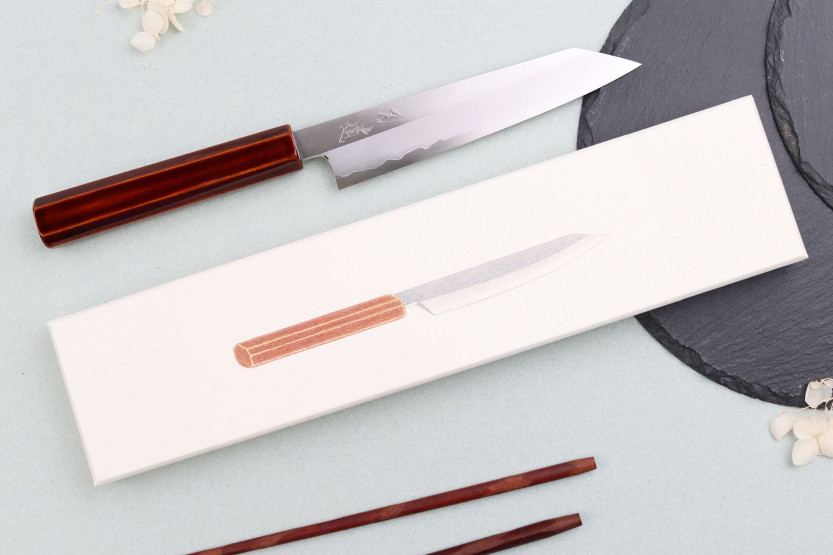
A layer ofsofter stainless steel covers the core of each, forming the three layers characteristic of San Maï. The Ginsan steel core is therefore well protected, while possessing a certain flexibility, in the sense that it is more resistant to impact and breakage during cutting. You can see the alternating layers of steel along the cutting edge: a random wavy pattern gives the knife a unique appearance.
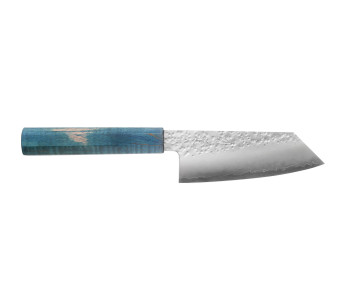
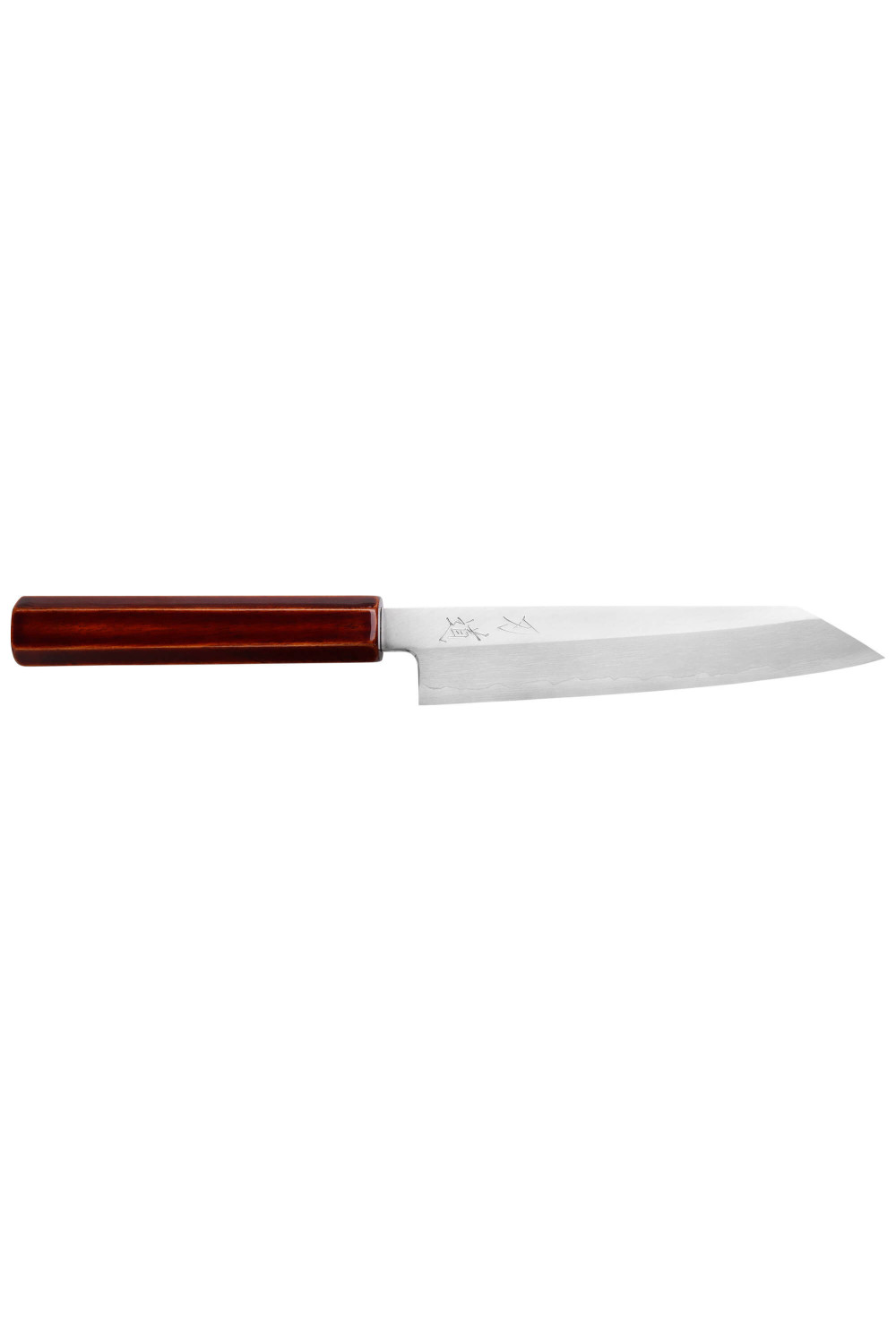
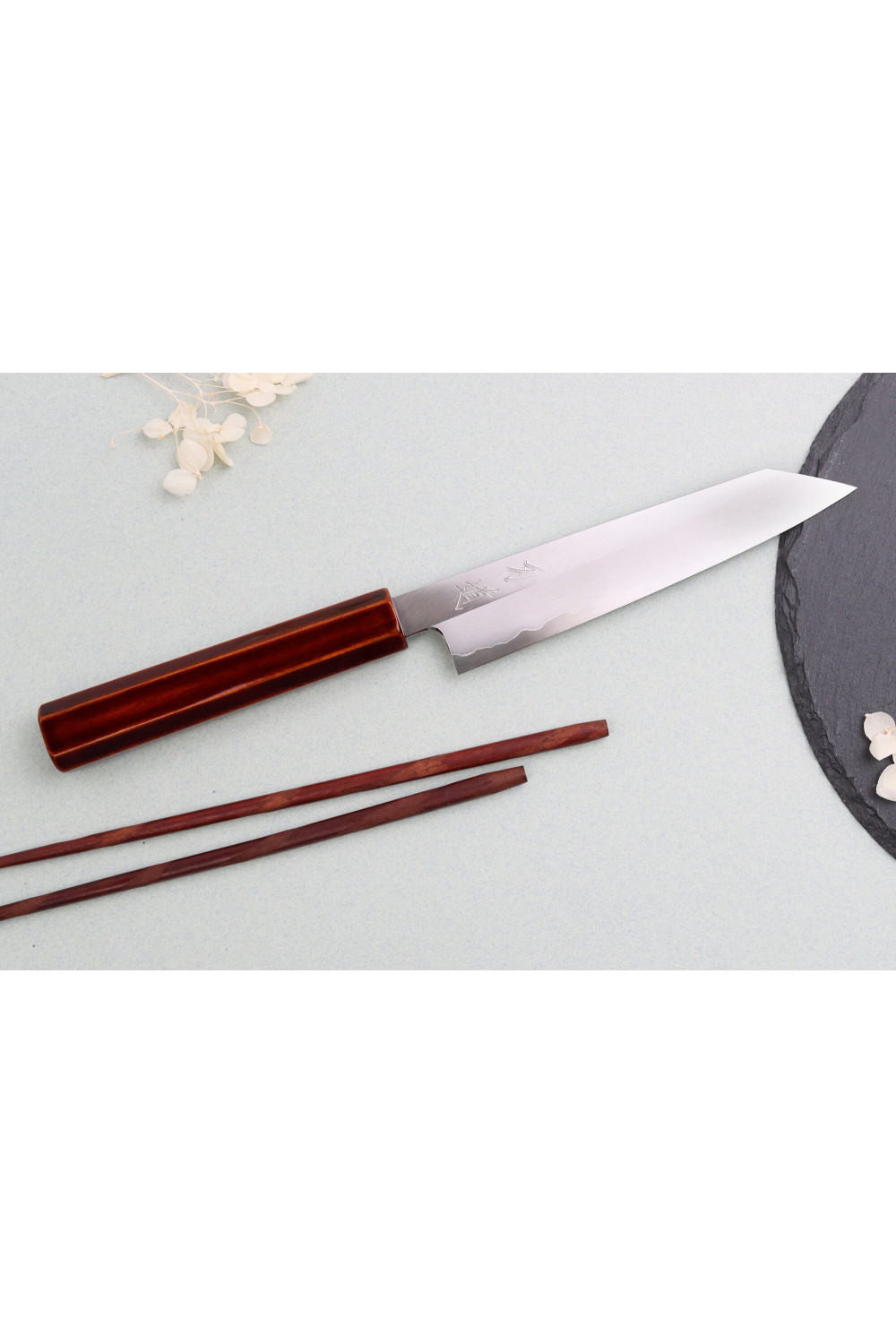
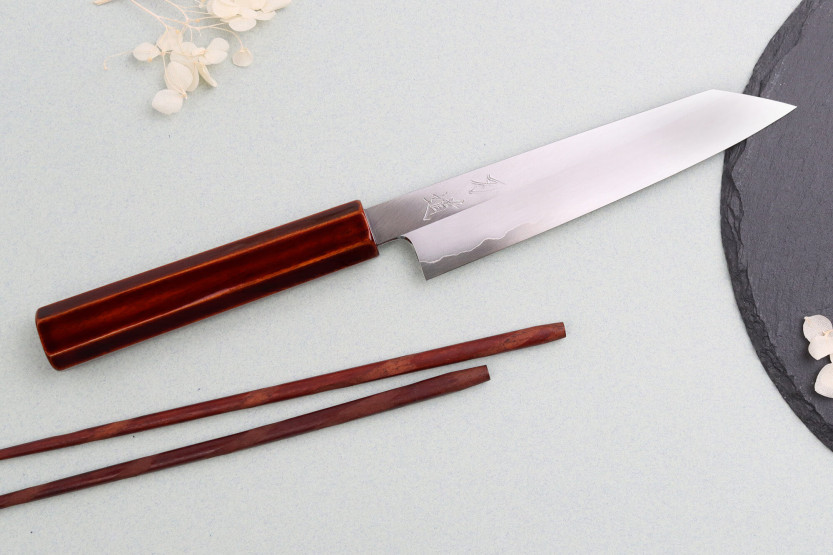
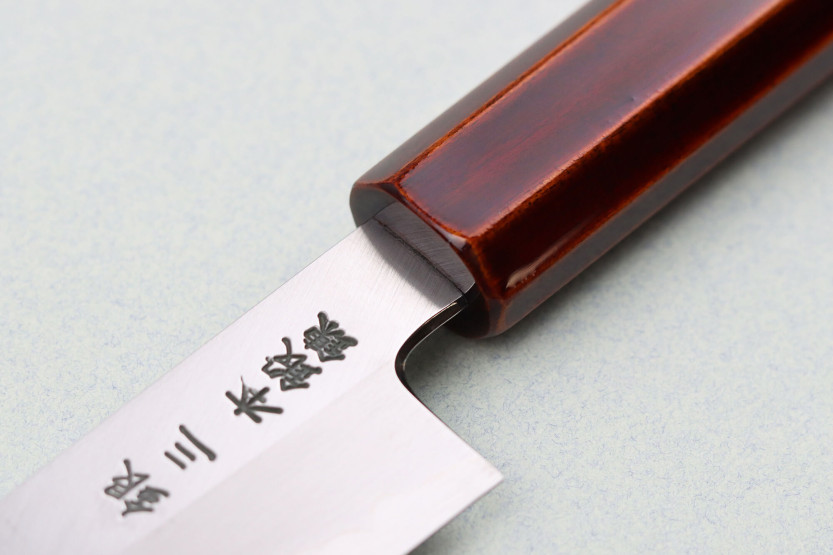
Finally, the blade has a kiritsuke point specially designed to penetrate food easily. It has been polished and engraved with delicate kanji. This gives it an impeccable finish and reinforces its authenticity.
The superb lacquered cherry wood handle
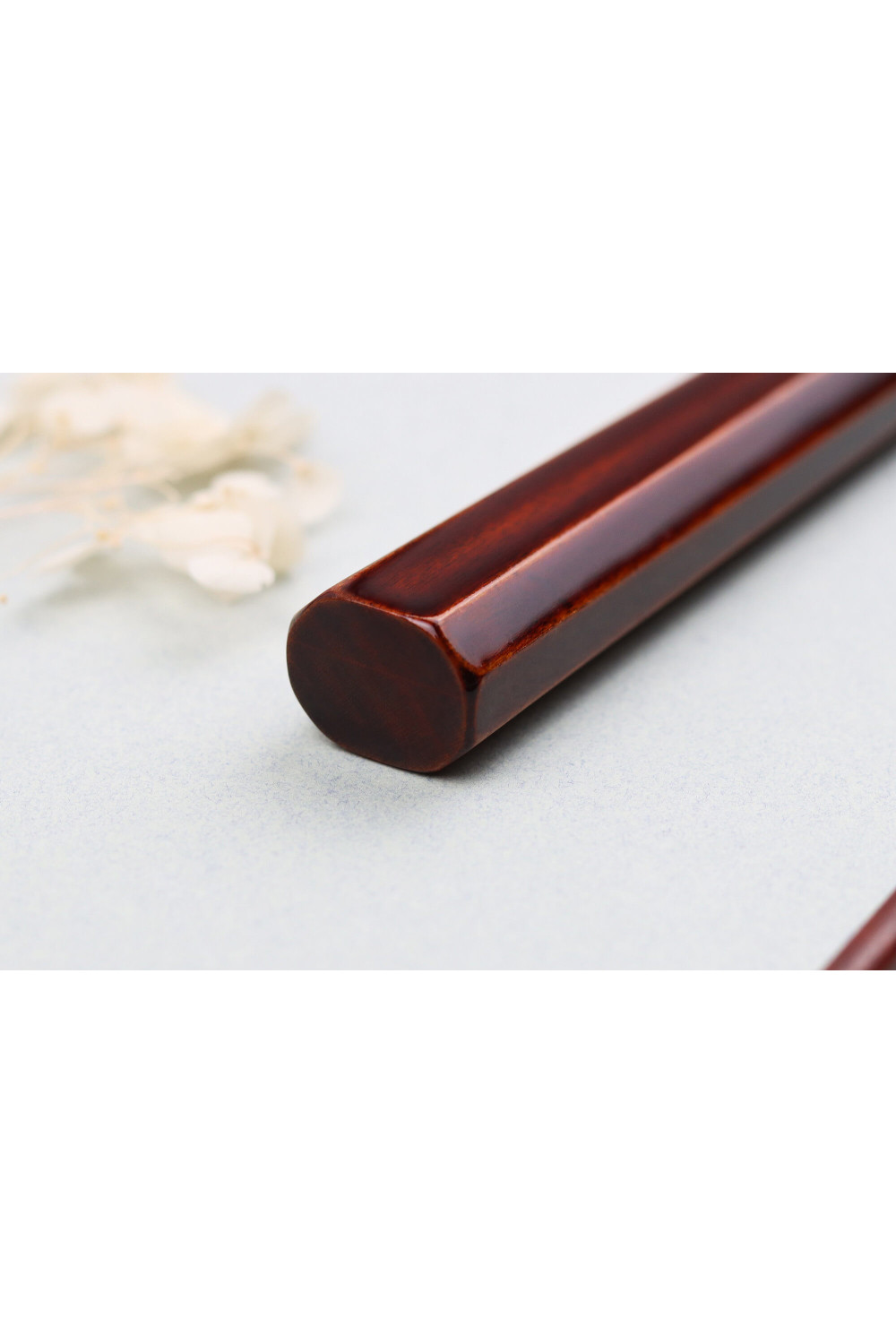
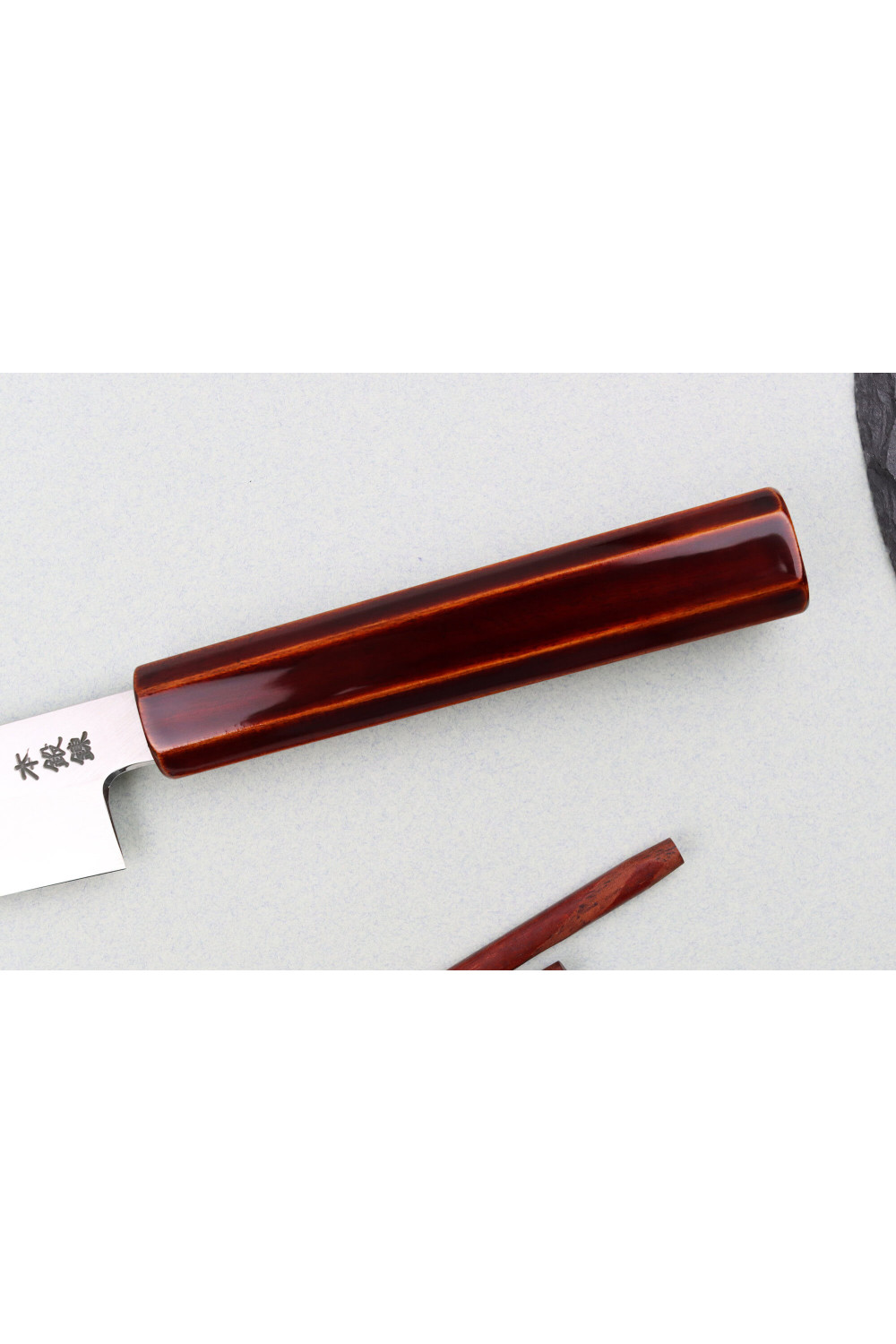
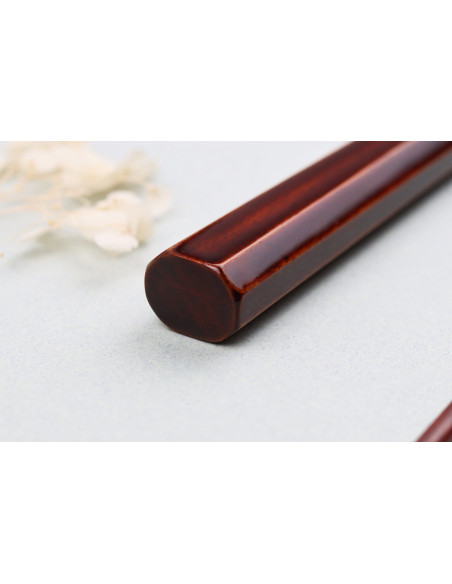
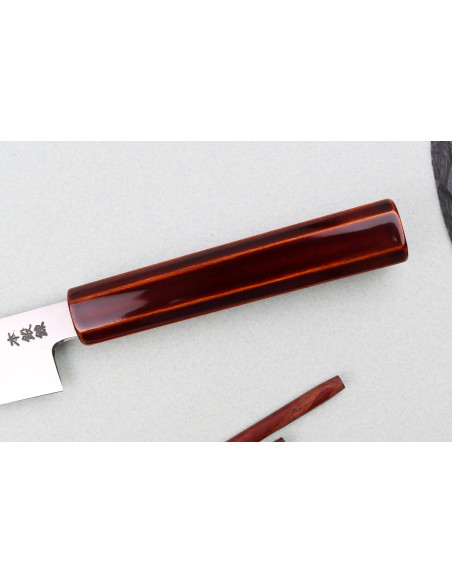
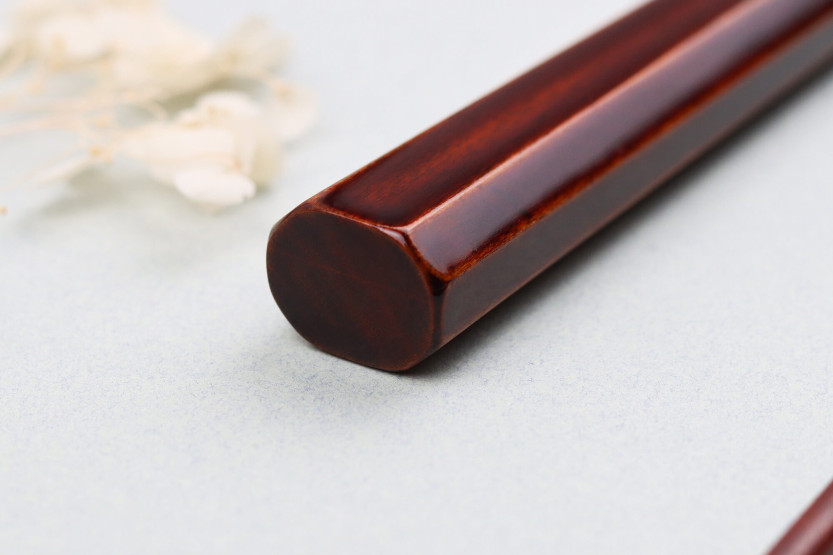
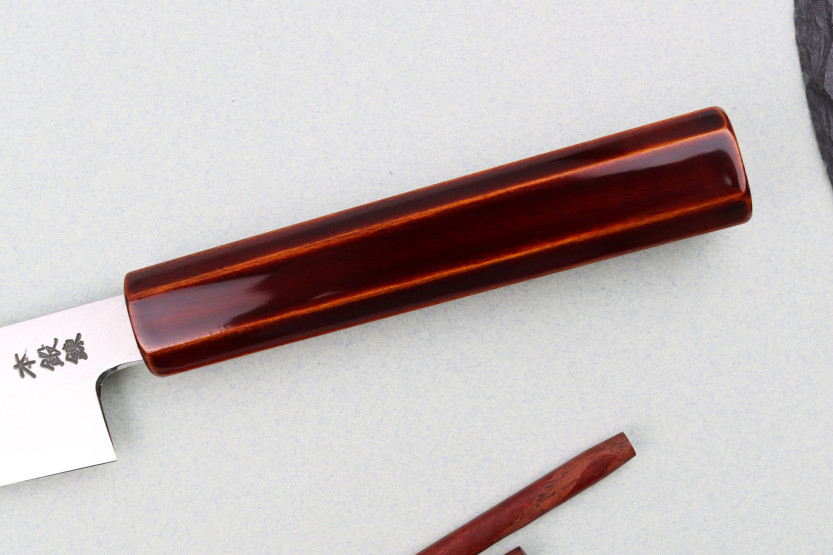
This all-purpose knife features an octagonal-shaped handle that's equally suited to left- and right-handed cooks. It's a shape that hugs the palm of your hand perfectly, ensuring ease of handling and comfort, even when you're cutting a lot of food.
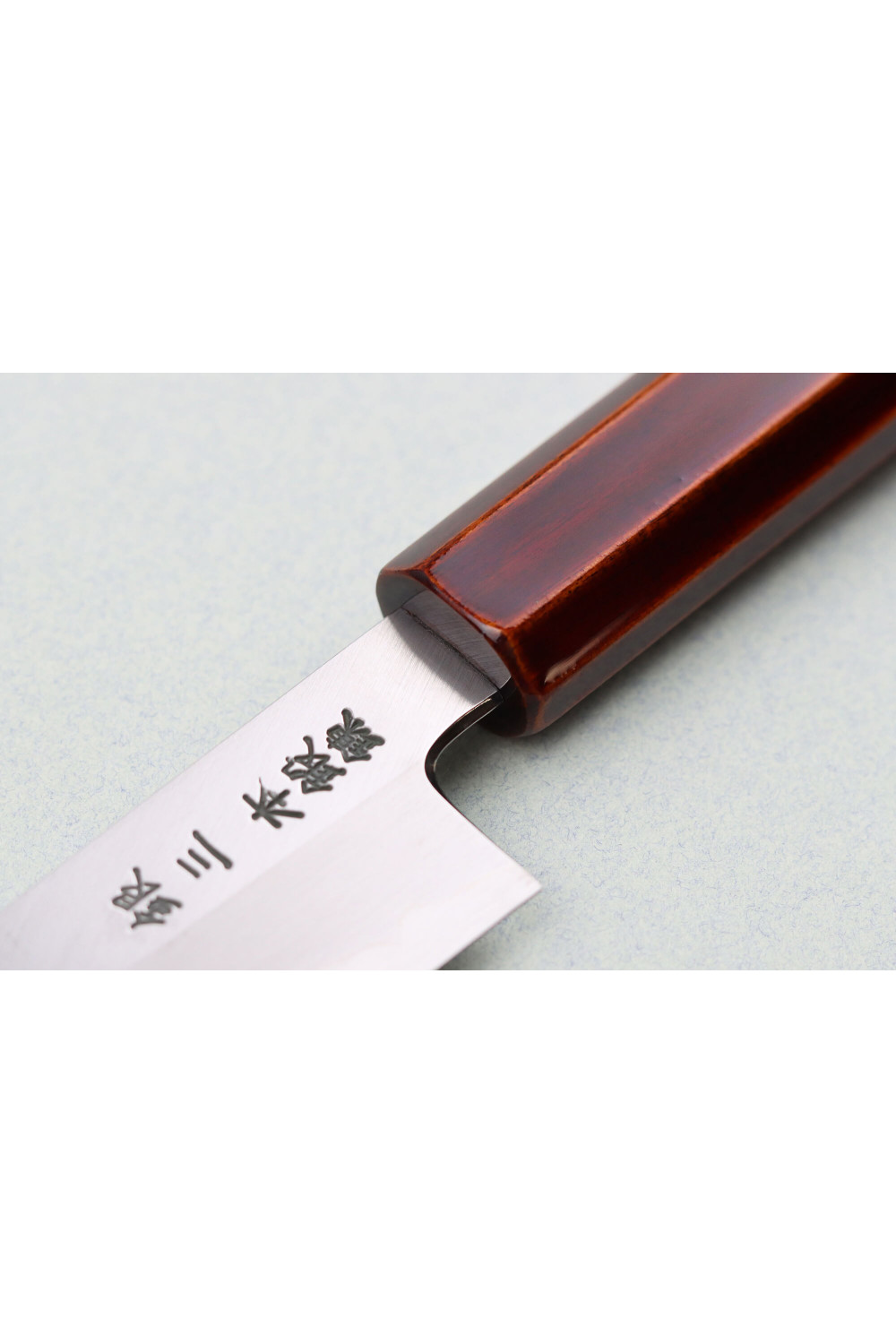
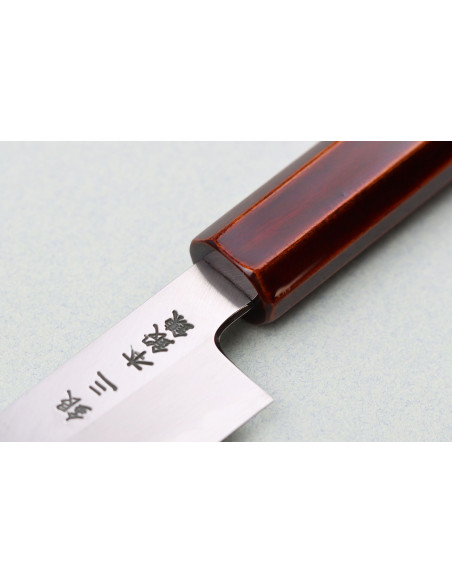
The handle is made from cherry wood, a sacred species in Japan: it symbolizes beauty, life and ephemeral nature. This medium-hard wood is both strong and light, guaranteeing long-lasting durability. Cherry is a naturally light-colored wood, which is here coated with a traditional Urushi Kijiro lacquer. The lacquer gives the wood a high-gloss brown hue and a smooth feel, while protecting it at the same time.
Finally, your knife is perfectly watertight thanks to the addition of wood paste that fills the spaces where the blade fits into the handle. This prevents food particles and water from getting inside the knife.
The highly skilled craftsmen of the Hado workshop
The creation of theHado artisan workshop in Sakai was the result of collaboration between Ryuichiro Fukui, president of the Sakai Fukui company, and Tadataka Maruyama, its sales manager. Tadataka had long aspired to become a craftsman, and his ambition dovetailed perfectly with Ryuichiro's desire to revive handcrafted knife production. Indeed, Sakai Fukui was mainly focused on industrial production. Ryuichiro Fukui therefore offered Tadataka Maruyama the opportunity to train, while he prepared to open an in-house craft workshop. In spring 2019, after completing his 3-year intensive training, Tadataka was ready and the Hado workshop was able to open its doors.
Hado (刃道) is a term that means "the road of blades" in Japanese, and was chosen to name the workshop because of its profound meaning. It embodies the craftsmen's aspiration to achieve excellence in knife-making, working hard every day to perfect themselves. They put all their soul, their tamashi (魂), into creating exceptional knives with outstanding cutting performance.
This Japanese knife was forged by Shogo Yamatsuka, a Sakai blacksmith who inherited the skills of his father, also a blacksmith. He taught him all the secrets of Ginsan steel, and Shogo is now an expert in this alloy. He is the only blacksmith to master hot forging, due to its complex handling. After 30 years of work enabling him to master the art of forging, called Hizukuri (檜作), he has been honored with the title of Traditional Master Craftsman by Japan's Ministry of Economy, Trade and Industry. Tadataka Maruyama, the workshop's head sharpener, then sharpened the knife with his expert hands, giving it exceptional cutting quality and optimum performance with every use.
 Hado dans leur atelier" width="745" height="230" />
Left: Shogo Yamatsuka / right: Tadataka Maruyama
How do I care for my handcrafted Japanese knife?
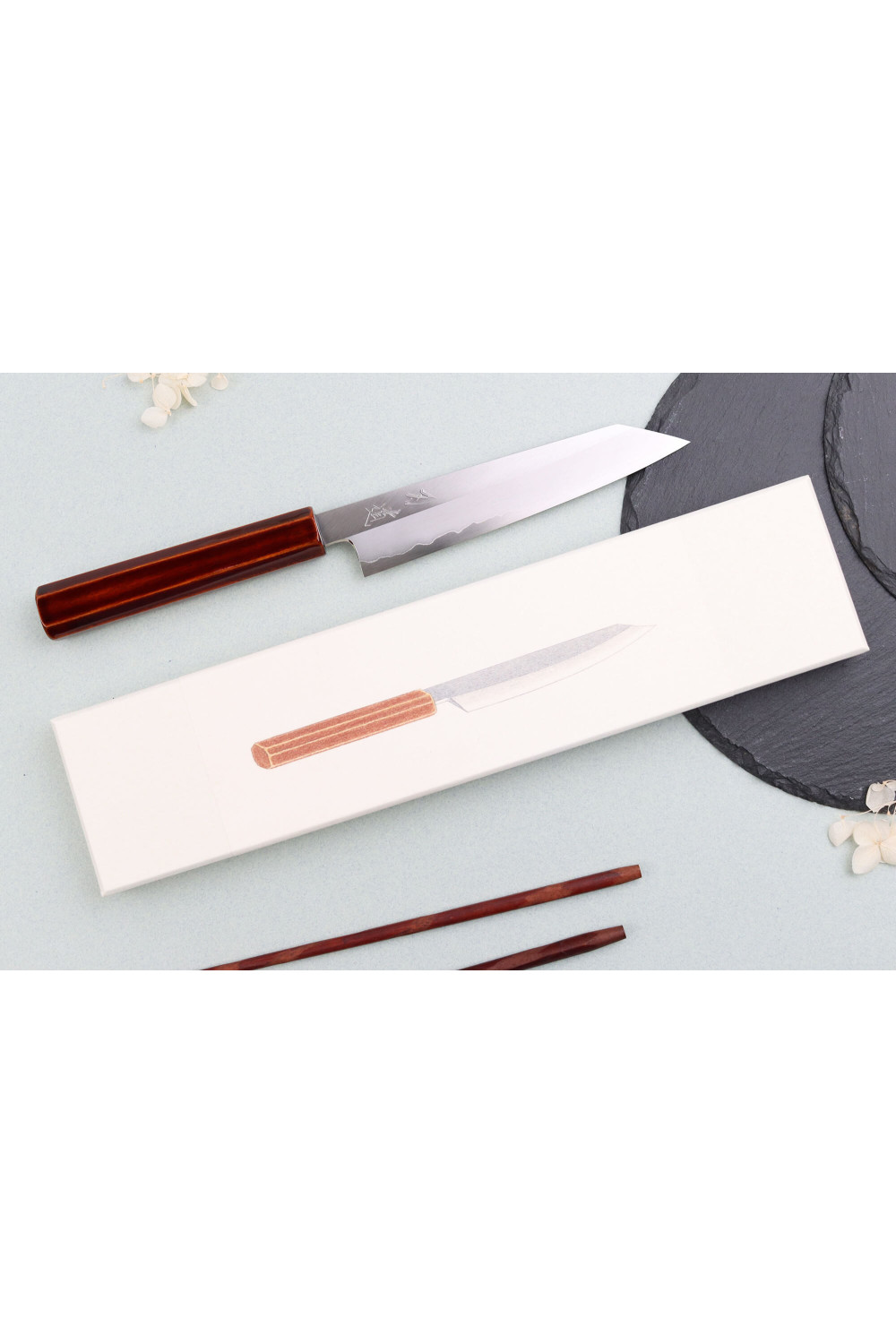
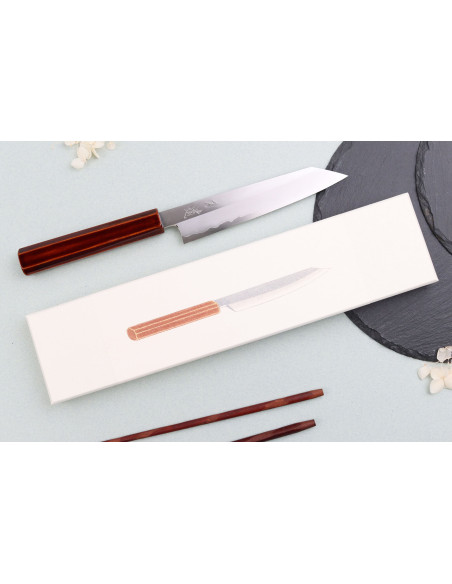
This knife, made from high-quality materials, should be washed exclusively by hand. Use a non-abrasive sponge and mild soap, taking care not to wet the handle. After cleaning, dry the knife immediately and carefully to remove all traces of water, before storing it away from moisture, for example in its elegant case. Important: this knife is not intended for soaking in the sink or dishwasher.
Find Hado Ginsan Kijiro knives on Knifeleader.eu!




 By buying this product you can collect up to