A multipurpose knife forged to embody Japanese excellence
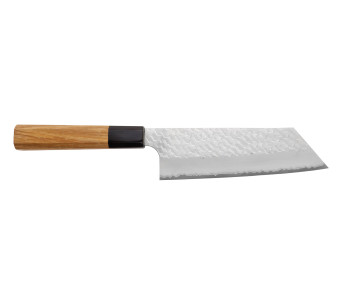
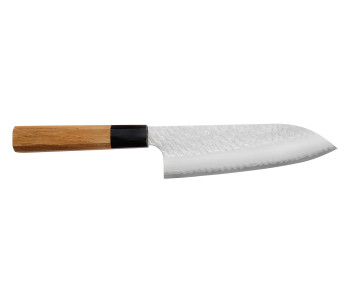
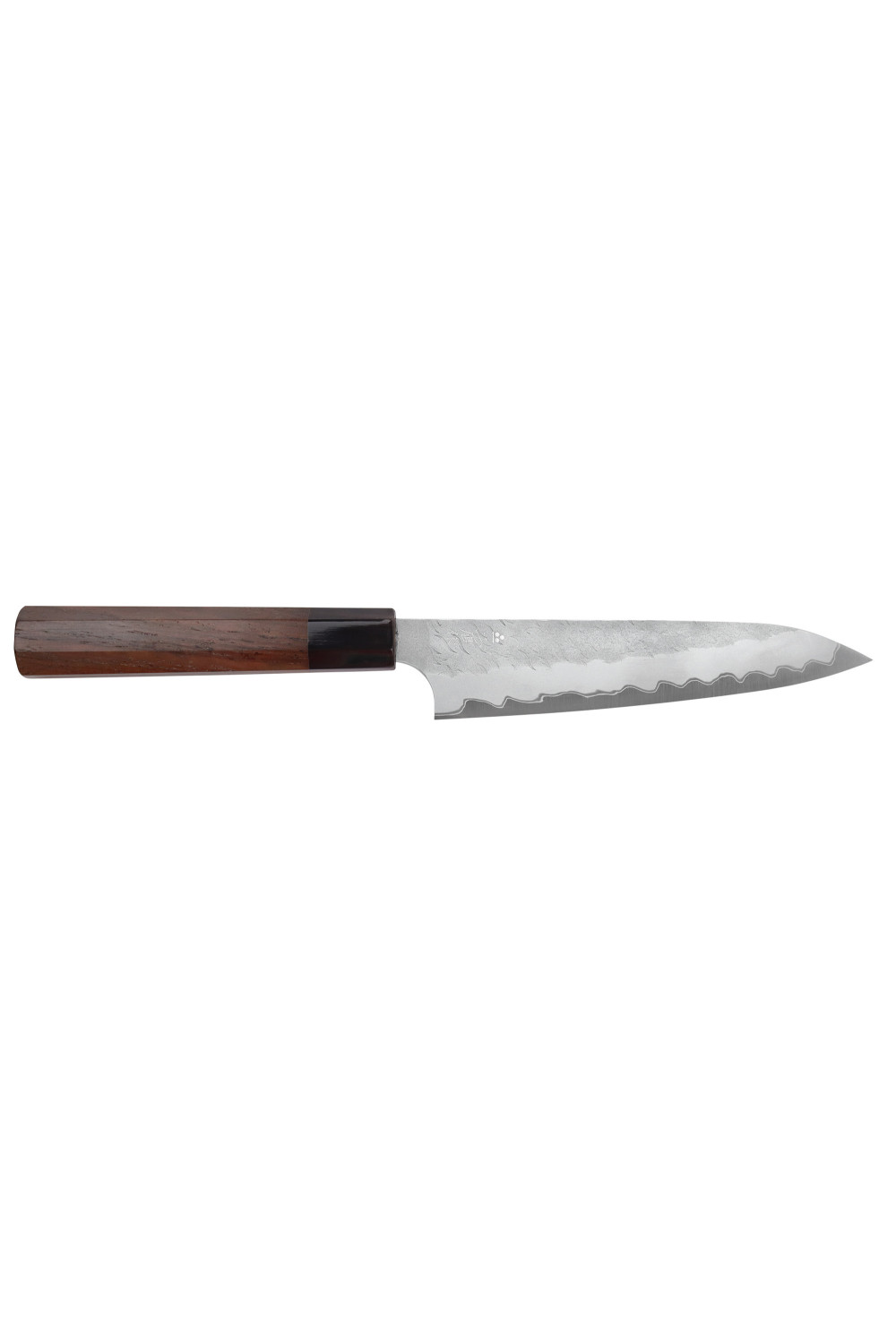
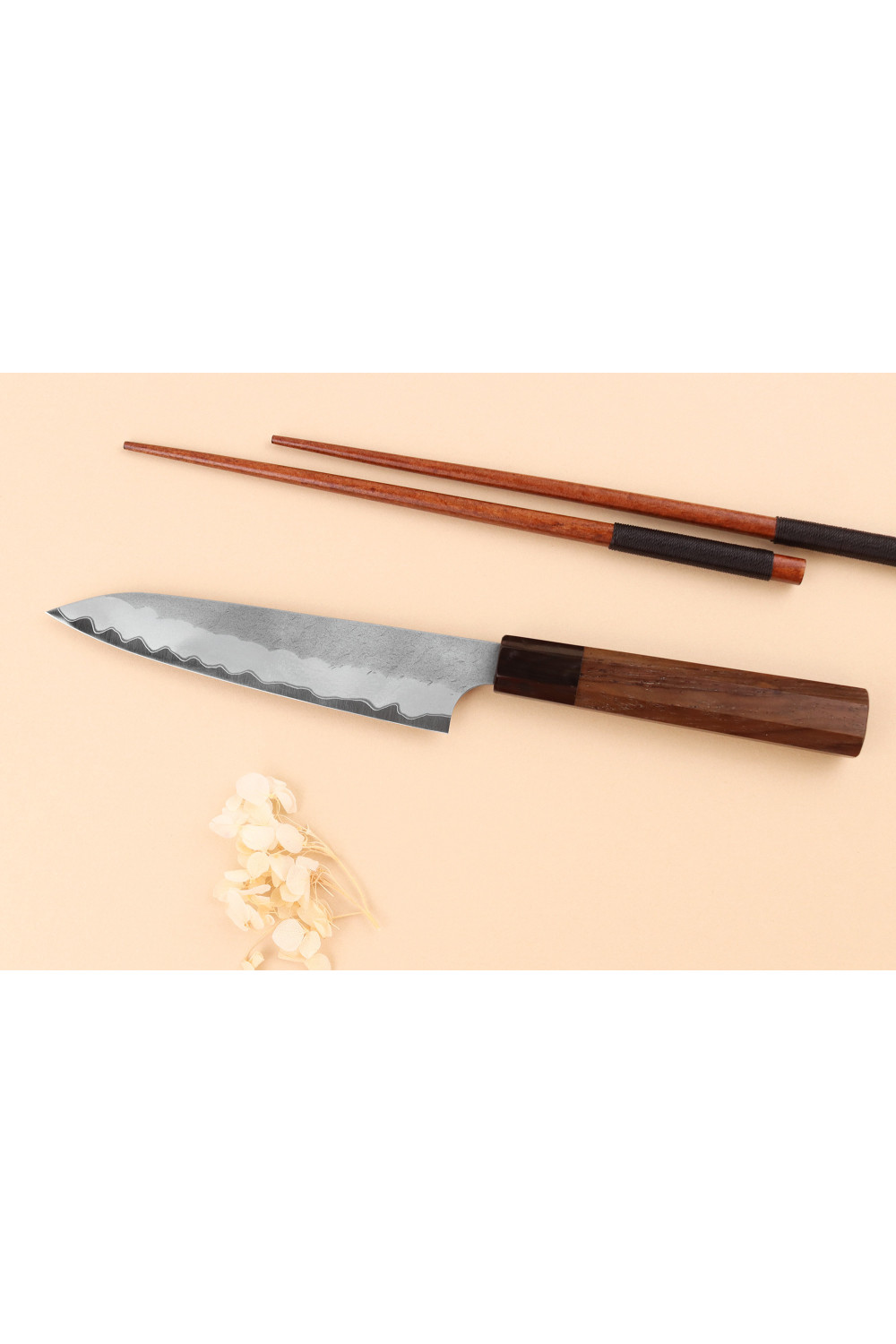
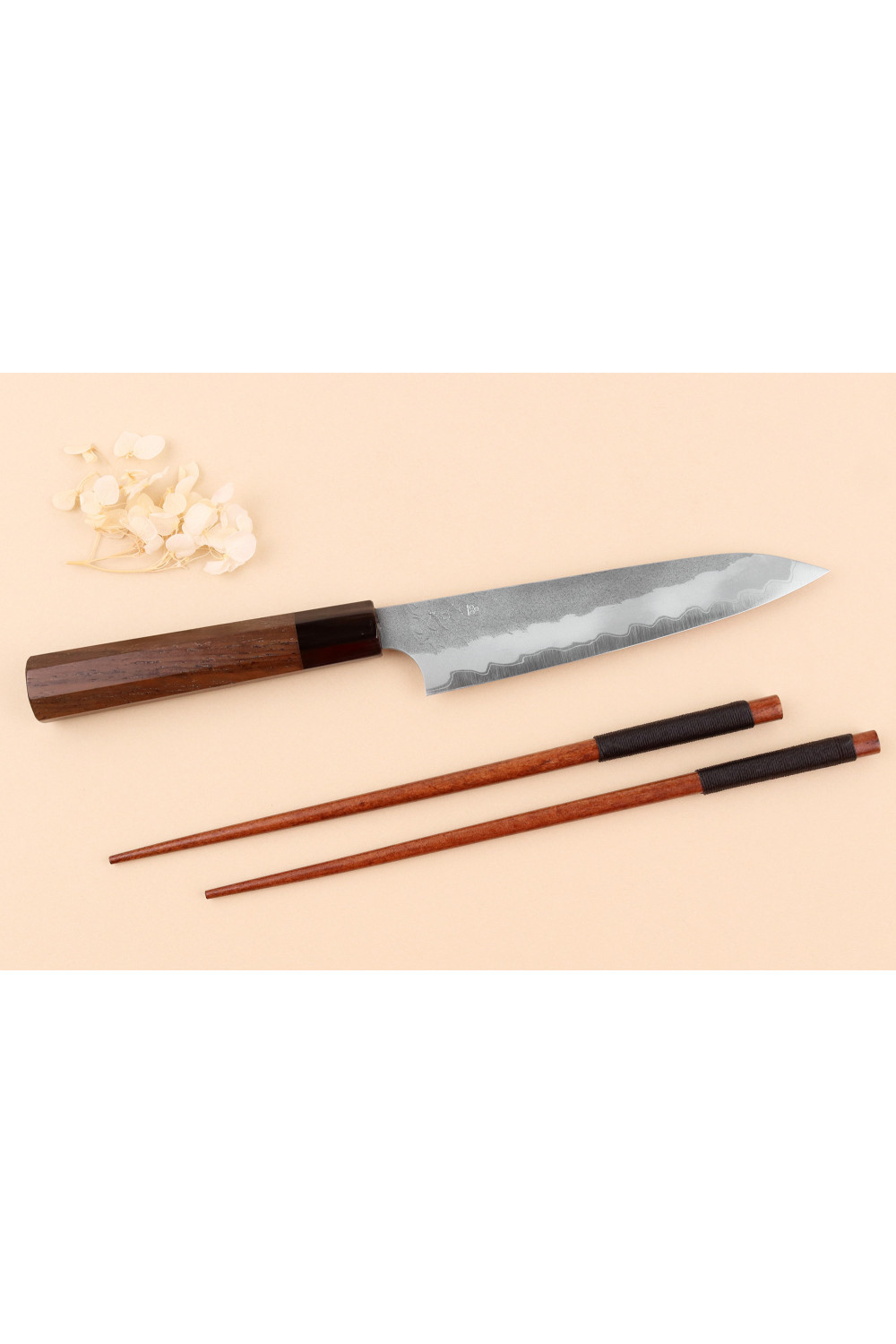
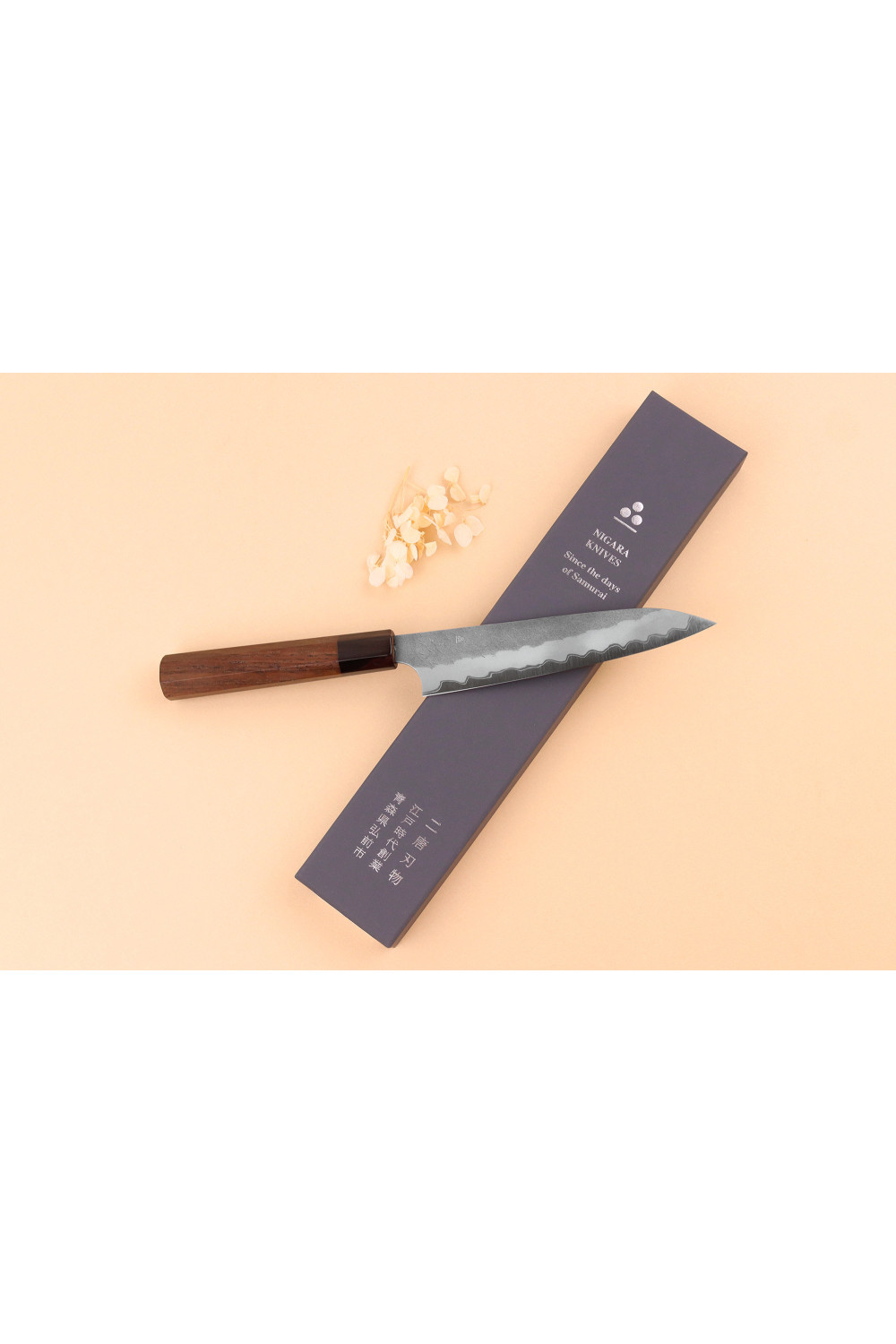
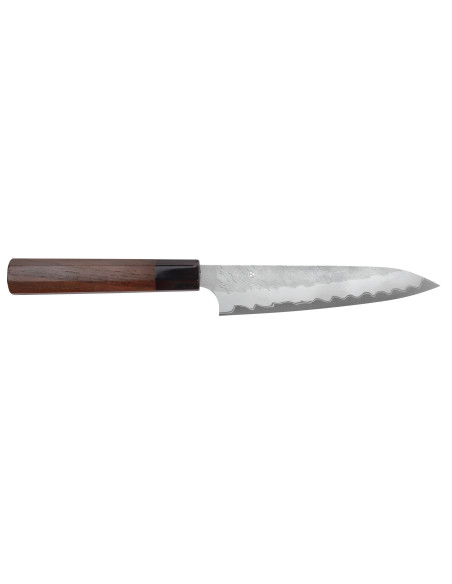
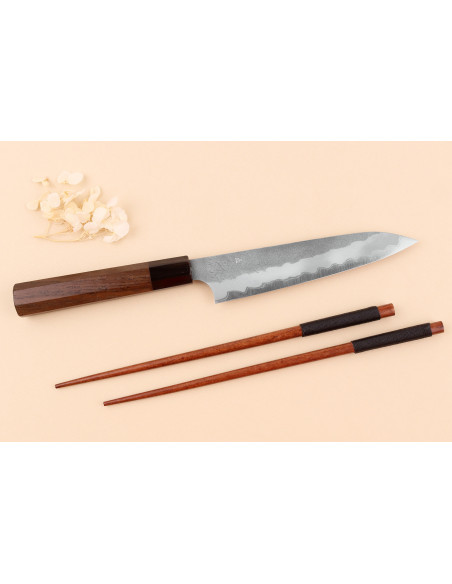
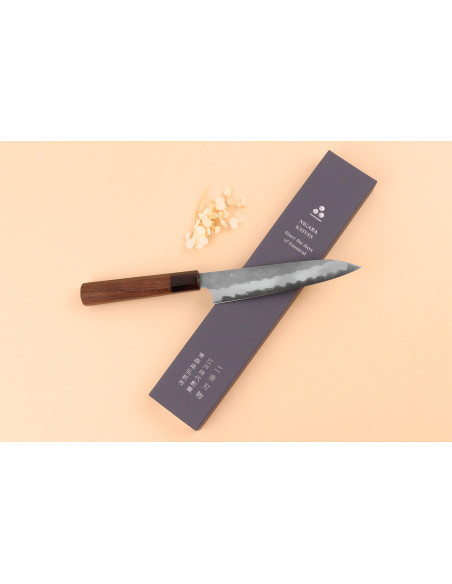
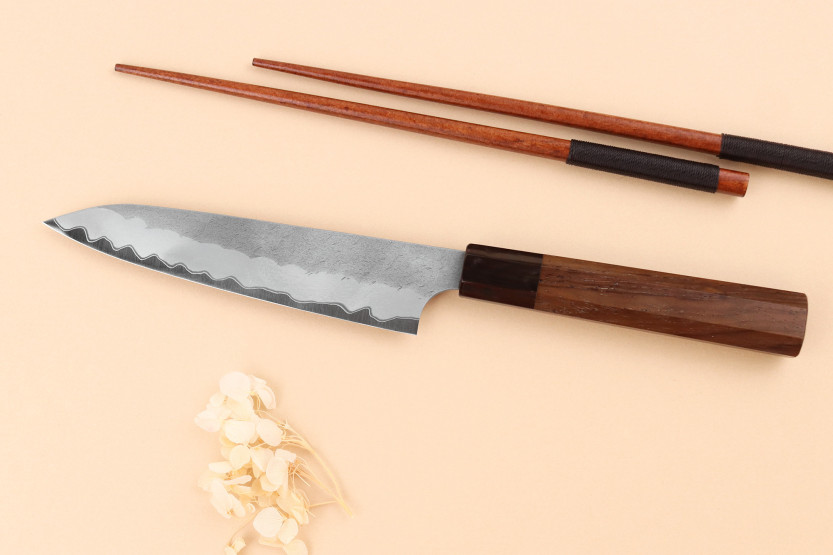
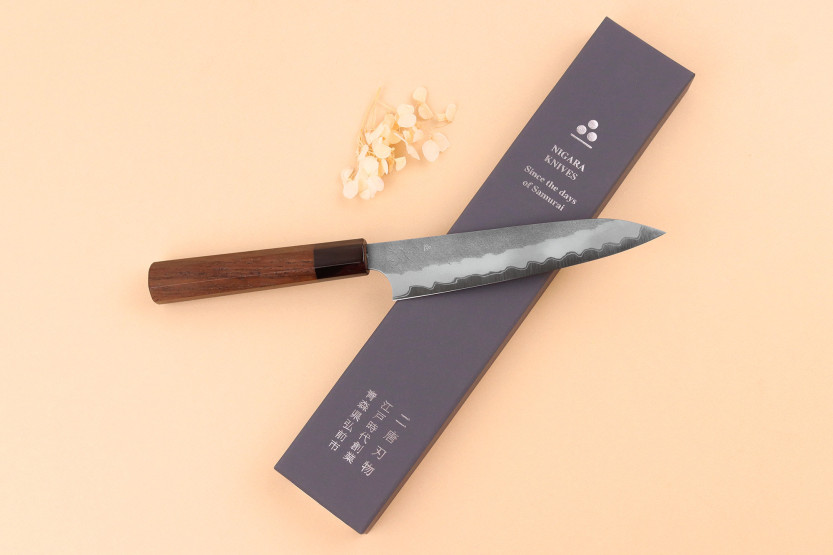
TheNigara Hamono Tsuchime AS Japanese utility knife embodies the perfect blend of Japanese tradition and culinary versatility. Crafted in Hirosaki, the cradle of Japanese cutlery, this model combines ancestral craftsmanship with exceptional materials to meet the demands of discerning chefs. Its sleek design and optimized geometry make it an indispensable tool for chopping, mincing, slicing, or trimming with surgical precision.
A versatile blade forged for excellence
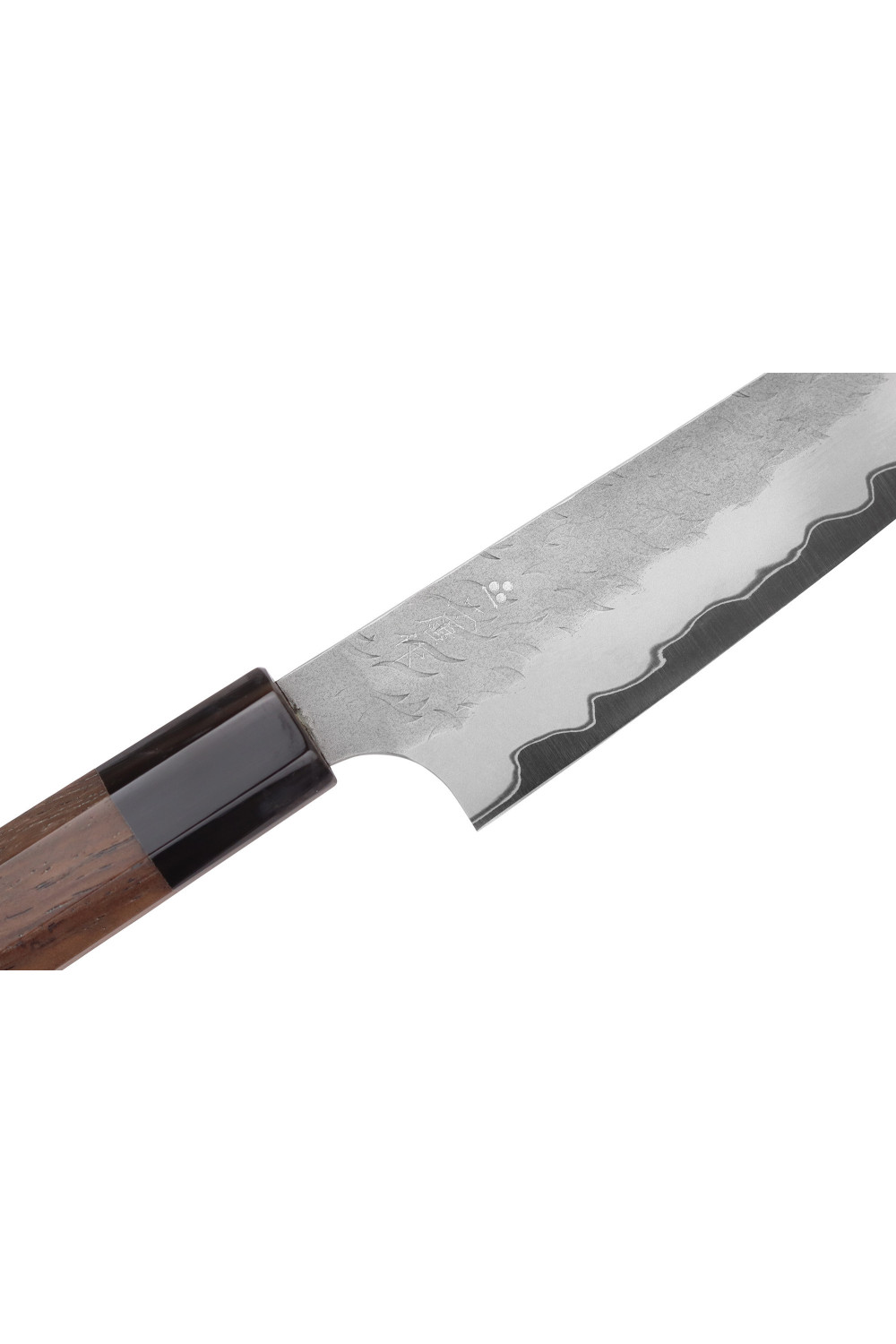
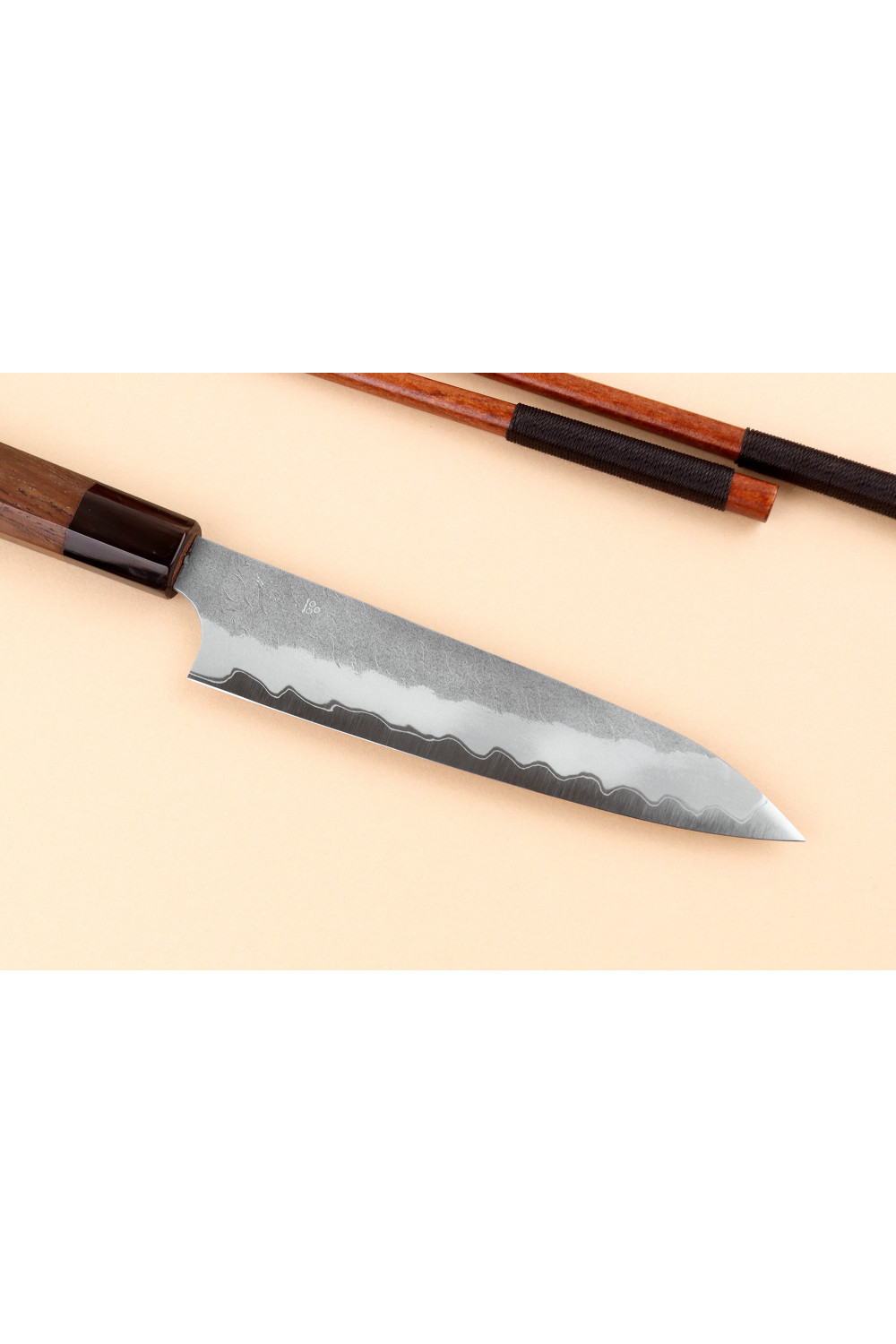
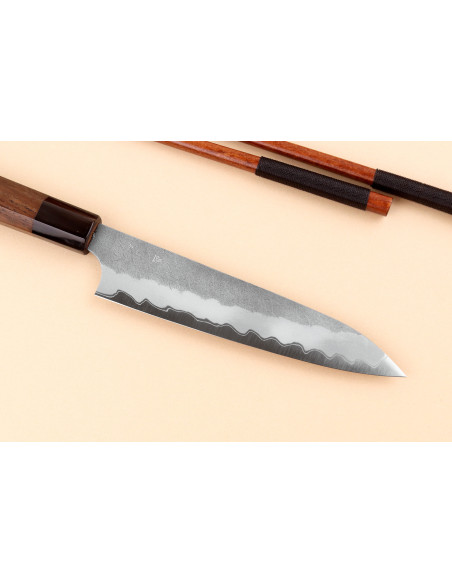
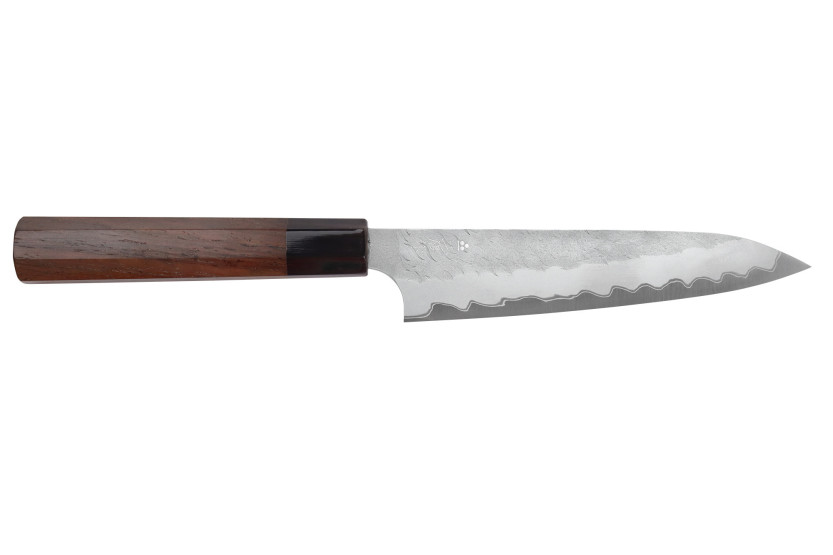
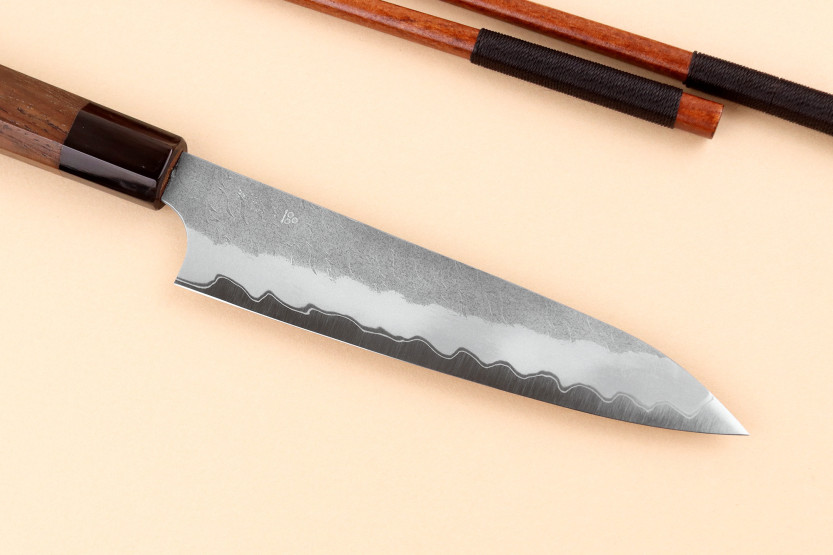
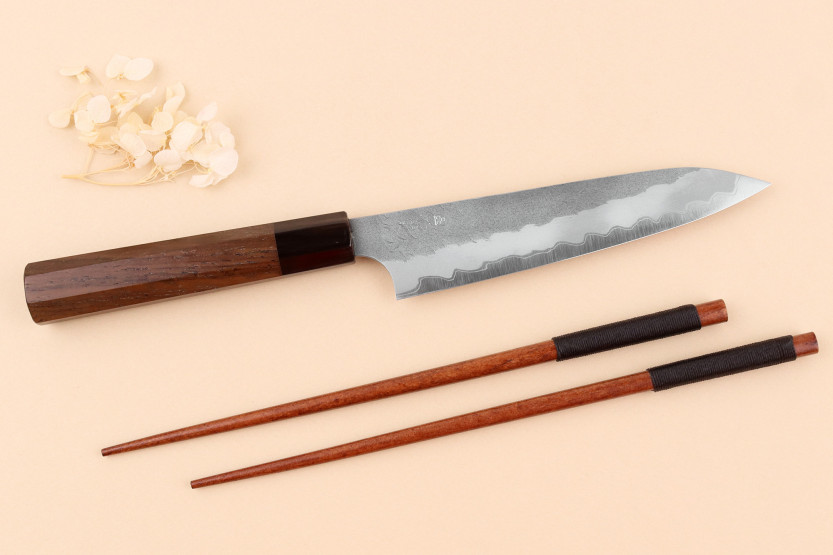
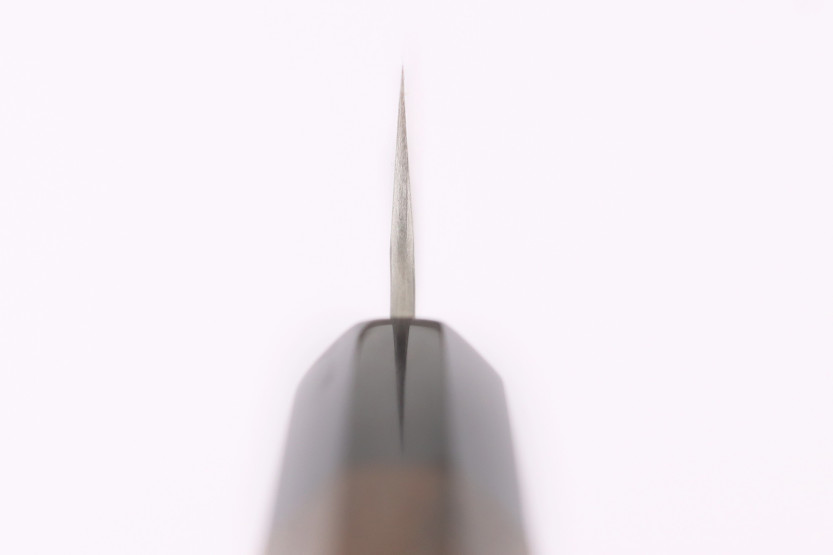
This knife features a 15-cm blade with a San Mai construction, consisting of three layers of steel. It contains a core of Japanese Aogami Super steel (≈1.5% carbon), which provides a clean cut and excellent edge retention. The outer layers are made of stainless steel to enhance the core’s corrosion resistance. This combination offers a balance between the sharp cutting performance of carbon steel and the ease of maintenance provided by the stainless steel layers.
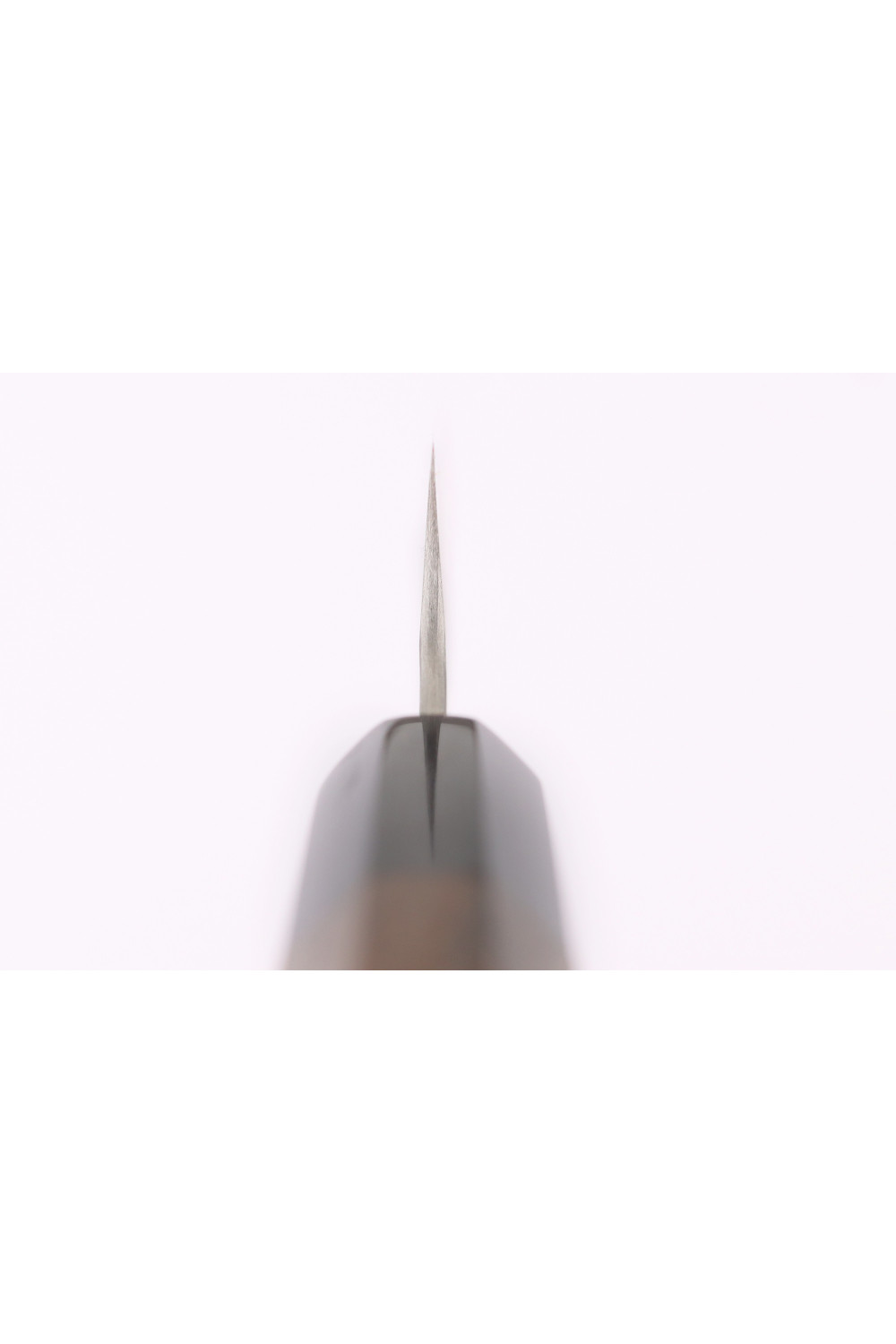
With a hardness of 65 HRC on the Rockwell scale, the cutting edge retains its precision for a long time and allows for clean cuts with minimal effort. However, this hardness requires the use of a suitable cutting board and skilled technique.The flat grind ensures even contact with food and is suitable for a wide variety of cutting tasks.
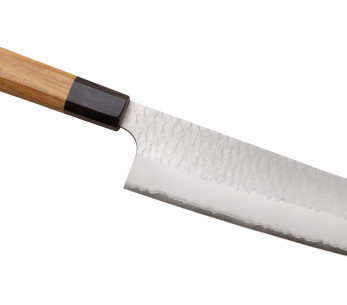
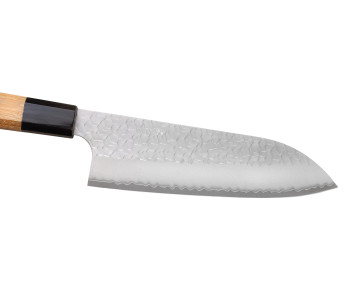
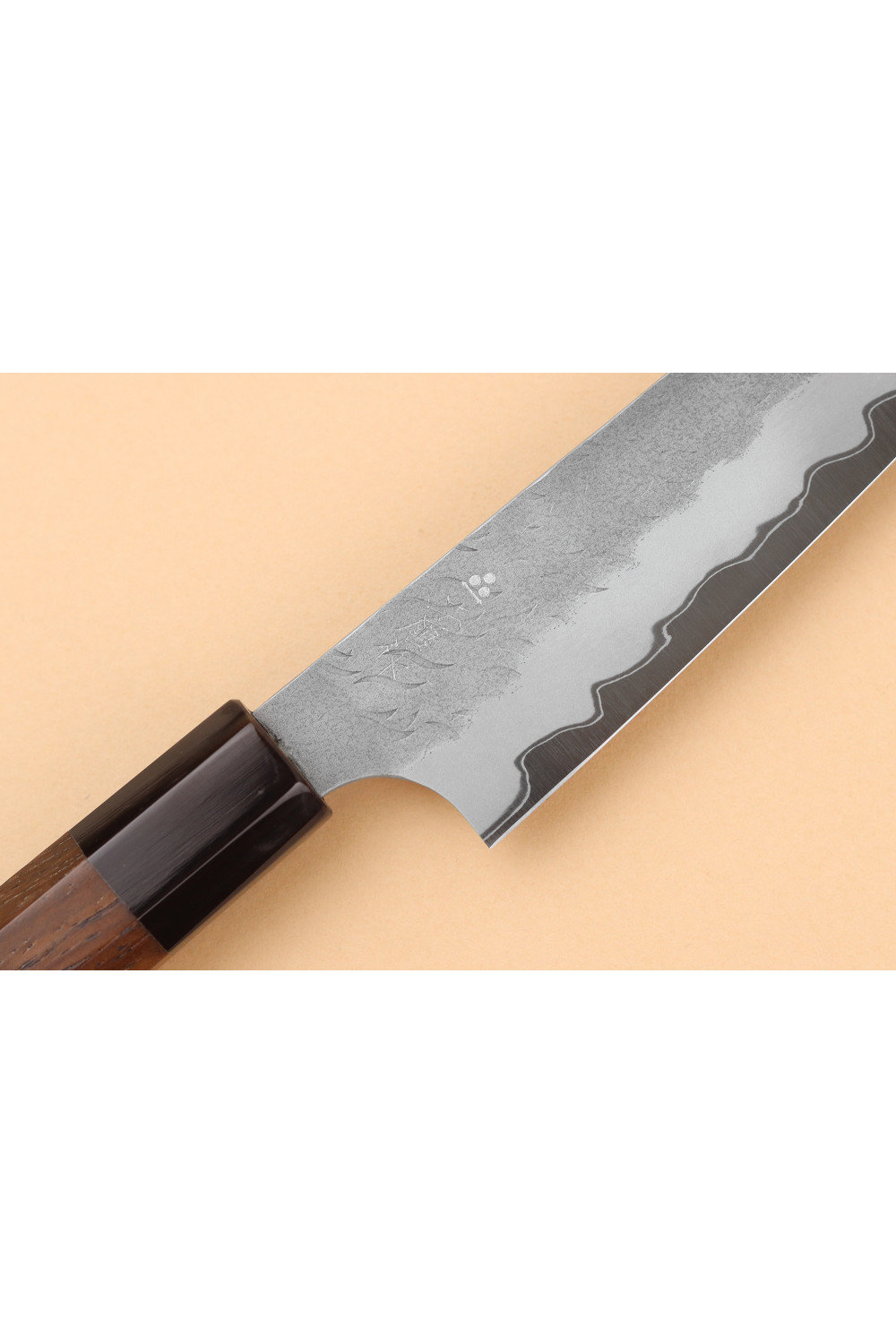
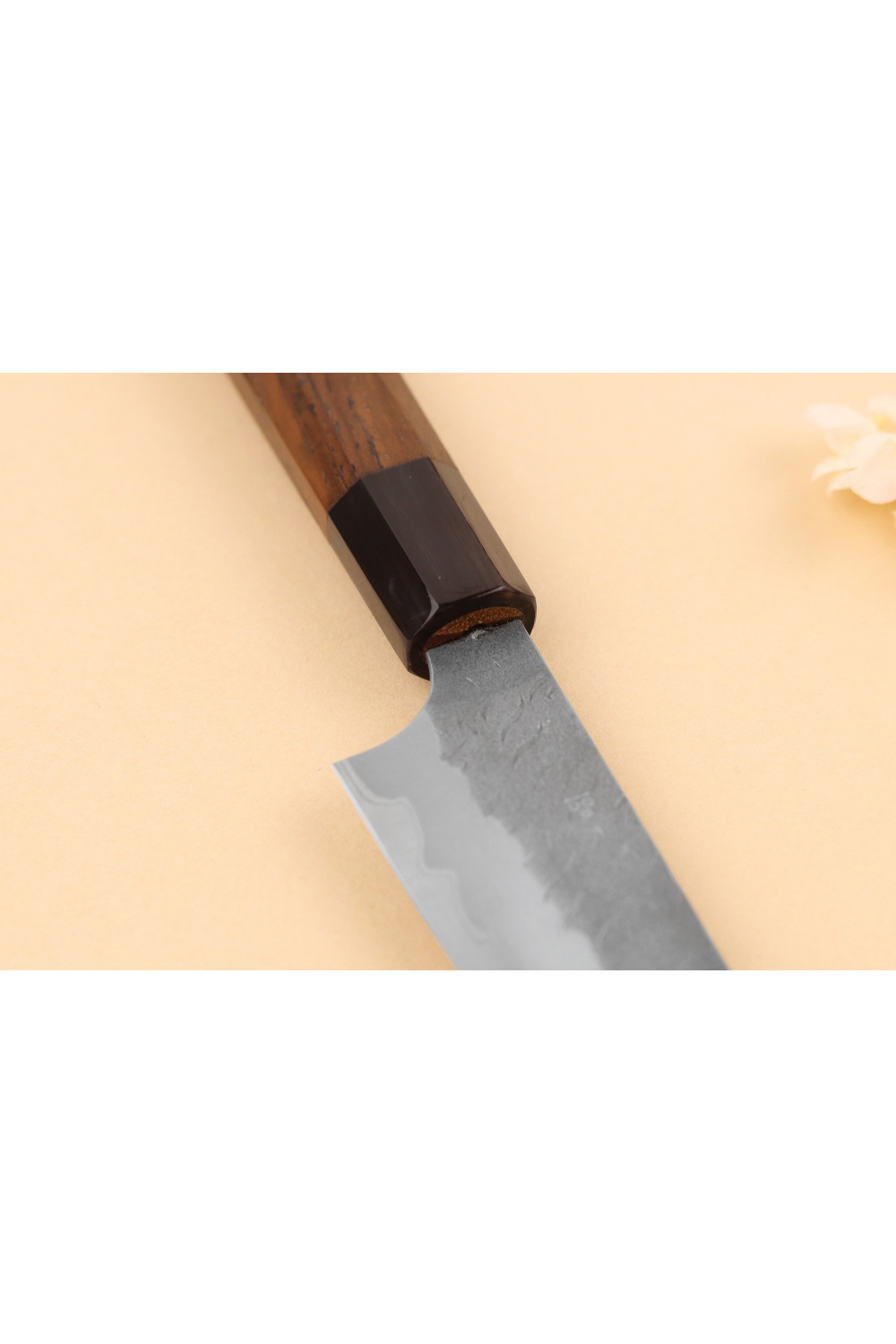
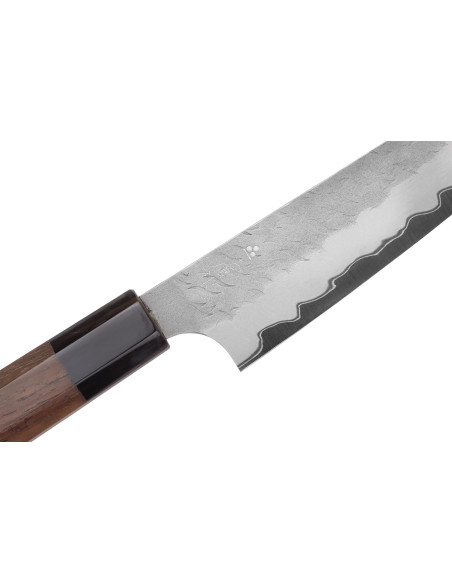
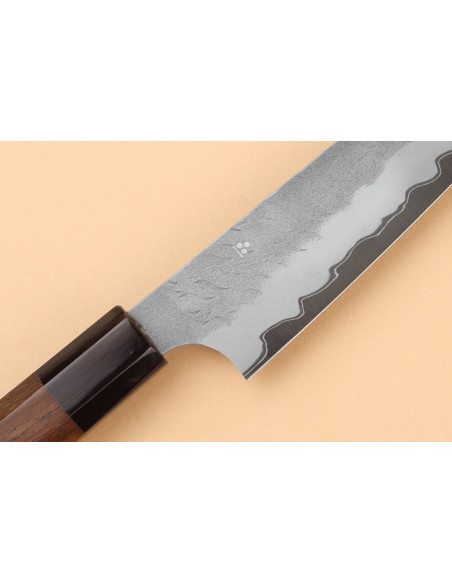
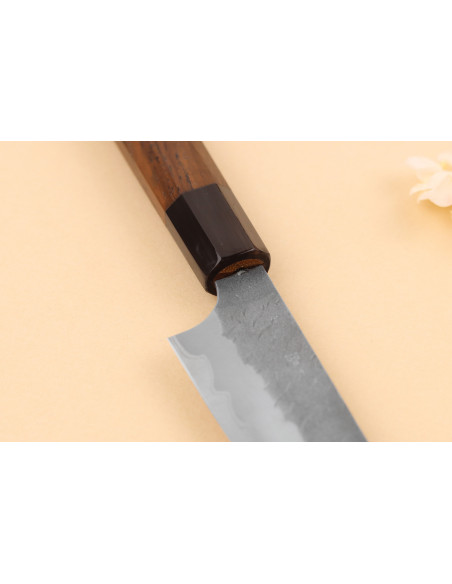
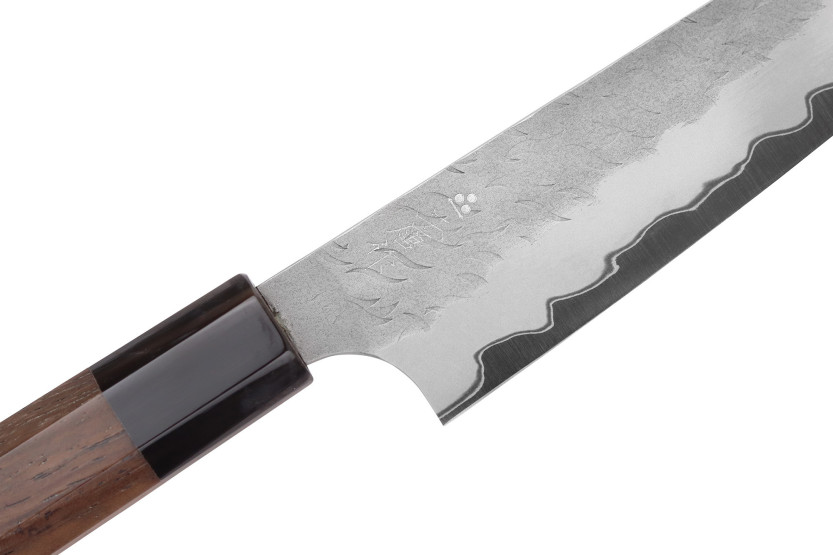
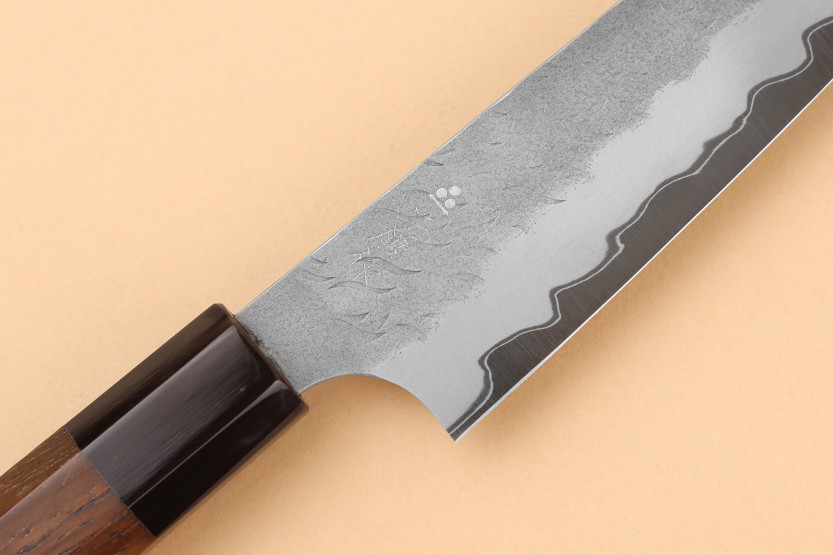
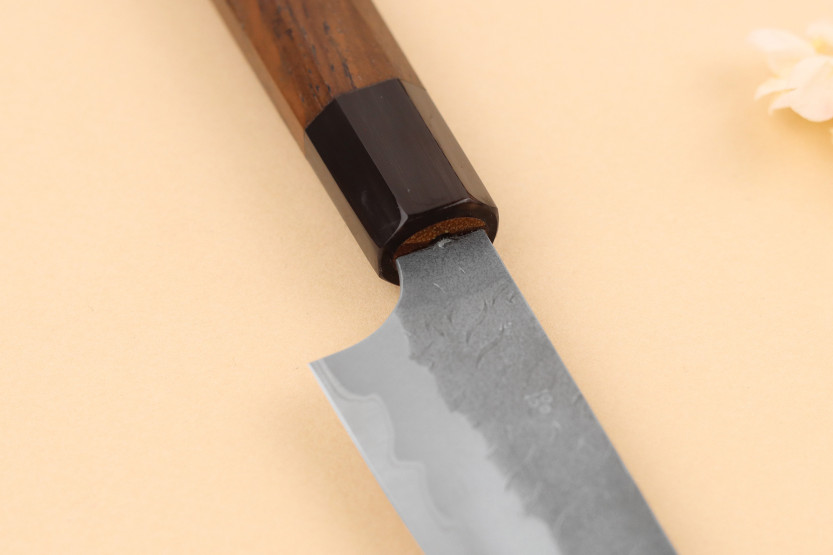
The blade features an elegant wave-shaped hammered pattern combined with a Nahsiji finish. These details enhance the visual identity of this all-purpose knife while helping to prevent food from sticking to the blade’s surface. The San Mai construction also reveals a line separating the different types of steel.
An octagonal handle made of natural walnut
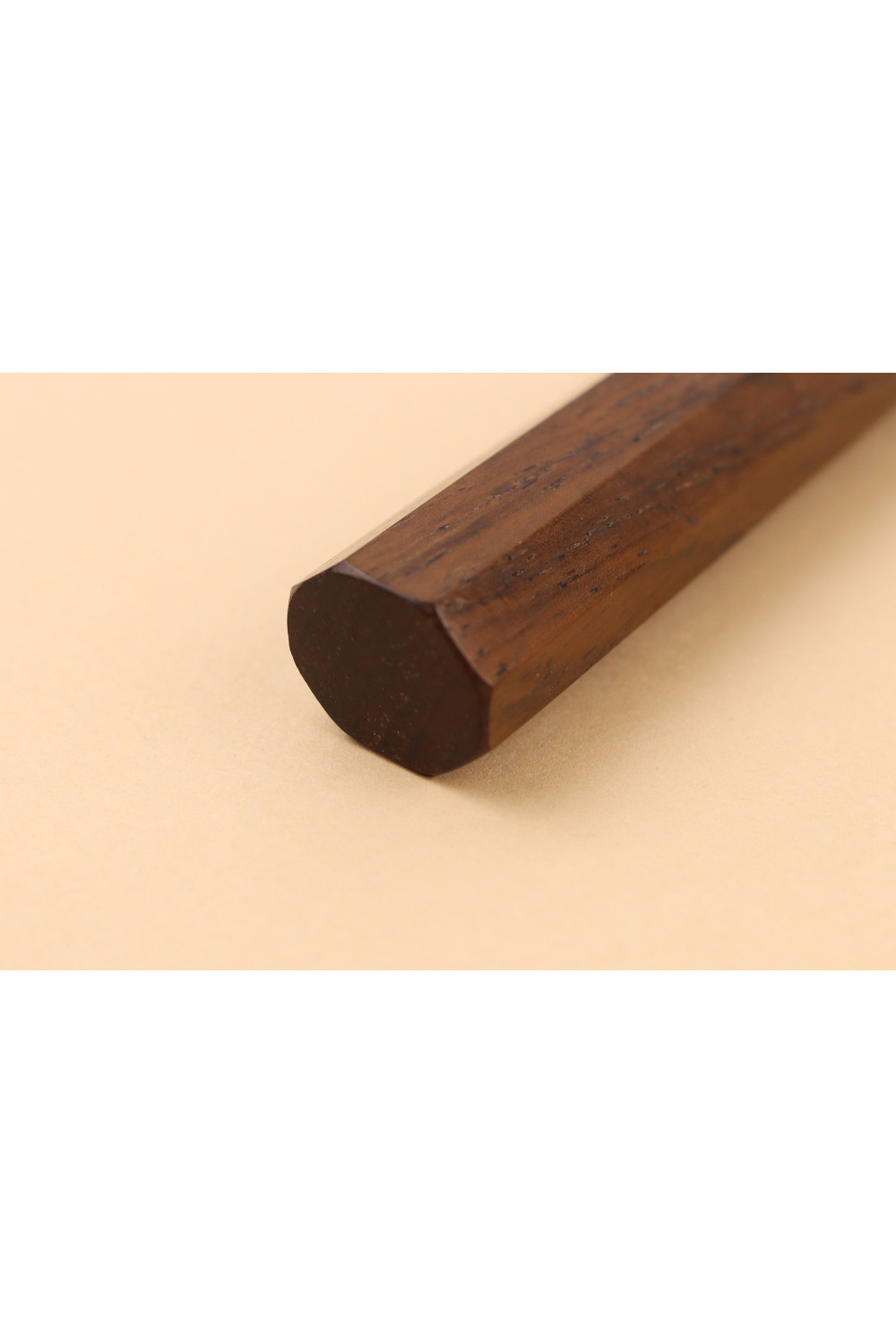
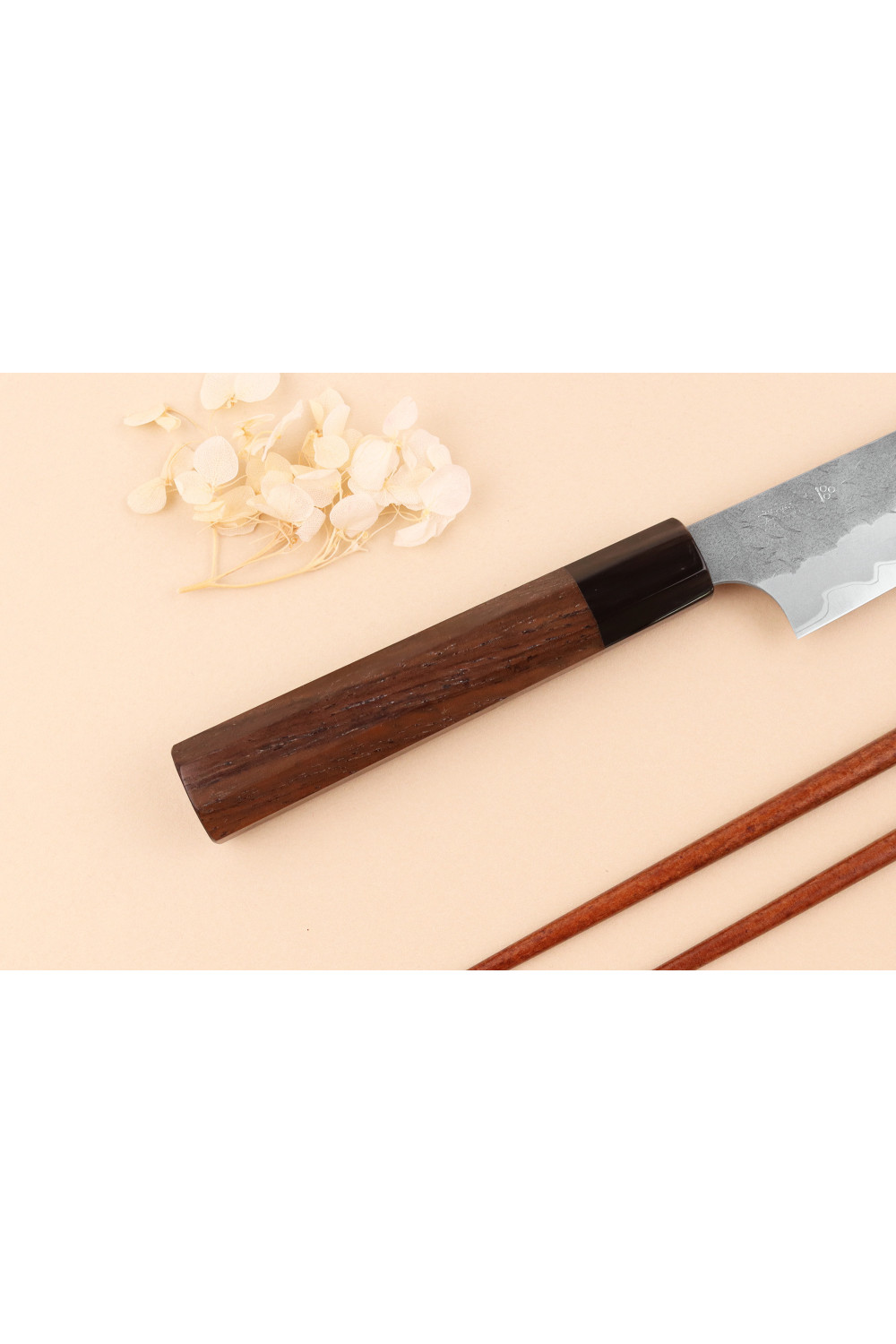
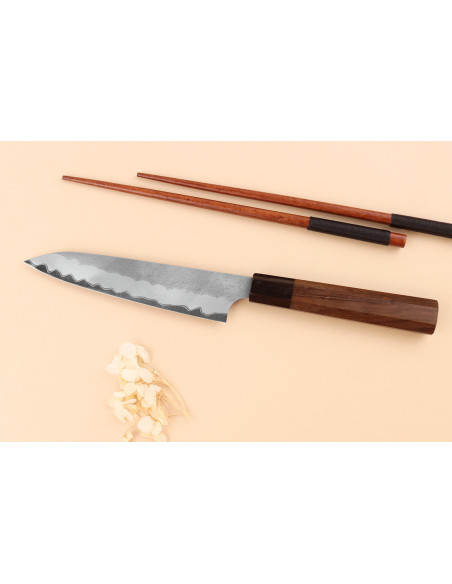
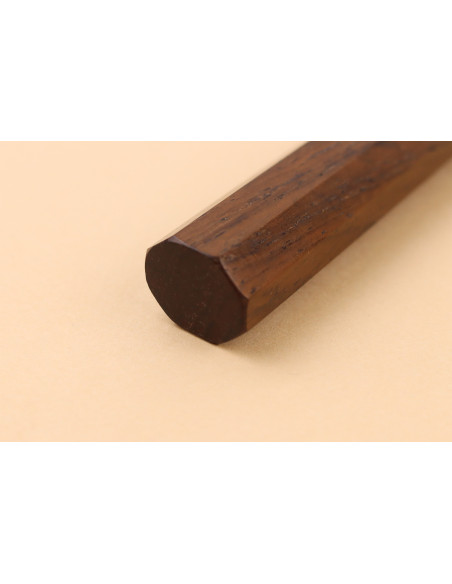
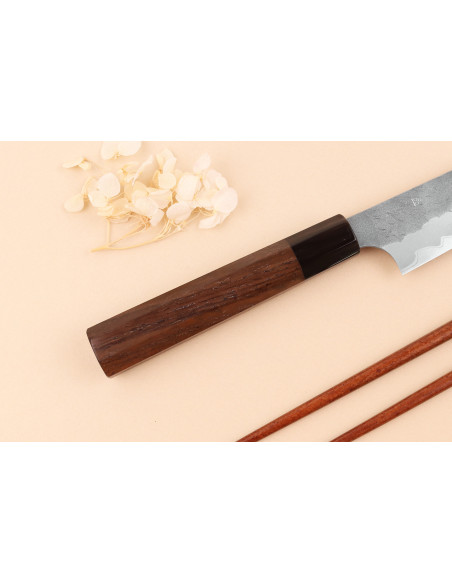
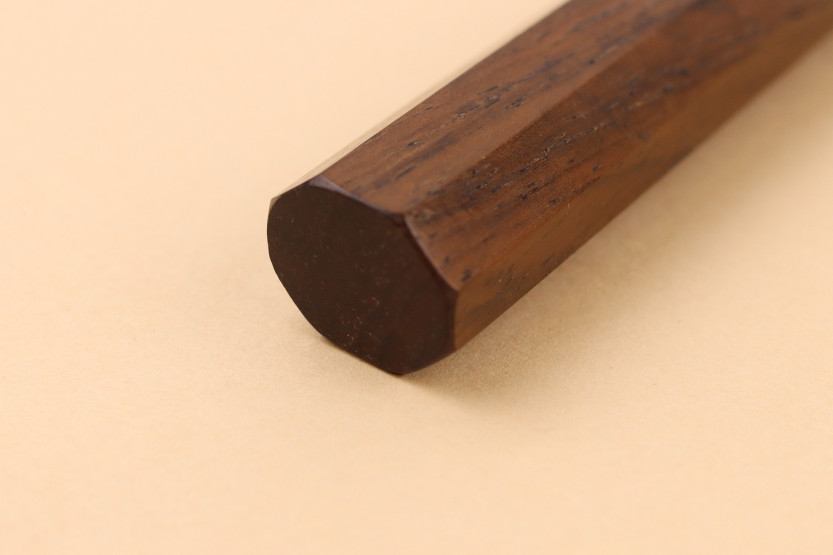
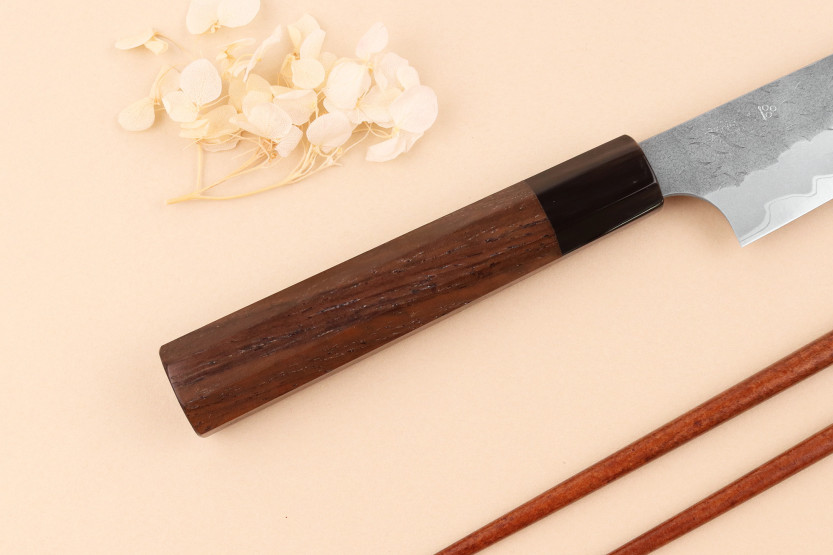
The handle is made of walnut wood, a species prized for its warm grain and durability. Each piece has a distinct appearance: the shades, wood patterns, and grain distribution may vary from one knife to another. This characteristic gives each knife a unique look.
Its octagonal shape ensures a comfortable, ambidextrous grip. It makes it easier to orient the blade while cutting and promotes a stable hold, whether you use a Western grip or one more typical of Japanese techniques. The handle’s profile follows the movements of the hand without adding unnecessary weight to the knife.
The black buffalo horn bolster provides a understated finish at the junction between the handle and the blade. This natural material also exhibits variations in appearance unique to each piece. The result is a well-balanced handle that is pleasant to handle and consistent with the artisanal character of Japanese craftsmanship.
Key Features at a Glance
-
- 15 cm San Mai blade: balanced construction for precise cutting
- Aogami Super core: high-performance carbon steel for a long-lasting edge
-
- Stainless steel outer layers: enhanced protection for the core
- Hardness of 65 HRC: excellent edge retention
- Wave-patterned hammering: reduced food sticking and a
- unique
- look
- Nahsiji finish: textured surface with a traditional aesthetic
-
- Flat grind: smooth, clean cuts
- Walnut handle: warm and durable
- Octagonal shape: stable, ambidextrous grip
- Black buffalo horn bolster: balance and elegance
- Made in Hirosaki: handcrafted in Japan
Usage and Care Instructions
Wash the blade by hand with a soft sponge and lukewarm water, then dry it immediately. Do not put the knife in the dishwasher; avoid abrasive cleaners and prolonged soaking. Use a wooden or soft plastic cutting board; do not cut on hard surfaces such as glass or stone. To preserve the edge, use a sharpening stone suitable for Japanese blades and store the knife in a knife block, a protected magnetic strip, or a saya. Aogami Super steel may develop a natural patina over time with use.
Nigara Hamono, a forge based in Hirosaki
Located in Hirosaki, Aomori Prefecture, Nigara Hamono has a history spanning more than 350 years. Since the beginning of the Edo period, the forge has been crafting Japanese swords for the Tsugaru clan in a region that was then renowned for its metalworking industry.
After World War II, the Nigara family shifted its focus to knife-making. Sword production ceased in 1965, but the forge continued to pass down its traditional techniques through Japanese knives crafted using methods inherited from sword-making.
Nigara Hamono’s work was officially recognized as a traditional craft of Aomori Prefecture in December 2007. Today, eighth-generation master blacksmith Tsuyoshi Yoshizawa works alongside his father, Toshi Yoshizawa. The forge offers knives with a variety of finishes, while maintaining a close connection to Hirosaki’s artisanal heritage.
Nigara Hamono knives are available on Knifeleader.eu!




 By buying this product you can collect up to