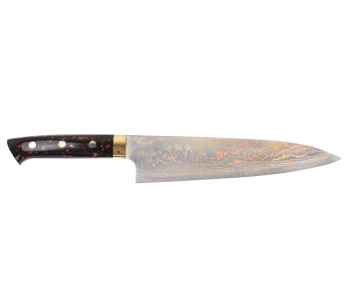
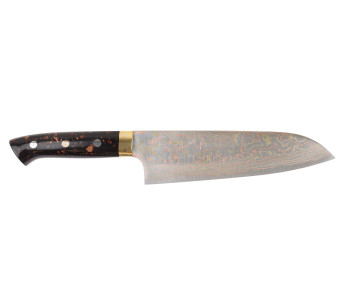
Takeshi Saji R2 Damascus Mosaic Japanese knives are handcrafted by blacksmith Takeshi Saji san.
Blacksmith Takeshi Saji san is a true expert who has been working for over 50 years and enjoys an excellent reputation in the cutlery industry. His knives are particularly appreciated for their finesse and aesthetic appeal. With elegance and efficiency, he combines the ancestral techniques of the blacksmiths of yesteryear with timeless designs that appeal to the widest possible audience. In fact, he was certified as a "traditional master craftsman" in the 90s.
His workshop is located in the famous Takefu Knife Village, one of Japan's foremost manufacturing centers. This village is home to some of Japan's finest traditional blacksmiths, who keep the ancestral know-how alive. They continue to train the new generation in this way, and being together in the same place enables them to share their tricks of the trade.
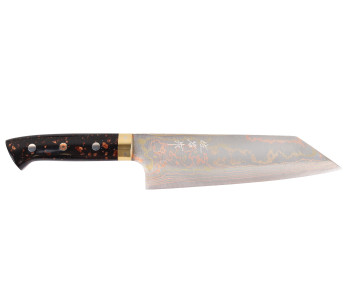
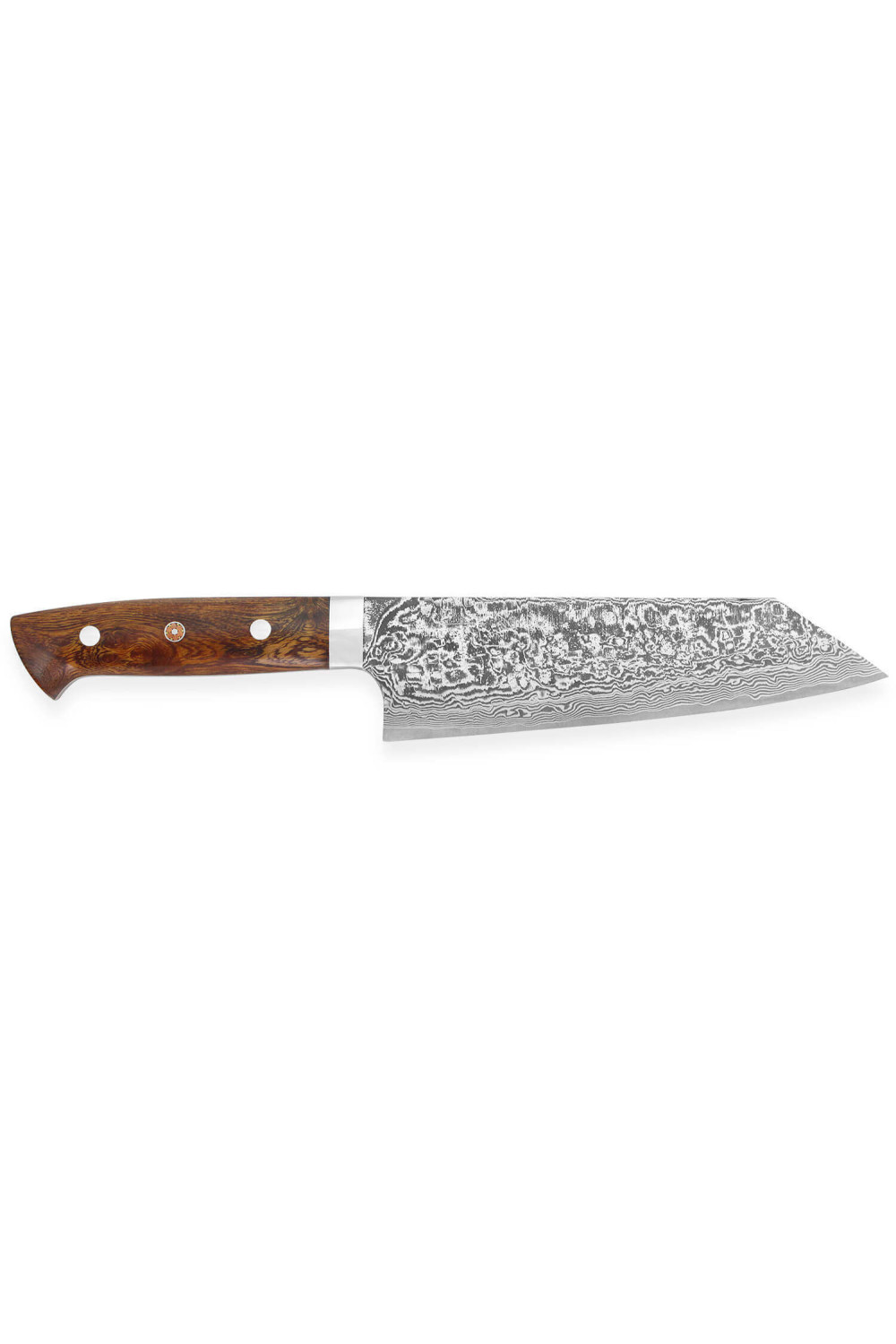
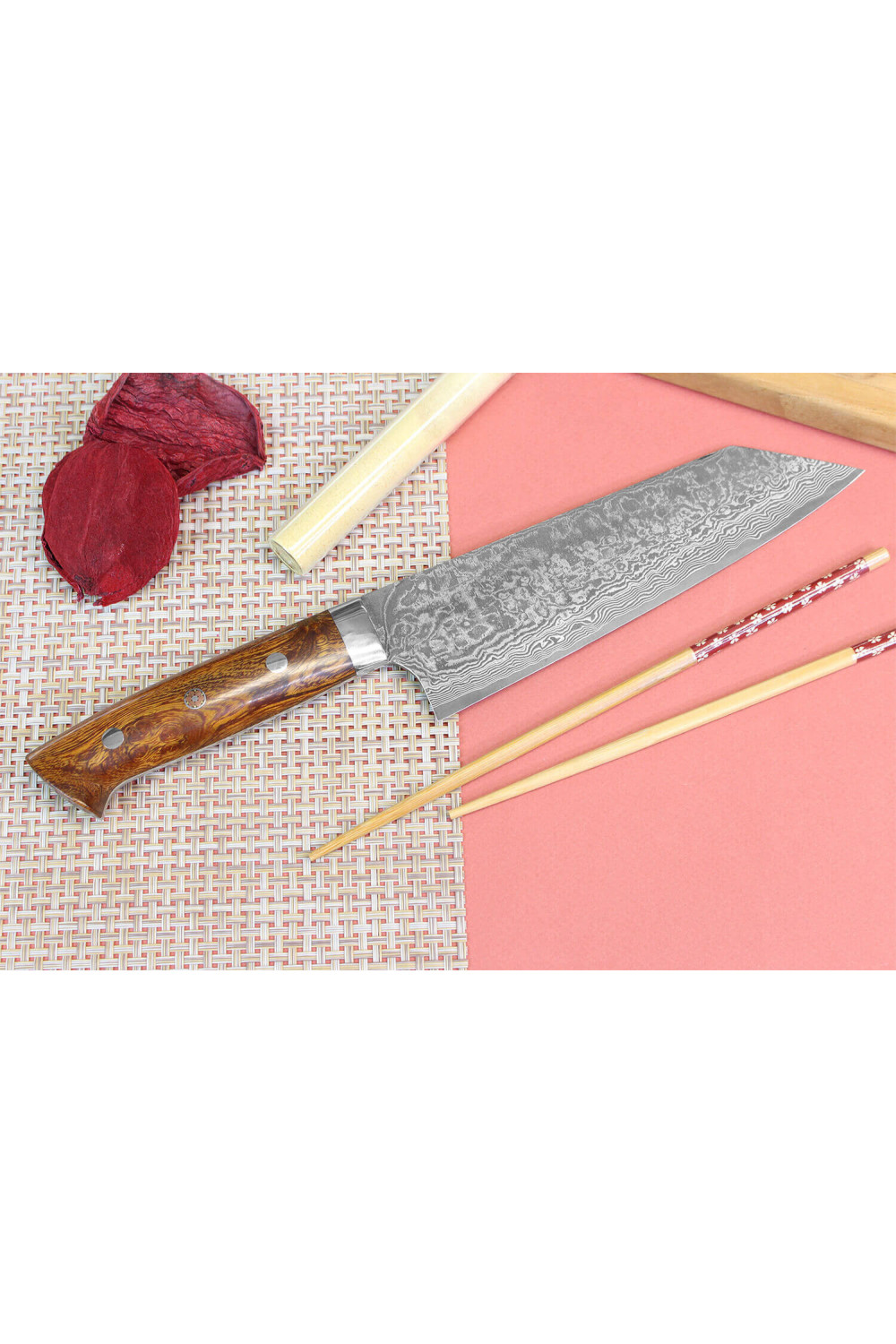
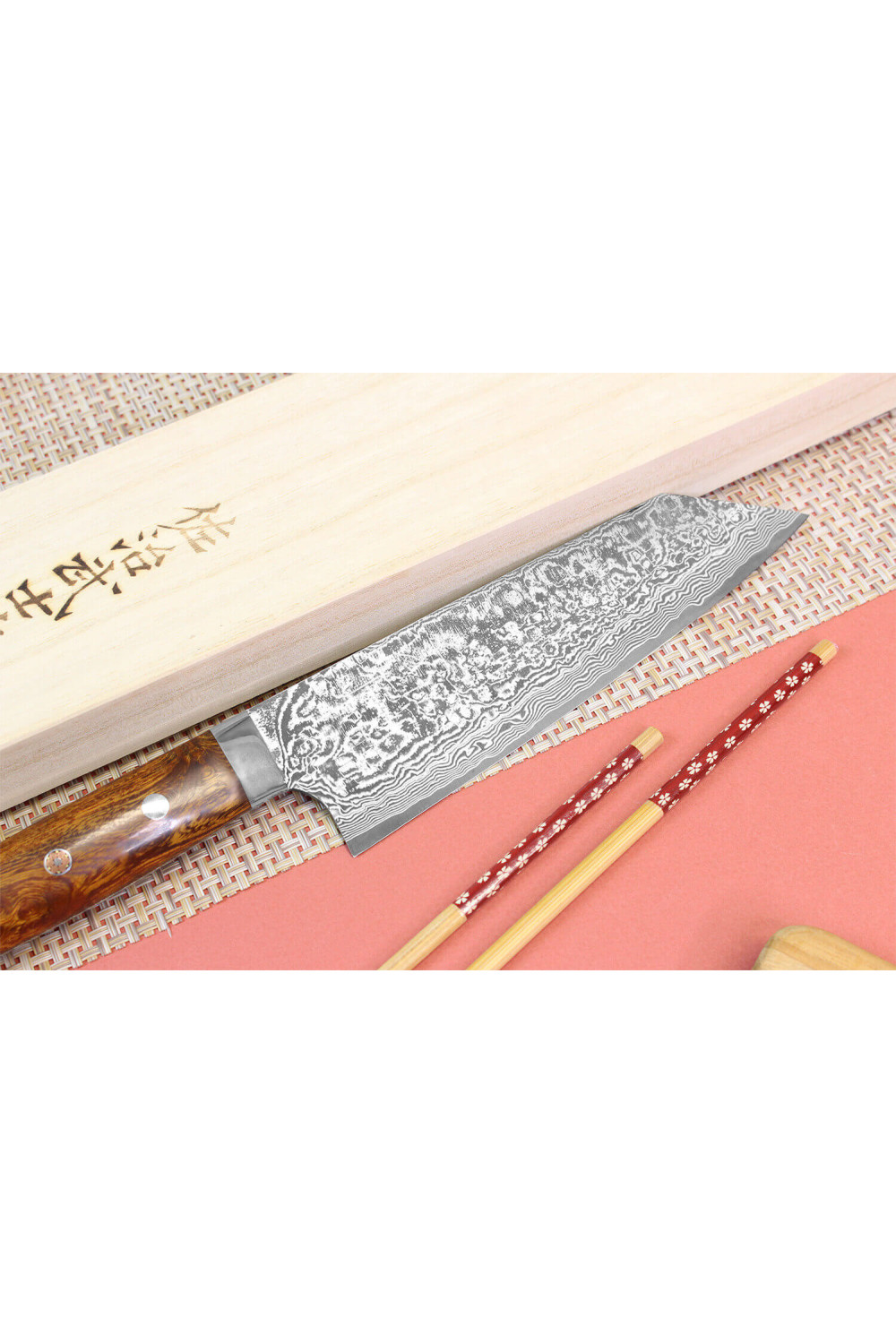
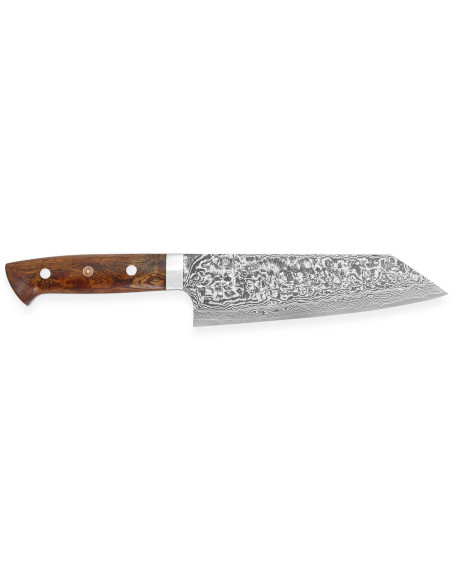
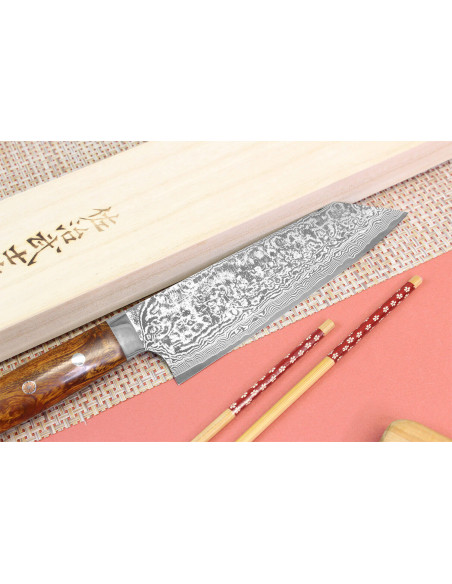
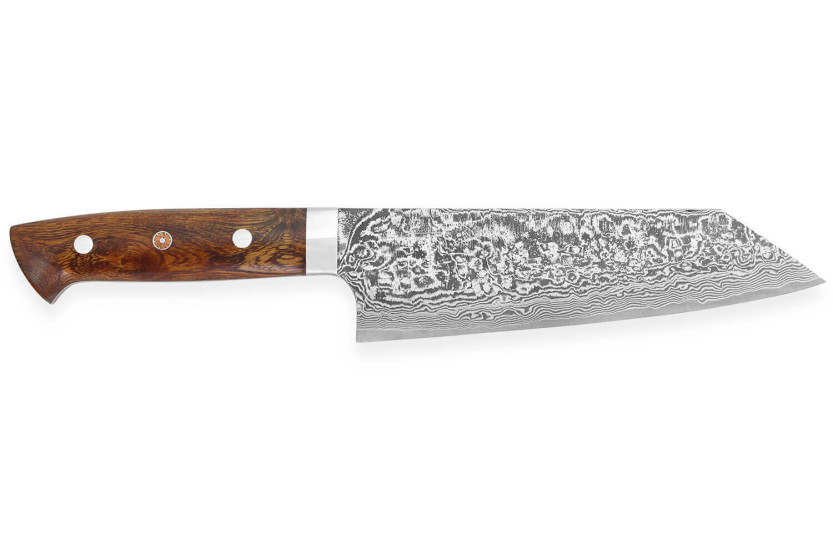
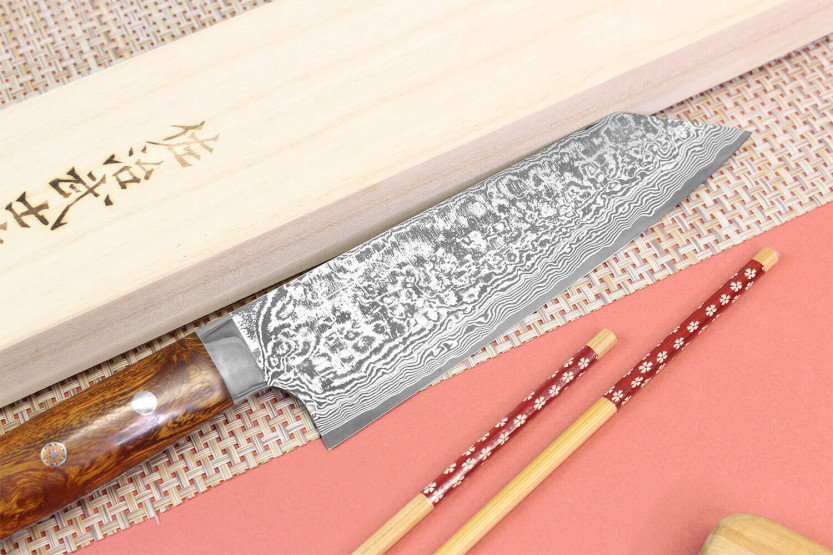
The Takeshi Saji R2 Damascus Mosaic 18cm bunka knife is a typically Japanese model. Quite similar to the Santoku, the Bunka is distinguished by its katana-like tip. It is suitable for all types of cutting: chopping fine herbs with precision, slicing fruit and vegetables, mincing meat and fish effortlessly, slicing a terrine...
The knife in detail:
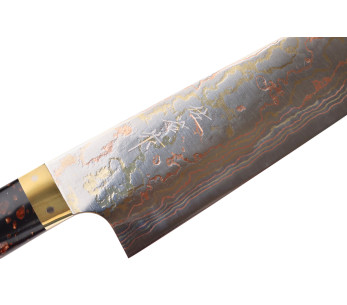
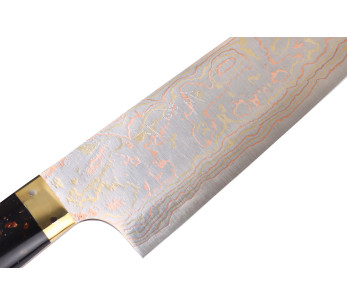
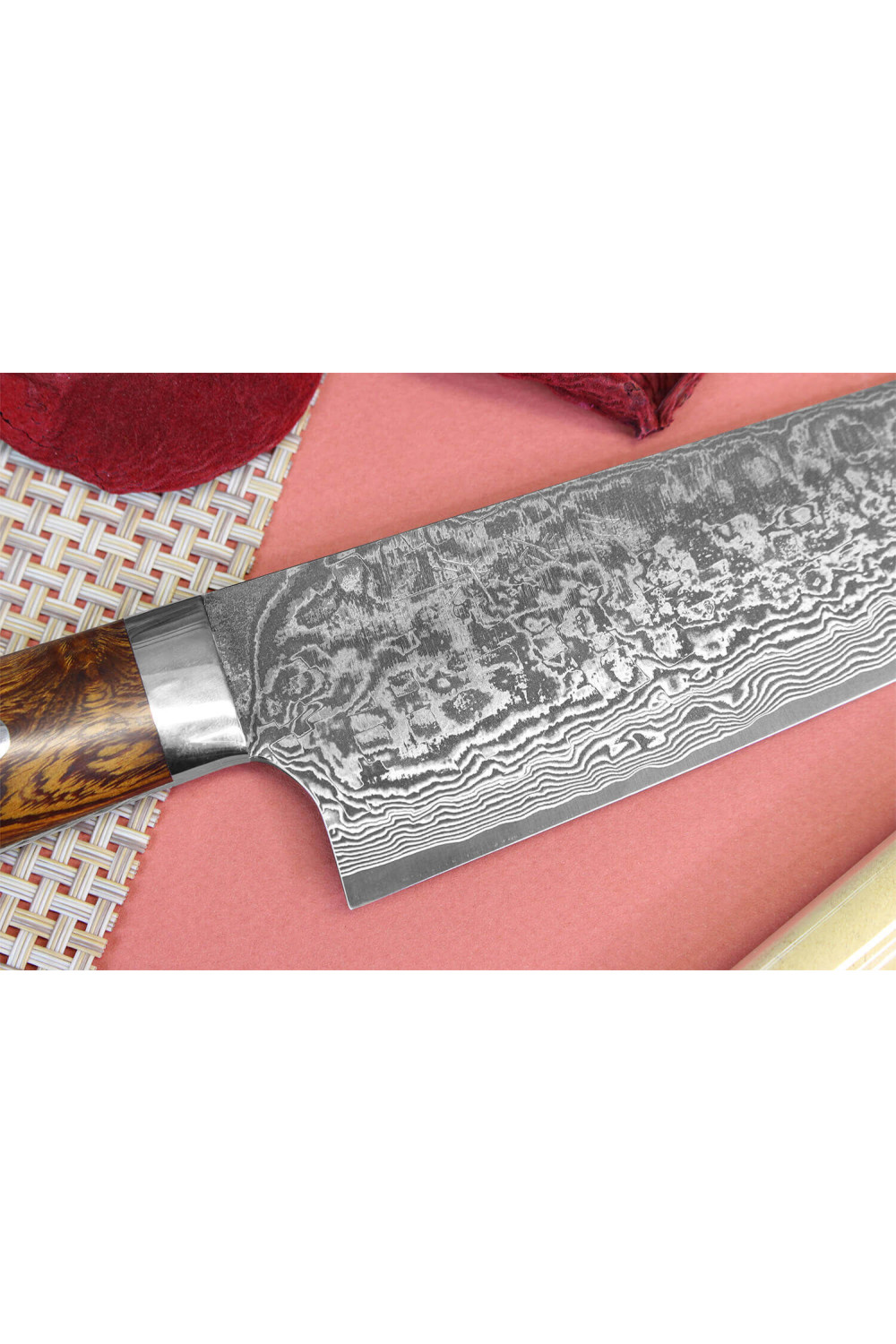
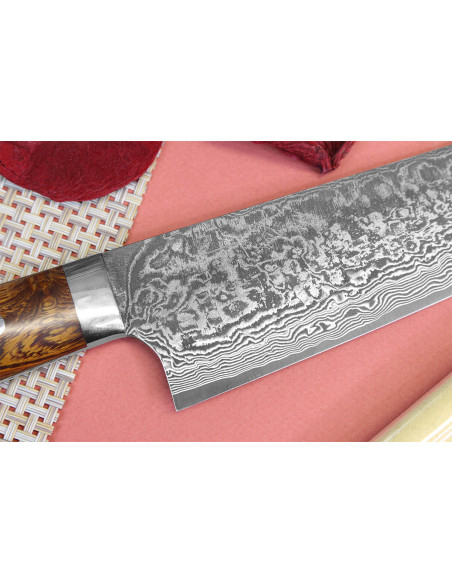
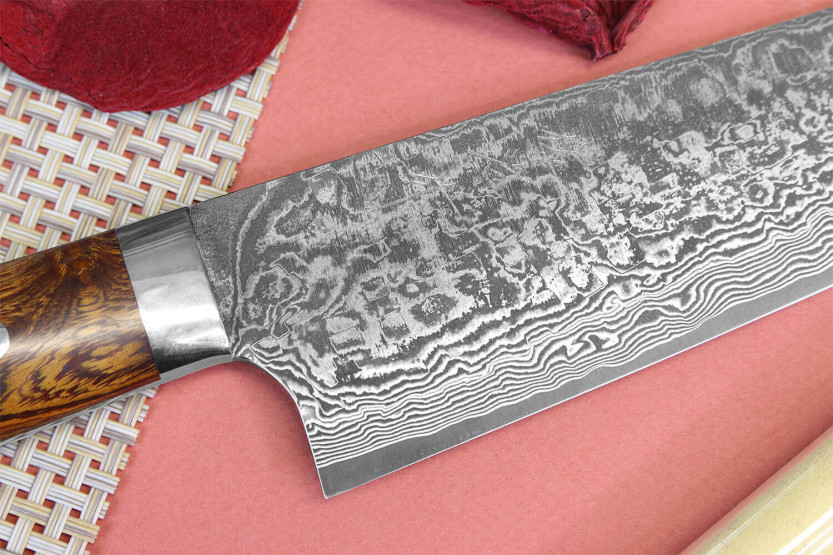
The blade is damascened, i.e. constructed from several superimposed layers of steel. In the center is a rigid core, followed by several layers of mild steel that soften the blade and make it less brittle in use.
Here, the core is made of Japanese R2 steel(also known as SG2), a stainless alloy produced by powder metallurgy. It's a rare and expensive steel, rarely found in cutlery, but highly appreciated nonetheless!
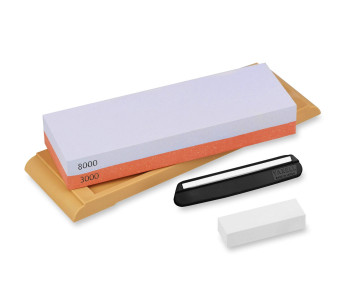
With a hardness of 63 HRC on the Rockwell scale, its cutting edge is perfectly durable, allowing you to space out your sharpening sessions. What's more, even with such hardness, it's easy to maintain with a Sharpening stone.
A final advantage of R2 is its purity. Microscopically speaking, its structure is very homogeneous, which makes it more resistant. For example, it is less likely to chip during use.
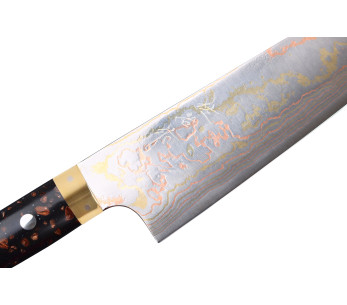
This alloy is then surrounded by several layers of nickel steel and stainless steel, which bring balance to this extreme rigidity. These mixed layers can be seen across the entire cutting surface: this is what forms the damascus finish.
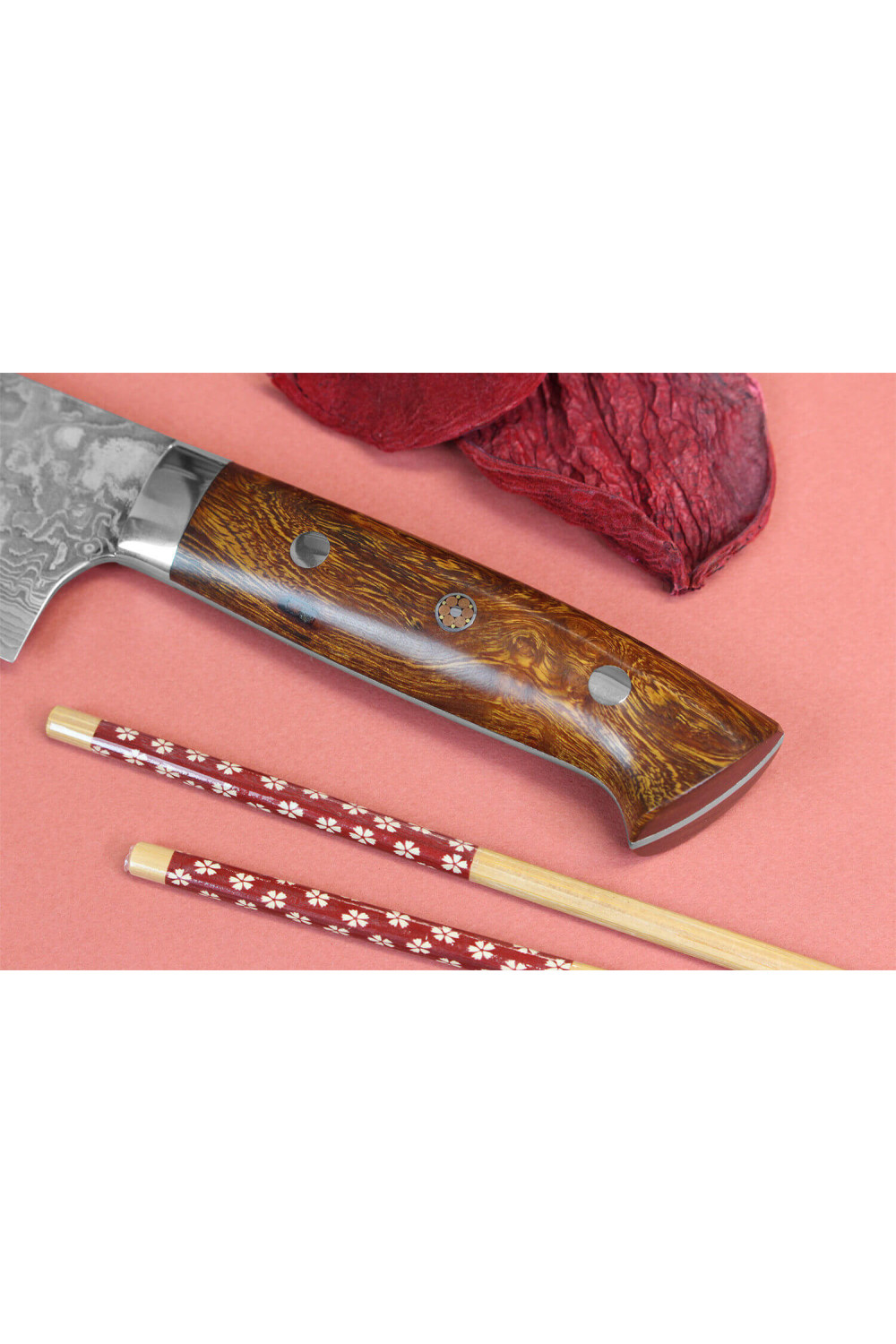
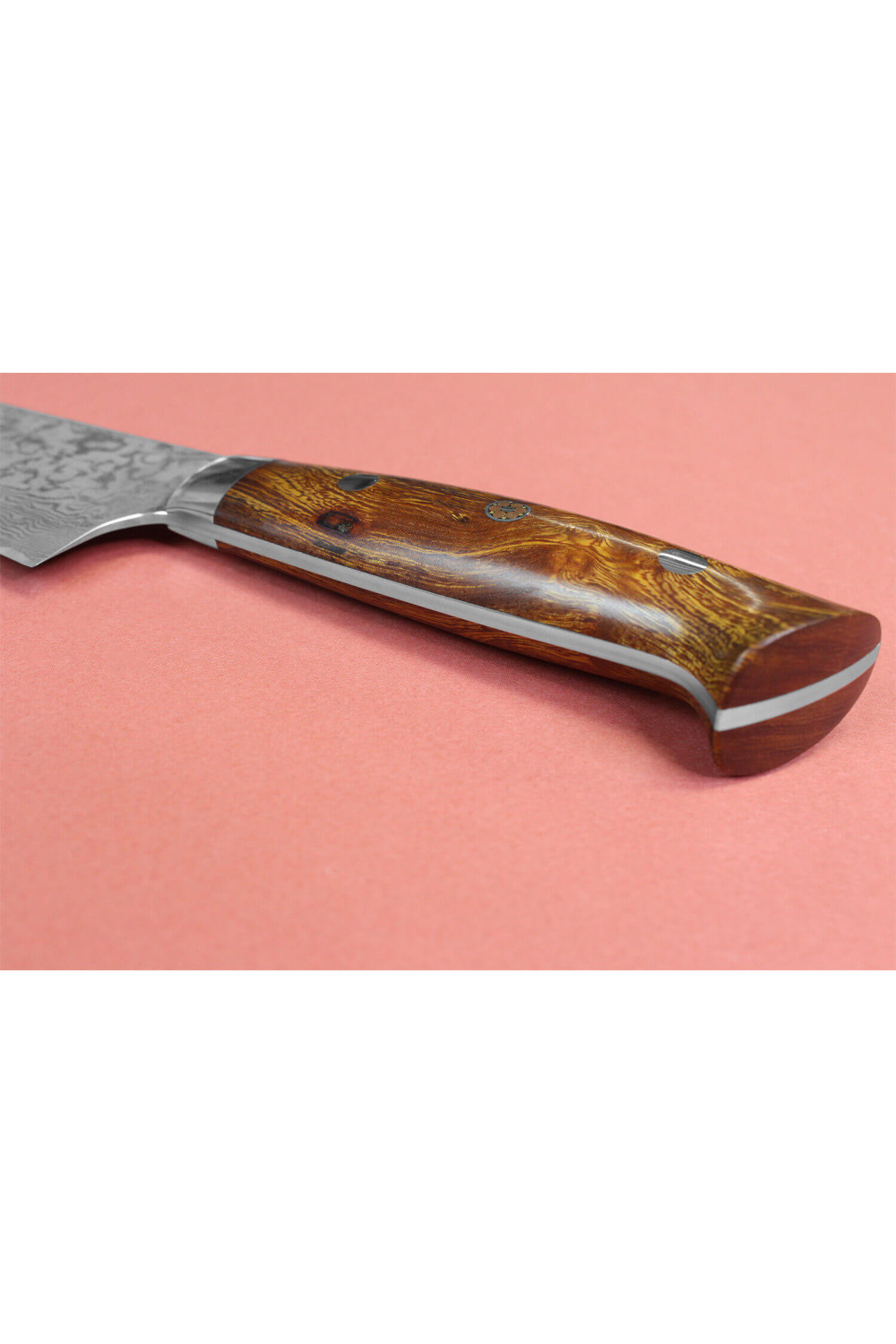
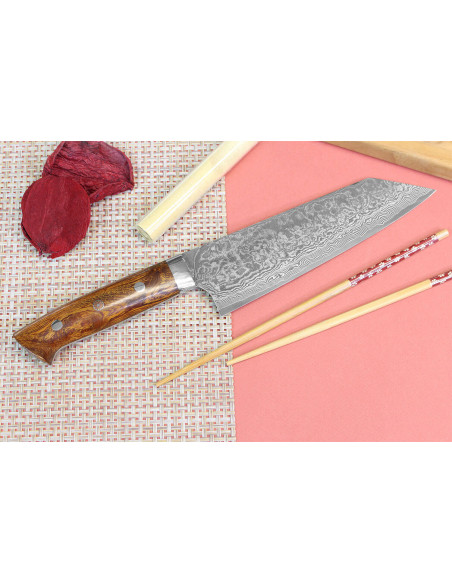
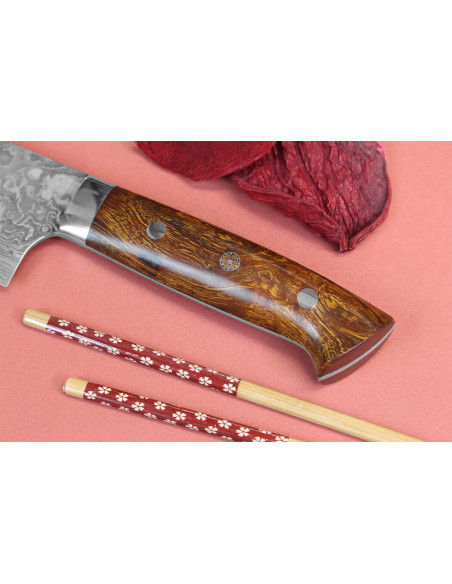
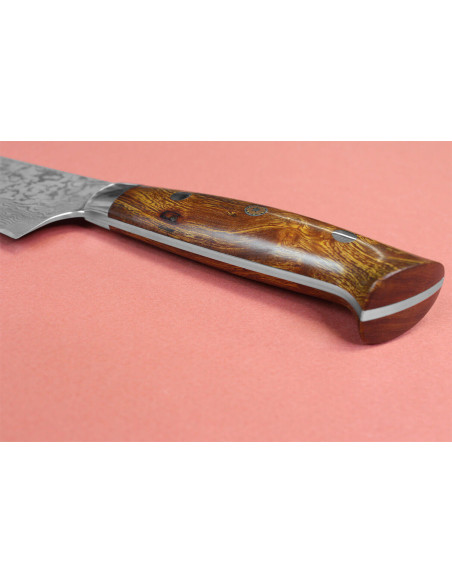
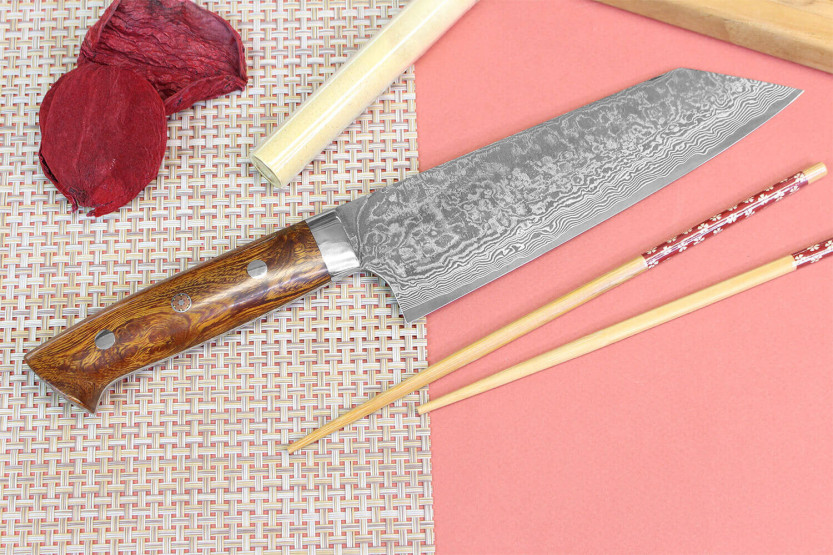
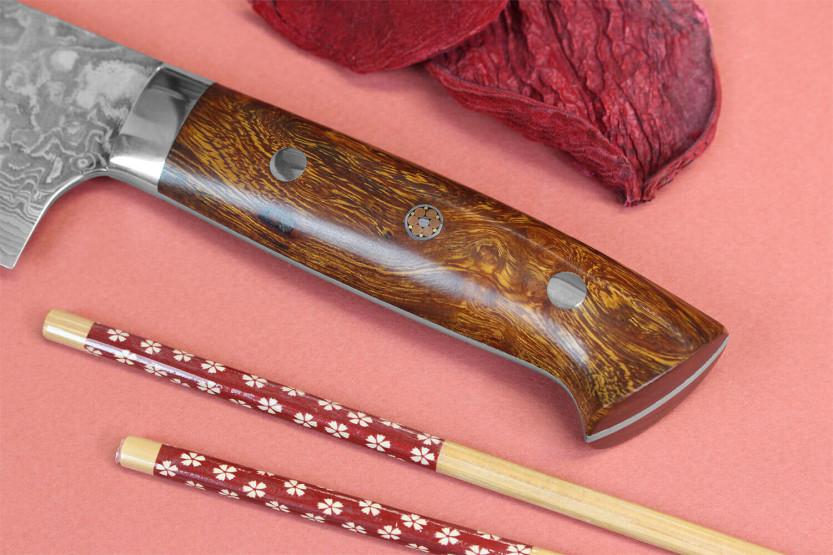
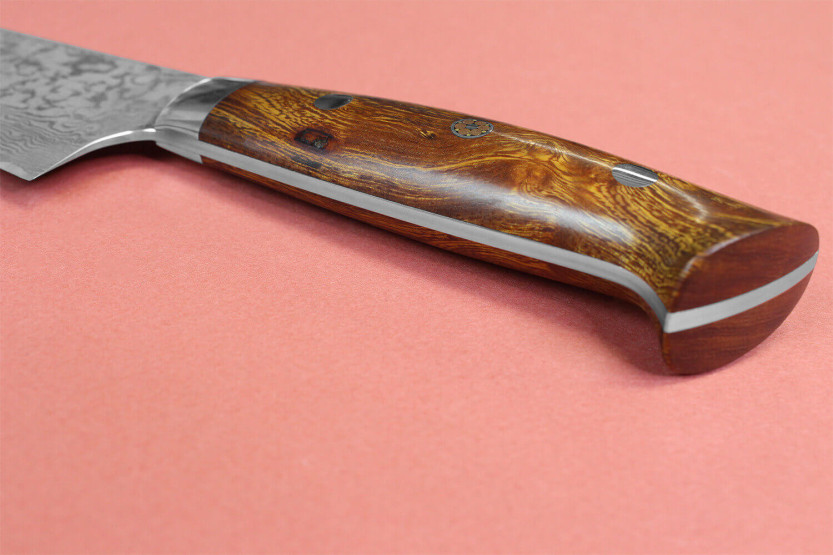
The handle is made of a beautiful ironwood. This species is particularly hard and dense. The color of ironwood is dark brown, with attractive lighter shades. The veins are unique to each knife, so no two will be the same.
The full tang blade is attached to the handle by 3 retaining rivets. The central rivet features an attractive mosaic pattern that not only adds a unique and original touch, but also contrasts beautifully with the darker wood color.
The stainless steel bolster joins the handle to the blade. This knife is perfectly suited to ambidextrous use.
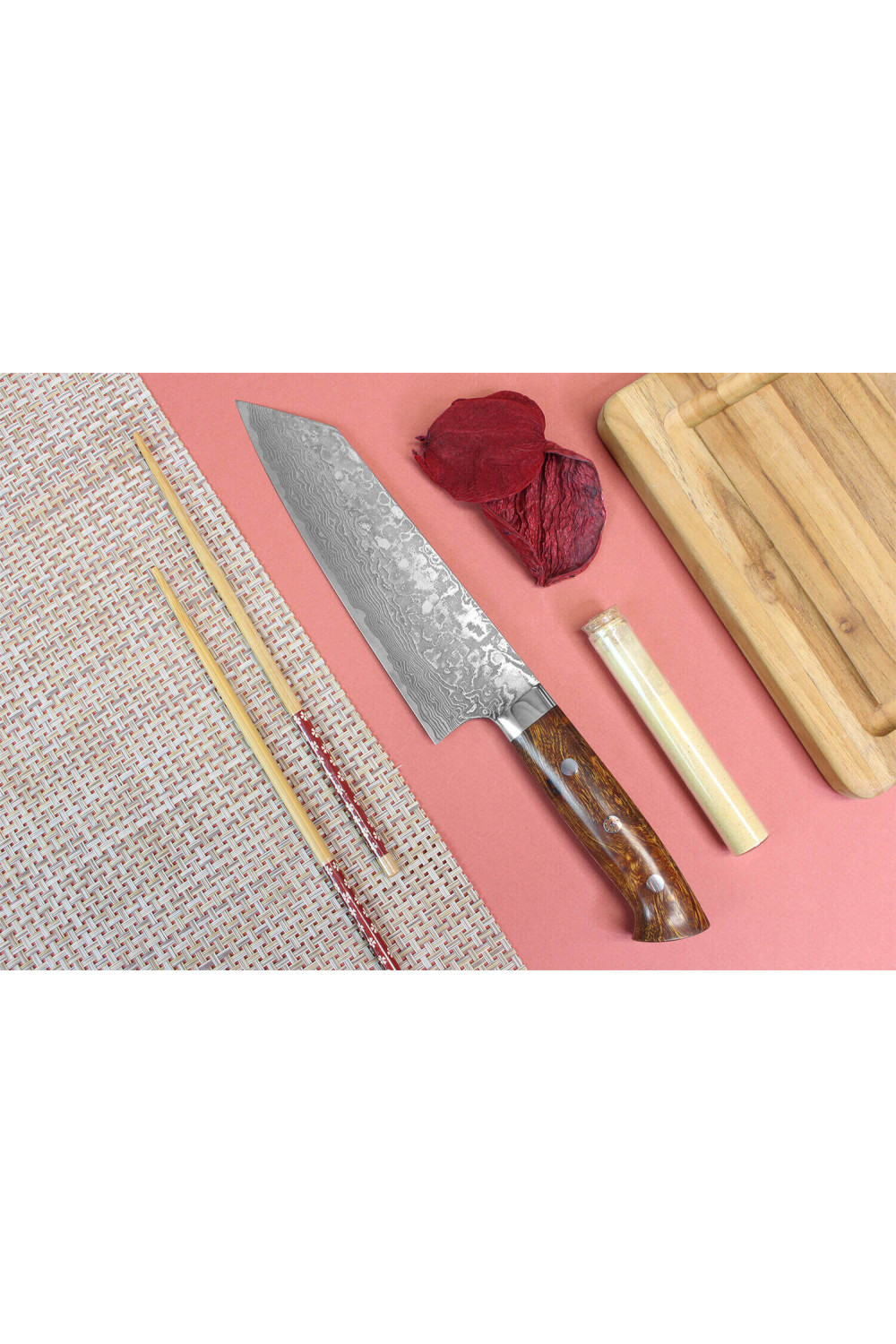
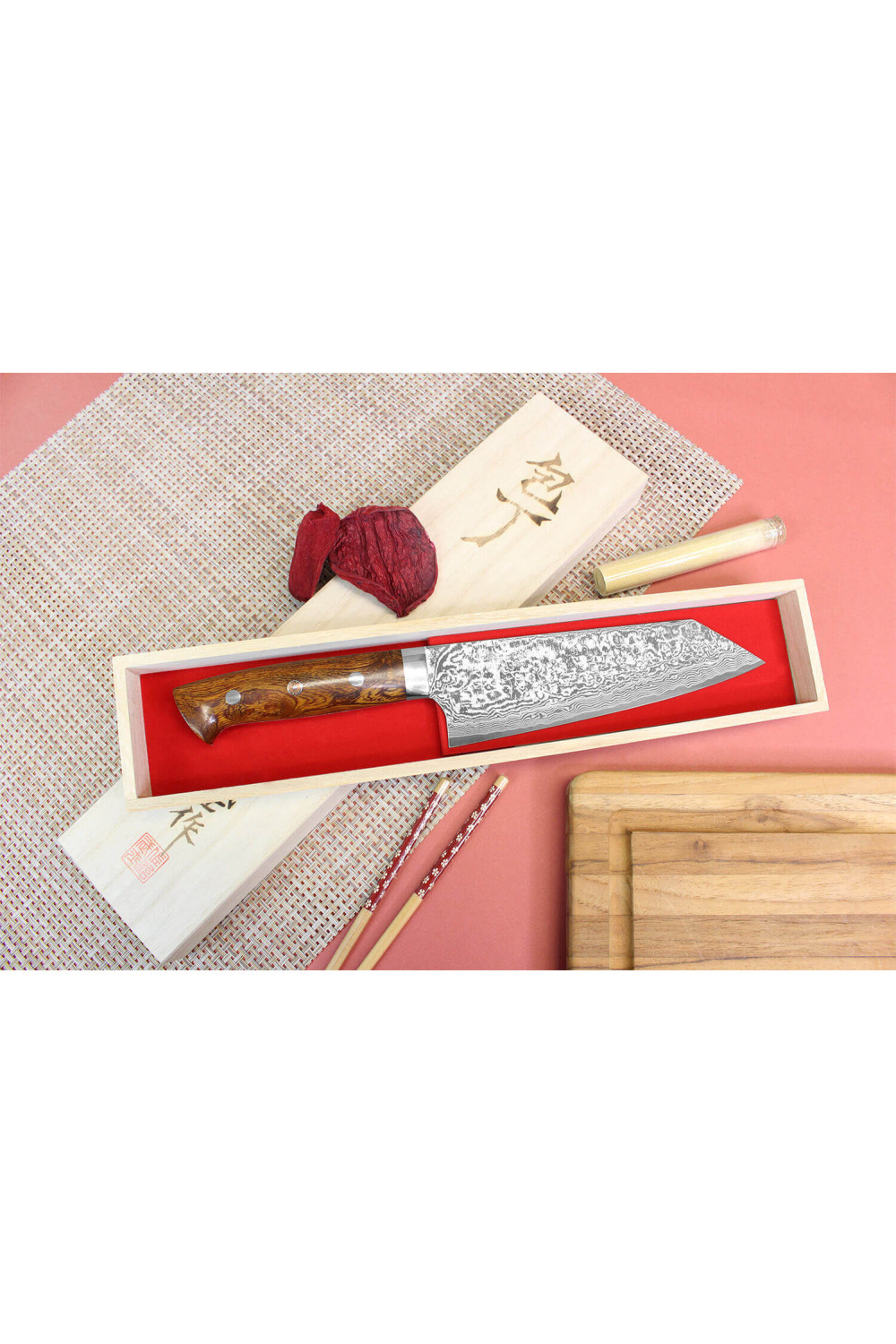
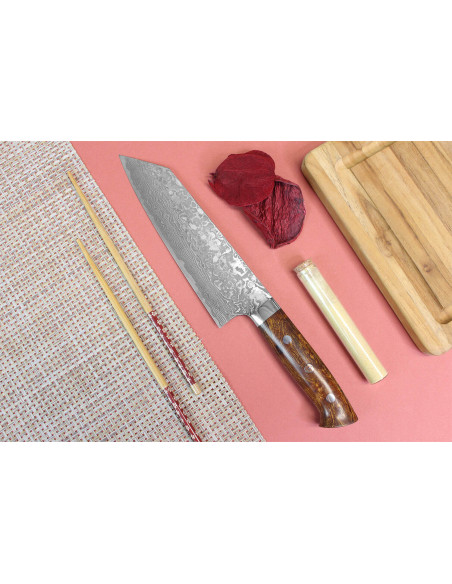
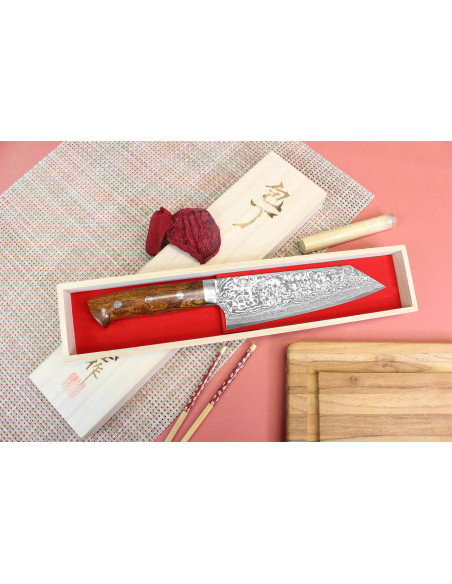
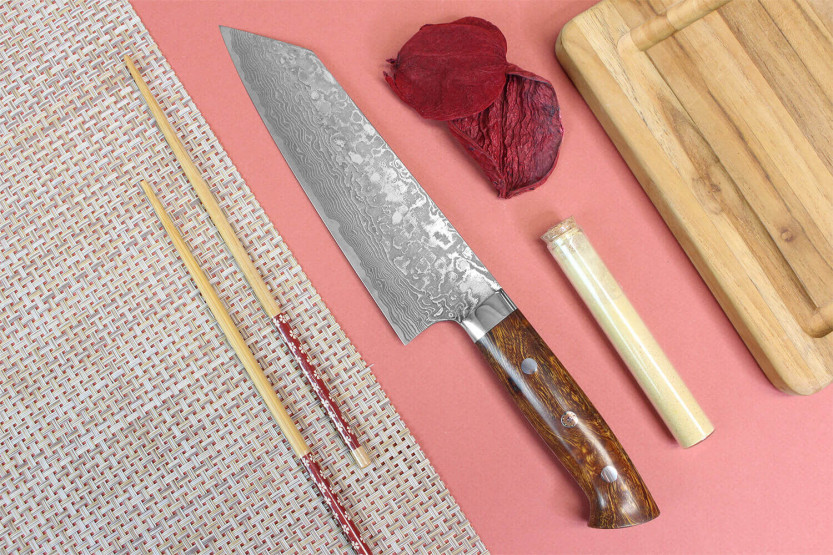
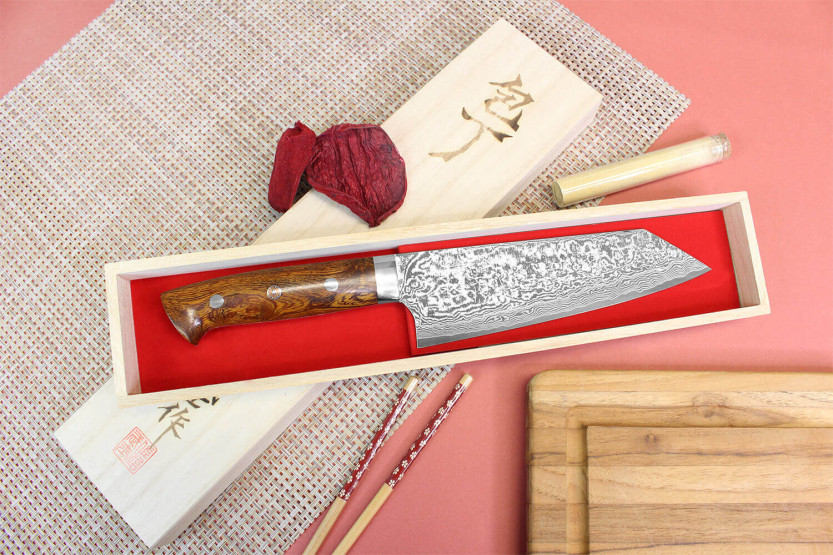
It comes in an attractive light wood box, perfect if you want to give it as a gift!
How to care for the knife :
The knife should not be put in the dishwasher. It should be washed by hand under lukewarm water, using a sponge and a mild cleanser. Once washed, wipe with a soft cloth to remove all traces of moisture, then store.
Please note that quantities are limited, due to the provenance of the knives and the capacity of the blacksmith, who performs all operations by hand.
Complete your kitchen equipment by discovering all the Takeshi Saji knife ranges!




 By buying this product you can collect up to