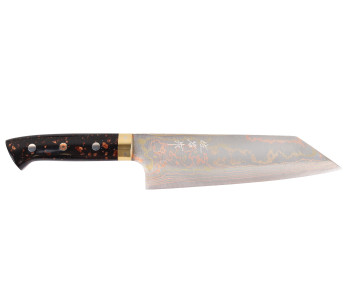
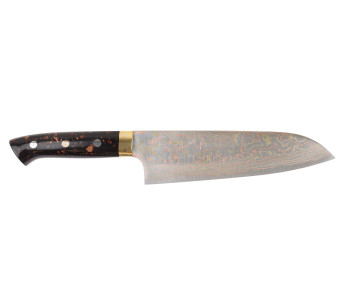
This knife was created by blacksmith Takeshi Saji san. He is considered an expert in the field of cutlery and enjoys a fine reputation in his country. His knives are both elegant and efficient. He knows how to combine ancestral forging techniques with innovative designs, enabling him to appeal to the widest possible audience. That's why he was voted "master traditional craftsman" in the 90s.
He works at the famous Takefu Knife Village , one of Japan's leading knife and cutting Utensils manufacturing centers. This renowned facility brings together traditional blacksmiths in workshops, enabling them to keep ancestral know-how alive. A new generation of apprentices is being trained here.
As a result, the quantities created are limited, due to the origin of the knives and the capacity of the blacksmith, who carries out all operations by hand.
Let's take a closer look at the knife's characteristics:
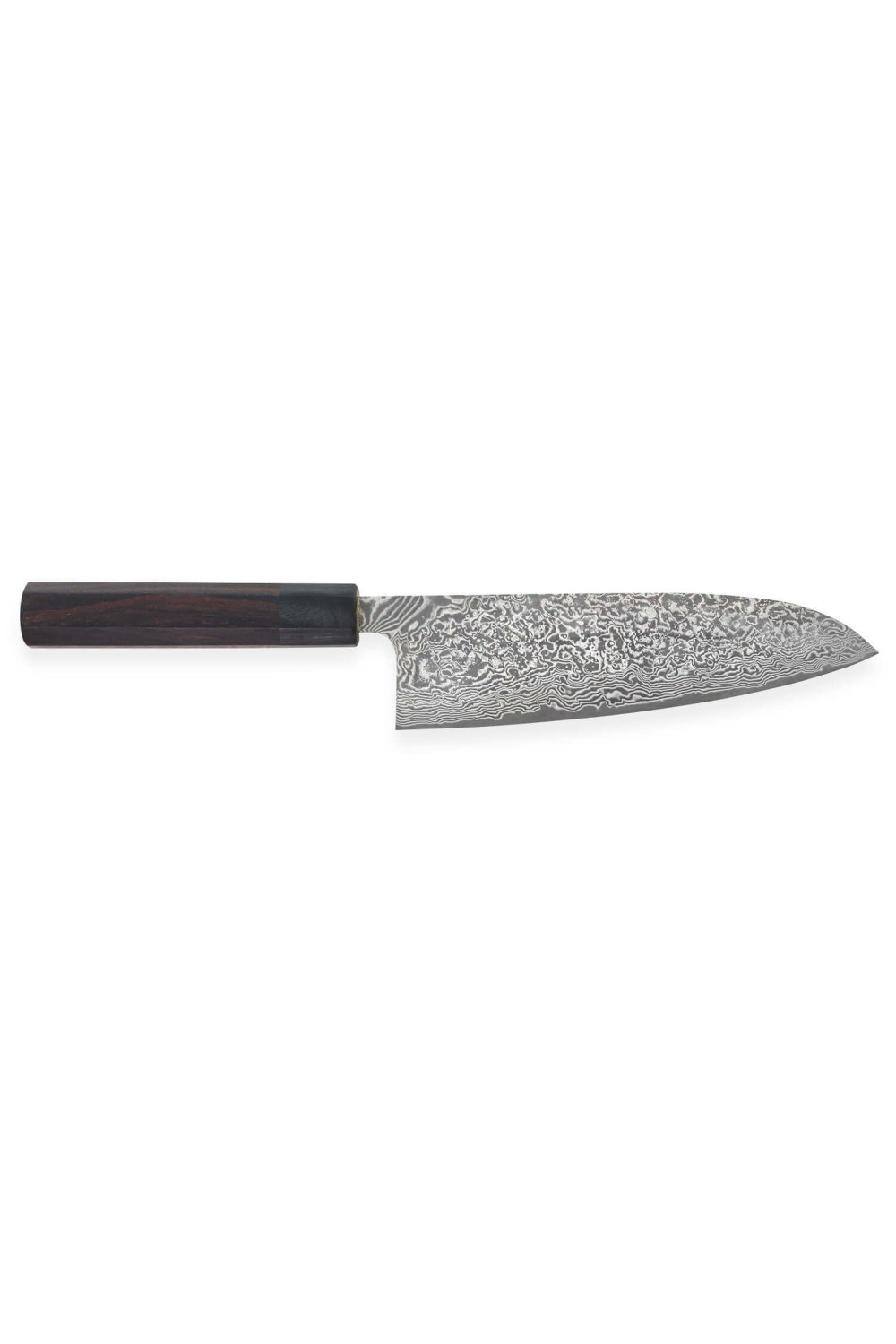
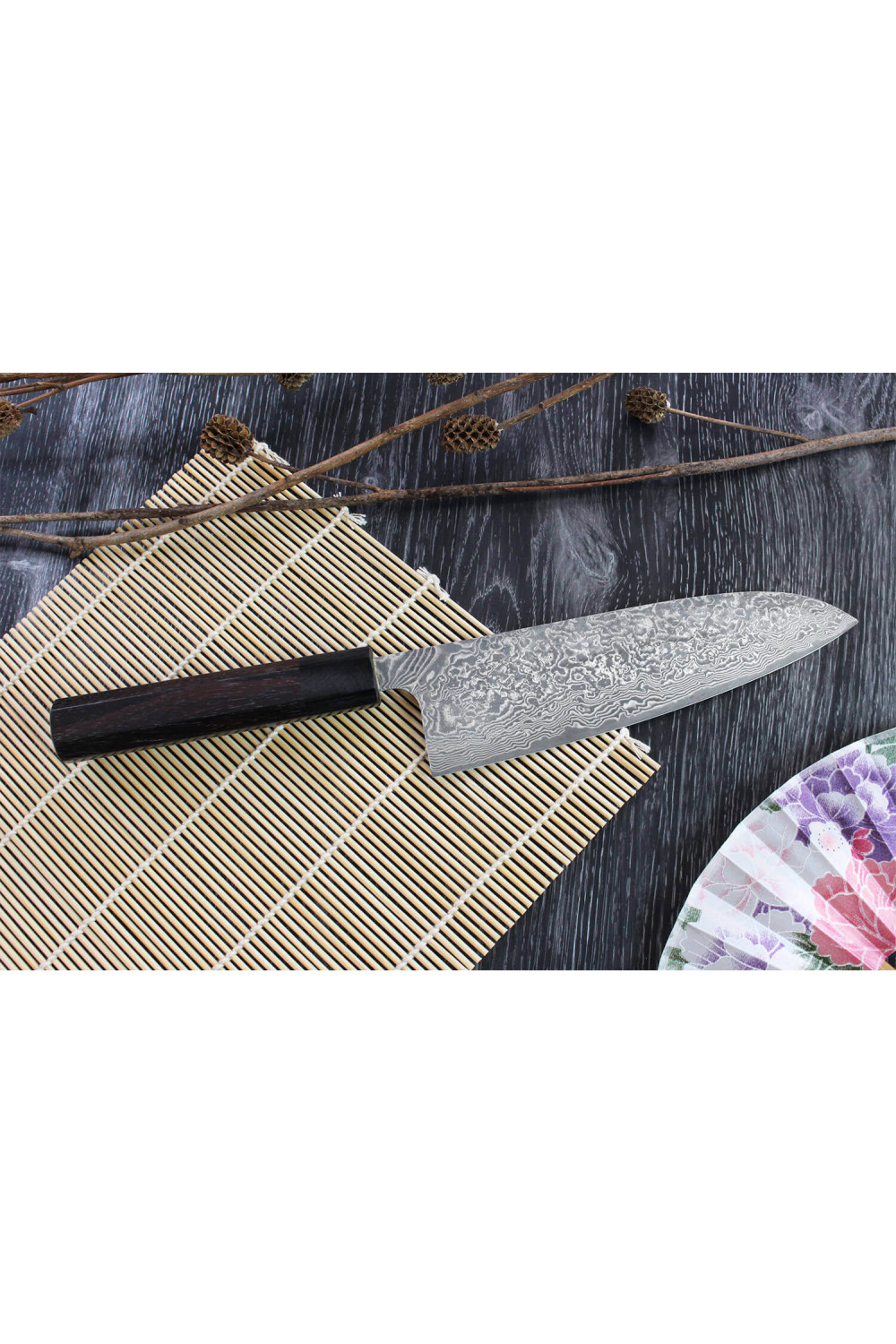
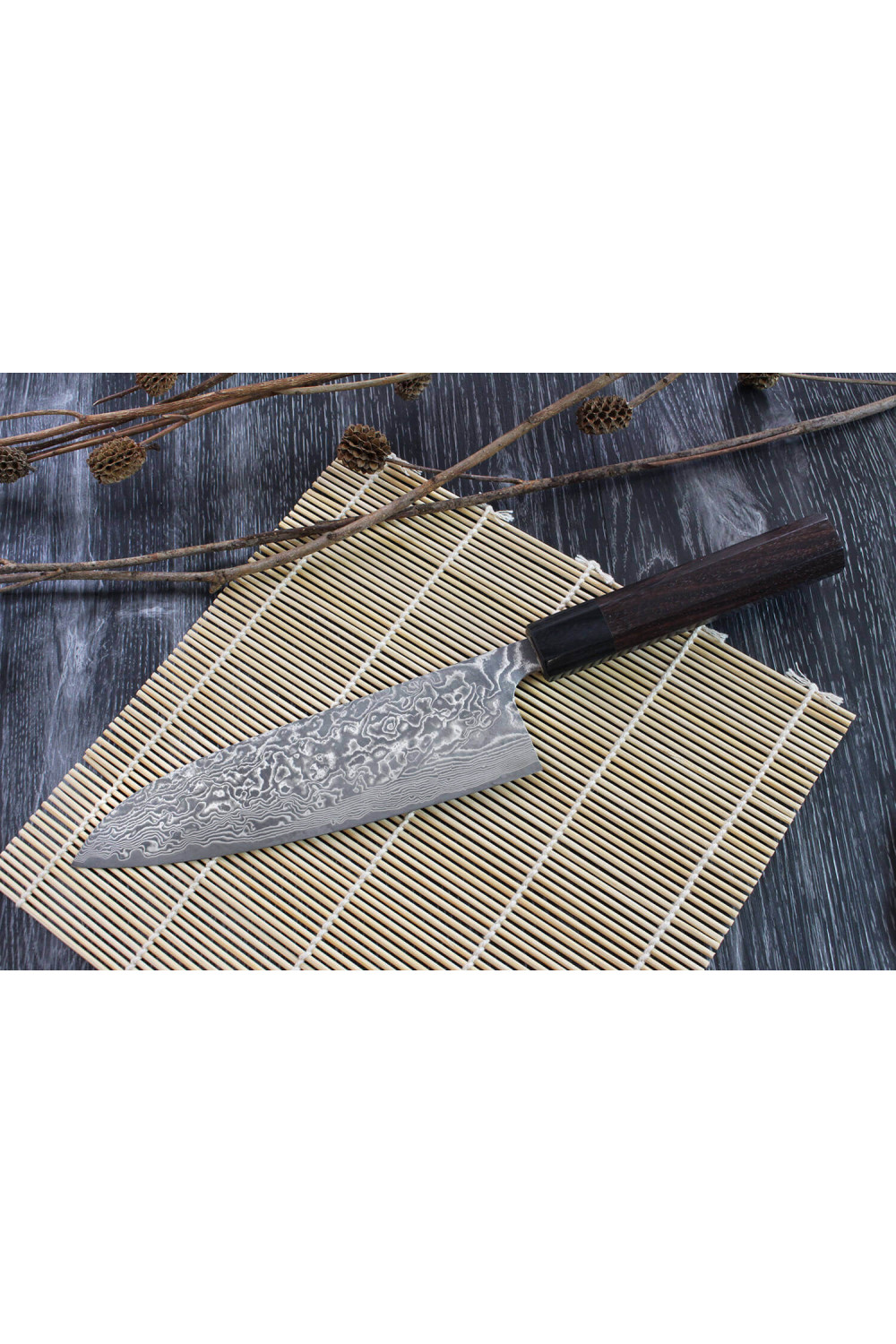
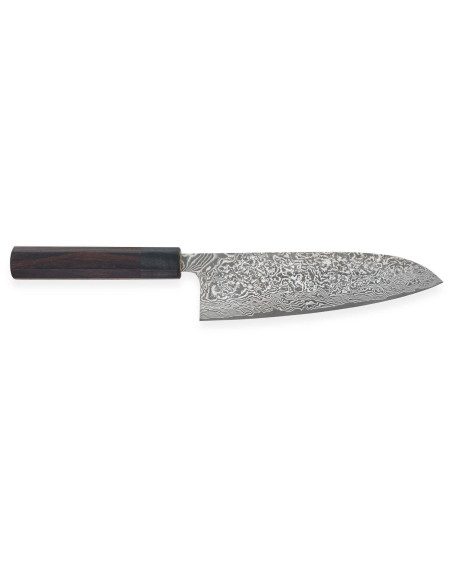
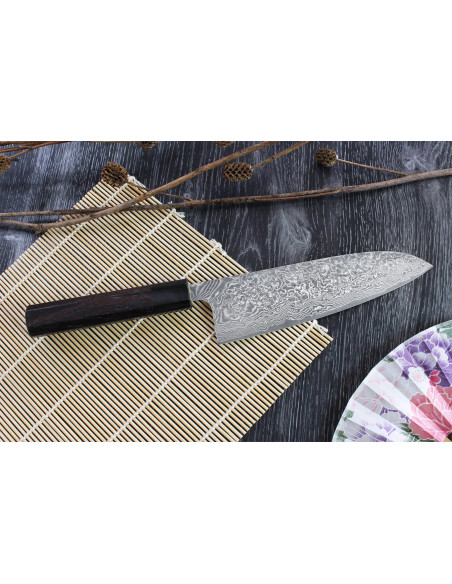
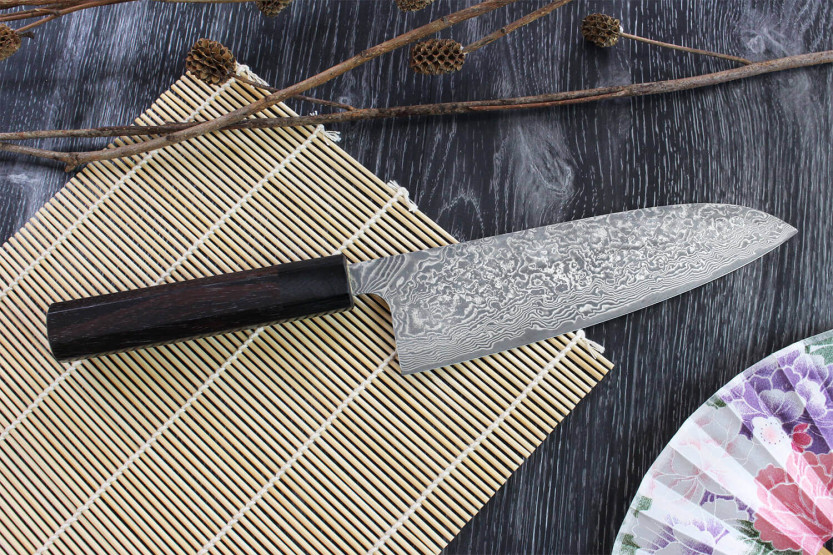
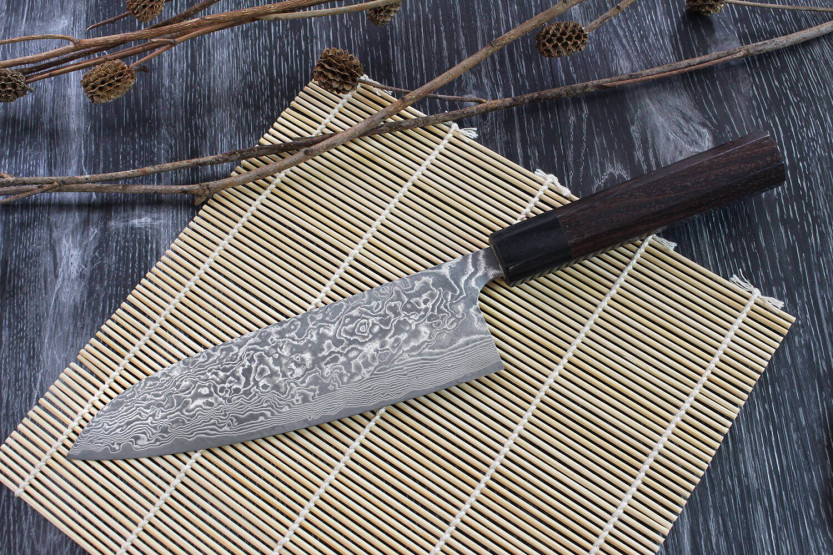
The 18cm santoku knife performs several functions: chopping, mincing and mincing. It's the Japanese equivalent of a Western chef's knife!
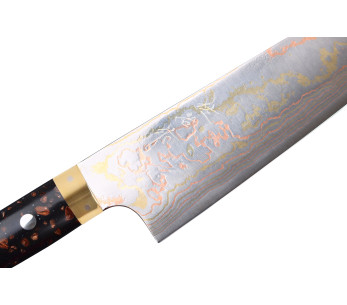
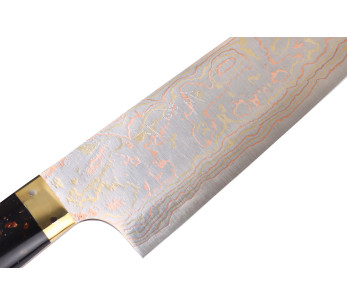
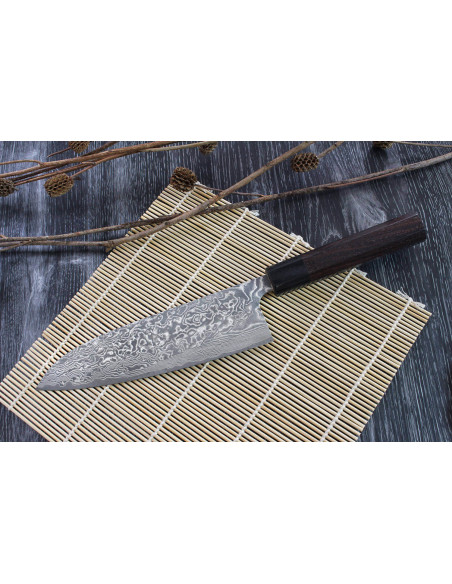
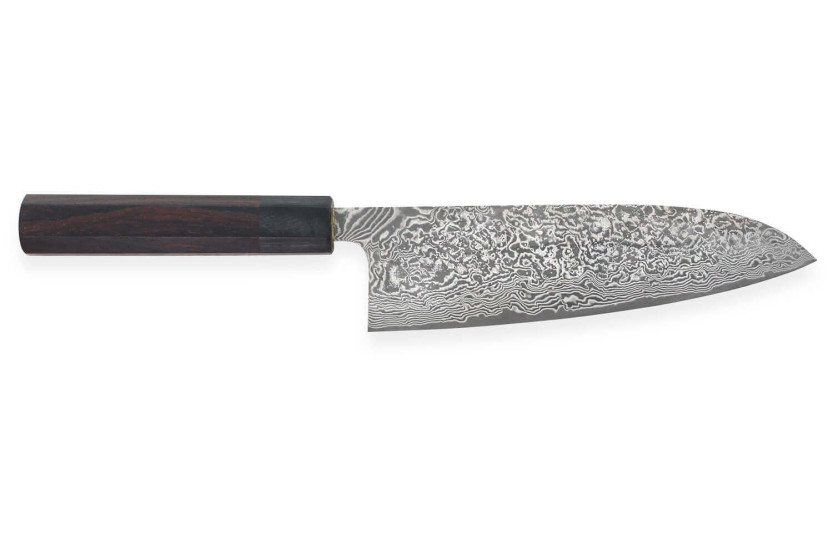
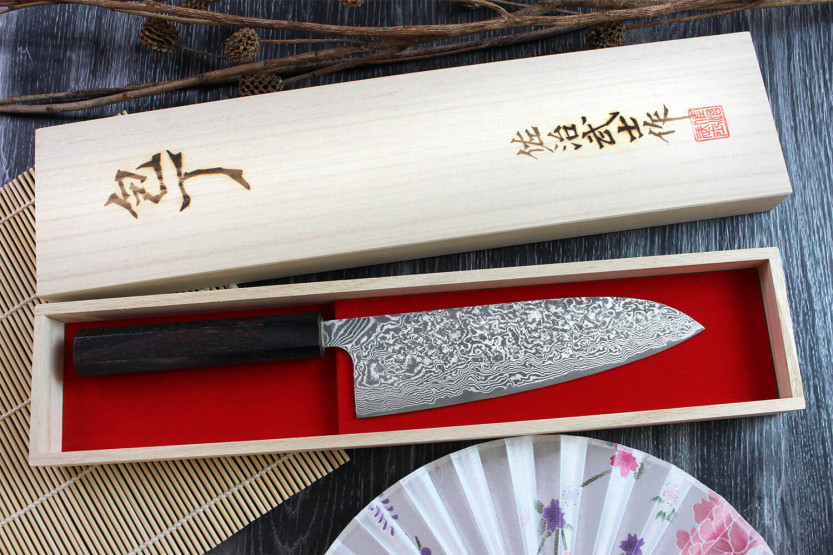
The blade is damascened, so its structure can be broken down into 2 stages:
- At the heart of the knife isJapanese R2 steel (also known as SG2): a stainless alloy produced by powder metallurgy. It has a total strength of around 63 HRC on the Rockwell scale, ensuring a long-lasting cutting edge. What's more, it's easy to maintain should the need arise. In fact, you can restore its effectiveness with a Sharpening stone, to maintain its incredible sharpness, which will surprise you from the very first use (be careful with your fingers). If you use a microscope, you'll see that its structure is very homogeneous, ensuring great strength.
- Once the steel is established in the center, it is surrounded by several layers of stainless steel and highly nickel-enriched steel (the one with the darkest color). This mixture creates a random contrast on the cutting surface.
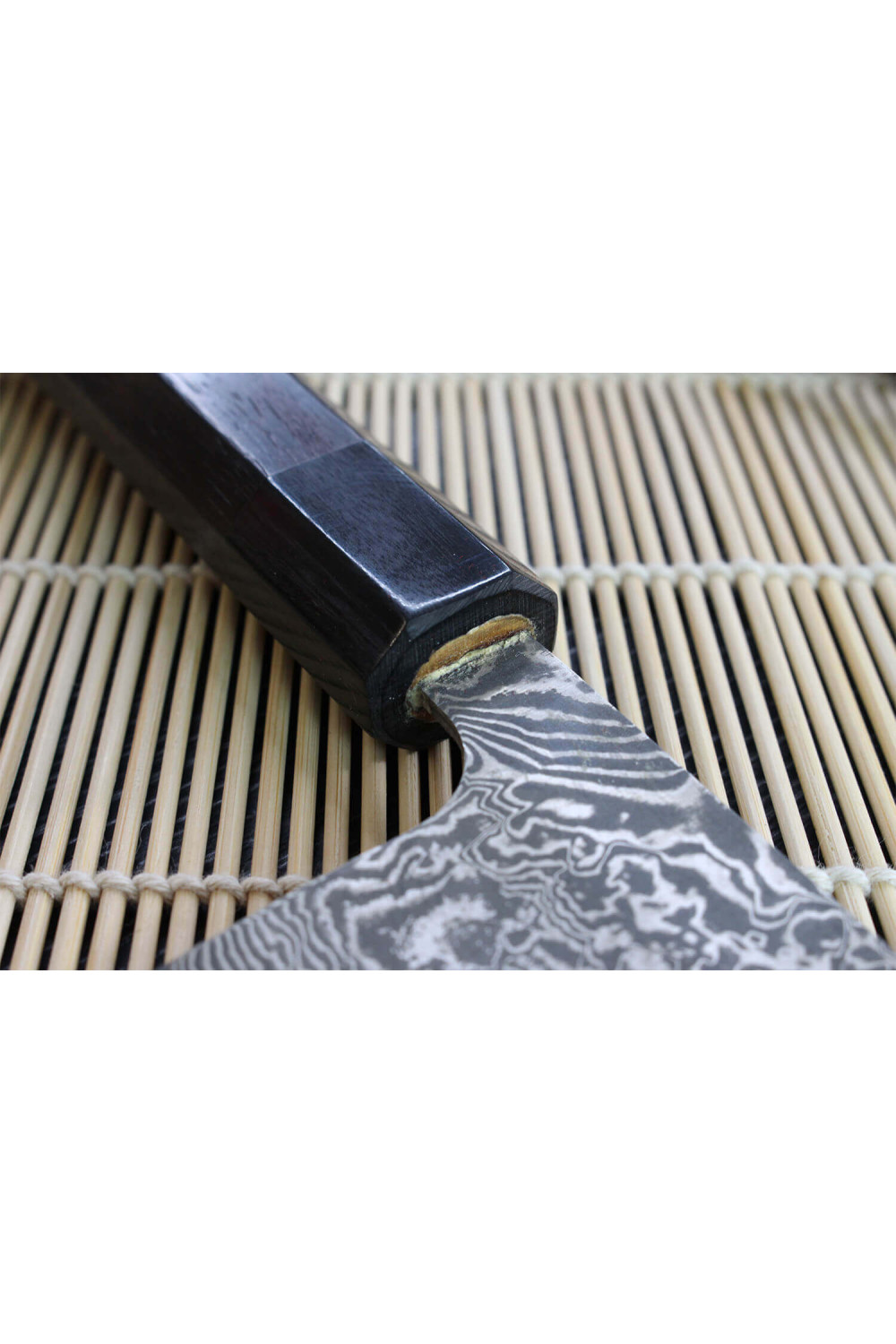
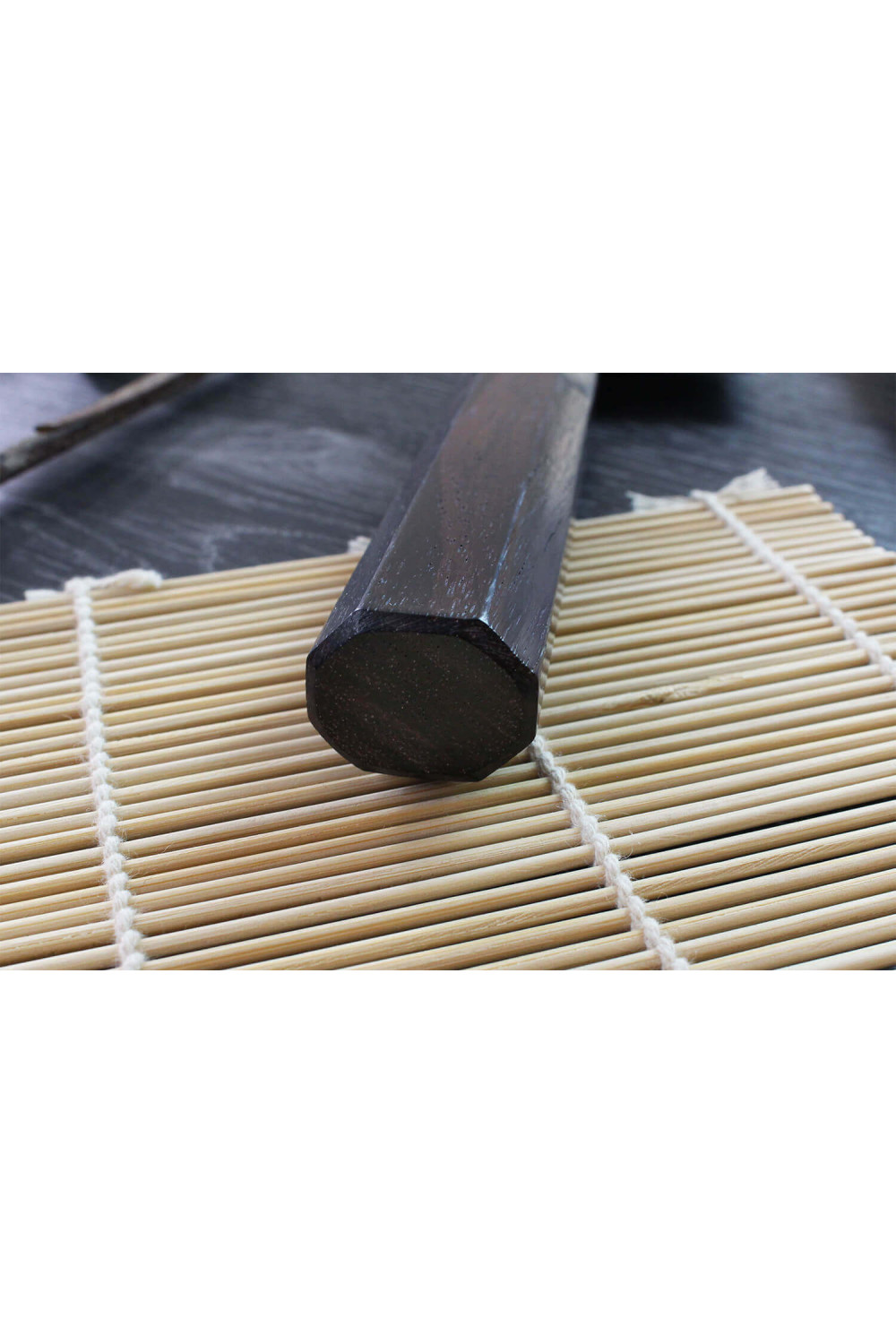
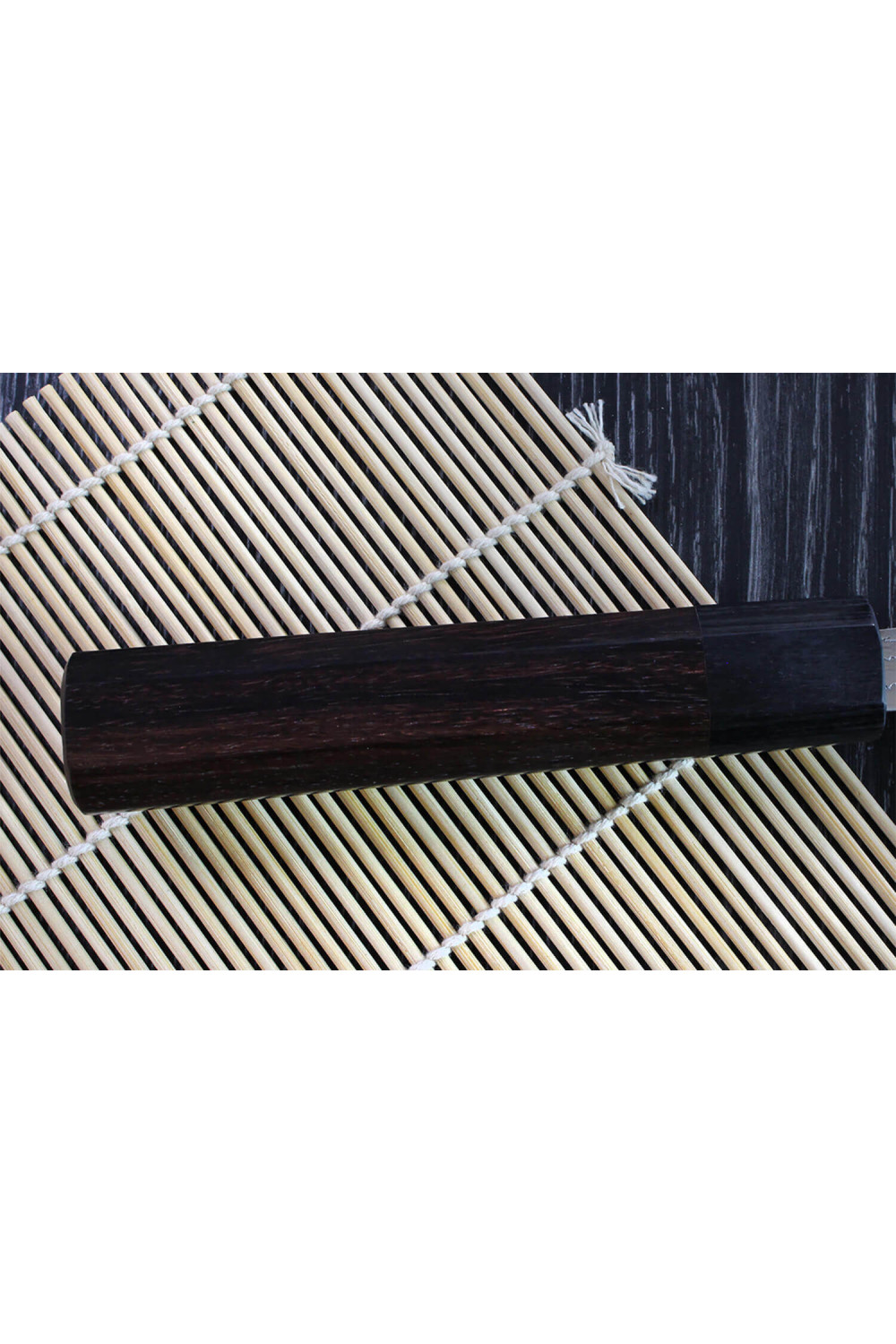
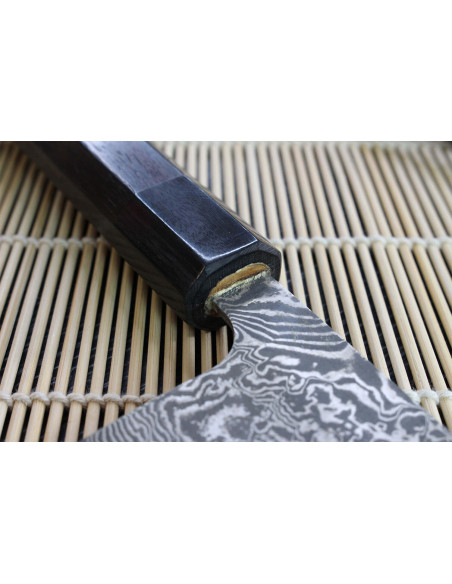
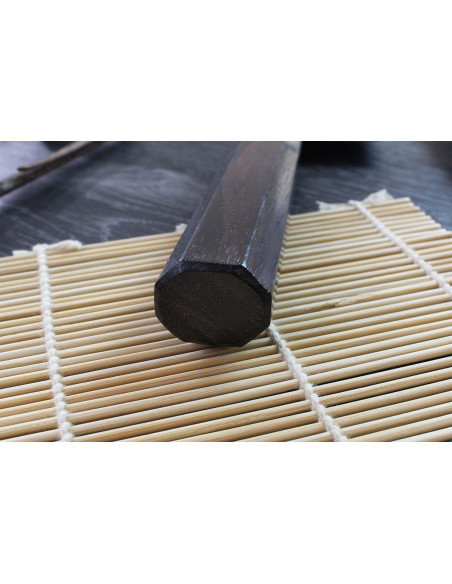
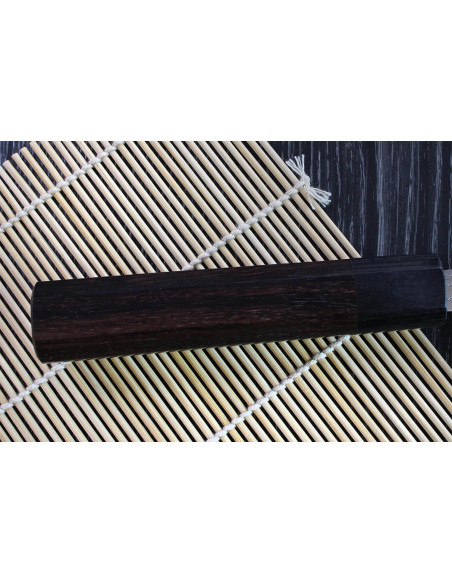
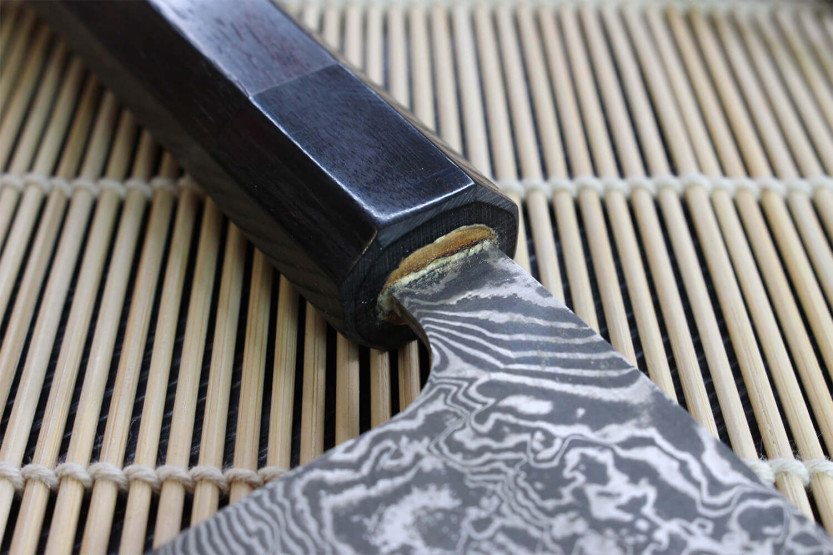
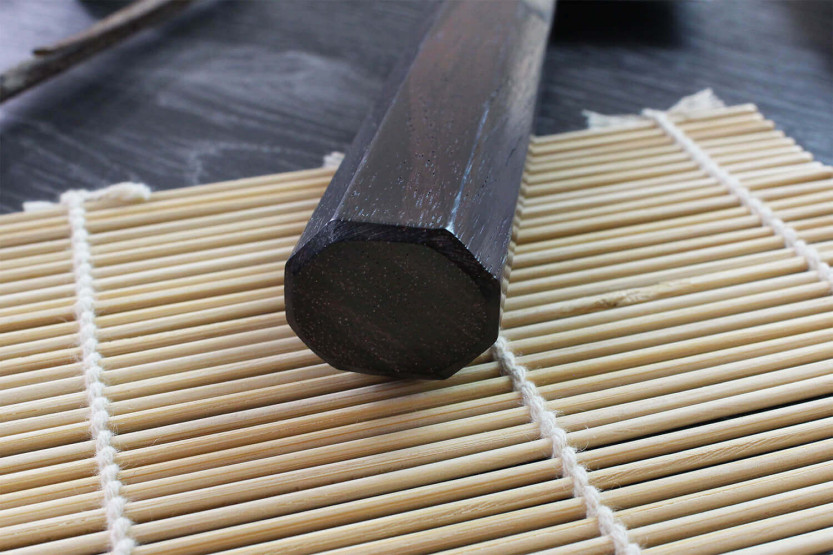
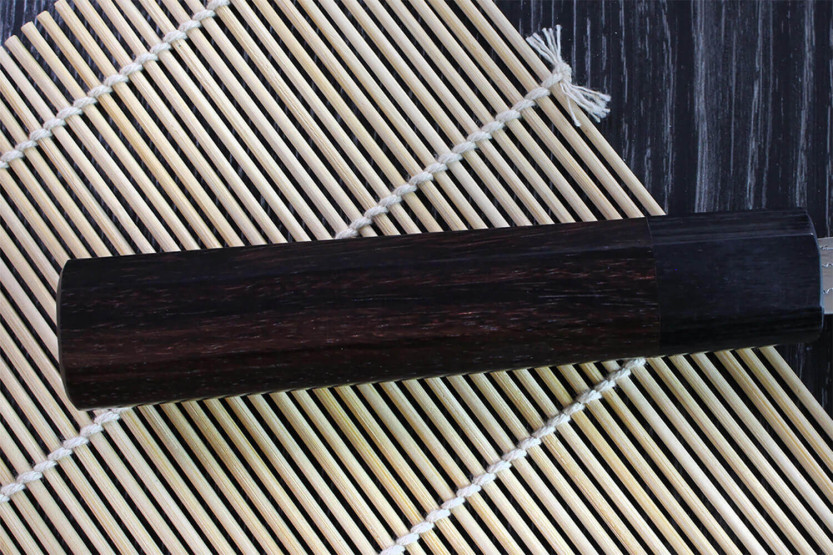
The blade is complemented by a sandalwood handle: a beautiful dark wood that gives the knife a lot of character. It is resistant to bacteria and, depending on the maturity of the tree, is considered precious. The veins running along its surface are unique, so each piece will be different. The whole is octagonal in shape, to suit both right- and left-handed cooks. It is completed by a bolster in black Pakkawood, a composite material resistant to humidity and temperature variations. Wood pulp fills the space between blade and handle. This makes it watertight and prevents small scraps from getting inside.
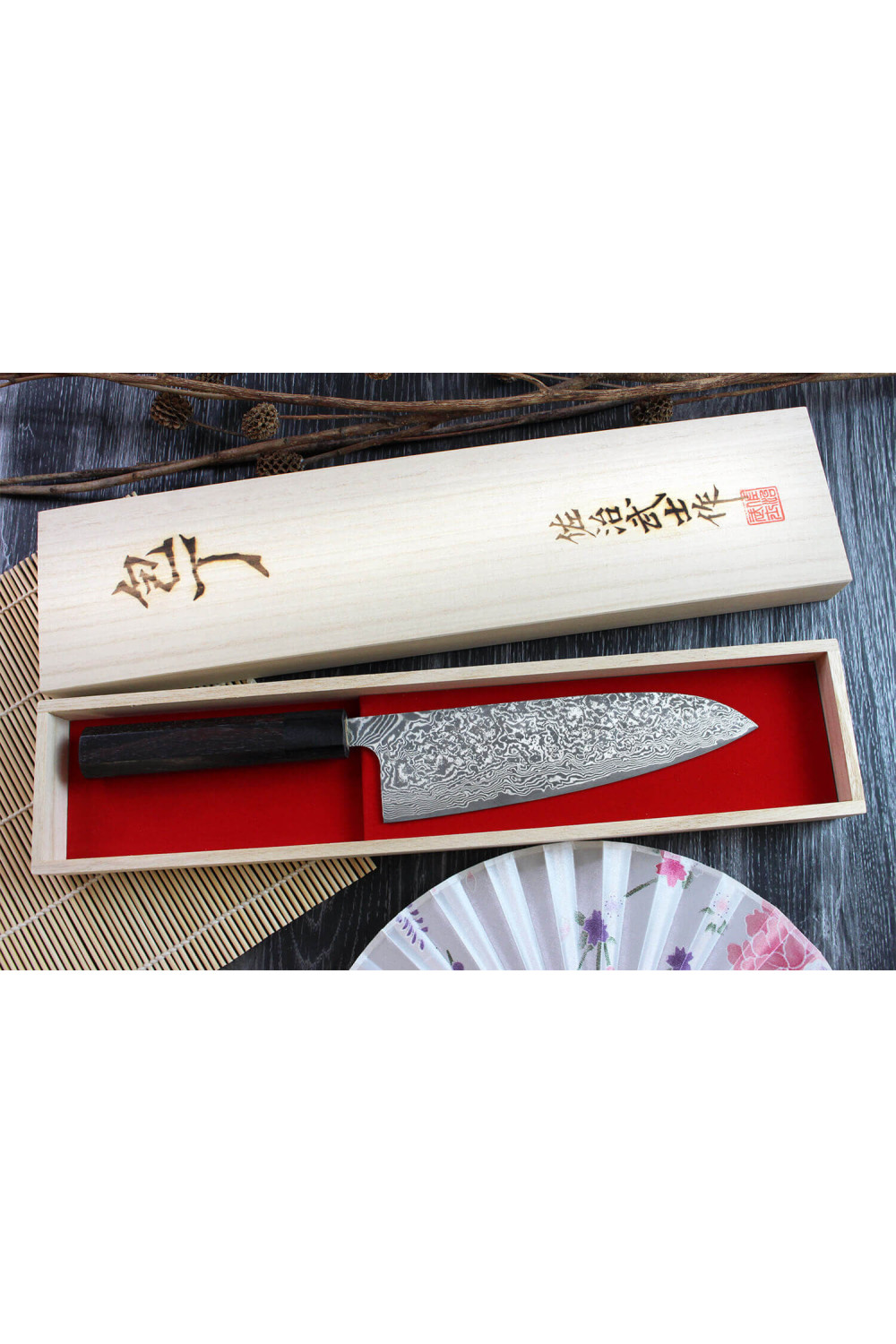
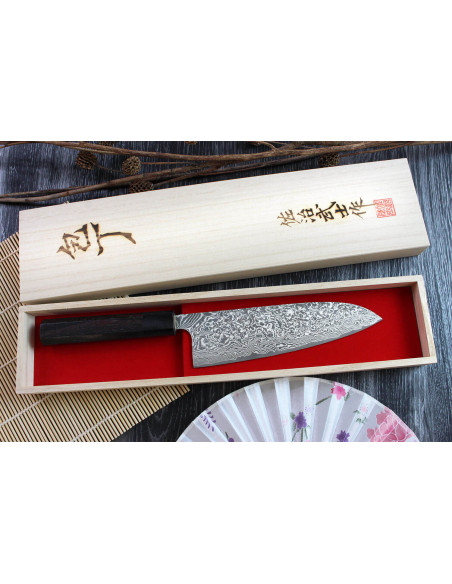
The knife is available in a wooden box, perfect if you want to give it as a gift!
For perfect care of the knife: it cannot be put in the dishwasher. It should be washed by hand in lukewarm water, using a sponge and a mild detergent. Once washed, wipe with a soft cloth to remove all traces of moisture, then store.
Find out more about all our Japanese knife models here!




 By buying this product you can collect up to