A collector's item inspired by the god of the wind
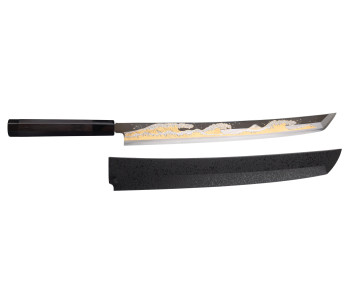
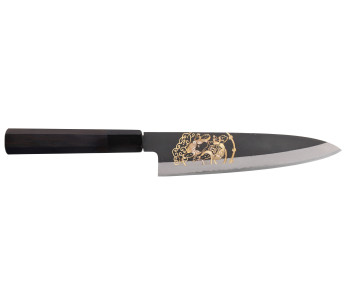
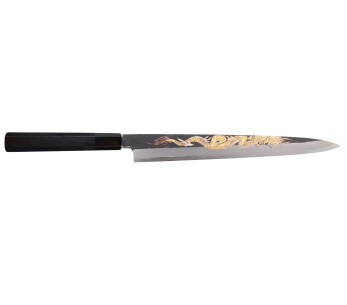
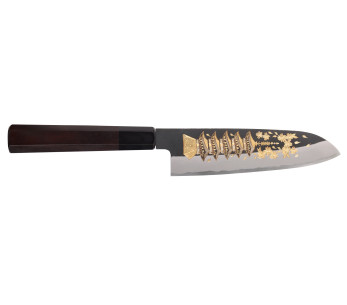
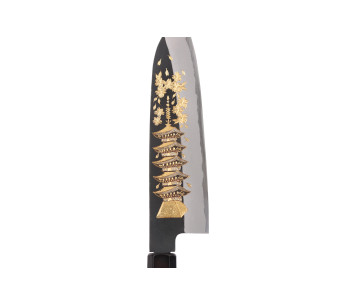
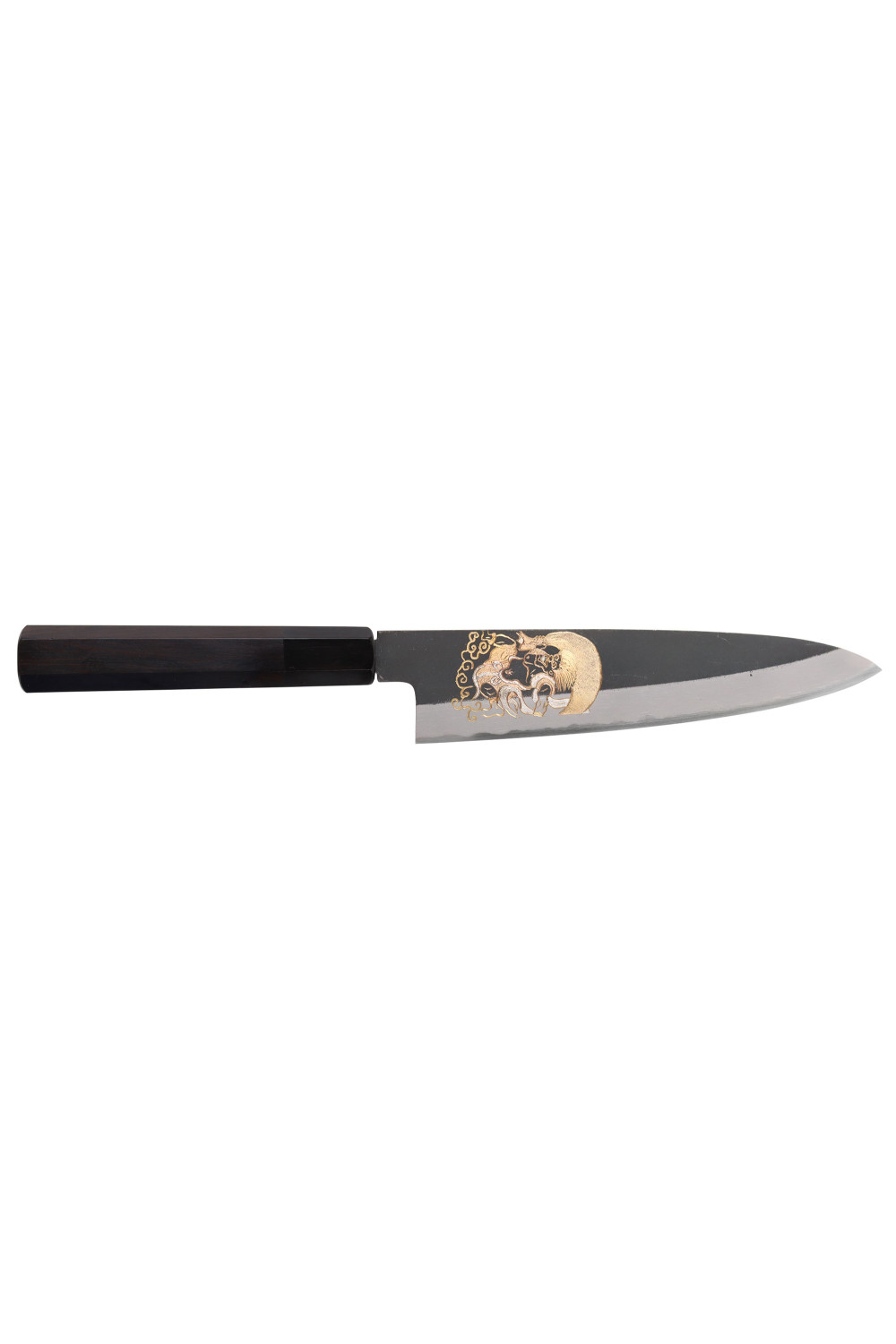
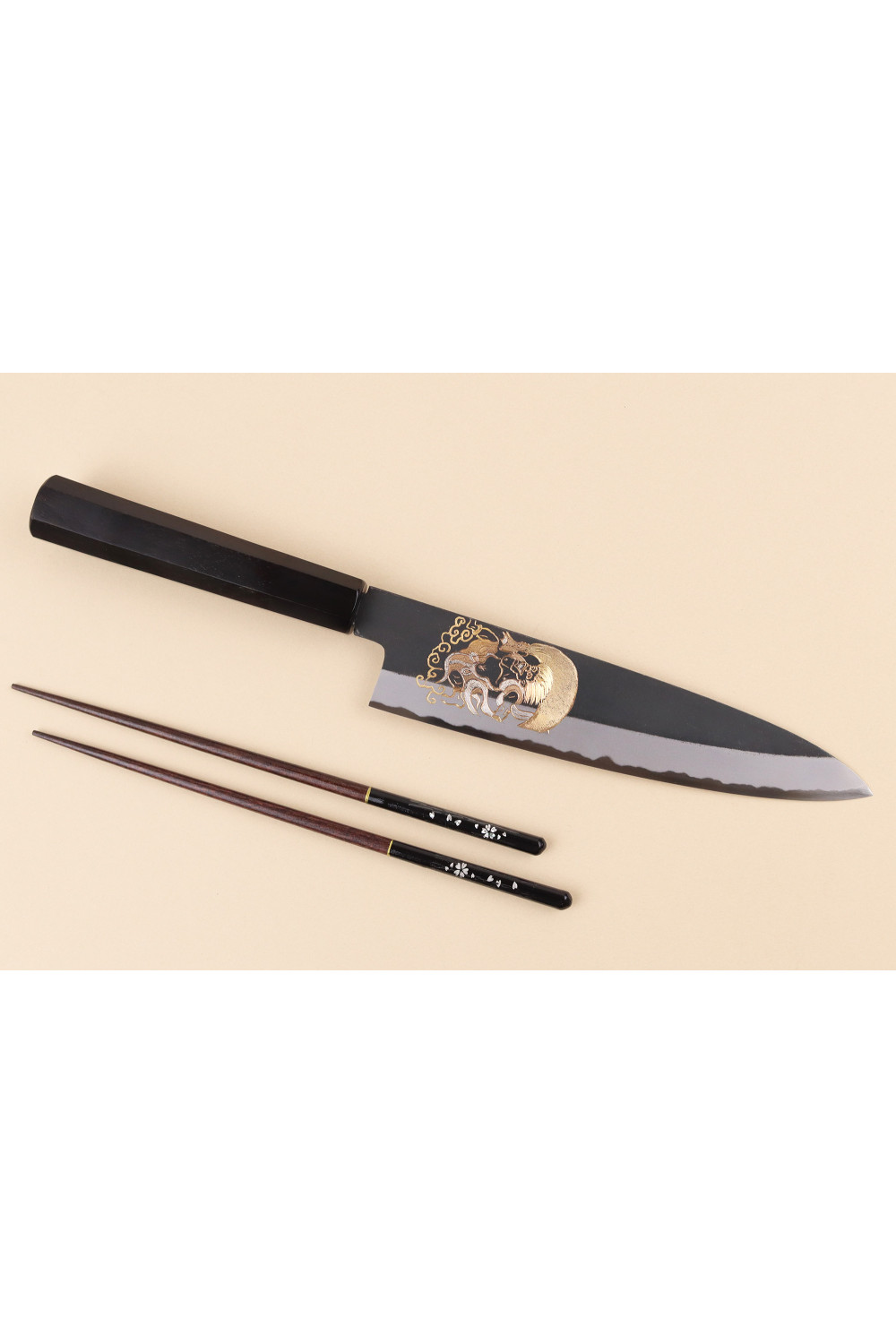
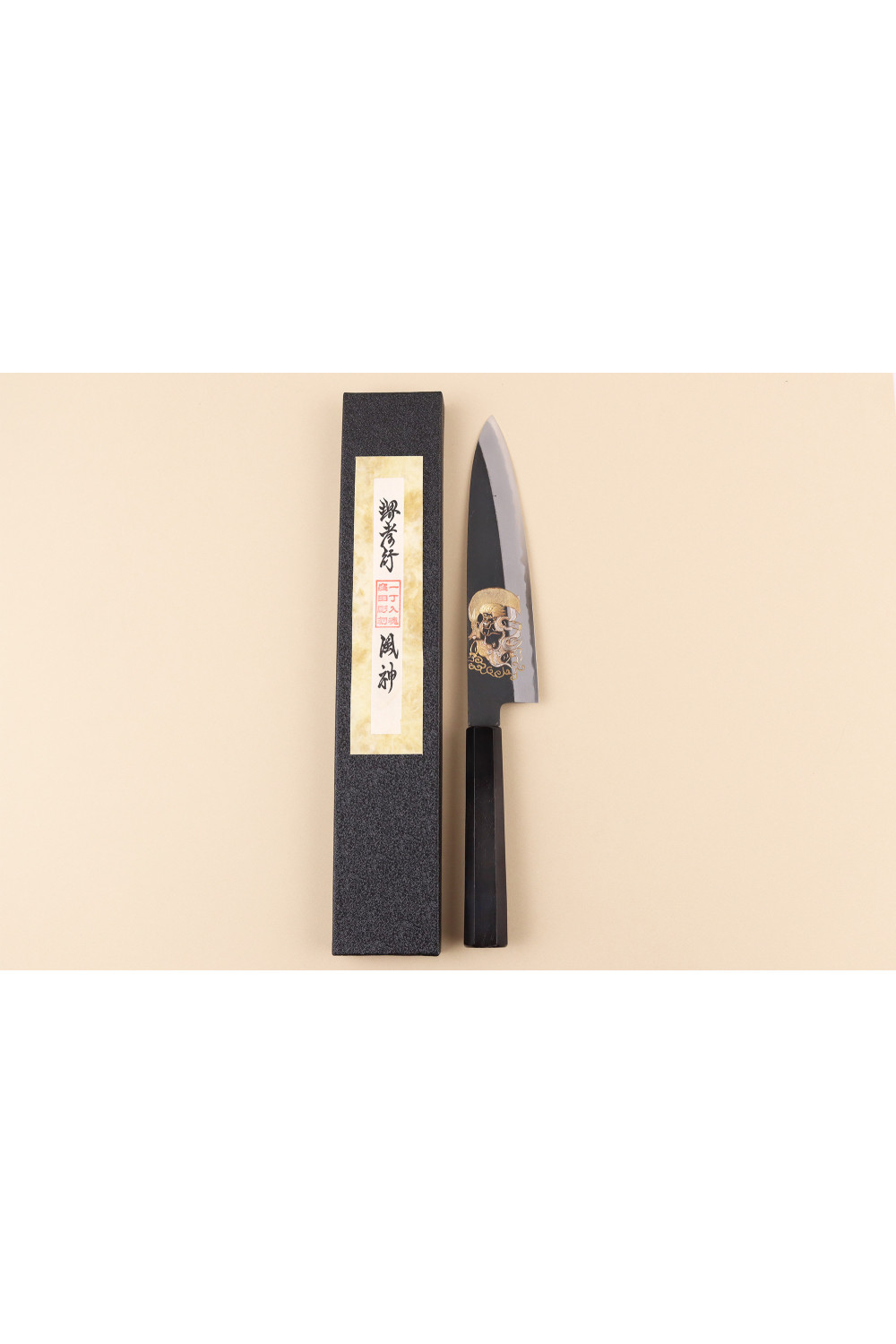
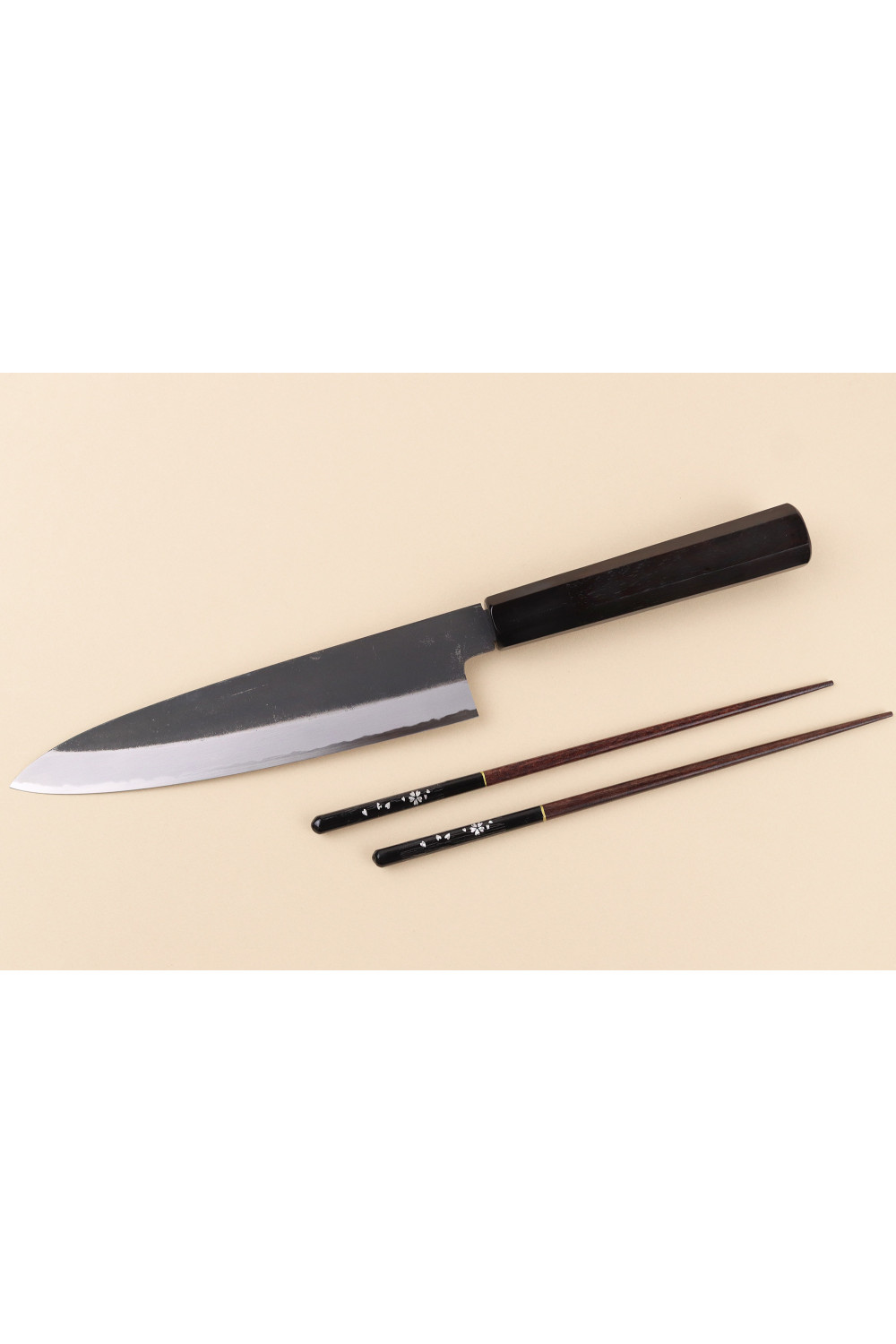
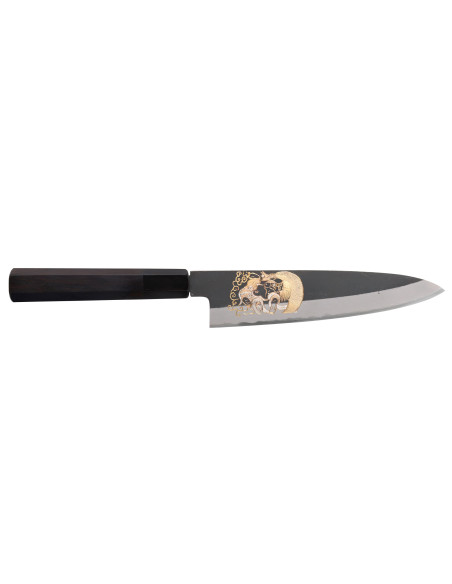
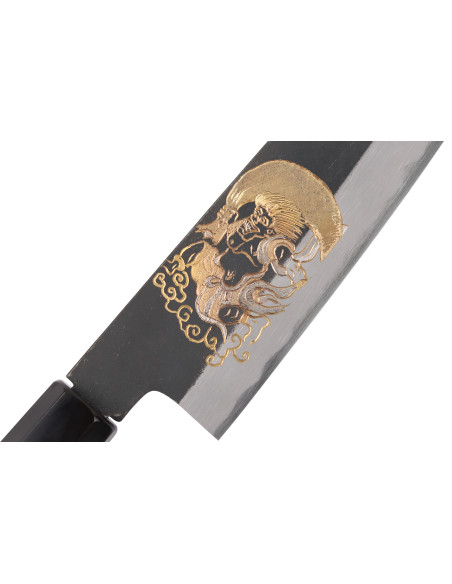
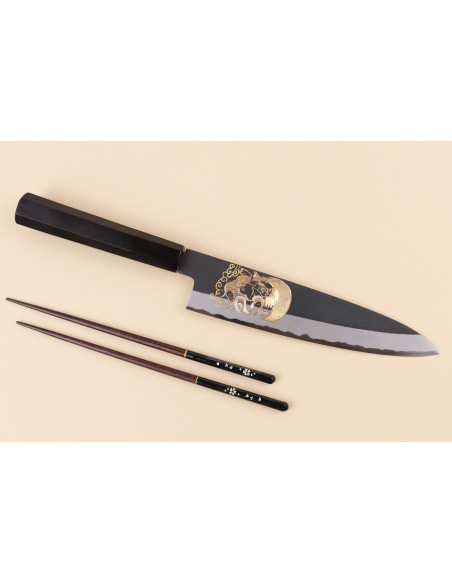
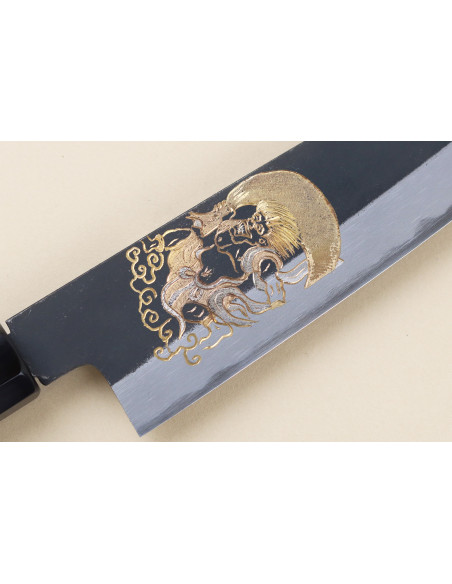
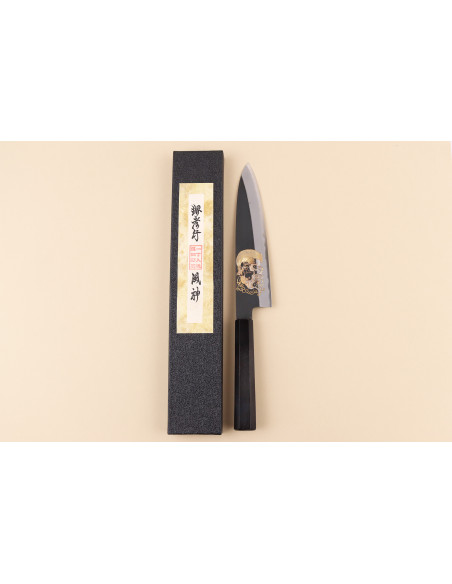
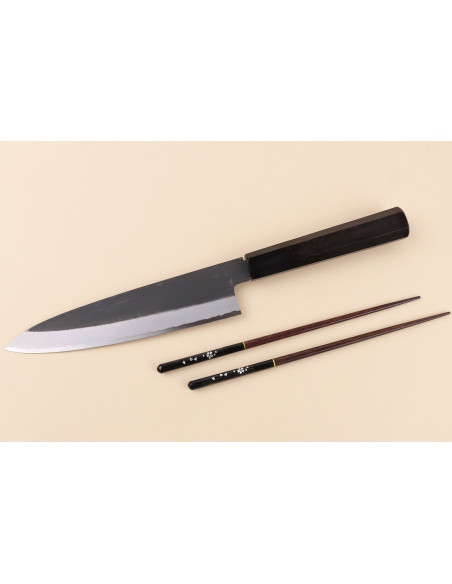
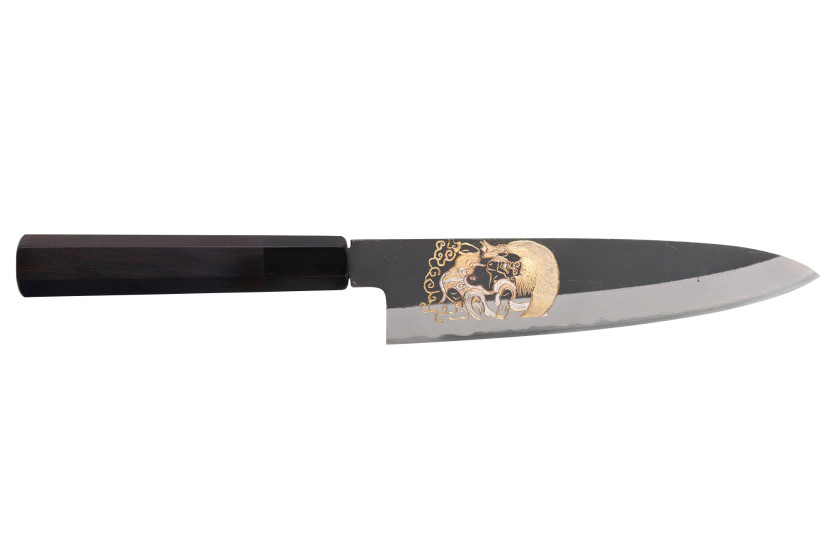
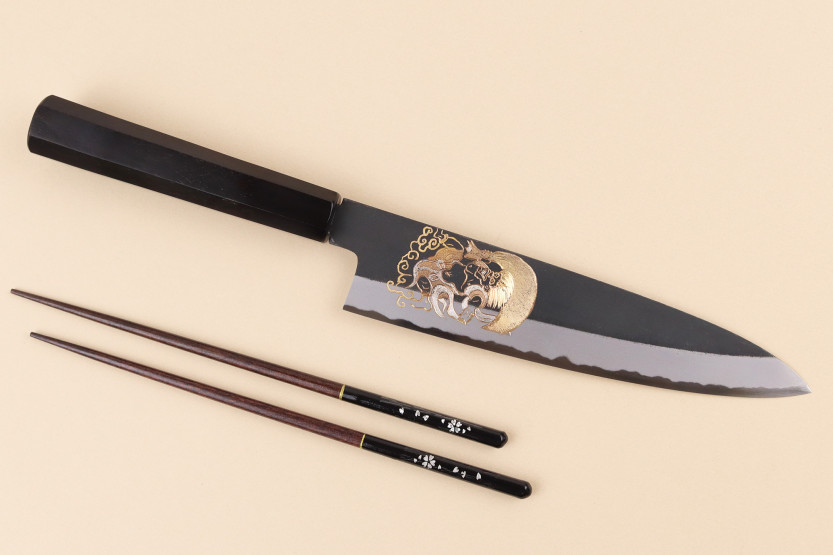
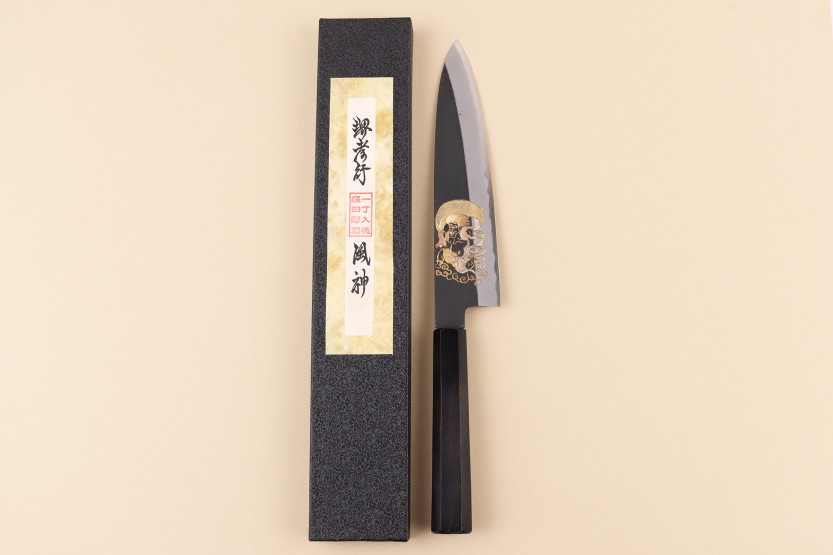
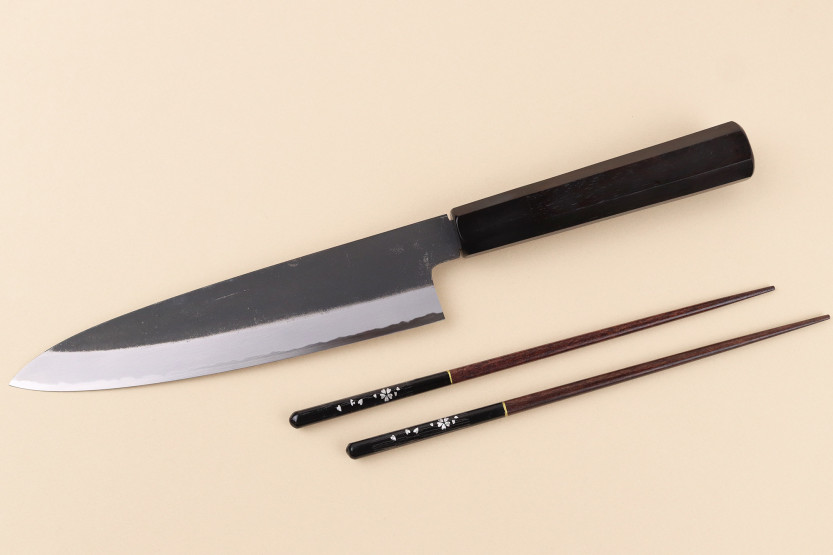
The Sakai Takayuki Fūjin Japanese santoku knifefeatures Fujin, the Japanese god of wind, in a design engraved by Michiko Kubota. Originally conceived as a collector’s item, this creation combines a unique design with a blade forged in Japan by Kenji Togashi and sharpened by Mitsuo Yamatsuka. Its Shirogami #2 steel core, rough-forged finish, and octagonal ebony handle come together to form a piece where every detail is worth examining. The case, with its smoky design evoking the movement of the wind, accompanies this piece and allows it to be displayed or stored with care.
A blade engraved and forged in San Mai
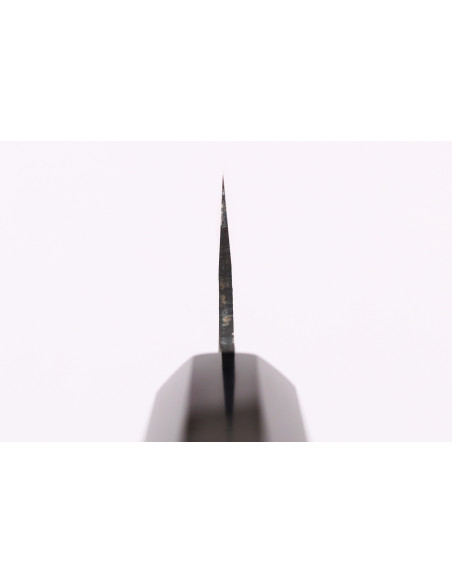
The 21-cm blade is constructed using San Mai, a structure composed of three layers of steel: a central core surrounded by two softer outer layers. Its core is made of Japanese Shirogami #2 steel, containing approximately 1.3% carbon. This high carbon content yields a fine, precise edge, while a hardness of approximately 62 HRC contributes to its durability. The outer layers of softer steel balance the hard core and provide greater resistance to impact and twisting.
This blade was crafted by Kenji Togashi, a craftsman with many years of experience in the art of knife forging. With this knife, you’ll benefit from his expertise in the heat treatment of Shirogami “2” steel, resulting in a blade that is both high-performance and well-balanced.
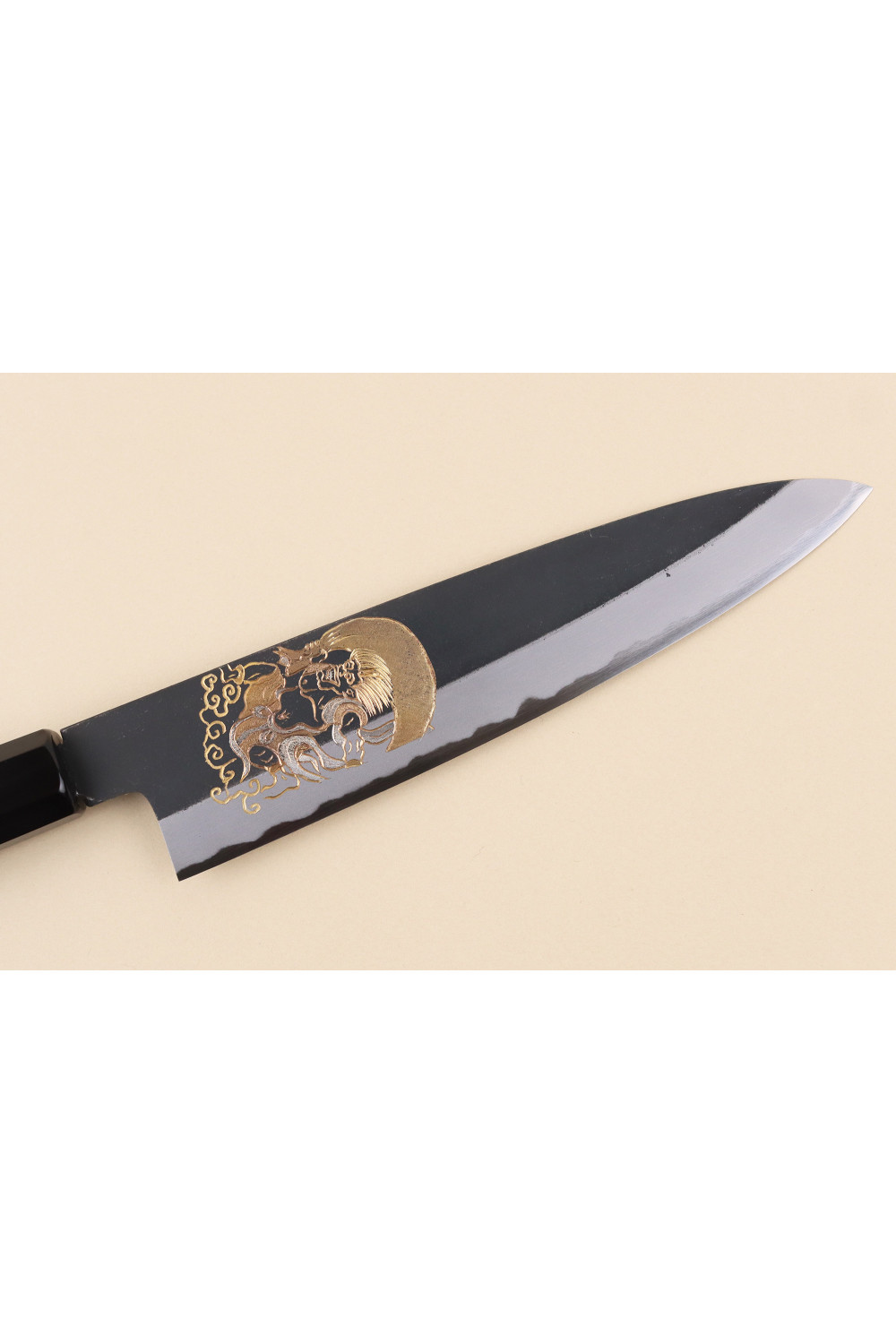
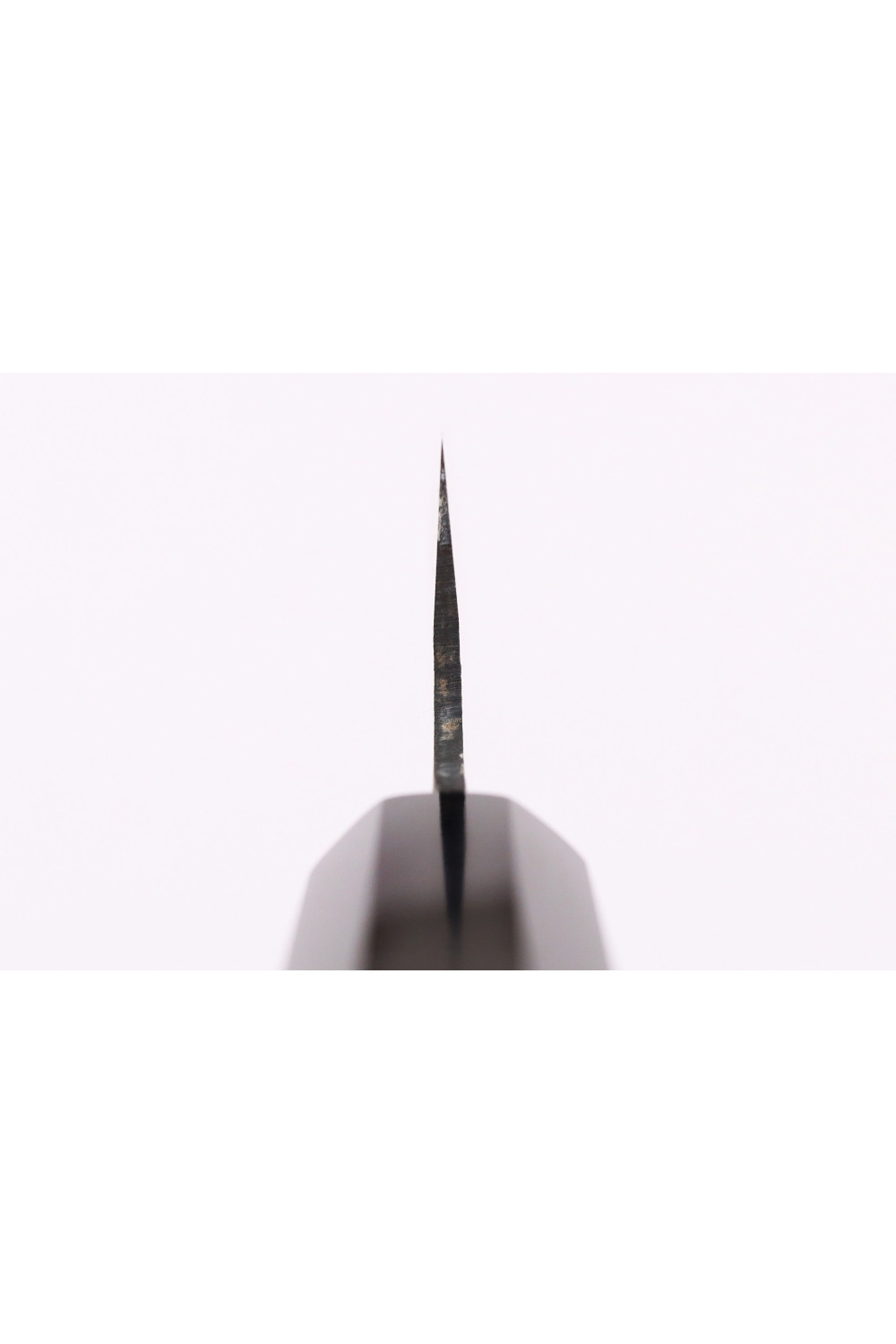
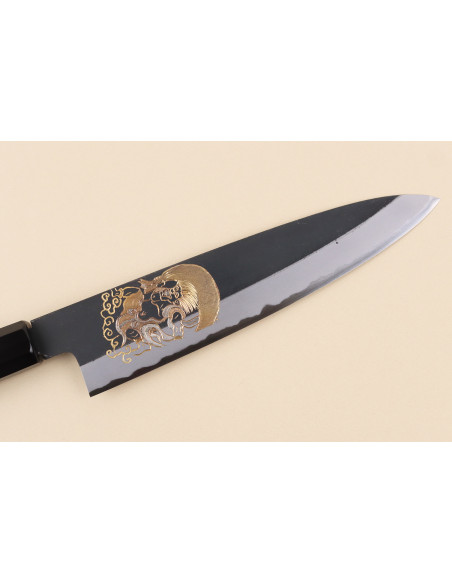
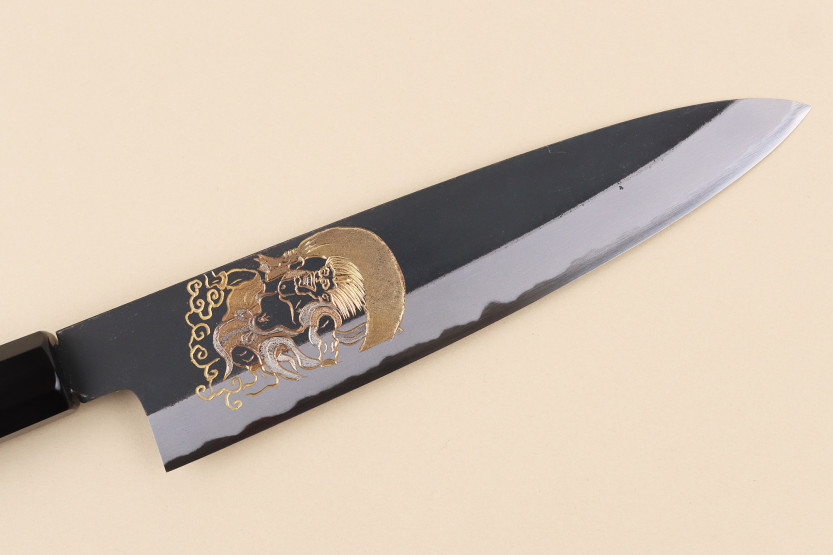
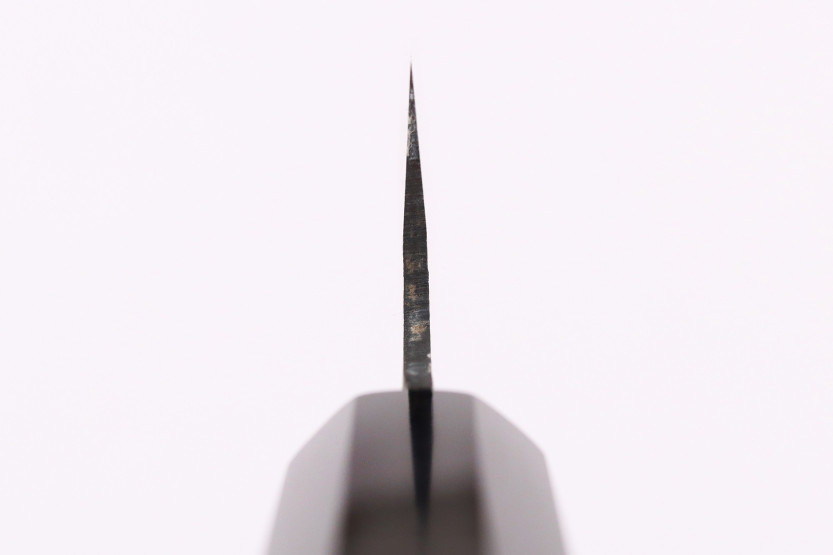
The flat grind creates a consistent geometry that facilitates cutting. The rough forged finish retains a distinctive appearance that contrasts with the decorative engraving. The blade was sharpened by Mitsuo Yamatsuka, a Master Traditional Craftsman specializing in sharpening.
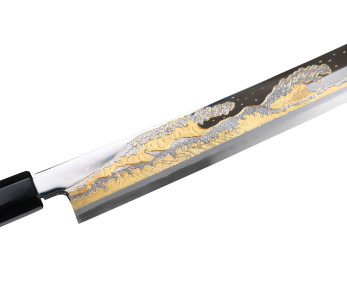
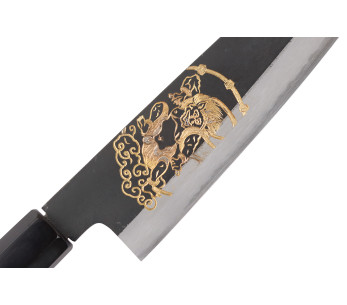
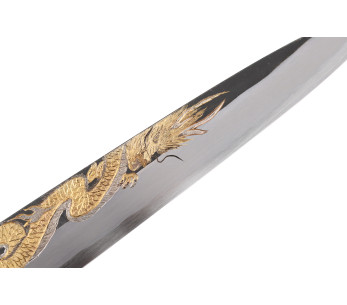
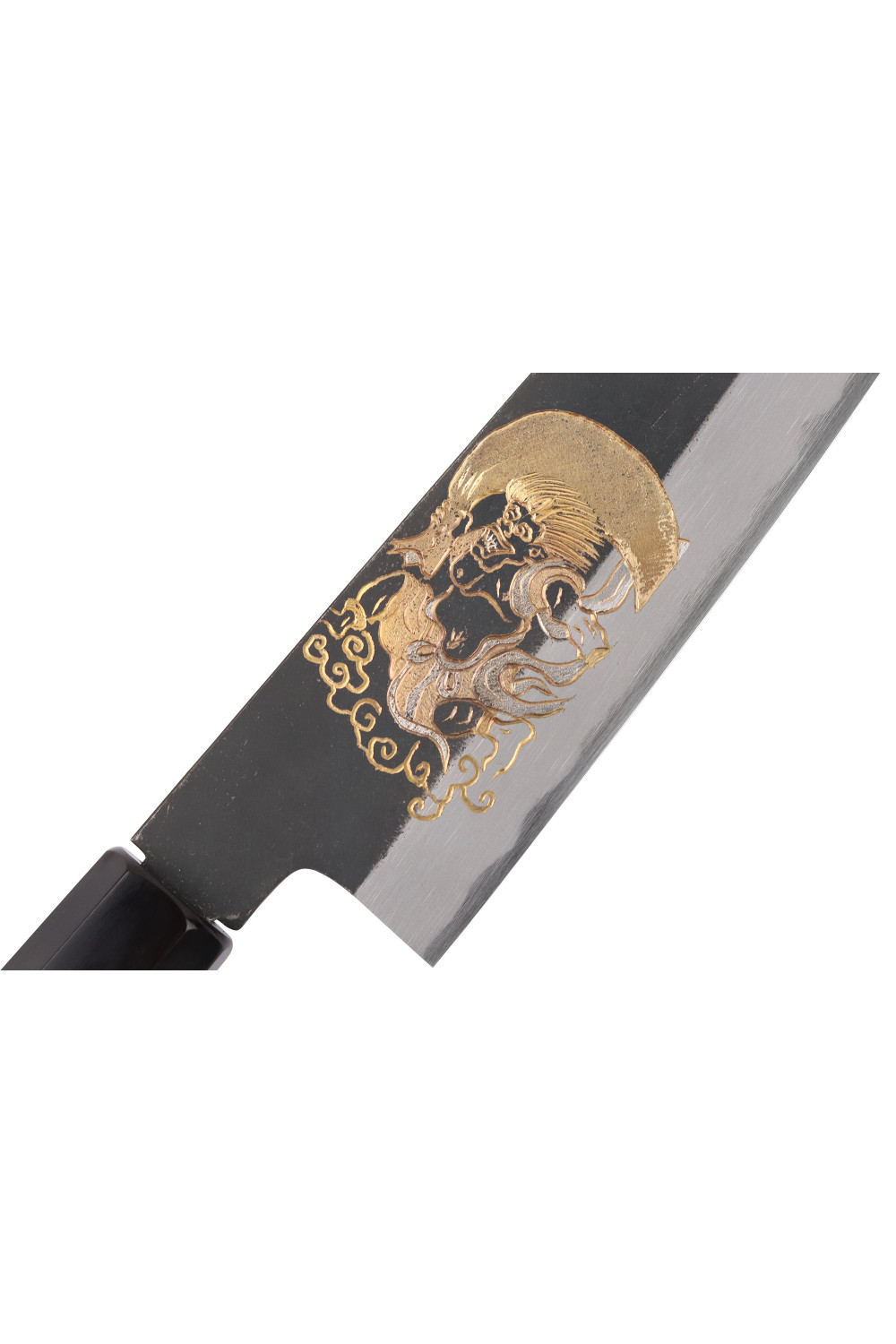
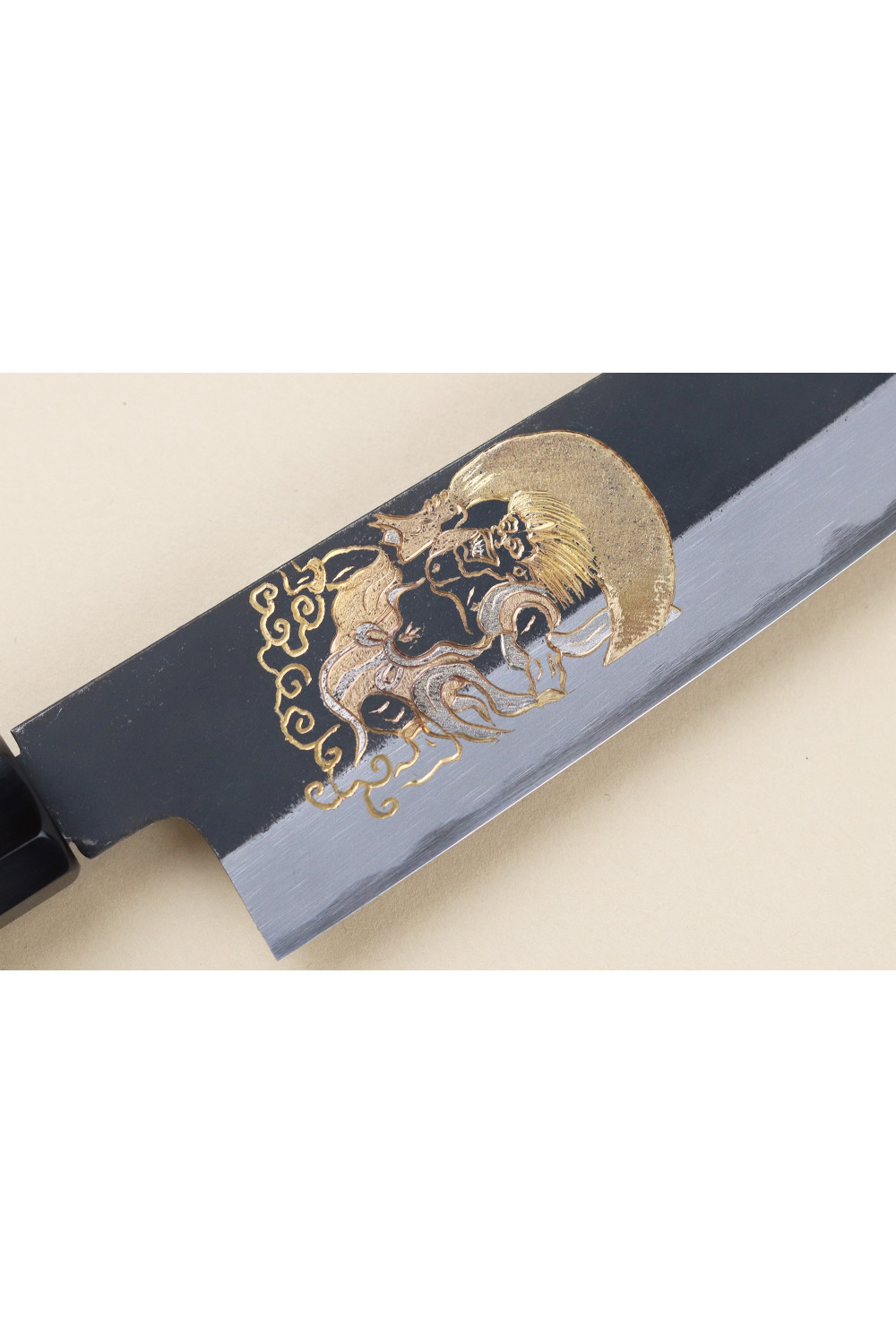
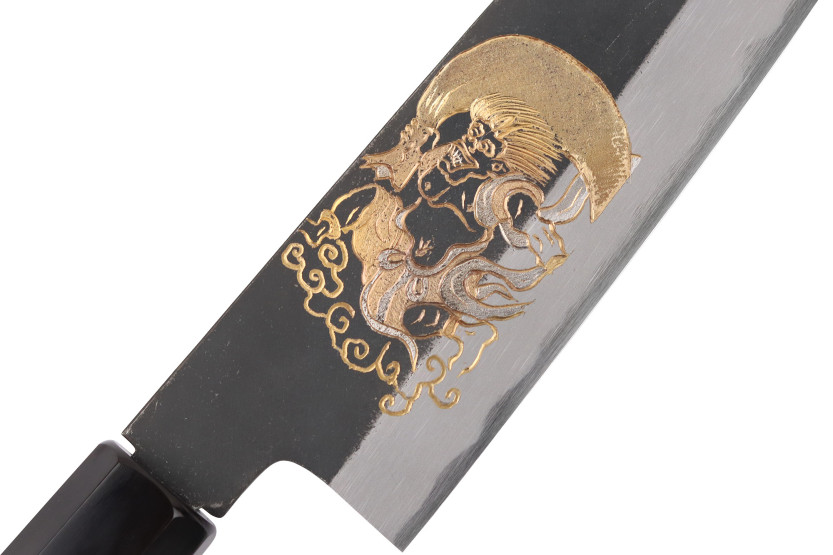
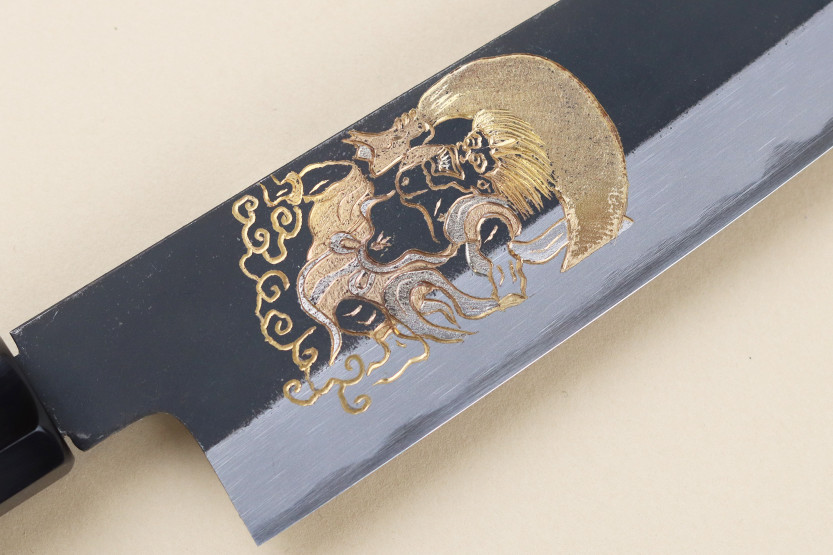
The original engraving of Fūjin, the Japanese deity associated with the wind, is by Michiko Kubota. The colored areas of the figure are created using plating: a thin layer of metal is applied to the blade’s surface. This delicate decoration may gradually lose its color if subjected to vigorous rubbing or cleaning with abrasive products. Gentle care will best preserve its appearance.
A traditional ebony wood handle
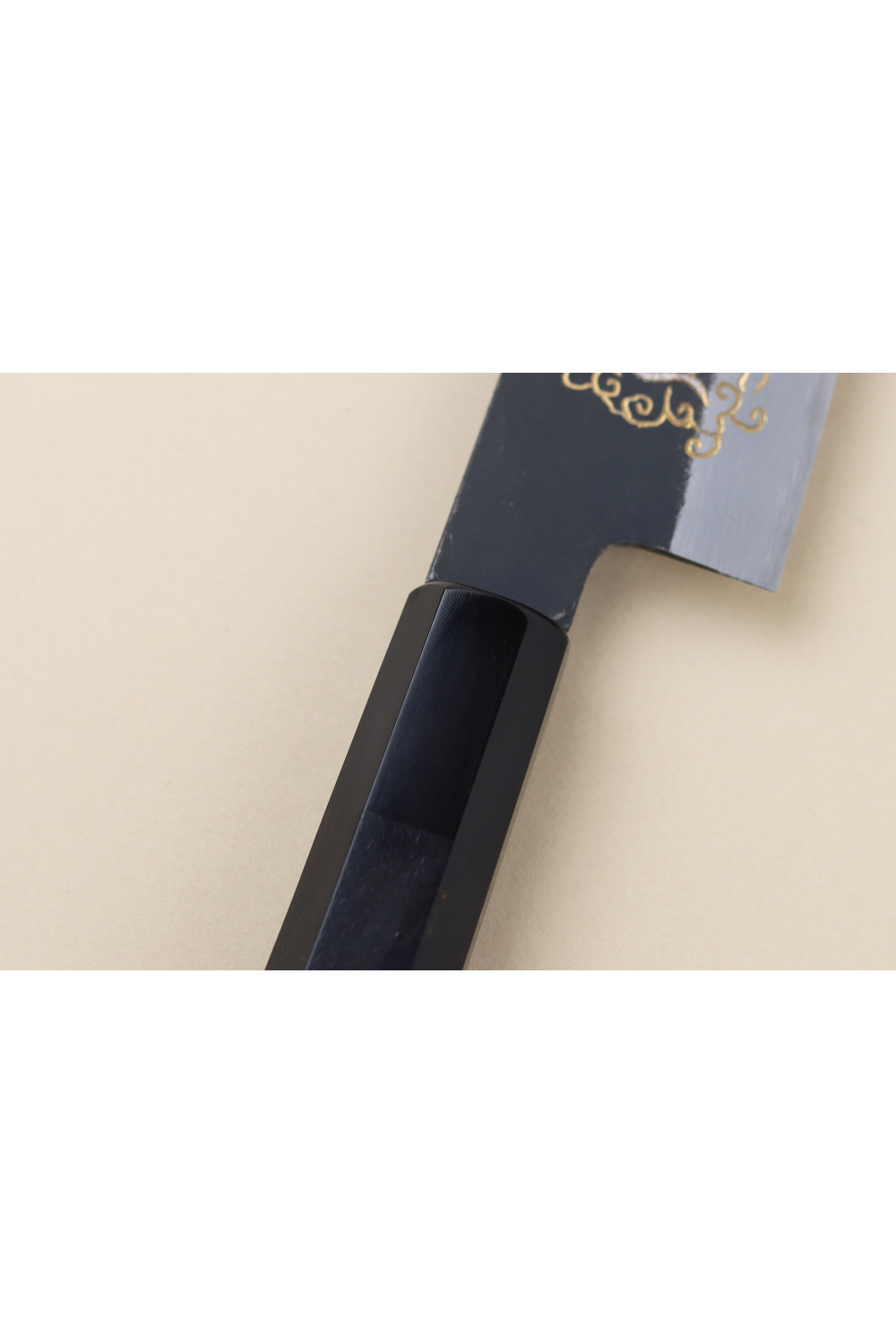
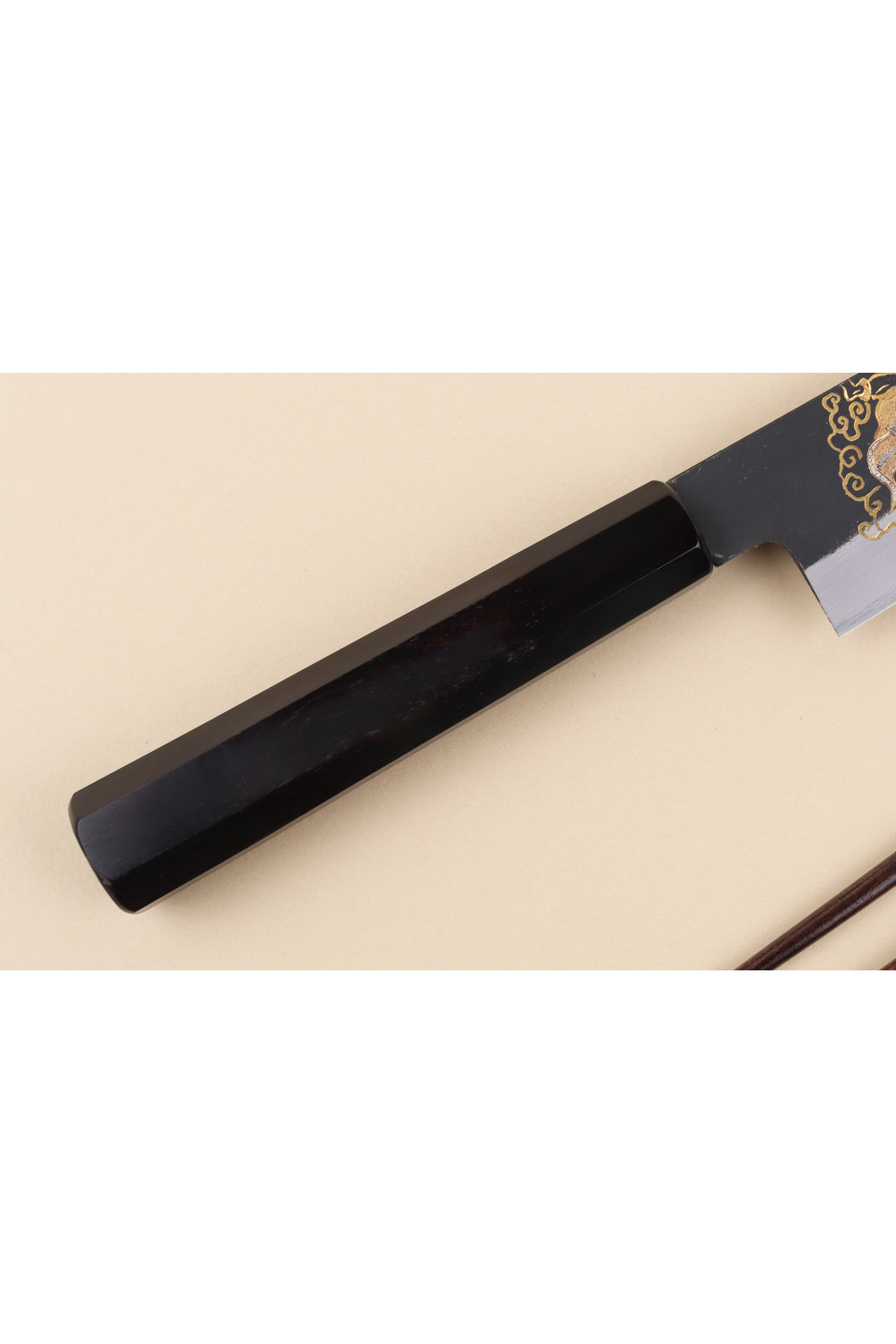
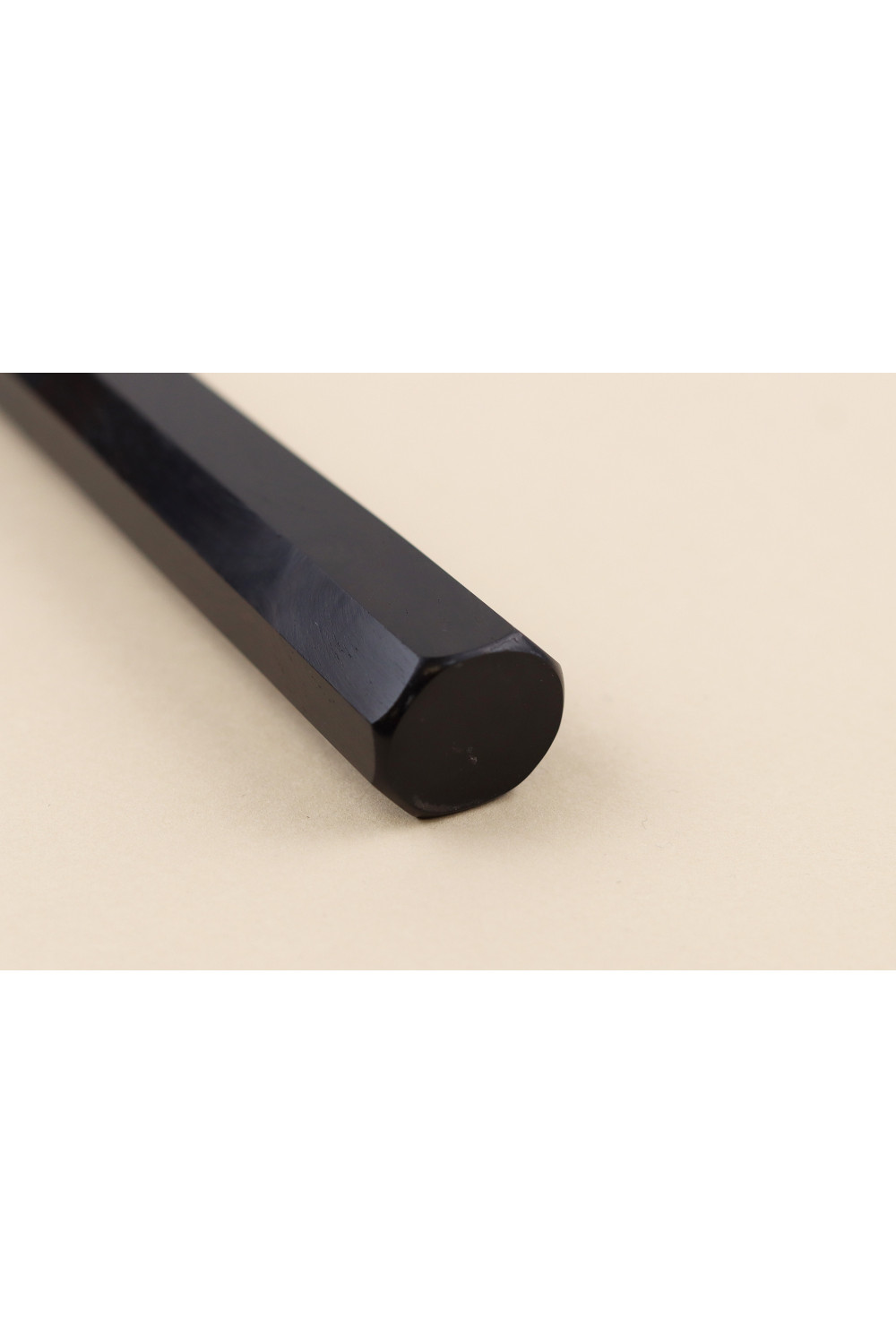
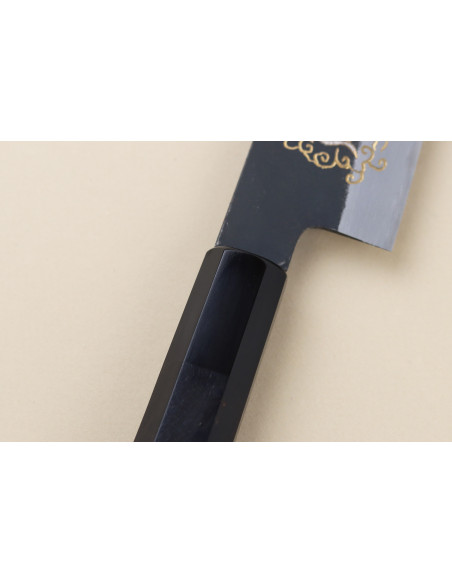
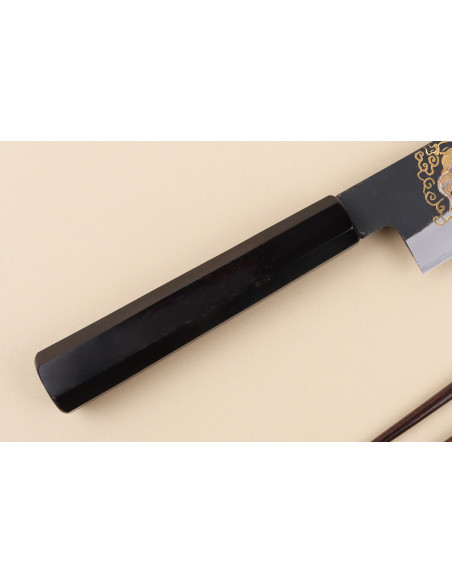
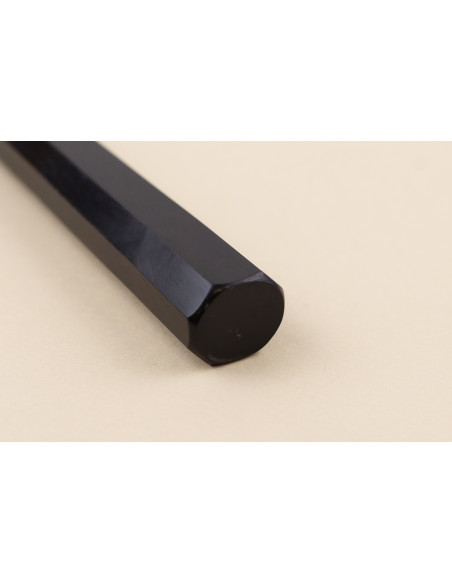
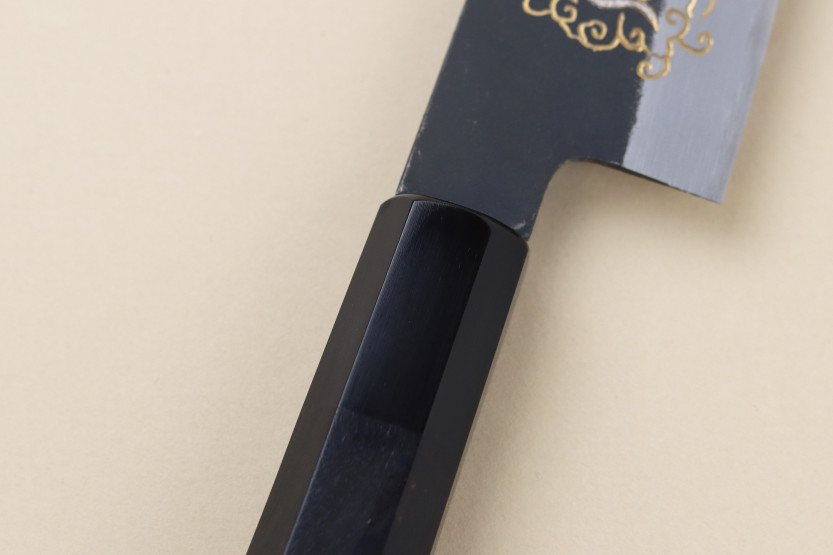
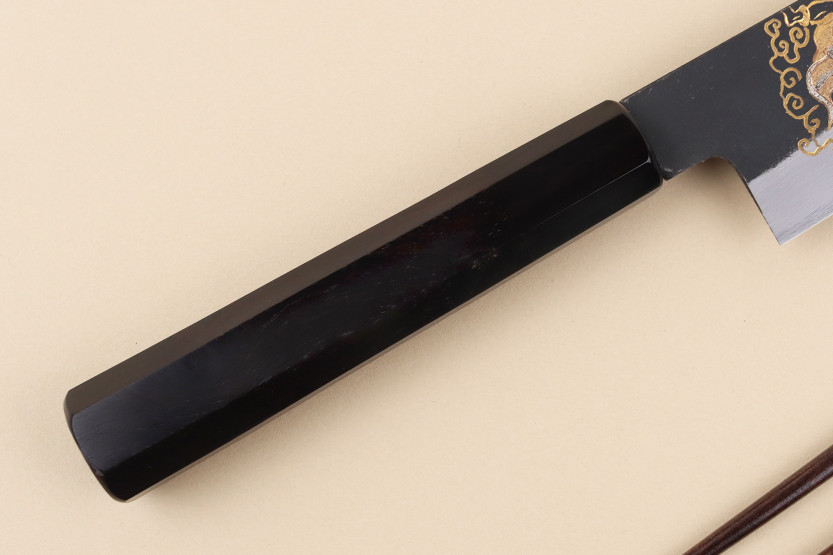
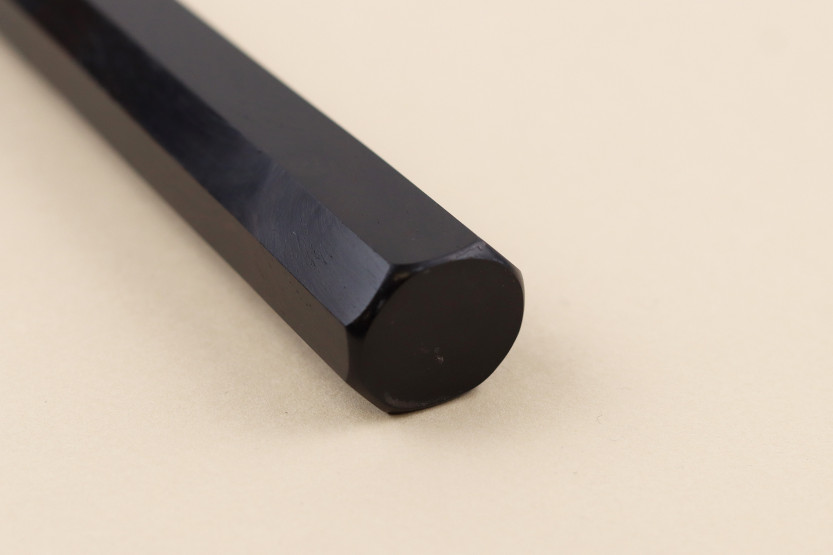
The ebony handle gives the knife a dark, understated finish that harmonizes with the black horn guard. Its octagonal shape provides multiple surfaces for the fingers to rest on and helps maintain a stable grip. It allows for precise guidance of the blade, whether the hand adopts a classic grip or a pinch grip, with the thumb and index finger close to the blade.
The wood must be protected from moisture: after cleaning the knife, dry the handle immediately. The smoked-effect box, inspired by the wind, completes the presentation of this collector’s item.
Key features of this knife
-
- 21 cm blade: length suited for cutting large
pieces
- San Mai construction: core surrounded by softer outer layers
-
- Shirogami #2 core: Japanese steel suited for achieving a fine edge
- Hardness of approximately 62 HRC: the edge retains its effectiveness over time
- Flat grind: ensures a controlled cut
-
- Rough forged finish: distinctive handcrafted look
- Forged by Kenji Togashi: balanced, high-performance blade
- “Fujin” engraving by Michiko Kubota: design inspired by the Japanese god of wind
- Sharpened by Mitsuo Yamatsuka: blade honed by a master craftsman
-
- Octagonal ebony handle: secure and elegant grip
- Black horn bolster: harmonious transition between the handle and the blade
- Made in Japan: centuries-old craftsmanship
Caring for My Collectible Knife
If using the knife in the kitchen, choose a cutting board made of wood or synthetic material. Do not cut bones or frozen foods, and avoid side-to-side and twisting motions that could damage the blade.
After each use, wash the blade by hand and dry it immediately: high-carbon steel can oxidize when exposed to moisture. Do not use a dishwasher, abrasive sponges, or harsh cleaning agents. To preserve the color of the veneer, clean gently without scrubbing. Sharpening with a suitable whetstone is recommended.
Kenji Togashi, blacksmith in Sakai
Based in Sakai, Kenji Togashi has been working as a blacksmith since 1966. His career is rooted in the cutlery tradition of this Japanese city, renowned for its expertise in blade craftsmanship. His mastery of heat treatment helps determine the properties of the steel after forging. For this piece, he forged the blade from Shirogami #2 steel using a San Mai construction.
The engraving is the work of Michiko Kubota, an artist based in Takatsuki, Osaka Prefecture, who is in charge of engraving at Sakai Takayuki. Inspired by Japanese culture and natural landscapes, she has created a depiction of Fūjin here. The metal plating adds colorful nuances to the design. Mitsuo Yamatsuka performed the sharpening. He is a Traditional Master Craftsman recognized and certified by the Japanese Ministry of Economy.
We’ve selected the most beautiful engraved Japanese knives for you!




 By buying this product you can collect up to