A Japanese collector's knife: a blend of forging and engraving
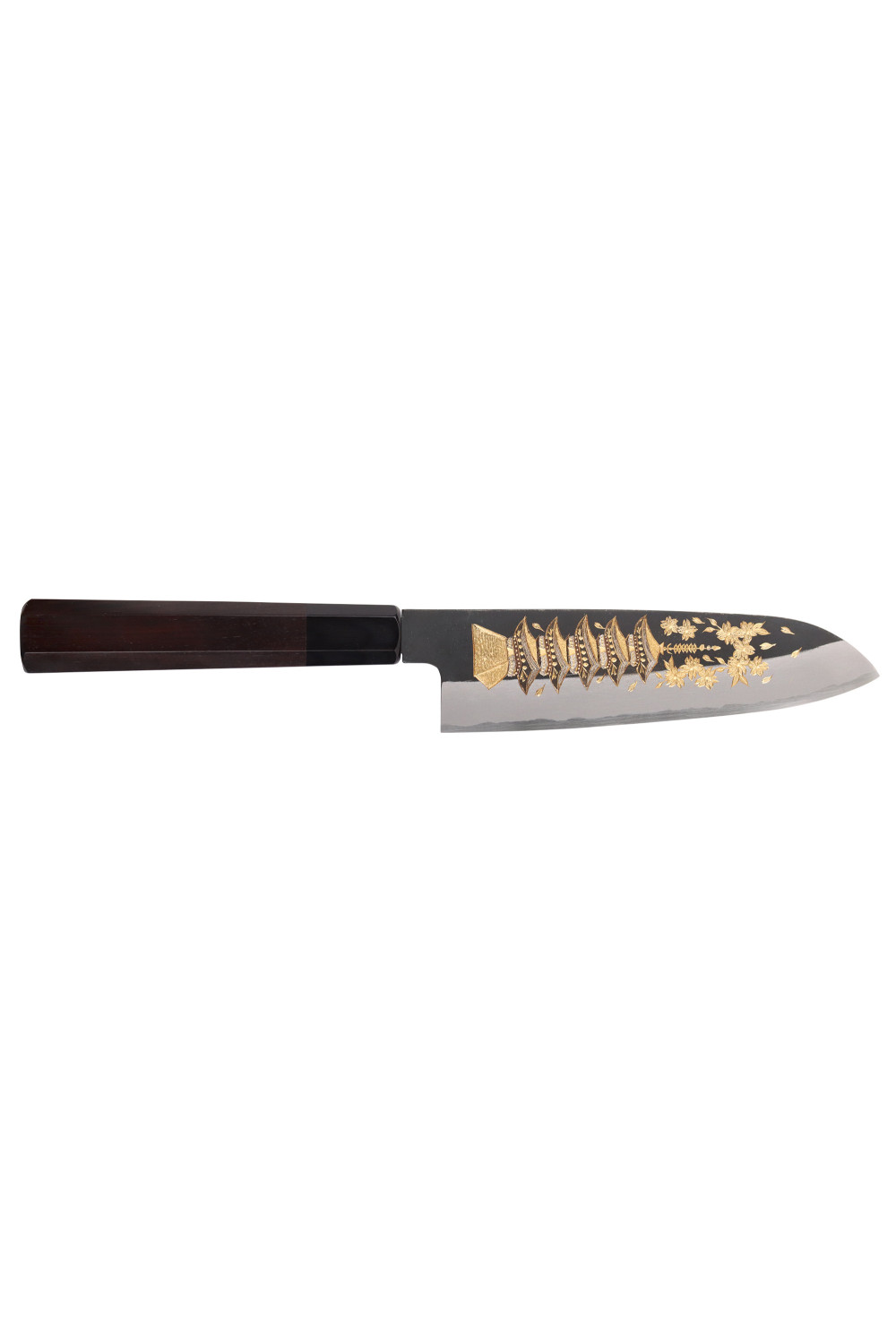
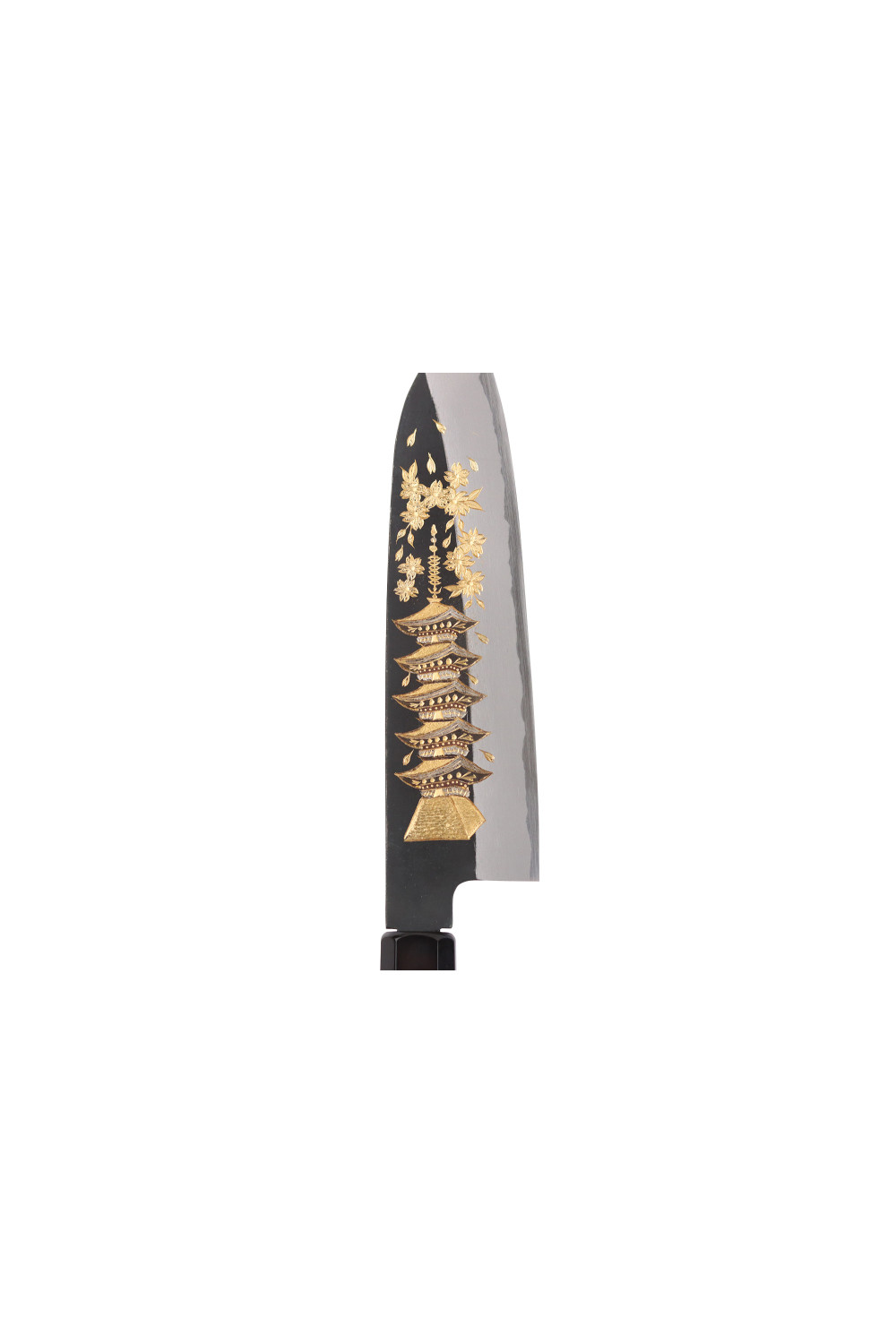
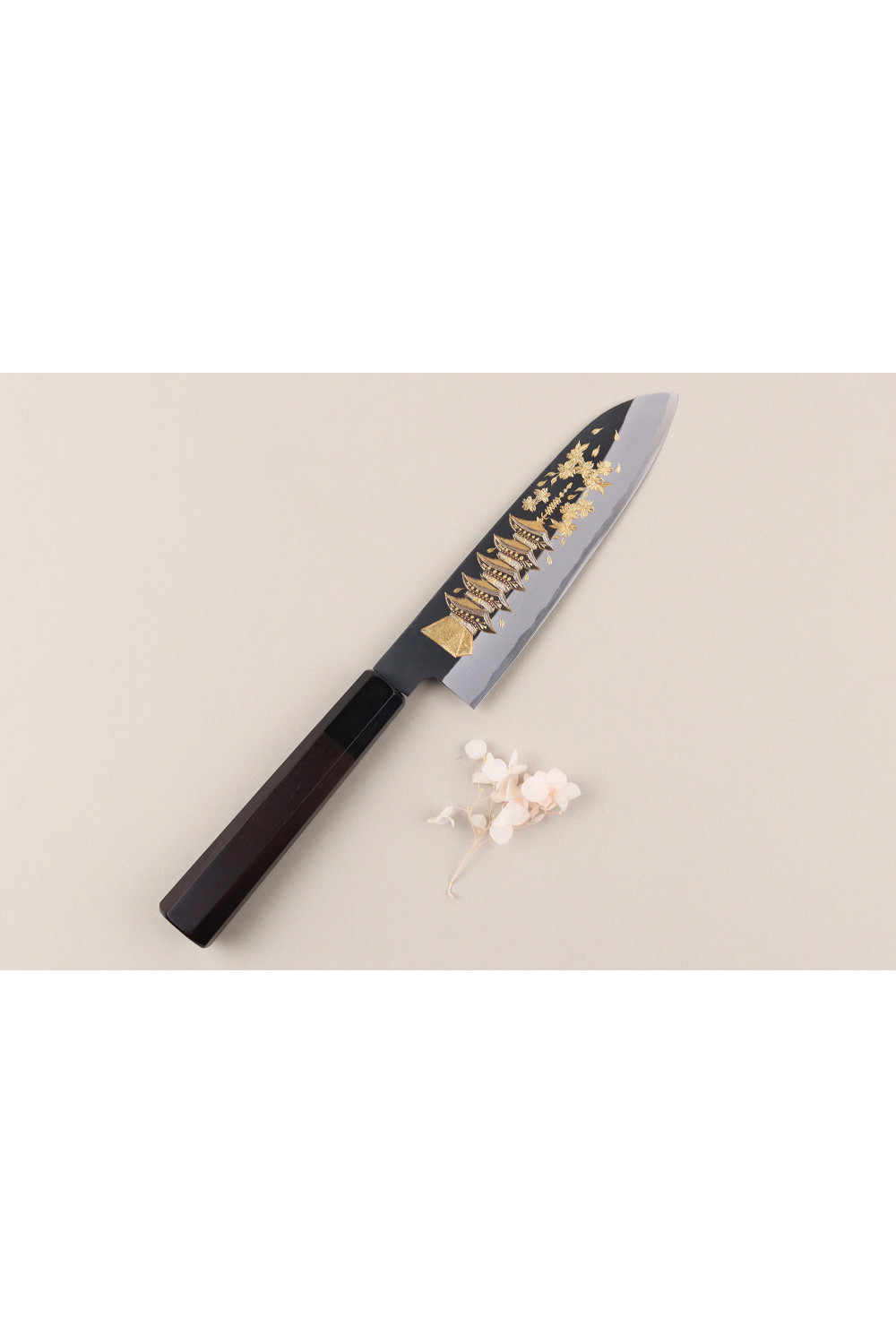
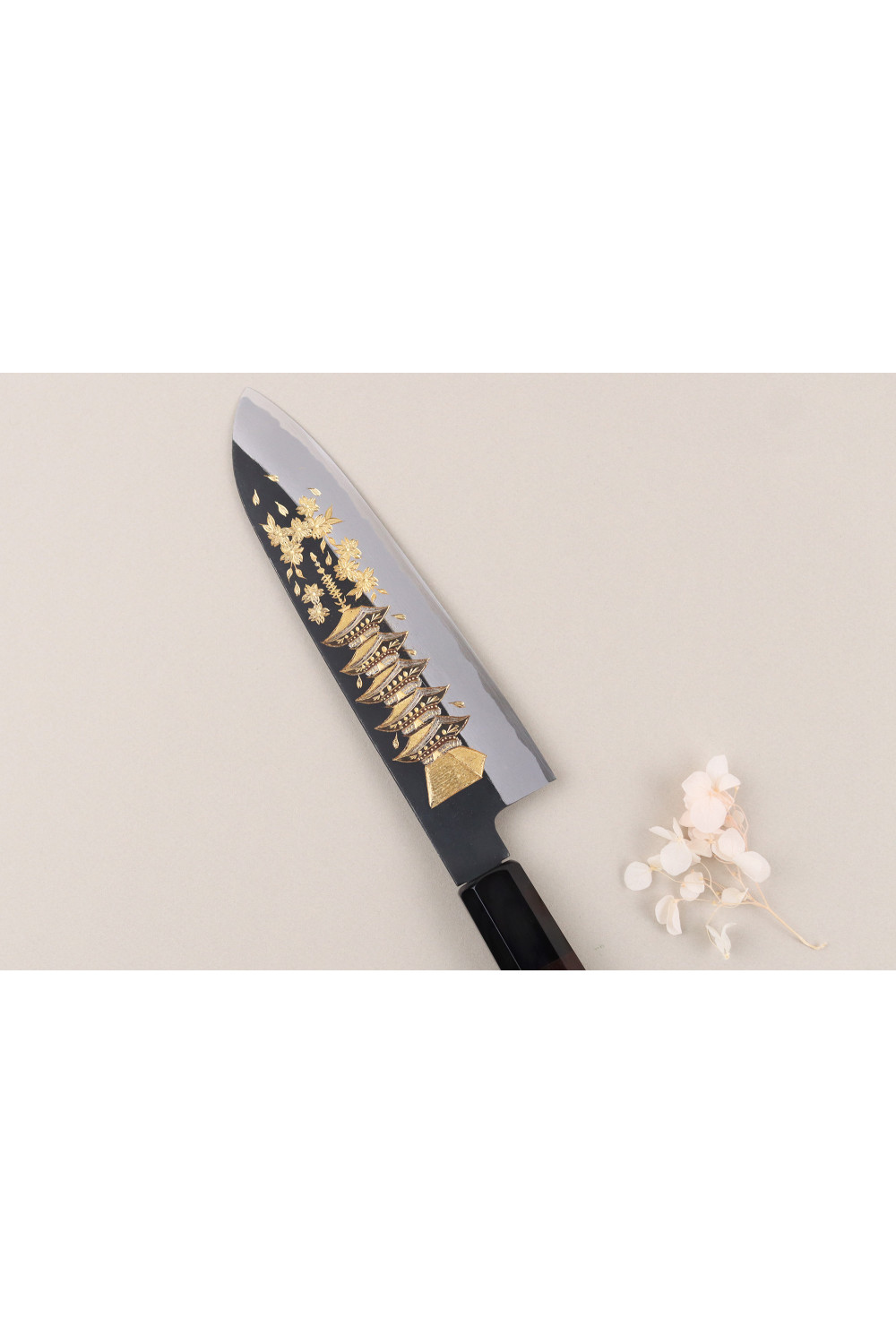
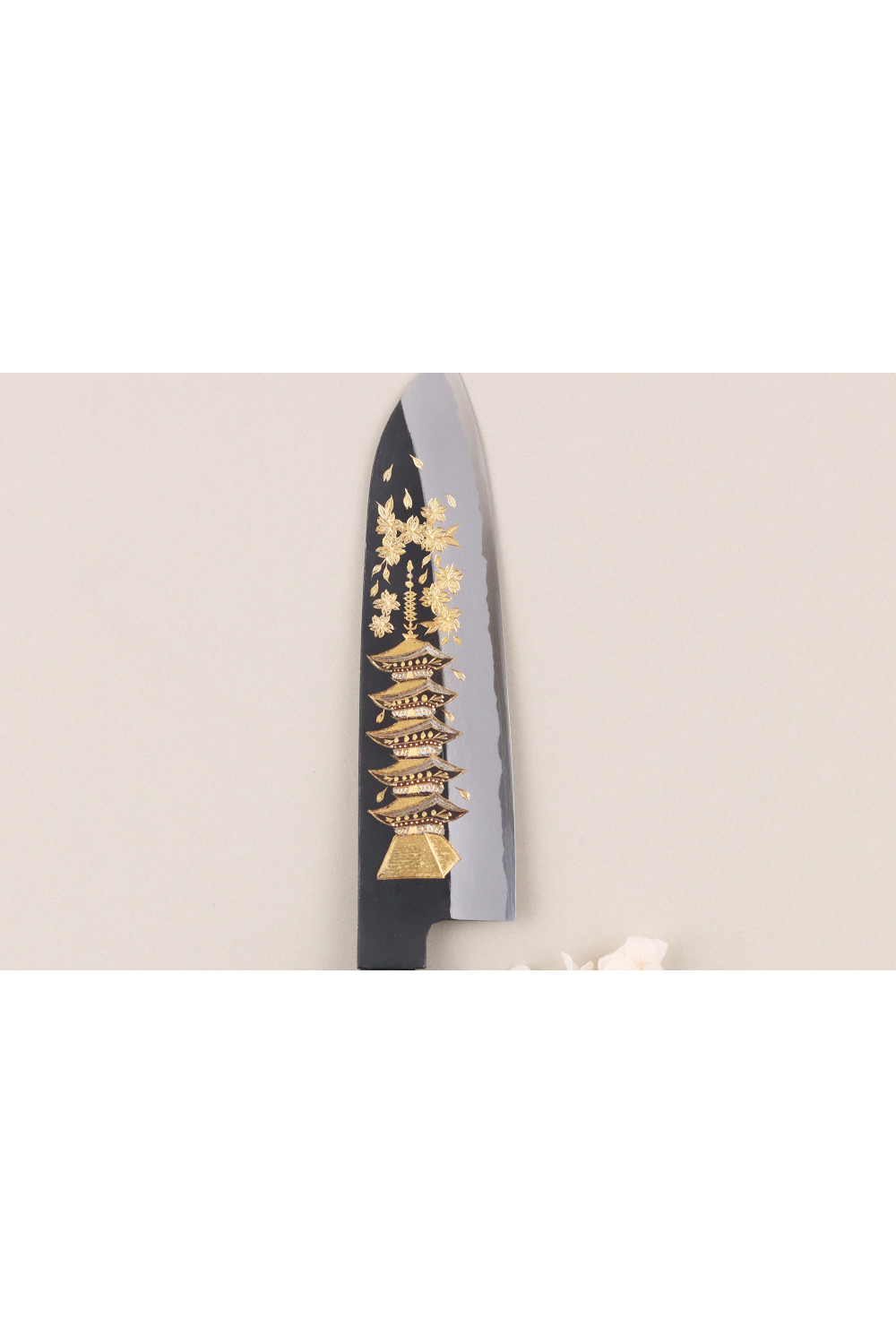
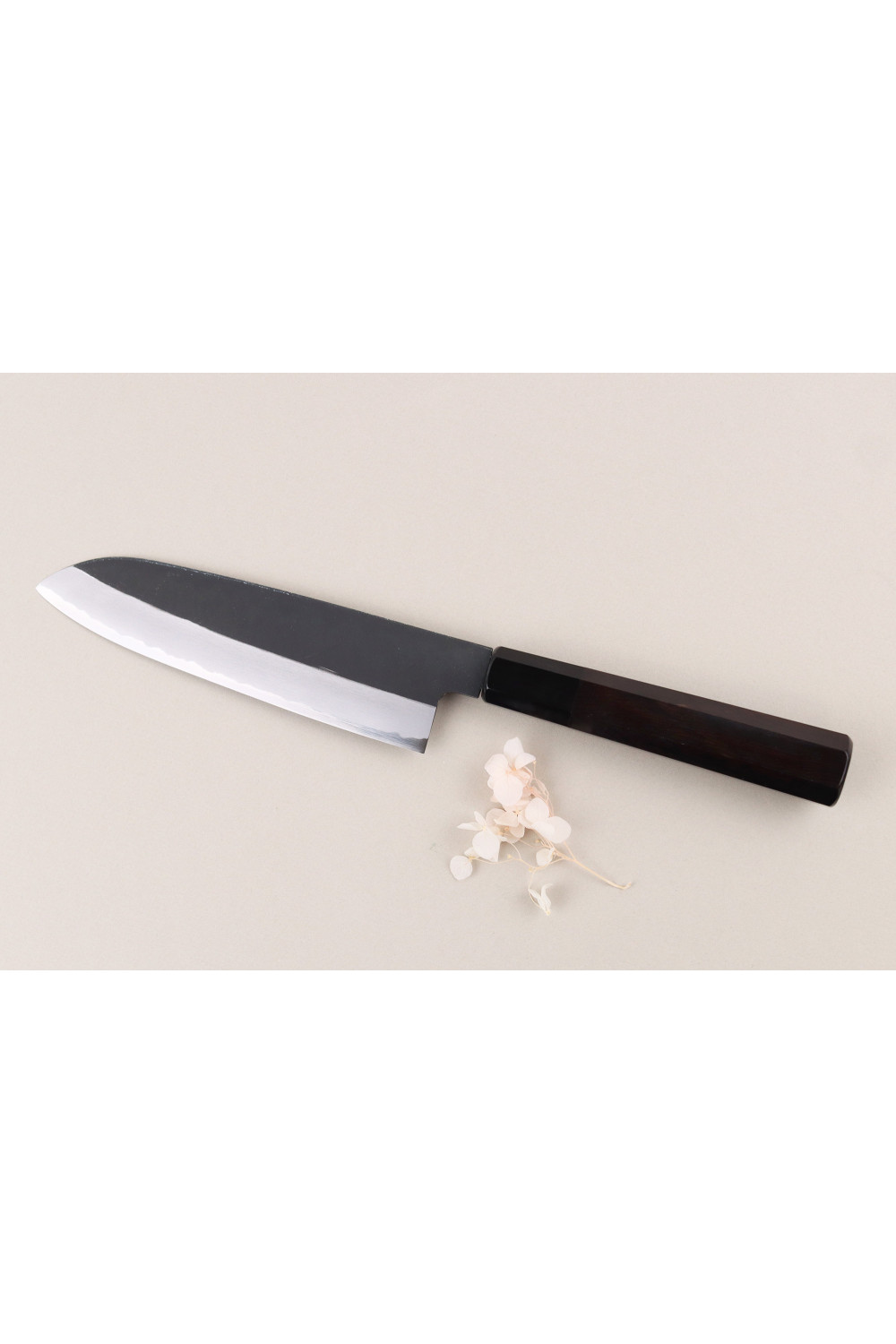
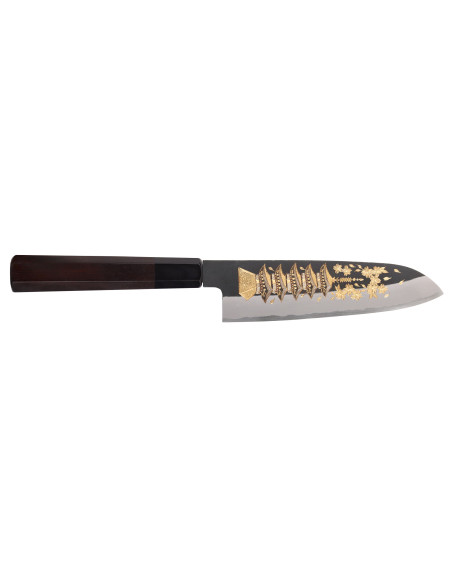
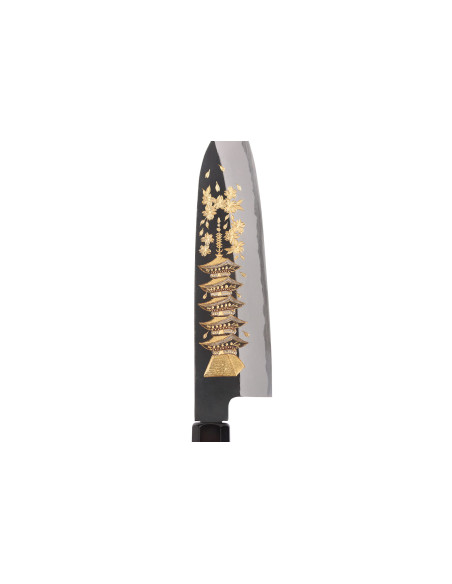
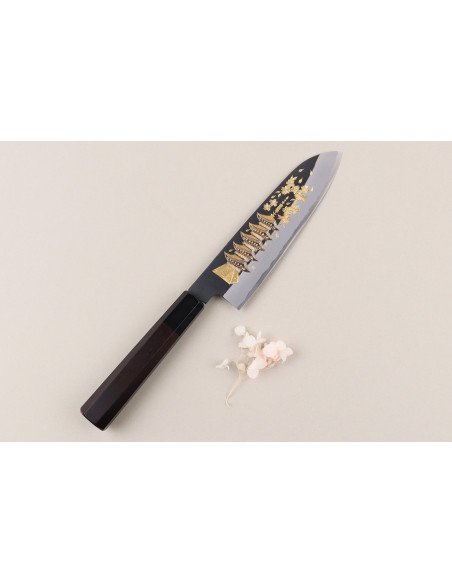
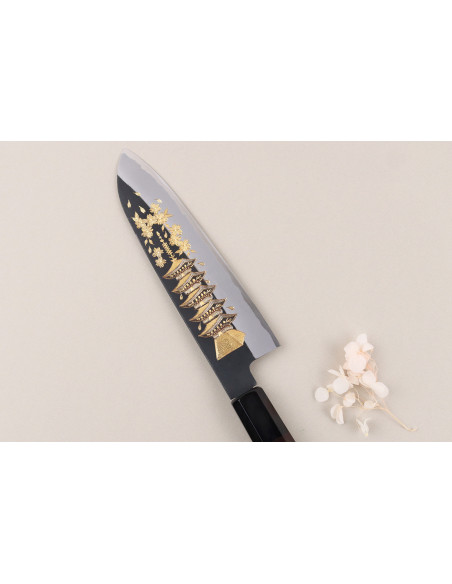
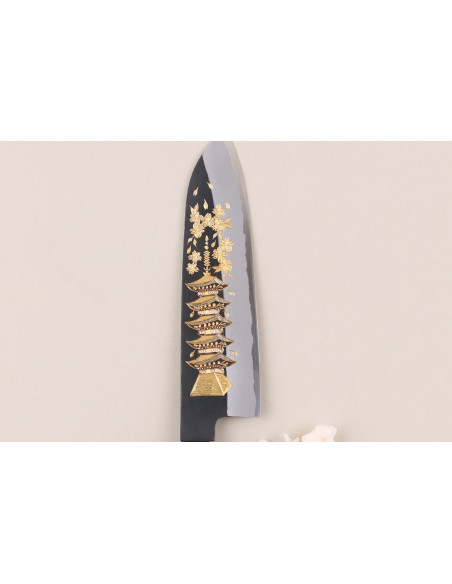
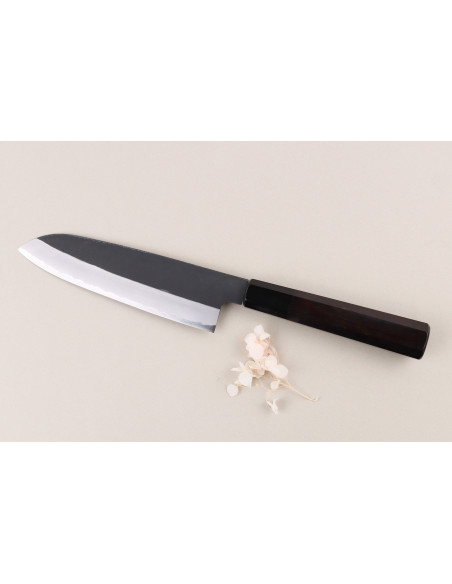
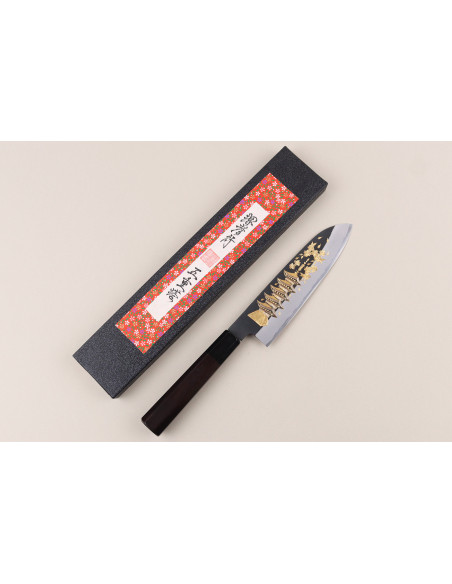
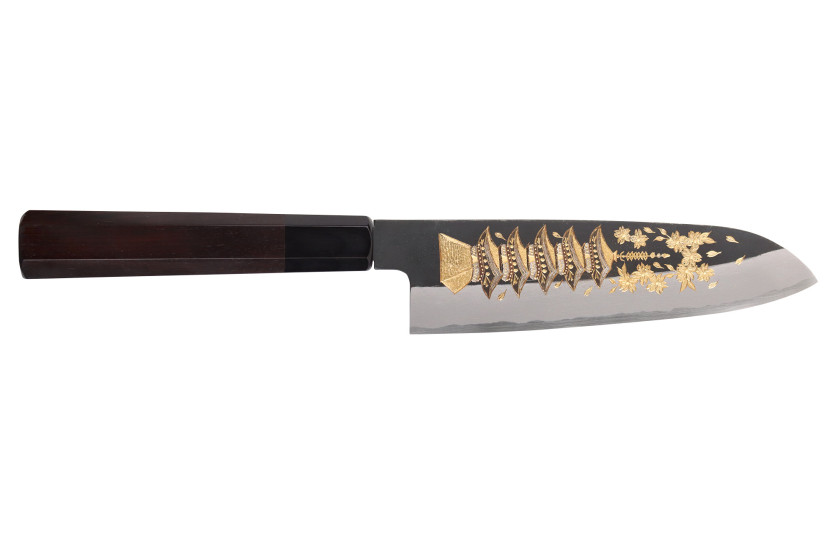
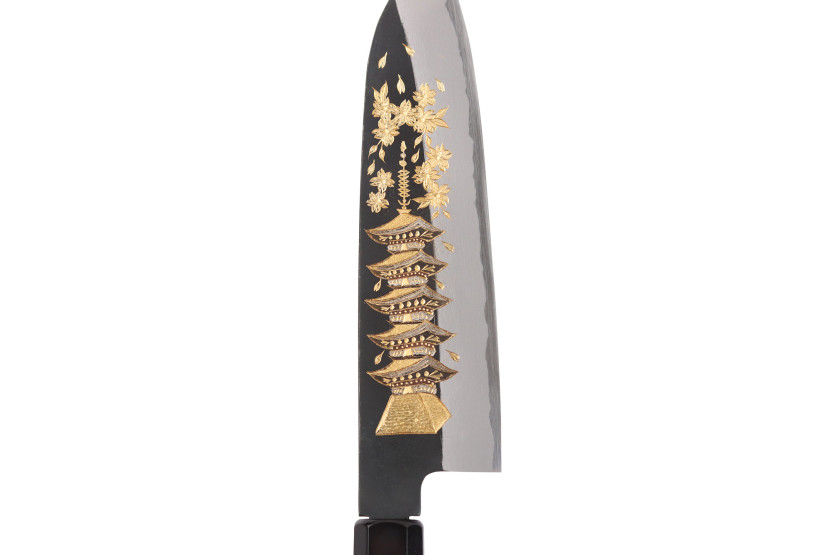
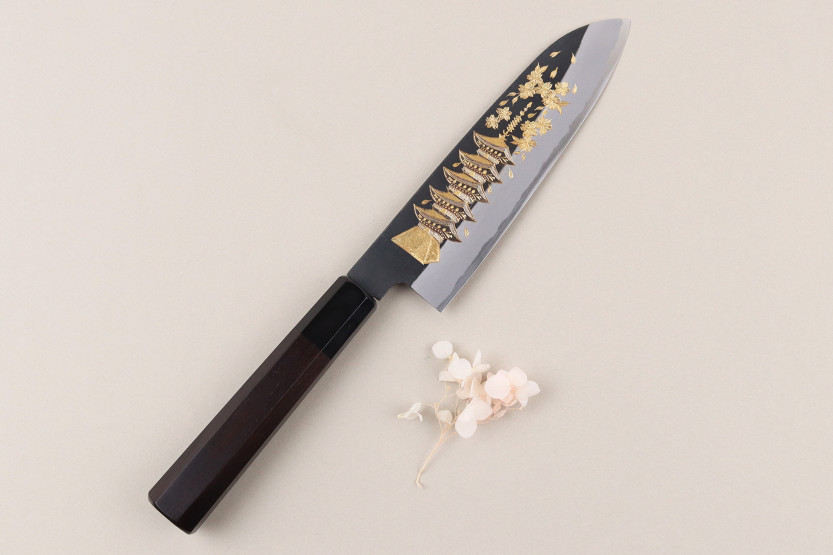
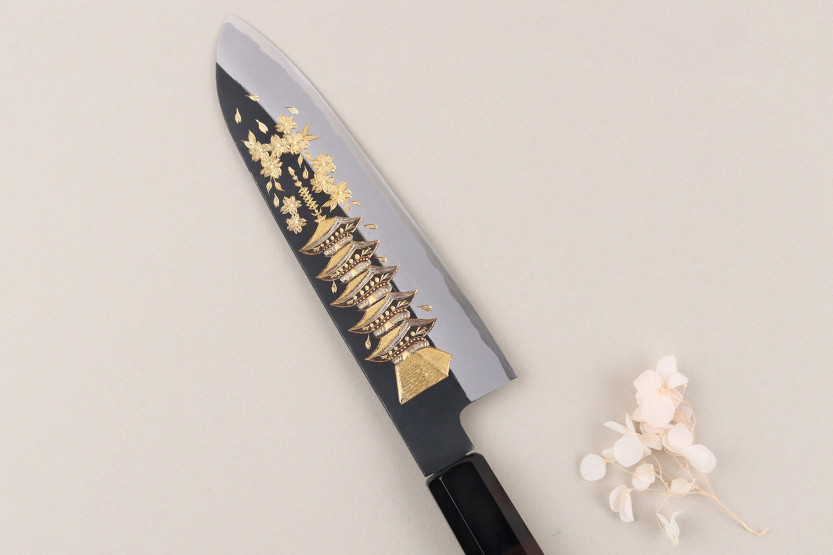
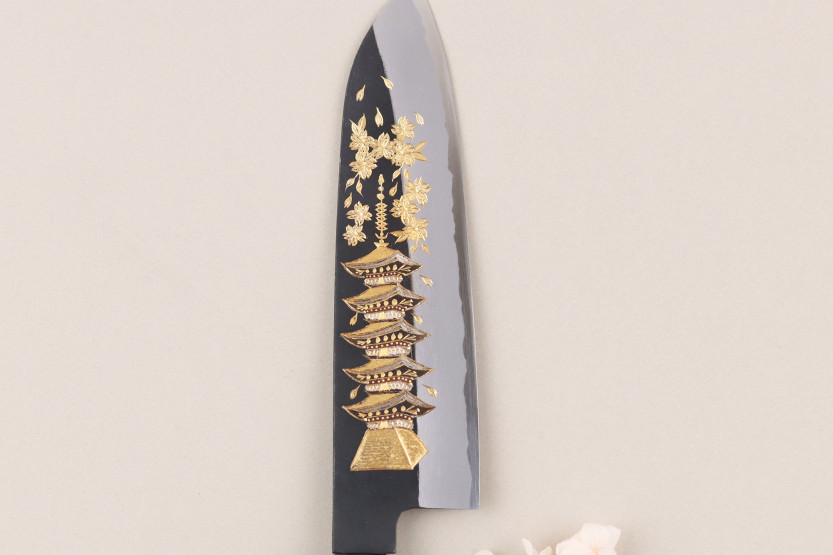
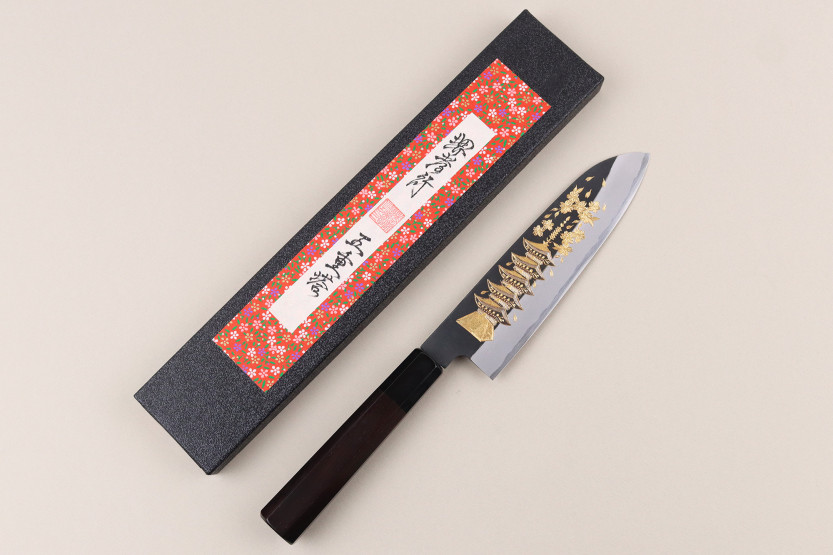
The handcrafted Japanese Sakai Takayuki Pagoda santoku knife is first and foremost a collector’s item, designed around a blade decorated with a five-story pagoda. Known as Gojū no tō in Japanese, this original motif is engraved by Michiko Kubota and enhanced with colored areas created through metal plating. Beneath this decoration, the 18-cm blade combines a core of Japanese Shirogami #2 steel with a San Mai construction. Forged in Japan by Kenji Togashi and then sharpened by Mitsuo Yamatsuka, this knife brings together several artisanal skills. It is a piece intended both to be admired and to be carefully preserved.
A rough-forged blade with an original design
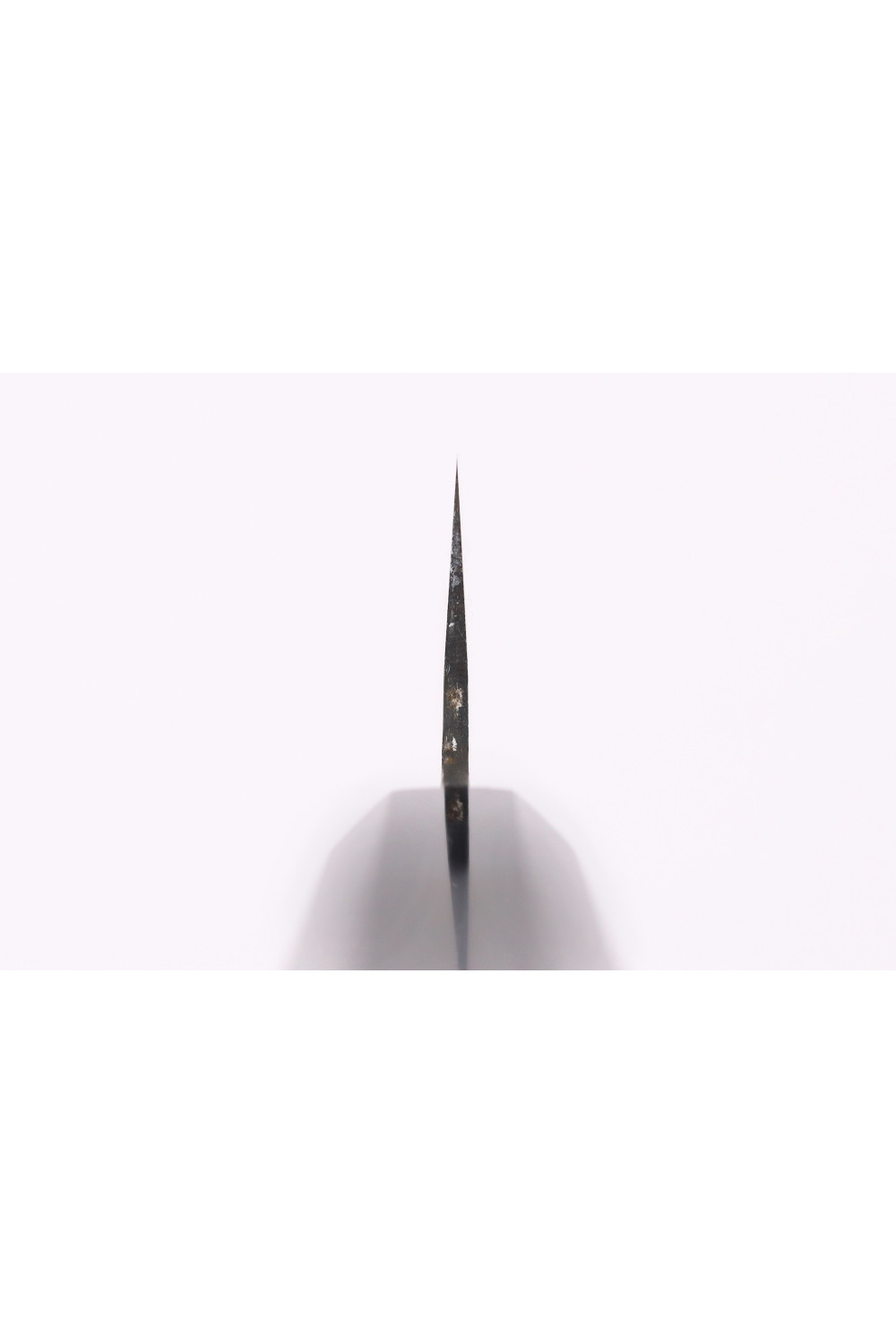
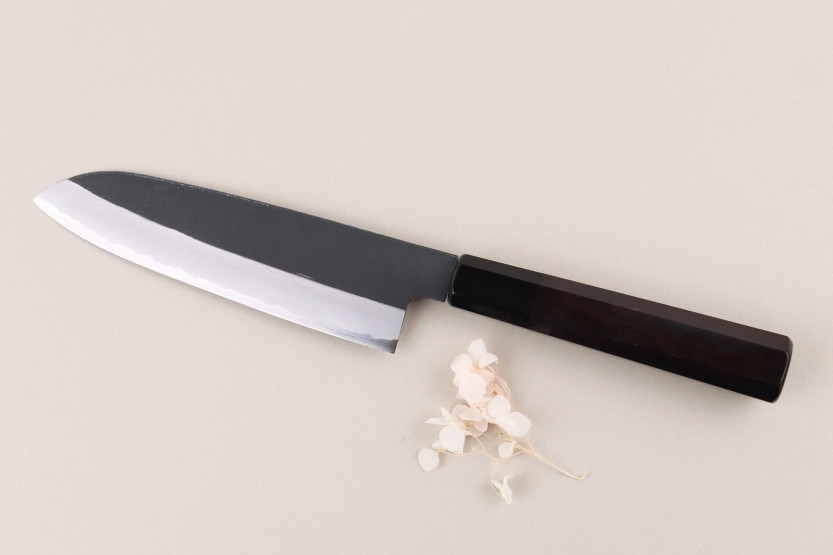
Measuring 18 cm in length, the blade features a San Mai structure composed of three layers of steel: its hard steel core is surrounded by two layers of softer steel. This construction combines a high-performance cutting edge with sides that help protect the blade’s core.
Here, the blade’s core is made of Japanese Shirogami #2 steel, also known as White Steel #2, with approximately 1.3% carbon. Its high carbon content results in a fine edge, ideal for clean cuts. The hardness of approximately 62 HRC ensures good edge retention, though careful use is required to maintain the sharpness.
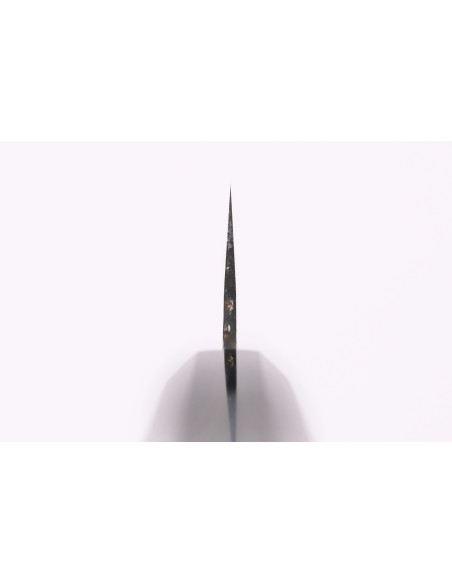
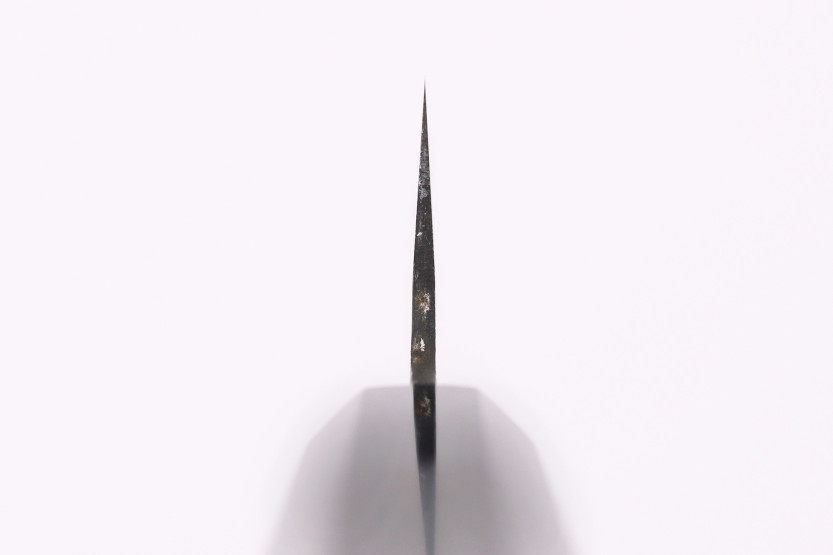
The flat grind creates a uniform geometry that guides the blade through food and contributes to a controlled cut. Its rough, forged finish retains a distinct handcrafted appearance, contrasting with the detailed surface decoration.
The blade was forged by Kenji Togashi, a craftsman who has been forging Japanese knives since 1966. His expertise is based in particular on his mastery of the heat treatment of steel, a process that helps determine the blade’s properties, including its hardness and strength.
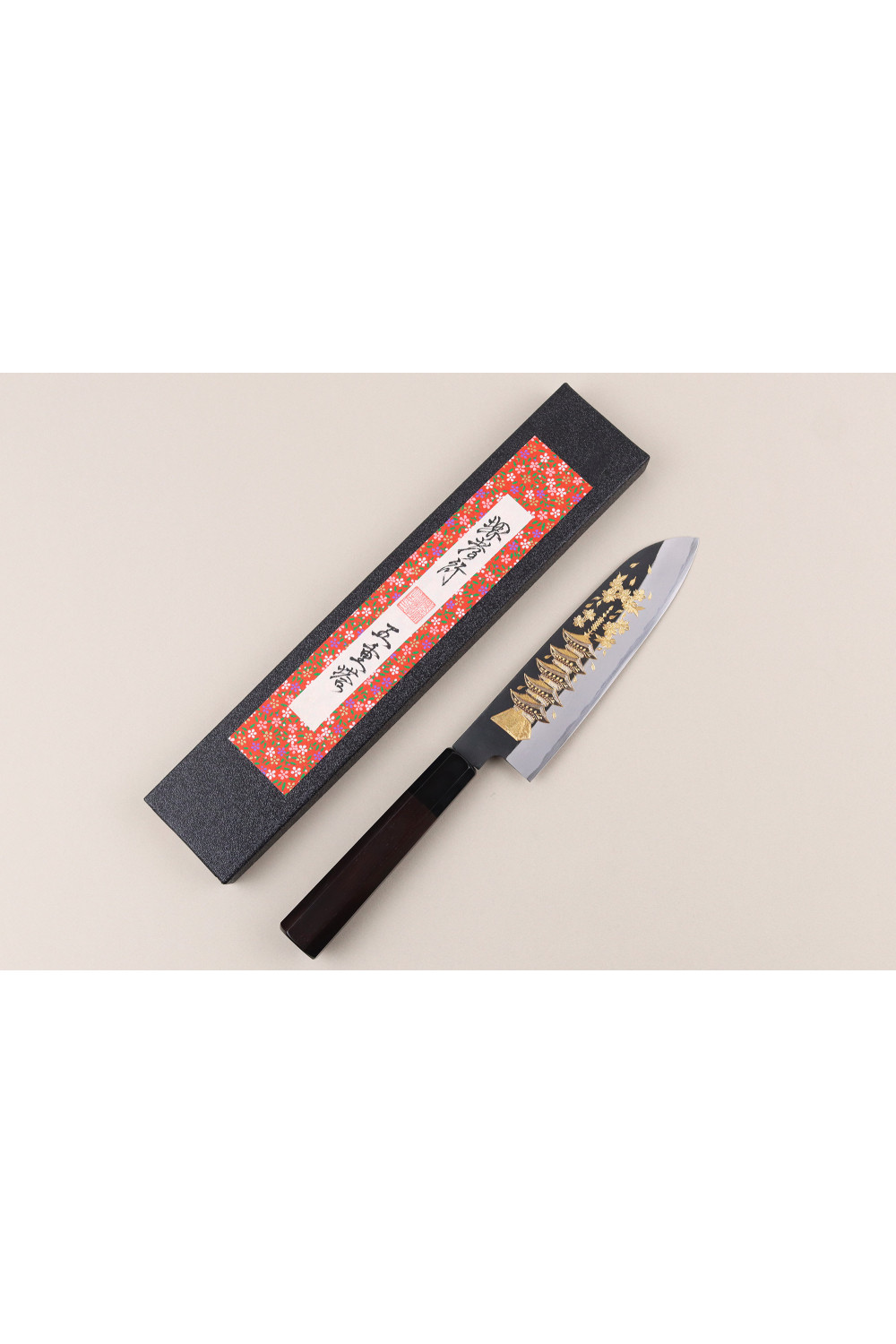
The decoration is an engraving depicting a five-story Japanese pagoda, known asGojū no tō in Japanese.Michiko Kubota created this original design, in which the colored areas (on the pagoda and the flowers) are achieved through plating. This process involves applying a thin layer of metal to the blade’s surface. Vigorous rubbing and abrasive products can gradually alter these colors; therefore, the engraving should be handled with care.
The sharpening is the work of Mitsuo Yamatsuka, a Master Traditional Craftsman who specializes in this technique. The blade thus combines a forged finish, a sharp cutting edge, and a unique decoration—all hallmarks of this handcrafted Japanese collector’s knife.
An elegant ebony handle
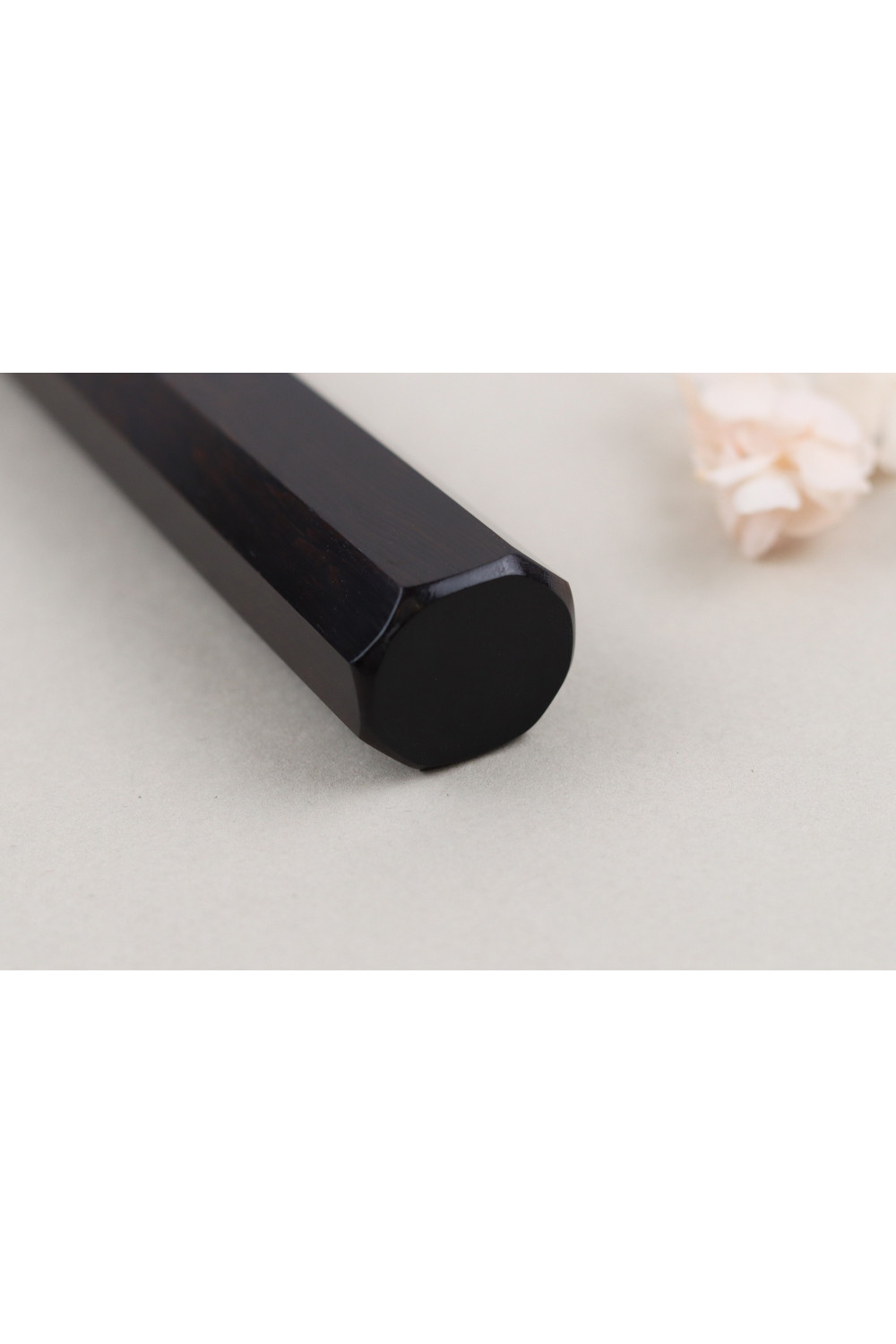
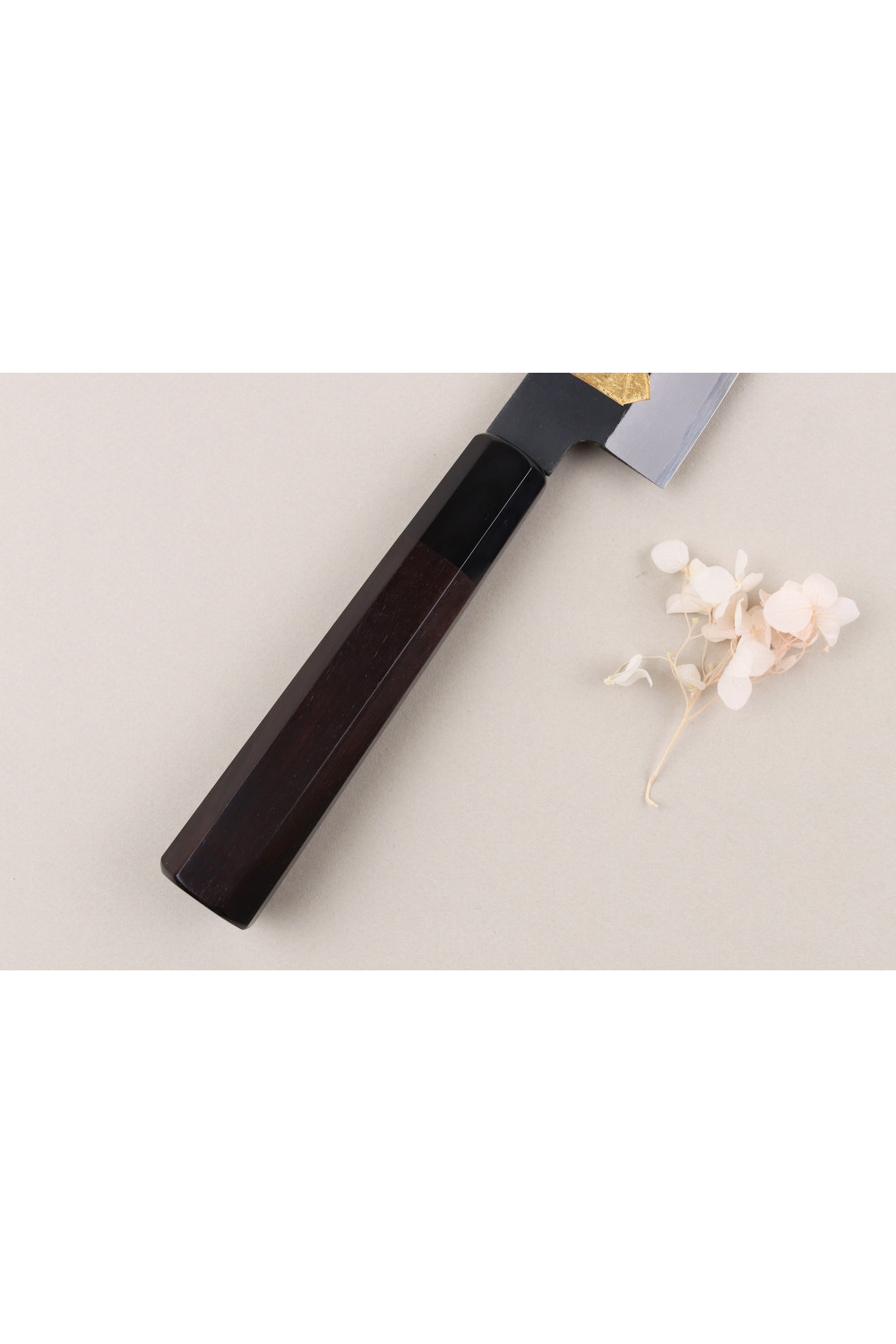
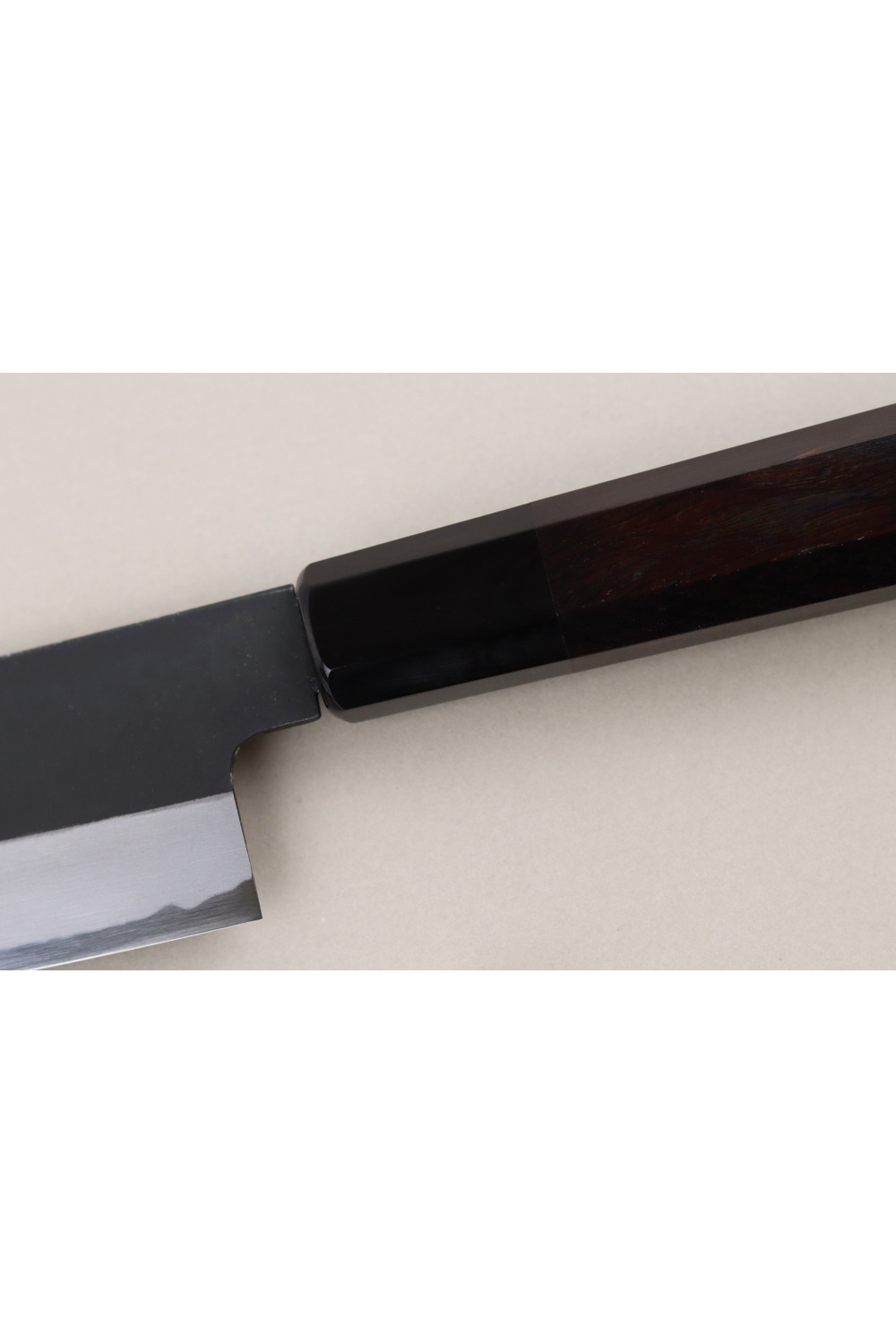
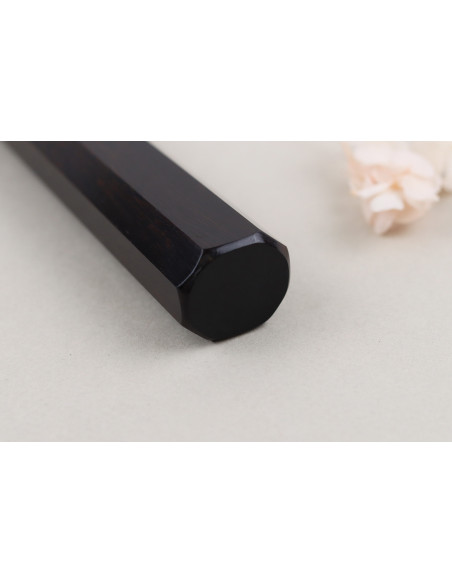
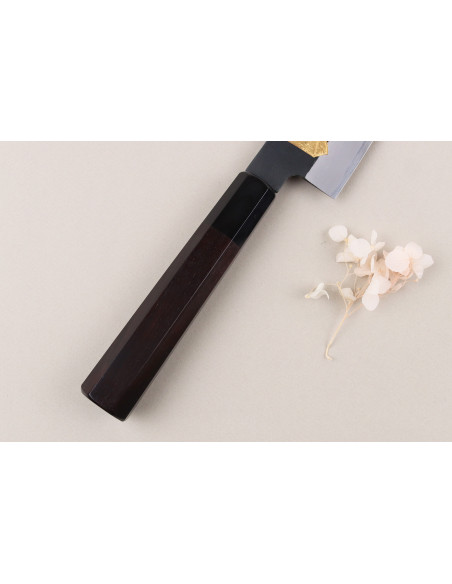
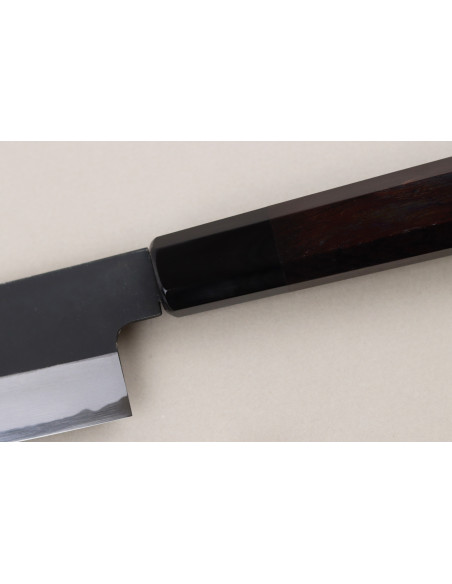
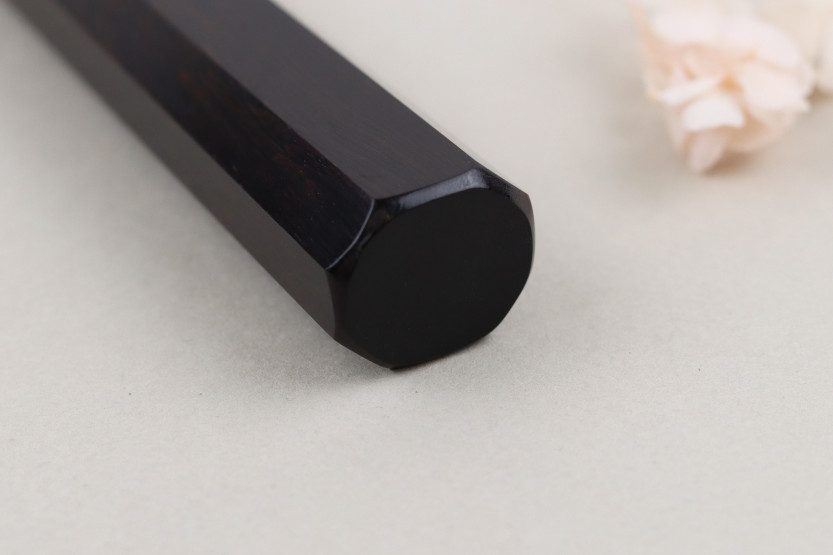
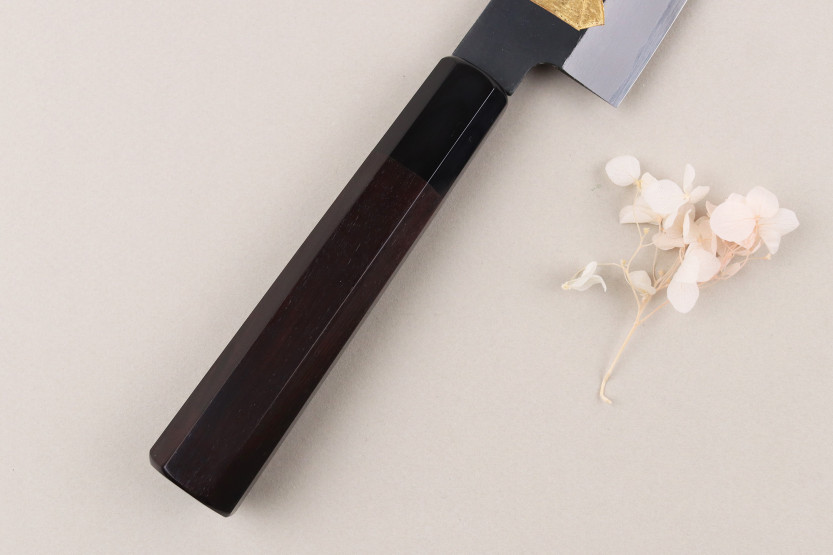
The handle is crafted from ebony, a dark wood that gives this piece a understated and elegant appearance. Its octagonal profile provides multiple contact points for the fingers and helps position the hand while cutting. This traditional shape is suitable for both a classic grip and a pinch grip, where the thumb and index finger are placed close to the blade to better guide the movements.
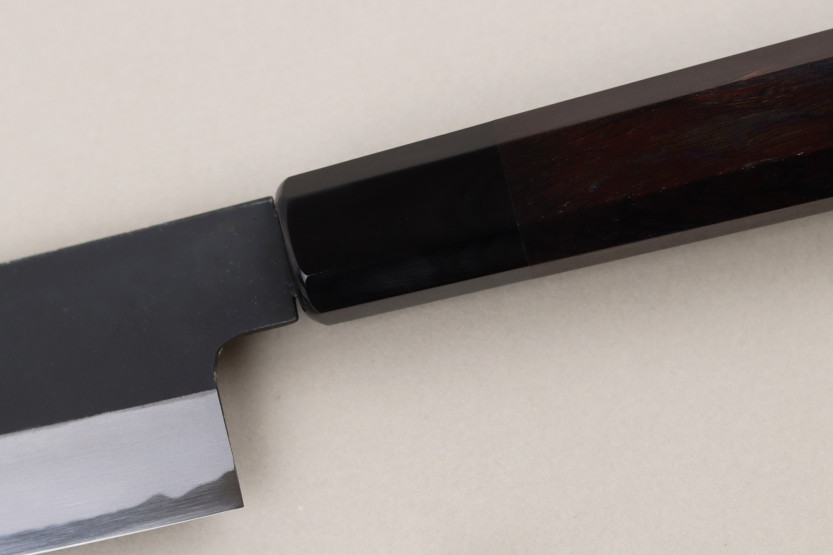
The black horn ferrule marks the junction between the handle and the blade, with a finish that complements the deep hue of the ebony. Together, these elements create a visual contrast with the raw forged steel and the colorful pagoda decoration.
The knife comes in a box with a red floral design. This box allows you to display it or store it safely, keeping in mind that it is an item that should be handled with care.
Benefits and Features
-
- 18 cm blade: a length suited to the sweeping motions of the santoku
-
- Three-layer San Mai construction: a hard core surrounded by softer steel
- Shirogami #2 core: high-carbon steel, providing a fine and precise edge
- Hardness of approximately 62 HRC: excellent edge retention
-
- Flat grind: controlled and consistent cutting performance
- Raw forged finish: distinct artisanal appearance
- Forged by Kenji Togashi: renowned craftsmanship
- Engraving by Michiko Kubota: original five-story pagoda motif
-
- Sharpened by Mitsuo Yamatsuka: edge honed by a specialist
- Octagonal ebony handle: structured grip with a dark, elegant finish
- Black horn bolster: elegant junction between the handle and the blade
- Collector’s item made in Japan: superb handcrafted knife
Caring for the blade and its engraving
If you choose to use this knife in the kitchen, work on a wooden or synthetic cutting board. Avoid bones, frozen foods, twisting, and side-to-side movements, which can damage the edge.
A patina may develop on the blade over time. This is completely normal because Shirogami #2 steel is high in carbon; it does not affect the knife’s performance. After use, wash the blade by hand, dry it immediately and thoroughly, then store it completely dry. Do not use a dishwasher, abrasive sponges, or harsh cleaning agents. To preserve the colored areas, also avoid vigorous scrubbing. Sharpening with a suitable whetstone is recommended.
Kenji Togashi, heat treatment specialist
Based in Sakai,Kenji Togashi has specialized in forging Japanese knives since 1966. His expertise rests in particular on his mastery of the heat treatment of steel, a process that determines the blade’s properties, such as its hardness and durability. For this piece, he forged the blade from Shirogami #2 steel with a San Mai structure. The sharpening was then performed by Mitsuo Yamatsuka, a traditional master craftsman specializing in this process.
The engraving was done byMichiko Kubota, an artist based in Takatsuki, Osaka Prefecture, who serves as the head engraver at Sakai Takayuki. Inspired by Japanese culture and natural landscapes, she created the motif of the five-story pagoda, Gojū no tō. Her work is recognizable by its detailed motifs and the combination of engraving with colorful accents, achieved here through metal plating.
Discover our selection of exceptional Japanese knives!




 By buying this product you can collect up to