A Japanese creation for lovers of exceptional pieces
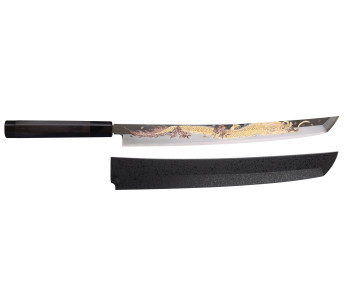
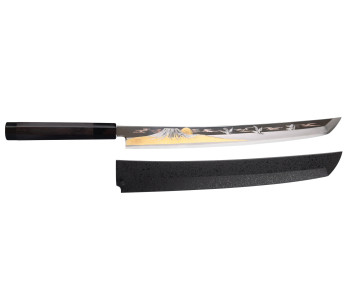
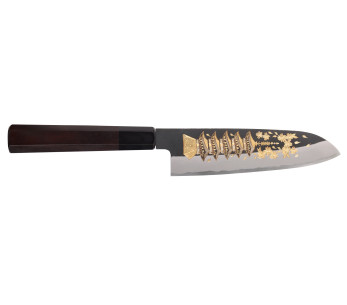
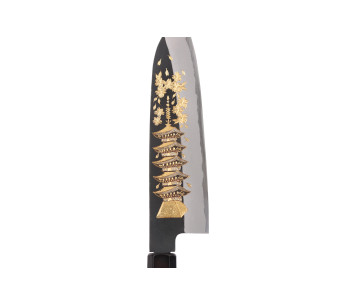
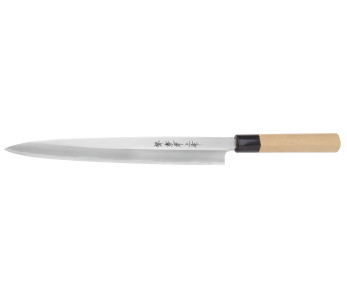
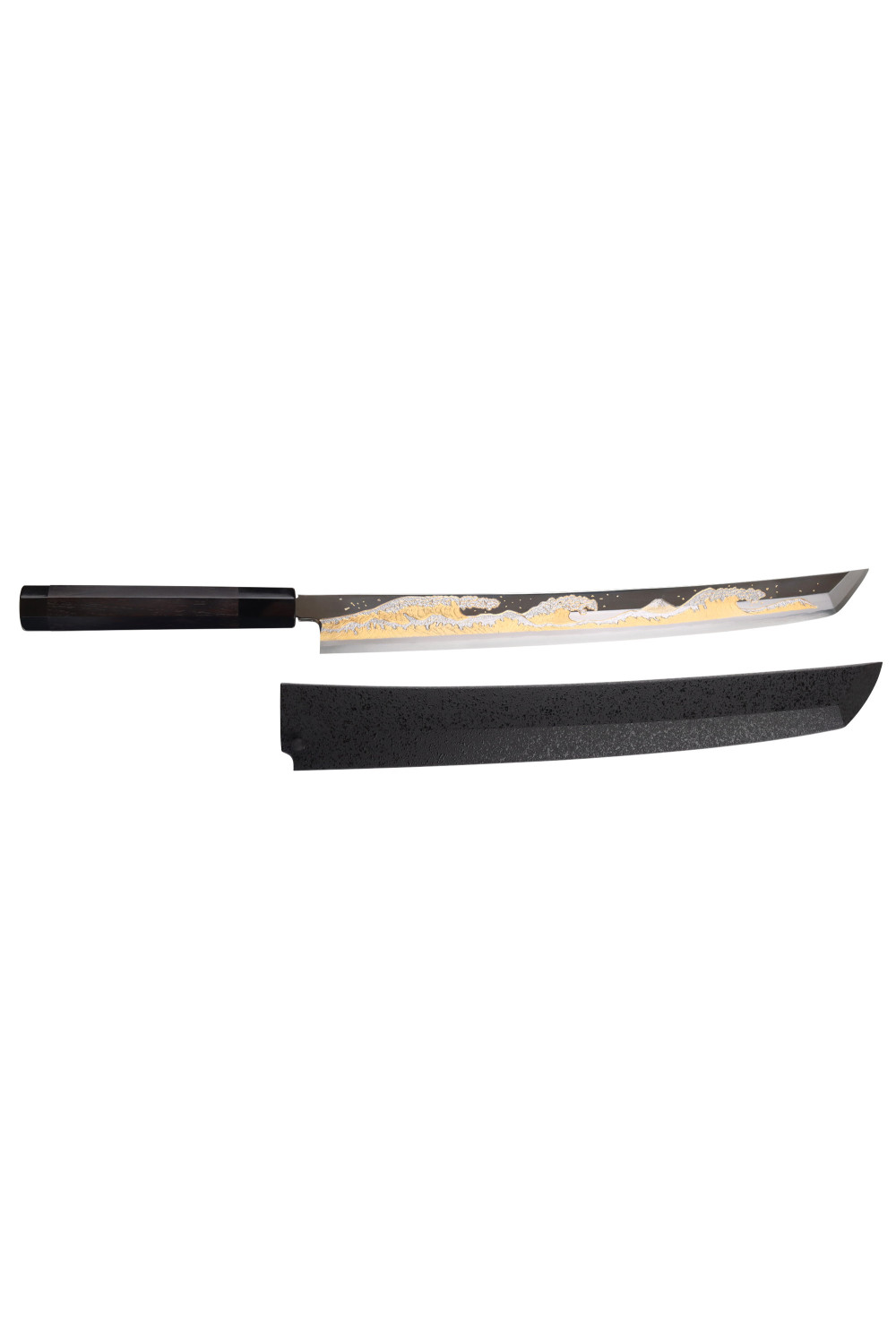
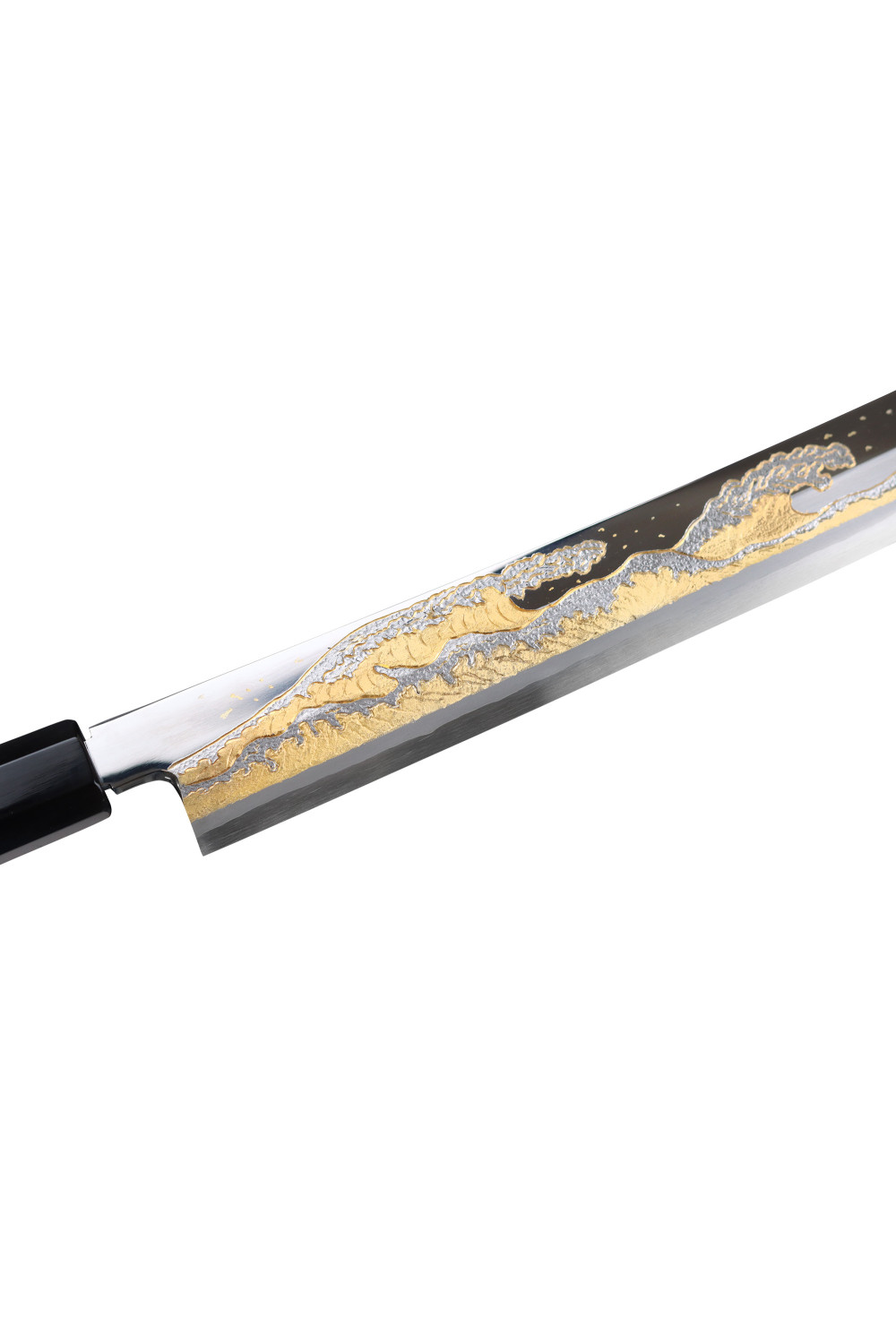
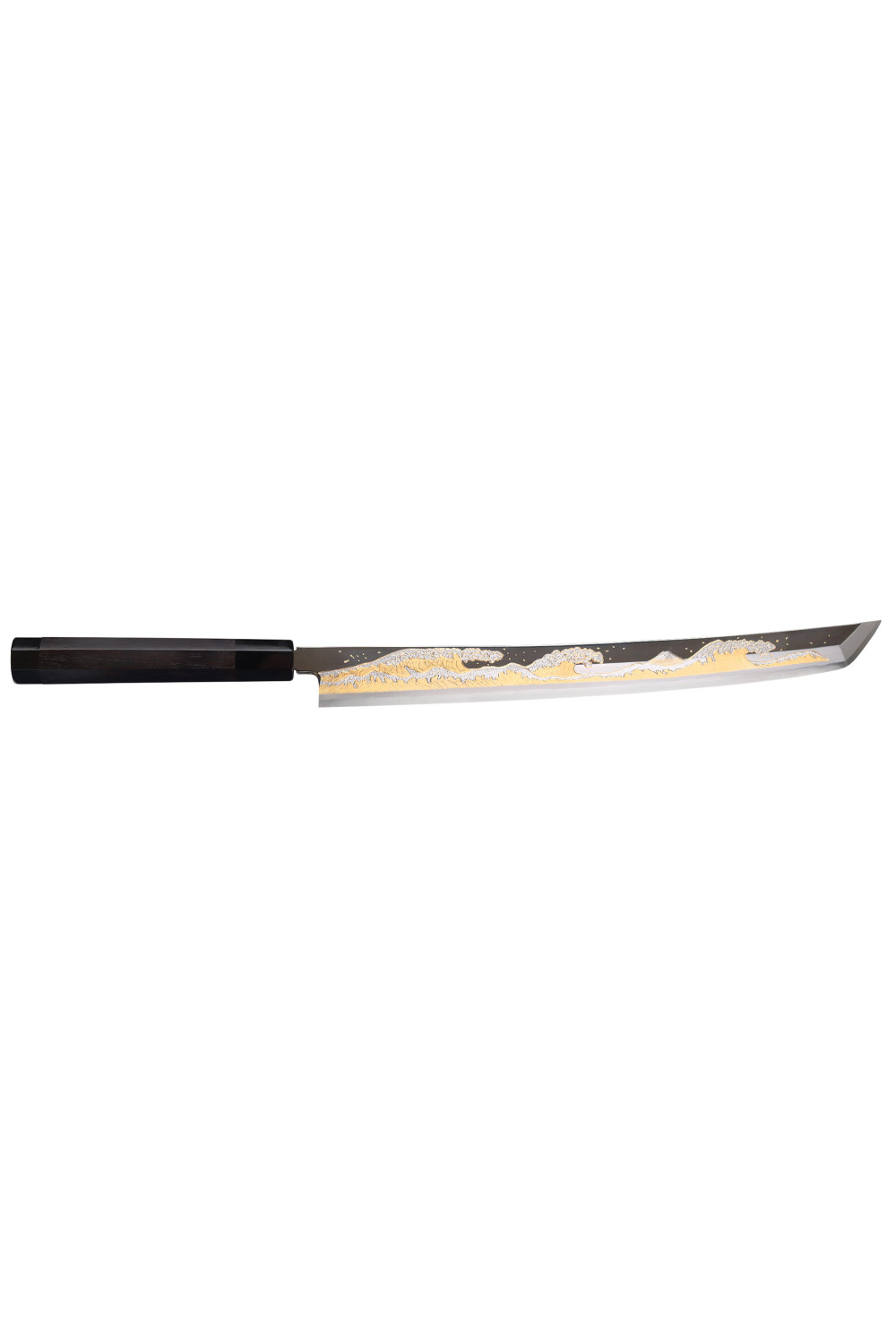
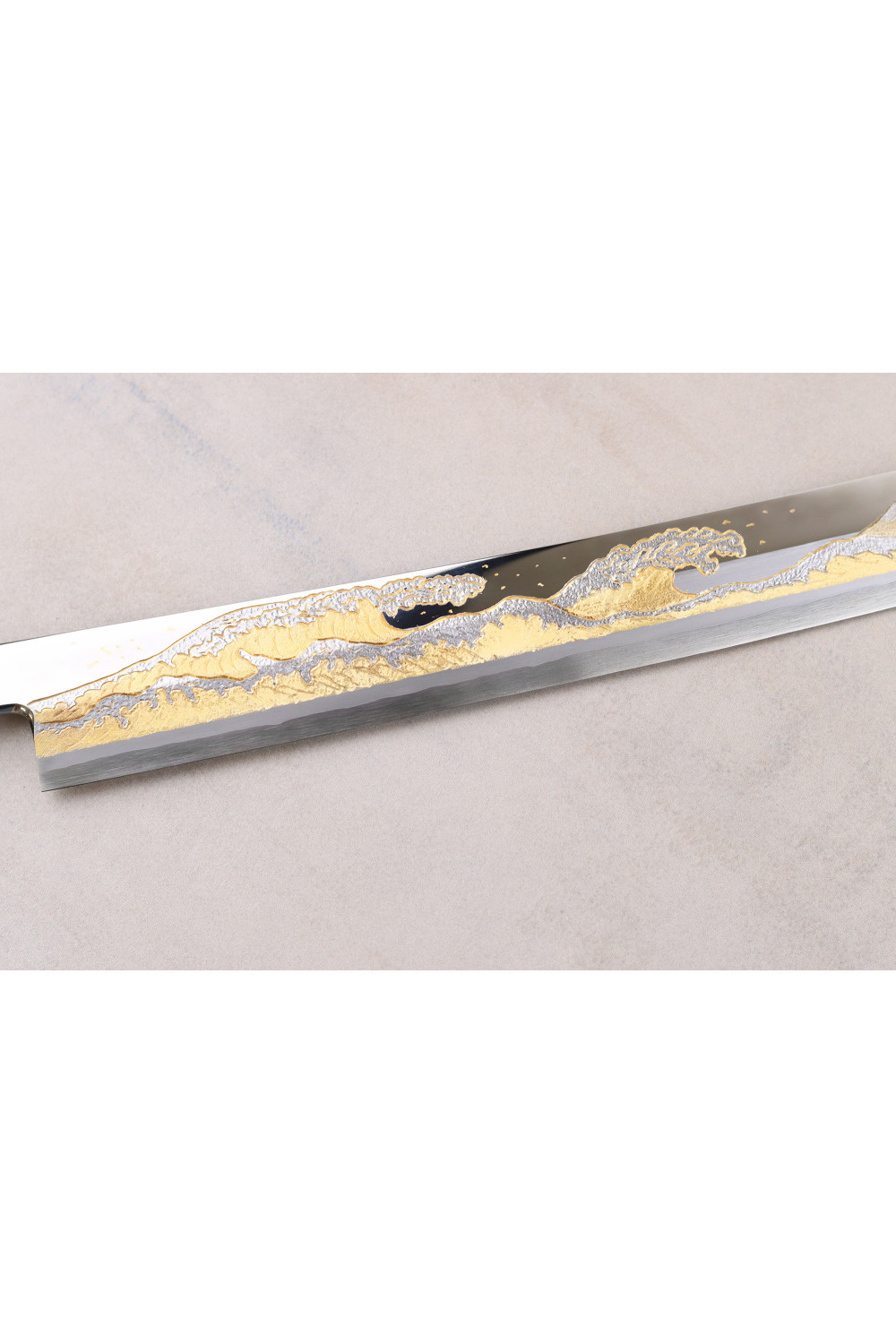
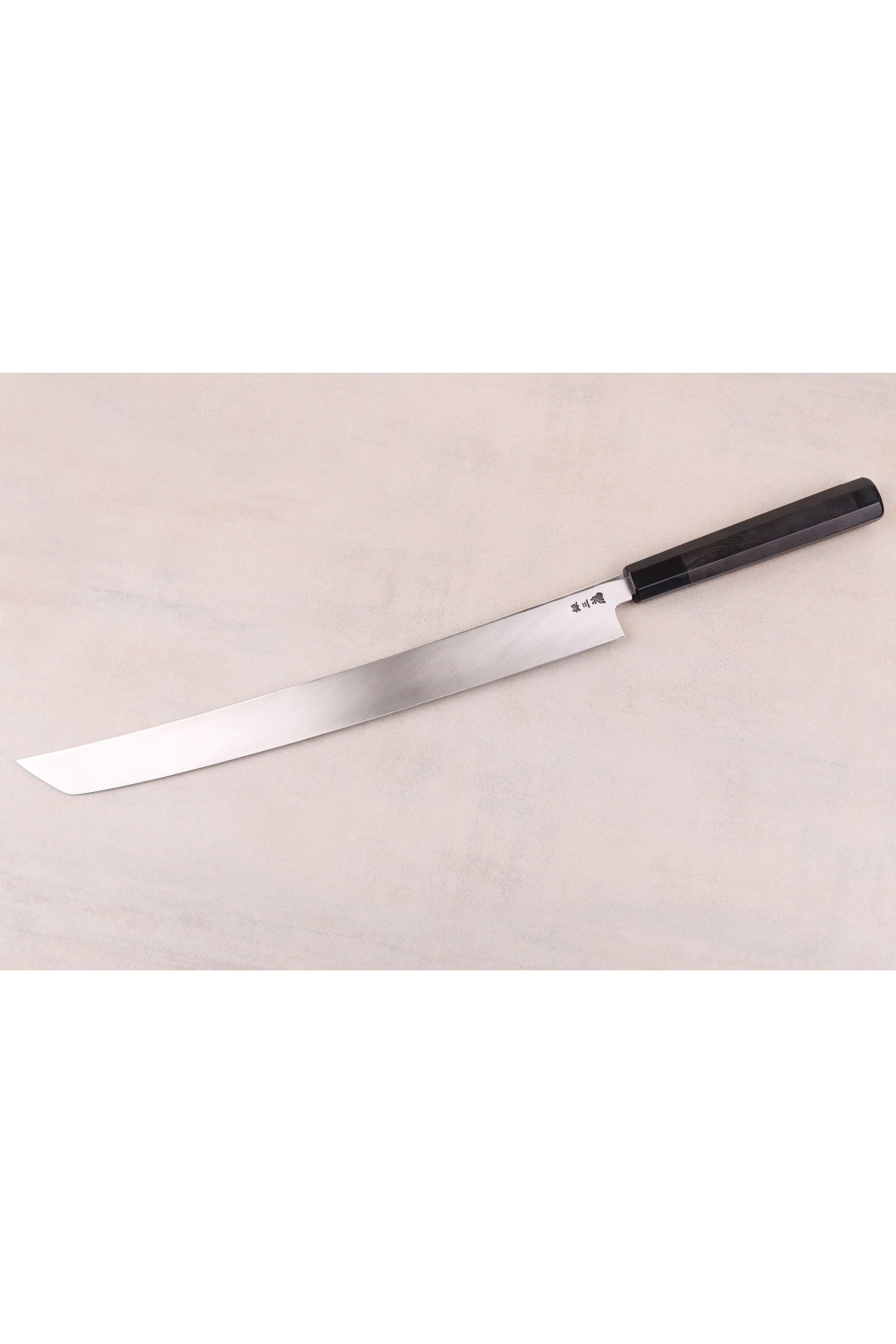
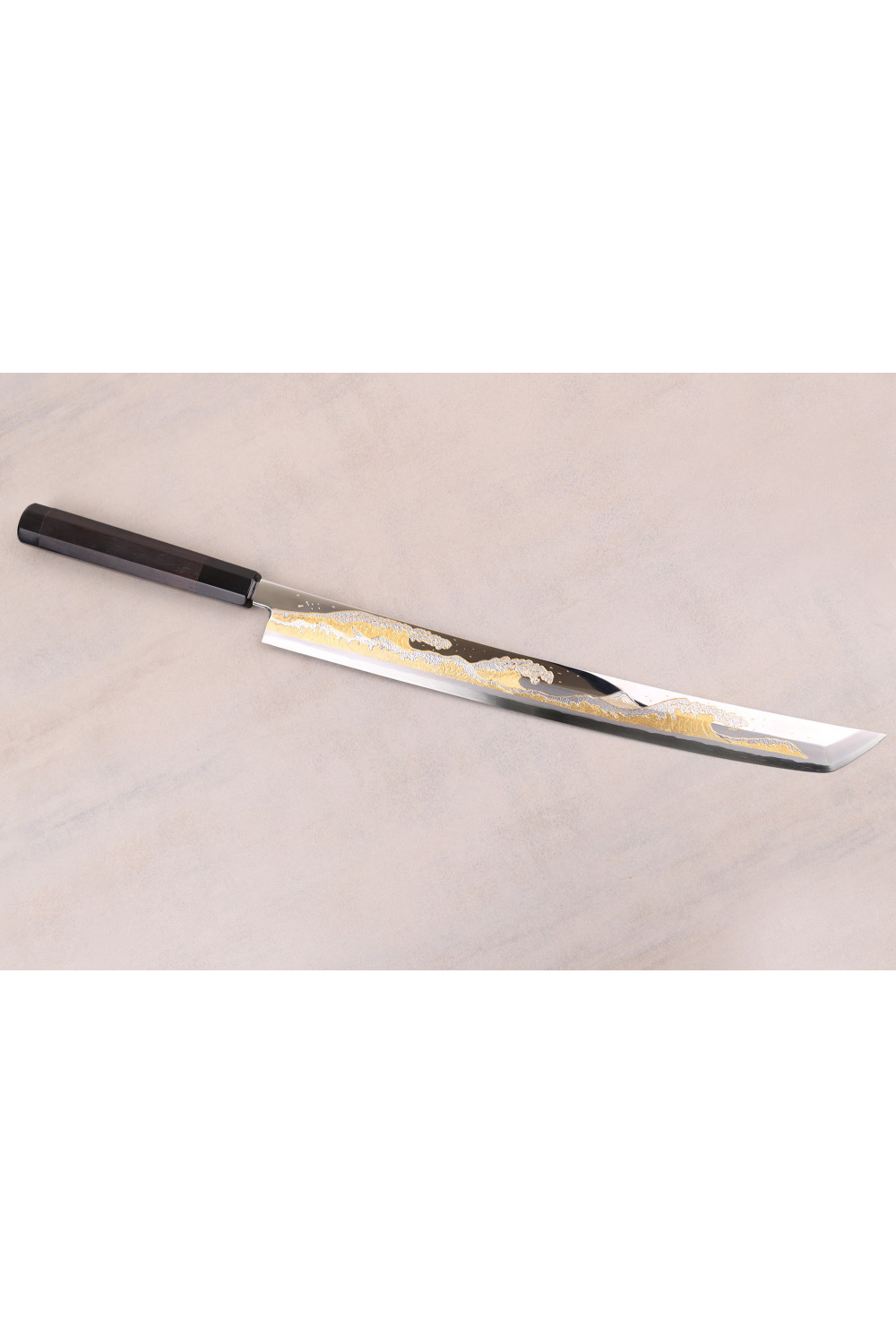
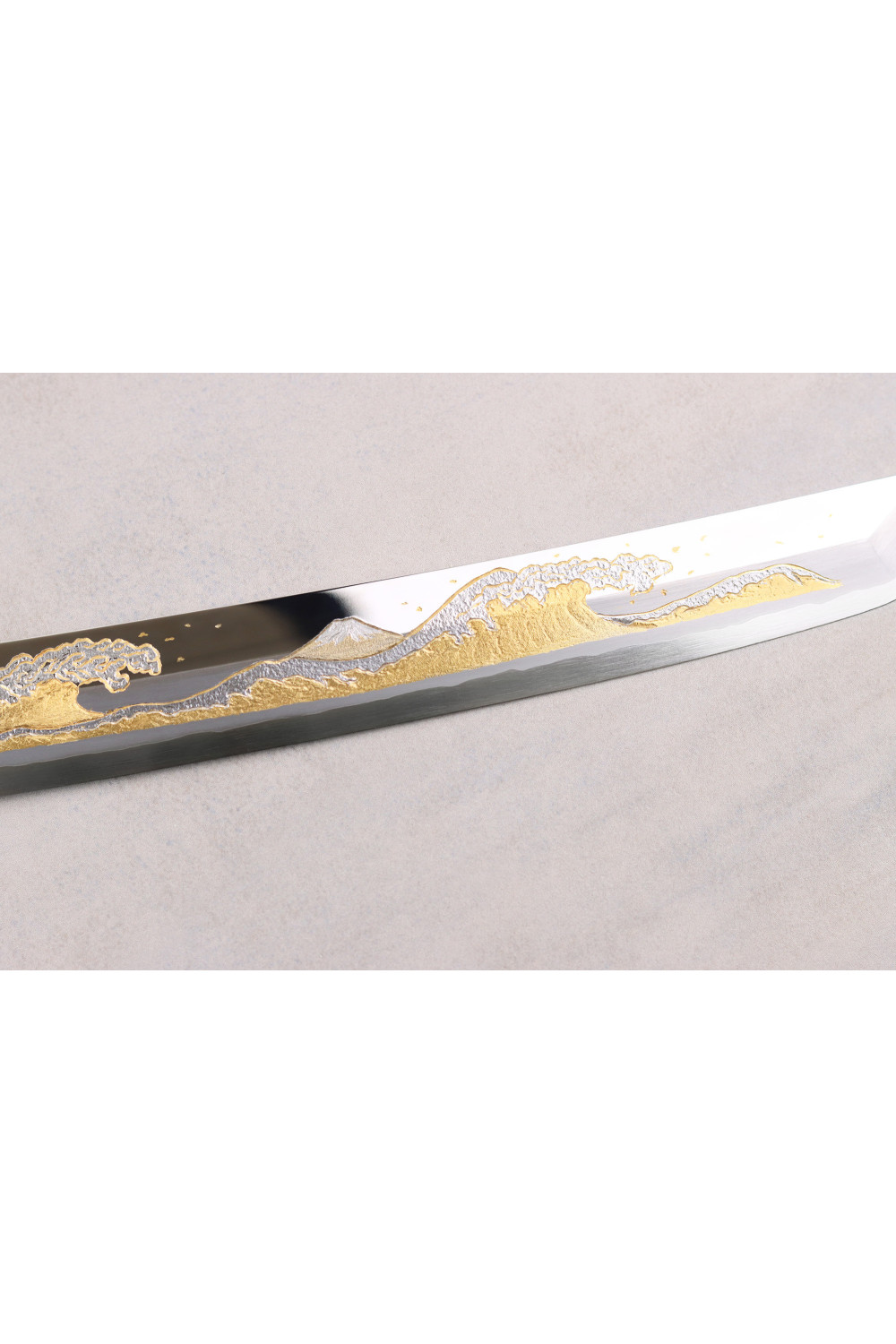
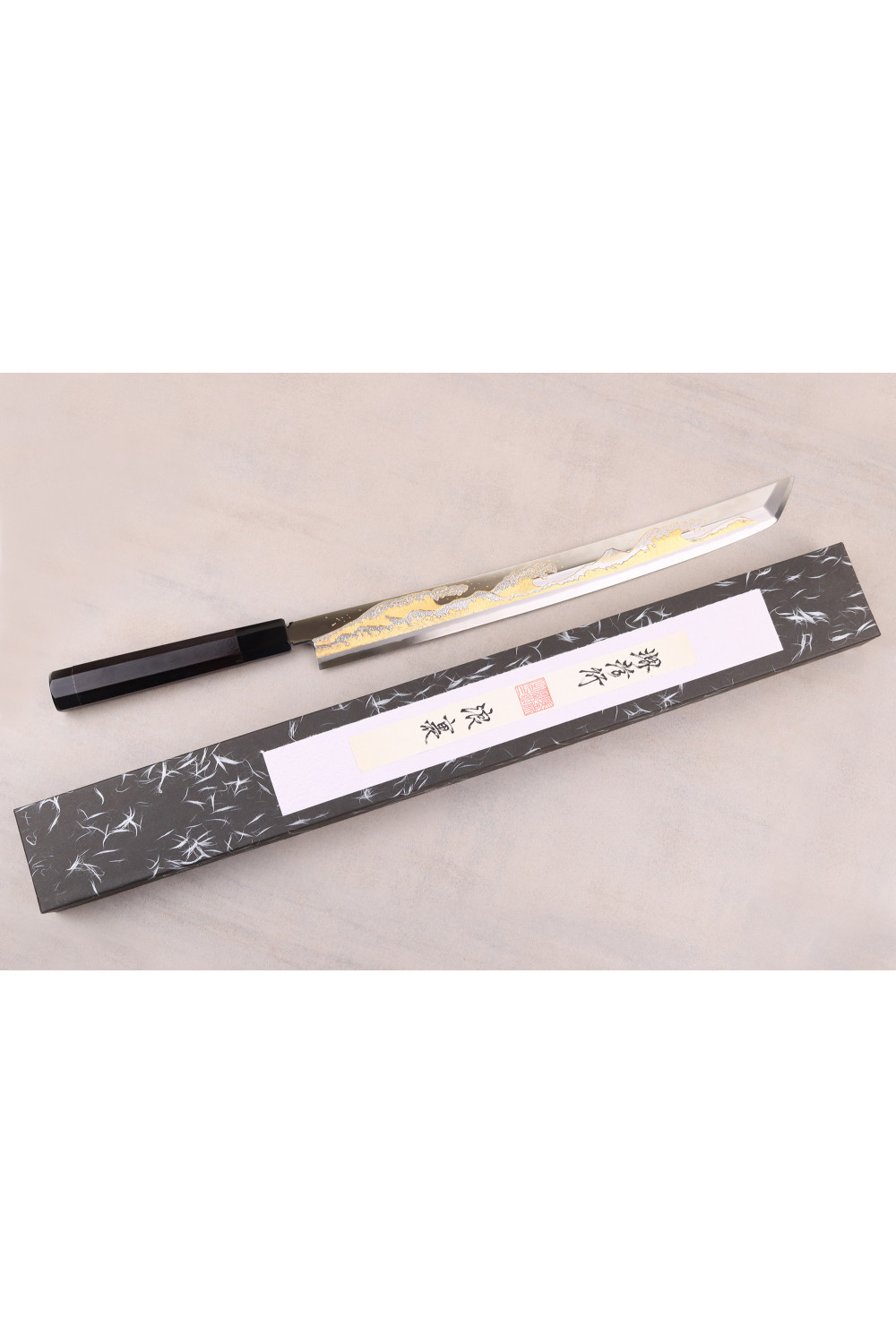
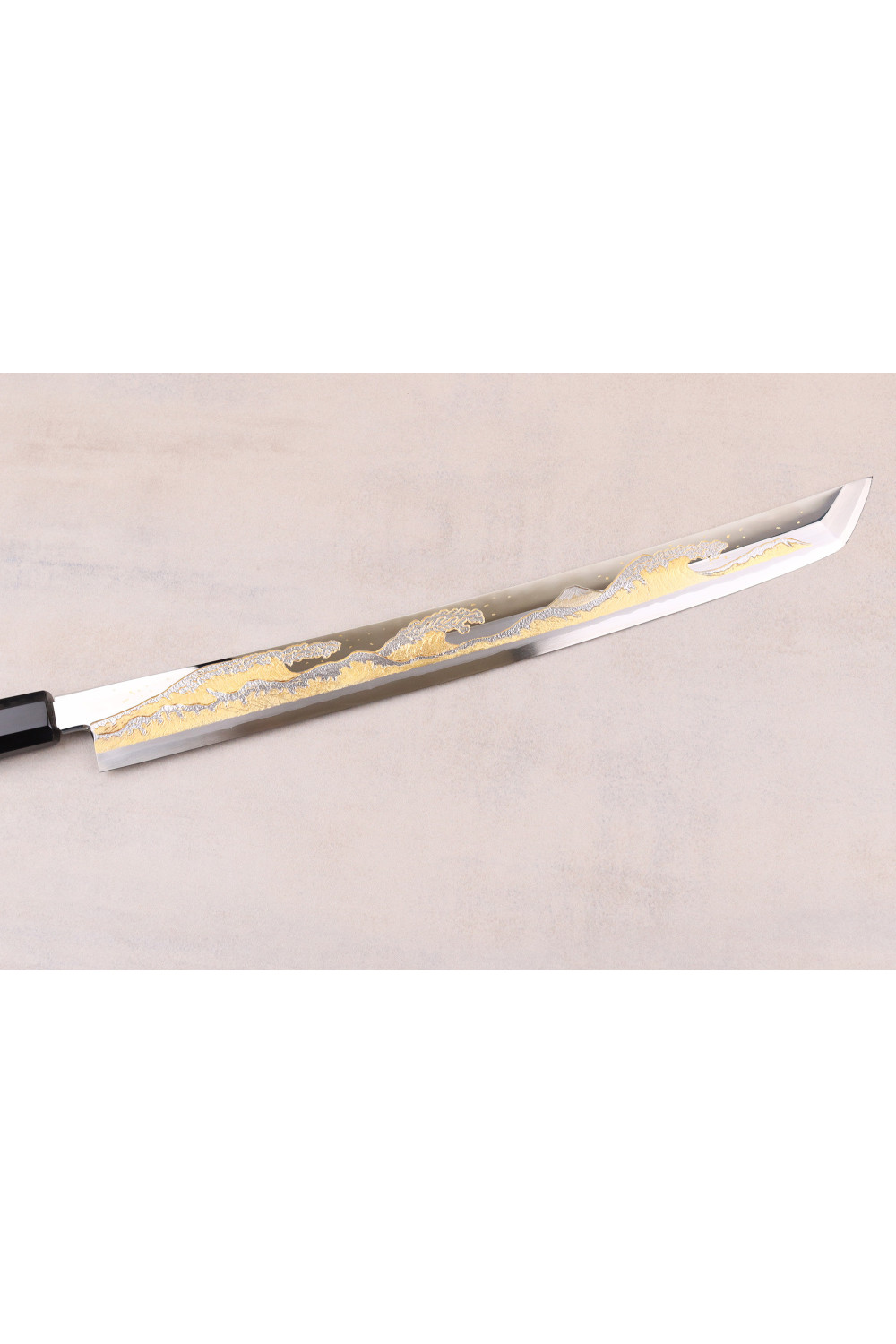
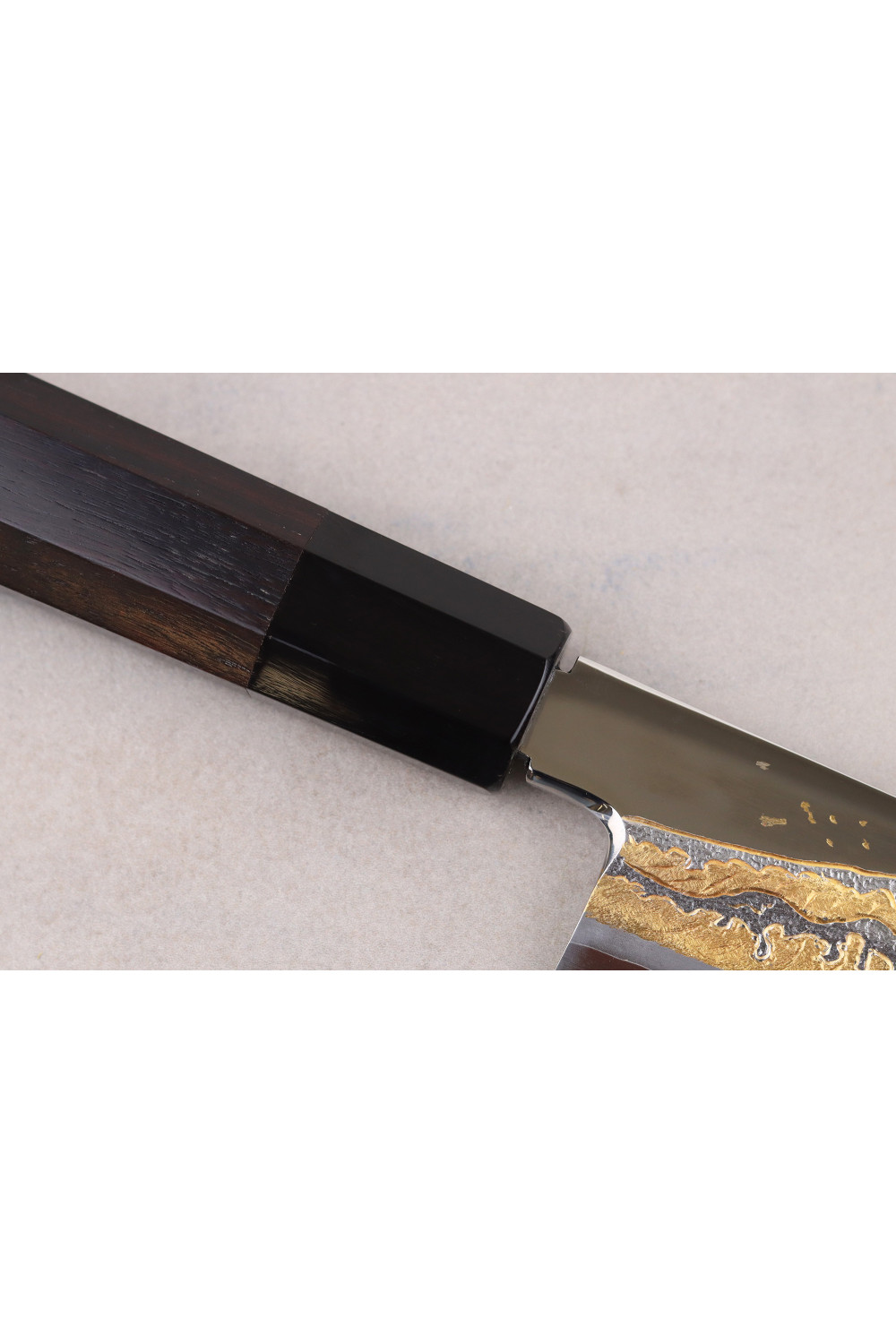
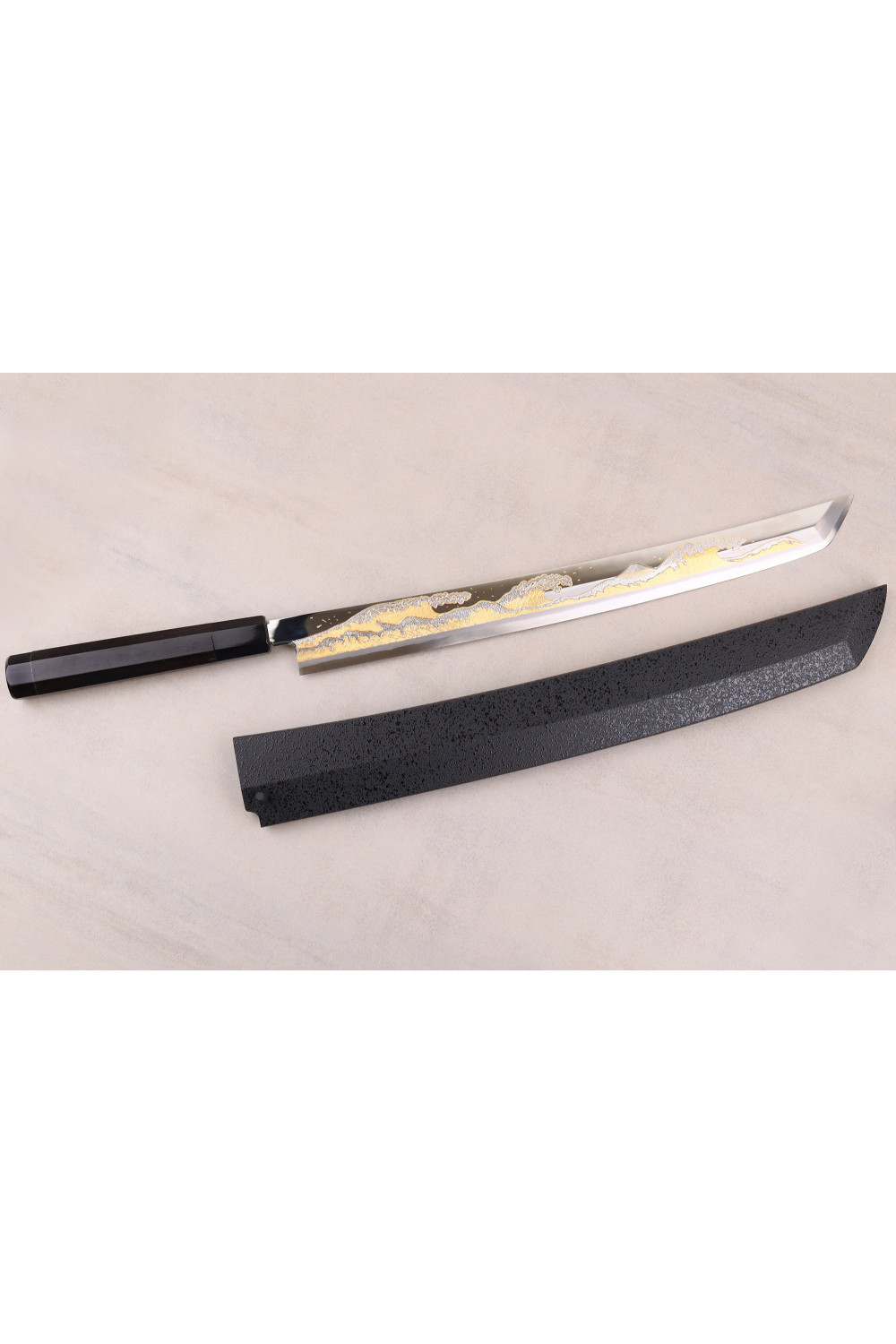
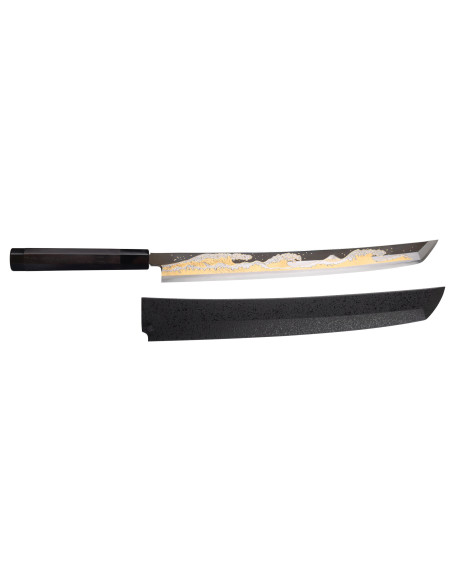
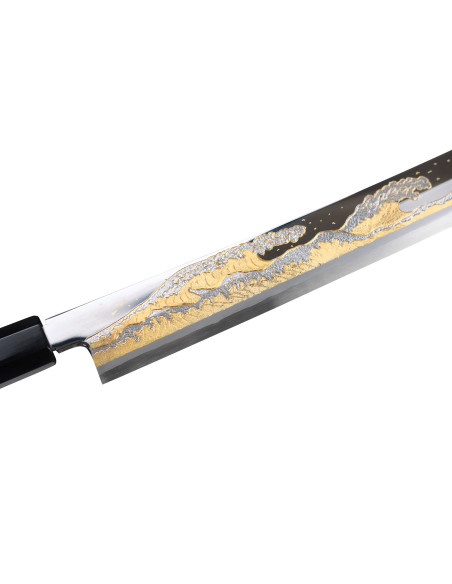
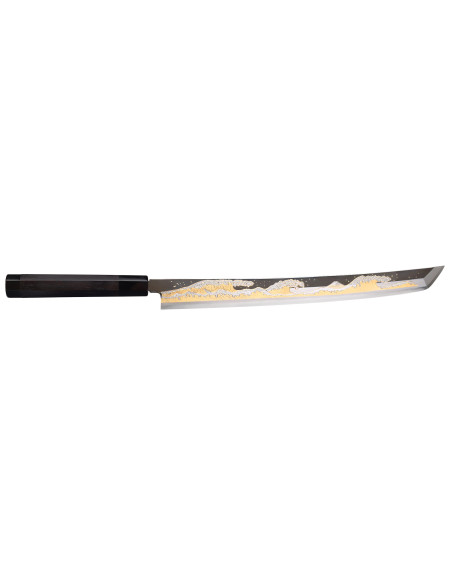
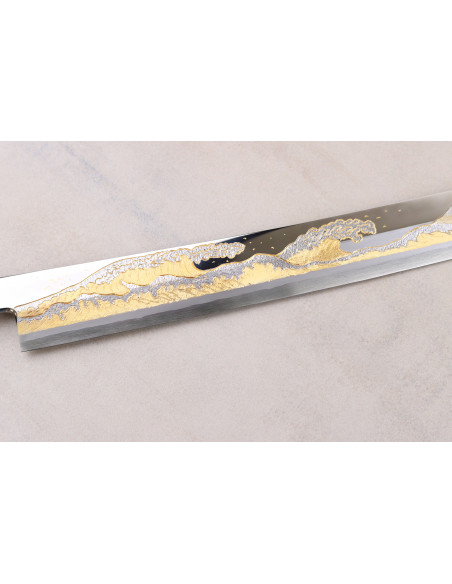
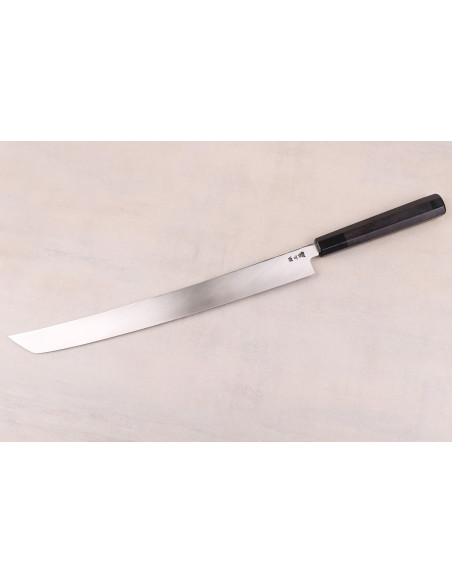
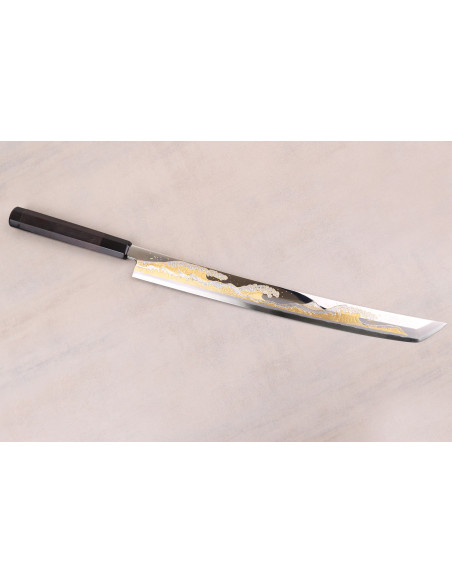
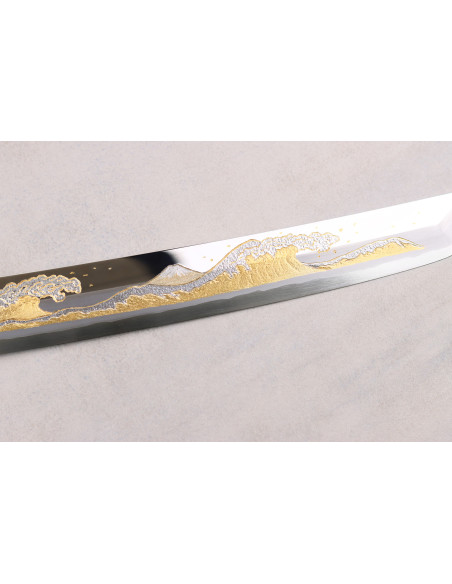
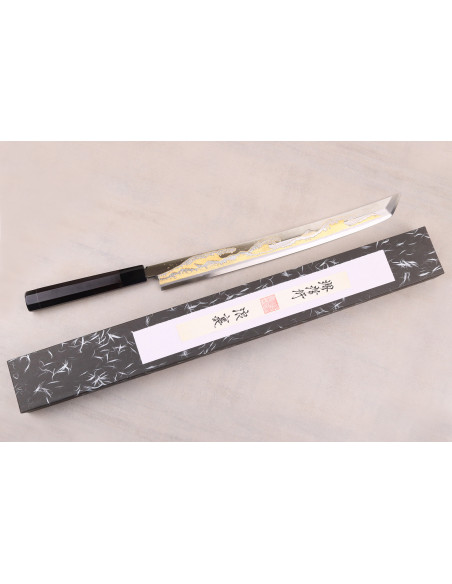
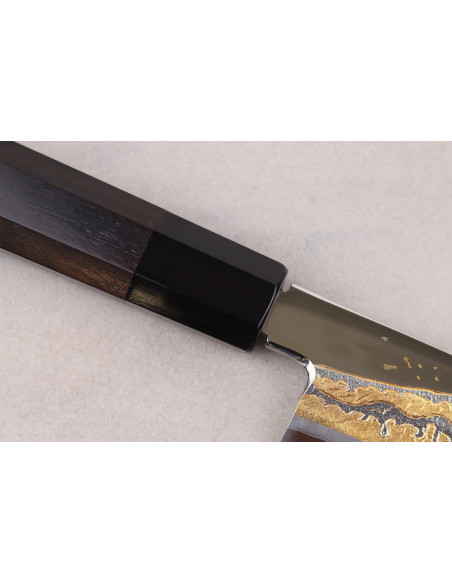
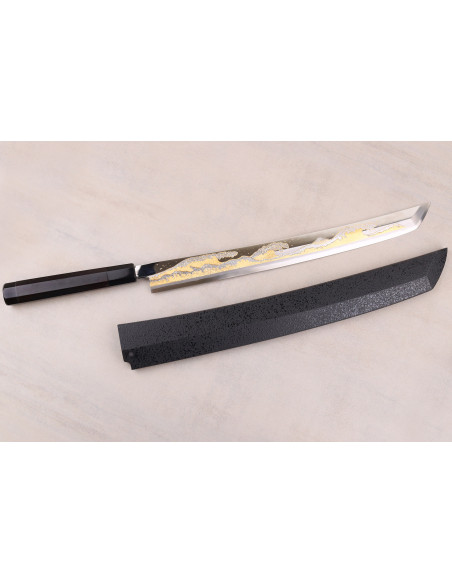
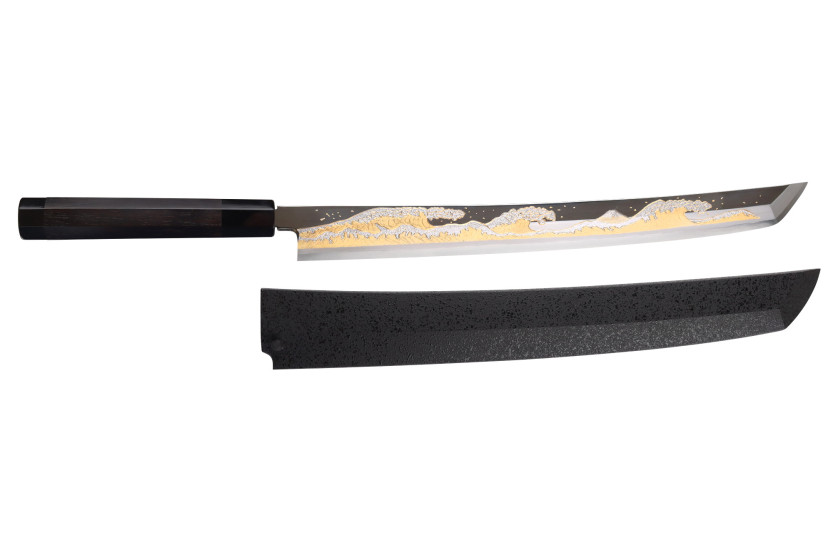
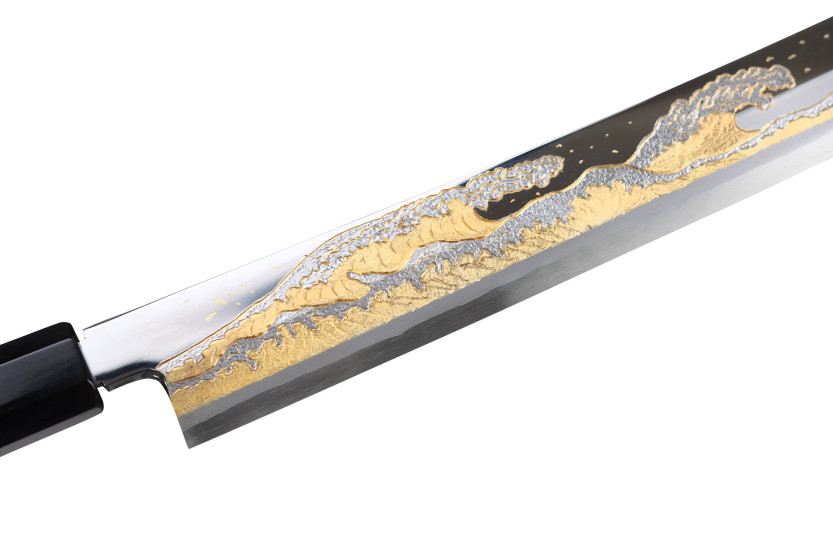
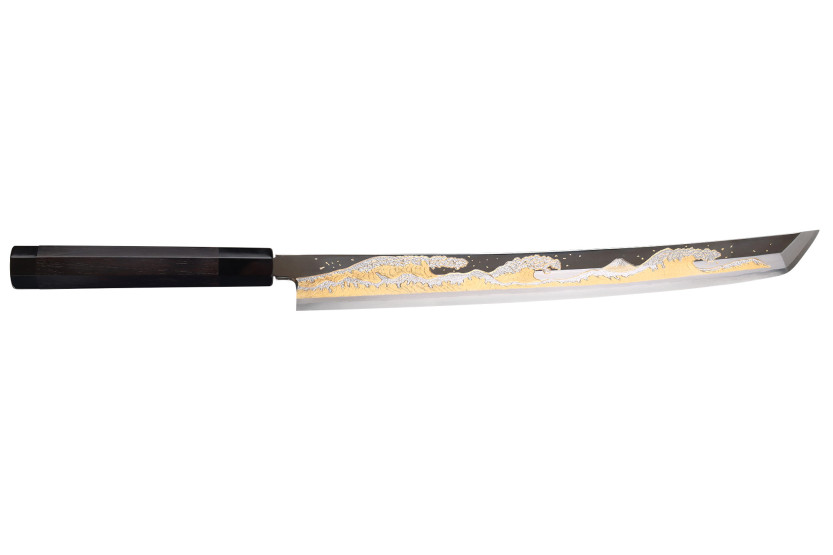
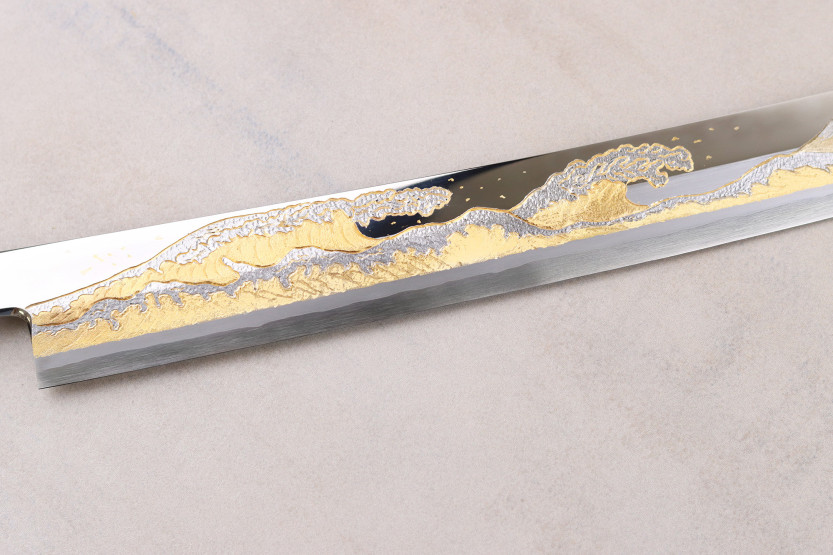
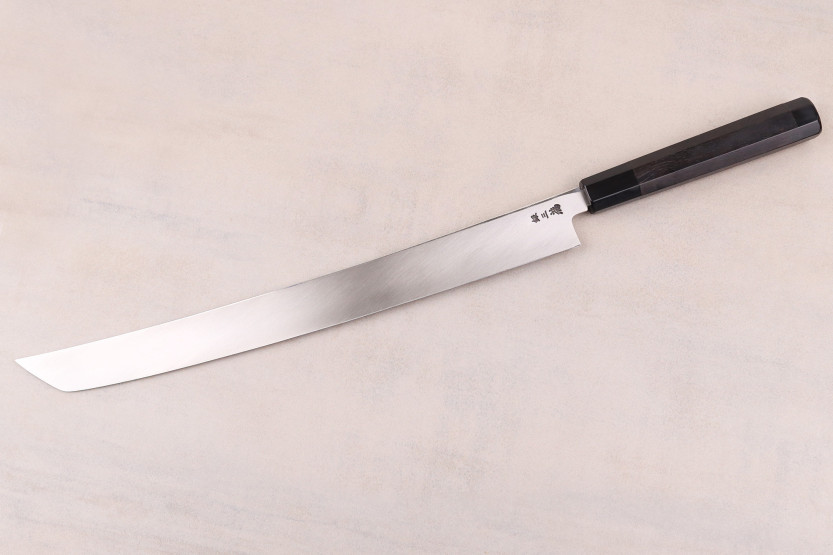
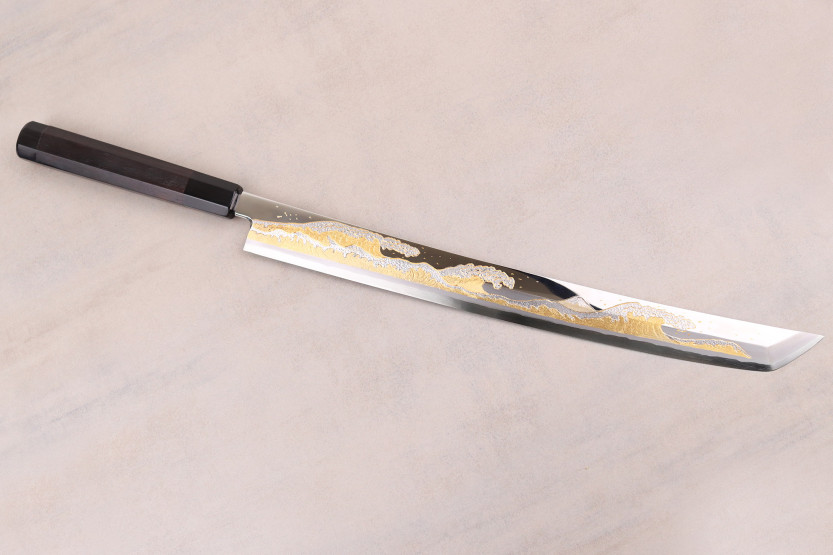
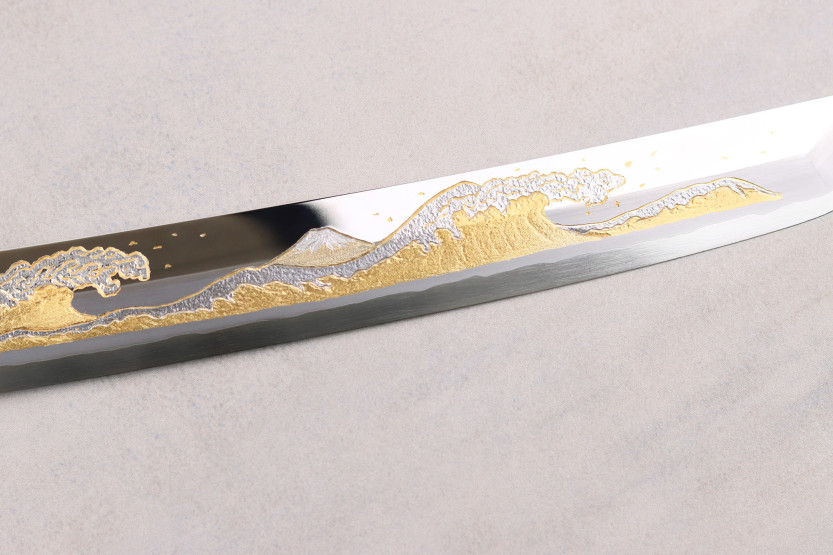
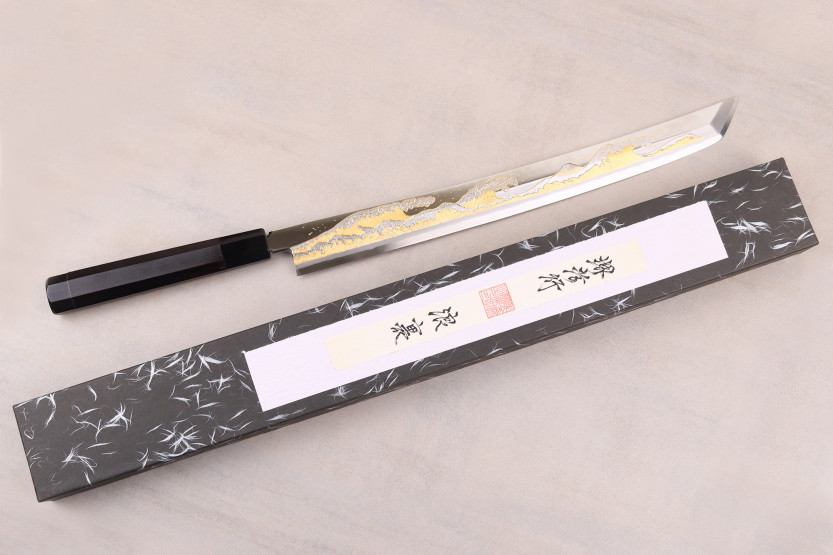
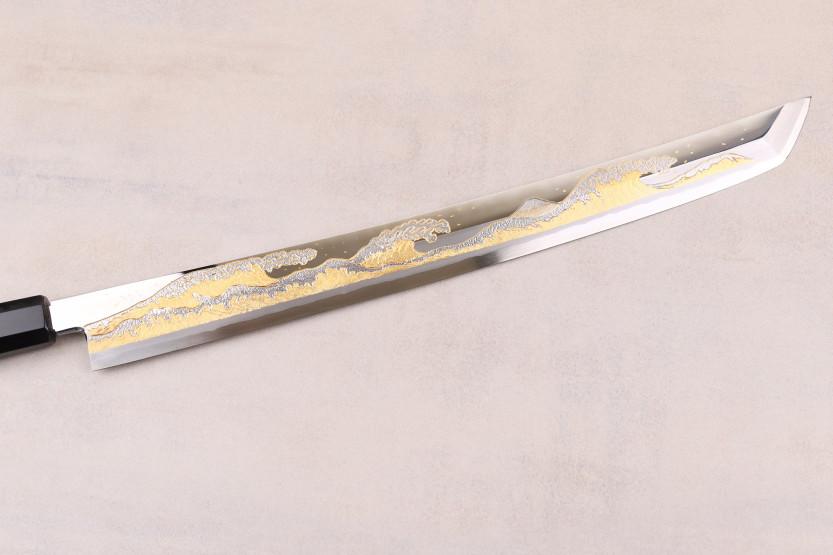
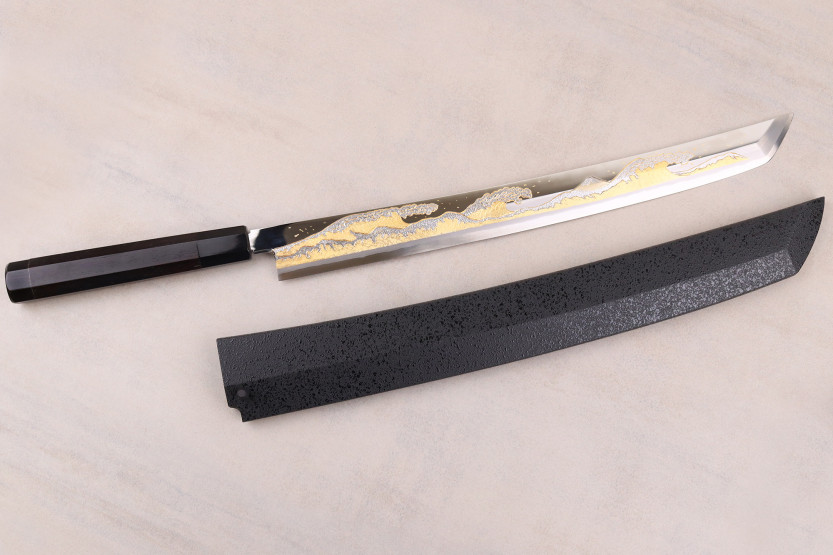
Designed for enthusiasts of Japanese cutlery, craftsmanship, and Japanese woodblock prints, thehandcrafted Sakai Takayuki Zangetsu “The Great Wave” Japanese knifeis first and foremost a collector’s item, meant to be admired as much as it is preserved. Its 39-cm blade features Hokusai’s “The Great Wave,” hand-engraved by Michiko Kubota with Mount Fuji in the background. Forged in Japan by Shogo Yamatsuka, it combines a Ginsan steel core with a San Mai structure and a mirror finish. The octagonal ebony handle, accented with black buffalo horn, completes this unique creation. The included Kuroishime saya allows you to store and protect the blade.
A 39-cm San Mai blade engraved by Michiko Kubota
The 39-cm blade features a traditional Japanese San Mai structure, composed of three layers of steel stacked on top of one another. The core, made of Japanese Ginsan steel, contains approximately 0.95% carbon and achieves a hardness of about 60 HRC. The two outer layers, made of softer stainless steel, surround this core. This structure combines a hard core—which helps maintain the edge—with more flexible outer layers that support the blade. Ginsan steel is a stainless alloy: it is easier to maintain than non-stainless carbon steel, although the blade should always be washed by hand and dried after use.
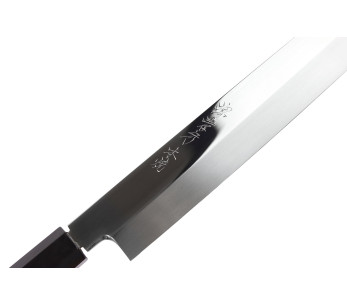
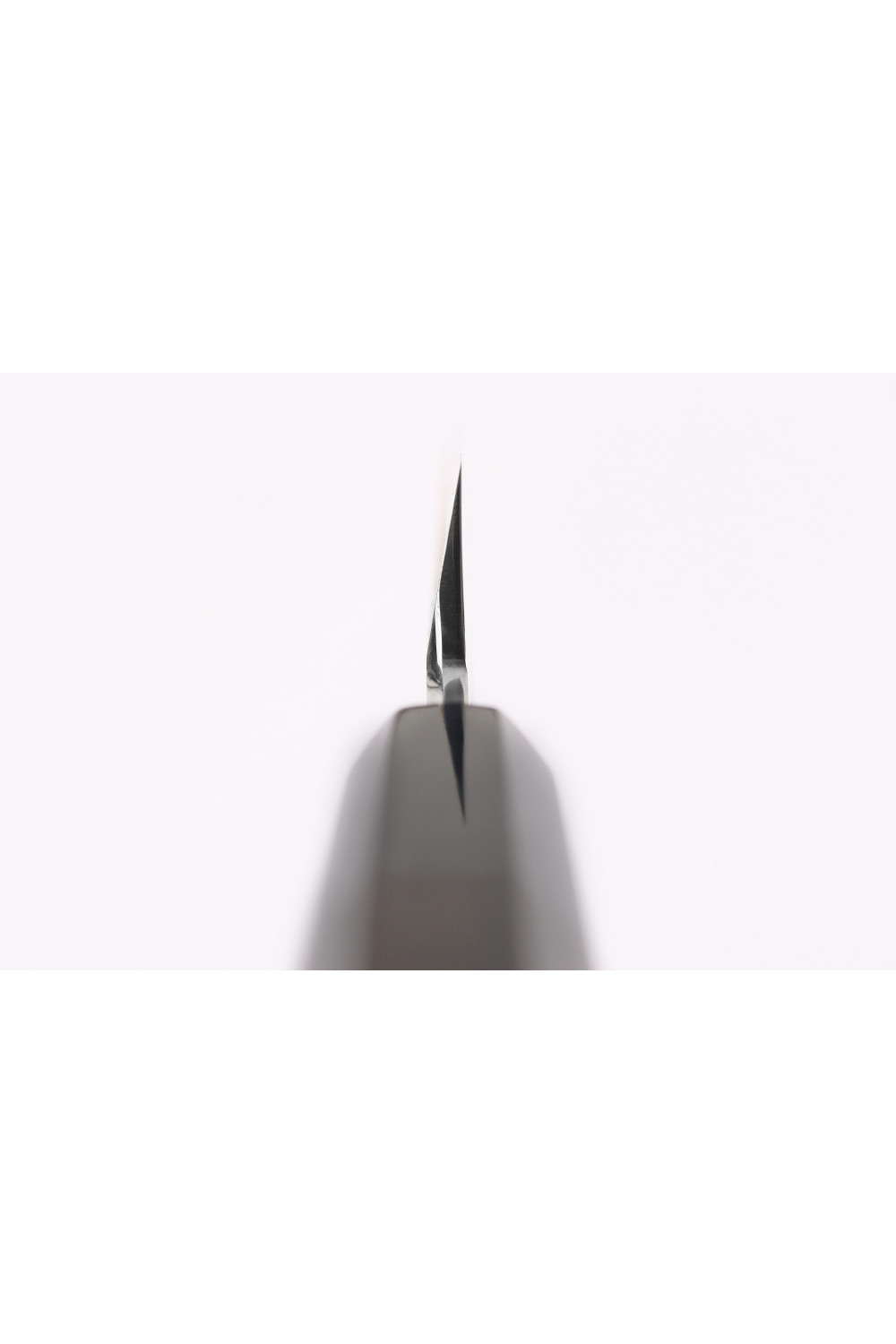
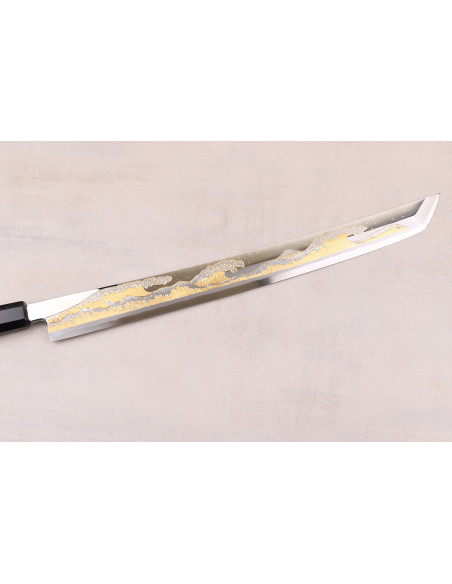
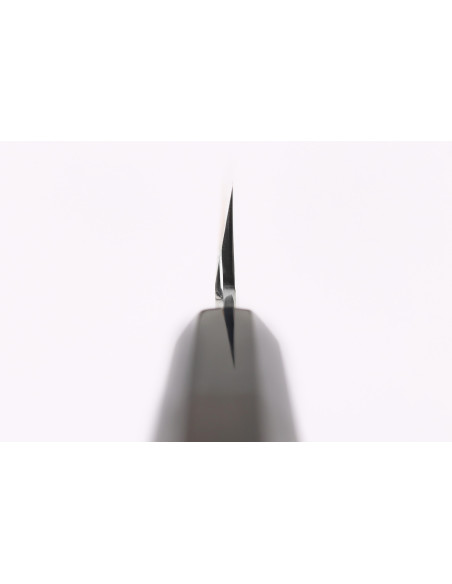
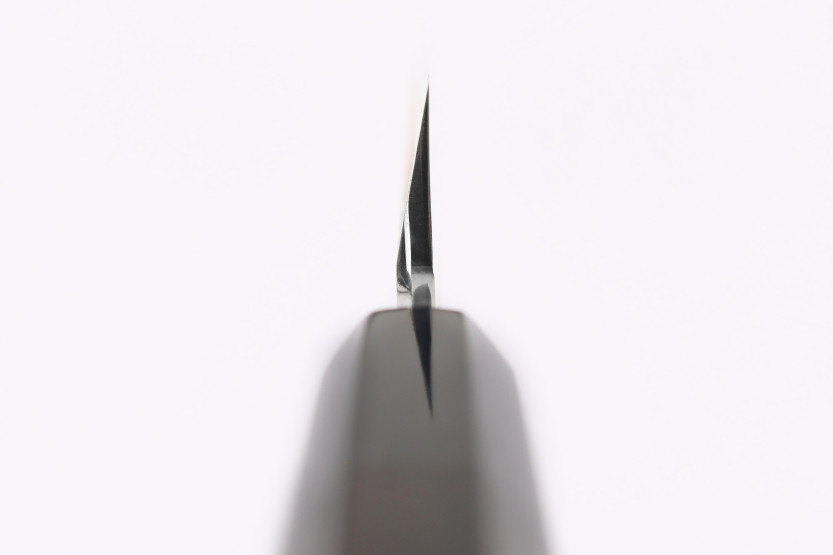
The blade’s remarkable length and its sakimaru takohiki shape—recognizable by its rounded tip—are typical of Japanese knives used for cutting fish. The blade features an asymmetrical grind designed for right-handed cooks. The mirror finish creates a reflective surface that highlights the blade’s lines and decoration.
The blade is forged by Shogo Yamatsuka, a craftsman from Sakai who specializes in working with Ginsan steel. His forging process shapes the San Mai structure and the Japanese steel core. The sharpening is then performed by Mitsuo Yamatsuka, a Traditional Master Craftsman specializing in this stage of the process. He shapes the edge and helps establish the blade’s cutting edge.
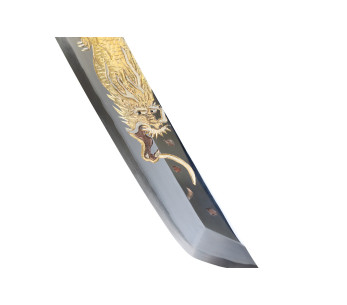
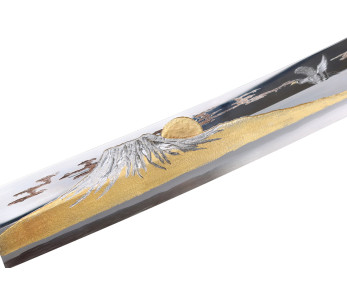
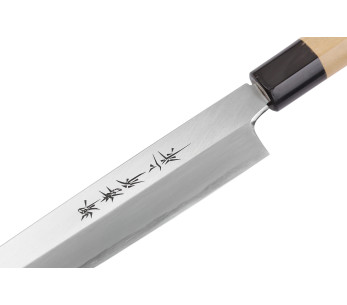
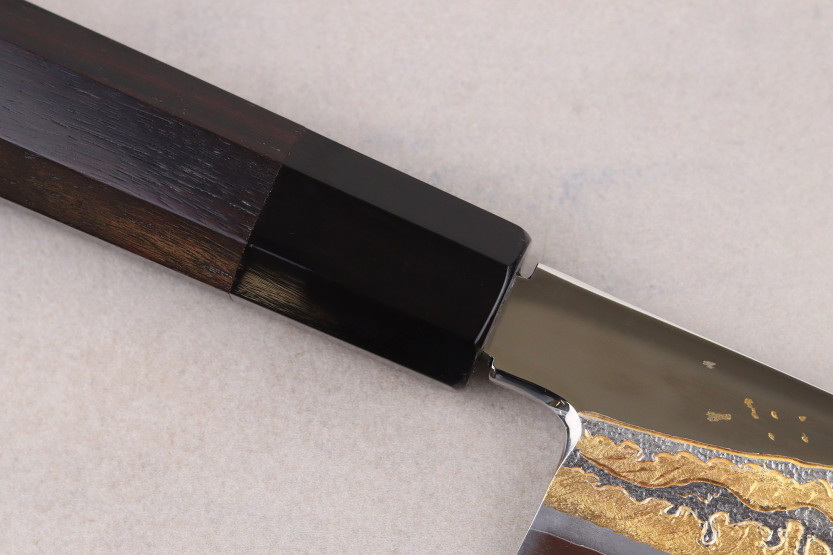
Hokusai’s “The Great Wave” and Mount Fuji are hand-engraved by Michiko Kubota. Her motifs are carved into the metal using engraving tools: the design is created through lines and variations in relief that catch the light. The colored areas are created through plating—that is, by depositing a thin layer of metal onto the surface. This decorative work, combined with the mirror finish, gives each blade a distinctive visual presence. The piece is primarily intended for a collection: its length and design call for careful handling.
A traditional octagonal ebony handle
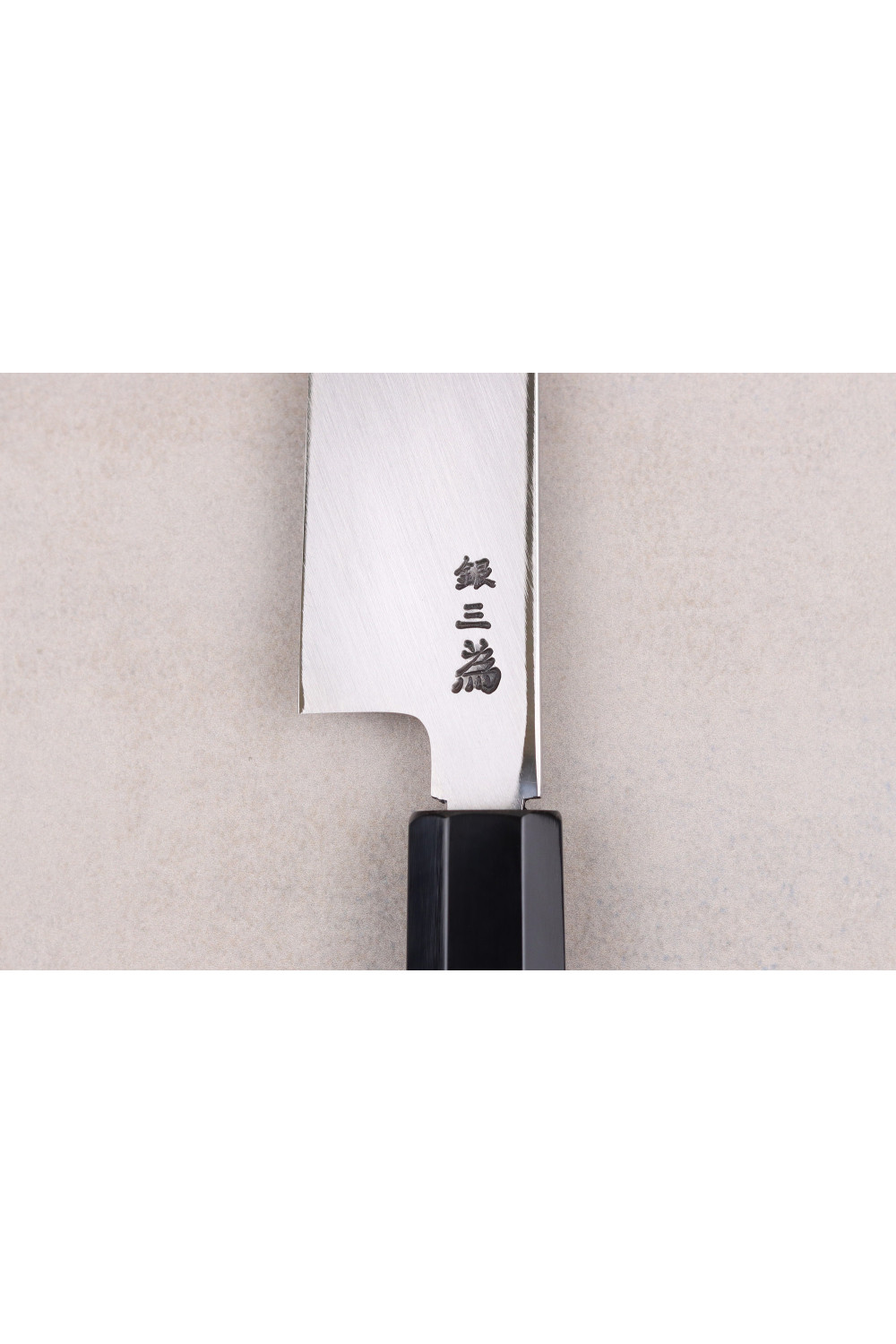
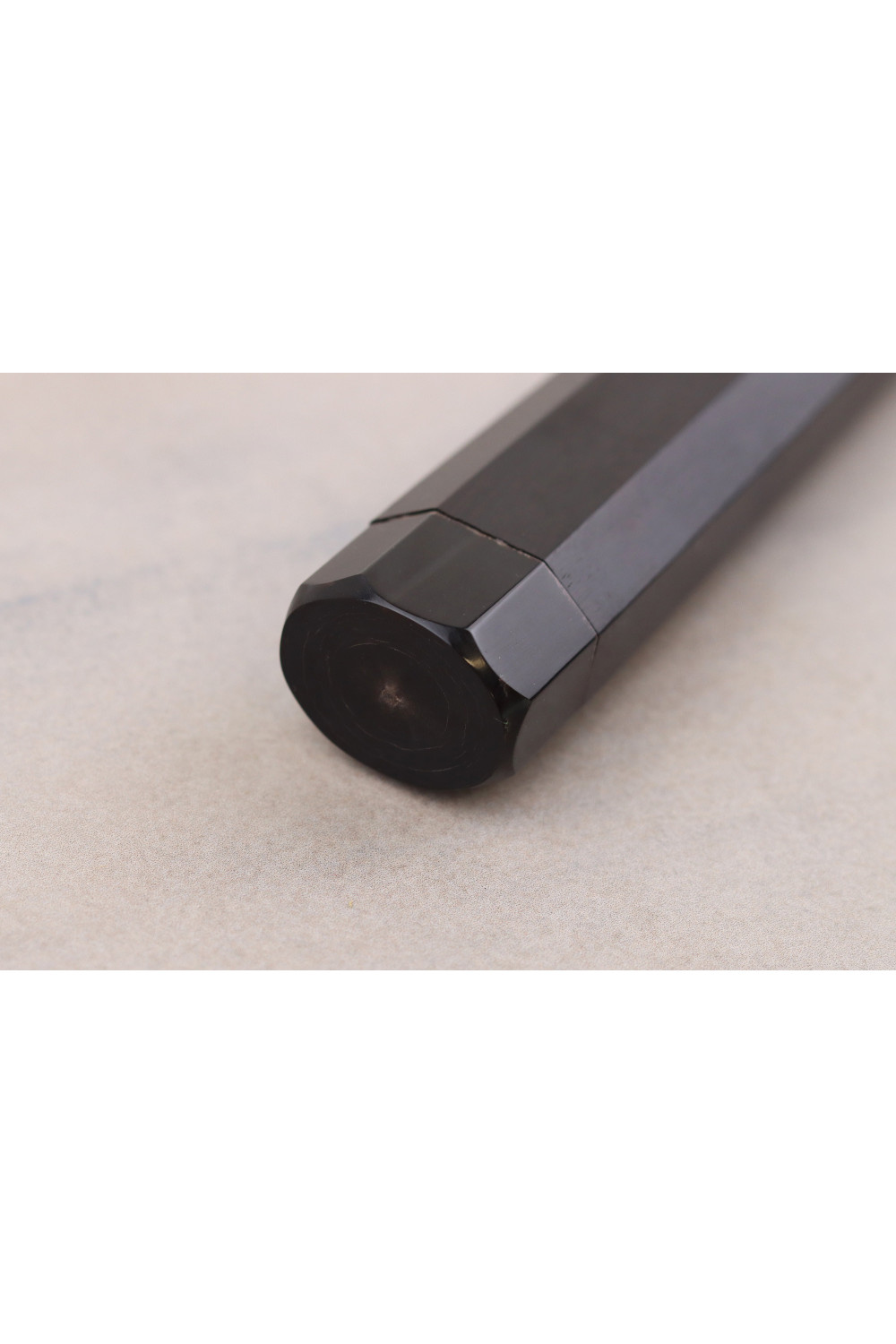
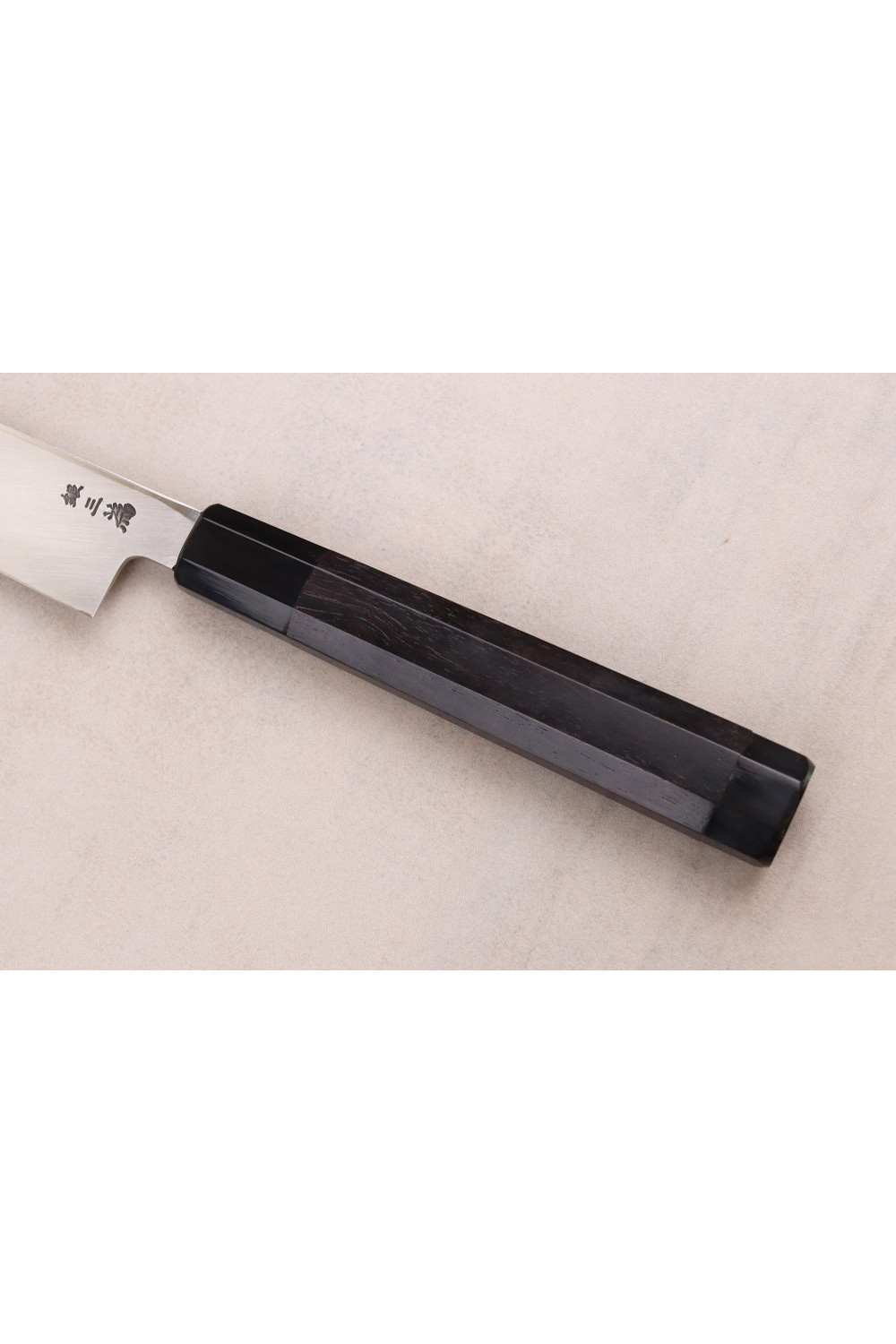
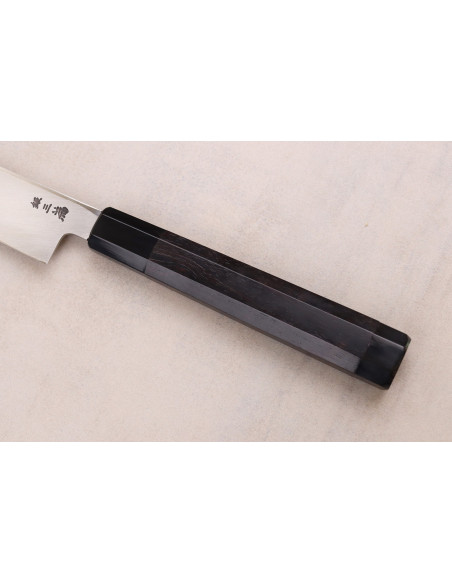
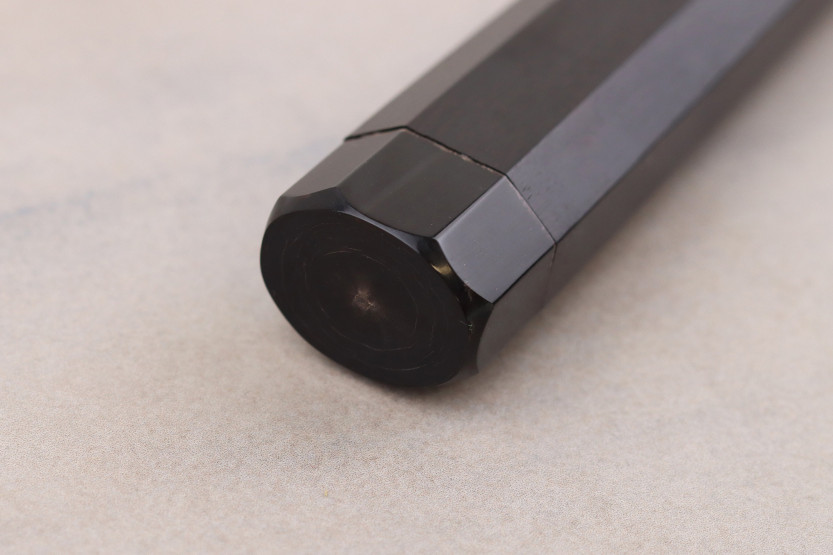
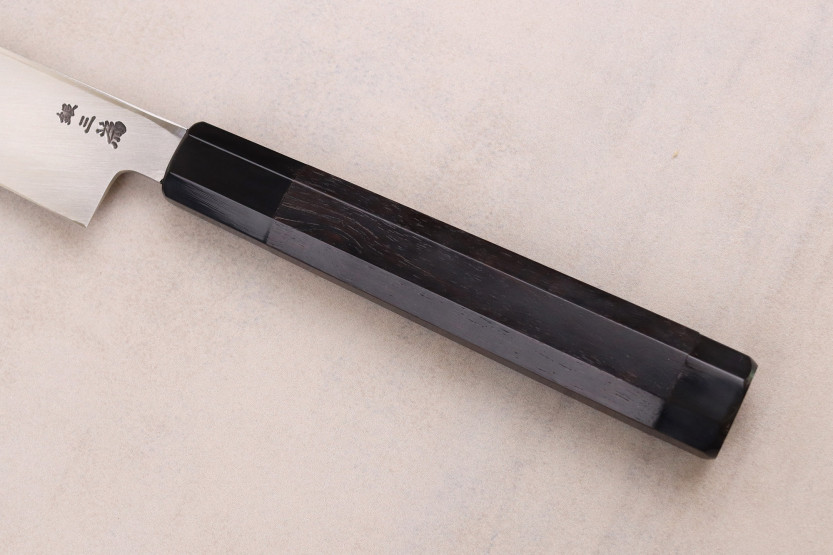
The handle is crafted from ebony, a dark wood that creates a striking contrast with the blade’s reflective surface. Ebony gives the knife handle a soft, smooth feel. As a natural material, the color, shades, and grain may vary from one piece to another. Each handle thus has its own unique appearance.
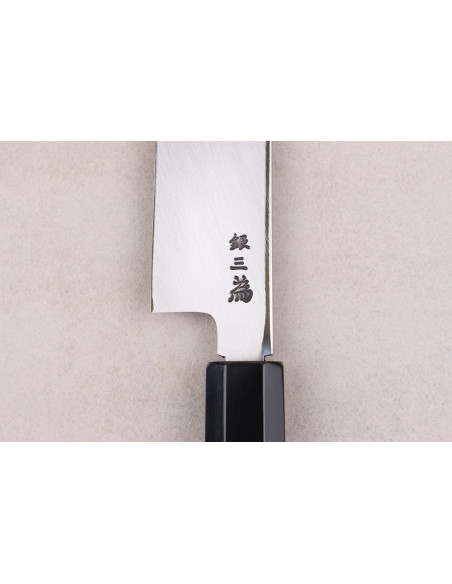
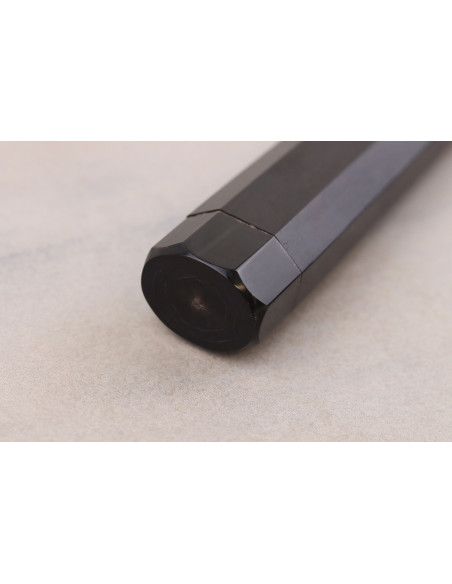
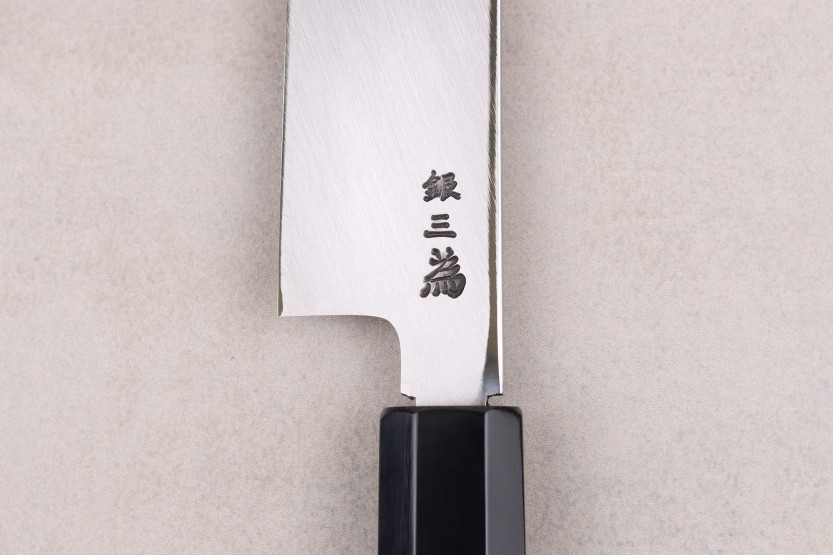
It is carved into a traditional octagonal shape that ensures an excellent grip. The eight sides serve as tactile guides to help position the handle in the hand.
The bolster and pommel are made of black buffalo horn. Located at both ends of the handle, they complete its silhouette and complement the deep hue of the ebony. Since the horn is also a natural material, slight variations in color or appearance are possible.
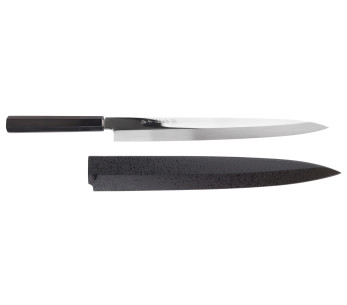
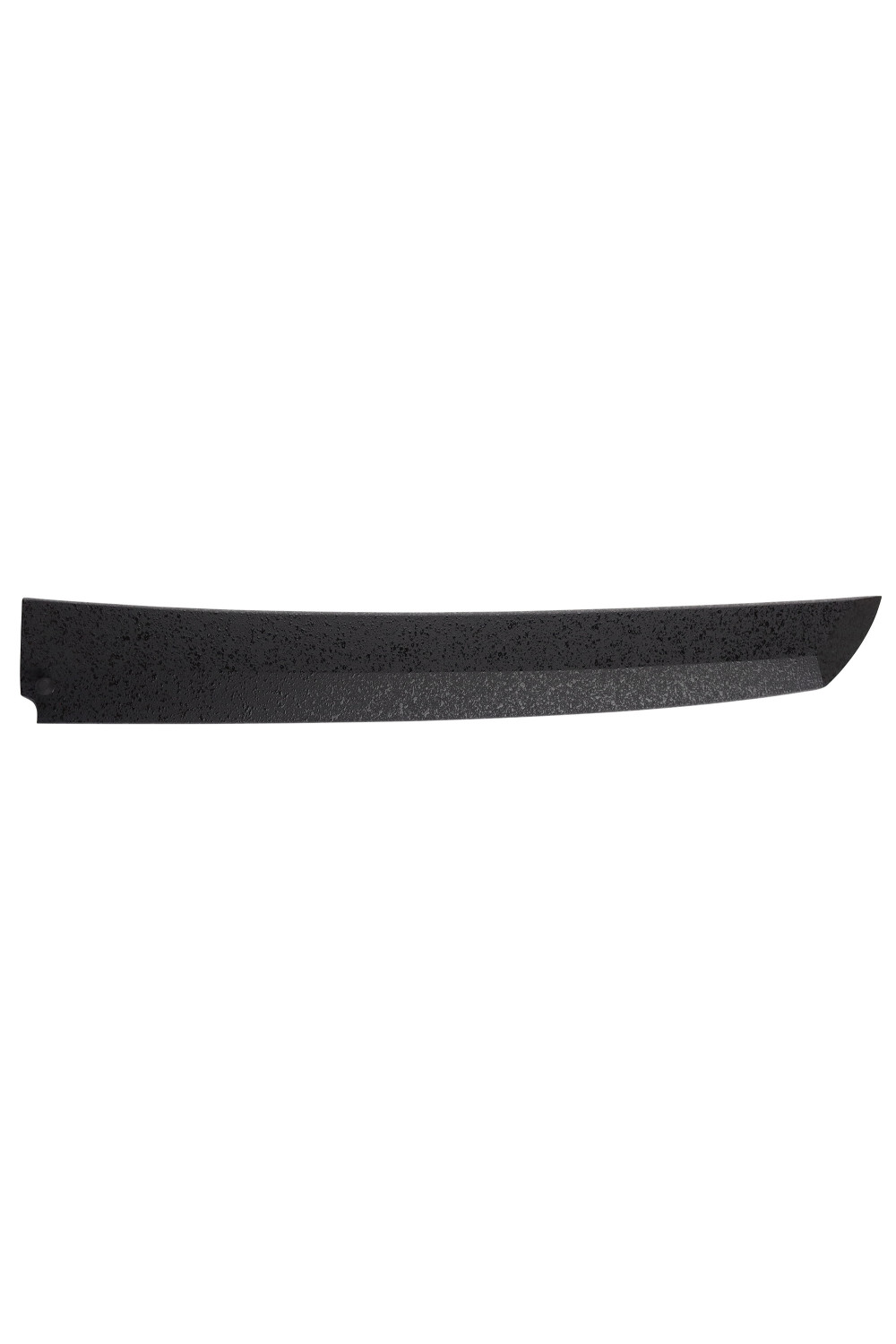
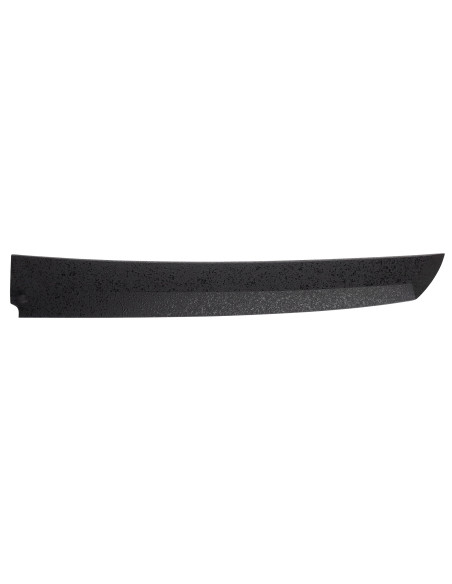
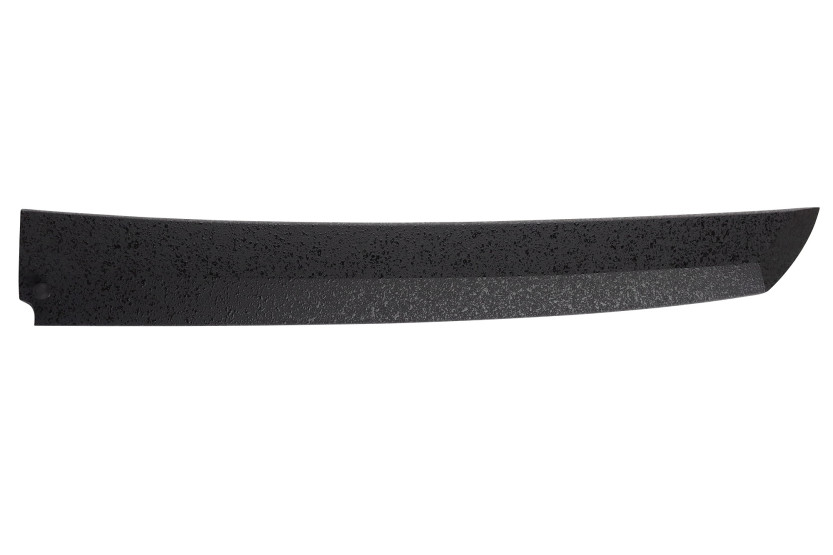
A Kuroishime saya is included with the knife. This is a sheath that covers the blade to protect it when stored or transported. “Kuroishime” refers here to its textured black finish, which has a mineral-like appearance. Before placing the knife in the sheath, make sure the blade is completely dry to prevent moisture from being trapped inside the sheath.
Features and Benefits
-
- 39 cm blade: long blade designed for cutting fish
- San Mai construction: three layers of steel stacked on
- top
- of each other
- Ginsan steel core: Japanese stainless steel
- Hardness of approximately 60 HRC: helps maintain the edge
-
- Asymmetrical grind: designed for right-handed users
-
- Mirror finish: highlights the blade’s reflections
- Forged by Shogo Yamatsuka: artisanal blade craftsmanship
- Sharpened by Mitsuo Yamatsuka: high-performance edge from the very first use
- Engraving by Michiko Kubota: depicts The Great Wave and Mount Fuji
-
- Octagonal ebony handle: elegance and ergonomics
- Black horn bolster and pommel: optimal balance and visual harmony
- Kuroishime saya included: blade protection
- Made in Sakai: Japanese craftsmanship
Care Instructions
If you decide to use this knife in the kitchen, reserve it for fine cuts and avoid hard foods and bones. Use it on a suitable cutting board, either wooden or synthetic.
After each use, wash the blade by hand, wipe it immediately with a soft cloth, and dry it thoroughly before storing it in its saya. This knife should not be placed in the dishwasher or left to soak in the sink.
Store the knife securely in its sheath or case to protect it from moisture and impact, and use a whetstone with the appropriate grit to resharpen the blade.
The artisans behind this creation
Shogo Yamatsukais a blacksmith who learned the trade from his father, who was also a blacksmith. He works with various types of steel and has specialized particularly in Ginsan. His expertise includes hizukuri, the art of forging steel. On this piece, Shogo Yamatsuka is credited with the forging of the San Mai blade.
The engraving is done by Michiko Kubota, an artisan specializing in decorative knife engraving. She first sketches her designs, then transfers them to the metal using a hammer and chisels. She uses various tools and adjusts the angle, pressure, and force of the strike to shape the relief and lines. This manual process makes engraving a distinct art form from the forging work itself.
These artisans are based in Sakai, in Osaka Prefecture. The city has a long tradition of cutlery making, developed over the centuries and focused particularly on the production of kitchen knives. Here, you’re enjoying a piece crafted by experts.
Find all our engraved knives at Knifeleader.eu!




 By buying this product you can collect up to