Discover the work of Toshihiro Wakui
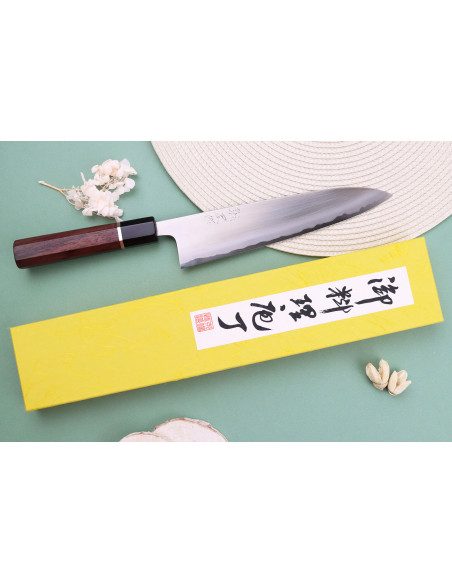
This handcrafted Japanese knife was made by Toshihirio Wakui, a Japanese blacksmith renowned for his exceptional blades. Toshihiro san is the third generation of his family to work with metal, and learned his trade some twenty years ago.
When he took over the reins of the family business, he found himself faced with a declining demand for crowbars and metal bars, an area in which his family had specialized. After discussions with Kazuomi Yamamoto, Yoshikane Hamono's head master blacksmith, he decided to retrain in the art of knife forging. Kazuomi san himself suggested he become his apprentice, and Toshihiro Wakui accepted. For four years, he worked hard as an apprentice and then began forging his own knives.
Toshihiro works in his workshop in Sanjo, Japan, where he creates blades of exceptional quality. What sets him apart is his technique of hot-rolling the blade damascus, which gives each knife a unique appearance. Despite an atypical layout, with a kiln and hammer far apart and a crowded space, Toshihiro Wakui is able to produce top-of-the-range blades in his workshop.
A high-quality Japanese San Mai blade
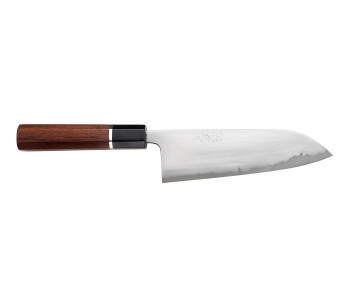
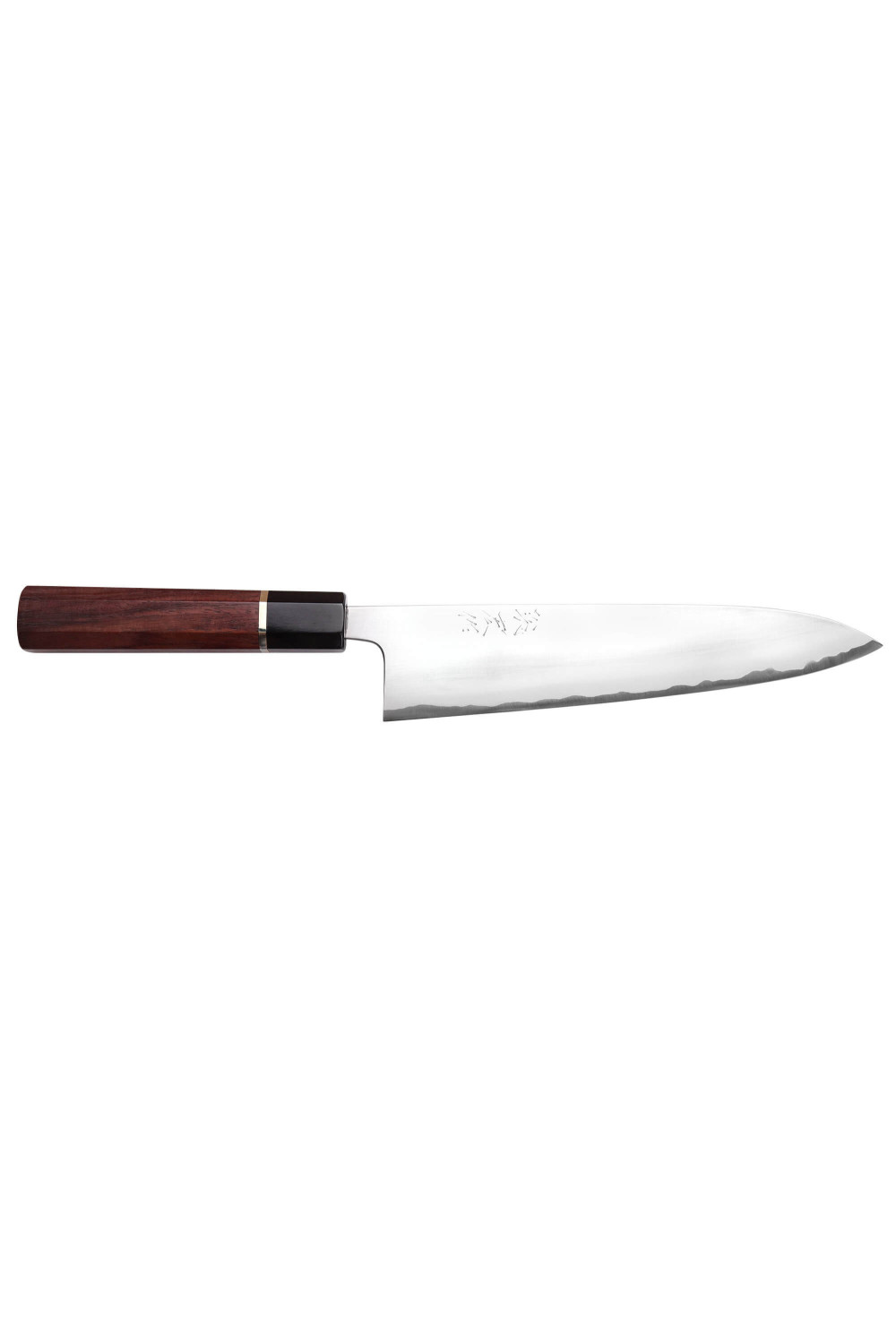
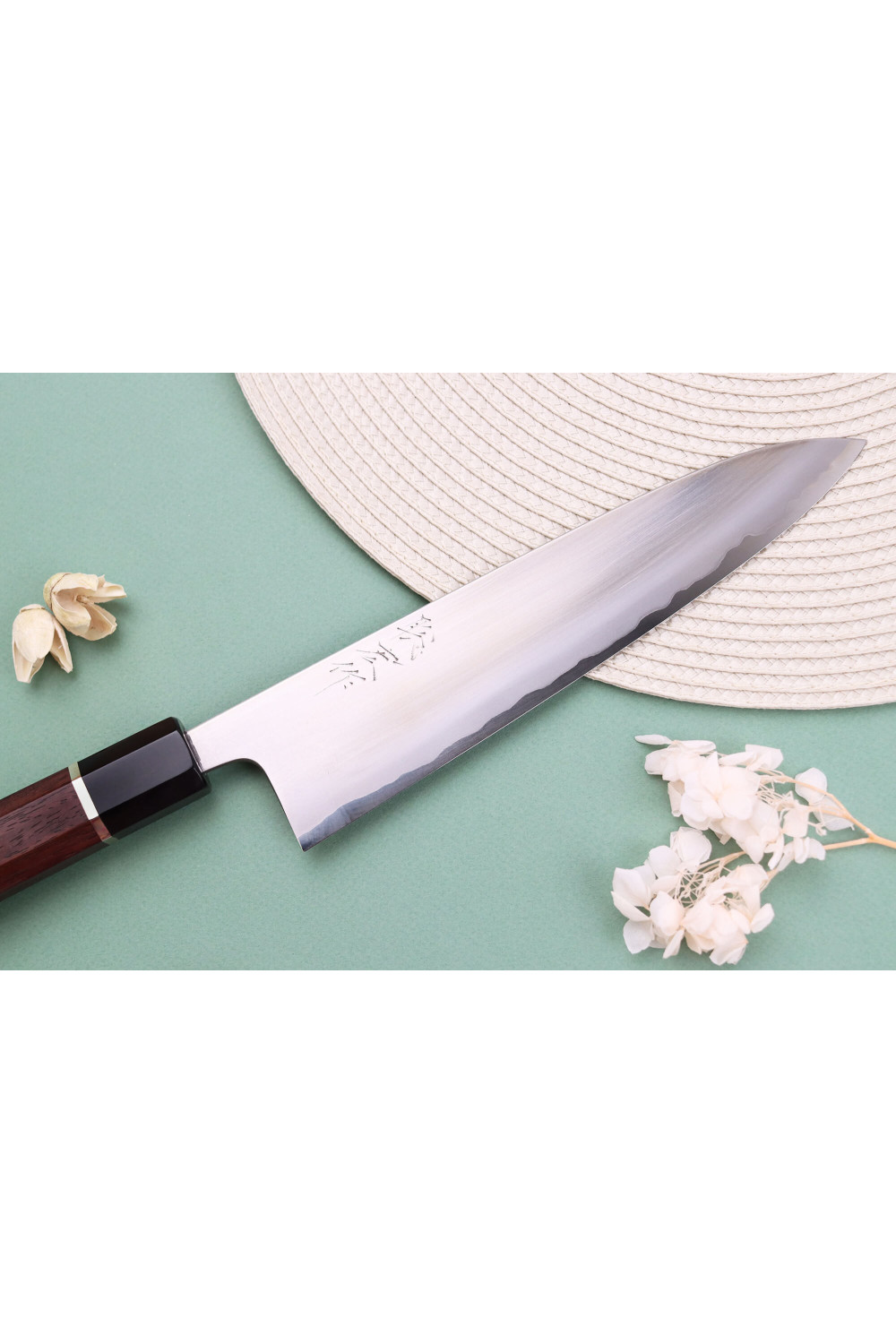
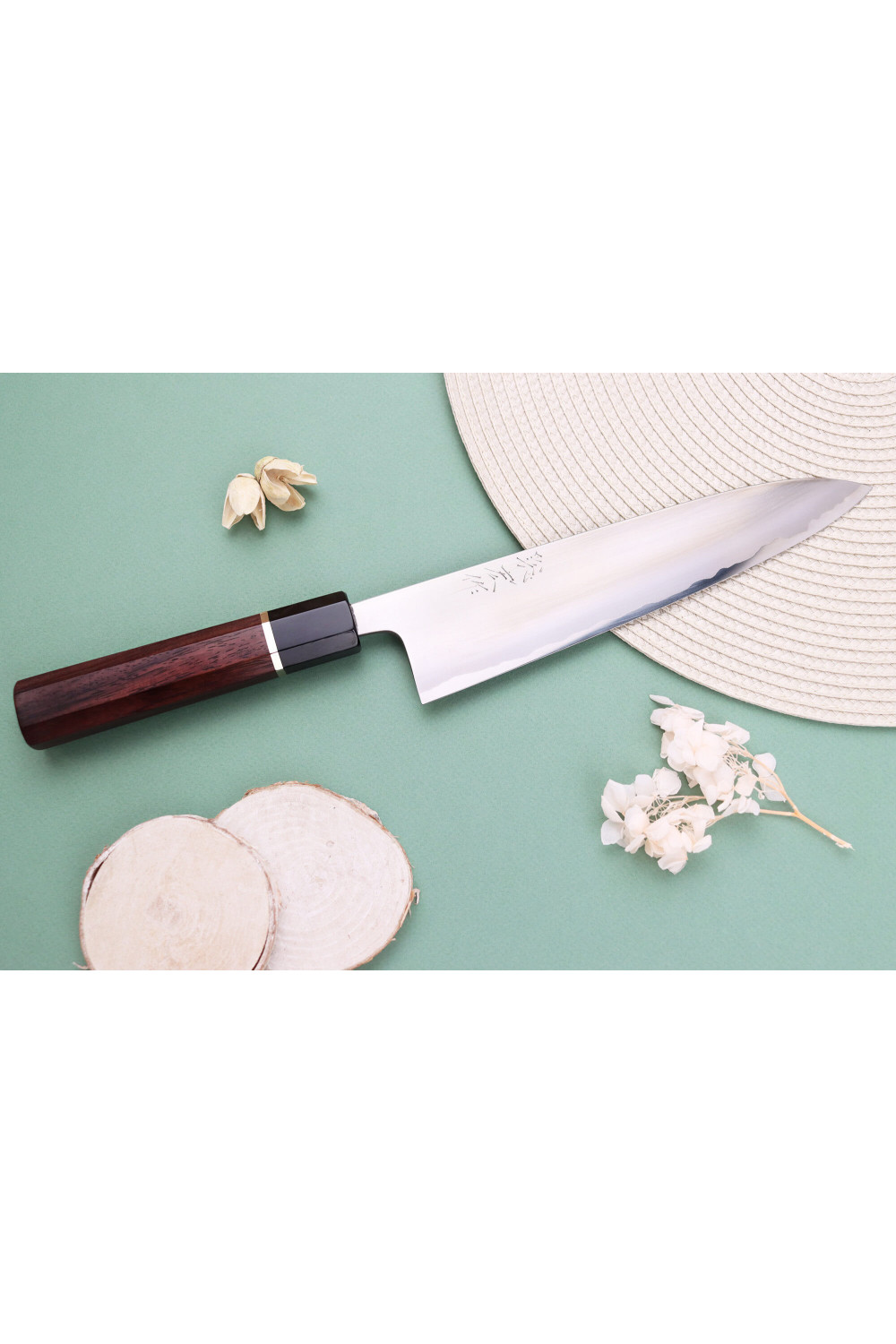
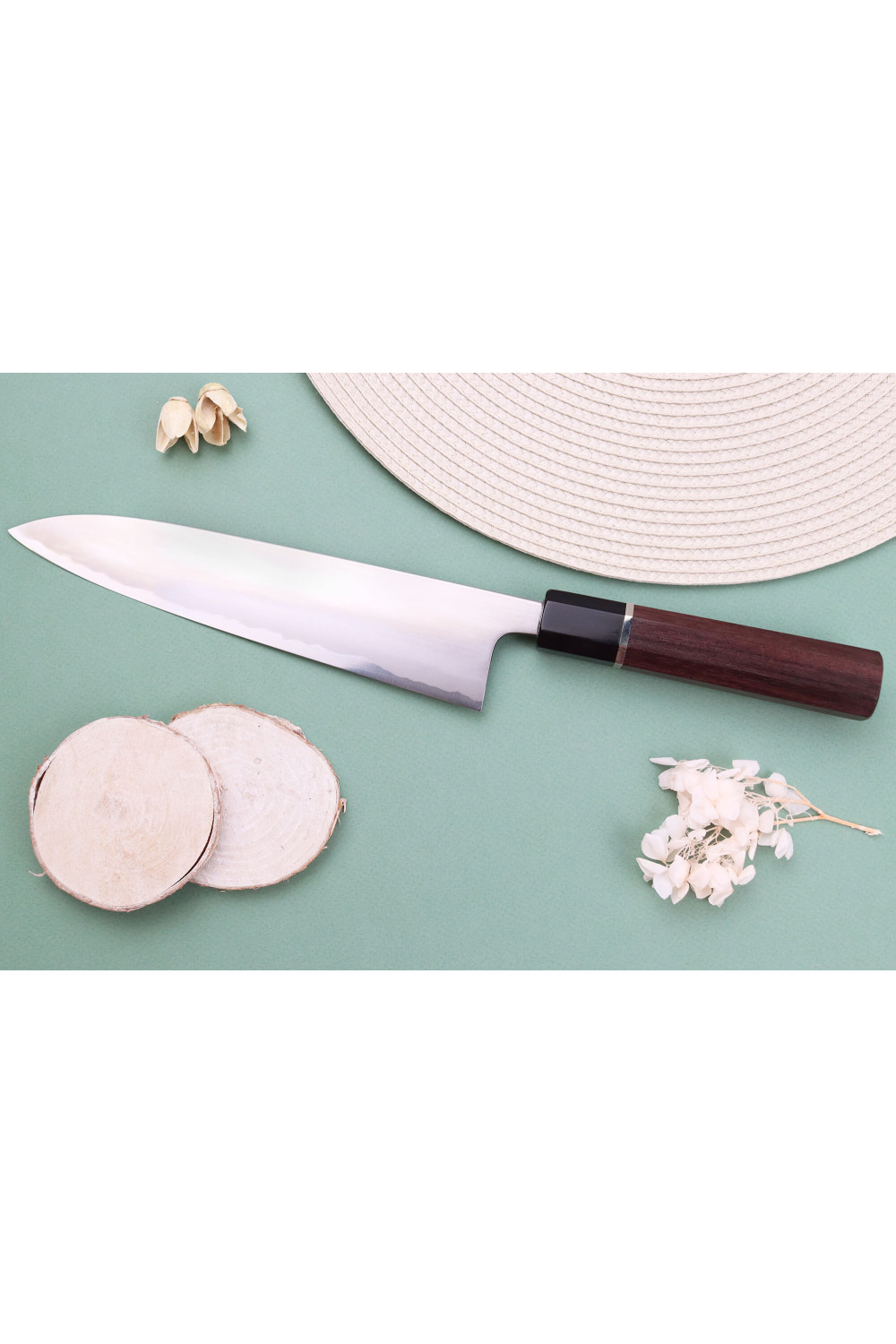
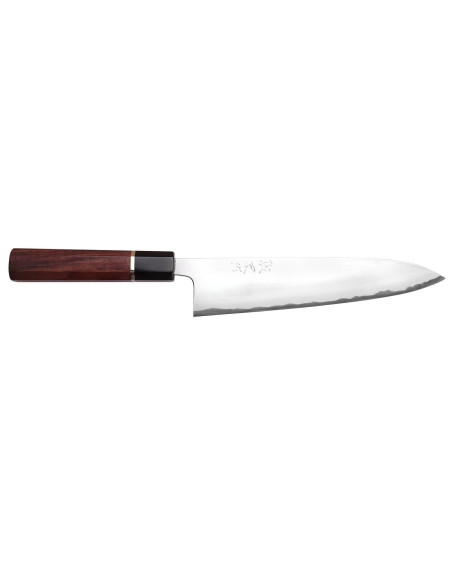
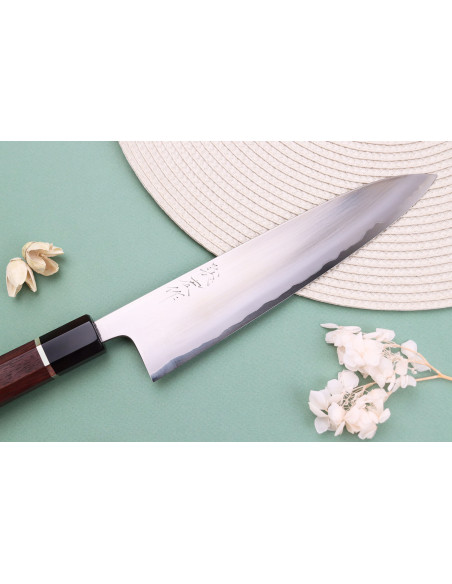
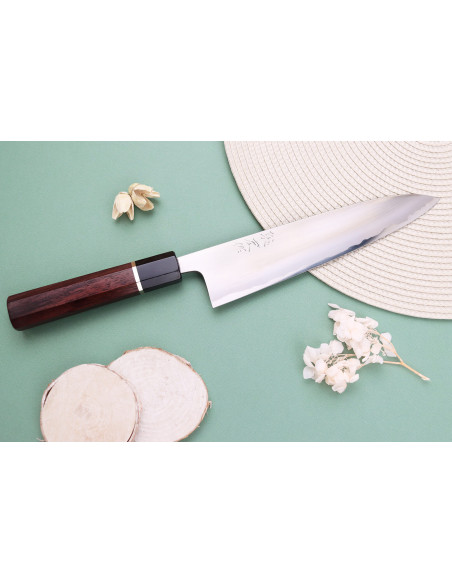
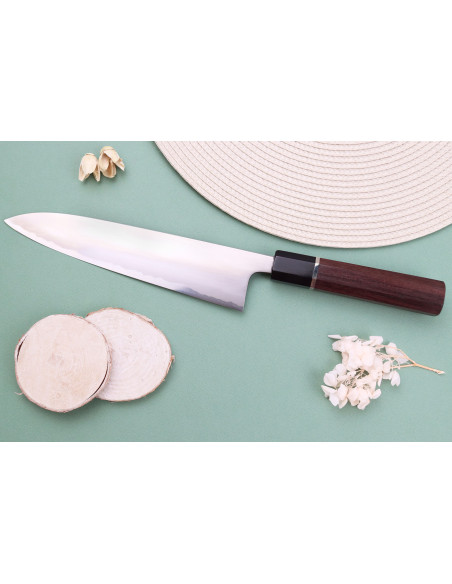
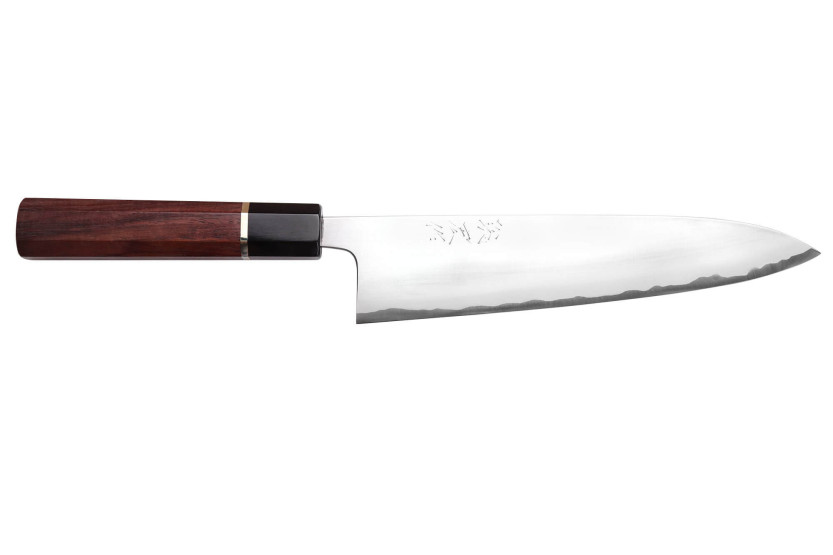
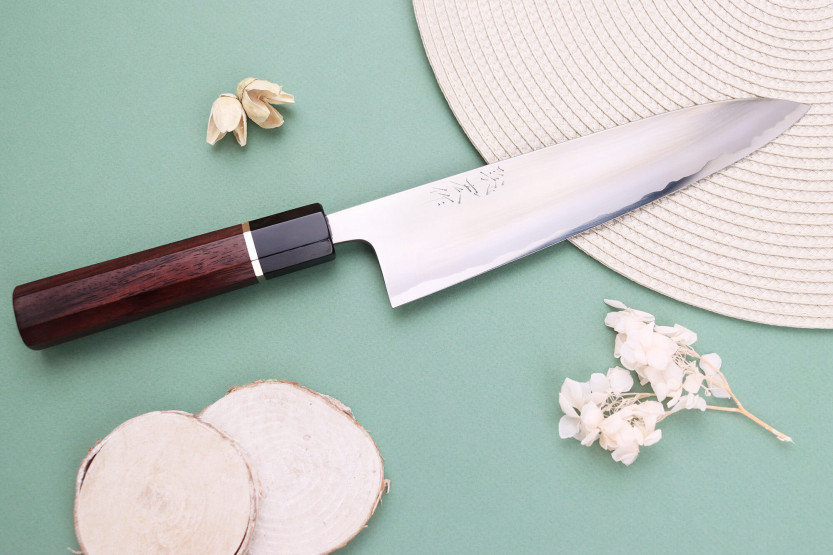
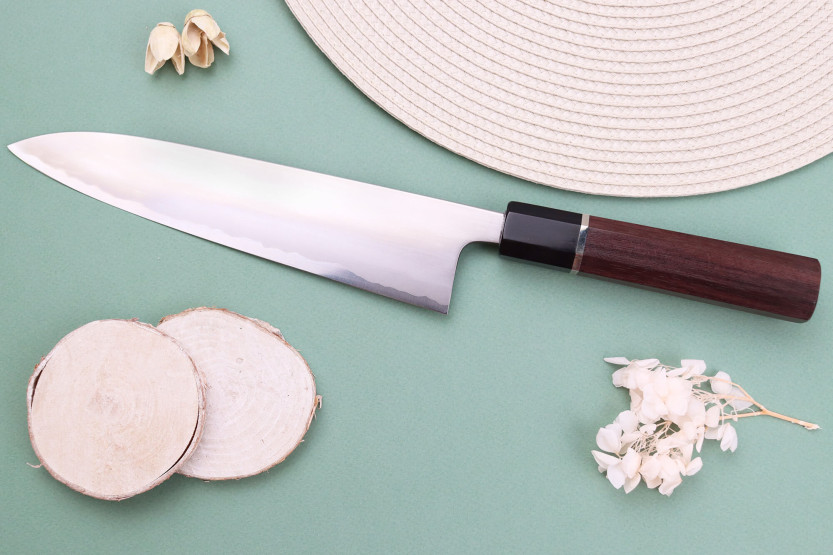
This Japanese chef's knife features a 21cm blade with a structure called San Maï. This is a typically Japanese design. In fact, the term "San Maï" means "3 layers" in Japanese, which clearly indicates how the blade is constructed. It contains a core of rigid steel, surrounded by a layer of softer steel that sandwiches it. This design is intended to protect the core and bring optimum balance to the blade.
Here, the heart of the blade is made from Shirogami 2 steel, an alloy well known to chefs. Also known as White Steel 2 (because of the white paper that surrounds it), it is manufactured by the Hitachi steel mill, which supplies many Japanese blacksmiths. This alloy is renowned for its high purity, which can be observed under a microscope, thanks to its homogeneous structure. Shirogami 2 steel is considered the closest alloy to tamahagane steel, which was used in the manufacture of traditional swords. It can be easily sharpened to a razor-sharp edge. The alloy also contains around 1.3% carbon, enabling it to achieve a hardness of around 62 HRC on the Rockwell scale.
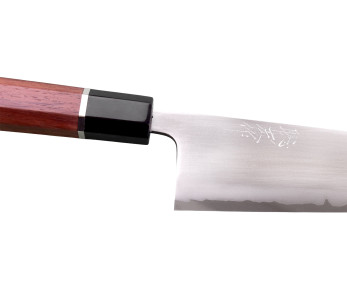
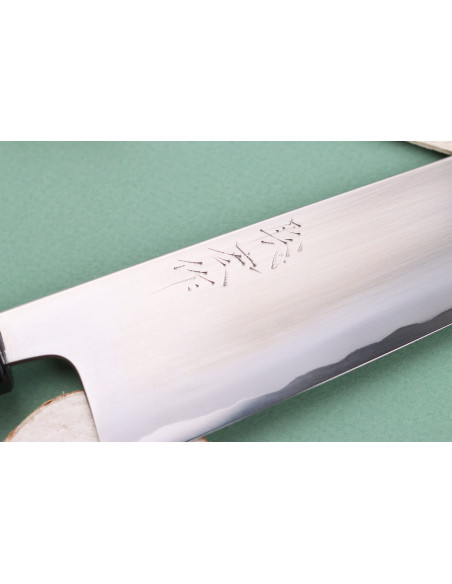
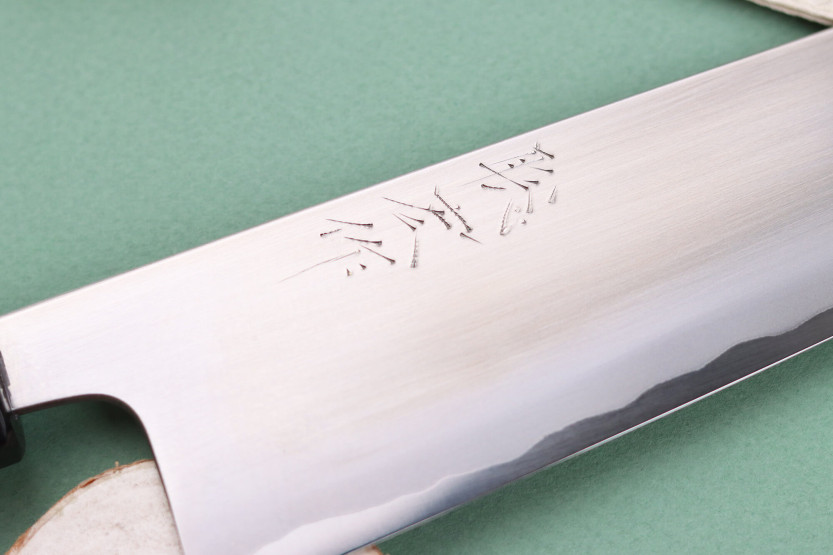
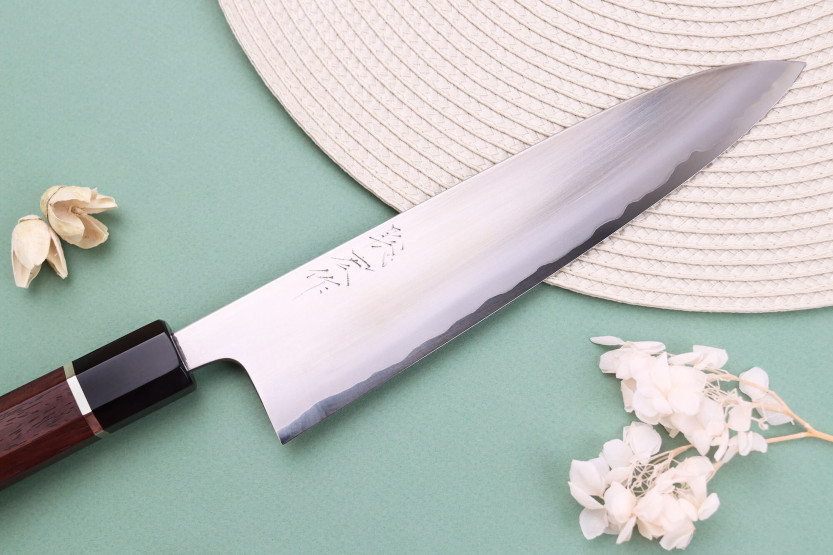
The core is then covered witha layer of softer, less rigidsteel, which serves to protect the core and give it flexibility (in the sense that the high rigidity of the core is balanced). The blade is also less sensitive to breakage and impacts encountered when cutting. The superposition of steels can be seen at the cutting edge of the blade, as it forms a wave that undulates randomly.
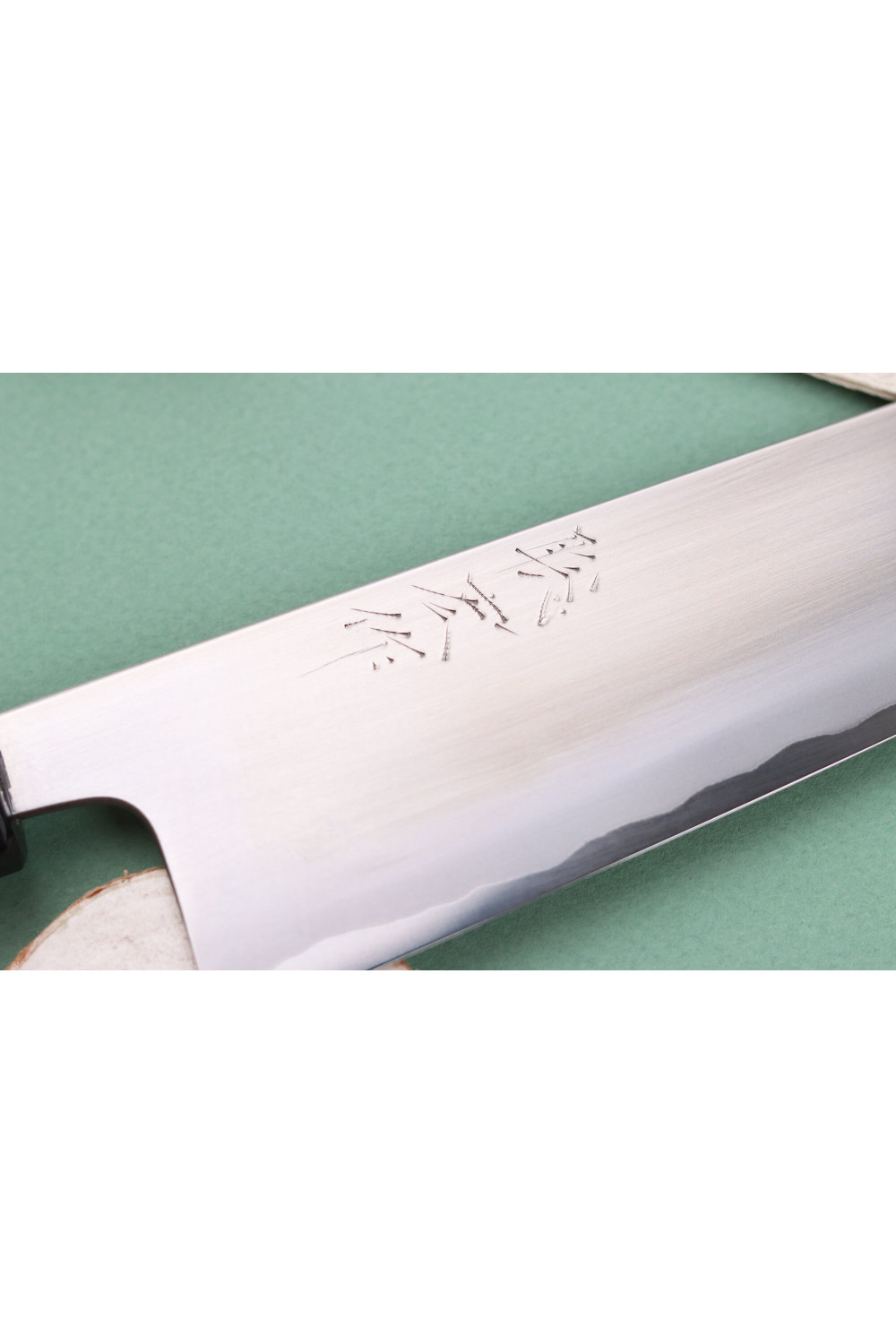
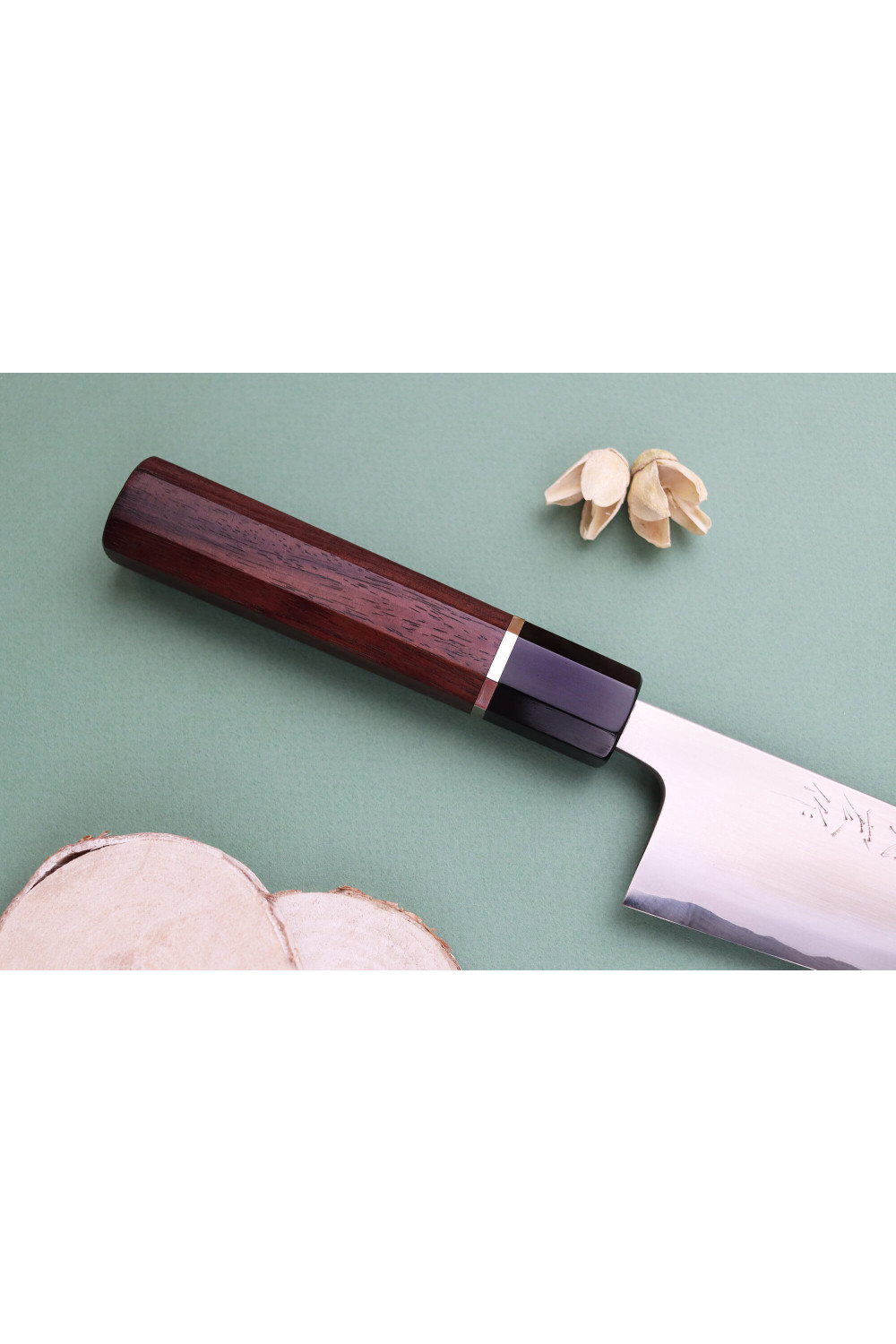
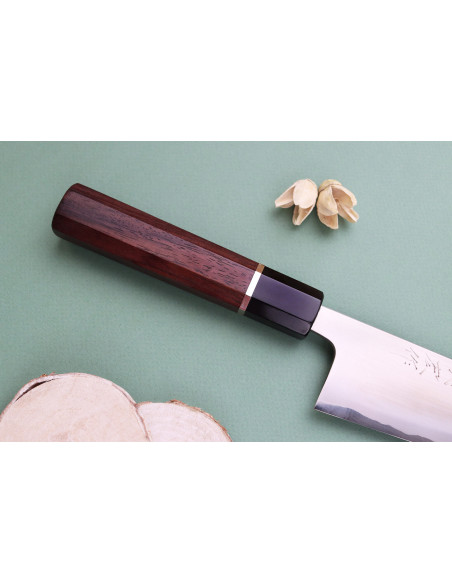
Kanji have been engraved on the upper part of the blade, reinforcing the authenticity of your knife. Finally, the blade has been polished for an impeccable appearance.
Rosewood for a solid, elegant handle
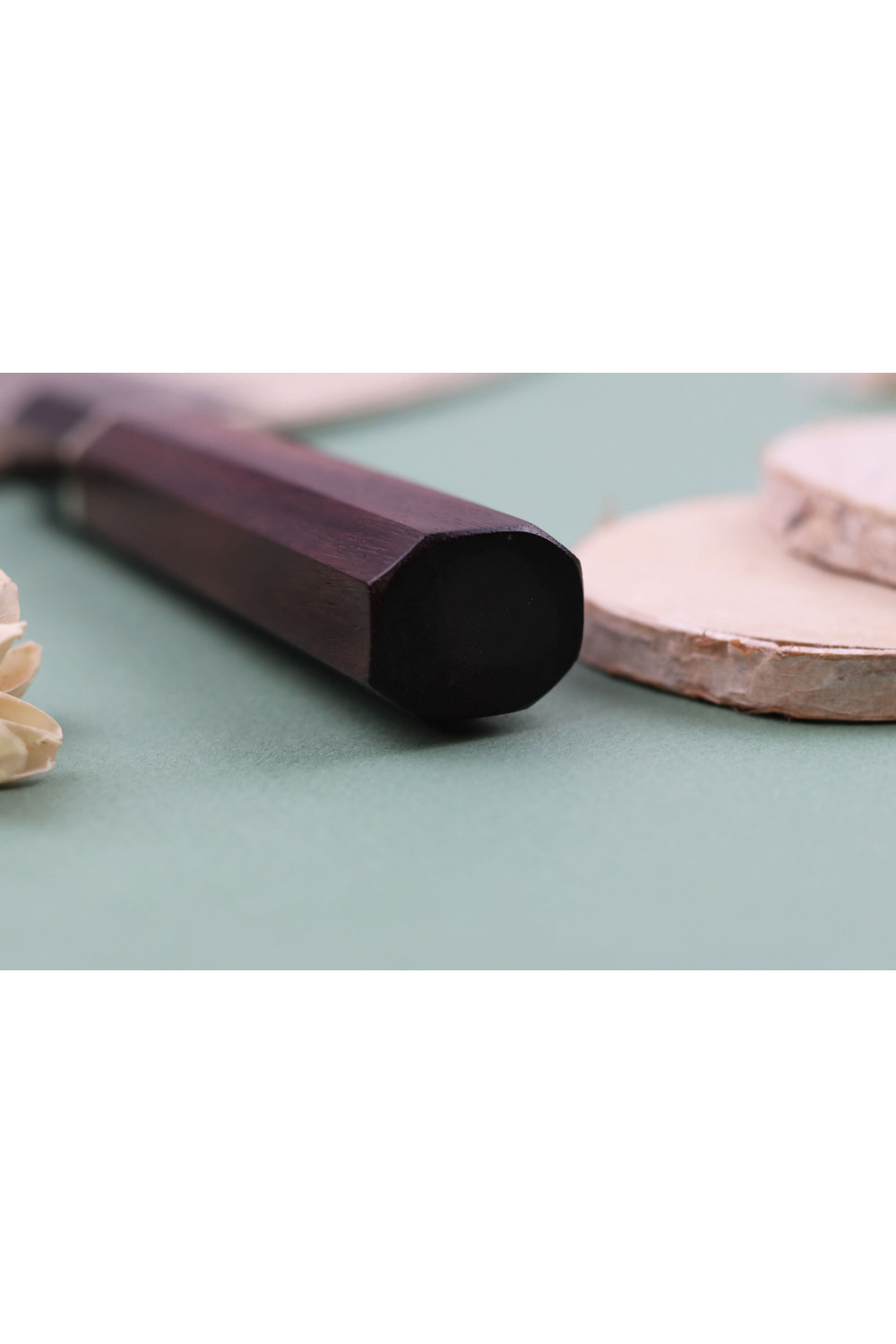
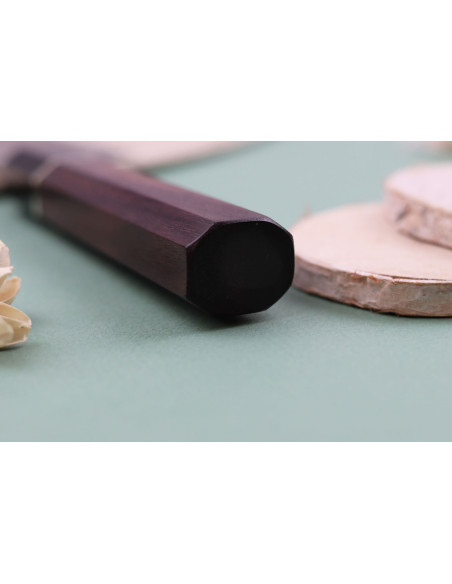
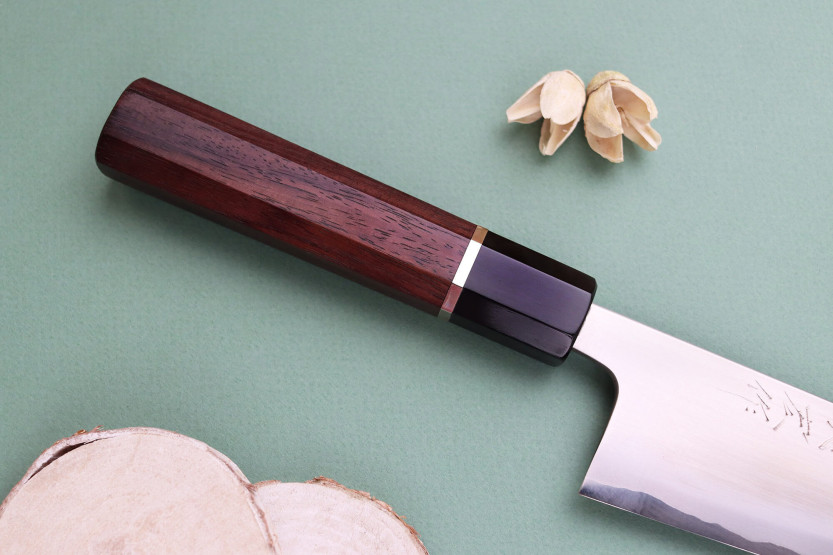
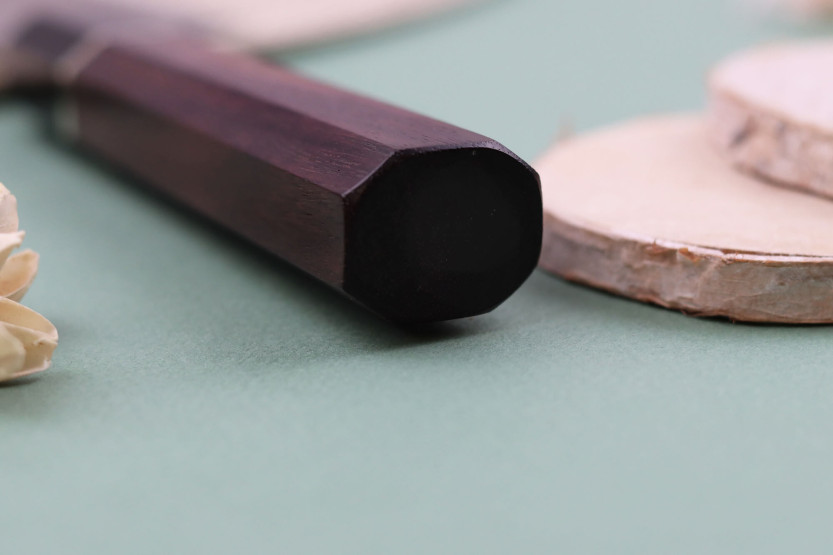
Your handcrafted Japanese knife features a handle made from rosewood. This wood is renowned for its exceptional resistance to humidity and shock. Its dark brown color is enhanced by a unique grain that gives each piece an authentic, highly aesthetic appearance.
The octagonal shape of the handle makes it easy to handle and comfortable to use. Whether you're left- or right-handed, this shape is ideal for intensive cutting sessions.
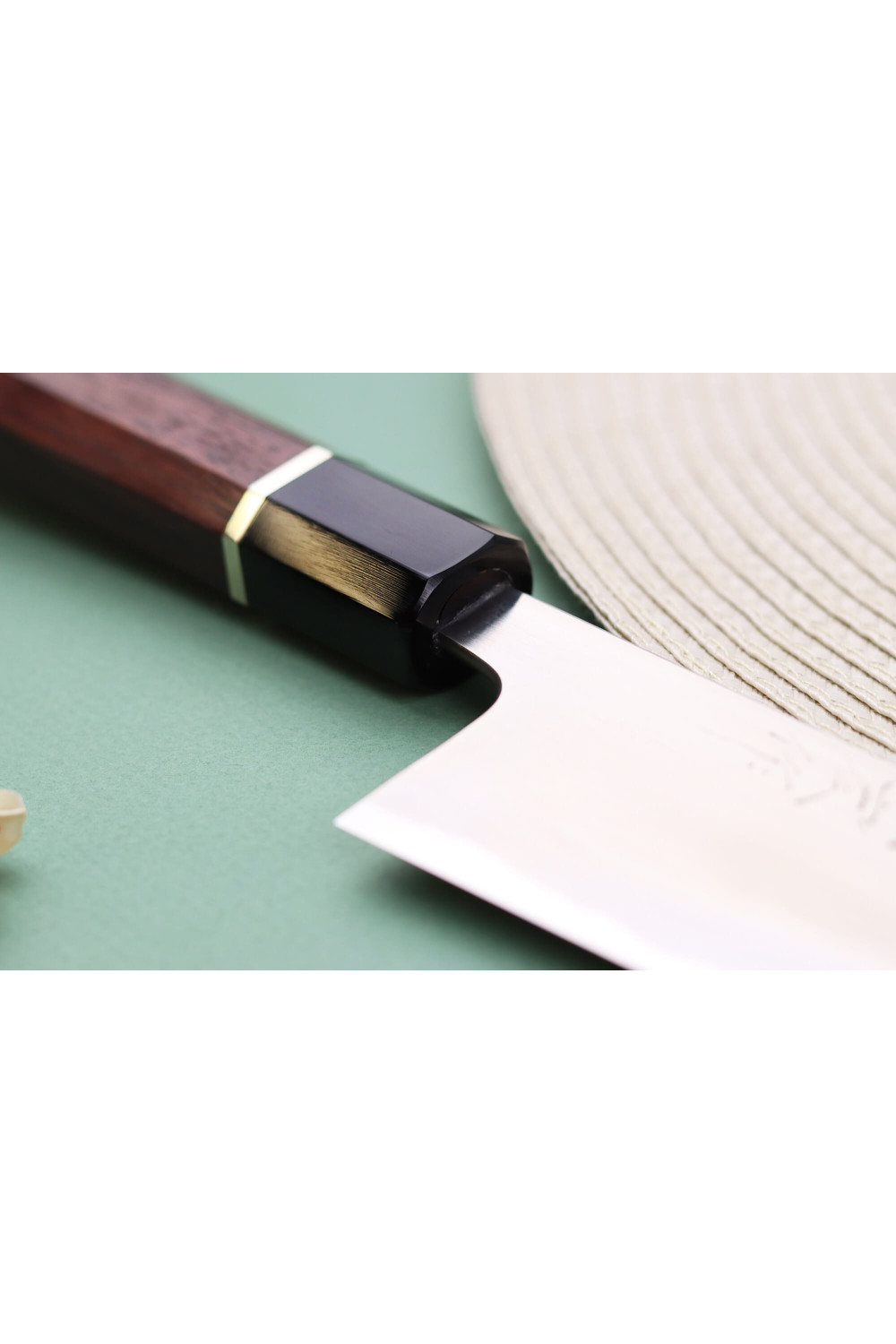
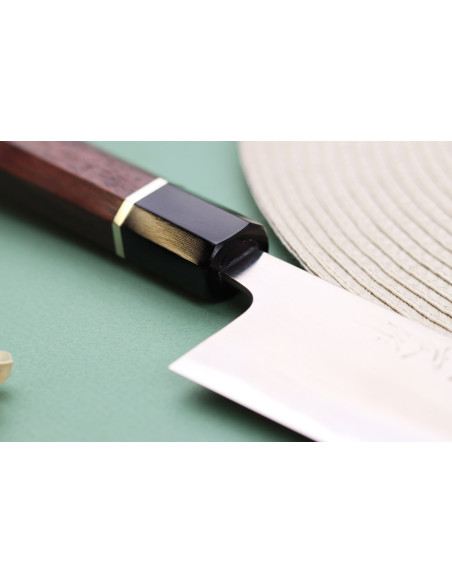
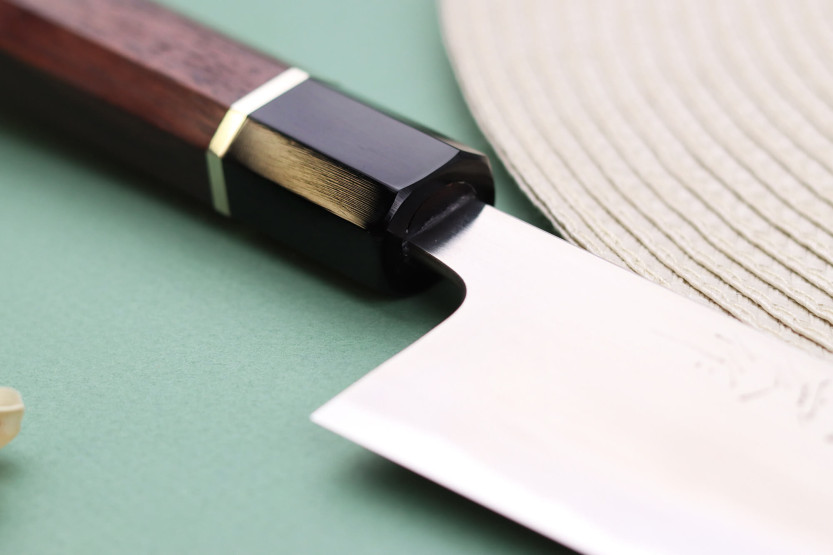
The handle is complemented by a black buffalo horn bolster, ensuring perfect balance. A silver ring separates the bolster from the handle, adding elegance and contrast.
Finally, wood pulp has been added to fill the area where the blade attaches to the handle. This ensures a perfect seal, preventing any infiltration of cleaning water or food debris.
Taking good care of my Japanese kitchen knife
It's essential to take good care of this Japanese knife, as it's made from top-quality materials. Never put it in the dishwasher or let it soak in the sink. Be sure to give it meticulous care.
The knife should be washed by hand using a soft sponge and appropriate soap. Use lukewarm water and take care not to wet the handle. After washing, be sure to wipe the knife dry to remove all traces of moisture.
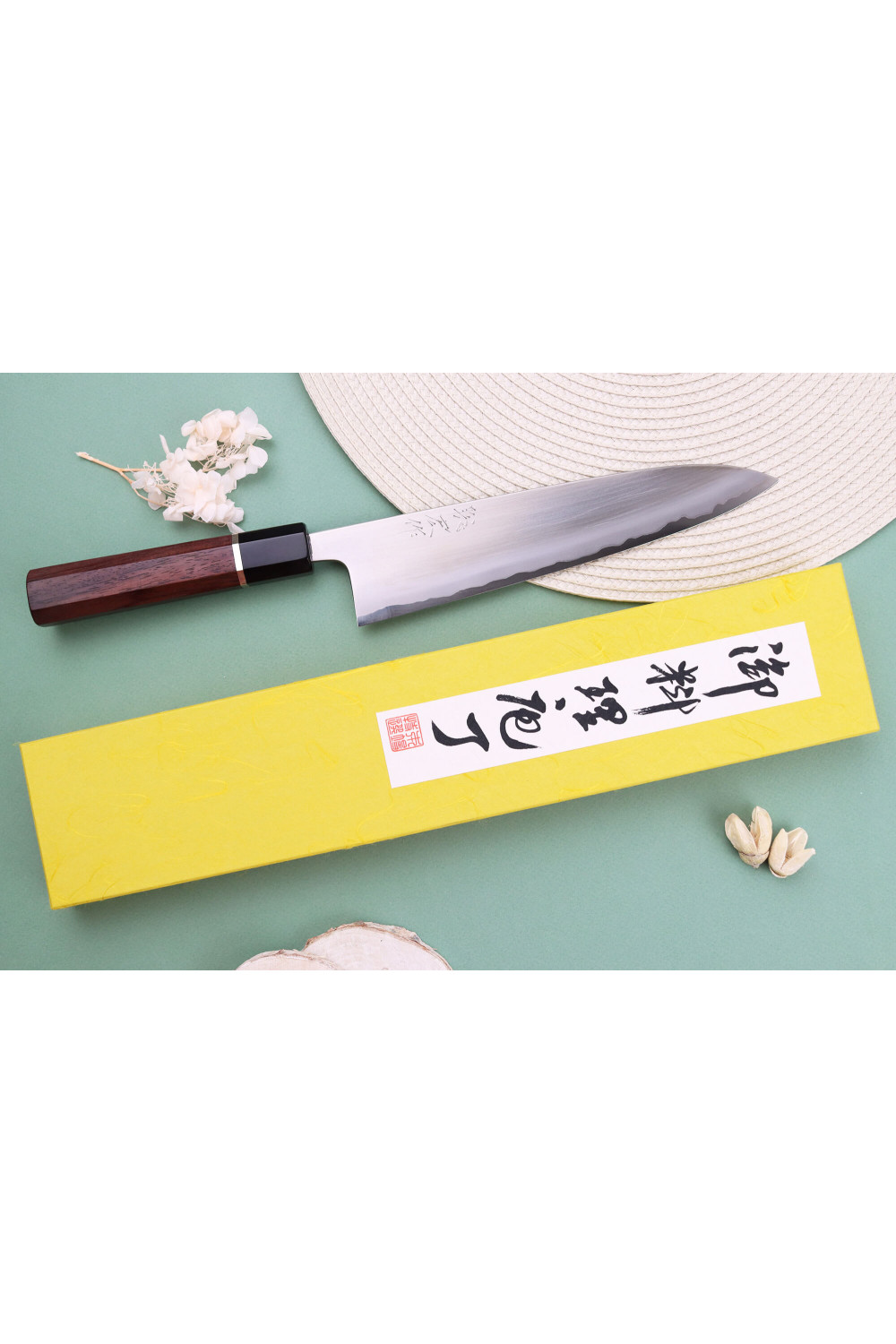
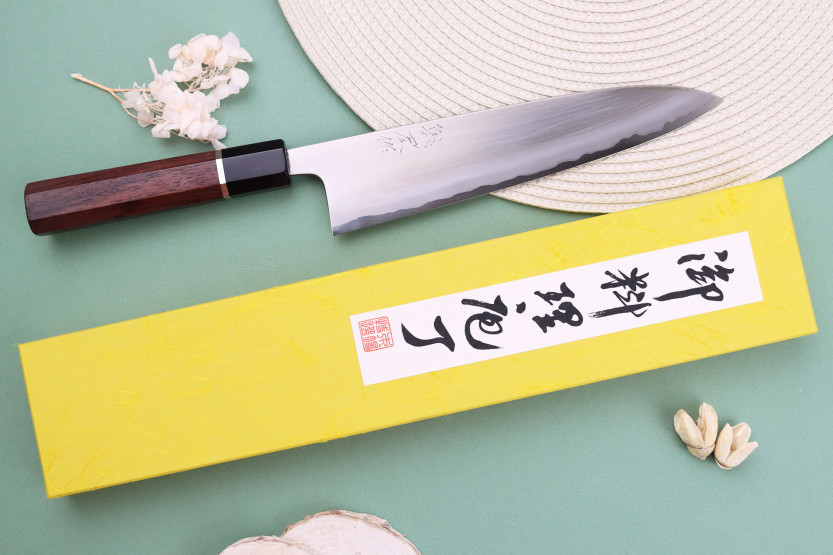
You can then store the knife in a dry place, such as its case. Due to the high carbon content of the blade, it may change color slightly over time. To preserve its original appearance, you can apply a littleoil from time to time.
Choose your Sharpening stone from our selection!




 By buying this product you can collect up to