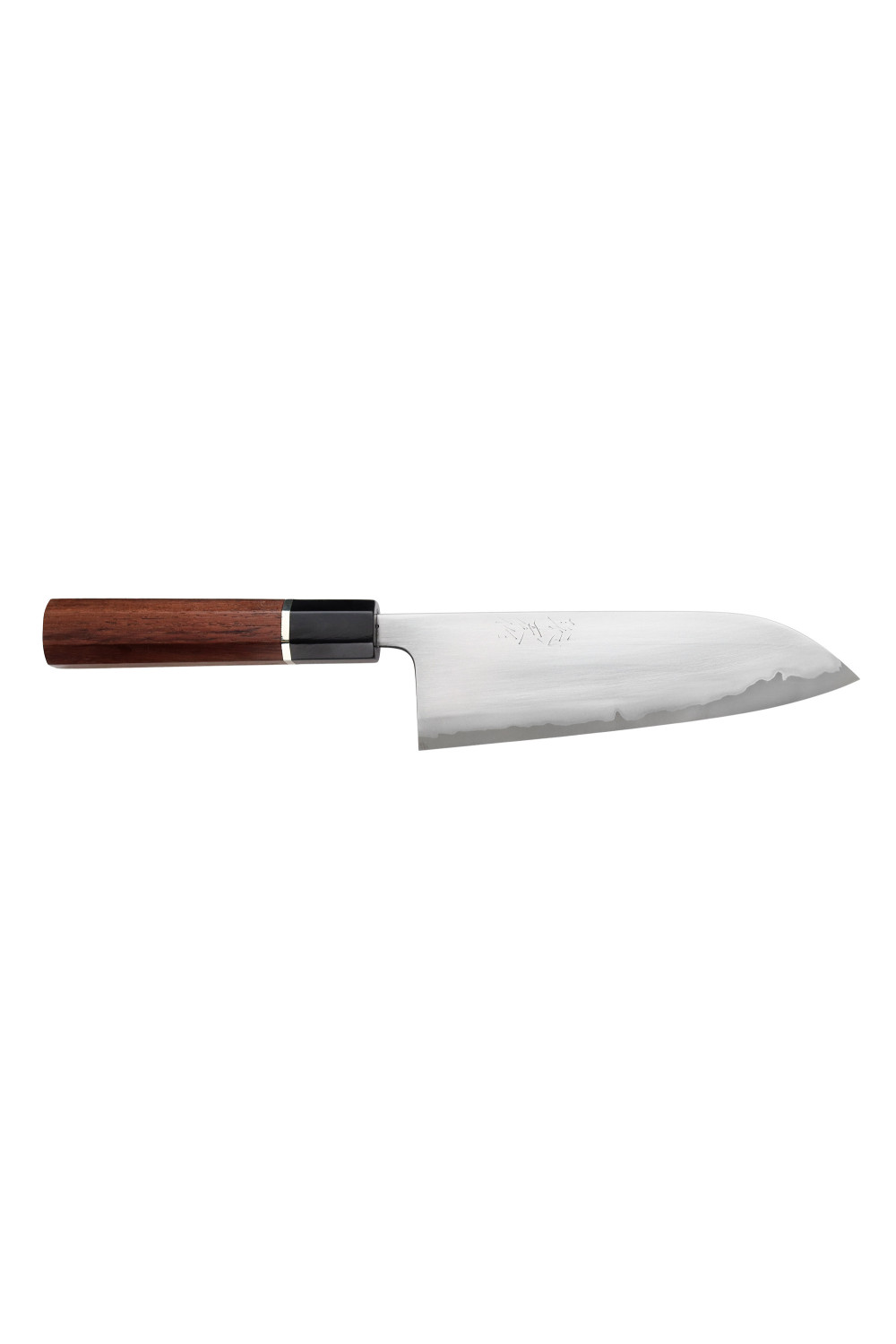
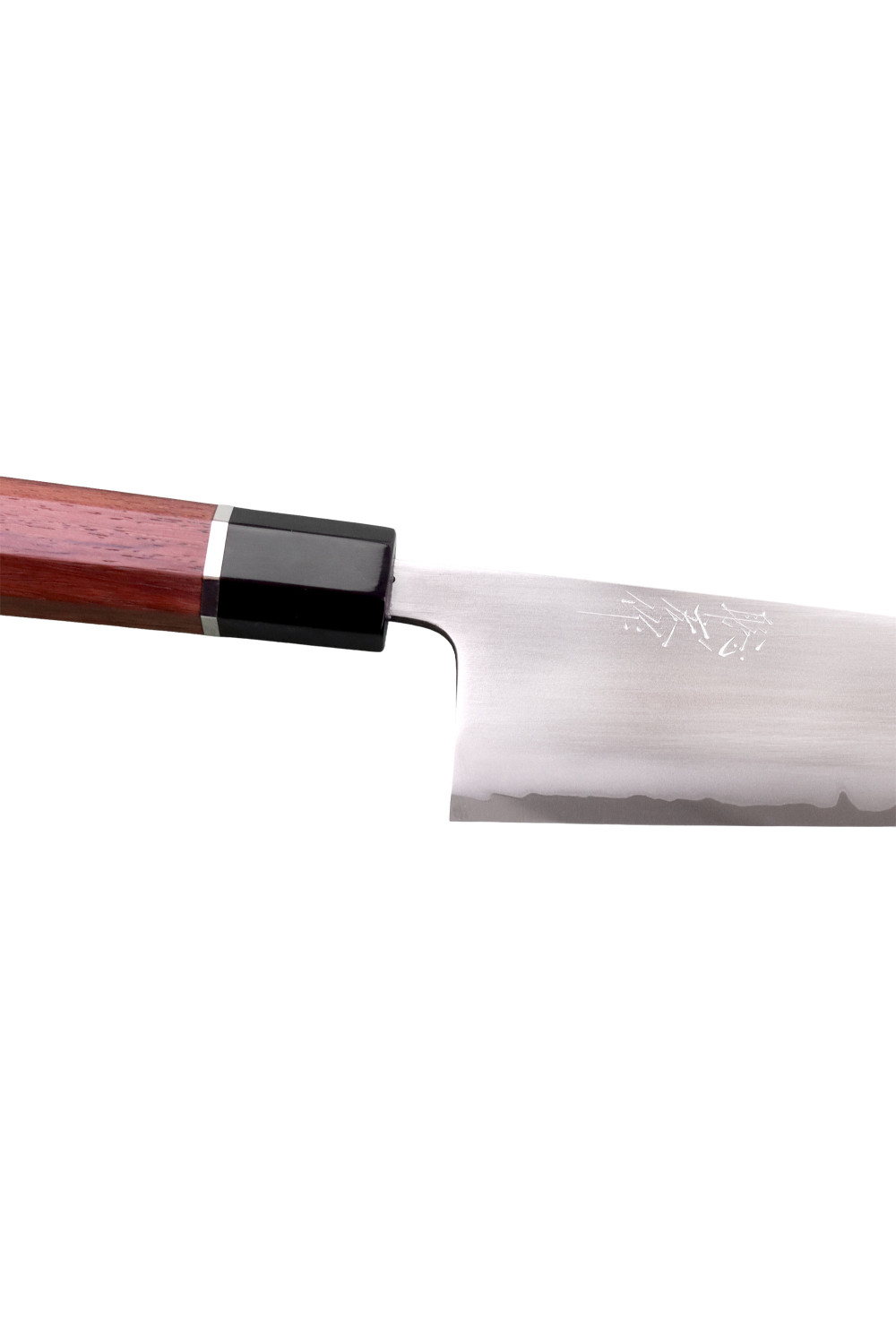
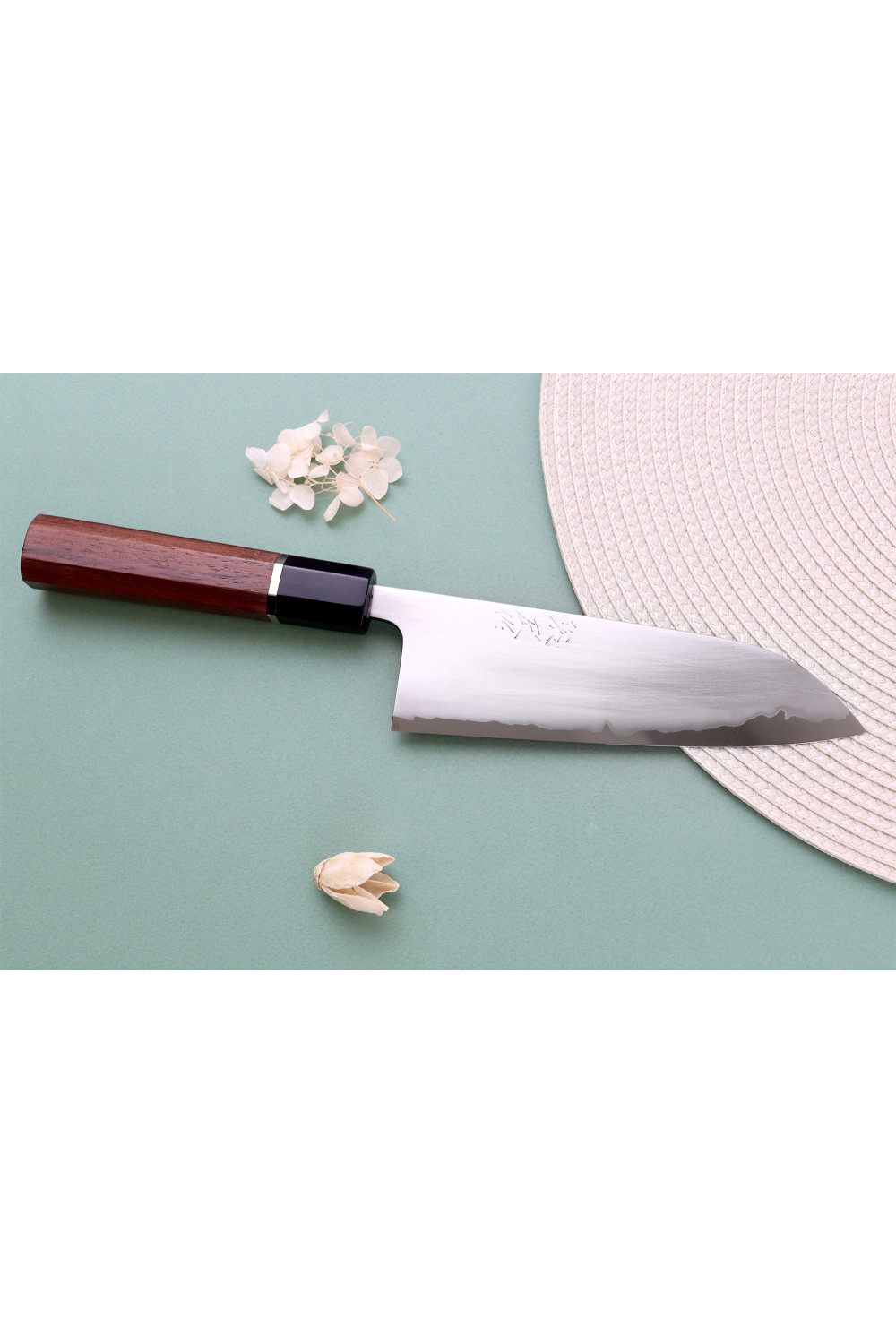
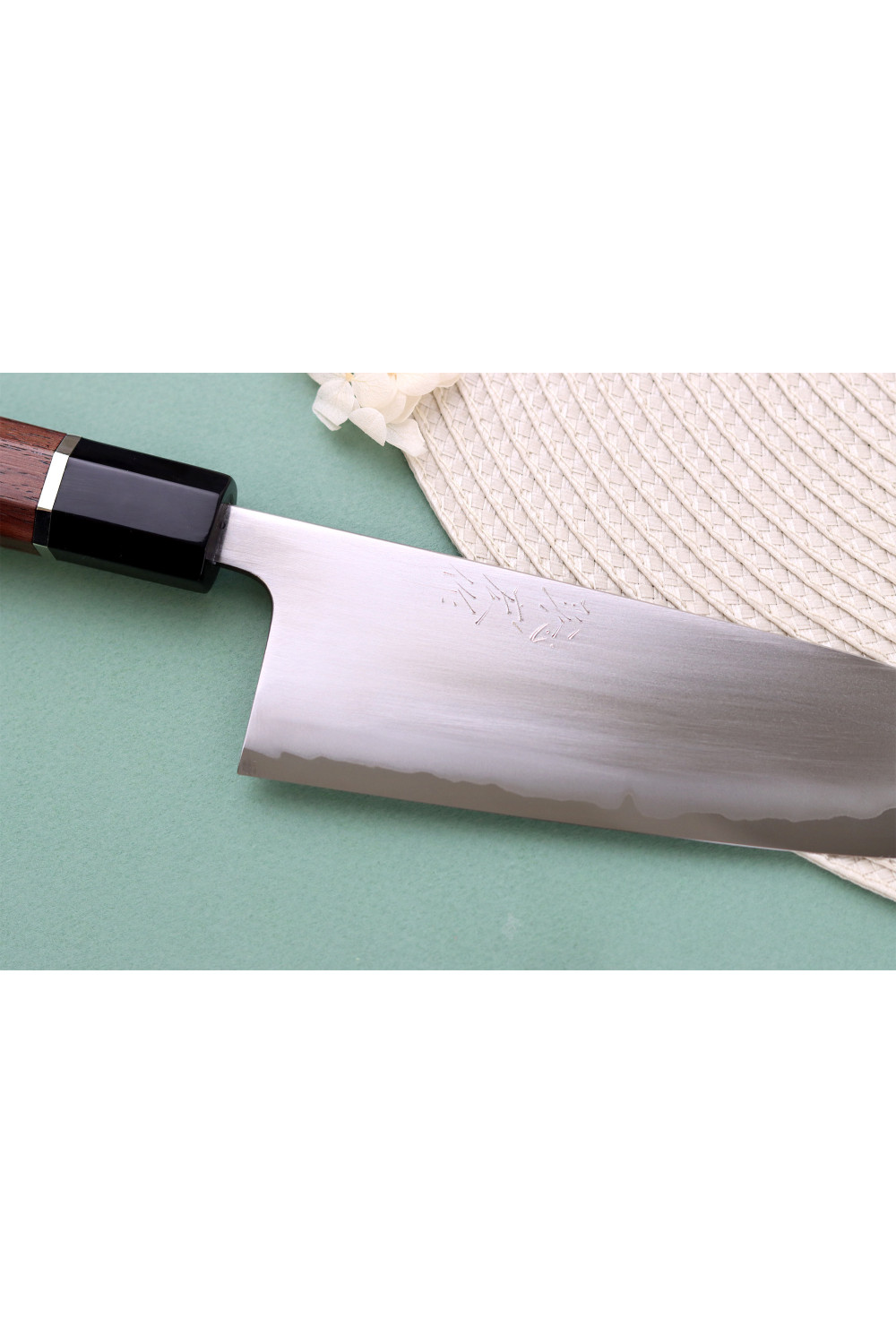
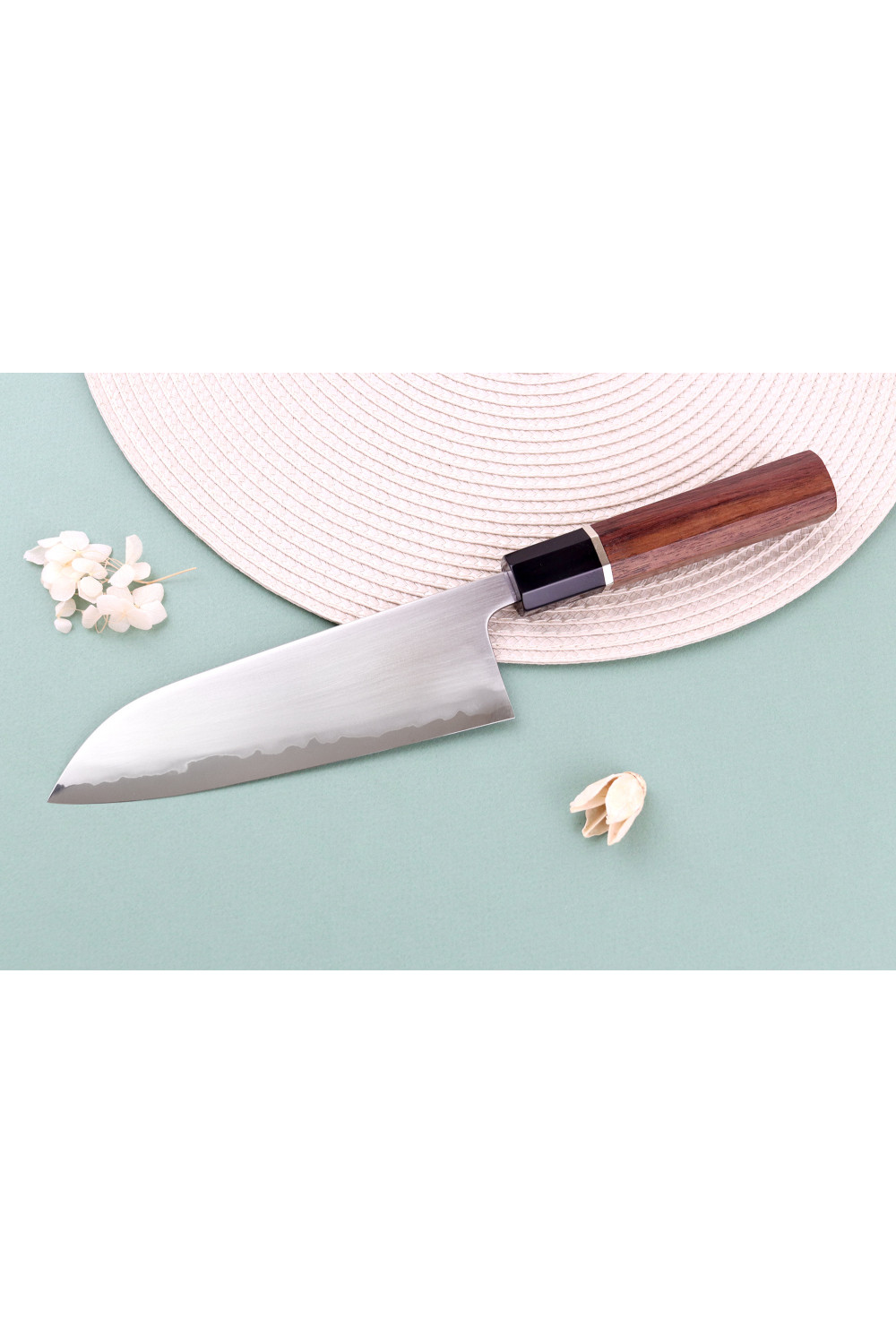
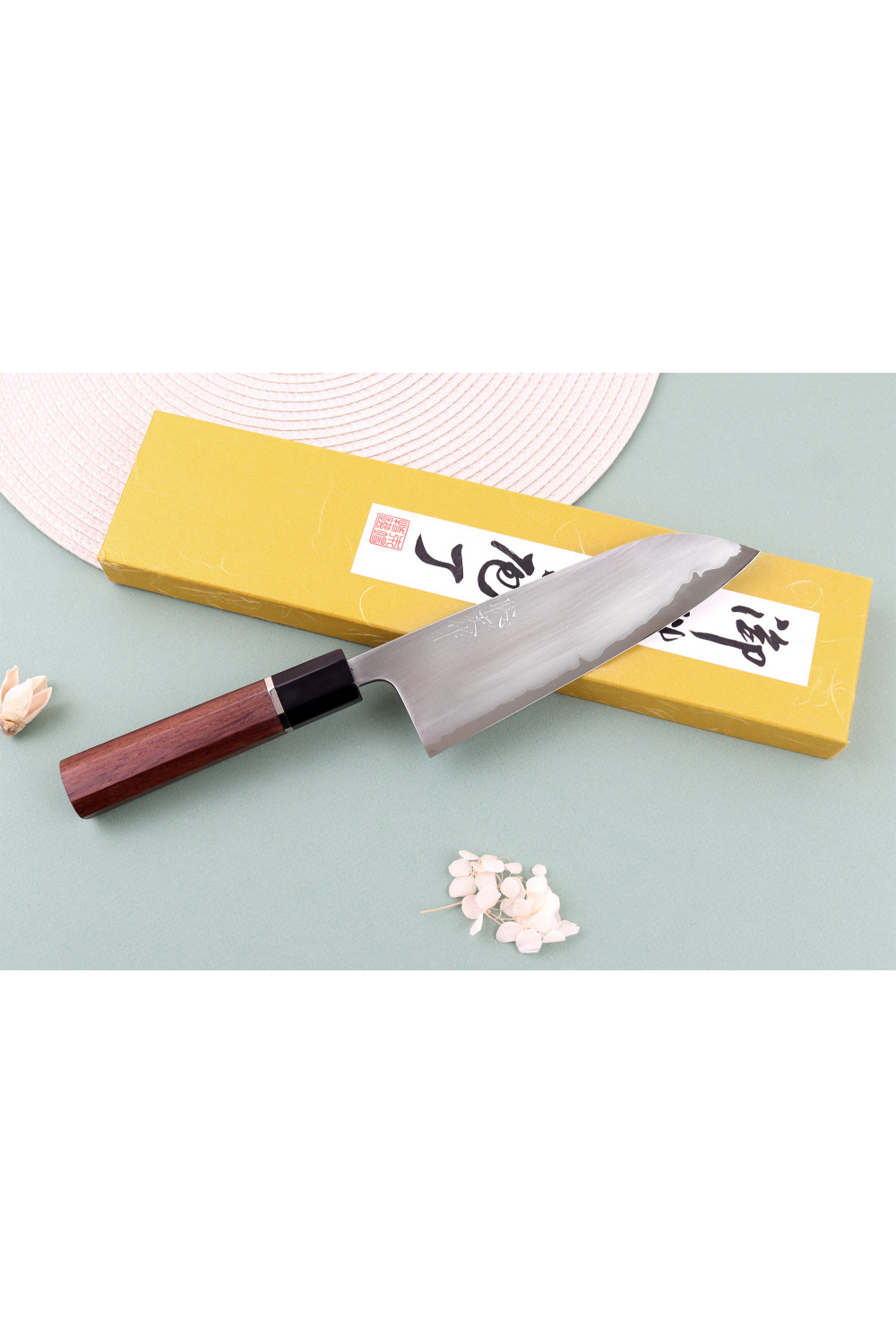
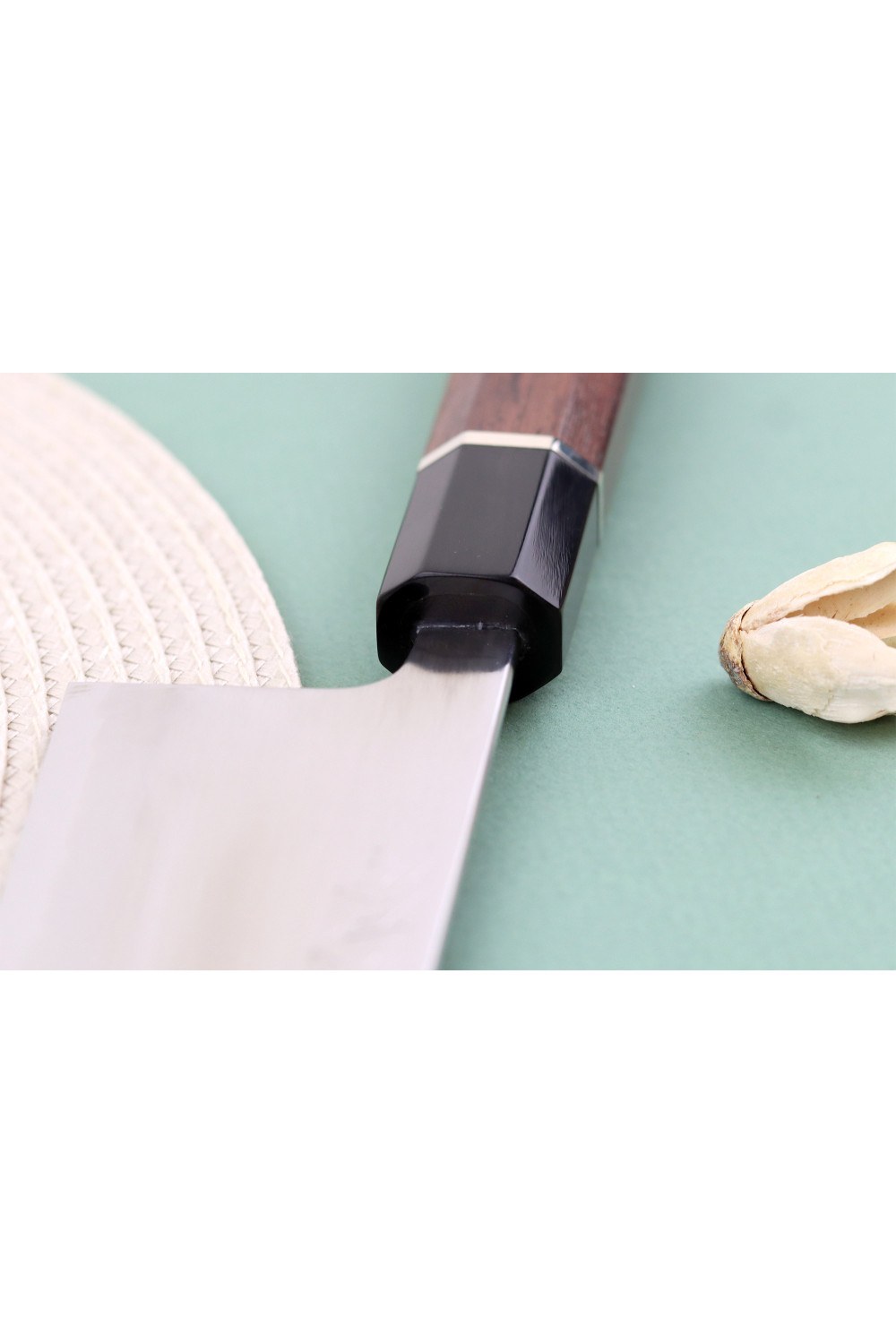
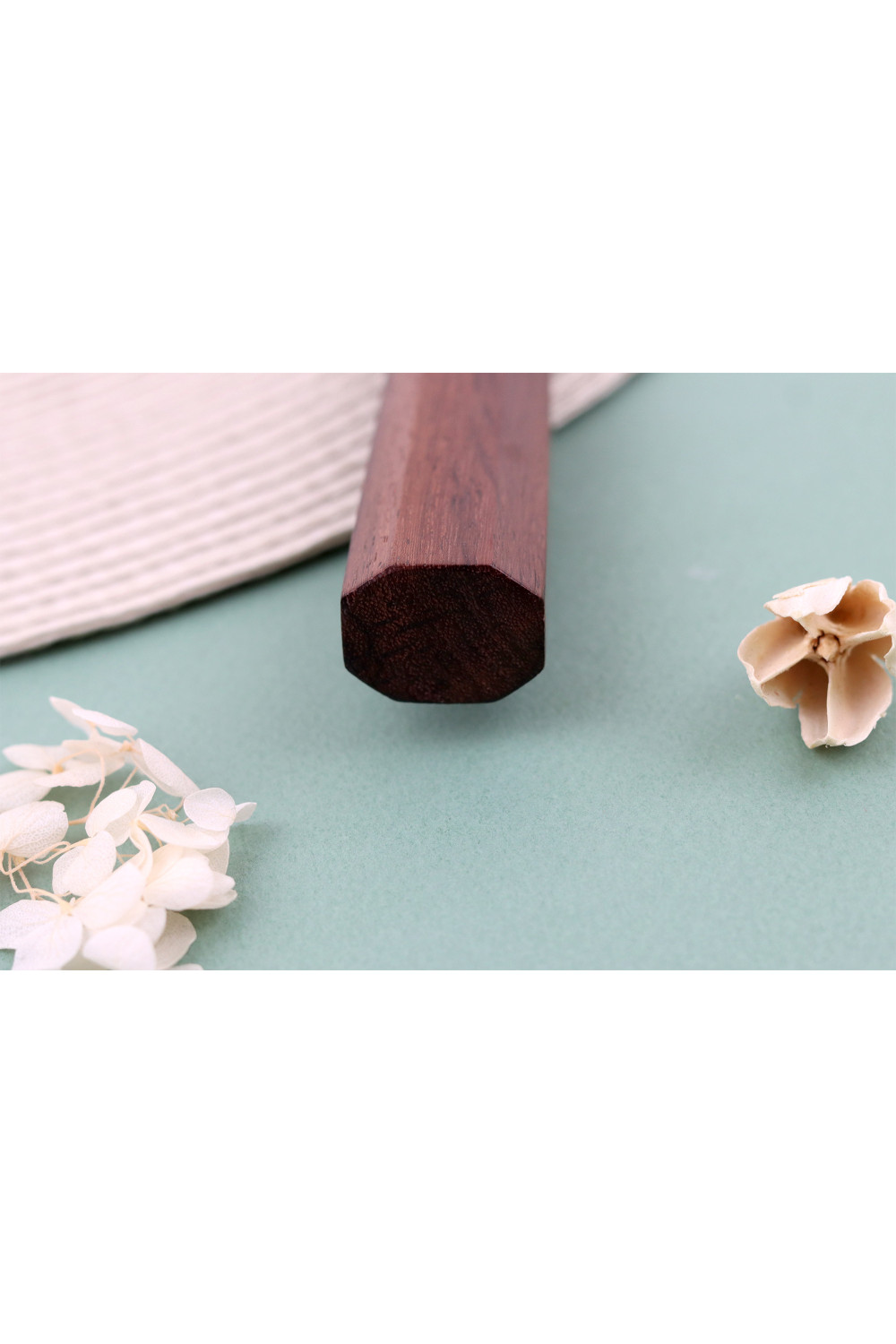
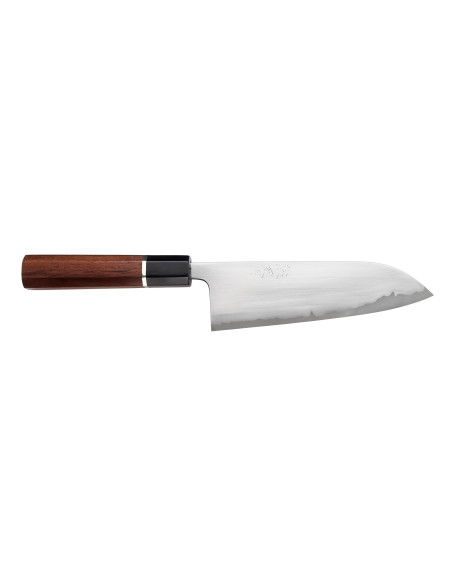
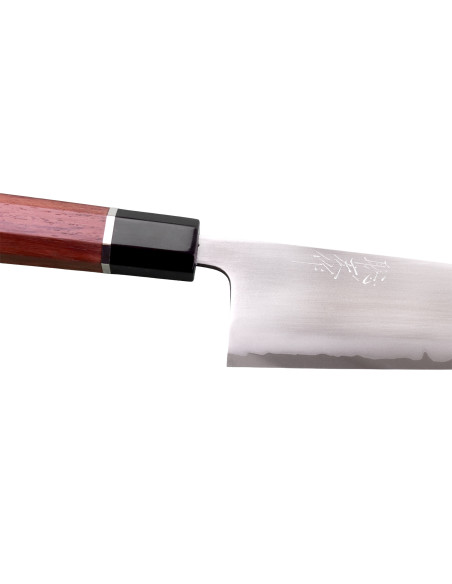
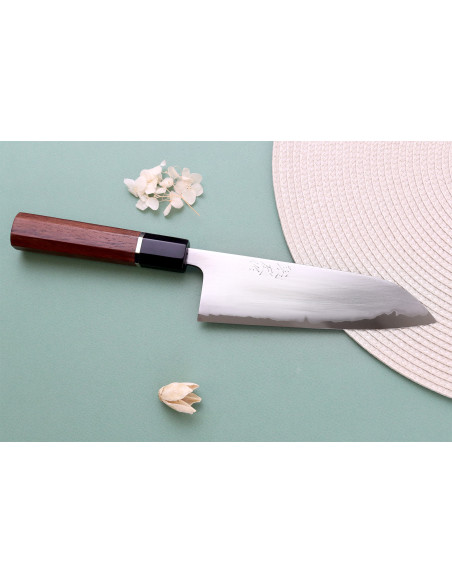
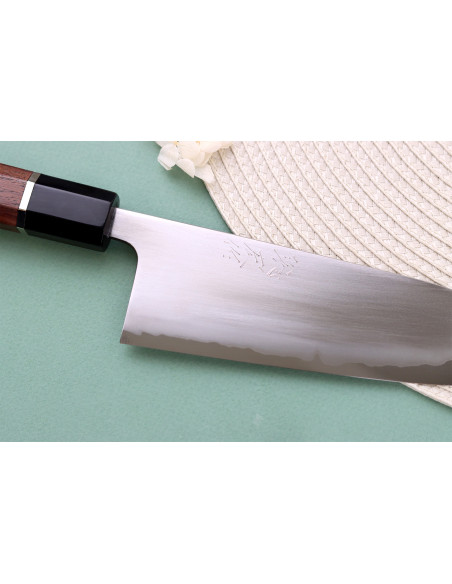
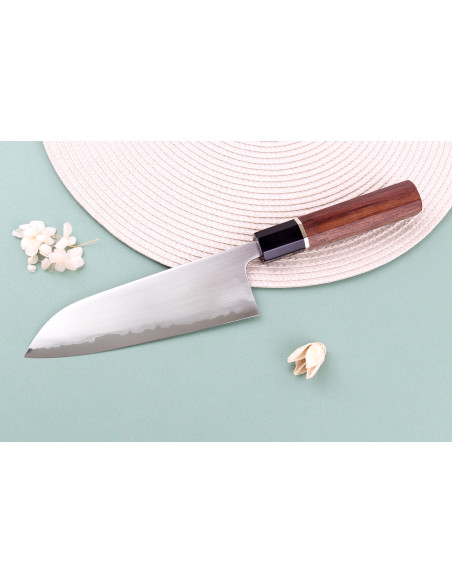
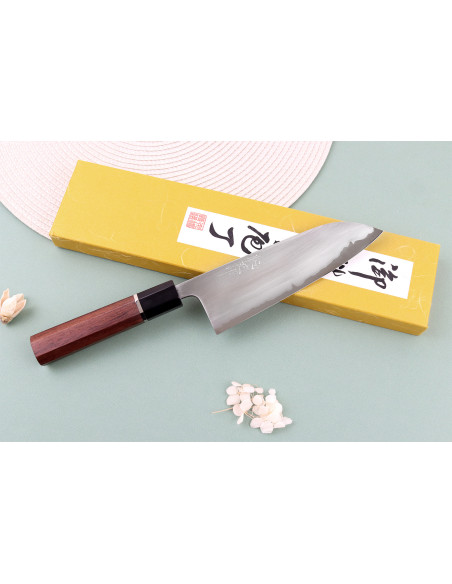
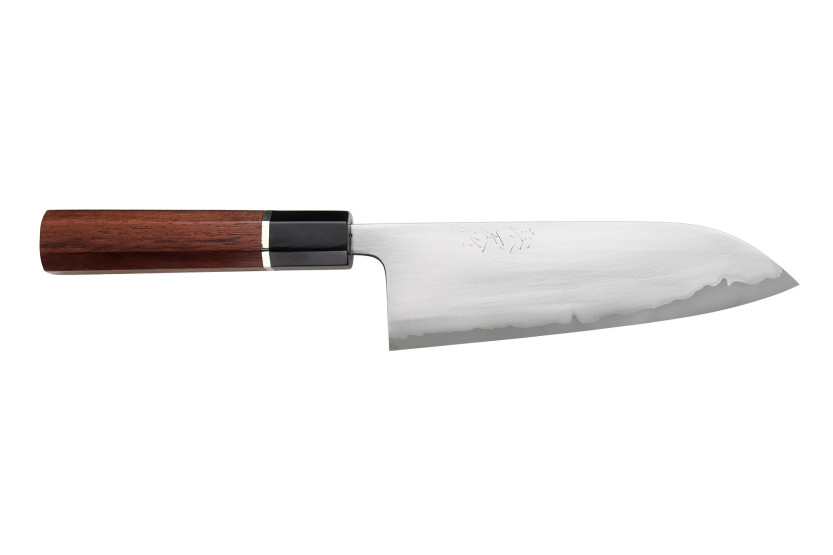
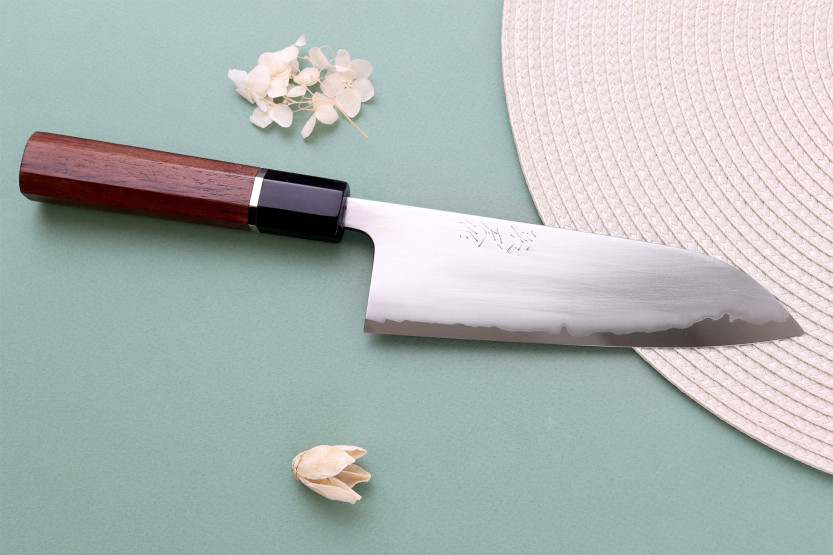
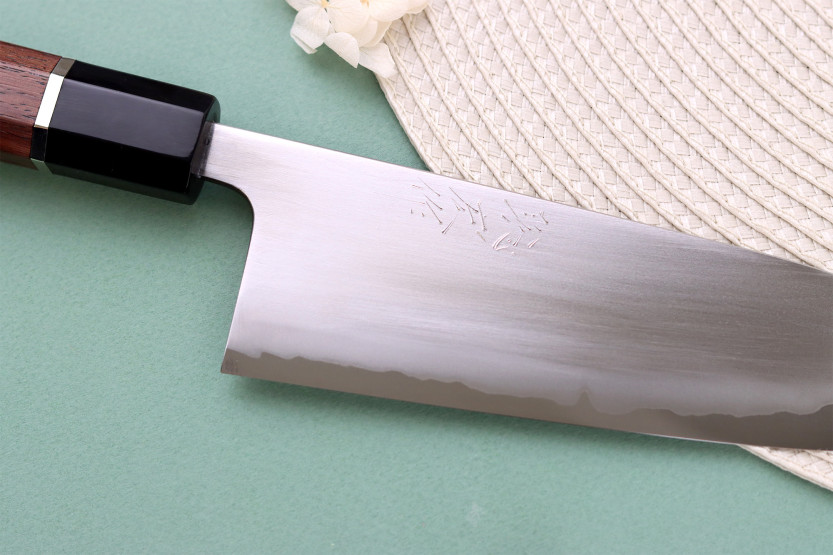
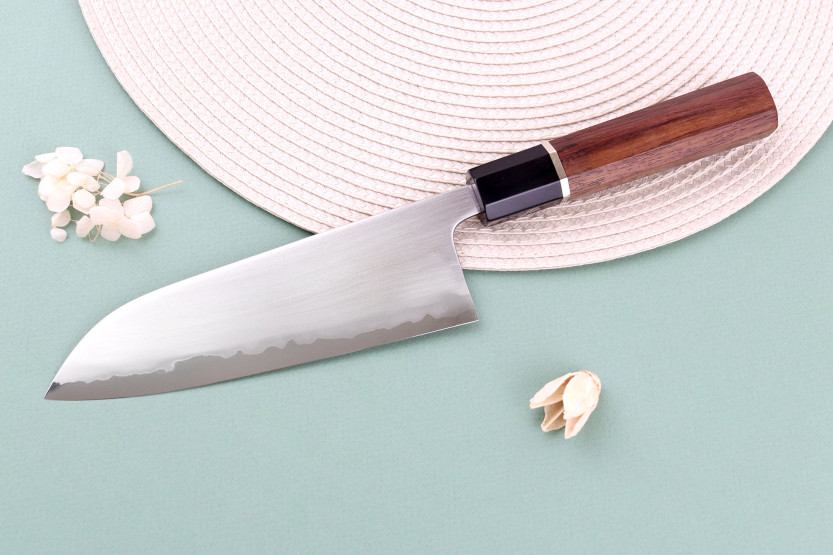
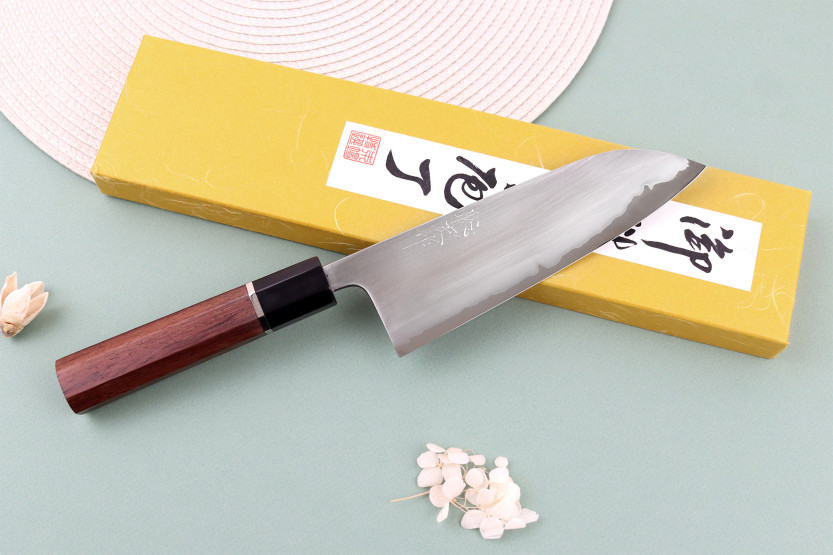
Handcrafted in Sanjo, Japan, this Toshihiro Wakui santoku knife featuresa 16. 5-cm blade and an octagonal rosewood handle. Its San Mai construction features a core of Japanese Shirogami 2 steel surrounded by two layers of steel. The polished blade, adorned with engraved kanji characters, features a simple yet refined finish. With a hardness of 62 HRC and its versatile shape, this knife is ideal for precise cutting of vegetables, meat, and fish.
A precise and sharp San Mai blade
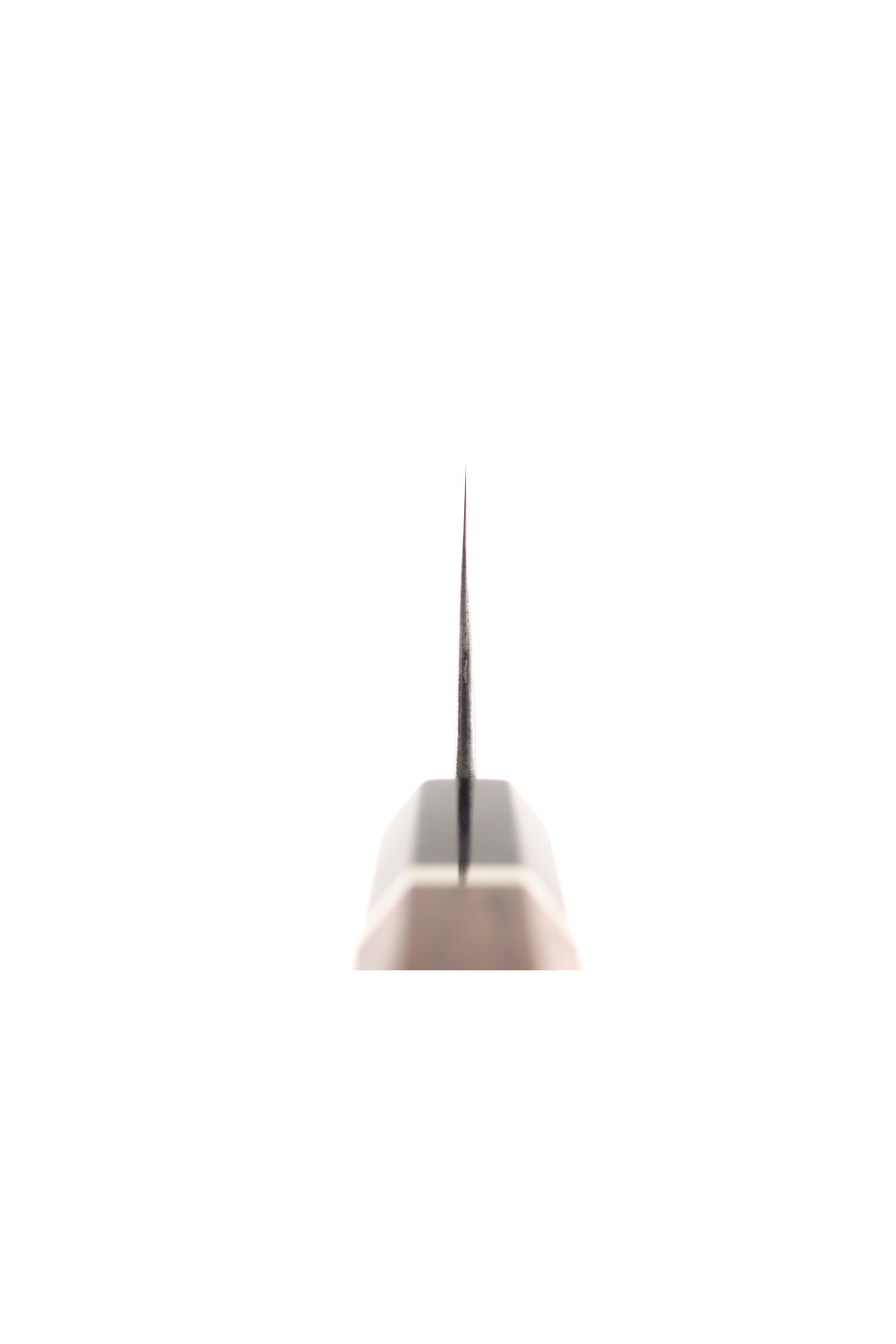
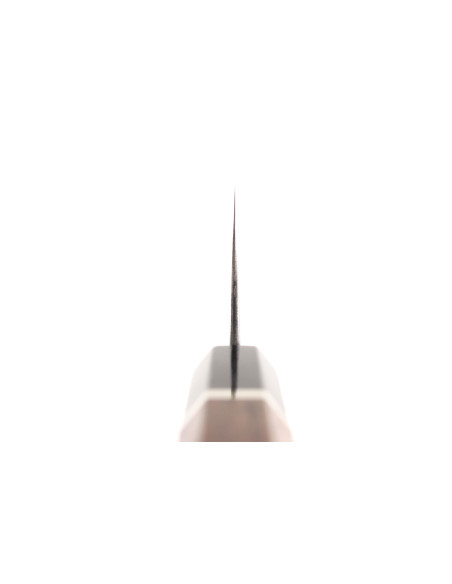
The 16.5 cm blade is crafted using the San Mai technique, whose name means “three layers” in Japanese. A core of hard steel is encased in two layers of softer steel. This construction combines a rigid cutting edge with a protective outer layer. It is prized in Japanese knives for combining cutting precision with the durability required for kitchen use.
The core is made of Japanese Shirogami 2 steel, containing 1.3% carbon. This steel produces a fine cutting edge and can be sharpened on a suitable whetstone. Its hardness of 62 HRC contributes to excellent edge retention. However, a blade of this hardness requires careful handling: avoid twisting or impact, and do not cut very hard foods.
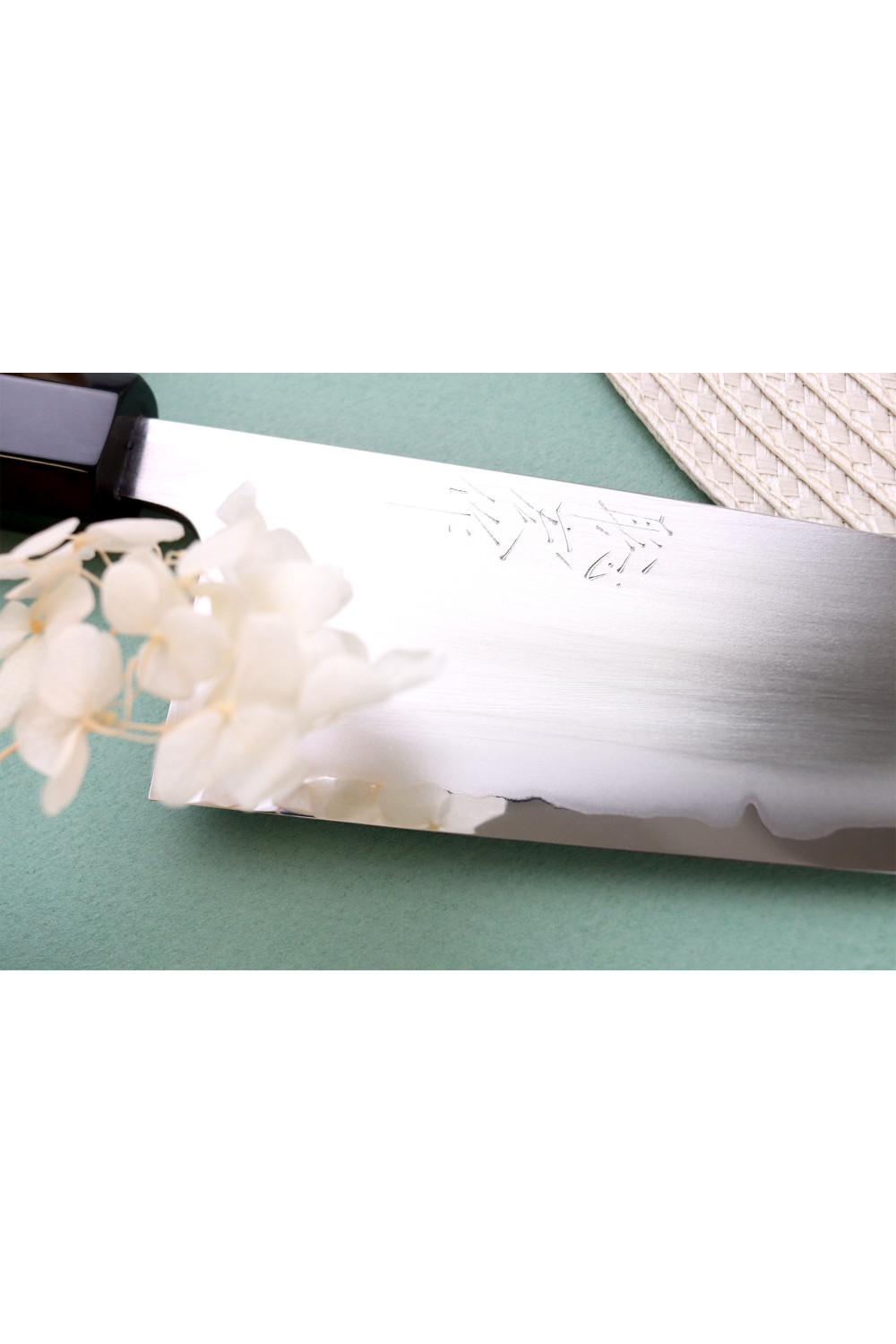
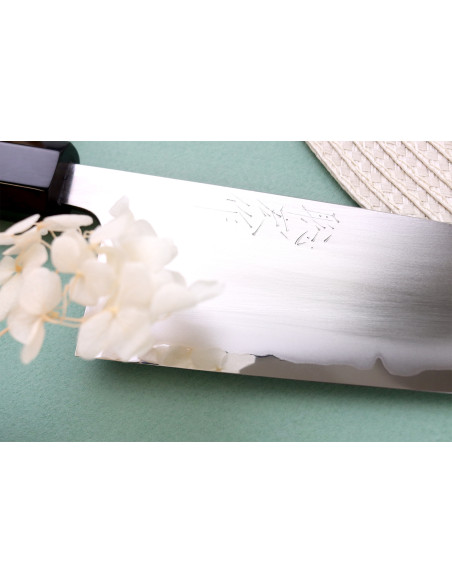
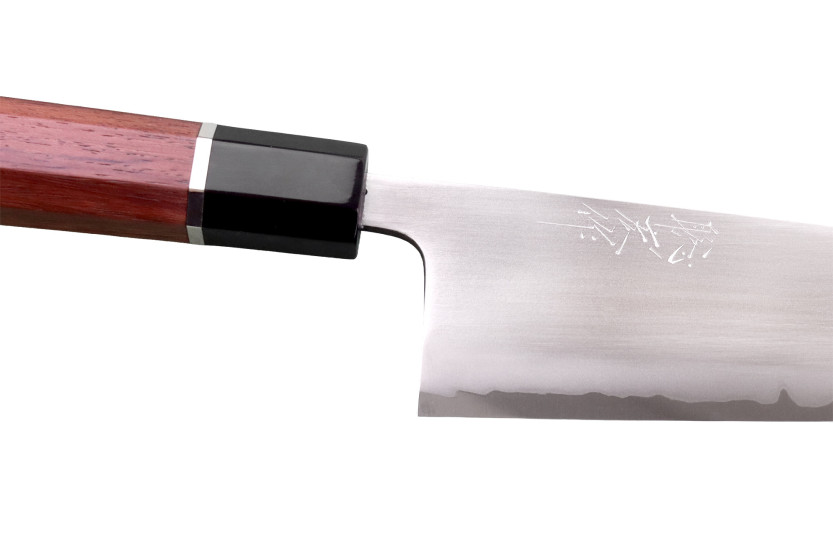
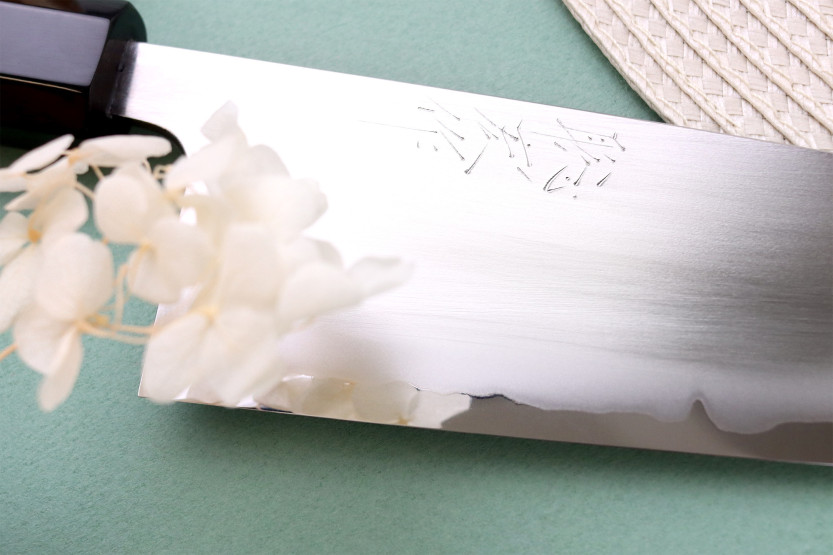
The polished finish gives the blade a smooth and elegant appearance. Engraved kanji characters highlight its Japanese origin.
An octagonal rosewood handle
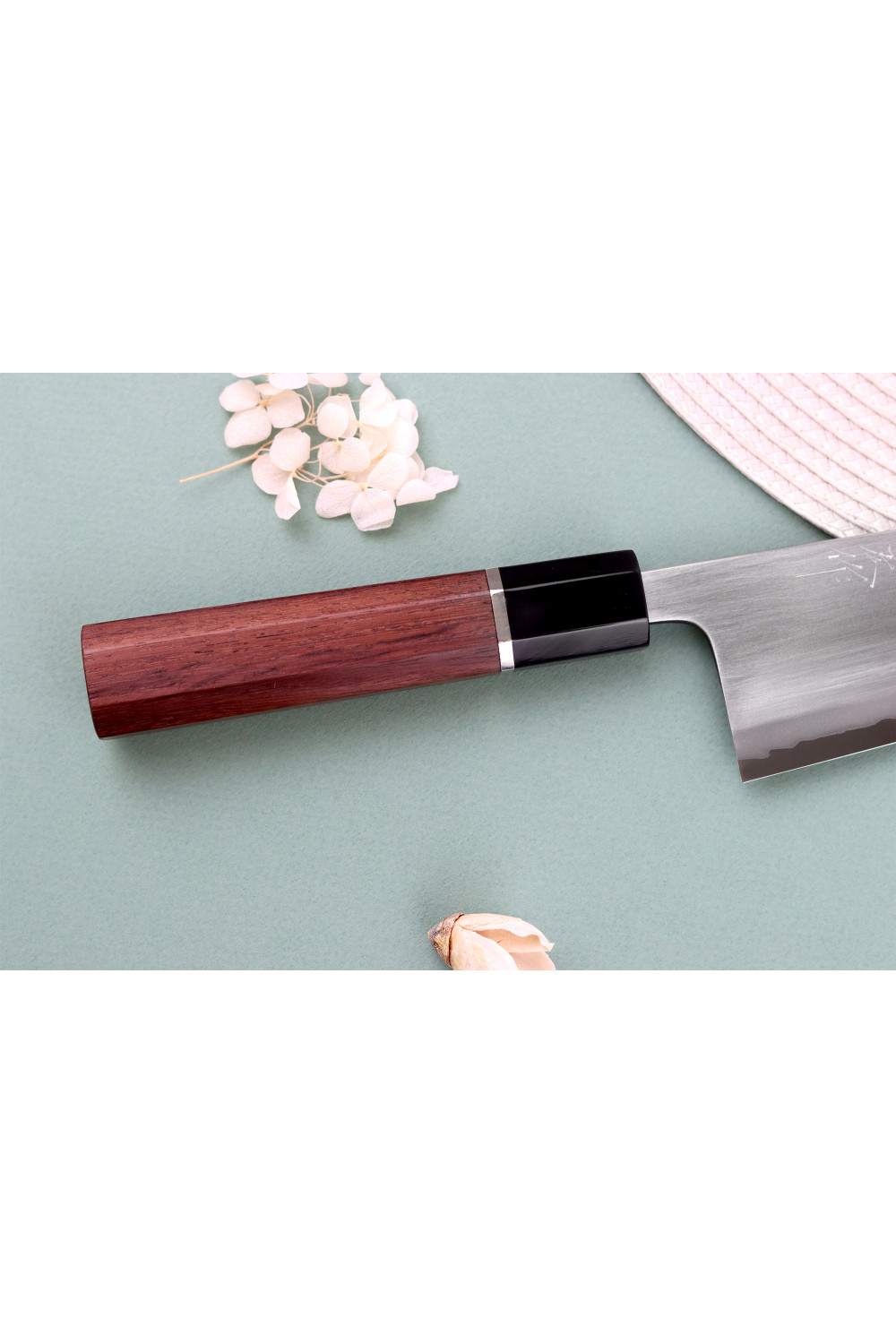
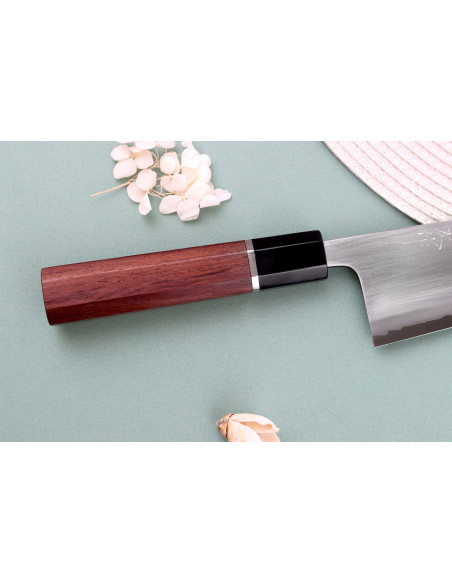
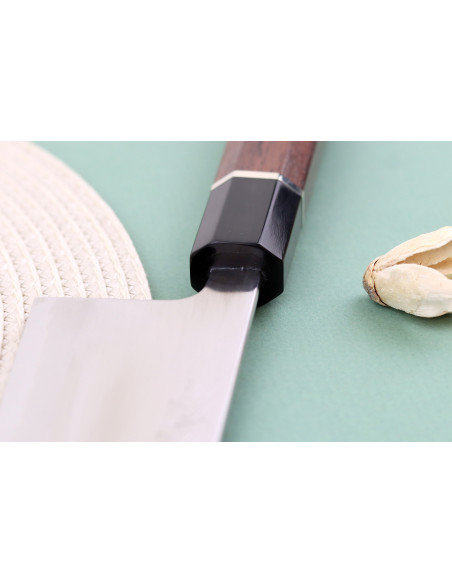
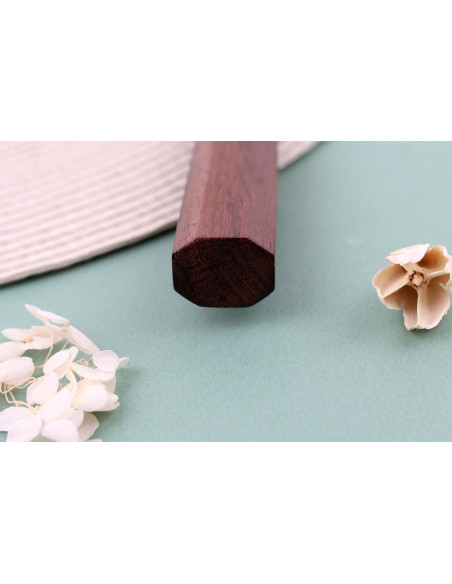
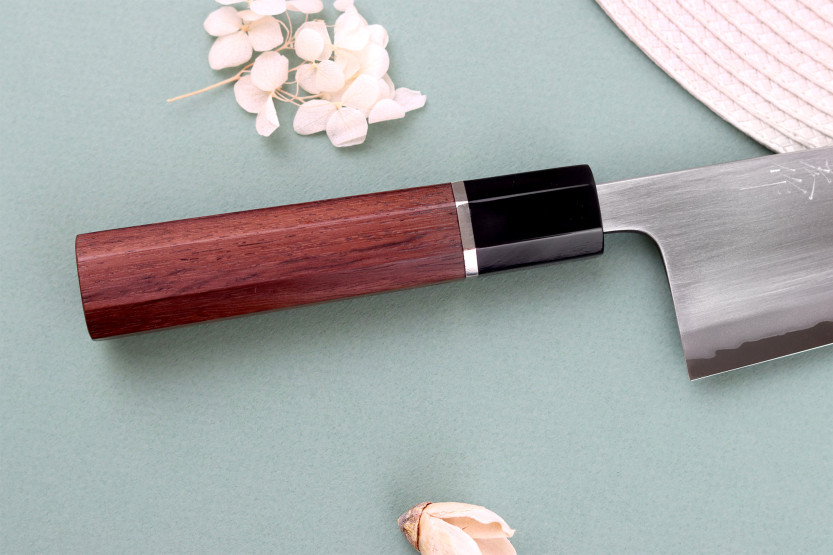
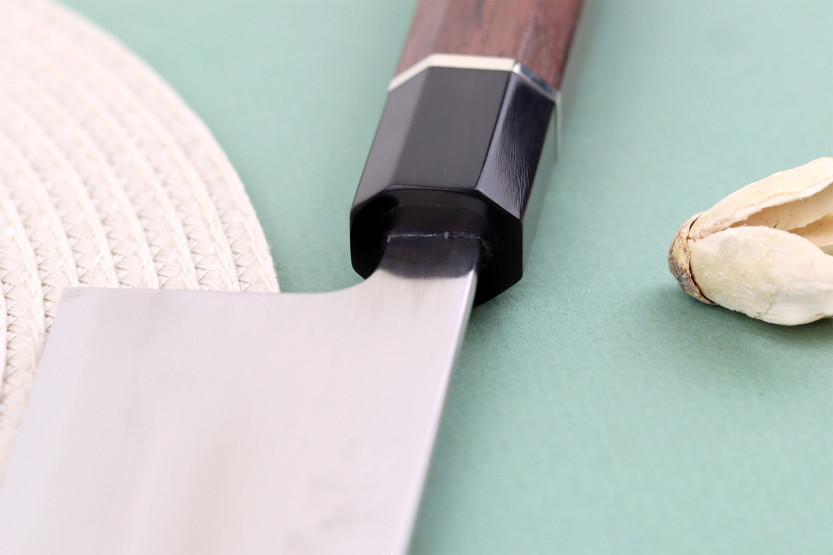
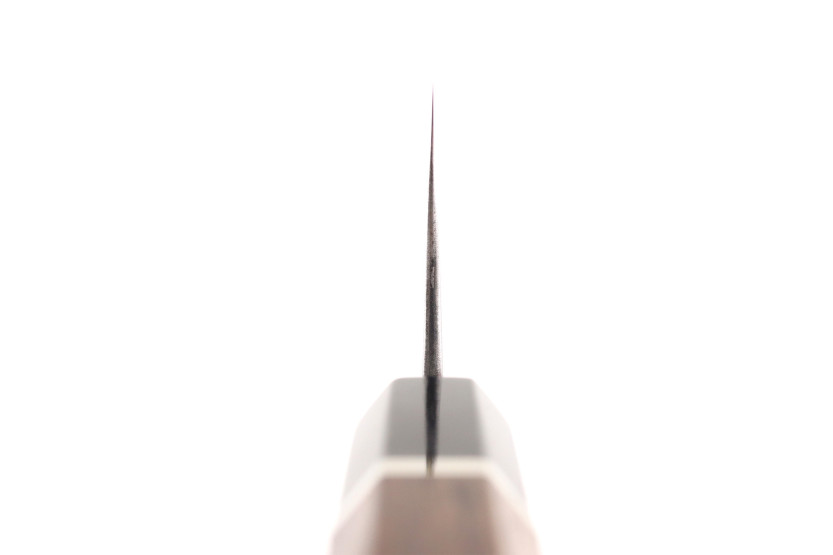
The handle is made of rosewood, with a black buffalo horn bolster. The contrast between the two materials gives this knife a traditional and refined style. The wood provides a warm grip, while the bolster completes the junction between the handle and the blade.
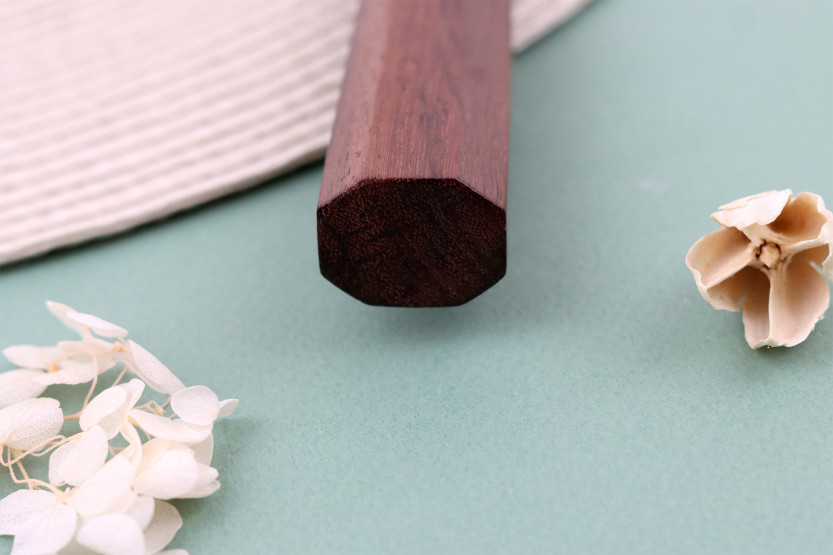
Its octagonal shape is designed to provide a comfortable grip and good control over your movements. It is suitable for both right- and left-handed users.
Key Features at a Glance
-
- 16.5 cm blade: offers a versatile length for everyday cutting tasks.
-
- Three-layer San Mai construction: encases the hard steel core.
-
- Shirogami 2 steel with 1.3% carbon: allows for a fine cutting edge.
-
- Hardness of 62 HRC: contributes to excellent edge retention.
-
- Polished finish and engraved kanji: give the blade an elegant and authentic look.
-
- Rosewood handle: provides a comfortable grip.
-
- Black buffalo horn bolster: complements the handle with an elegant contrast.
-
- Octagonal shape: suitable for both right- and left-handed users.
-
- Handcrafted in Sanjo: a hallmark of Toshihiro Wakui’s work.
Daily Use and Care
Wash the blade by hand after use with a soft sponge and a little soap, then dry it immediately with a clean cloth. Do not let it soak and do not put it in the dishwasher. High-carbon steel can develop a patina and be susceptible to corrosion if left damp: wipe it down thoroughly, especially after cutting acidic foods. Store the knife in a dry place. Use it on a wooden or plastic cutting board, and avoid bones, very hard foods, and twisting motions.
Toshihiro Wakui, blacksmith in Sanjo
Toshihiro Wakui works in the city of Sanjo, Japan, as part of a family of blacksmiths whose work has historically focused on toolmaking. He represents the third generation of this family. In response to changing demand for these tools, he has shifted his focus to Japanese cutlery.
His career thus bridges a family tradition of metalworking with the craft of kitchen knife-making. Each piece bears the mark of this artisanal expertise and the craftsmanship carried out in this Japanese city, renowned for its blacksmithing traditions.
Discover the various brands of artisanal knives we offer to add variety to your cutting techniques and recipes!




 By buying this product you can collect up to