High-quality Aogami #2 steel for the blade
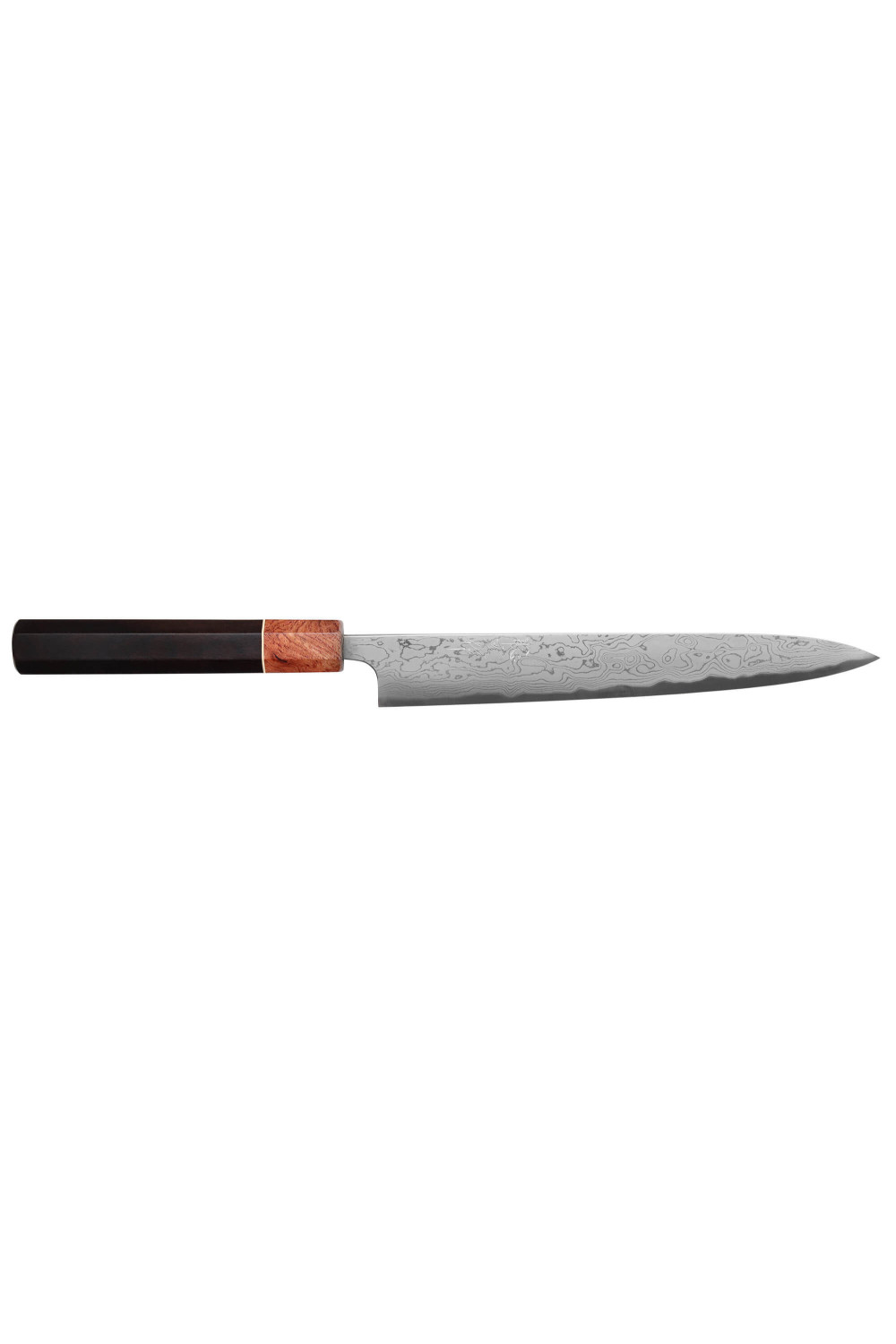
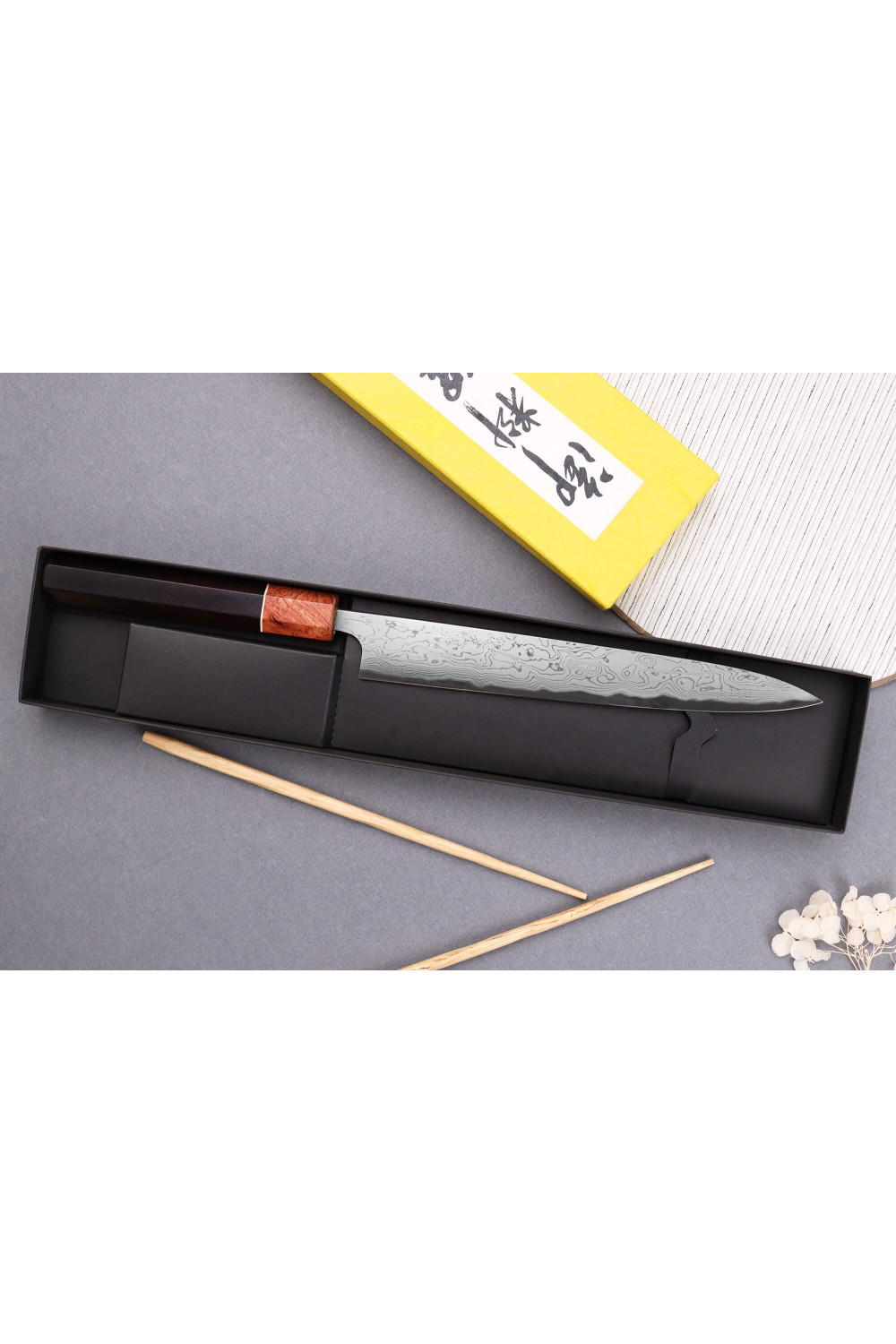
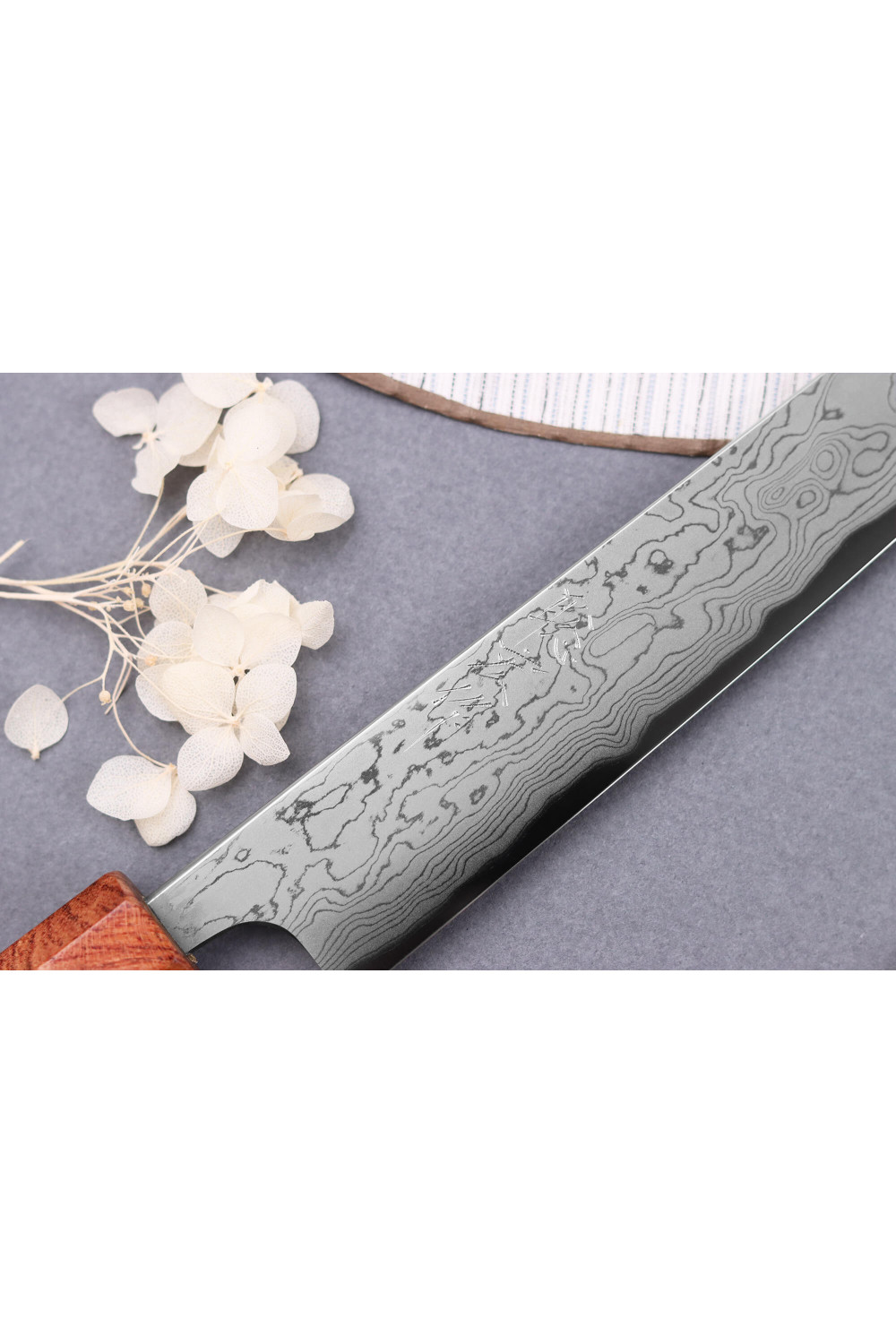
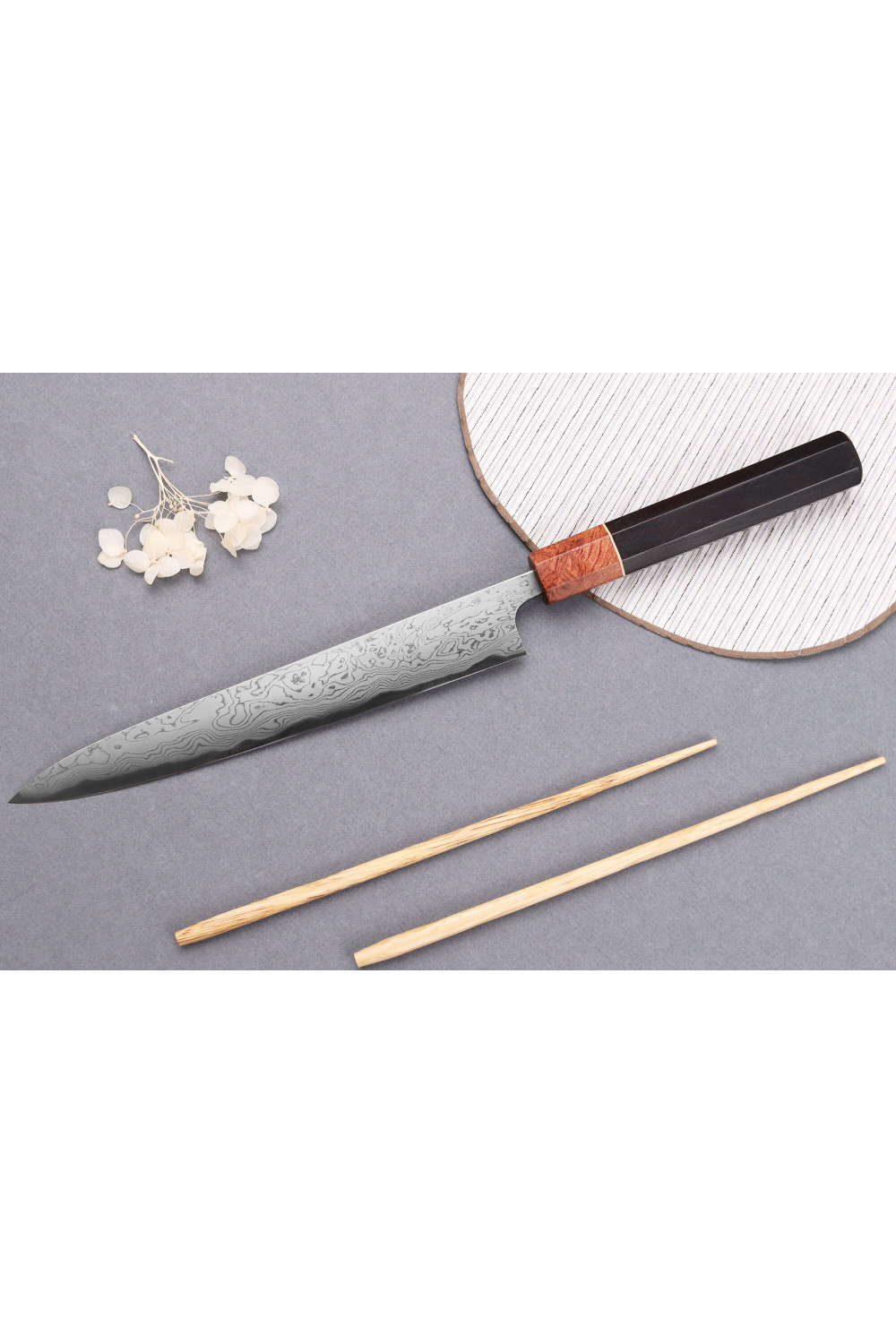
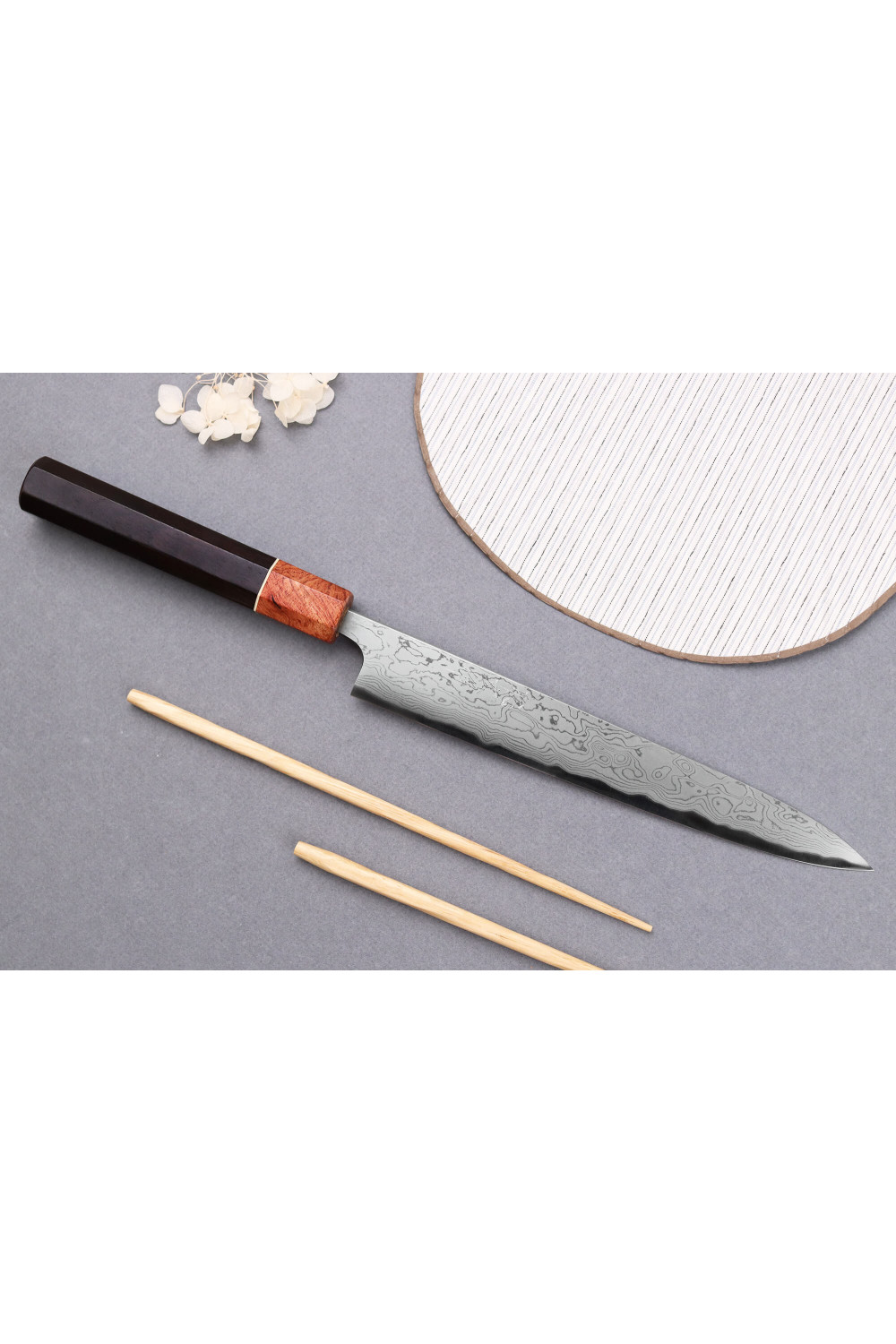
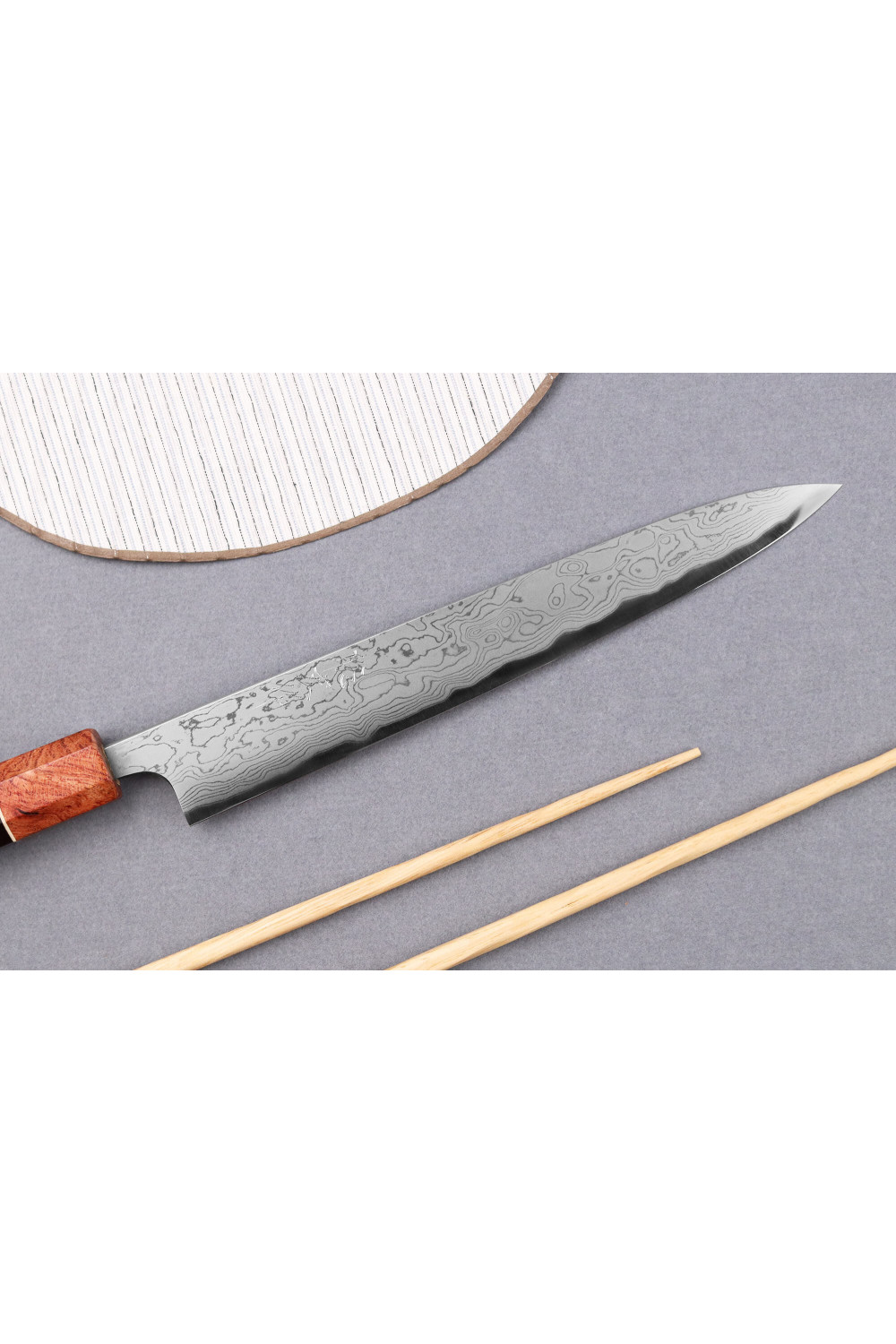
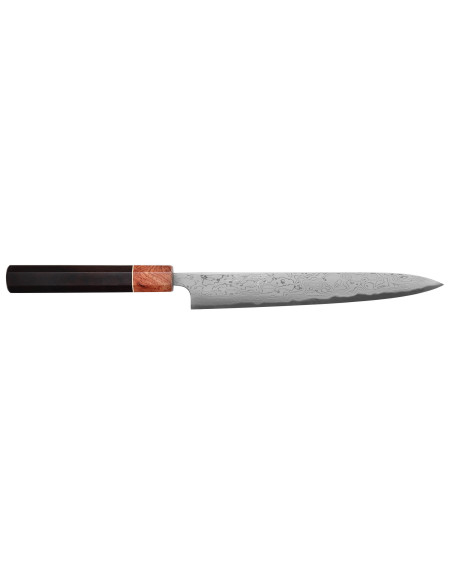
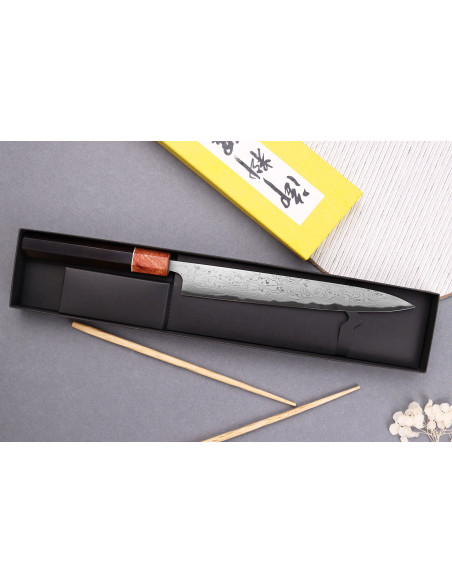
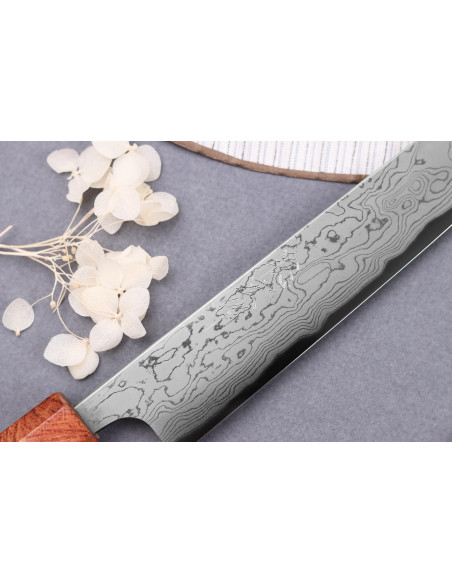
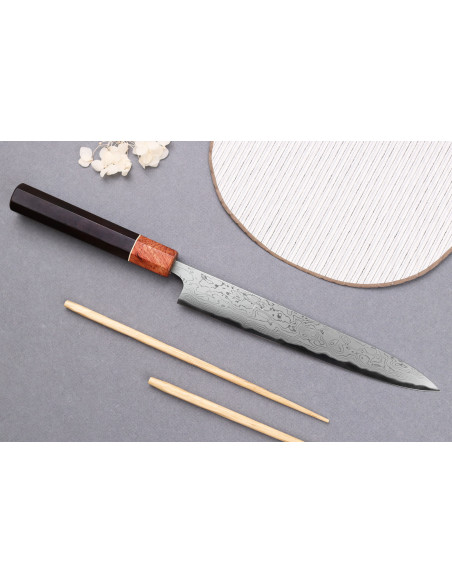
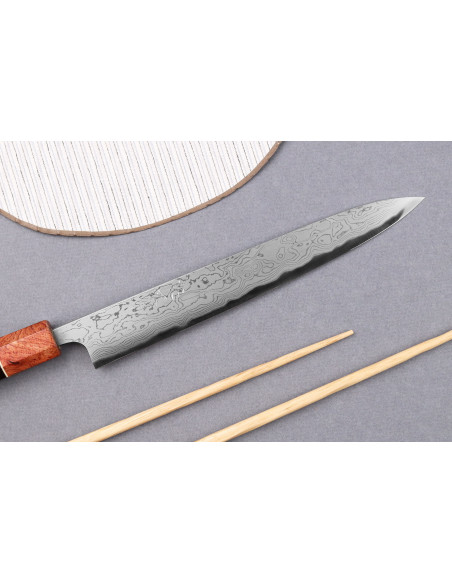
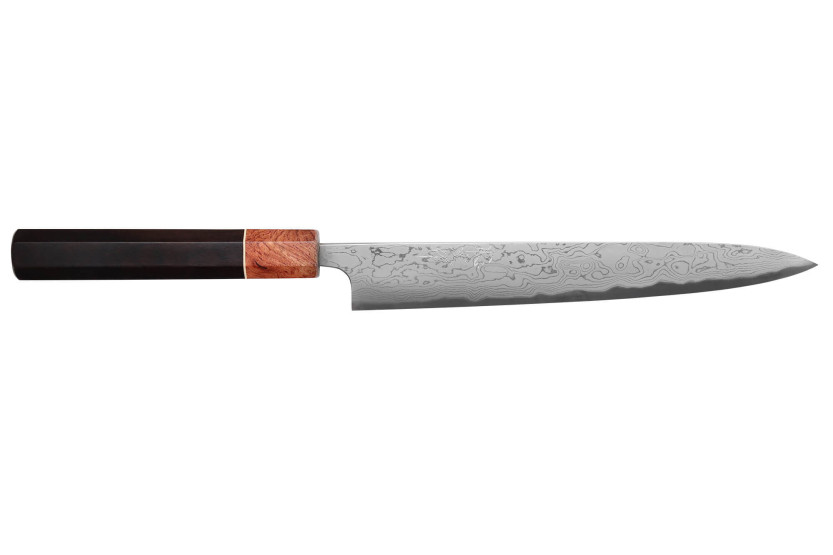
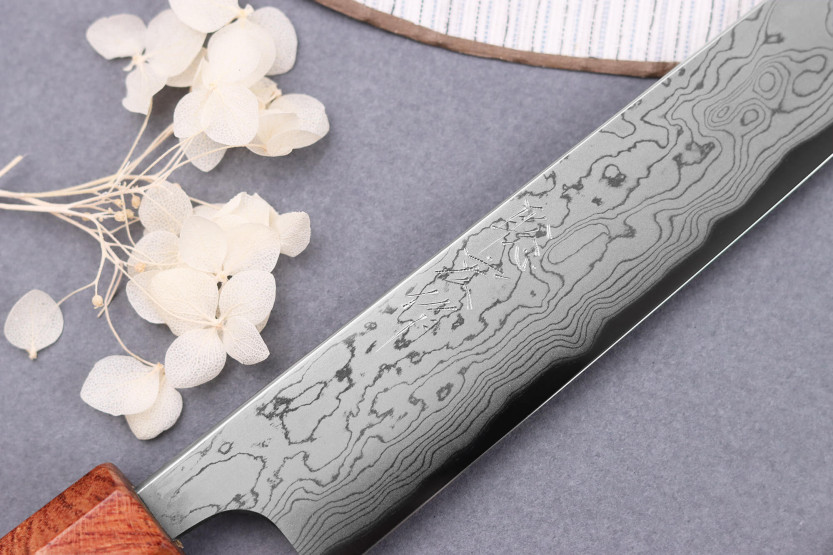
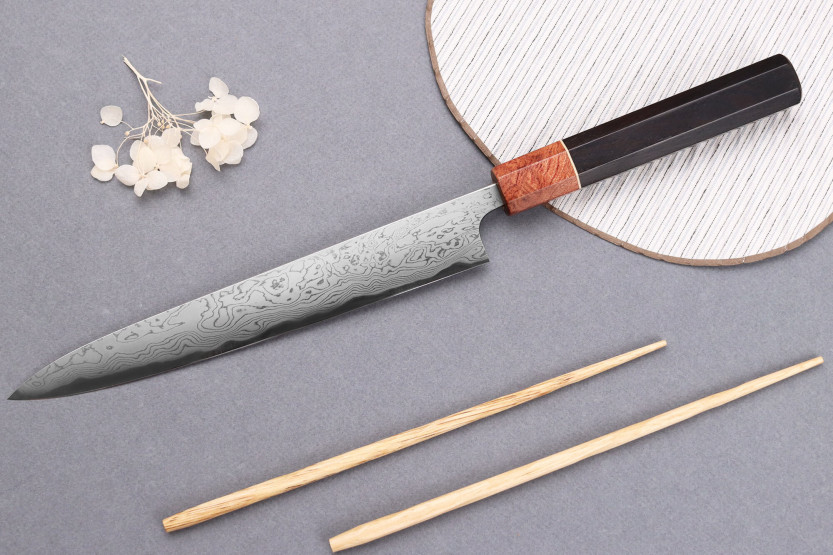
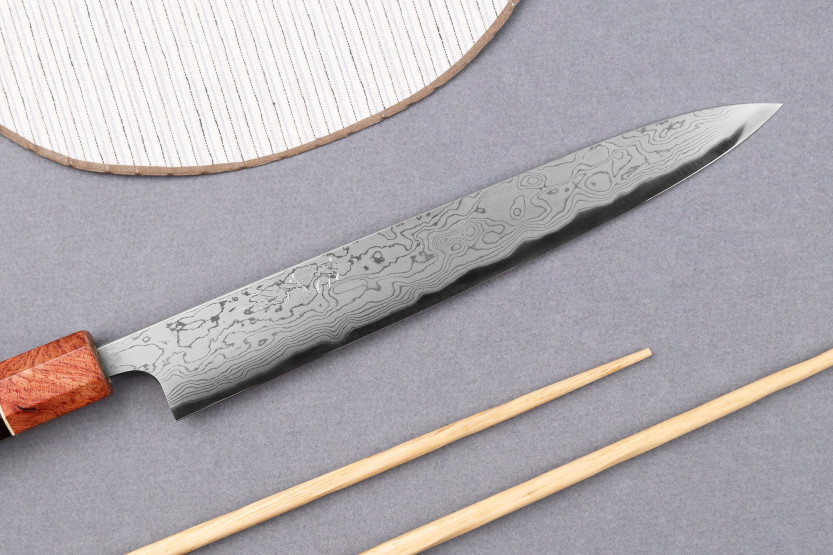
This Toshihiro Wakui Japanese sujihiki knife is equipped with a damascened blade, i.e. its core made of rigid steel is covered with several layers of softer steel designed to protect it. This blade design offers a real advantage in the kitchen, as it has a rigid cutting edge that retains its performance for a long time, and its cutting surface is balanced thanks to the layers applied to the core. A damascened blade also offers a very aesthetic appearance: the different layers of steel form unique waves that undulate over the entire cutting surface.
The blacksmith made the blade core from Japanese Aogami #2 steel (also known as Blue Steel 2), a top-of-the-range alloy produced by world-renowned steelmaker Hitachi. Aogami #2 steel is characterized by its high carbon content (around 1.1%), which is the essential element for increasing the hardness of an alloy.
The blade of your knife has a hardness of 62 HRC, well above the average for Western knives, which is between 55 and 58 HRC. The blade has a pronounced sharpness that lasts over time, as the steel deforms less quickly during cutting. Cutting performance is spot on.
The high-grade steel is surrounded by several layers of softer steel which, being less rigid, help to protect it and give it flexibility. The blade doesn't become flexible in the literal sense of the word, but rather flexible in use, where the high rigidity of the core is balanced out to create a less brittle blade. The knife's efficient, technical blade will therefore not require overly regular sharpening.
Despite its high rigidity, the blade is easy to sharpen with a stone when the need arises.
Superb kanji have been engraved on the blade by the blacksmith. They accentuate the authentic character of this typically Japanese blade.
Precious ebony for an octagonal handle
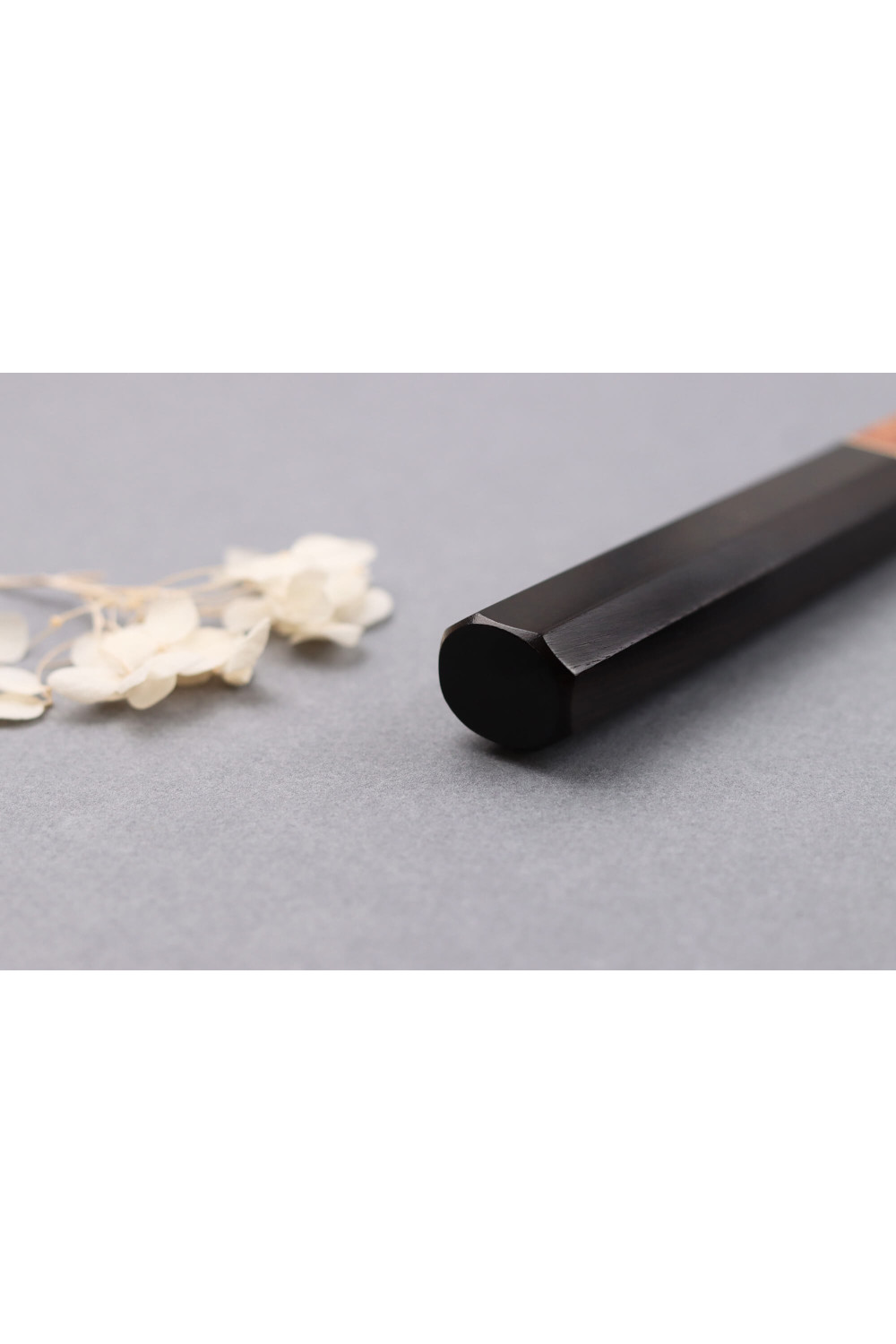
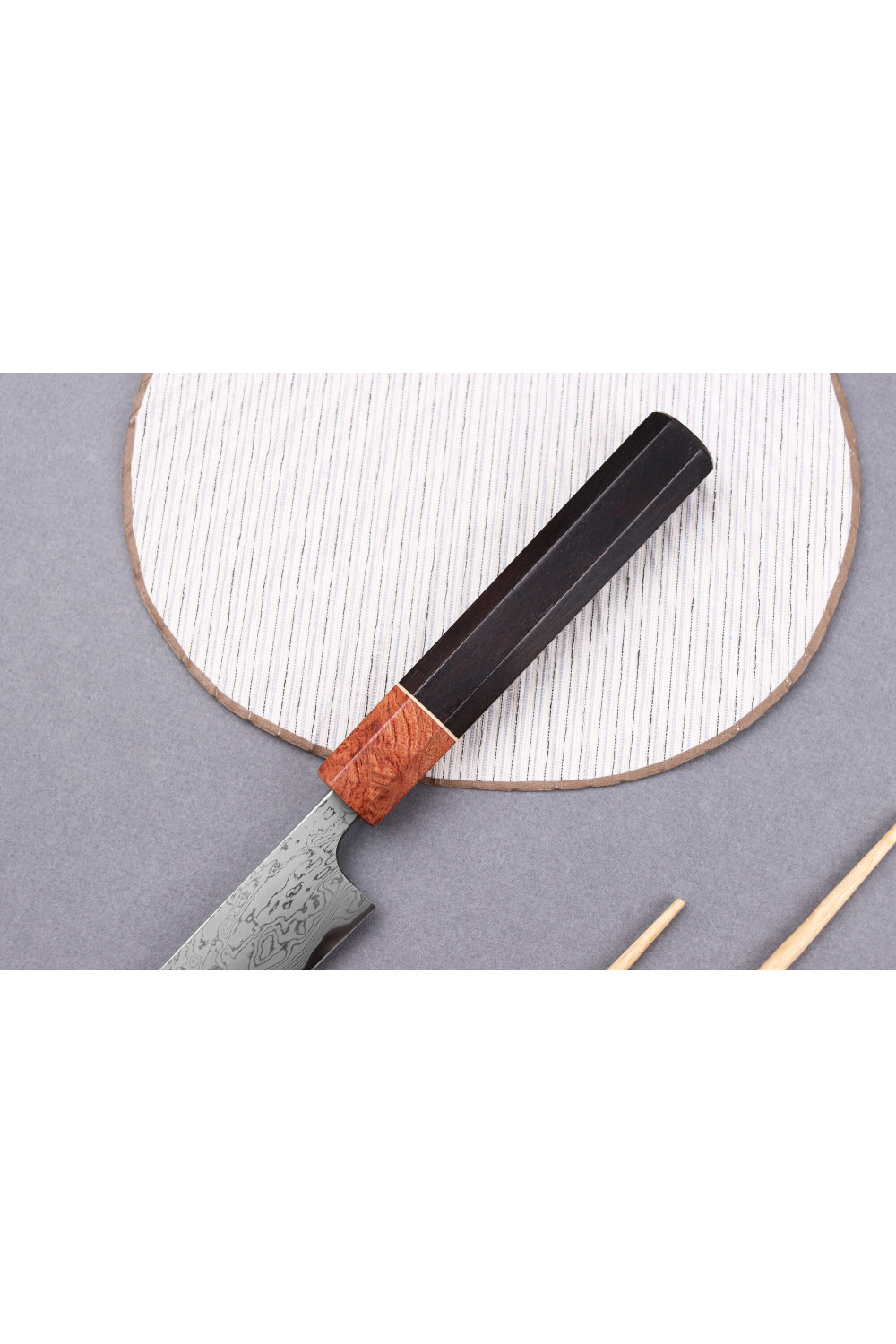
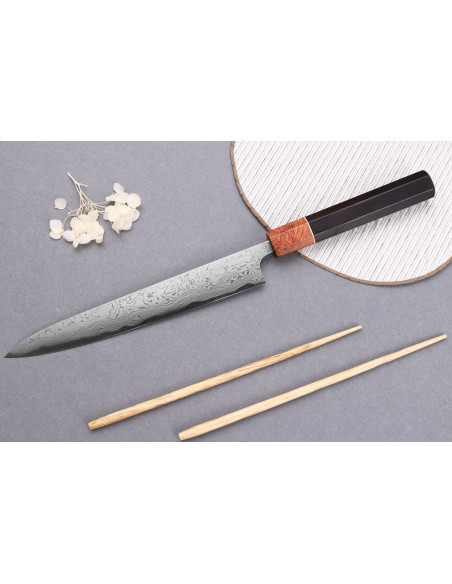
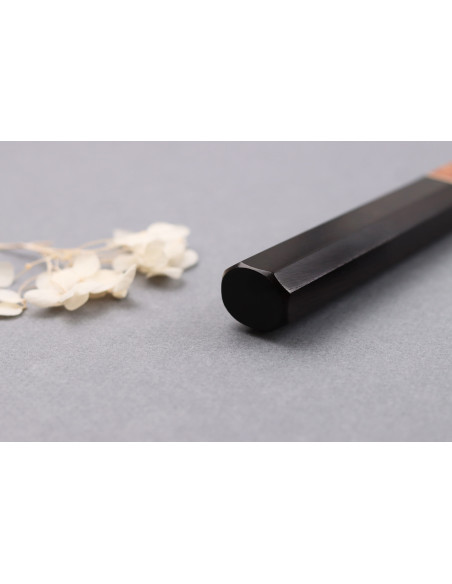
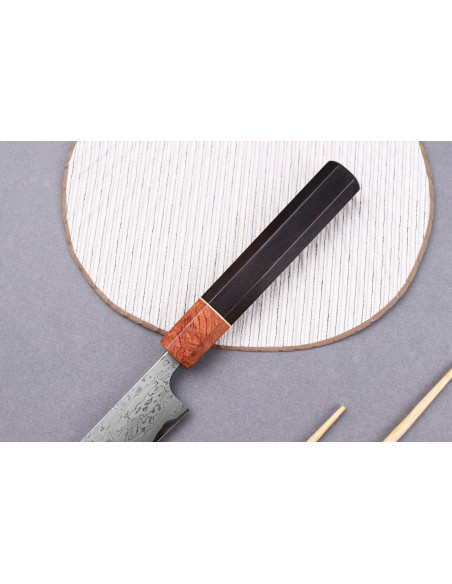
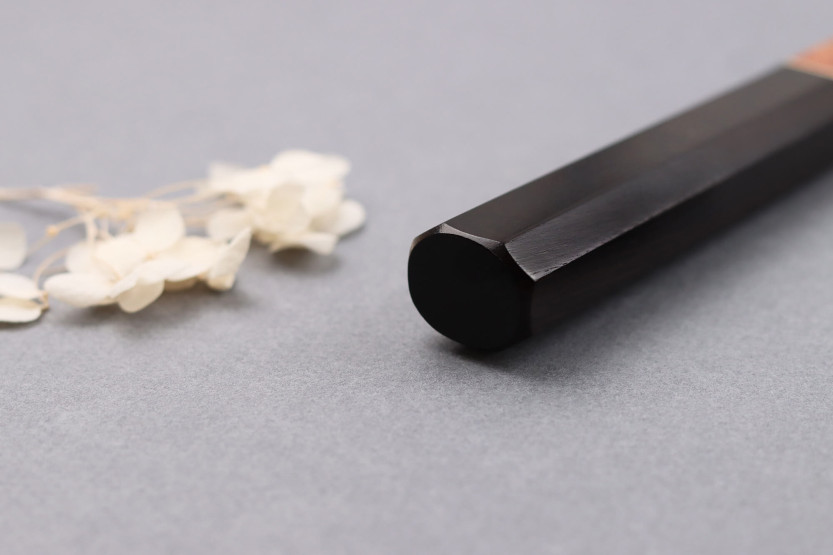
Ebony wood was chosen by Toshihiro Wakui for the knife's handle. This precious species is defined by its dark, almost black color, and a high density that enables it to resist the risk of cracking. With its durability, ebony is ideal for regular, even daily use in the kitchen.
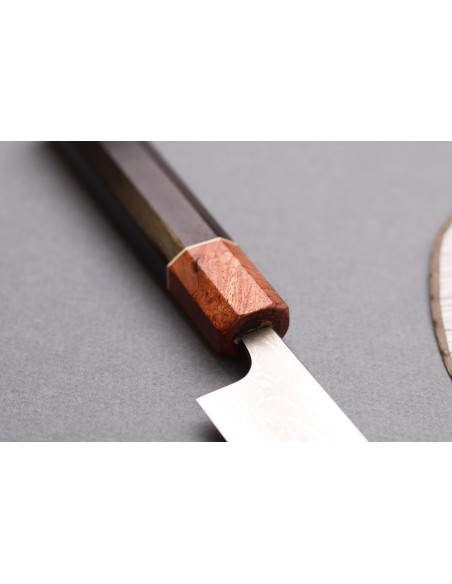
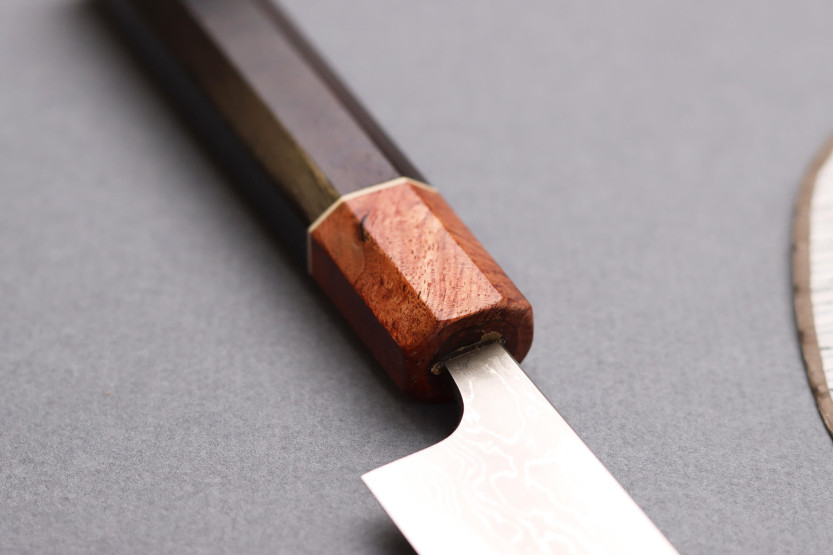
The bolster is made from quince, a light-colored wood that contrasts with the dark ebony. The two woods are separated by an elegant white micarta ring.
The handle is octagonal in shape to suit both right- and left-handed users. This shape hugs the palm of your hand for comfort, ease of handling and total control of the knife.
To fill the space where the blade fits into the handle, wood paste has been added. The knife is perfectly watertight: food particles and cleaning water cannot get inside.
The work of Toshihiro Wakui, blacksmith to high-end blades
Your Japanese damascus knife has been forged by Toshihiro Wakui, a Japanese blacksmith who creates exceptional blades. Toshihiro san is the third generation to head the family business, which originally specialized in the manufacture of metal bars and crowbars.
When he took over the company some 20 years ago, Toshihiro Wakui soon found himself faced with a sharp drop in demand for the tools made by his family. That's when he met Kazuomi Yamamoto, head blacksmith at Yoshikane Hamono, who introduced him to his trade. Toshihiro san liked the trade and decided to retrain, and Kazuomi san offered to train him himself! After 4 years of diligent apprenticeship, Toshihiro began forging his own knives.
His workshop is located in the town of Sanjo, Japan, and he continues to apply the skills taught by Kazuomi Yamamoto. Toshihiro Wakui offers you top-of-the-range blades for which he himself hot-plates the damascus! This gives each forged blade a unique look. Toshihiro san is used to working in a crowded space with an atypical layout: the hammer is relatively far from the furnace. But this doesn't stop the blacksmith from offering you exceptional blades!
Taking good care of your carbon knife
As mentioned above, this suijhiki knife is made from top-of-the-range materials. That's why it's essential to take the utmost care of it. Starting with the cutting of food: hard foods such as frozen foods, squash or bones are to be avoided at the risk of damaging the blade.
Your knife should be washed by hand with a non-abrasive sponge and mild soap. Wash in lukewarm water, avoiding wetting the handle. Then dry the knife as thoroughly as possible to remove all traces of moisture, and place it in a dry place.
The blade may change color slightly over time, which is normal. As it contains a lot of carbon, it naturally reacts to external elements such as humidity in the air or acidity in food. To protect the blade, we recommend that you apply a few drops ofoil to a soft cloth and rub it into the blade from time to time.
Discover all our sharpening stones on our website!






 By buying this product you can collect up to