Toshihiro Wakui, an exceptional Japanese blacksmith
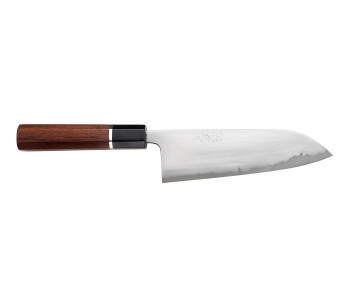
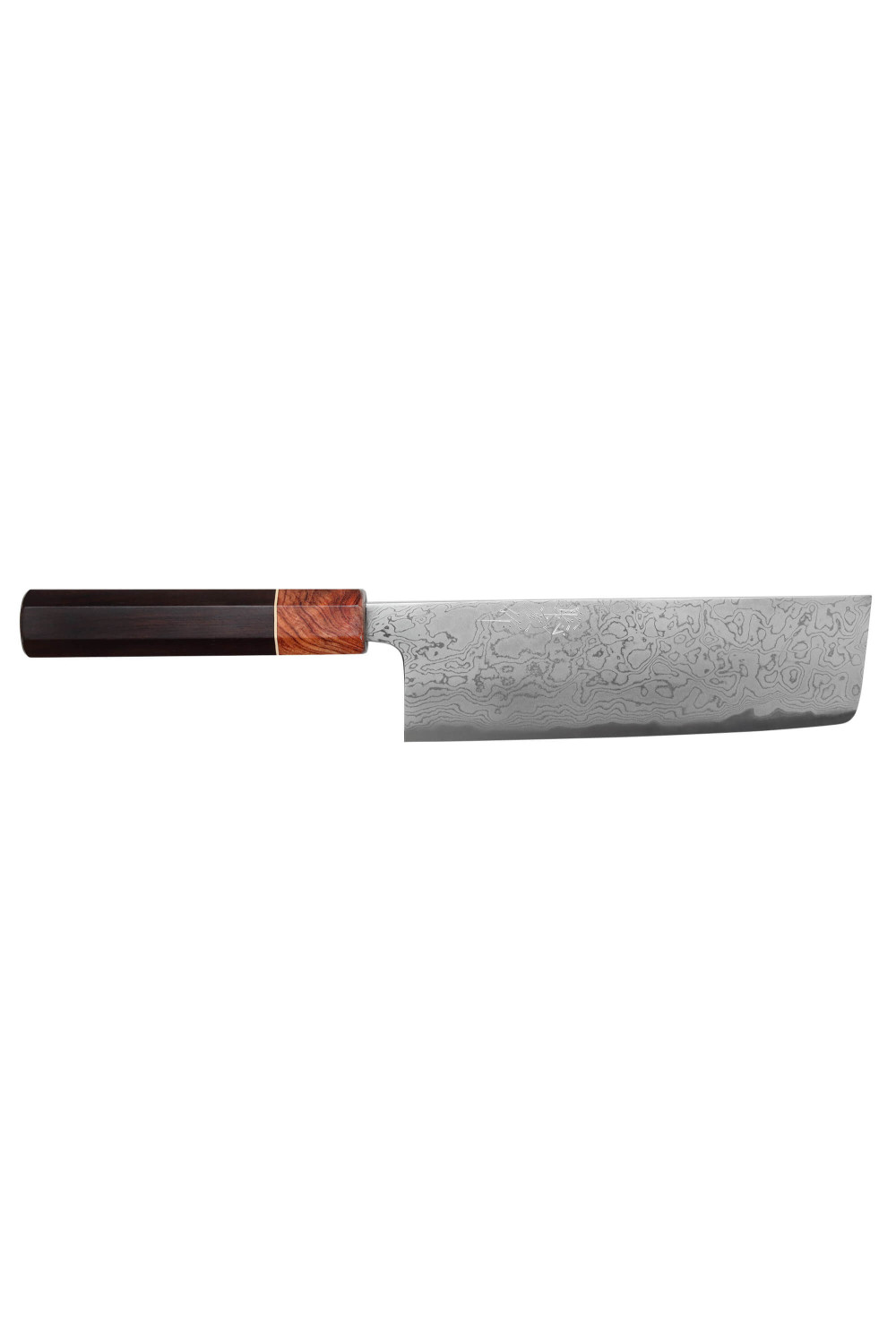
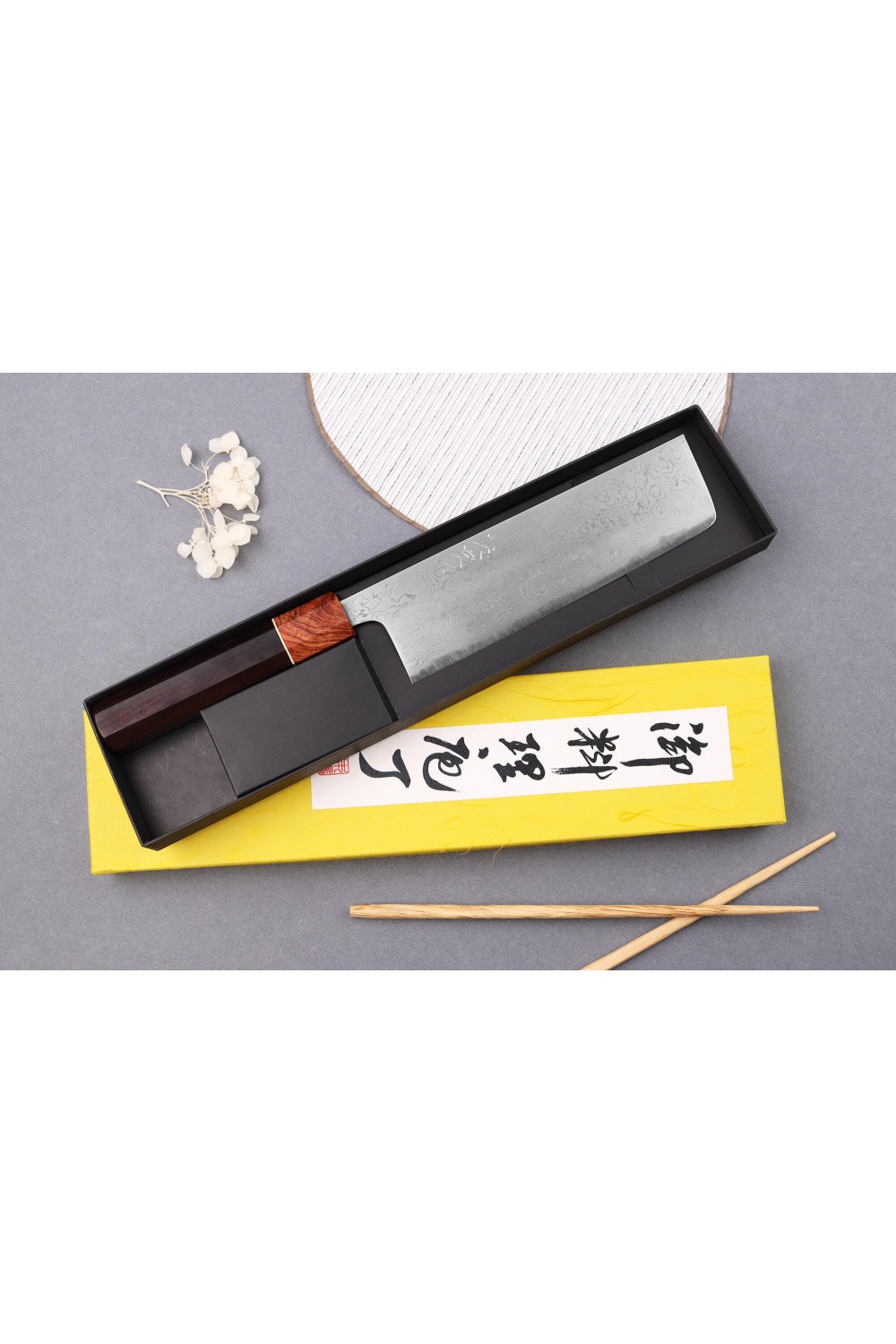
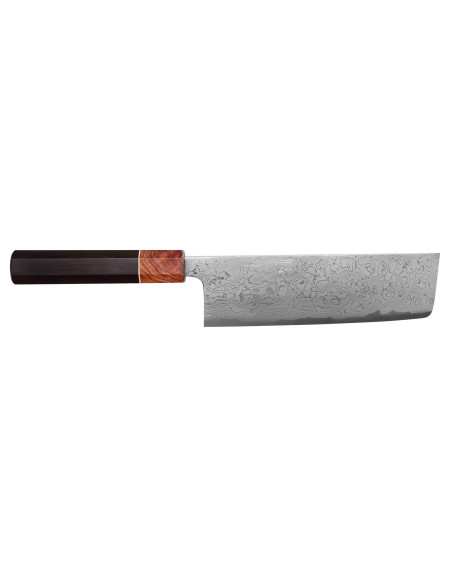
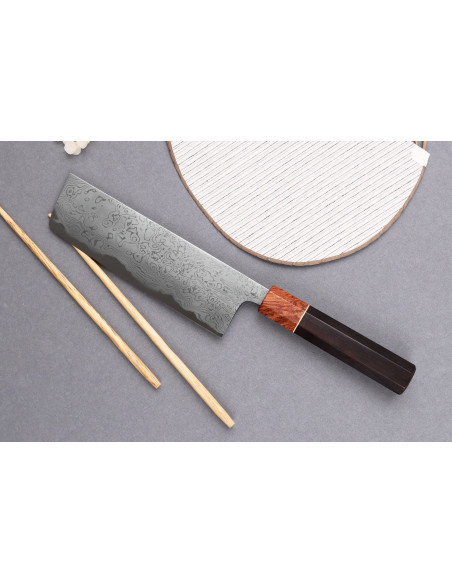
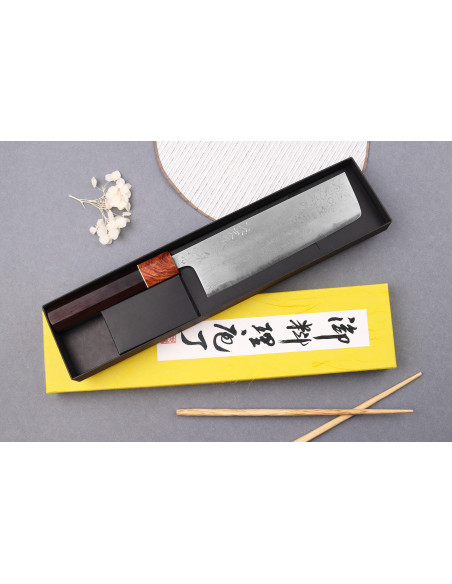
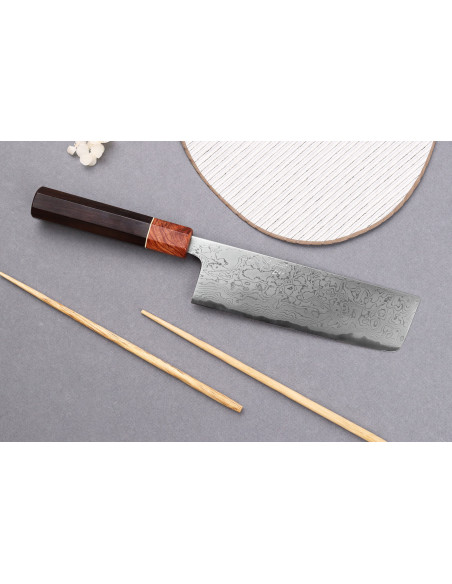
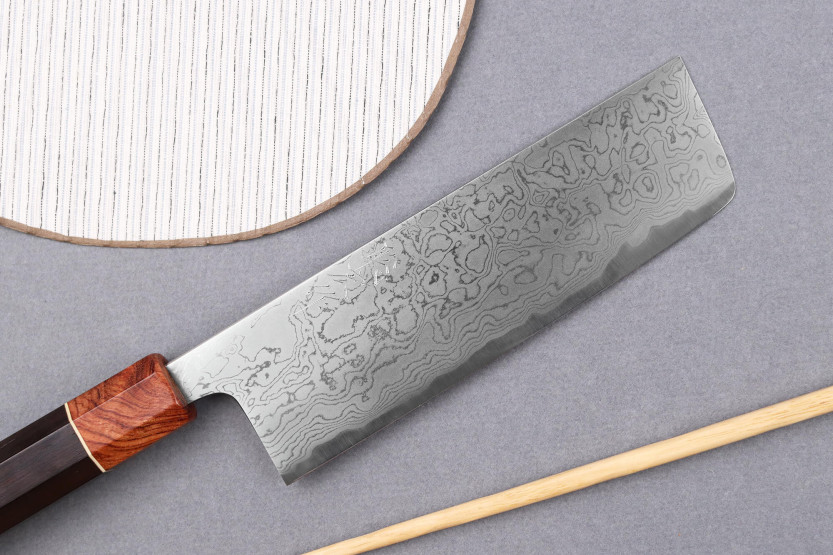
This nakiri knife was forged by Toshihiro Wakui, a Japanese blacksmith renowned for producing exceptional high-end blades. He is the third generation to work metal in the family business, and learned the blacksmith's trade some twenty years ago.
When he took over the reins of the business, he quickly found himself faced with a declining demand for metal bars and crowbars, his company's area of specialization. He then met Yoshikane Hamono's head master blacksmith, Kazuomi Yamamoto, who told him about the blacksmith's trade. Yamamoto even offered to train him in the art himself, and Toshihiro san accepted! He was Kazuomi san's apprentice for 4 years, then, after much hard work, began forging his own knives.
Toshihiro Wakui works in Sanjo, in a workshop with a very crowded space and an atypical layout: his hammer is relatively far from the furnace, but that doesn't stop him from producing top-quality blades! For example, Toshihiro himself hot-plates the damascus on his blades, giving them a new look every time!
The top-of-the-range blade of this handcrafted Japanese knife
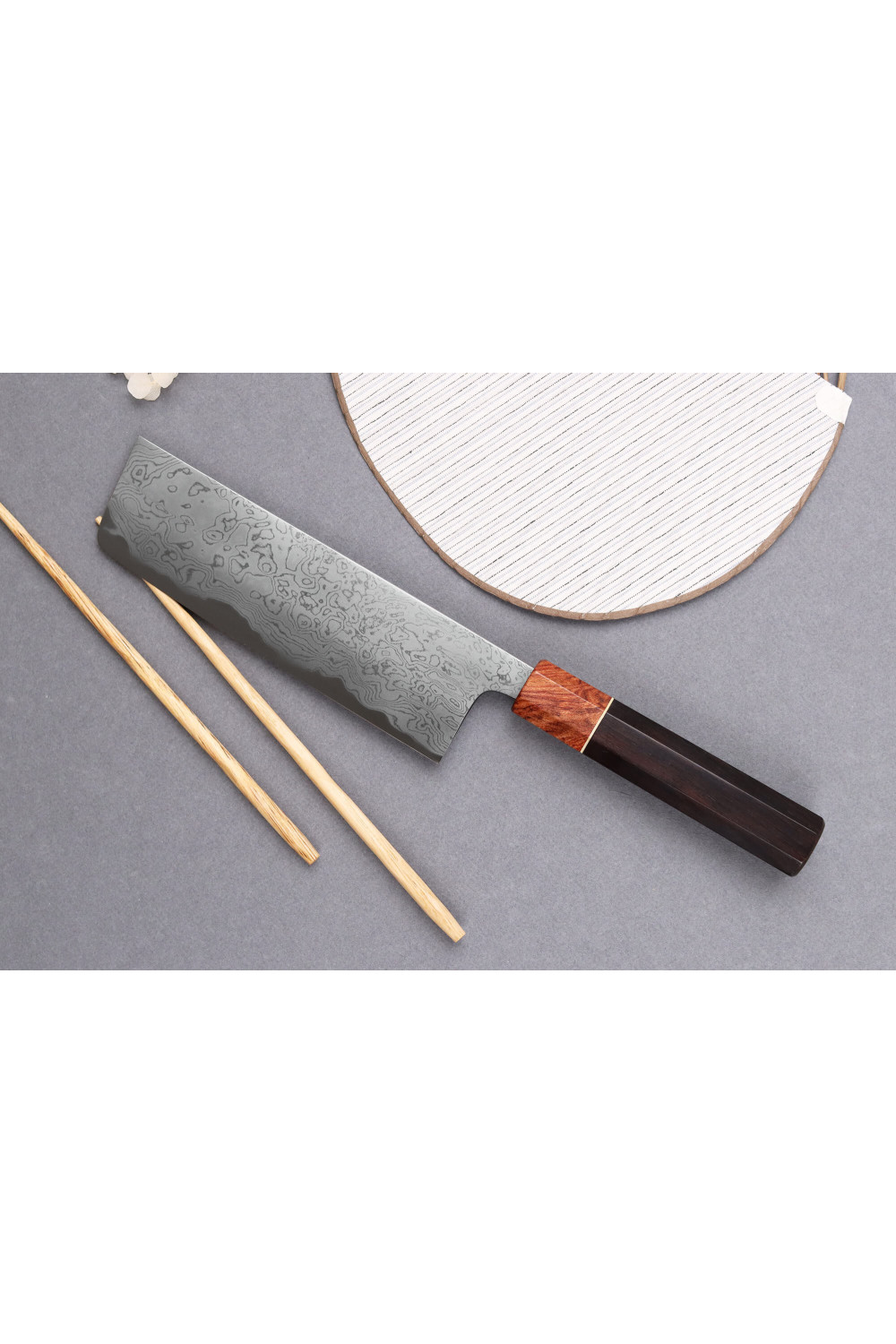
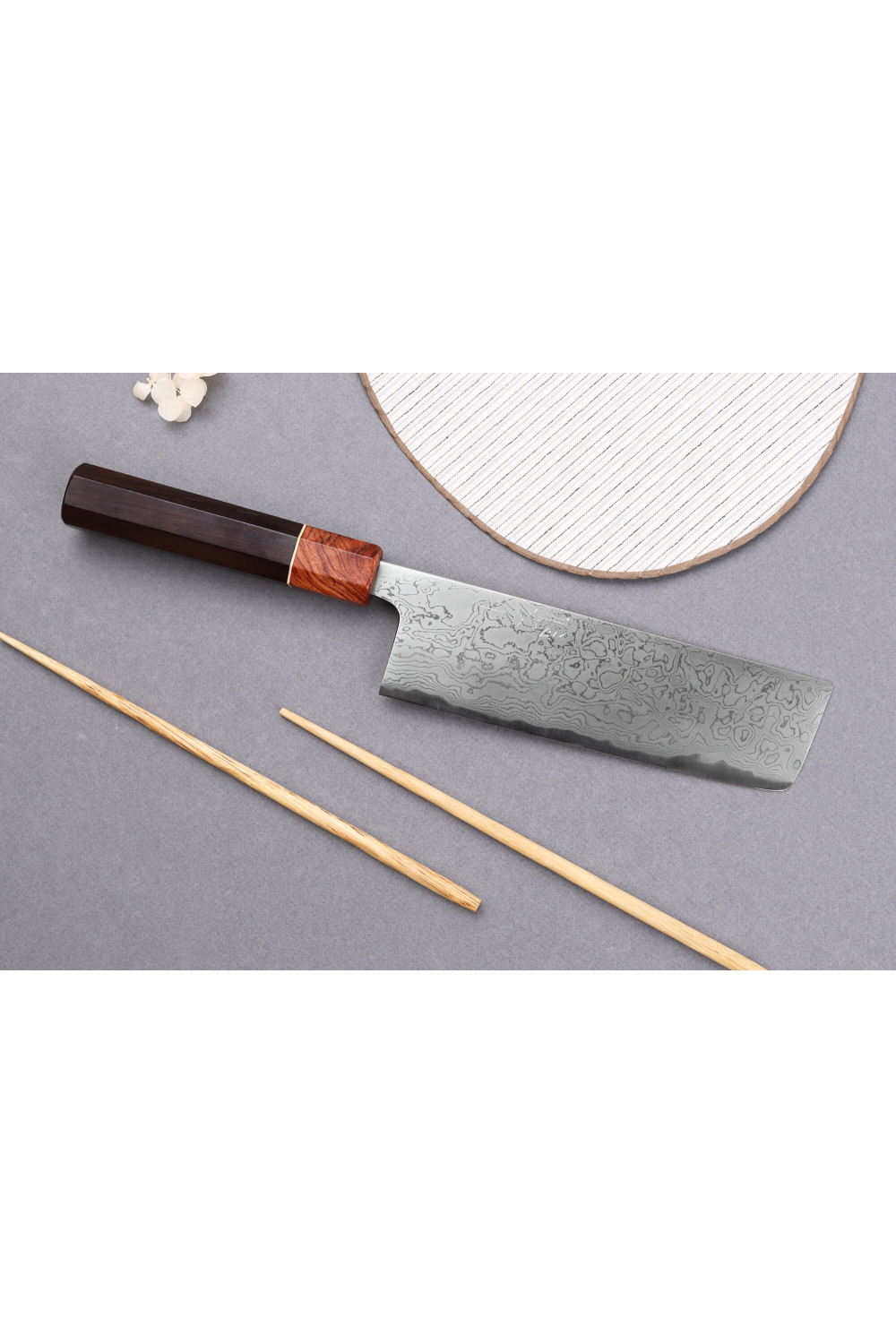
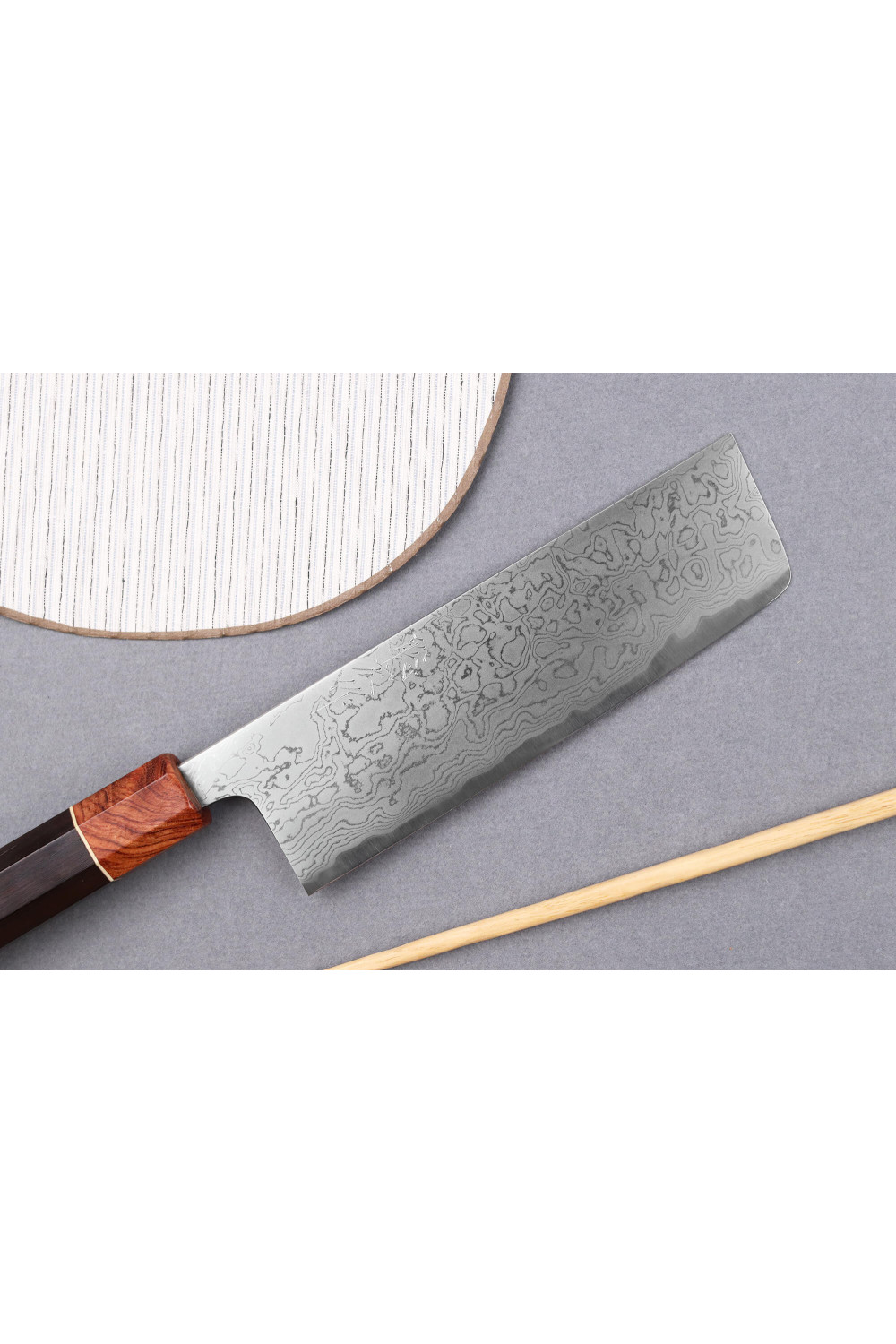
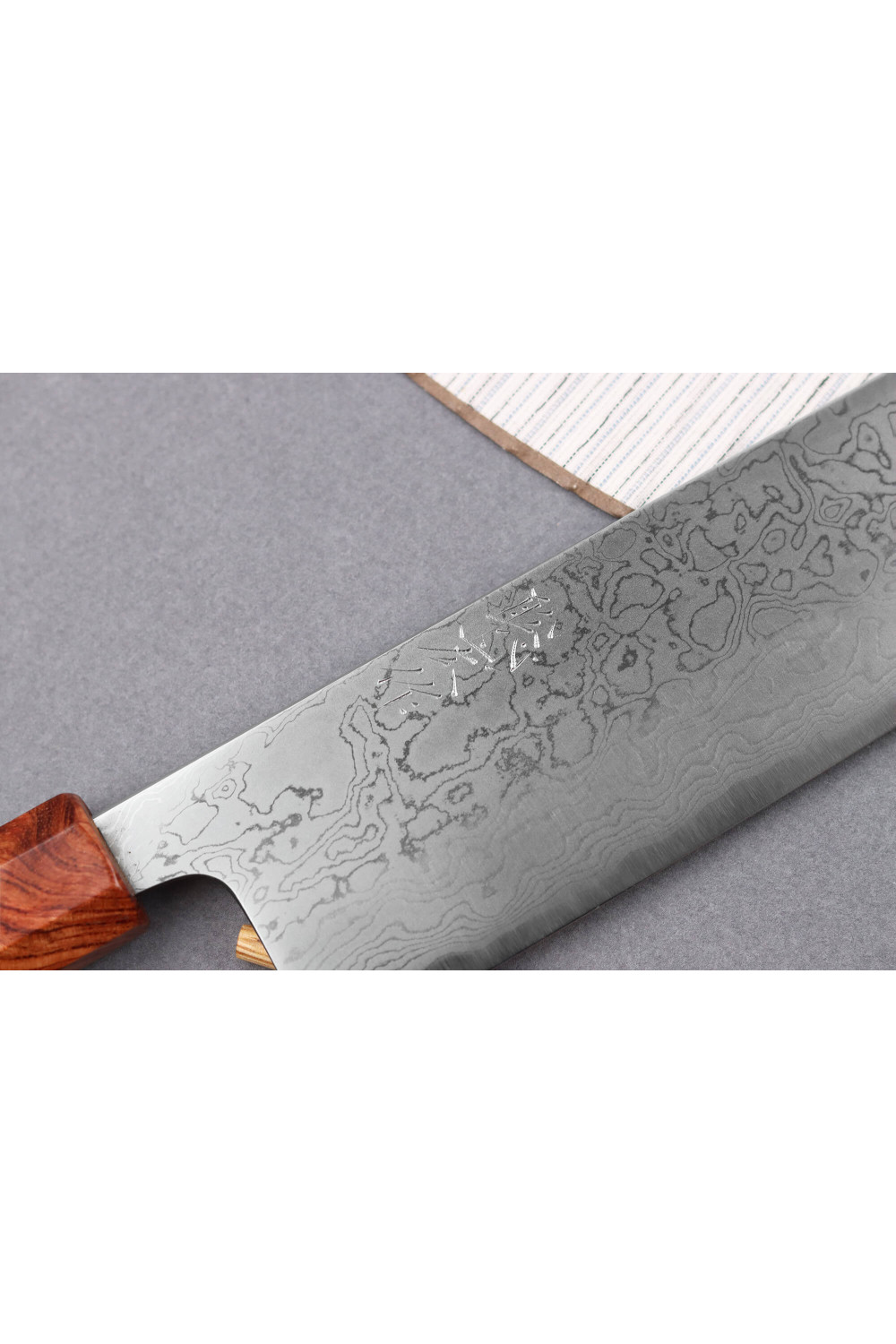
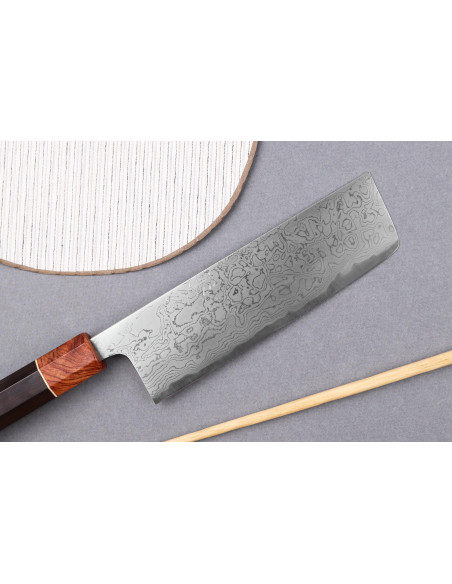
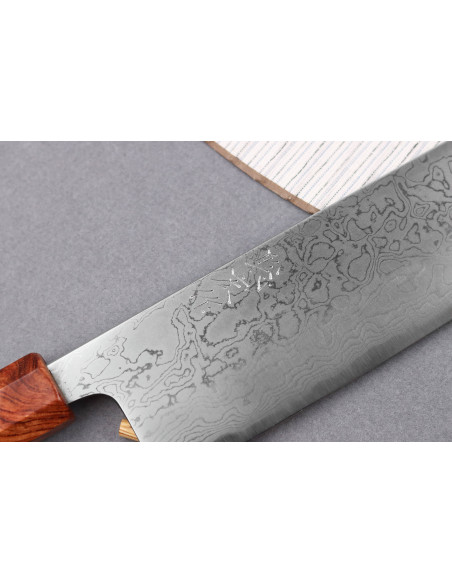
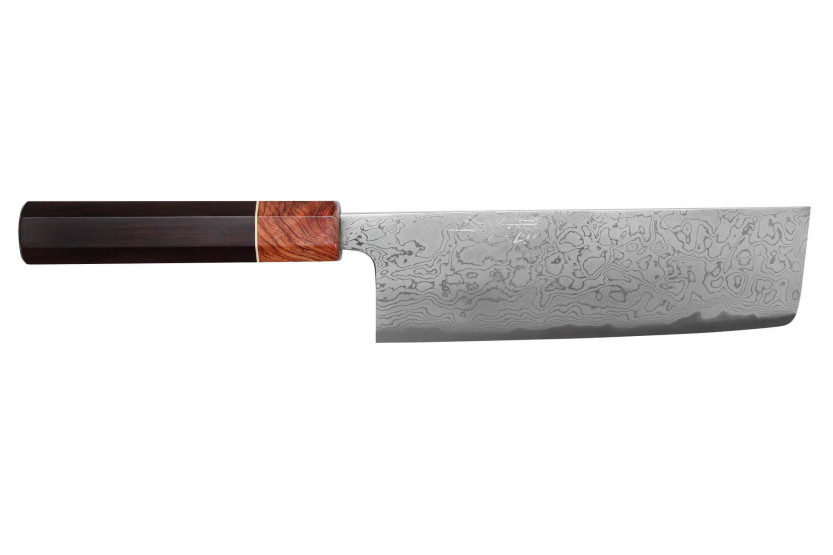
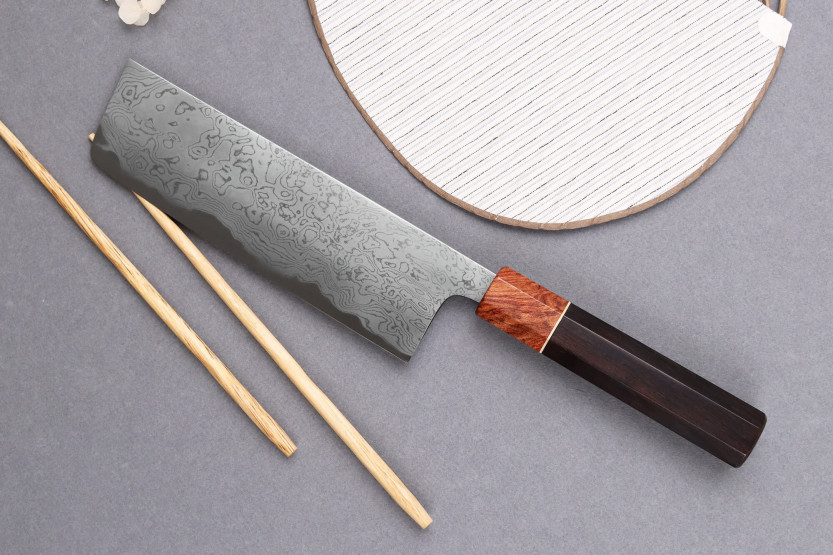
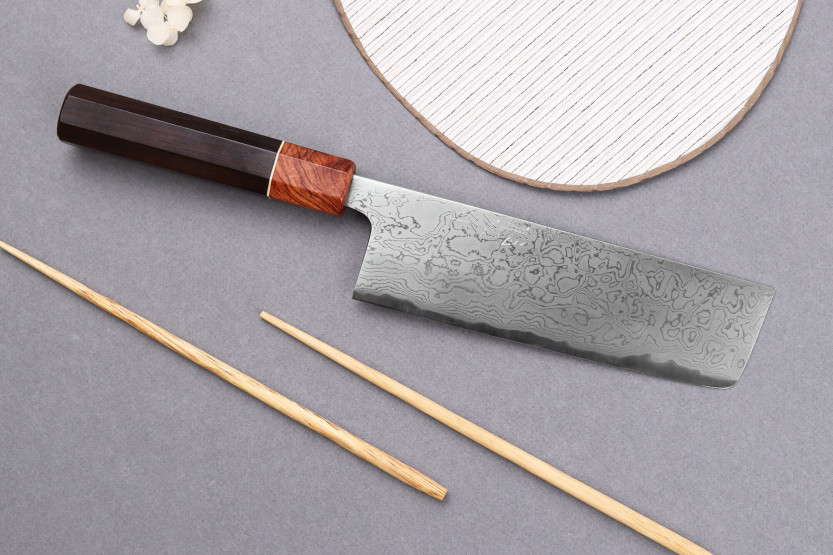
Your Toshihiro WakuiJapanese nakiri knife features a high-end damascus steel blade, which means that the blade contains a rigid steel core that is then surrounded by several layers of softer steel designed to protect it. Having a damascened blade is a real asset in the kitchen, as its rigid cutting edge retains its performance for a long time, and its cutting surface is balanced thanks to the layers of mild steel applied on top. These layers add "suppleness" to the core, making it less brittle. What's more, damascened blades have a very unique and beautiful look thanks to the undulations formed by the different layers of steel.
Here, Toshihiro Wakui has chosenJapanese Aogami #2 (or Blue Steel 2) for the heart of the blade. This top-of-the-range alloy is produced by the world-renowned Hitachi steelworks. The alloy contains around 1.1% carbon, a high level for an element essential to increasing the hardness of an alloy.
The blade of this nakiri knife achieves a hardness of 62 HRC on the Rockwell scale, where the average Western knife is between 55 and 58 HRC. It has a long-lasting, pronounced cutting edge, and its steel deforms much less quickly during cutting. Performance is the name of the game.
Several layers of softer steel then cover the Aogami #2 steel. These are less rigid and serve to protect the core while providing flexibility. We're not talking about flexibility in the literal sense of the word, but rather a suppleness of use that balances the strong rigidity of the core. The efficient, technical blade of this knife therefore needs no regular sharpening.
Sharpening is easy, despite the high rigidity of the core, although you might think otherwise. To do this, use a Sharpening stone whenever the need arises.
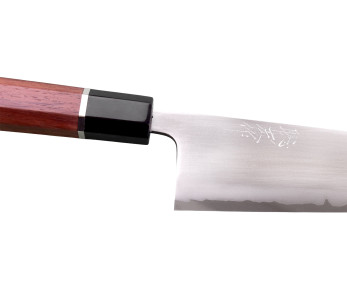
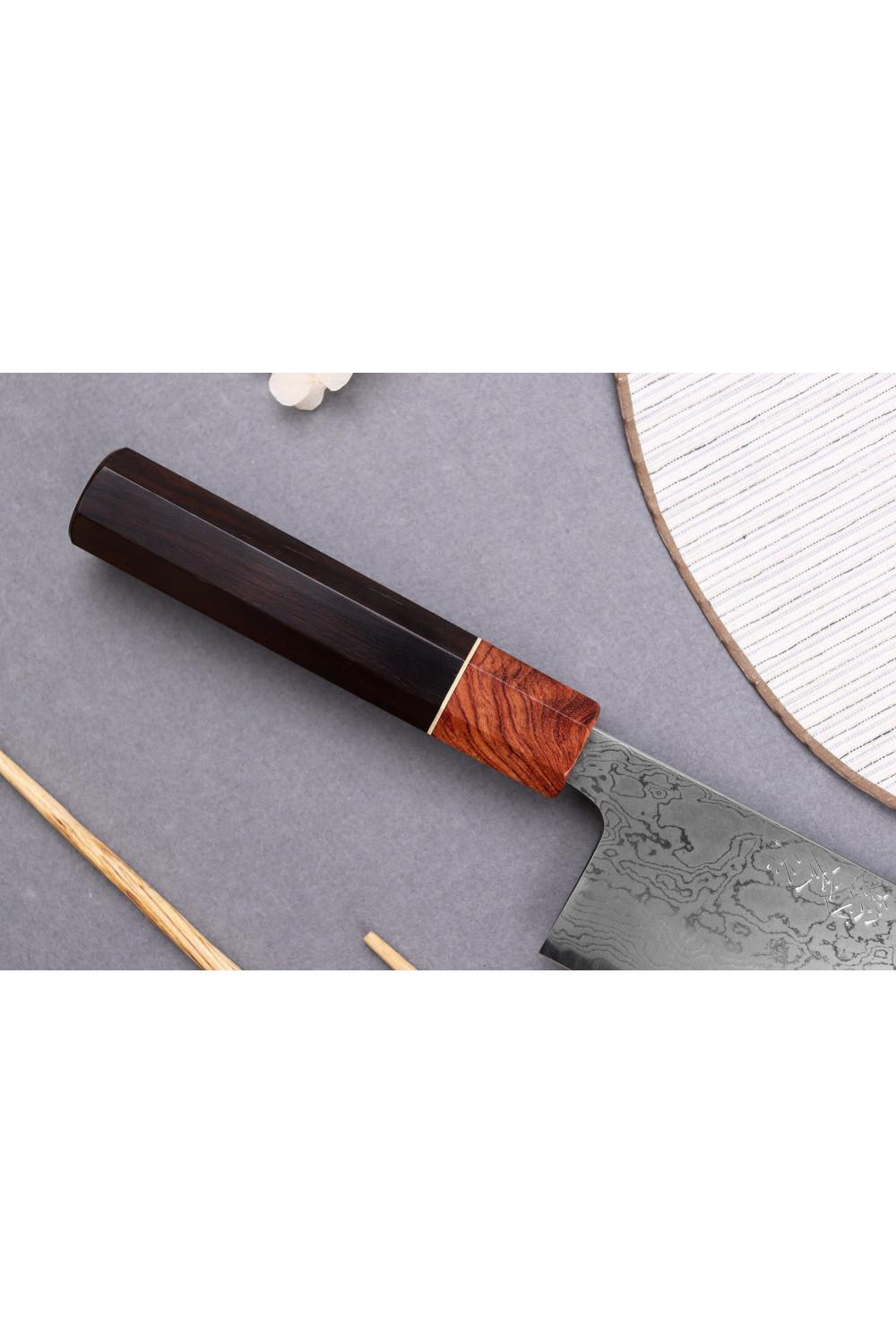
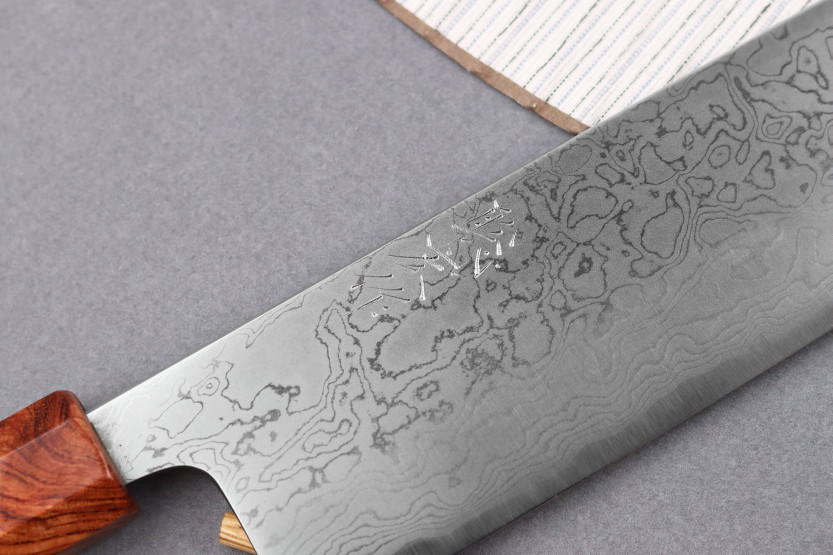
Last but not least, magnificent kanji have been engraved by the craftsman on the blade, bringing a very authentic character to your Japanese knife.
An octagonal ebony handle
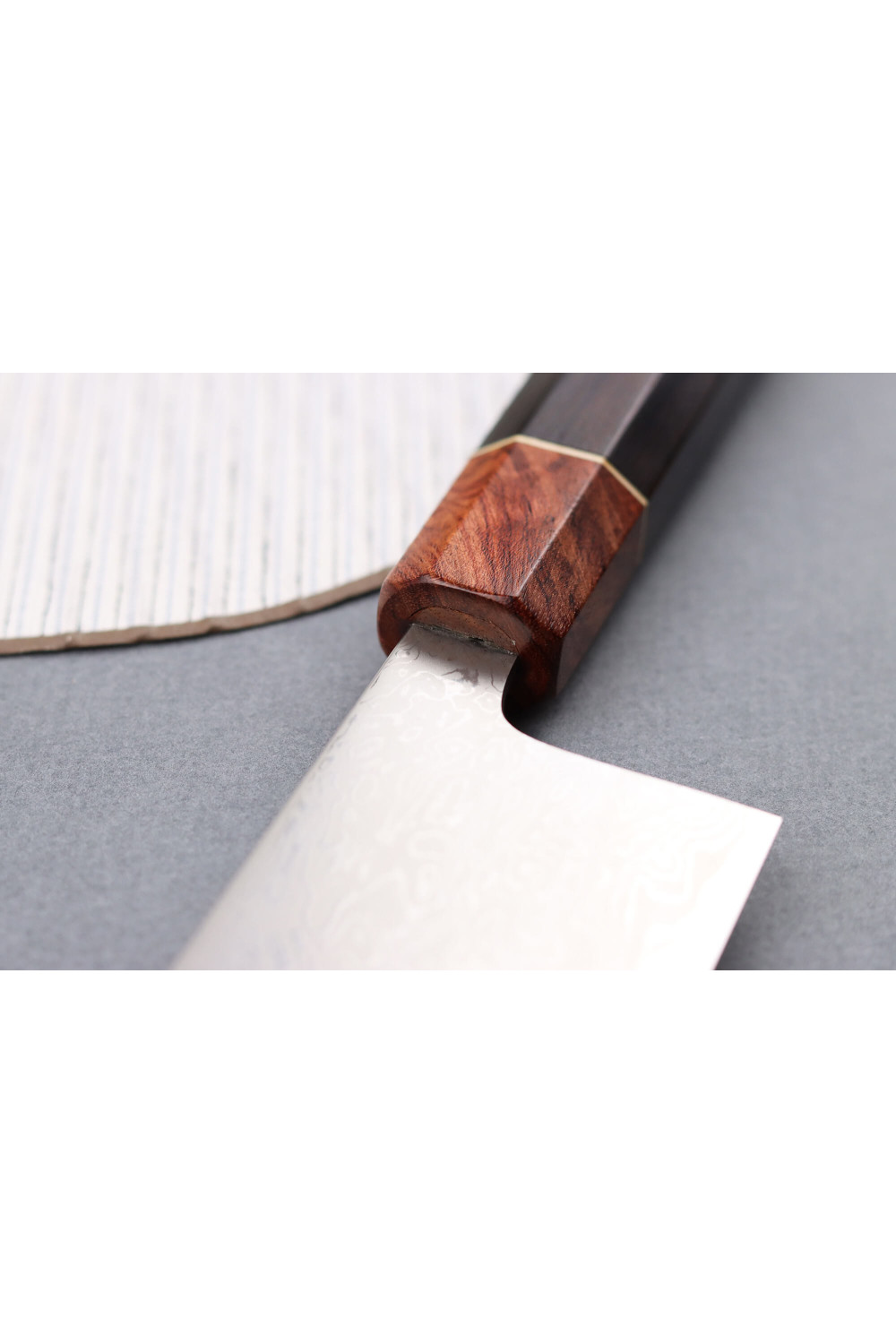
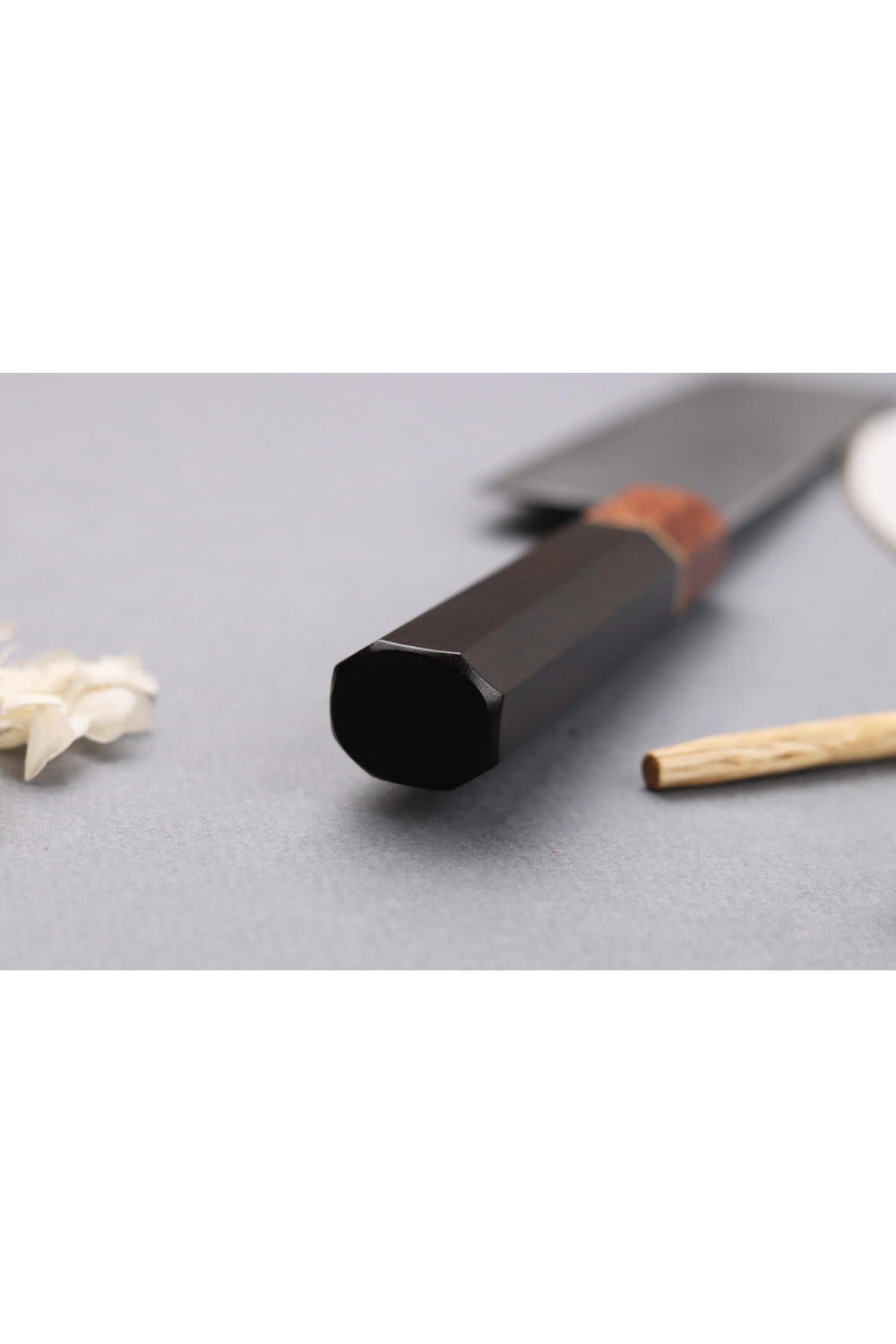
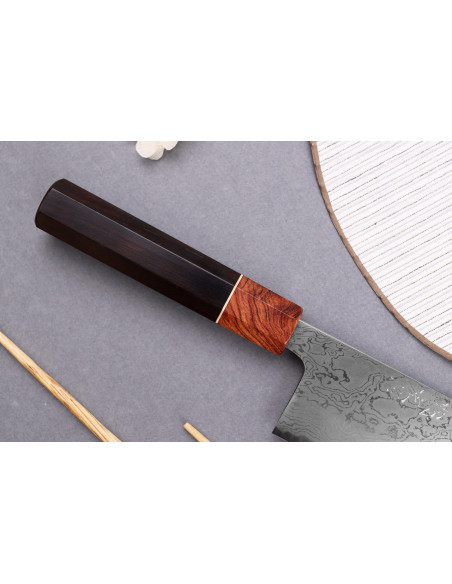
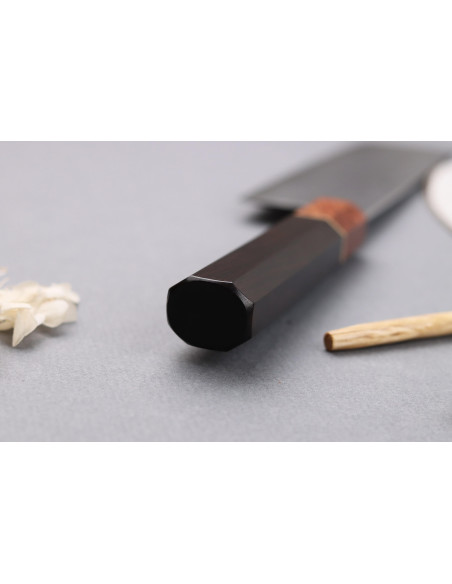
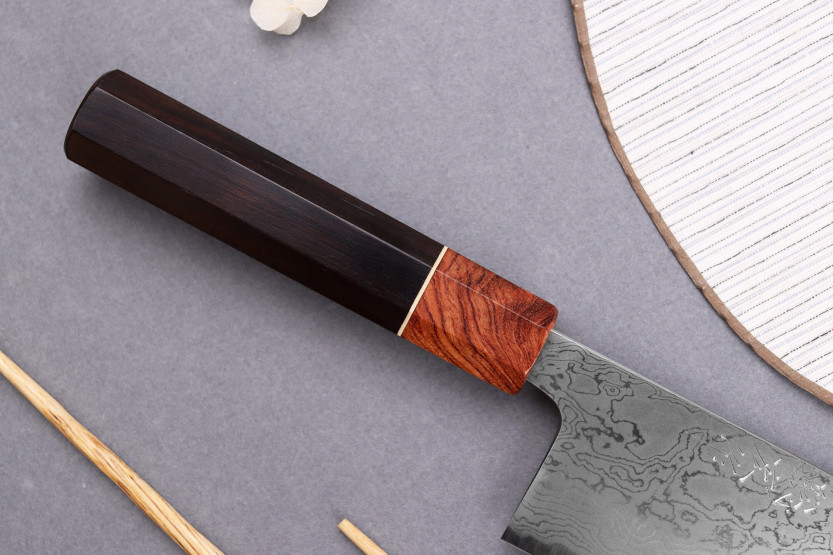
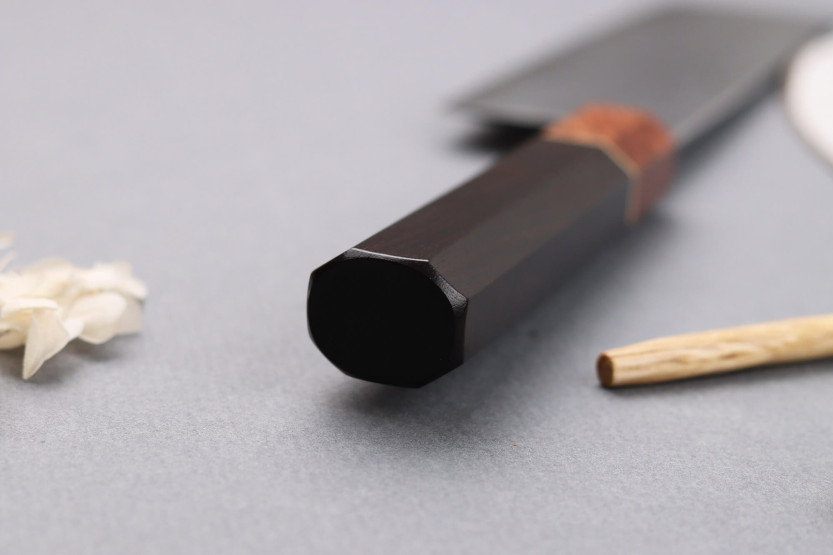
Ebony wood has been used by Toshihiro Wakui to create the handle of this top-of-the-range knife. Ebony is a precious, high-density wood that is protected from cracking. It is ideally suited to regular, even daily use in the kitchen. Ebony is characterized by its very dark brown color, close to black.
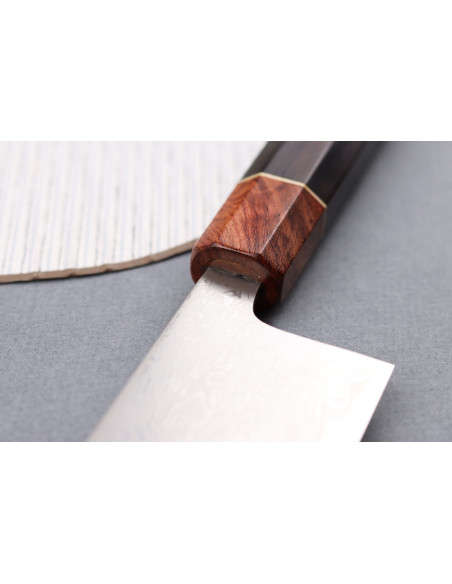
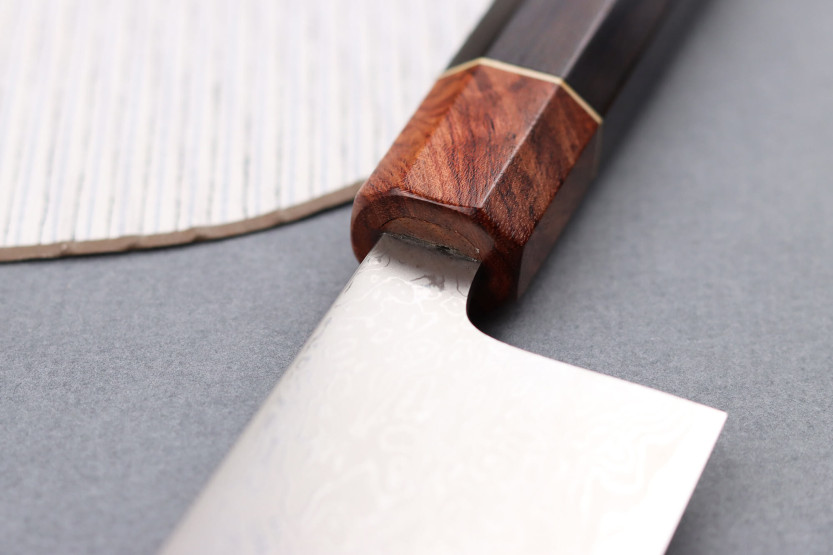
The handle is complemented by a bolster in quince, a light-colored species providing an elegant contrast to the darker ebony. The two species are separated by a delicate white micarta ring.
The octagonal shape of the handle is ideal for all palms, whether right- or left-handed. This shape gives you perfect handling and total control of the knife.
Wood pulp has been added to fill the space where the blade fits into the handle. The piece is perfectly watertight, preventing small pieces of food and cleaning water from penetrating.
How do I care for my carbon knife?
As the nakiri is made from top-of-the-range materials, it must be treated with the utmost care. To begin with, be careful not to cut too hard foods that could damage the blade (frozen foods, squash...).
This knife must be washed by hand. It is not dishwasher-safe, nor is it suitable for soaking in the sink. Use a mild detergent and a non-abrasive sponge under lukewarm water, avoiding wetting the handle (water and wood are not good friends). Dry the knife immediately after washing, before storing it in a dry place.
Over time, you may notice a slight change in the color of the blade: this is normal! The composition of carbon-enriched steel makes the blade reactive to humidity in the air, the acidity of certain foods... We recommend applying a few drops ofoil with a soft cloth from time to time to protect the blade.
Find all Toshihiro Wakui knives on KnifeLeader.eu!




 By buying this product you can collect up to