A handcrafted Japanese knife with a high-end blade
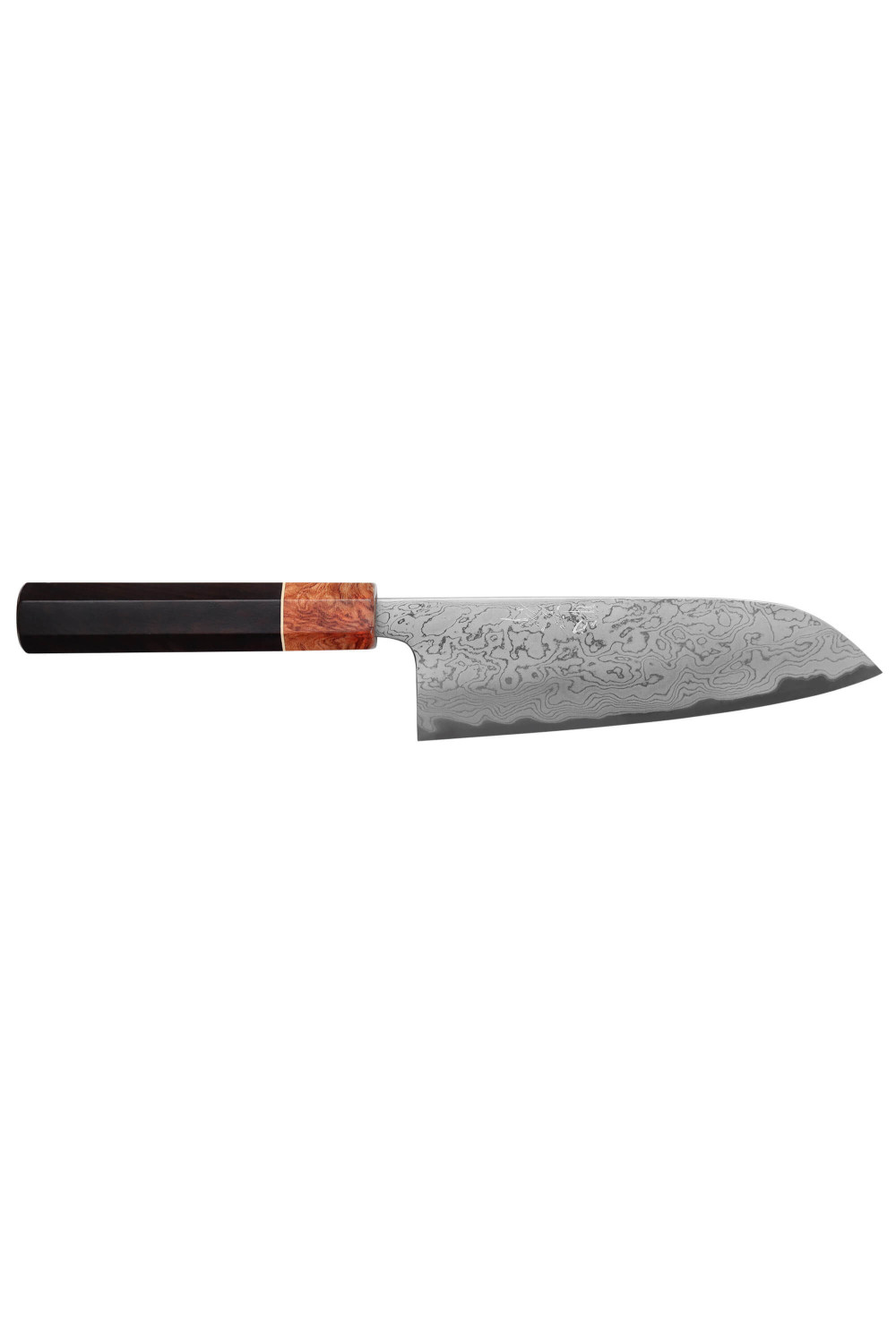
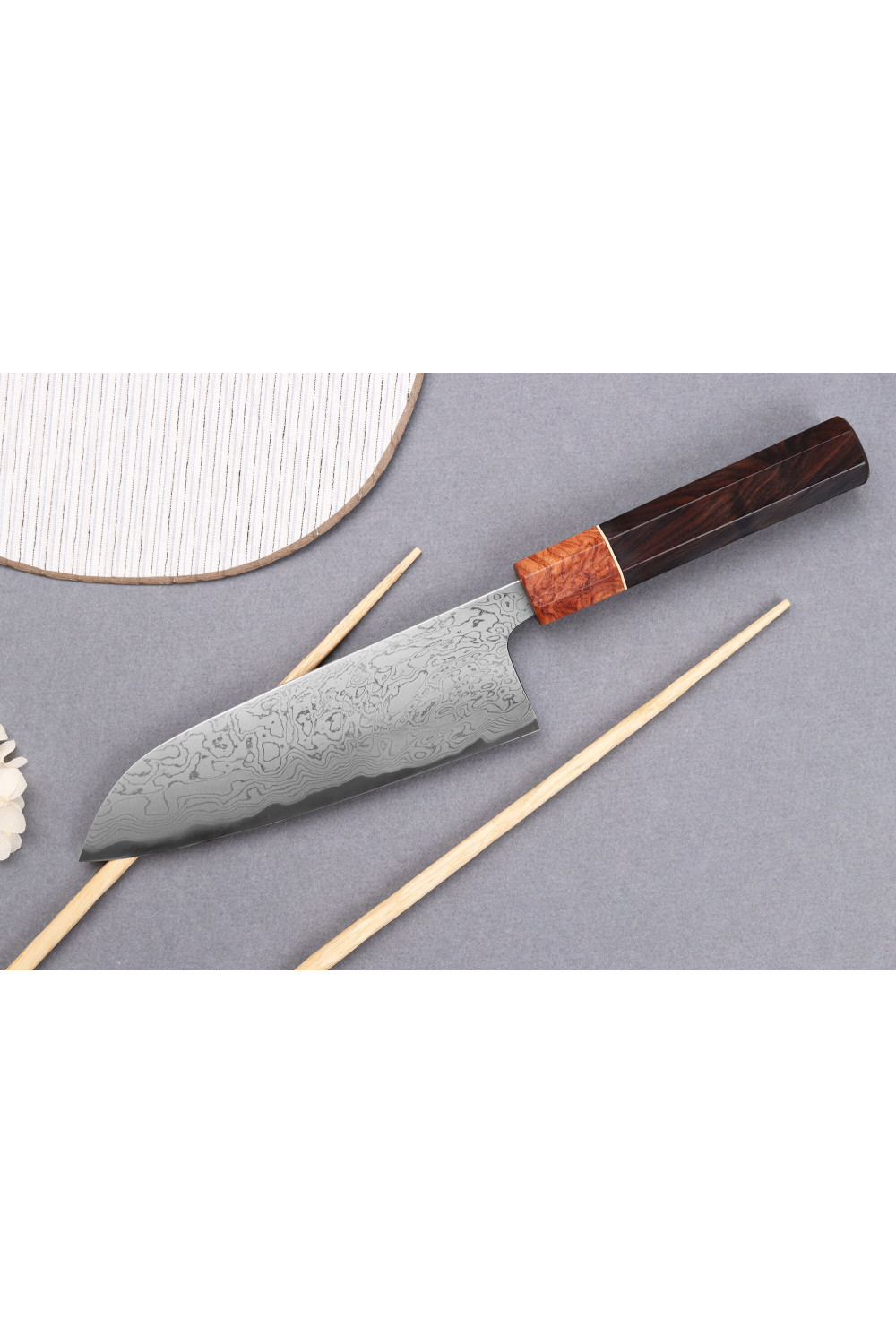
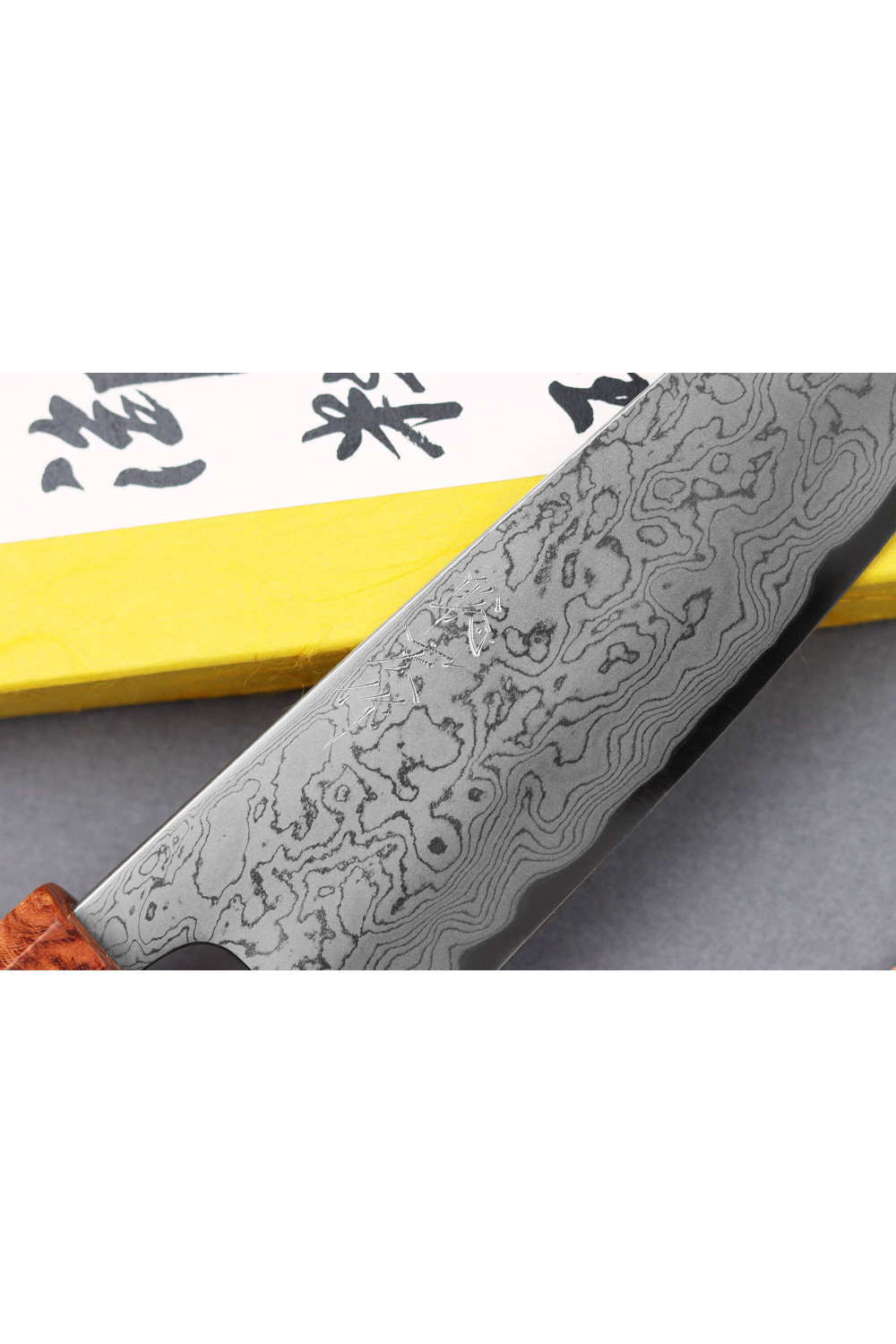
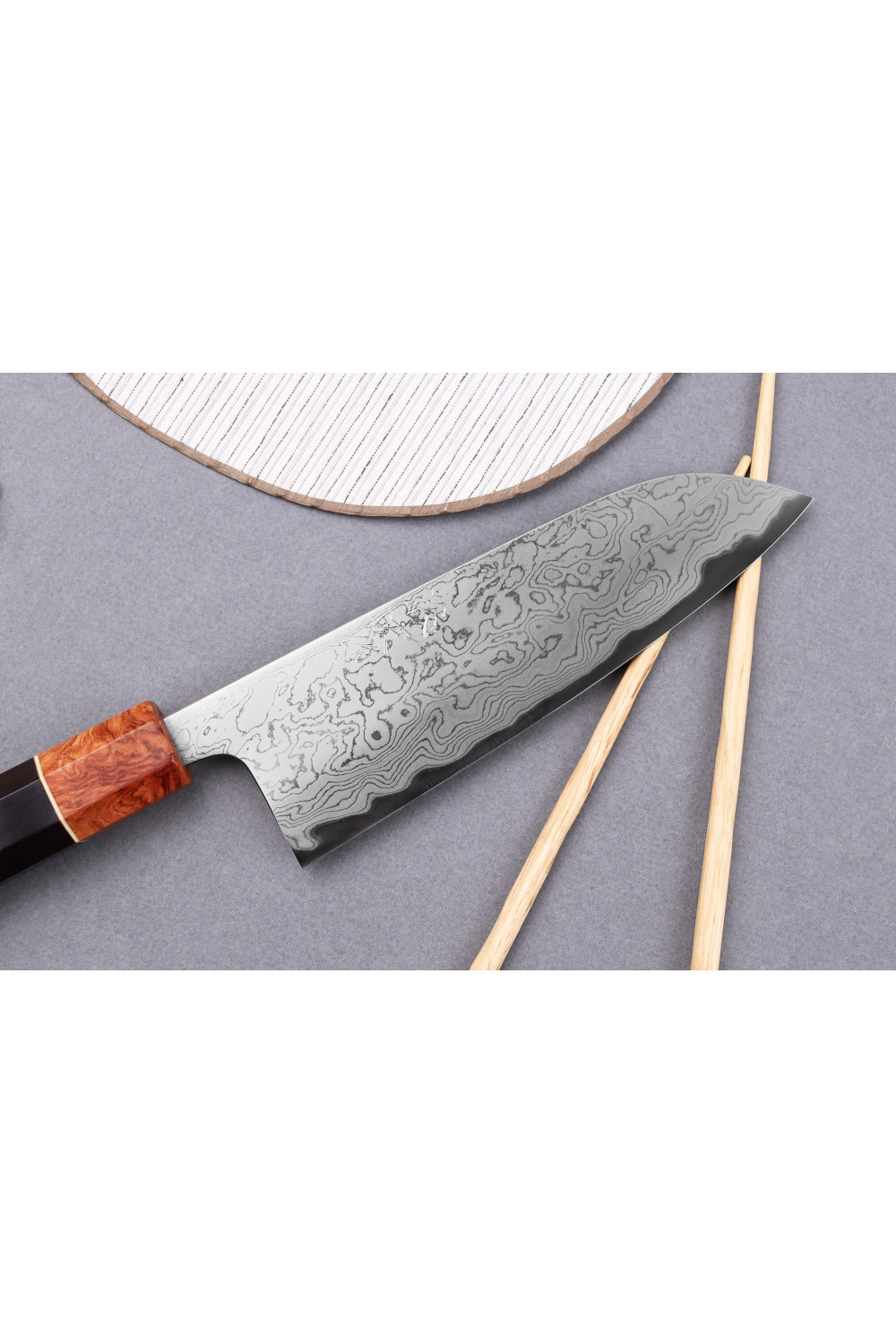
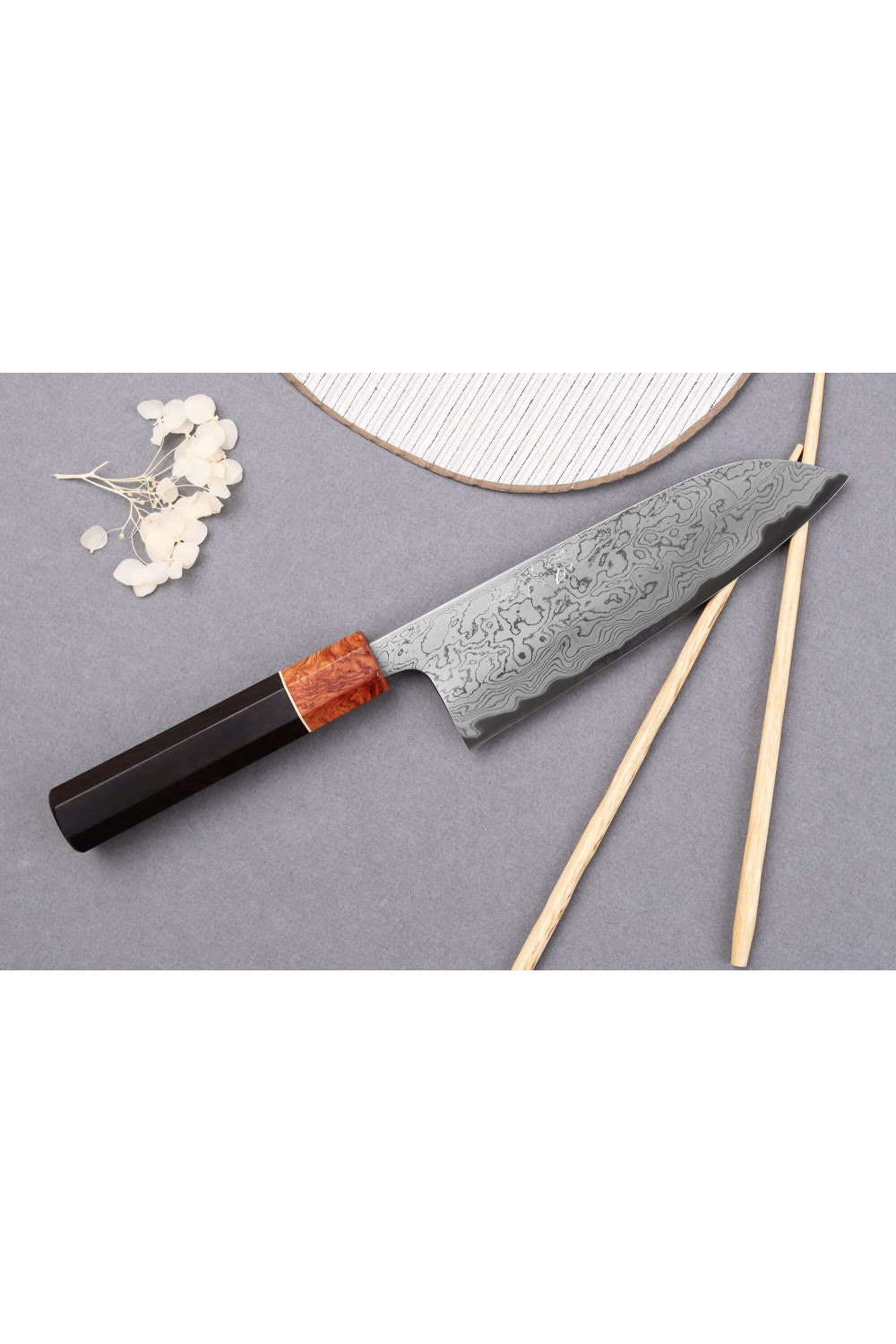
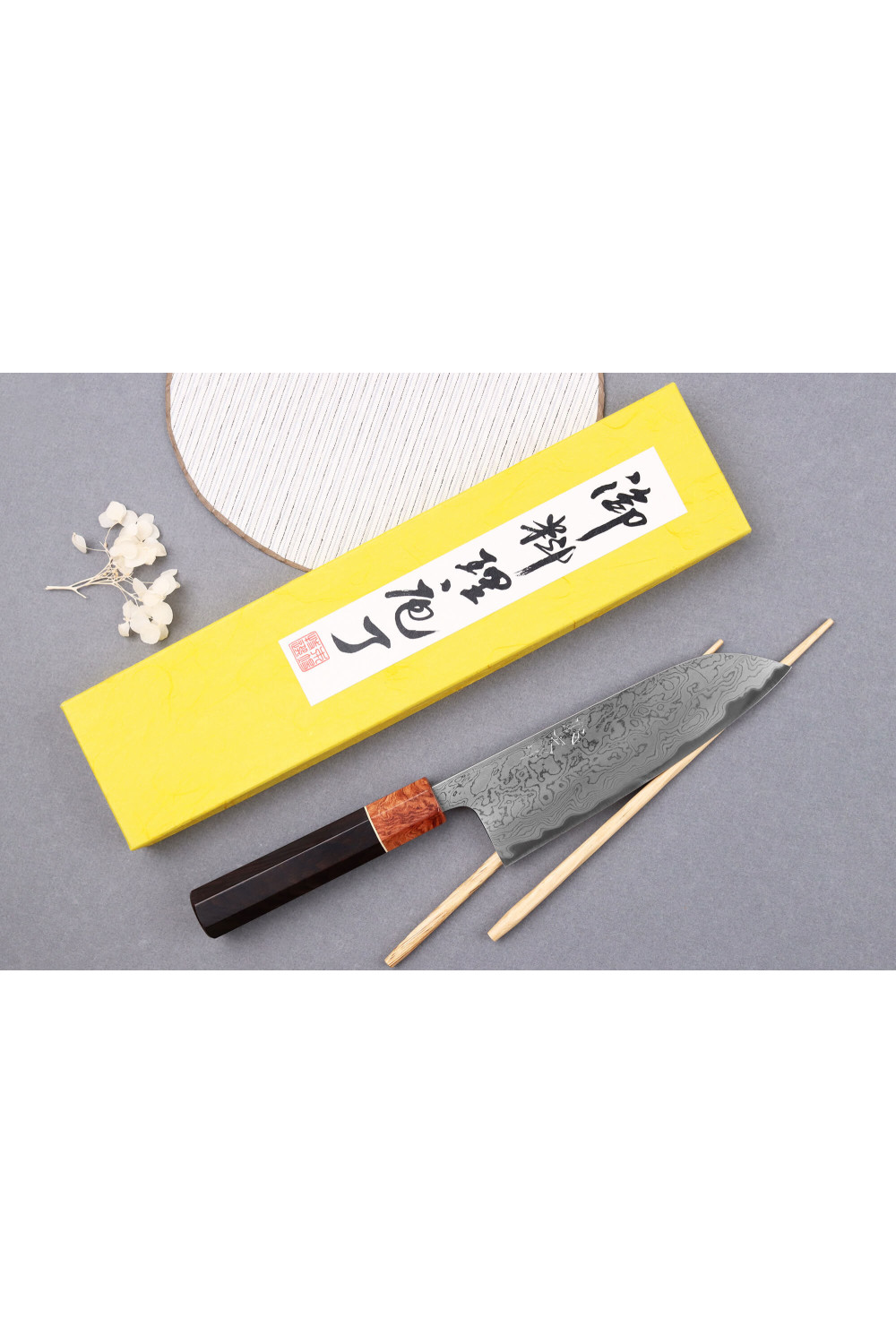
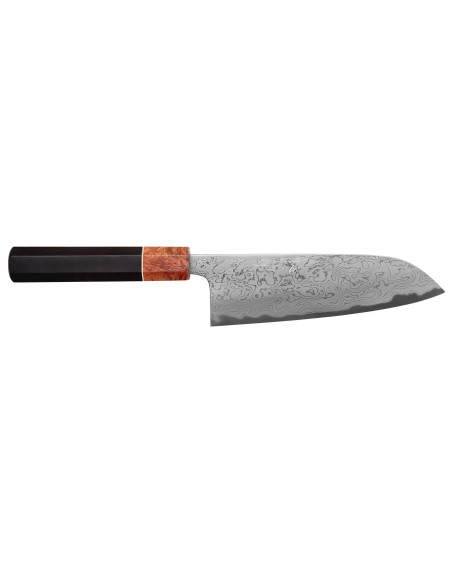
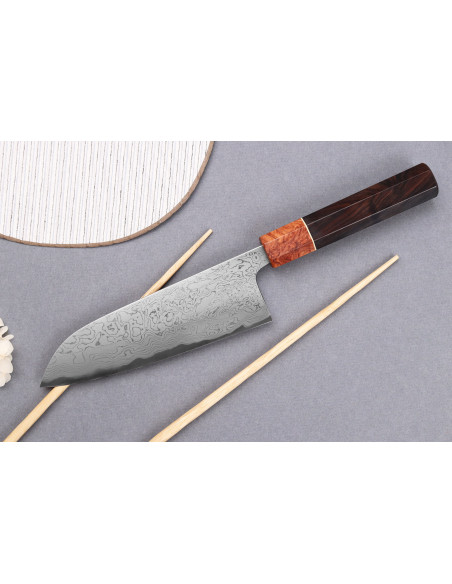
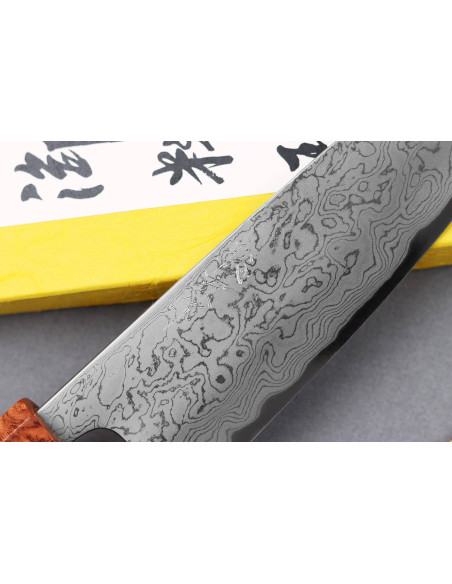
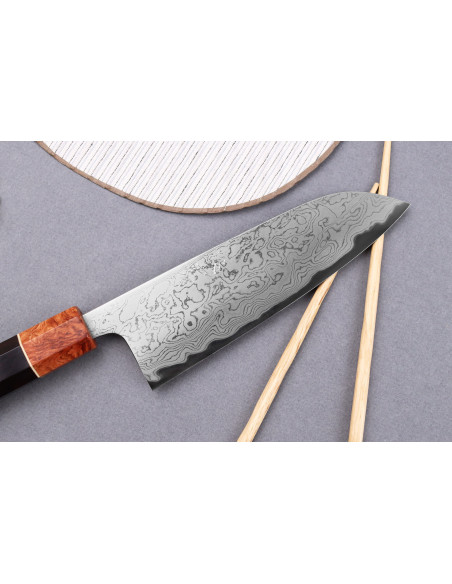
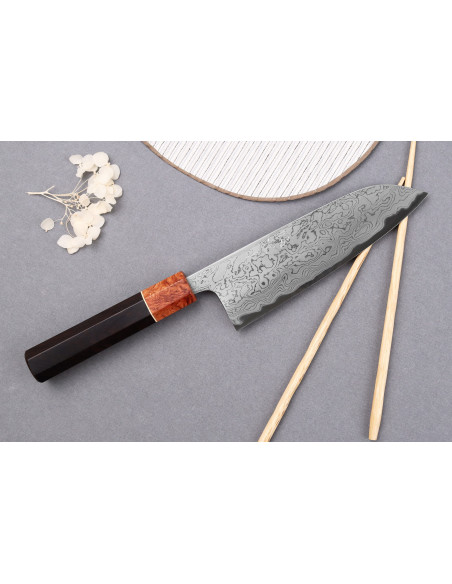
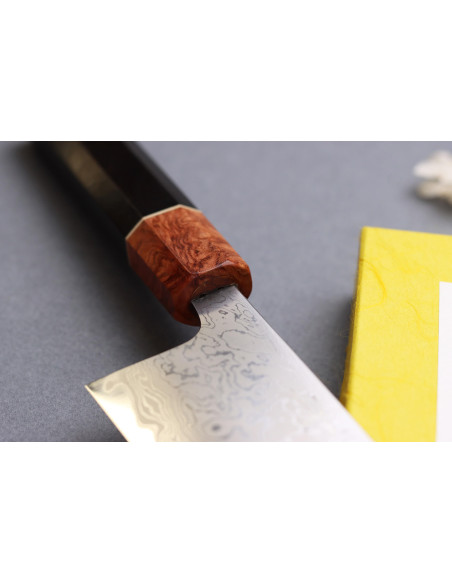
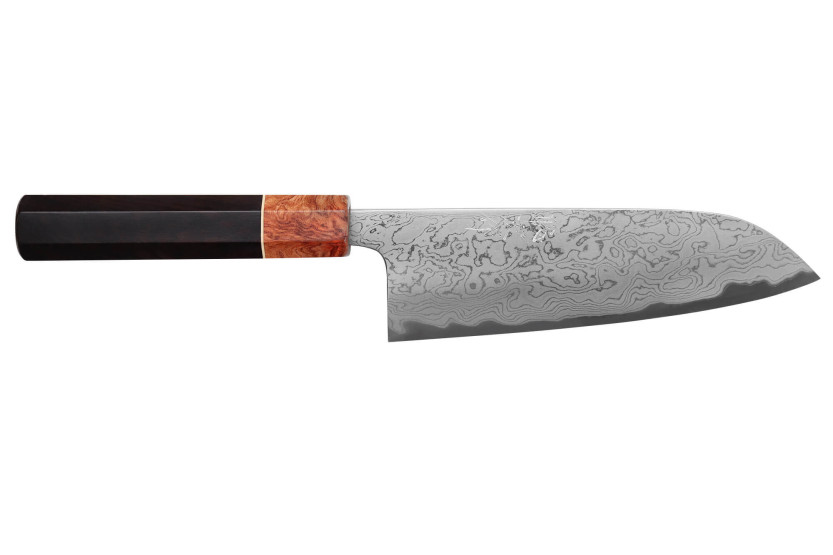
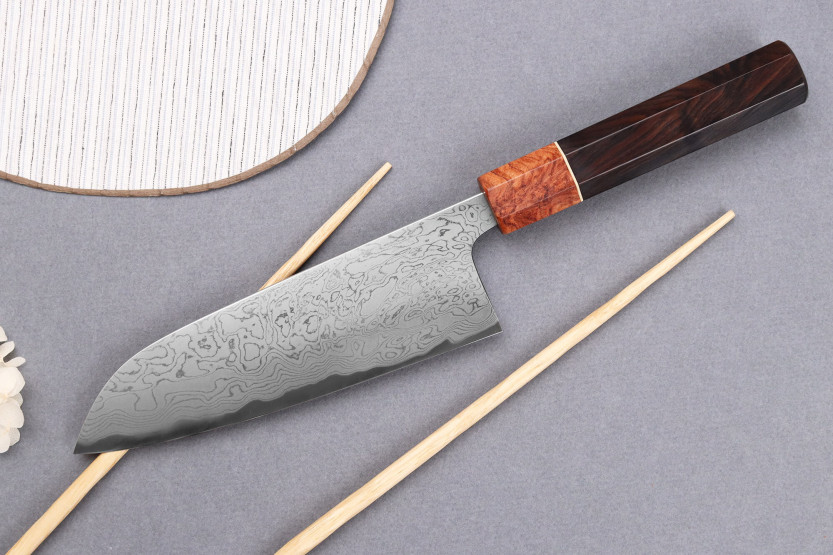
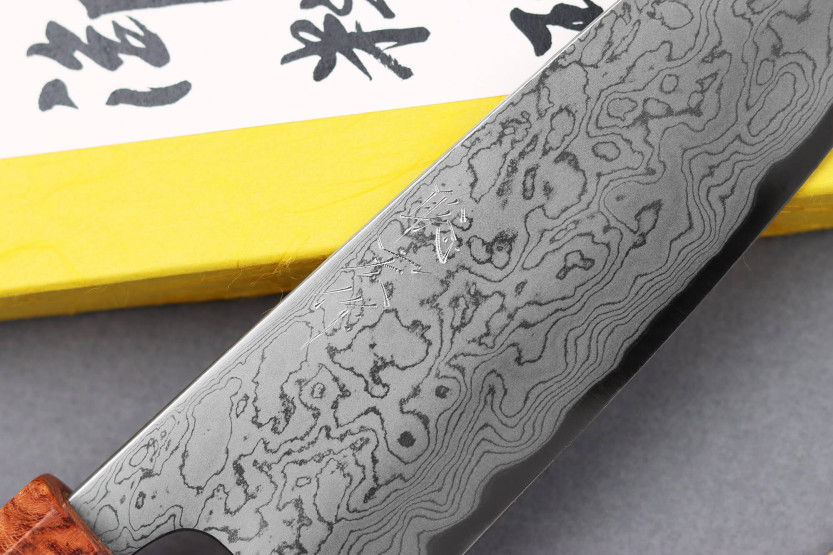
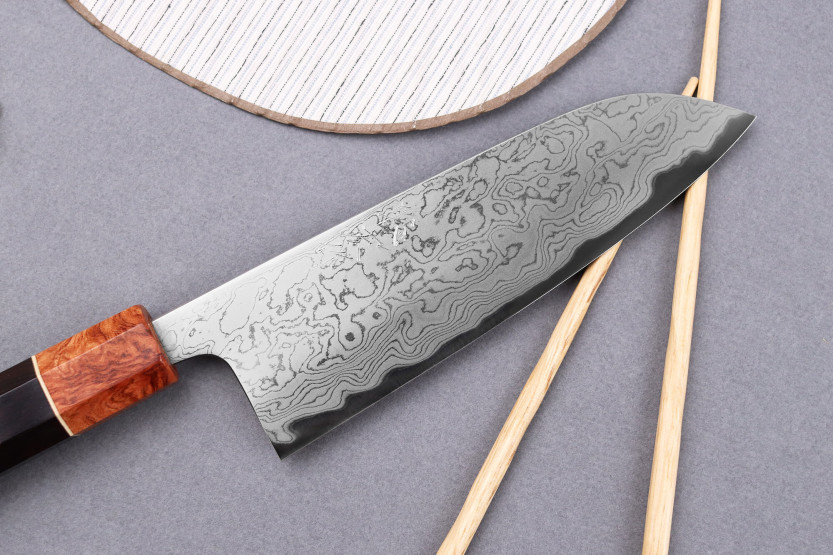
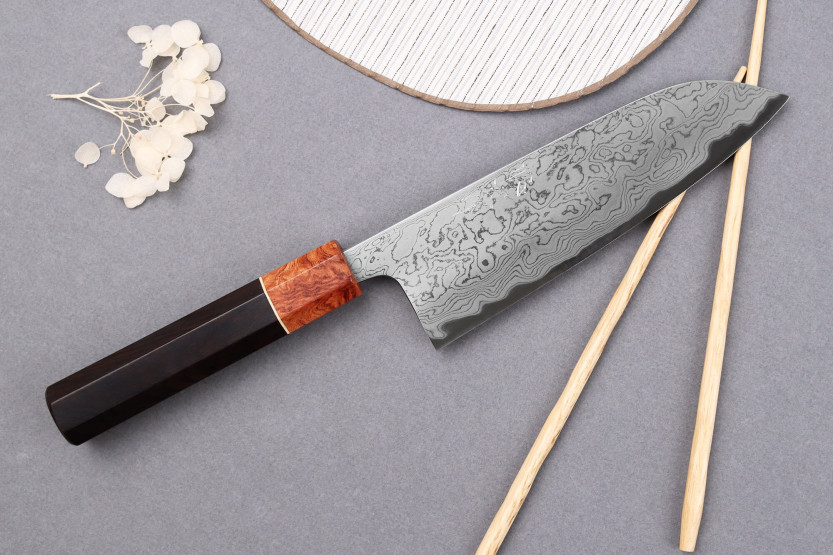
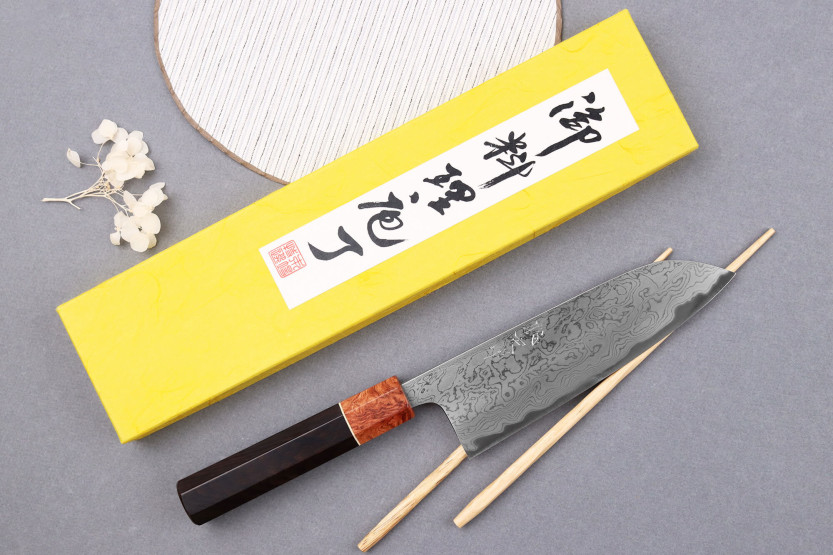
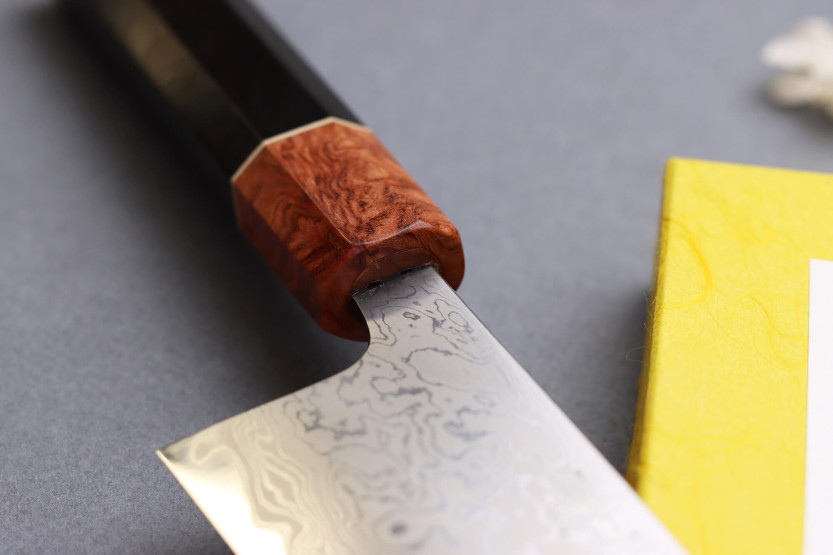
This Toshihiro Wakuisantoku knife features a high-grade damascus steel blade. The blade has a core of rigid steel, which is then surrounded by several layers of softer steel for protection. Damascus blades offer a great advantage in the kitchen, as their rigid cutting edge holds its performance for a long time, and their cutting surface is balanced thanks to the multiple layers of mild steel applied to the core. The purpose of these layers is to "soften" the core, making it less brittle. Having a damascened blade also means benefiting from a blade with a unique visual appearance, as the undulations on the surface are unprecedented!
The core of this knife is made from Aogami #2 steel (also known as Blue Steel 2), a Japanese alloy manufactured by the world-famous steelmaker Hitachi.
This alloy is highly enriched in carbon, containing close to 1.1%, which is essential for increasing the hardness of an alloy. Your blade reaches 62 HRC on the Rockwell scale, while the average Western knife is between 55 and 58 HRC. Its pronounced cutting edge is long-lasting, because the steel deforms much less quickly during cutting. Your santoku has a high-performance blade.
The Aogami #2 steel is then surrounded by several layers of softer, less rigid steel, which protect it and give it flexibility. We're not talking about flexibility in the pure sense, but rather in the sense that it brings balance to the strong rigidity of the core. The efficient, technical blade doesn't need regular sharpening sessions.
In fact, despite its hardness, the blade is easy to sharpen, although you might think otherwise. To keep your blade sharp, use a Sharpening stone!
Last but not least, the blacksmith has engraved beautiful kanji on the blade. This adds an extra touch of authenticity to your knife.
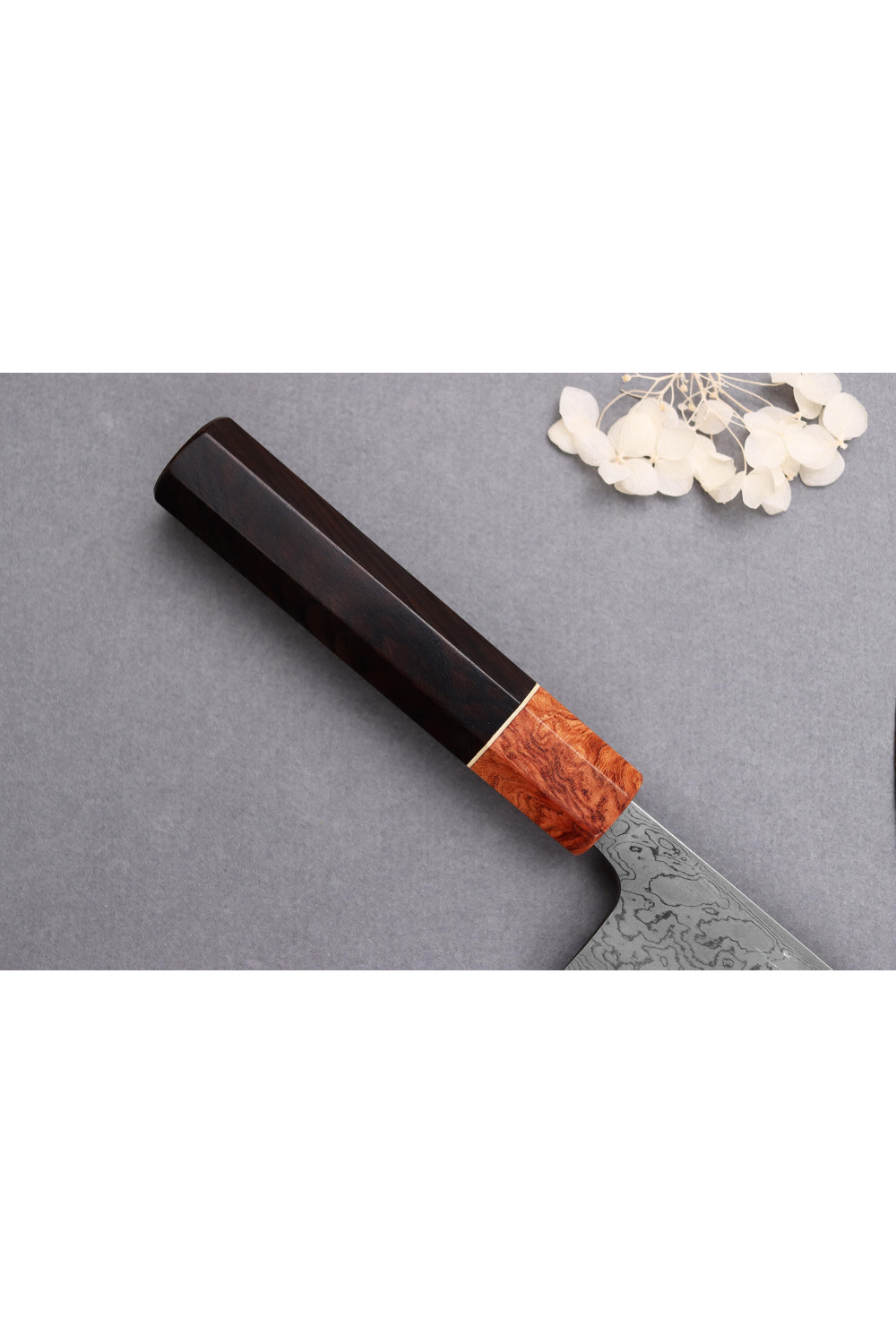
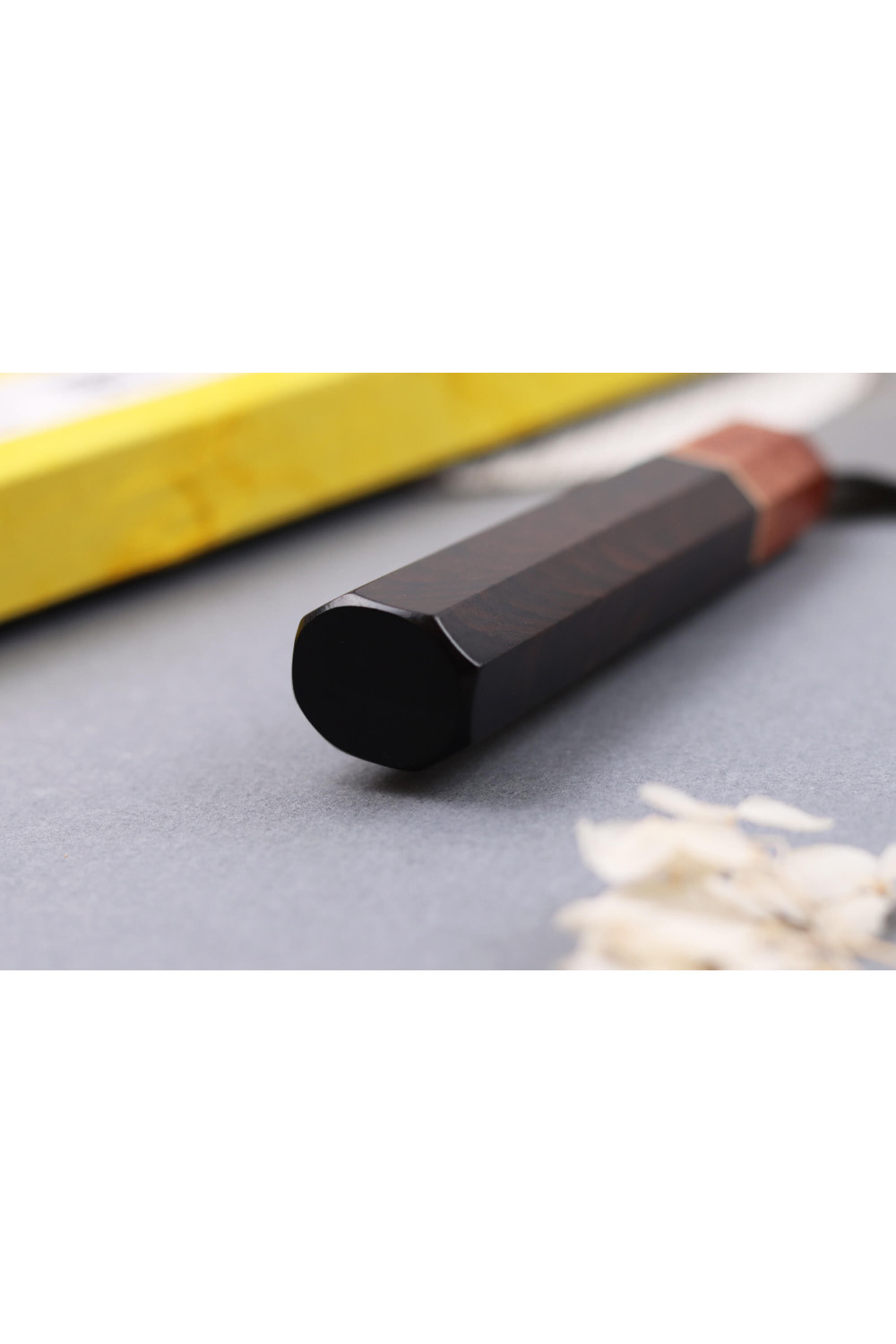
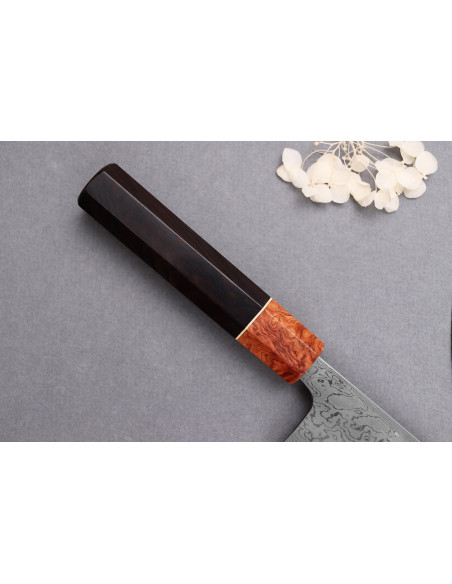
A precious octagonal ebony handle
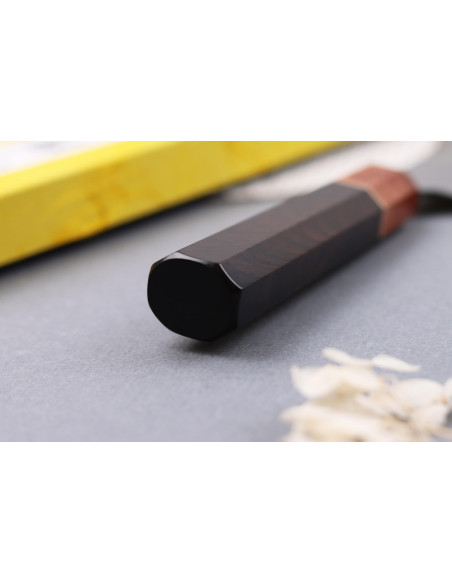
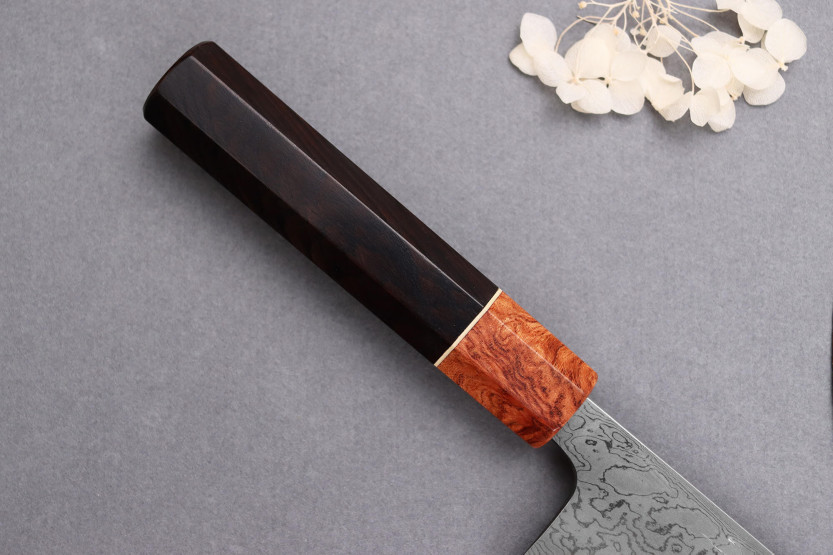
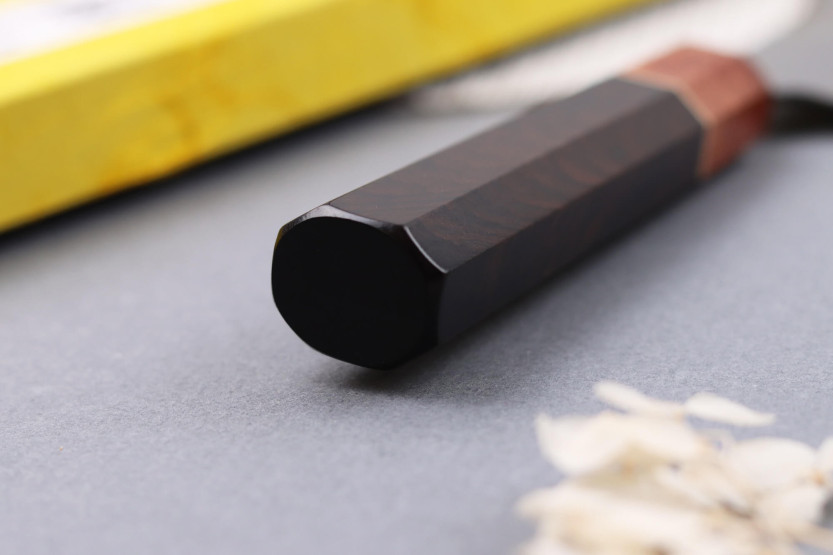
Your Japanese santoku comes with an ebony handle, a precious, high-end wood recognizable by its dark brown, almost black, color. Ebony is a very dense wood that is protected from cracking, and its durability makes it ideal for regular and even daily use.
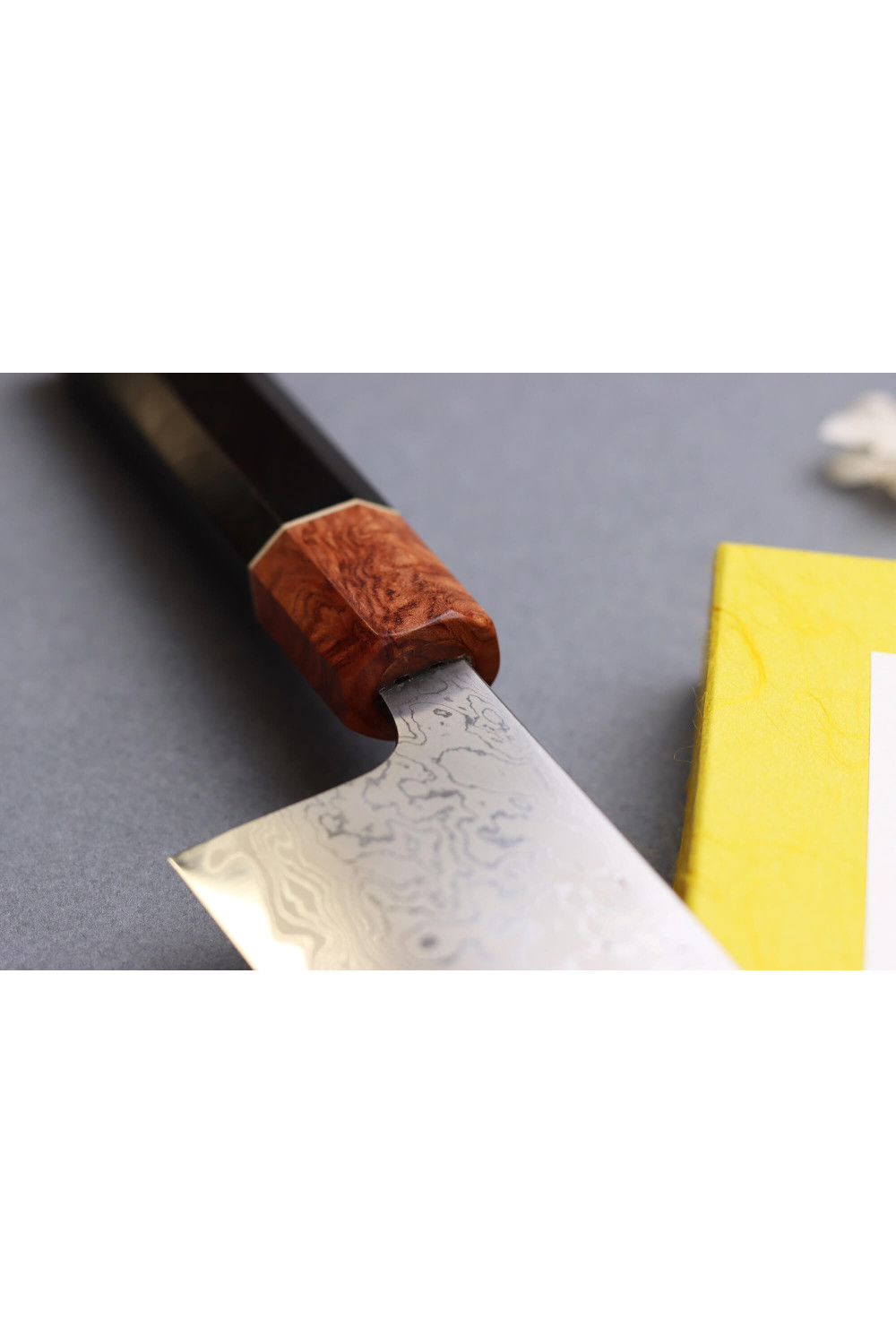
It is complemented by a bolster made from quince, a light-colored wood that contrasts elegantly with the dark ebony. The two woods are delicately separated by a white micarta ring.
The octagonal shape of the handle gives you an ambidextrous grip: right-handed and left-handed alike can use it! This shape hugs the palm of your hand for perfect handling and control.
Wood pulp fills the space where the blade fits into the handle, making the whole unit watertight. This prevents bits of food or water from cleaning from getting inside.
The best care for your Japanese knife
As the knife is made from top-quality materials, it's essential to take meticulous care of it. Start by avoiding hard foods (bones, squash, frozen foods, etc.) that could break the blade.
Your knife must be washed by hand, using mild soap and a non-abrasive sponge. When washing, be careful not to get the handle too wet, as water and wood don't necessarily mix. Carefully wipe the knife dry immediately after washing, then store it in a dry place.
The blade may change color slightly over time, which is normal. This is due to its high carbon content, which makes it naturally reactive to external elements such as humidity in the air or acidity in food. We recommend applying a few drops ofoil to the blade with a soft cloth to protect it from time to time.
Learn more about blacksmith Toshihiro Wakui
Your top-of-the-range Japanese knife was forged by Toshihiro Wakui, a Japanese blacksmith renowned for his exceptional blade design. He is the third generation of his family to work with metal, and learned the blacksmith's trade nearly 20 years ago.
Toshihiro san took over the family business and soon found himself faced with declining demand for metal bars and crowbars, which was his specialty. He met Kazuomi Yamamoto, head blacksmith at Yoshikane Hamono, who suggested he learn blacksmithing as a way of retraining. Kazuomi san offered to train Toshihiro himself, and Toshihiro accepted! Toshihiro Wakui apprenticed with Kazuomi san for almost 4 years, worked hard and then began forging his own knives.
He practices his art in his workshop in Sanjo, Japan, where he makes top-of-the-range blades. For example, it's Toshihiro himself who hot-plates the damascus on his blades! The visual impact of each blade he forges is unmistakably unique. The blacksmith's workshop also has an unconventional layout: it's very cluttered, and his hammer is relatively far from the furnace. But that doesn't stop him from making top-of-the-range blades!
All santoku knives are available on our website!




 By buying this product you can collect up to