A Japanese knife designed for cutting vegetables
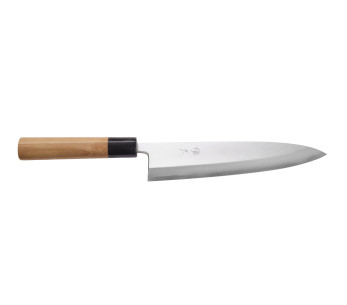
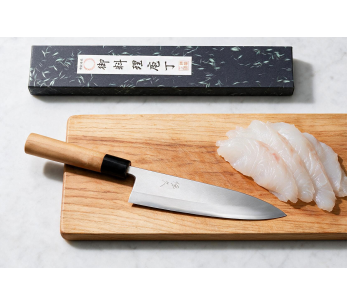
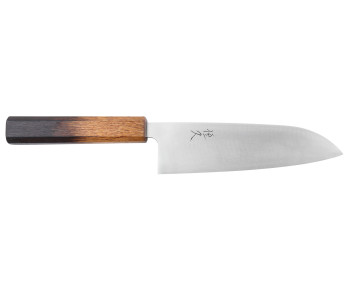
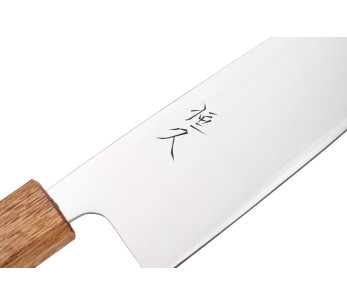
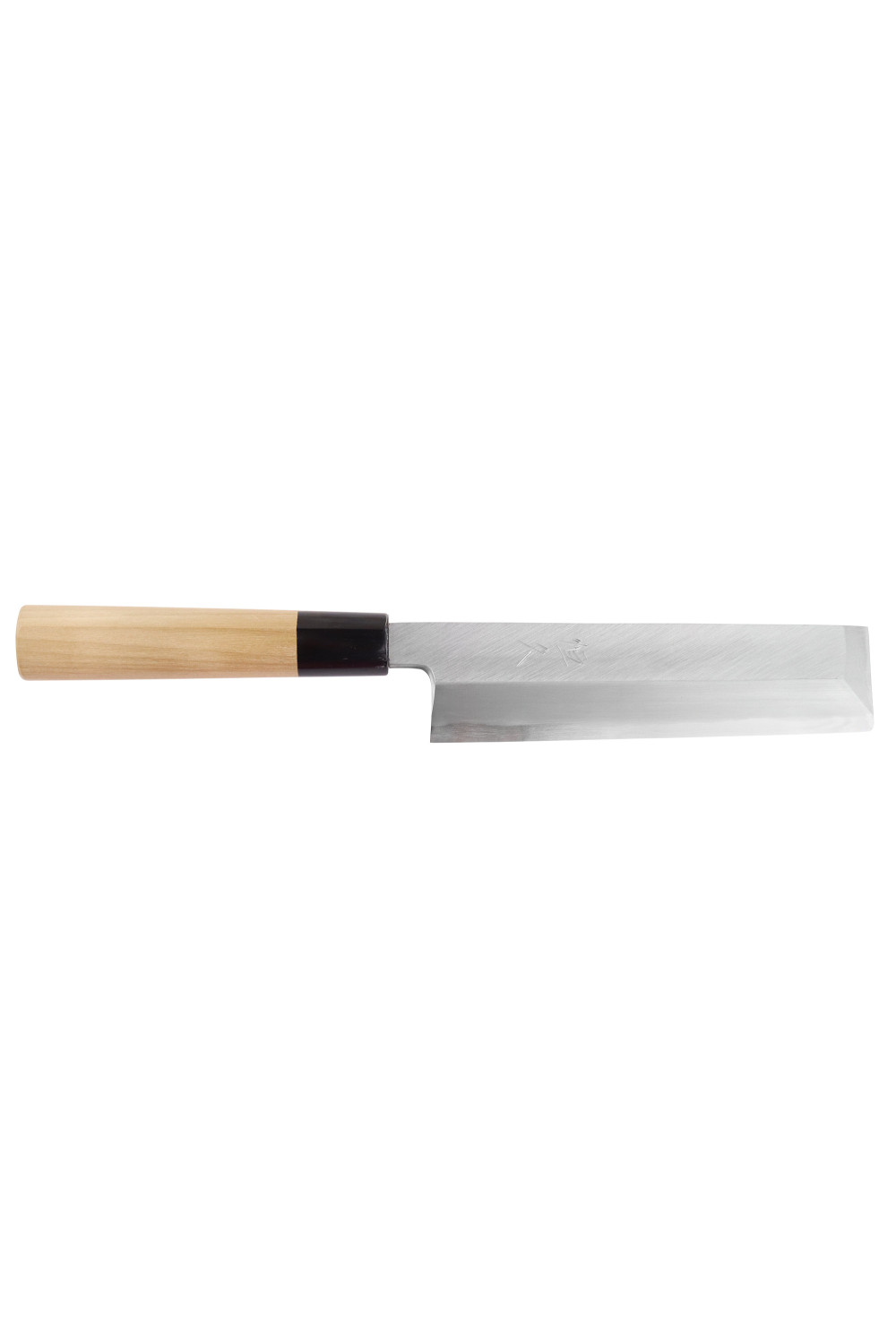
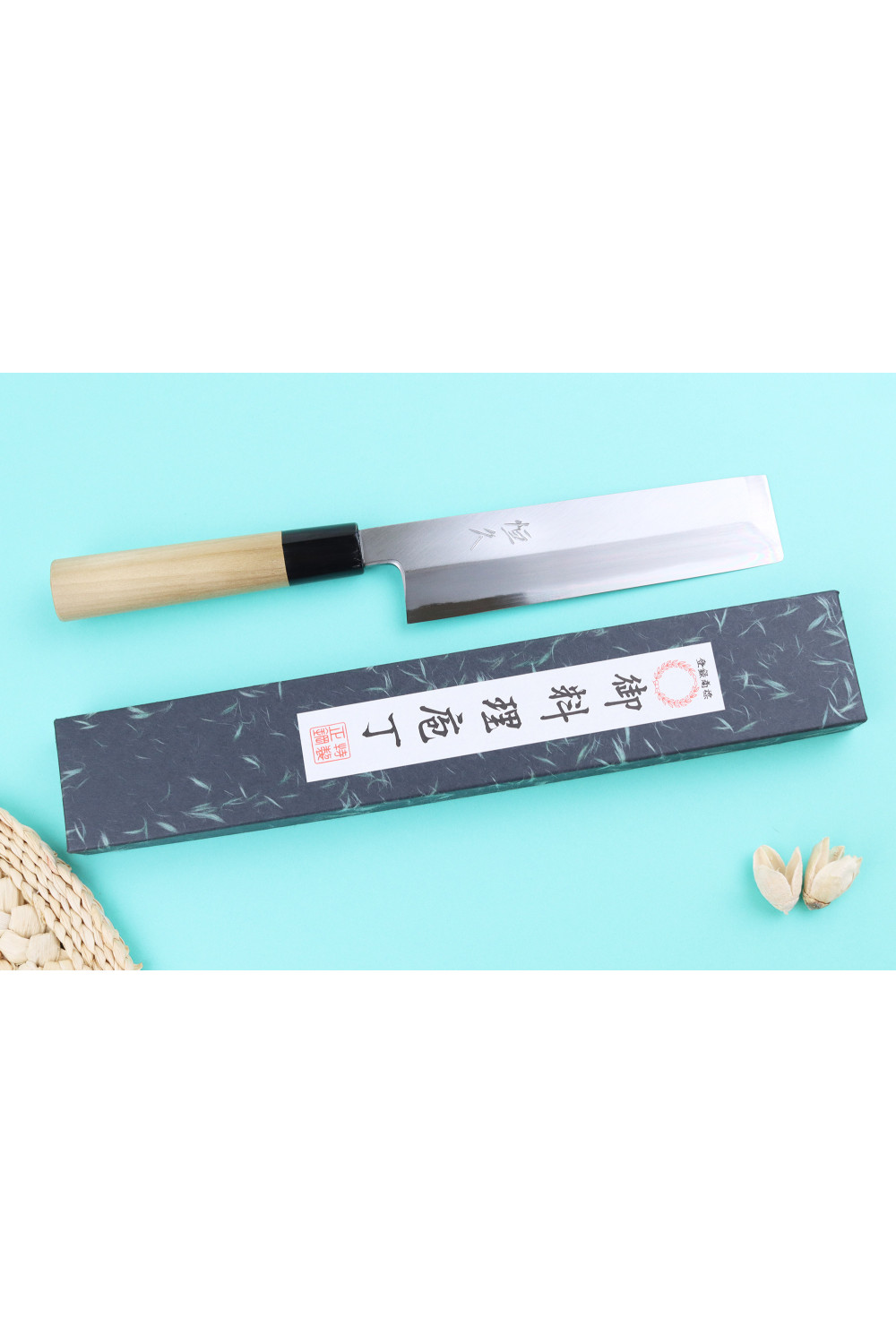
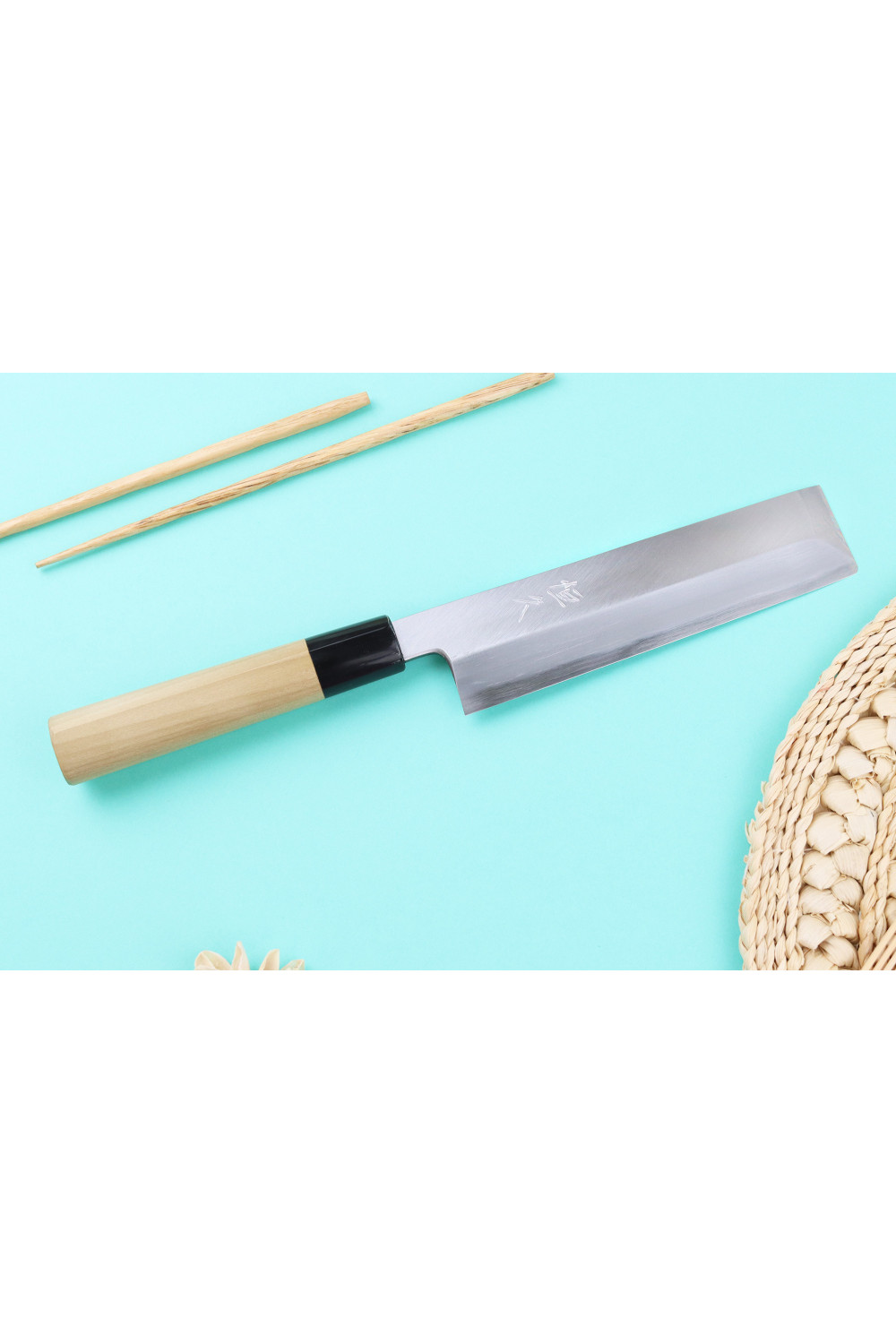
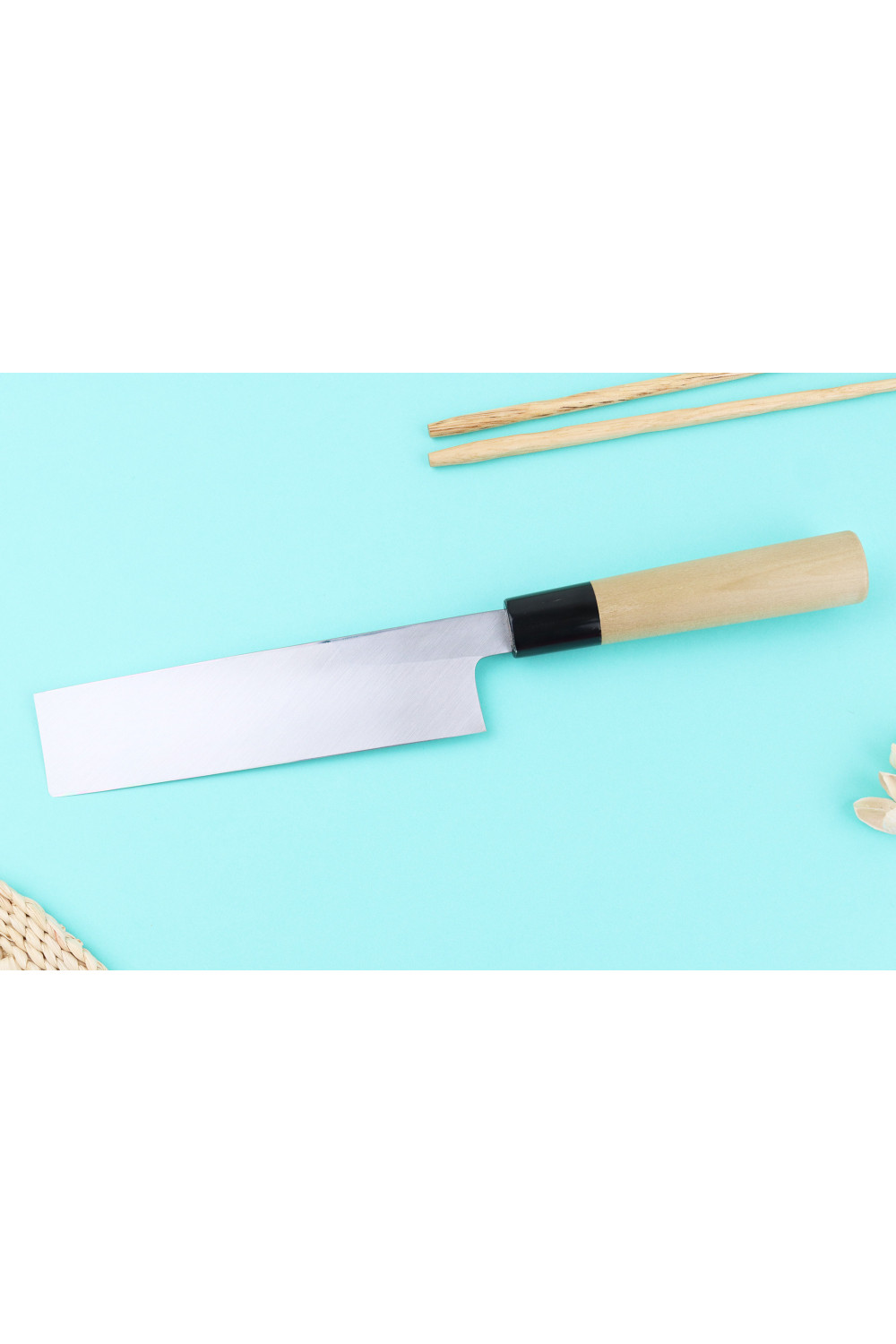
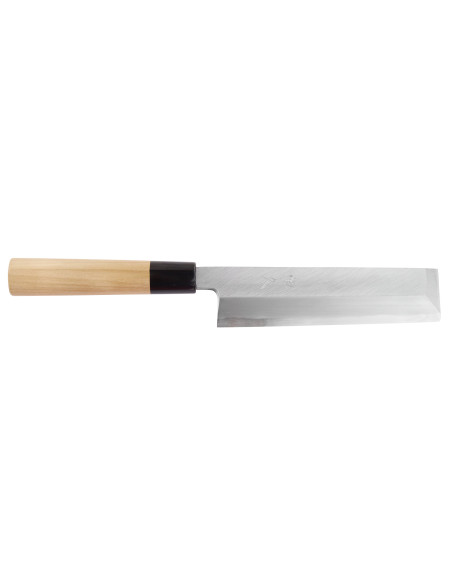
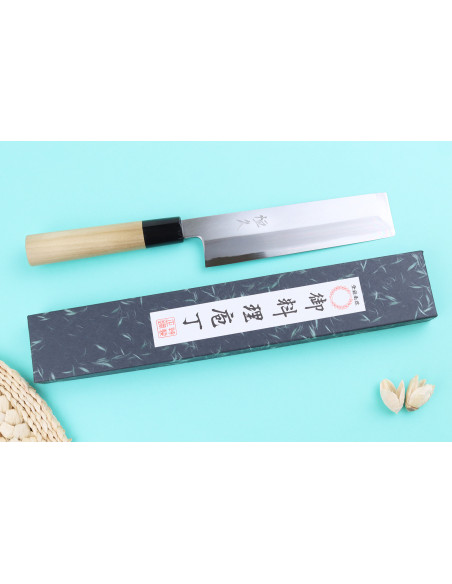
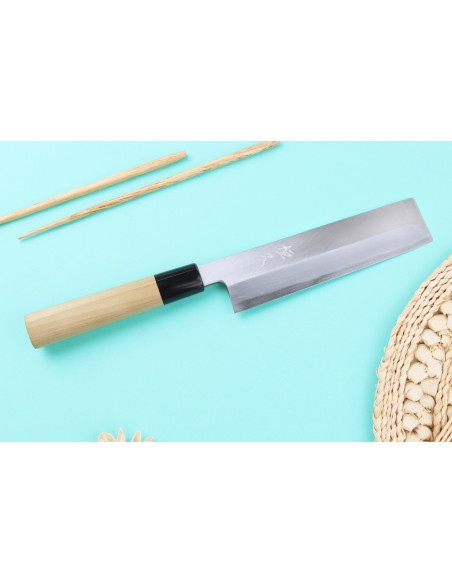
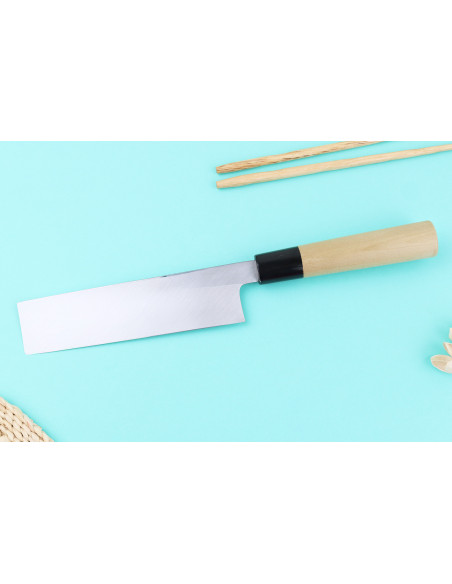
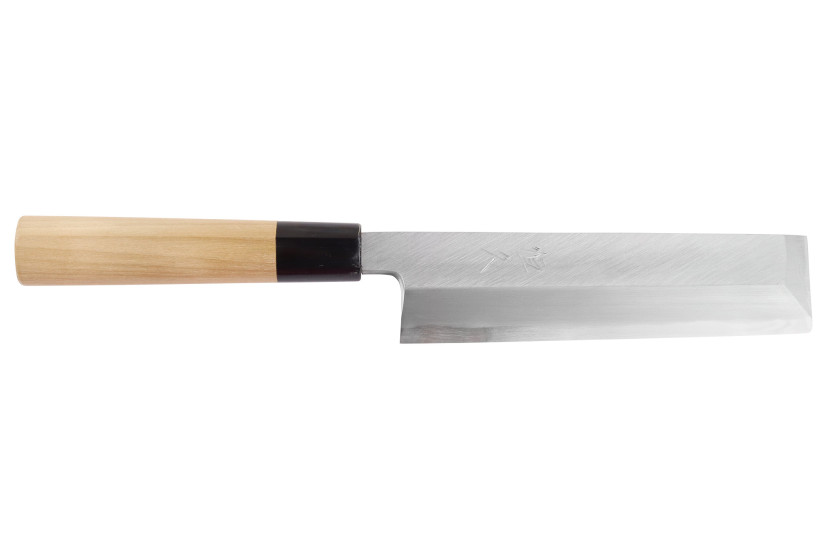
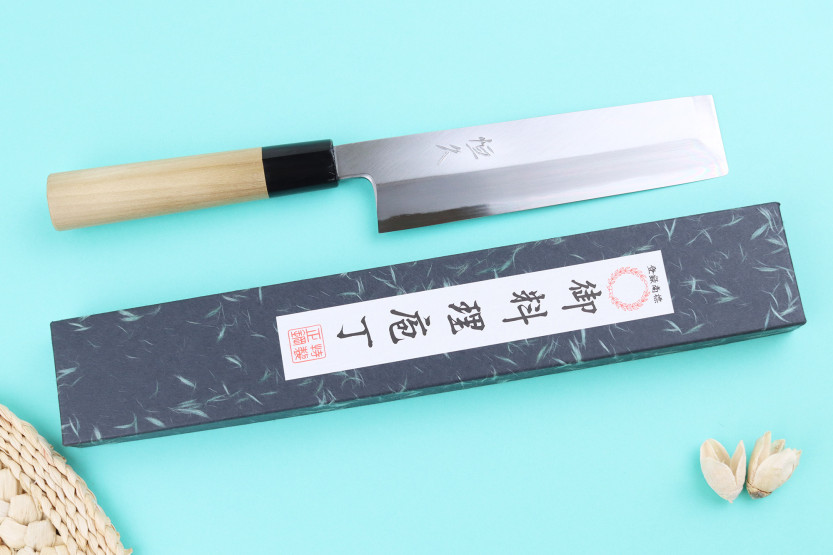
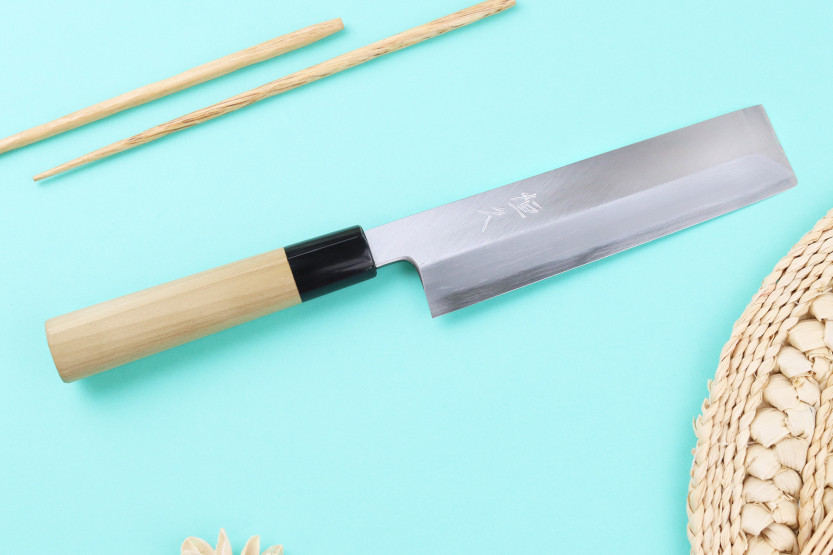
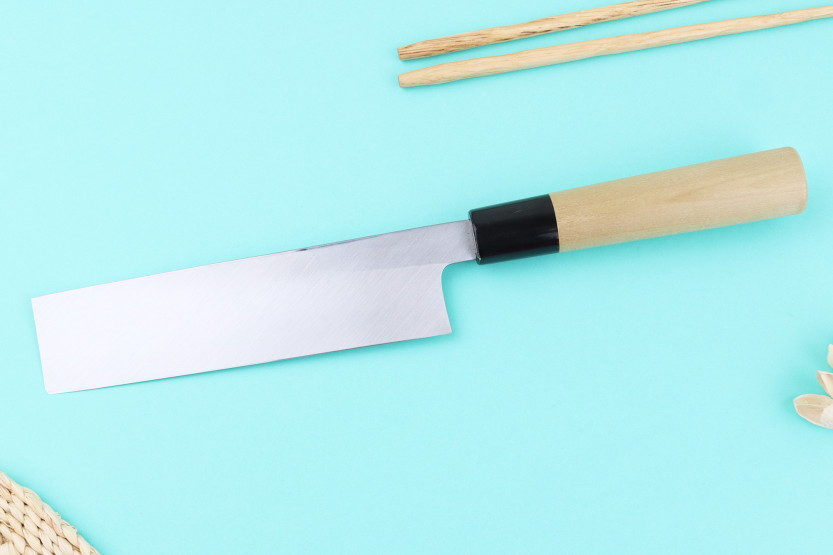
The Tsunehisa WS2 18cm Edogata Usuba Japanese knife is a traditional Japanese knife designed for precise vegetable preparation. Its high profile and 18cm blade allow for precise cuts, such as slicing into thin strips or preparing julienne cuts. Handcrafted in Japan by the experts at Tsunehisa, it combines a San Mai structure with a Shirogami #2 steel core.
A San Mai blade for precise cuts
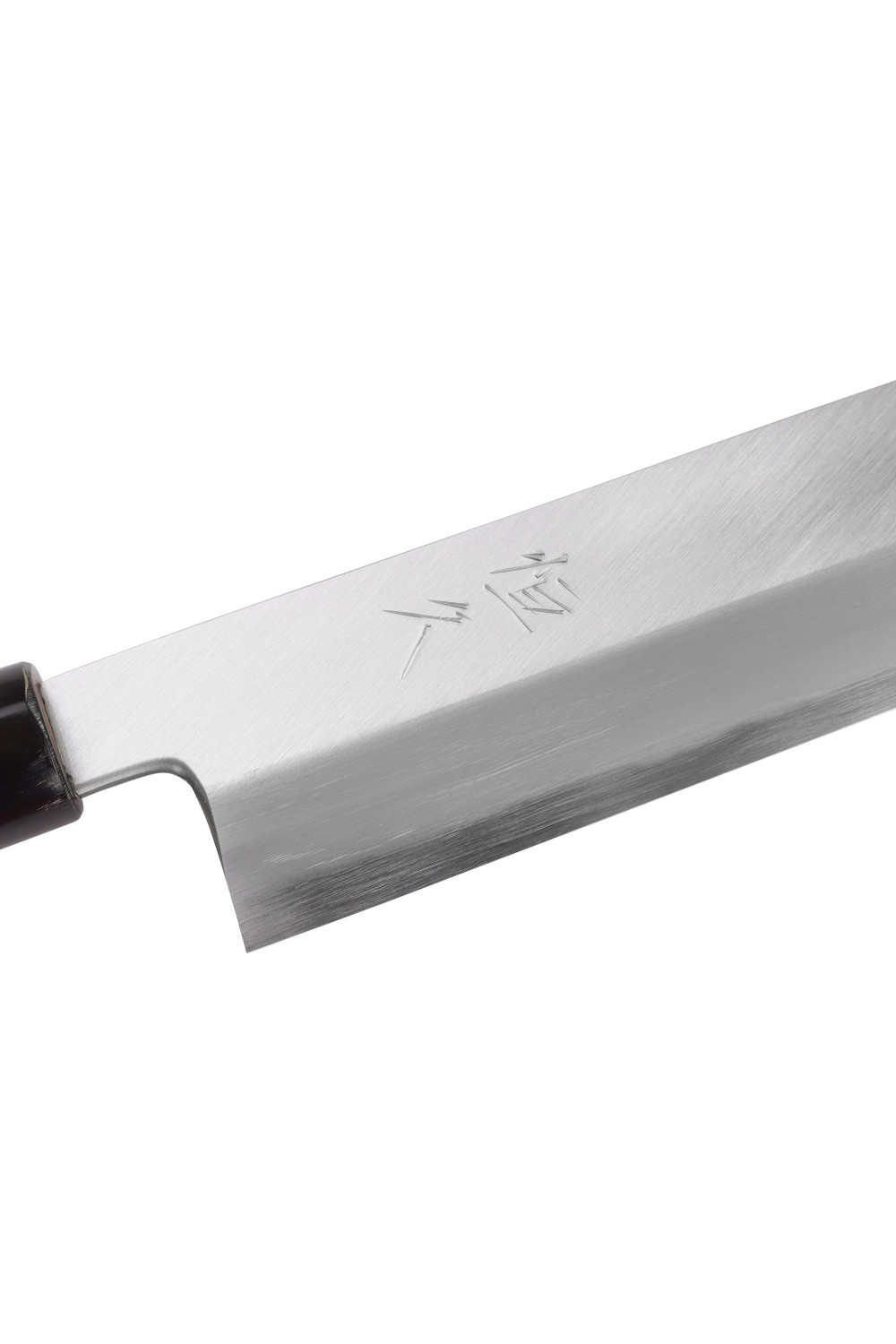
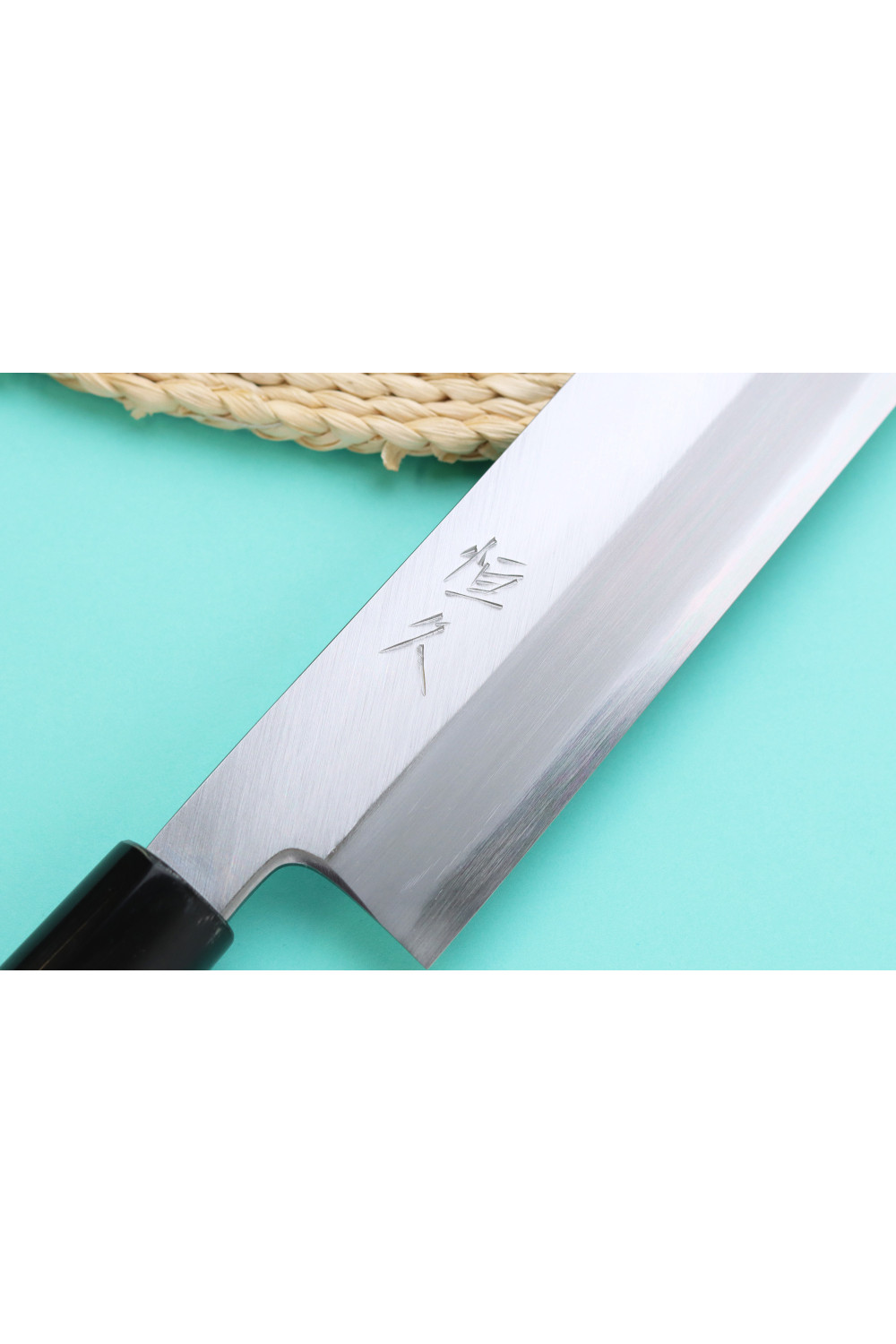
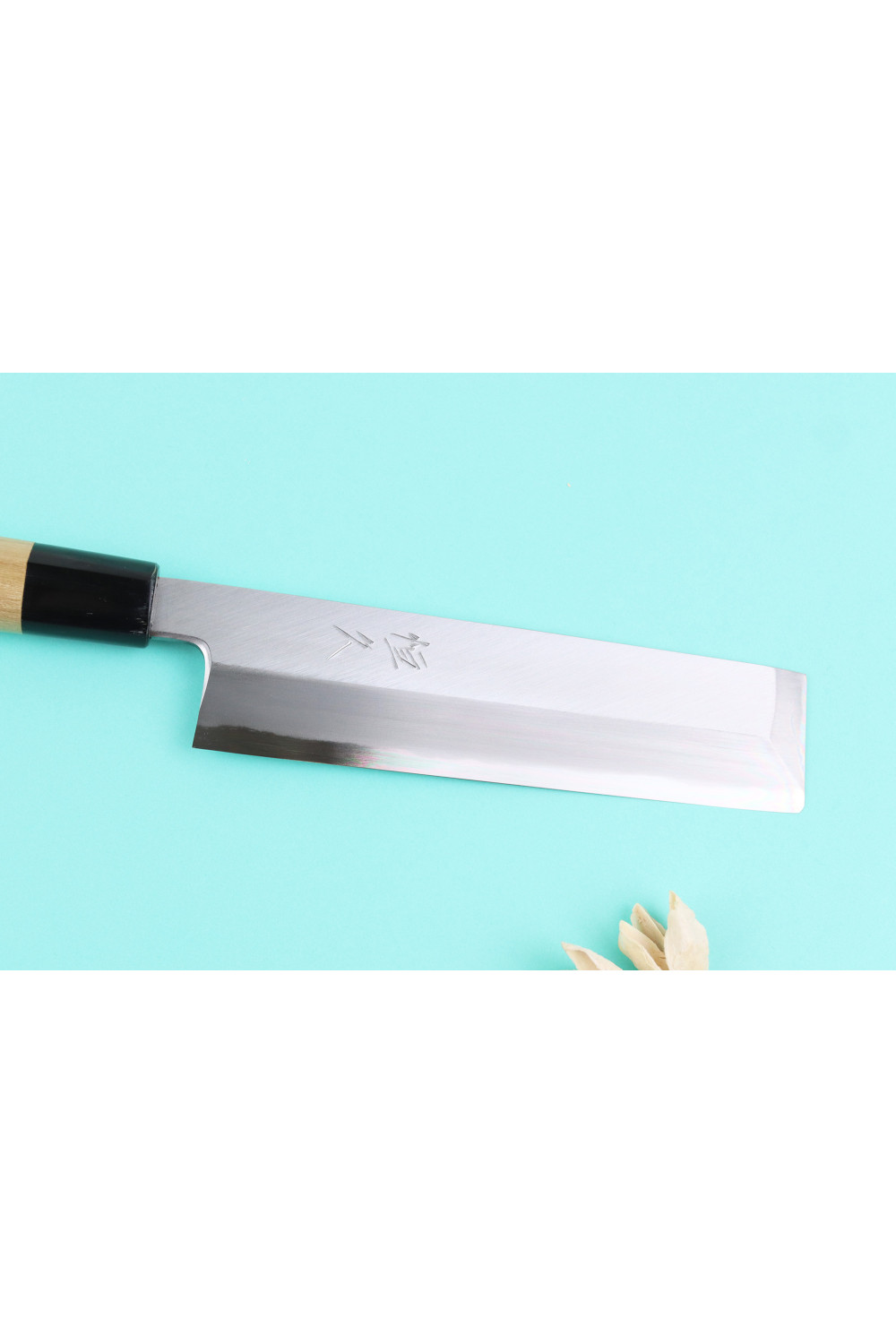
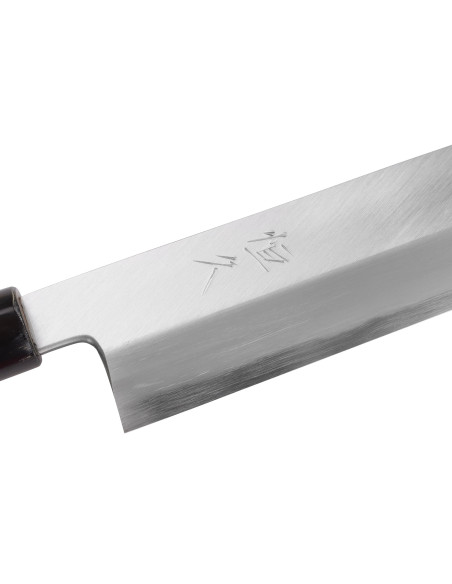
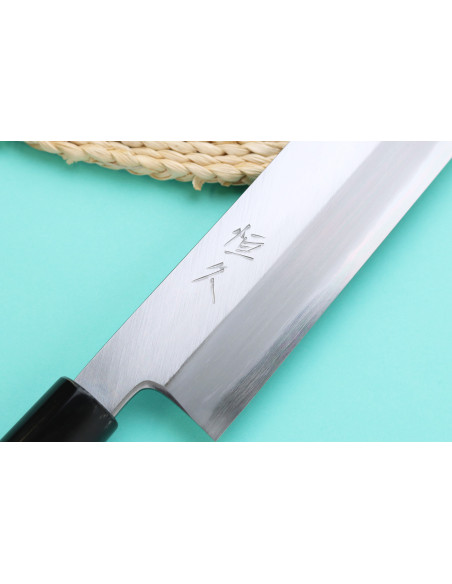
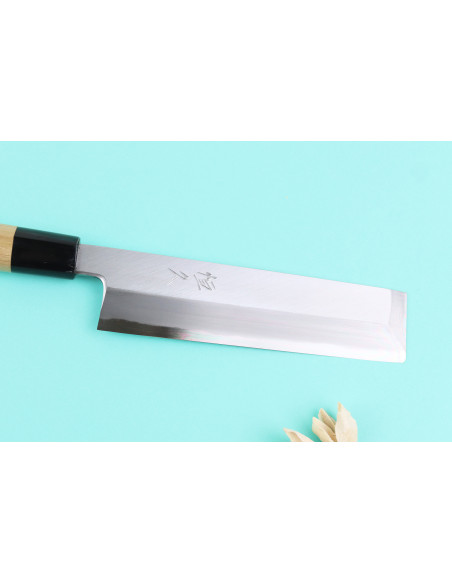
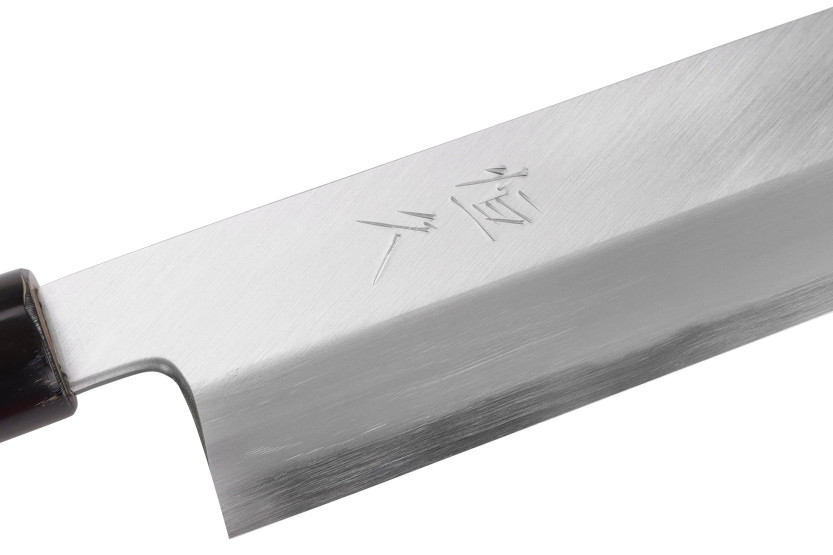
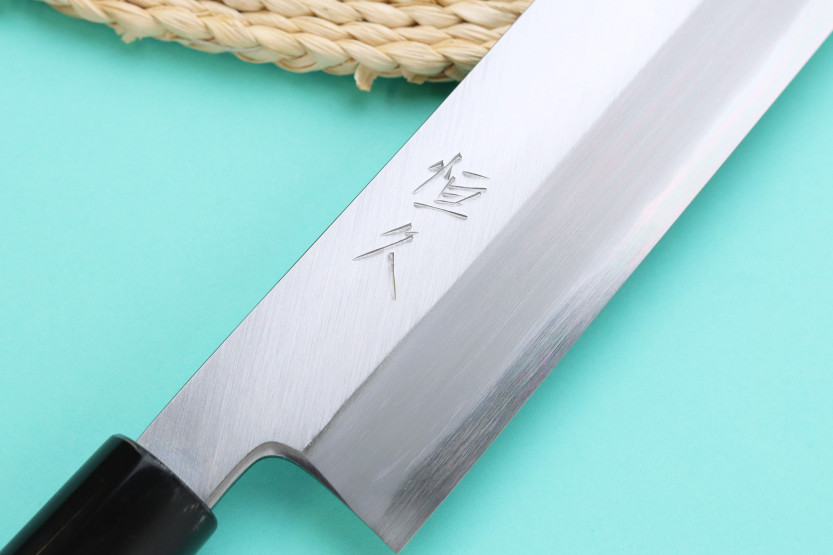
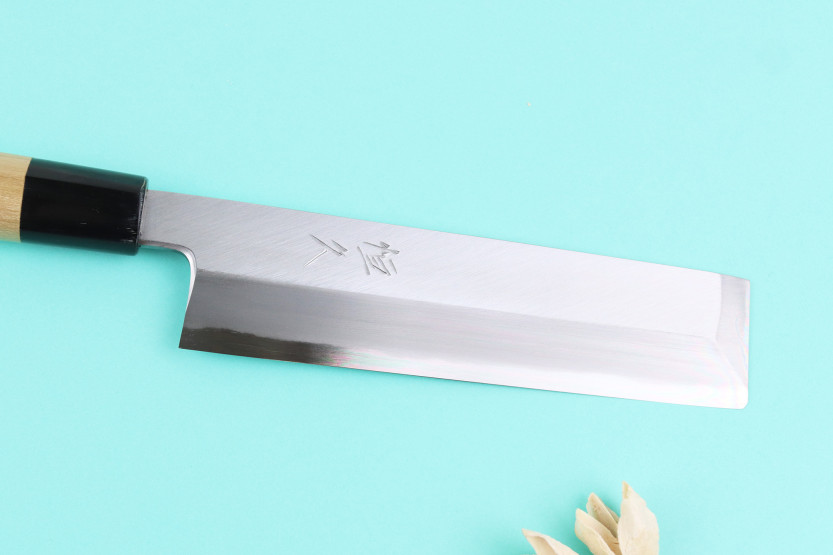
The 18 cm blade is constructed using the San Mai method, which involves layering three layers of steel. At its center is a core of Japanese Shirogami #2 steel, also known as White Steel #2, containing approximately 1.2% carbon. This composition results in a fine edge and a clean cut, ideal for precisely slicing vegetables.
The blade achieves a hardness of 61 HRC on the Rockwell scale. This level ensures excellent edge retention and allows you to work continuously without frequent re-sharpening. On the other hand, a hard blade requires a controlled cutting motion: avoid twisting the knife and cutting very hard foods, which could damage the edge.
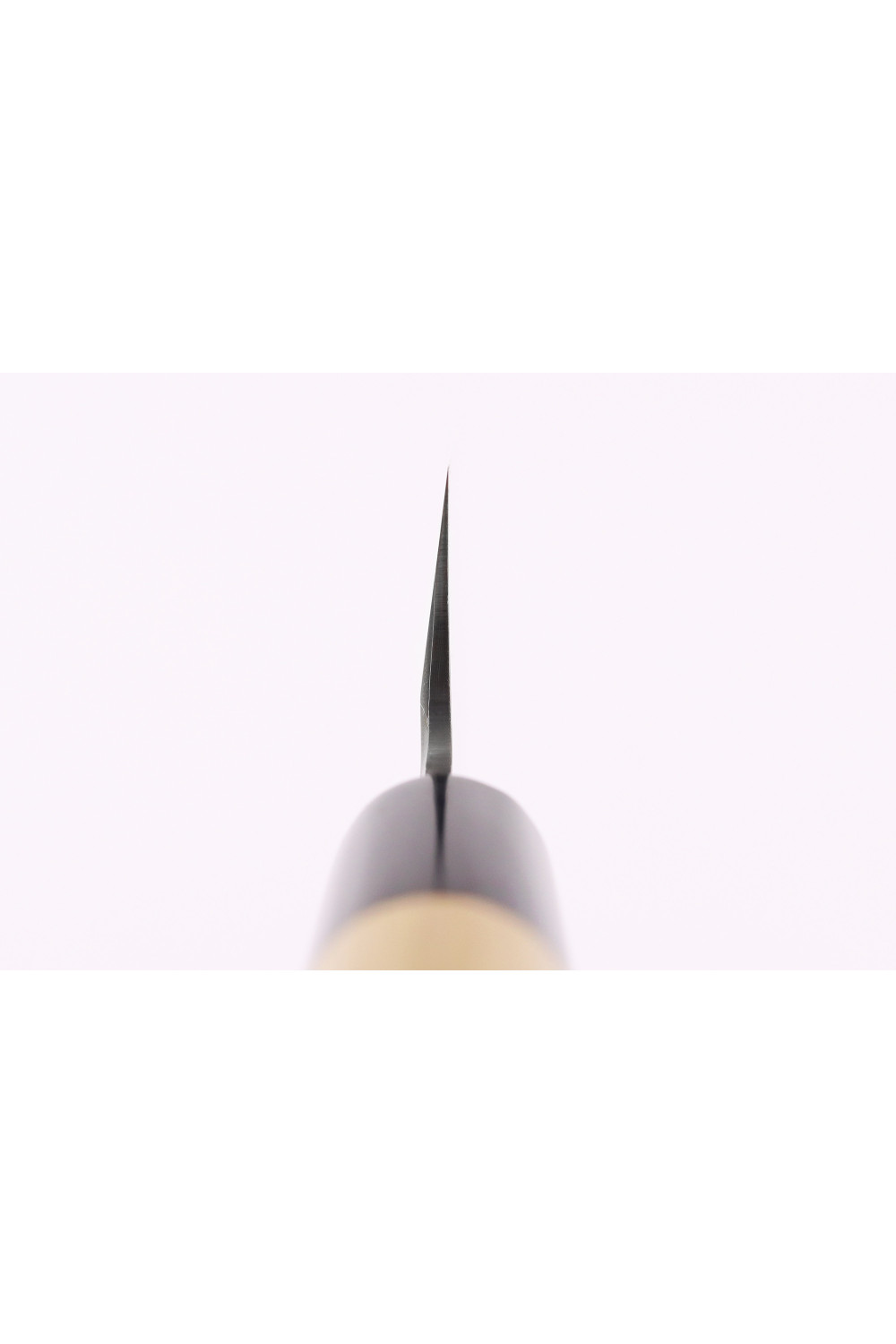
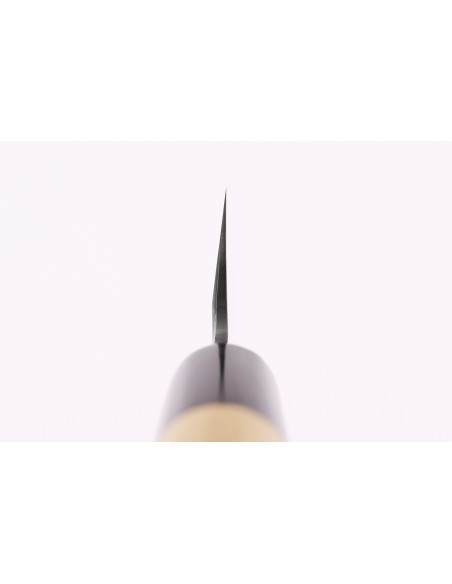
The asymmetrical grind is designed for right-handed users. It complements the cutting motion and allows for precise guidance of the blade. The Edo-style edogata usuba knife features a rectangular profile characteristic of usuba knives from the Tokyo region. This type of knife is particularly well-suited for making thin, even cuts of vegetables.
A traditional Japanese magnolia handle
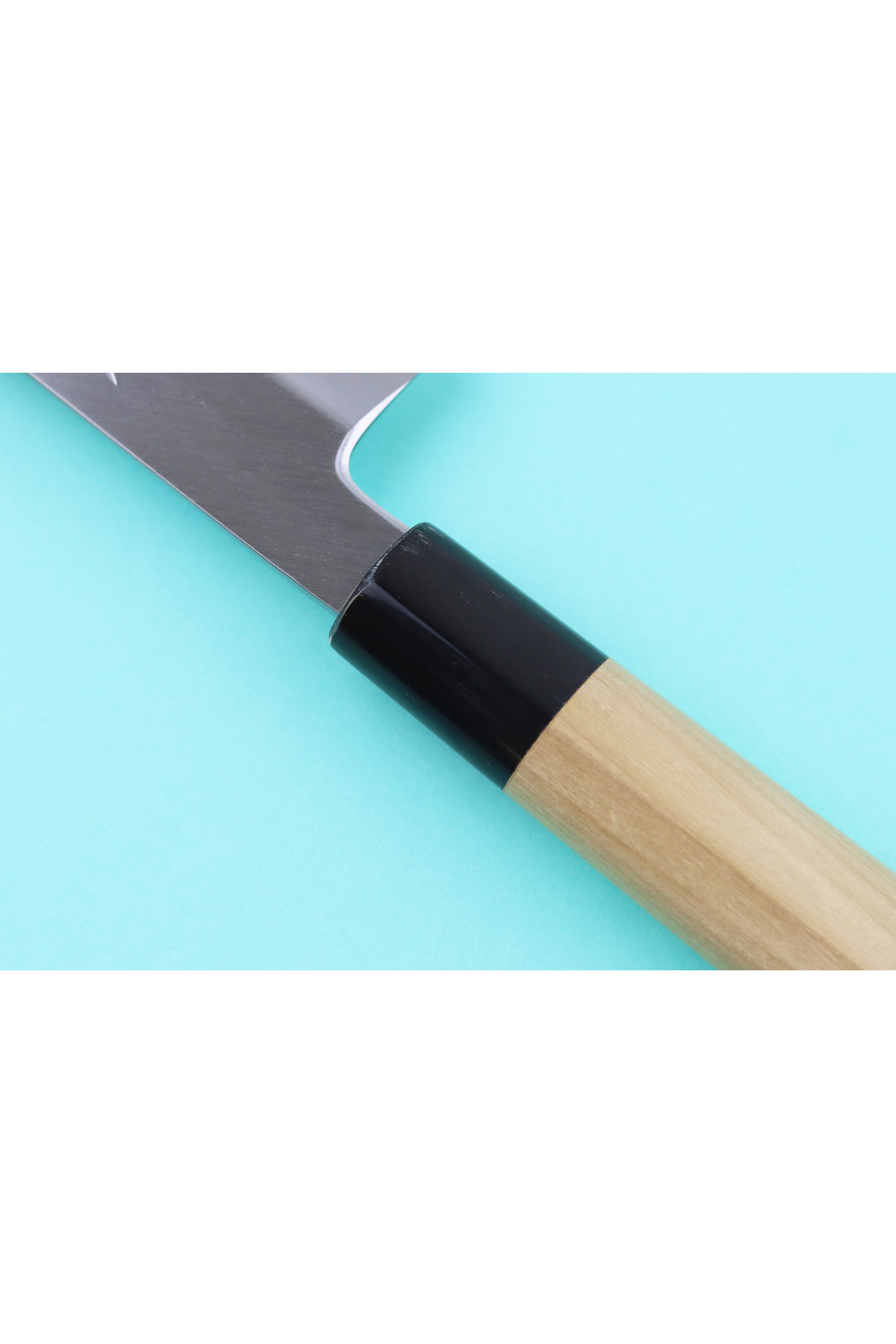
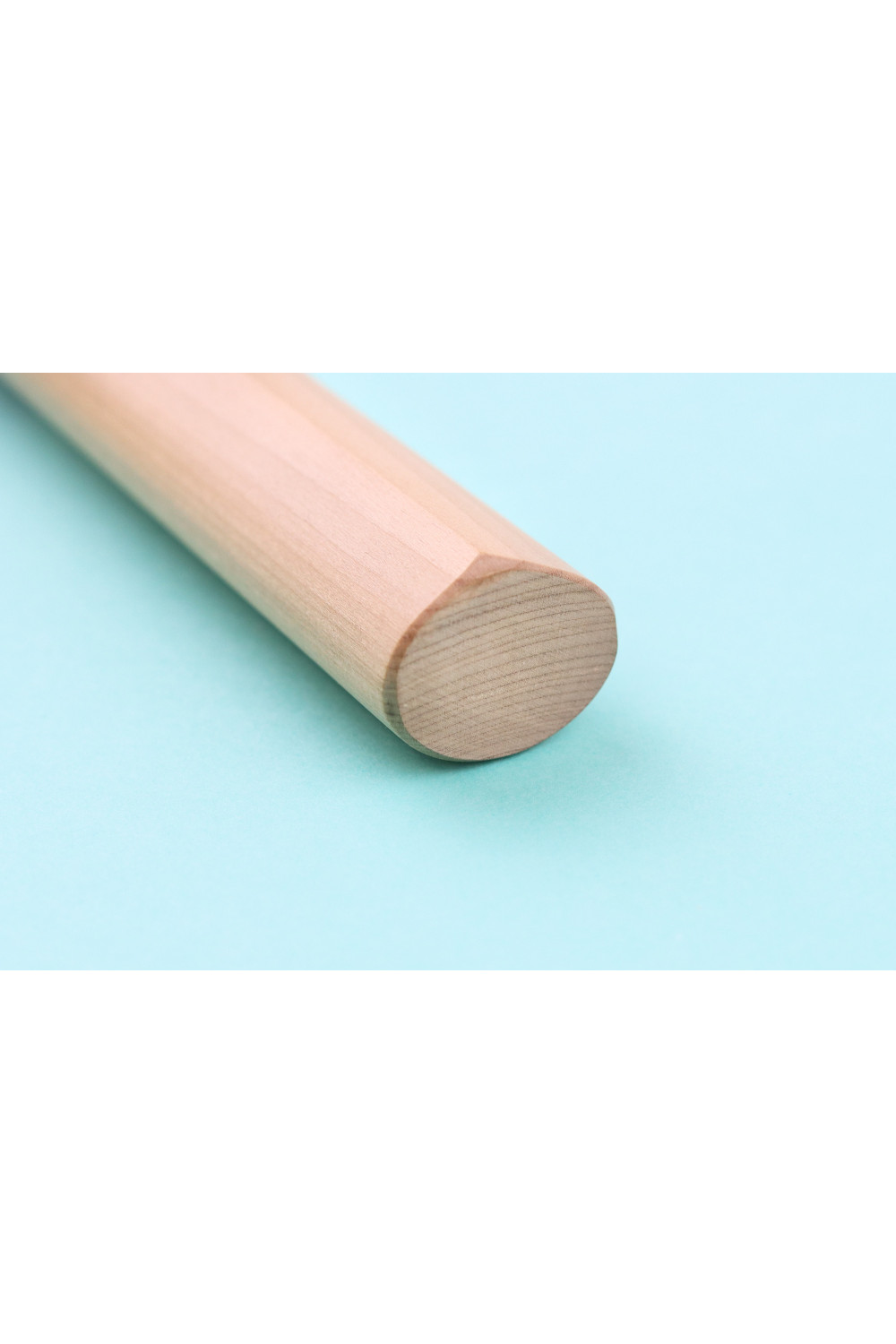
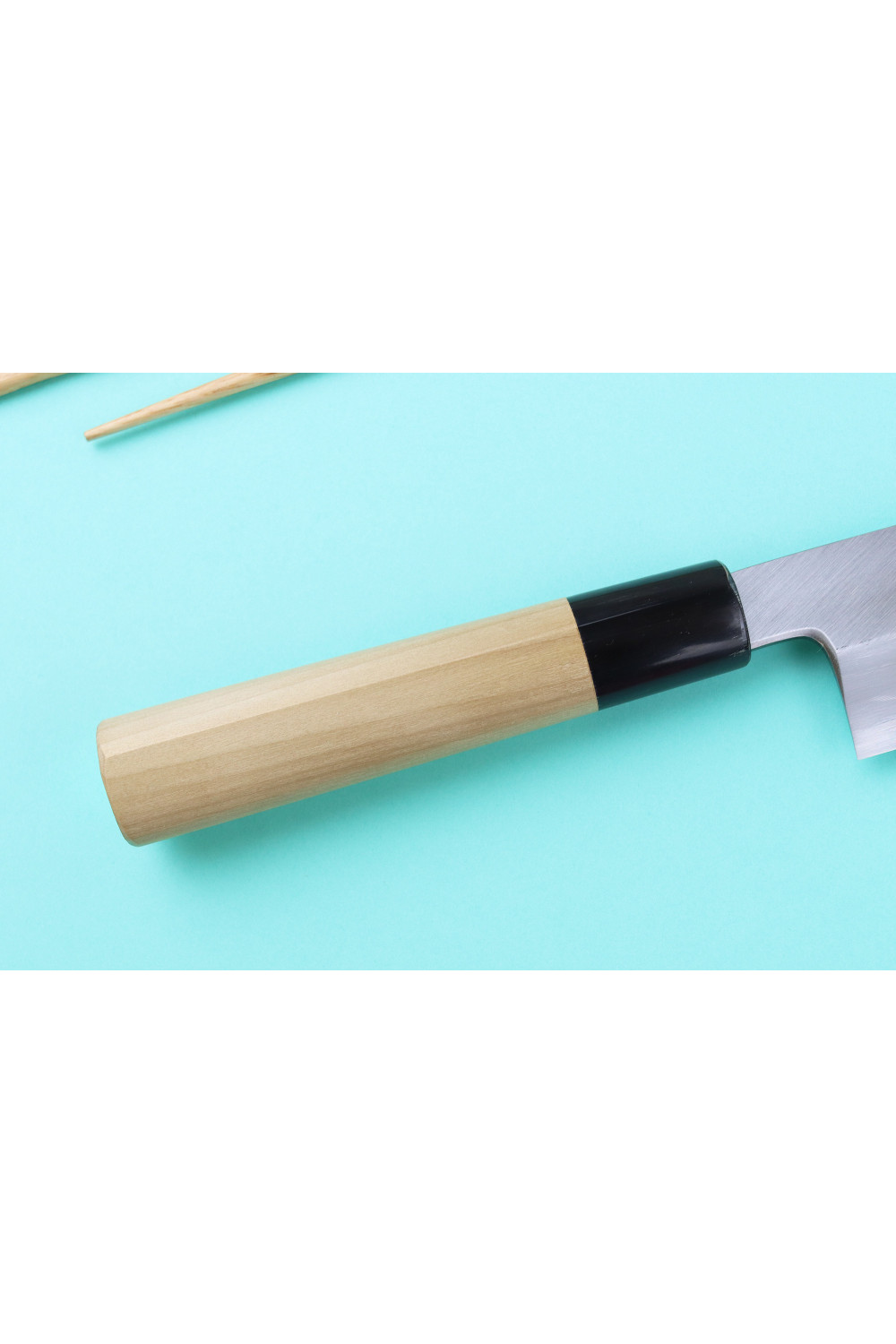
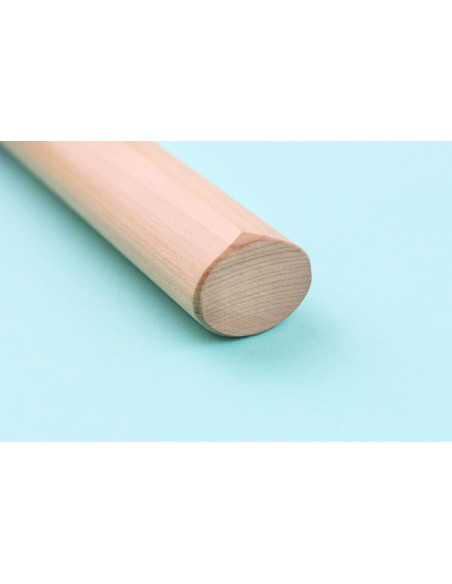
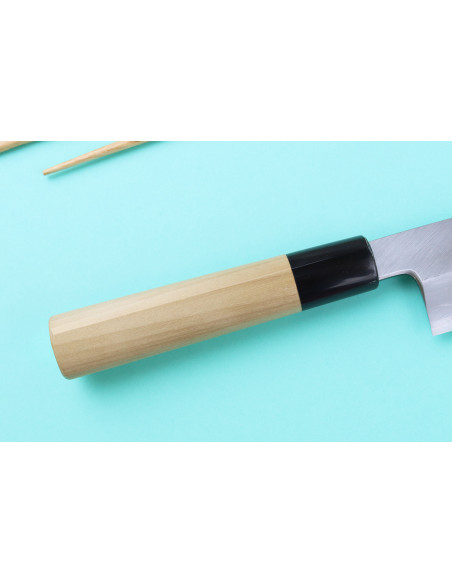
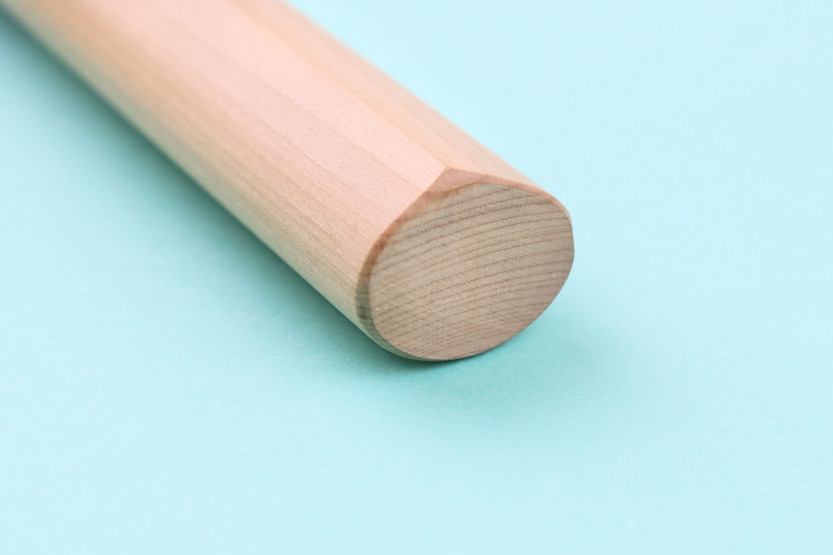
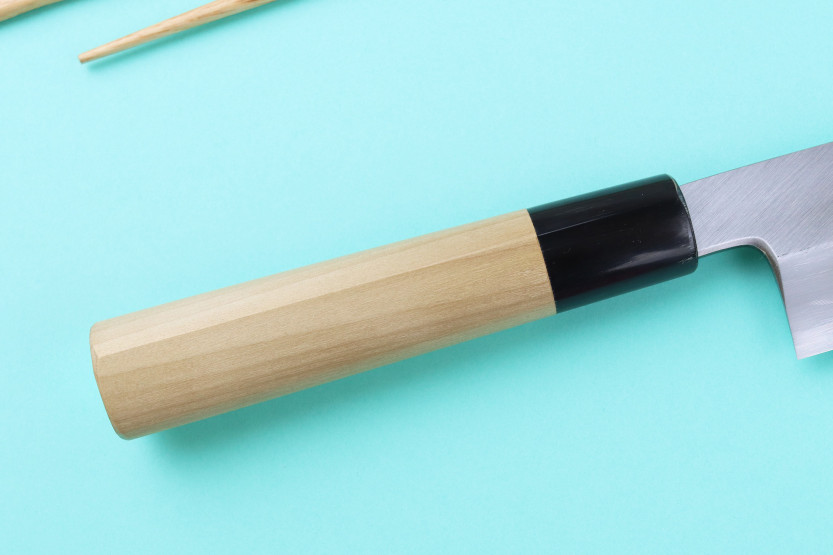
The handle is made of magnolia wood, a lightweight wood traditionally used in Japanese knives. Its light weight helps keep the knife easy to handle, while its natural feel ensures a comfortable grip during repeated cutting.
The D-shaped handle contours to the hand and promotes a stable grip. It is designed for a firm grip: combined with the asymmetrical edge, it is perfectly suited for a knife intended for right-handed cooks.
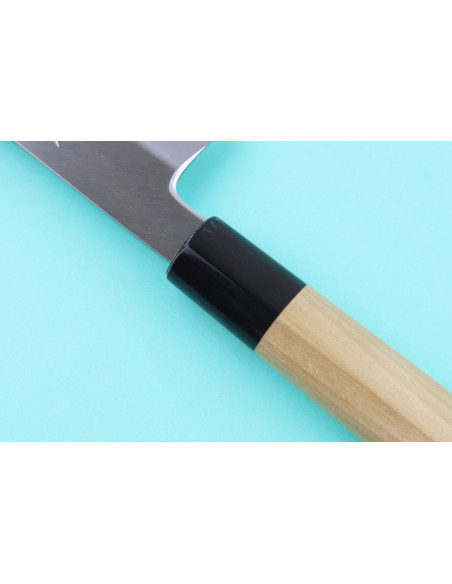
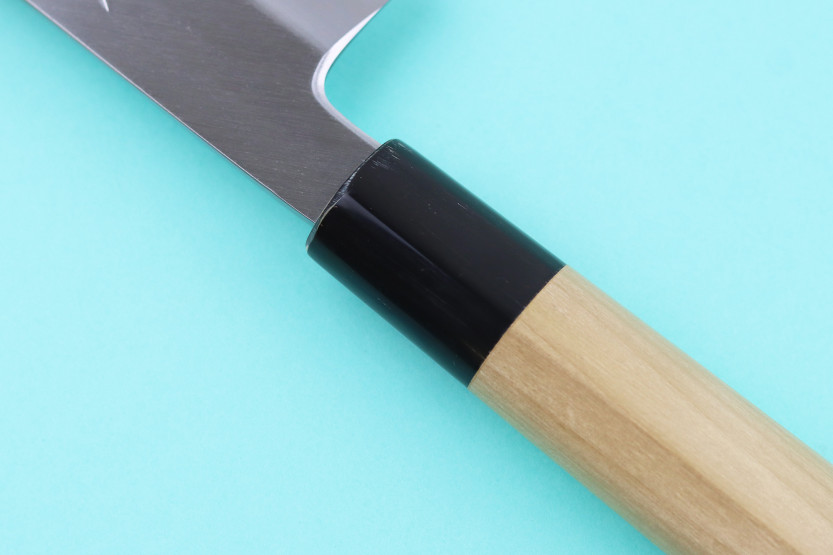
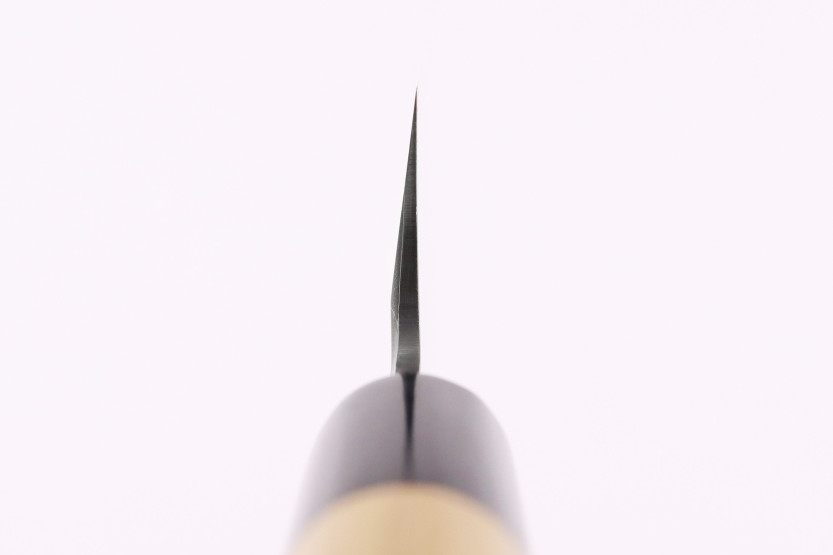
At the junction between the blade and the handle, the black buffalo horn bolster provides a traditional finish and a striking contrast to the light magnolia wood. Since wood and horn are natural materials, their grain and color may vary slightly from one knife to another.
Summary of Features and Benefits
-
- 18 cm blade: ideal length for cutting vegetables
-
- Edogata usuba profile: ideal for making thin, even cuts
- San Mai construction: traditional construction around the blade core
- Shirogami #2 steel: fine edge for clean cuts
- Hardness of 61 HRC: excellent edge retention
-
- Asymmetrical grind: knife for right-handed users
- D-shaped magnolia handle: comfortable and ergonomic
- Black buffalo horn bolster: traditional contrasting finish
- Handcrafted in Japan by Tsunehisa: master cutlery craftsmanship
Usage and Care Instructions
Shirogami #2 steel is high in carbon and may oxidize when exposed to moisture or acidic foods. After each use, wash the blade by hand, dry it immediately, and do not let it soak. Do not put it in the dishwasher. Use a wooden or synthetic cutting board, and avoid very hard foods as well as twisting motions. A patina may form over time; this is completely normal. To maintain the edge, sharpen the knife with a whetstone.
Tsunehisa and Japanese Artisanal Craftsmanship
Tsunehisa offers knives made in Japan in collaboration with blacksmiths and specialized workshops. This approach brings together various areas of expertise: blade craftsmanship, mastery of steel, and the assembly of materials. The brand thus showcases knives with traditional profiles, crafted from Japanese steel and featuring handles made of natural materials.
This model is handcrafted in Japan by Tsunehisa’s experts. It combines Japanese carbon steel with a San Mai construction, a magnolia handle, and a black buffalo horn bolster. This combination is ideal for enthusiasts of Japanese knives who wish to discover a usuba specialized in the precise preparation of vegetables.
Complete your collection with our selection of Tsunehisa knives!




 By buying this product you can collect up to