A superb handle in precious ebony
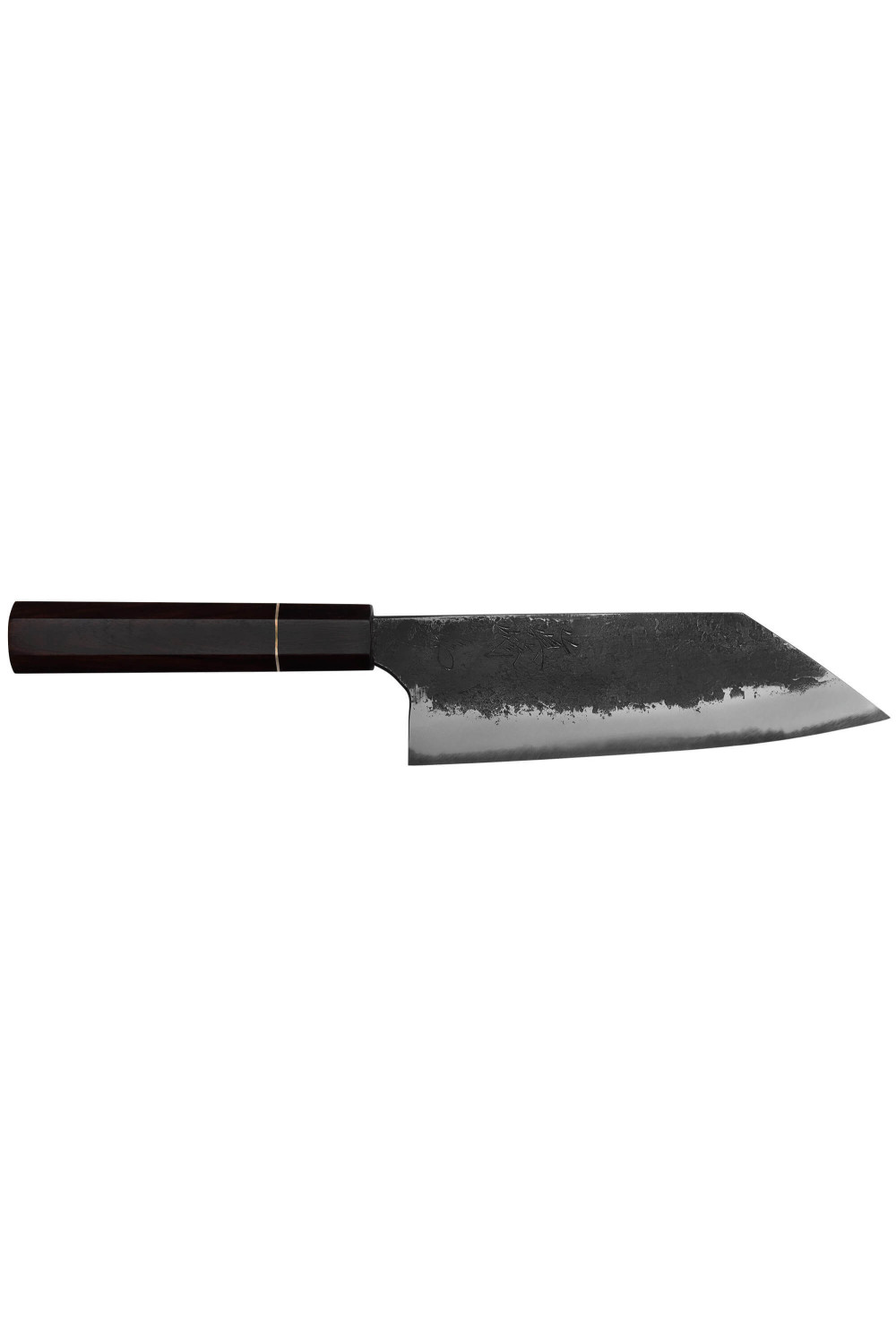
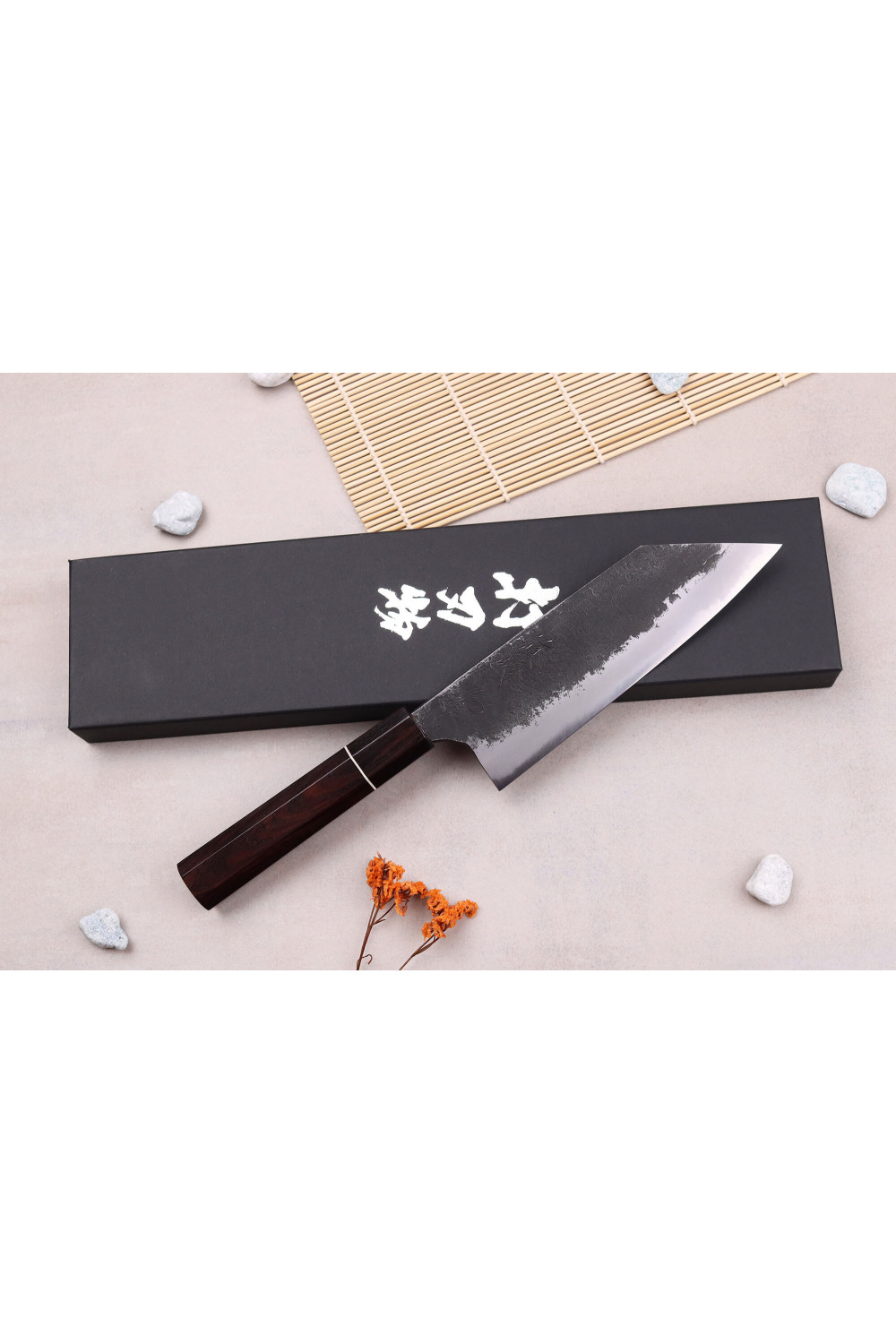
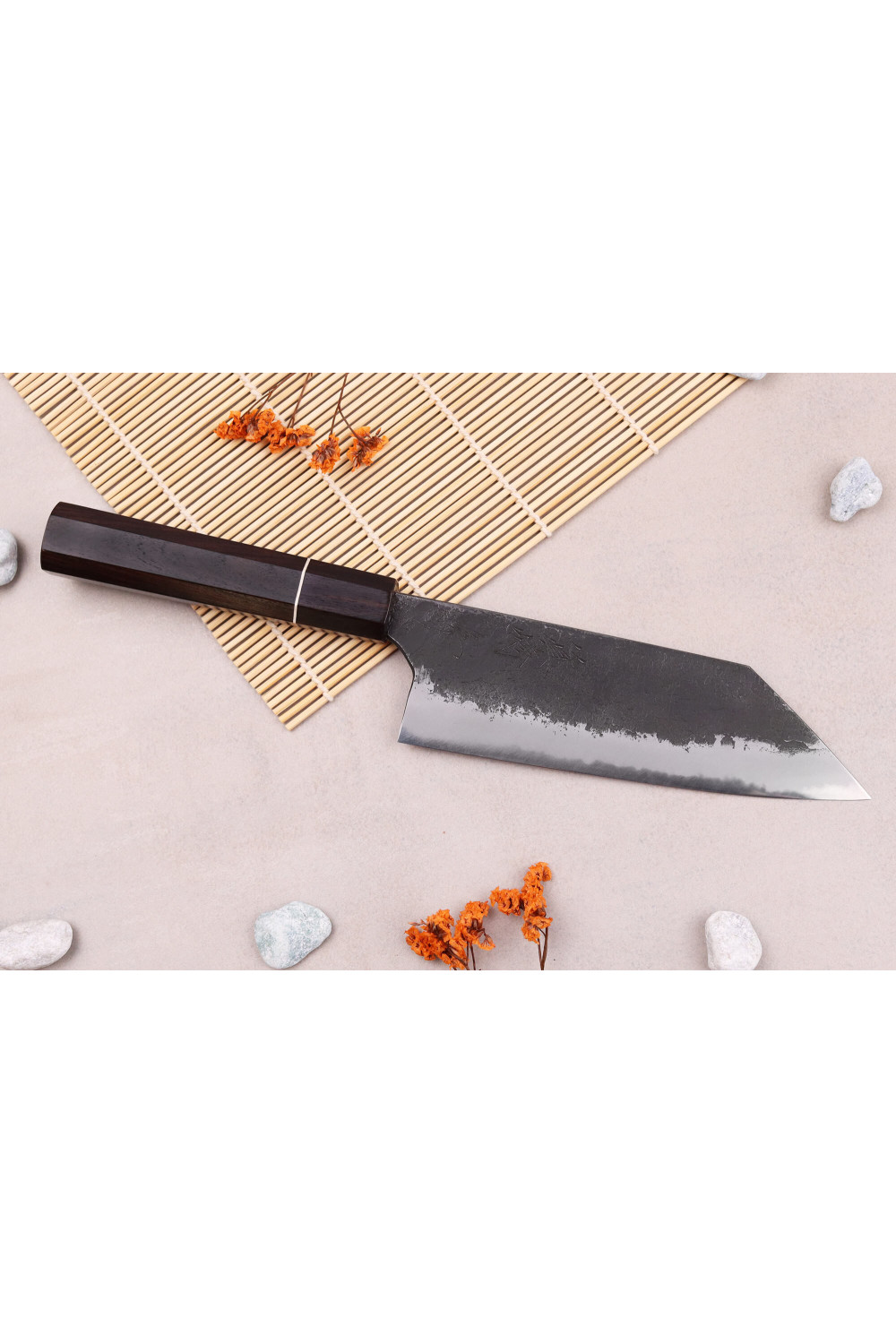
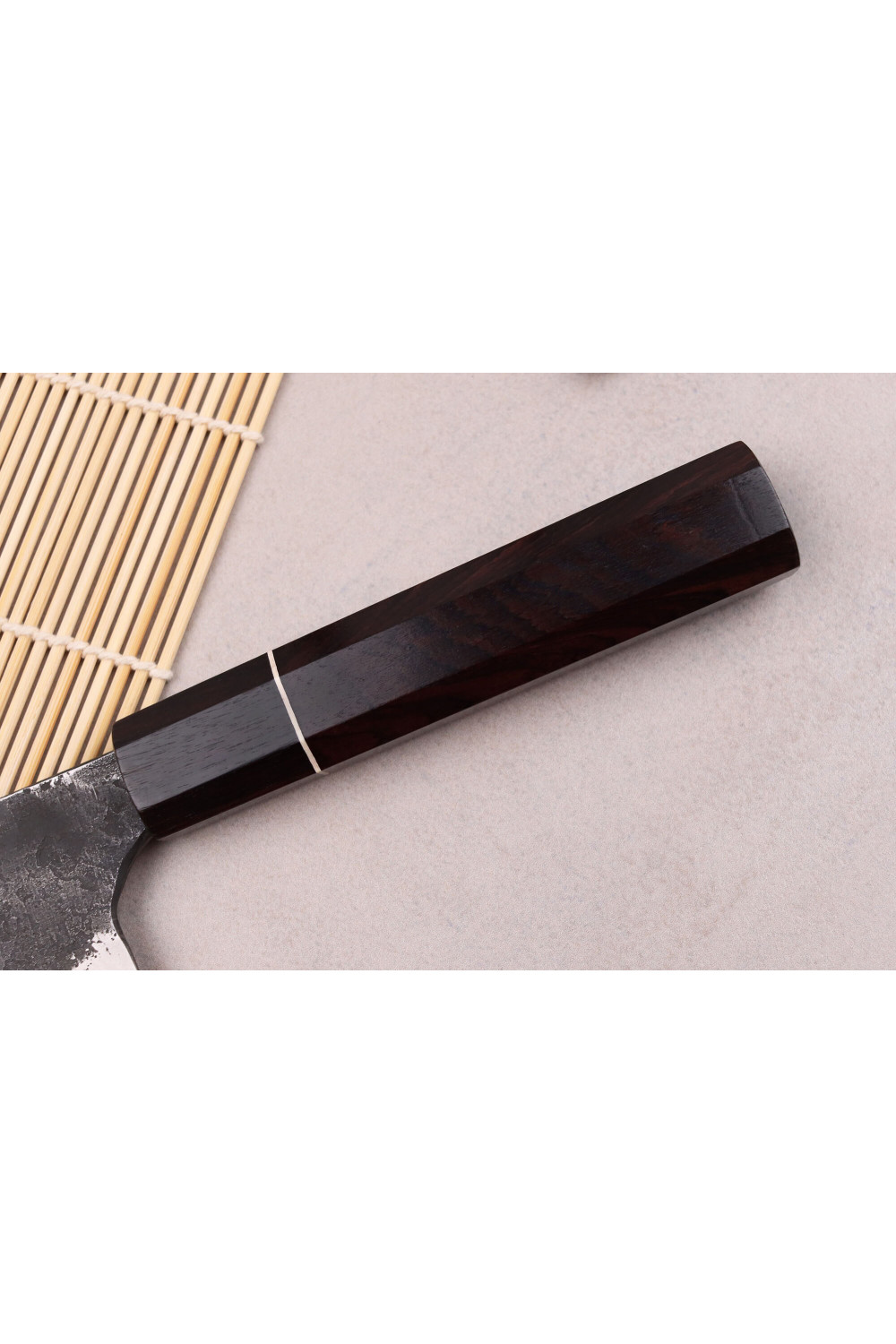
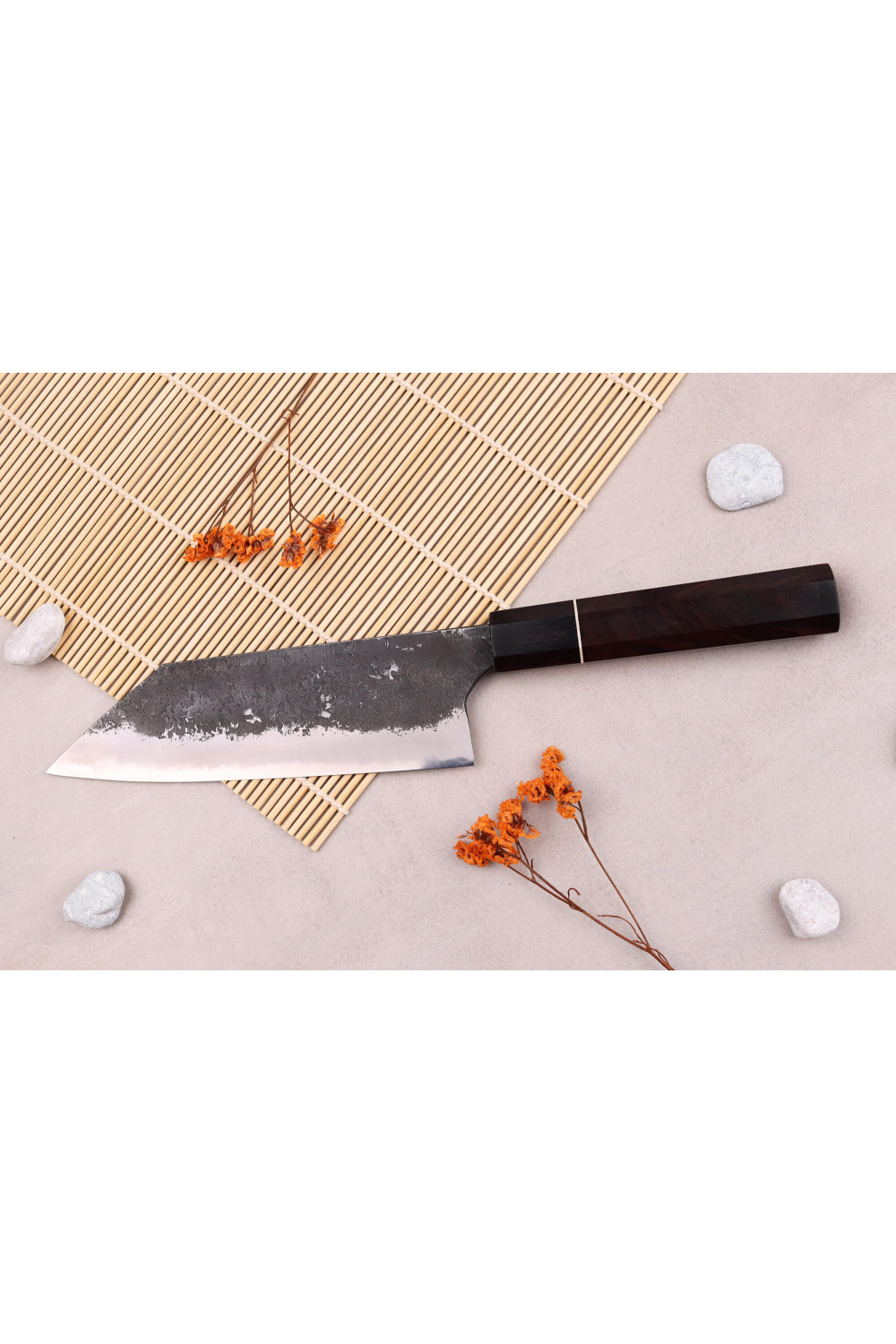
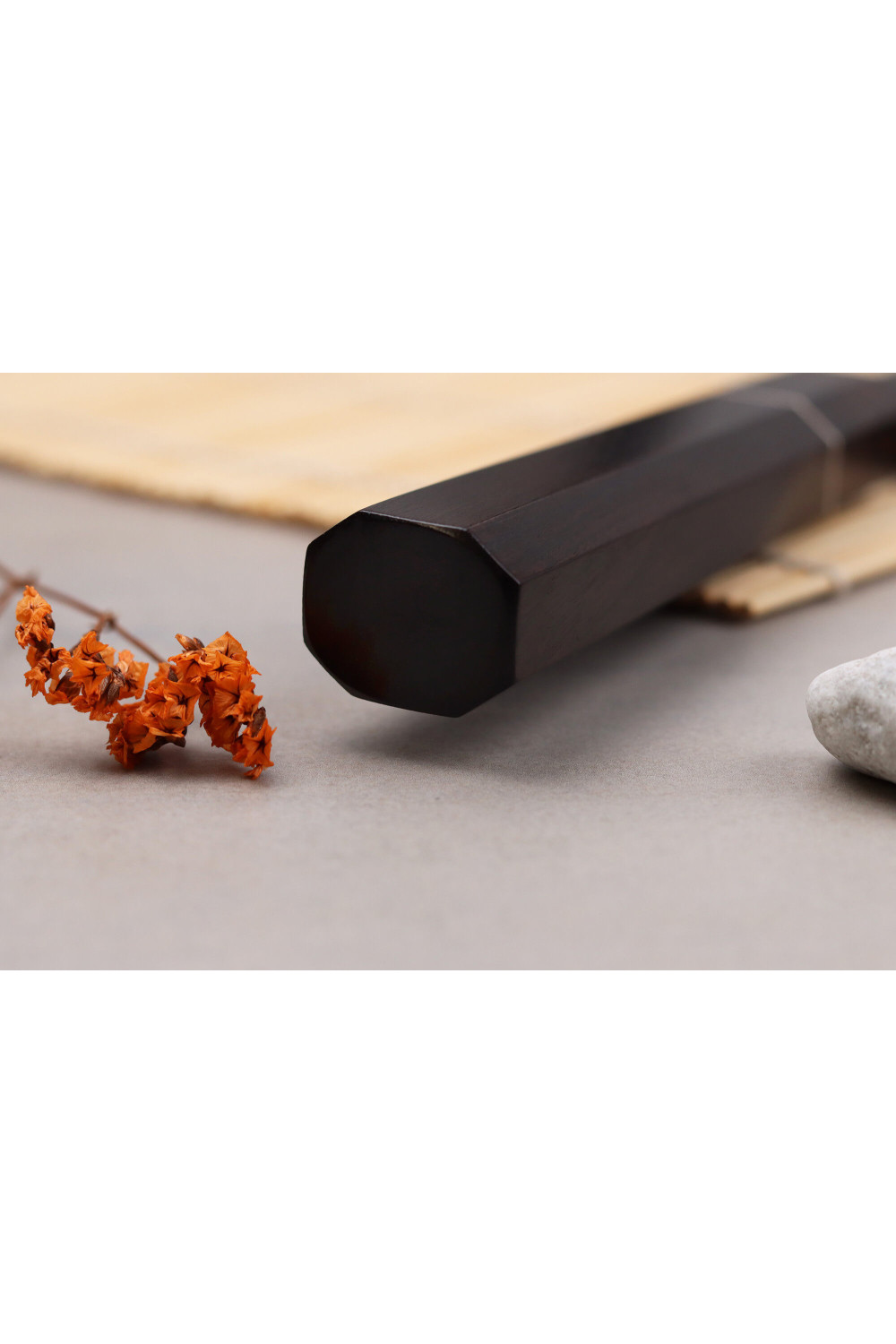
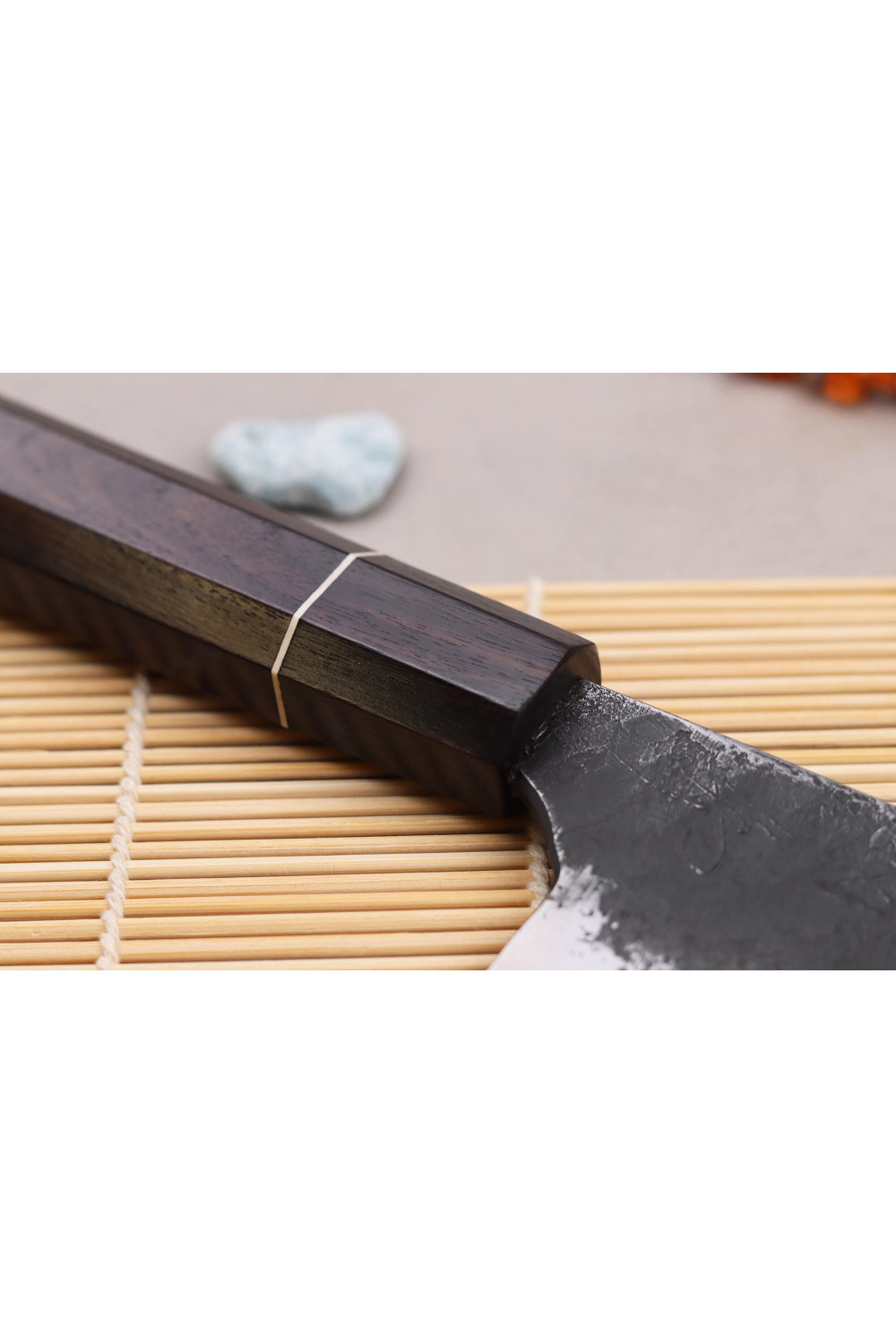
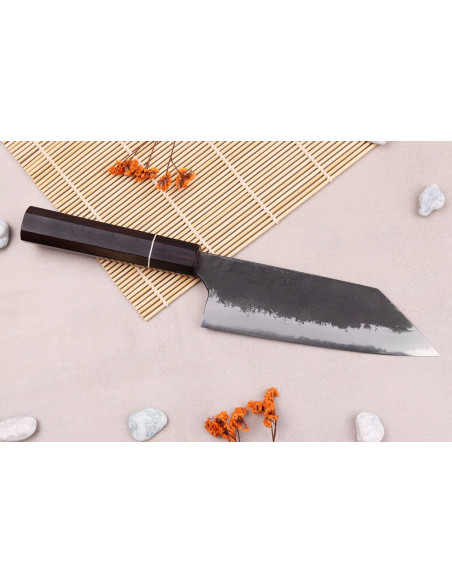
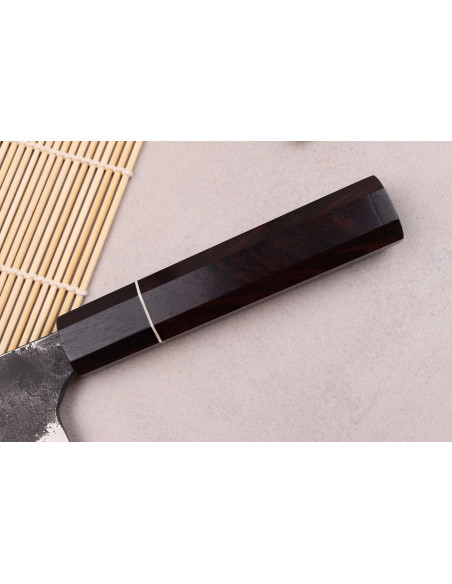
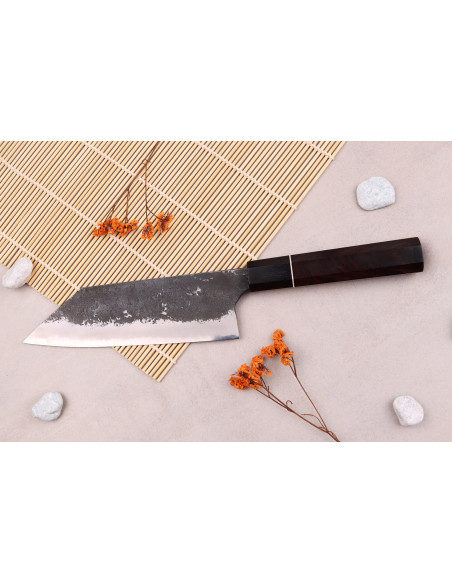
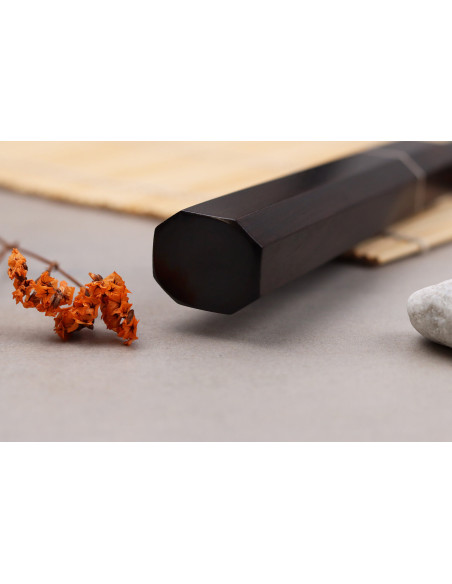
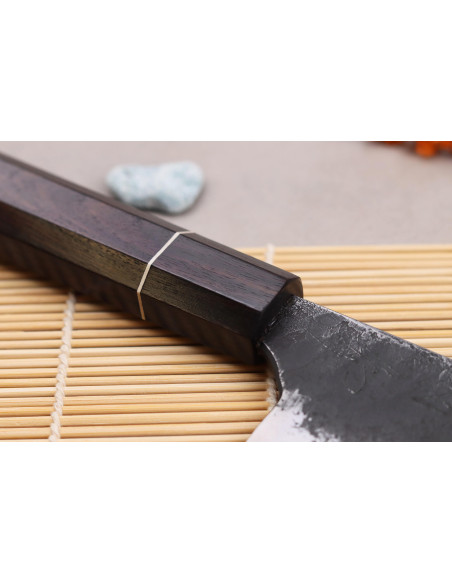
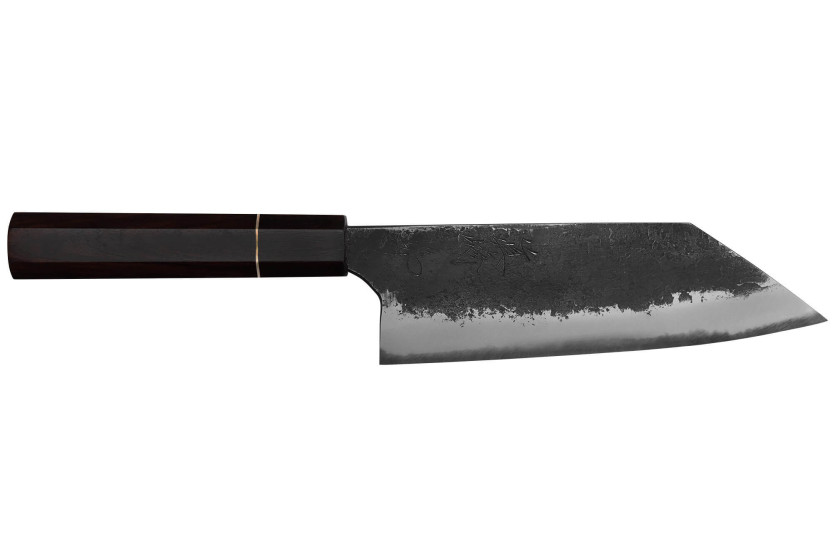
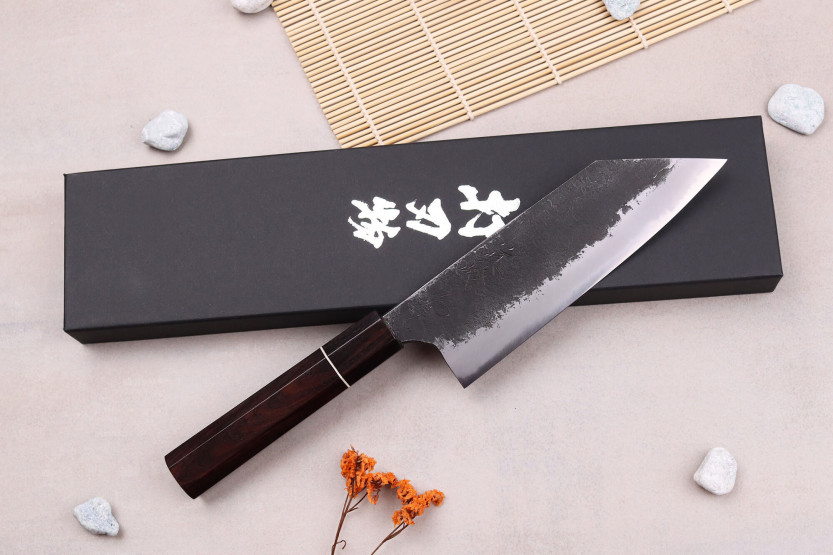
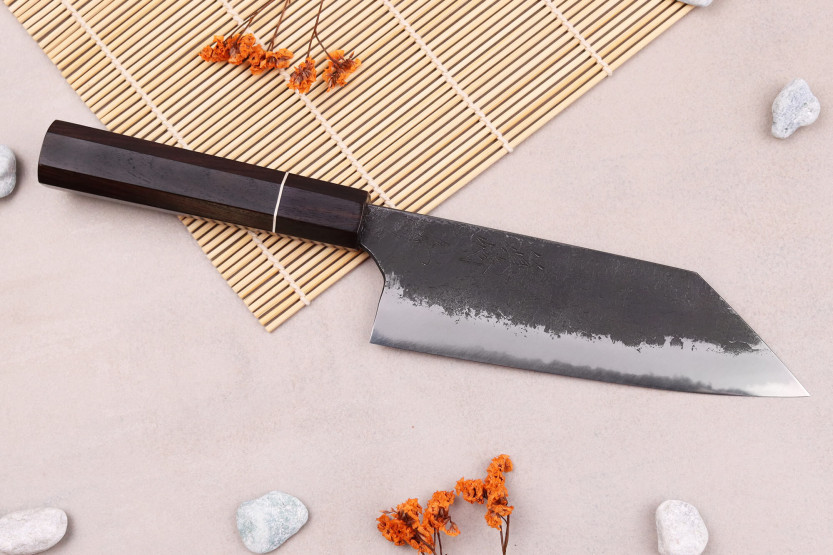
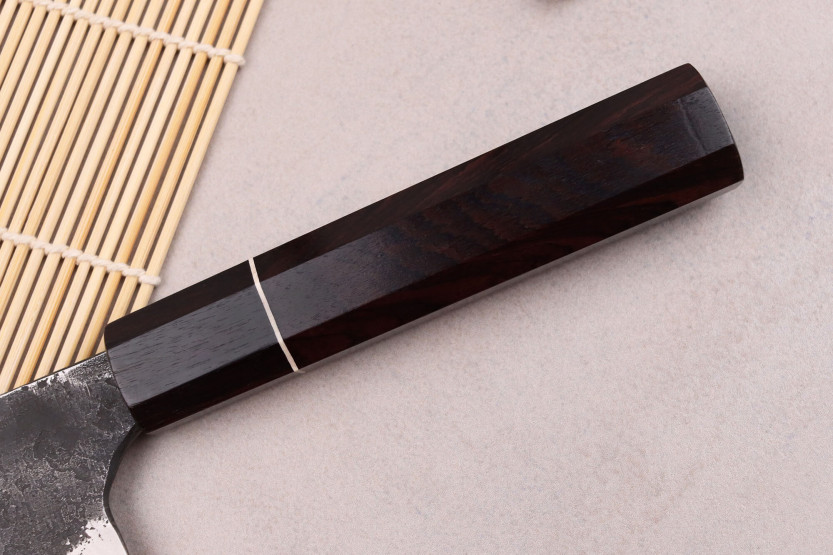
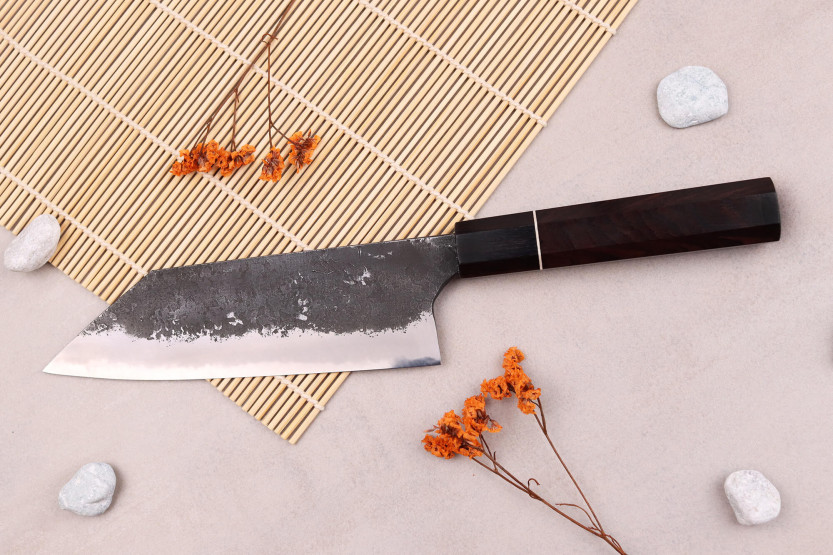
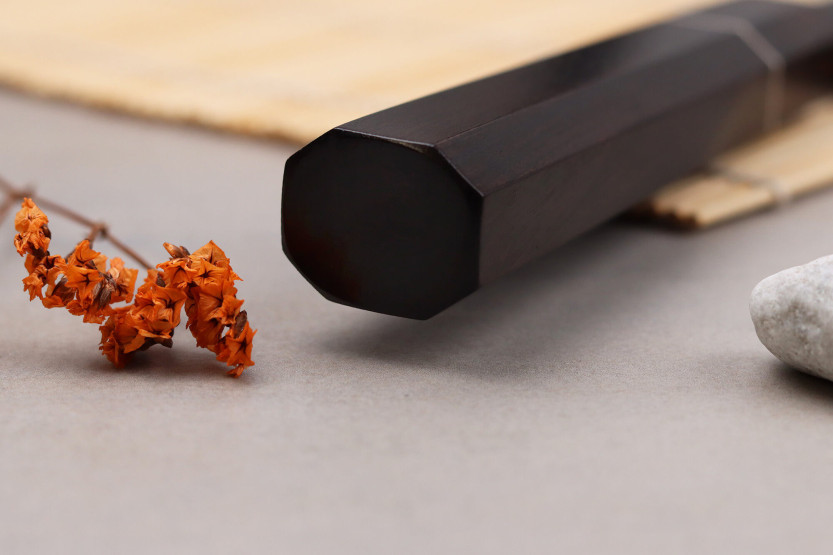
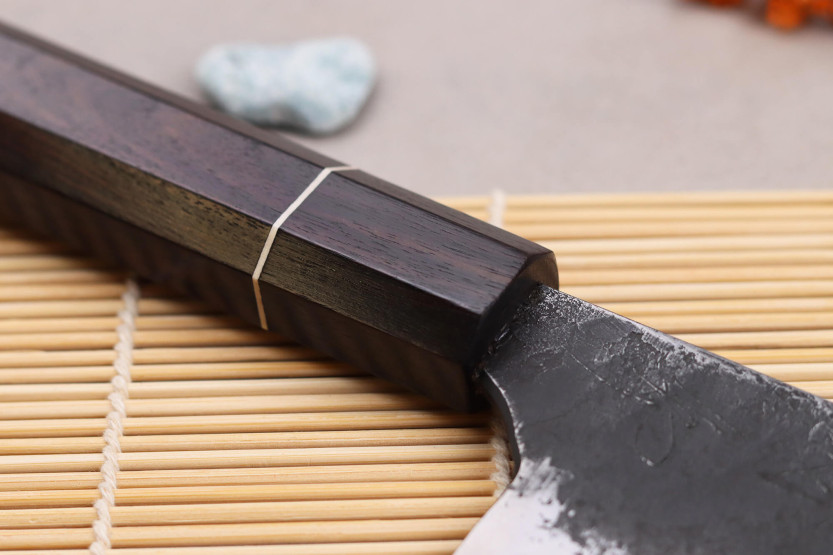
This bunka knifefeatures a handle made from ebony, a precious wood with warm tones that resists cracking very well thanks to its density. Because of its durability, ebony is ideal for regular, even daily use in the kitchen. The handle is complemented by a black buffalo horn bolster, bringing balance and harmony to the knife. The two materials are elegantly separated by a white micarta ring.
The ebony is octagonal-cut to offer both comfort and handling when cutting, even with prolonged use. What's more, this handle shape is suitable for both right- and left-handed cooks.
Finally, wood pulp fills the spaces where the blade fits into the handle, making the knife completely watertight. This prevents pieces of cut food and cleaning water from getting inside.
The traditional blade with Black Nashiji finish
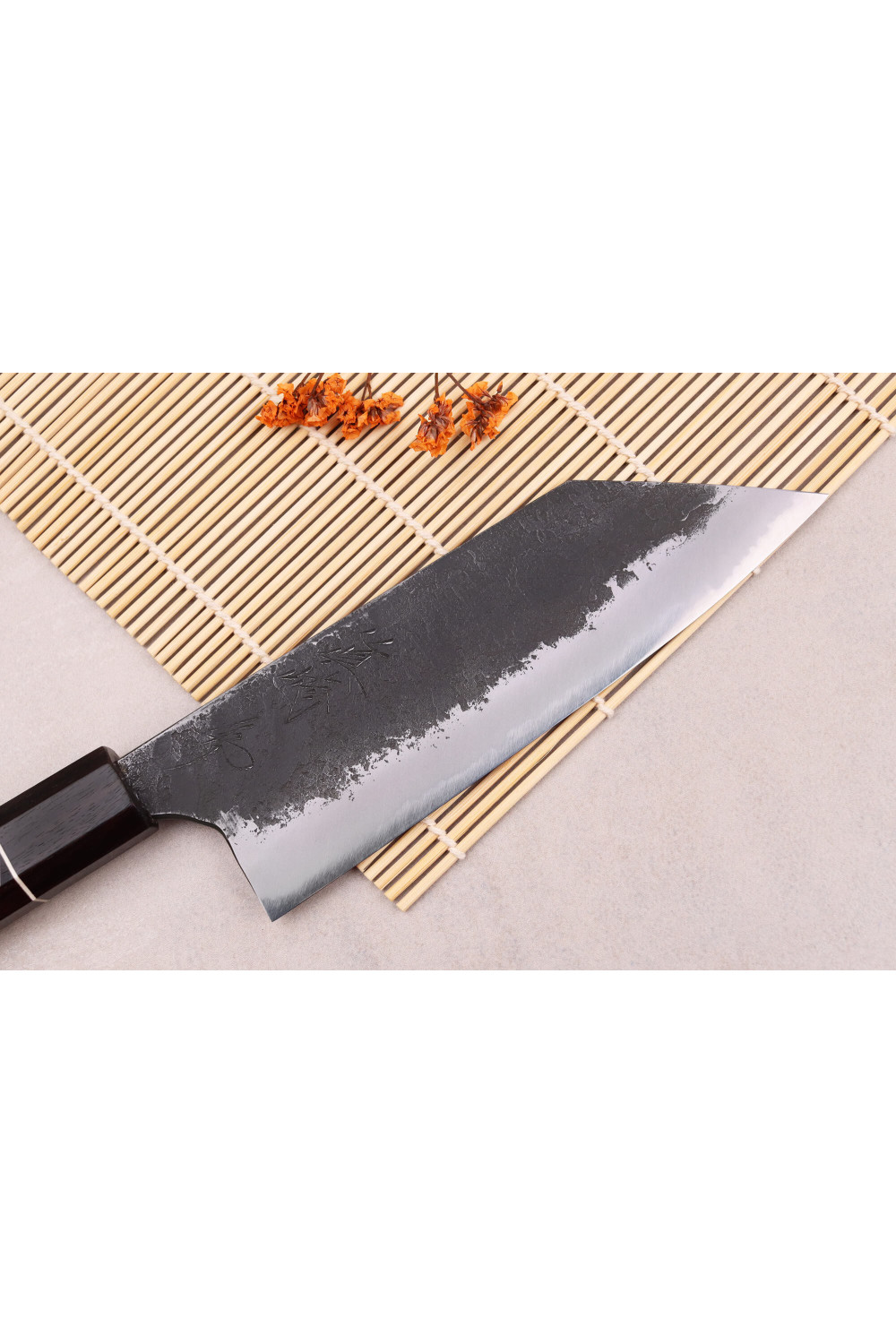
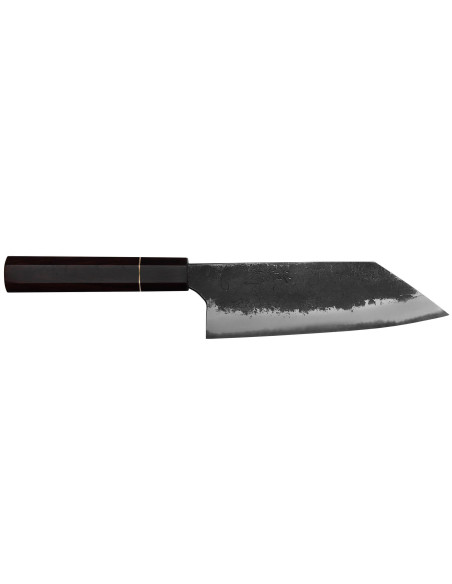
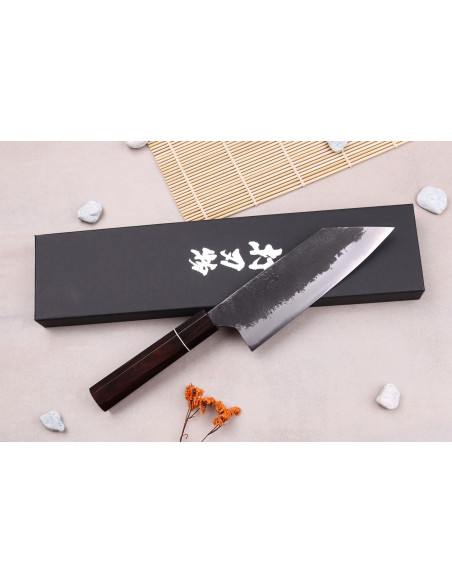
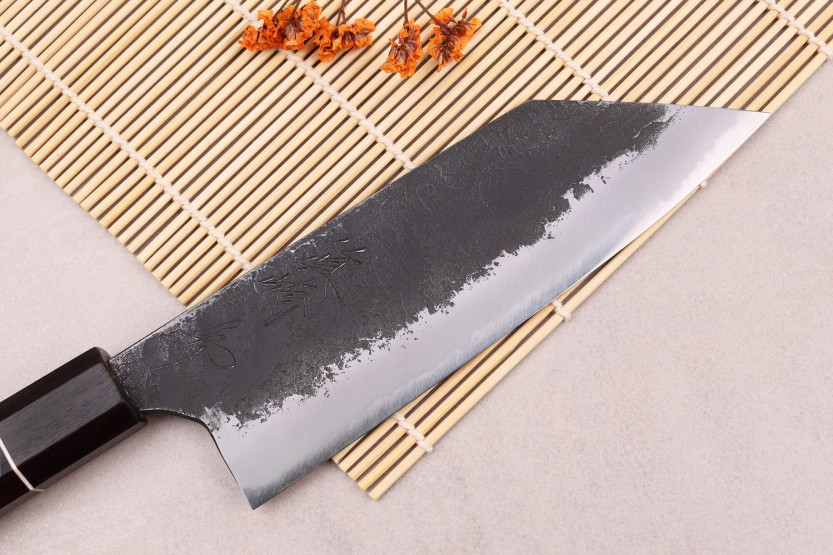
The bunka features a 16.5cm blade with a Japanese structure called San Maï, which means "3 layers" in French. These terms refer to the construction of the blade. It consists of a rigid steel core surrounded by two layers of softer steel, folded on either side. This protects the blade's core while providing optimum balance.
Naoki Mazaki usedJapanese Shirogami #2 steel, also known as White Steel 2, to manufacture the blade core. This alloy is highly appreciated by chefs. It is produced by Hitachi, a world-renowned steelmaker who supplies many blacksmiths. Shirogami #2 steel is known for its high purity and homogeneous structure (visible under the microscope). It is considered the closest steel to tamahagane, used to forge traditional swords. This alloy is also easy to sharpen, guaranteeing extreme cutting precision. It achieves a hardness of almost 62 HRC with a carbon content of around 1.3%.
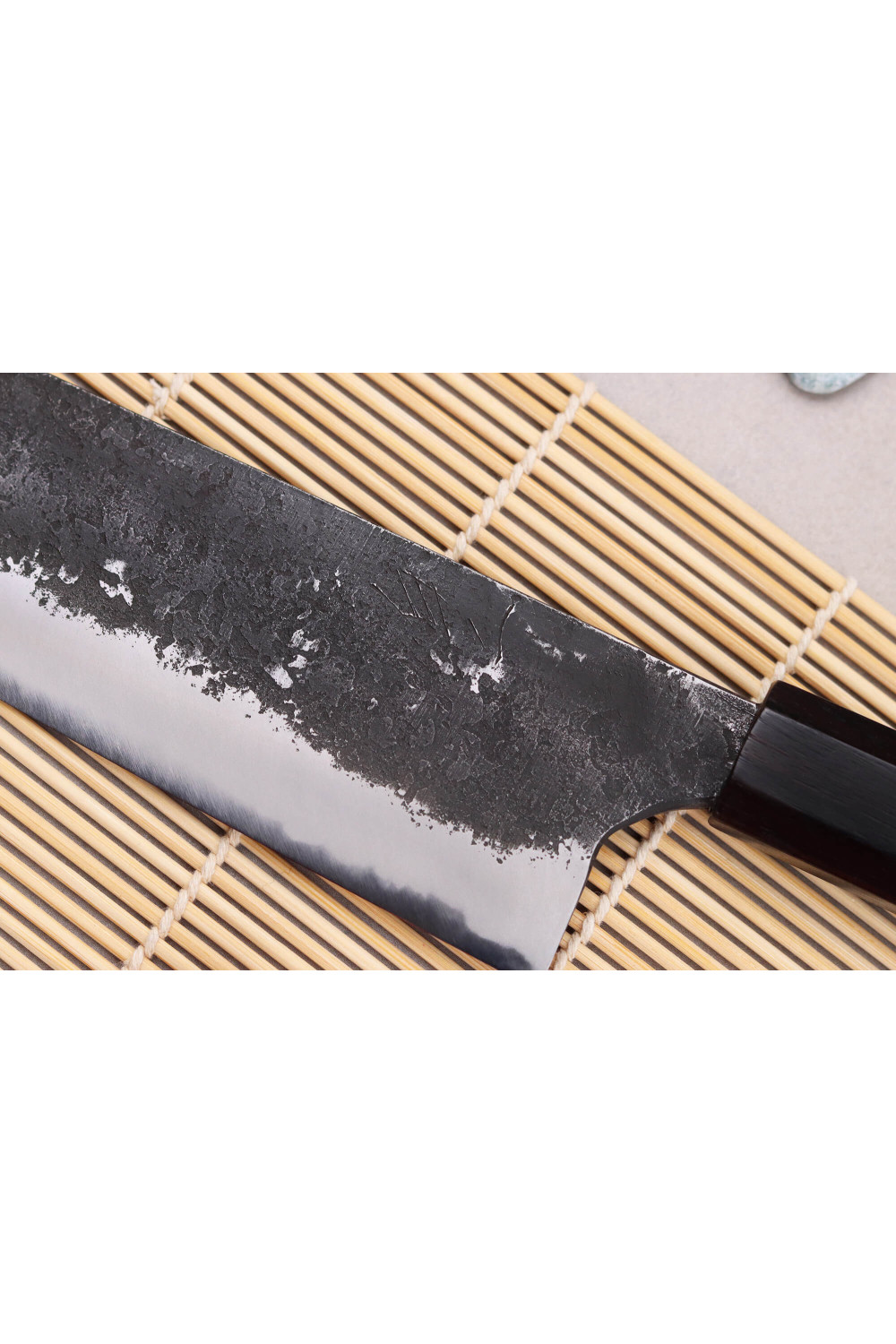
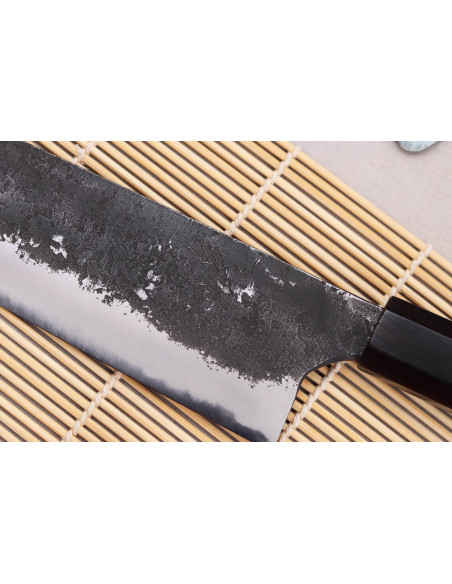
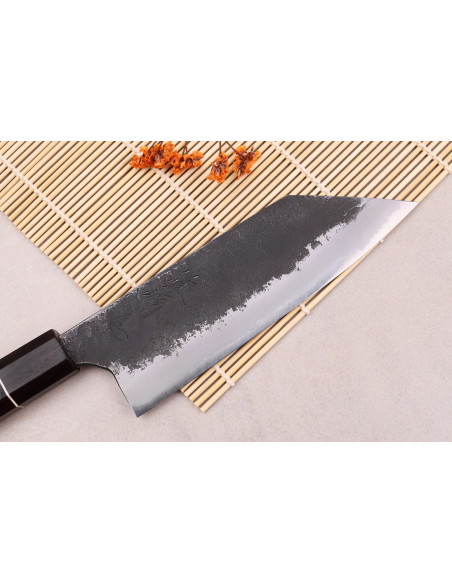
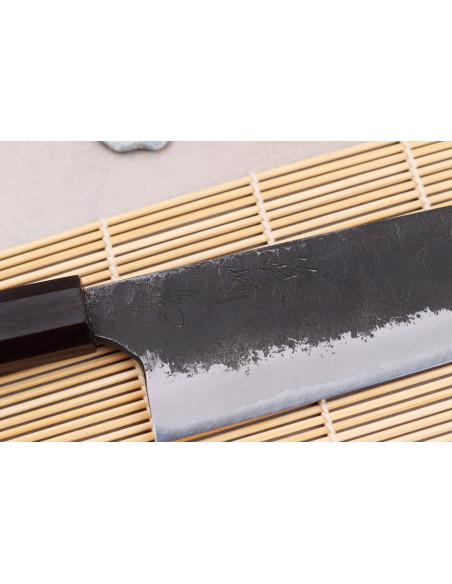
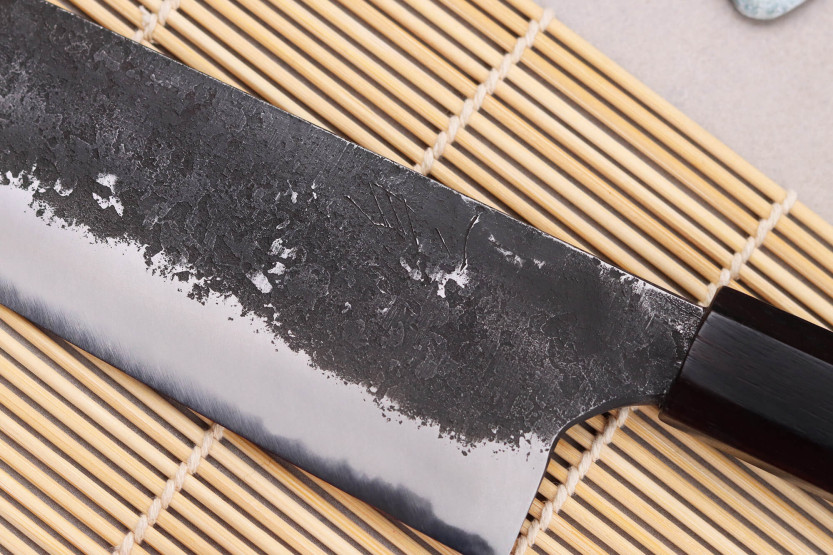
The rigid core is surrounded bya layer of softer iron, creating a sandwich structure by being folded on either side of the core. This outer layer adds flexibility to the core while providing protection. As a result, the knife is less sensitive to impact, and therefore more resistant to breakage during use. The alternating layers of steel are visible along the cutting edge, creating attractive random wave patterns.
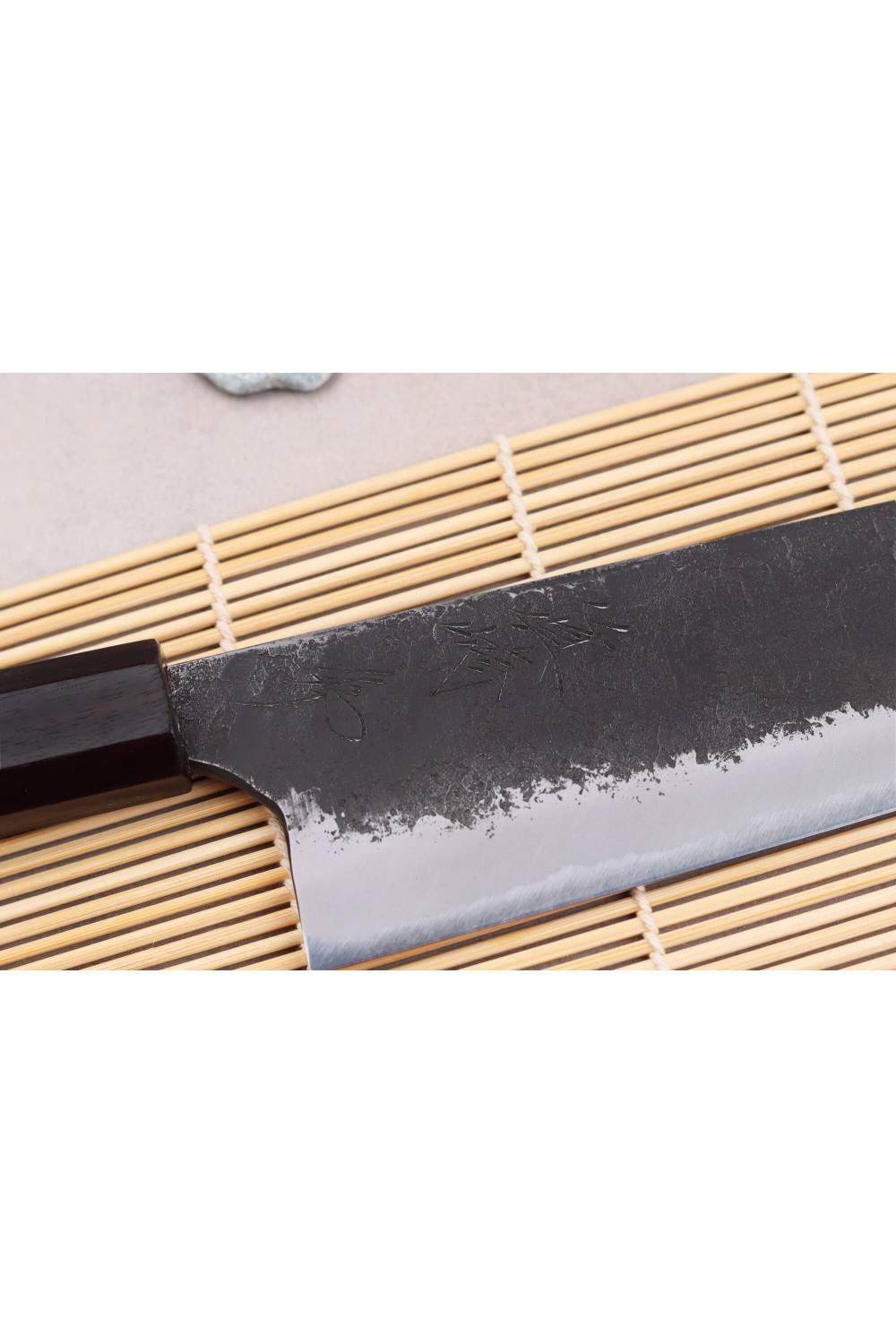
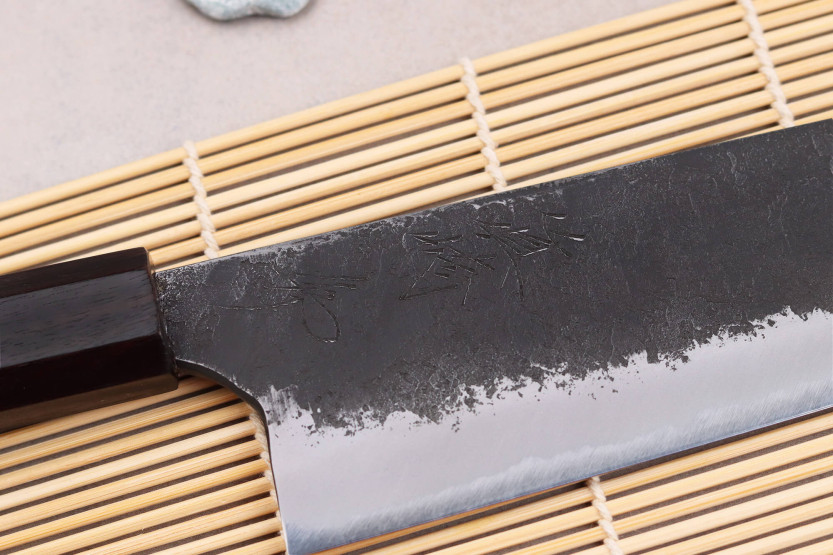
A superb Black Nashiji finish has been applied to the blade, giving it an authentic, rustic appearance. It gives the impression of not having been polished, and retains its black hue. The Black Nashiji finish is reminiscent of brute forging, and has given its name to the range to which the knife belongs. What's more, you can see traditional kanji engraved on either side of the blade, adding to its authenticity.
As Naoki Mazaki is also a master sharpener, he has personally hand-sharpened the knife using a variety of sharpening stones to achieve an impeccable edge. In fact, your knife needs to be stone-sharpened to maintain its performance when the need arises.
Learn more about Naoki Mazaki
Naoki Mazaki forged this knife. He is a talented young blacksmith who works in his workshop in Sanjo, in the Japanese province of Niigata. His unique story deserves to be told: when he was younger and didn't know what profession to choose, he took a motorcycle trip across Japan to find his way! Stopping in Sanjo, Niigata province, he was captivated by the work of the local blacksmiths. He then decided to become a blacksmith himself.
After five years training with the Yoshikane brand, he decided to set up his own workshop. He now creates his own knives using mainly Shirogamo 2 and Aogami steels, to which he adds a traditional finish to give them an authentic look that is close to his heart.
The blacksmith's reputation is such that the average waiting time for one of his knives is two years! This demonstrates the recognition of his expertise.
It's vital to take the utmost care of this Japanese knife, as it's made from top-quality materials. This ensures long-lasting preservation.
Due to the high carbon content of the blade, the knife must be cleaned by hand. It is important never to put the knife in the dishwasher or let it soak in your sink. To wash the blade, use a non-abrasive sponge and mild soap, taking care not to wet the handle. After washing, wipe the knife dry to remove all traces of moisture, then store it in a dry place.
The blade may also change color slightly over time, which is perfectly normal. It contains carbon, which is highly reactive to elements such as the acidity of certain foods, or the humidity level in the air. To protect and maintain the blade, you can apply a littleoil from time to time.
Find WS2 Black Nashiji handcrafted knives at KnifeLeader.eu!




 By buying this product you can collect up to