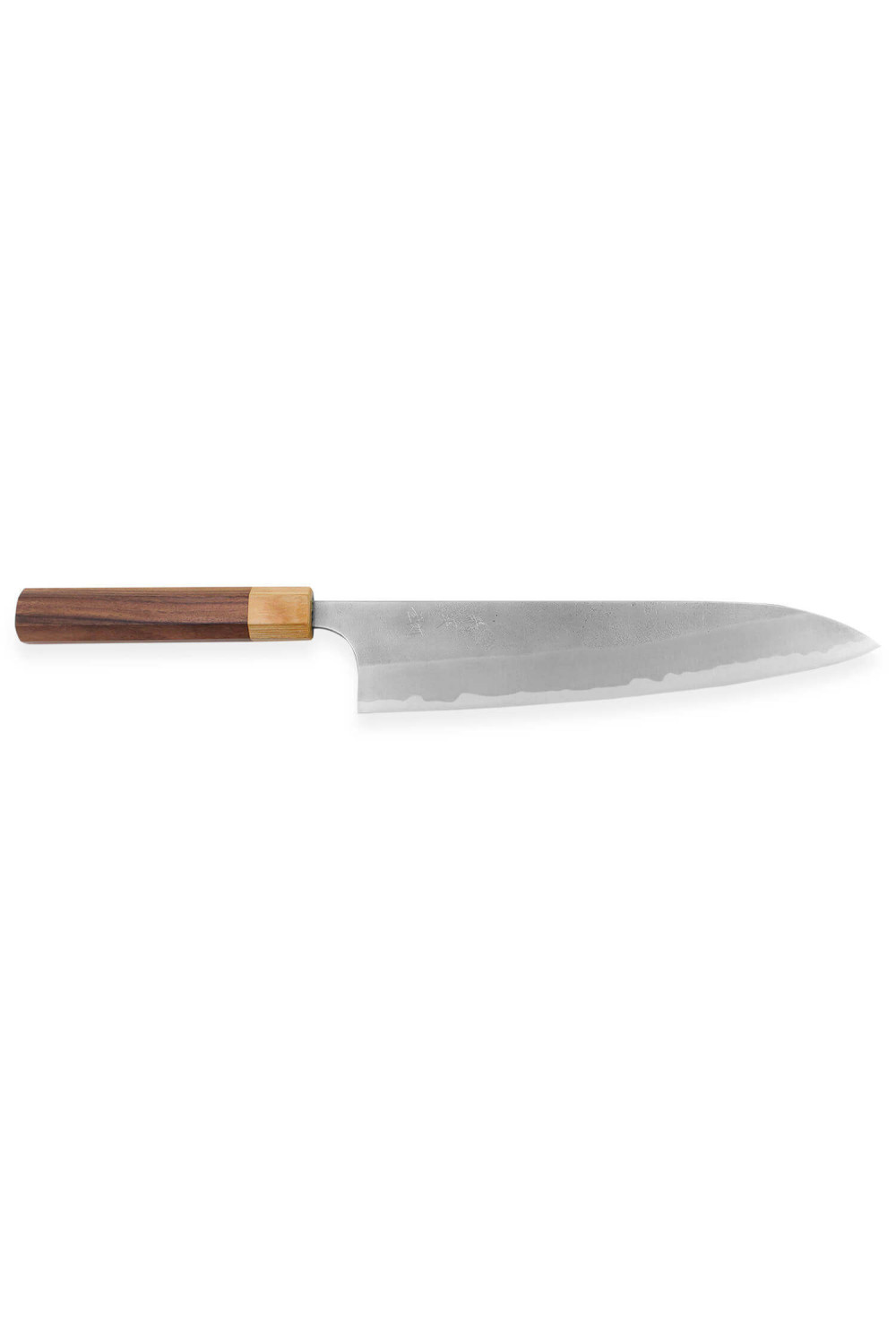
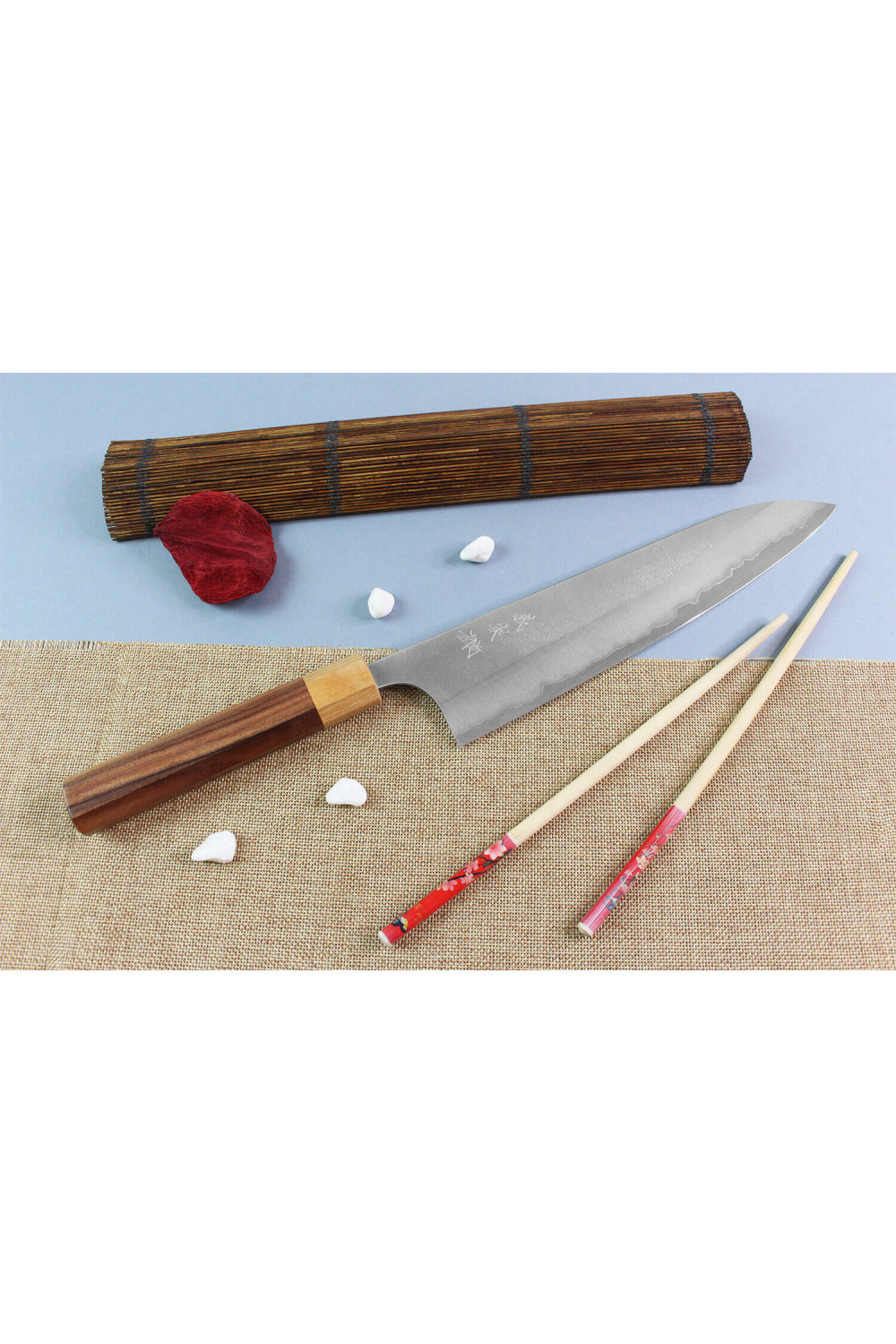
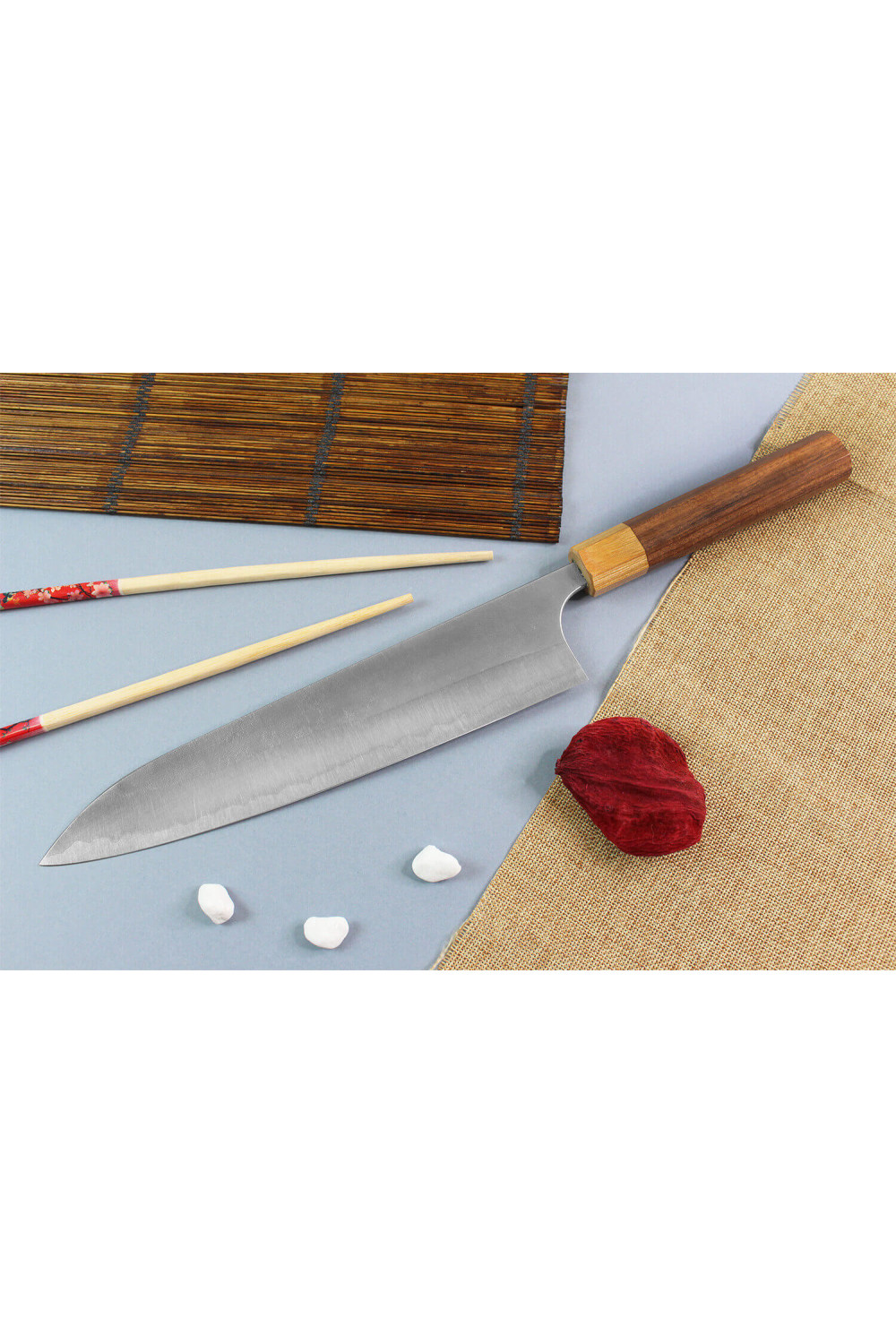
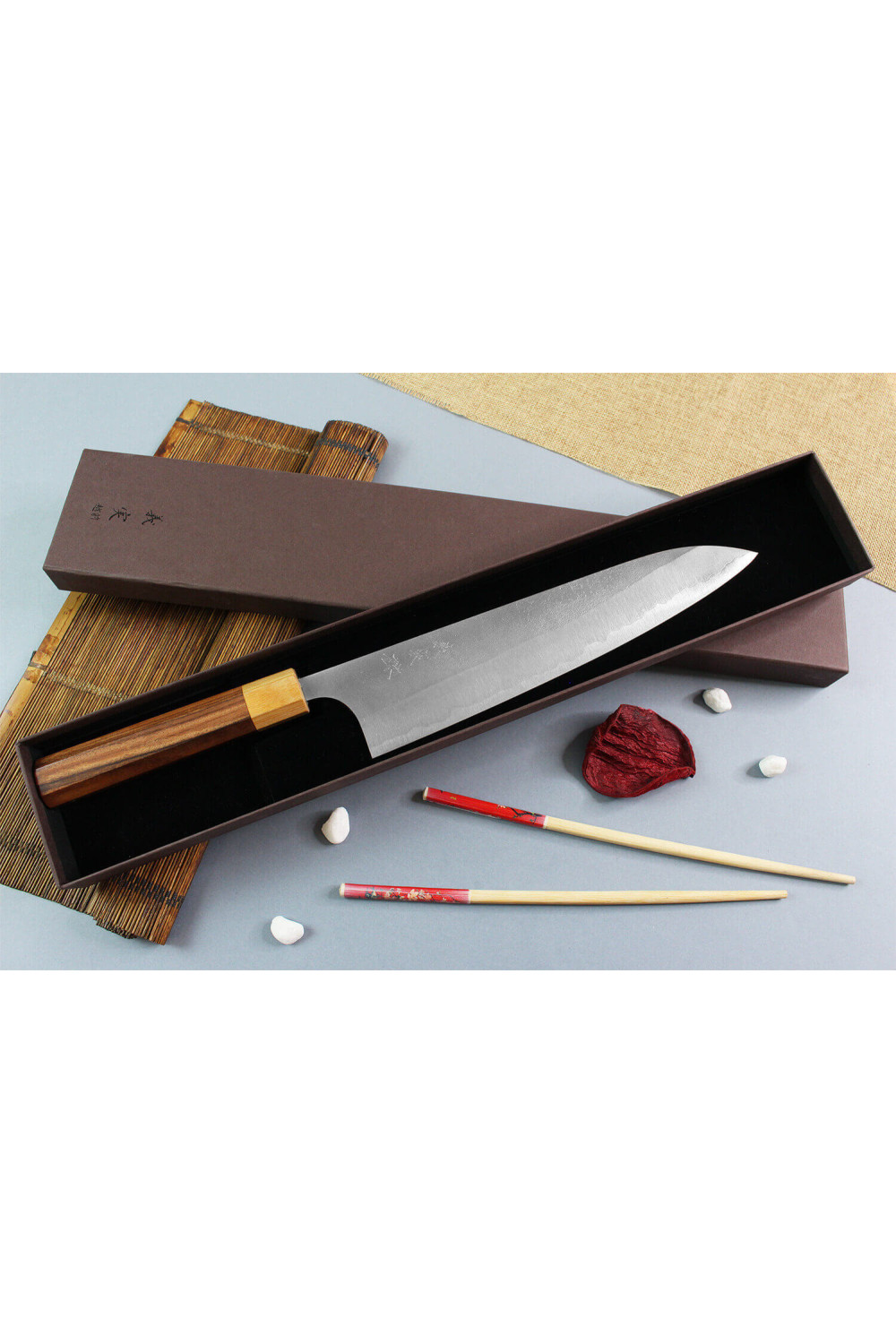
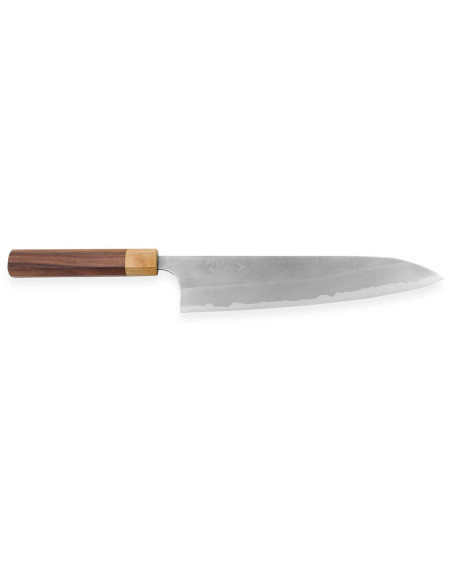
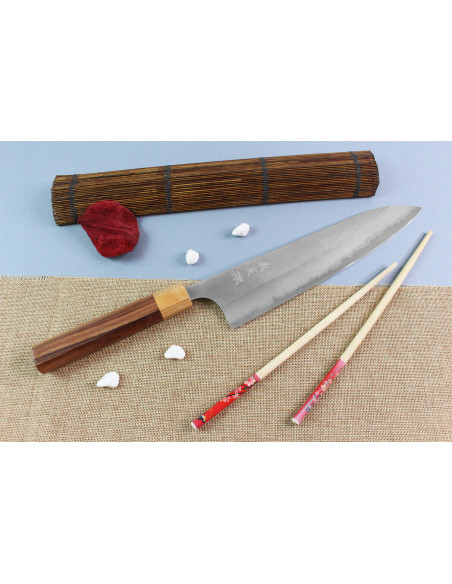
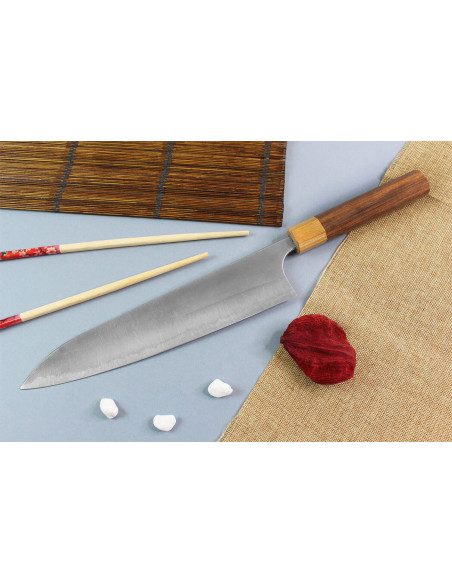
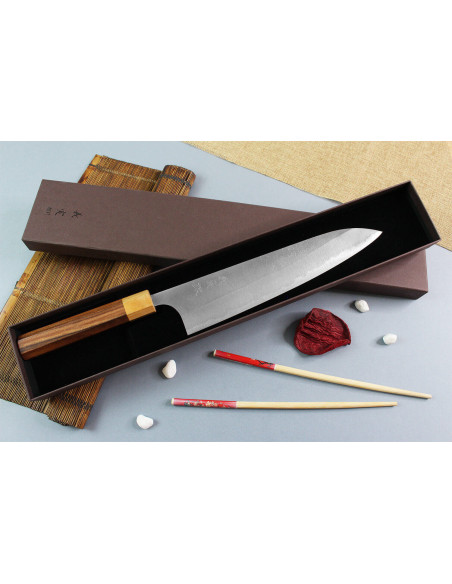
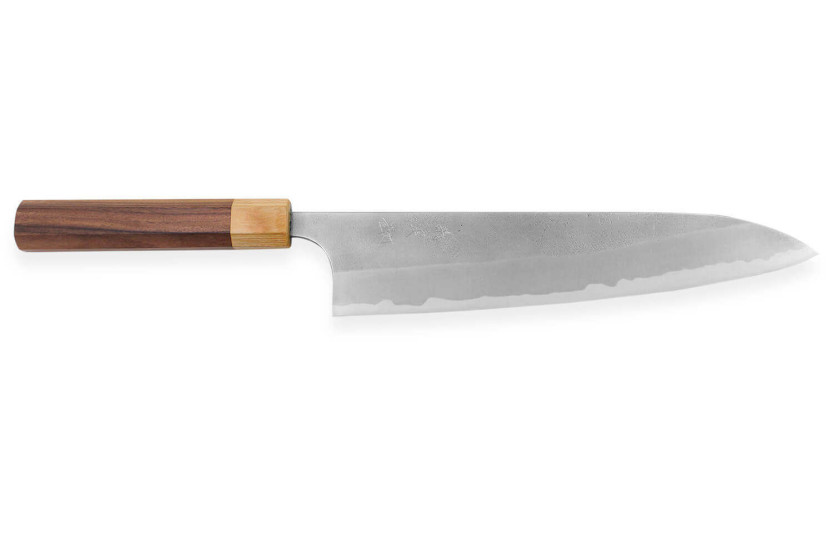
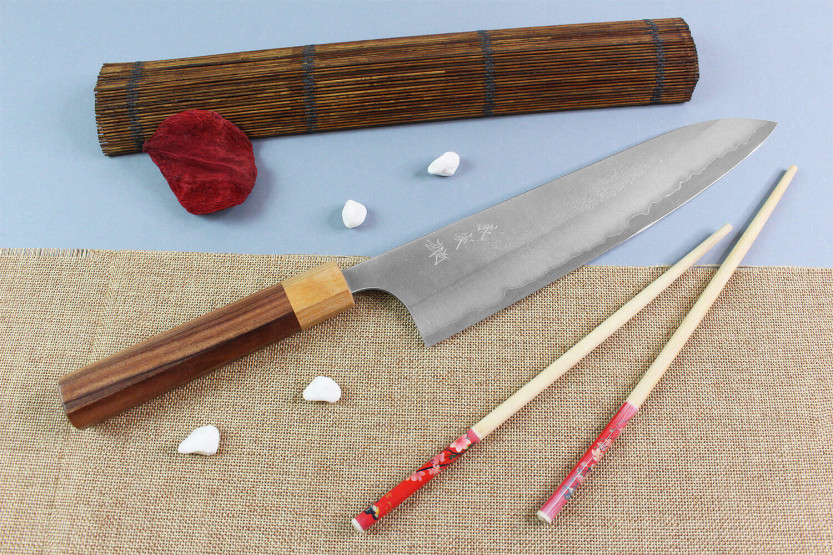
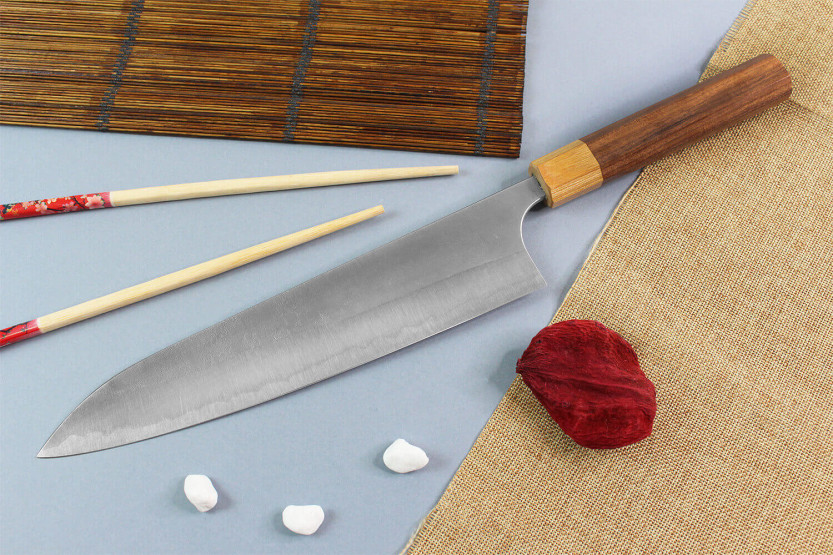
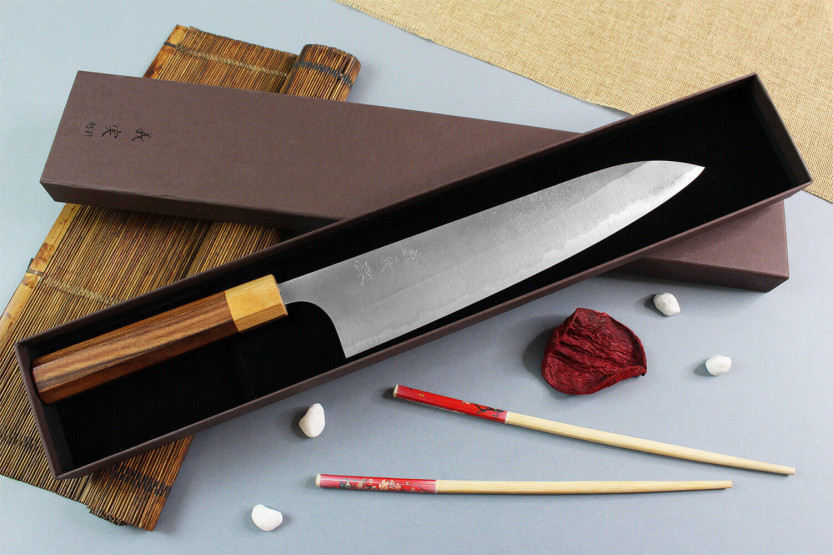
This 24cm chef knife was made by Yoshimi Kato, a certified Japanese blacksmith from the town of Takefu in Japan.
During his apprenticeship, he studied under several renowned blacksmiths, including Hiroshi Kato san (his father-in-law), a highly respected blacksmith in Japan and around the world! Hiroshi san is a great master blacksmith, who has been creating knives almost every day for almost 50 years. He was one of the founding members of the Takefu VillageKnife, where blacksmiths can share their know-how, materials and ideas. He now teaches his art to the next generation of blacksmiths.
Yoshimi has taken over his father-in-law's workshop, where he continues to create the knives of his retired master, while having launched his own line of knives. Each Yoshimi Kato knife is crafted in the Japanese tradition, using meticulous techniques and the finest finishing processes. Each piece is therefore unique, to satisfy you to the full, or to make the ideal gift for a cook.
Yoshimo Kato san began his apprenticeship in 2013. He quickly assimilates the craft and is very talented in what he does. He continues Hiroshi Kato san's work in cutlery, while bringing innovative ideas that all cooks will appreciate!
(Hiroshi san on the left and Yoshimi san on the right)
The knife in detail:
The blade is structured from 3 layers of steel. This technique, called San Maï meaning "3 layers" in Japanese, consists of superimposing different alloys.
Firstly, the core of the knife is made from Japanese Blue Super Steel(Aogami Super in Japanese) from Hitachi steelworks. This steel contains high levels of carbon, chromium and tungsten. To be more precise, the carbon content is around 1.4 to 1.5%, much higher than the average of 0.5 to 1% for Western and Japanese blades.
Blue Super Steel's unique characteristics enable it to achieve a marked rigidity of 64/65 HRC on the Rockwell scale, making it one of the highest hardnesses found in cutlery. This alloy is renowned for its ability to deliver a very fine cutting edge, thus enhancing cutting quality tenfold.
This extreme hardness has another advantage: edge retention. In fact, the harder a steel is, the less quickly it wears, i.e. the edge stays sharp longer, and the need for sharpening is less frequent! For your information, if you're a private user, you'll need to sharpen your steel 2 to 3 times a year. The Aogami Super used for this range of knives is highly prized by the Japanese for its ease of sharpening. A rigid edge is not necessarily difficult and time-consuming to sharpen: the proof is here!
Secondly, this core is surrounded by a layer ofmild stainless steel that protects the Aogami Super from oxidation and makes the cutting surface "softer" (not in the "flexible" sense, but to make it less brittle in use).
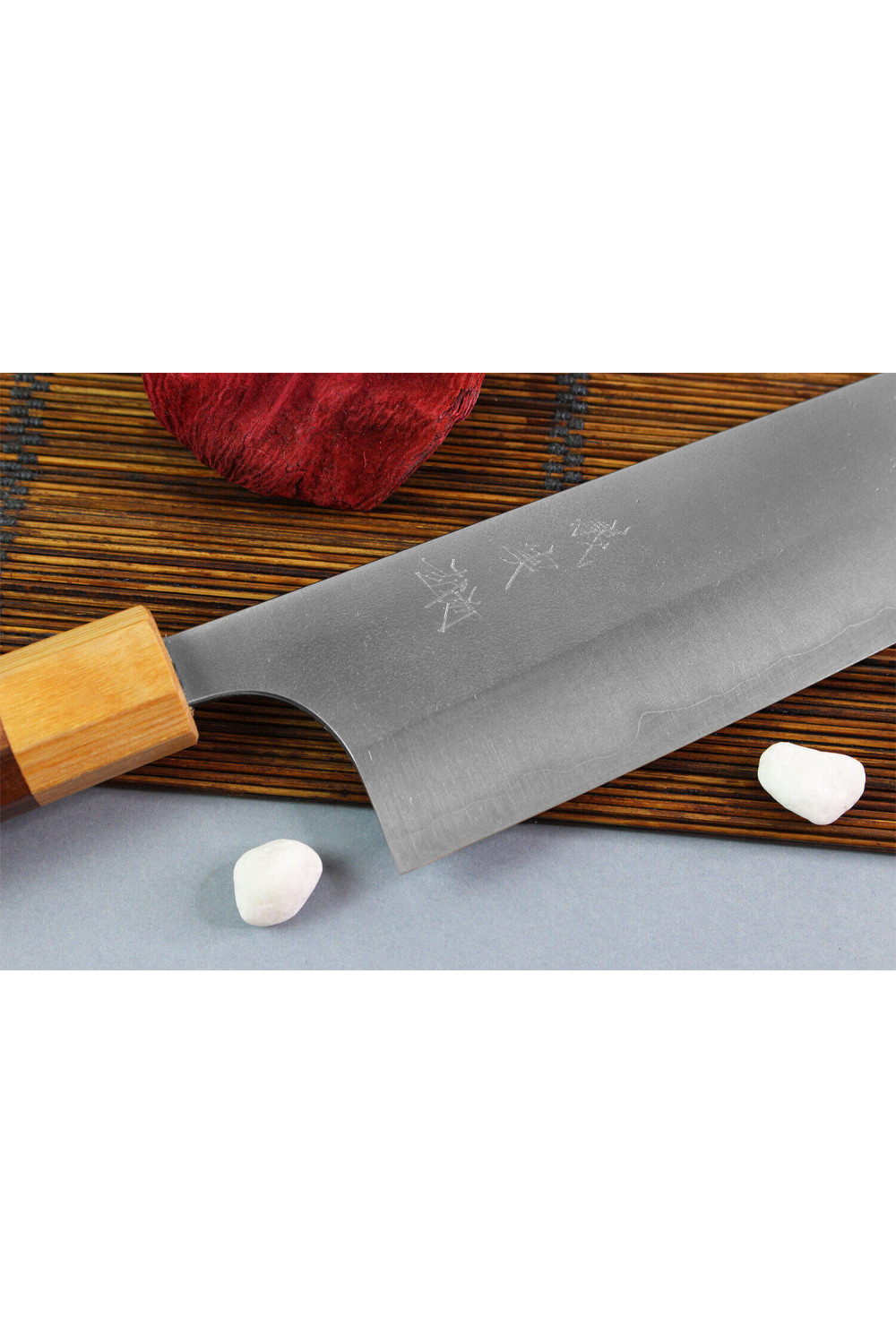
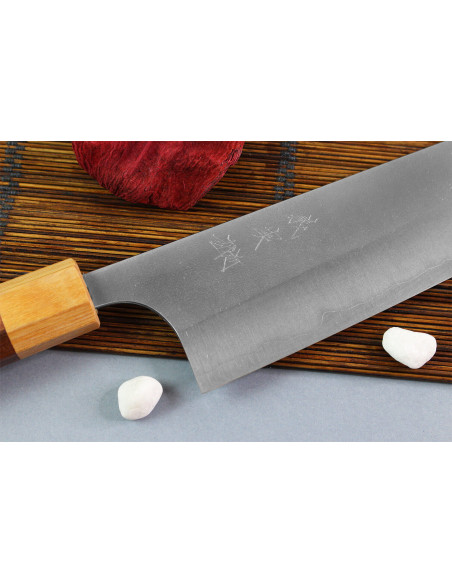
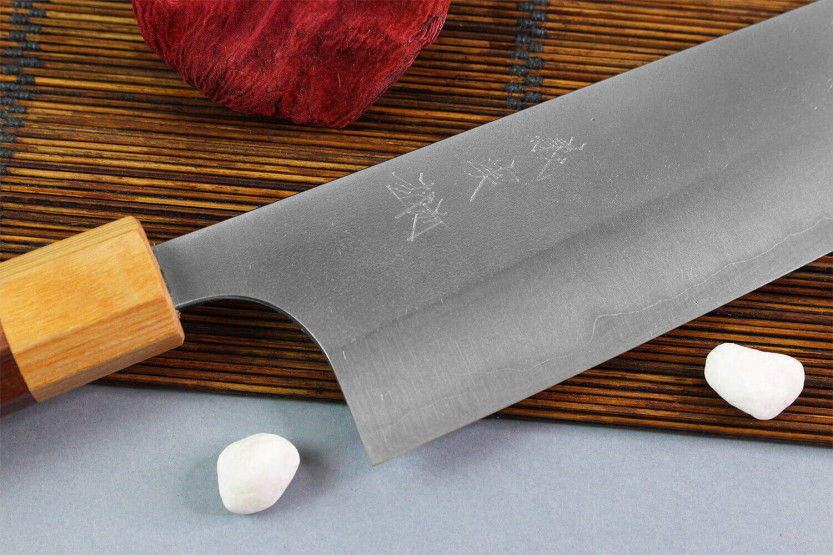
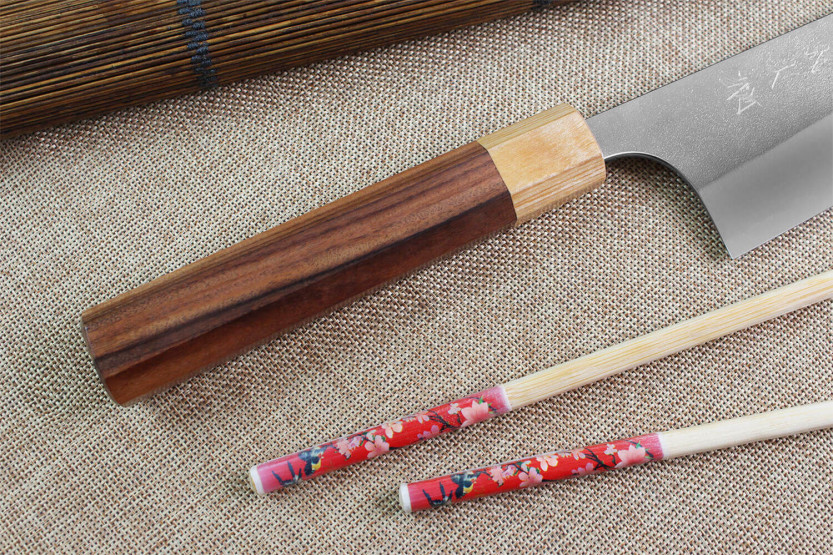
This knife features a Nashiji "brute de forge" finish, giving it a rustic appearance with lots of character. The blade has been hand-sharpened to guarantee excellent cutting performance right from the first use. The kanji on its surface are engraved by the craftsman himself.
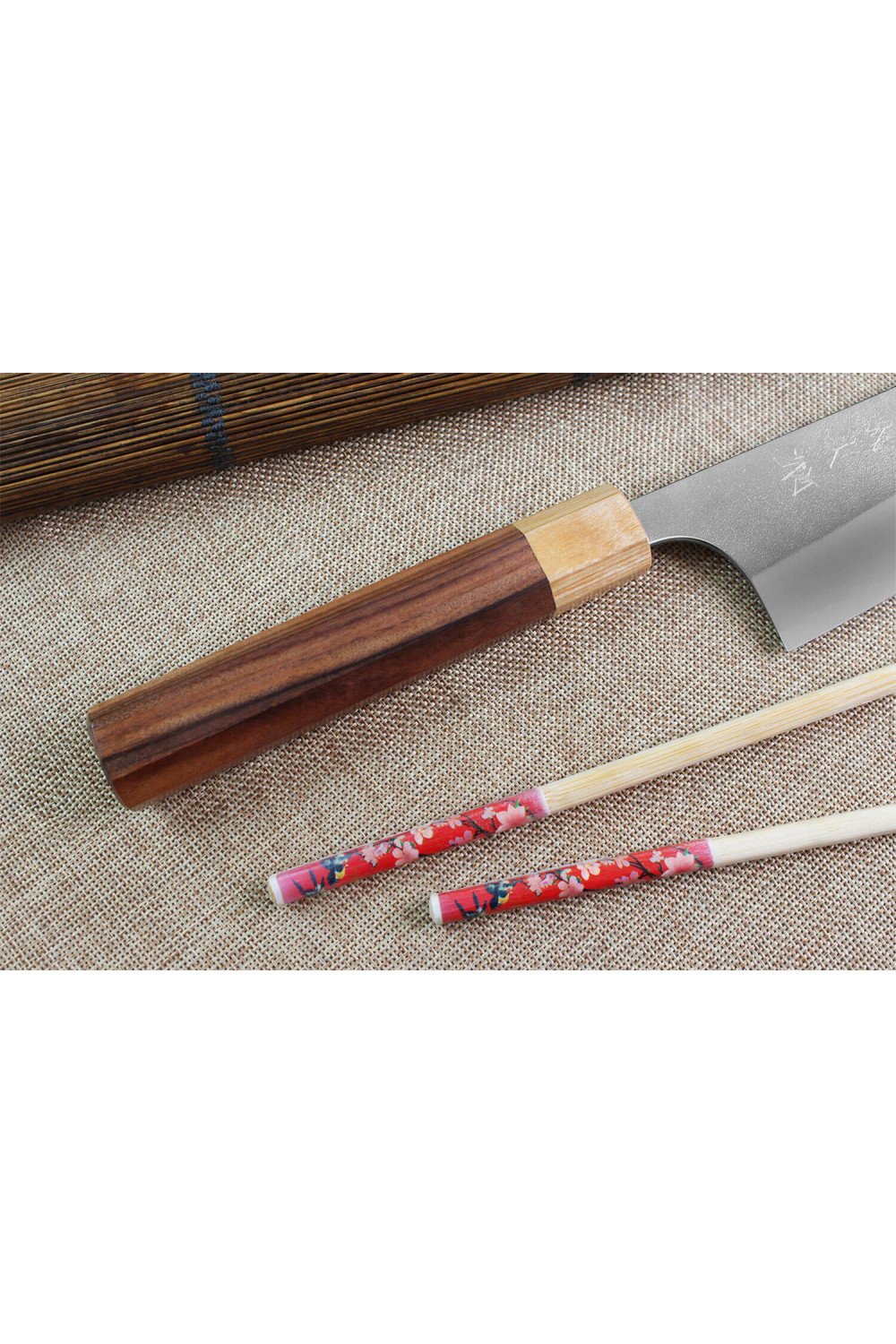
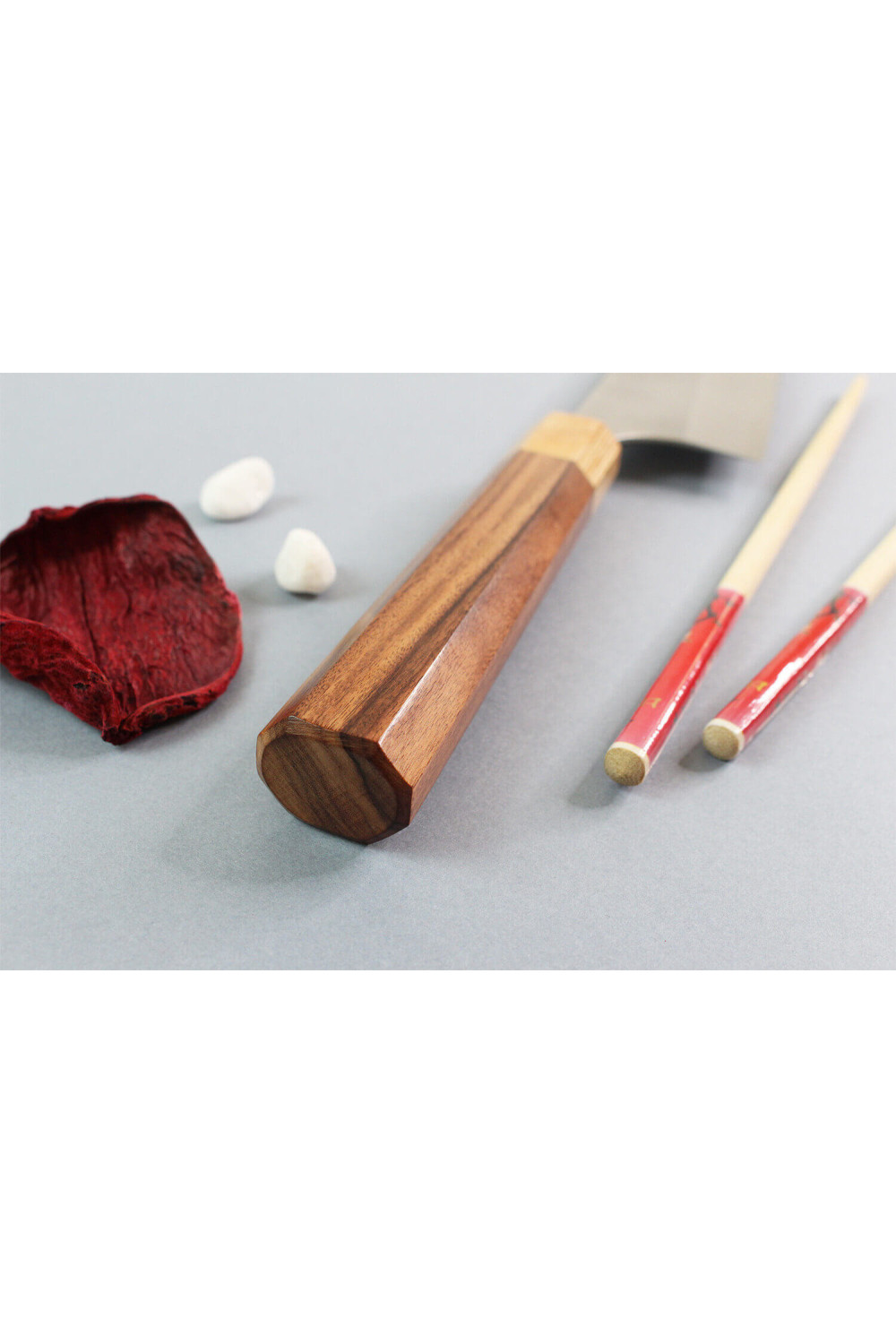
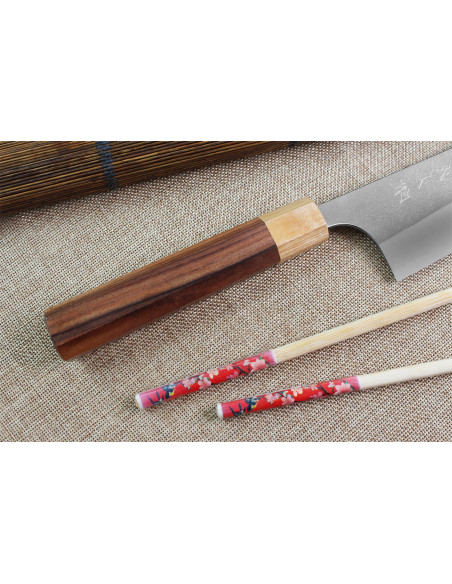
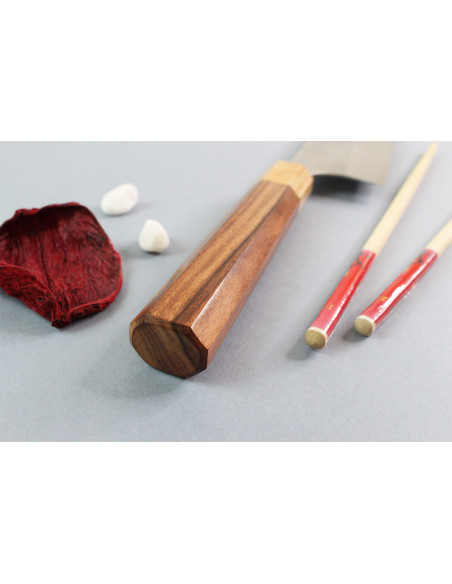
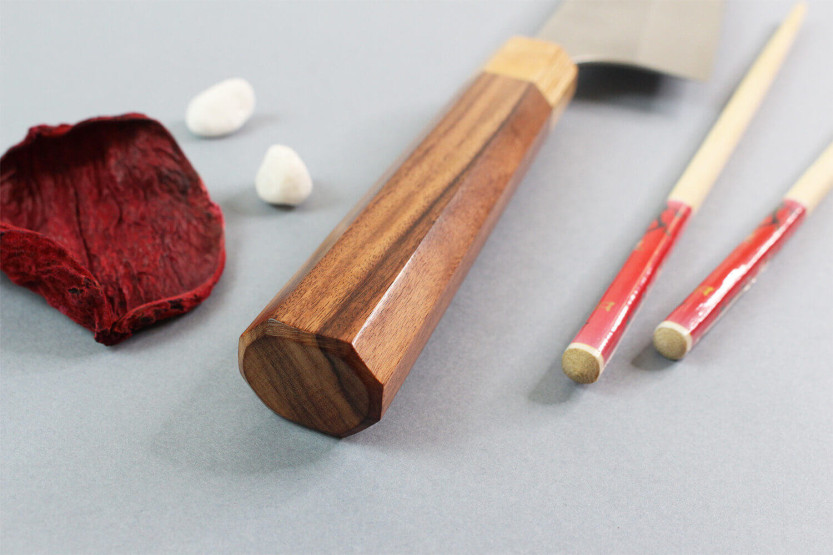
The handle is made of sandalwood, a robust and pleasantly dark wood. It is octagonal in shape, perfectly fitting the palm of your hand for better control of the knife each time you hold it. The white pakkawood bolster links the blade to the handle. Pakkawood is a moisture-resistant, antibacterial composite material frequently used in cutlery. Right-handed or left-handed, this knife is perfect for both.
The junction between the blade and the bolster is filled with a wood pulp that makes the whole thing watertight, and prevents small scraps and cleaning water from penetrating the inside of the handle.
How to care for your knife :
Hand-wash the knife to maintain its appearance and efficiency. Then wipe dry with a soft cloth and store in a dry place. It should not be left in contact with moisture for any length of time. Dishwashing, soaking in the sink or leaving to dry in the open air are all things to be avoided (and this applies to all knives, even stainless ones).
It's perfectly normal for steel to discolor over time, turning a darker blue despite good care. This does not present any danger. Aogami Super steel is highly reactive, so it's imperative to dry it with a cloth immediately after each use and wash. Store in a dry place after use.
Discover KnifeLeader's selection of handcrafted Japanese knives!




 By buying this product you can collect up to