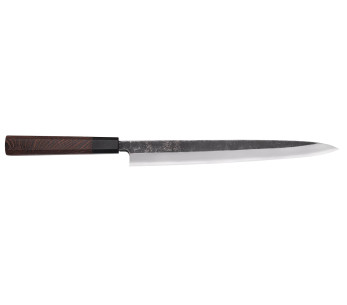
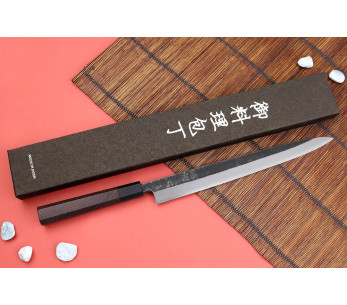
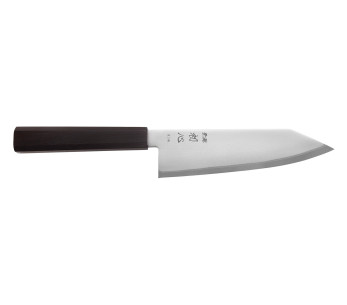
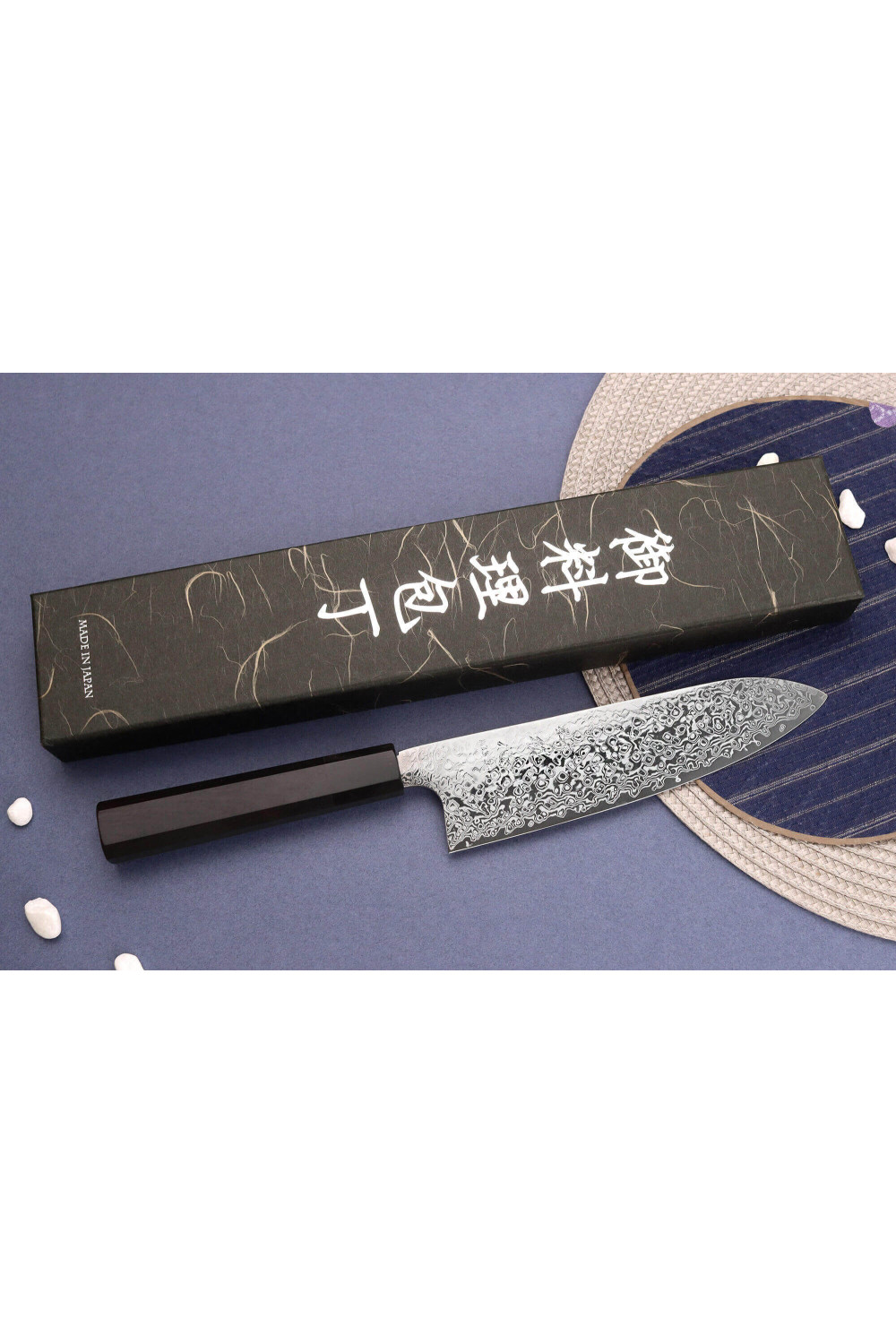
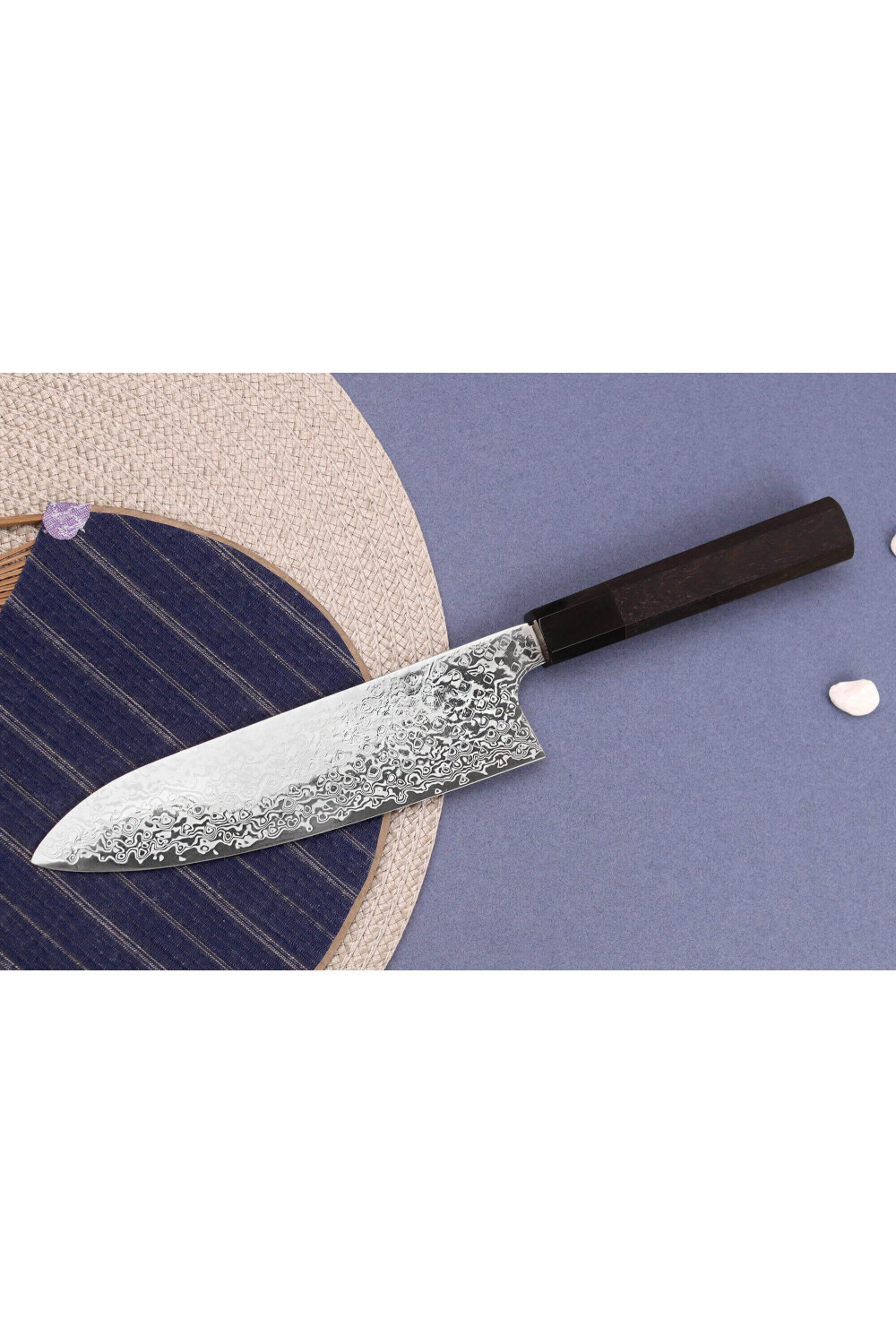
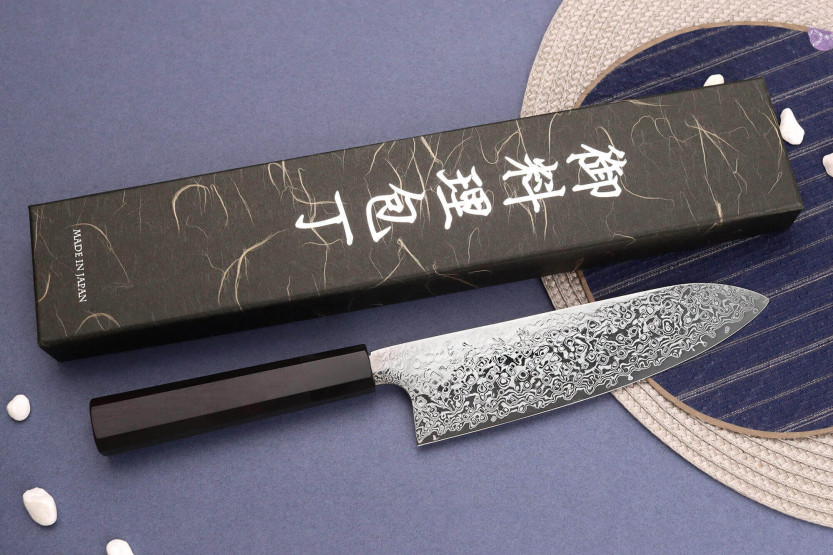
Hatsukokoro is a brand that produces high-quality Japanese kitchen knives in collaboration with blacksmiths who possess true expertise in cutlery craftsmanship! This handcrafted Japanese knife was made by Yauji Yoshihiro at Takefu Knife Village, a place where many artisans gather to share their experiences and expertise.
Yauji Yoshihiro is a Japanese blacksmith born in the 1980s who began his apprenticeship at a very young age! In 2003, he began his training under the renowned master blacksmith Hideo Kitaoka, who himself had learned the craft within his own family and went on to pass his knowledge down to Yauji-san. In 2019, after serving as an apprentice for about fifteen years, Yauji Yoshihiro opened his first workshop, where he crafts his knives from forging to sharpening.
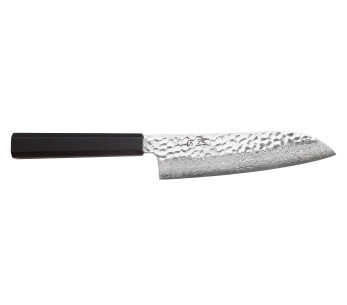
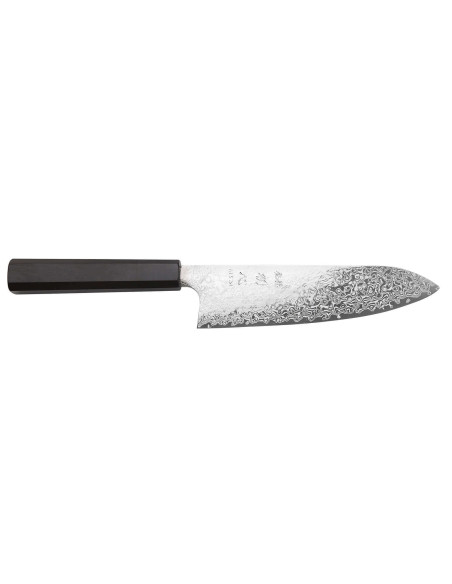
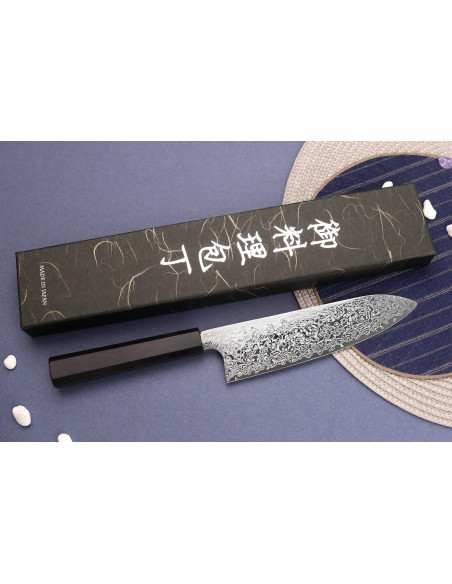
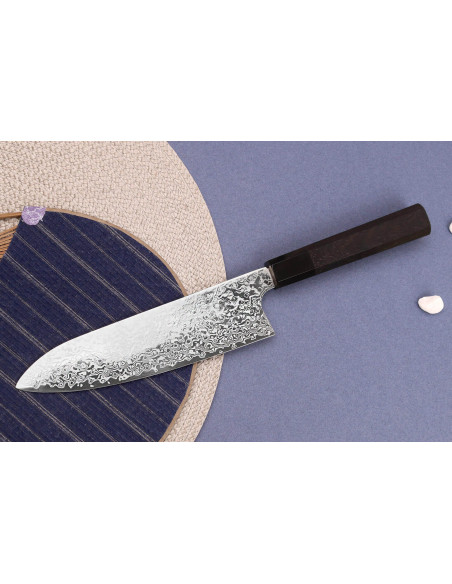
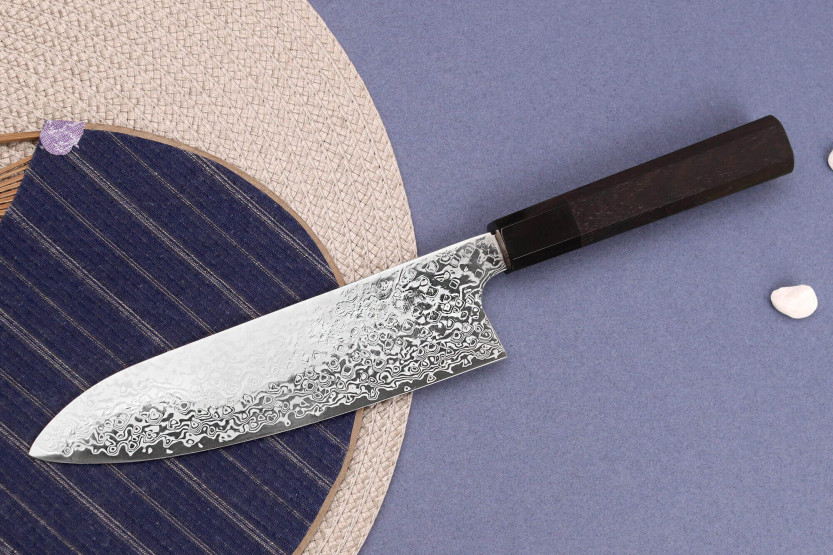
An elegant damask blade for this Japanese santoku knife
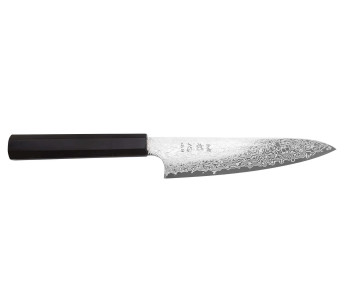
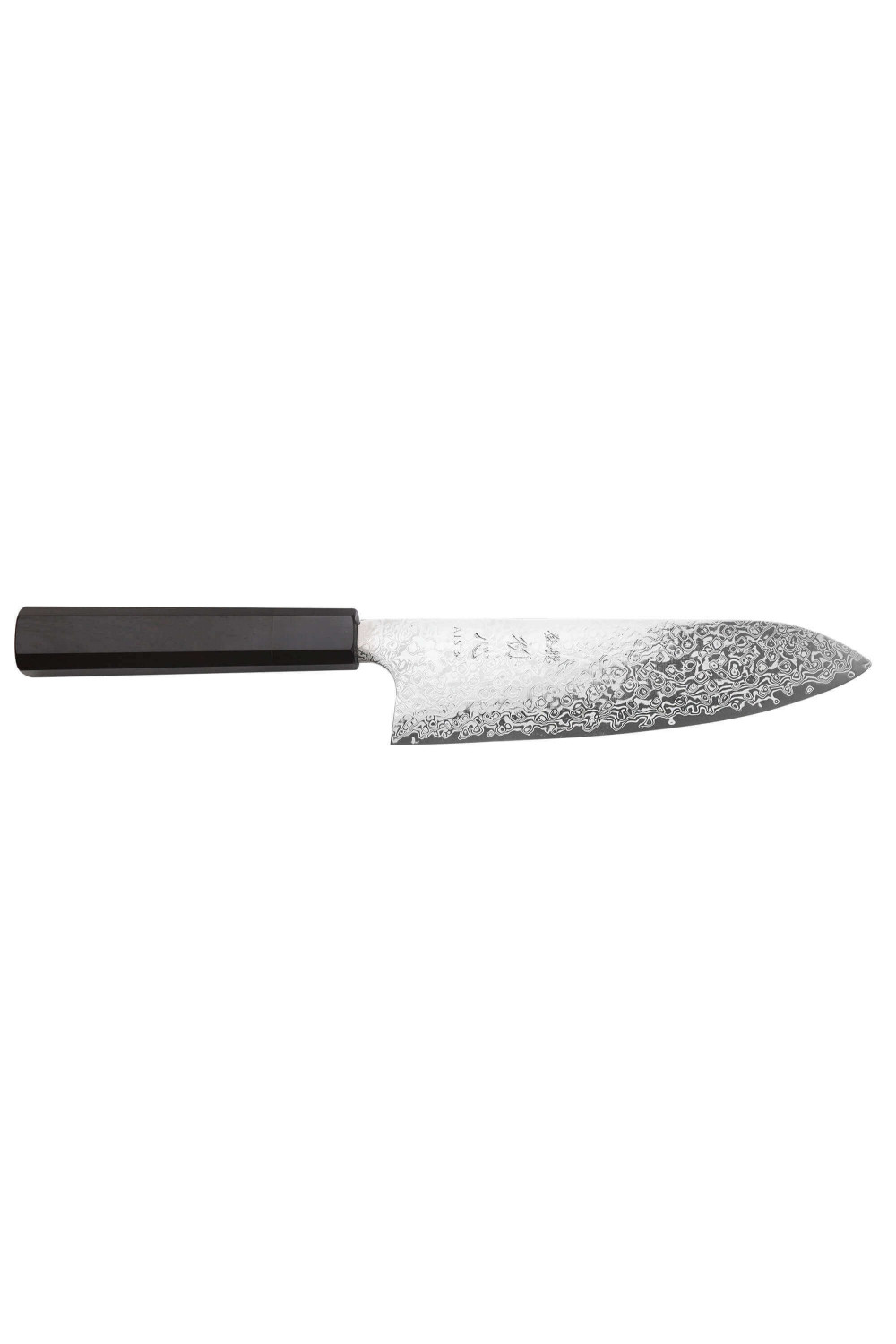
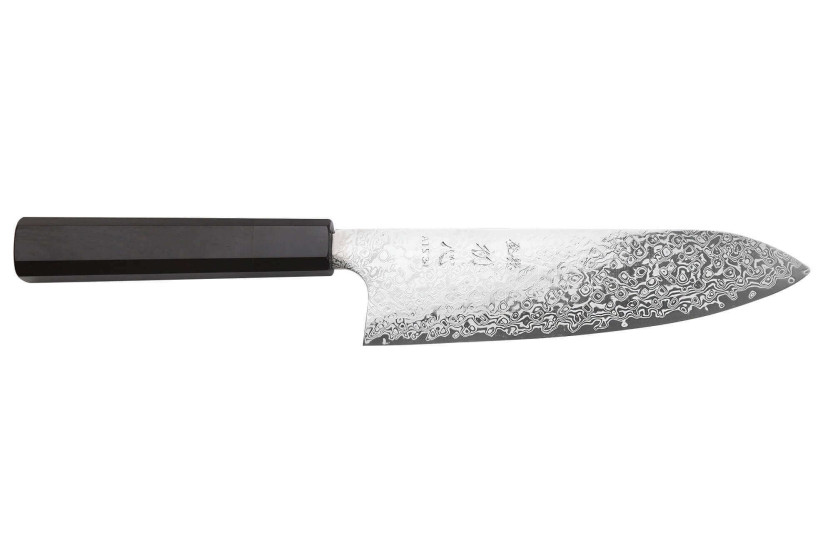
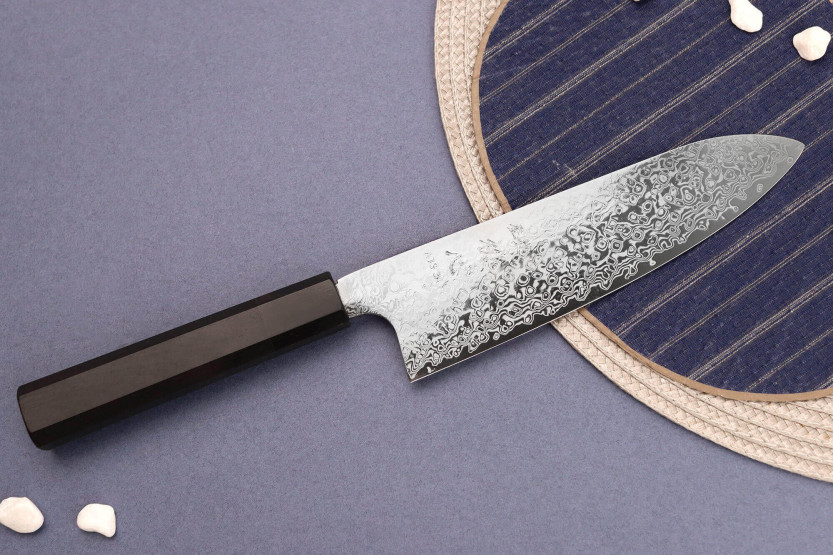
The blade of this santoku knife is crafted using a damascene structure, which involves forging a rigid steel core surrounded by several layers of softer steel. This process balances the blade’s hardness while protecting its core.
The core of this blade is made of Japanese ATS-34 stainless steel, produced by the world-renowned steel manufacturer Hitachi. This steel has a high carbon content of approximately 1%; carbon is the element that increases the hardness of an alloy. The blade’s hardness is therefore 64 HRC on the Rockwell scale, providing you with a sharp edge that is both high-performance and long-lasting.
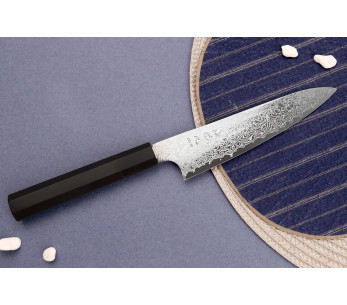
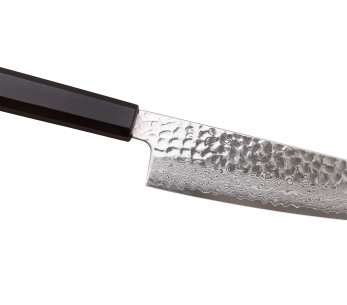
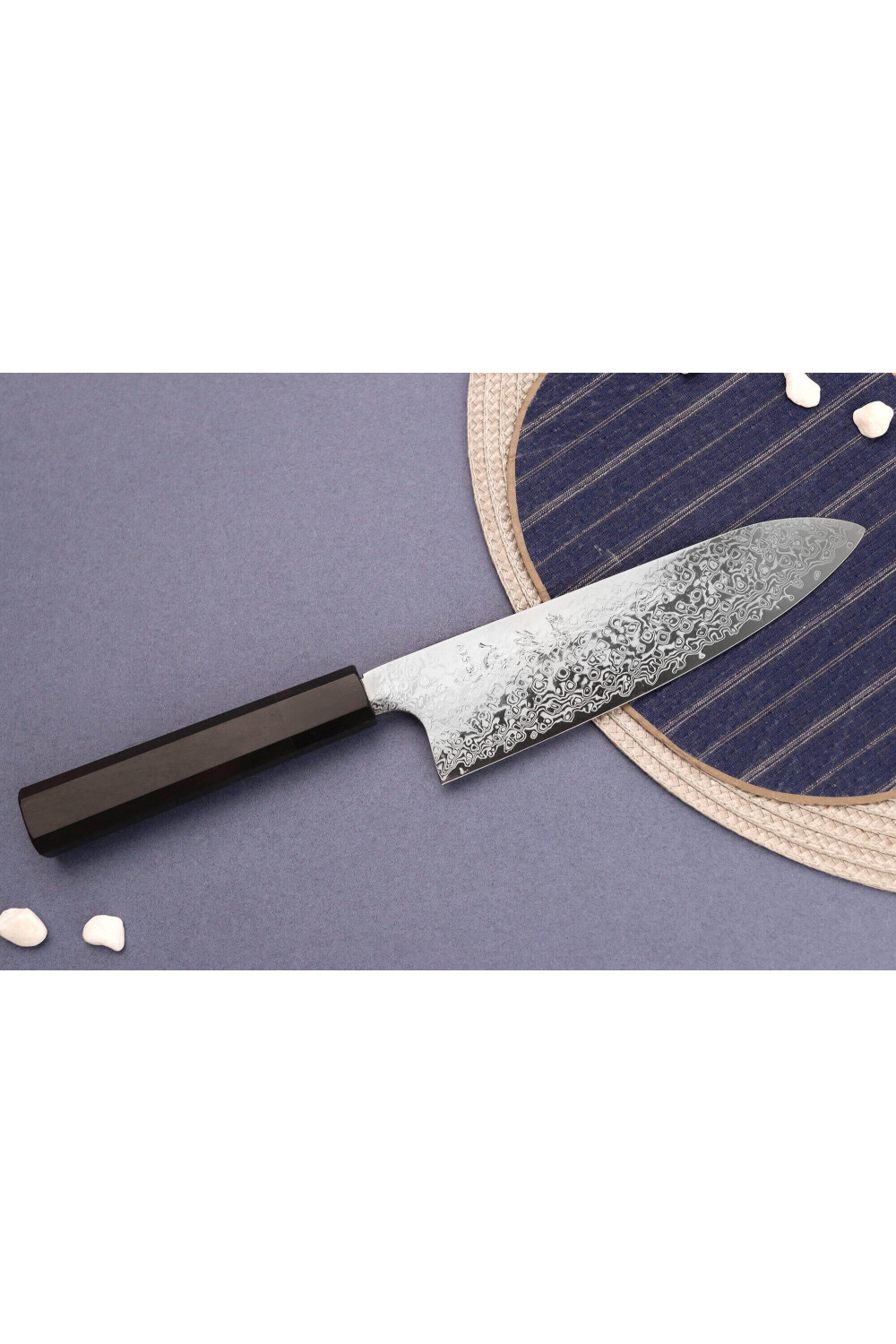
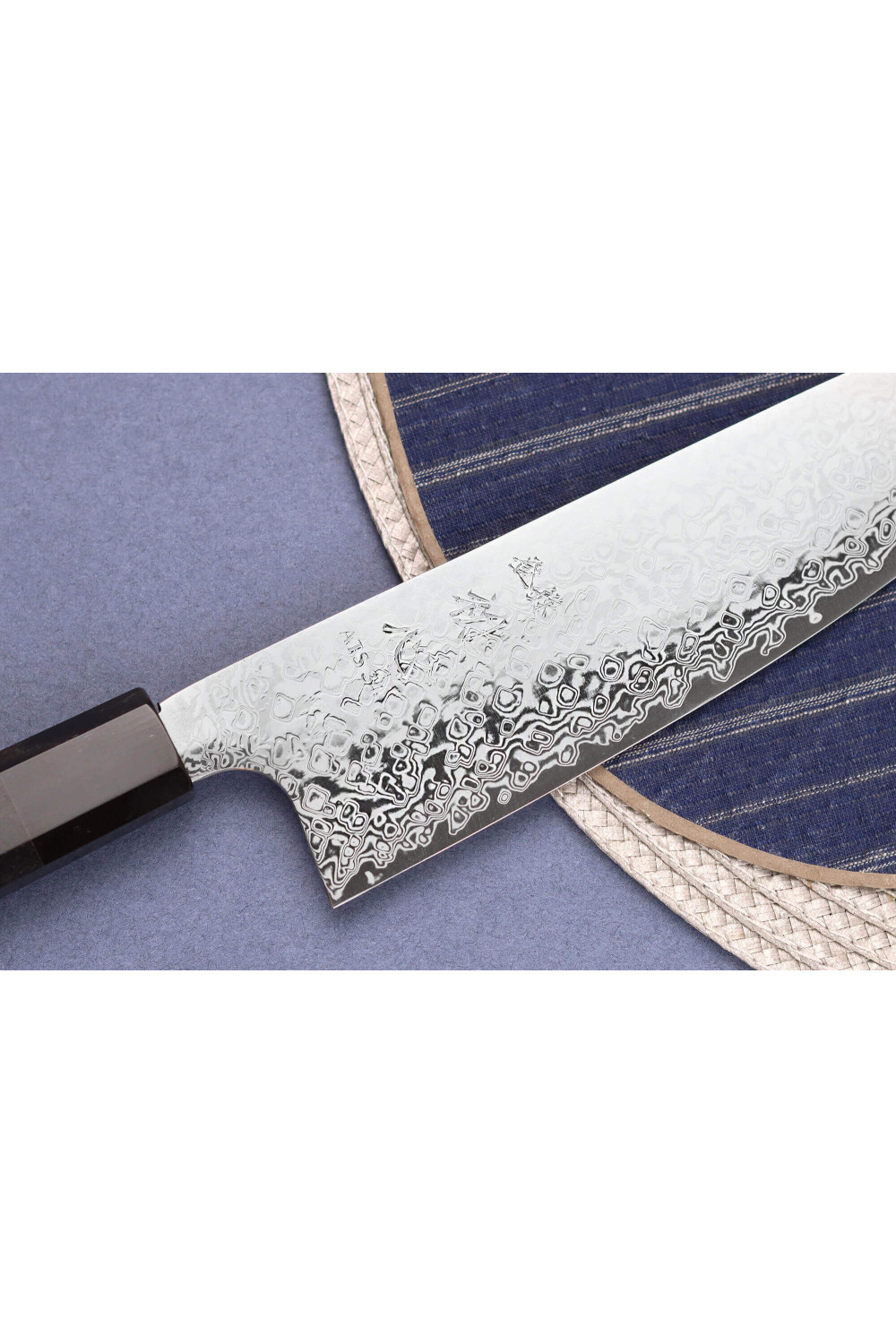
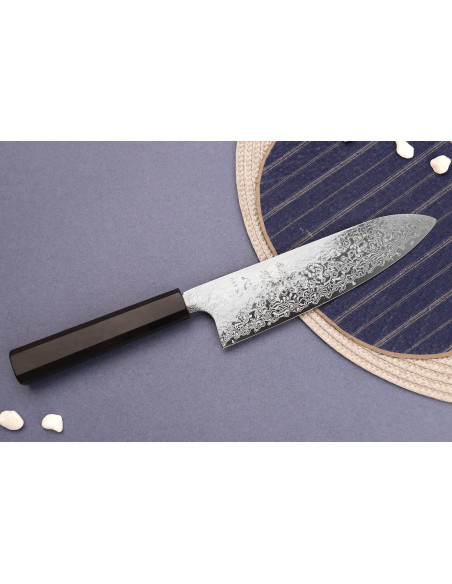
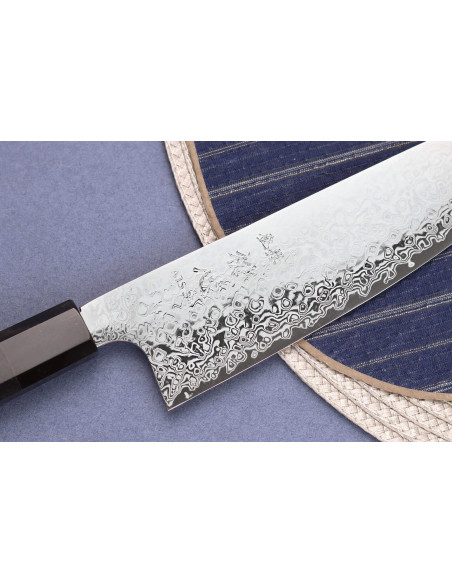
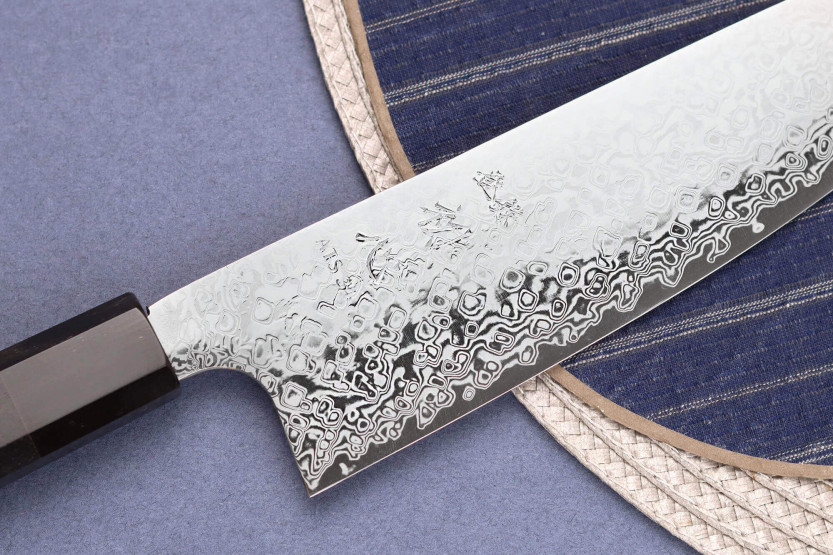
Next, several layers of stainless steel and nickel are laminated together around the core to form the Damascus pattern. These layers add flexibility to the blade (without making it bend) to ensure greater resistance to breakage during use. The Damascus pattern is also a real visual asset because, as the layers of steel are stacked, fine, randomly patterned waves emerge across the entire surface of the blade. The result is truly elegant!
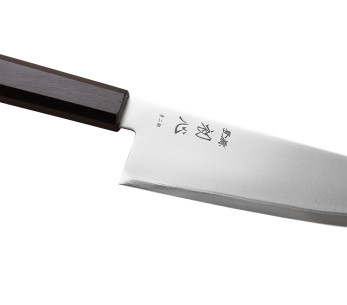
In addition to the Damascus pattern, your blade has been polished to achieve a very refined mirror finish! Furthermore, kanji characters have been hand-engraved to add an extra touch of authenticity to your Hatsukokoro knife.
A Japanese knife with a sturdy handle
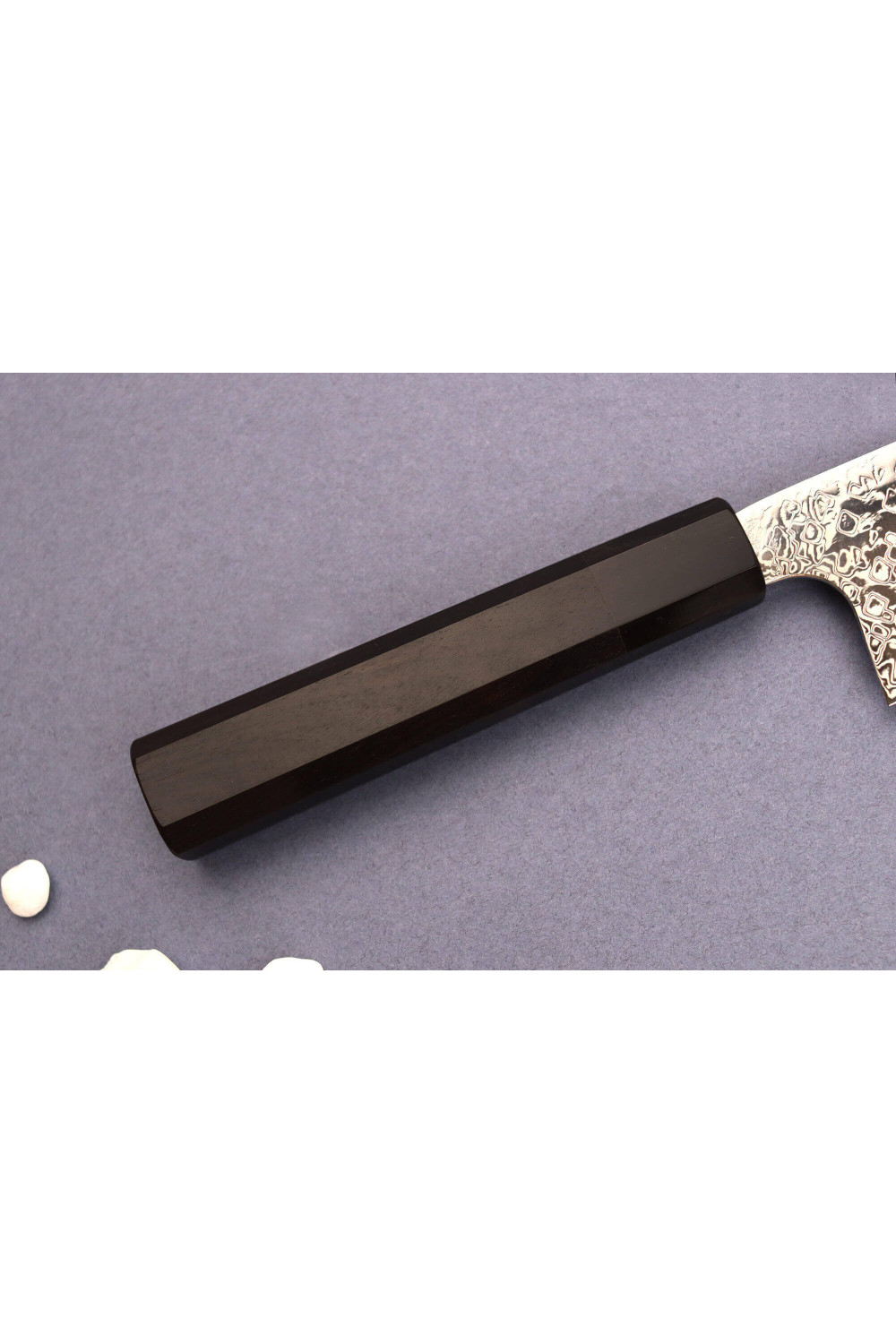
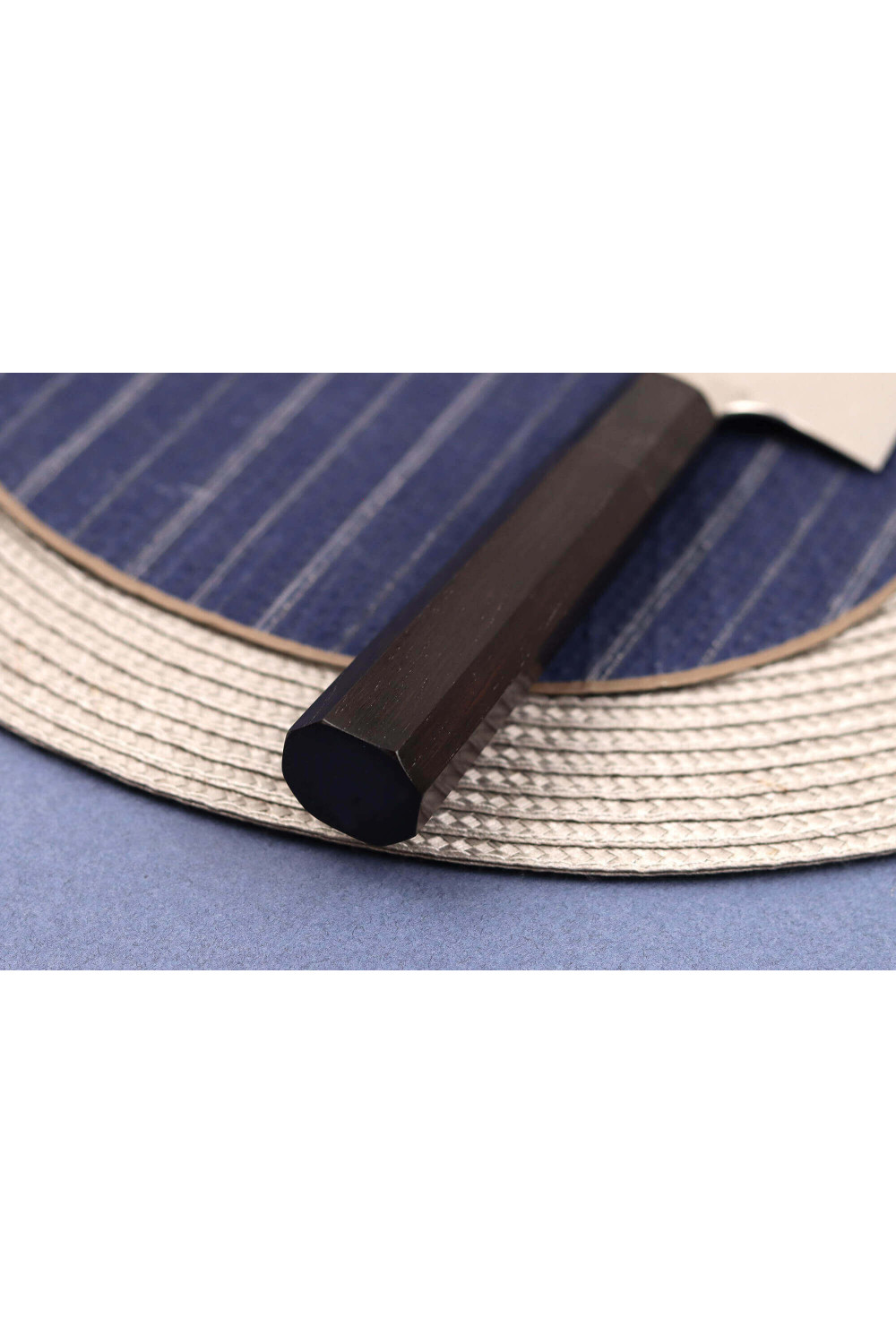
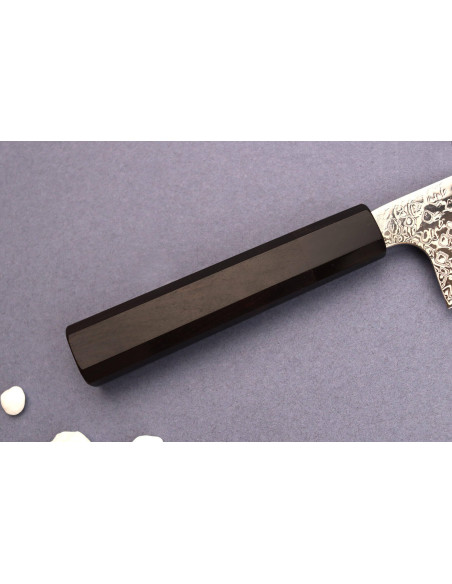
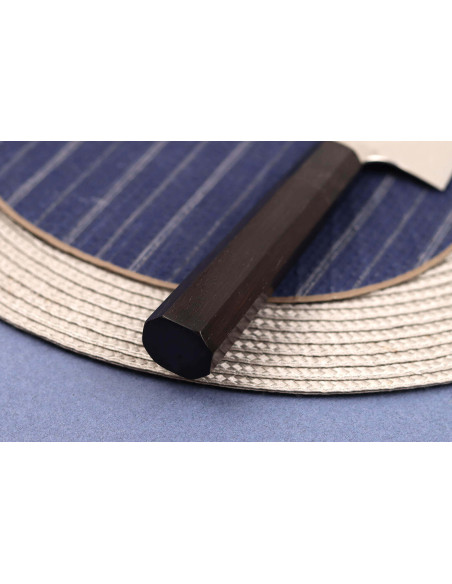
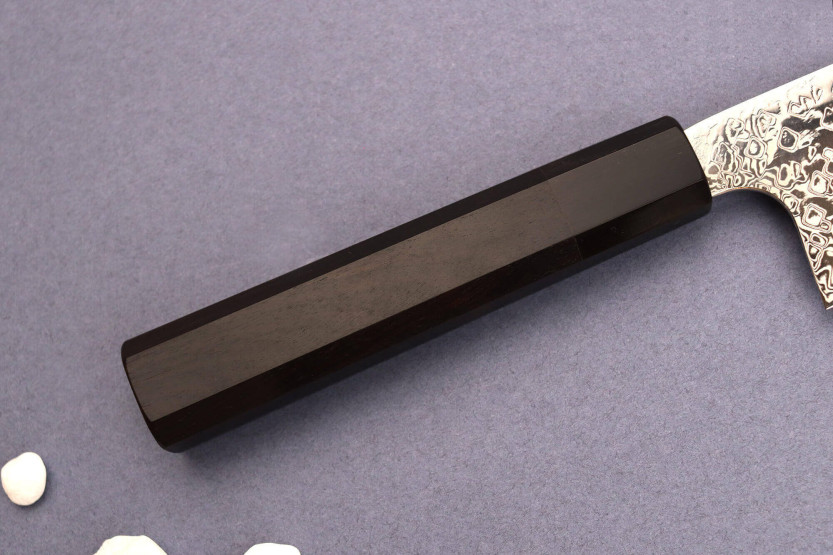
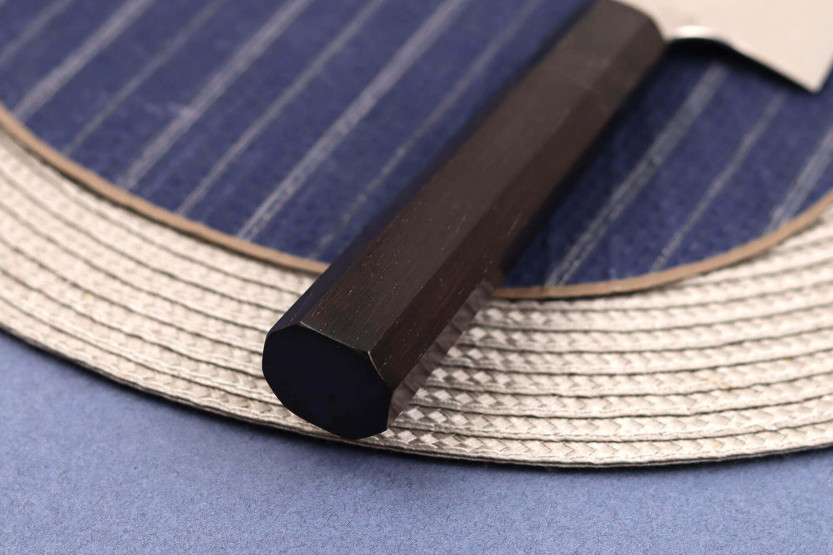
The handle of your damascene knife is made of ebony, a durable and sturdy exotic wood. This wood has a high density that makes it resistant to moisture and warping. Ebony is prized for its dark color and distinctive natural grain pattern.
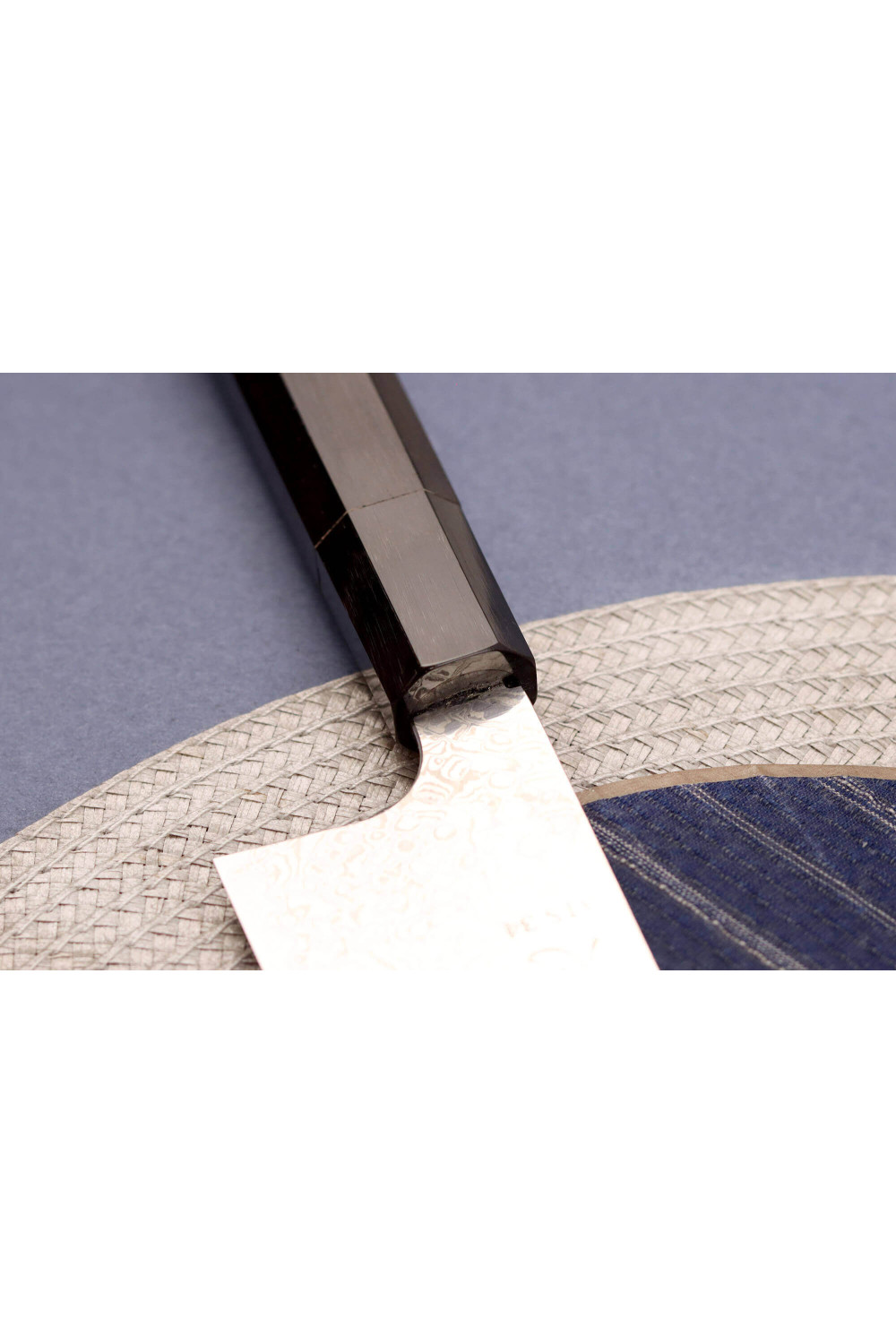
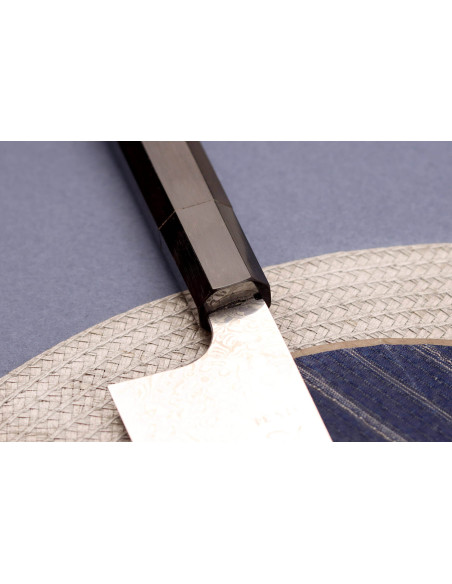
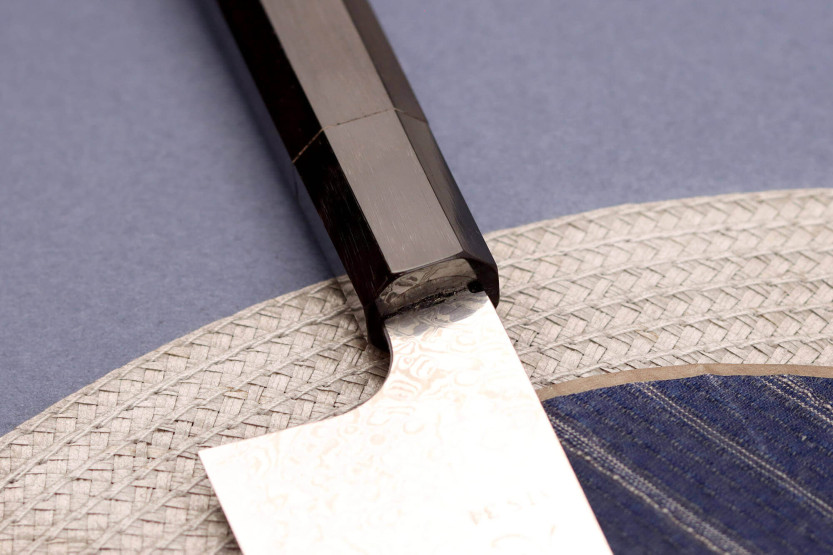
Next, a bolster is added between the handle and the blade to balance your Japanese kitchen knife. It is made of black buffalo horn, a strong and durable material.
Carved into an octagonal shape, the handle of this handcrafted knife is ideal for all cooks, whether left- or right-handed. It provides an ergonomic grip for optimal comfort, especially during long periods of use in the kitchen!
Finally, wood putty has been applied where the blade meets the handle to fill in any small gaps. This ensures a watertight seal and prevents food or water from seeping in.
To care for your handcrafted Japanese knife, wash it only by hand with a soft sponge, taking care not to get the handle wet. Once washed, dry it immediately to remove all moisture and store it in a dry place. Do not put it in the dishwasher or leave it soaking in the sink.
Discover all Hatsukokoro knives on Knifeleader.eu!




 By buying this product you can collect up to