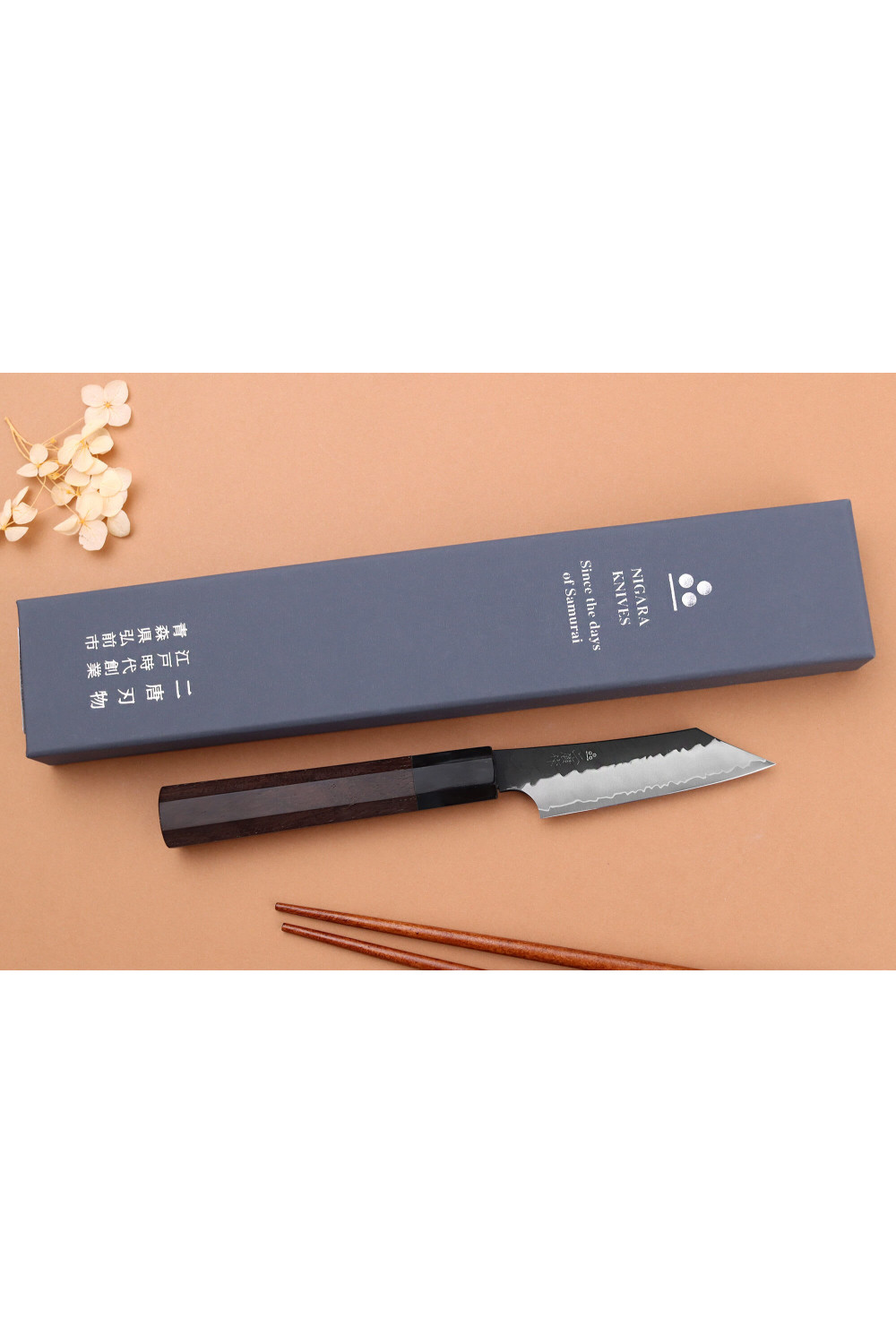
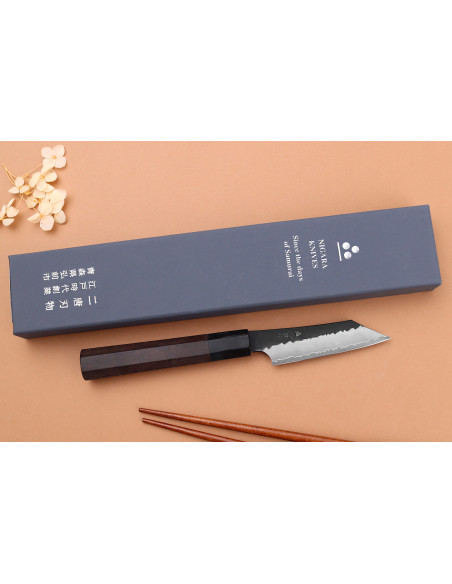
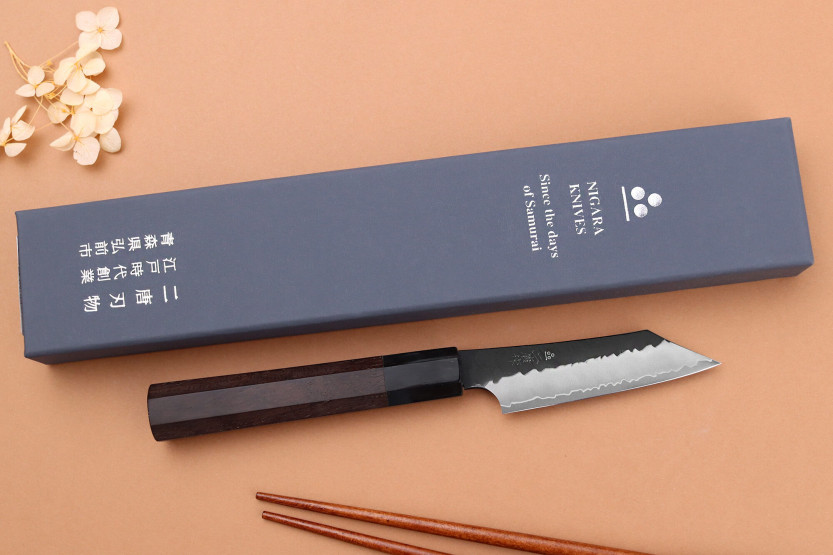
Nigara Hamono is a Japanese forge with a rich history spanning almost 350 years. Originally, it made swords for the samurai during the Edo feudal era. This ancestral know-how has been passed down through the generations, and today the 8ᵉ generation of the Yoshizawa family has taken over the running of the forge.
Proud of its traditions and history, Nigara Hamono perpetuates traditional forging techniques while collaborating with exceptional craftsmen. Located in Hirosaki, northern Japan, Nigara offers a varied collection of handcrafted knives, combining traditional Japanese style with more contemporary designs!
An original blade for your paring knife
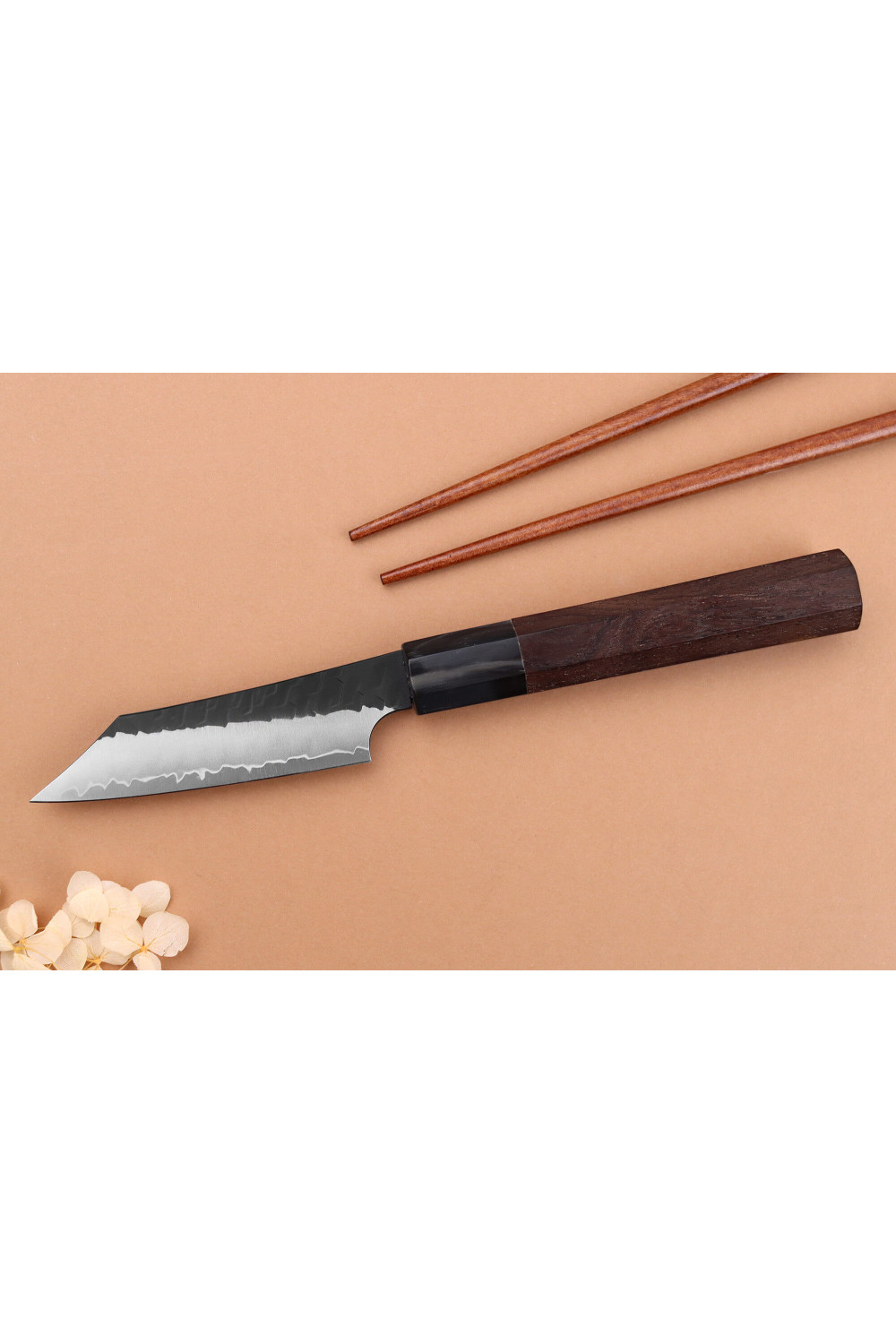
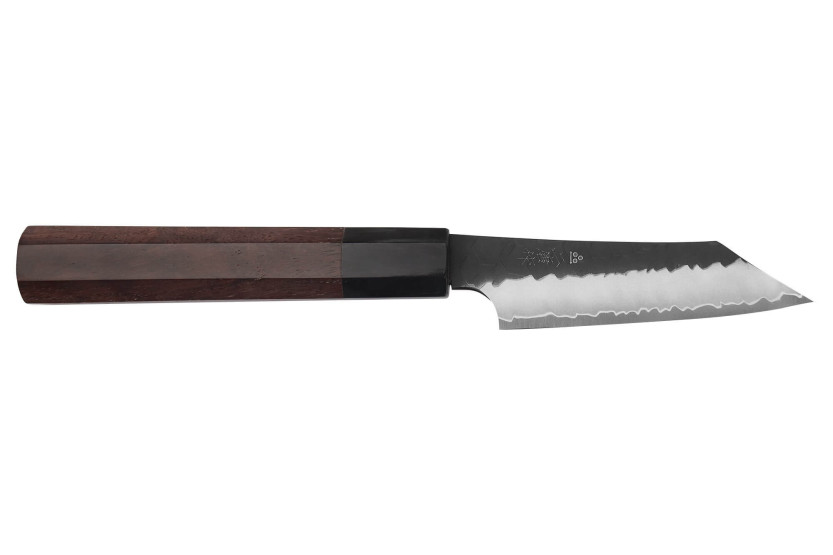
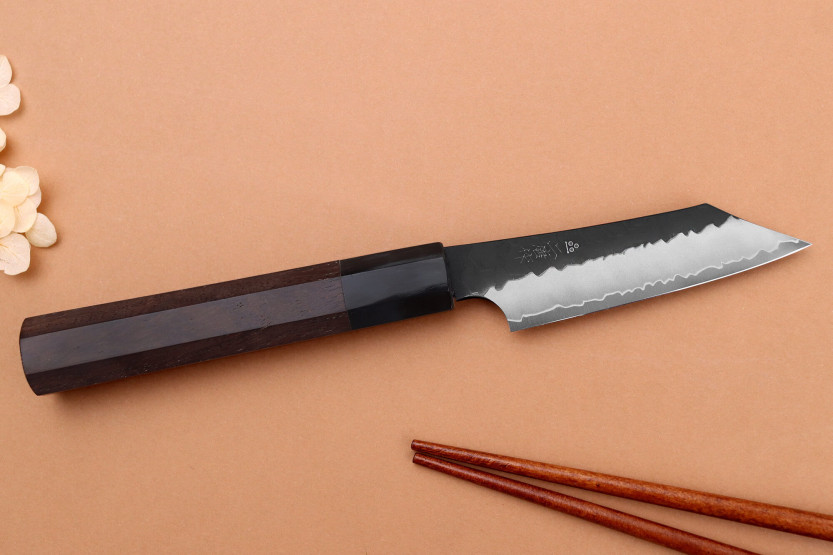
This paring knife features a blade crafted using the Japanese San Maï method, meaning "3 layers". This technique consists of forging a hard steel core, surrounded by a softer steel envelope that folds in on itself to form the two outer layers. This process balances the hardness of your blade while protecting its core.
The core of this blade is made of Japanese SG2 powder-metallurgy steel by the renowned Takefu Special Steel. Thanks to its high carbon content of around 1.3%, this steel offers remarkable hardness, essential for an effective cutting edge. With a hardness of 63HRC on the Rockwell scale, this handcrafted Japanese knife guarantees cutting performance that's both precise and durable!
SG2 steel contains around 15% chromium, making it more resistant to corrosion. However, although more resistant to oxidation, your Japanese kitchen knife requires careful maintenance to preserve its longevity.
Another major advantage of the SG2 is its microstructure. Thanks to a particularly "pure" composition, the micro-carbides it contains are evenly distributed, offering greater resistance to wear and limiting the appearance of micro-cracks.
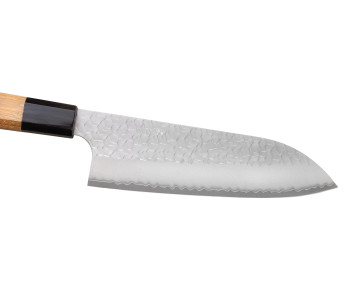
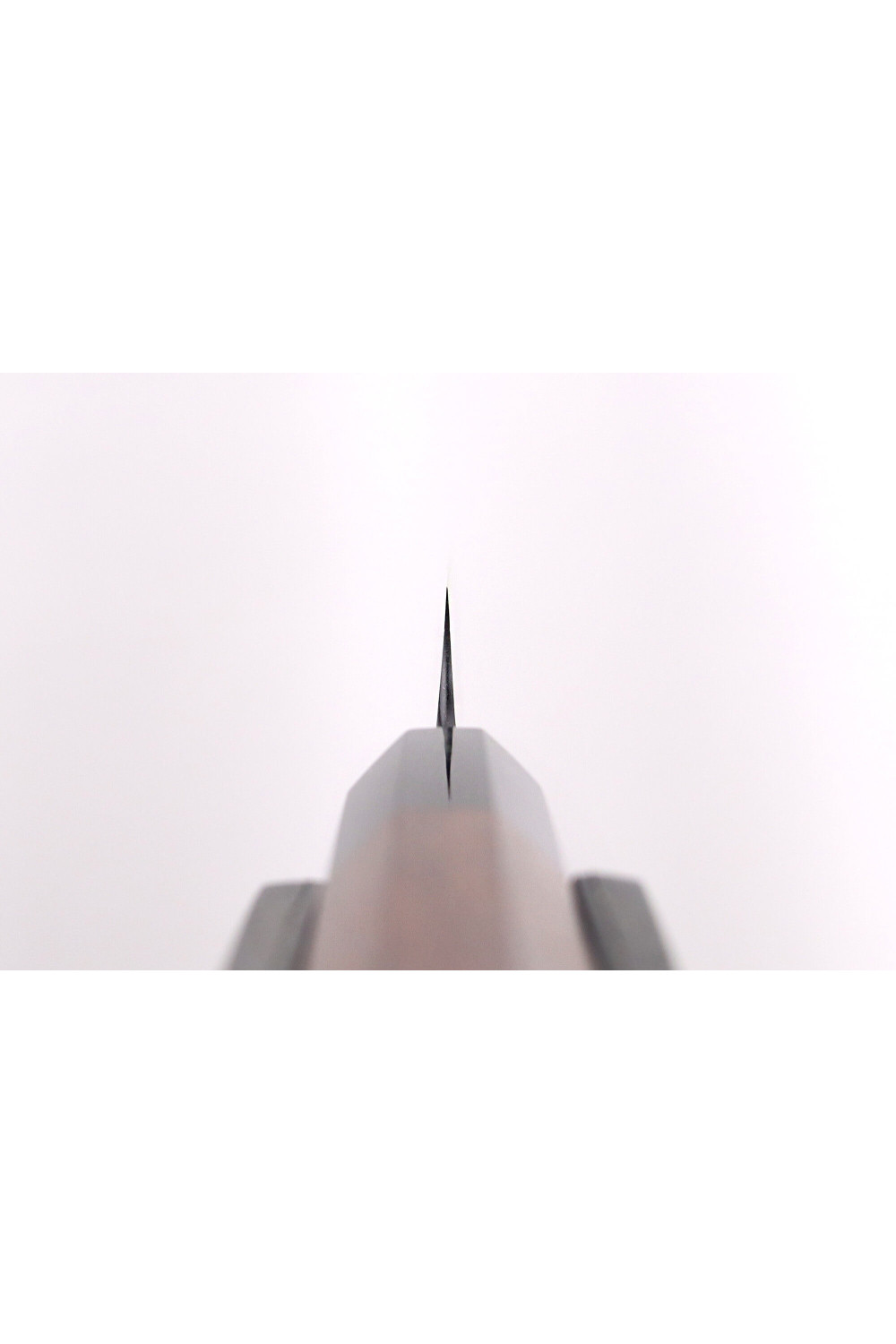
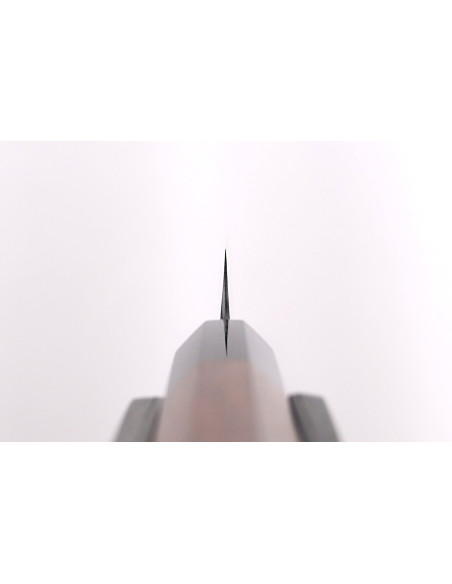
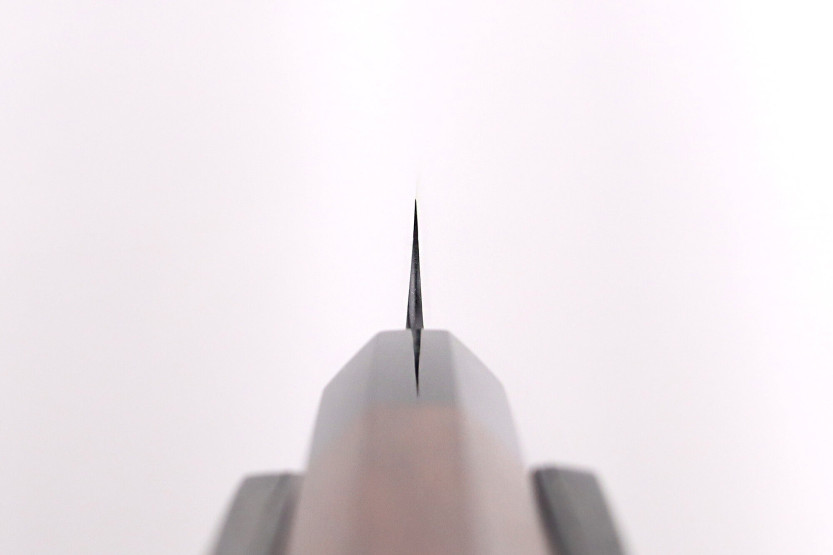
The blade has a flat cutting edge, giving it an extremely fine cutting edge, ideal for a razor-sharp finish. This type of grind is appreciated for its aesthetic appeal, sturdiness and ease of maintenance, since it is easy to reproduce with a whetstone.
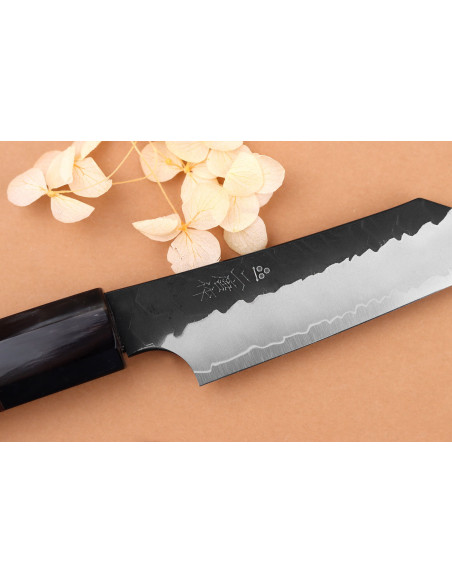
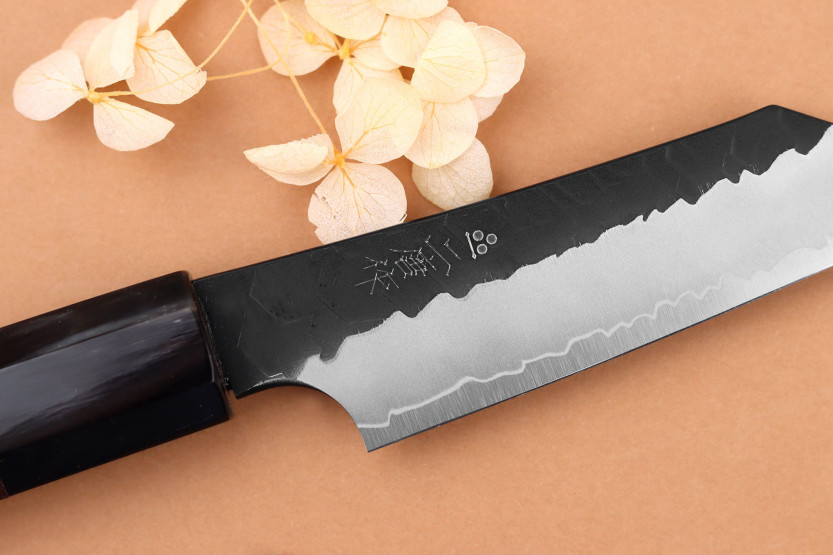
Finally, in the San Maï structure, a layer of softer stainless steel envelops the hard core, improving the blade's suppleness without making it flexible. This helps to reduce the risk of breakage during use, while adding an aesthetic touch: a fine wave visible along the edge testifies to the harmonious superposition between the different layers of steel.
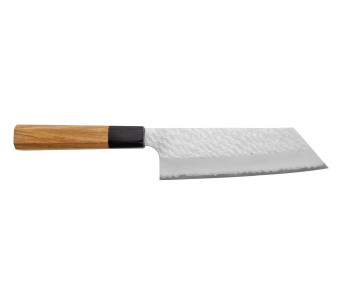
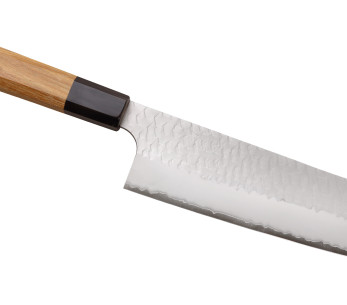
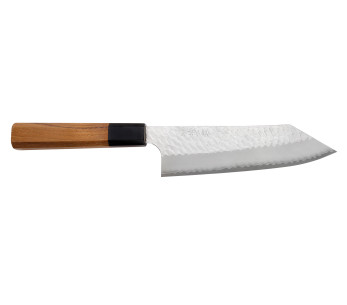
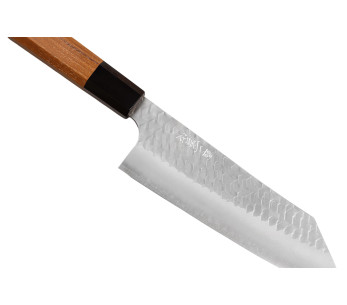
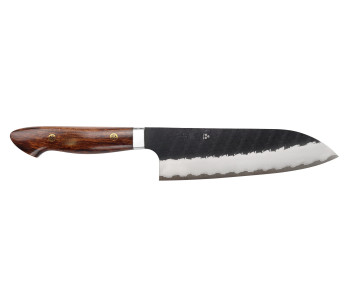
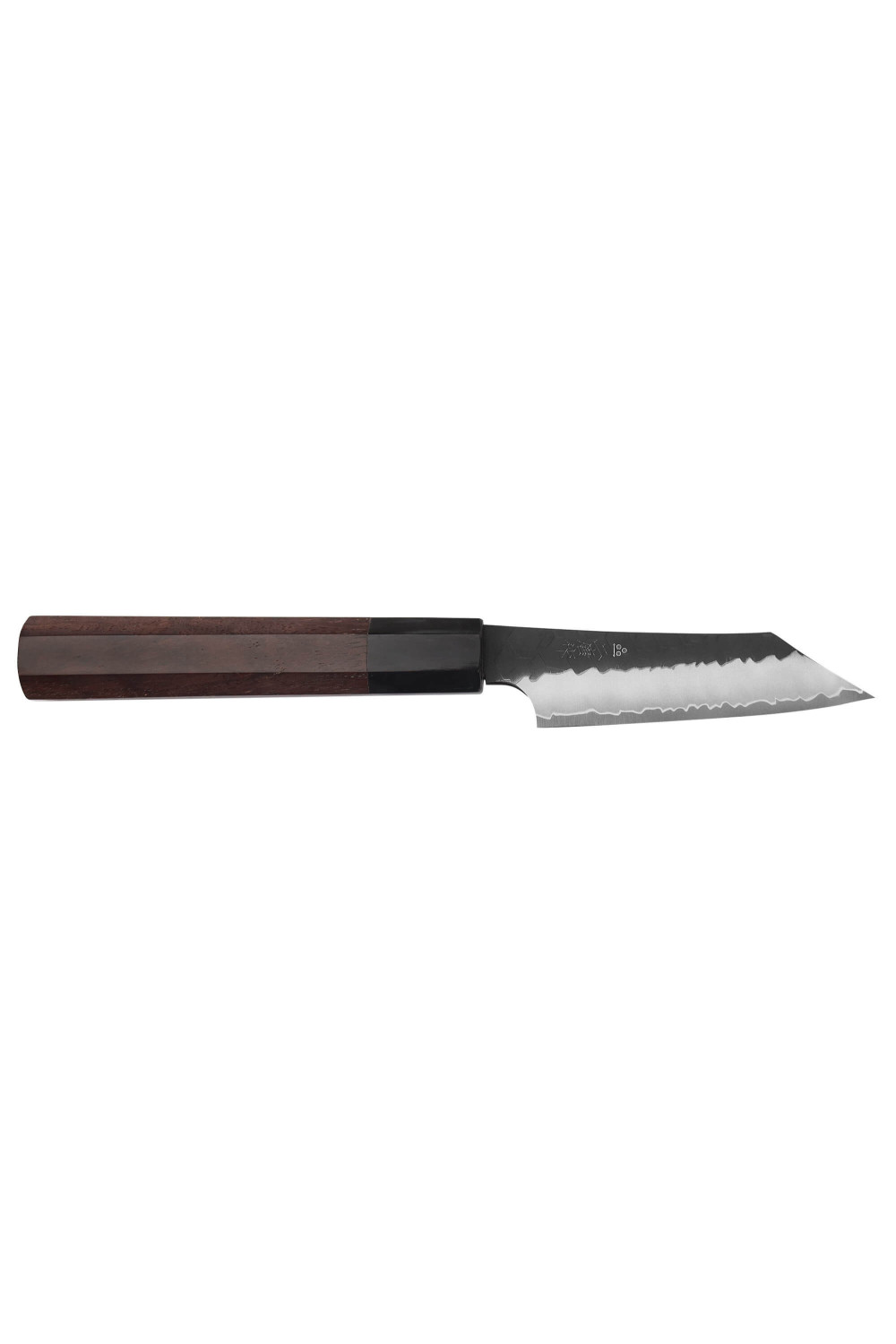
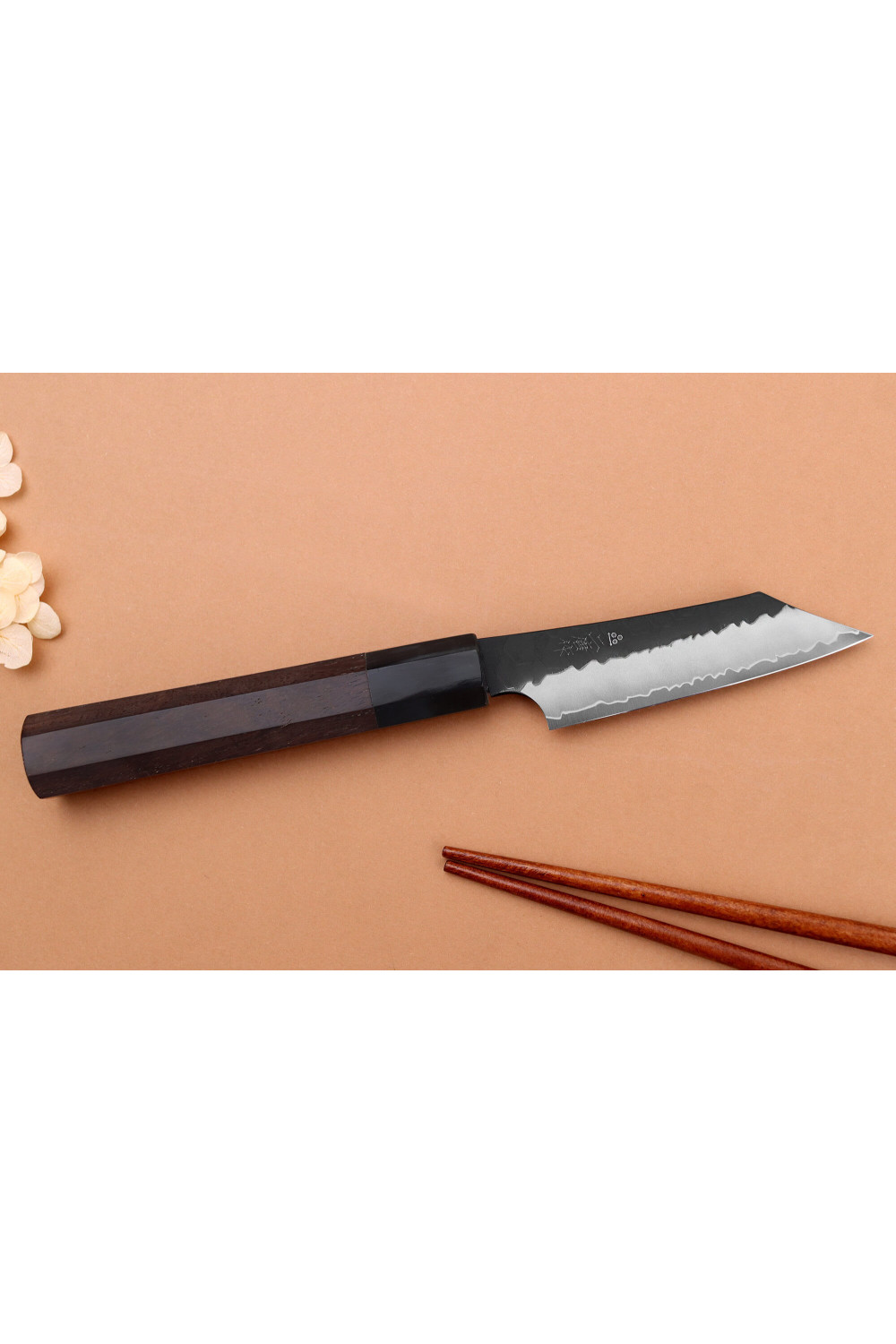
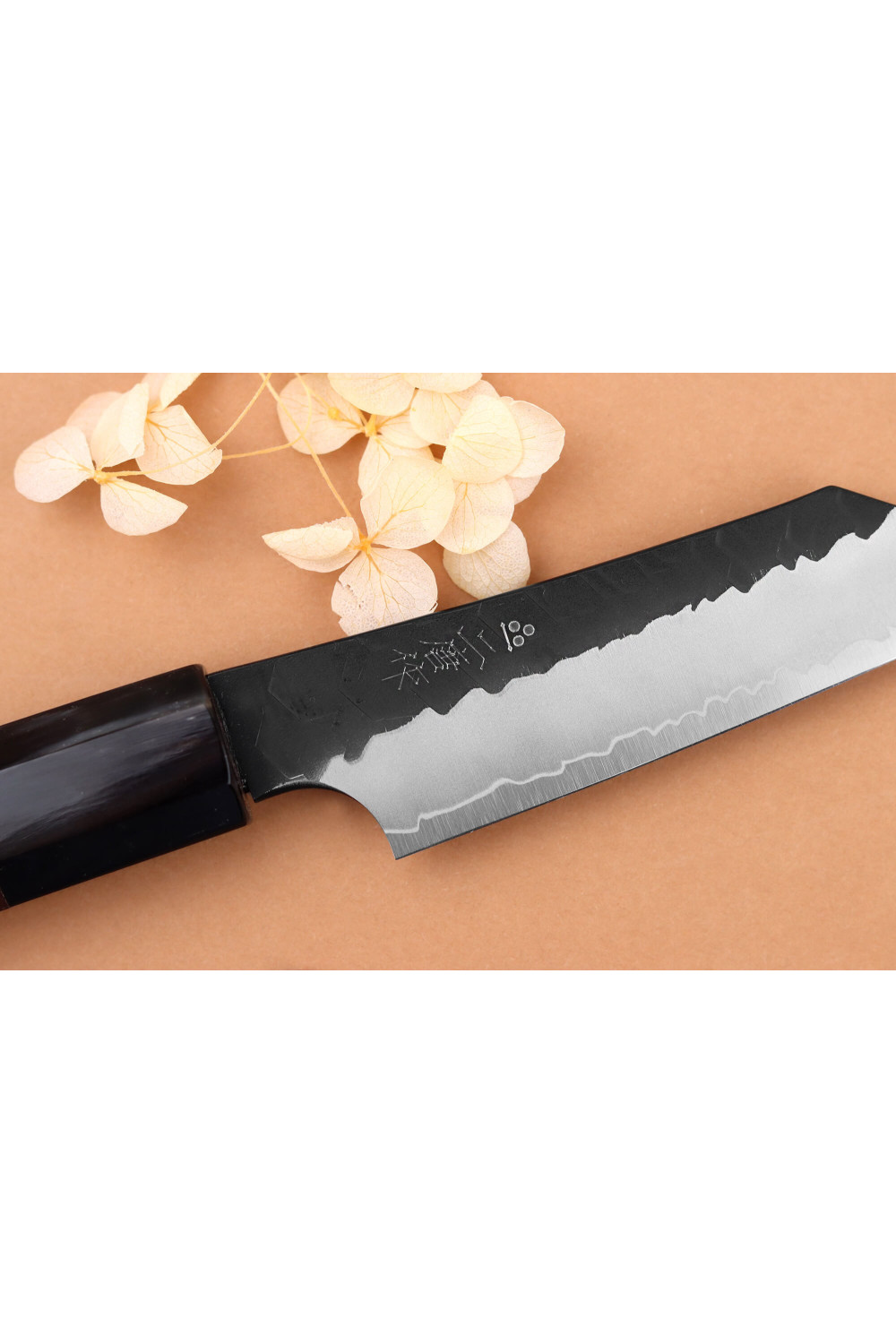
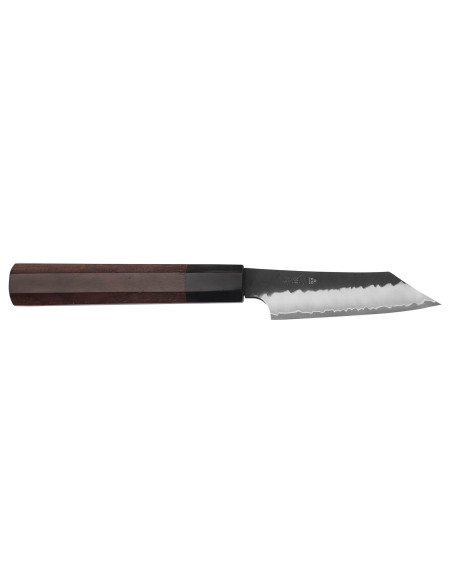
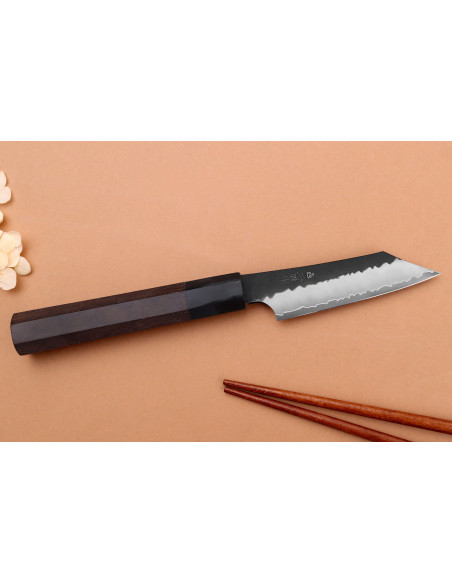
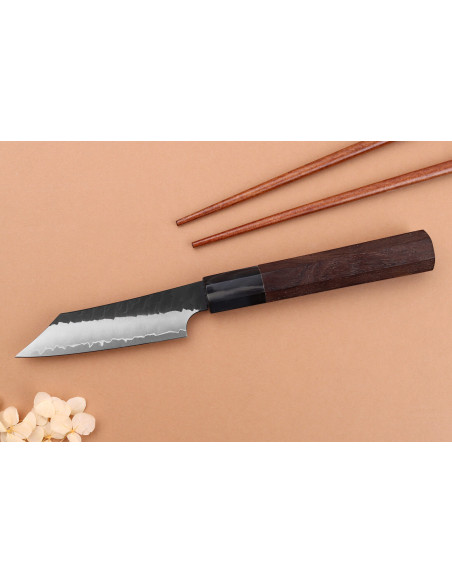
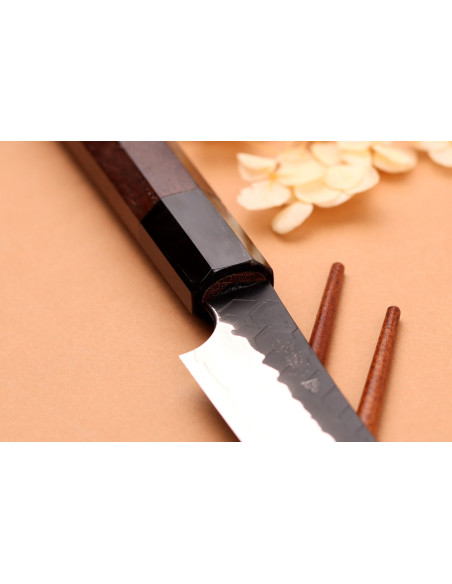
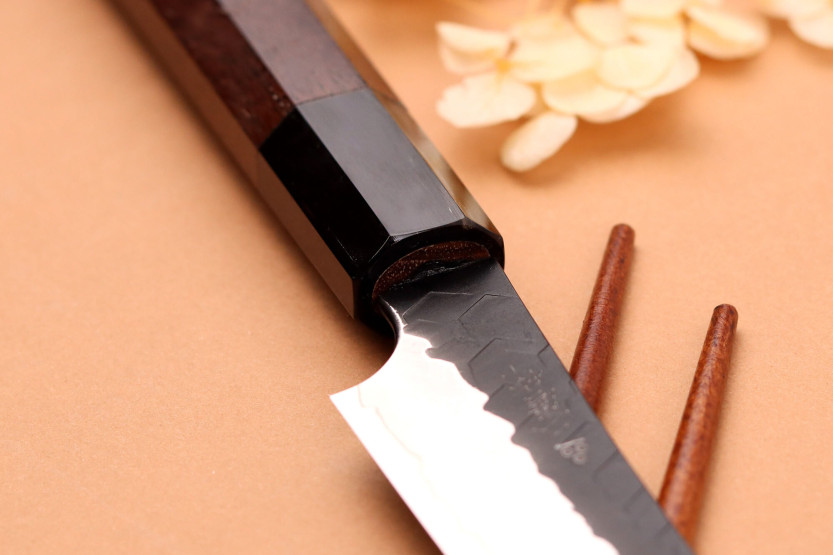
Your Nigara knife has a rough forged finish that gives it a dark, rustic appearance. This traditional unpolished finish is much appreciated by Japanese chefs! Your blade has also been hammered with original hexagon motifs for a touch of uniqueness. Hand-engraved kanjis add a touch of authenticity.
A handcrafted Japanese knife
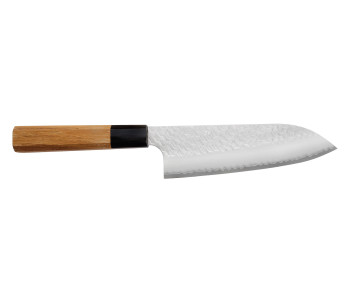
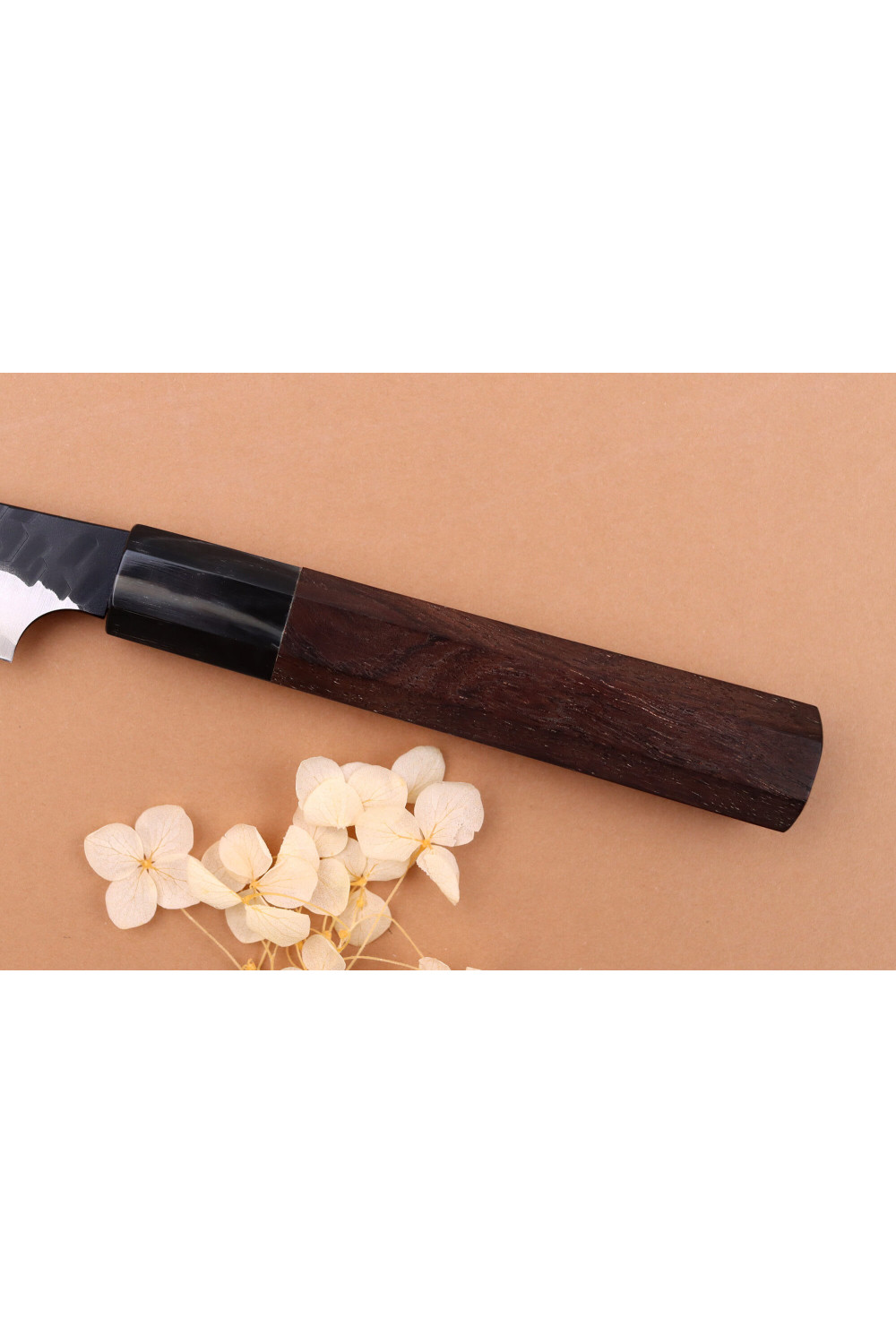
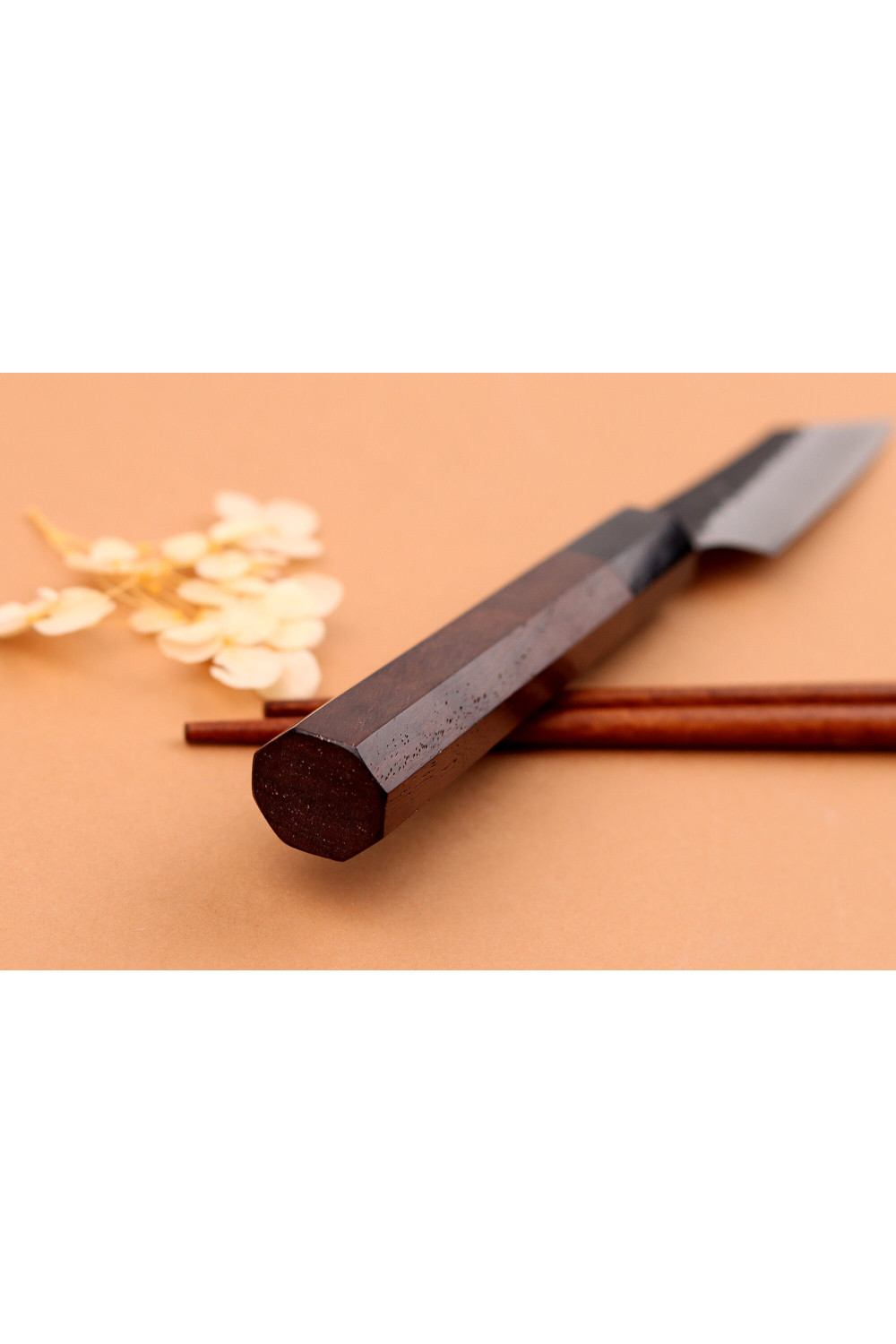
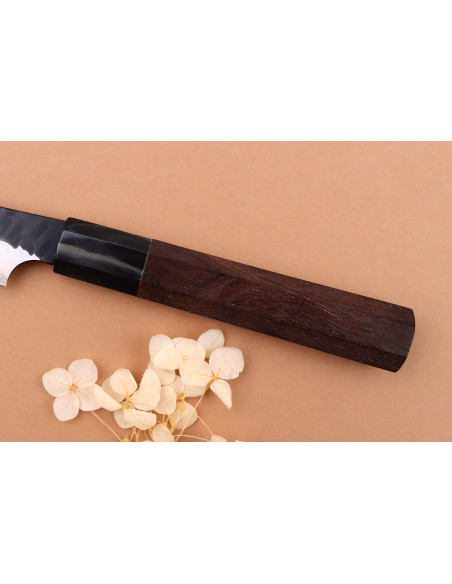
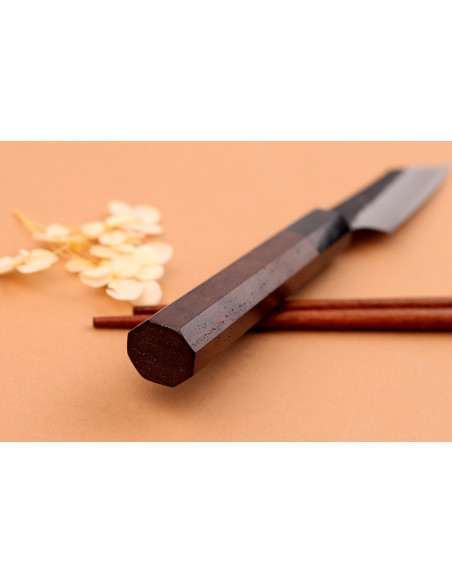
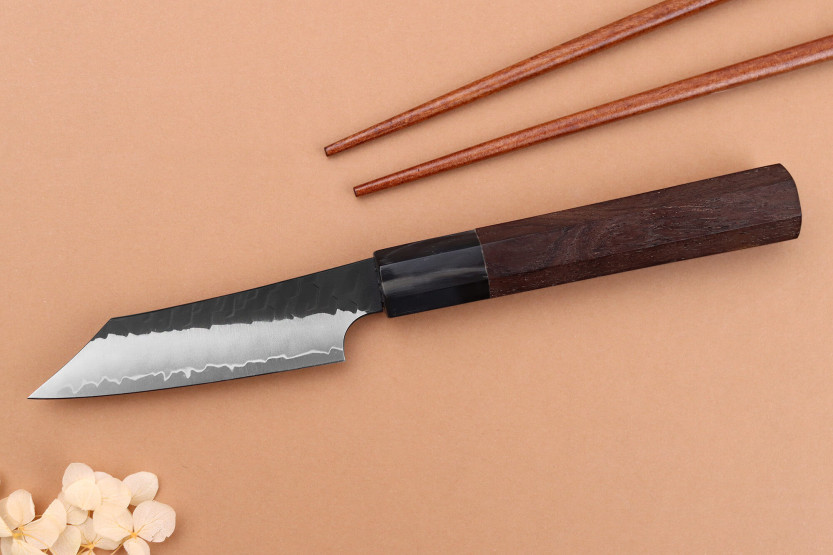
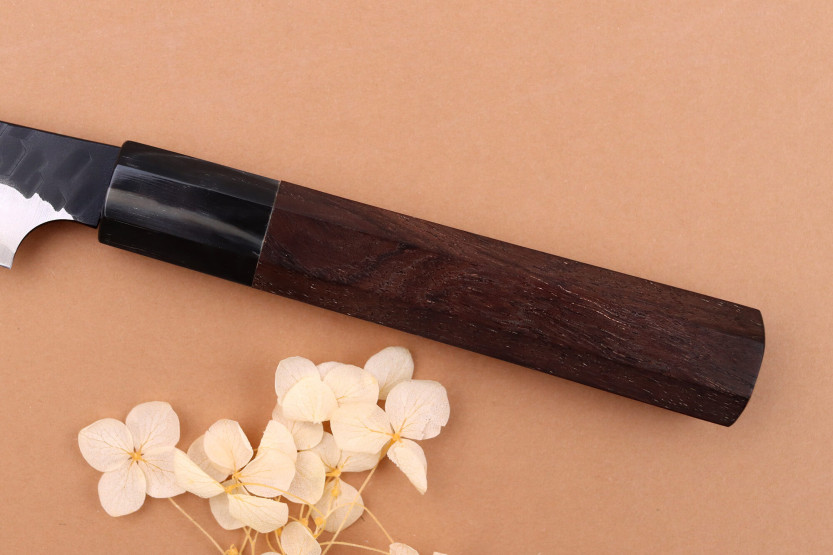
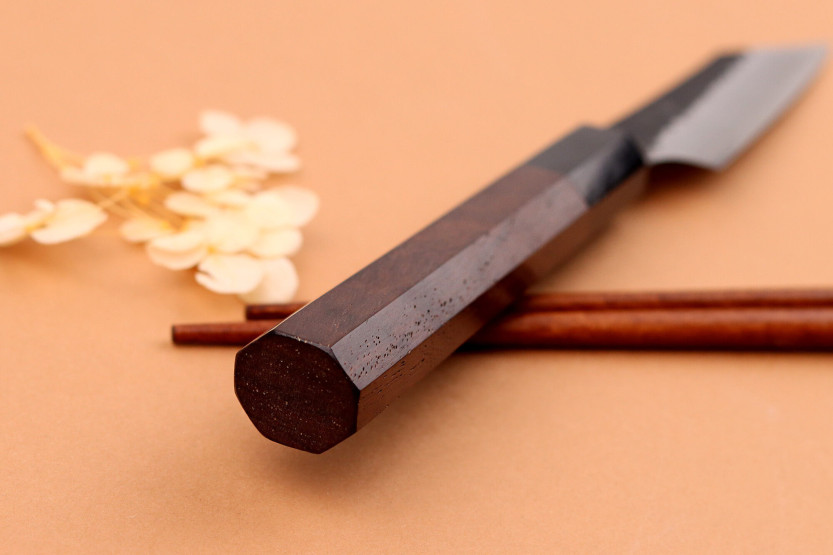
This Japanese kitchen knife features a handle made from walnut wood, a robust and durable species. This wood is moisture-resistant to avoid the risk of warping over time. Its dark color and delicate, natural grain give it its charm!
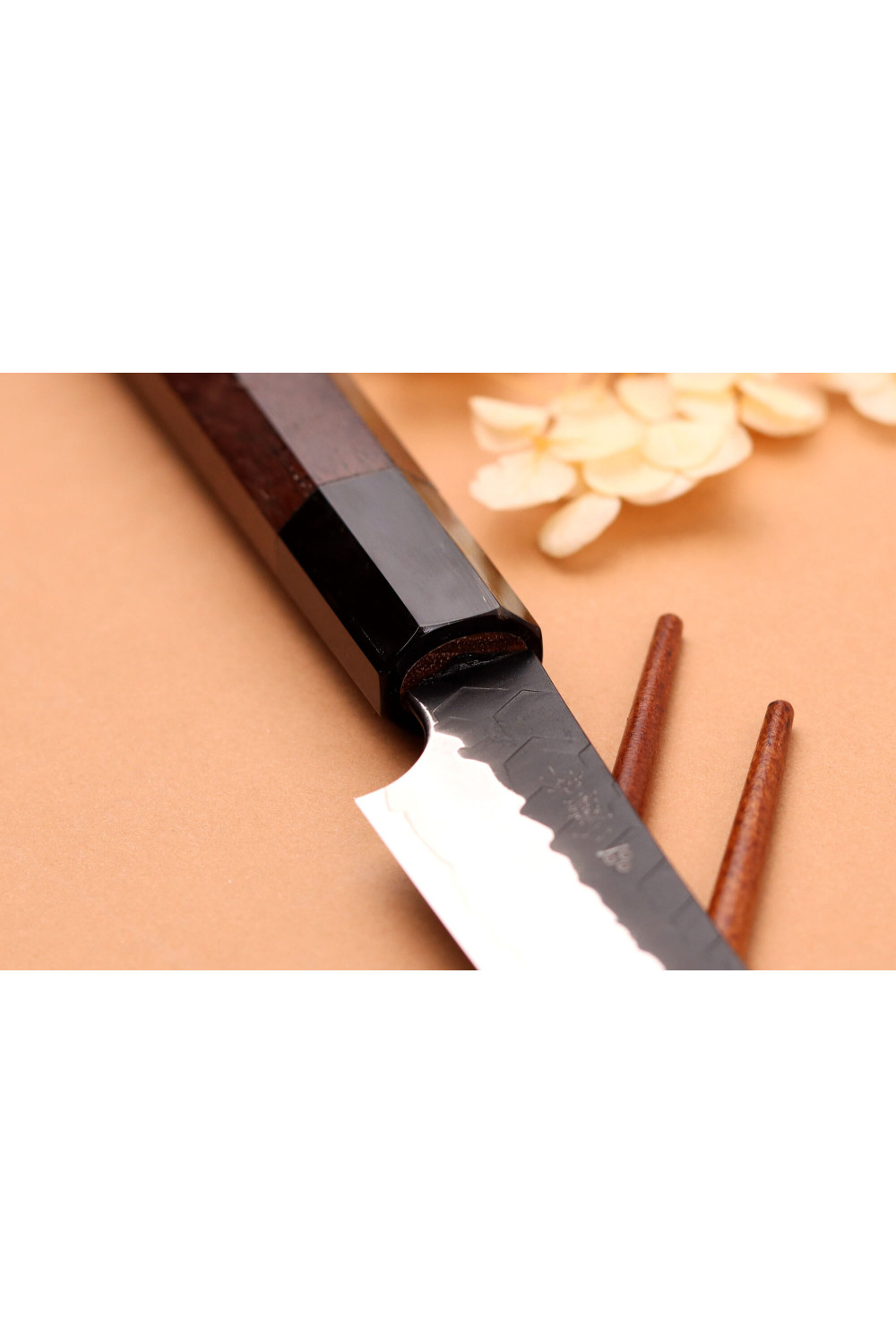
The handle is complemented by a black buffalo horn bolster where the blade meets the wood. This material is considered to be alive and therefore presents variations unique to each Nigara Hamono knife.
With its octagonal shape, this handcrafted Japanese knife can be adapted to the hands of all cooks, whether left- or right-handed! It provides an ergonomic grip for comfortable use, especially during extended kitchen sessions.
Finally, wood putty has been added where the blade meets the handle to fill any gaps. This ensures a watertight seal, preventing water or small foodstuffs from seeping through.
To care for your Japanese paring knife, it should be washed only by hand with a sponge and a non-abrasive detergent, avoiding wetting the handle. Once cleaned, it should be dried immediately and stored in a dry place. Do not put it in the dishwasher or leave it to soak in the sink.
Discover Damascus knives on Knifeleader.eu!




 By buying this product you can collect up to