The renowned Japanese blacksmith: Hinoura Tsukasa
Hinoura Tsukasa is a Japanese blacksmith from a family of renowned craftsmen: he is in the 3ᵉ generation. He was born in 1956 in Sanjo, Niigata Prefecture, and has been forging high-end knives for over 30 years.
He began his career in Japanese knife making in 1975 in the family forge. He was inspired by several well-known local blacksmiths who served as role models. Sanjo is an important town for Japanese cutlery, as blades have been forged here for over 700 years.
Also inspired by the region, Hinoura Tsukasa is famous for his use of traditional, handmade techniques. His skills and talent have been rewarded with numerous titles, including that of Master Traditional Craftsman awarded by the Japanese Ministry of the Economy.
He spends a great deal of time on each piece, because he considers that they deserve to be exceptional and to benefit from a remarkable cutting edge. To create a Hinoura Tsukasa Japanese knife, there are some 35 separate steps! His specialty is the creation of original damask patterns for elegantly designed Japanese kitchen knives.
Today, he works in the family forge with his son, Mutsumi Hinoura, to whom he continues to teach his techniques and know-how. He is preparing the family's 4thᵉ generation to carry on the tradition.
A Japanese knife with an authentic blade
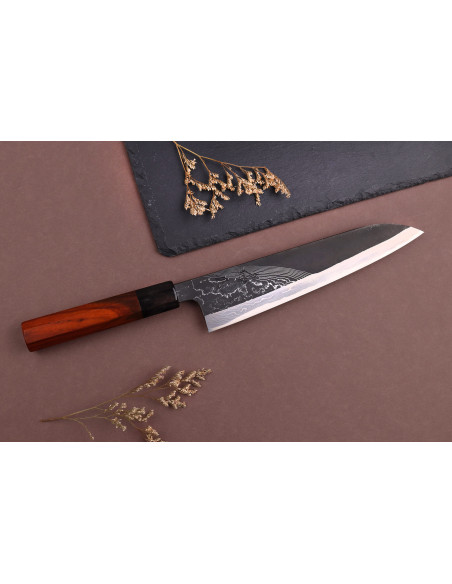
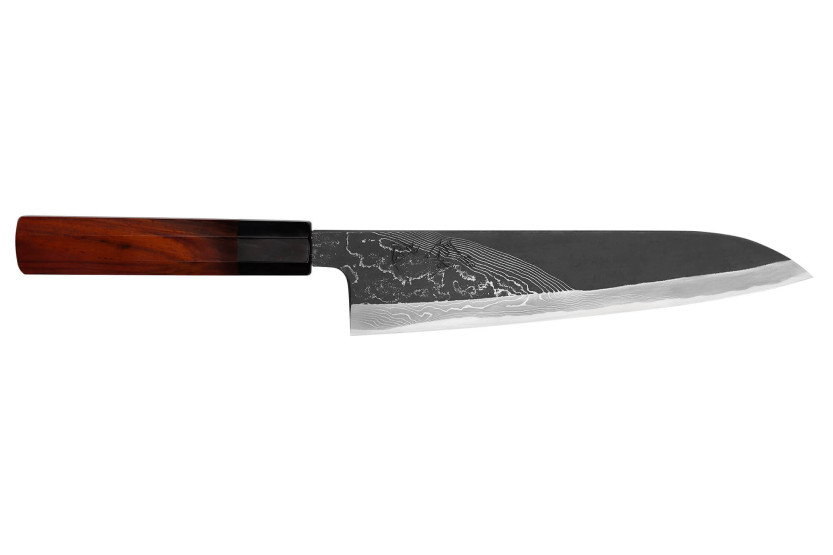
Your handcrafted Japanese knife features a damascened blade, a technique that involves forging a rigid steel core that is surrounded by several layers of softer steel. This method protects the core, while making the blade more flexible and less brittle in use.
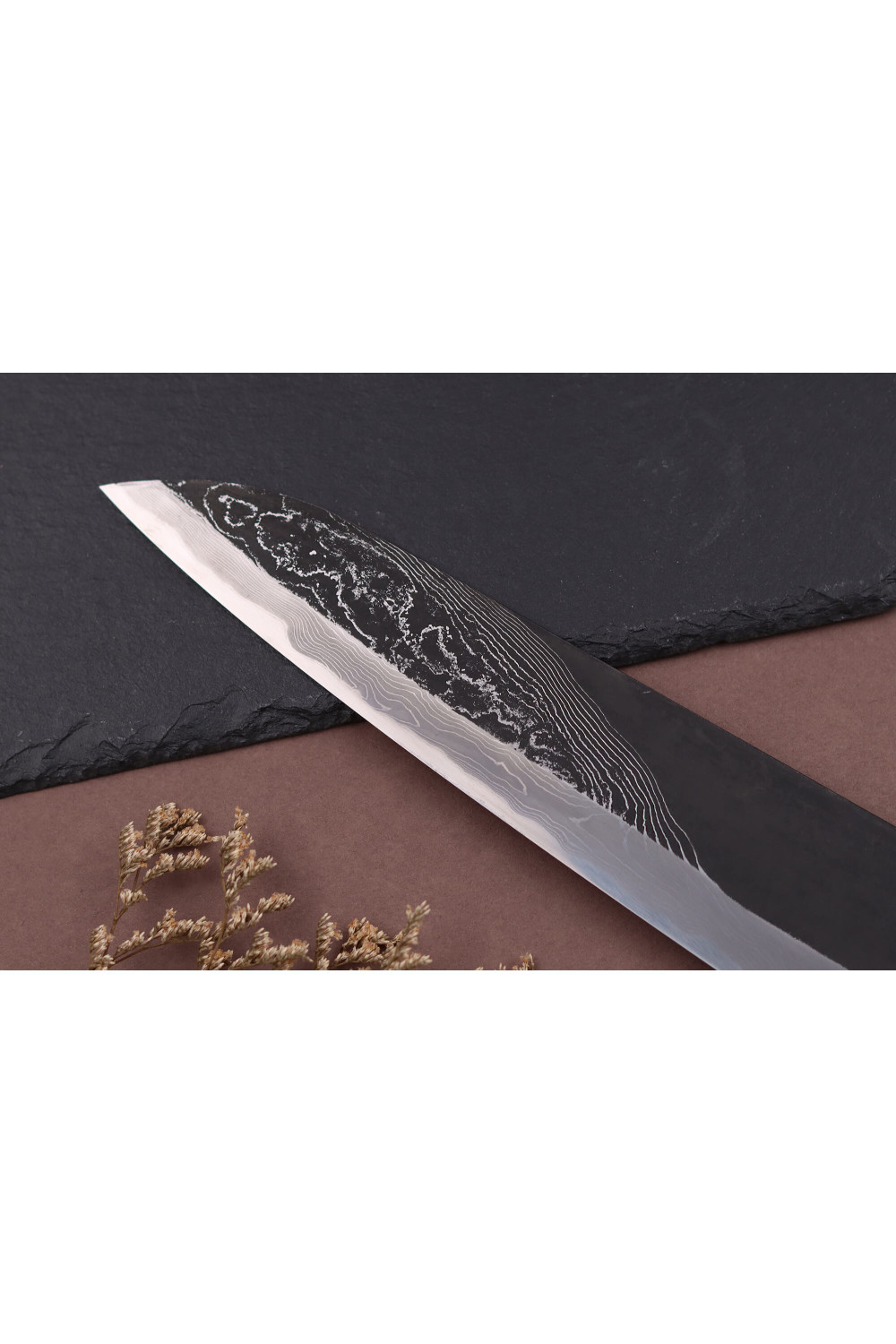
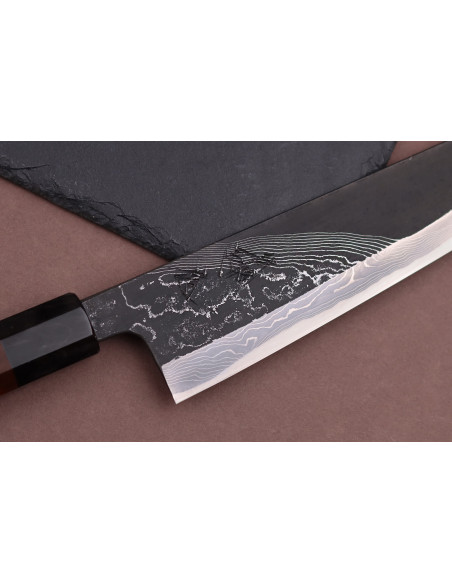
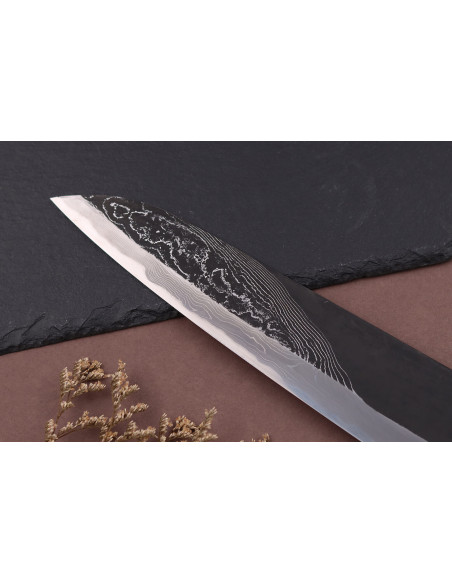
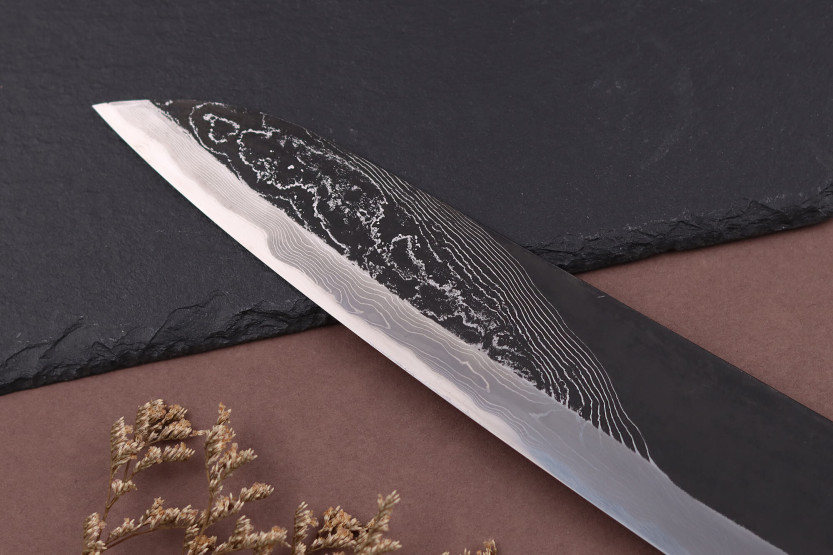
Here, blacksmith Hinoura Tsukasa has handcrafted his own damascus using a special process he has mastered to perfection. This is a damascus twisting technique involving a single-steel bar and a damascus bar joined together to create a unique pattern. This process requires a great deal of precision on the part of the blacksmith, but also a great deal of time. In fact, this damascus knife was cooled for almost 63 hours in water! To forge this handcrafted knife, the blacksmith used only traditional techniques, as he believes that these are the most precise ones that can confer exceptional sharpness.
Shirogami 2 steel (also known as White Paper Steel #2) was chosen to forge the heart of this damascus knife. This is a high-quality Japanese steel produced by the world-renowned steelmaker Hitachi. The name of this steel literally means "white paper", and refers to the way in which it is conditioned during manufacture.
Shirogami 2 alloy has a high carbon content of around 1.2%. This is the essential element that increases the hardness of a blade, since a stiffer blade is more durable and effective. The hardness of this blade is 61HRC on the Rockwell scale, making it a Japanese kitchen knife with excellent edge retention and cutting performance.
What's more, the cutting edge of this blade has also been handcrafted by the blacksmith! Achieving a remarkable edge also takes time, which is why Hinoura Tsukasa spends around 2 hours per blade just sharpening it. He uses sharpening stones of different grit to be as meticulous as possible.
To finish with the damascus, the Shirogami 2 core is covered with several layers of softer iron to balance its hardness. These provide additional protection against micro-shocks. Iron is an oxidizable material, so your Japanese knife needs careful maintenance to avoid corrosion.
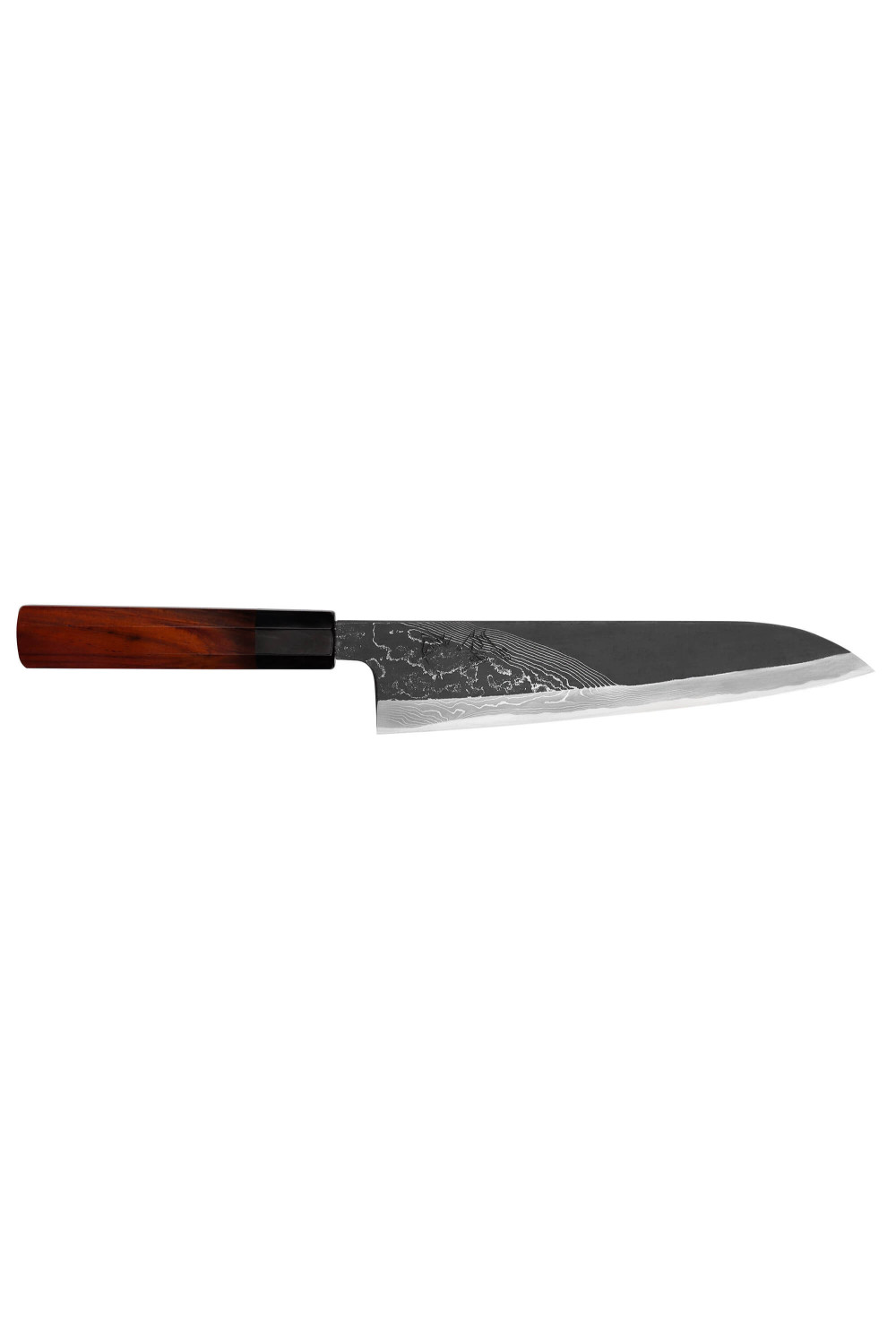
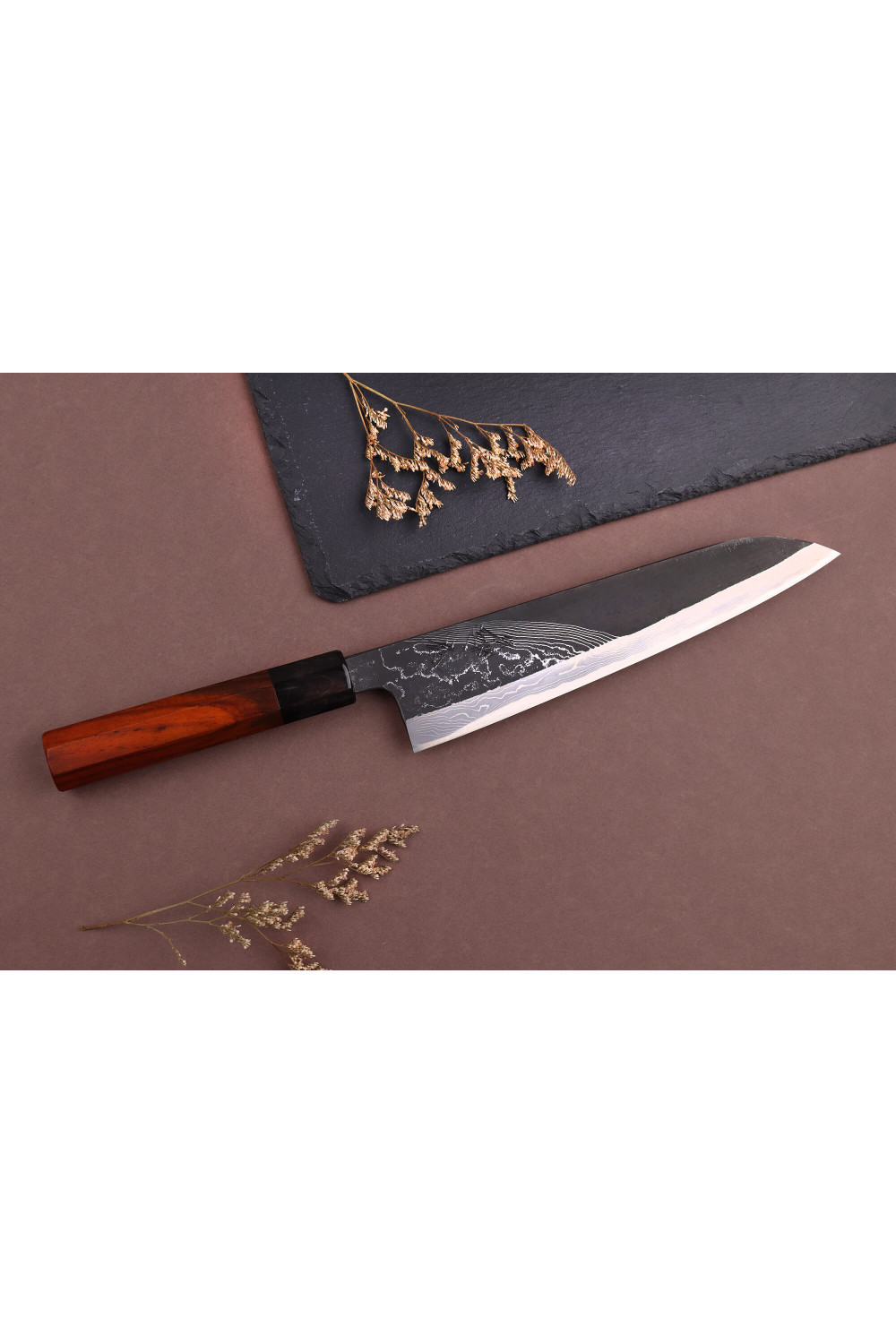
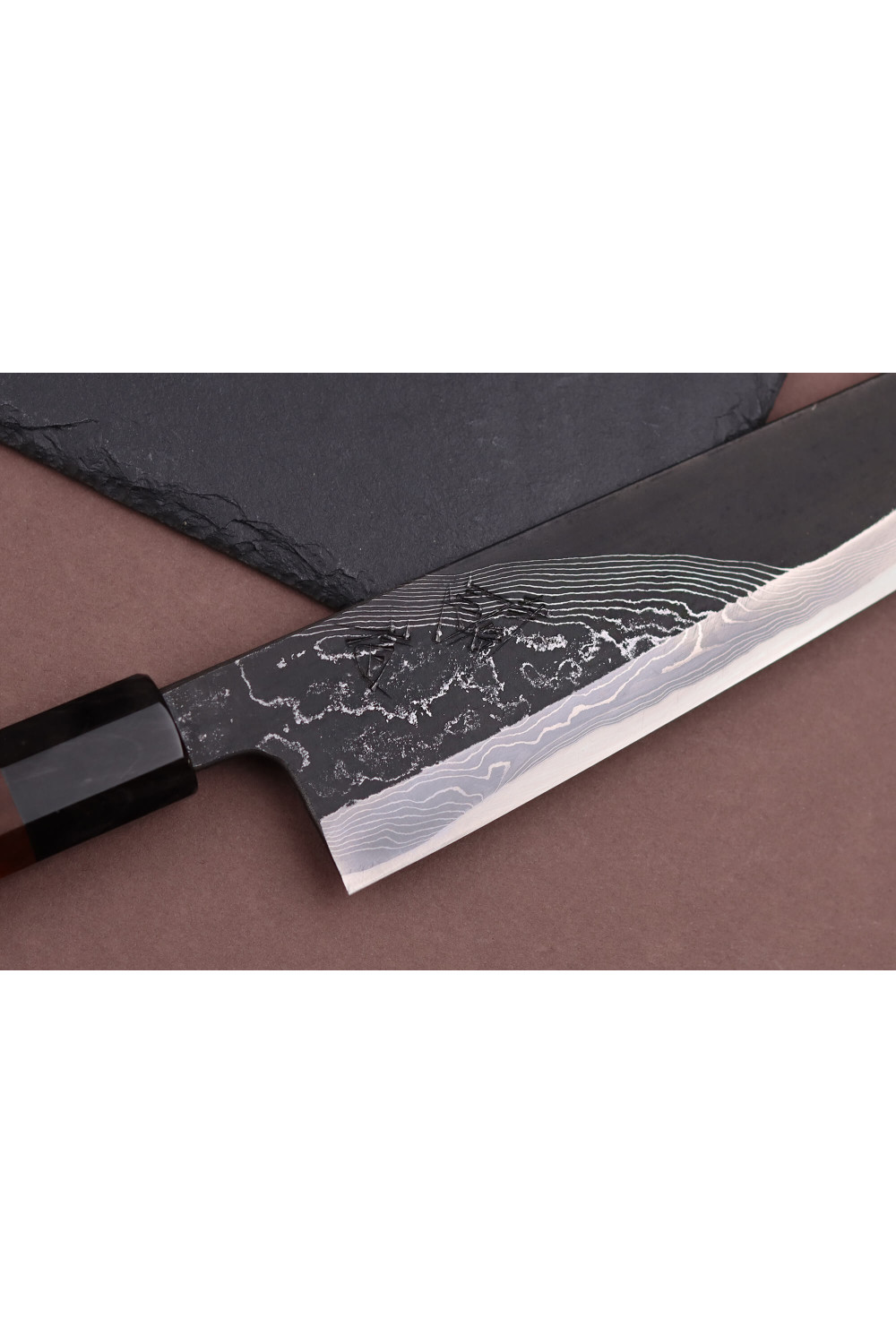
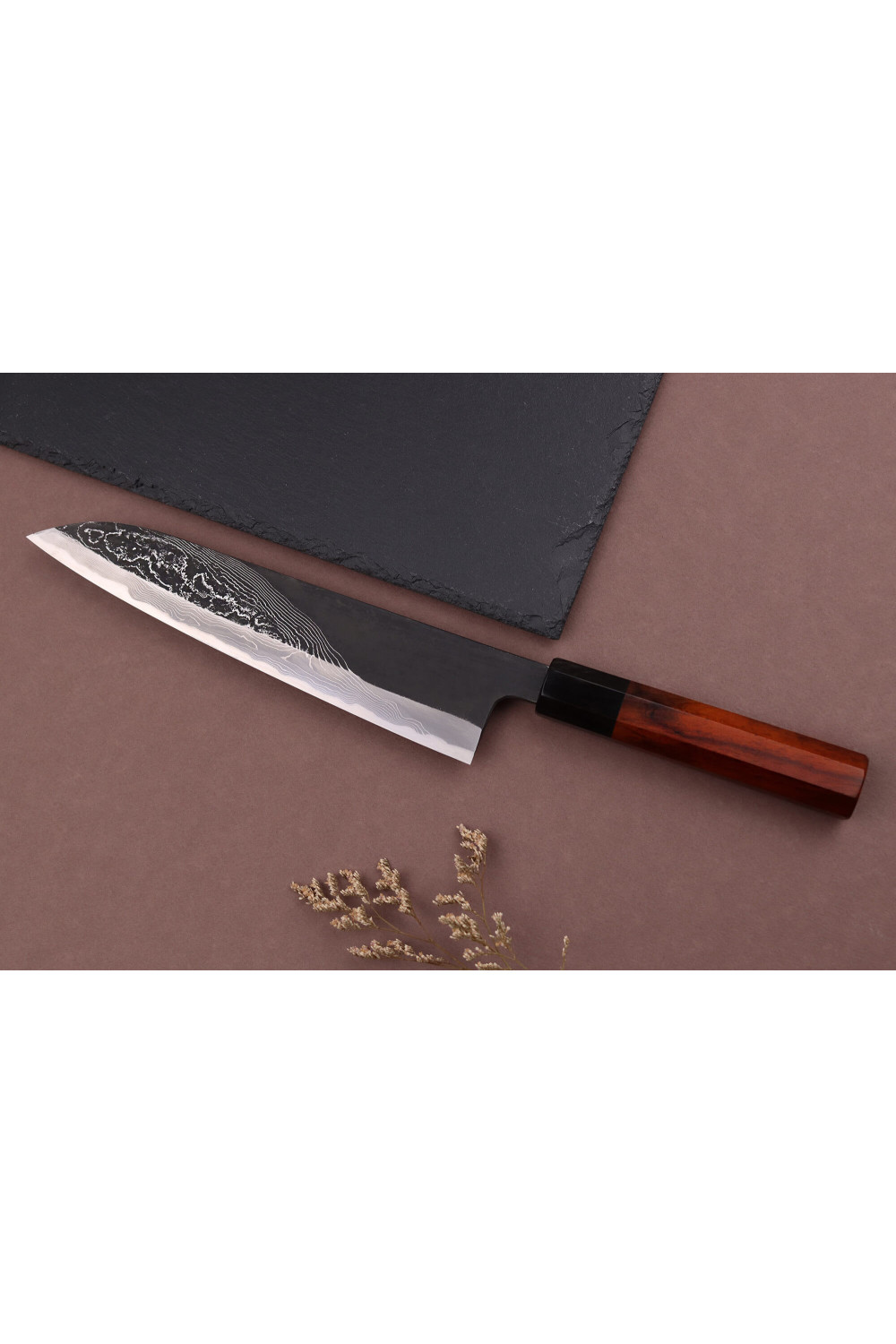
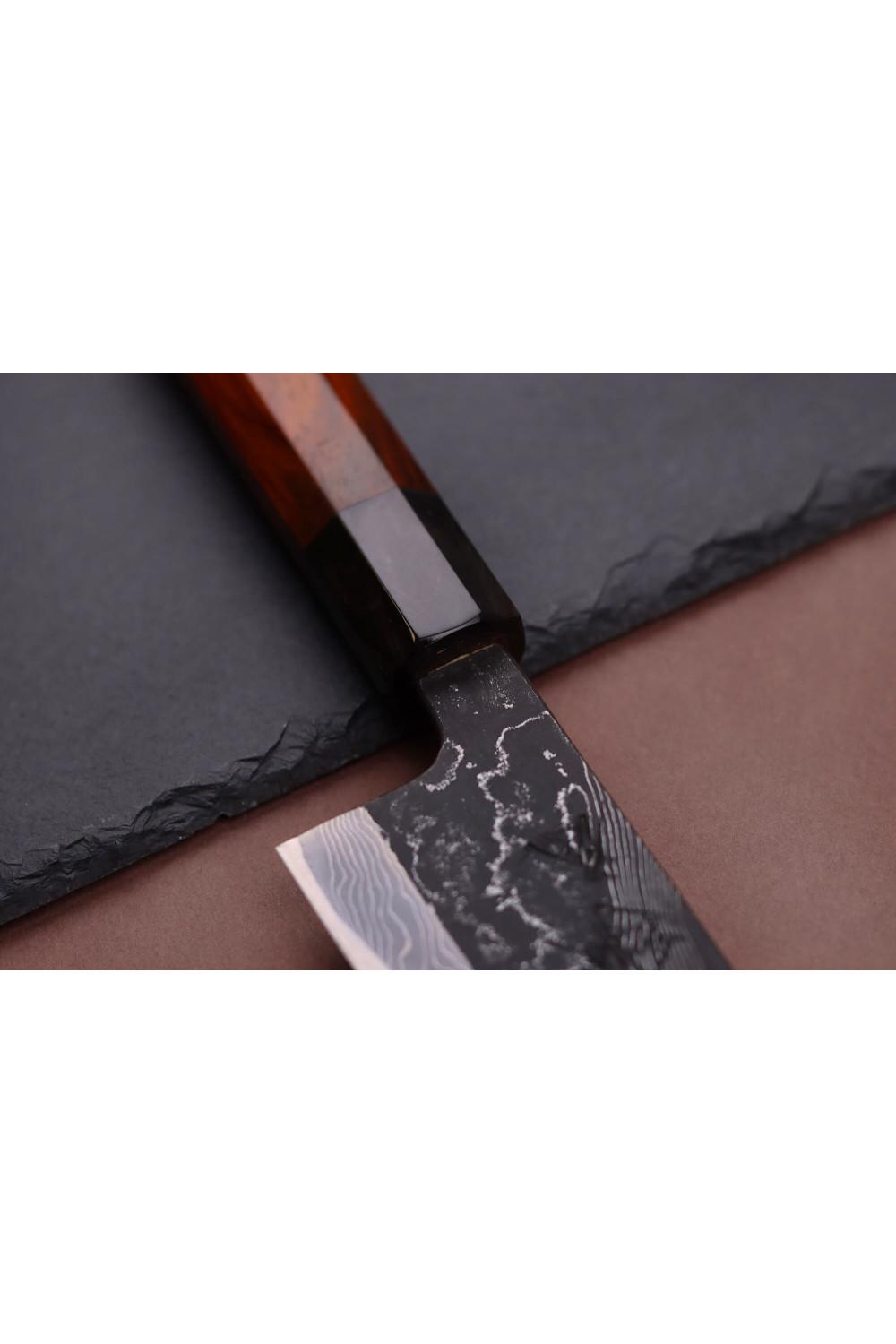
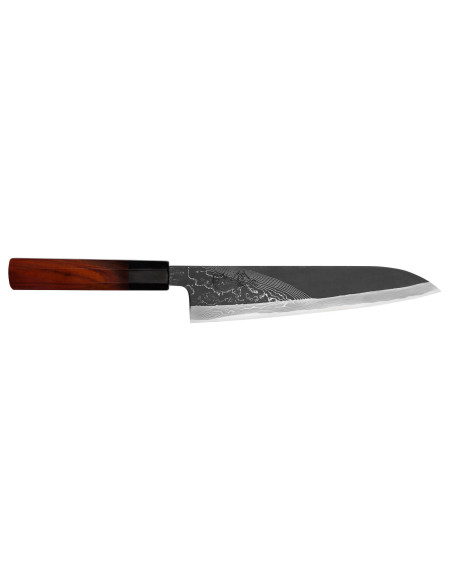
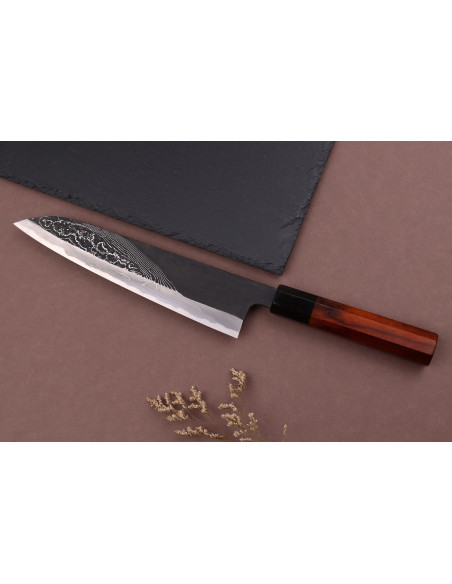
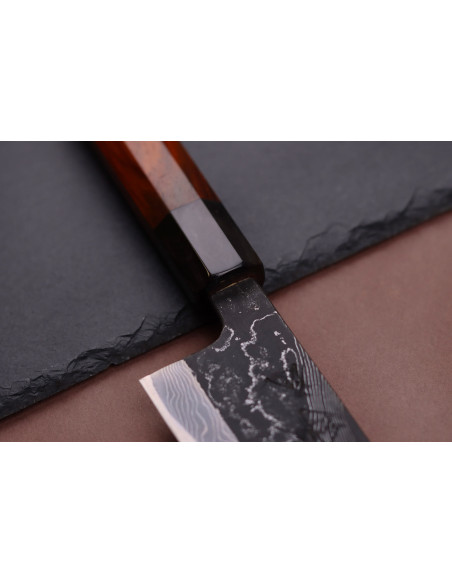
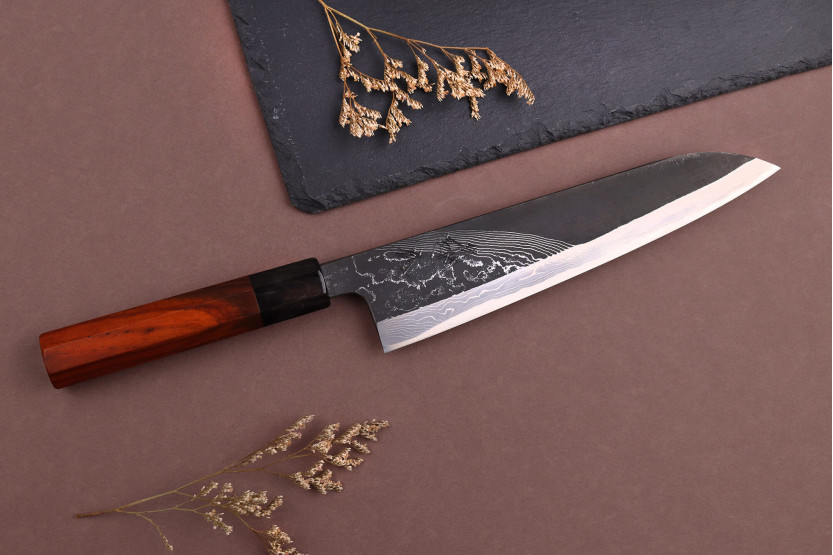
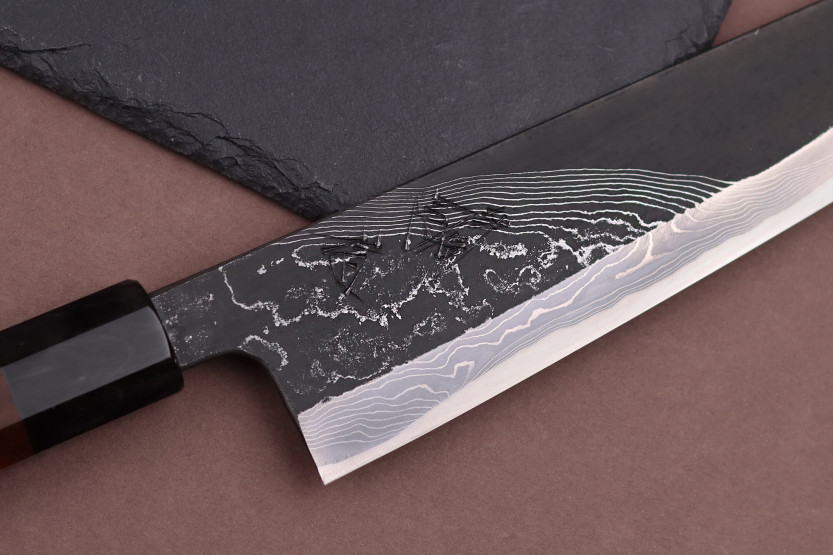
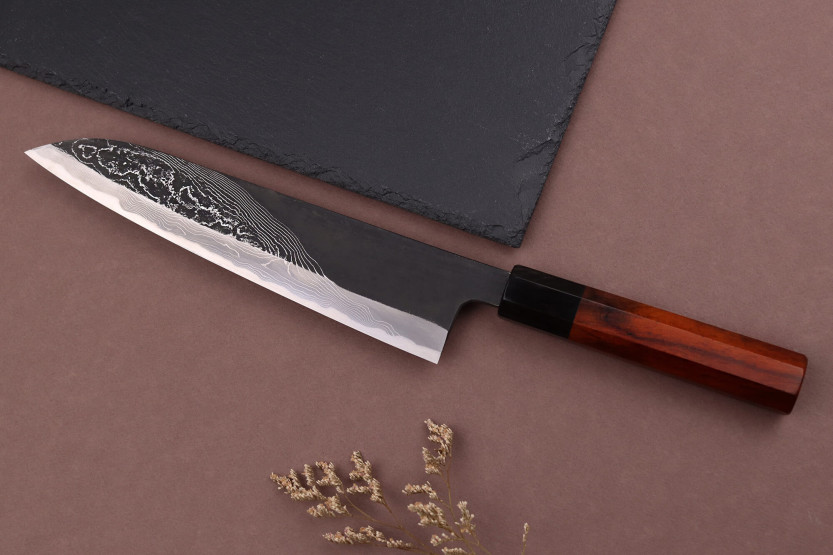
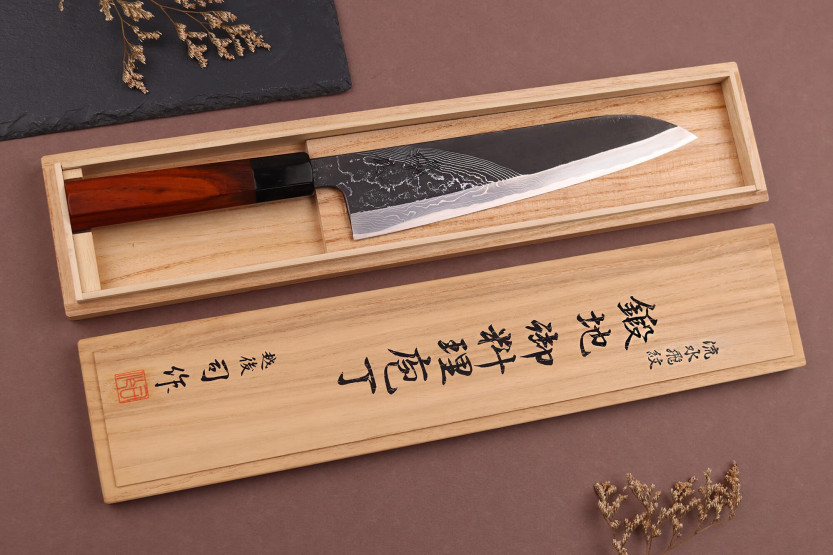
Last but not least, damascus is not only practical, it's also a real aesthetic asset! On the bottom of the blade, you can see the superimposition of different steels forming fine waves with random patterns. Tsukasa san has mastered this technique to perfection, assembling the different alloys in a unique way to create an original damascus pattern. Indeed, the damascus seems to flow from the upper part of the blade, like a river whose bed spills out onto the lower part. These superb patterns also appear on the back of the blade.
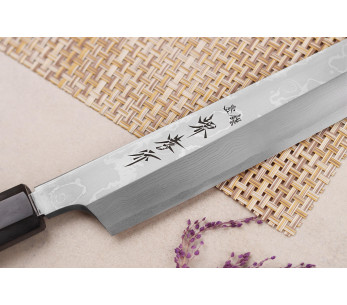
The surface of your blade has a rough forged finish that gives a dark appearance to your handcrafted Japanese knife. This is a traditional finish where the blade has not been polished to give your knife character. Kanjis have been hand-engraved by the blacksmith to add a touch of authenticity.
A high-quality wooden handle
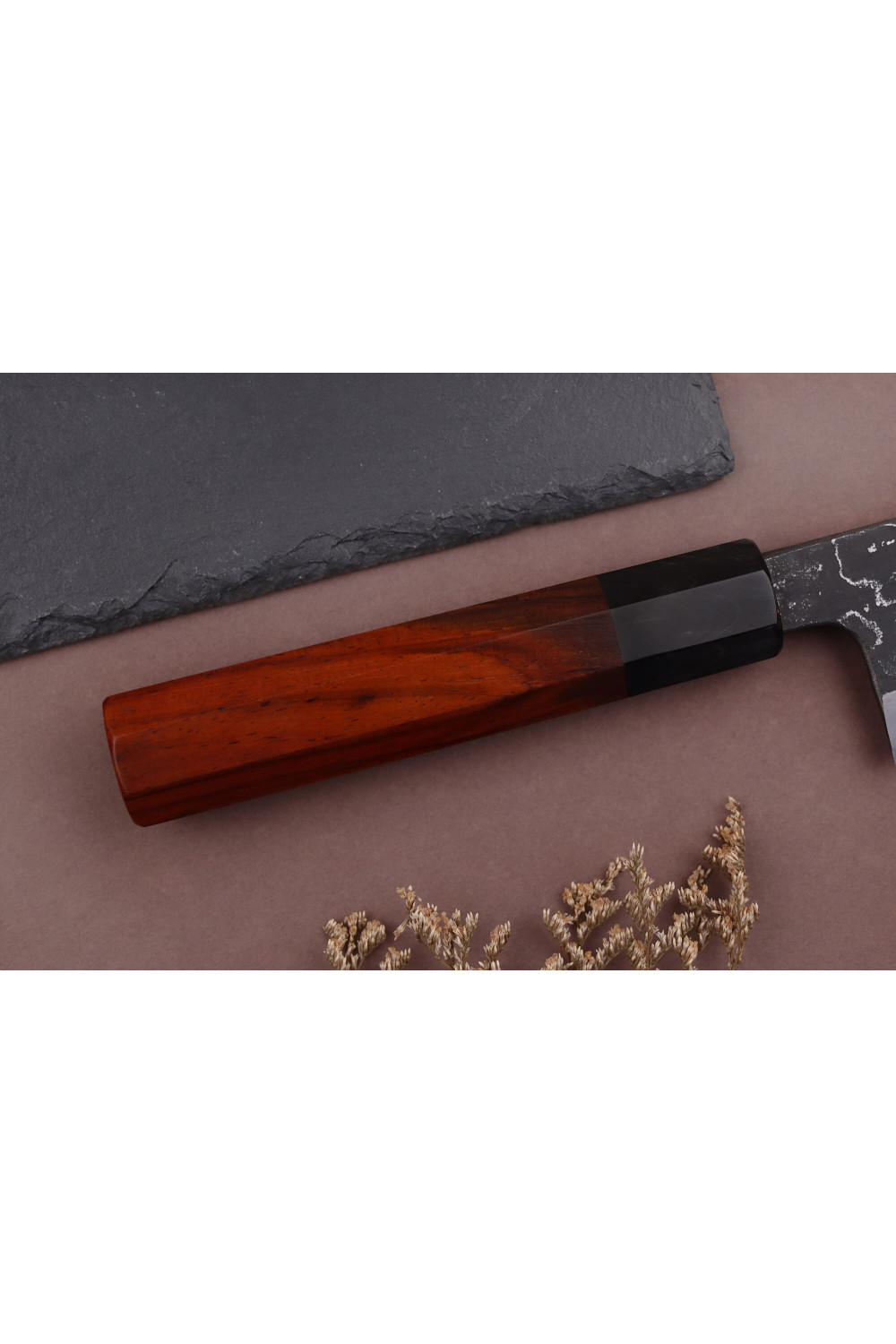
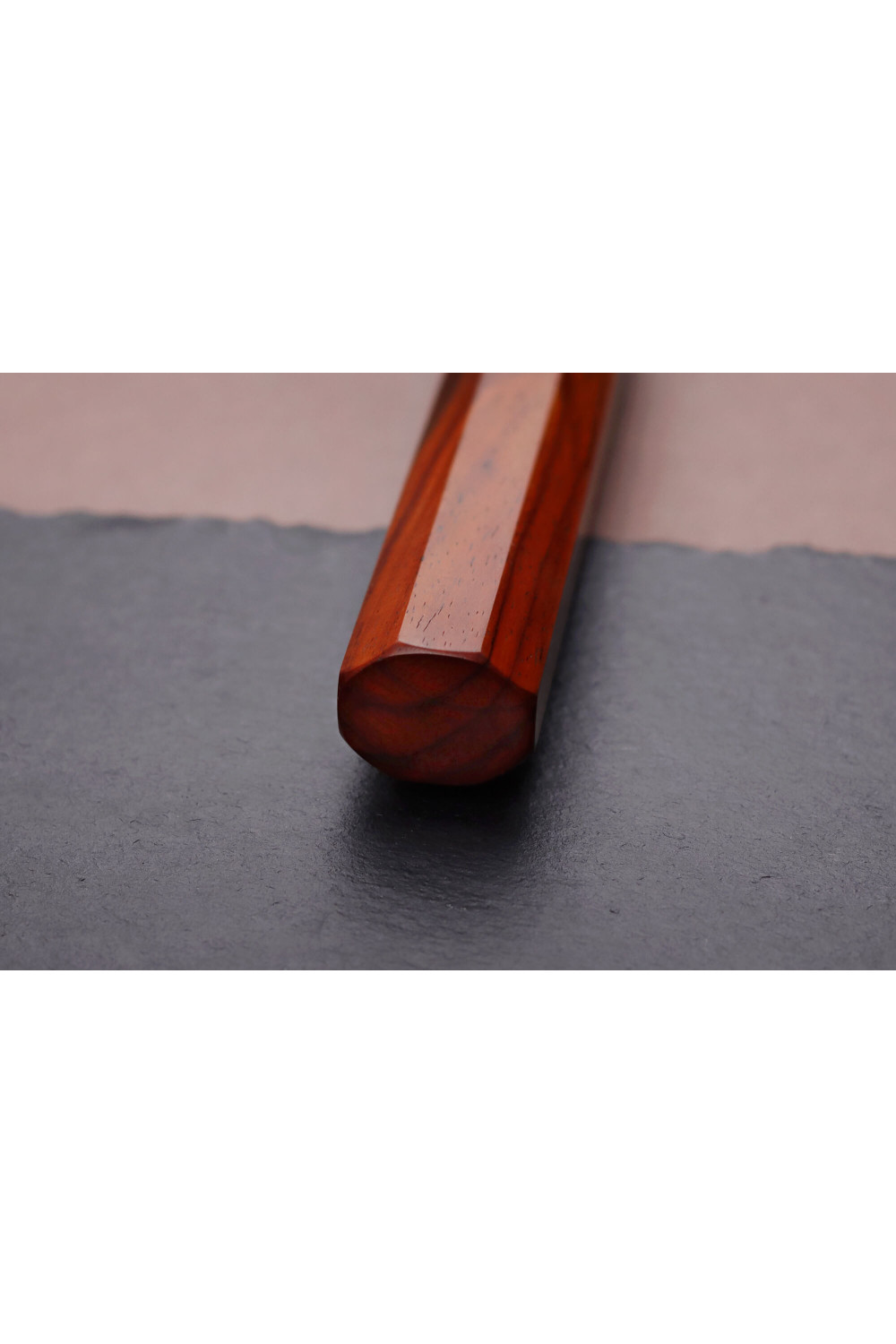
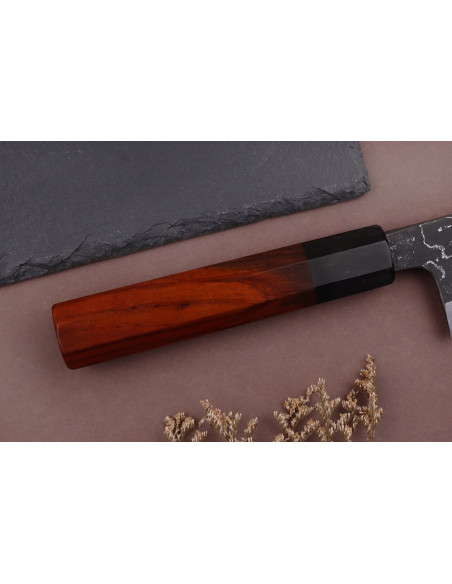
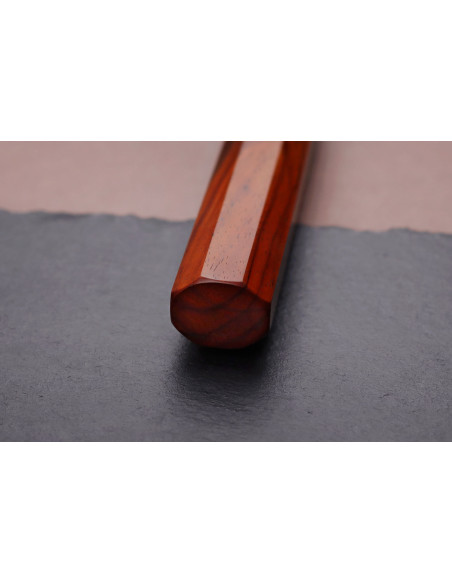
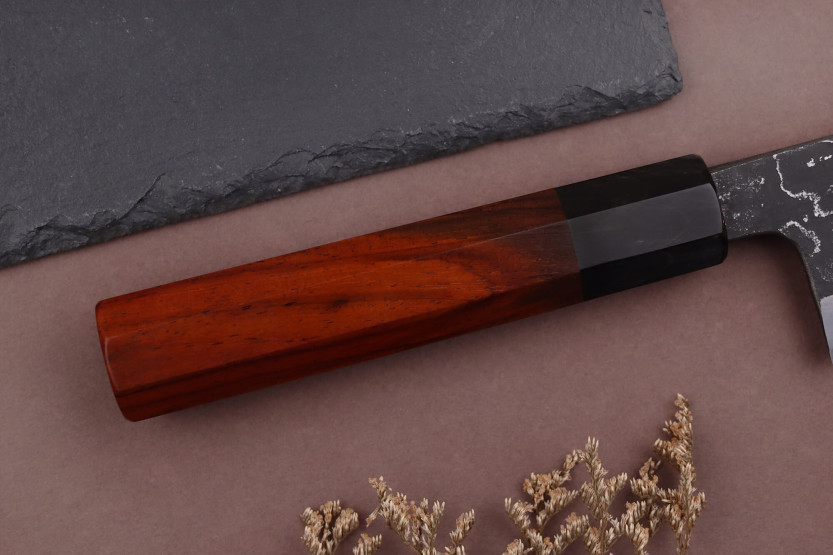
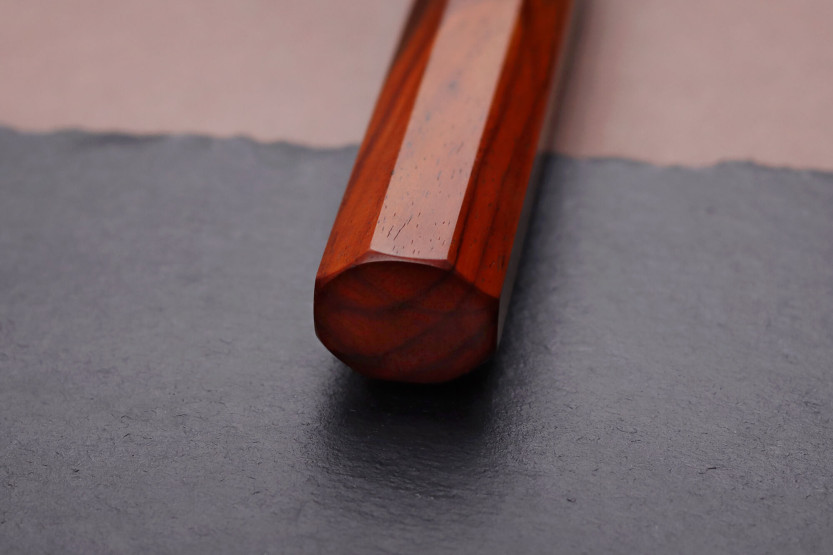
The handle of your Hinoura Tsukasa knife is made from exotic bloodwood, a special species named for the ruddy color of its sap. The wood's high density makes it resistant to humidity and shock.
Bloodwood is highly prized for its color and warm nuances, which add softness to the overall look of the knife. As wood is a living material, the grain of your handle is unique!
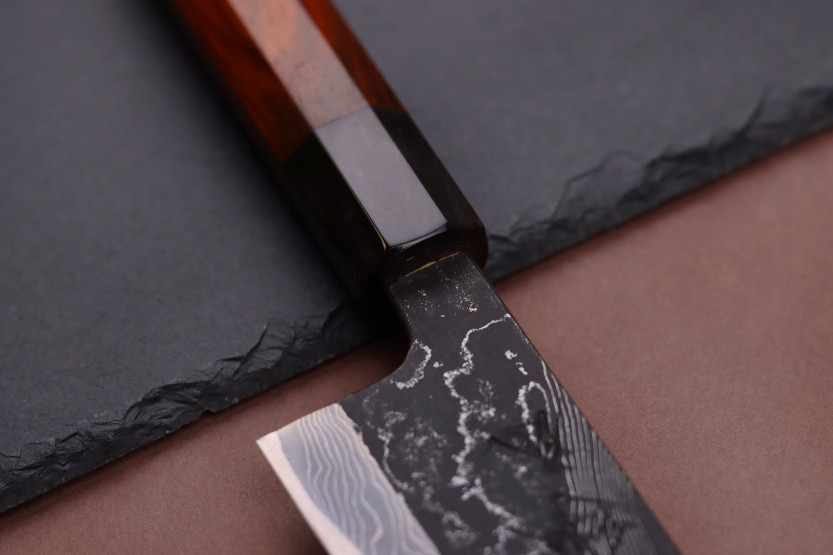
A black buffalo horn bolster links the blade to the handle. This robust material lends character to your Japanese kitchen knife. As it's a natural material, it's unique, and this helps reinforce the singularity of this piece.
The handle of this damask knife is octagonal to suit all cooks: left- or right-handed! It offers an ergonomic grip for optimum maneuverability, especially when making long cuts.
Finally, wood putty is added where the blade joins the handle to fill any small gaps. This makes it watertight and prevents small food items or water from seeping inside.
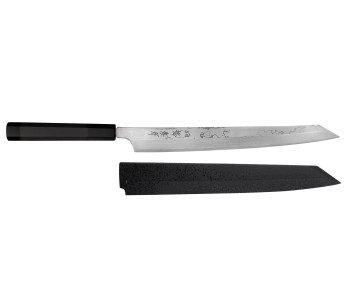
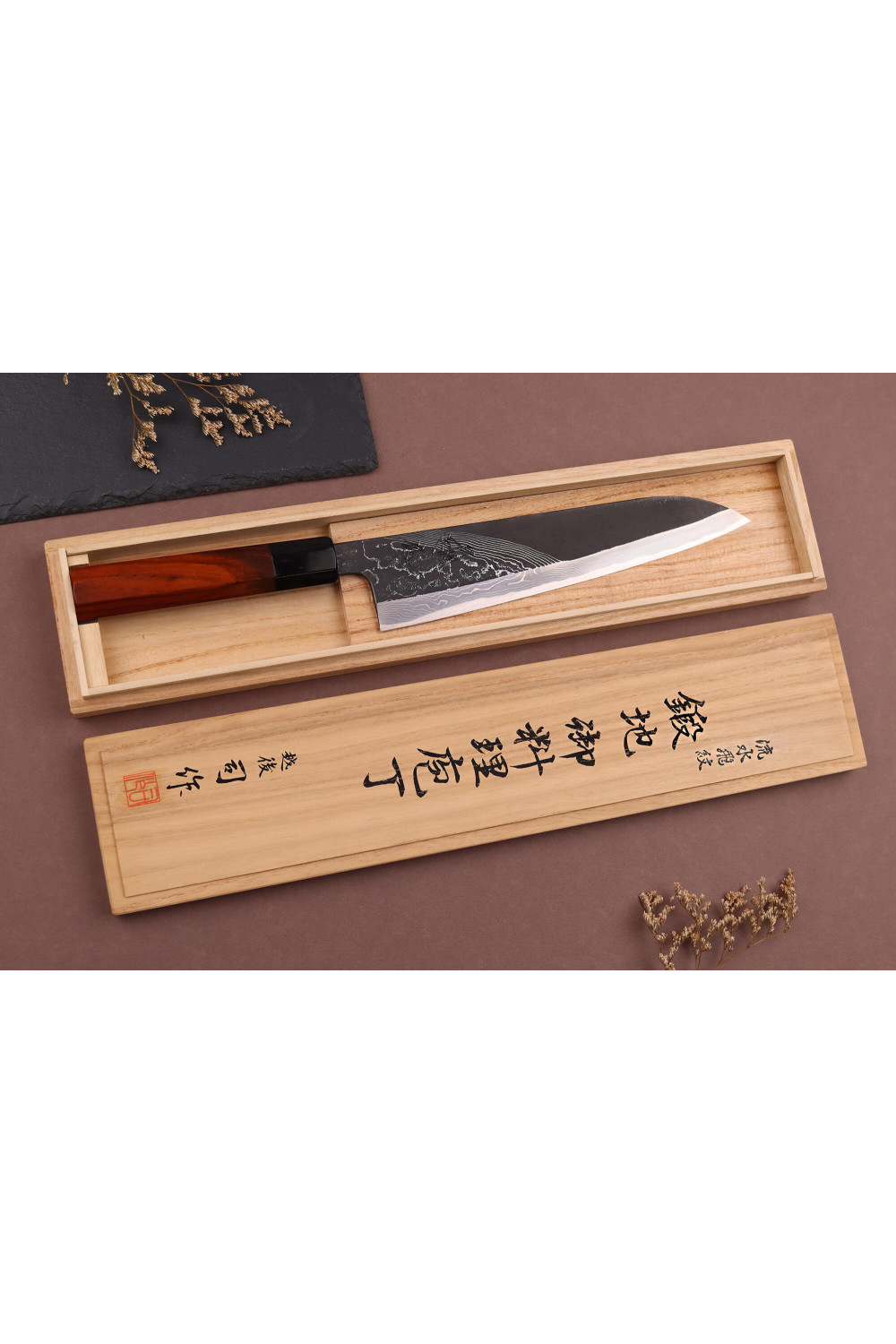
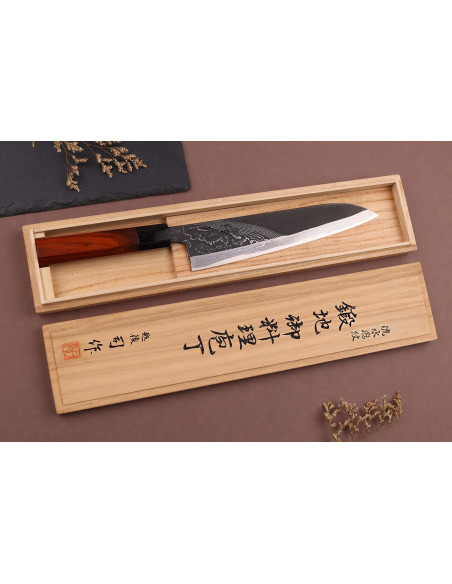
Your Japanese chef's knife comes in an elegant wooden case for optimum protection! Elegant and practical, this case is ideal for storing your collector's knife. It is adorned with beautiful calligraphy, as well as the Hinoura Tsukasa master emblem in red ink.
How to care for a carbon-enriched craft knife?
To care for your carbon-enriched knife, wash by hand only with a non-abrasive sponge and mild detergent, avoiding wetting the handle. Once washed, wipe with a clean cloth to remove all traces of moisture before storing in a dry place. Do not use the dishwasher, and do not leave your knife to soak in the sink.
With the passage of time, the color of the blade may vary slightly: this is perfectly normal! This is a natural carbon reaction caused by the acidity of the food you're cutting and the humidity in the air.
We advise you to keep a paper towel handy to wipe your blade between cuts. To give your blade the best possible protection, oil it regularly with mineral oil.
Find many exceptional Japanese knives on KnifeLeader.eu!




 By buying this product you can collect up to