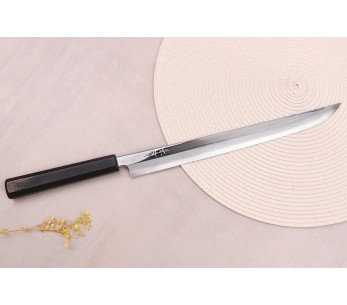
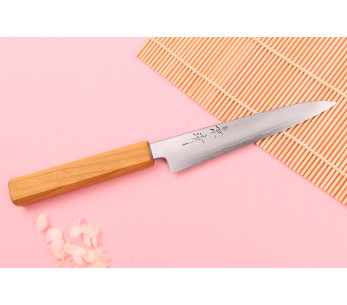
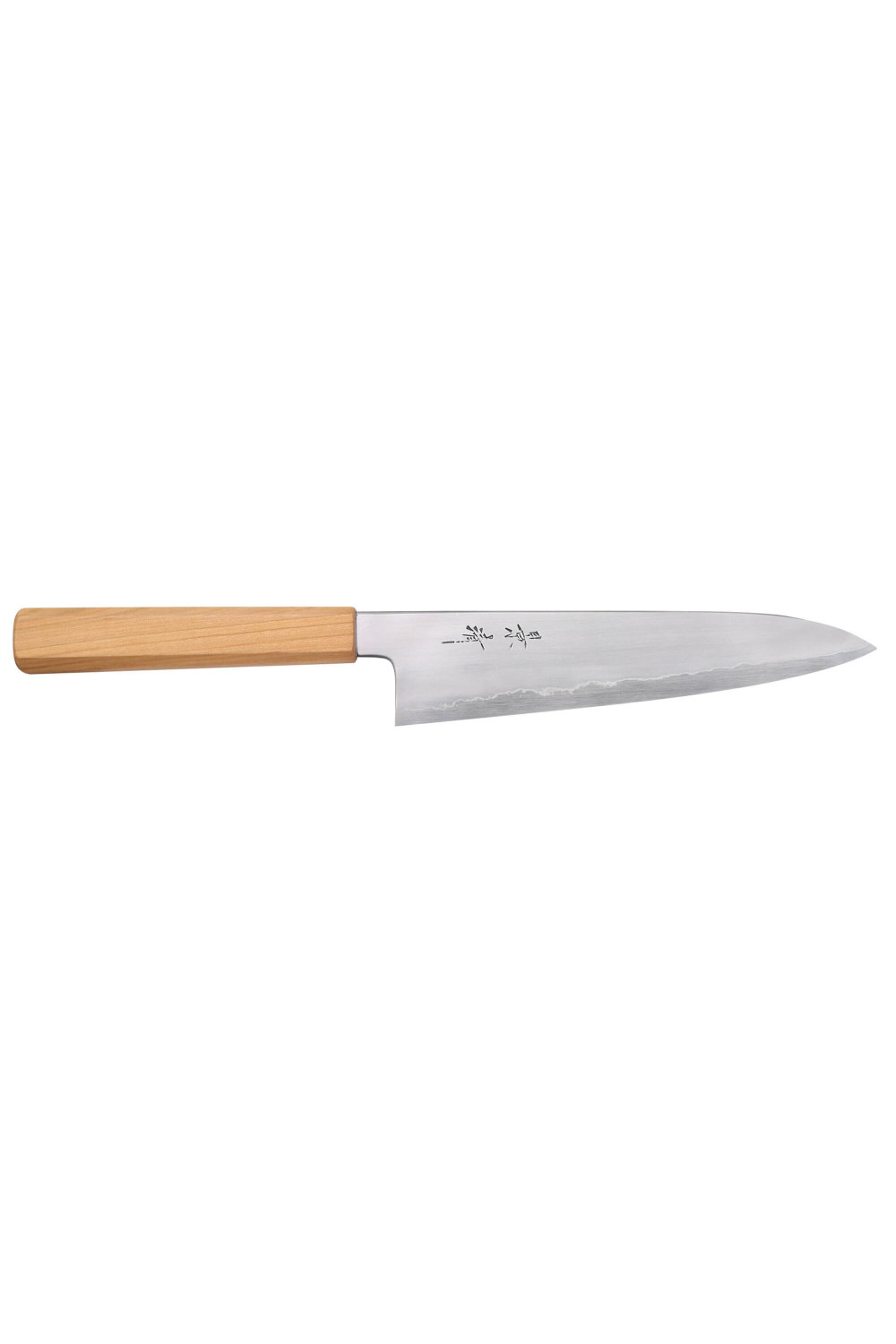
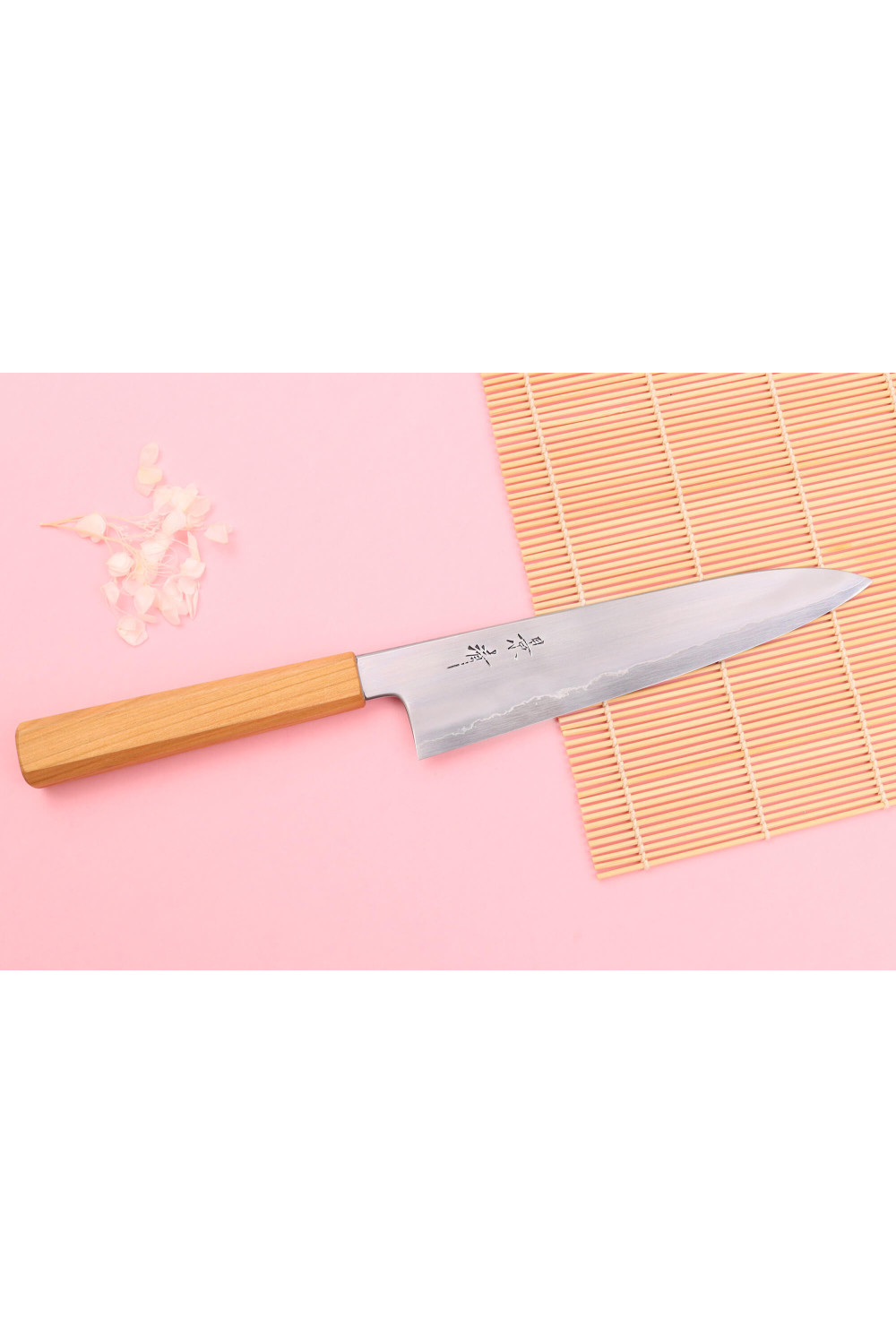
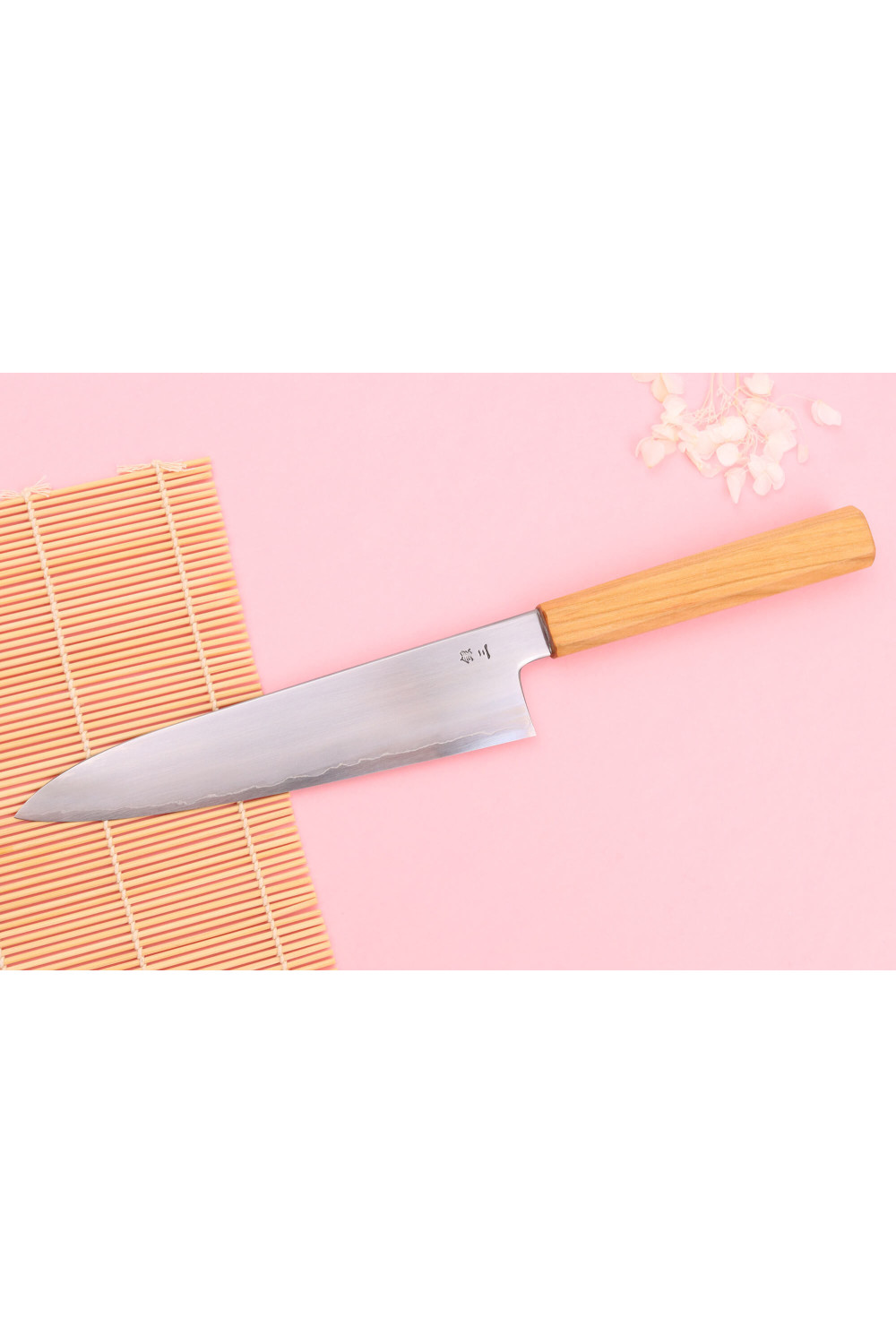
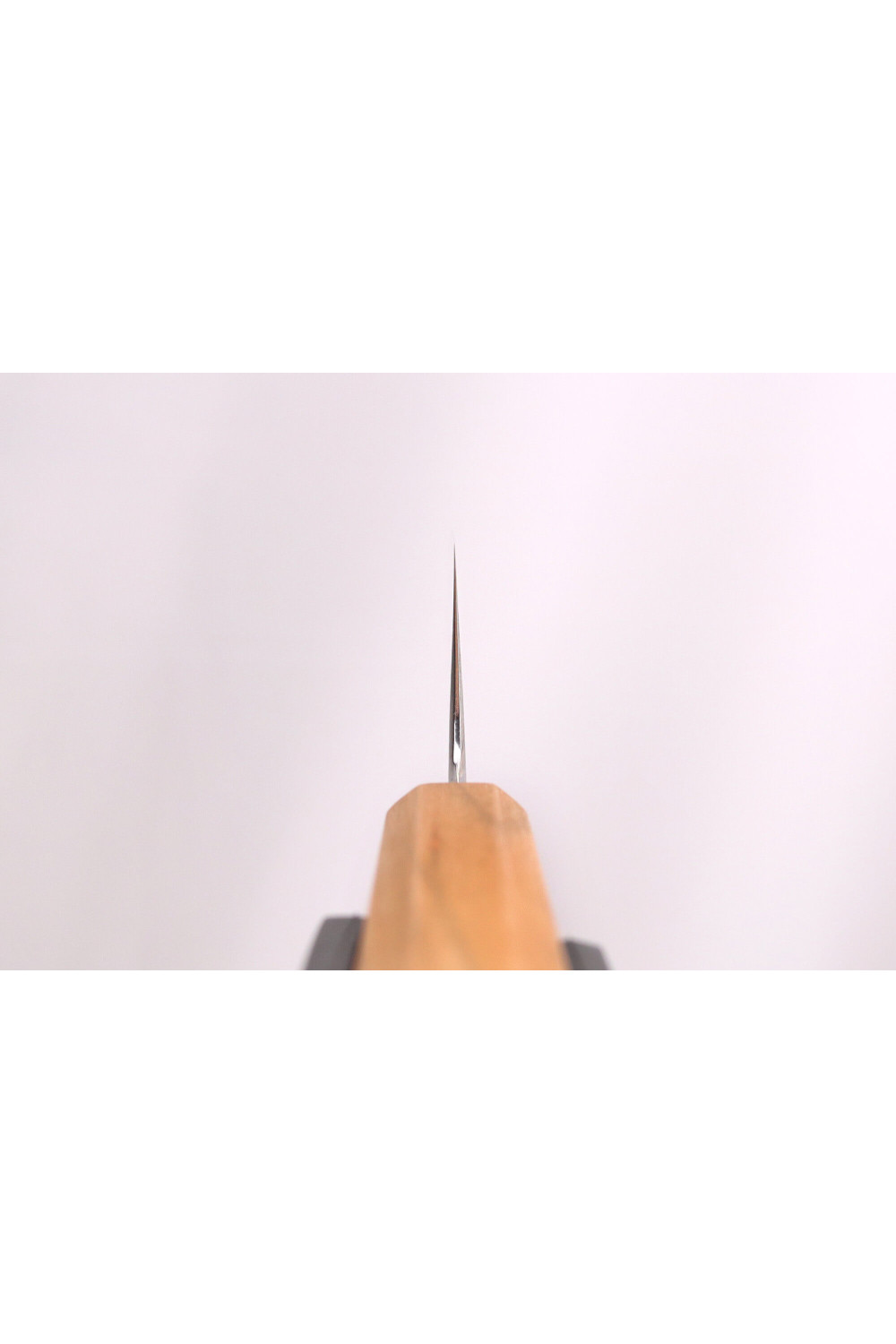
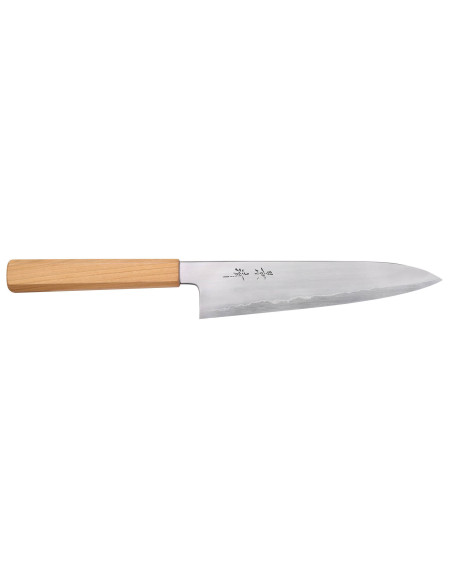
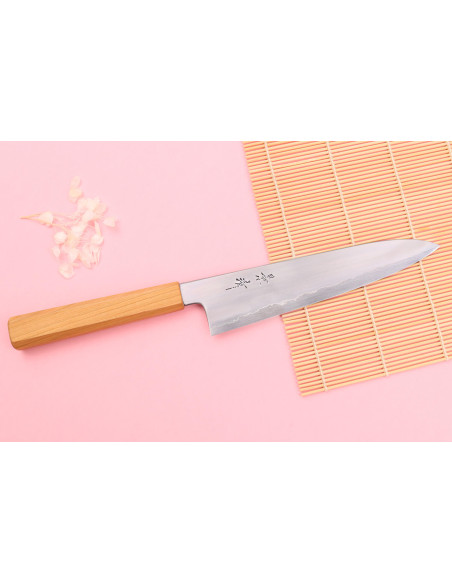
A handmade Japanese chef' s knife
Kagekiyo knives are made by the Baba family, whose family business was founded over a century ago and is now run by the third generation. The family's craftsmanship has been passed down from generation to generation, preserving an age-old tradition. The name "Kagekiyo" pays homage to Commander Akushichibe"Fujiwara" Kagekiyo, a historical figure of the 10ᵉ century during the Heian era.
One of the family members, Baba Ichiji, was honored by the Emperor with the medal of the Order of the Rising Sun, in recognition of his contribution to the cutlery industry. He also received the Yellow Ribbon Medal, a distinction awarded to those who distinguish themselves in their field and become models of excellence.
The Baba family is deeply attached to the Japanese concept of Monozukuri, which symbolizes the art of manufacturing with passion and perfection. They also follow the principles of Kaizen, aiming for continuous improvement, both in their know-how and in the manufacturing process. To optimize the quality of their materials, they use electron microscopes to analyze the molecular structure of steel.
Kagekiyo knives stand out for their exceptional quality and craftsmanship, embodying values of mastery and excellence!
For this range, the Baba family called on Satoshi Nakagawa, a young blacksmith of recognized talent. Although still young, he is already highly respected for the quality of his Japanese knives and his expertise. At the age of 18, he became a pupil of master blacksmith Kenichi Shiraki, under whose tutelage he perfected his skills for over 15 years. Today, running his own workshop, he masters the traditional techniques of forging carbon steel knives, as well as complex processes such as Suminagashi and Honyaki. He also excels in the manufacture of stainless steel knives, such as VG10 and Ginsan, demonstrating great versatility in his art.

A high-performance Ginsan steel blade
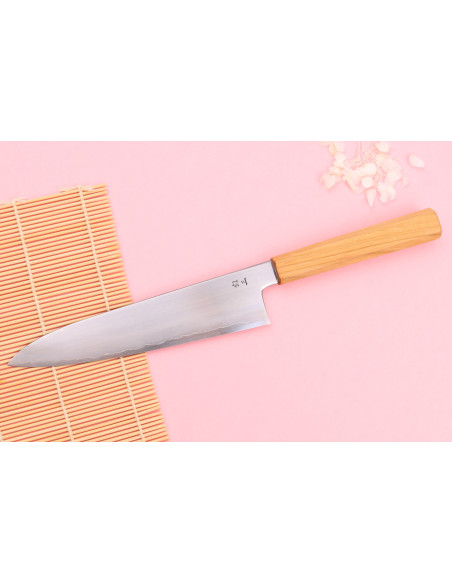
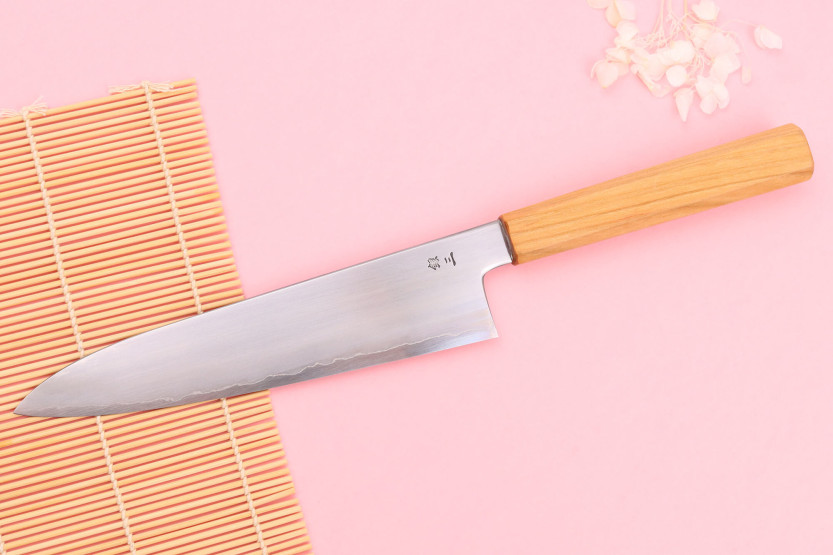
This chef's knife is a versatile tool, perfect for a wide variety of cuts! Whether for mincing meat, chopping herbs or mincing vegetables, it proves particularly effective. However, it is recommended to avoid using it on excessively hard foods, such as squash or bones.
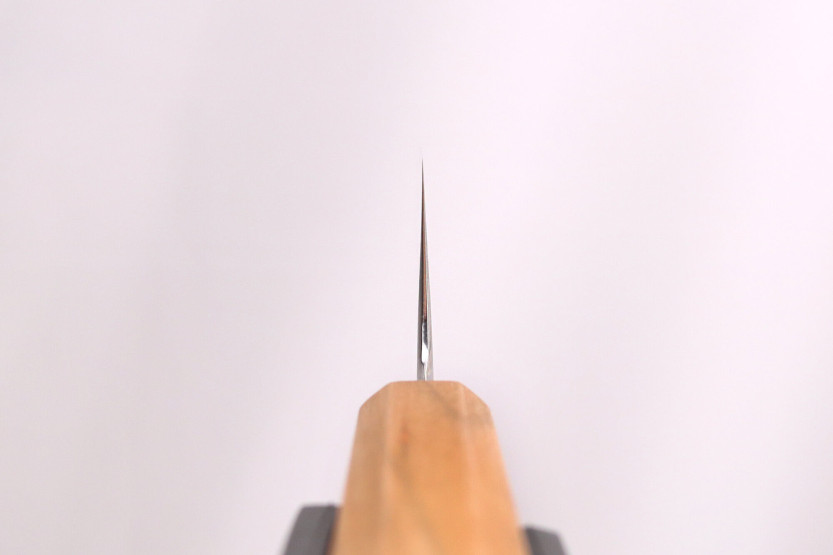
The blade of this gyuto knife is based on San Maï construction, a traditional Japanese method. This technique consists of forging a core of rigid steel, surrounded by a layer of softer stainless steel that folds in on itself. This protects the core of the blade while providing an optimal balance between hardness and flexibility.
The core of this blade is made of Ginsan (or Silver 3) steel, composed of approximately 0.95% carbon and 13% chromium. The carbon increases the blade's hardness, reaching 59/60 HRC on the Rockwell scale. This composition guarantees a long-lasting edge and excellent cutting performance!
What's more, a harder blade enables more precise and finer sharpening, prolonging the durability of the edge and reducing the frequency of sharpening sessions. The addition of chromium also enhances corrosion resistance, offering better protection against oxidation.
Ginsan stainless steel is considered one of the finest in cutlery. It combines the advantages of carbon steels, such as durability of cutting edge, ease of sharpening and rigidity, while reducing the associated risk of oxidation.
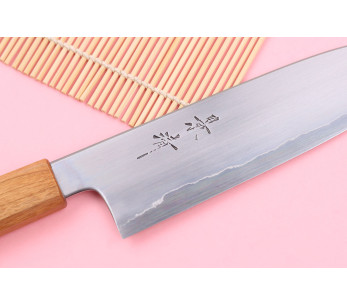
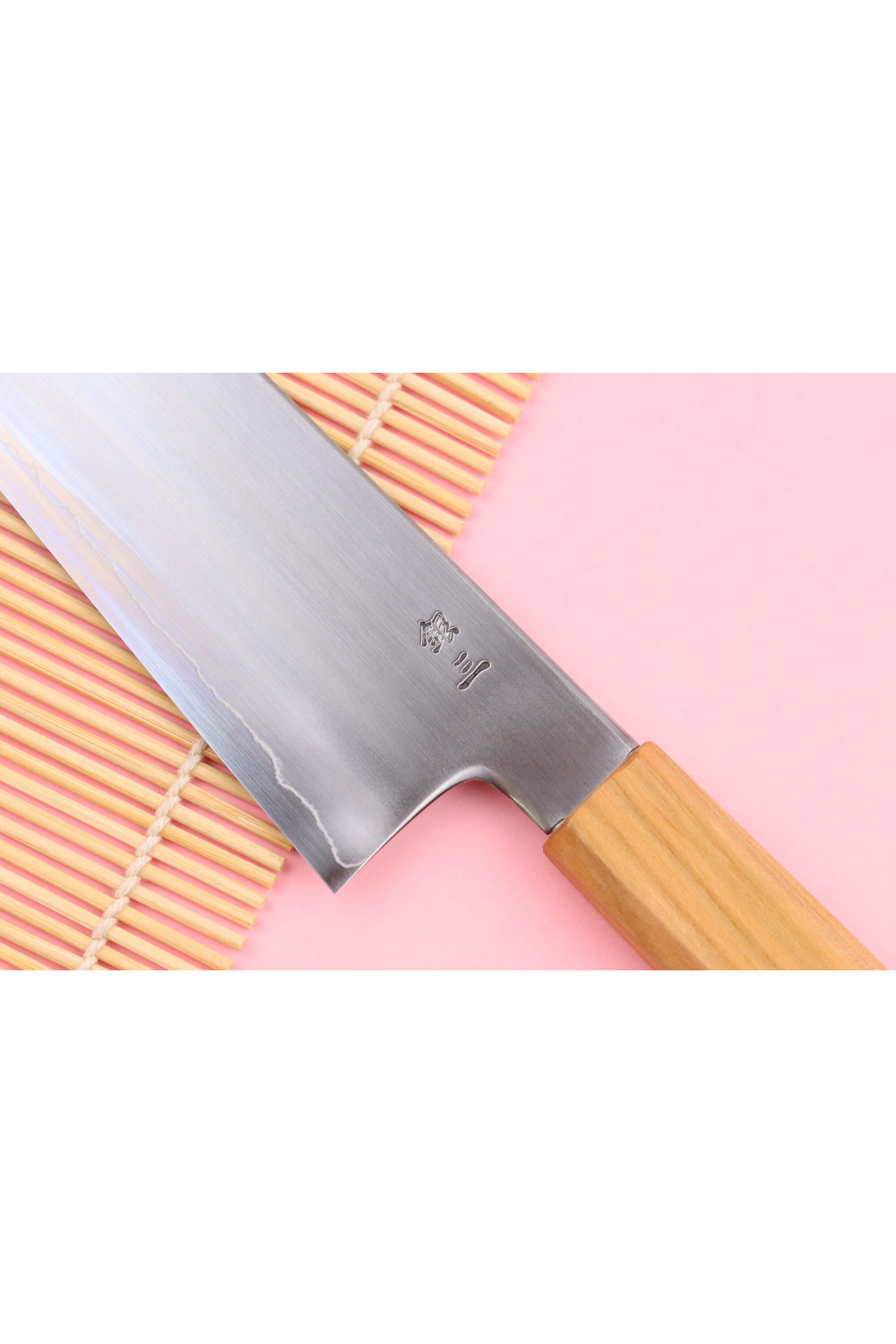
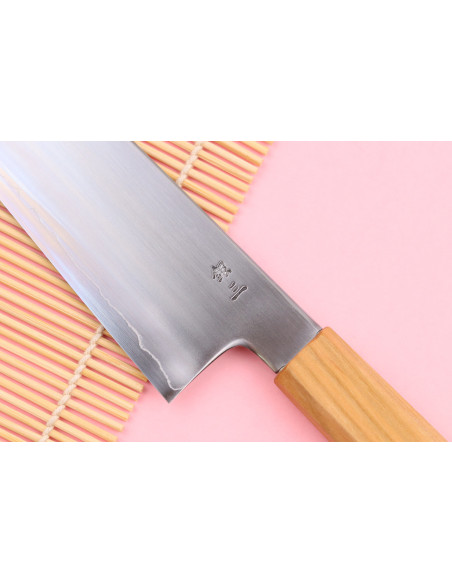
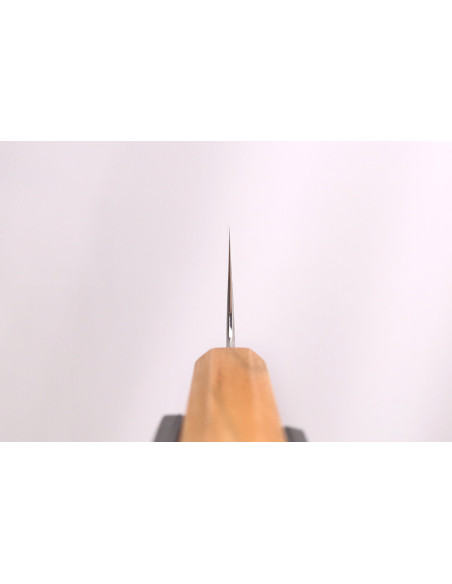
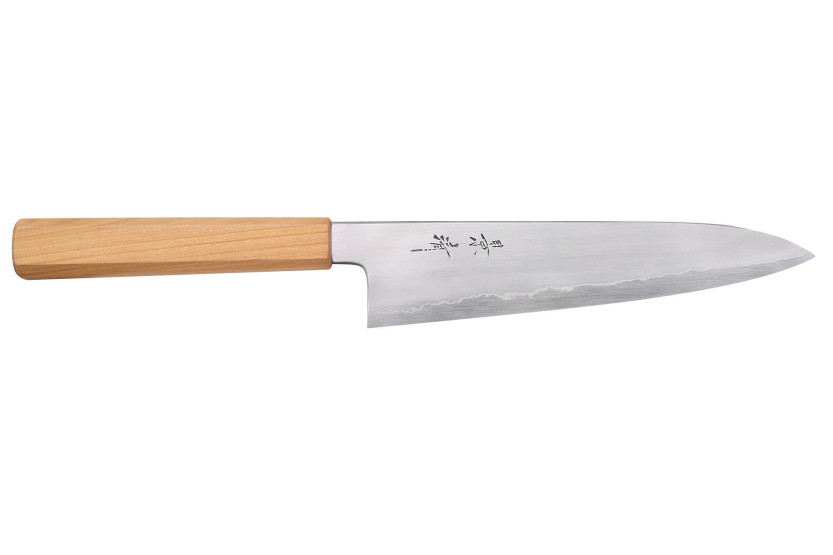
This Japanese kitchen knife features a fine, flat grind, guaranteeing a solid, long-lasting edge. As well as being aesthetically pleasing, this grind is easy to reproduce when sharpening, making it easy to maintain your handcrafted Japanese knife.
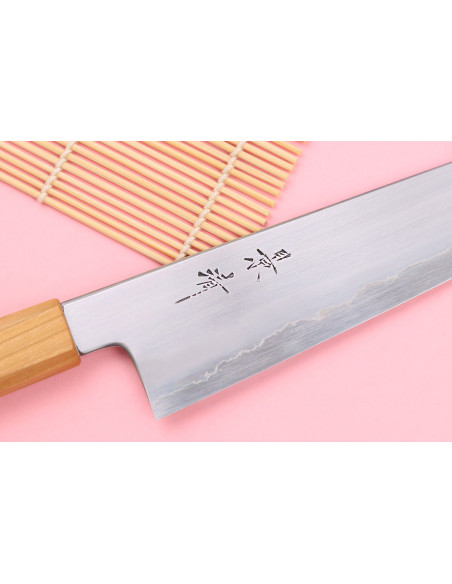
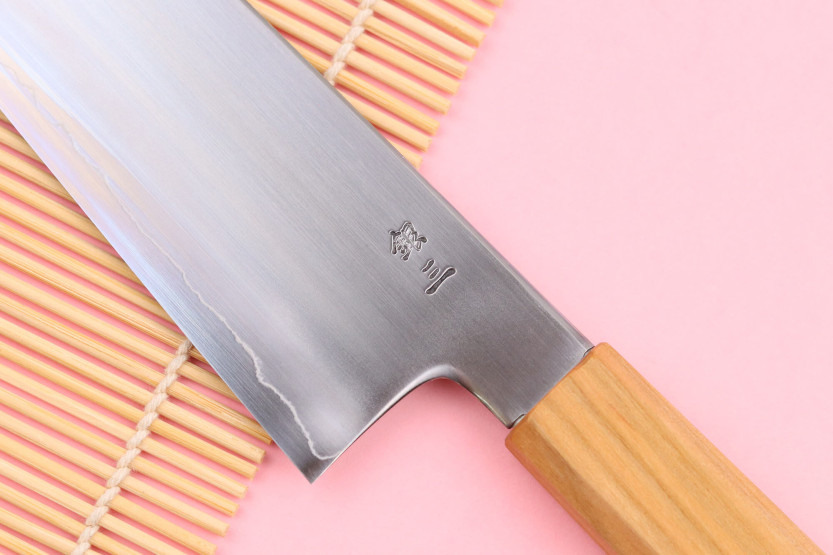
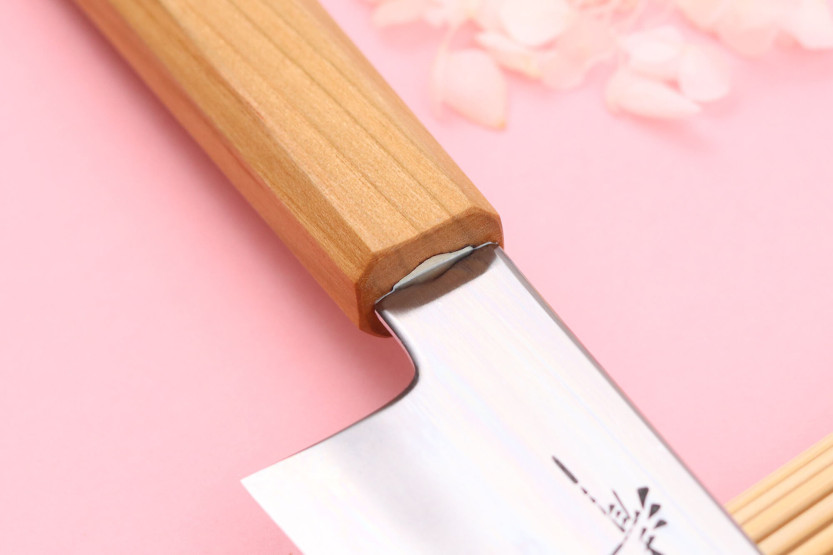
The back and base of the blade have been carefully polished for optimum comfort. This is particularly appreciated by chefs who hold their knives high up on the handle, sometimes resting their index finger on the back of the blade. Thanks to this polish, using your Kagekiyo knife becomes more pleasant and ergonomic.
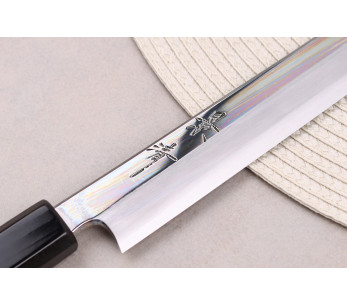
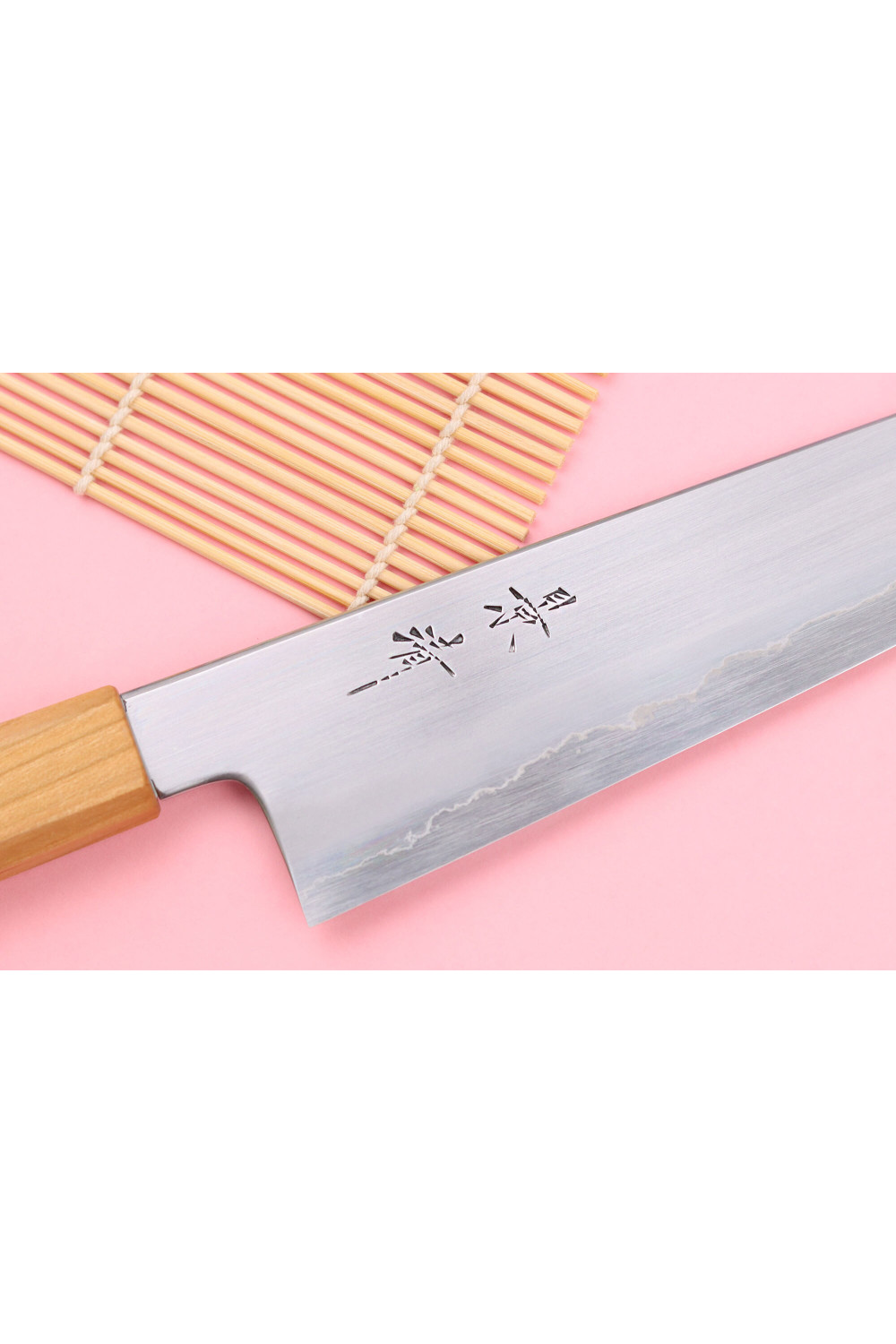
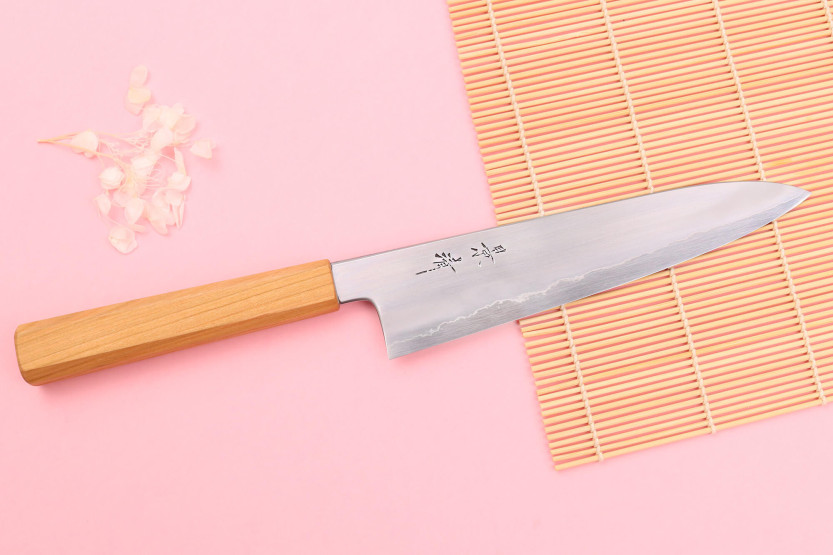
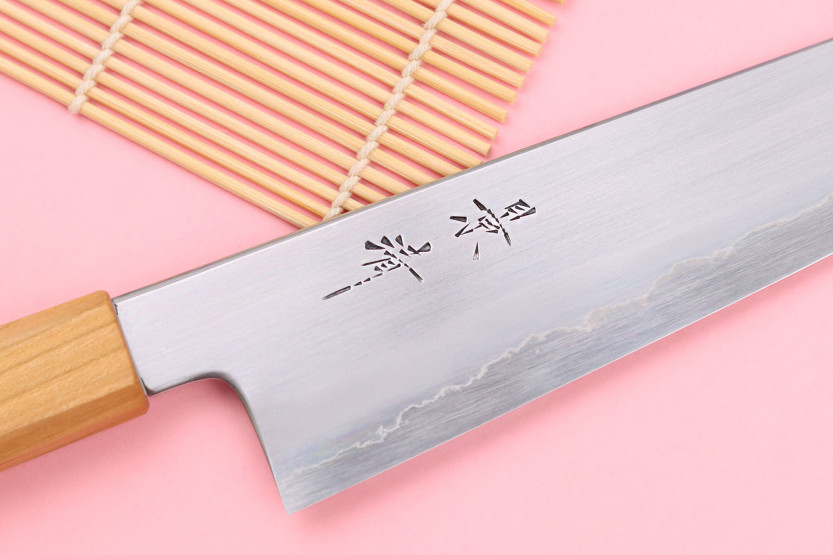
The brand logo is hand-engraved on the blade, which benefits from a traditional finish. This finish is obtained by a specific sharpening technique, using stones of different grits, creating an elegant polished wave on the bottom of the blade, adding a touch of refinement.
Elegant, light-colored walnut handle
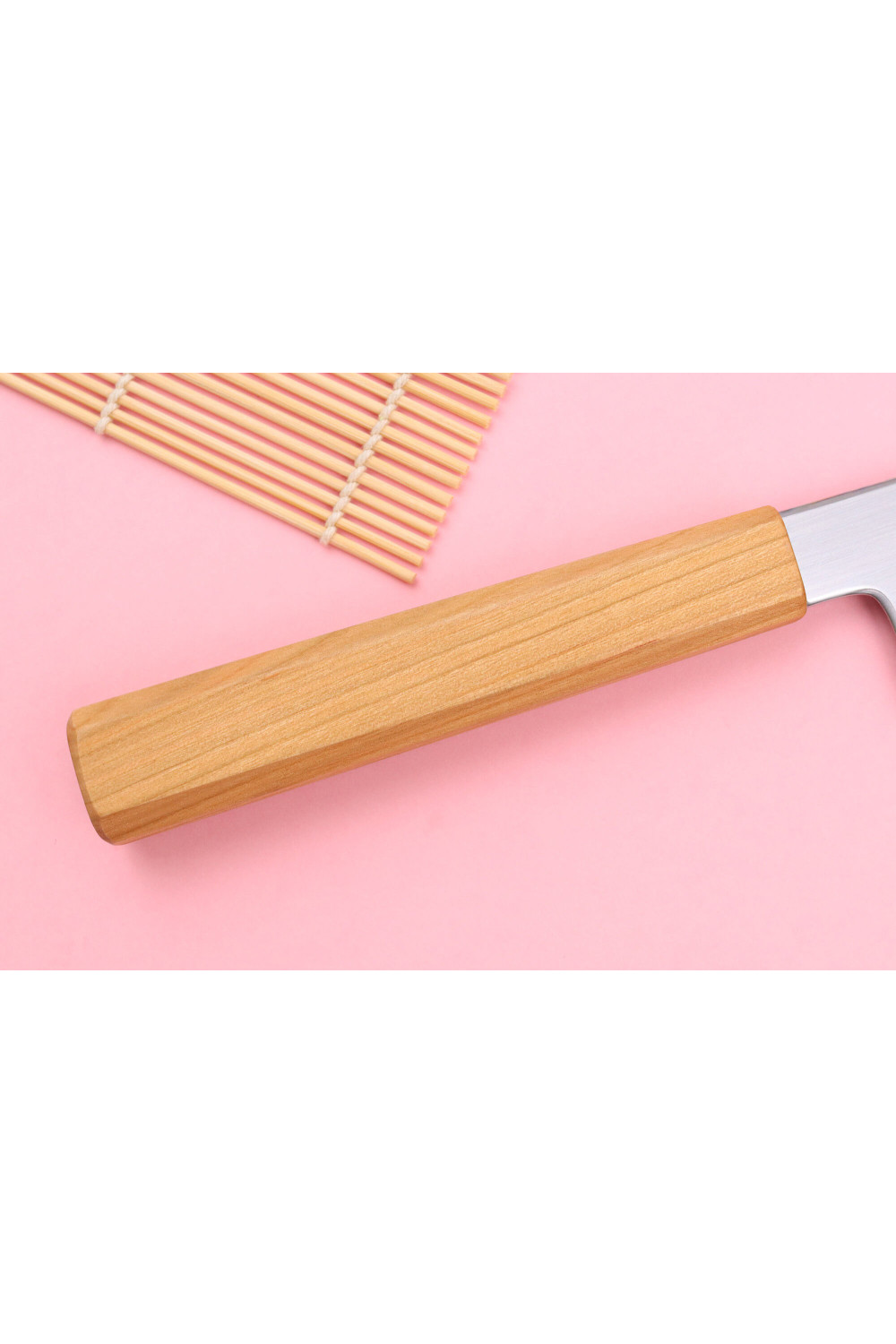
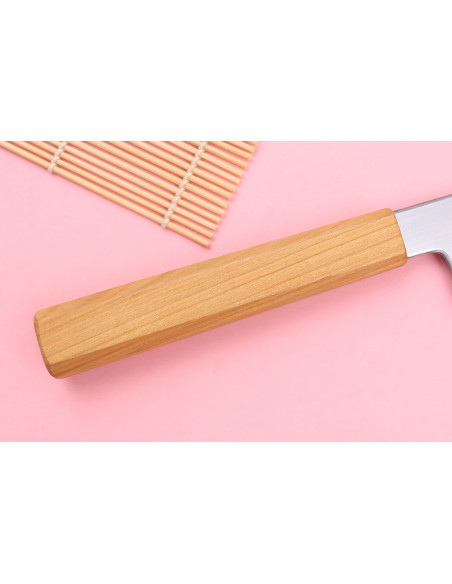
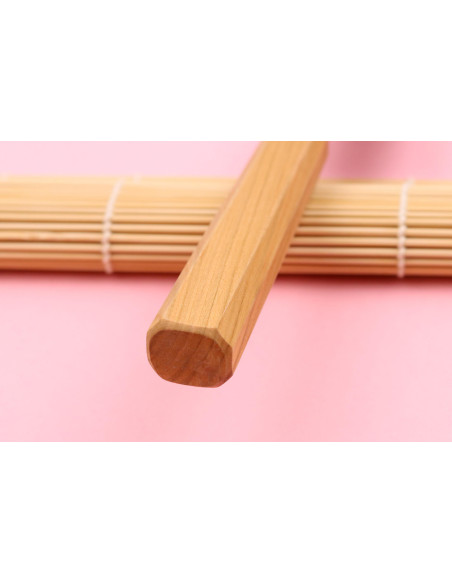
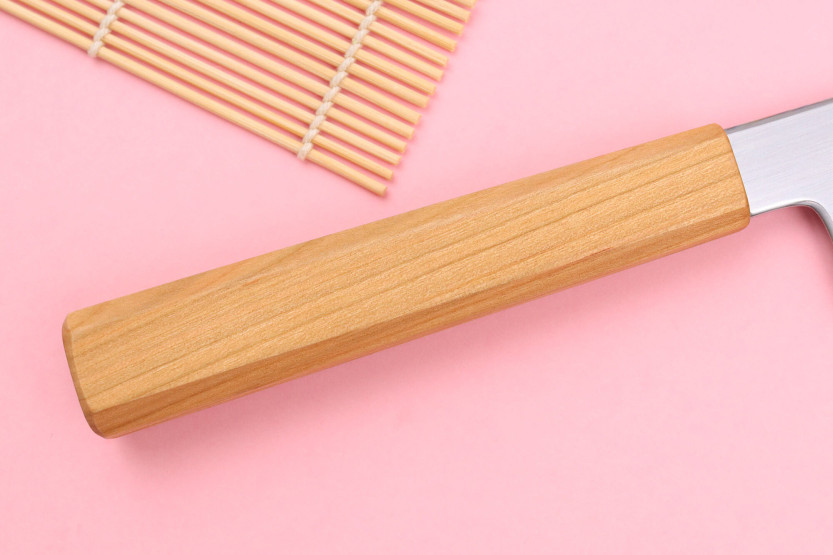
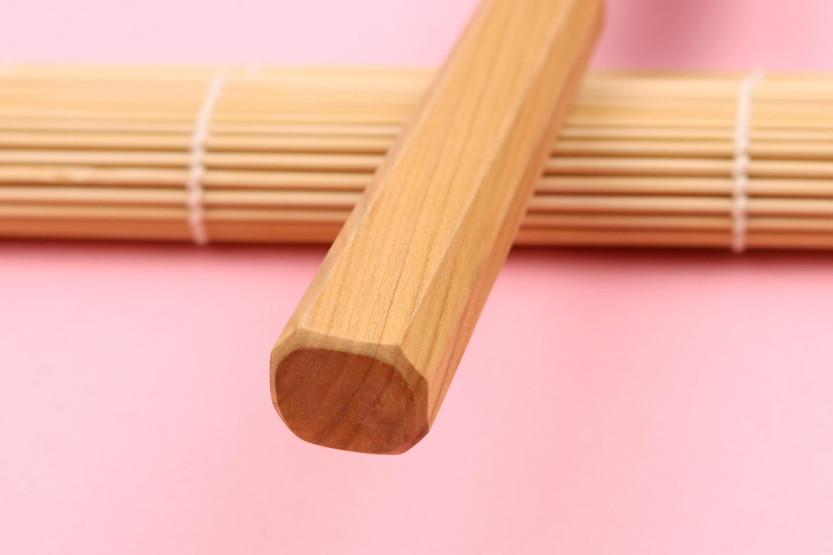
The handle of this Japanese knife is made from walnut wood, a robust and prized species. This wood is naturally resistant to humidity, which prevents warping over time. Its light color and unique grain make each Kagekiyo Sakura knife a distinctive piece!
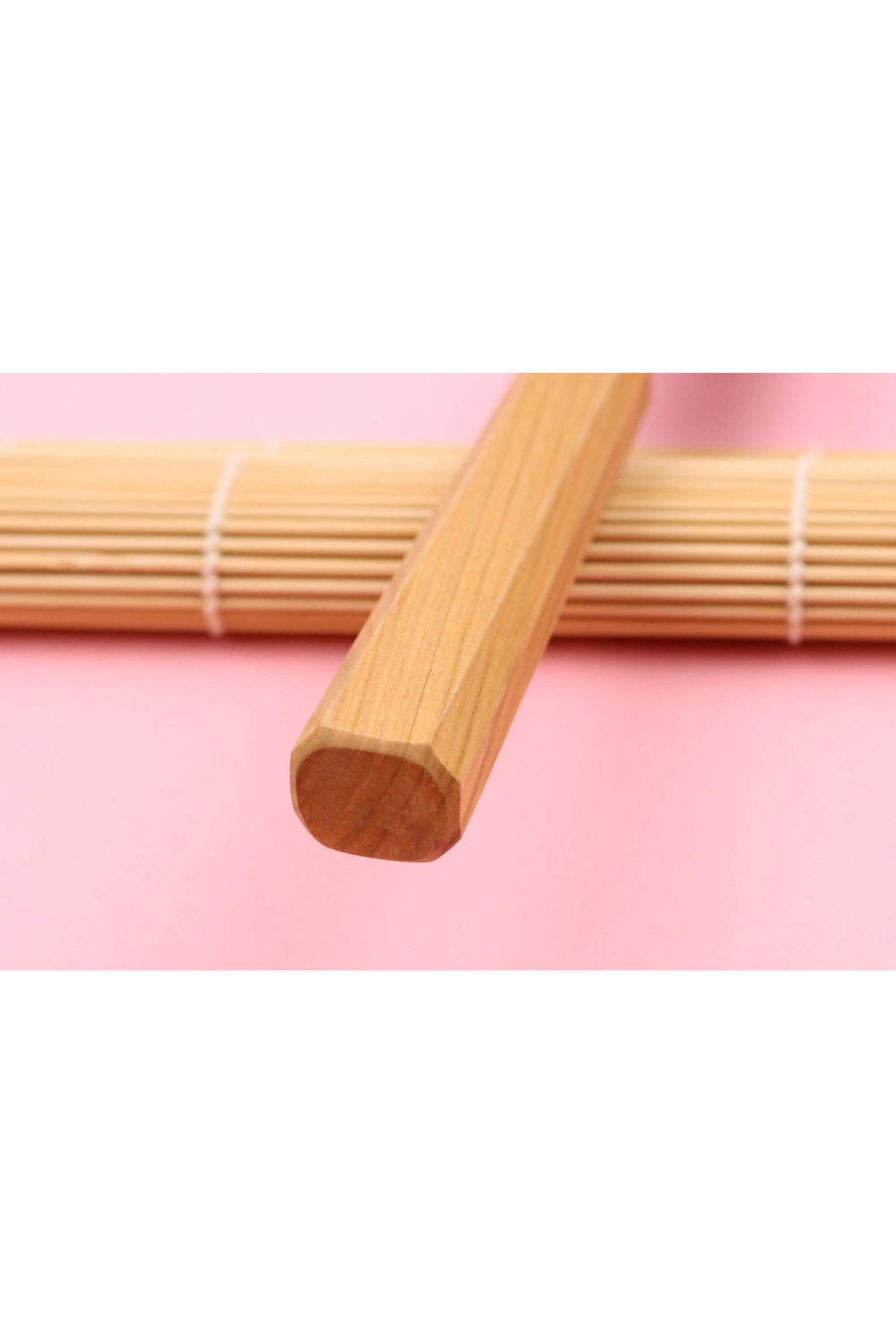
The octagonal handle is designed to suit both right- and left-handed users, offering an ergonomic grip ideal for prolonged use in the kitchen.
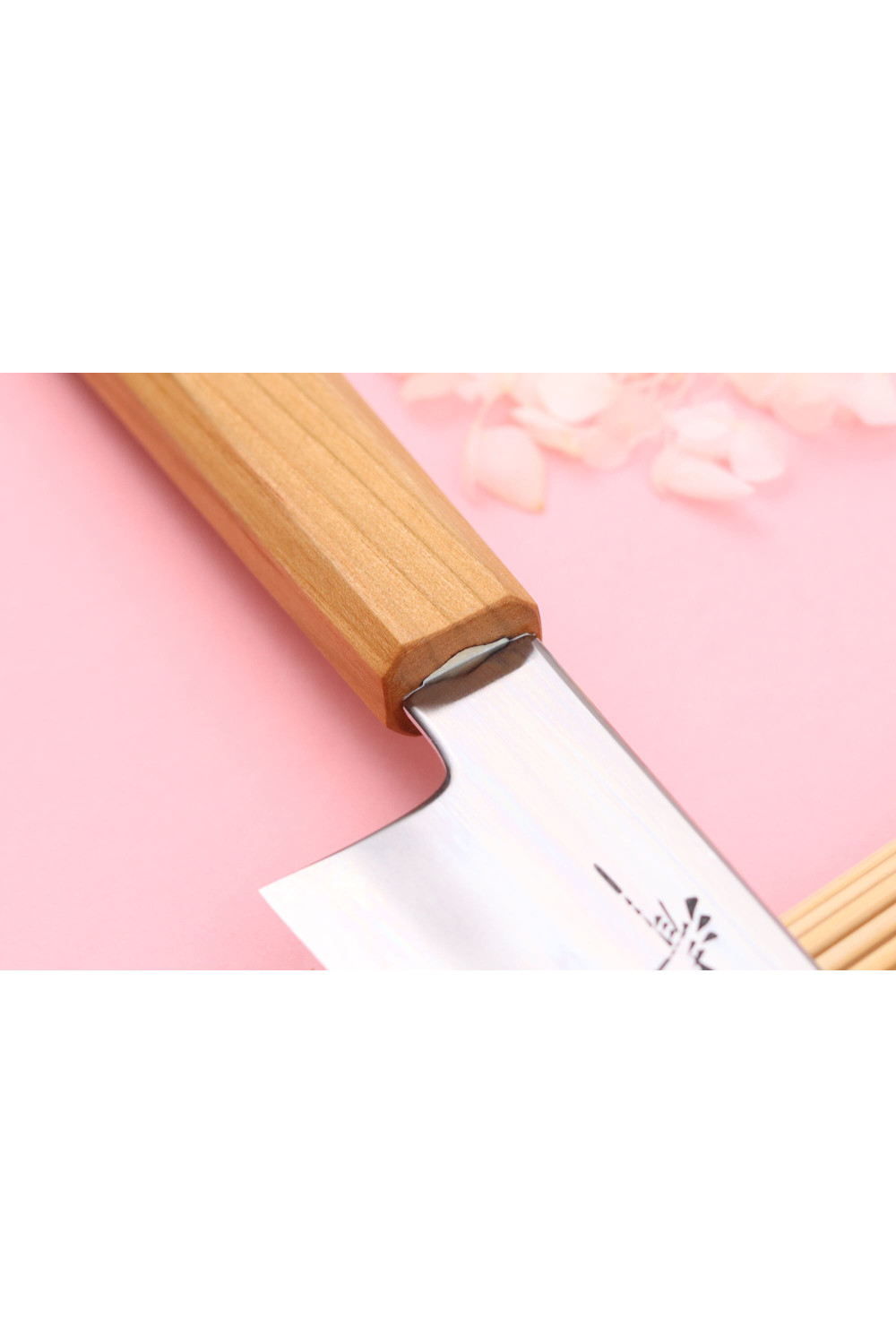
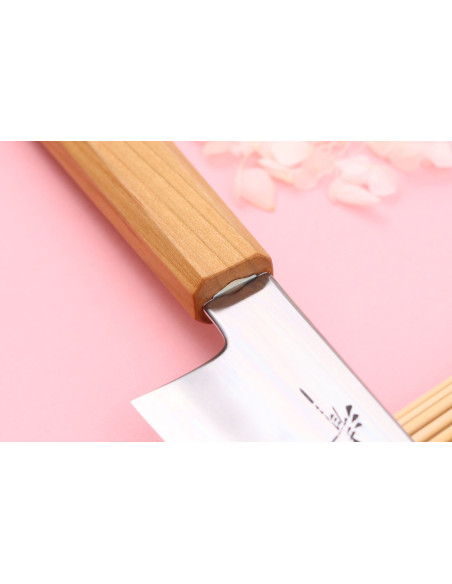
What's more, wood paste has been applied to the junction between the blade and the handle to fill the gaps and make it watertight, preventing the infiltration of water or food residues.
To care for your Japanese chef's knife, we recommend washing it by hand only, using a soft sponge and a non-aggressive detergent. After washing, dry immediately to avoid any traces of moisture and store in a dry place. Never put the knife in the dishwasher or soak it in the sink. The blade is supplied with a thin layer of protective oil, which can be removed by wiping with a soft cloth soaked in vegetable oil, before proceeding with normal cleaning.
Choose a Japanese kitchen knife from Knifeleader.eu!




 By buying this product you can collect up to