A Kagekiyo knife forged using traditional methods
Kagekiyo knives are marketed by the Baba family, whose family business has been in operation for over a century. Today, the third generation of the Baba family continues to run the artisanal factory, perpetuating a tradition handed down from generation to generation! The name "Kagekiyo" pays homage to Commander Akushichibe"Fujiwara" Kagekiyo, a historical figure who lived during the Heian era, circa 10ᵉ century.
One of the family members, Baba Ichiji, was distinguished by the Emperor with the medal of the Order of the Rising Sun for his significant contribution to the cutlery industry. He also received the Yellow Ribbon Medal, an award given to those who excel in their field and serve as role models.
The Baba family fully embrace the Japanese concept of Monozukuri, which embodies the art of making objects with passion and a constant concern for perfection. They are also inspired by the principles of Kaizen, aimed at continuous improvement, whether of oneself or of the things one makes. To this end, they use electron microscopes to analyze the molecular structure of steel in depth, with the aim of optimizing every aspect of the materials.
Thanks to their exceptional quality and craftsmanship, Kagekiyo knives will convince you of their value and high level of craftsmanship!
For this range, the Baba family called on the talented young blacksmith Satoshi Nakagawa. Despite his young age, he is renowned for the quality of his Japanese knives and his expertise. At just 18, he became a pupil of master blacksmith Kenichi Shiraki, with whom he perfected his craft for over 15 years. Now at the head of his own workshop, he has mastered traditional carbon forging techniques, as well as processes such as Suminagashi and Honyaki. He also excels in the forging of stainless steel knives, such as VG10 and Ginsan, and practices his art with great diversity!

An elegant blade for this Japanese kitchen knife
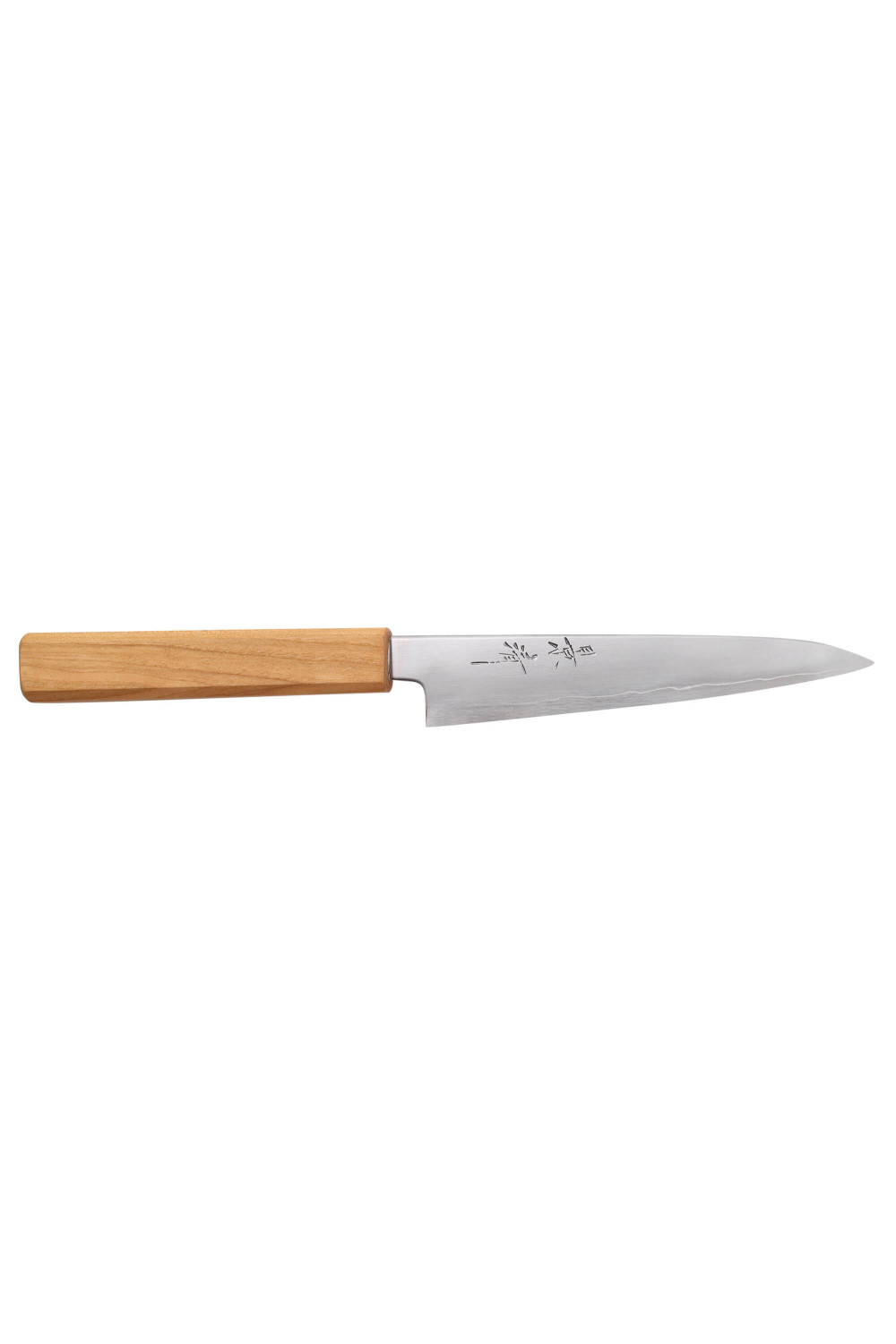
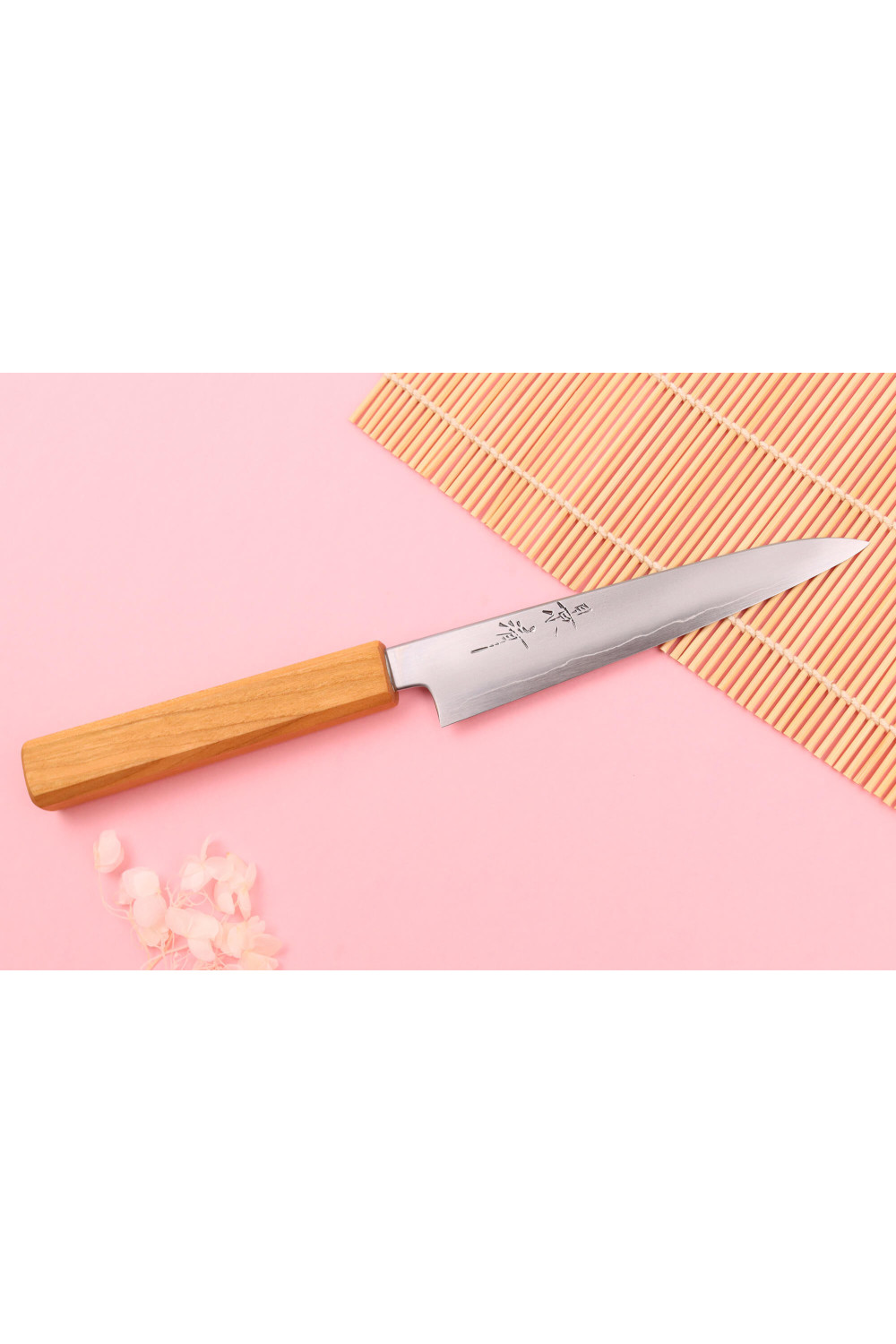
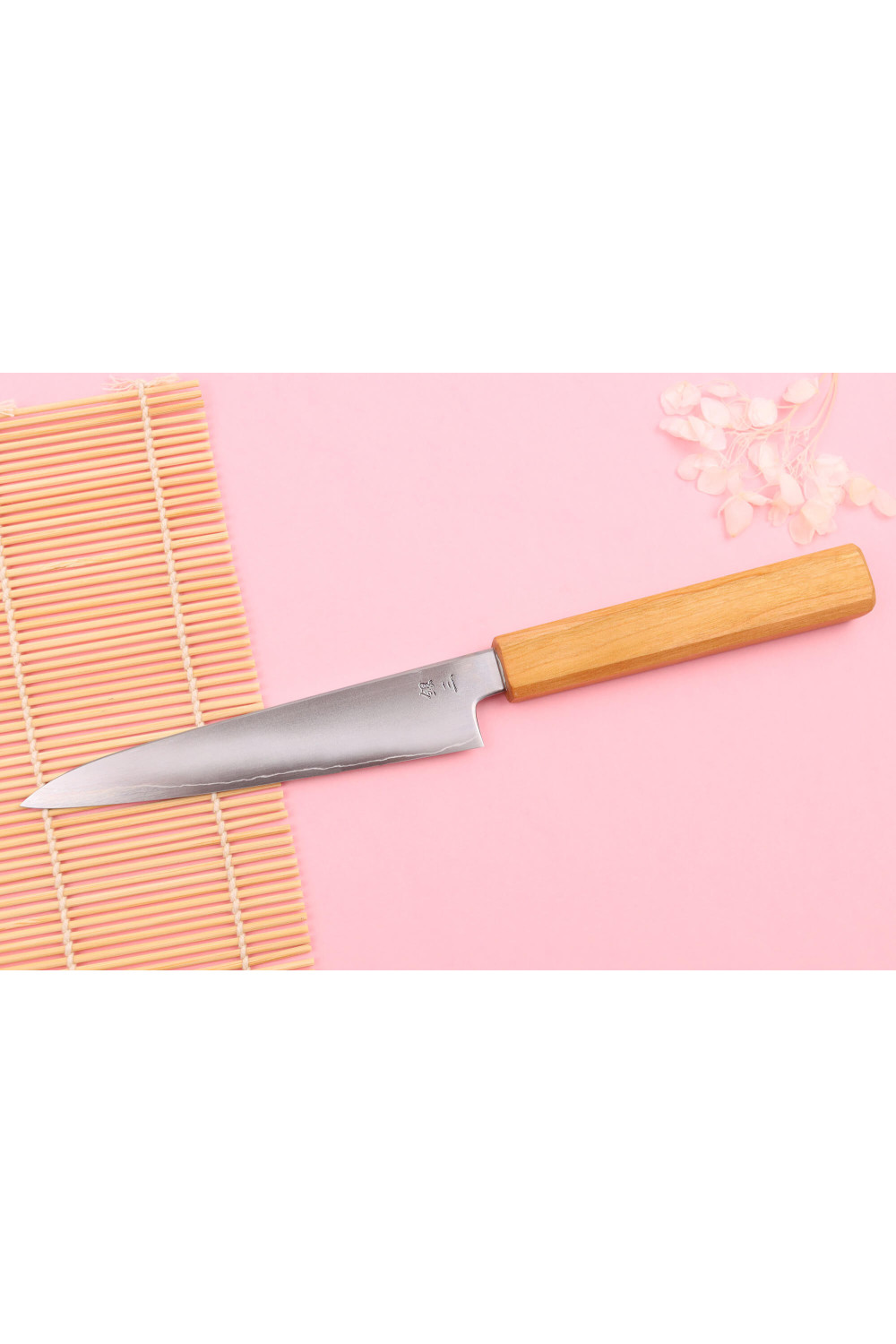
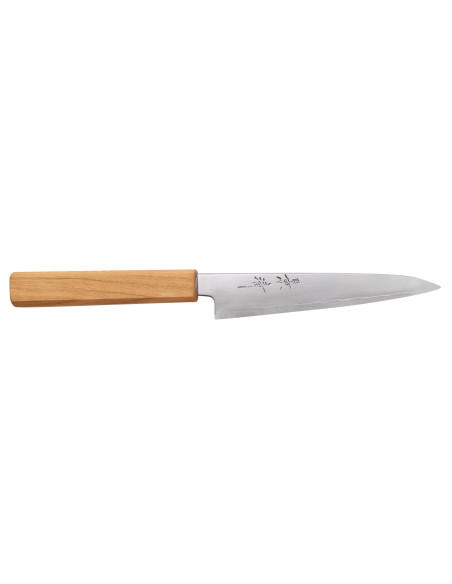
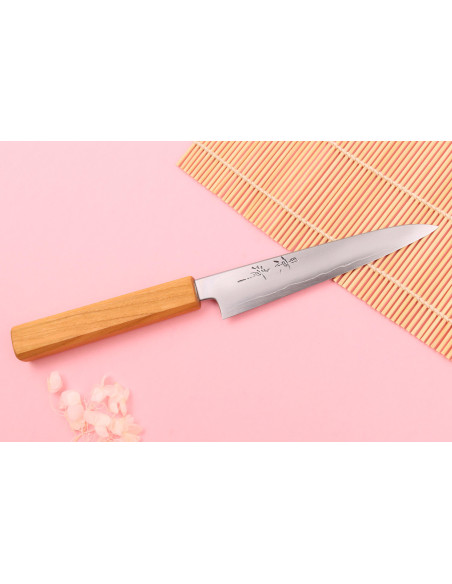
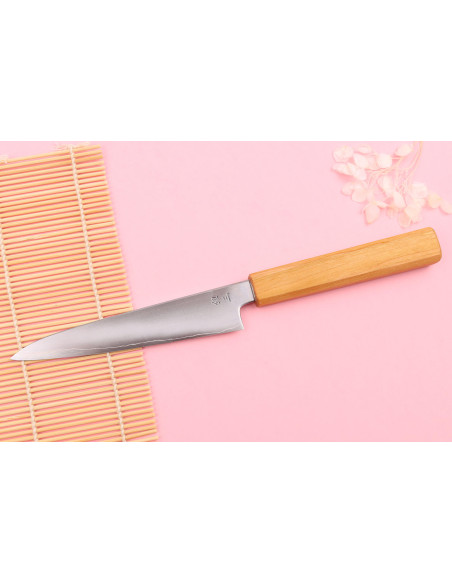
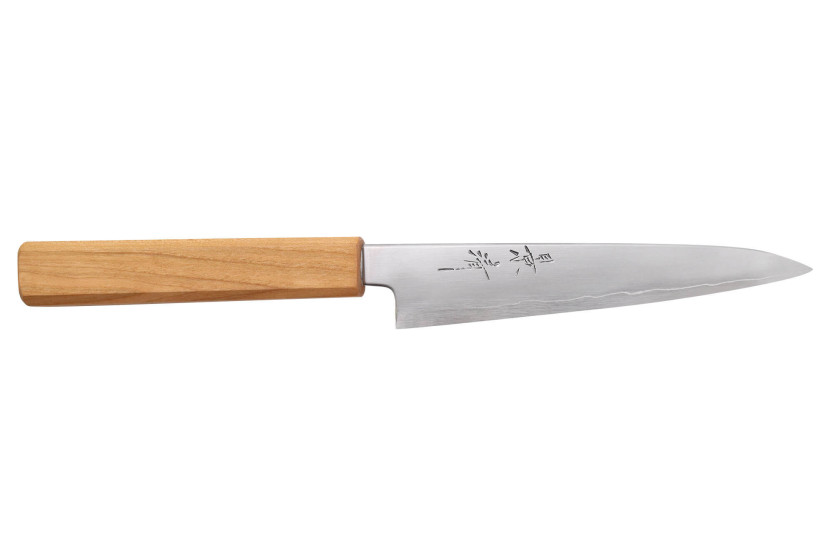
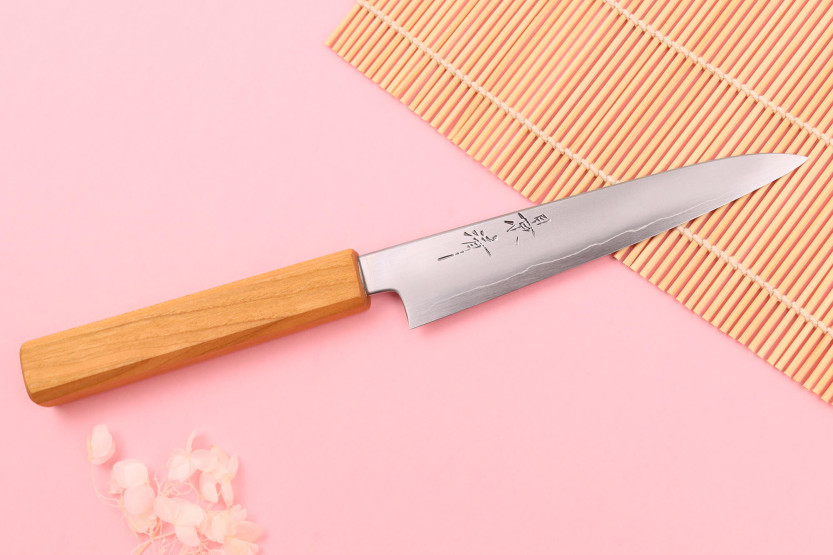
This Kagekiyo utility knife is a versatile model, appreciated for its easy handling. Ideal for slicing fruit and vegetables, it's also ideal for mincing boneless meat!
Its blade is based on a San Maï structure, a technique in which the rigid steel core is wrapped in a layer of softer steel to protect it. This process also balances the hardness of your blade.
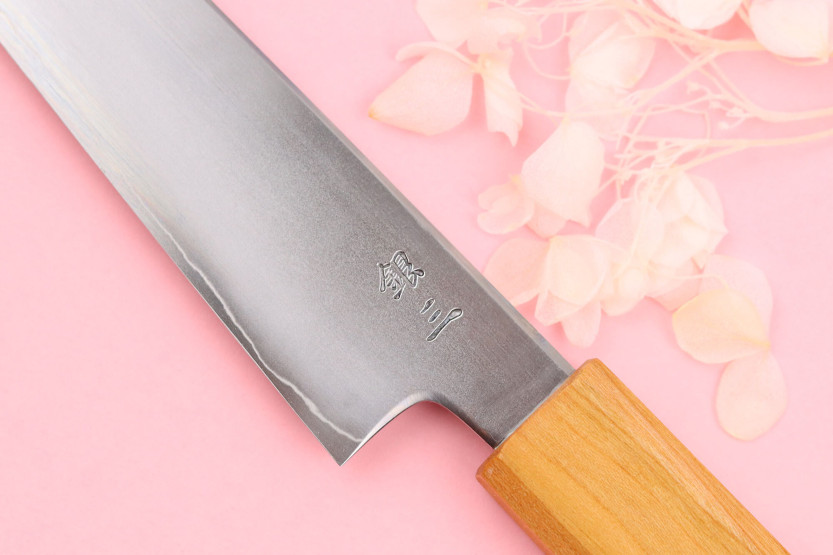
Here, the core is made of Ginsan steel (Silver 3), containing 0.95% carbon and 13% chromium. The carbon gives the blade a high level of rigidity, reaching 59/60 HRC on the Rockwell scale, guaranteeing a long-lasting, well-marked cutting edge.
The hardness of your Japanese kitchen knife has a direct influence on the quality of the cutting edge, enabling more precise and less maintenance-intensive sharpening, with longer intervals between sharpening sessions. What's more, thanks to the presence of chromium, your blade is particularly resistant to oxidation, making it a major asset in the kitchen!
Ginsan stainless steel is recognized as one of the best in cutlery, combining the advantages of carbon steels (rigidity, durability of cutting edge, ease of sharpening) while eliminating their main drawback: the risk of oxidation in contact with humidity.
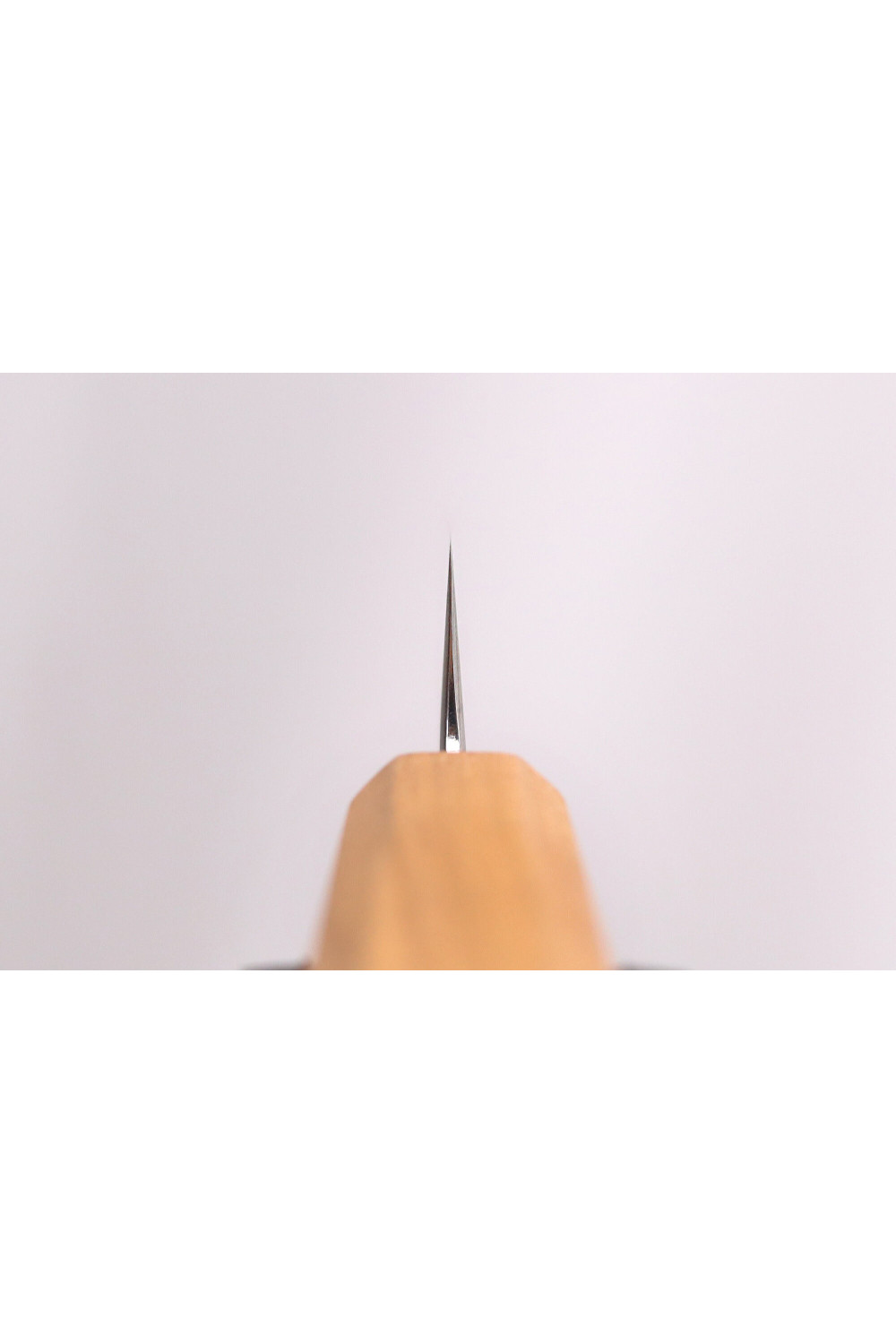
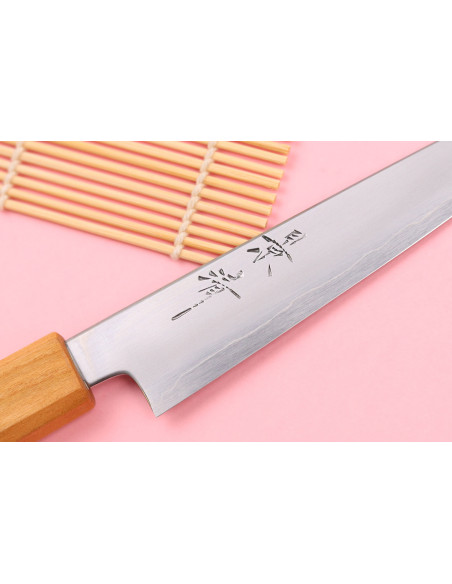
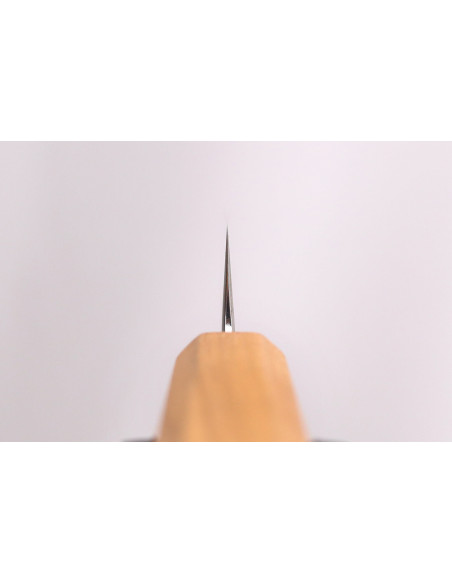
This handcrafted knife's "flat grind" shape and slim profile ensure a solid cutting edge! More generally, theflat grind is aesthetically pleasing and, above all, easy to reproduce when sharpening.
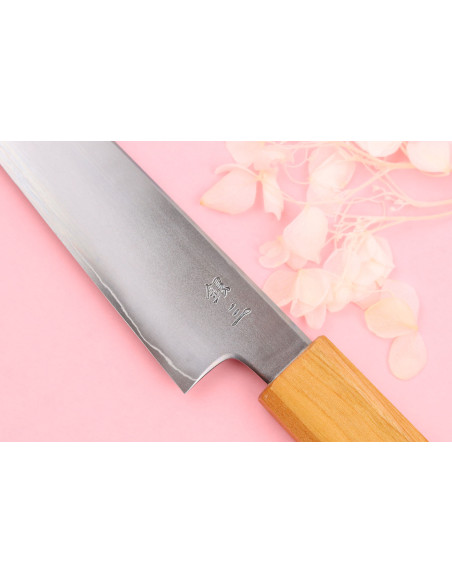
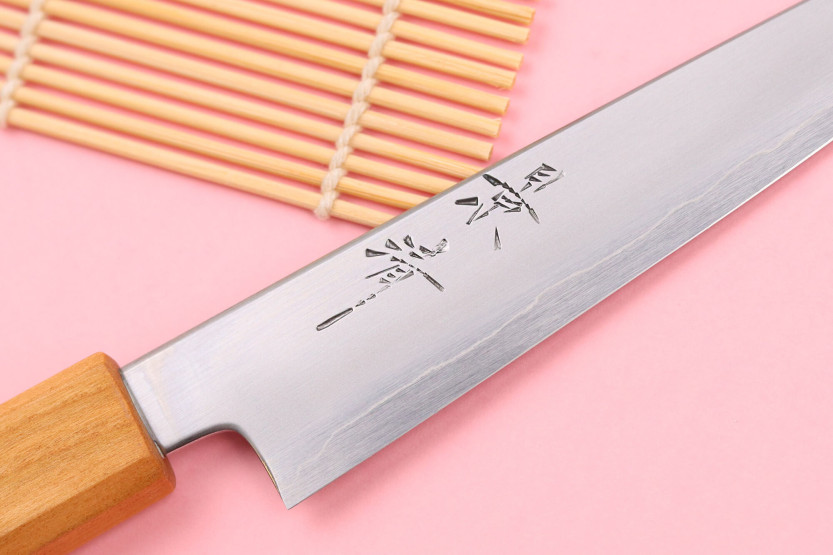
The top edge and base of the blade have been carefully polished to offer a pleasant feel under the fingers. Some cooks prefer to hold their knife high up on the handle, sometimes even resting their index finger on the back of the blade. Thanks to this polishing, using your handcrafted Japanese knife becomes more comfortable in these positions.
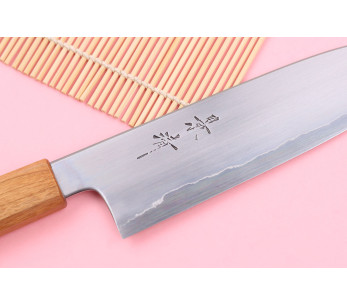
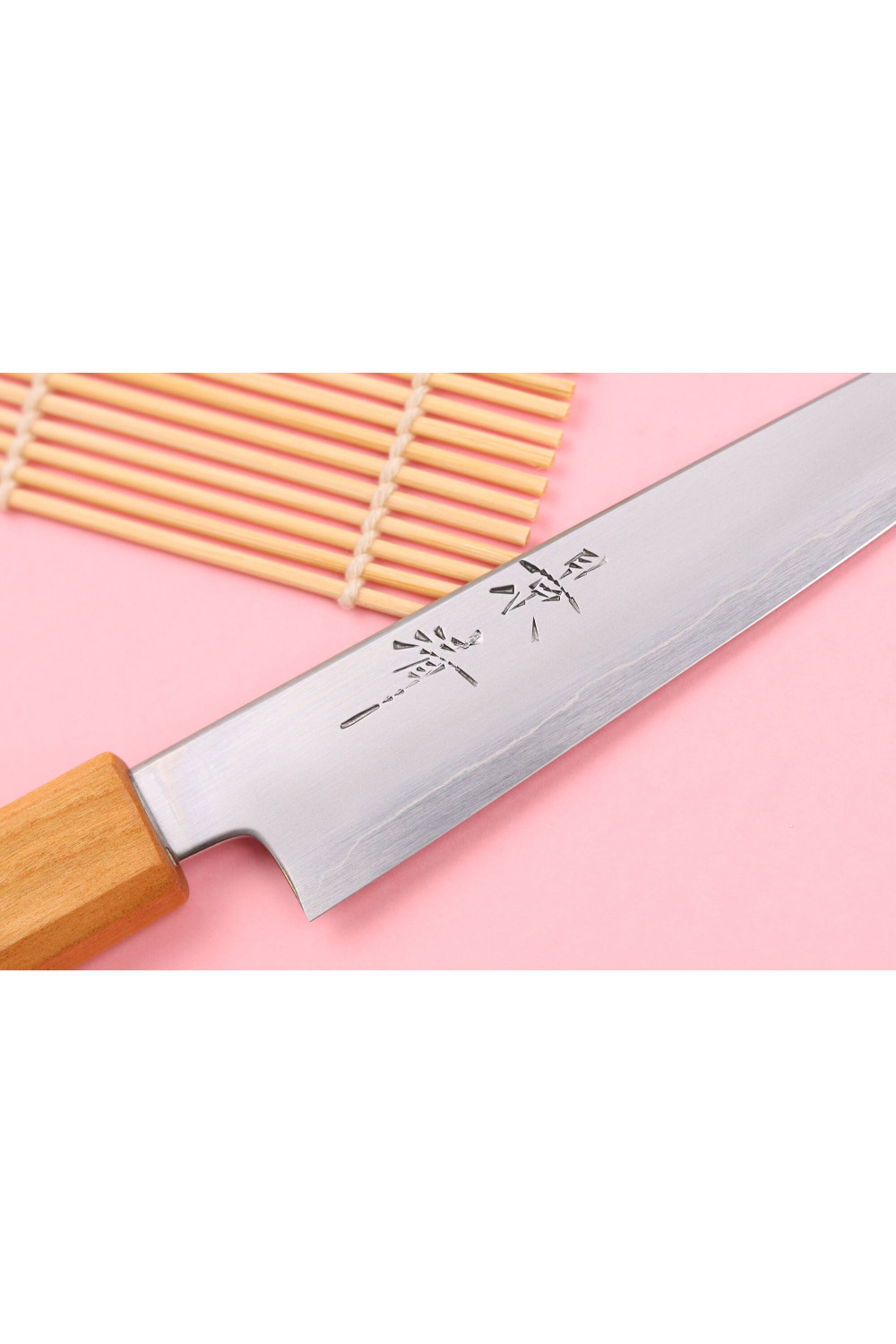
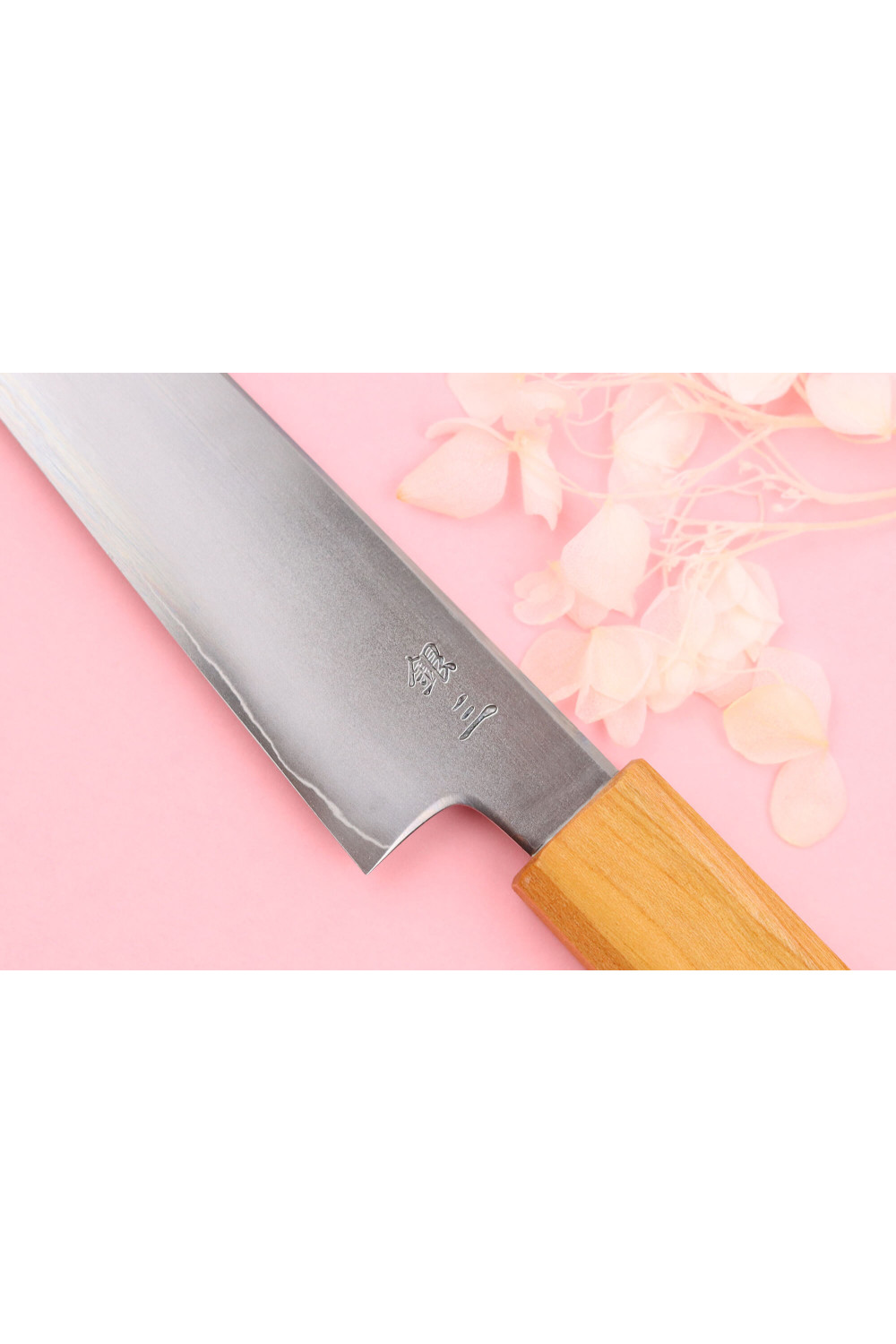
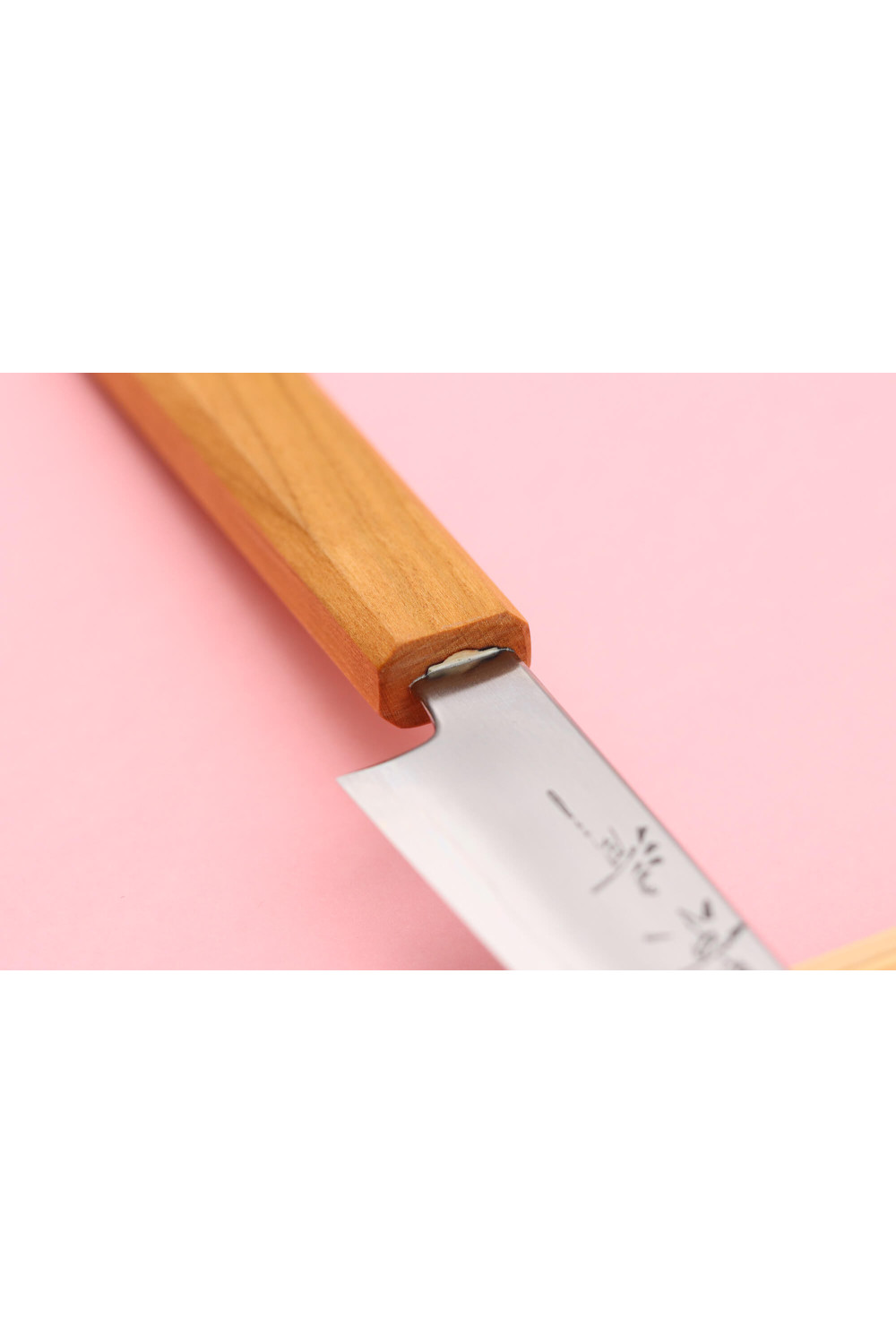
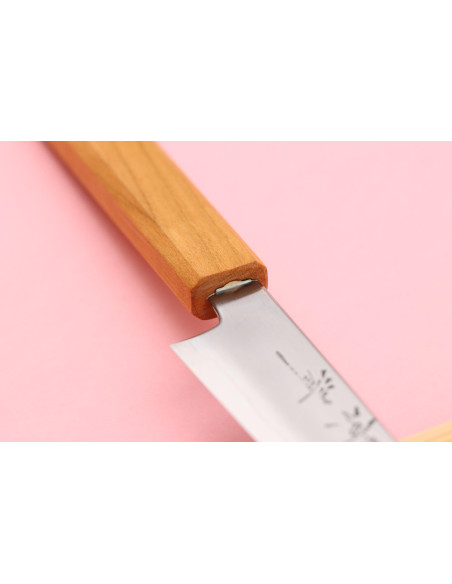
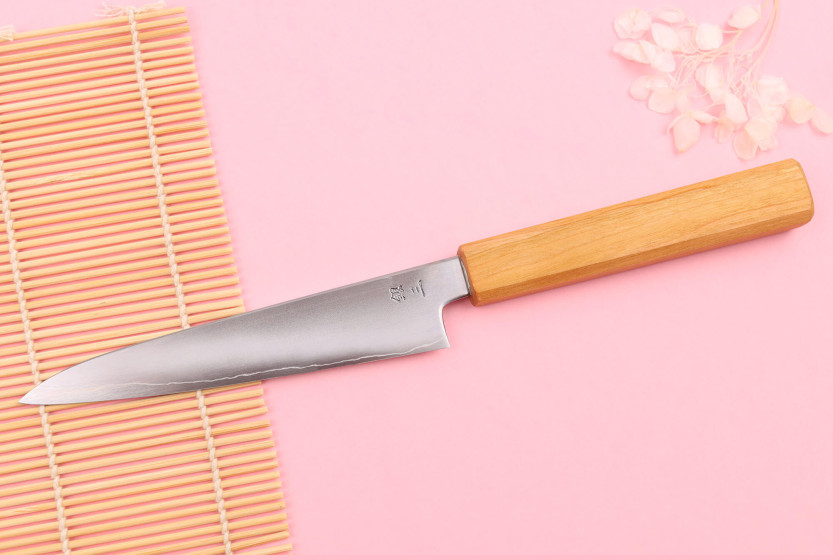
The brand logo is engraved on the blade, which features a traditional finish obtained by a special sharpening technique. This consists of successively using stones of different grit, bringing out a polished wave on the bottom of the blade, adding a touch of elegance.
The handcrafted Japanese knife with walnut handle
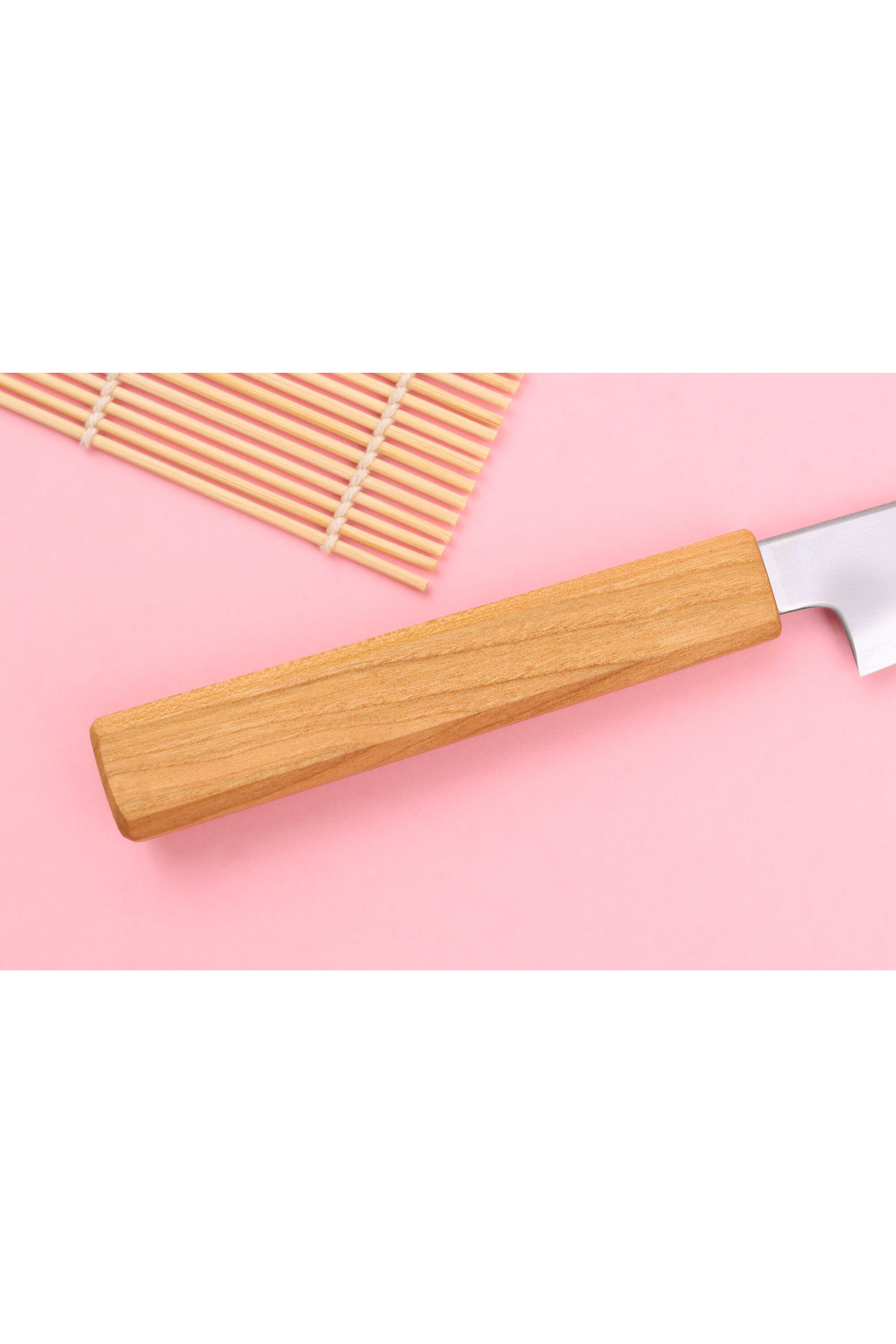
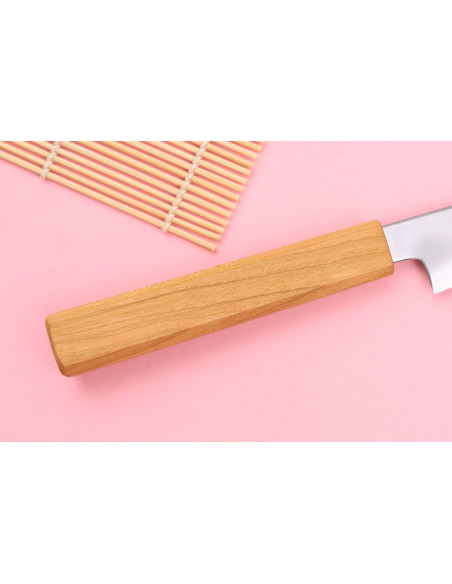
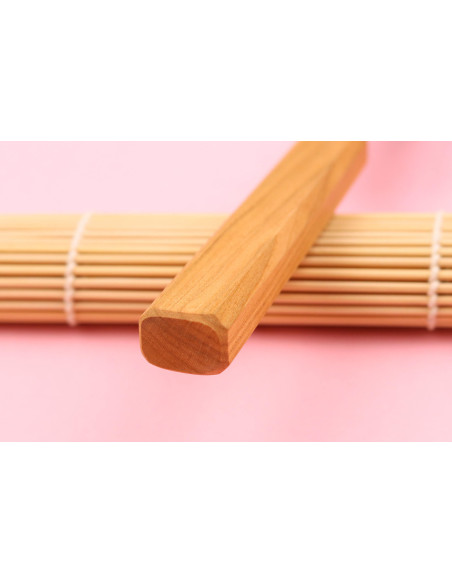
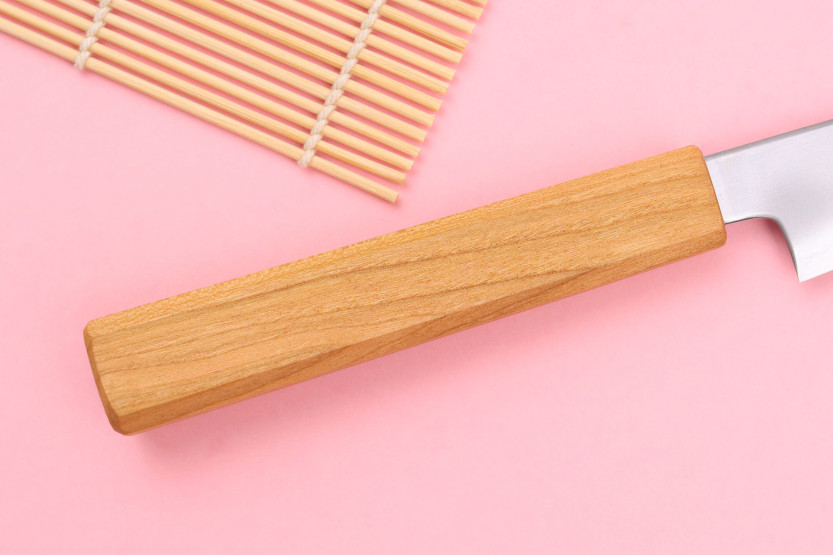
The handle is made from walnut wood, a sturdy and quite precious species. It's resistant to humidity, so it won't warp with time! Its light color is highly appreciated, and each Kagekiyo knife has its own unique grain.
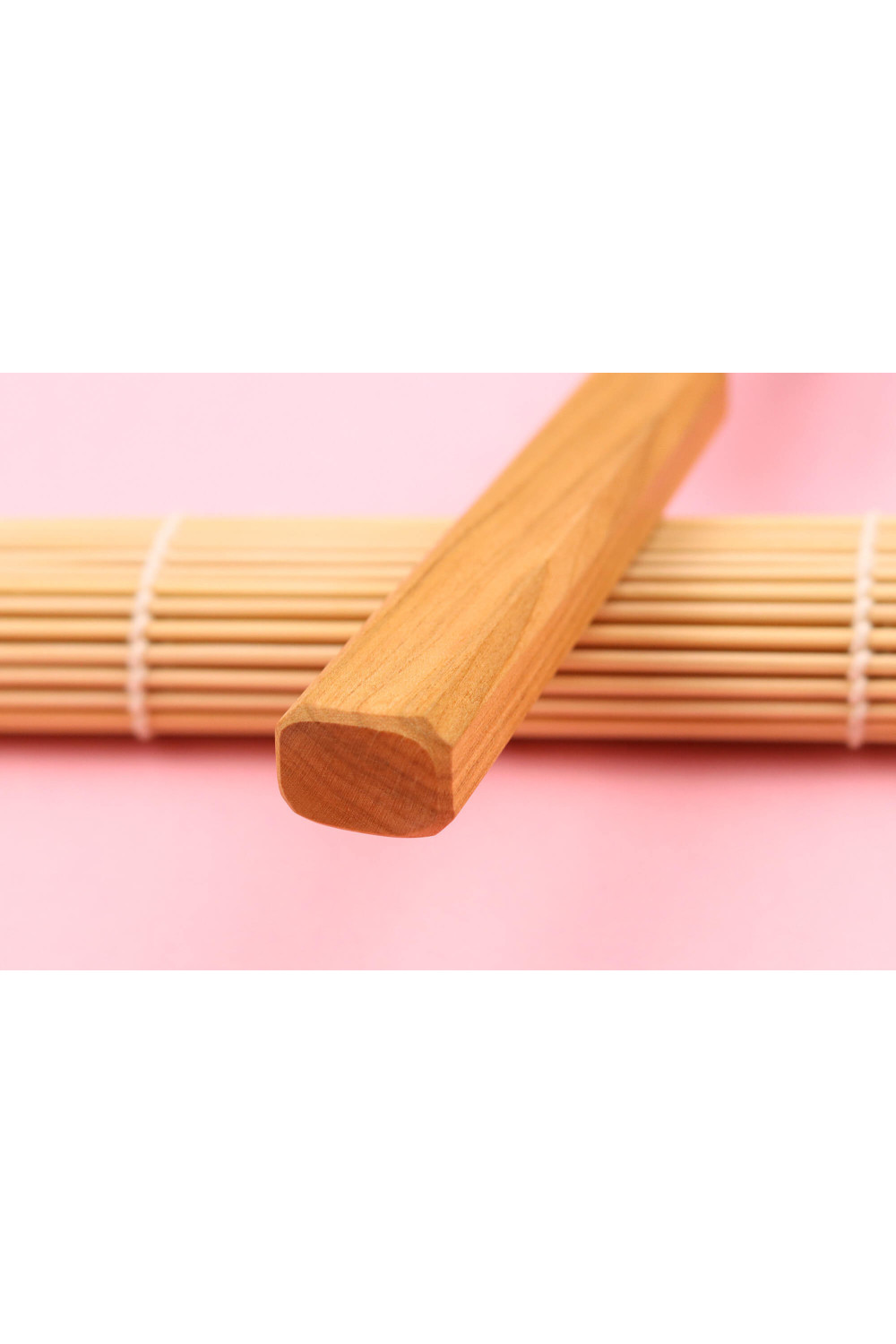
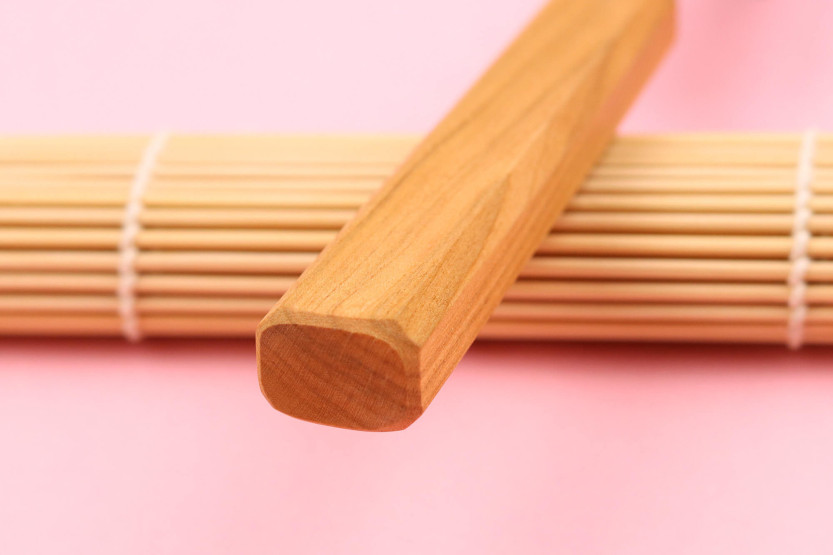
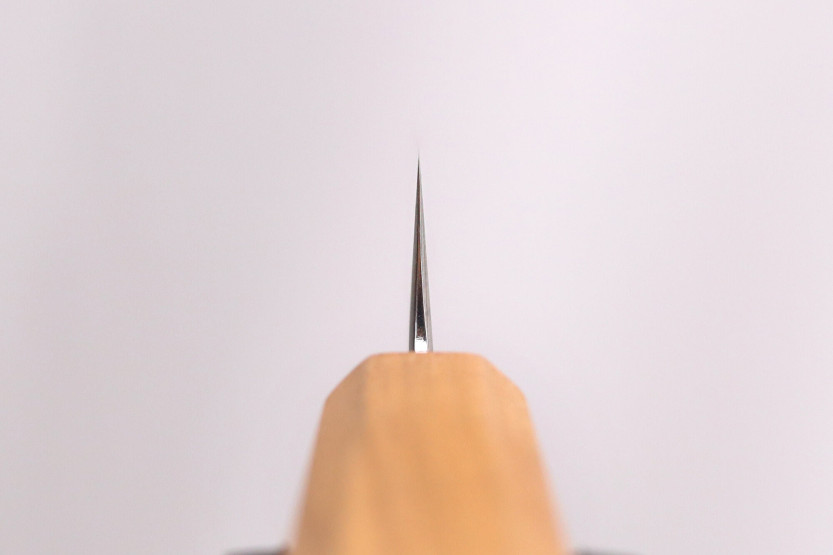
The octagonal handle is ergonomically designed for both right- and left-handed users! It has been polished for a comfortable grip.
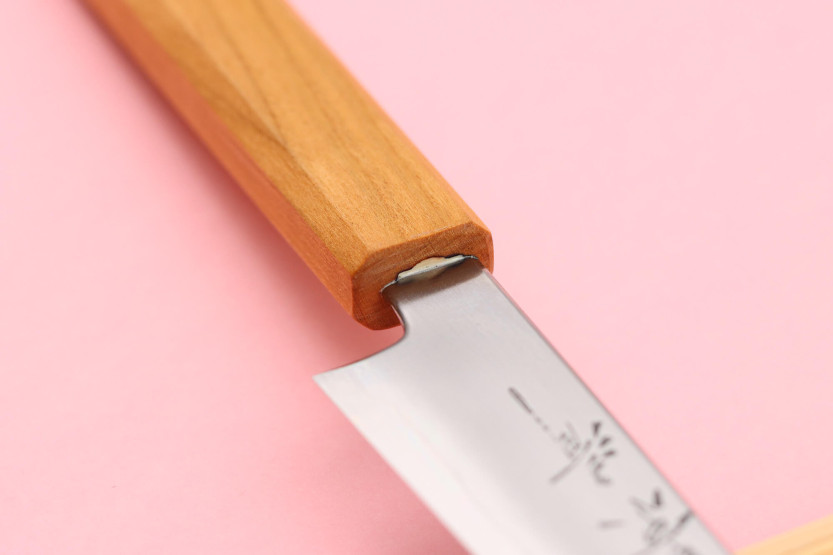
To ensure a watertight seal and prevent water or food residues from seeping into the handle, wood paste has been added to the junction between the blade and the wood.
To maintain this Japanese utility knife, it is essential to wash it only by hand with a mild soap, without using abrasive sponges. After washing, it is important to dry the blade and handle carefully with a soft cloth to remove all traces of moisture. The blade comes with a thin layer of protective oil; to remove it, simply wipe with a cloth soaked in vegetable oil, then wash as indicated. Do not soak in water or use in a dishwasher!
Discover a wide range of Kagekiyo Japanese knives on Knifeleader.eu!




 By buying this product you can collect up to