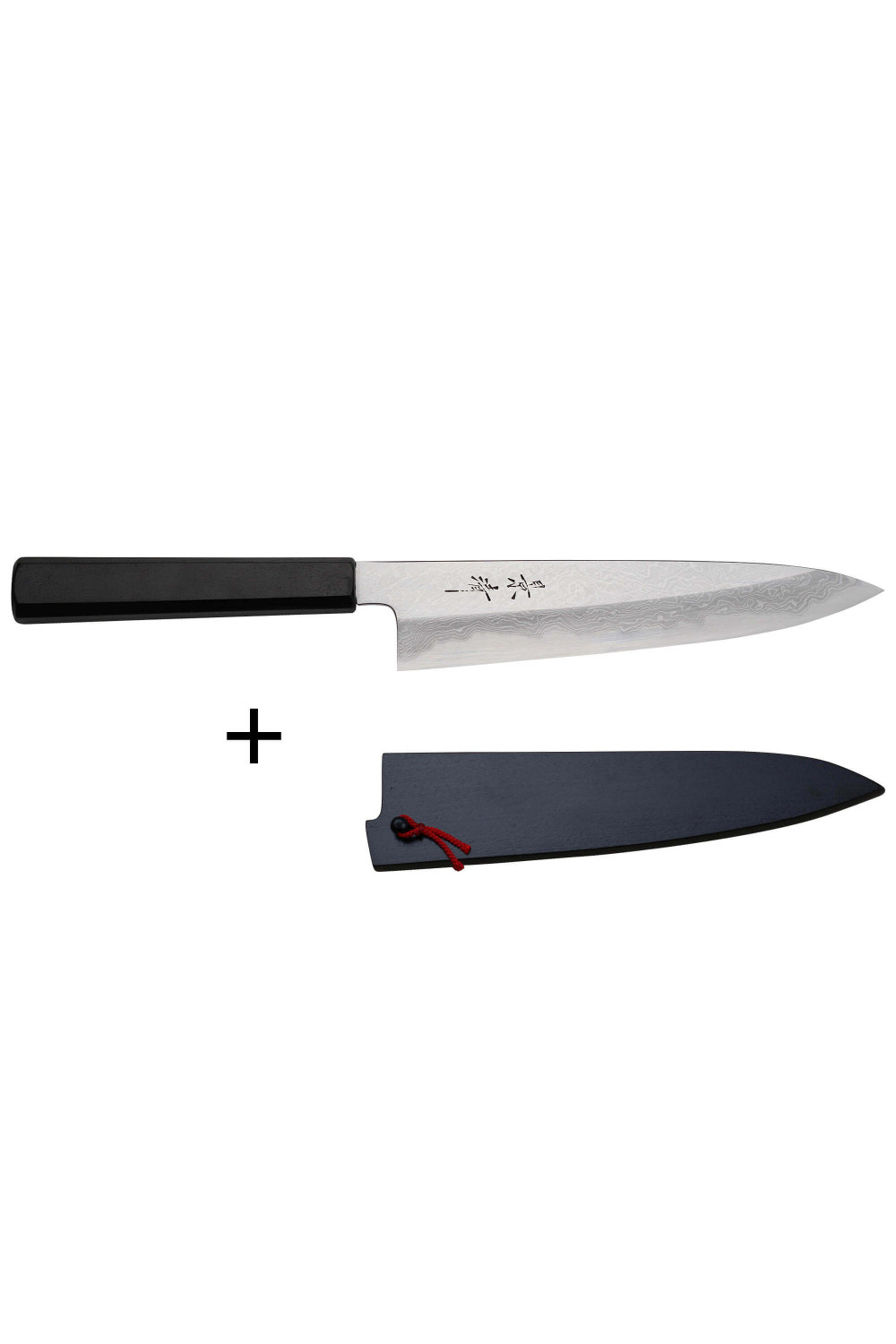
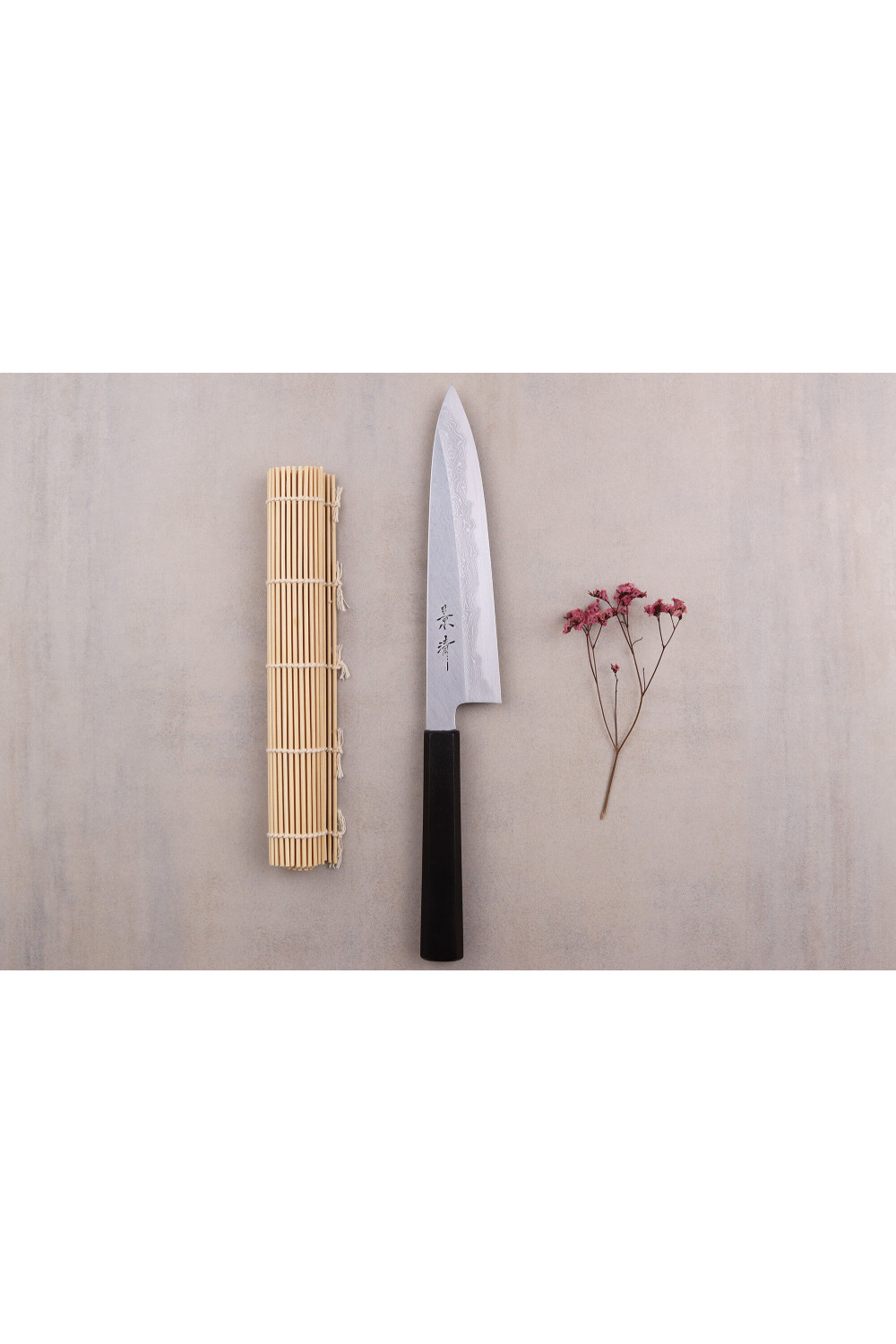
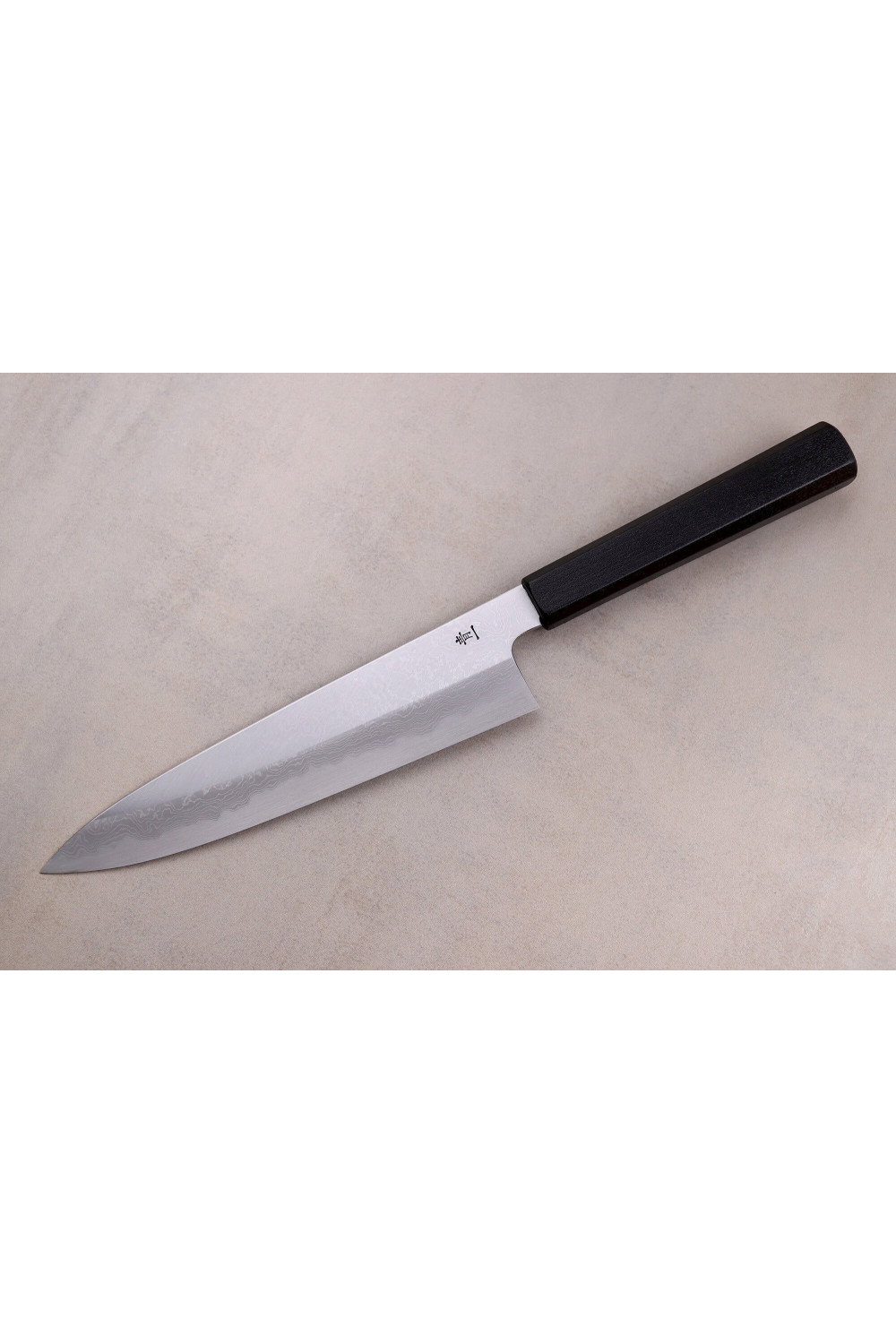
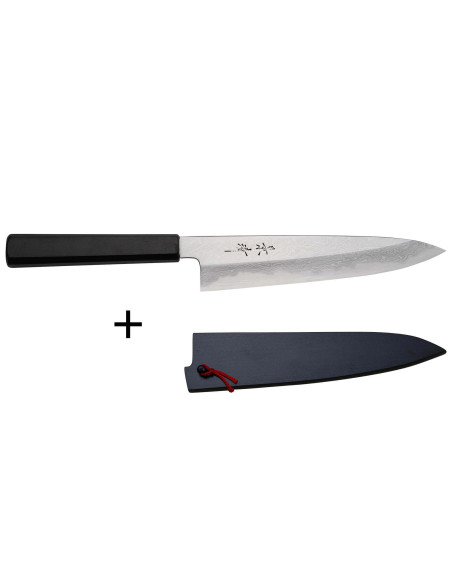
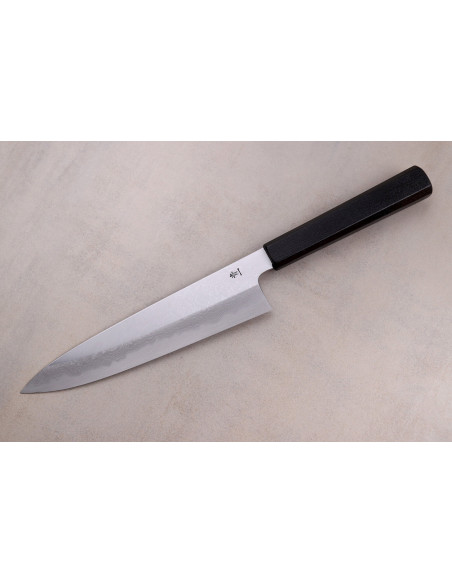
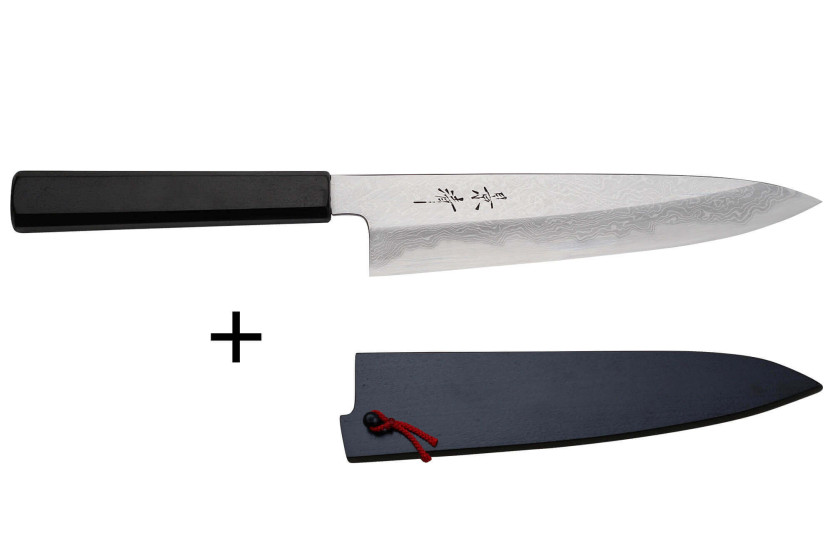
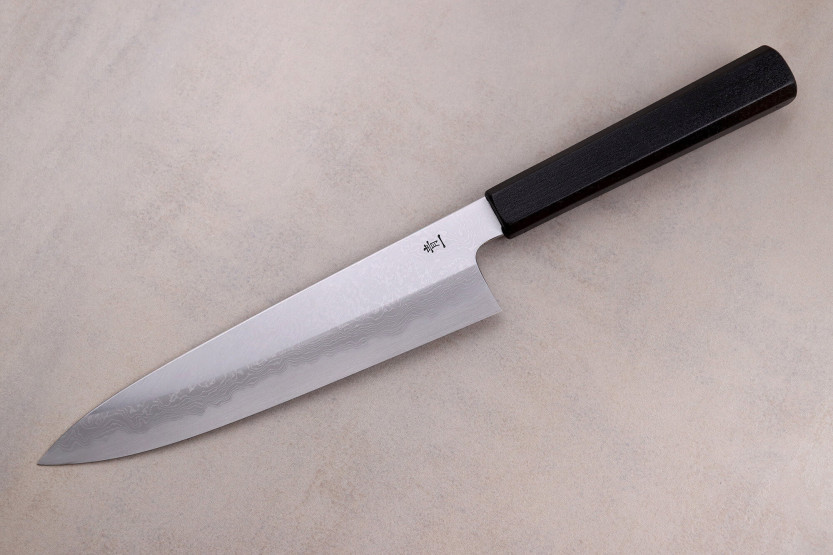
The Yoshikazu Tanaka gyuto Japanese knife is hand-forged in Sakai. Tanaka san is one of the city' s most renowned master blacksmiths. He creates ultra-quality knives with a traditional style that appeals to chefs.
A top-quality blade for easy cutting
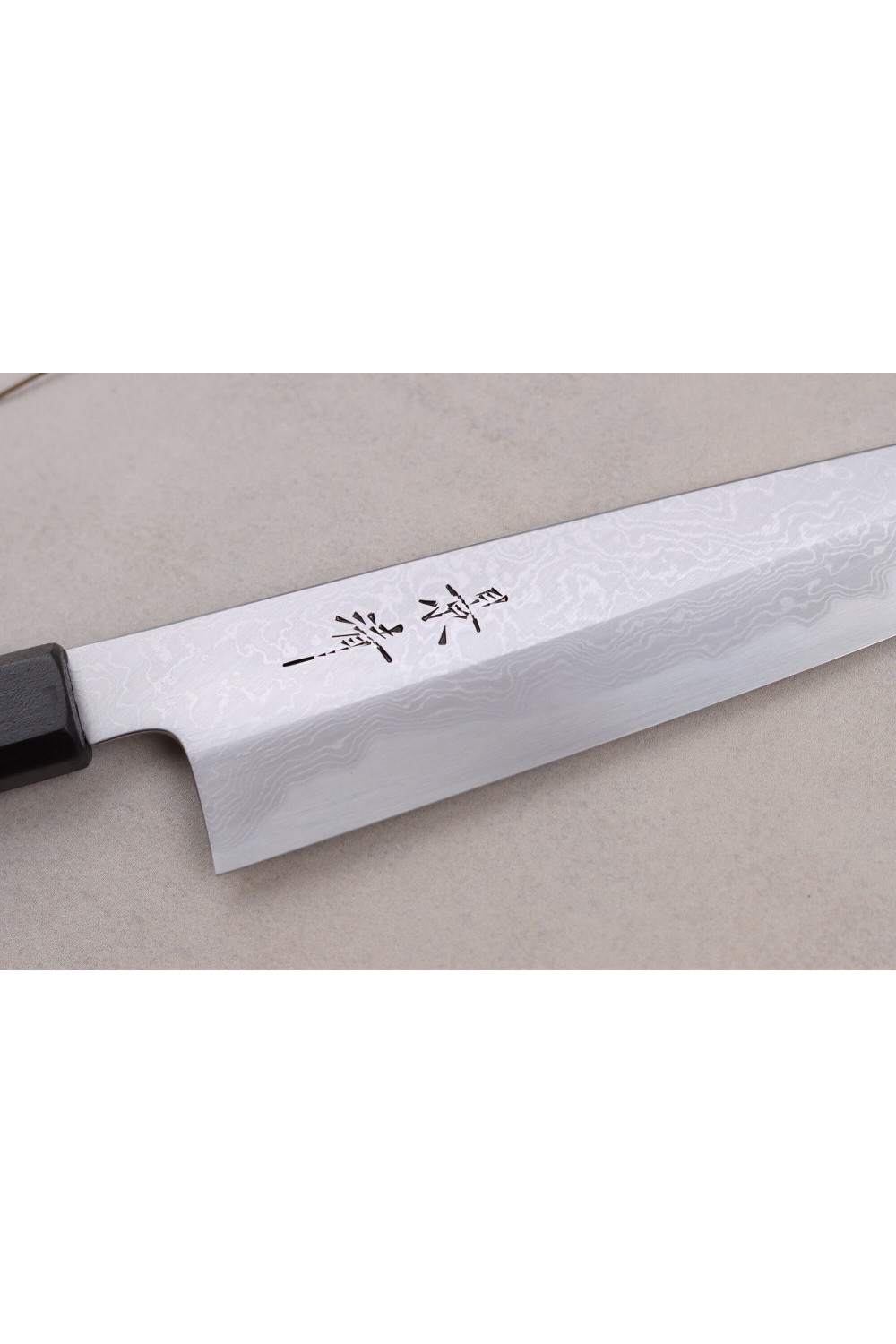
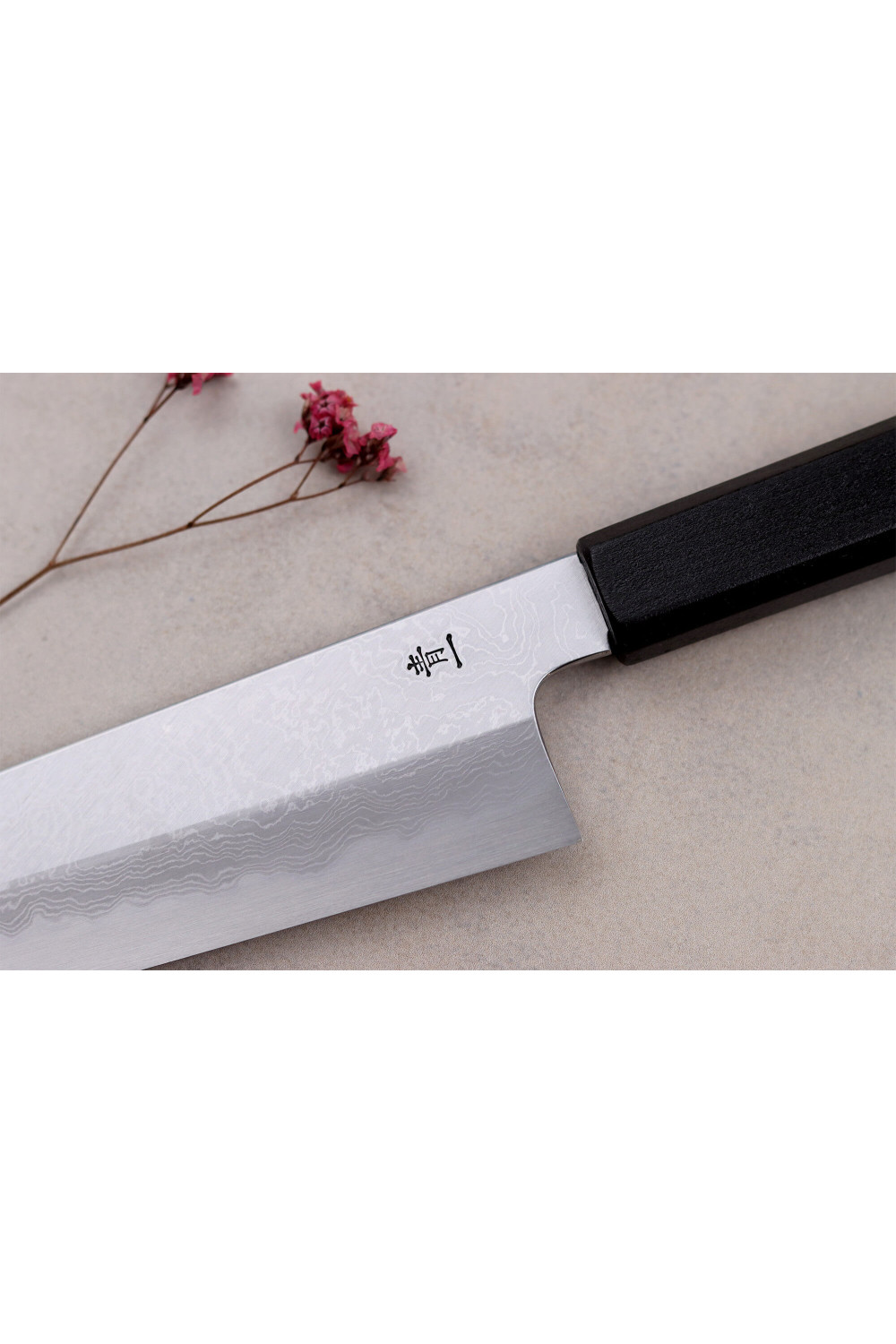
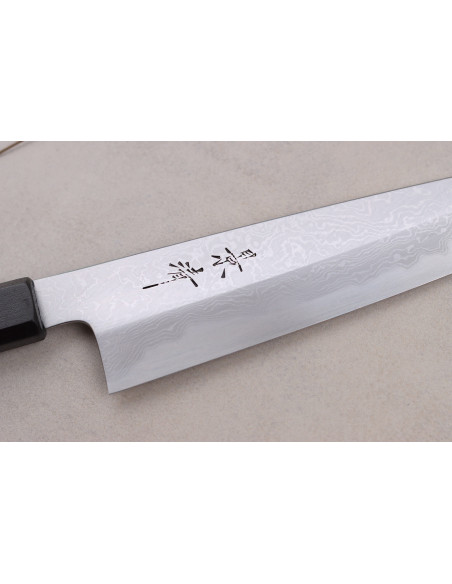
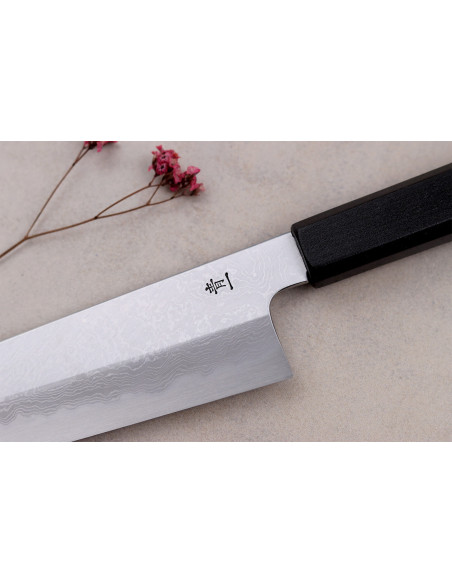
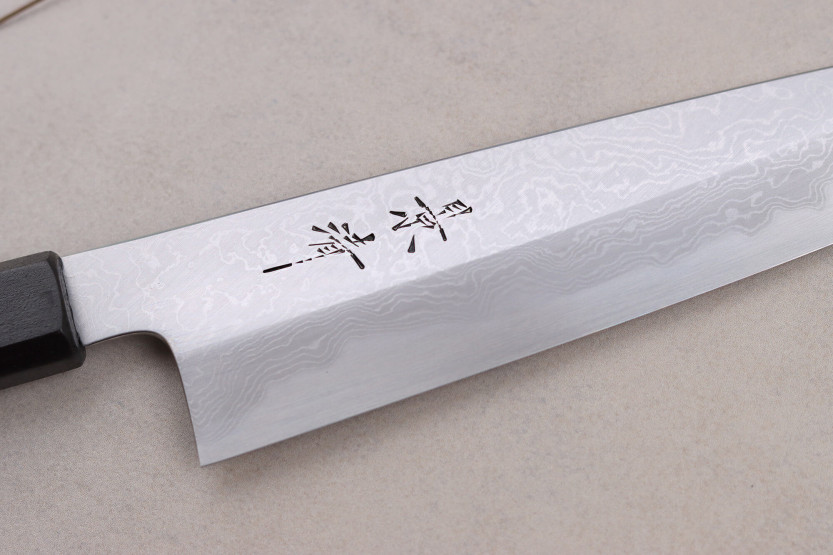
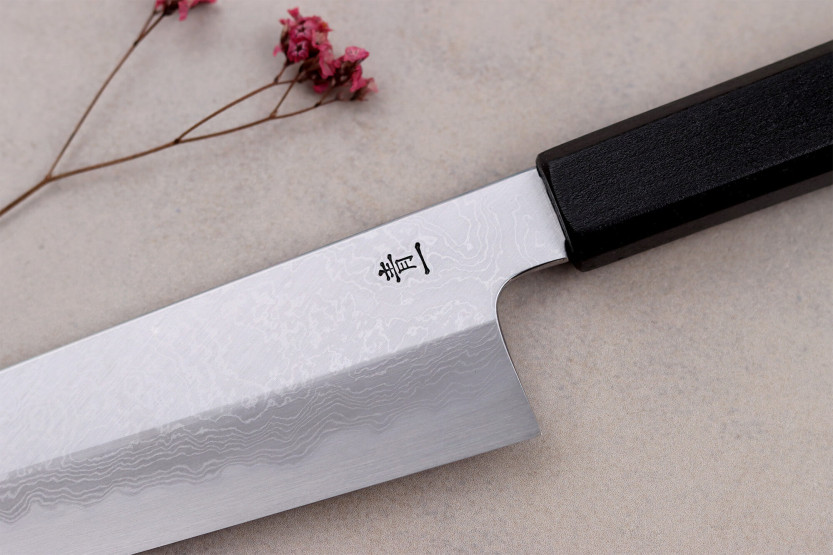
The knife's blade is damascened, which means that its structure is based on a rigid core wrapped in numerous layers of iron steel. With a damascus knife, you benefit from a rigid cutting edge (with long-lasting cutting capacity), while enjoying a balanced cutting surface due to the different layers of steel on top.
The layers of steelbalance the core by giving it a little "flexibility", so that it's less brittle.
And beyond its interesting structural aspect, damascus is a real aesthetic asset! It gives your blade lots of character.
The damascus core is made from Japanese Aogami 1 steel (also known as Blue Steel 1). This steel was developed by Hitachi steelworks in Japan, and is renowned the world over. Aogami 1 steel is enriched with carbon, one of the essential elements for conferring rigidity on the alloy. Here, it reaches 63 HRC, whereas the average for Western knives is around 55-58 HRC. It also contains tungsten, which contributes to the blade's hardness.
This rigidity is also of great interest when it comes to edge retention. Since steel deforms much less quickly when cutting, rigidity increases edge retention over time.
The top-of-the-range Aogami 1 steel is then surrounded by layers of iron steel. In the end, the knife won't need frequent sharpening. And speaking of sharpening, despite its great hardness, the blade is easy to sharpen when you need it, contrary to what you might think.
A light, pleasant handle
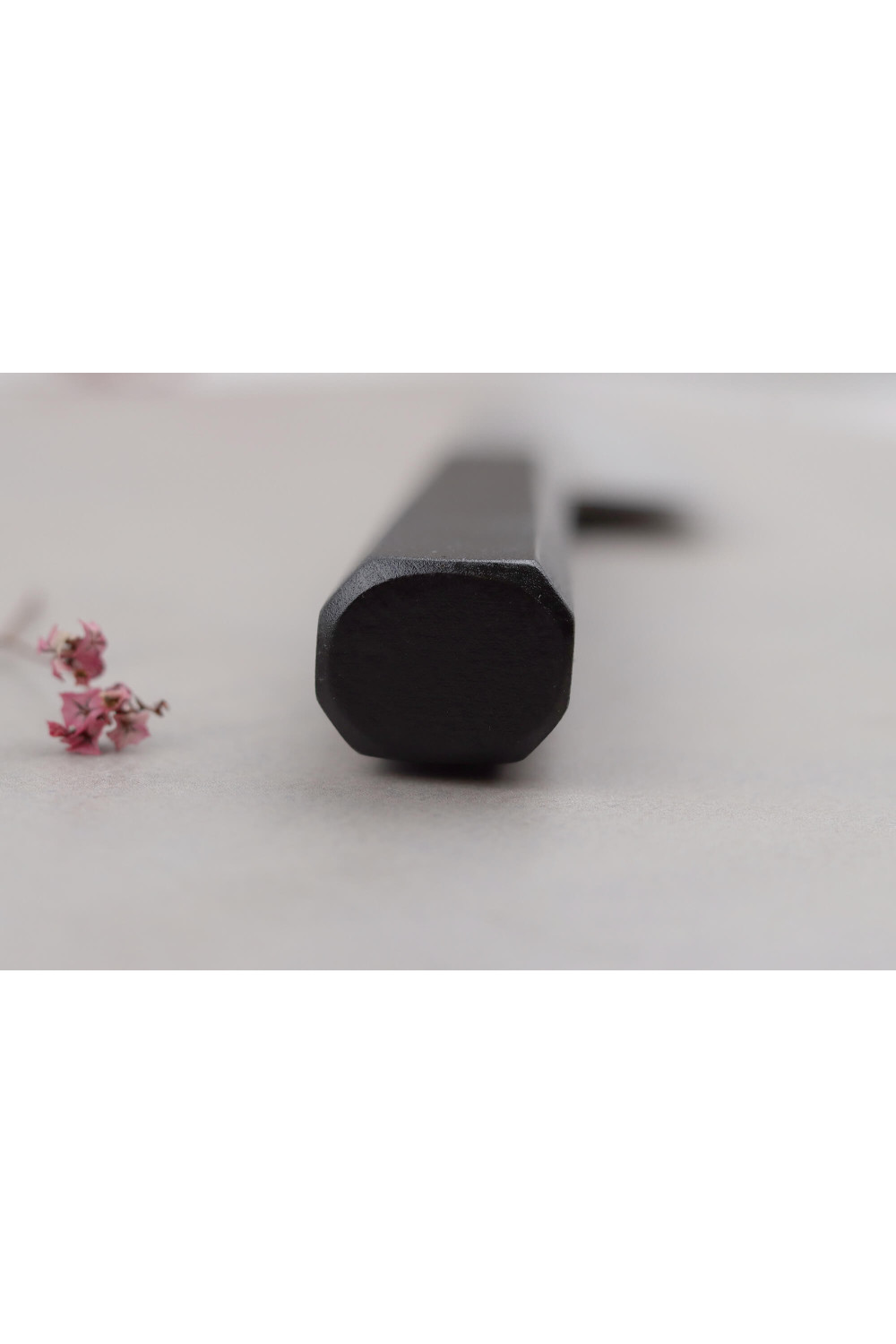
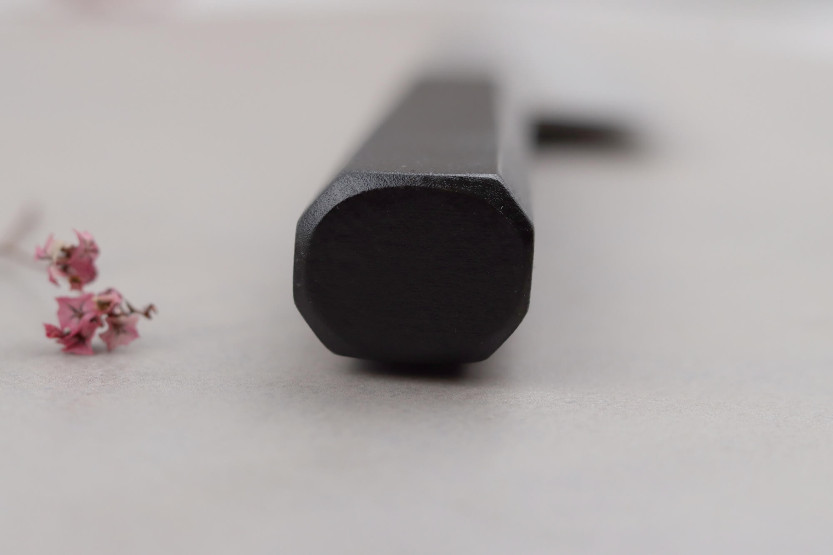
The handle of this handcrafted knife is made from magnolia wood, a robust yet lightweight species. The magnolia is then lacquered in the traditional way, by an expert craftsman in Nagano prefecture. It then becomes entirely black, a deep hue that envelops it completely. This lacquer makes the handle moisture-resistant and antibacterial.
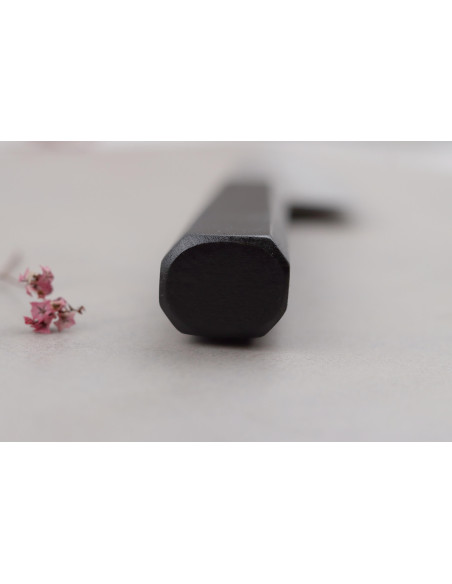
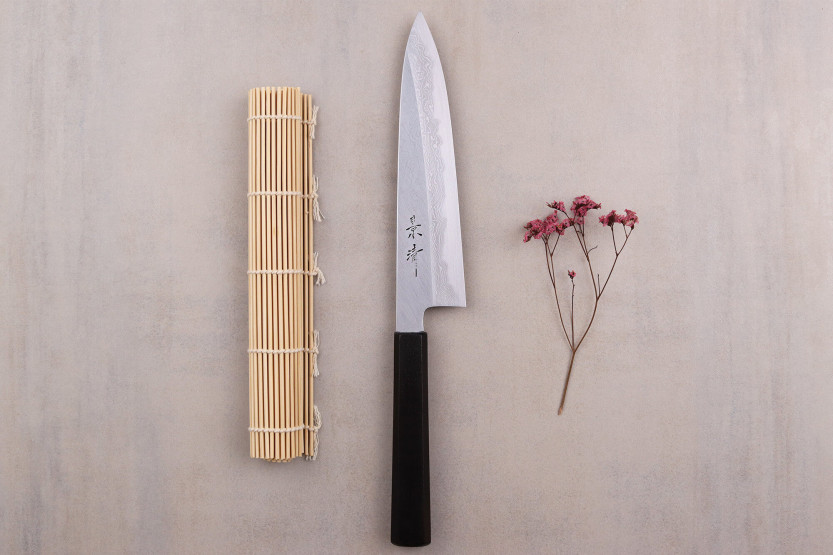
The handle is octagonal in shape, so both right- and left-handed cooks can use it with ease. Your palm hugs the handle perfectly, and it remains light enough for easy handling. It also becomes slightly thinner at the bolster, for an even better grip.
The blade is firmly attached to the handle with wood paste. You can see this by looking at the edge of the knife. As the components are perfectly attached to each other, no food or water can seep into the handle.
Carbon knife care
This is a knife that can only be maintained by hand. Do not put in the dishwasher or soak in the sink.
Use a sponge with a mild detergent to gently clean the knife, and wipe it dry immediately after washing to keep it free of moisture. That's how you'll be able to keep your knife for years to come. It's also important to note that Aogami steel is an oxidizable alloy due to its high carbon content. As a result, even with perfect care, your knife may change color over time. This is quite normal! This is due to a number of factors, such as the acidity of the food you cut or the humidity in the air. This does not mean that your knife is damaged. The iron in the top layers can also cause this.
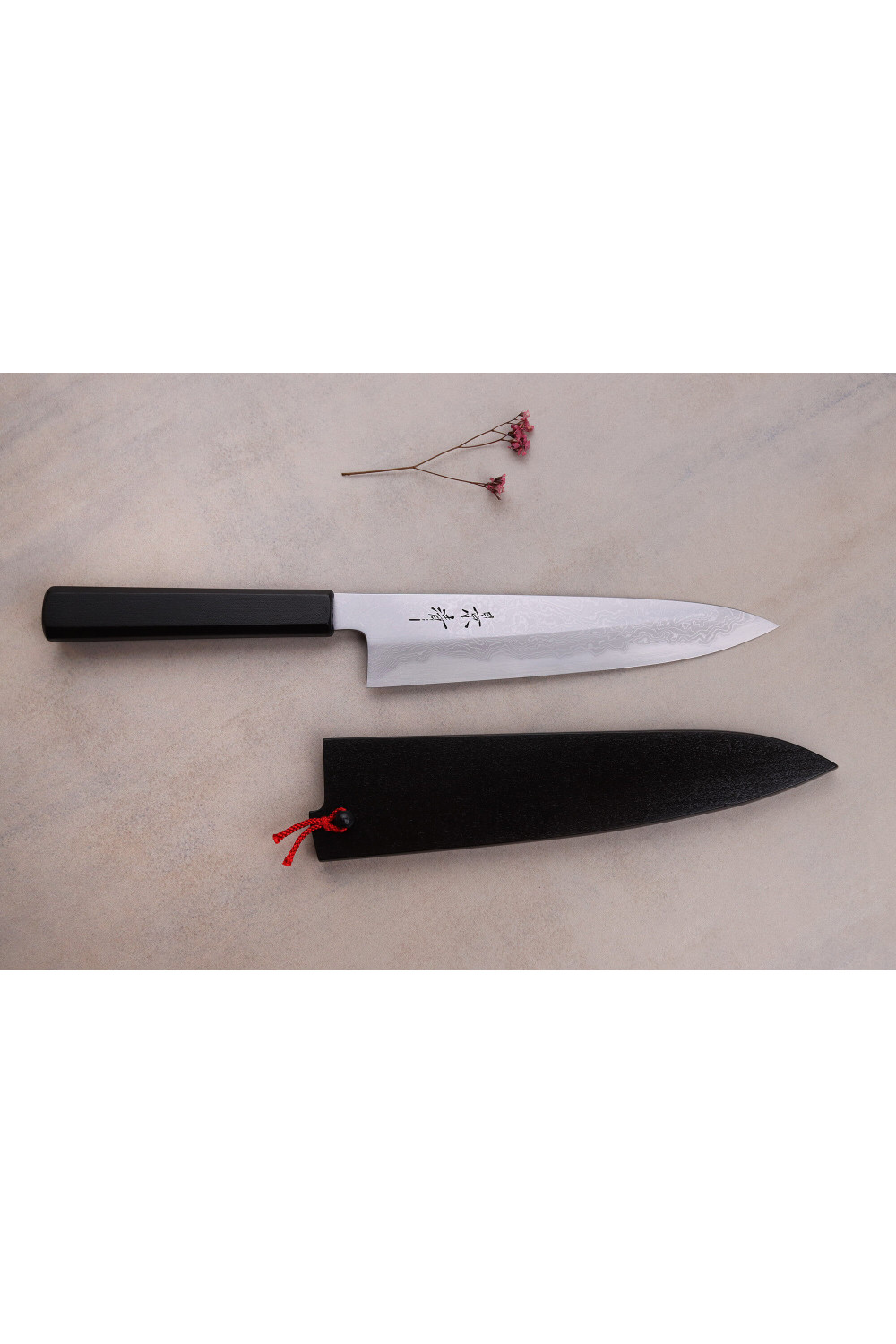
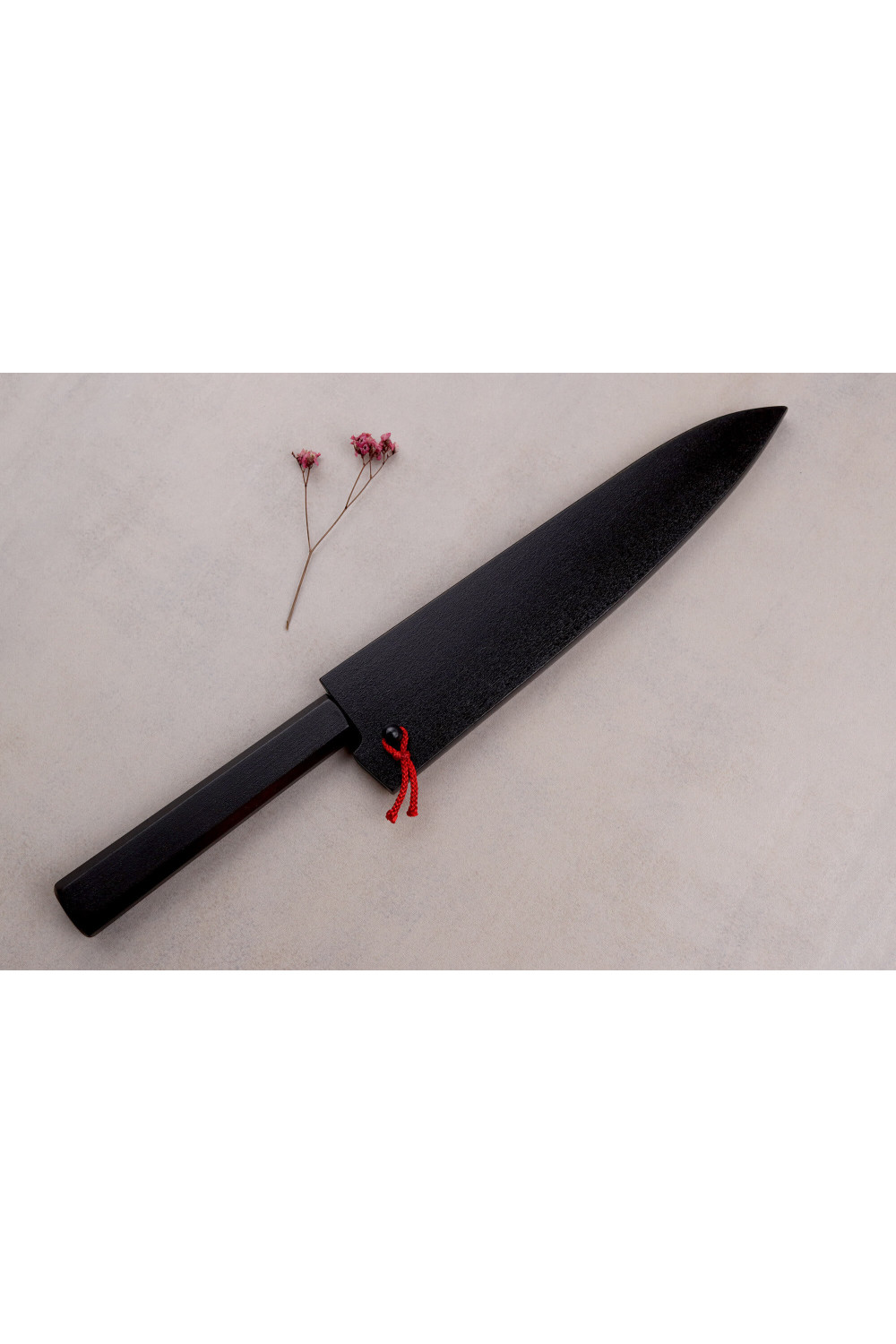
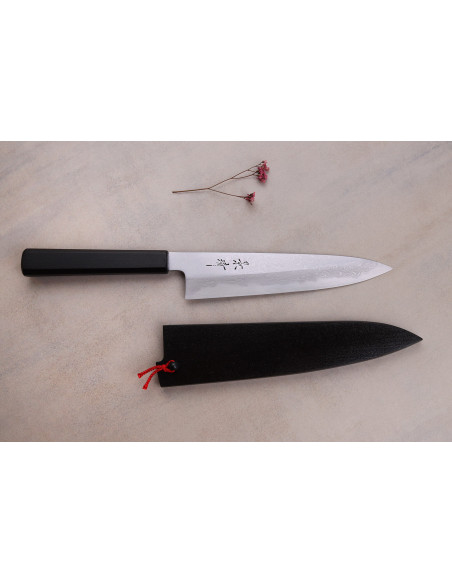
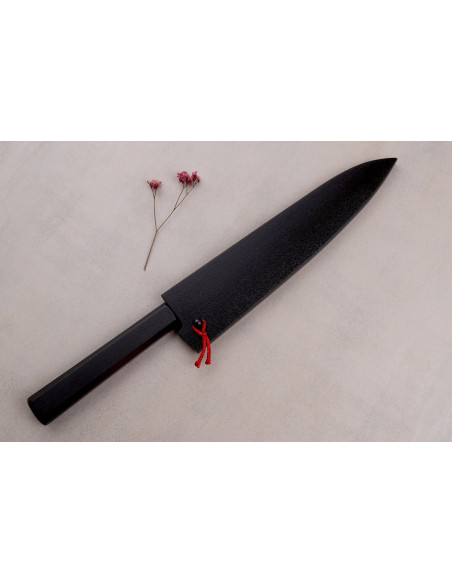
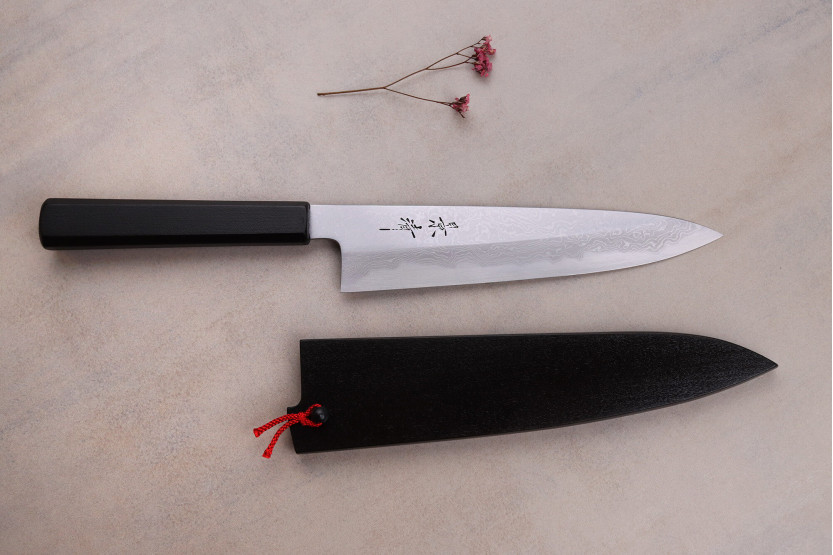
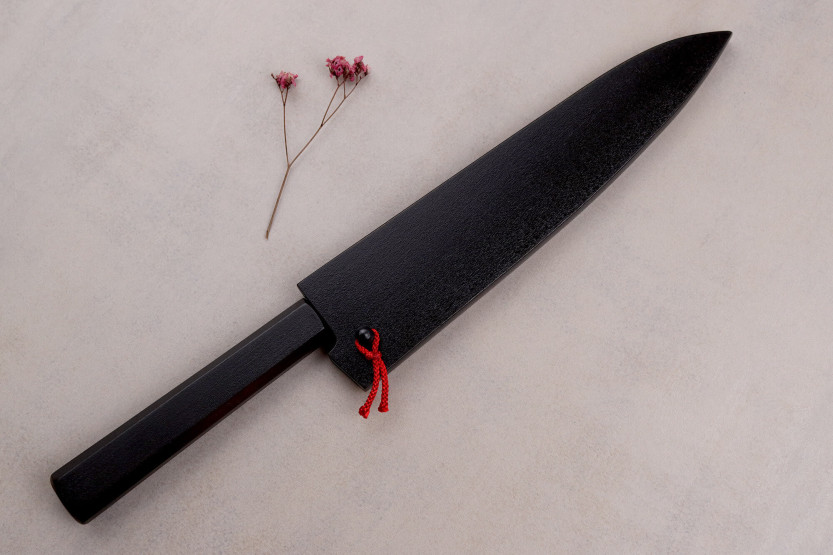
The knife is delivered with its saya: a protective wooden sheath that perfectly matches the shape of the blade. This protects the blade and is perfect for transporting the knife (if you're a home chef, for example). It also allows you to store the knife easily in a drawer.
See all our models of Japanese craft knives!




 By buying this product you can collect up to