The expertise of the great Kei Kobayashi
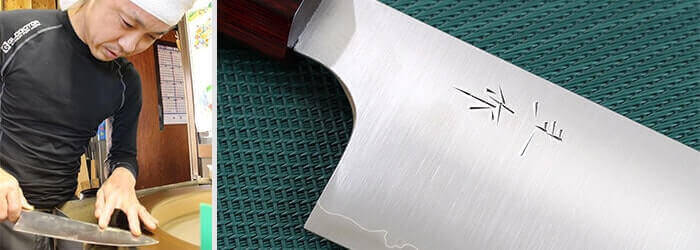
Kei Kobayashi is a young blacksmith plying his trade in Seki, Japan. He started out as a fastidious sharpener, collaborating with numerous blacksmiths. Seeing their work inspired him to create his own knives. In the 2000s, he opened his own workshop with the help of his father.
Kobayashi san is renowned for using traditional forging techniques, such as Damascus or San Mai. His steel of choice is Japanese SG2 steel, a top-of-the-range powdered steel that he masters to perfection. After forging your knife, Kei Kobayashi uses his experience as a master sharpener to give each blade an exceptional edge.
The Damascus knife with SG2 steel core
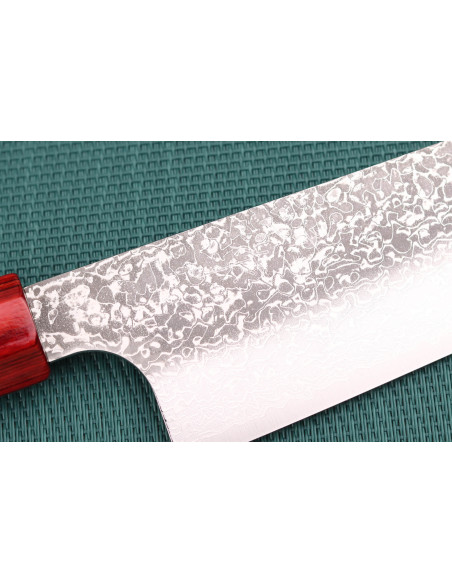
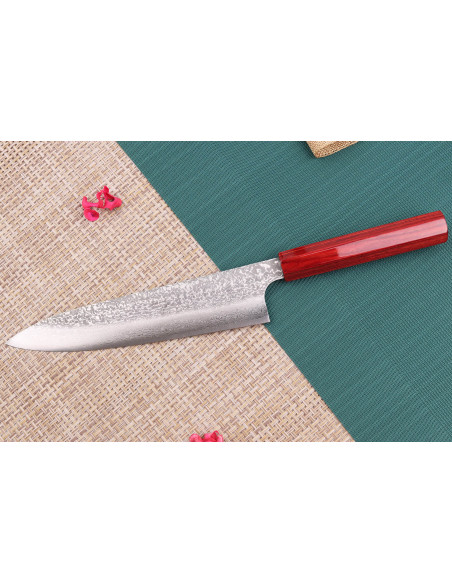
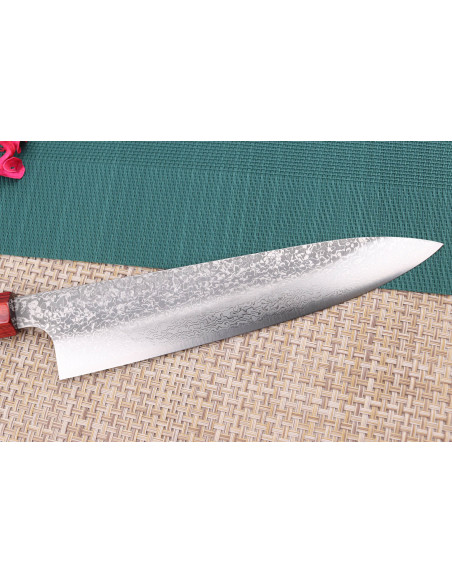
This Japanese chef's knife features a 21 cm blade with a damascus structure. This technique involves forging a core of rigid steel, which is then enveloped in several layers of softer steel to create an ideal balance. The top layers of steel also serve to protect the blade core.
The blade has a core of Japanese SG2 steel, a powder-metallurgy alloy manufactured by the renowned Takefu Special Steel. With a carbon content of around 1.3%, this element is essential to reinforce the alloy's hardness, guaranteeing better edge retention. Thanks to its hardness of 63 HRC on the Rockwell scale, this blade offers exceptional cutting performance and increased edge durability, enabling you to reduce the frequency with which you sharpen your Japanese knife.
SG2 steel contains around 15% chromium, an element that makes it more resistant to corrosion. However, the blade of a chef's knife is sensitive to oxidation and requires meticulous maintenance. Microscopically, SG2 steel has a "pure" structure: its micro-carbides are evenly distributed, ensuring optimum balance.
This SG2 core is then enveloped by several alternating layers of soft and hard steels, creating the damascus. The superimposed layers of steel create a unique pattern on the blade surface, unique to each knife. The core is protected and balanced.
Fine kanji have been engraved on the blade, hand-sharpened by Kei Kobayashi, adding to its elegance and authenticity. The blade's flat edge adds to its elegance, but above all reinforces its solidity. The blade is sharpened all the way to the back, giving it a full flat grind.
The original, comfortable heptagonal handle
This Japanese damascus knife has a handle made from pakka wood, an antibacterial composite material made from laminated wood and resin, hot-pressed, a process making the whole solid and durable. Highly prized in professional kitchens, it is highly resistant to heat and impact.
Cut in an original heptagonal shape, the handle adapts perfectly to the palm of your hand, offering optimum comfort even during prolonged use. Tinted a superb red, Pakkawood is varnished, adding a touch of elegance and contrasting harmoniously with the damask blade.
How to care for this top-of-the-range Japanese knife
Your knife should be washed only by hand with a soft sponge and a suitable soap, taking care not to wet the handle. After cleaning, dry the knife immediately and store it in a dry place to avoid any residual moisture. Never put in the dishwasher or soak in the sink.
Find Kei Kobayashi knives on our website!









 By buying this product you can collect up to


