Masakage Shimo kitchen knives are crafted by master blacksmith Yu Korusaki san.
Kurosaki san can be seen in the photo above.
This craftsman works in the Takefu Knife Village, where a large number of blacksmiths continue to practise ancient forging techniques. Gathered together in the same place, they share their know-how in order to perpetuate it and pass it on to future generations. This is an ideal area for apprentice blacksmiths, as they can be taken in hand by a master who will teach them the whole craft!
Yu Korusaki san began training in the early 2000s, working with master blacksmith Kanehiro san for 12 years. It was Kanehiro san who taught him everything: how to forge, how to sharpen...
After receiving orders from very satisfied customers, he decided to set up his own workshop with the encouragement of his master. His training continued with the famous Hiroshi Kato san, a renowned master blacksmith and founding member of Takefu Village. Now it's Yu Kurosaki san's turn to train his apprentice so that he too can open his own workshop one day, and train others too!
Model:
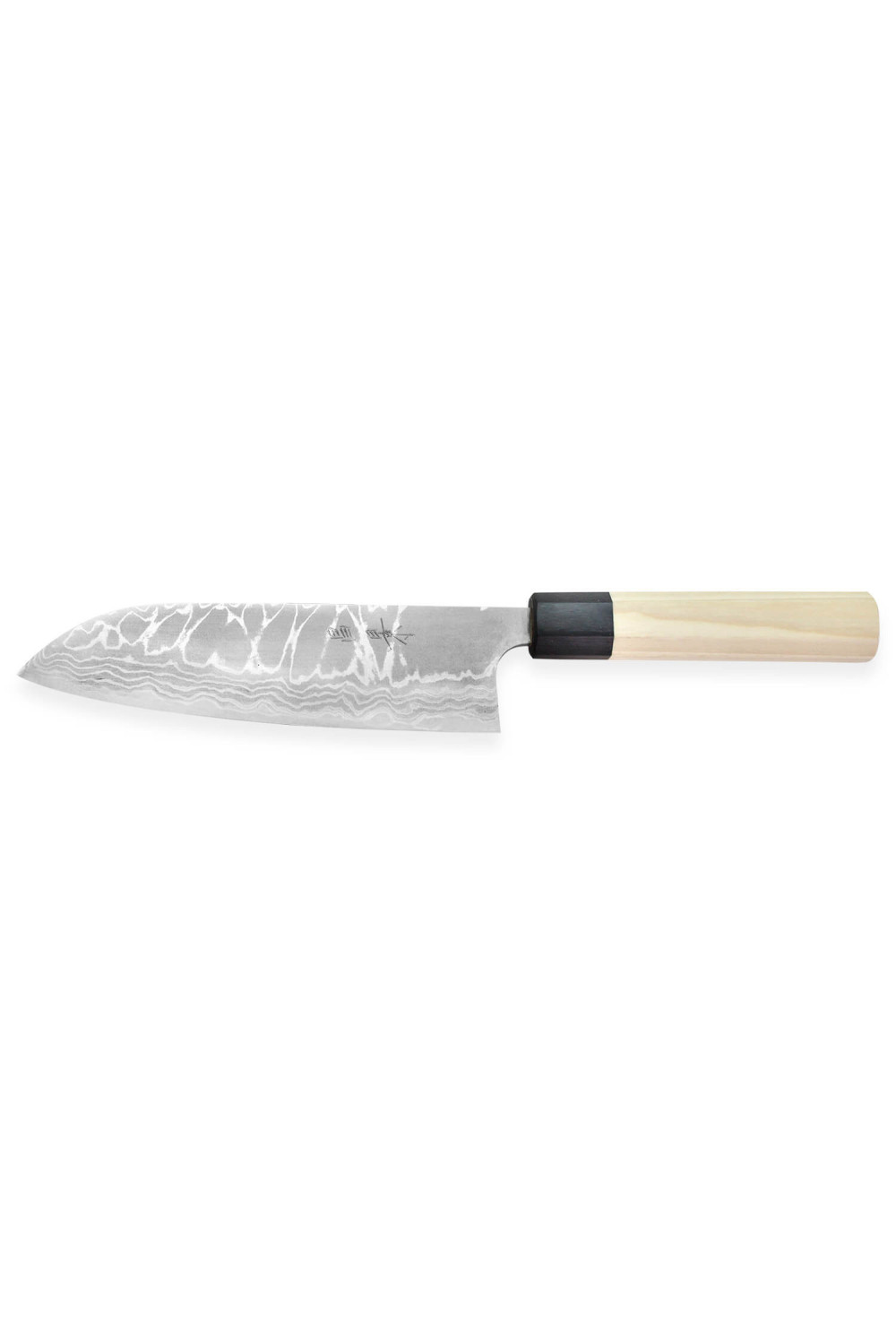
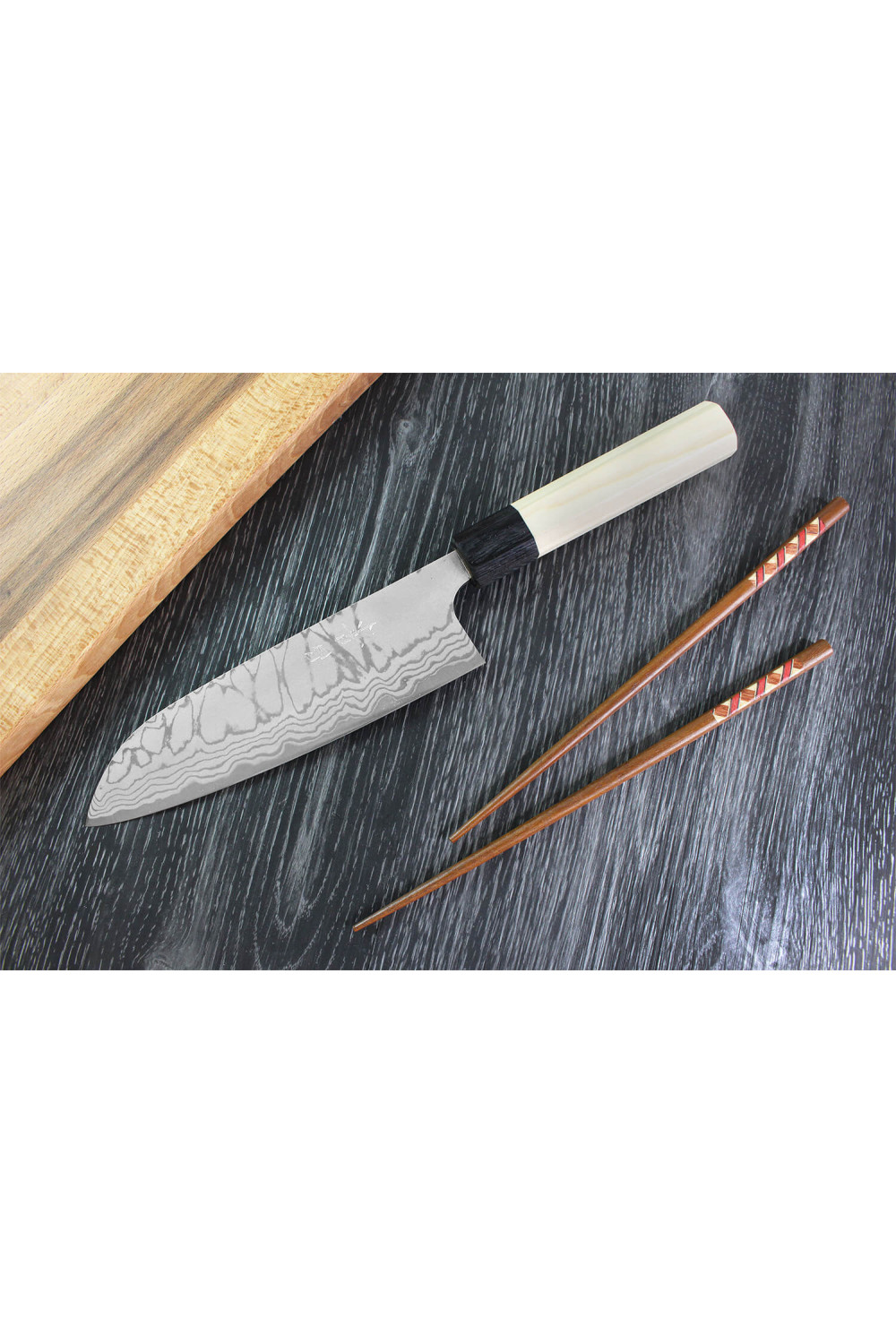
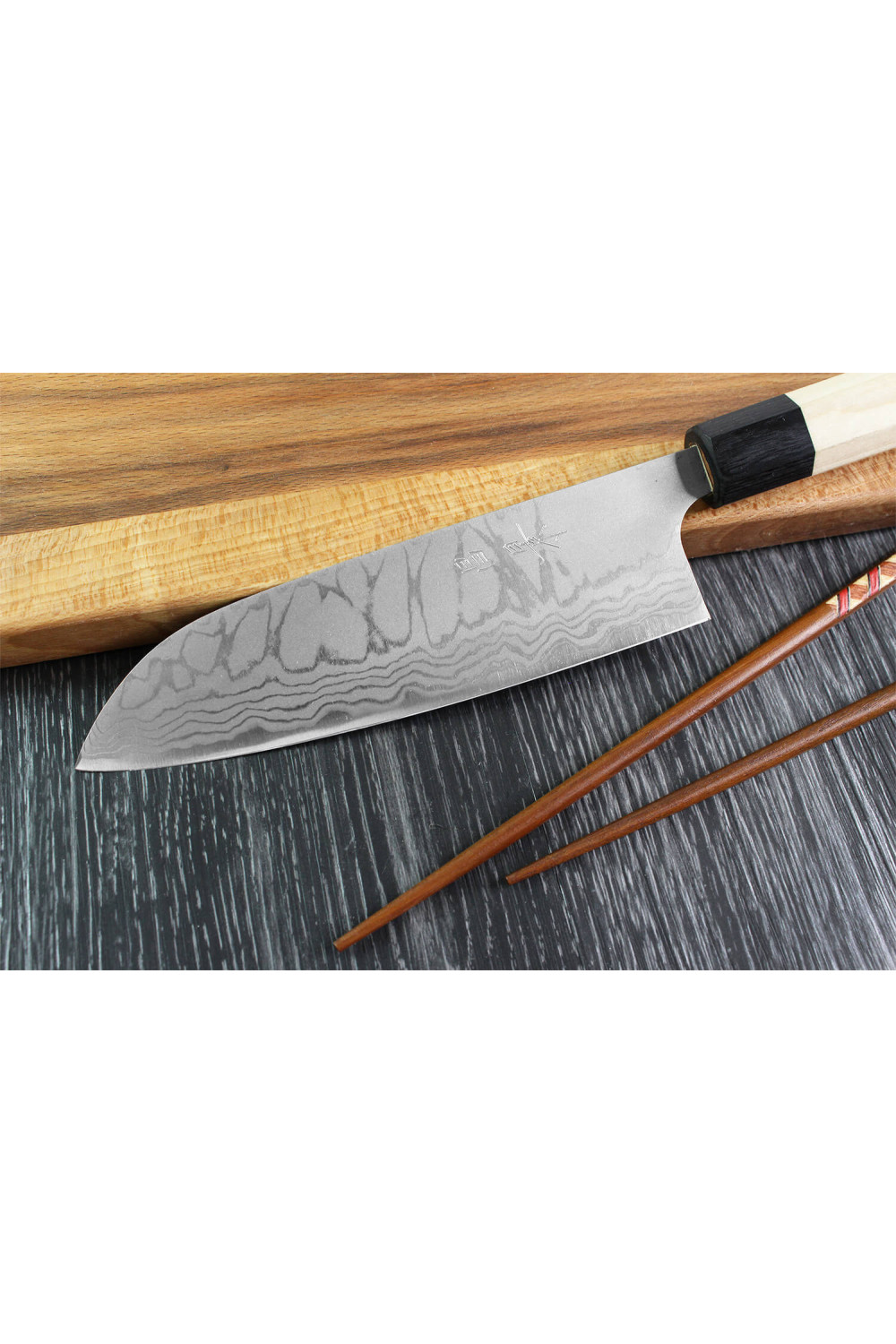
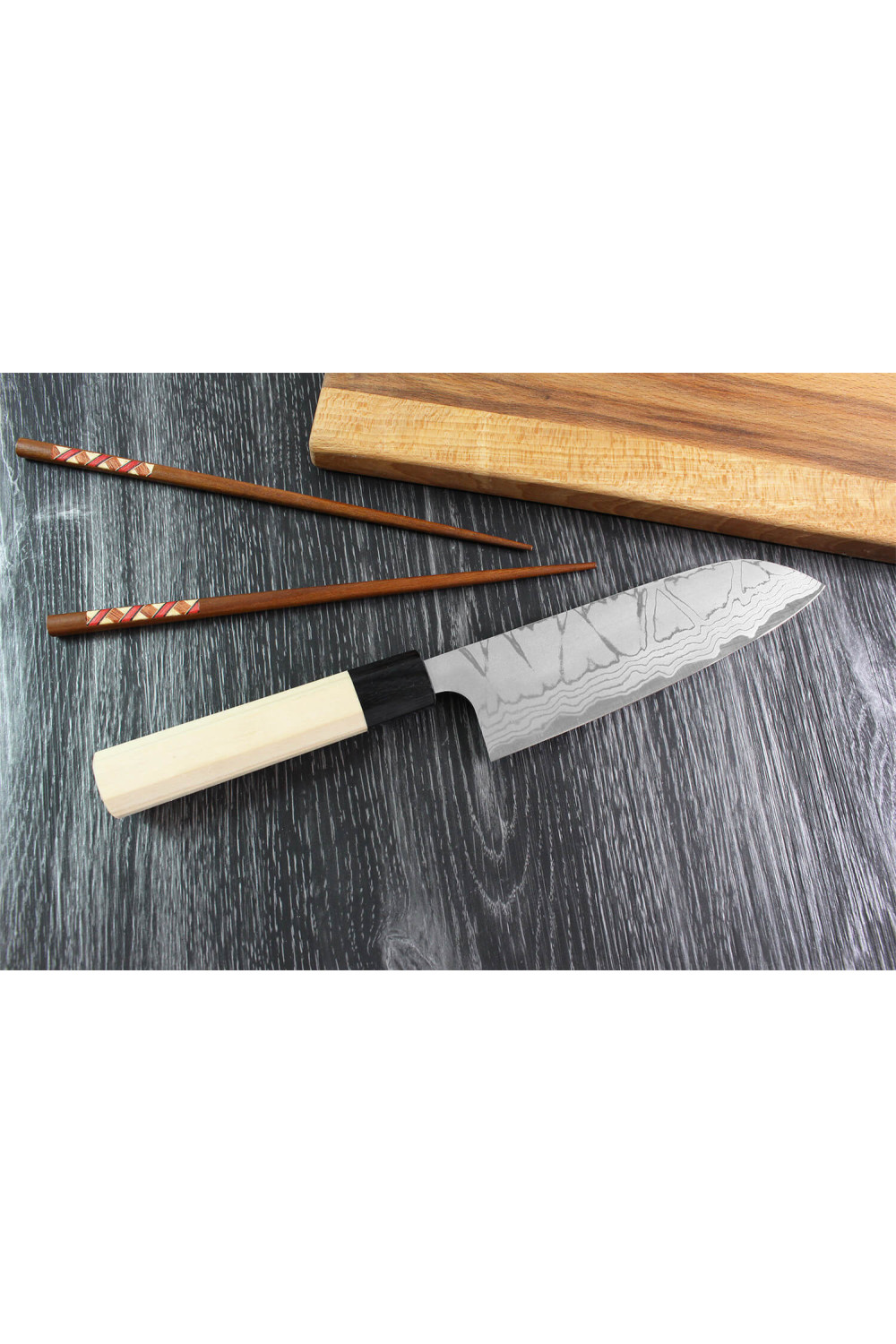
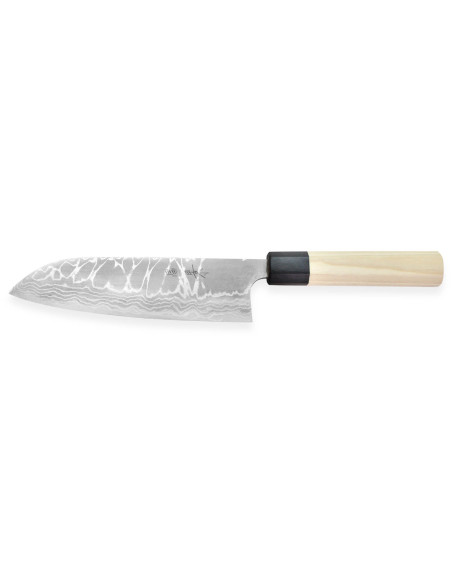
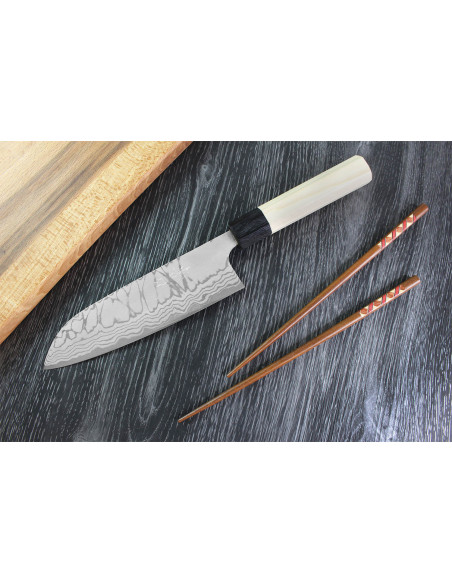
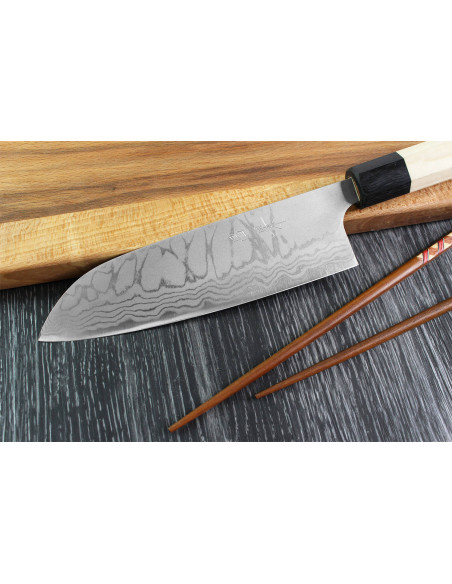
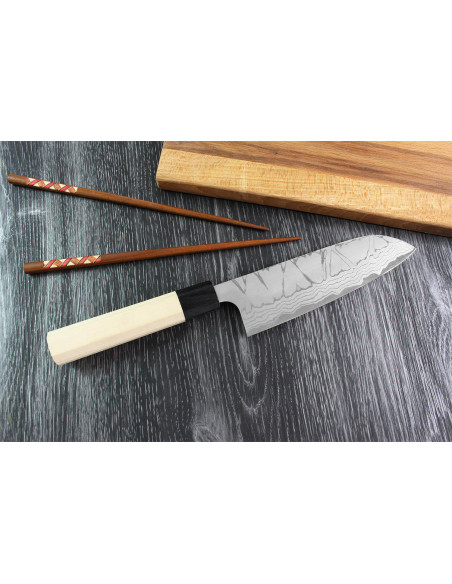
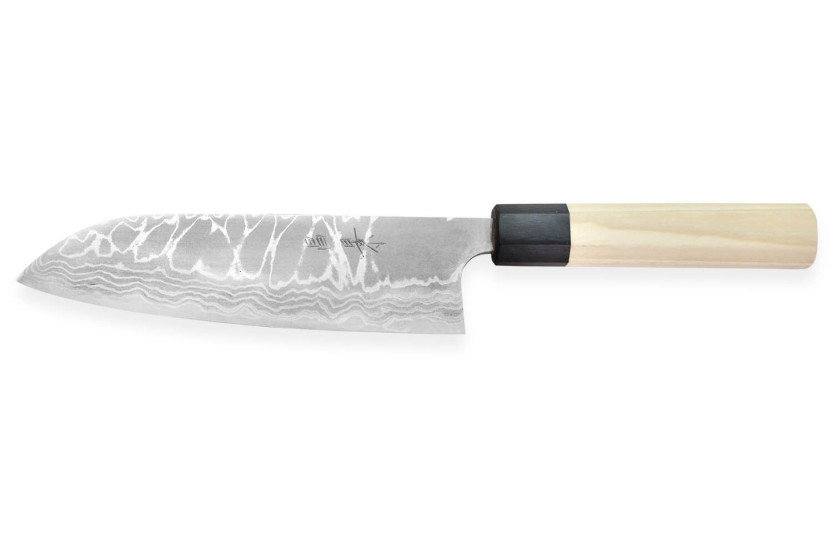
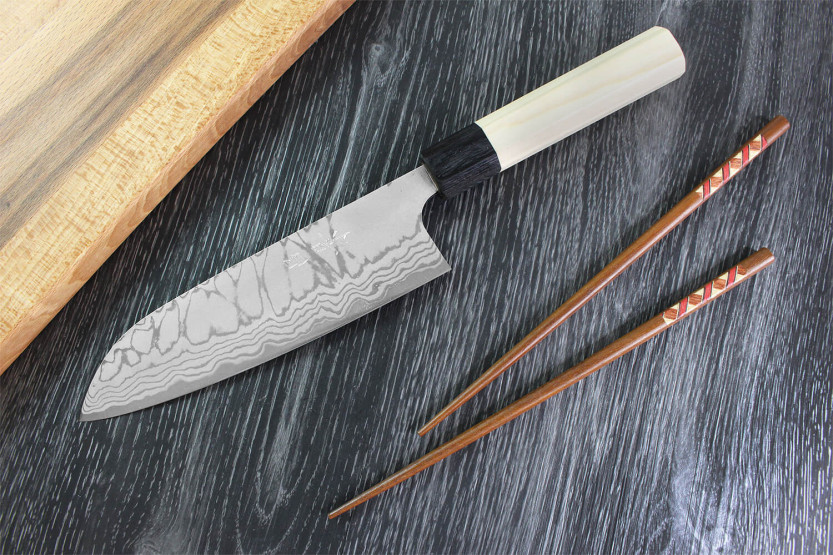
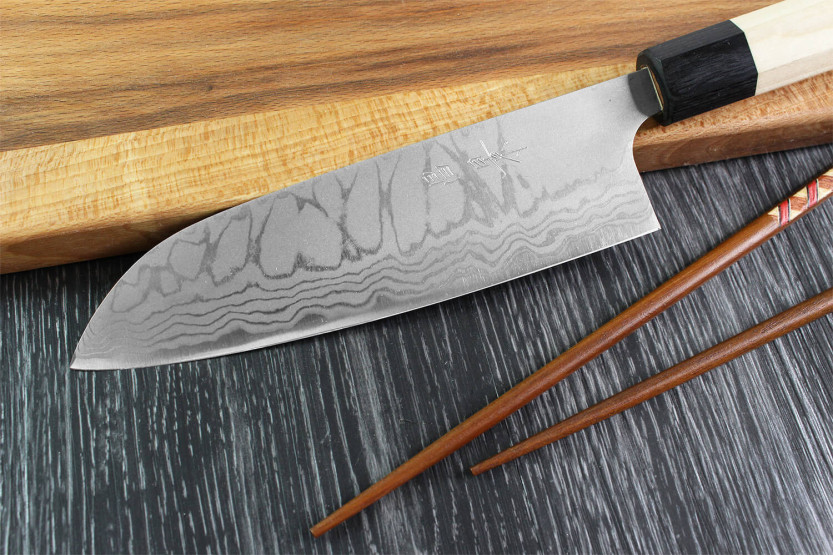
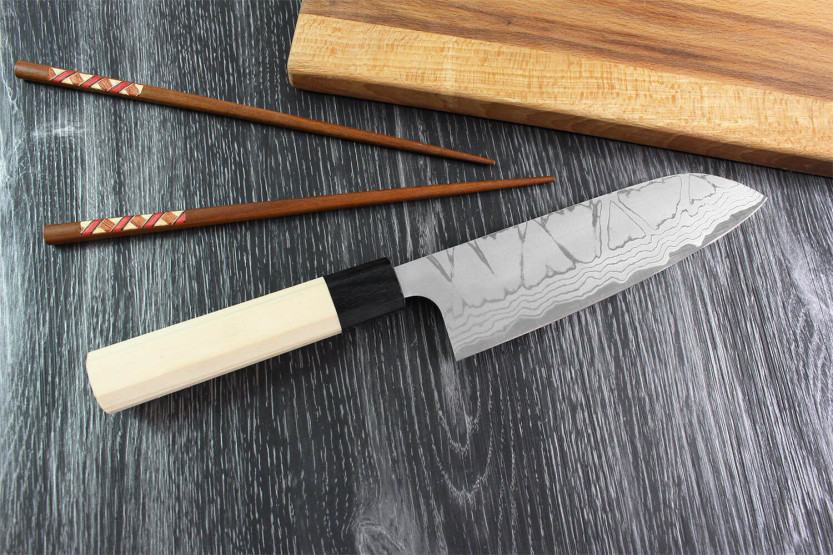
Here he signs the Masakage Shimo 17cmsantoku knife, a versatile model considered to be the Japanese chef's knife. Its slightly curved blade creates a rocking motion when cutting. It can be used for all your everyday cuts: meat, fish, vegetables...
Blade :
The blade is forged and features a core of White Paper Steel produced by the world-renowned Hitachi steelworks, which supply a large number of Japanese knife manufacturers. It has a fairly high carbon content, up to 1.2% for a hardness of 61 HRC. This particular steel is considered quite pure.
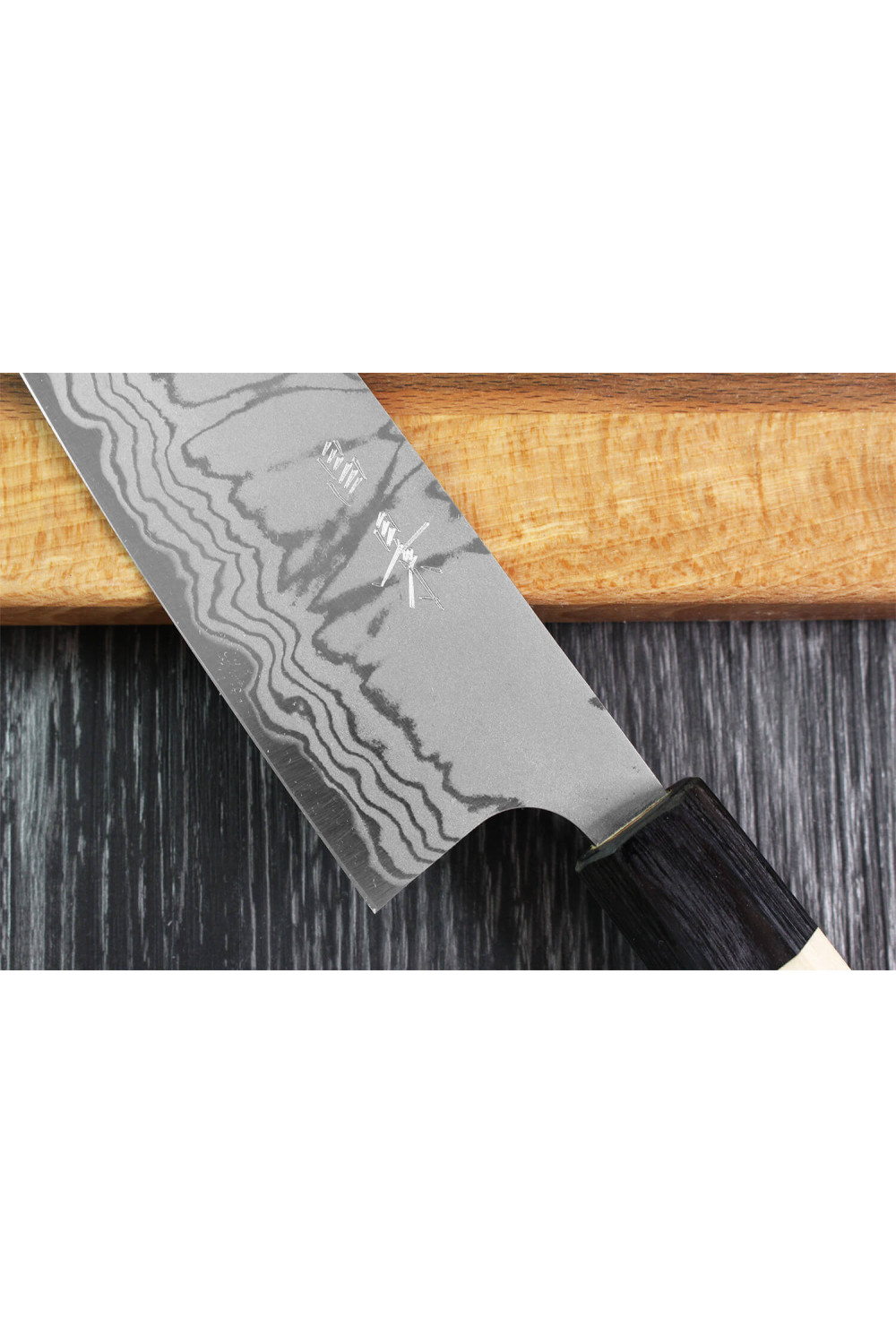
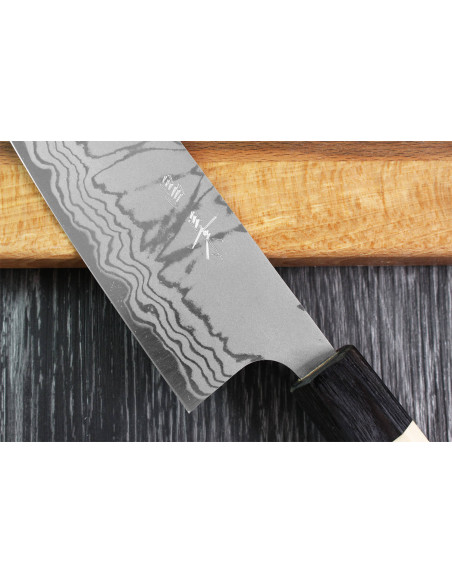
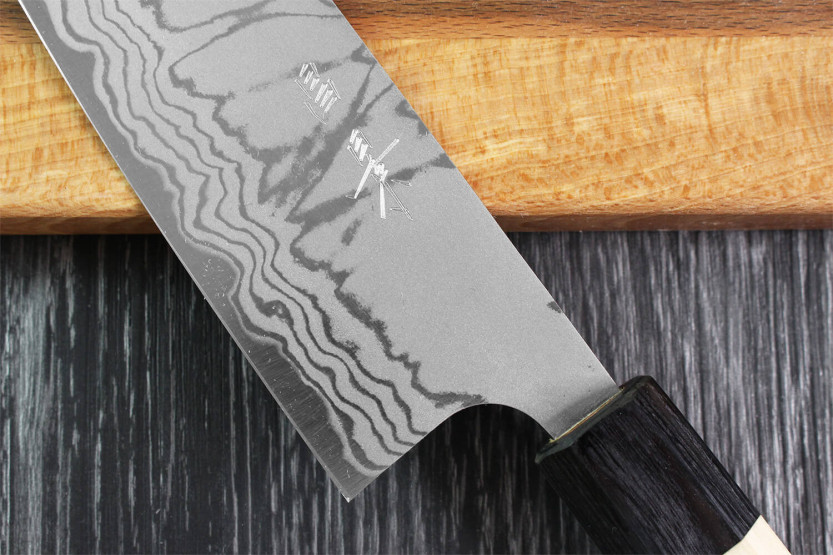
The cutting edge is therefore long-lasting, and despite the steel's high rigidity, it remains easy to sharpen for pleasant maintenance. The blade features a light damascus pattern alternating steel and iron. The result is delicate, and it's from this visual characteristic that the range takes its name. Indeed, "shimo" means "frost" in Japanese, and when you look at the blade you get the impression that the damascus is slightly glazed. The Japanese finish is perfectly reflected in the smallest details of this knife!
The brand has been engraved in kanji on the blade: authenticity guaranteed. It remains discreet, however, and blends perfectly with the rest of the blade.
The handle :
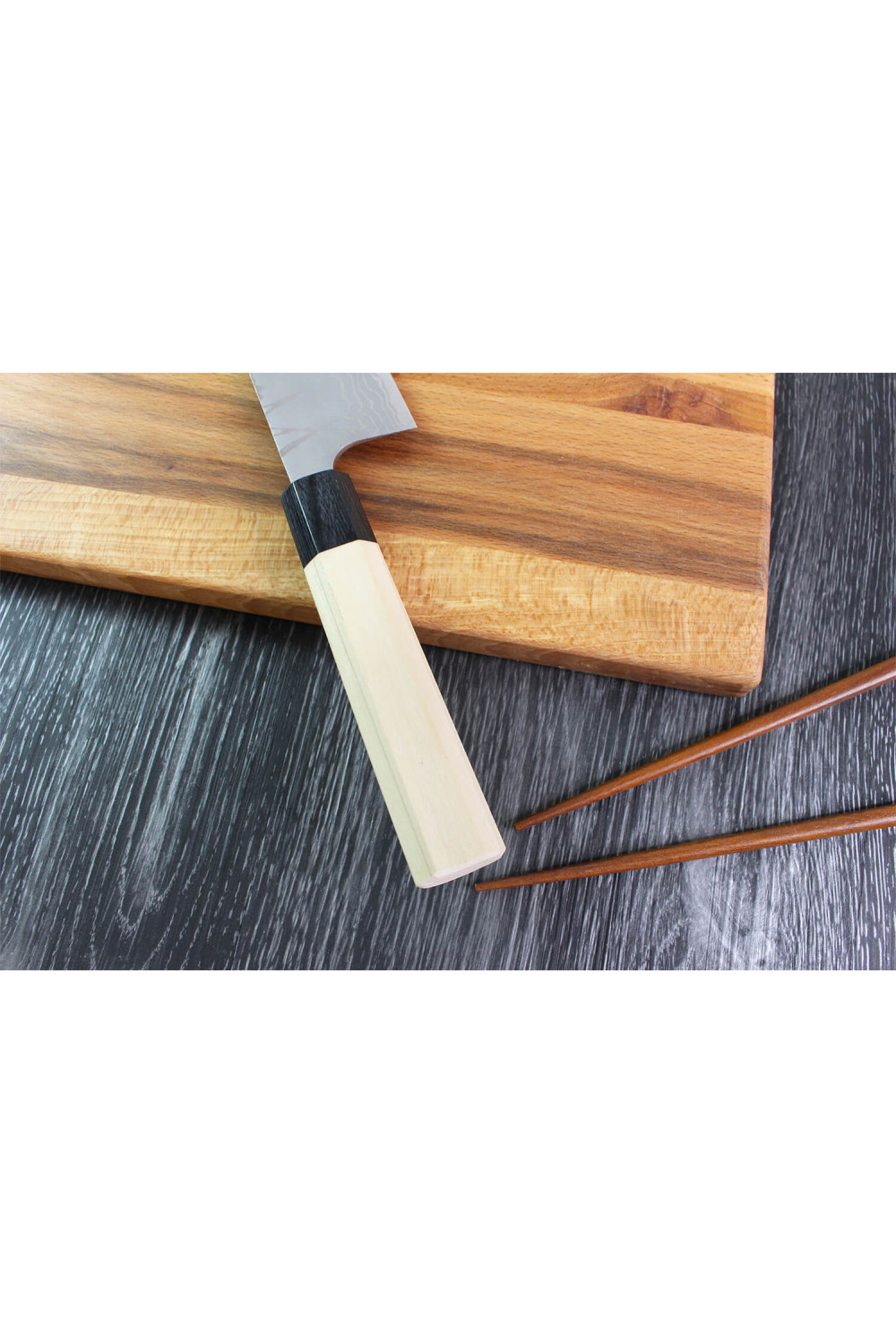
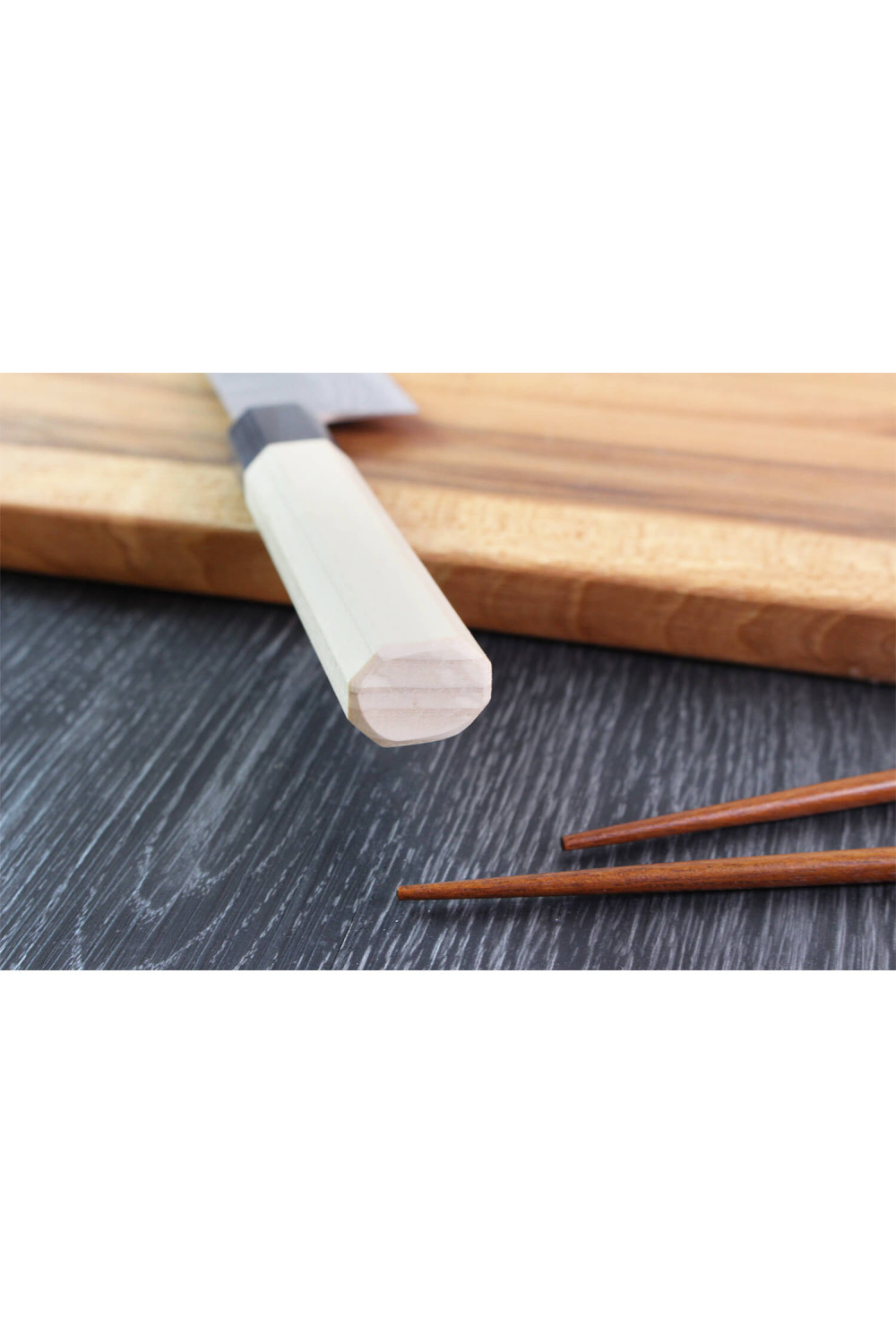
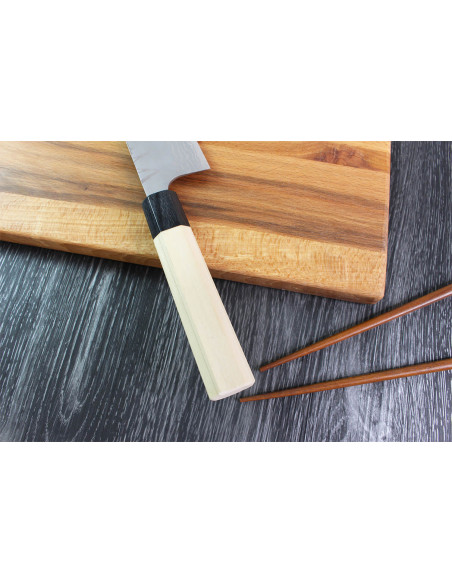
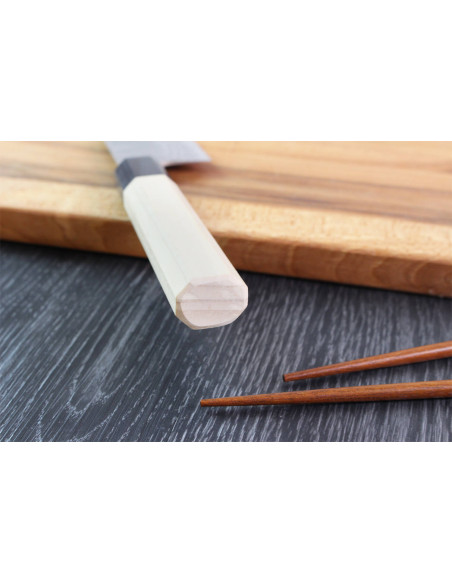
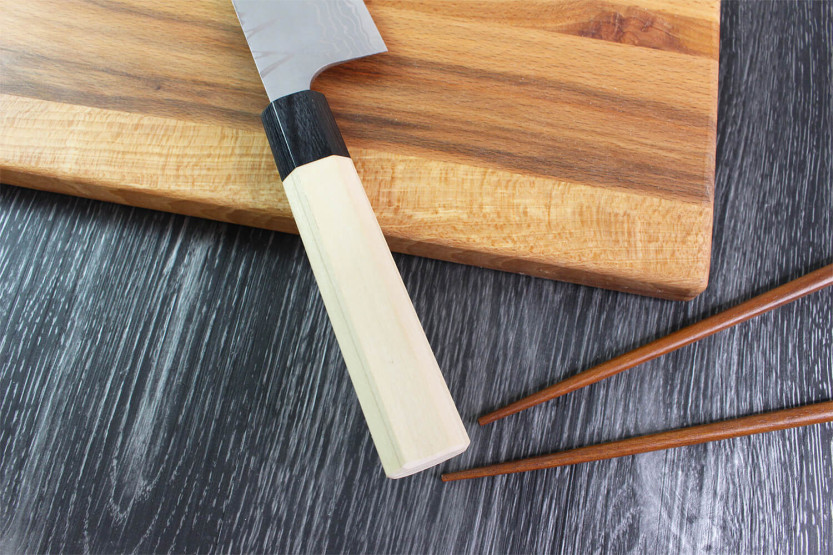
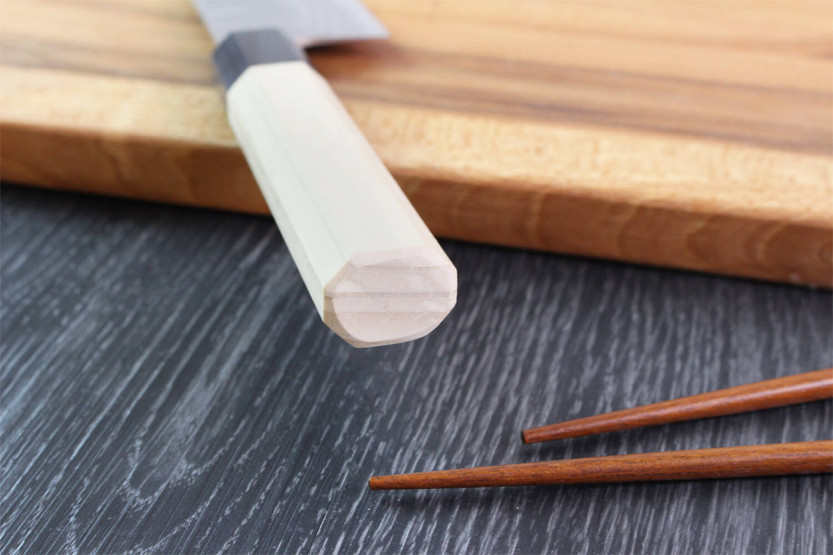
Made of magnolia, a pleasantly light, grit wood. Its octagonal shape fits the palm of your hand perfectly. Its grip is ideal for both right- and left-handed users.
The bolster is made of pakkawood, an antibacterial composition material that resists humidity. The black bolster provides a contrast between the blade and the handle. To fill the junction between blade and handle, wood paste has been added to make it watertight and hygienic.
Care:
The knife can be cleaned by hand. You can use a mild soap and run it under lukewarm water, without using an abrasive sponge. Then wipe with a soft cloth to remove all traces of moisture from the blade and wooden handle.
Note that the knife is sensitive to oxidation. In fact, its carbon steel is not stainless (which is why the cutting edge is sharper and more durable), so don't soak it or put it in the dishwasher! Note also that a carbon blade may change color over time (or show small stains), which is perfectly normal (contact with the acidity of food, humidity in the air...). For a more thorough treatment, you can dip the blade in mineral oil from time to time.
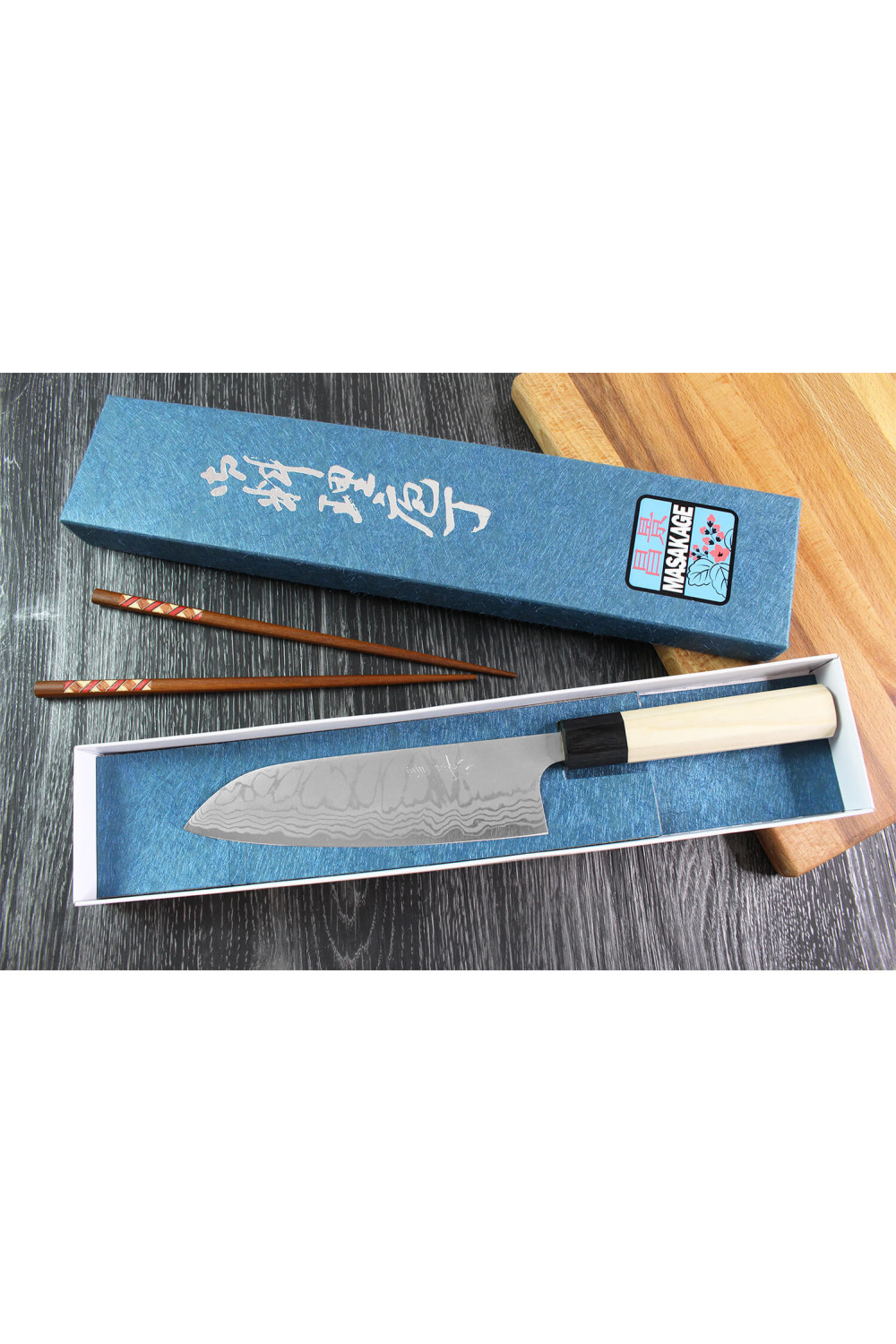
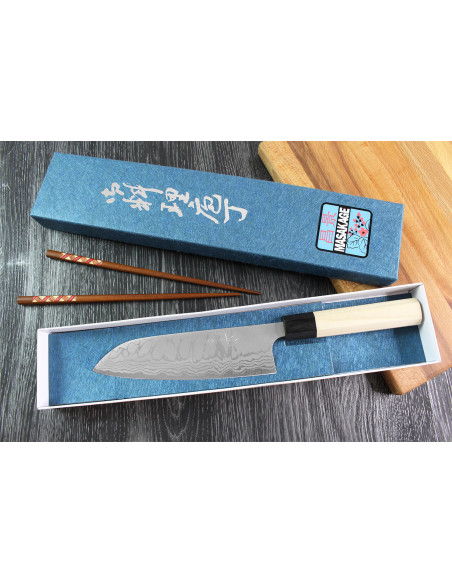
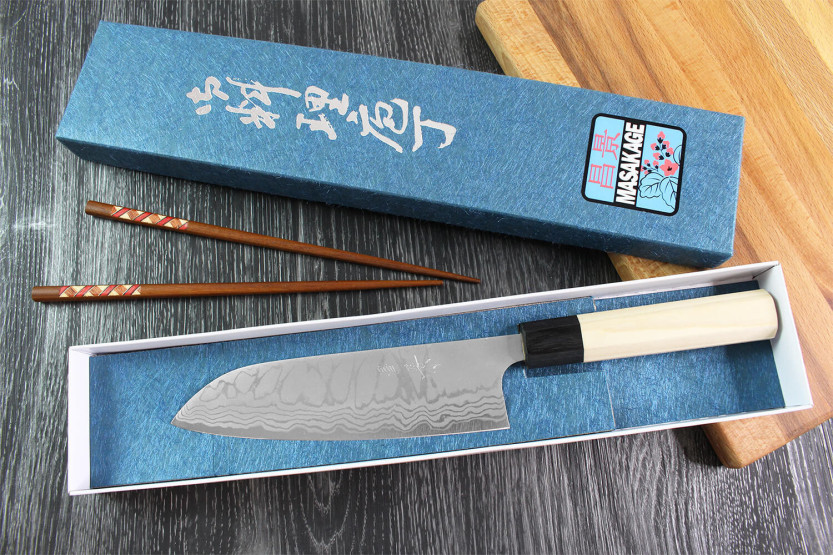
The knife comes in a sober, traditional blue box.
Equip yourself with Japanese quality and find all Masakage knives on KnifeLeader!




 By buying this product you can collect up to