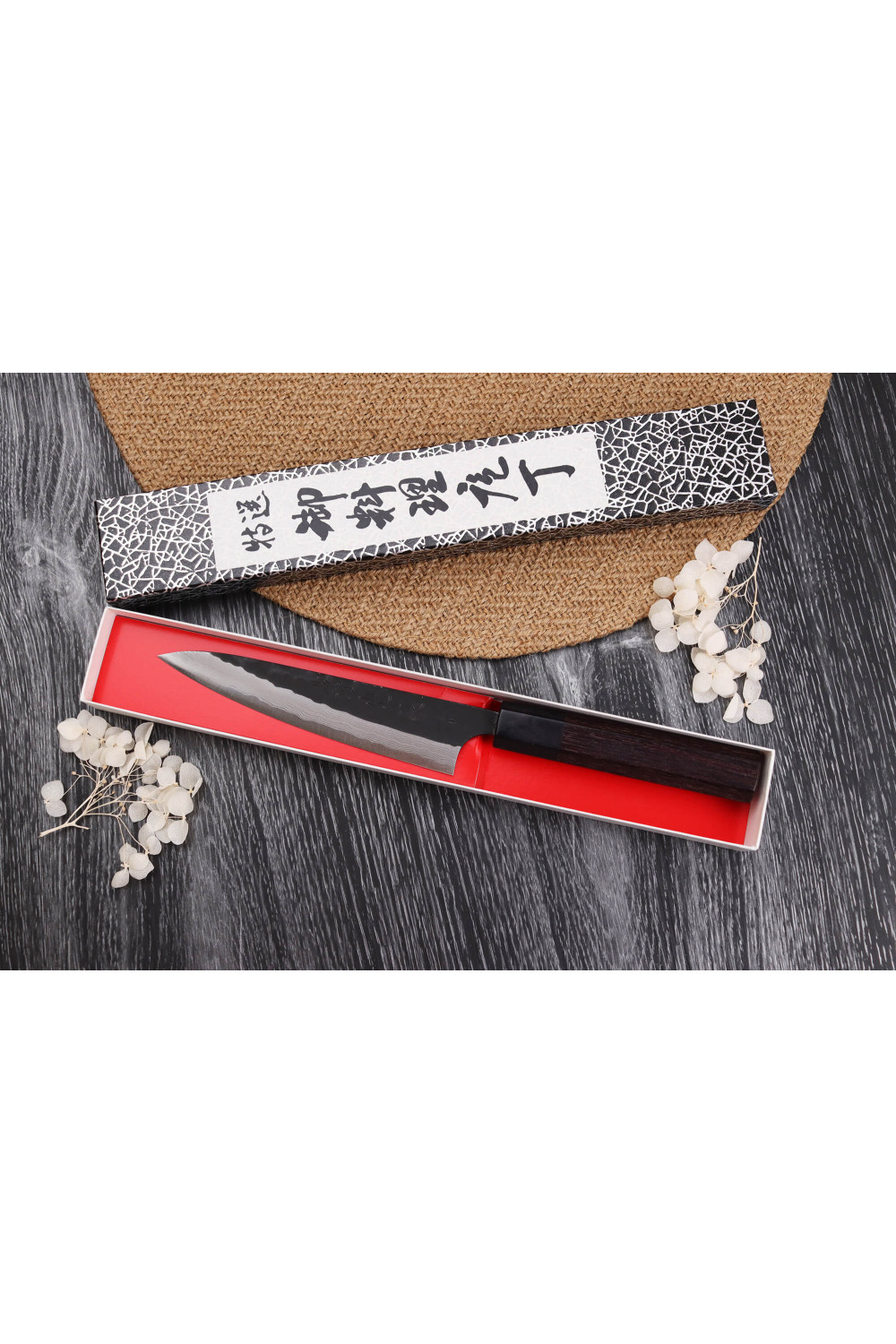
A Japanese knife made of high-quality materials
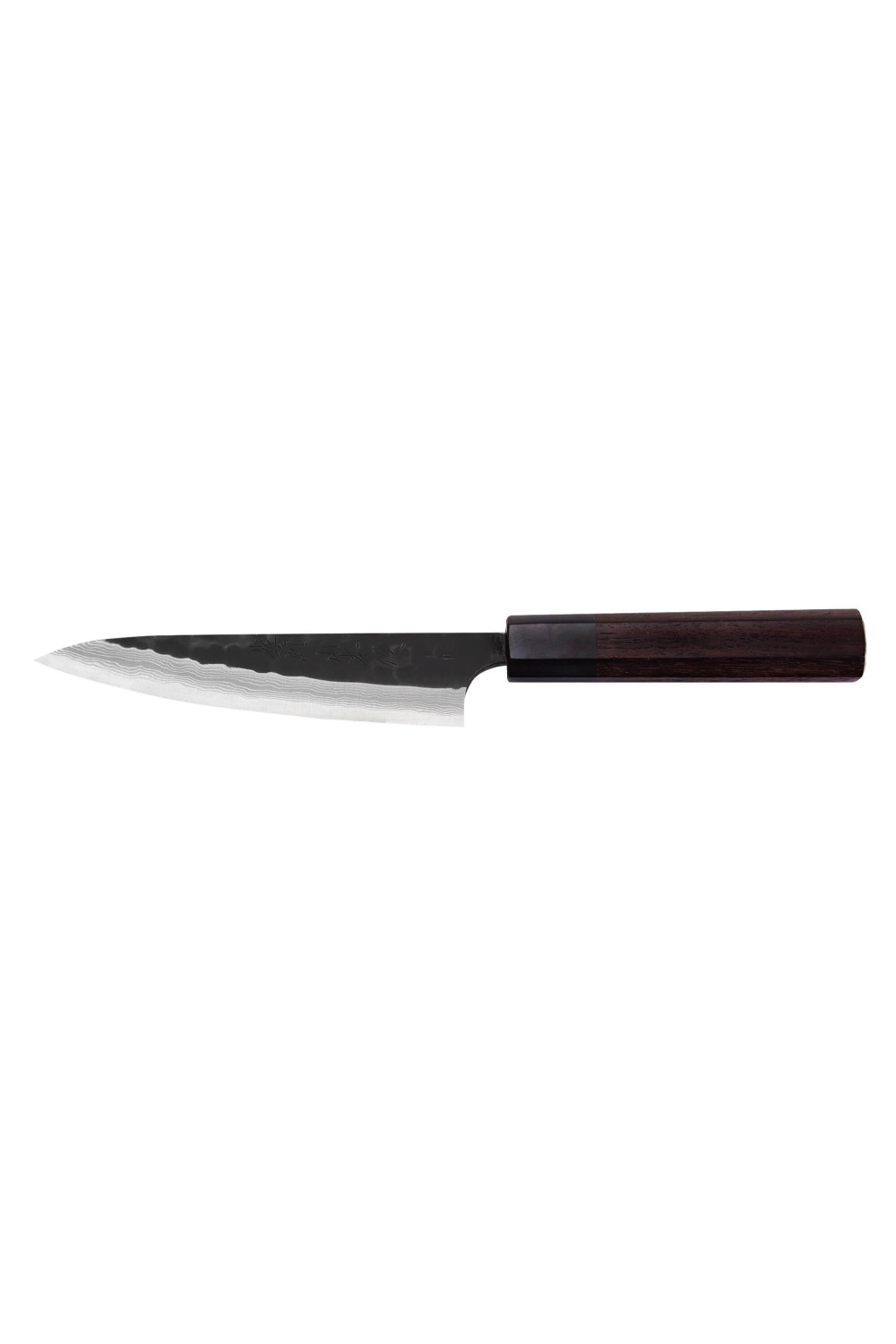
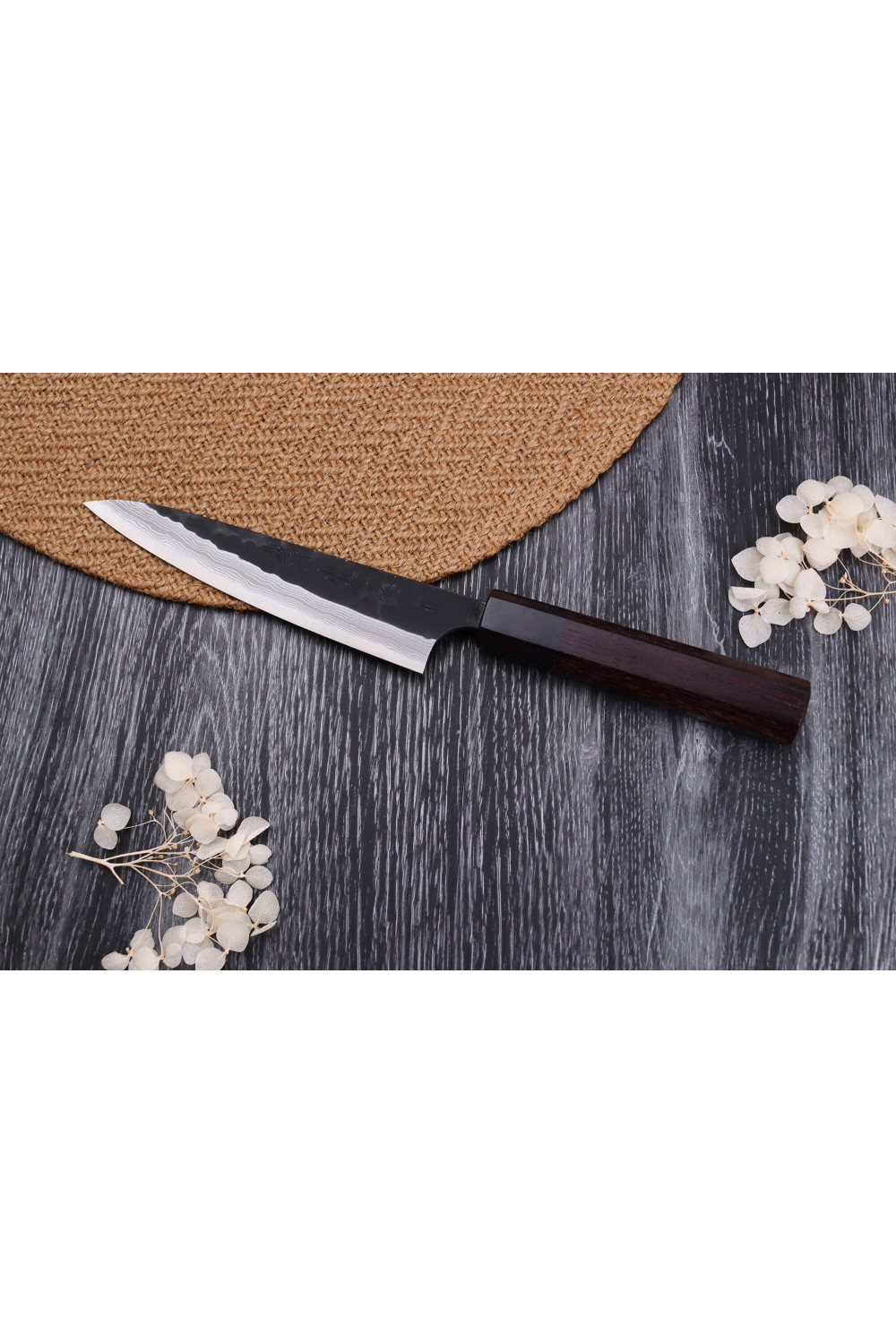
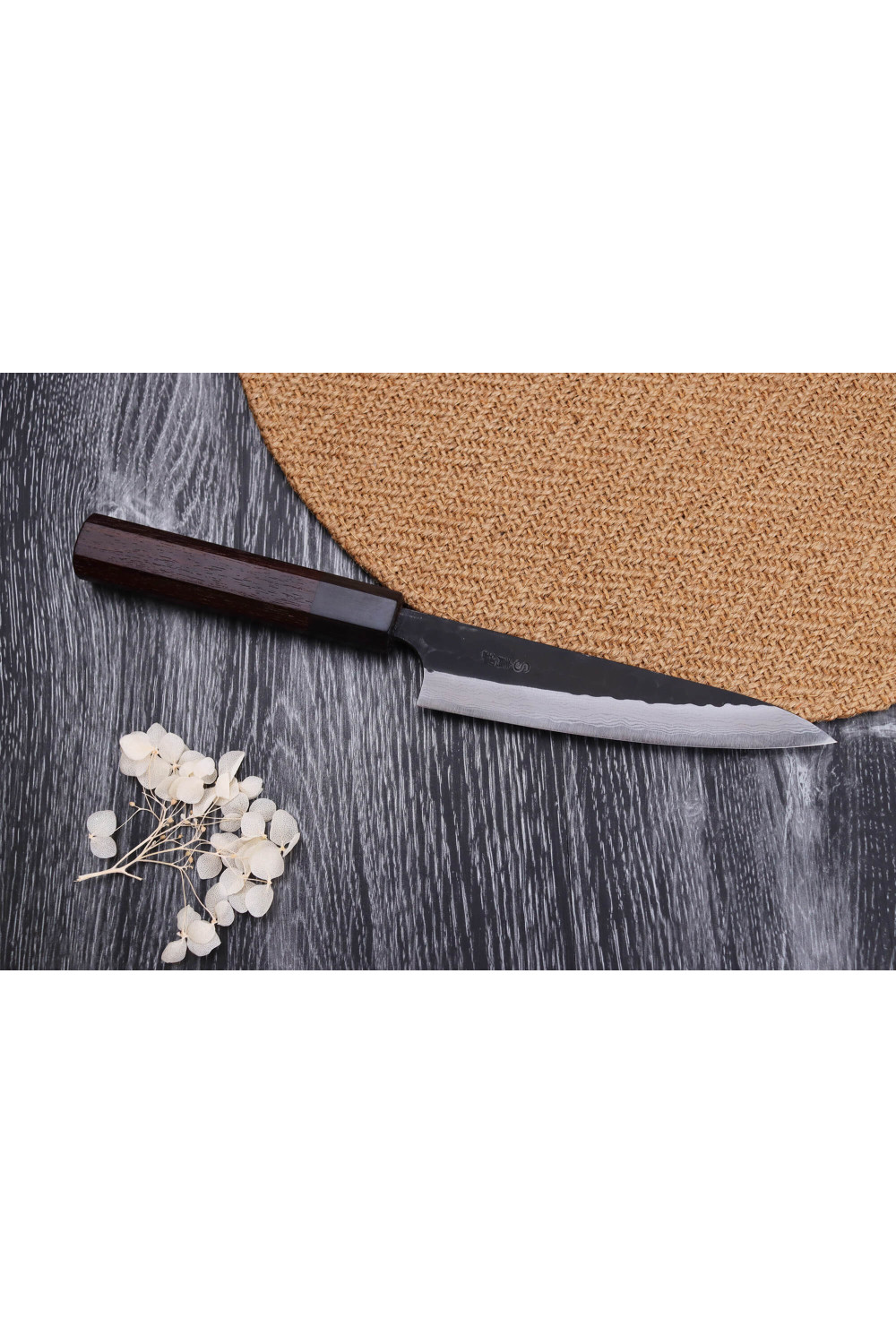
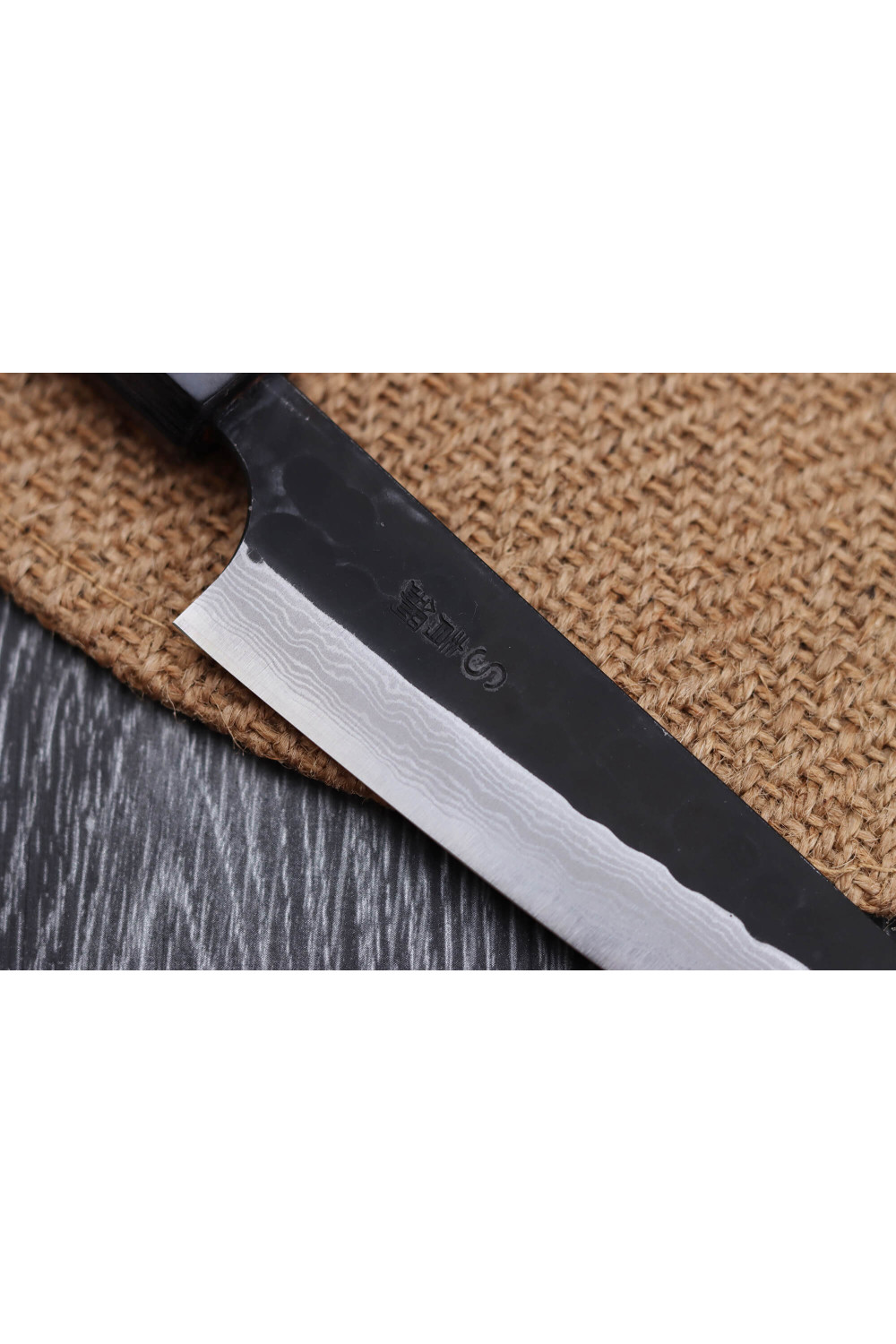
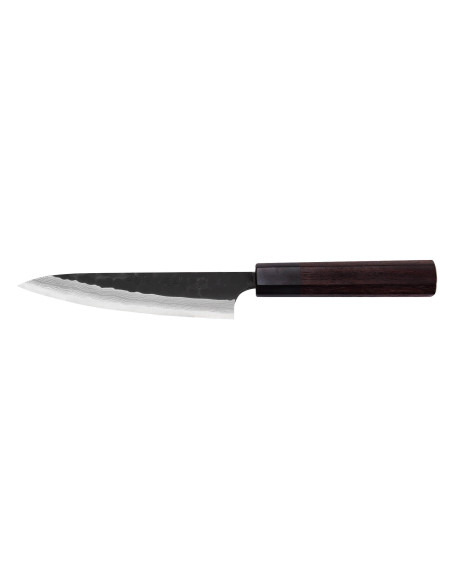
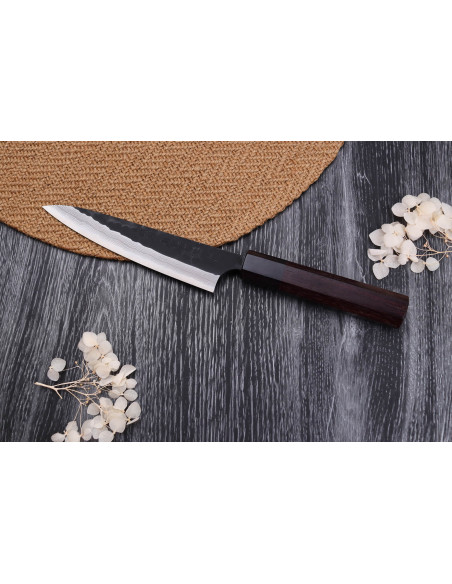
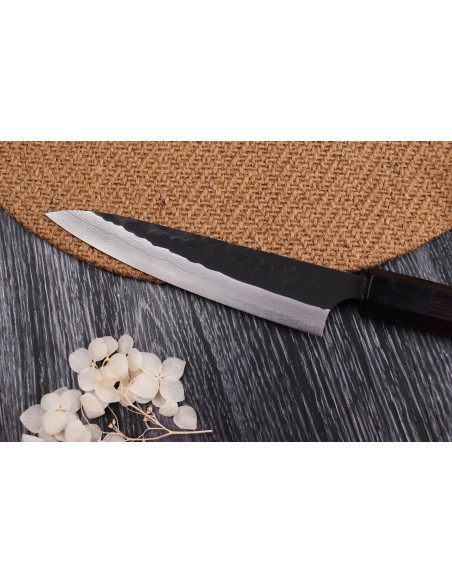
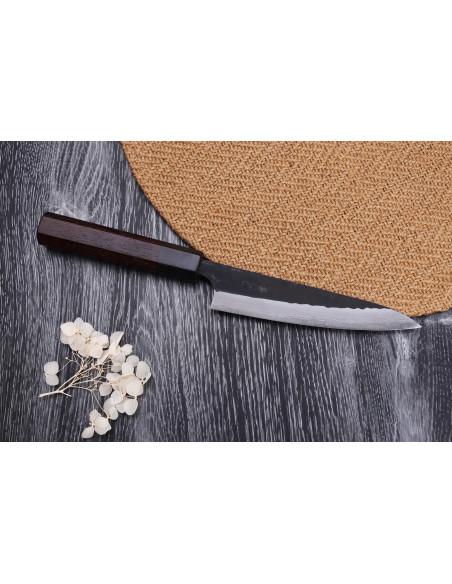
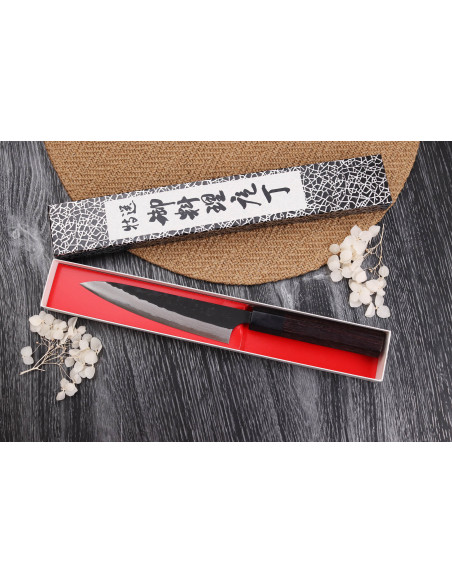
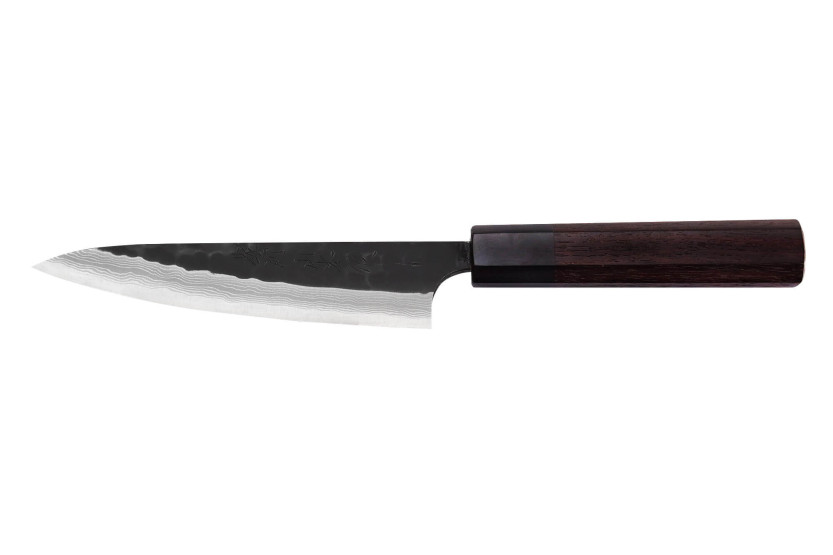
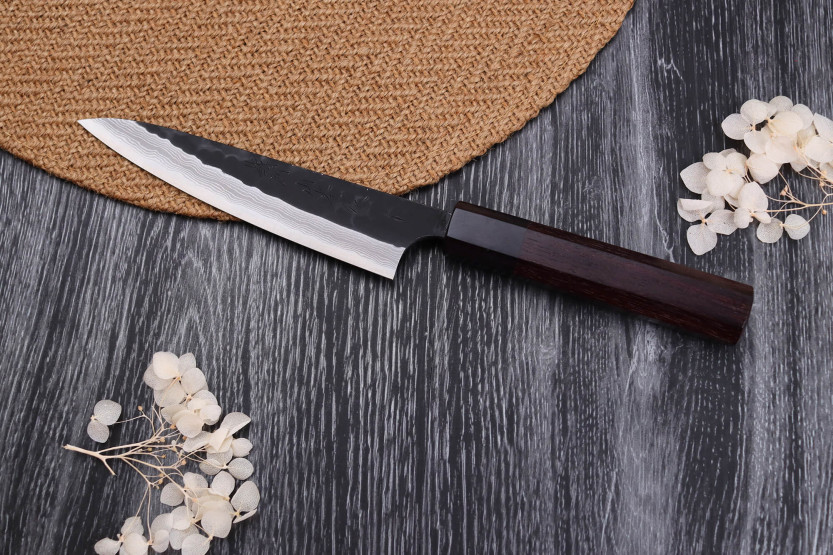
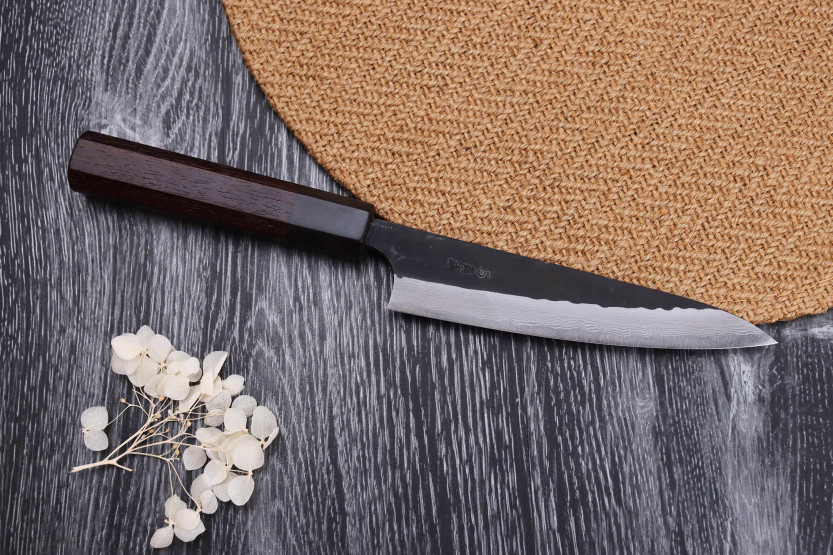
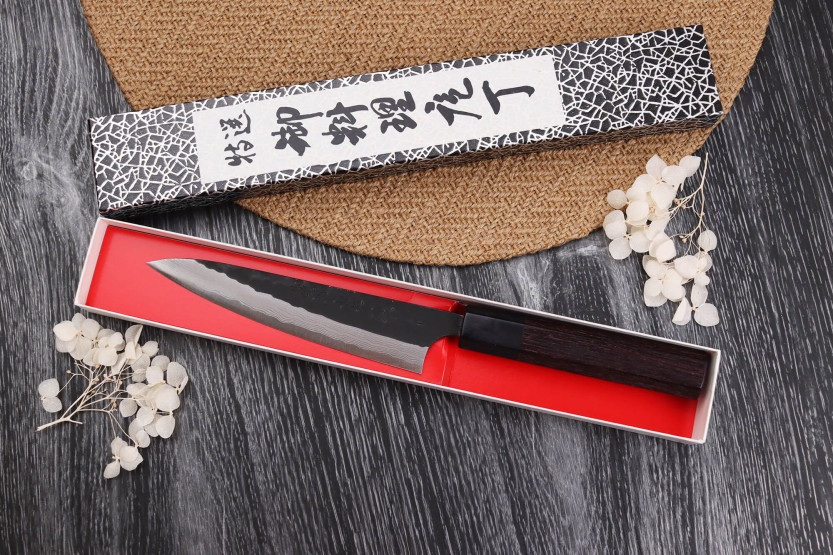
The Nao Yamamoto Damascus AS utility knife features a damascened blade, which means it has a rigid steel core surrounded by several layers of softer steel. The upper layers protect and balance the core, making it more supple and less brittle.
The heart of the knife is made from Japanese Aogami Super steel (also known as AS or Blue Paper Steel Super). This steel is manufactured by the world-famous Hitachi steel company. It contains a high carbon content of 1.5%, giving it a hardness of 65 HRC. Carbon is the essential element for increasing the hardness of an alloy, which will then retain its sharpness for many uses.
Aogami steel is known to be absolutely effective on fiber-rich products. The alloy is expensive and few blacksmiths know how to work it. You need to be an expert in the field, otherwise losses are high and therefore costly. The mastery of certain steels is specific to each smith.
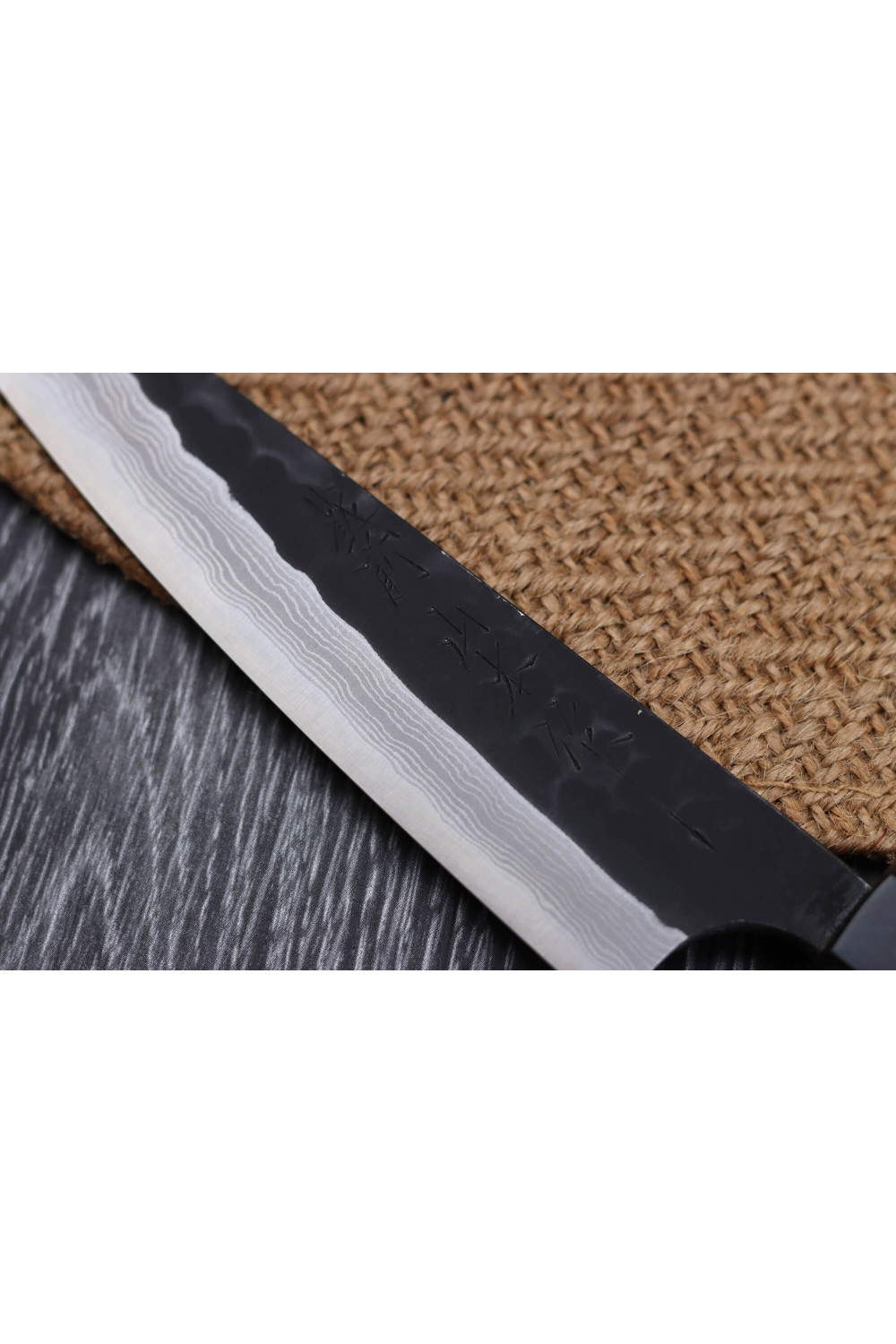
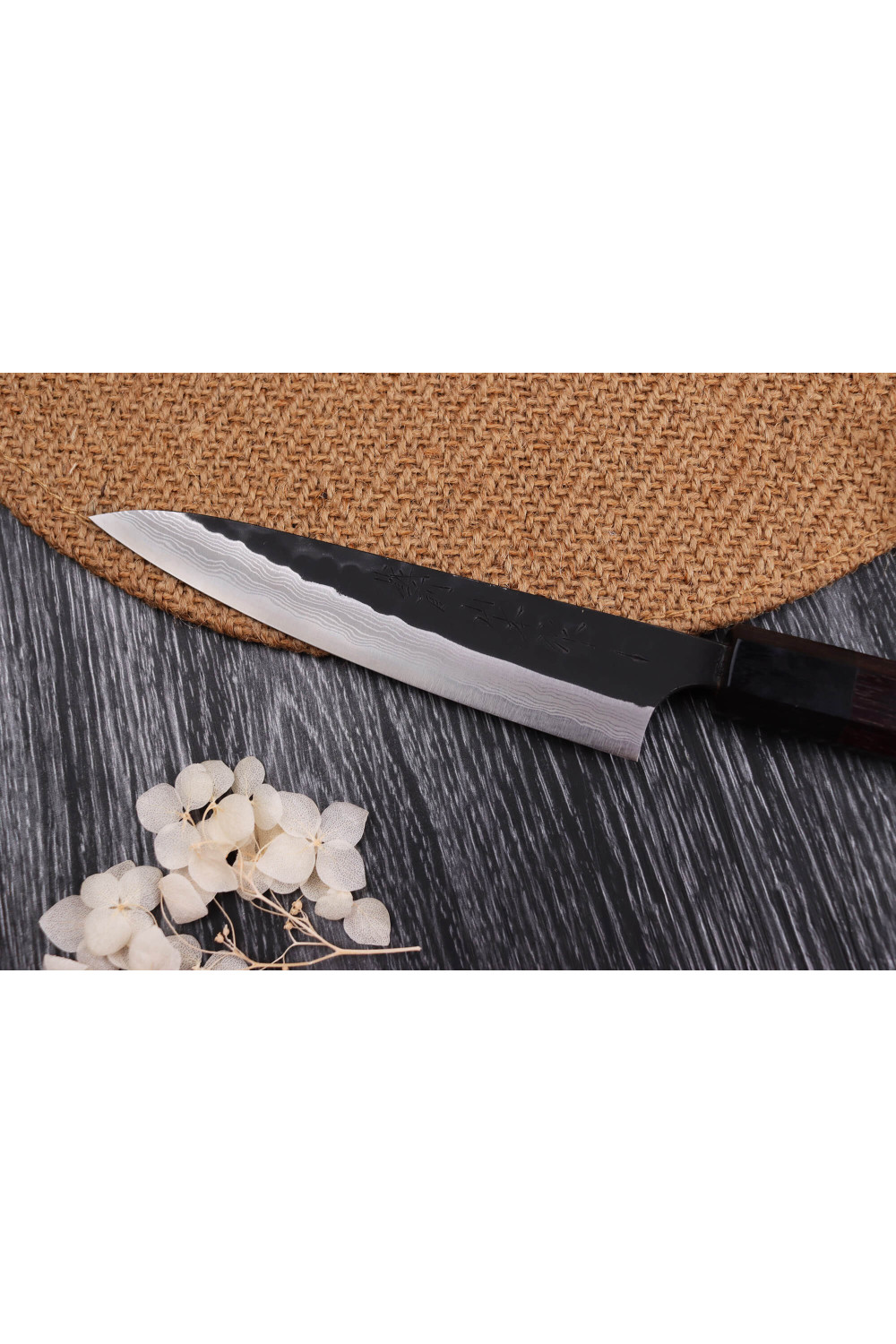
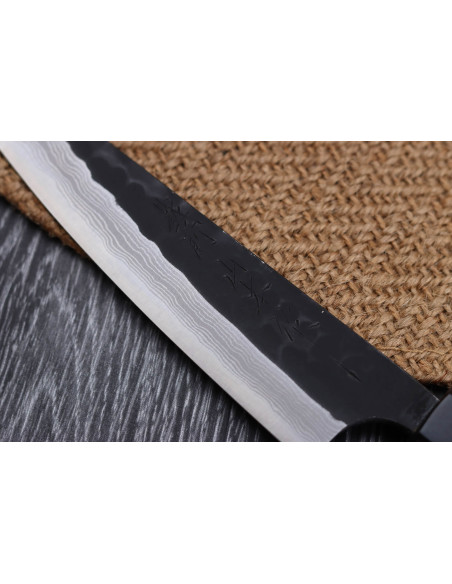
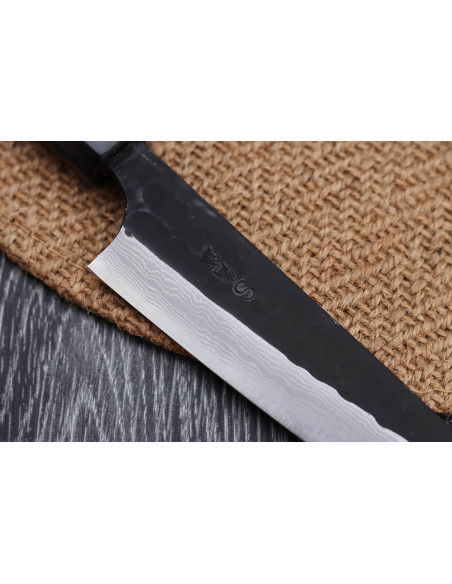
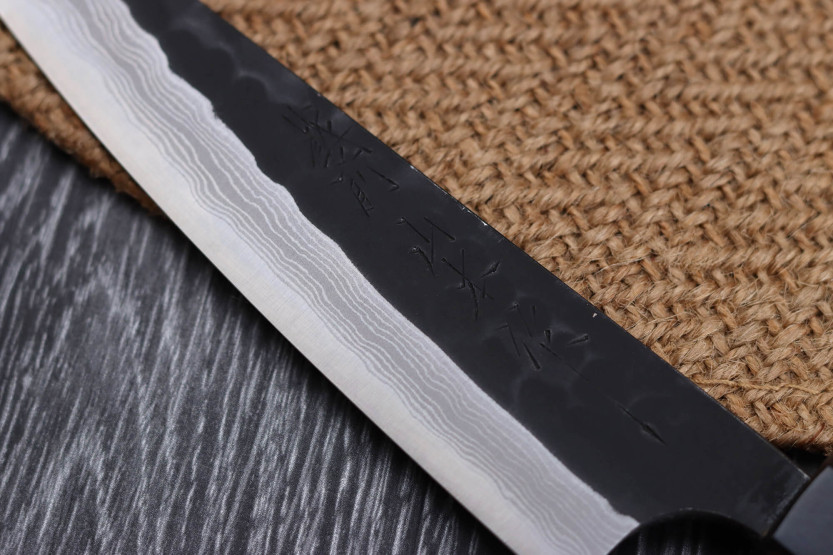
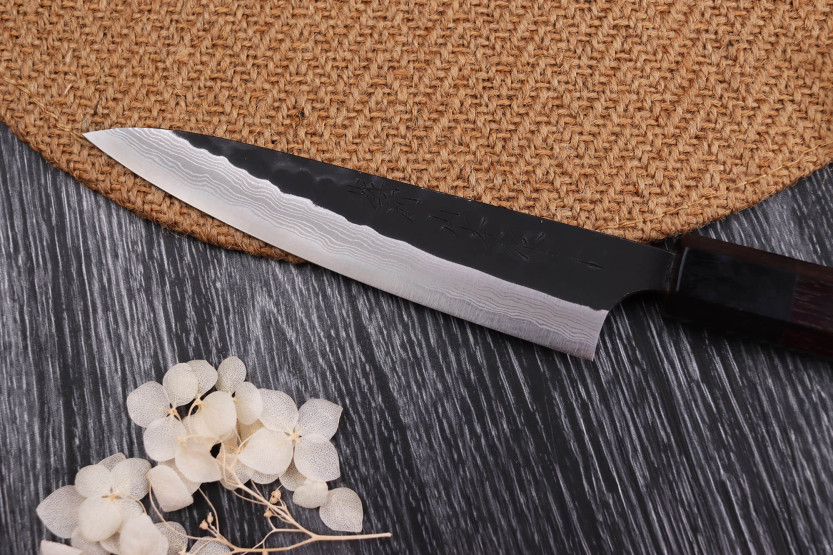
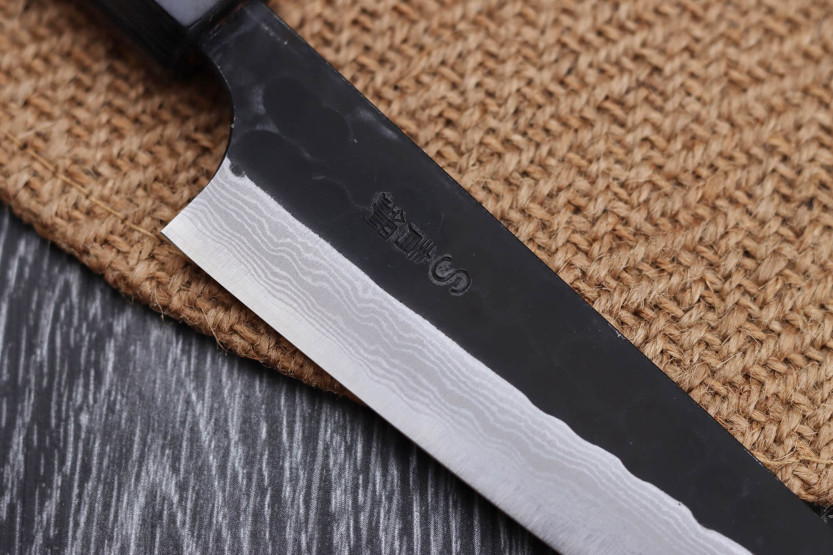
The core is then surrounded by several layers of softer iron to protect it and balance out its high rigidity. You can see the alternating layers of steel on the bottom of the blade, which has an elegant appearance. However, this knife remains oxidizable and requires careful maintenance to prevent corrosion.
The blade also boasts a superb rough-forged finish on the upper part. This traditional finish makes the blade darker and more matte. Japanese chefs appreciate this type of finish for its authenticity.
The blade of this artisan knife has also been superbly hammered. The hammering creates honeycomb-like cavities that add a little more character to the blade. What's more, these dimples act like real ones, preventing food from sticking to the blade.
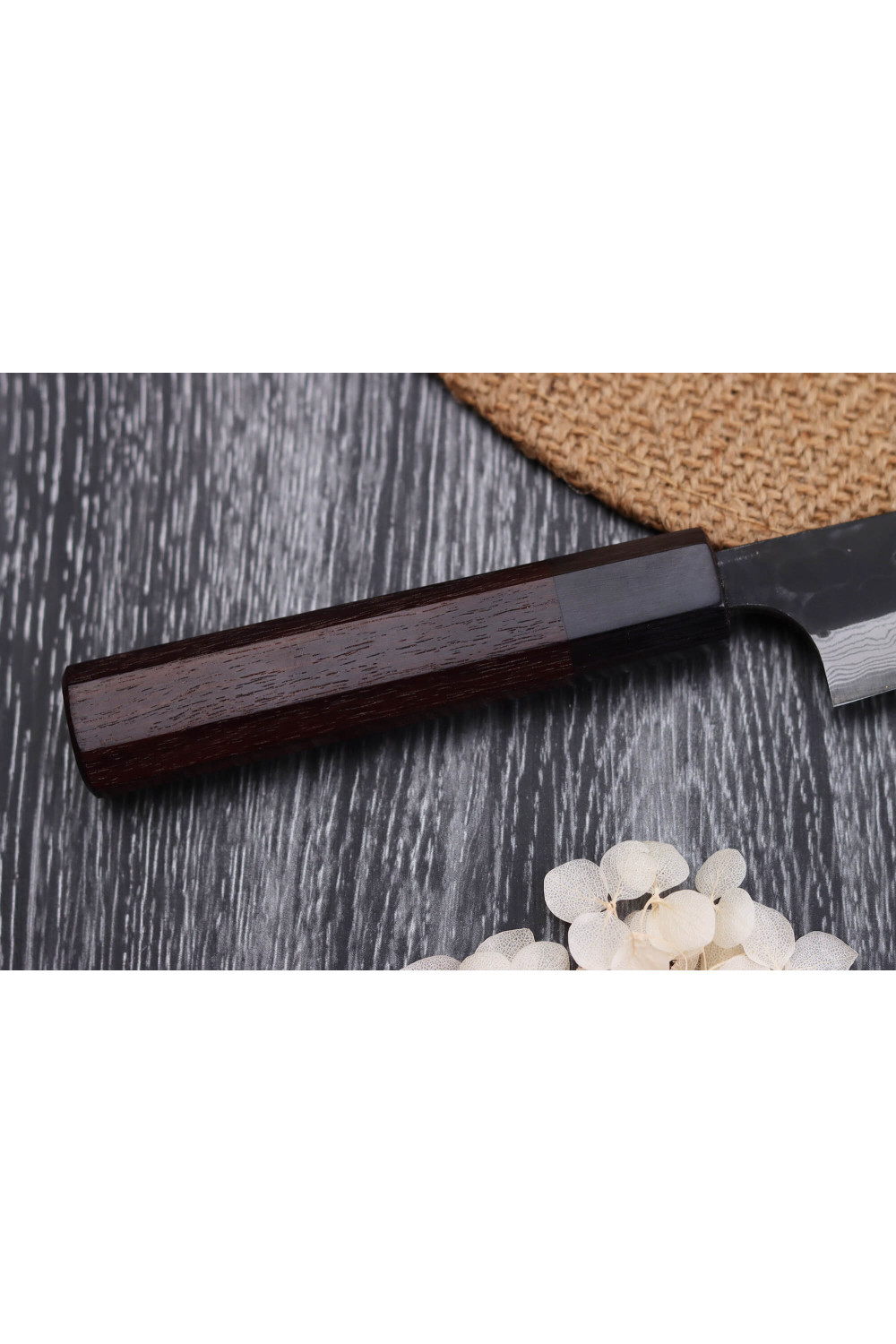
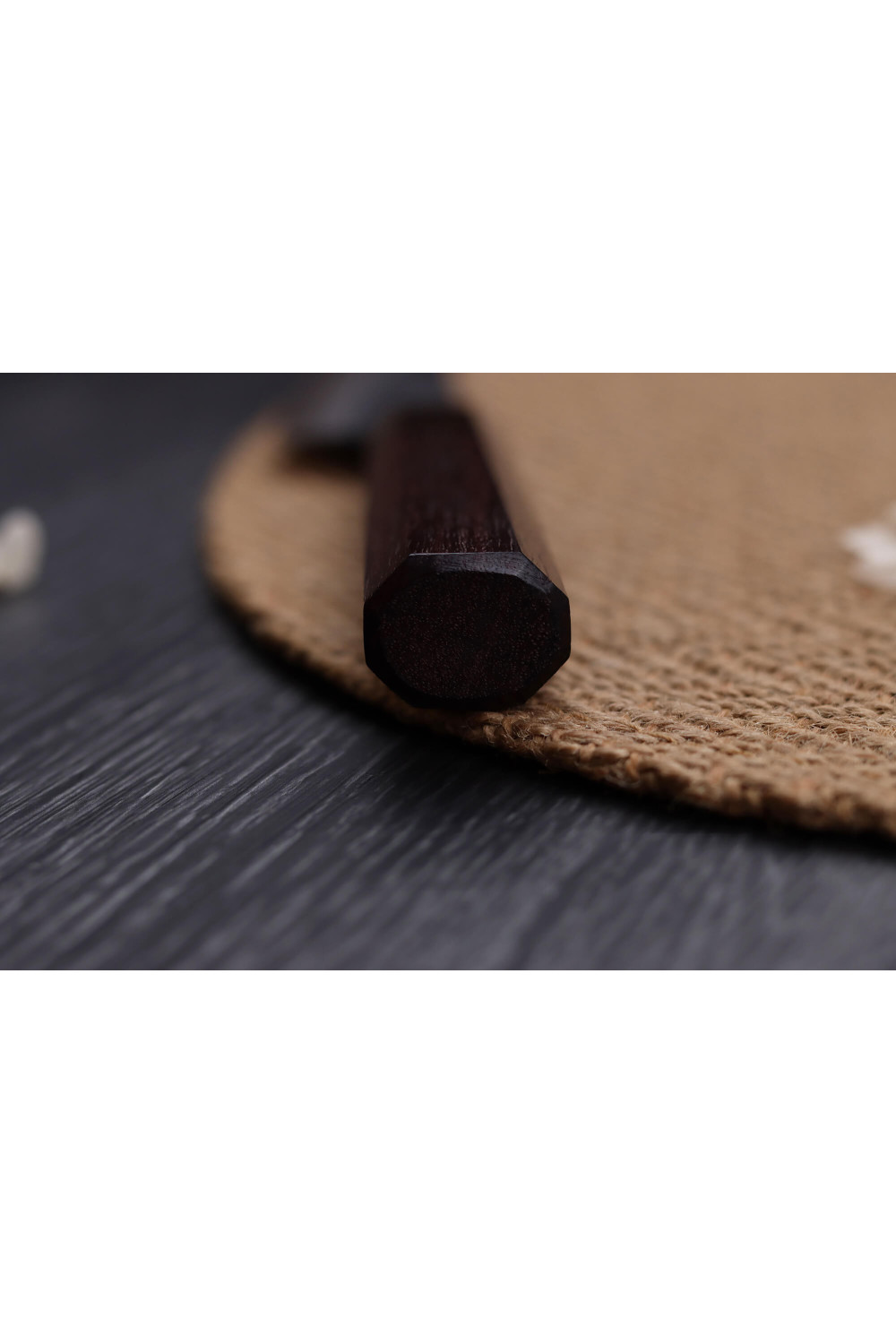
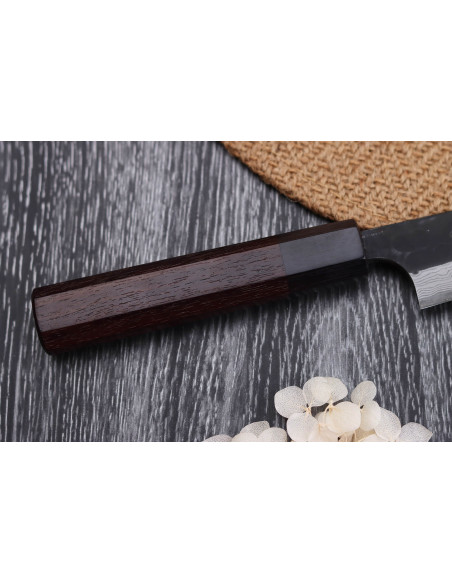
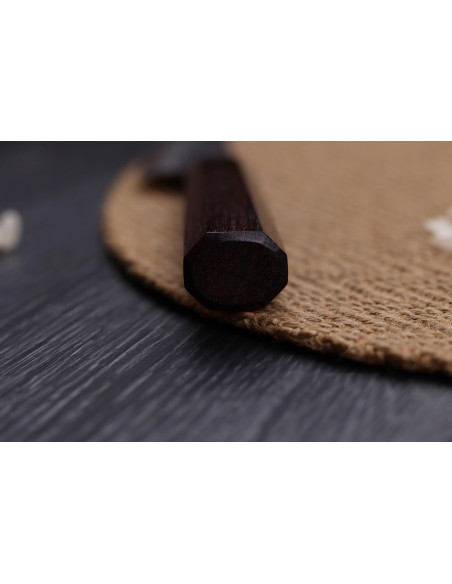
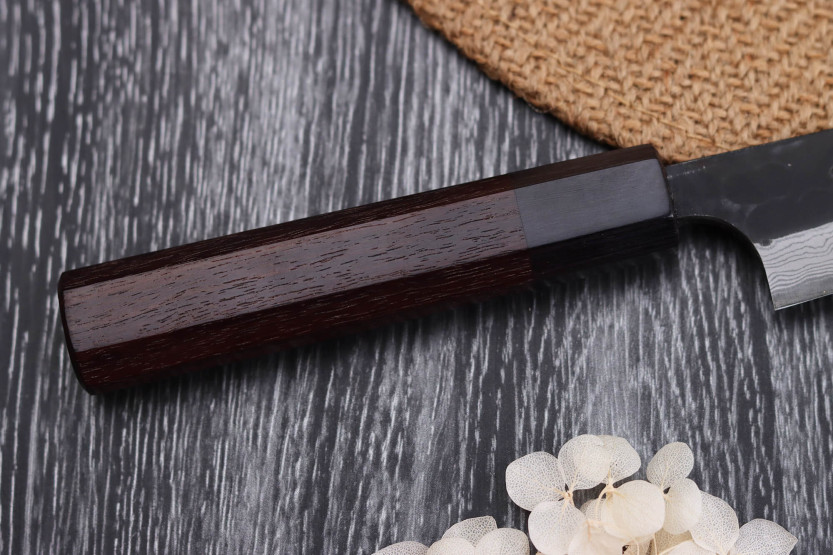
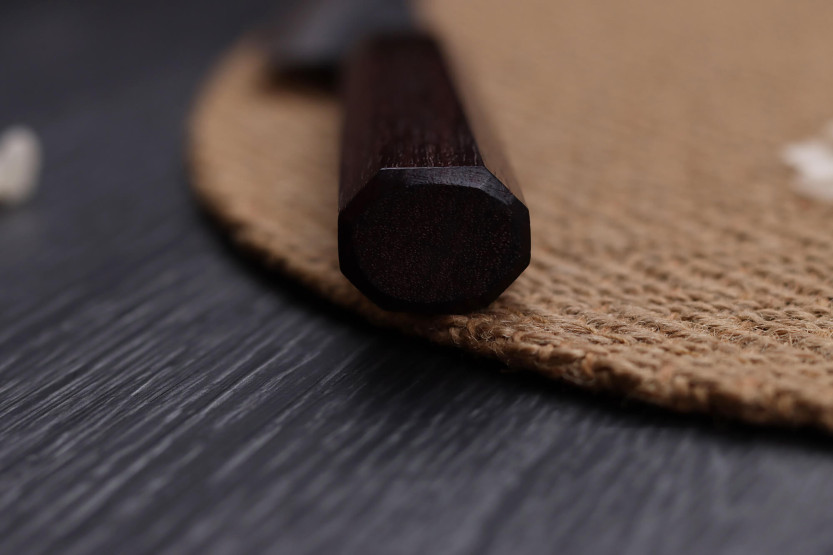
The handle of this all-purpose knife has been crafted from rosewood by Nao Yamamoto. It's a dense species with a deep red-brown hue, and it's hard-wearing. Rosewood is recommended for kitchen use, as it does not warp easily (it is also used in cabinetmaking). Rosewood is octagonal in shape, making it ideal for both left- and right-handed users. It ensures a pleasant grip, even during prolonged use.
A black pakka wood bolster is located between the handle and the blade. Pakkawood is a composite material made from laminated wood hardened with hot resin.
Finally, wood pulp fills the space where the blade fits into the handle to prevent water or small food items from getting inside.
Taking good care of my carbon knife
This handcrafted Japanese knife should be washed by hand using a non-abrasive sponge and mild soap. Don't put it in the dishwasher or soak it in the sink. Avoid getting the handle wet, and dry the knife immediately and thoroughly after washing.
Knives contain a high carbon content and are therefore considered oxidizable. That's why it's so important to store it free of all traces of moisture. Note also that over time, the blade may change color: this is perfectly normal! This is a natural reaction of Aogami steel to elements such as the acidity of certain foods or humidity in the air.
Learn more about Japanese blacksmithing
Nao Yamamoto is a Japanese blacksmith born in 1979. He was a disciple of the late, great Masami Azai, who taught him traditional Echizen forging techniques. Nao Yamamoto's knives are appreciated for their tradition, simplicity and functionality. The blacksmith puts himself in the user's shoes to create ergonomic models that will accompany you over the long term. In 2020, he was certified Master Traditional Craftsman by the Ministry of Commerce. It's a prestigious distinction, despite his young age, and a testament to Nao Yamamoto's expertise. He is in such demand that it can take up to 3 years to produce his knives!
Nao san masters the Nimai-Hiroge technique, emblematic of the Echizen region. This explains why the blade is thicker at the top than other Japanese knives: when the blacksmith uses this technique, he has to forge two blades at the same time, hence the thickness. This allows for less rapid heat loss, which preserves all the properties of the carbon present in the alloy. Nao san then refines the double thickness at the cutting edge to deliver a razor-sharp edge.
Discover all Nao Yamamoto knives on KnifeLeader.eu!




 By buying this product you can collect up to