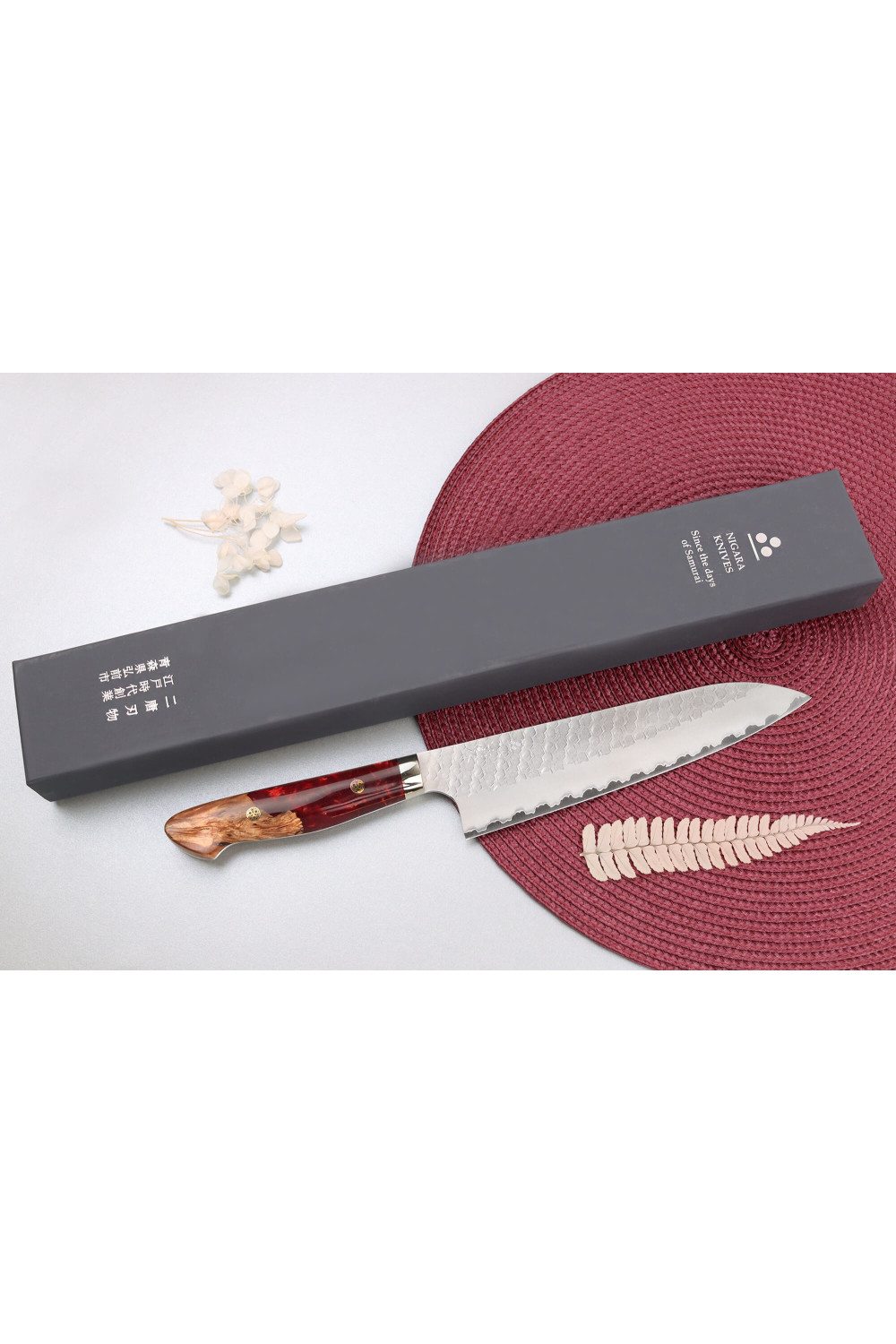
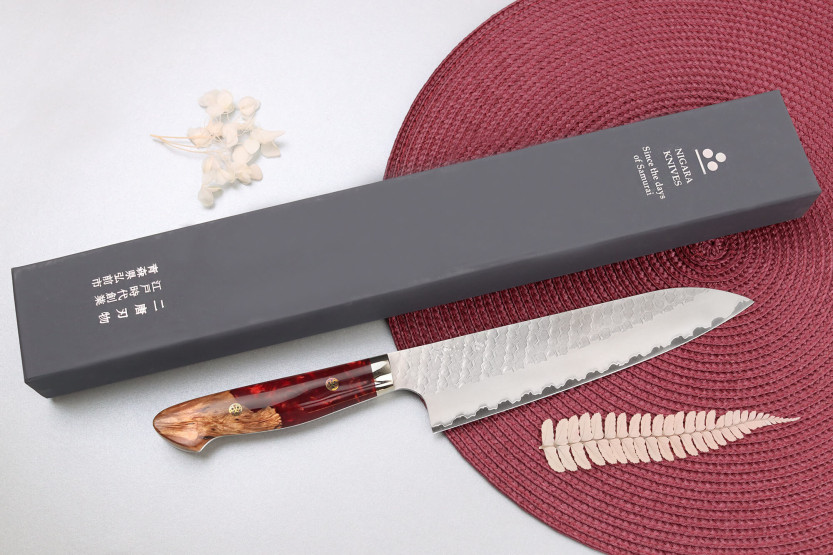
Nigara Hamono is a forge that has been in existence for almost 350 years in Japan! Originally, it produced swords for the Samurai during the Edo feudal era. This long-standing know-how has been passed down from generation to generation, right up to the present day. It is now the 8ᵉ generation of the Yoshizawa family that has taken over the running of the forge.
Proud of its history, it continues to use traditional forging techniques, while working with craftsmen with authentic know-how. Located in Hirosaki, northern Japan, Nigara Cutlery manufactures a variety of handcrafted knives: from traditional-style Japanese knives to original designs!
An elegant blade with hammered patterns
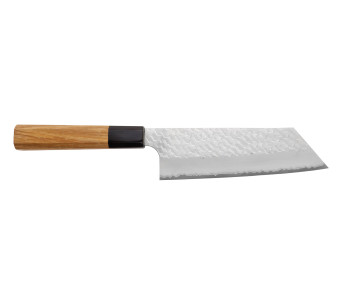
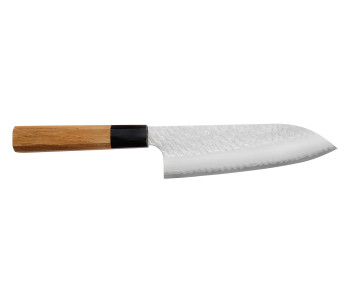
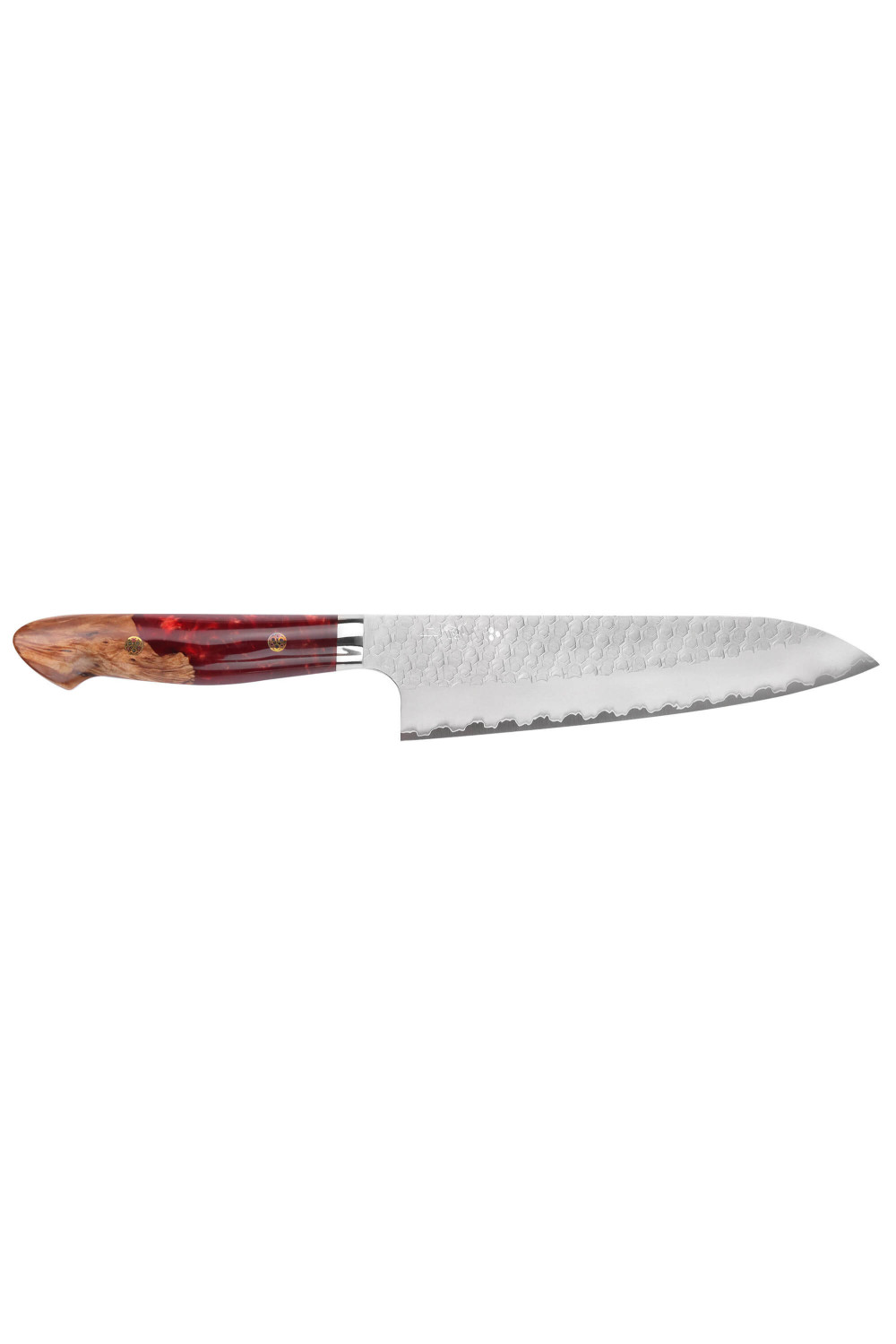
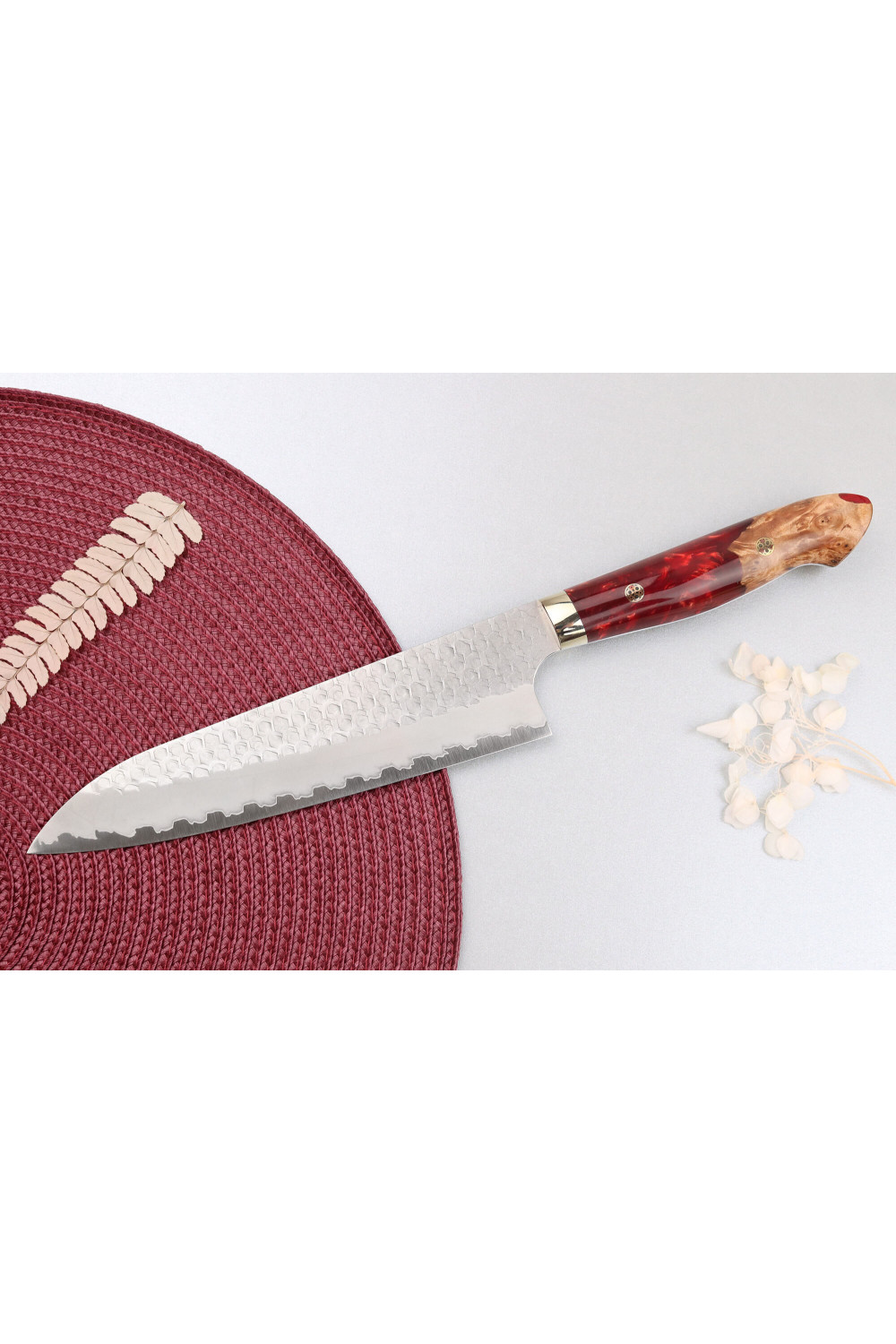
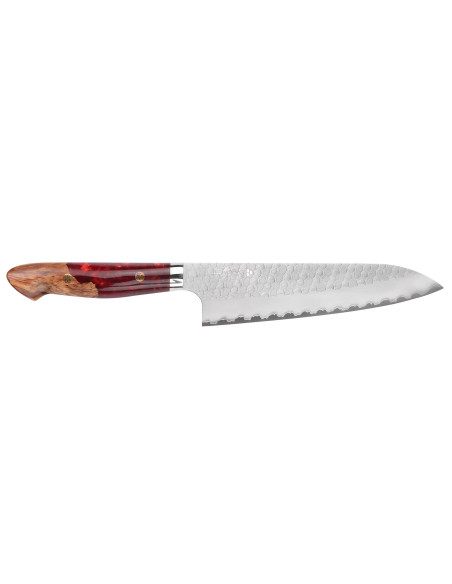
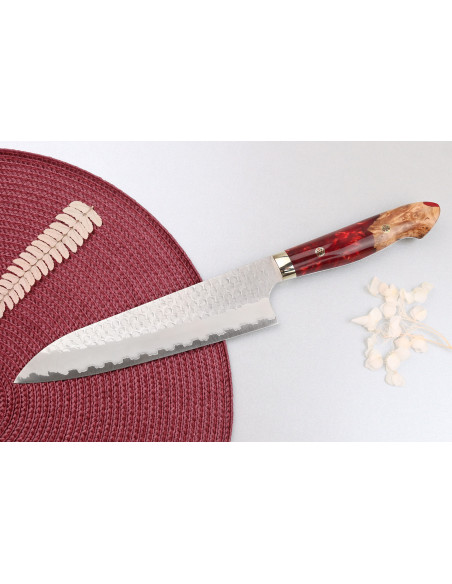
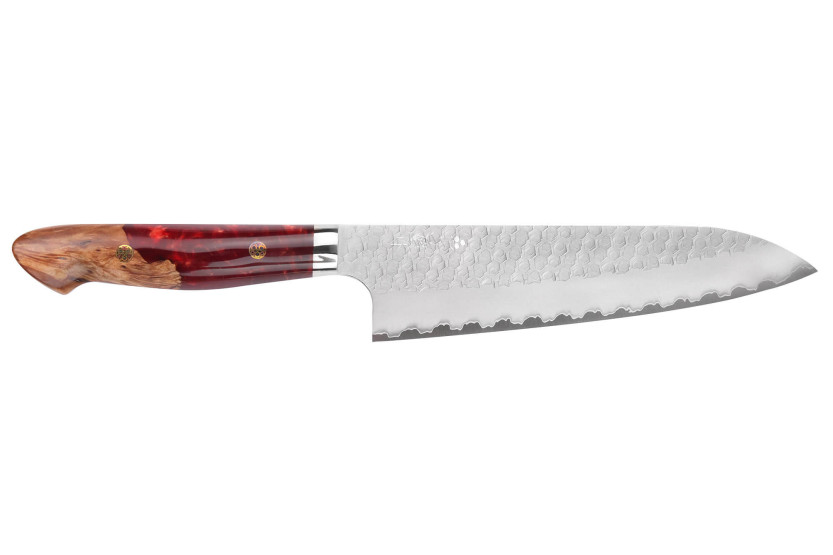
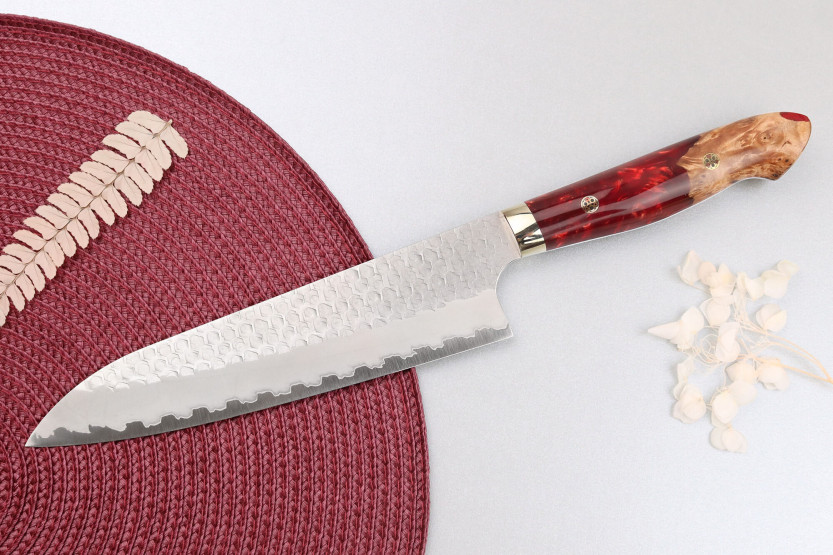
This chef's knife features a blade with a typically Japanese San Maï (meaning "3 layers") structure. This involves forging a core of hard steel, which is then surrounded by a layer of softer steel that folds in on itself to form the remaining layers. This process balances the hardness of your blade, while protecting its core!
The core of this blade is made from Japanese SG2 powder-metallurgy steel, an alloy produced by the renowned Takefu Special Steel. With a high carbon content of around 1.3%, this steel is extremely hard. The higher the hardness, the more efficient the cutting edge of your knife. For example, this gyuto knife has a hardness of 63HRC on the Rockwell scale, guaranteeing a long-lasting, high-performance cutting edge.
SG2 steel also contains around 15% chromium, an element that makes it more resistant to corrosion. However, your Japanese kitchen knife remains oxidizable and requires careful maintenance to avoid corrosion.
SG2 is also a real advantage in terms of its micro-structure! Indeed, its composition is said to be "pure" because the micro-carbides present on its surface are evenly distributed. This means greater resistance to wear and micro-cracking.
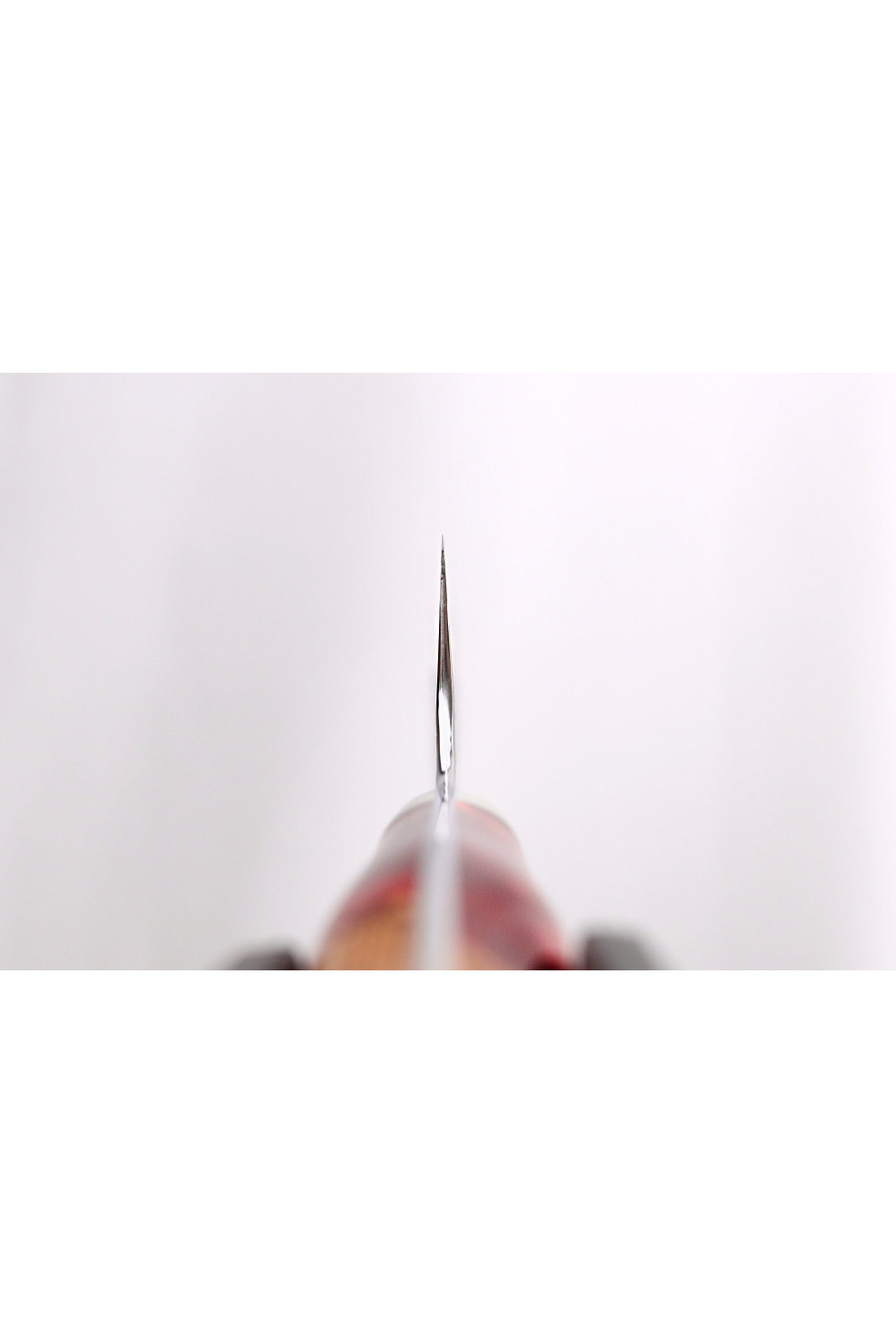
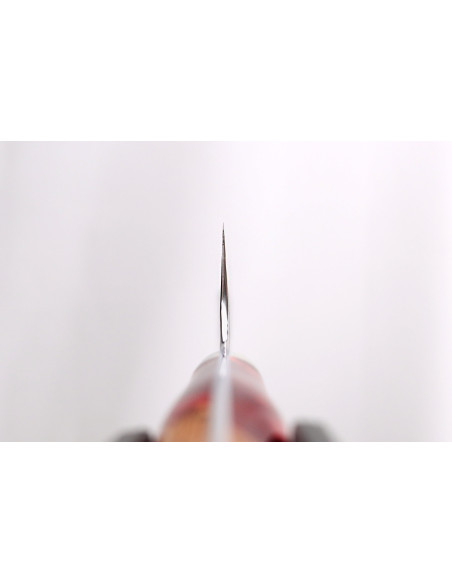
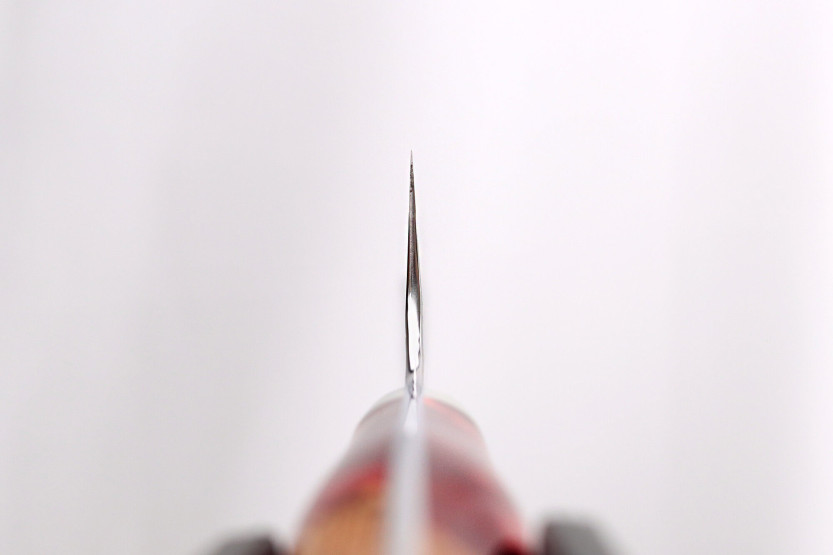
Thecutting edge of your blade is flat, giving it a very fine edge for a razor-sharp finish! In general, a flat edge has a neat appearance that's relatively easy to reproduce and very robust.
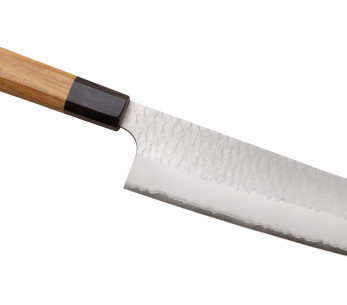
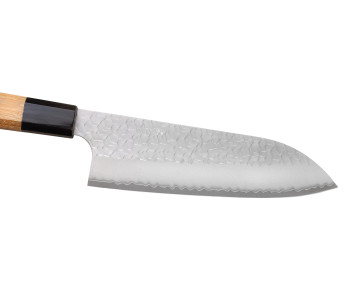
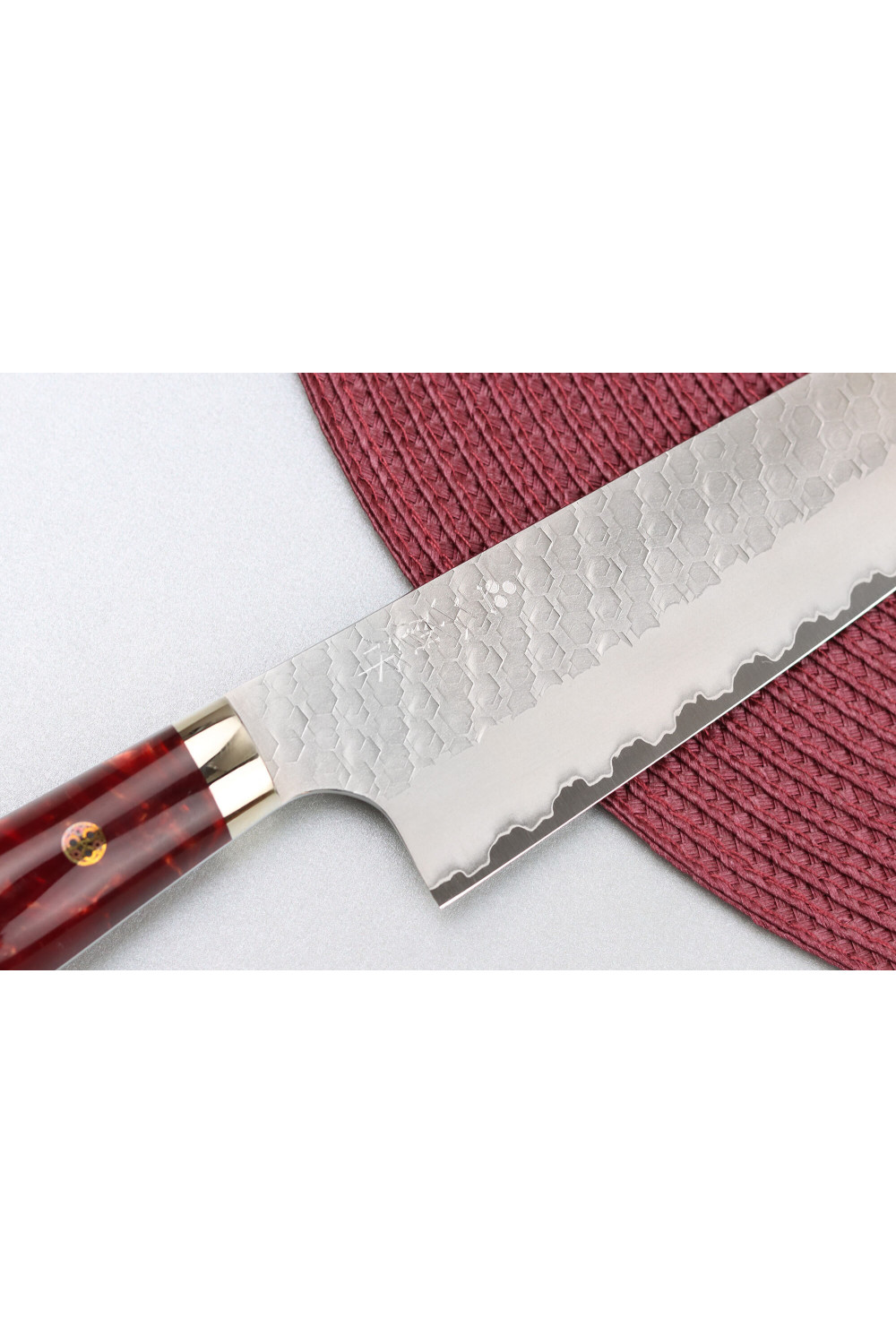
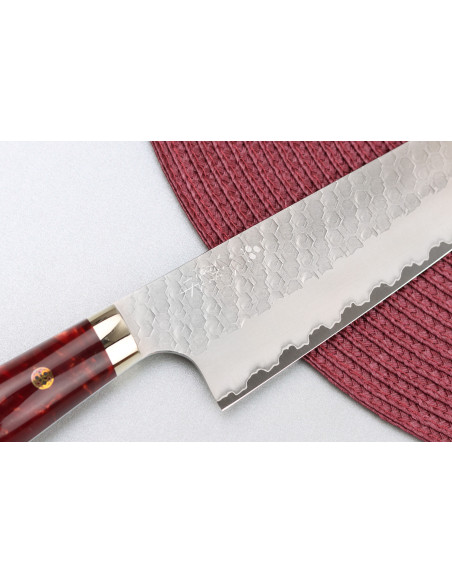
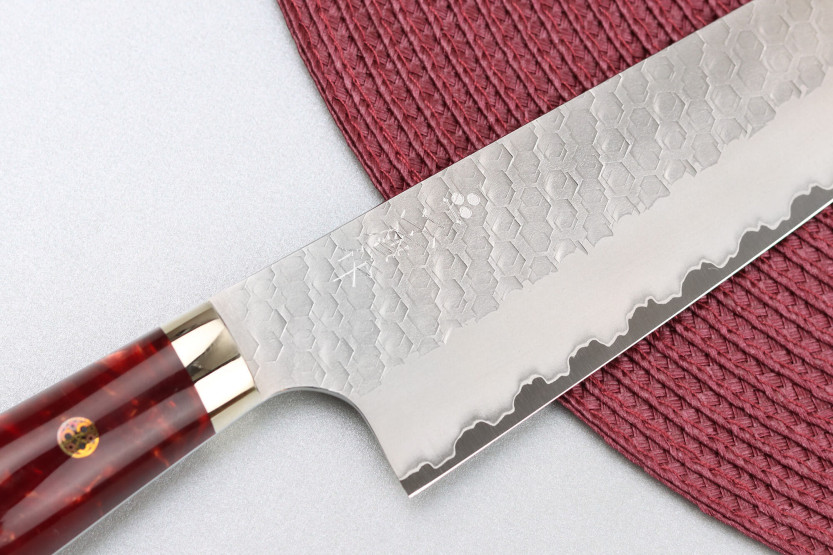
Finally, a softer layer of stainless steel wraps around the core to make it more supple (but not flexible), reducing the risk of breakage during use. The San Maï is also visually very elegant, as you can see a fine wave running along the edge: this is formed by the superposition of the different steels.
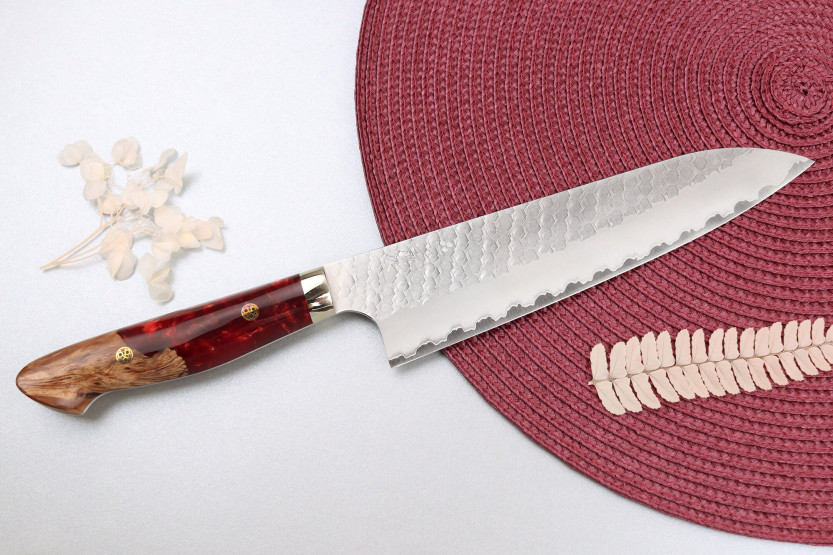
For an added touch of refinement, the surface of this blade has been polished (knownas "Migaki"). It also features original hammering (called"Tsuchime") in the shape of a hexagon, an unusual motif in handcrafted cutlery! Finally, kanji have been hand-engraved by the Japanese blacksmith to give an authentic character to your Japanese chef's knife.
An original handle for this Japanese kitchen knife
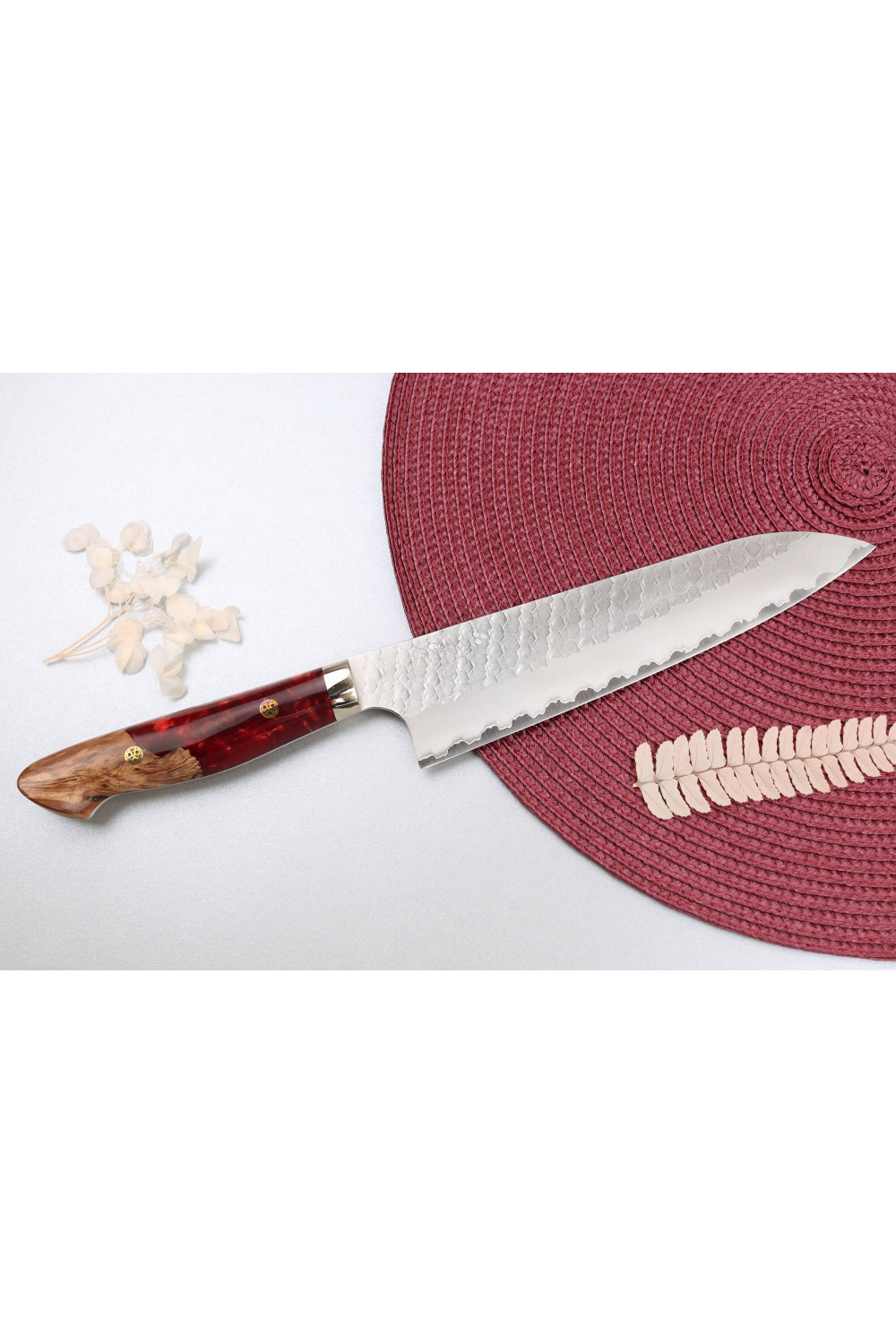
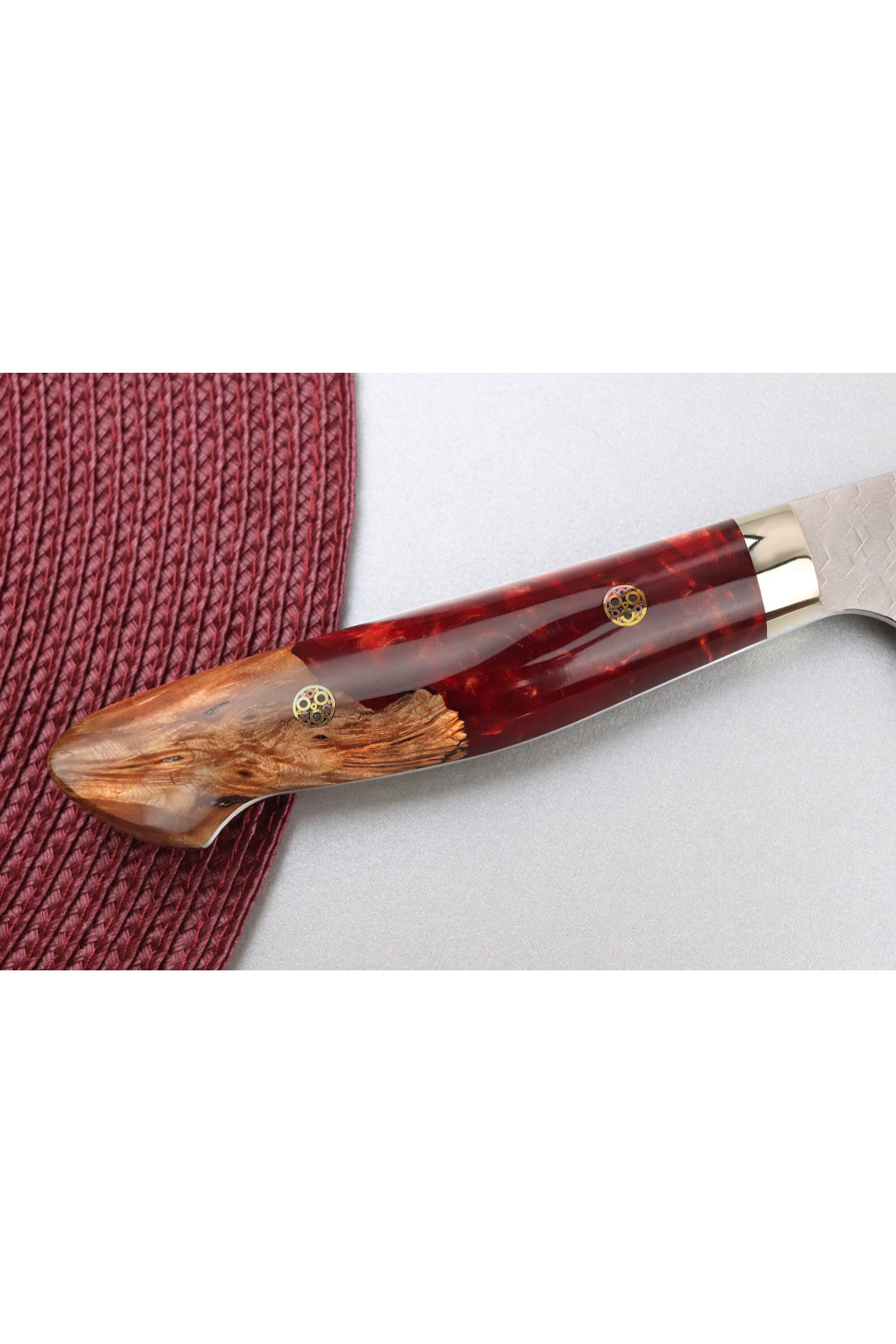
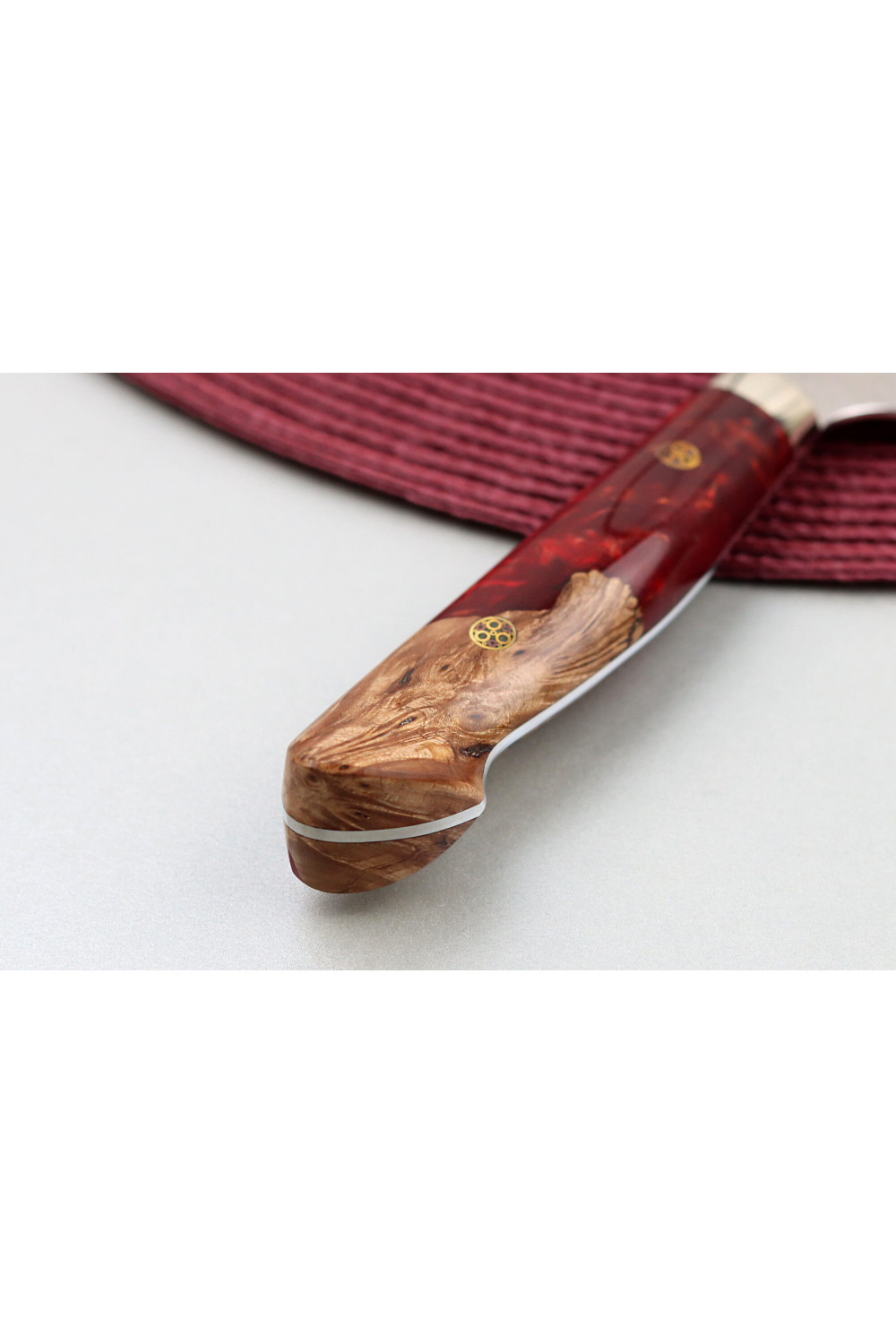
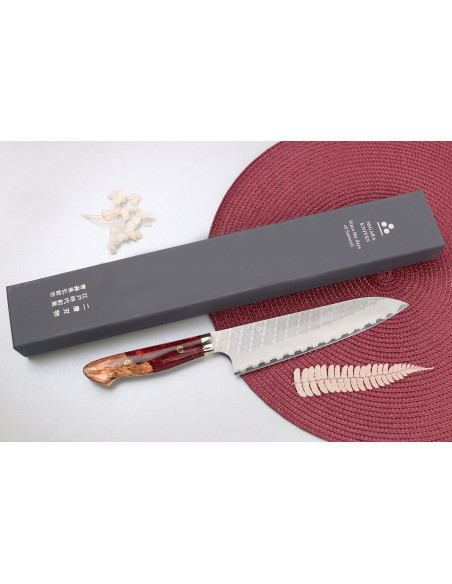
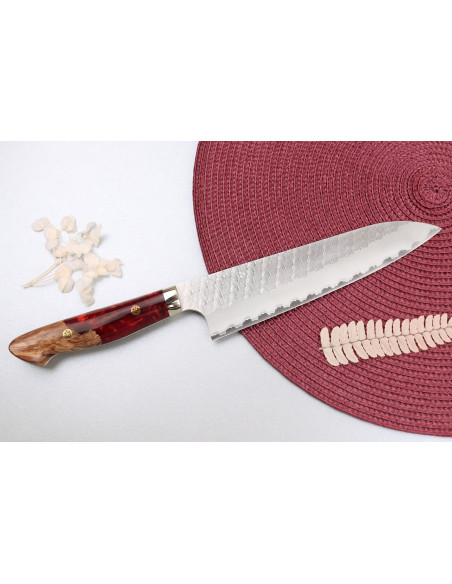
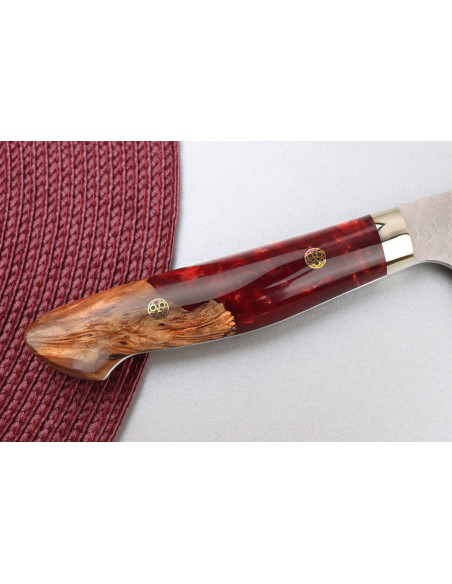
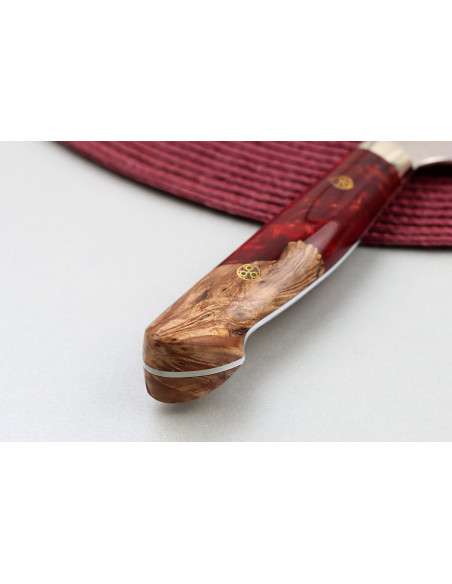
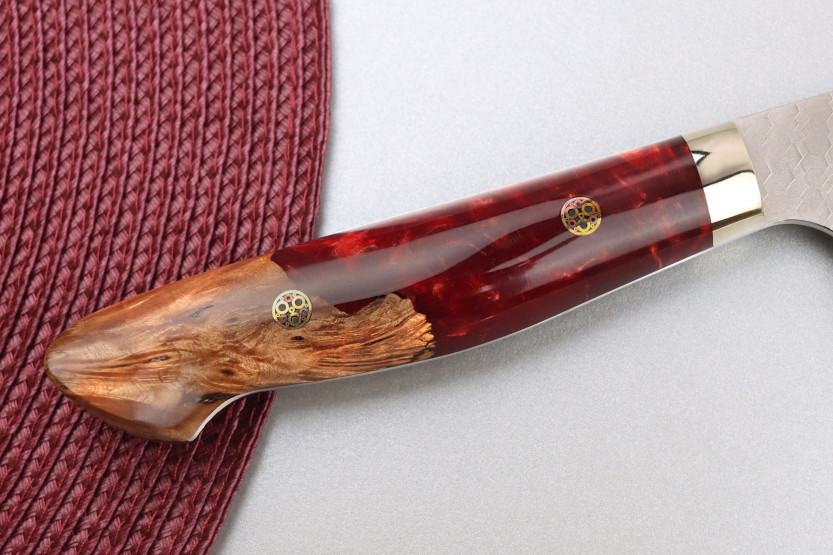
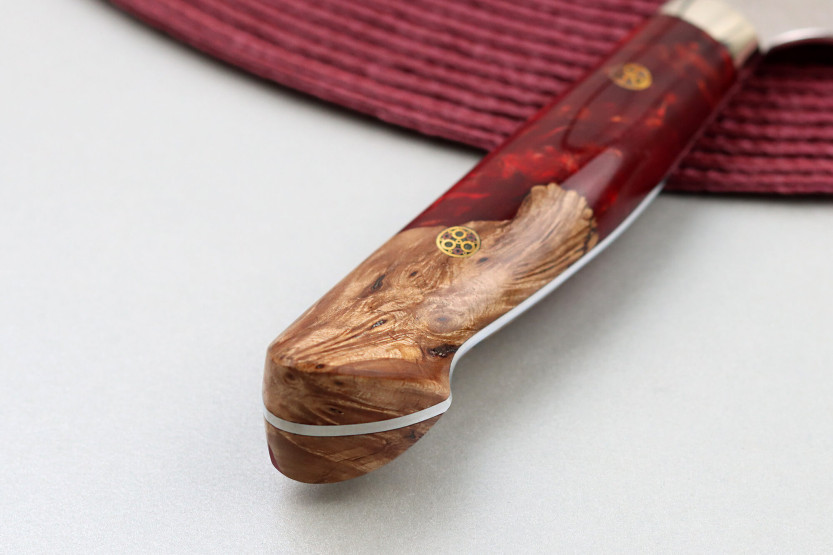
The handle of this handcrafted Japanese knife is highly original! It's made from red acrylic and solidified wood, an innovative mix of materials that blends elegantly. These are strong, durable materials that are resistant to moisture and impact.
With its Western shape, this handle adapts to the hands of all cooks, whether left- or right-handed! It offers an ergonomic grip for optimum comfort of use, especially during prolonged use in the kitchen.
A gilded stainless steel bolster has been added where the blade joins the handle to ensure better balance for your Nigara knife. In addition, 2 mosaic rivets secure the handle to your full tang blade for greater reliability.
To care for your SG2 knife, wash only by hand with a sponge and mild detergent. Once cleaned, dry it immediately to remove all traces of moisture and store it in a dry place. Do not put in the dishwasher or leave to soak in the sink.
Find other Nigara Japanese knives on Knifeleader.eu!


 By buying this product you can collect up to