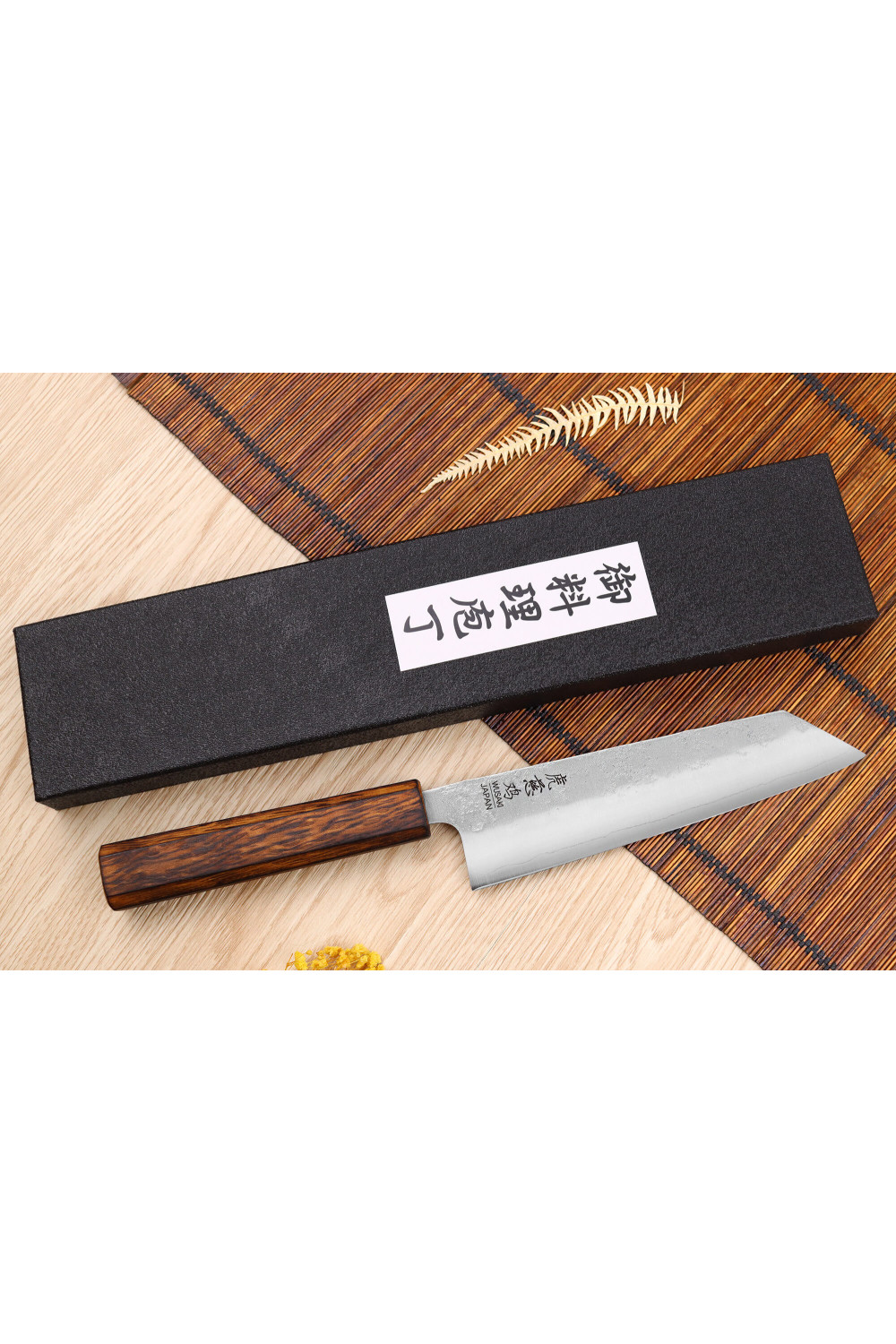
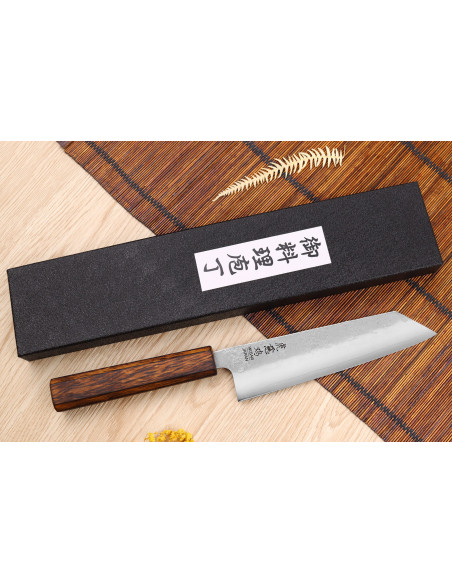
Wusaki Yoshi kitchen knives are made by the Japanese forge Tsunehisa, a small team of highly skilled cutlery experts!
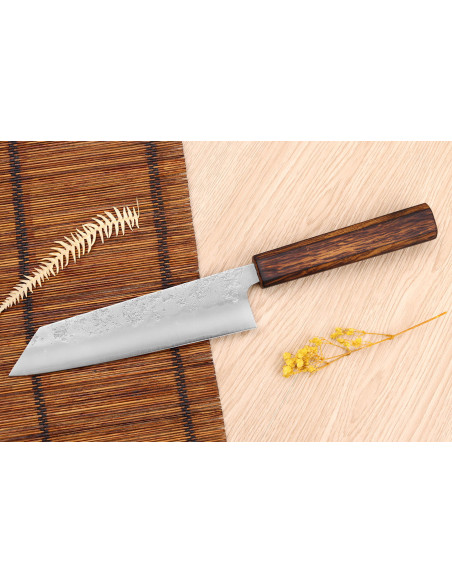
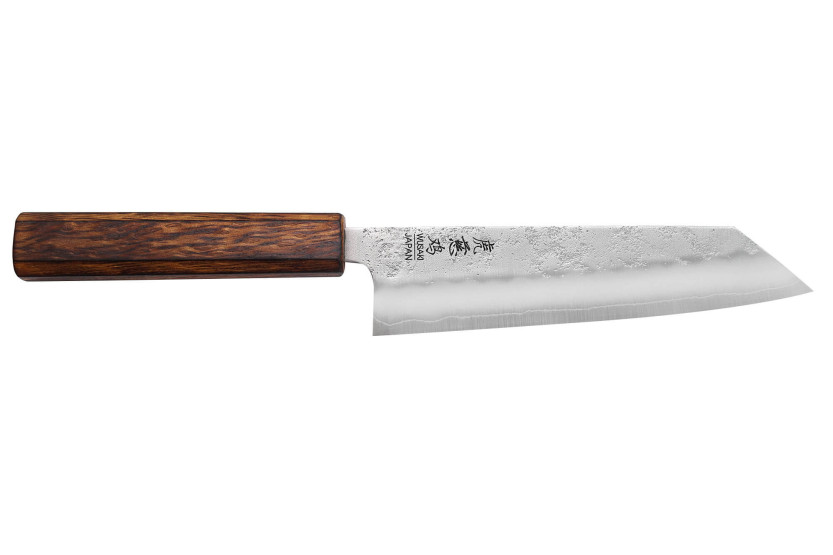
A Wusaki Japanese knife with an elegant blade
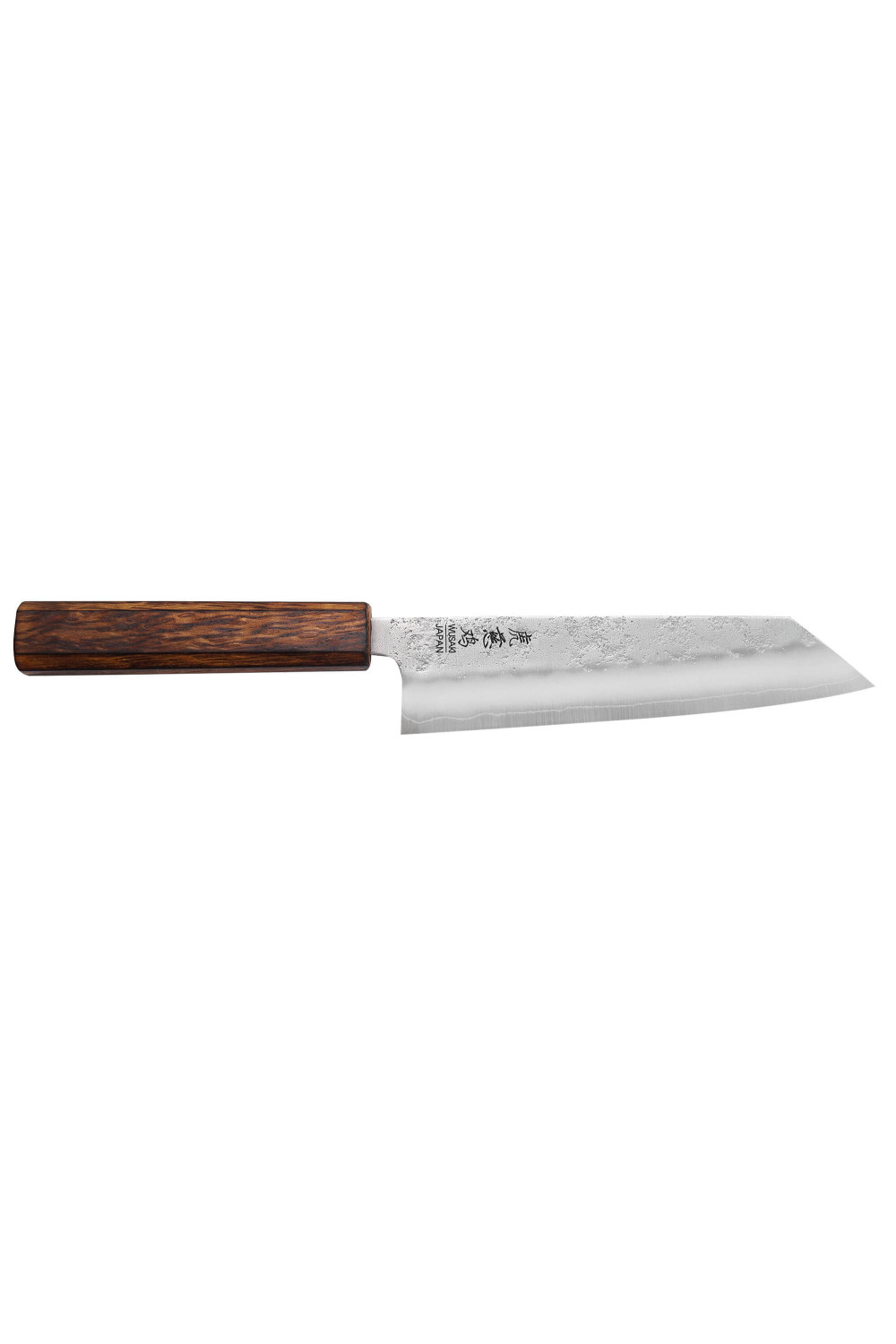
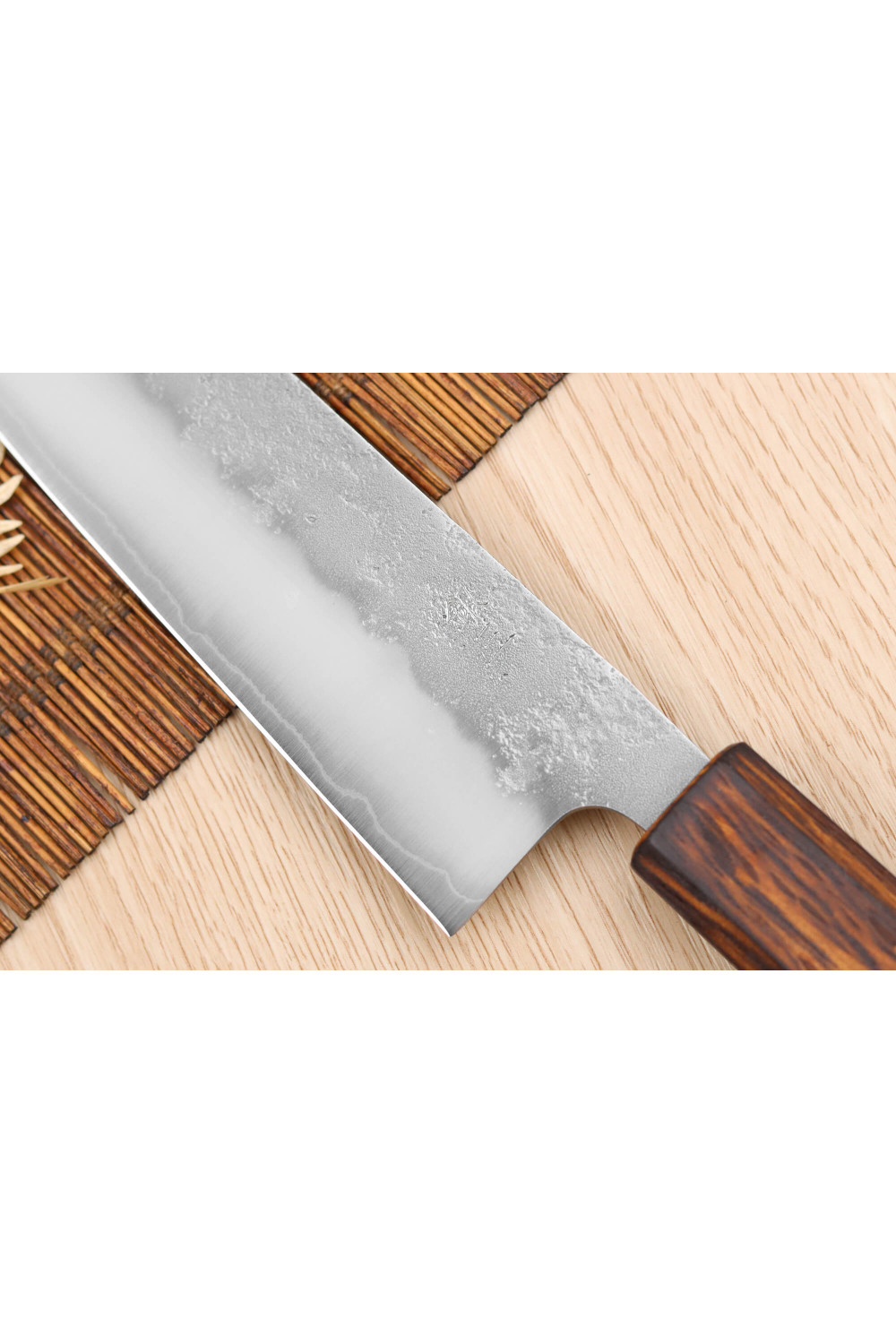
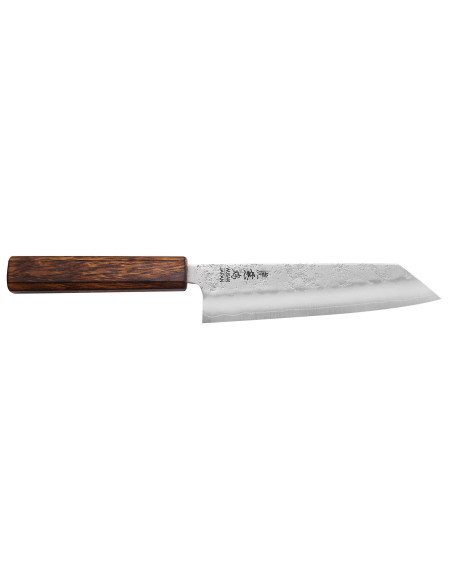
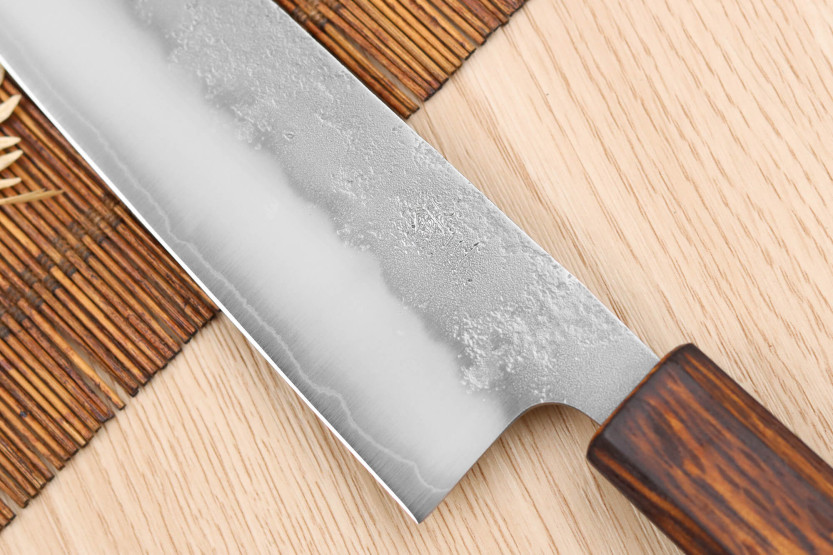
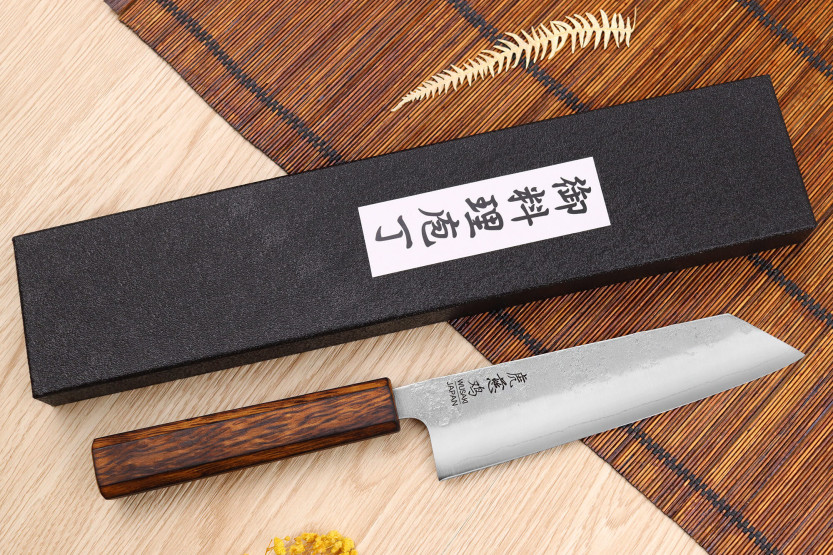
This bunka knife features a San Mai blade construction, based on 3 superimposed layers of steel. The core is made of Ginsan steel: this Japanese alloy contains 0.95% carbon, to make the wire harder and more rigid, and thus hold its edge better over time. The chromium content is also increased to make it more resistant to corrosion. These are real assets in the kitchen!
Your blade reaches a hardness of 59/60 HRC on the Rockwell scale. So you can easily sharpen it with a whetstone when the need arises.
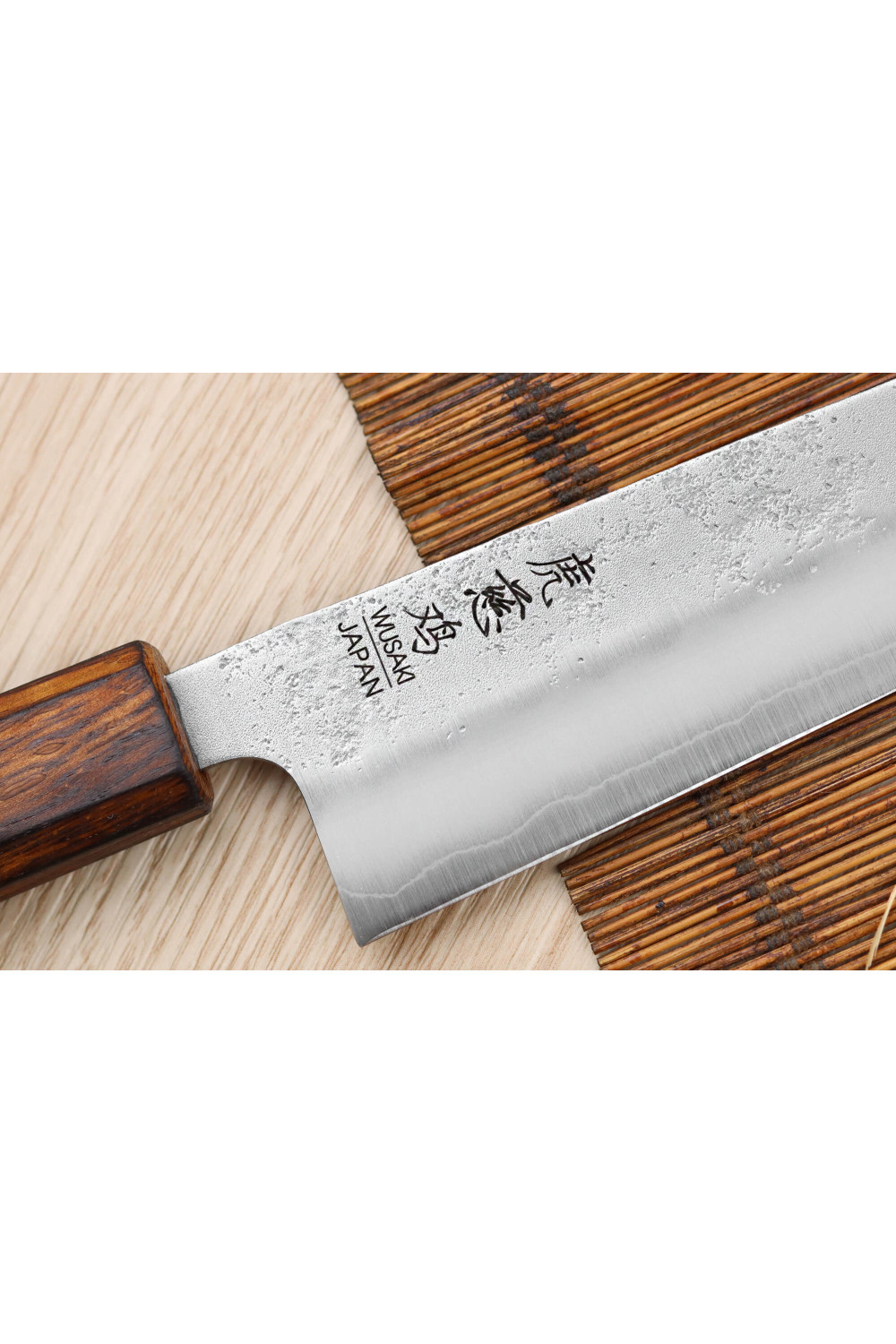
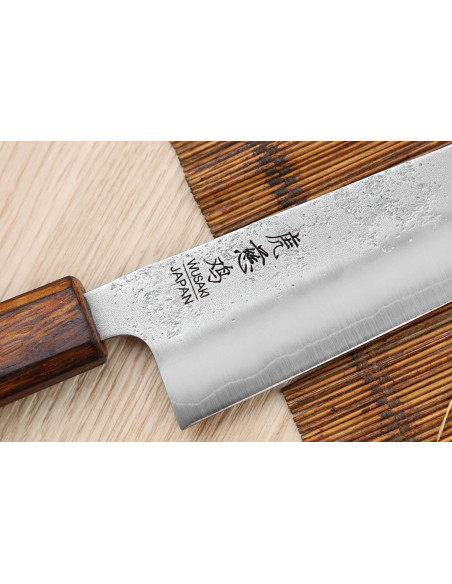
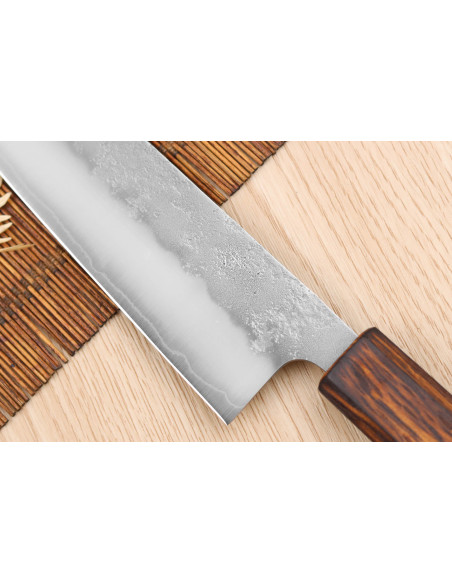
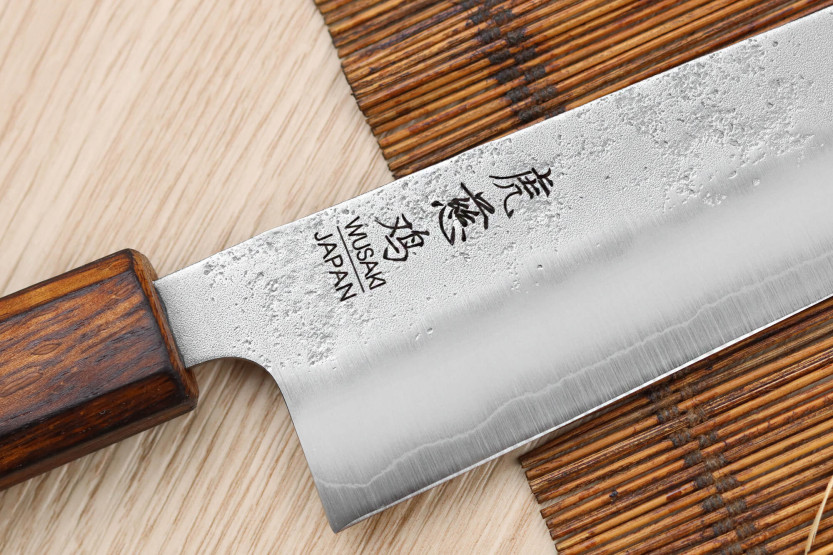
Next, the Ginsan core is covered by a layer of stainless steel that sandwiches it (hence the 3 layers counted). This protects it and makes the alloy more flexible, so that it's less brittle when you're cutting. You can see how the different steels alternate near the cutting edge: a small wave with a unique pattern!
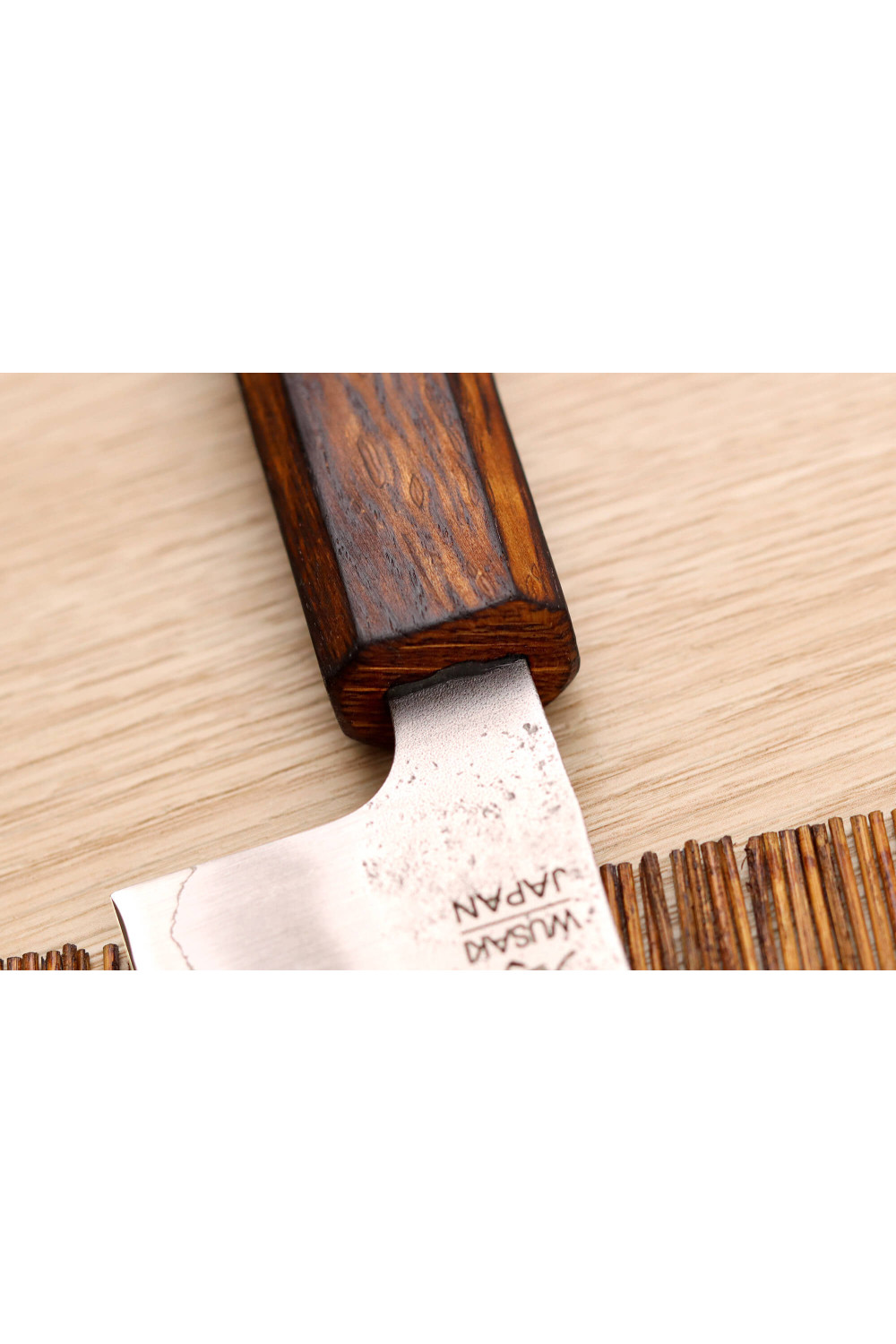
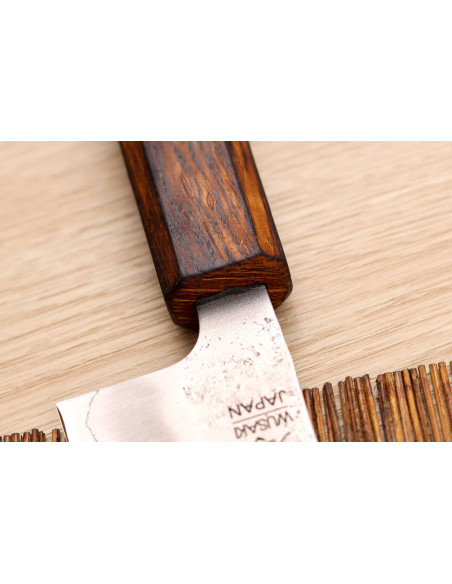
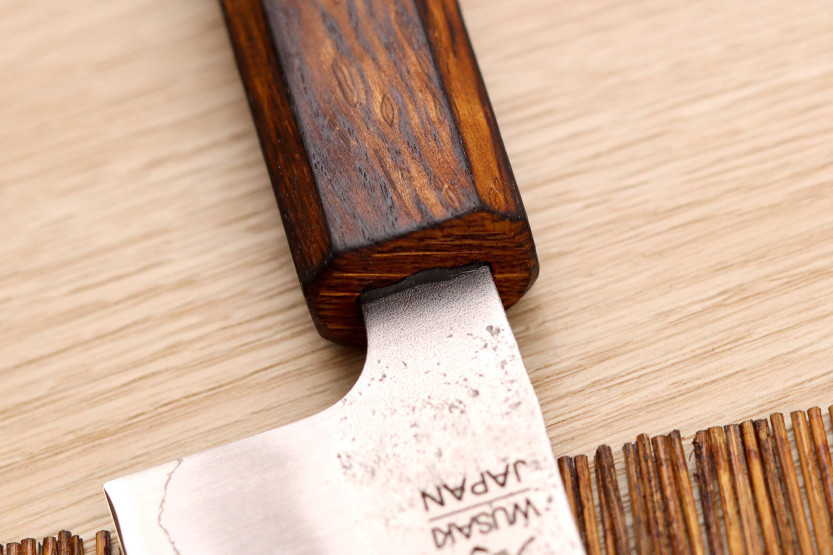
For even greater authenticity, the Wusaki logo adorns the blade and kanji are engraved on the back.
Finally, the knife has been delicately hammered. The knife's cutting surface has been delicately hammered to create a beautiful, staggered pattern, as if drops of water had splashed onto it.
The quality wooden handle for this Japanese kitchen knife
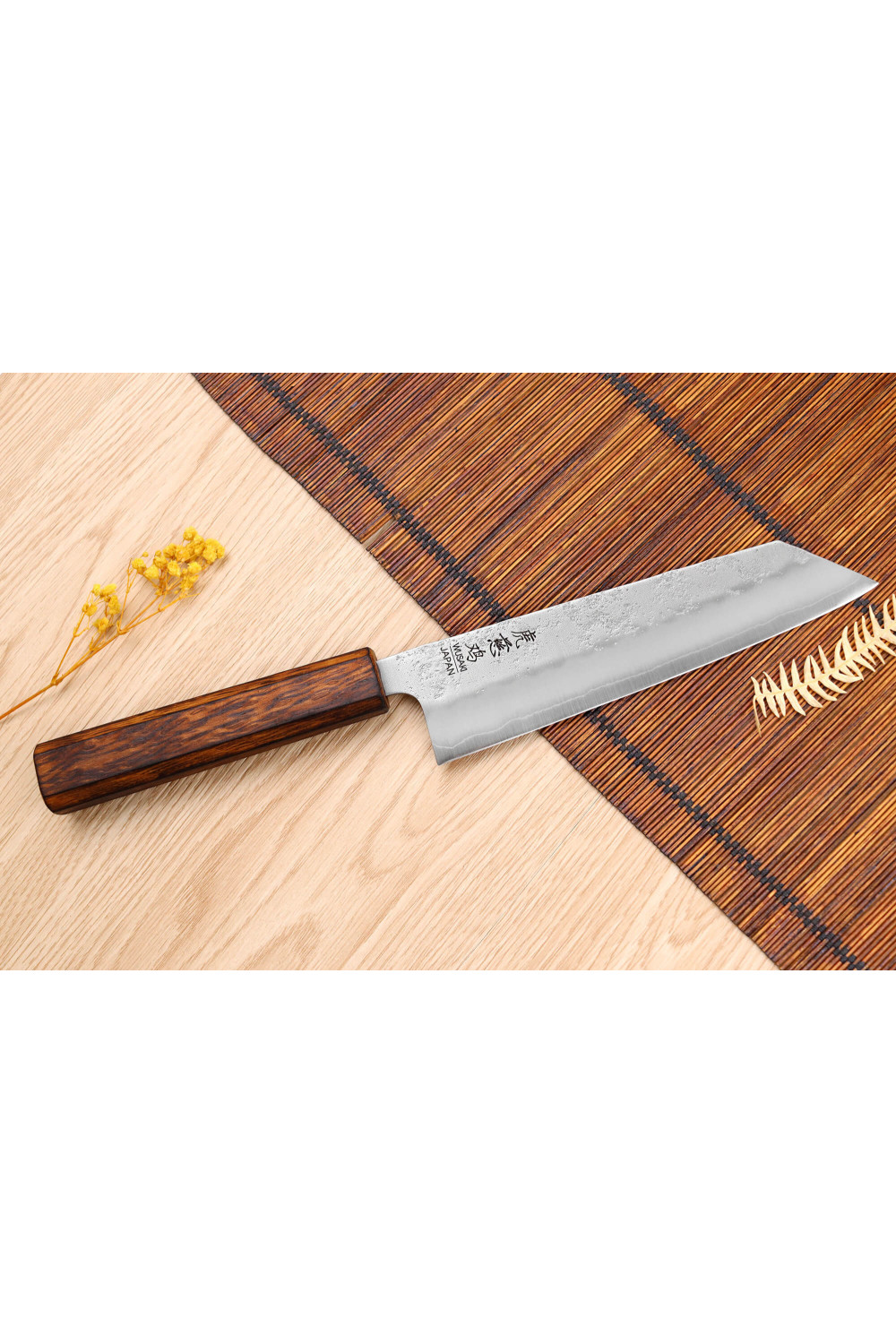
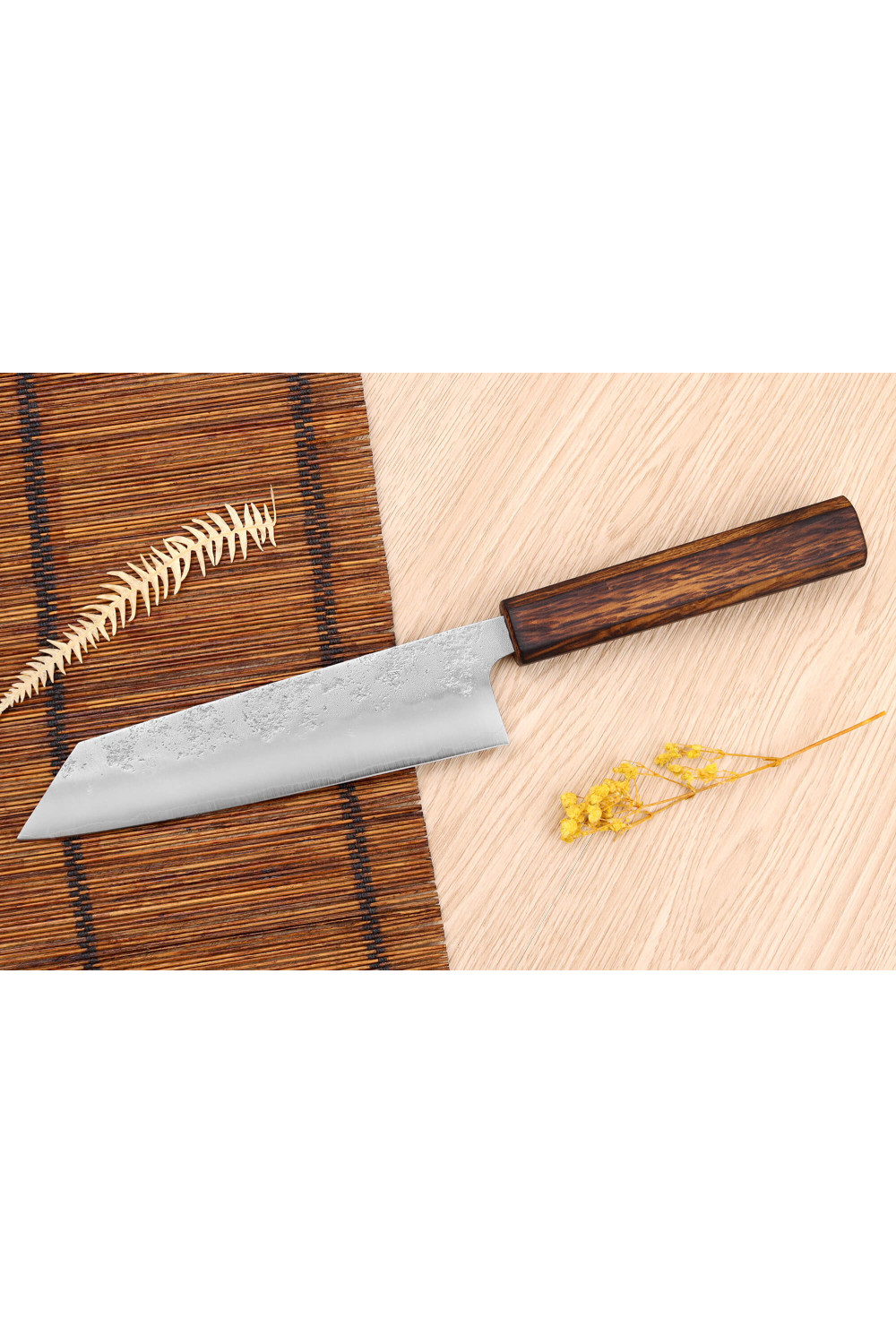
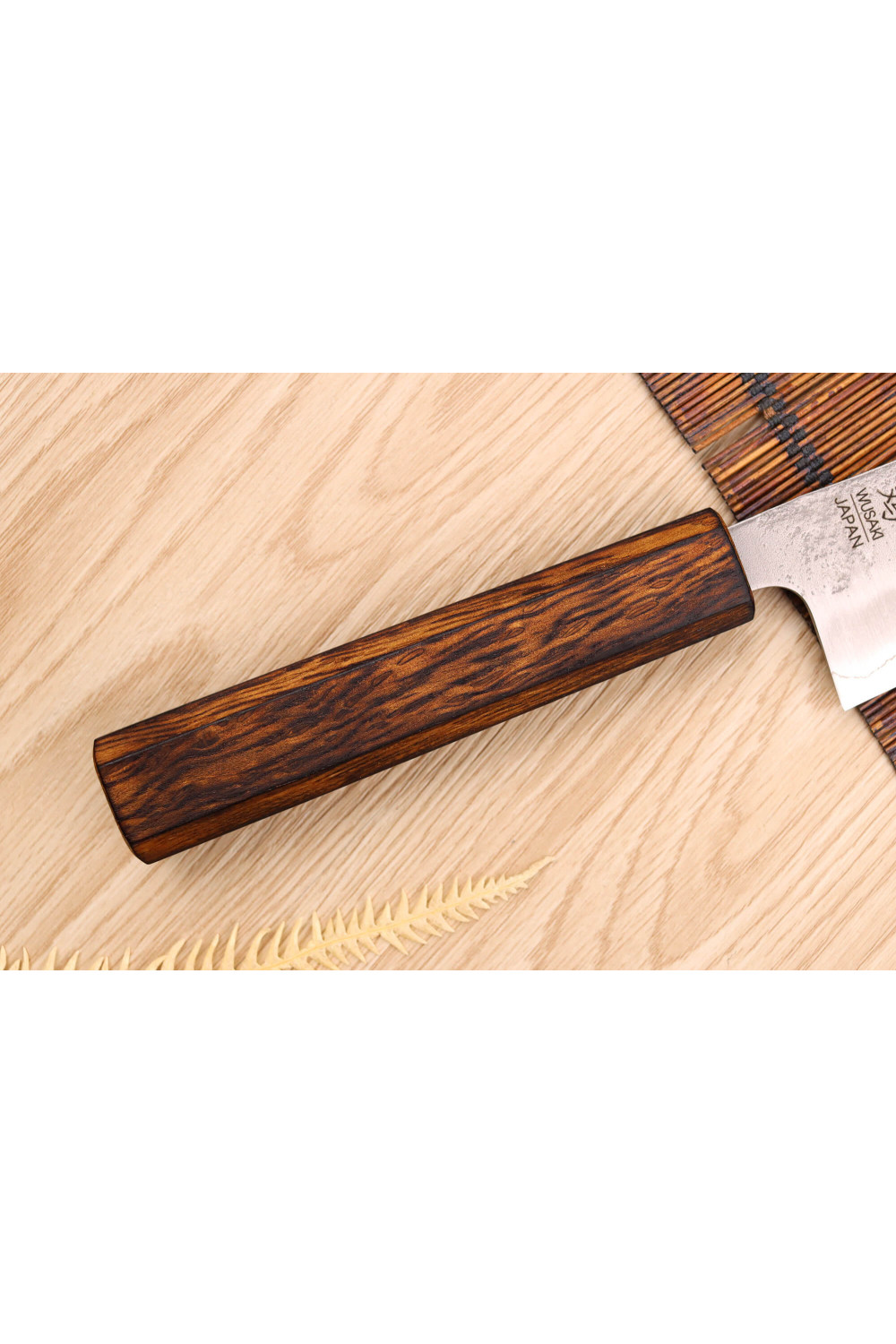
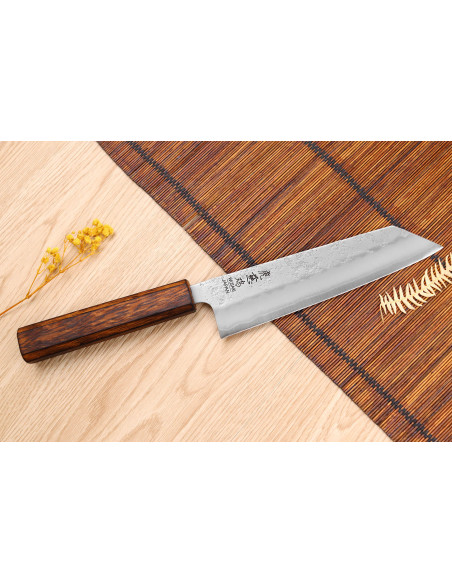
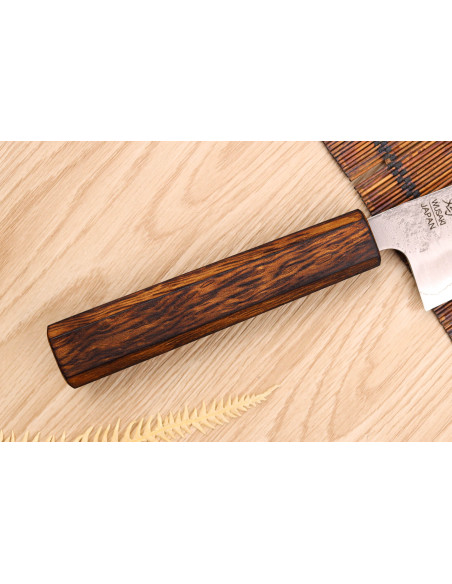
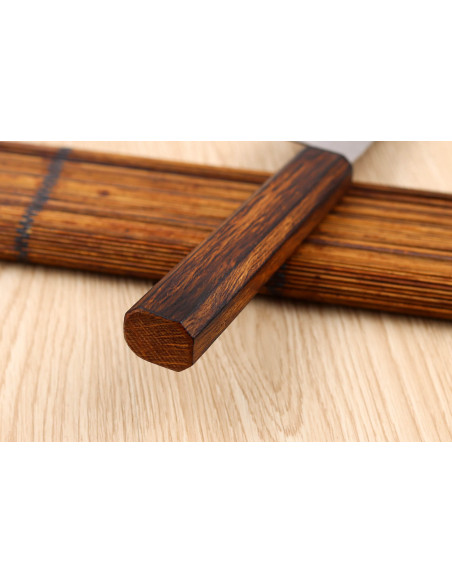
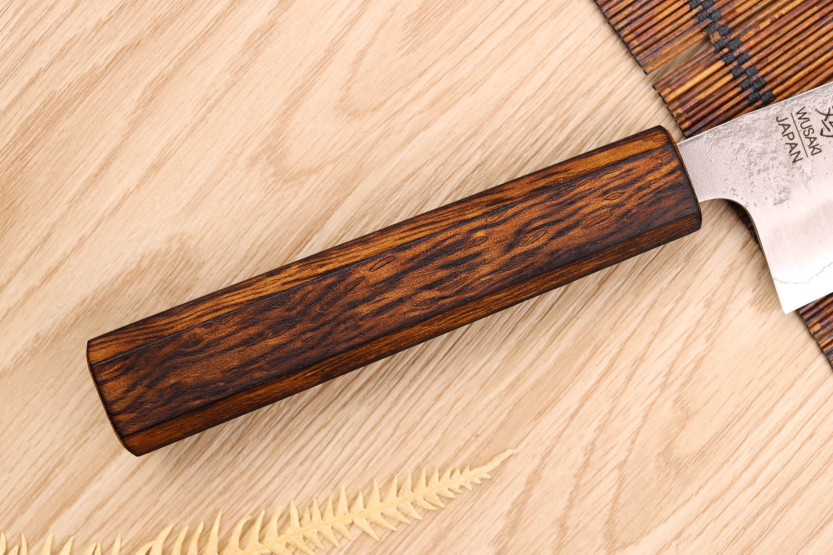
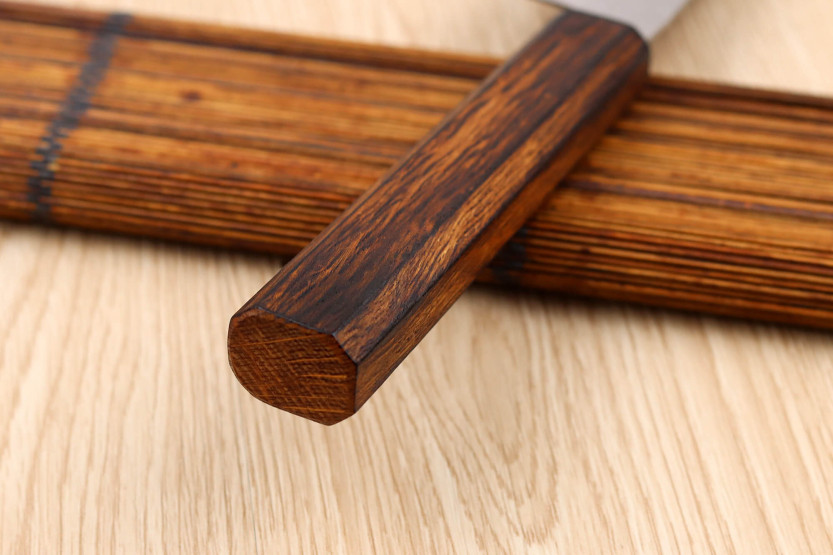
The handle of this Japanese knife is made from smoked oak, a strong, durable species with a high density for better resistance to shock and humidity. The baikoku oak has benefited from a smoking technique and now sports a darker hue, highlighting the natural grain that runs through the wood. This adds character to your Wusaki knife!
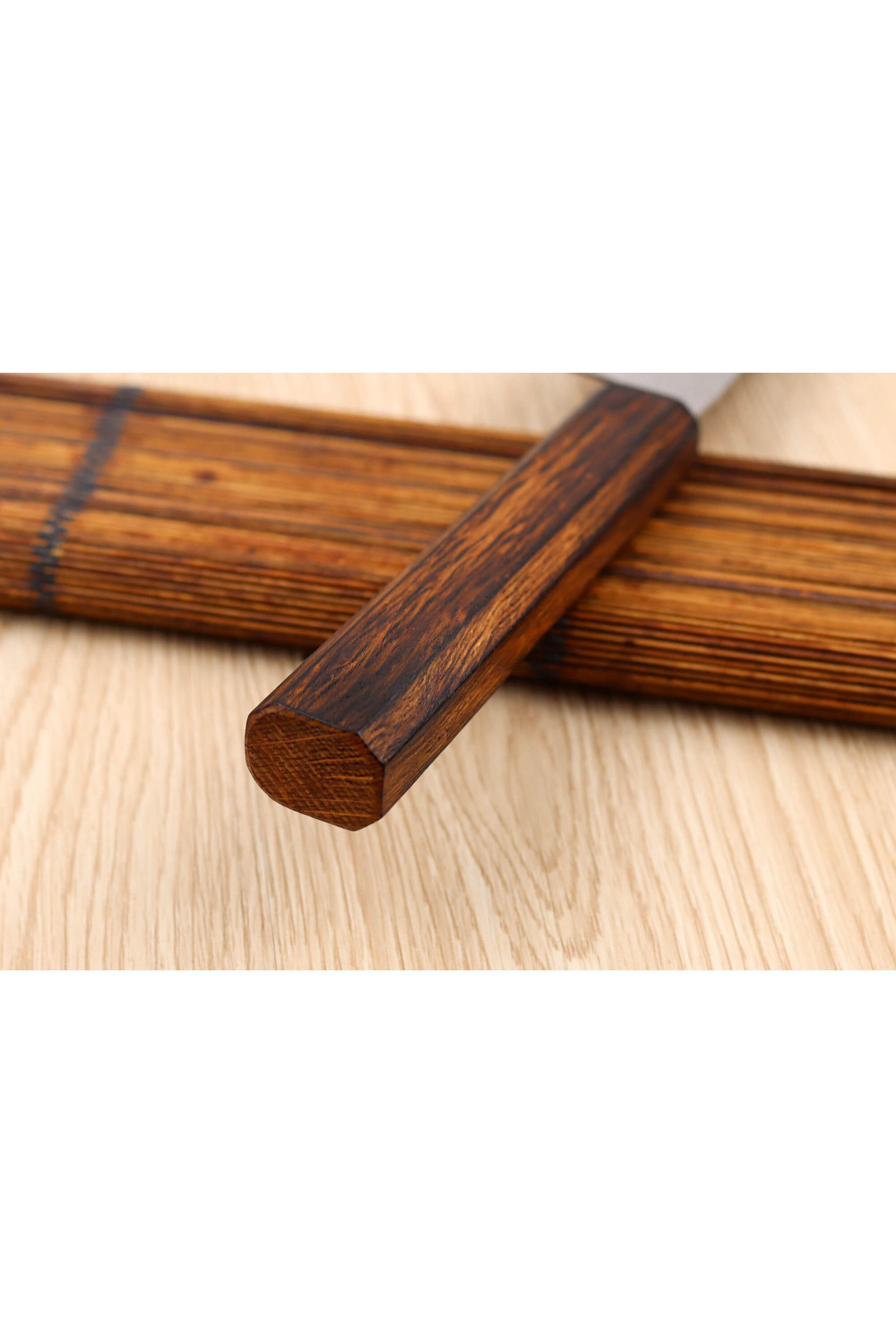
The handle is octagonal in shape to suit both right- and left-handed cooks. This handcrafted Japanese knife offers an ergonomic grip for comfortable use, even over time!
To fill the space between the wood and the blade, wood paste has been added to make it watertight and hygienic (food can't infiltrate this little space).
To maintain your handcrafted knife, you should only wash it by hand (without insisting too much on the handle under water). Do not use the dishwasher, and do not leave the knife to soak in the sink. Then, once washed, you can wipe it with a soft cloth before putting it away, so that no trace of moisture remains.
Discover all Wusaki Japanese knives on Knifeleader.eu!






 By buying this product you can collect up to