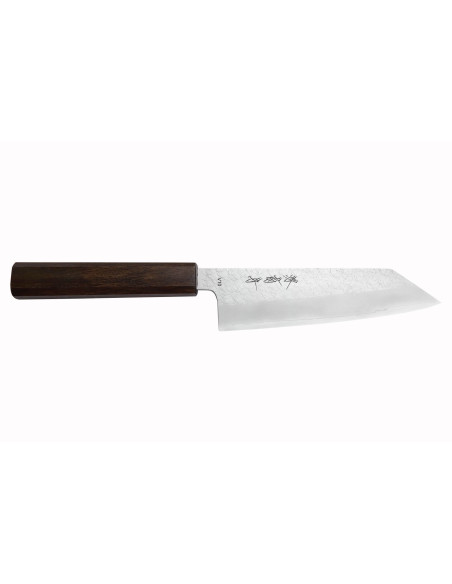
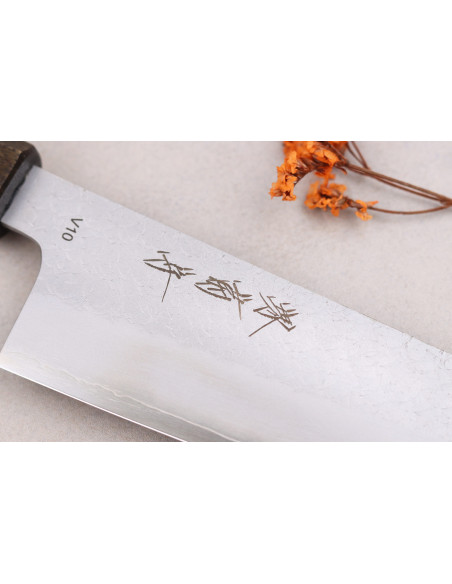
A superb hammered blade in VG10 steel
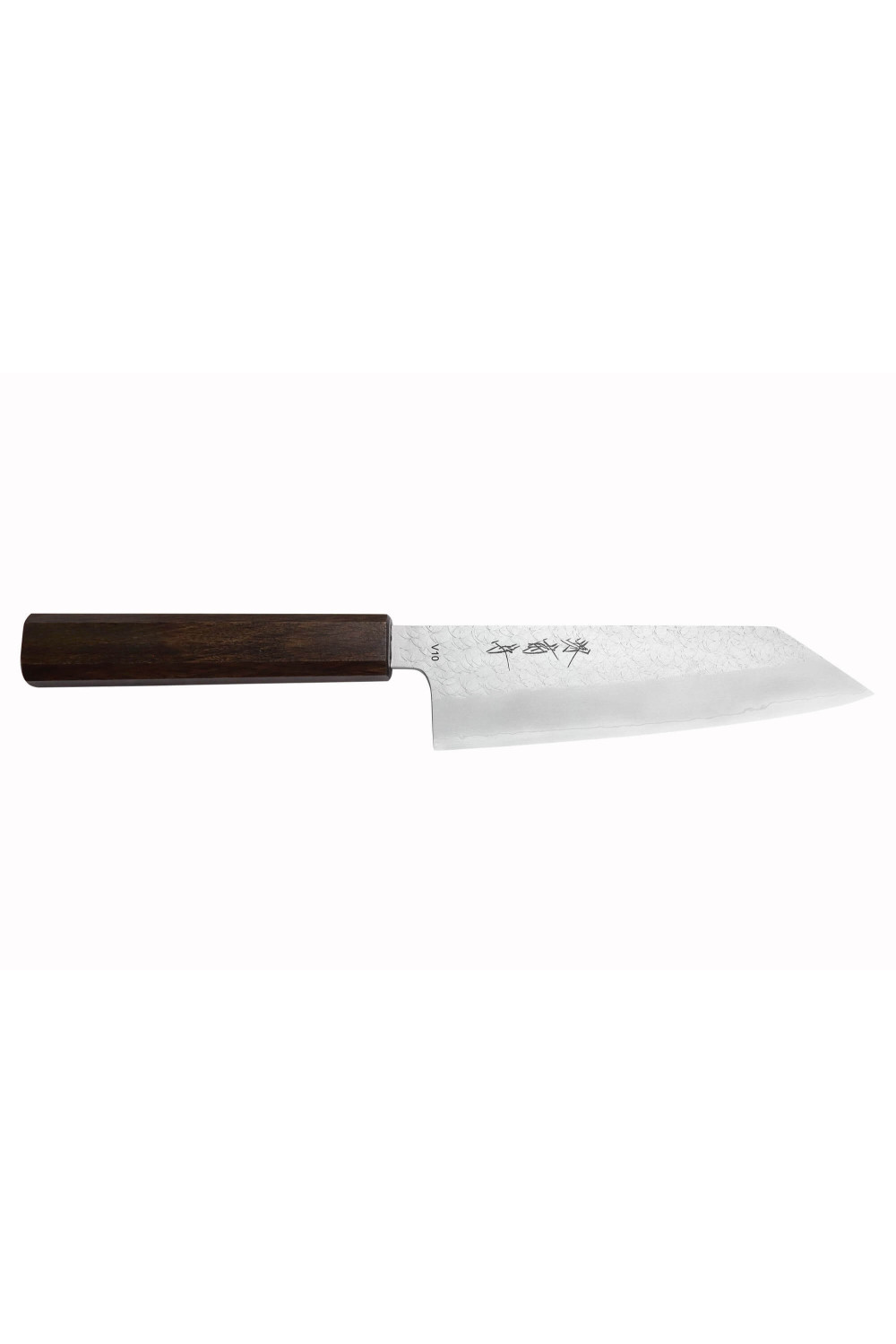
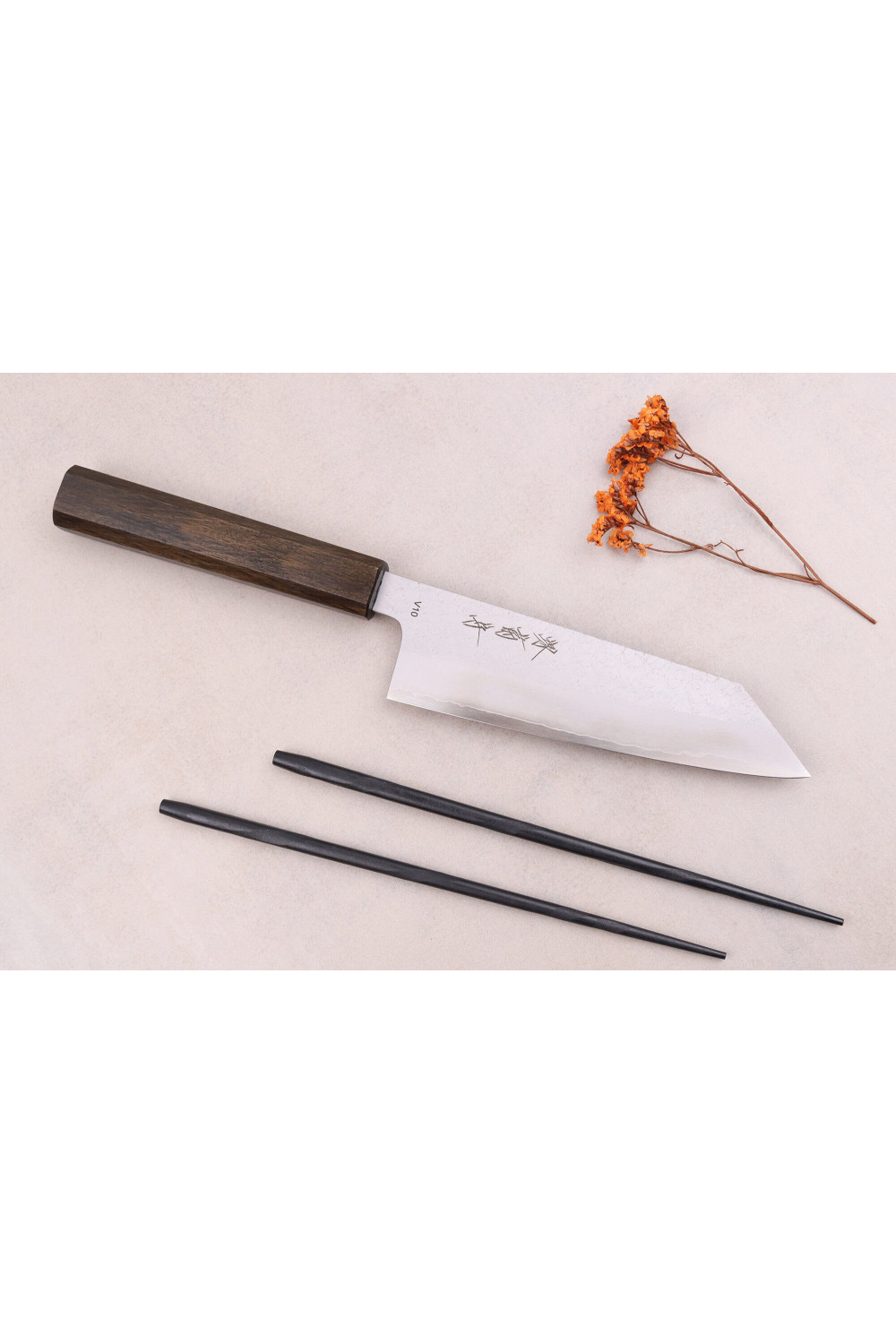
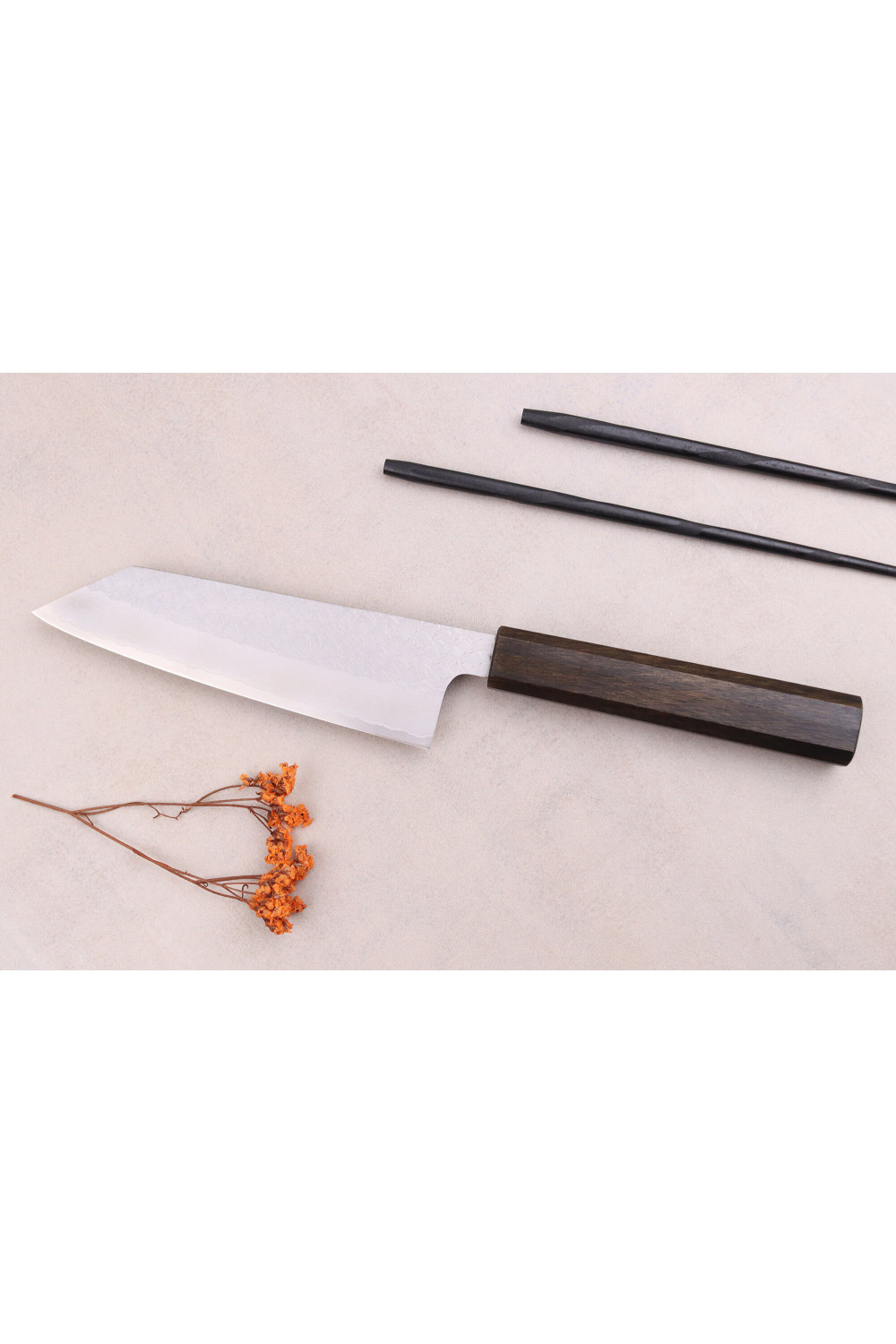
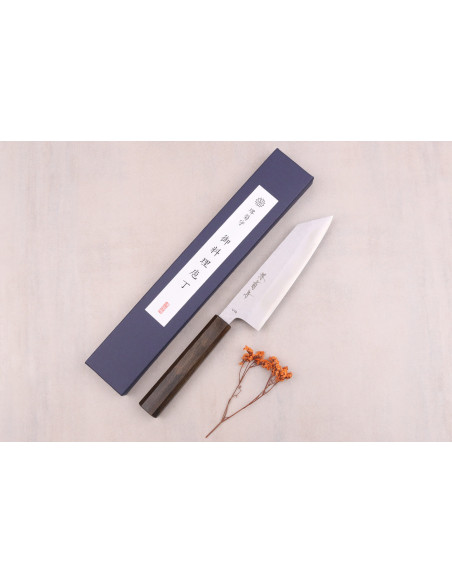
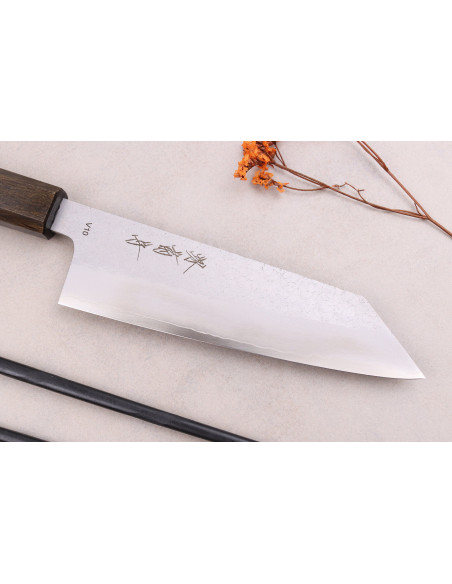
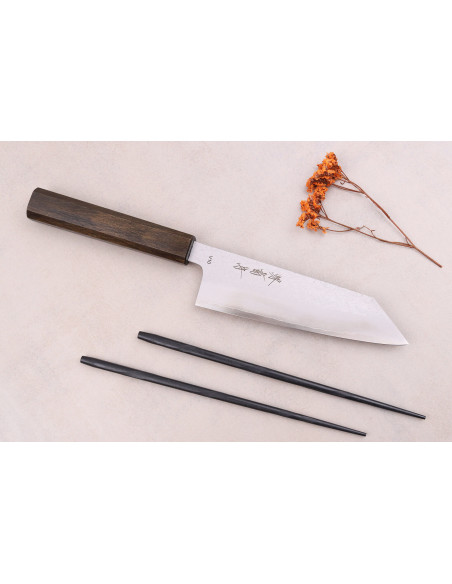
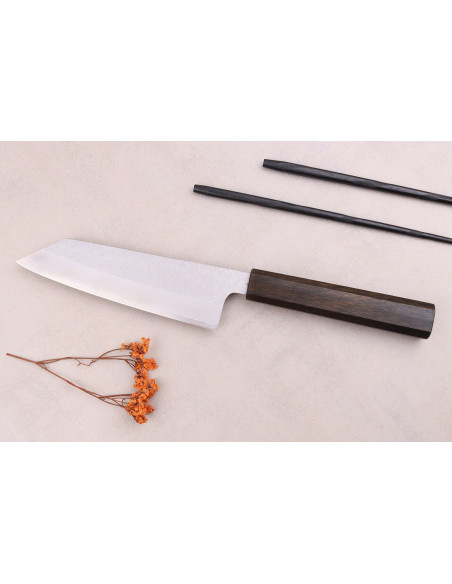
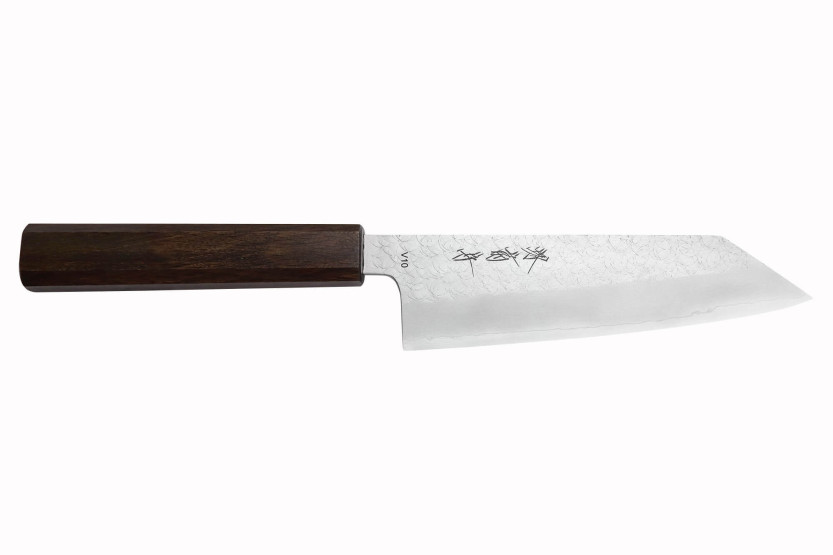
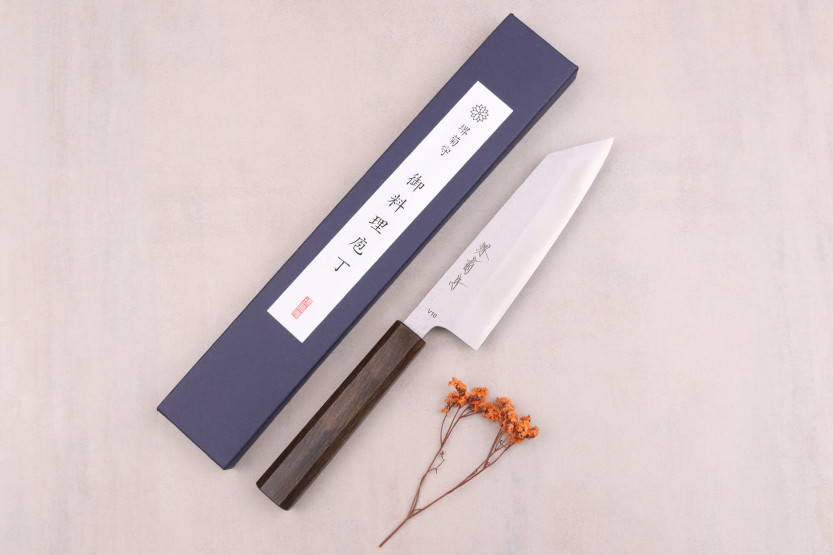
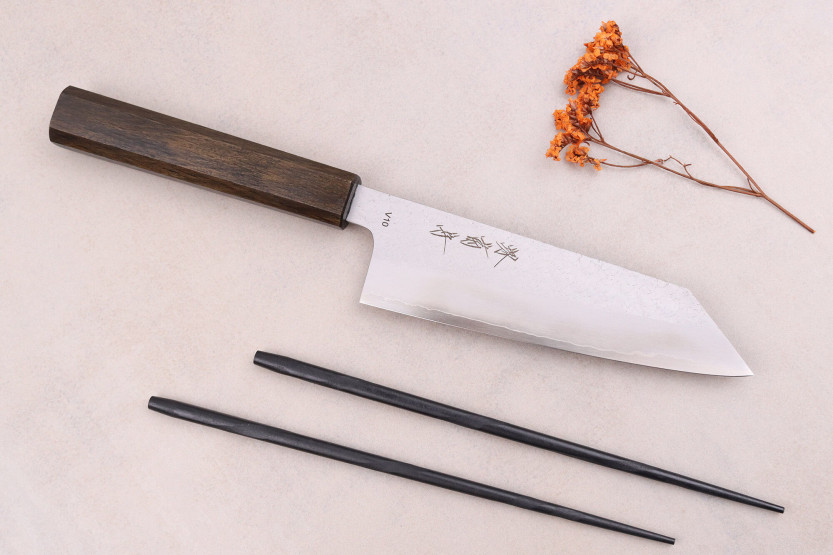
The bunka knife features a 16.5cm blade forged using the traditional San Maï technique, which means "three layers". This process involves forging a core of rigid steel, surrounded by a layer of softer steel, forming the distinctive three-layer structure.
The core of the blade is made fromJapanese VG10 steel, a high-quality alloy produced by the renowned Takefu Special Steel. With around 1% carbon, this steel gives the blade a high level of hardness, reaching 60 HRC on the Rockwell scale. This guarantees excellent edge retention and optimal cutting performance.
What's more, VG10 steel contains around 15% chromium, which increases its resistance to corrosion. However, it is crucial to maintain your knife with the utmost care to prevent oxidation.
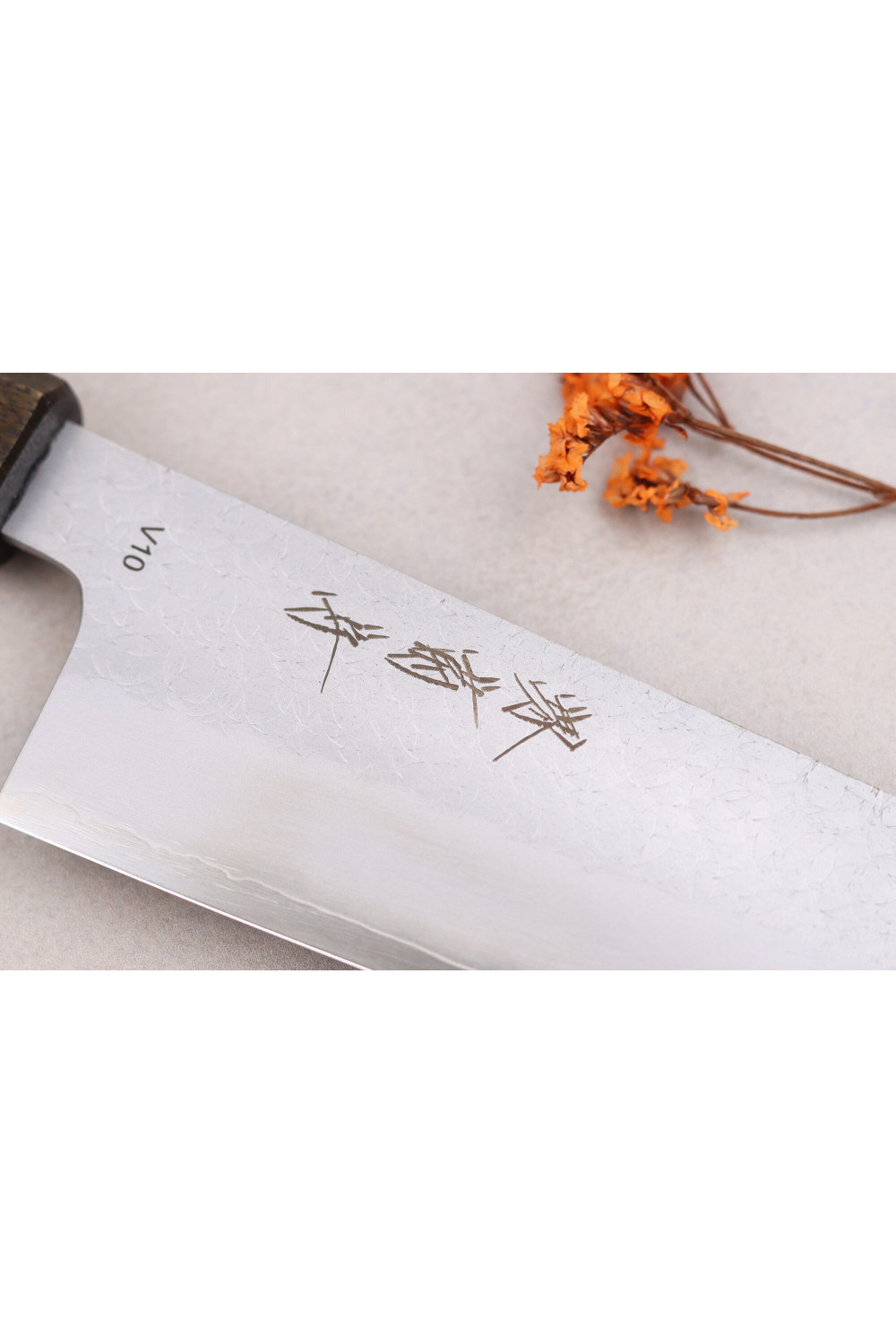
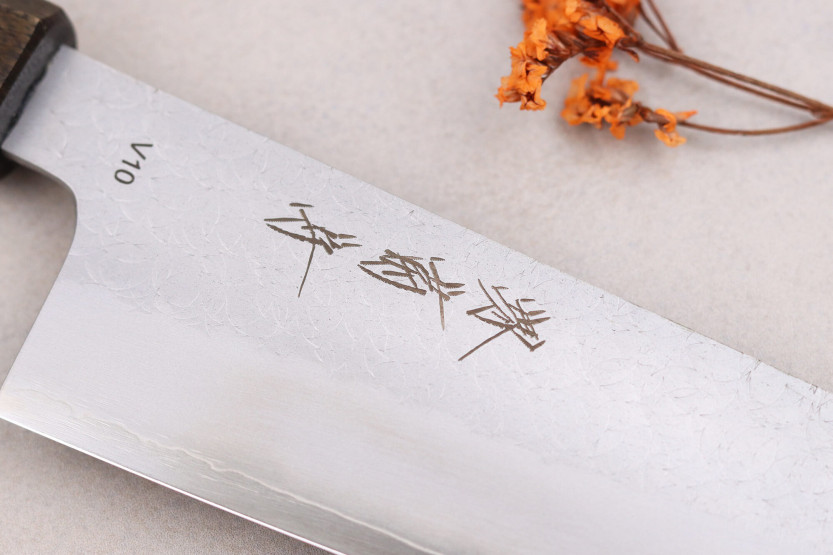
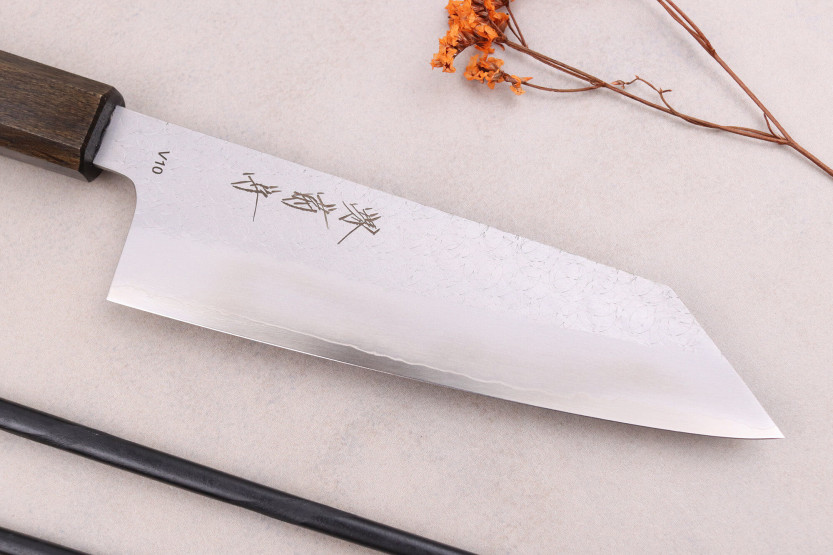
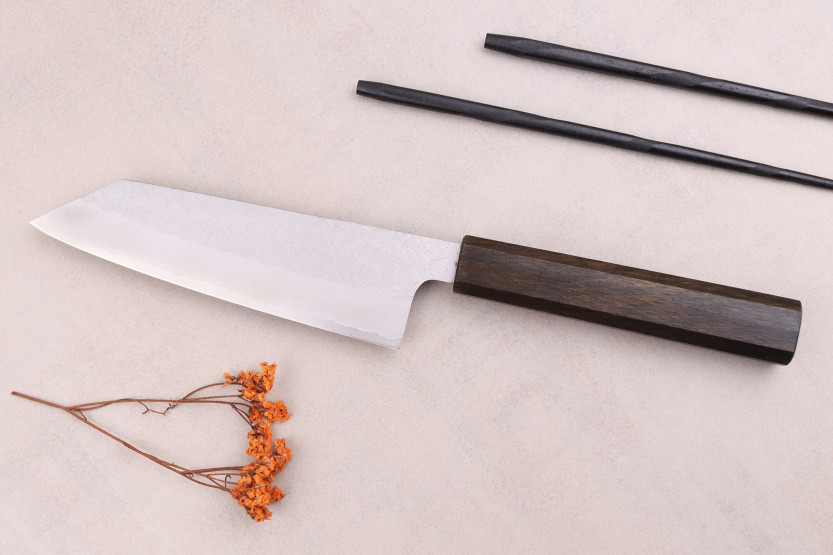
The San Maï structure is complemented by a layer ofsofter stainless steel that surrounds the core, offering optimum protection while providing flexibility to the blade. This balance between hardness and flexibility makes the blade less likely to break. You can see the overlapping layers of steel along the edge, forming a fine, random wave that adds a touch of elegance.
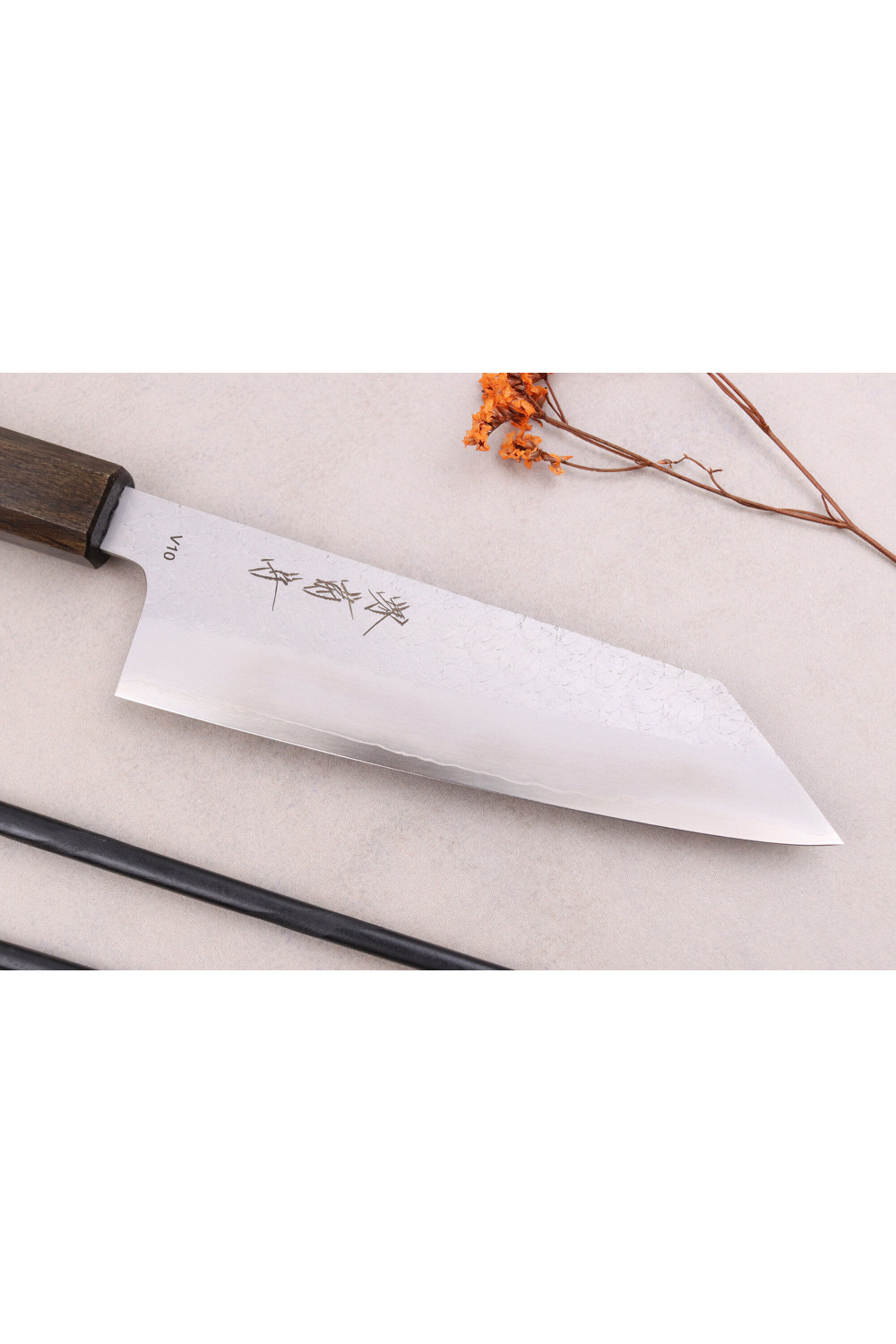
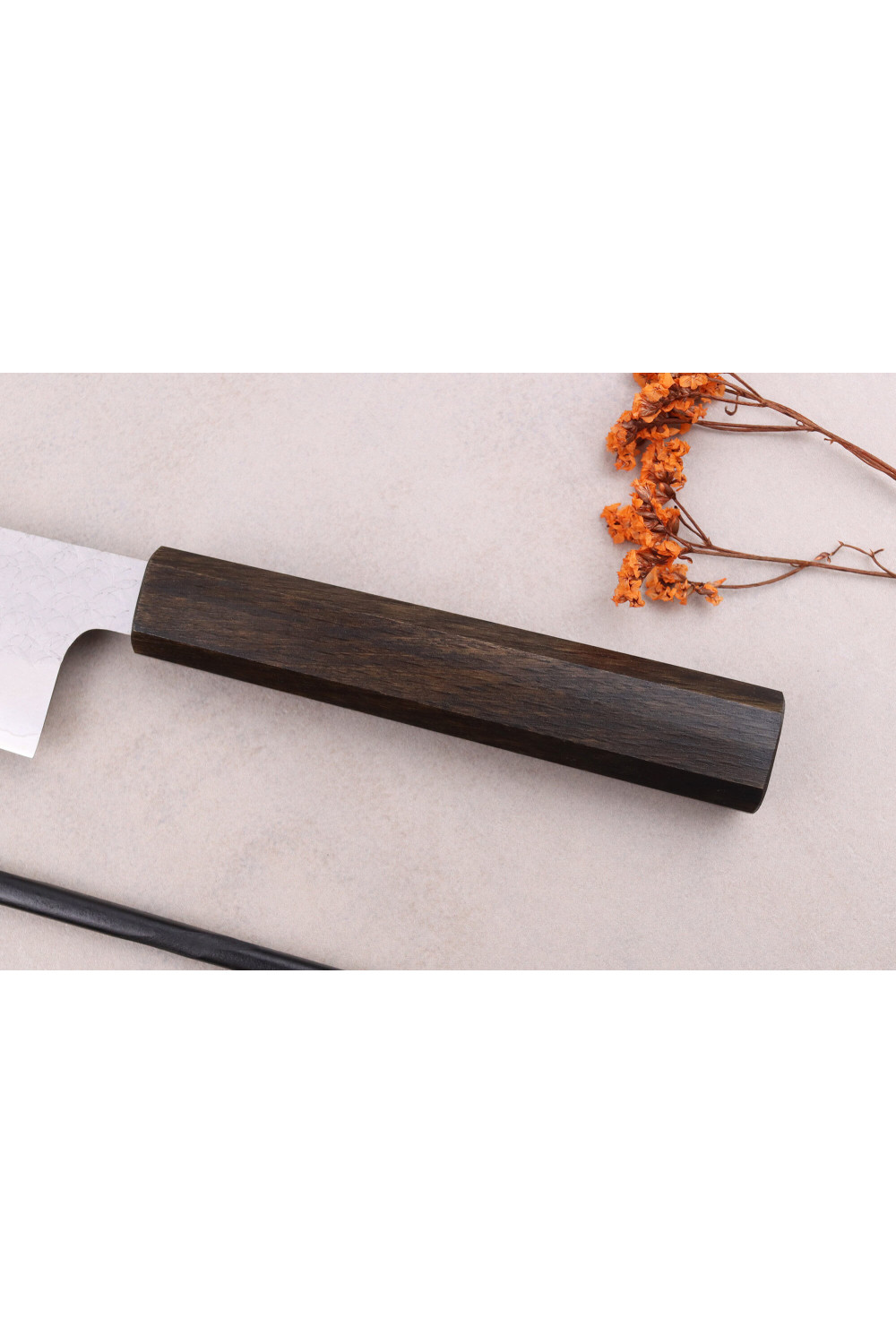
The surface of the blade is finely polished for an aesthetic finish. It also features hammering with a punch, creating a unique geometric pattern. In addition to its elegant appearance, this hammering creates small cavities that prevent food from sticking to the blade when cutting.
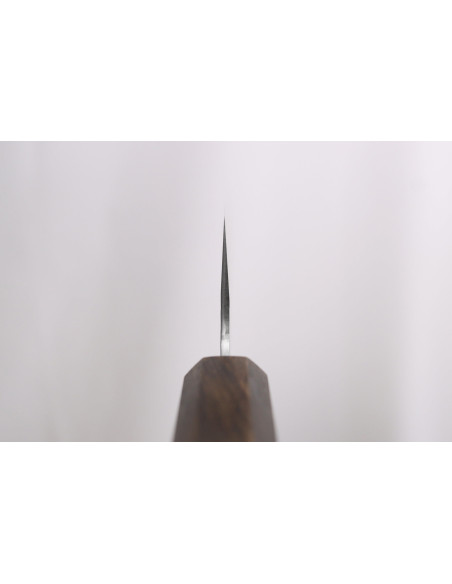
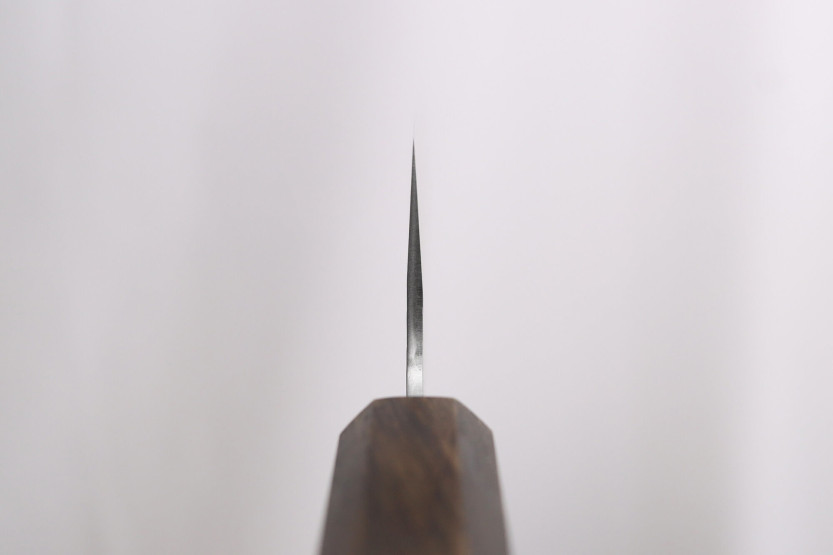
Finally, the blade features a rather fine, flat cut, worked to half-height. This grind, known as sabre grind, not only reinforces the blade's solidity, but also gives it an elegant finish.
An elegant black oak handle
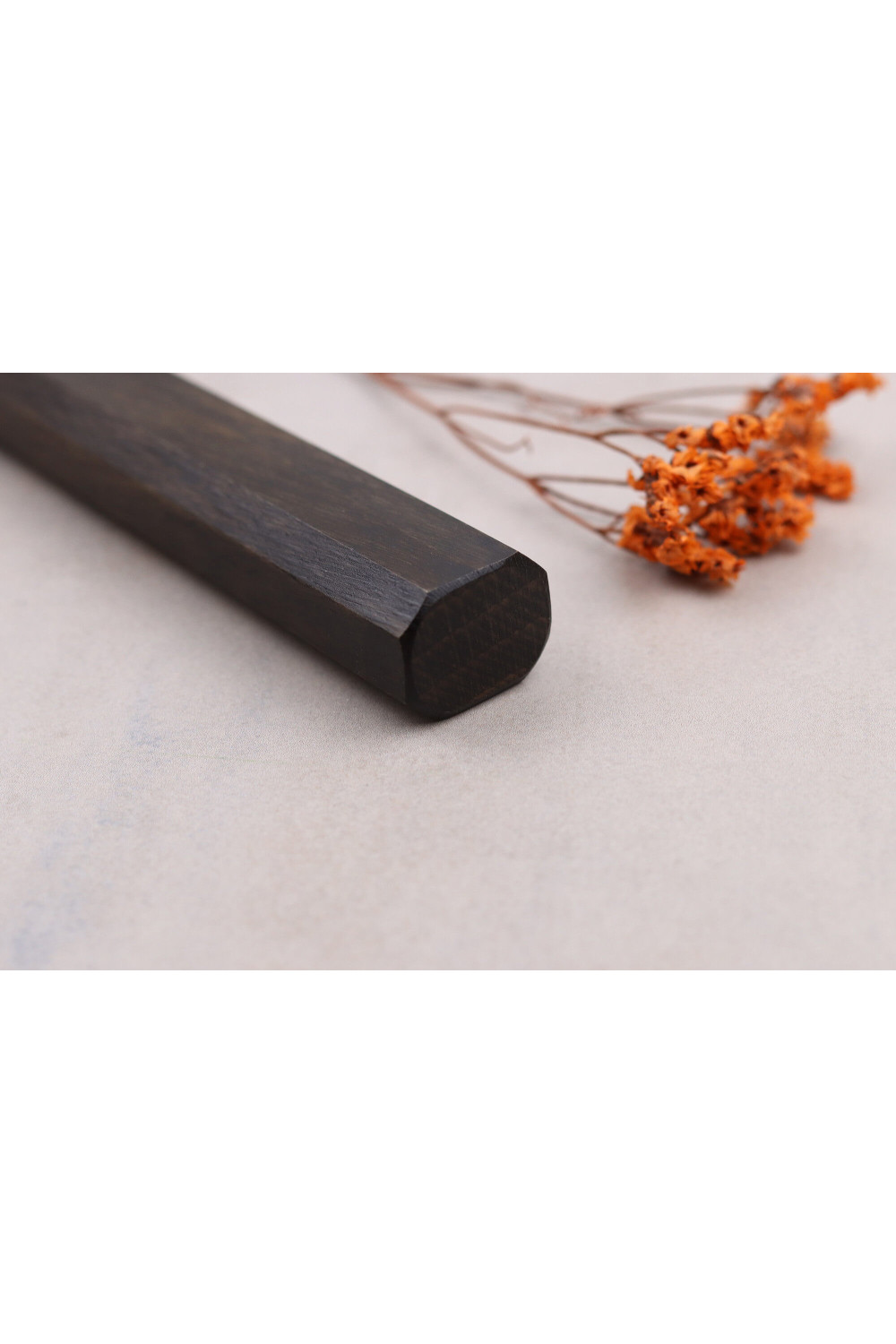
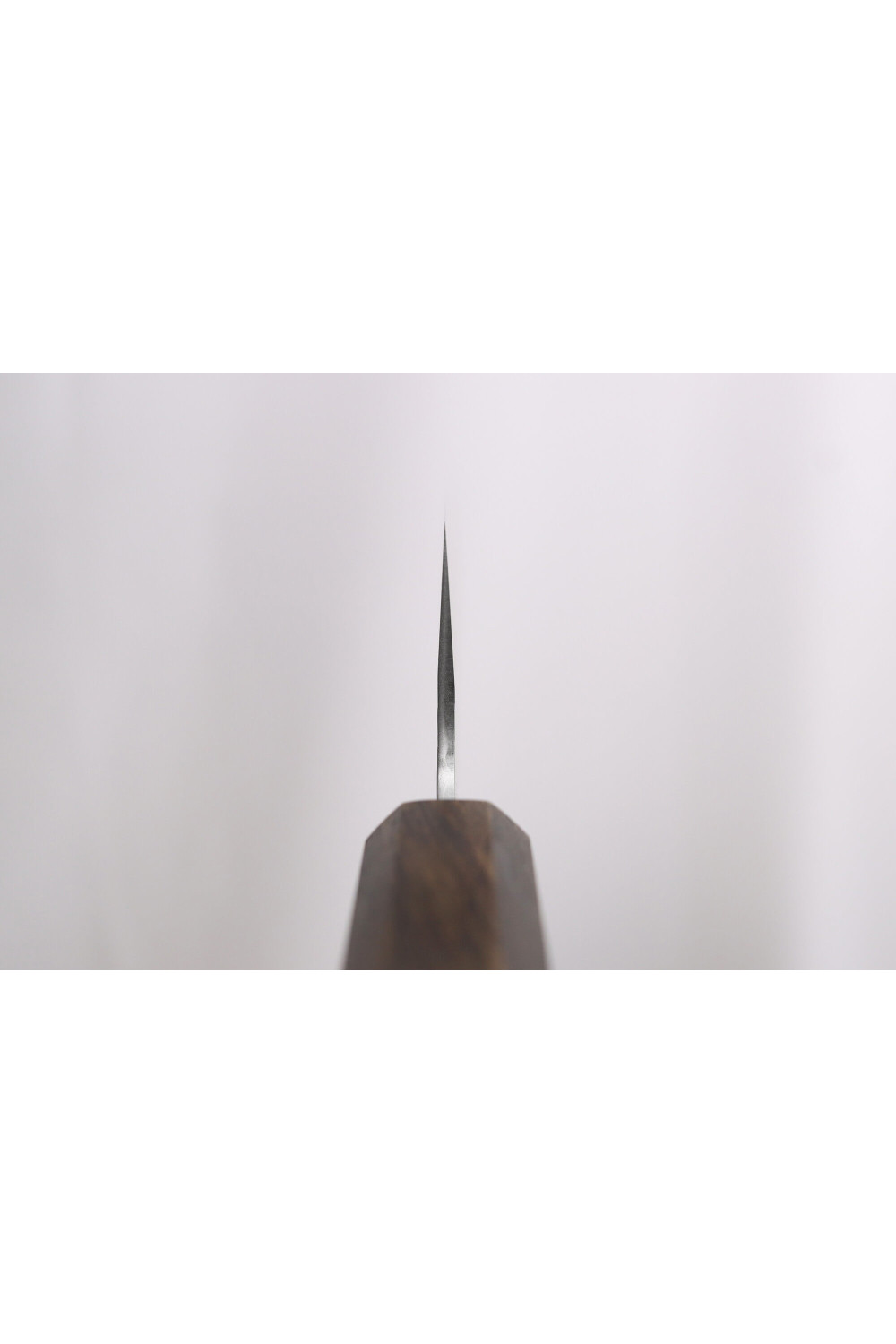
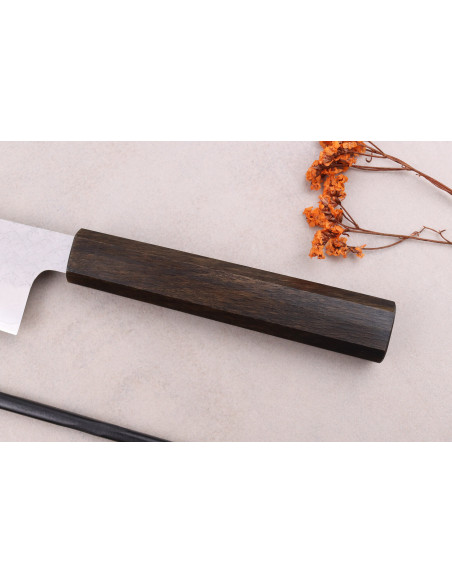
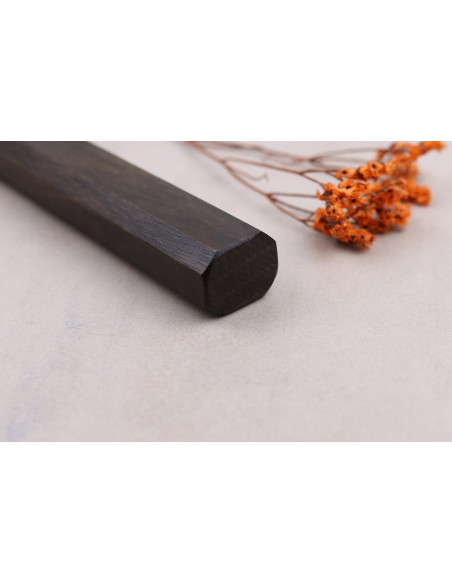
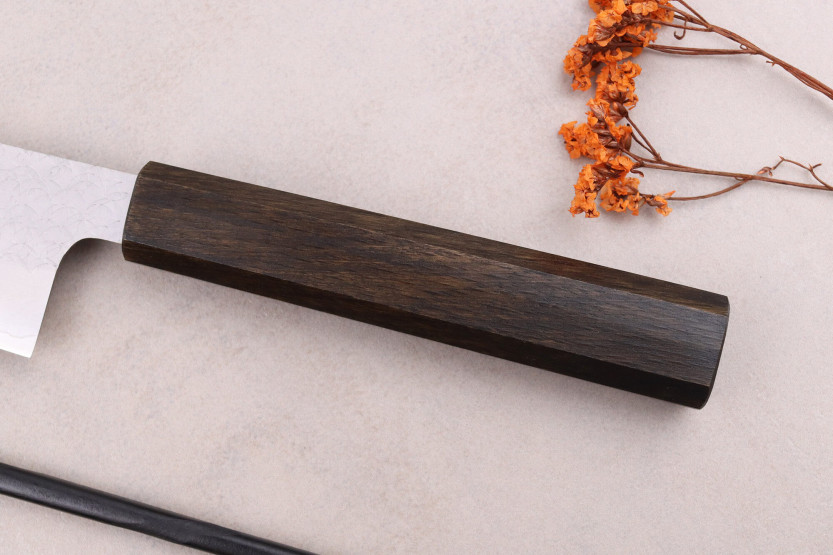
This handcrafted knife features an oak handle, a species renowned for its strength and durability. Oak is resistant to humidity, temperature variations and shocks. It has been lacquered in black, providing a high-end finish that contrasts with the steel of the blade, while giving it extra protection and a soft touch.
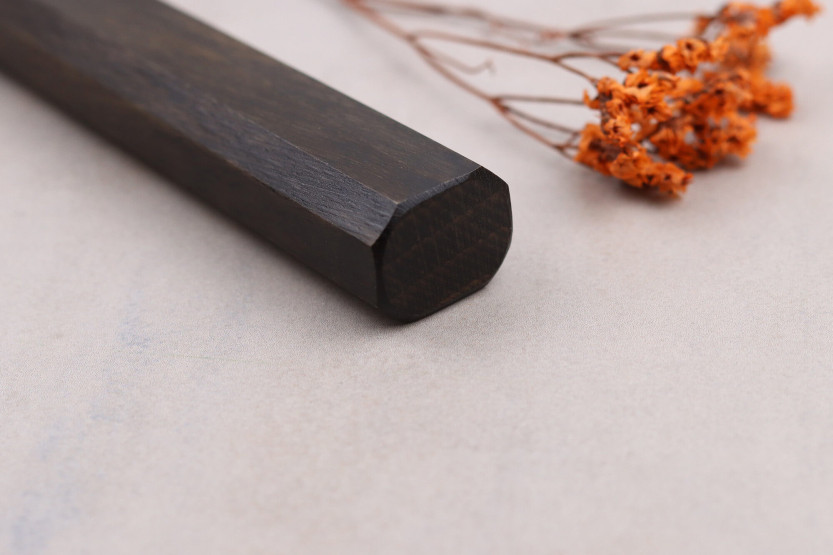
The wood, carved in a traditional Japanese octagonal shape, is perfectly suited to all palms, ensuring comfort and maneuverability, essential qualities during long cutting sessions.
Finally, wood pulp has been added where the blade fits into the handle. This makes the knife completely watertight, preventing any infiltration of water or food residues.
How to care for your Japanese kitchen knife
Your knife should be washed exclusively by hand, using a non-abrasive sponge, without wetting the handle. After cleaning, it should be dried immediately with a soft, clean cloth to remove all traces of moisture, then stored in a dry place. This knife must never be left to soak in the sink or put in the dishwasher.
Discover Sakai Kikumori by Kawamura Hamono
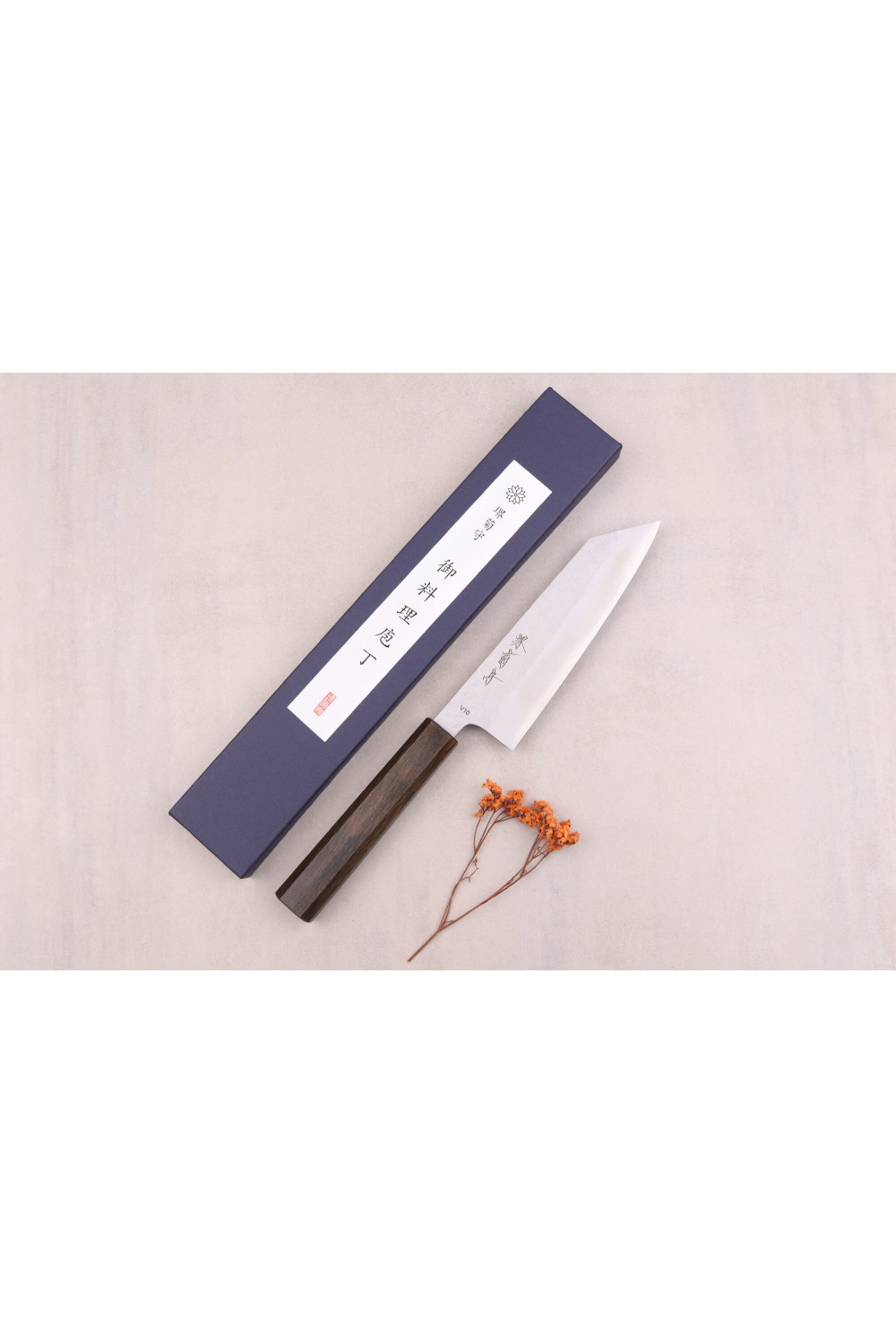
Sakai Kikumori by Kawamura Hamono is a handcrafted knife factory located in Sakai, Japan. It offers a wide range of knives forged by renowned craftsmen, as well as by small local workshops, providing a variety to suit all tastes, preferences and budgets.
With almost a century of know-how, Sakai Kikumori perpetuates the traditional forging techniques it has inherited through the passing down of generations.
Numerous bunka knives are available on Knifeleader.eu!




 By buying this product you can collect up to