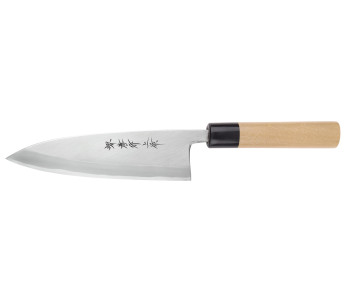
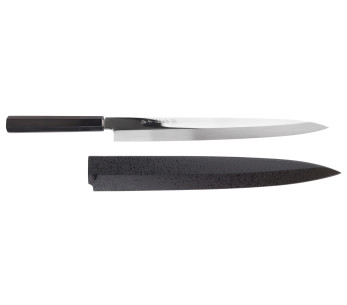
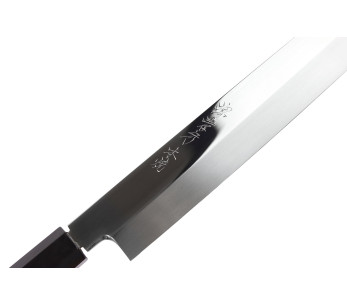
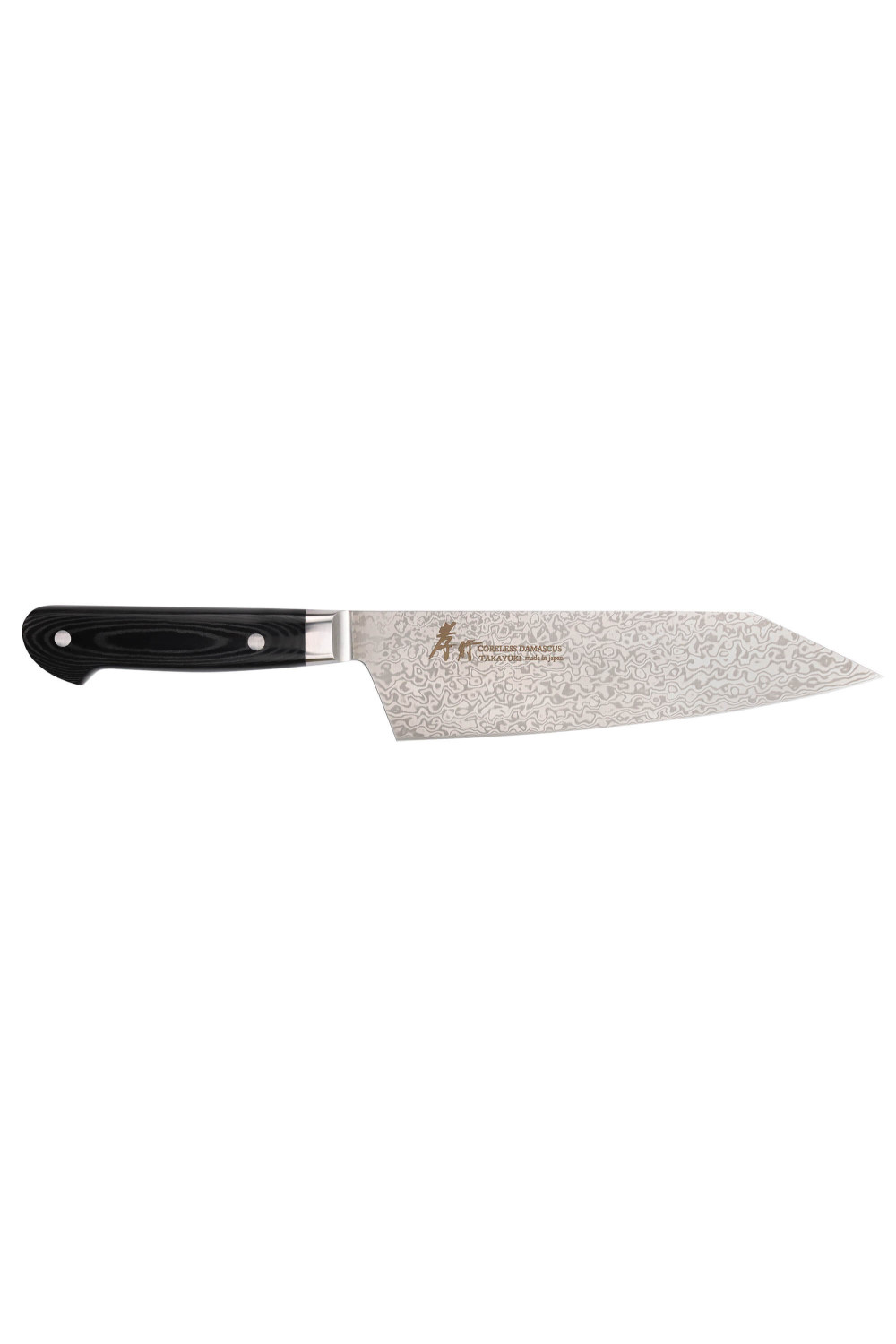
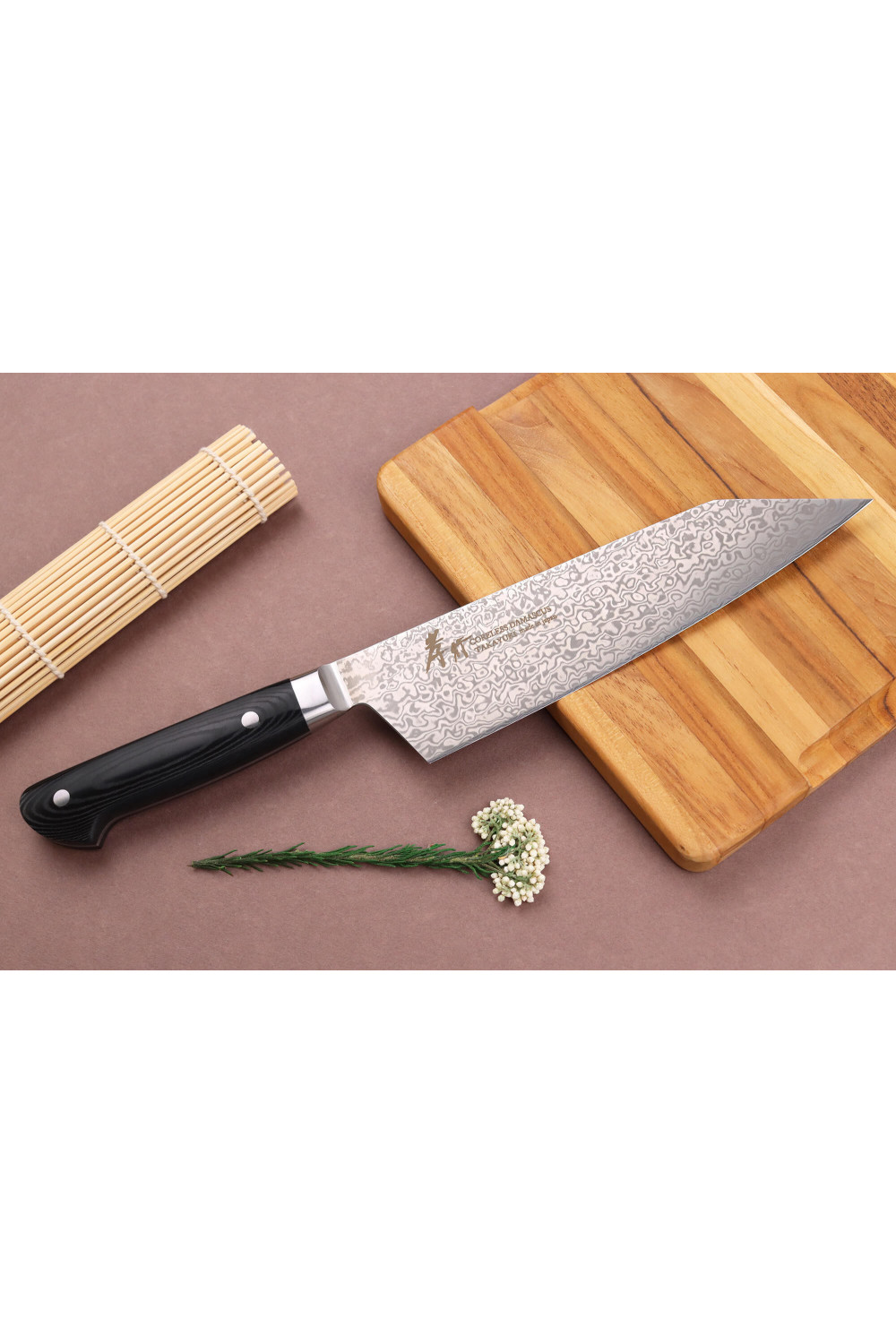
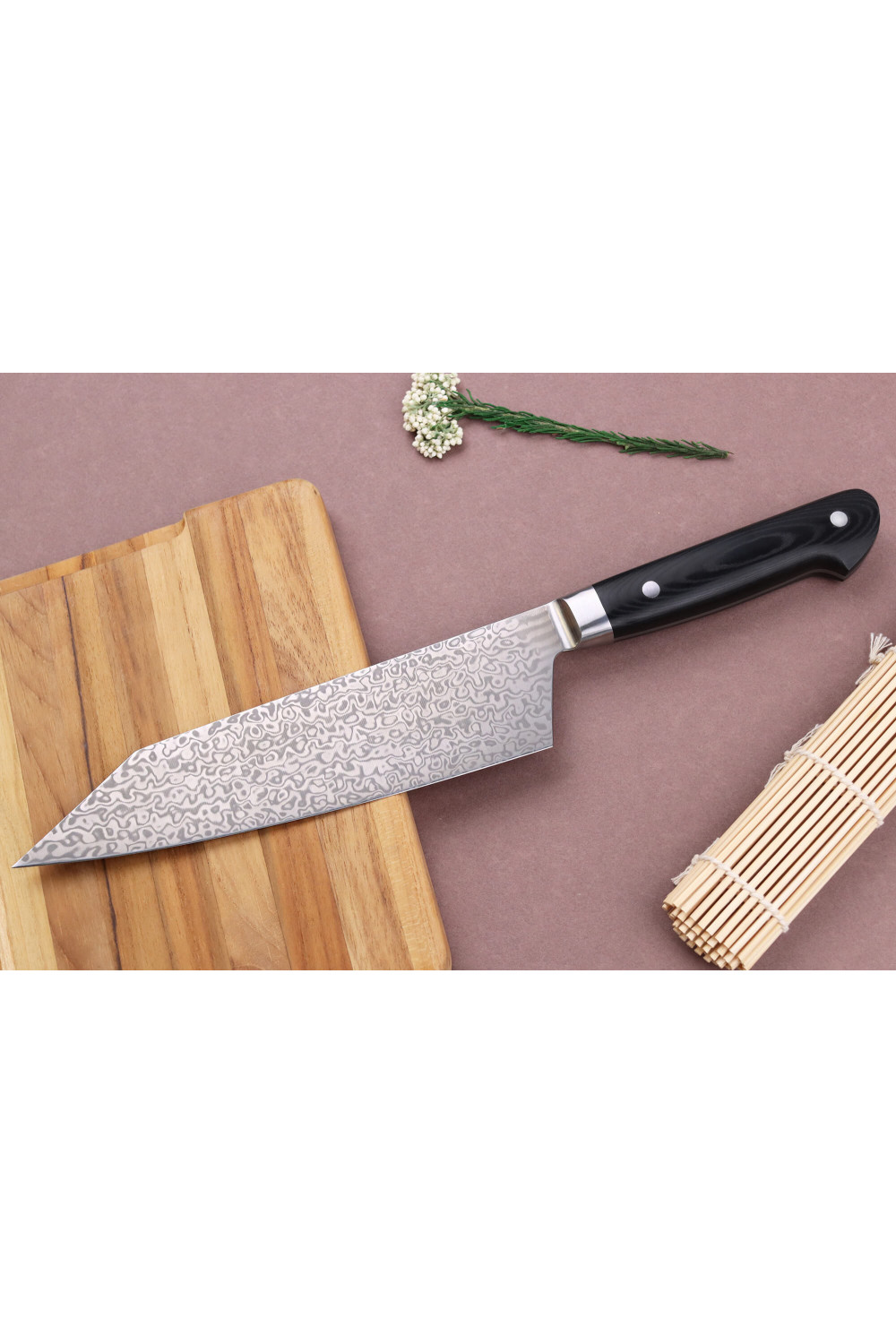
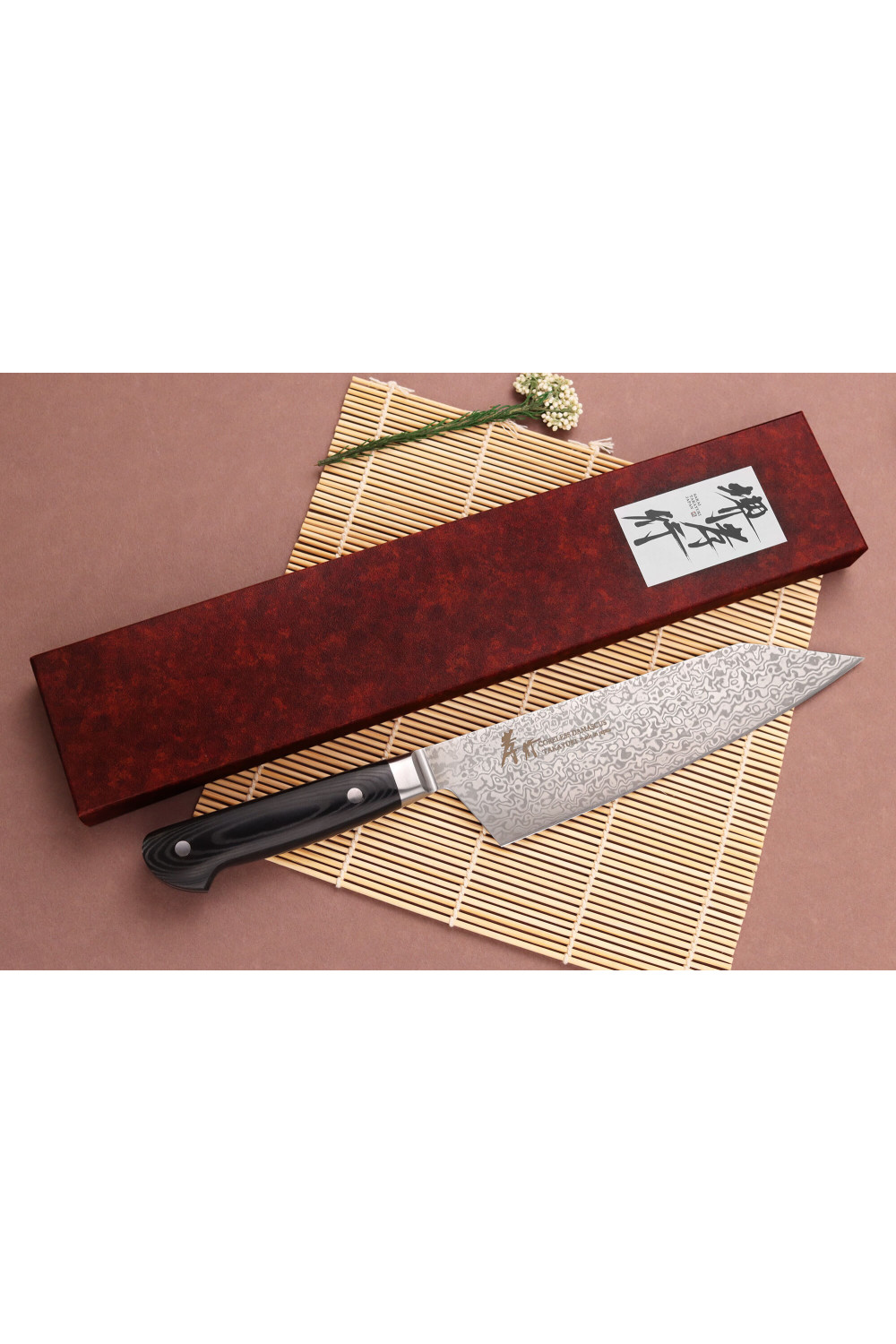
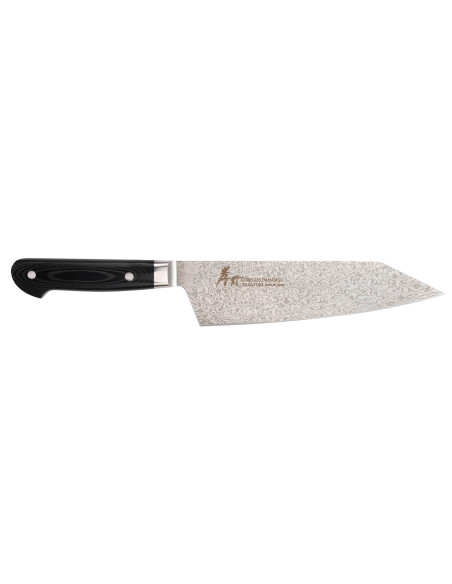
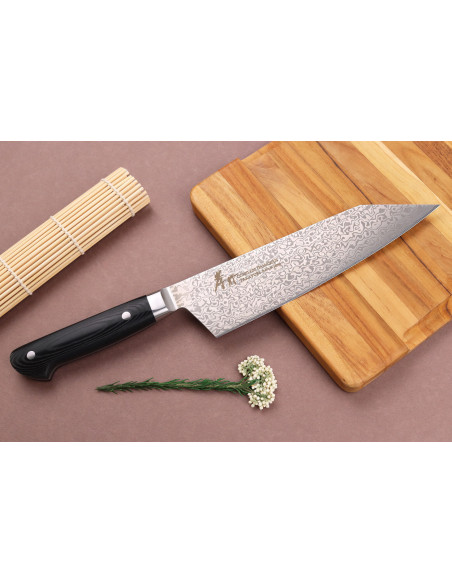
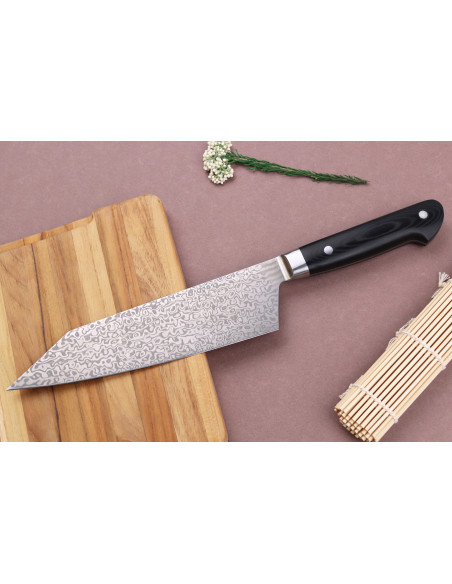
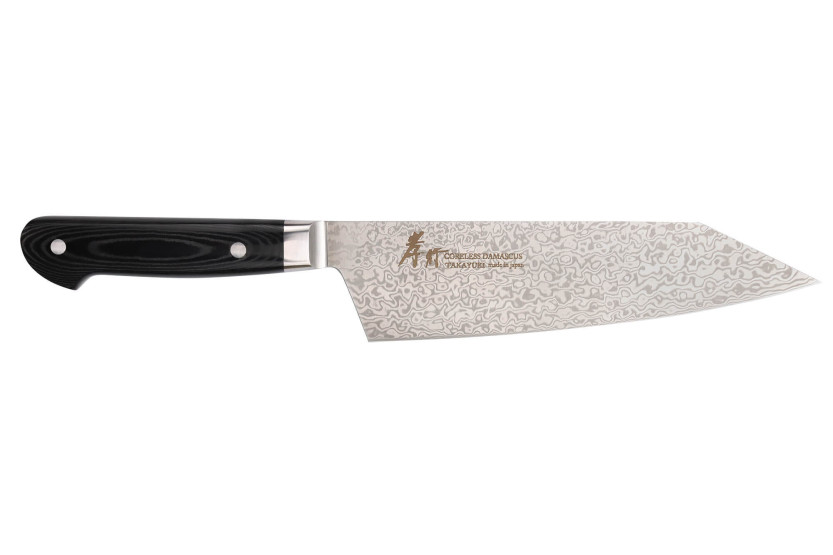
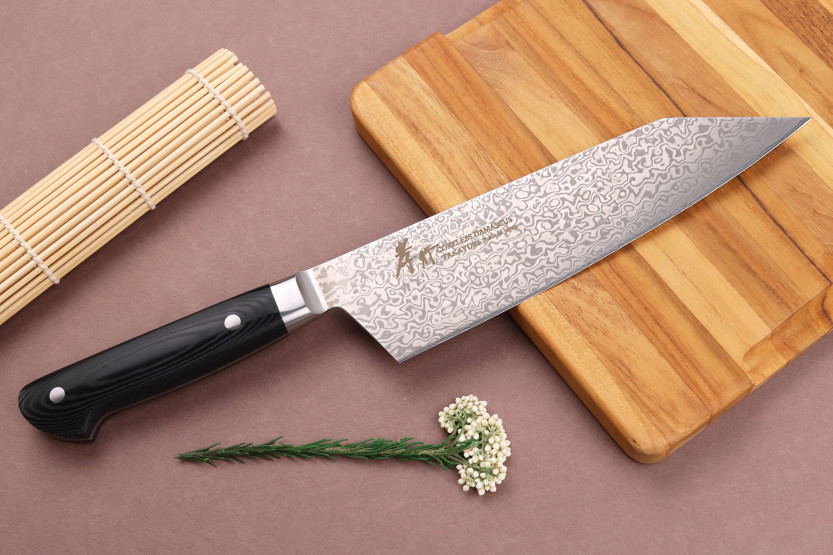
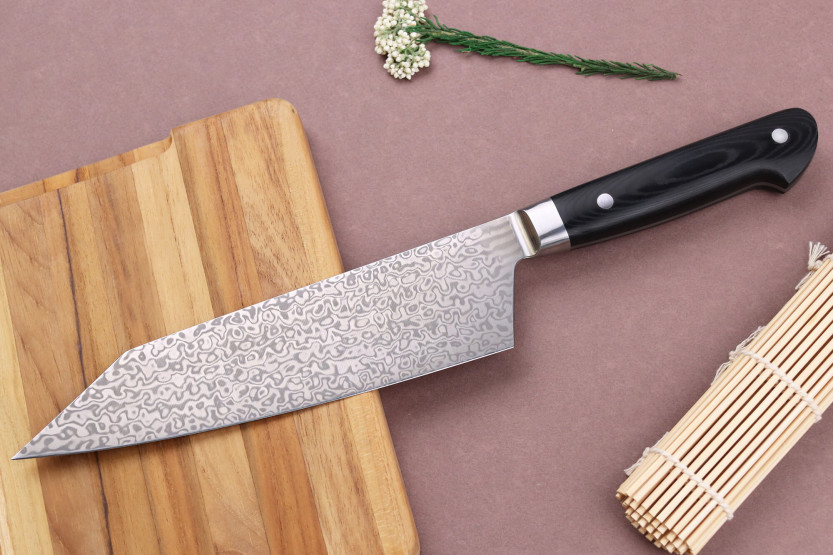
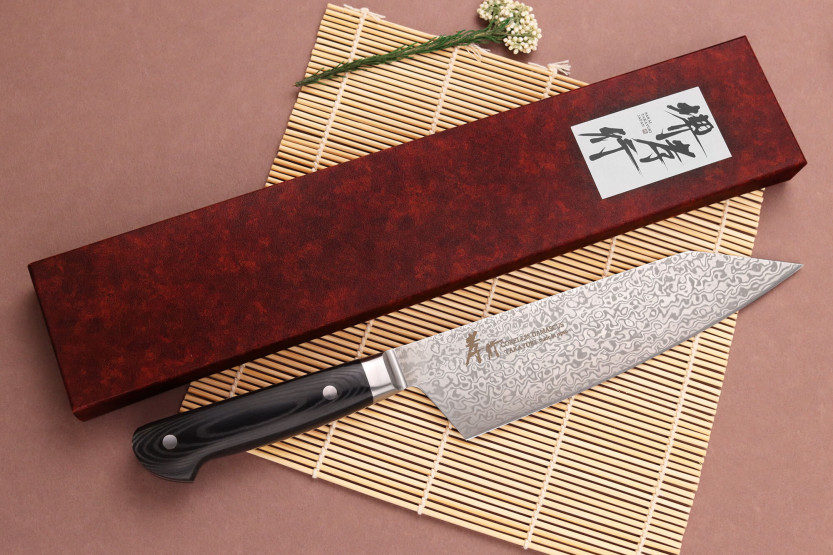
This kengata knife is a hybrid between the kiritsuke and the bunka, as it features a sharp point that bends sharply. It's a versatile knife for slicing meat, fish, fruit and vegetables. With this blade, you can easily slice from top to bottom! Do not use on hard foods such as squash, bones, ...
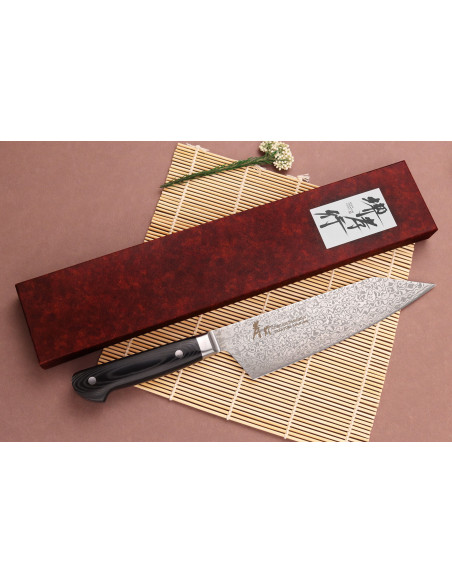
Sakai Takayuki, a company founded in the mid-20th century, takes its name from the Japanese town where it is based, namely Sakai. Backed by decades of experience, the company is committed to offering you entirely Japanese knives, combining pleasure of use and performance. Applying techniques inherited from the blacksmiths of yesteryear combined with modern technology, this manufacturer offers you durable knives with a design that blends modernity and tradition.
A damascened blade with a coreless structure
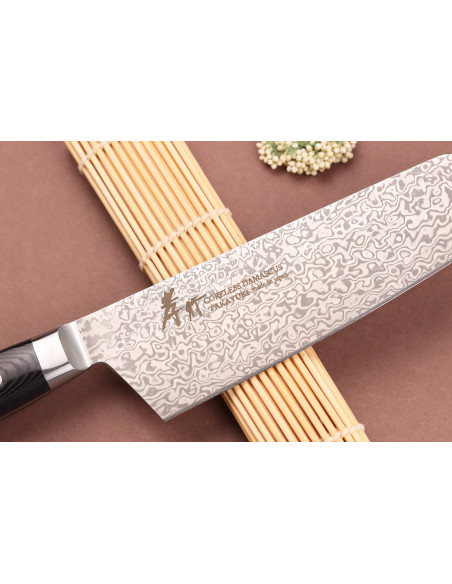
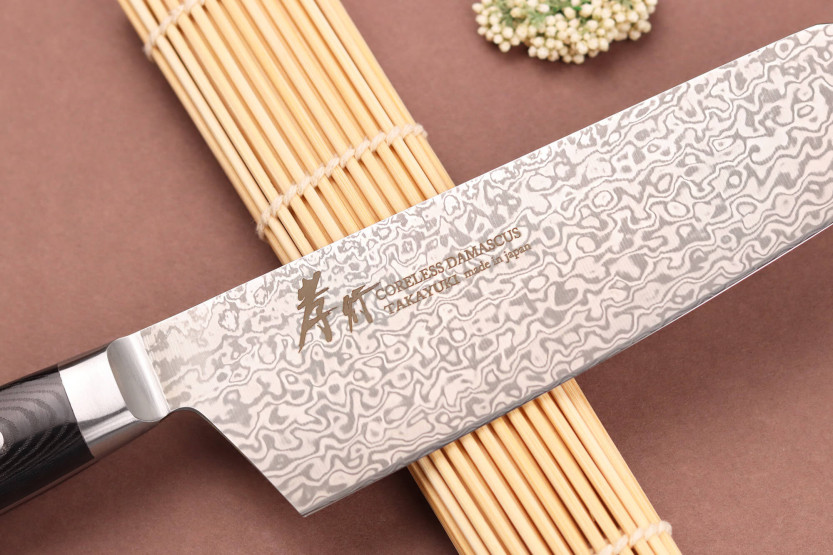
The blade of your Japanese kitchen knife measures 19cm and features a special structure that is rarely used, giving it its charm! It's a damascened blade with no core: 70 layers of steel are superimposed one on top of the other. This means that the top layers are not soft, supple steel layers protecting the core, but directly alternating layers of high-performance steel.
The notable advantage of a "coreless" structure lies in its micro-structure. With this process, the micro-carbides that make up the steels, and therefore the damascus, are evenly distributed to give you a more effective, longer-lasting cutting edge that is more resistant to deformation.
Japanese steels VG10 and VG2 are used for this blade, both produced by the renowned Takefu Special Steel. They contain, respectively, around 1% and 0.7% carbon: this is the essential element that increases a blade's hardness.
These alloys also contain around 15% chromium, which helps them resist corrosion. However, their carbon content is quite high, and the blade remains oxidizable: it must be carefully maintained to avoid any risk of oxidation.
The different steels balance each other to form an efficient blade for optimal cutting. As a result, this blade has a hardness of around 60HRC on the Rockwell scale, excellent edge retention and a high-performance cutting edge. This durable blade doesn't need sharpening too often, so you can space out your sharpening sessions!
With this coreless damascus blade, you benefit from the advantages of both steels combined: a rigid blade for a remarkable, long-lasting edge!
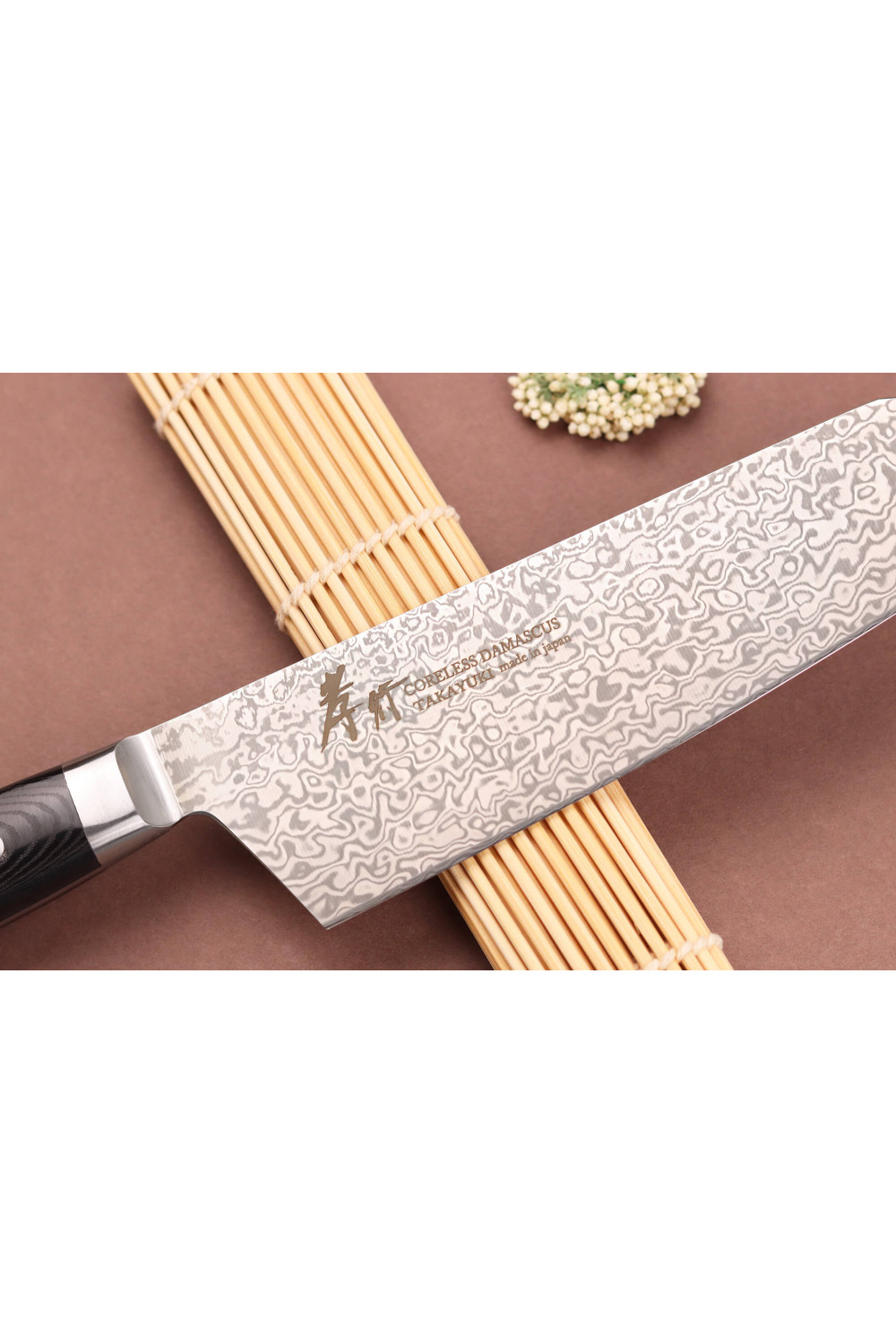
In addition to practicality, damascus is also a real visual advantage! The different layers of steel overlap to form unique patterns on each blade. Thin, random waves give character and elegance to your Japanese knife!
A Japanese knife with an ergonomic handle for all hands
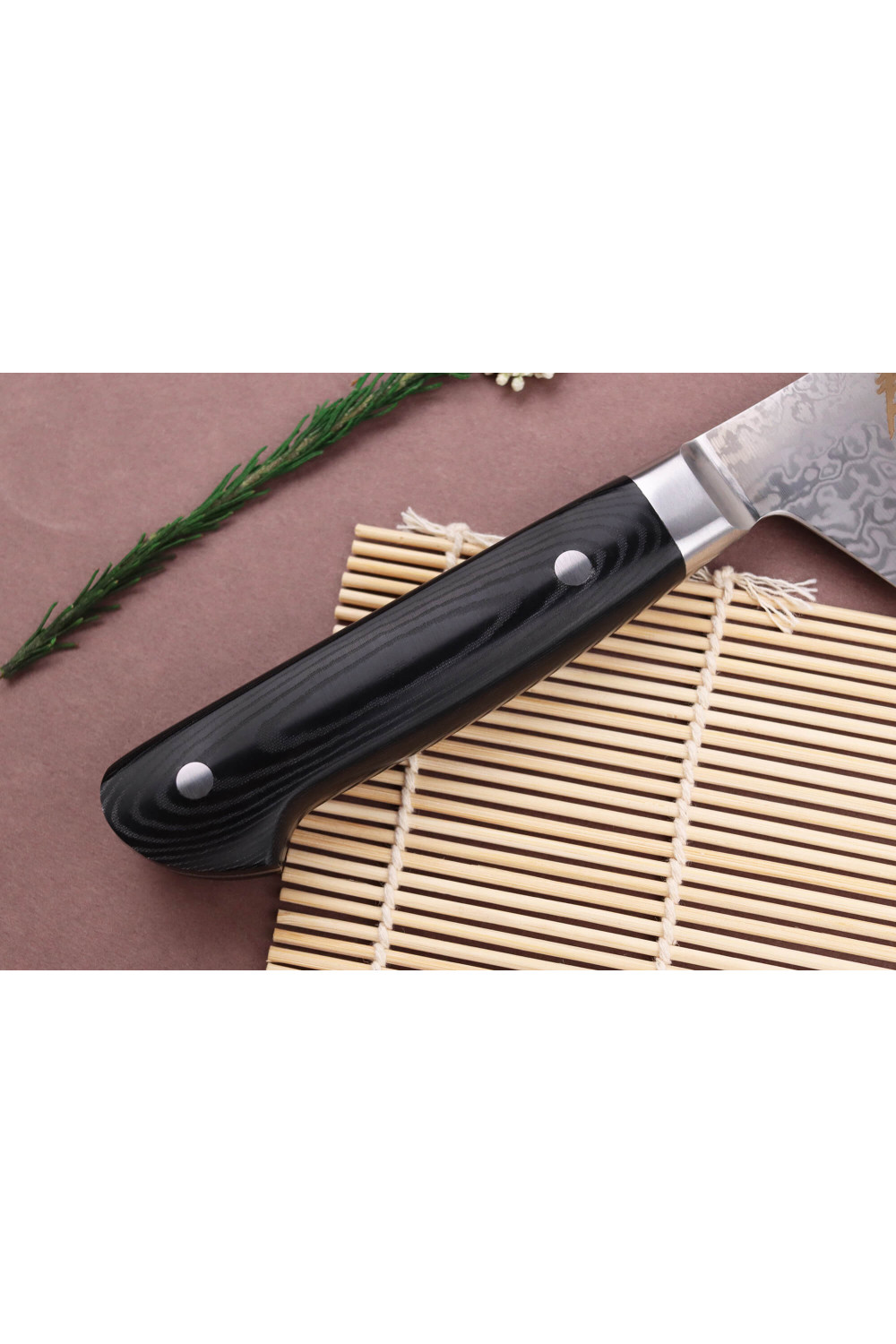
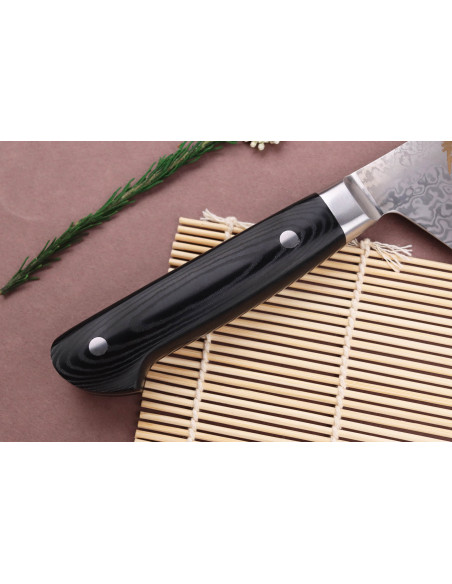
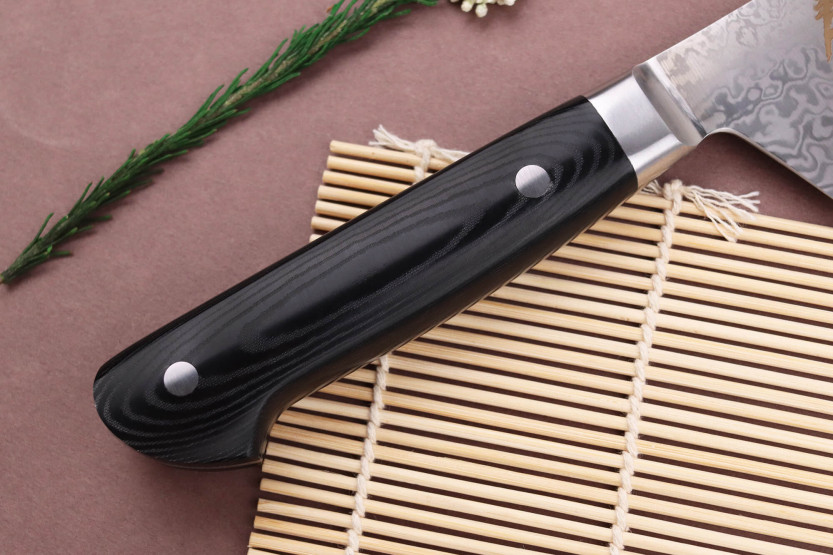
The handle of this damask knife is made of black micarta, a tough, durable and moisture-resistant material. It's a composite material made from resin and linen, all compressed under high pressure. The result looks natural and is similar to wood thanks to the grain-like patterns.
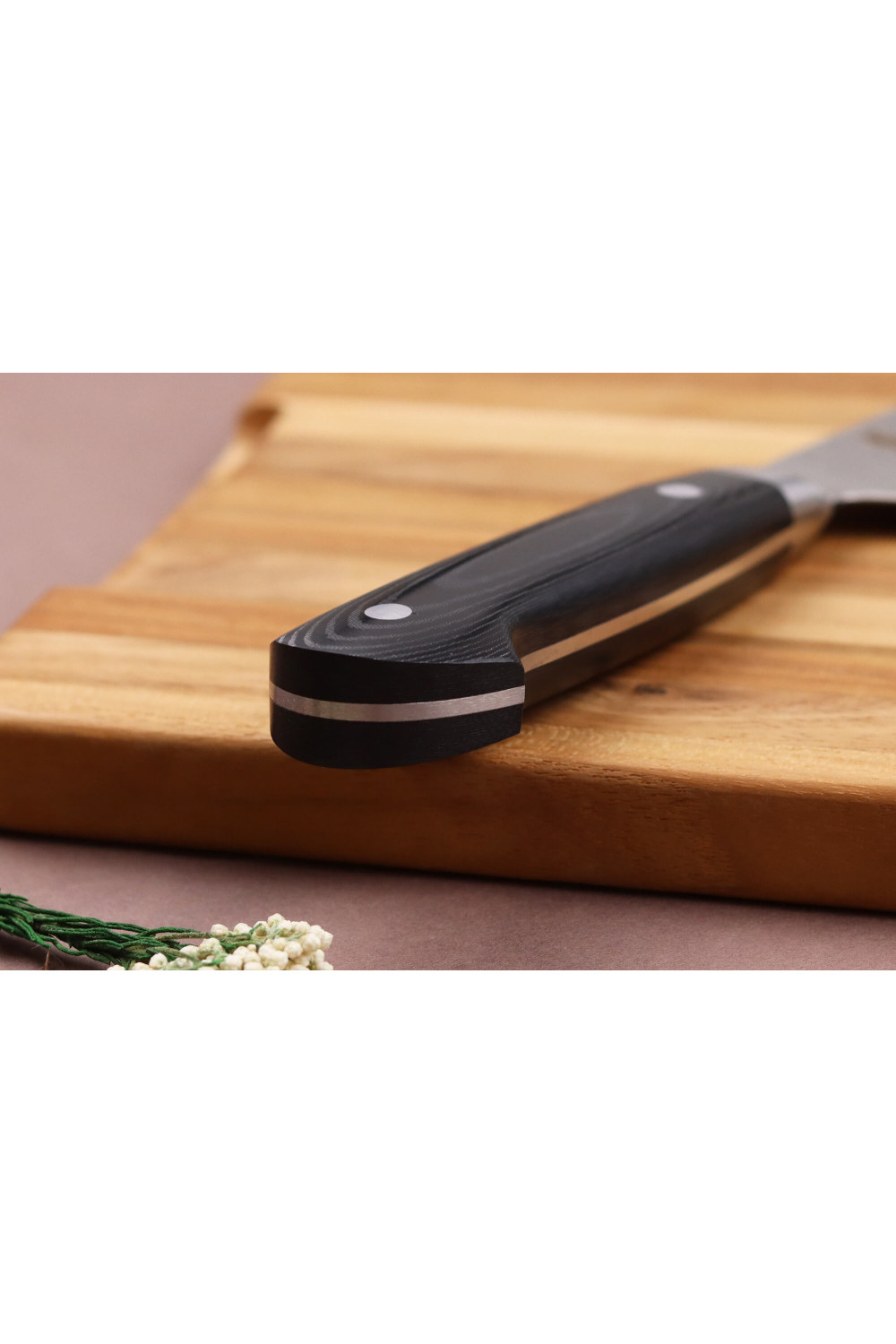
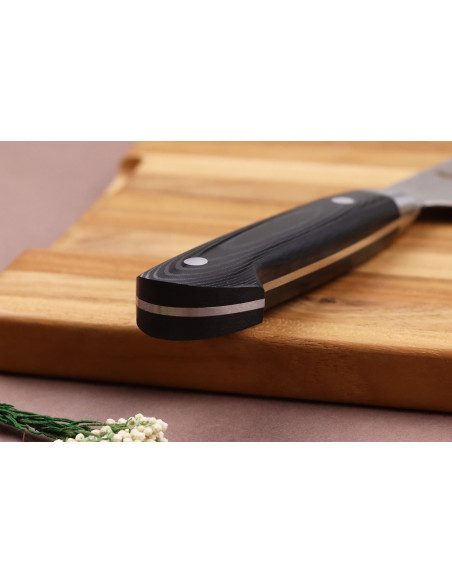
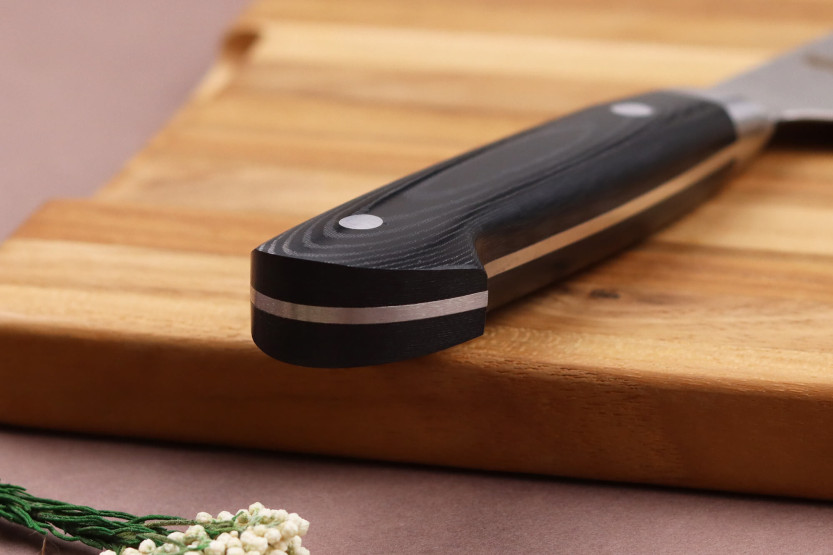
Western in shape, this Japanese knife features a finger rest at the heel. It offers an ergonomic grip for perfectly controlled handling and great comfort of use, particularly for prolonged use. Its practical shape also suits all cooks' hands: right-handed and left-handed alike!
It features 2 stainless steel rivets that hold the full tang blade securely in the handle. So your kengata knife is reliable and safe to use!
To care for your Japanese knife, wash only by hand with a non-abrasive sponge and mild detergent. Once washed, wipe dry immediately and store in a dry place. Do not put your Sakai Takayuki knife in the dishwasher, nor leave it to soak in water.
Find a wide range of Sakai Takayuki knives on KnifeLeader.eu!




 By buying this product you can collect up to