A Japanese Collectible
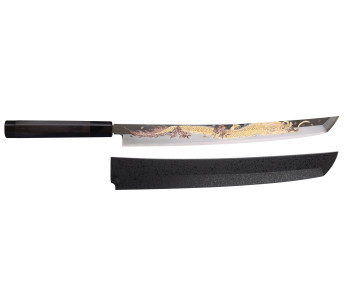
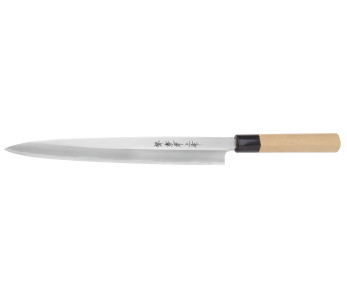
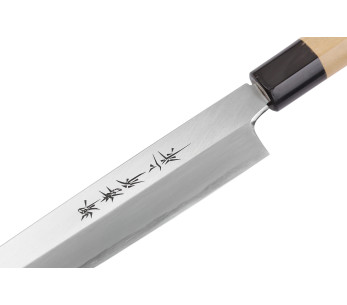
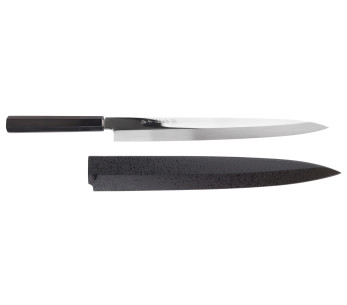
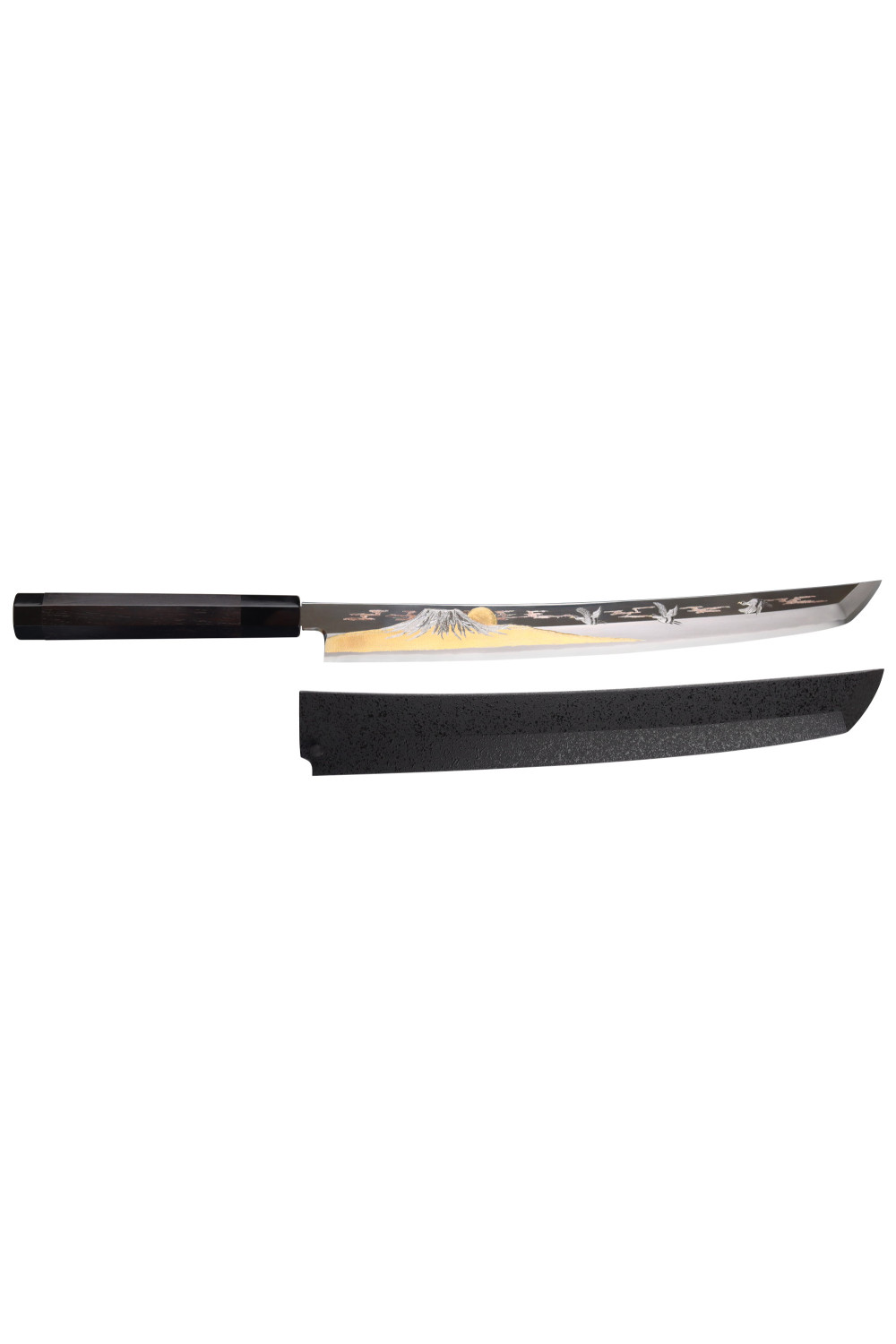
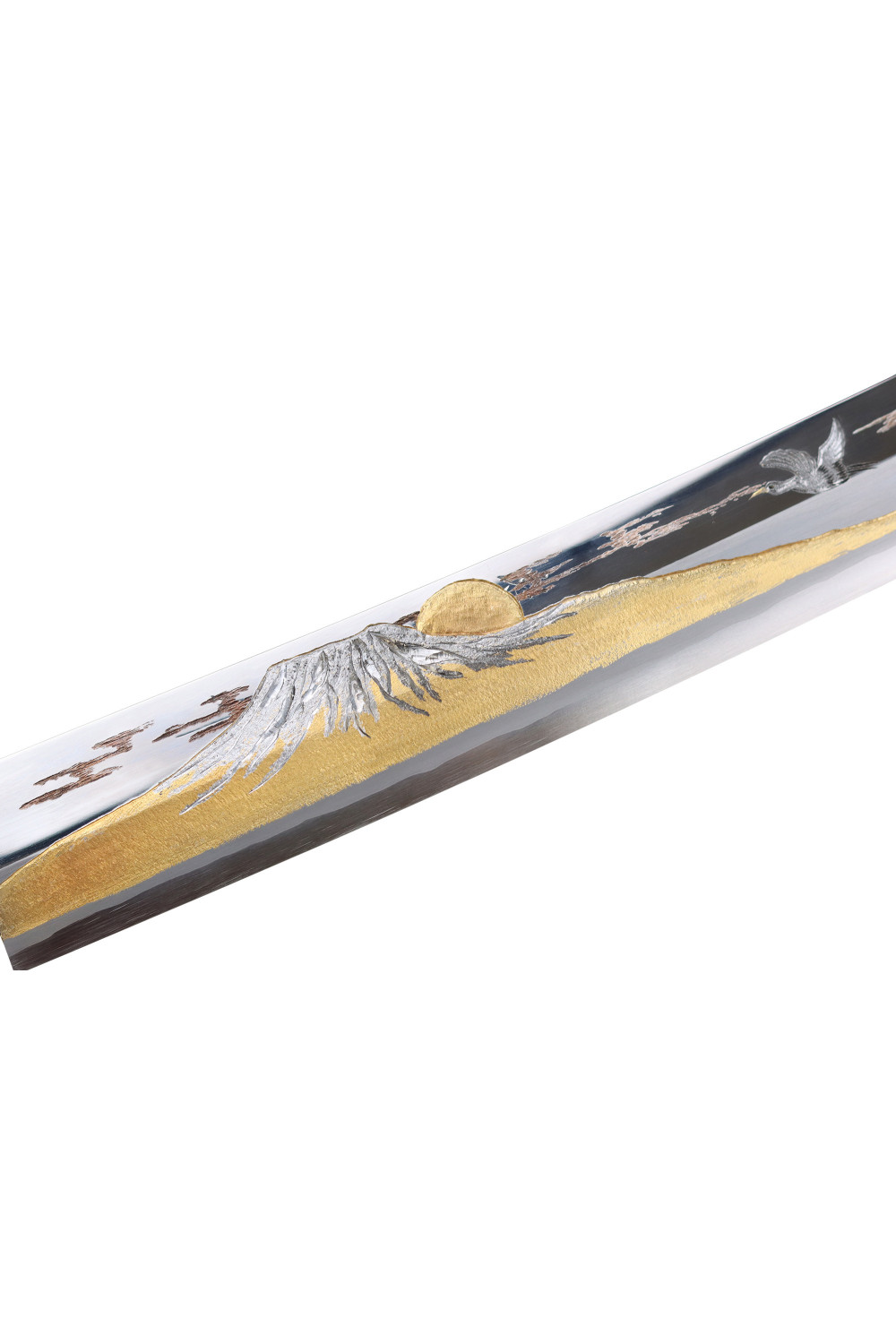
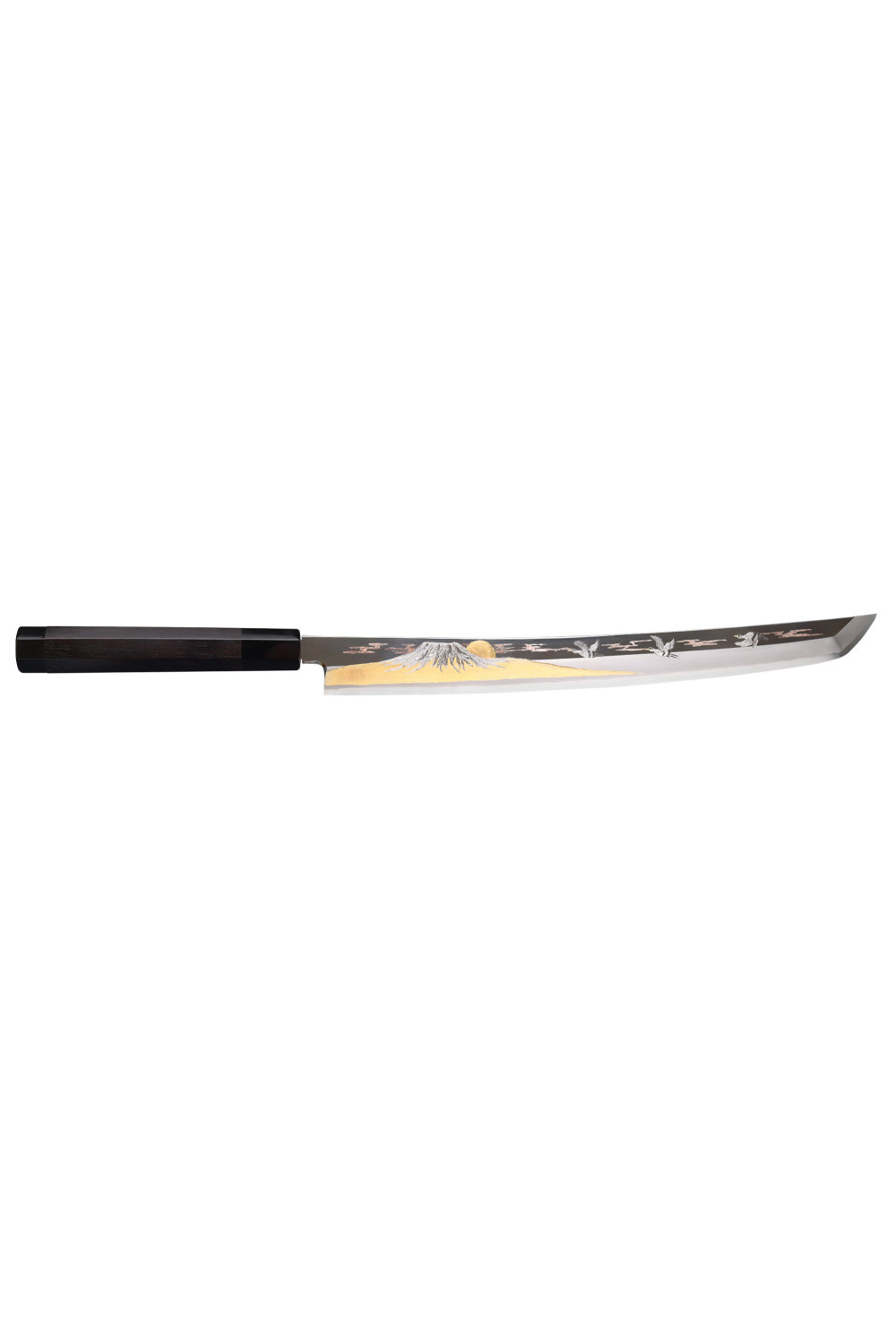
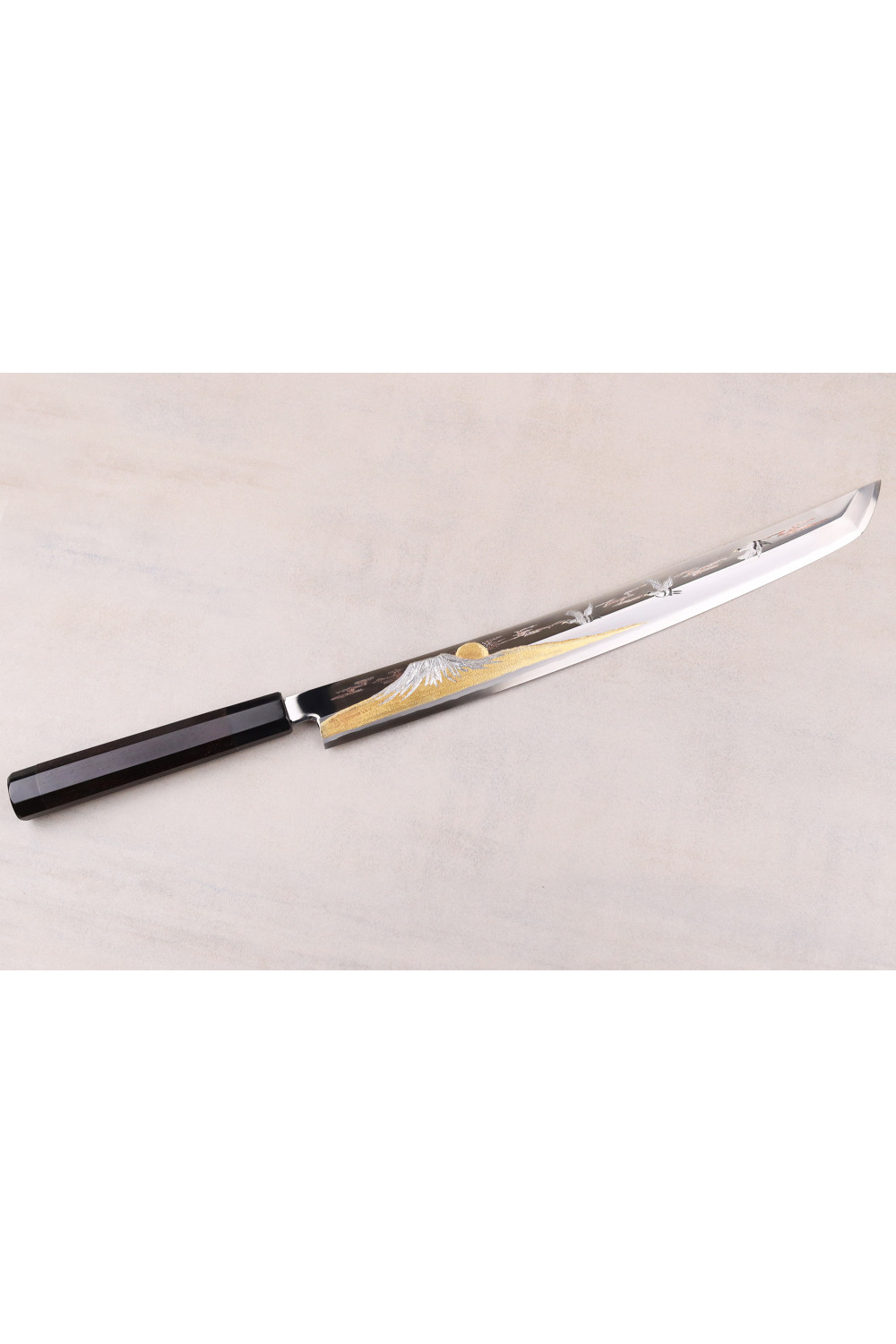
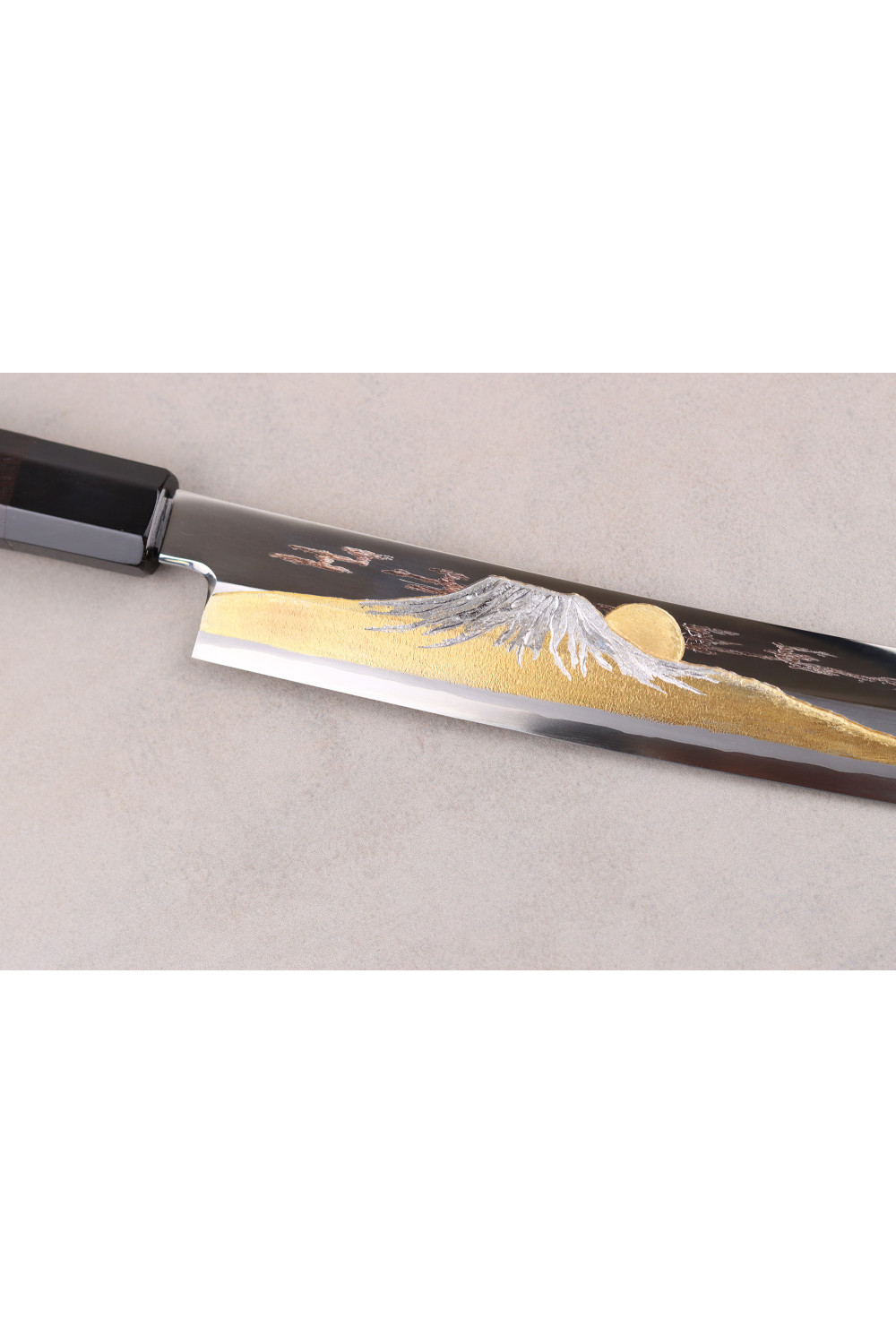
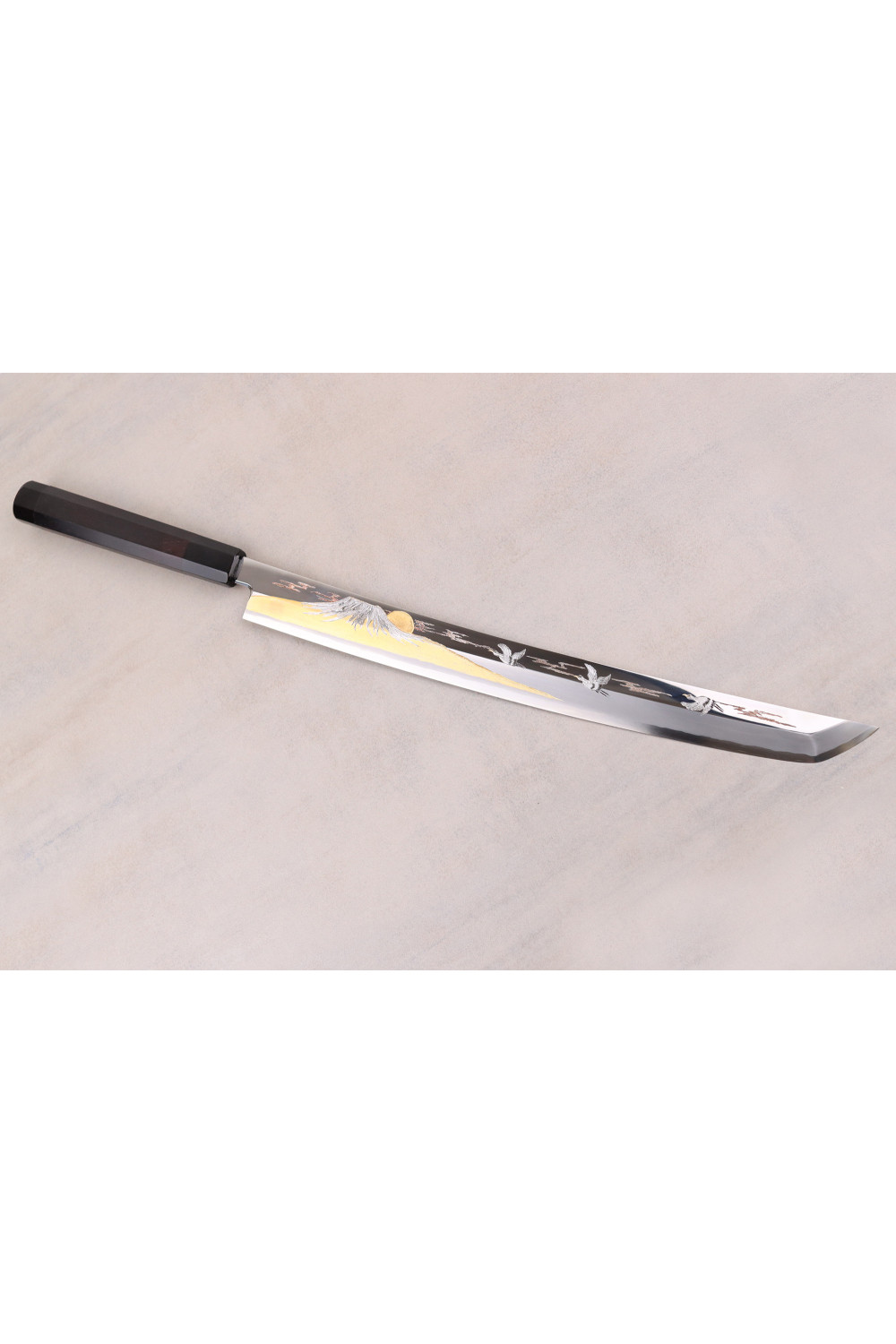
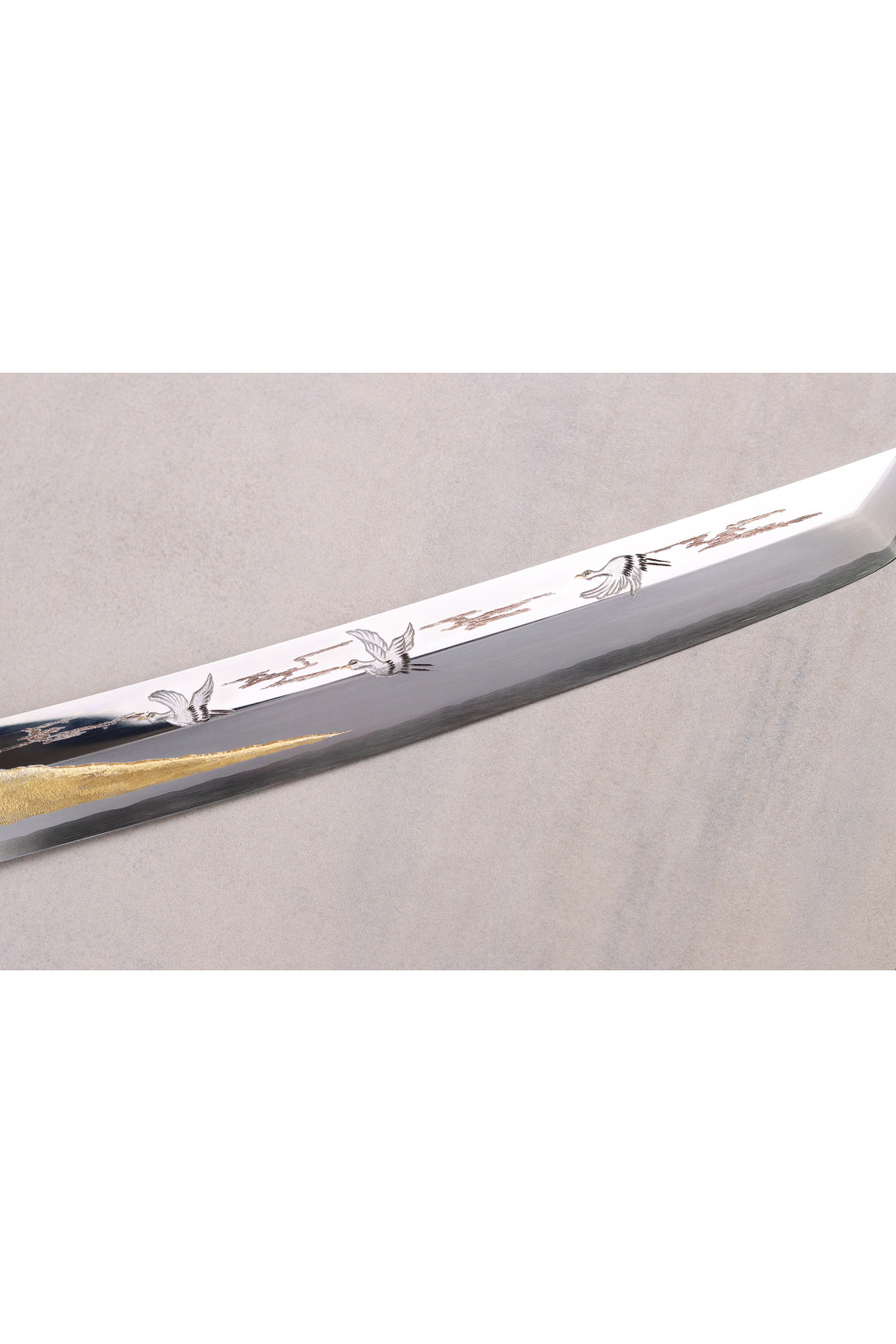
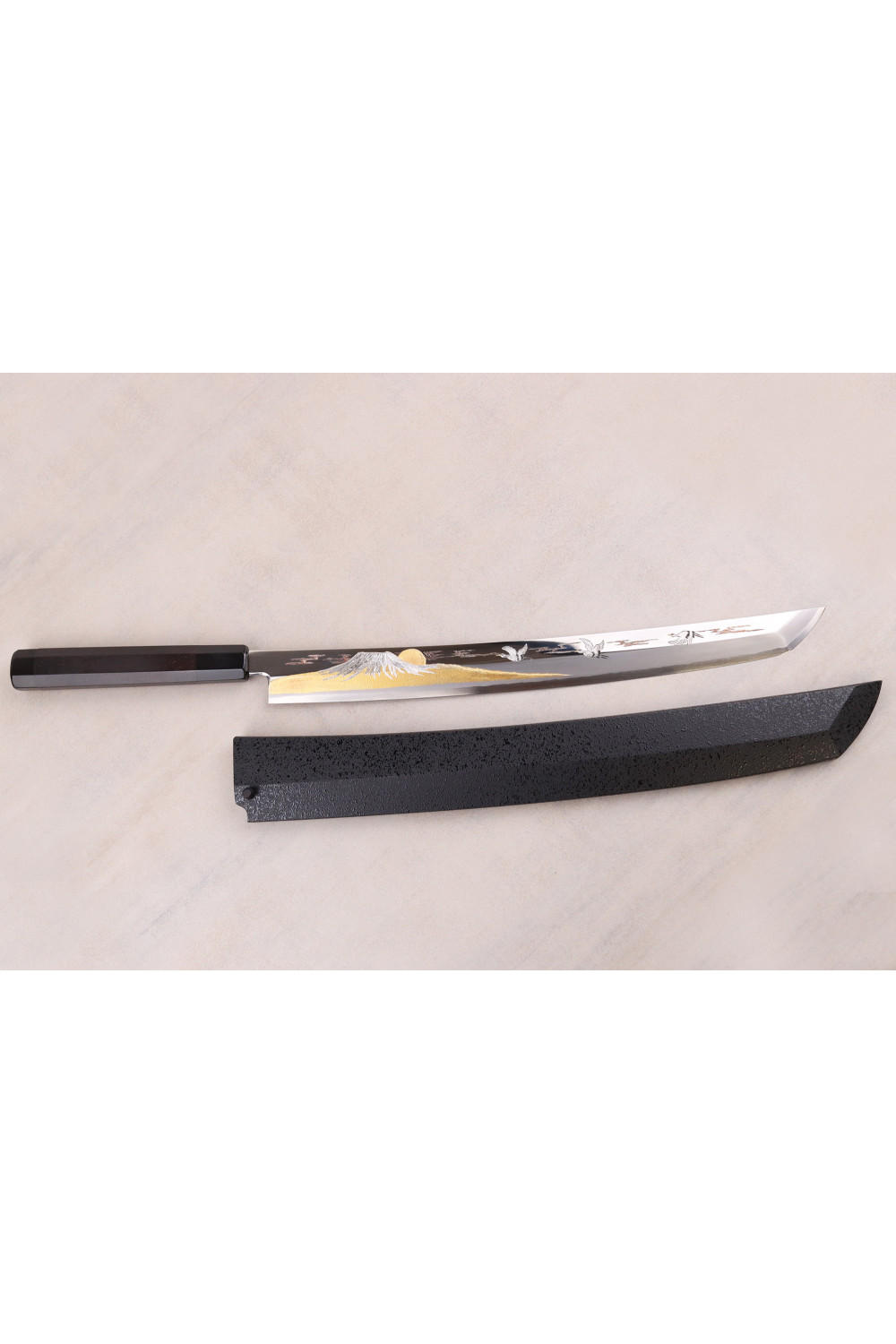
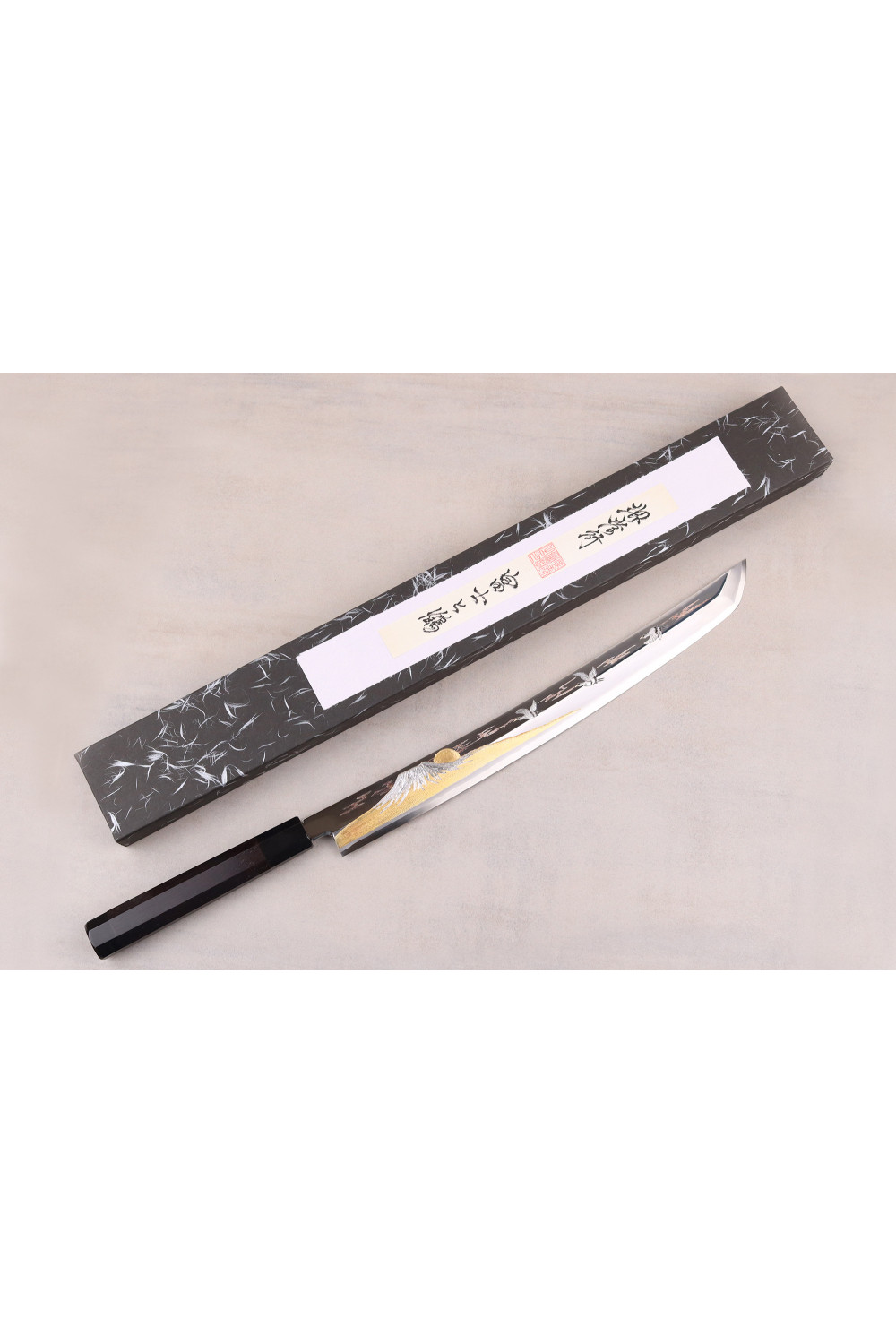
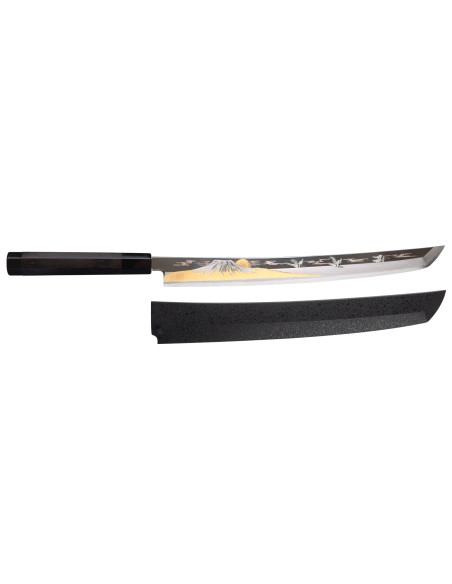
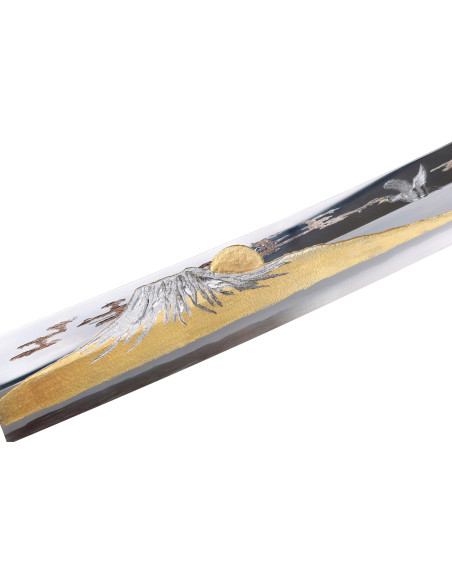
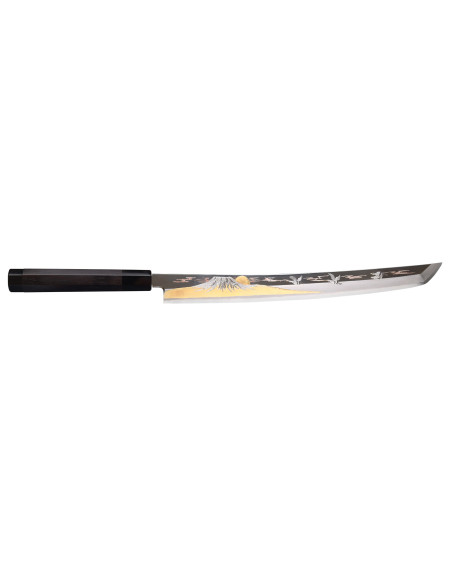
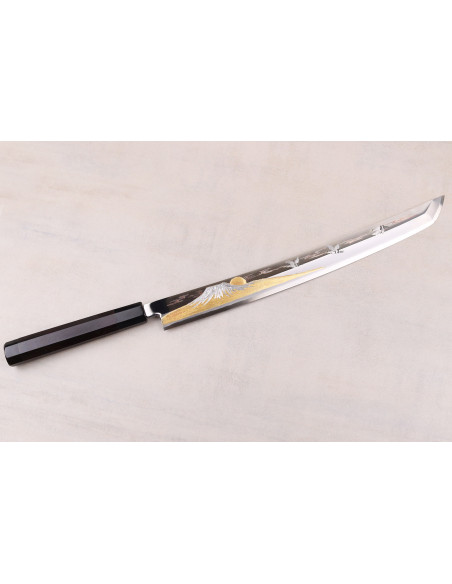
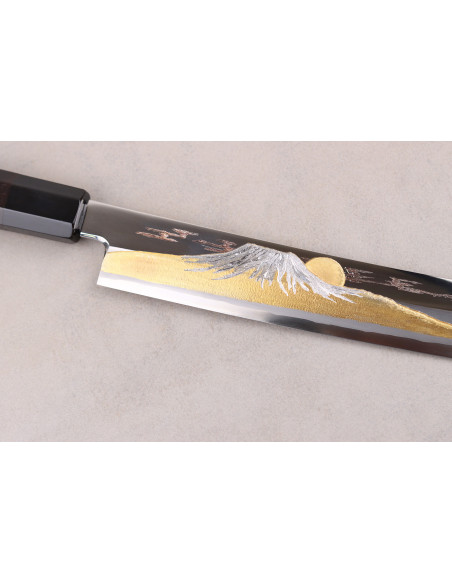
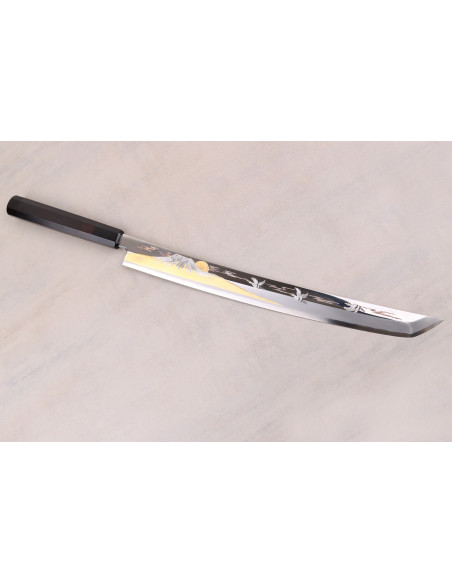
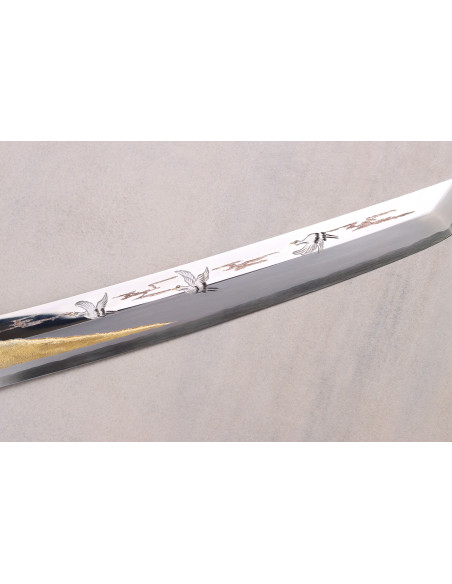
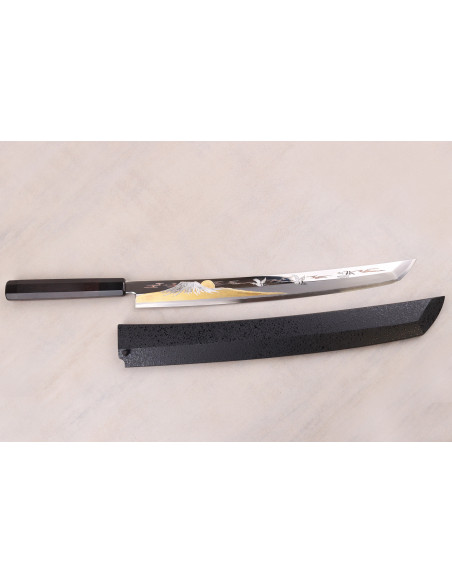
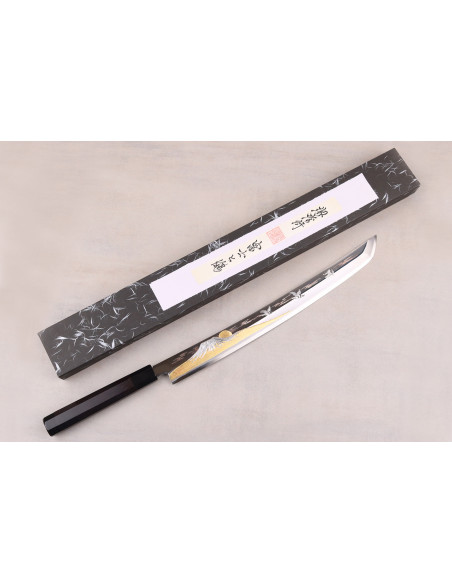
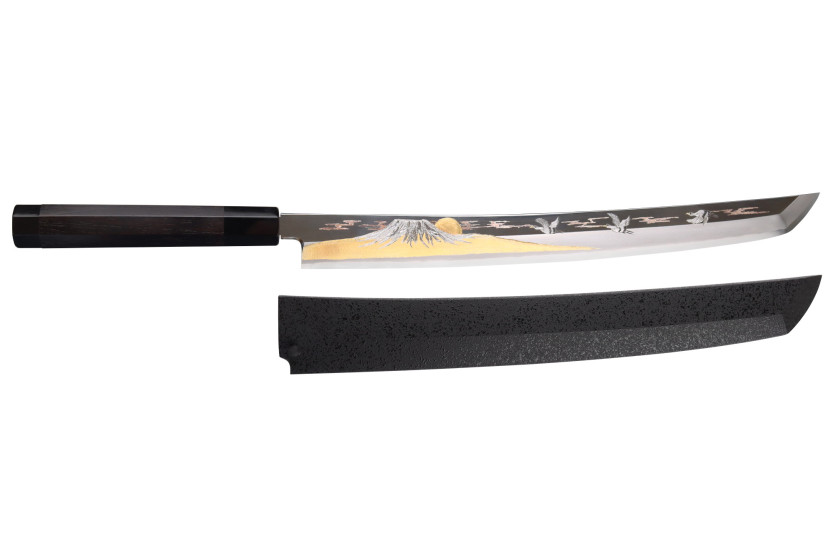
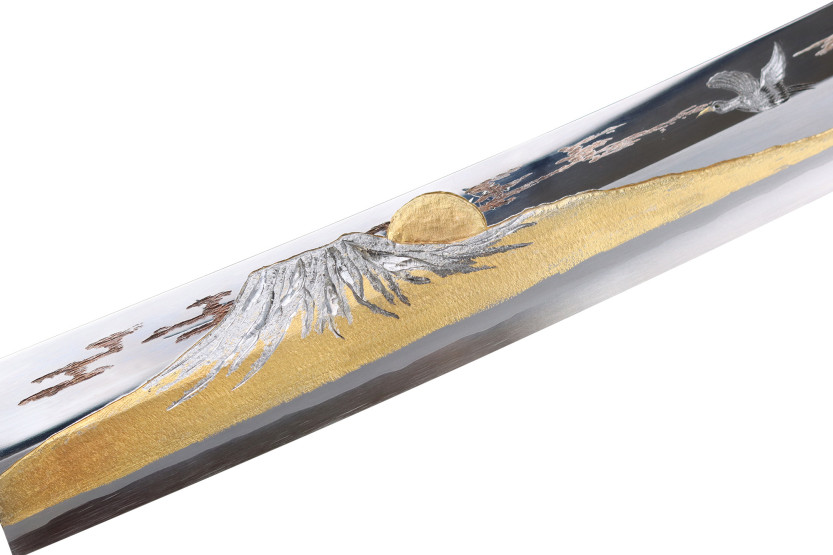
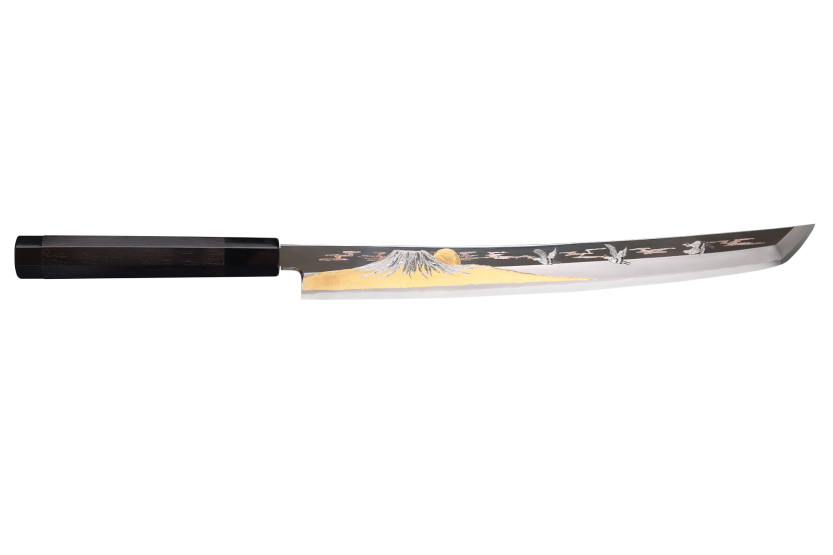
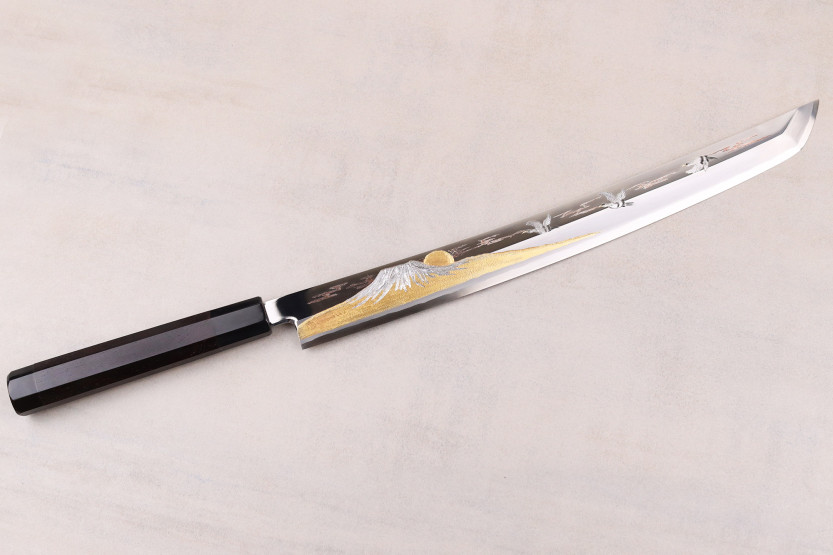
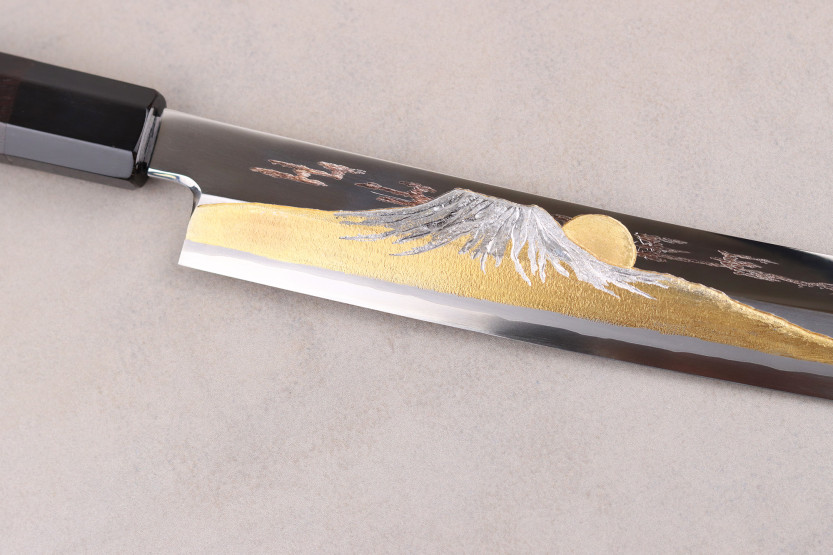
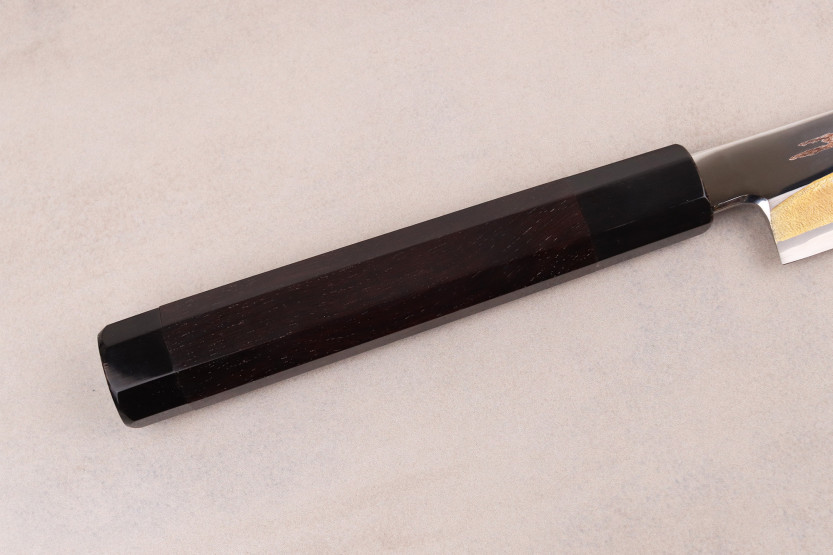
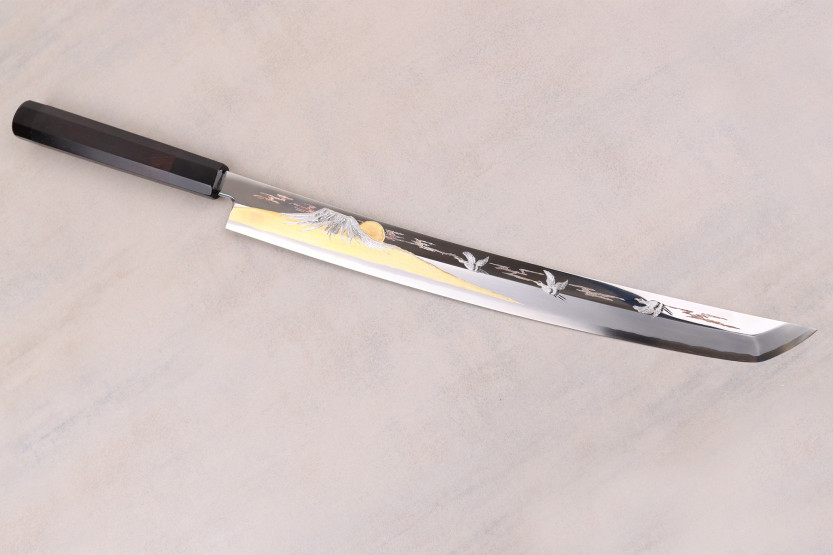
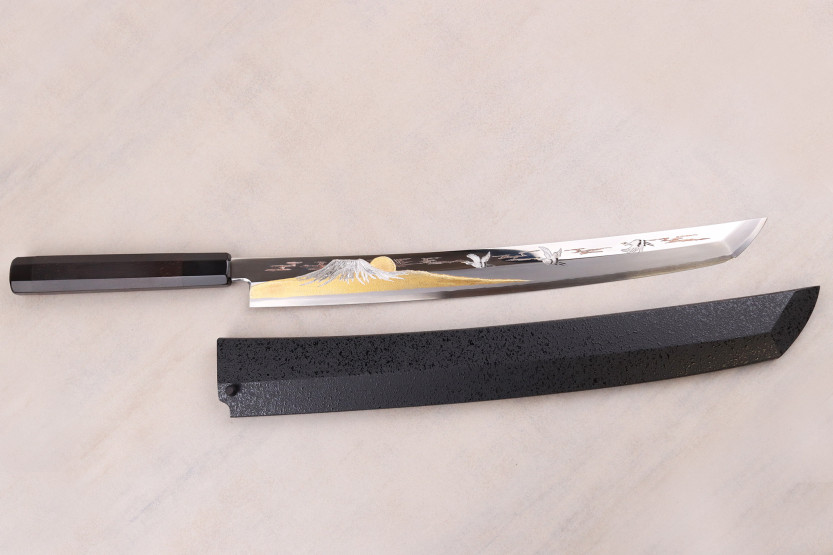
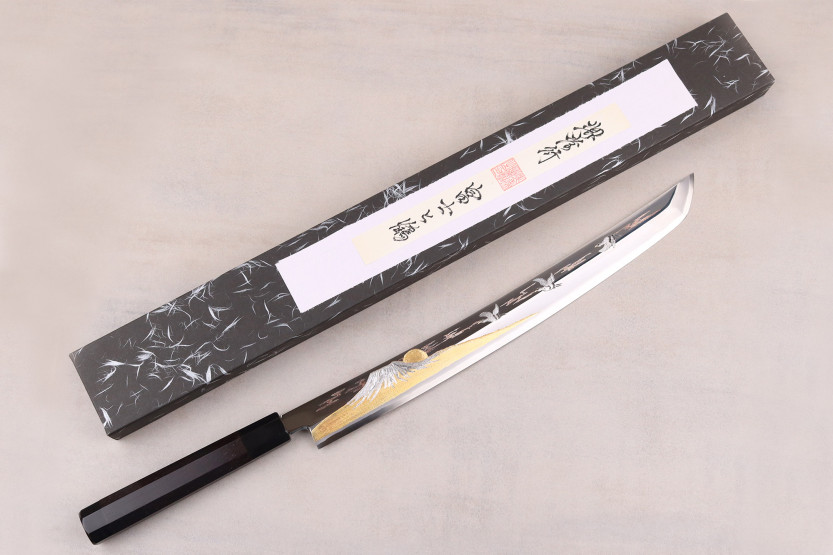
This high-end Japanese Sakai Takayuki Mount Fuji and Cranes knifeis designed for enthusiasts of Japanese cutlery and traditional art. Its 39-centimeter blade features cranes flying toward Mount Fuji, all hand-engraved by artisan Michiko Kubota. Forged in Sakai by Shogo Yamatsuka, it features a Ginsan steel core, a San Mai construction, and a mirror finish. Its octagonal ebony handle is accented with black buffalo horn inlays. The included Kuroishime saya protects the blade when stored. Given its size and decoration, this piece is intended first and foremost to be admired and carefully preserved.
A superb engraved blade with a San Mai structure
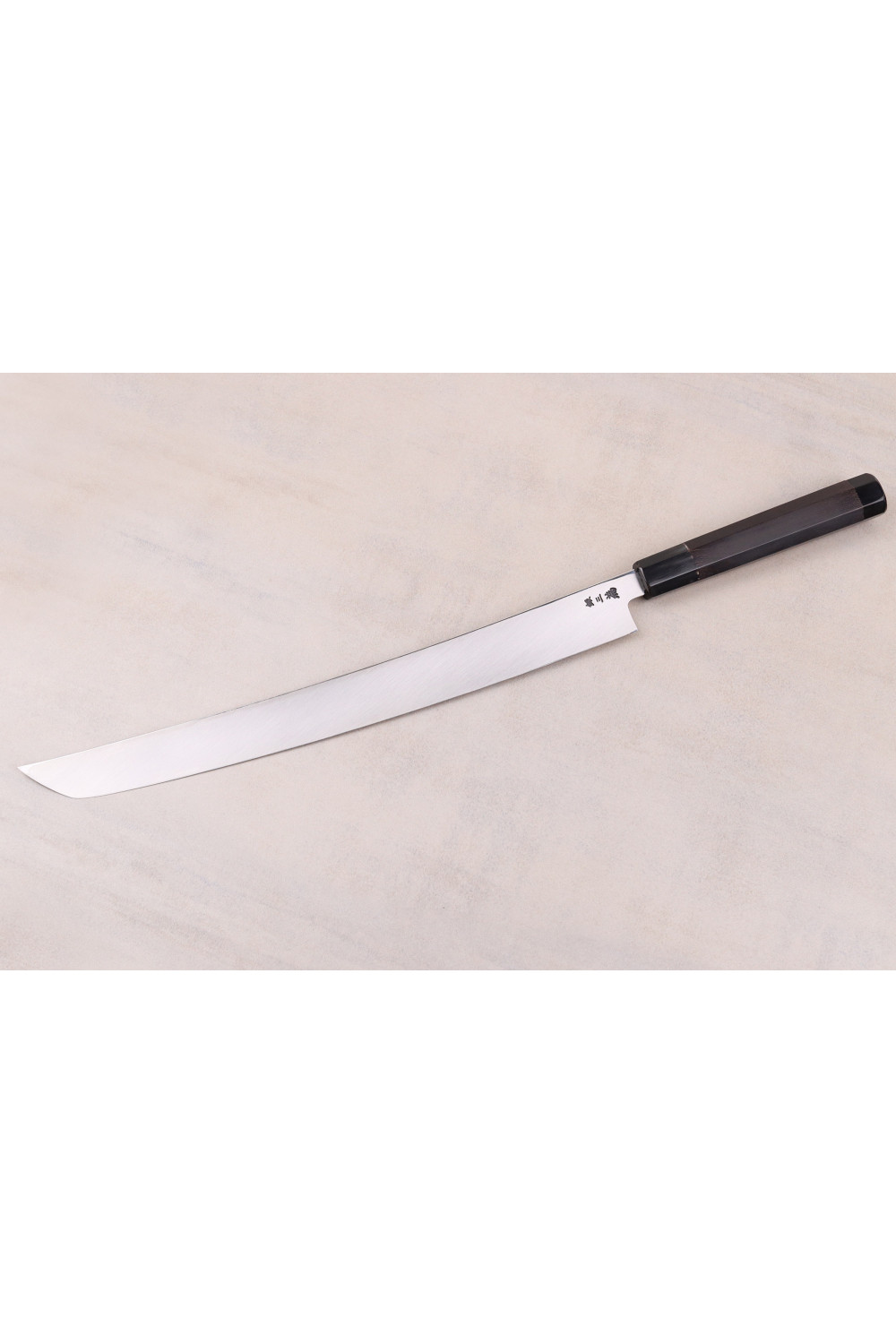
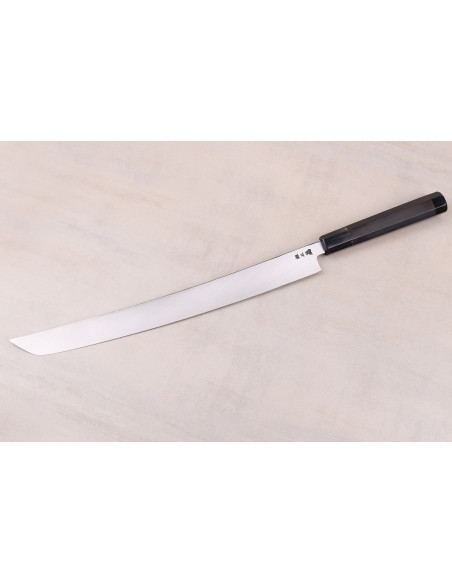
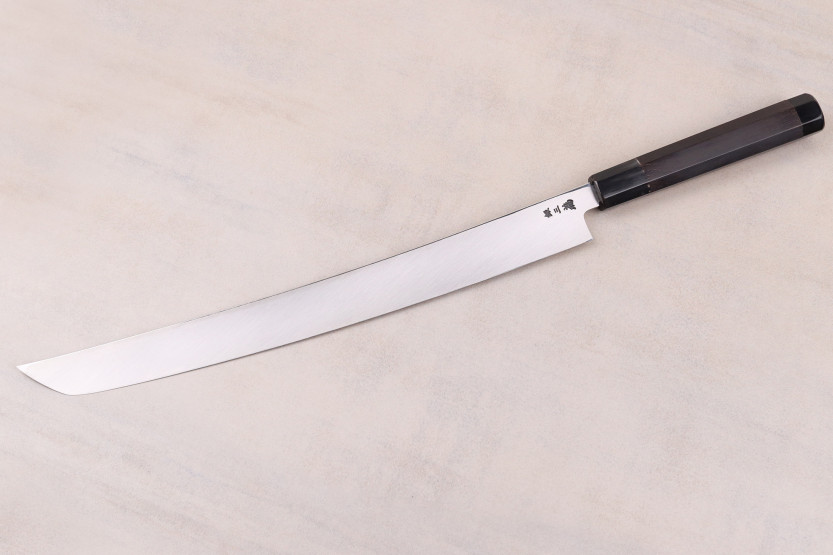
Measuring 39 cm in length, the blade is crafted using the traditional San Mai structure, meaning it consists of three layers of steel stacked on top of one another. Its core is made of Japanese Ginsan steel, which has a carbon content of nearly 0.95% and a hardness of approximately 60 HRC. It is encased in two layers of softer stainless steel. This construction combines a hard core, which helps the blade retain its edge, with a more flexible outer layer that protects the blade.
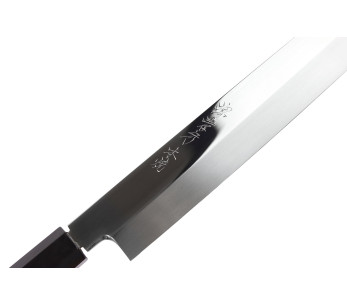
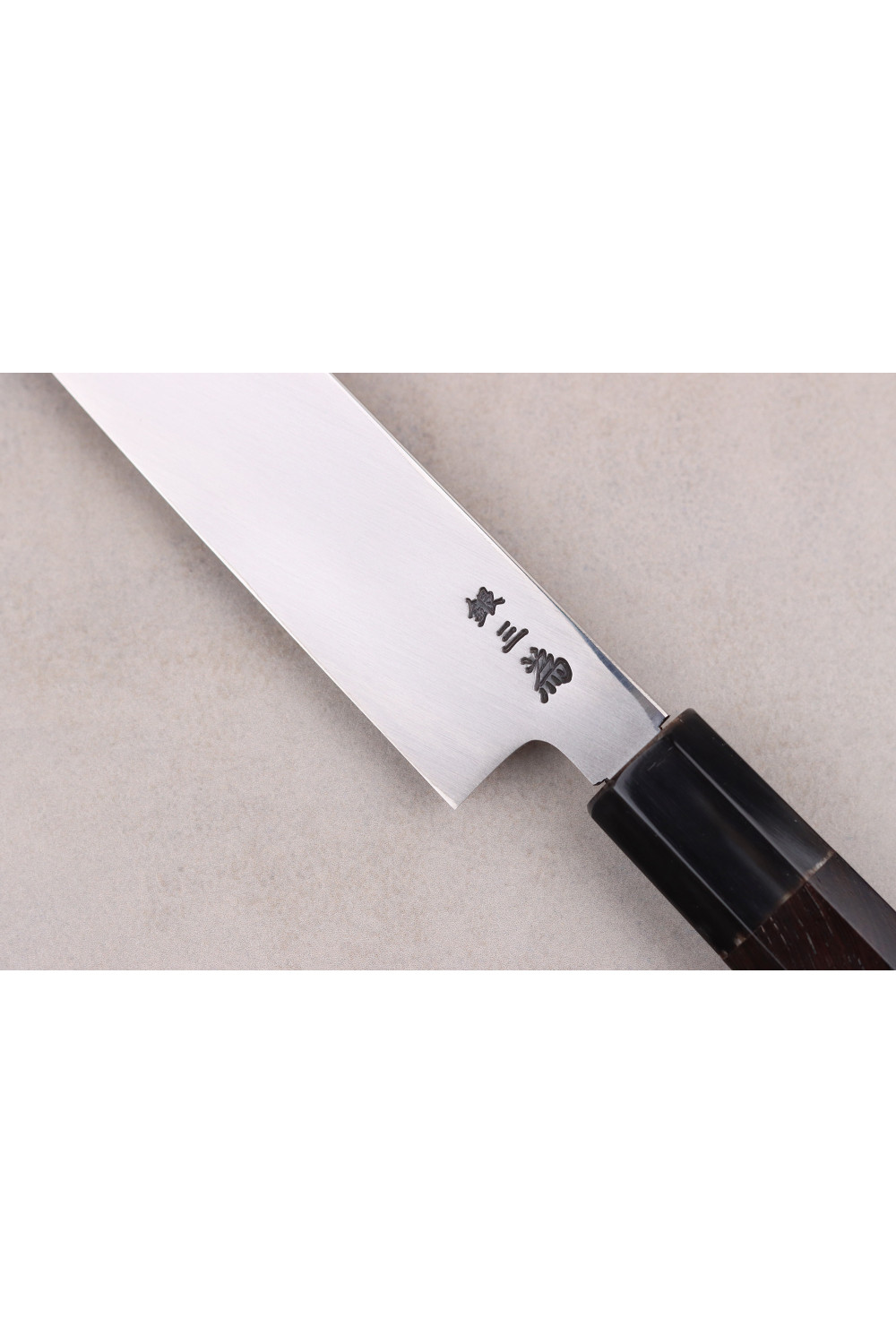
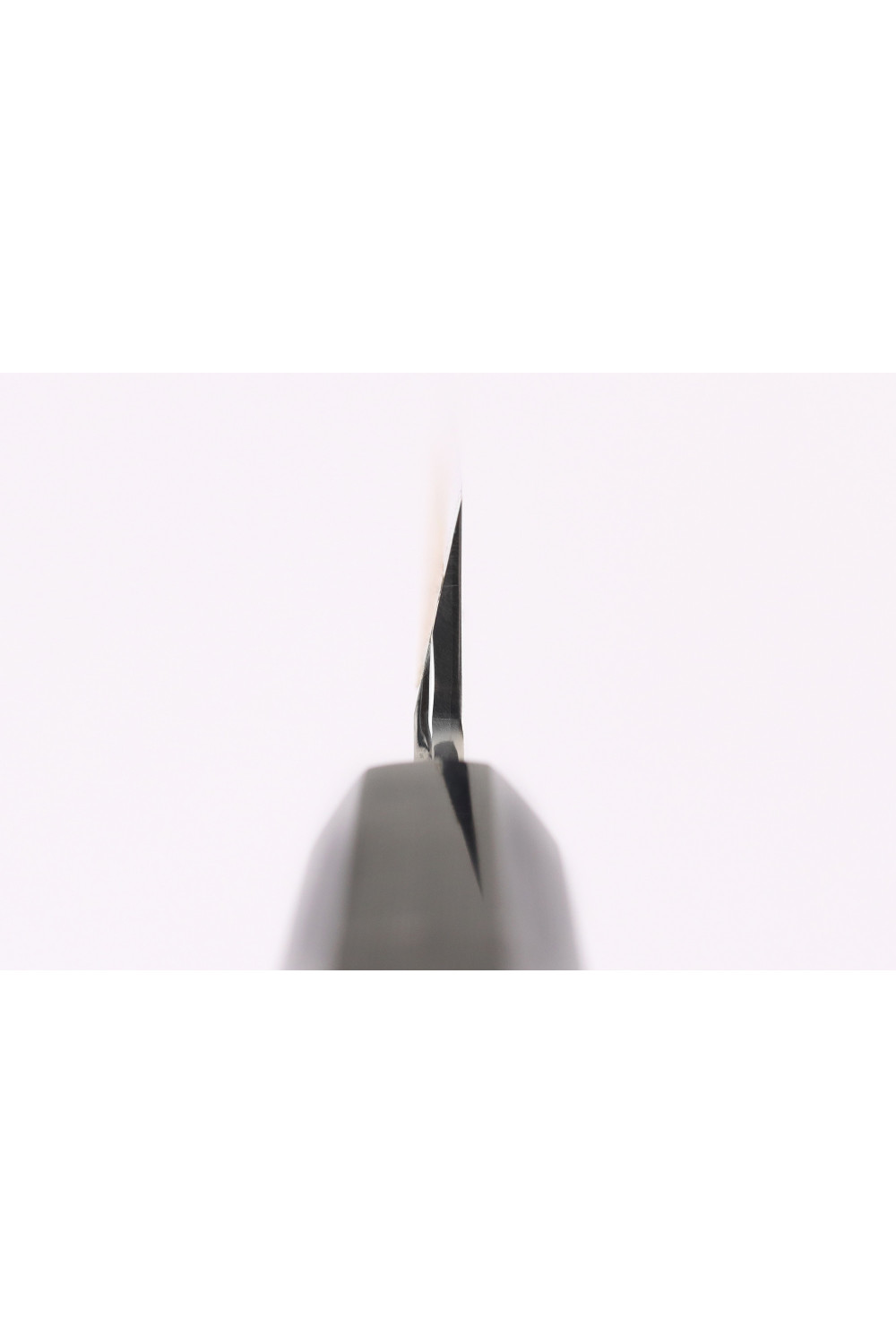
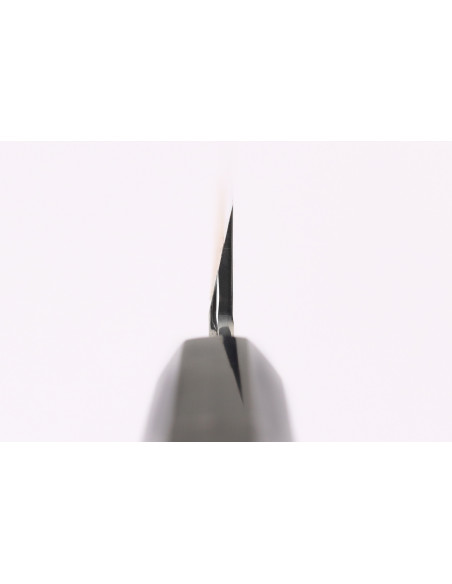
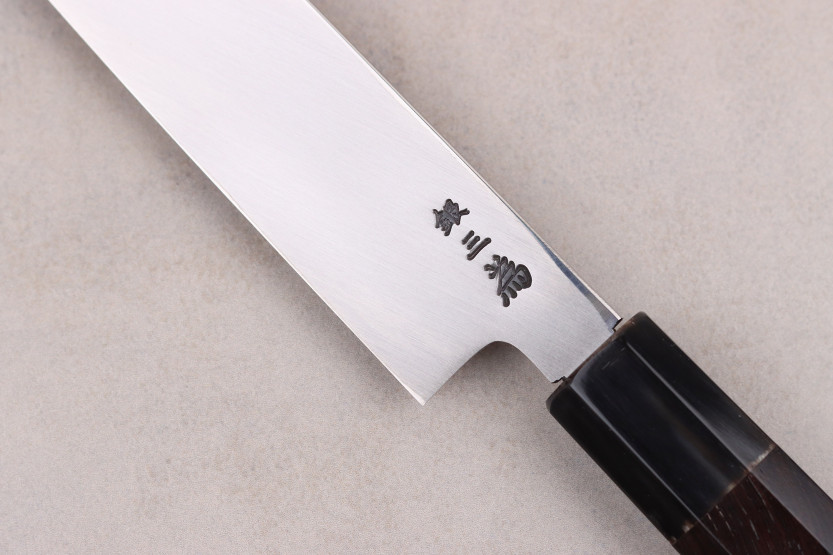
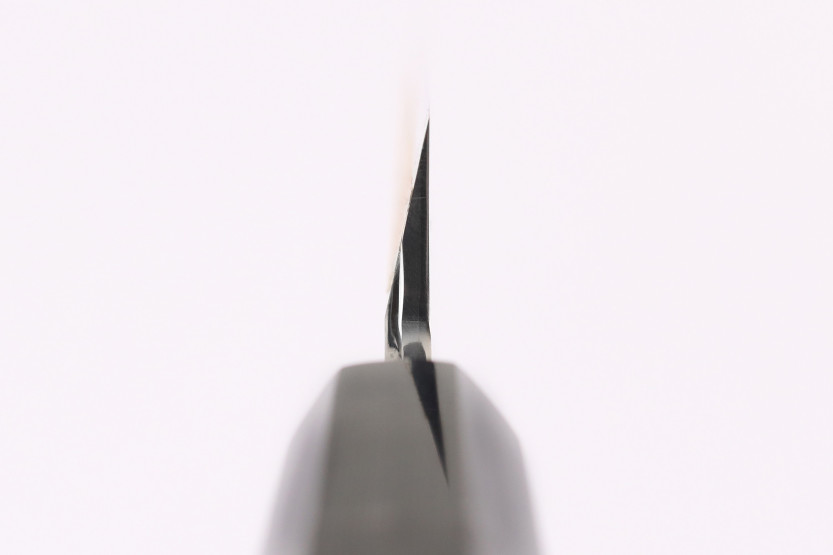
The sakimaru takohiki shape, recognizable by its rounded tip, is associated with Japanese knives designed for cutting fish.The asymmetrical grind is designed for right-handed users. As for the mirror finish, it reflects light and highlights the blade’s lines.
The forging is done by Shogo Yamatsuka, a craftsman from Sakai who specializes in Ginsan steel. Mitsuo Yamatsuka then performs the sharpening: he shapes the edge and sets the cutting edge.
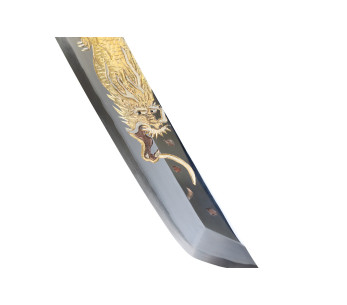
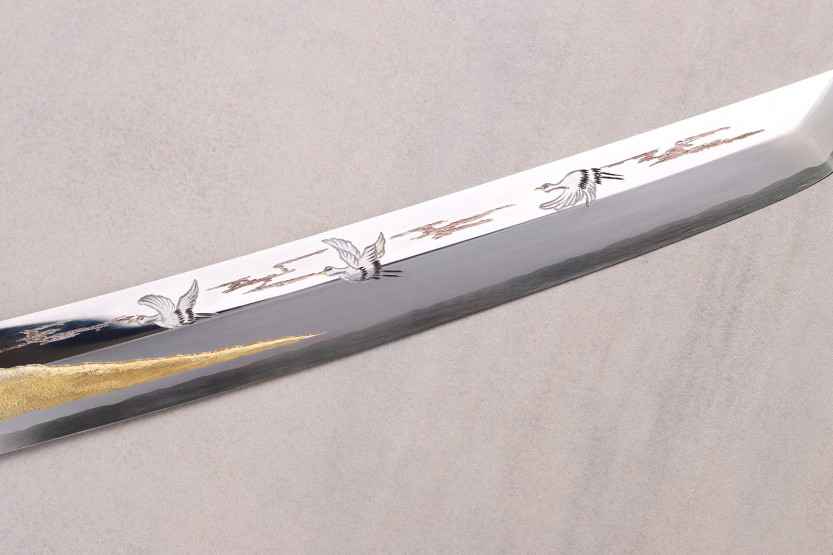
Michiko Kubota has hand-engraved a beautiful scene depicting cranes flying over Mount Fuji onto the blade’s surface. Using engraving tools, she carves the lines and reliefs directly into the metal. The colored sections are created using plating, a technique that involves depositing a thin layer of metal onto the surface. Combined with the reflections of the mirror finish, this decoration gives each blade a striking visual presence. Given its length and ornamentation, this piece requires careful handling.
A traditional ebony handle
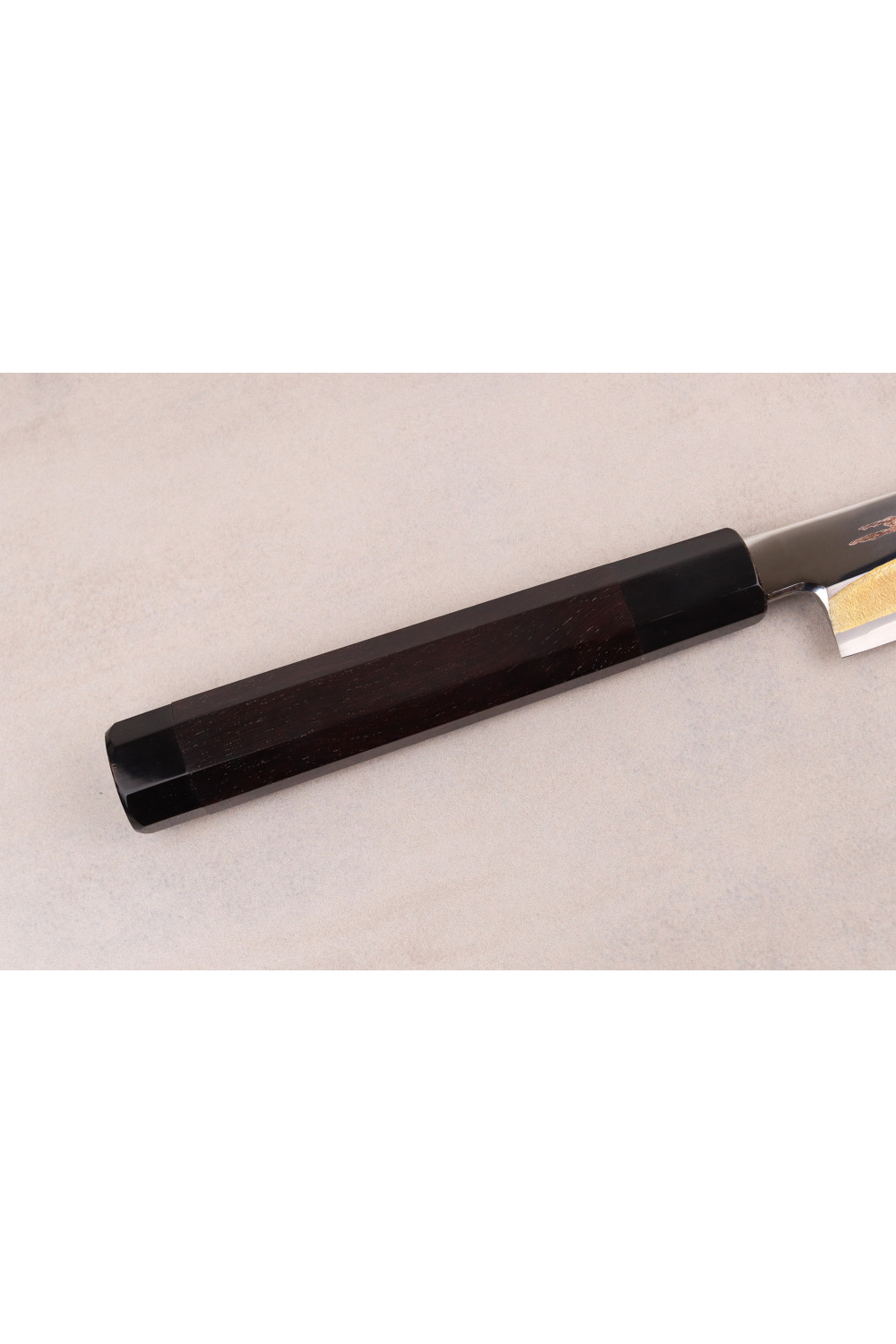
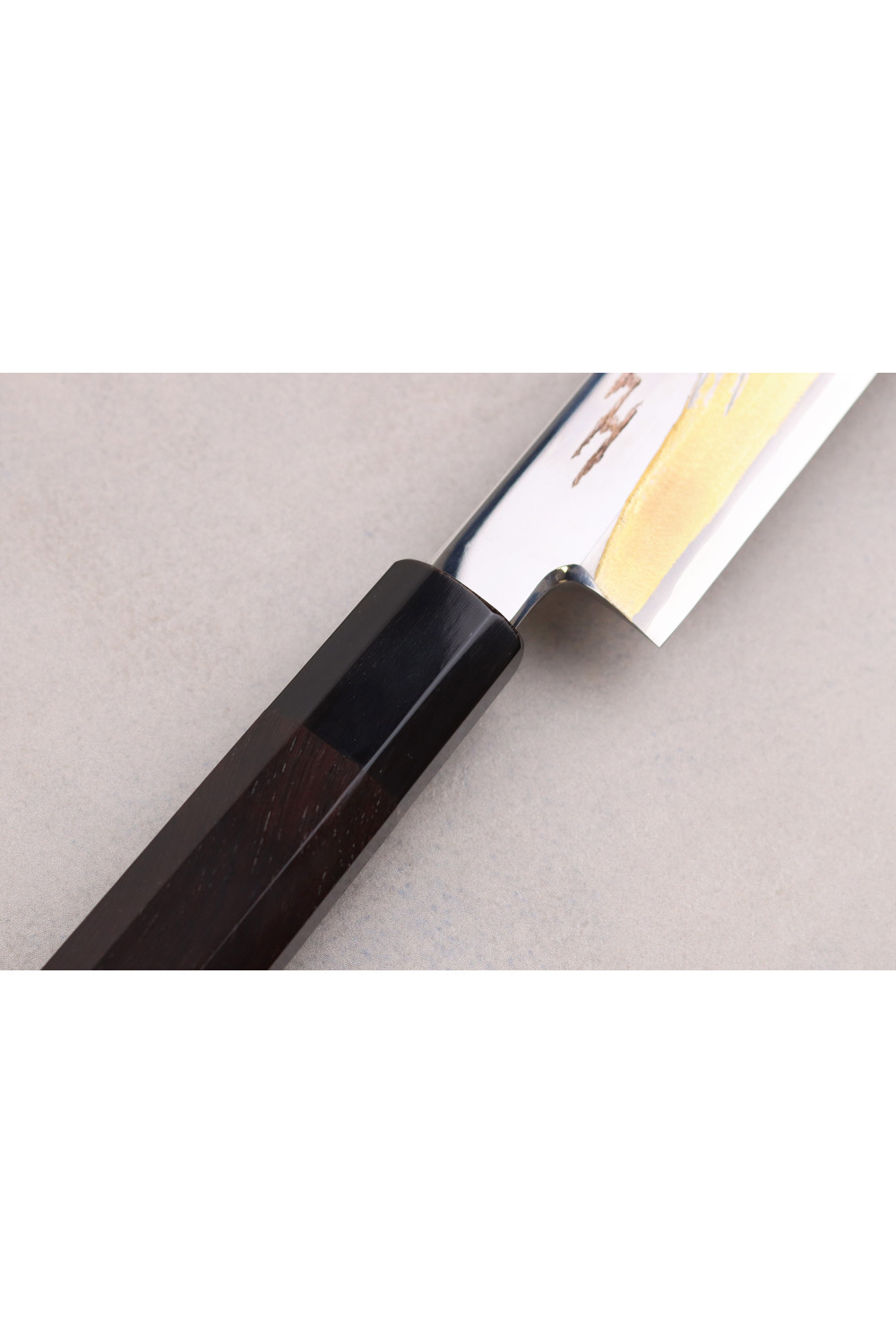
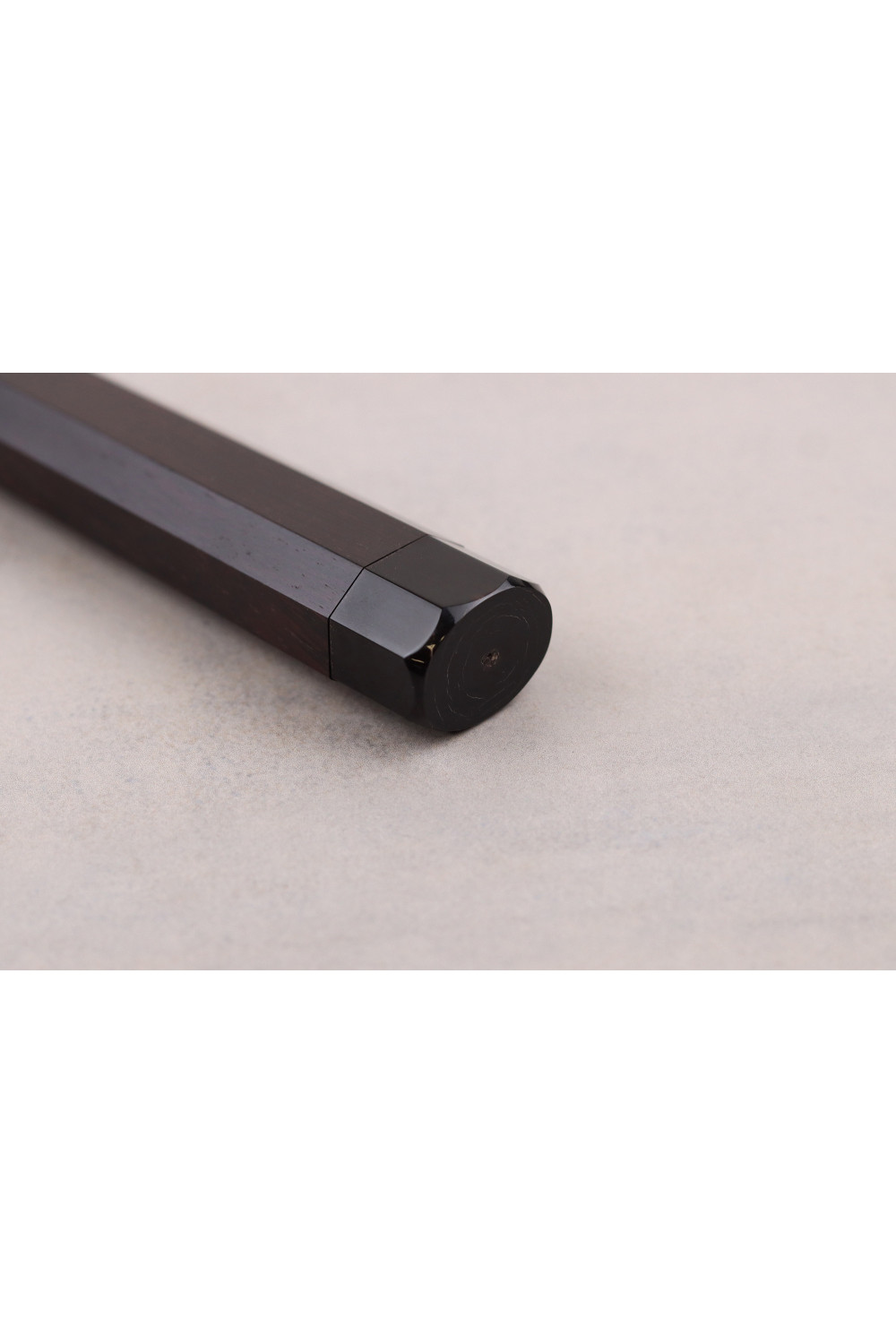
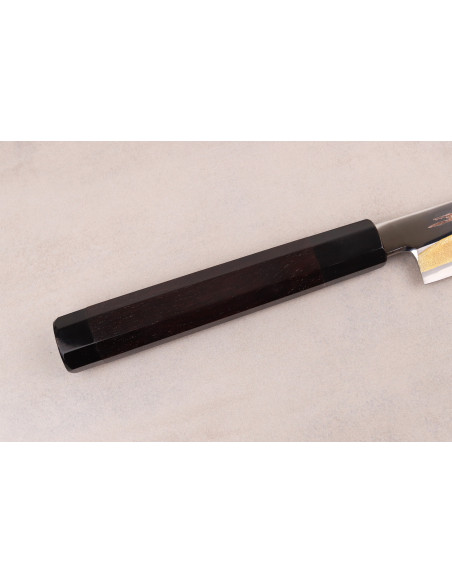
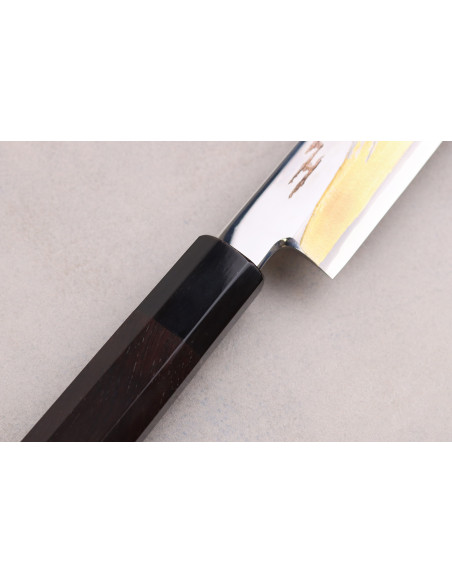
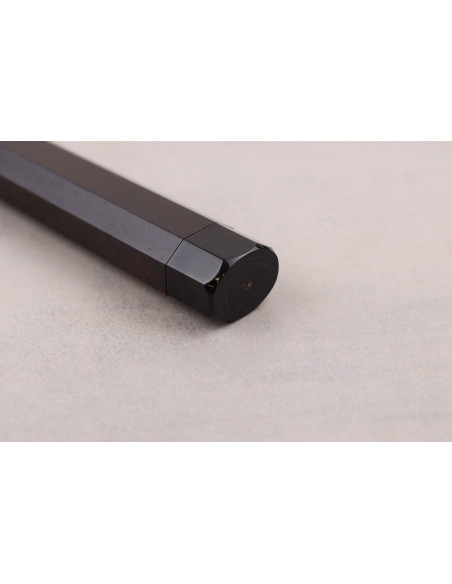
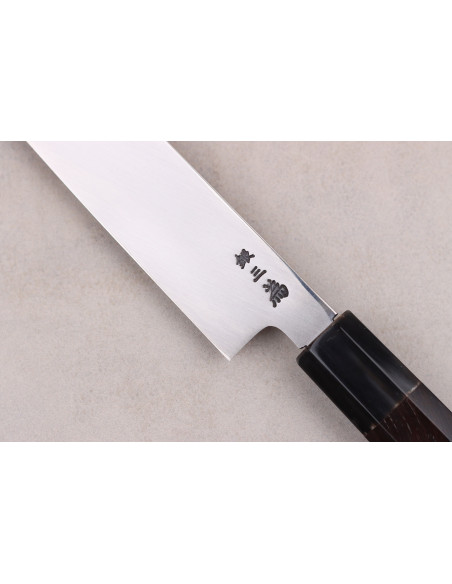
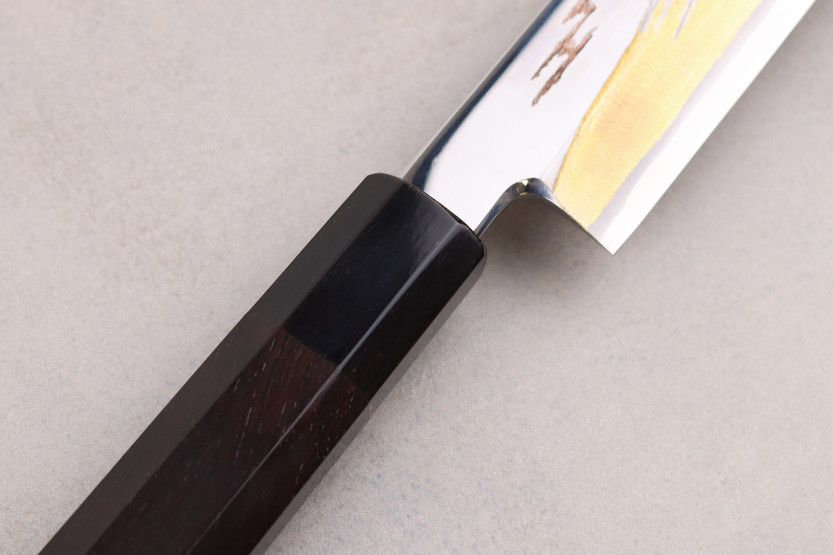
The handle is carved fromebony, a dark wood whose hue contrasts with the blade’s brilliance. Its surface feels smooth to the touch and has an elegant appearance. Since it is a natural material, the color and grain may vary from one piece to another: each handle thus has its own unique nuances.
Its octagonal shape follows a traditional Japanese profile. The eight sides provide grip points to position the handle in the hand and ensure excellent maneuverability.
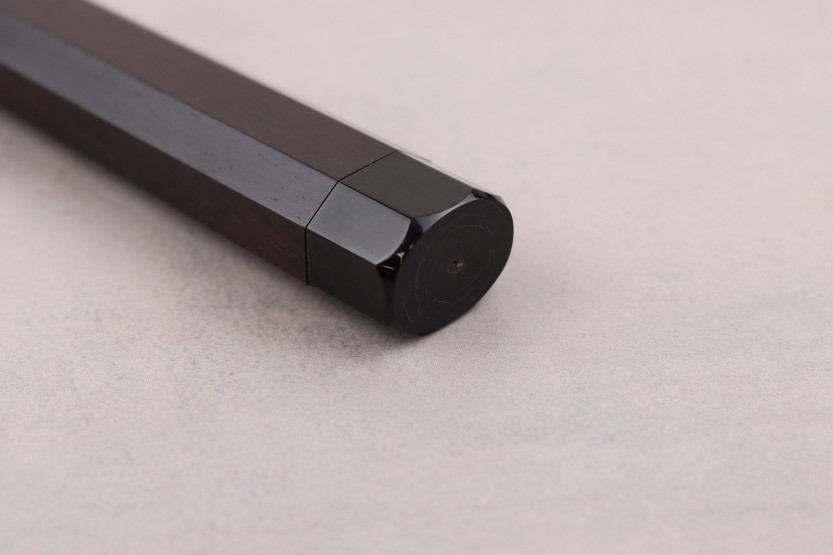
The bolster and pommel are made of black buffalo horn. They complement the handle’s silhouette and harmonize with the color of the ebony. Natural variations in the horn may also result in slight differences in appearance from one knife to another.
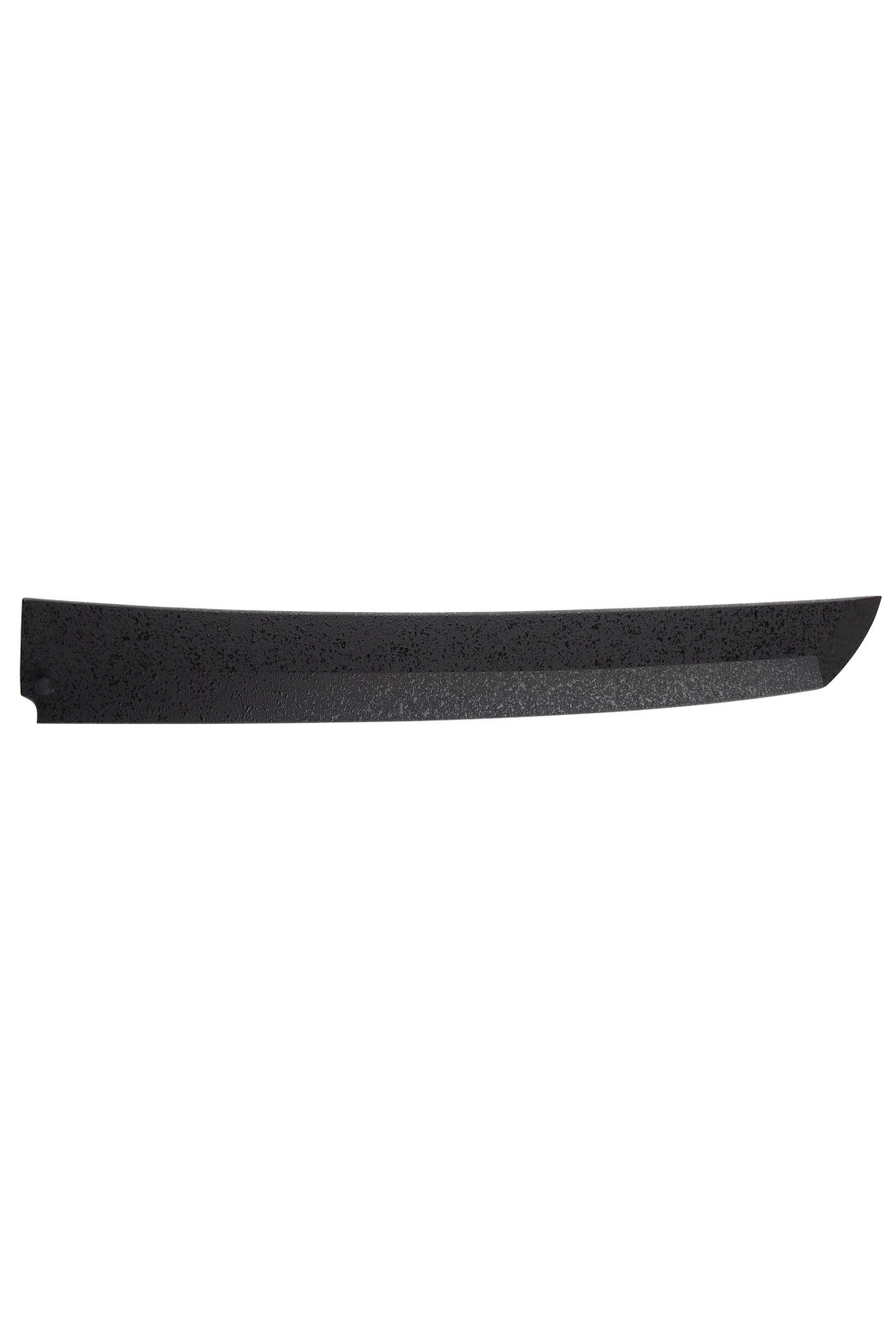
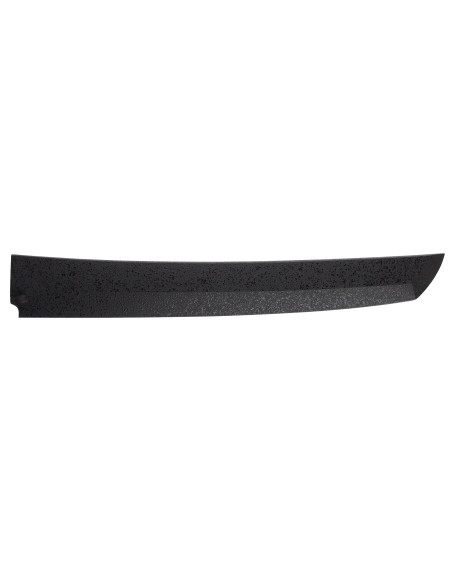
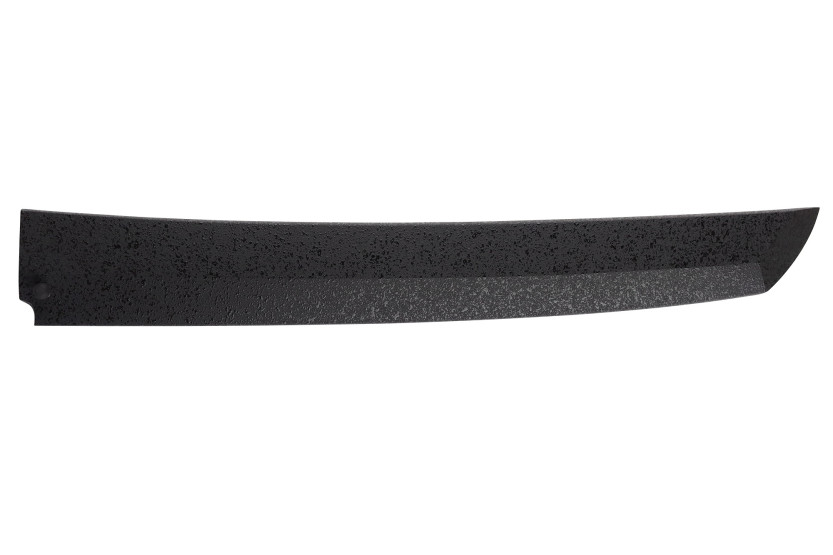
A Kuroishime saya is included with the knife. This sheath protects the blade when the knife is stored or transported. “Kuroishime” is a term referring to its textured black finish, which evokes a mineral-like appearance. Before placing the knife in the sheath, carefully dry the blade to prevent moisture from remaining inside the sheath.
Key Points
-
- 39 cm blade: a long blade suitable for cutting fish
-
- San Mai construction: three alternating layers of steel
- Ginsan steel core: Japanese stainless steel
- Hardness of approximately 60 HRC: helps maintain the edge
- Asymmetrical grind: designed for right-handed users
-
- Mirror finish: highlights the blade’s engraving
- Forged by Shogo Yamatsuka: handcrafted blade
- Sharpened by Mitsuo Yamatsuka: high-performance sharpening
- Engraved by Michiko Kubota: scene of cranes flying toward Mount Fuji
-
- Octagonal ebony handle: ease of handling and aesthetic appeal
- Black horn bolster and pommel: finishes matching the handle
- Comes with a Kuroishime saya: protective blade sheath
- Made in Sakai: a stronghold of Japanese cutlery
Caring for the blade and its engraving
For kitchen use, focus on thin cuts and avoid hard foods and bones. Use a wooden or synthetic cutting board.
After use, wash the blade by hand, then dry it immediately with a soft cloth. Make sure it is completely dry before storing it in its saya. Do not put it in the dishwasher or leave it soaking in the sink. To sharpen it, use a whetstone suited to the blade’s profile.
Japanese craftsmanship
Shogo Yamatsuka is the artisan who forged the blade of this knife. He learned the art of forging from his father, who was also a blacksmith. He works with several types of steel and specializes in Ginsan. His expertise includes hizukuri, a method of shaping steel through forging.
The engraving is entrusted to Michiko Kubota, an artisan specializing in knife decoration. She begins by sketching her designs, then transfers them to the metal using a hammer and chisels. Shaping the relief and lines requires mastery of the angle, pressure, and force of the strike.
These artisans work in Sakai, in Osaka Prefecture. The city is known for its cutlery tradition, which has developed over the centuries, particularly in the production of kitchen knives. This creation thus brings together the forging, sharpening, and engraving work of several Japanese artisans.
Many Sakai Takayuki knives are available on our website!




 By buying this product you can collect up to