Find out more about the Japanese blacksmith
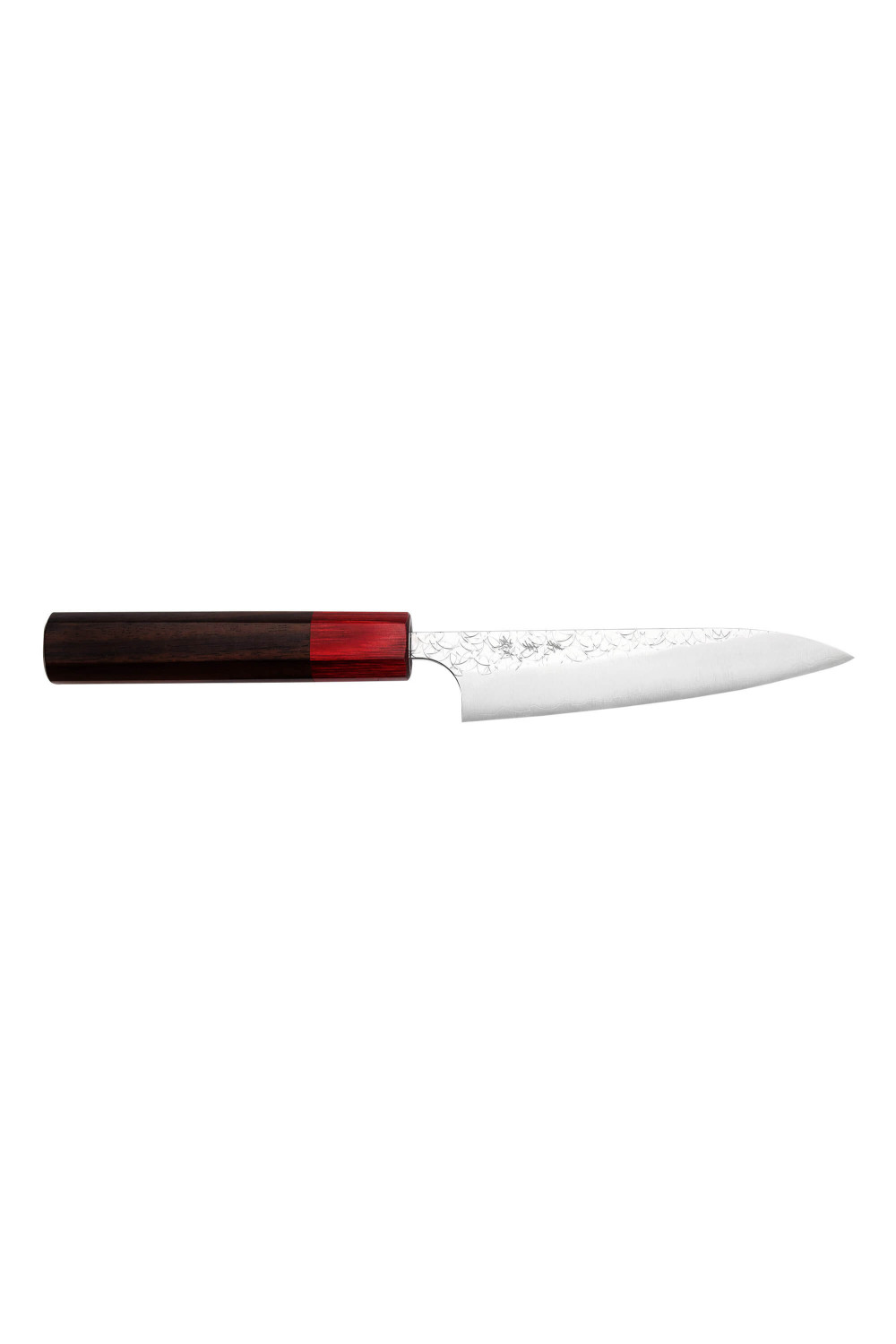
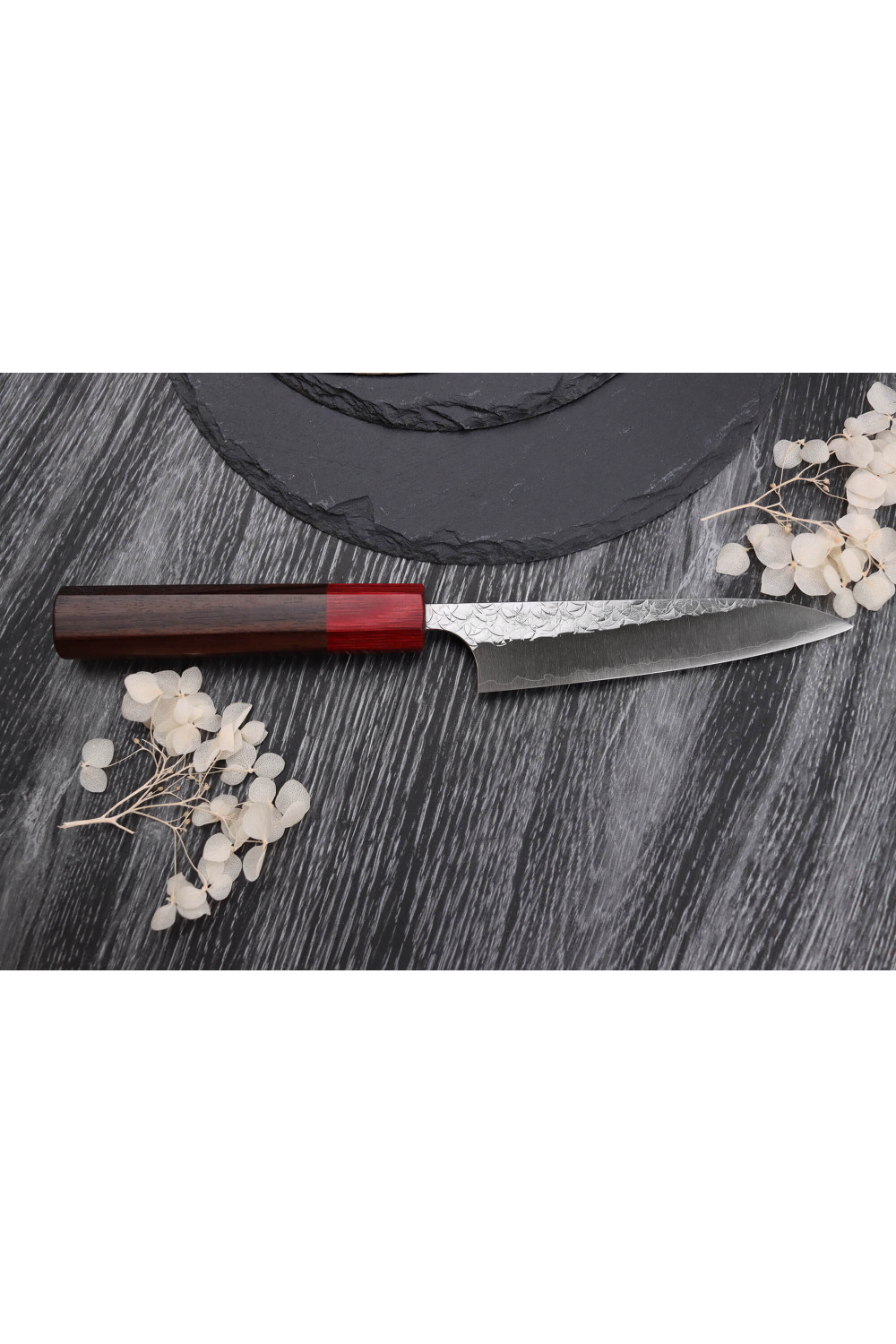
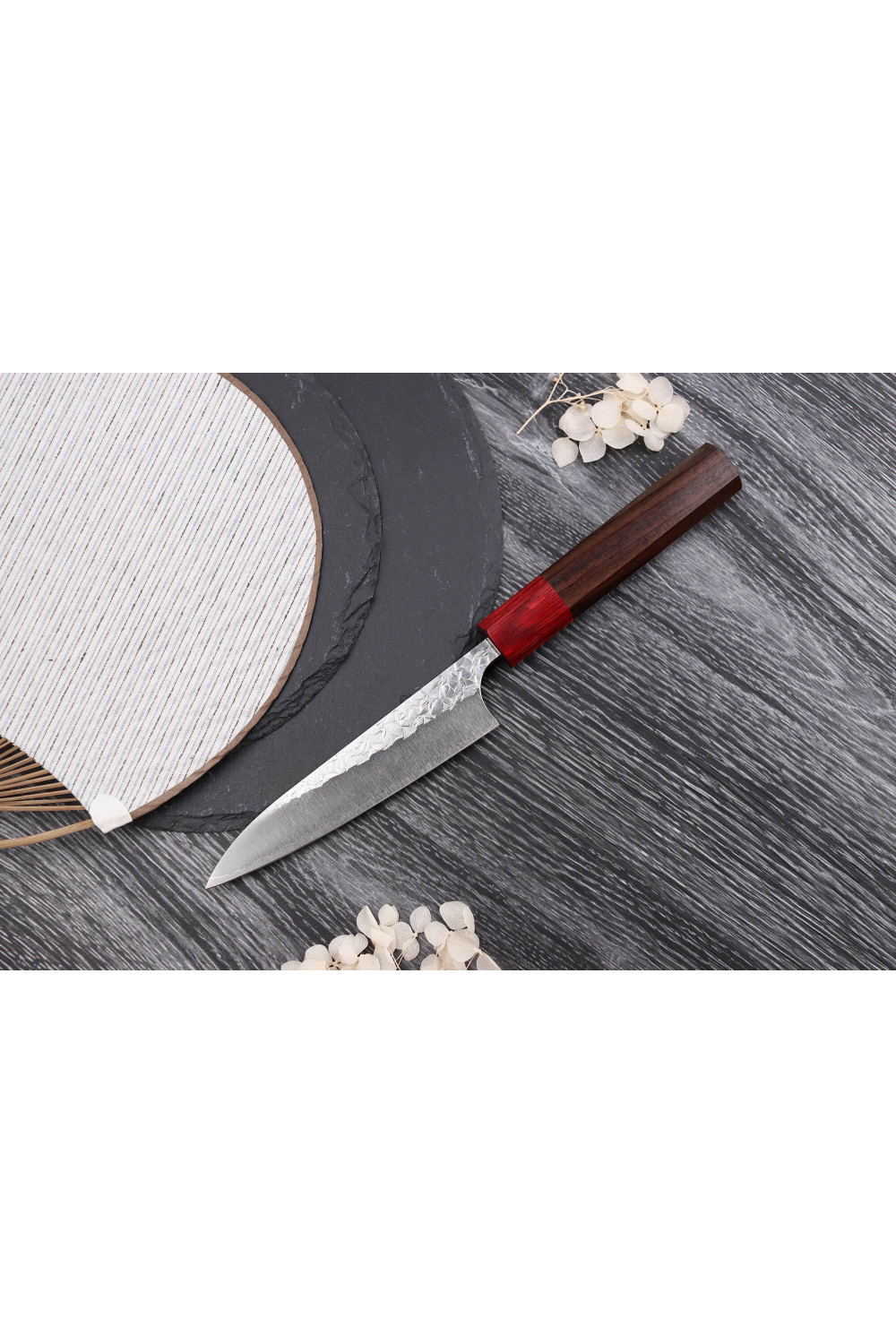
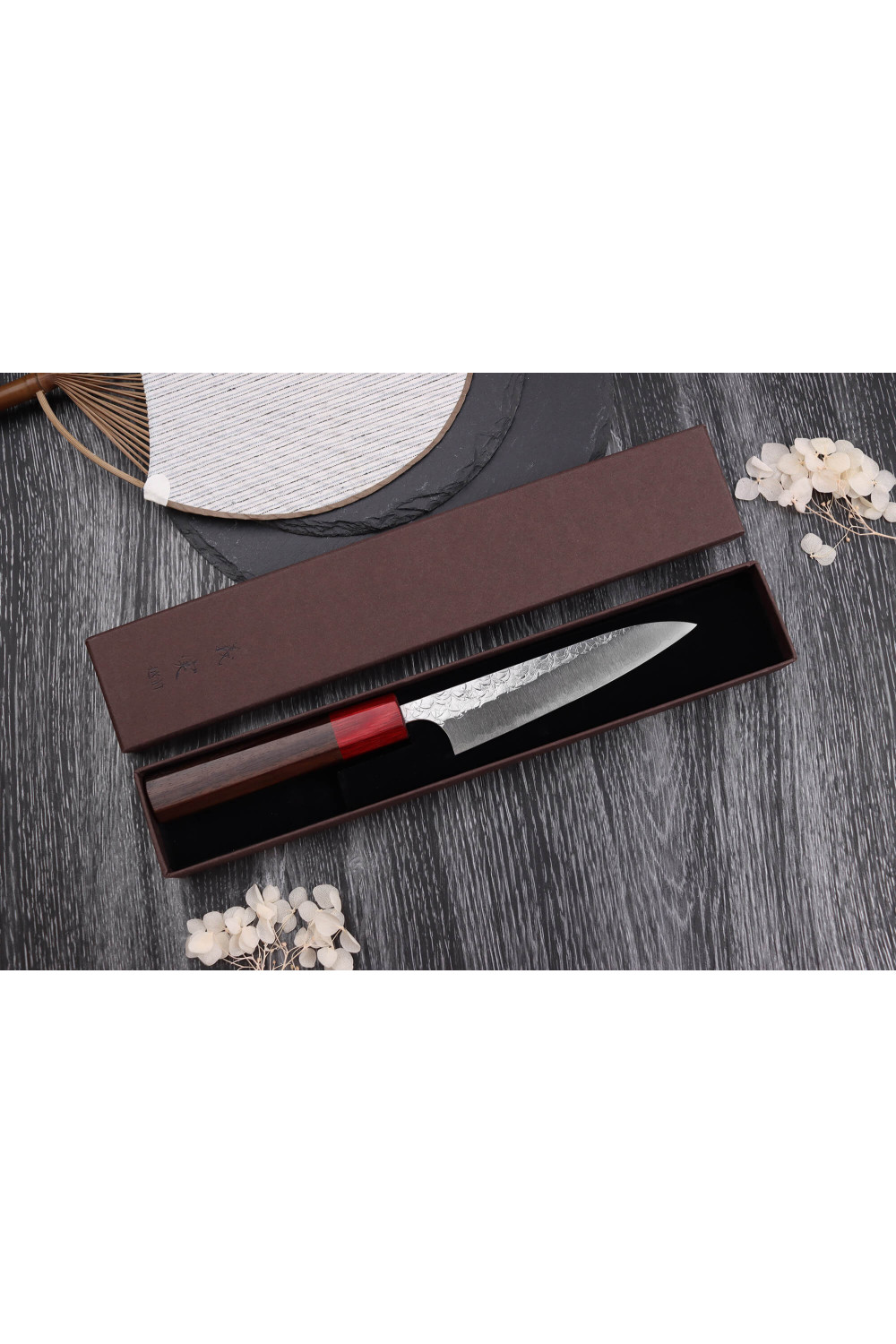
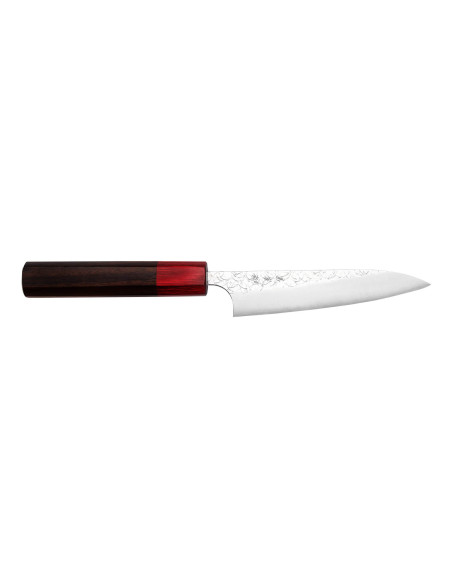
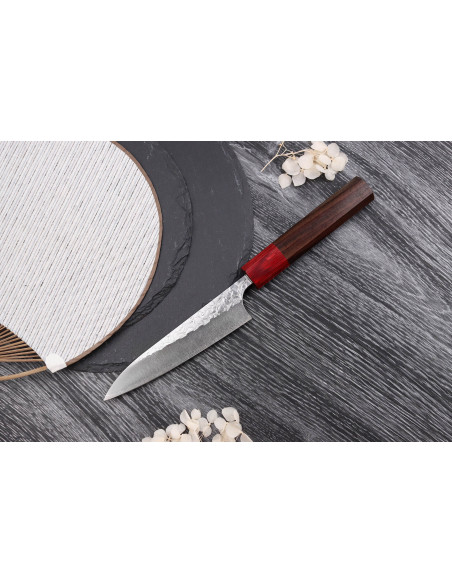
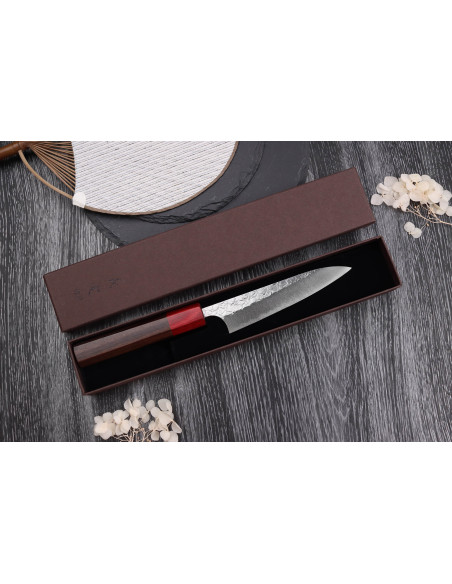
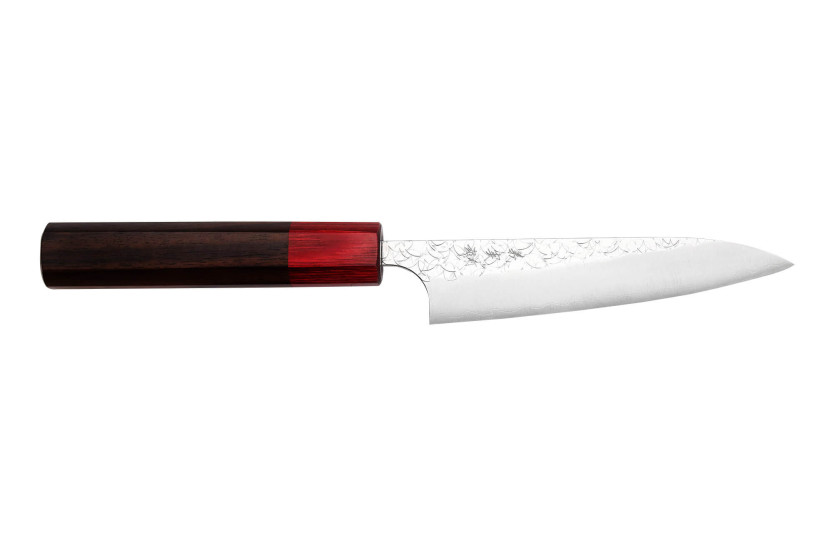
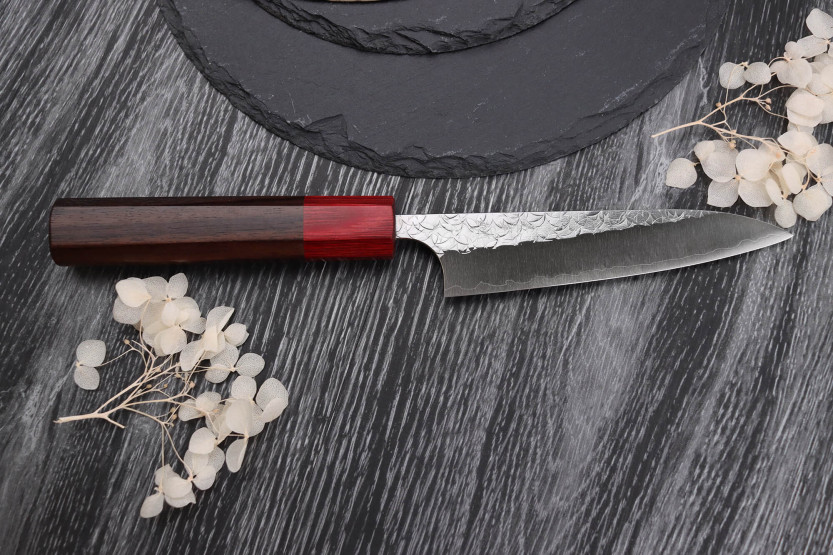
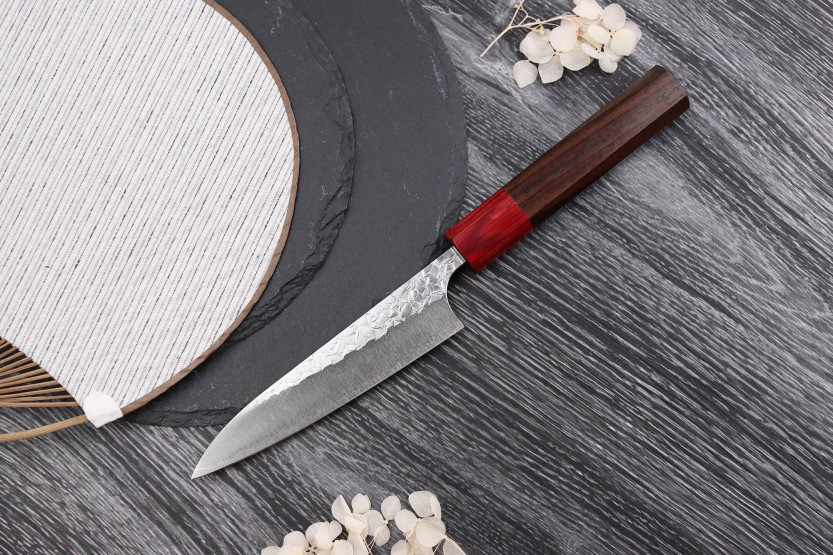
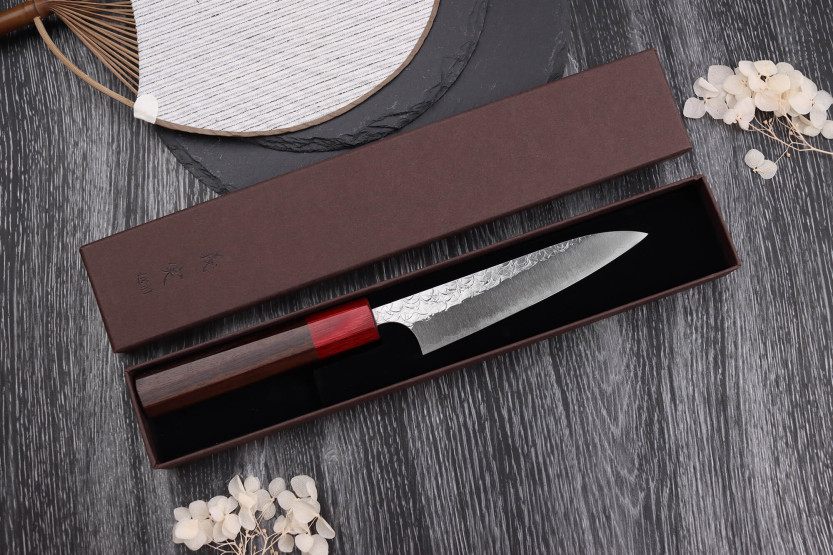
This 12cm Yoshimi Kato Minamo SG2 TsuchimeUniversal knife combines aesthetics and performance. As everyone knows, Japanese knives are world-renowned. This one is handcrafted by Yoshimi Kato san, a well-known blacksmith working in the cutlery village of Takefu. As the village is known as a stronghold of traditional blacksmithing, this is further proof of its authenticity. The village is renowned for its large number of blacksmiths who work in small, old-fashioned workshops. They use the methods employed by the blacksmiths of yesteryear who created the famous Japanese swords.
To talk about Yoshimi Kato in more detail, he apprenticed with several great blacksmiths, including Hiroshi Kato san, who is none other than his father-in-law. In fact, Hiroshi is one of the village's greatest master blacksmiths. For almost 50 years, he created knives almost every day, and is now retired. He is also one of the founding members of the Takefu Cutlery Village!
Yoshimi has taken over his workshop and continues to forge his master's knives. He also created his own line of knives after training late, in 2013. He's so talented that he quickly learned the trade.
Left: Hiroshi san; right: Yoshimi san
A high-quality Universal knife
This superb Universal knife is versatile yet easy to handle, thanks to its size and relatively thin blade. It lies somewhere between a paring knife and a chef's knife, and is suitable for many types of cutting. Efficient on meat (boneless), vegetables and fruit, it will quickly become a must-have in your kitchen.
The blade of this knife is built with a structure called San Maï. This means that it features 3 alternating layers of steel, as if it were a simplified damascus. The blade core is made of SG2 powdered steel, an expensive, high-quality alloy with many advantages. Thanks to its very high hardness of 63 HRC, this is a very sharp steel that holds its edge for a long time. Also, despite its high hardness, SG2 steel remains easy to sharpen, which is a real asset for an alloy of this type. When necessary, the cutting edge can be maintained with a stone. Finally, the steel's microscopic structure is highly homogeneous: this makes it more resistant, particularly to the risk of chipping during use.
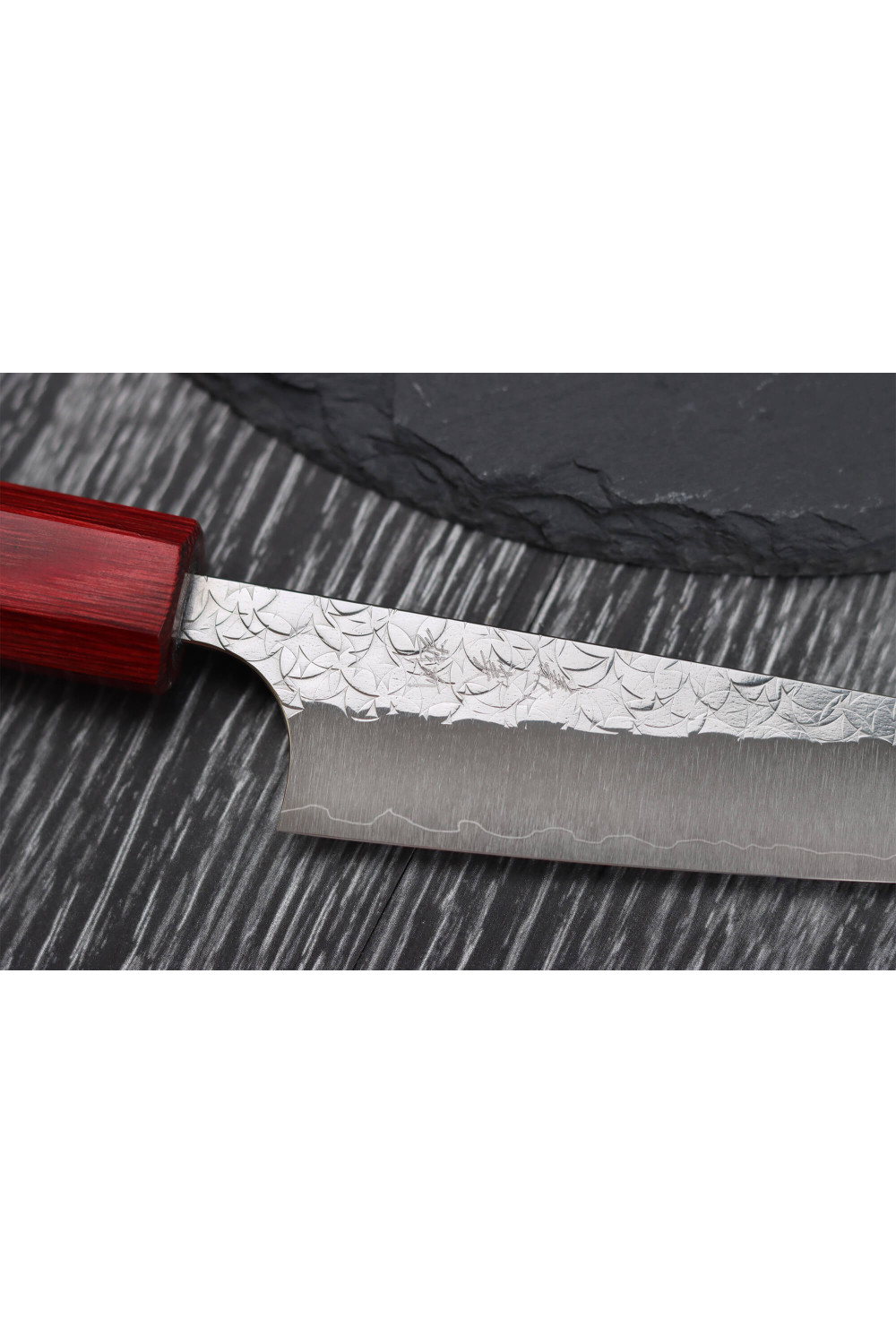
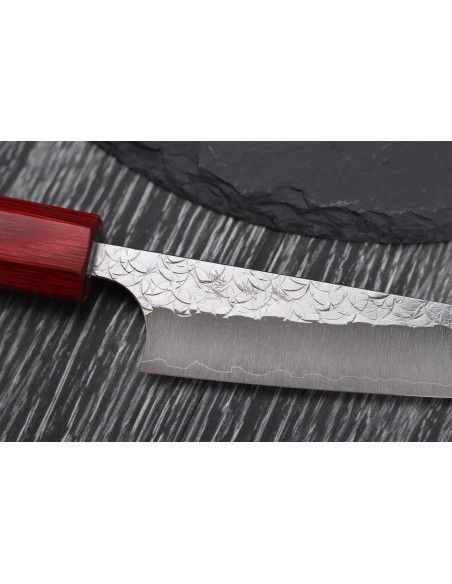
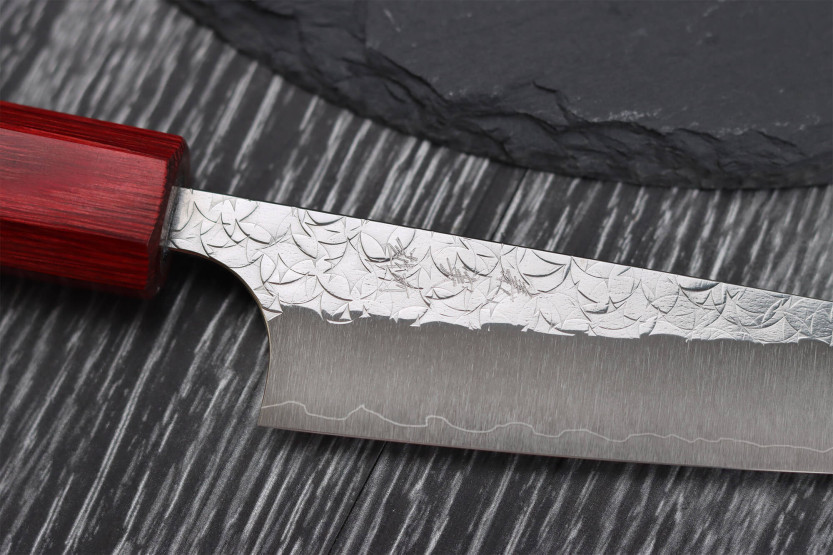
Secondly, the SG2 core is covered by a less rigid layer of stainless steel that sandwiches it together: there are 3 layers. You can see the difference in steels at the base of the blade. An irregular thread runs across the cutting surface, showing the bonding of the alloys.
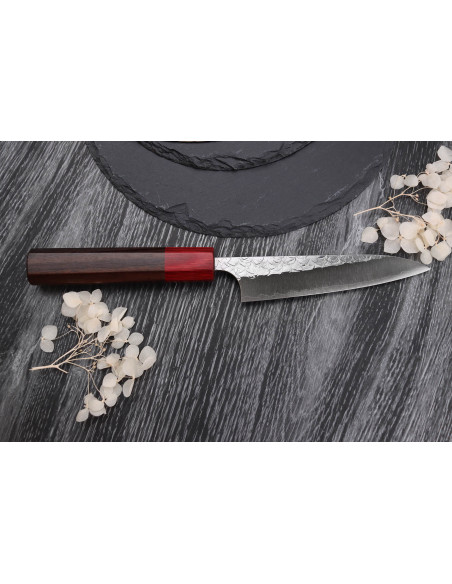
A magnificent rosette-shaped hammering decorates the upper part of the blade. The elegantly criss-crossing rosettes give the knife plenty of character and easily attract the eye.
To guarantee excellent cuts, the blade has been sharpened by hand, and the kanji on its surface have also been engraved by hand.
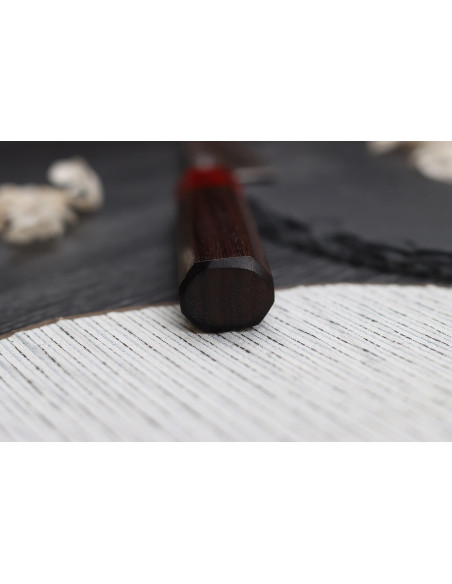
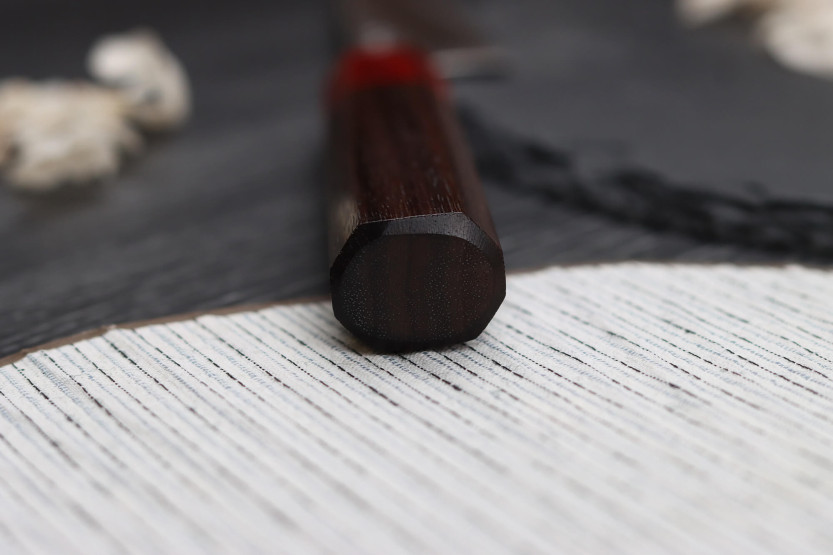
The knife's handle is made of rosewood, a superb species with deep, warm nuances. Rosewood is dense yet has a pleasantly fine grit. It has good natural protection against moisture, and its color can vary from knife to knife. The knife's bolster is made of pakka wood and forms the link between the blade and the handle. Pakkawood is a composite material made from laminated wood and resin, all hot-pressed together. As a result, it is both shock- and moisture-resistant. What's more, Pakkawood's grain gives the impression of real wood.
The knife blade is attached to the handle with wood pulp, making it watertight and preventing the insertion of water or small foodstuffs.
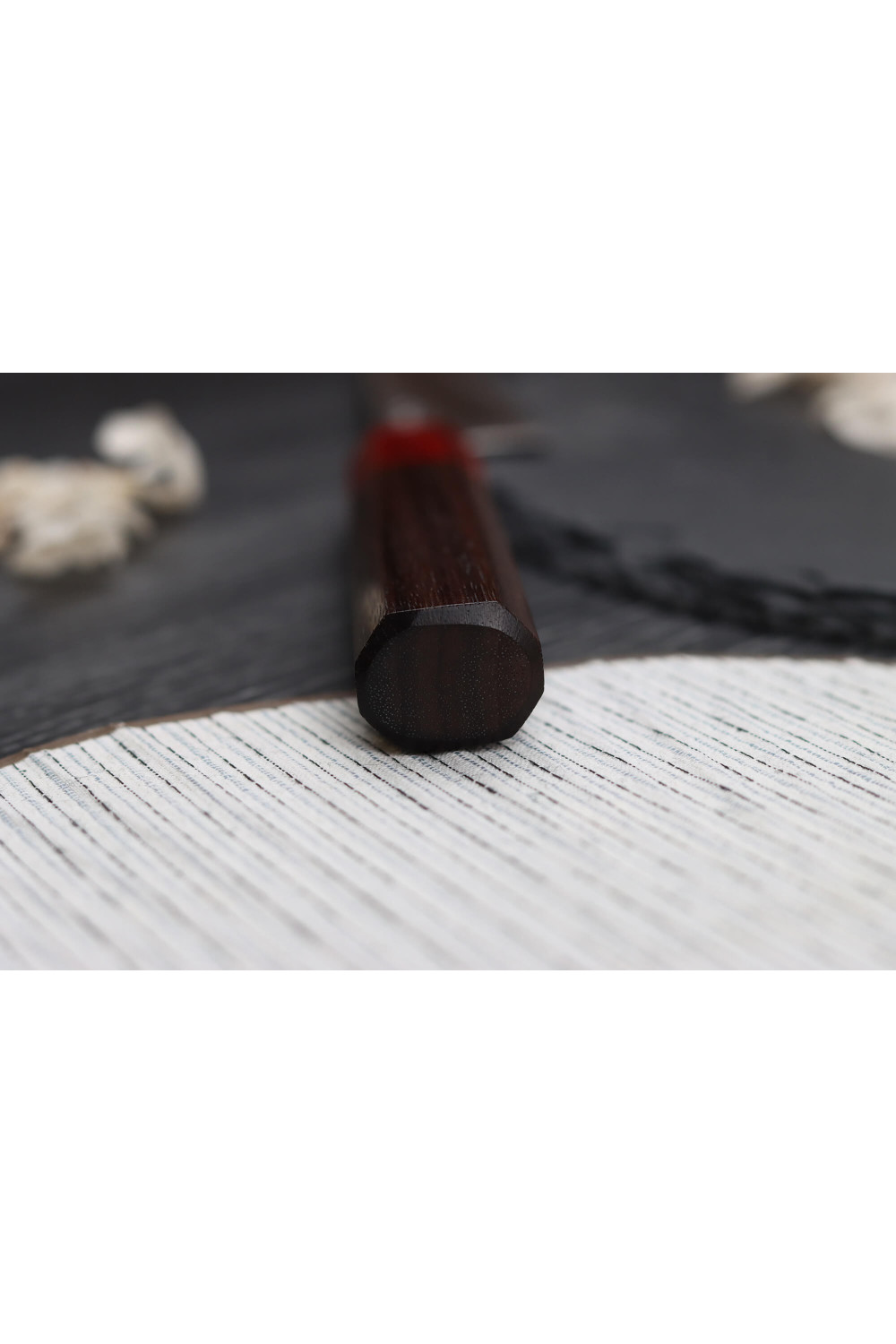
The octagonal shape of the handle fits snugly in the palm of your hand, so you can control it with ease. Suitable for both right- and left-handed users.
Caring for this Japanese knife
The knife should be washed by hand to preserve its efficiency and appearance. Do not put it in the dishwasher or soak it in the sink. You can then wipe it dry with a soft cloth. Be careful not to leave it in contact with moisture for any length of time.
Find Yoshimi Kato knives on KnifeLeader.eu!




 By buying this product you can collect up to