Japanese knives are efficient and have a rich and complex history. Indeed, Japanese blacksmiths have been practicing their art for centuries, and while they were experts in the creation of Japanese swords in their day, they have now turned their attention to kitchen knives, to the delight of cooks!
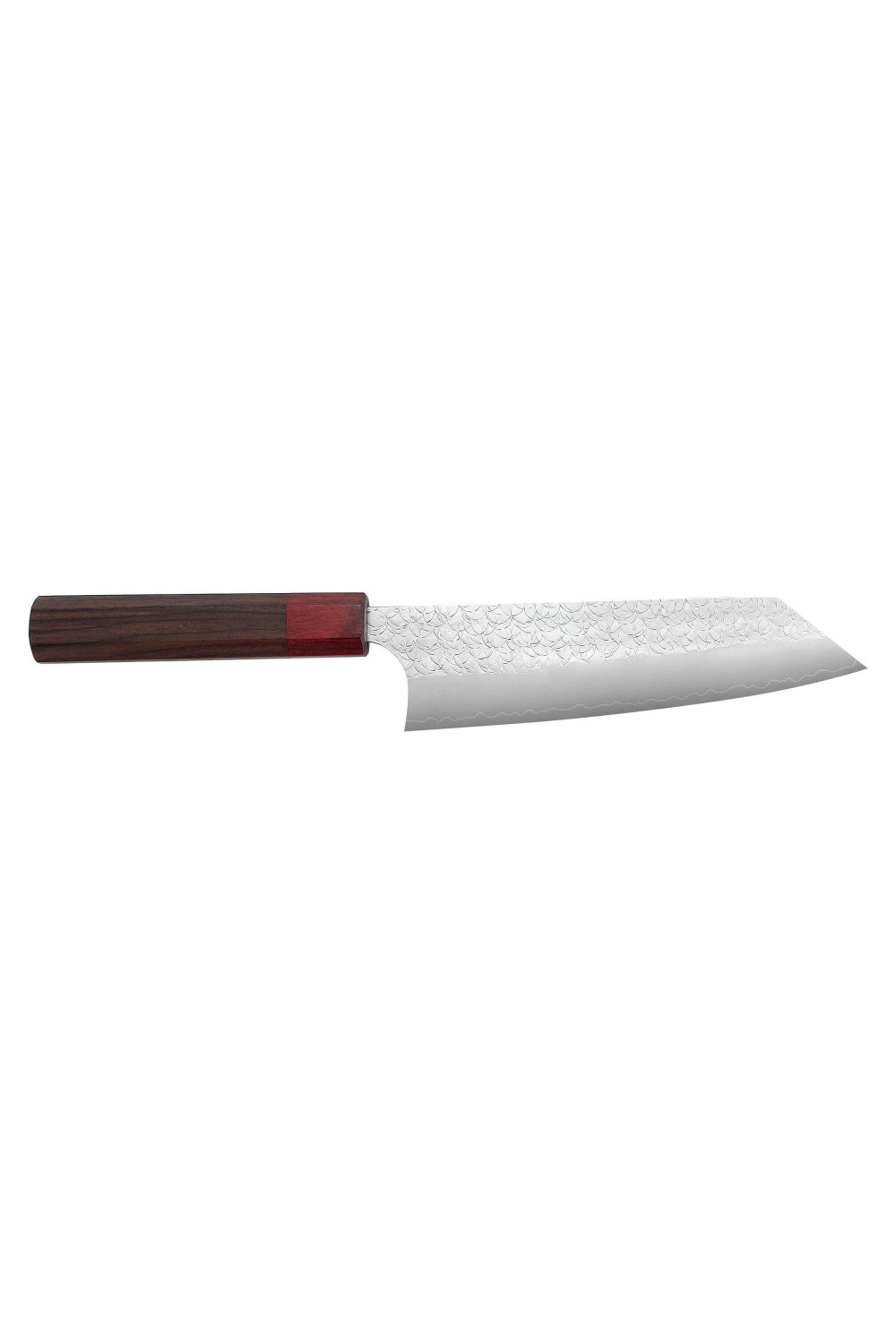
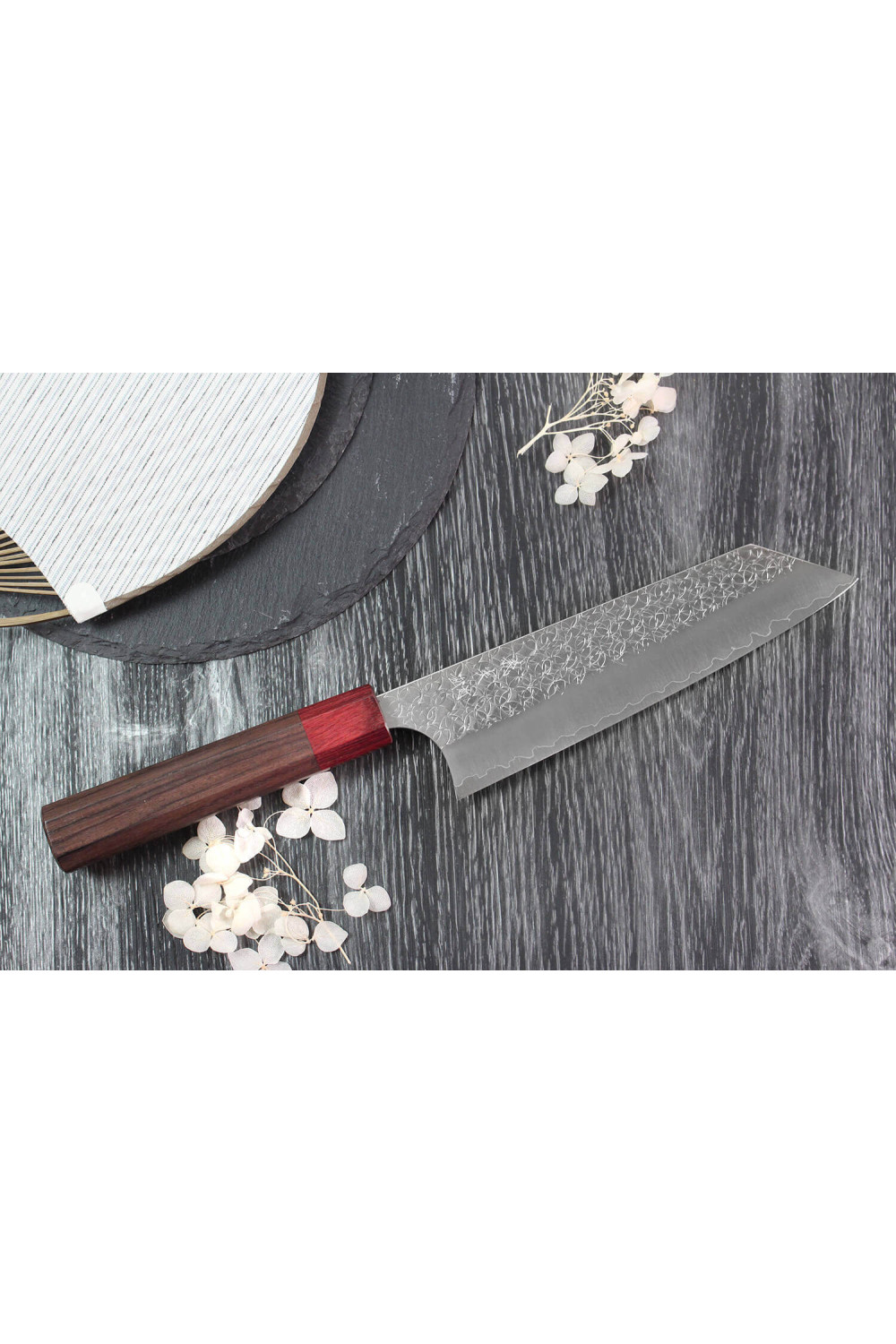
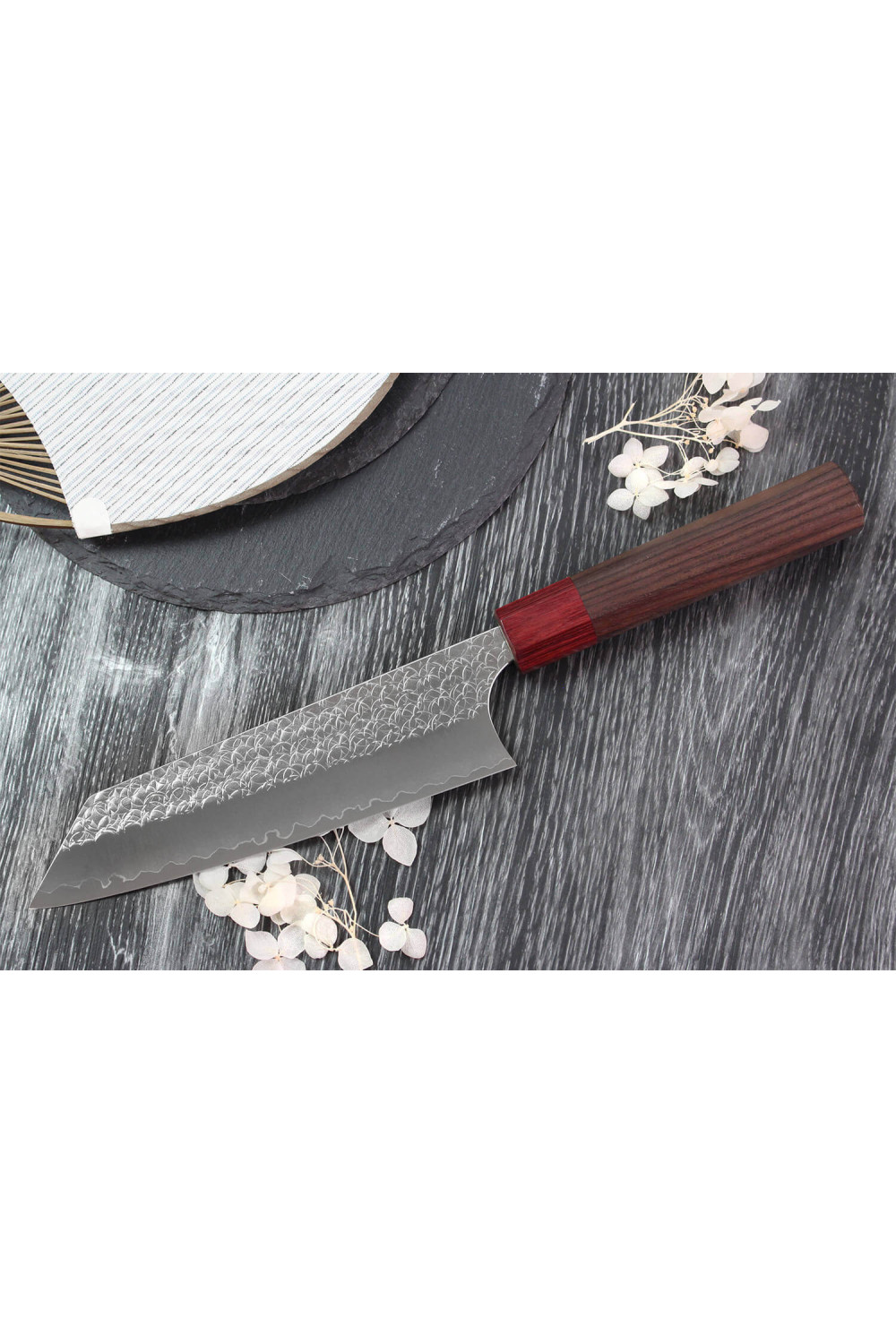
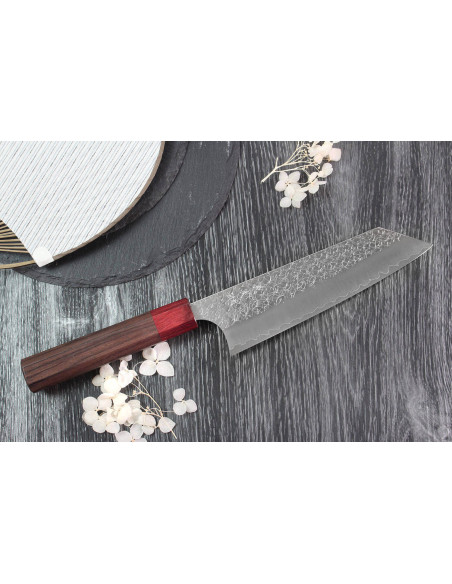
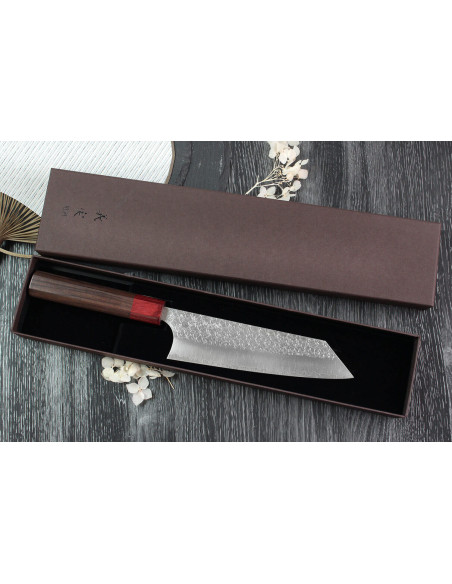
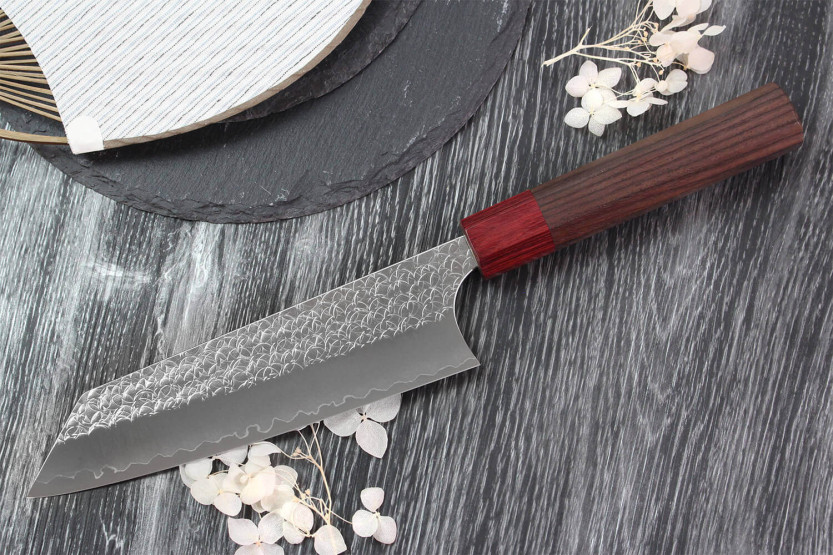
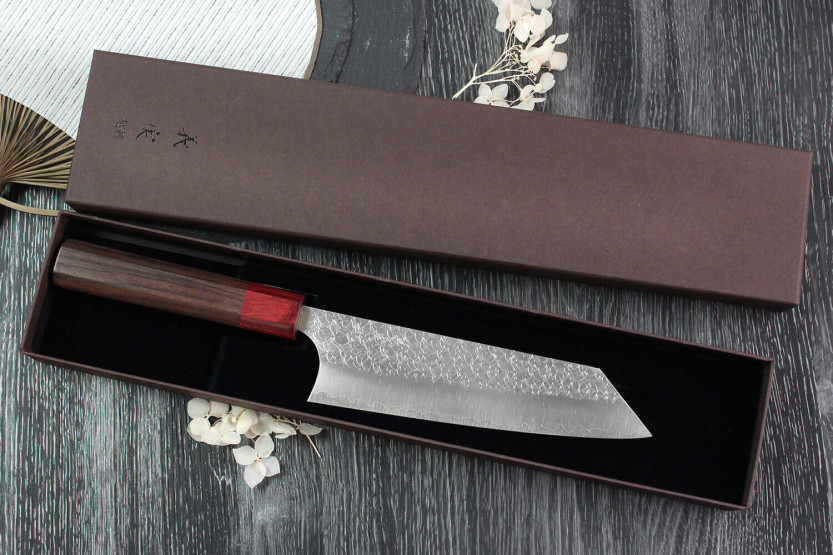
The Yoshimi Kato Minamo SG2 Tsuchime bunka knife is hand-forged by Yoshimi Kato San, a blacksmith working in the Takefu cutlery village. This is further proof of authenticity, as the area is known as a stronghold of traditional forging. Indeed, it is home to many blacksmiths who still work in the traditional way.
Yoshimi Kato began training late, in 2013. Highly talented, he quickly assimilated the craft. He apprenticed with several renowned blacksmiths, including Hiroshi Kato San (his father-in-law), a highly respected cutler. In fact, Hiroshi san is one of Takefu's greatest master blacksmiths. He created knives almost every day for almost half a century and is now retired. He is also one of the founding members of the Takefu Cutlery Village!
Yoshimi san has taken over his workshop and continues to create his master's knives, while having launched his own knife models.
(Hiroshi san on the left, Yoshimi san on the right)
A versatile and original model:
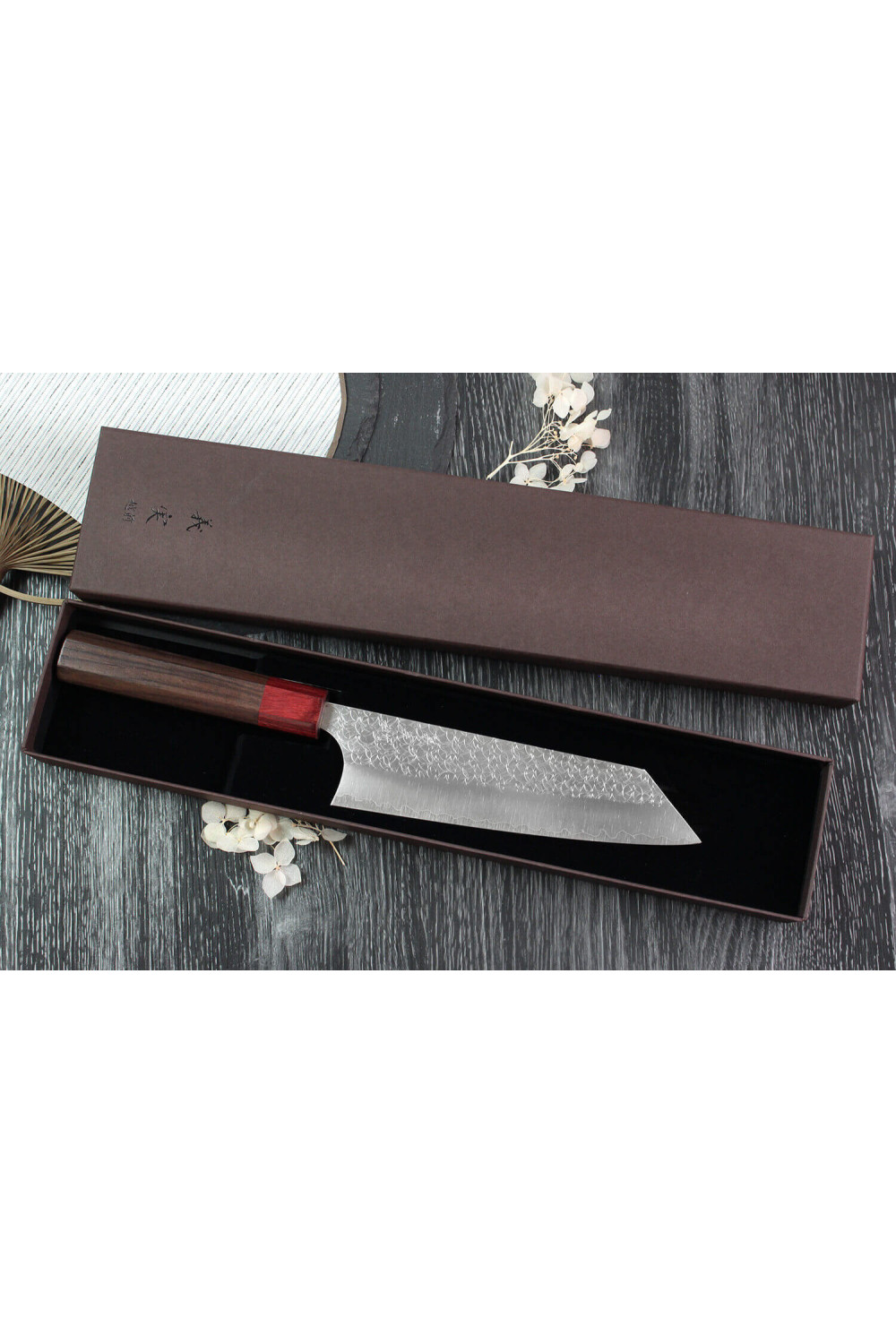
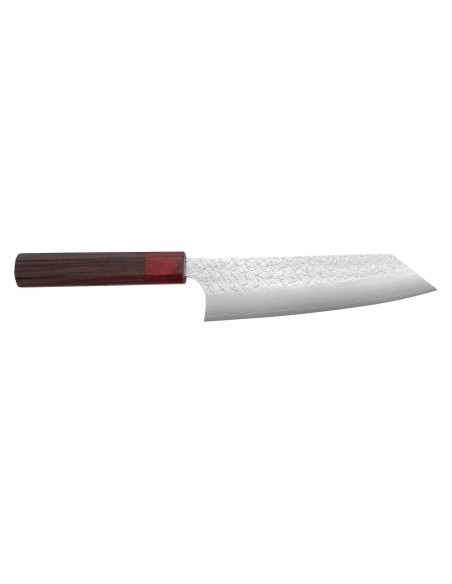
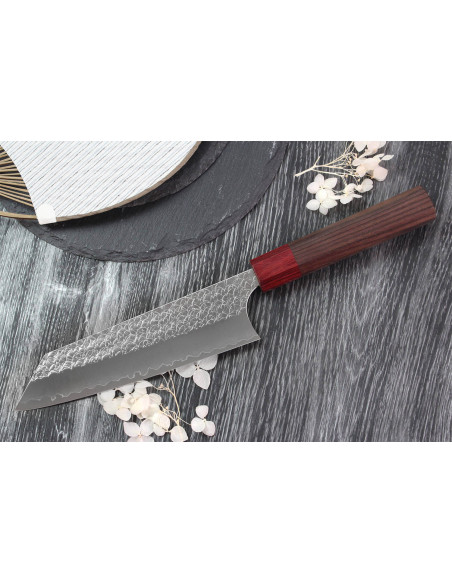
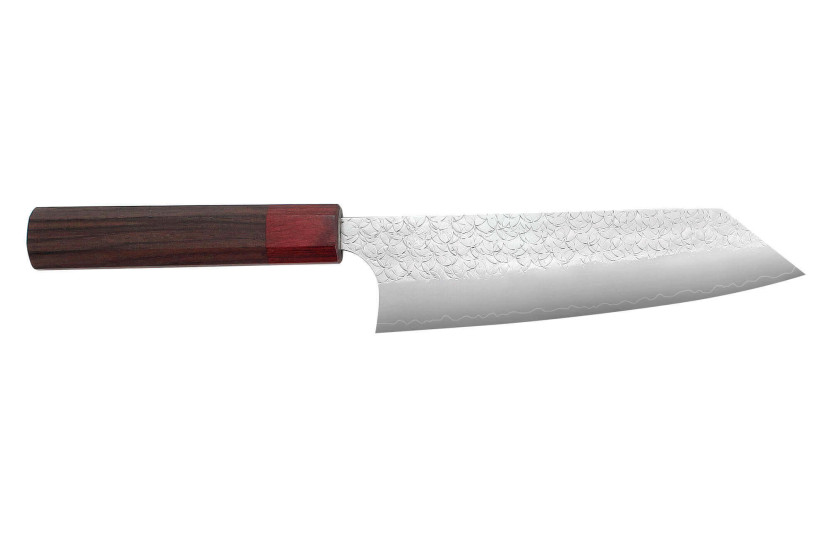
This bunka model is indeed a versatile knife. It is quite similar to the santoku knife, but differs in that its blade is pointed, reminiscent of a katana. It can be used for fish, meat, fruit, vegetables and herbs. Its visual appeal makes it a real eye-catcher!
A blade made for cutting:
The San Mai blade is based on 3 alternating layers of steel, rather like a simplified damascus.SG2 powdered steel was chosen to be at the heart of the knife. It's a high-quality alloy with many advantages! For example, with its Rockwell index of around 63 HRC, it's ultra-sharp for a very long time. And even though it's very hard, SG2 steel is easy to sharpen, which is a real advantage for such a rigid alloy. To maintain the cutting edge, use a Sharpening stone.
Microscopically speaking, this alloy is considered very pure. In fact, its structure is homogeneous, which makes it more resistant (there is less risk of chipping, for example).
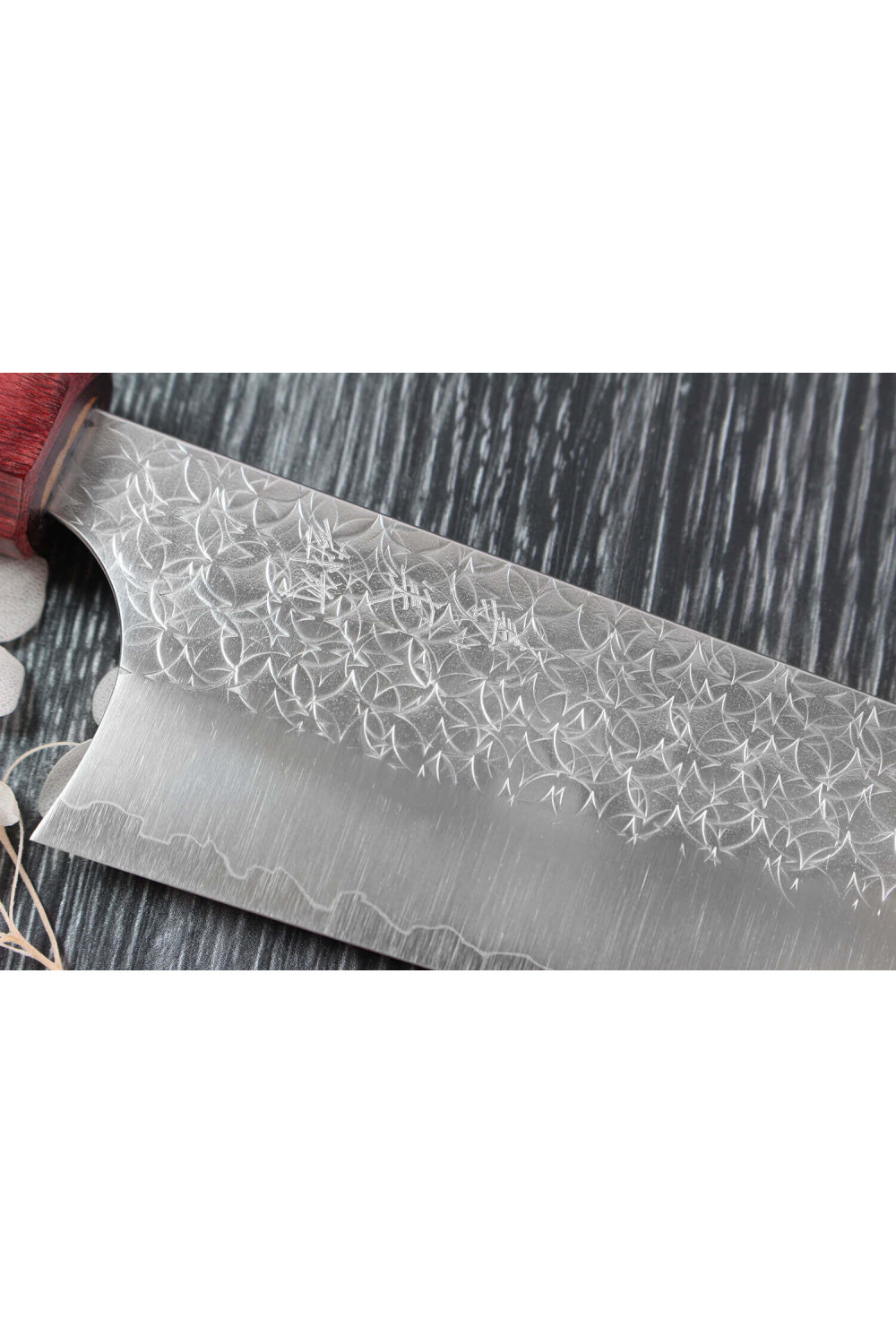
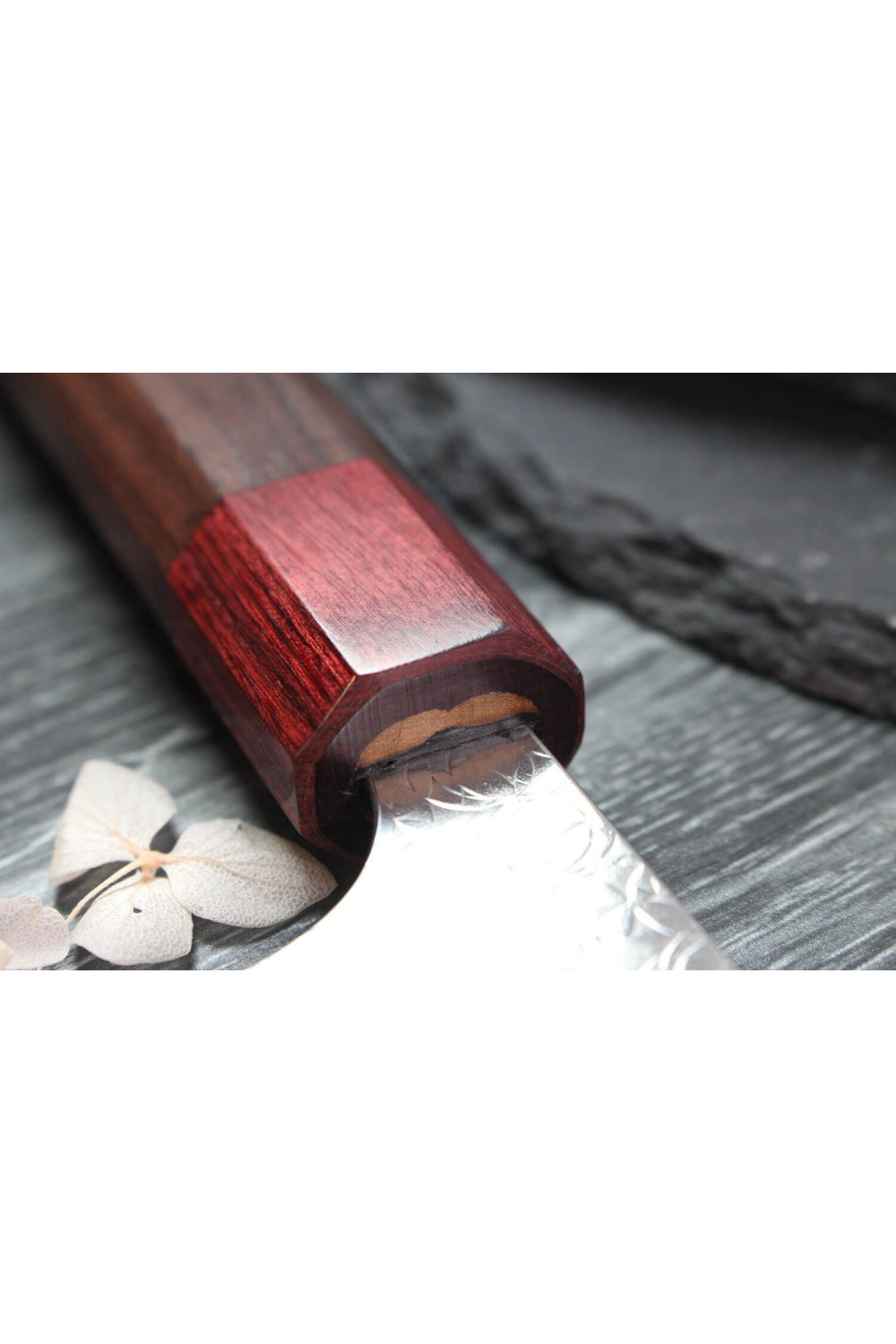
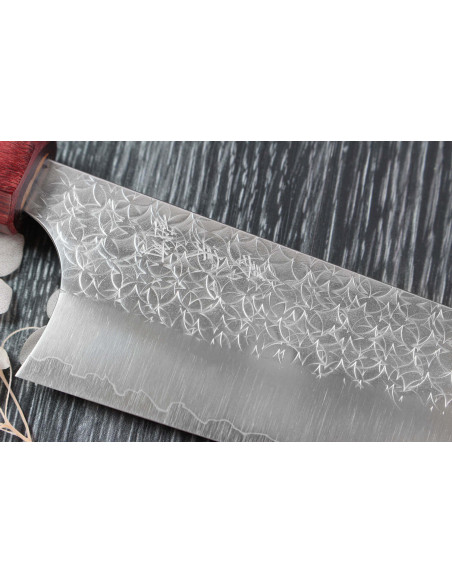
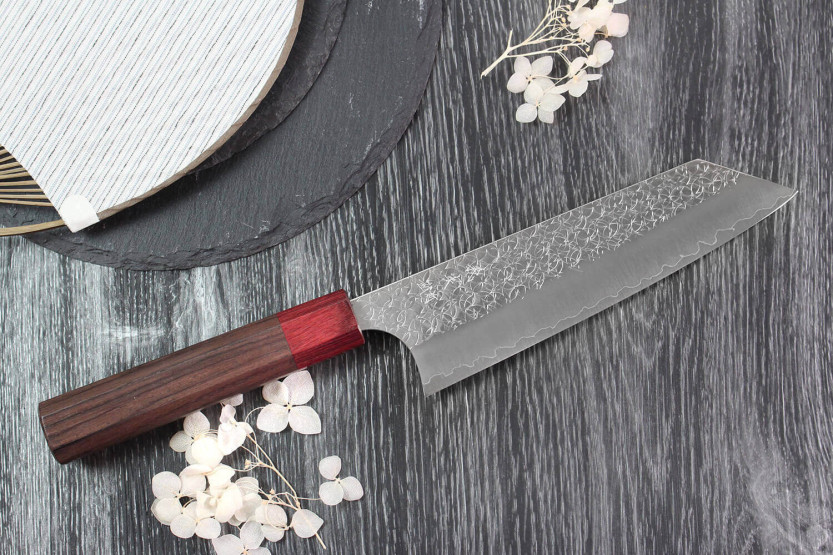
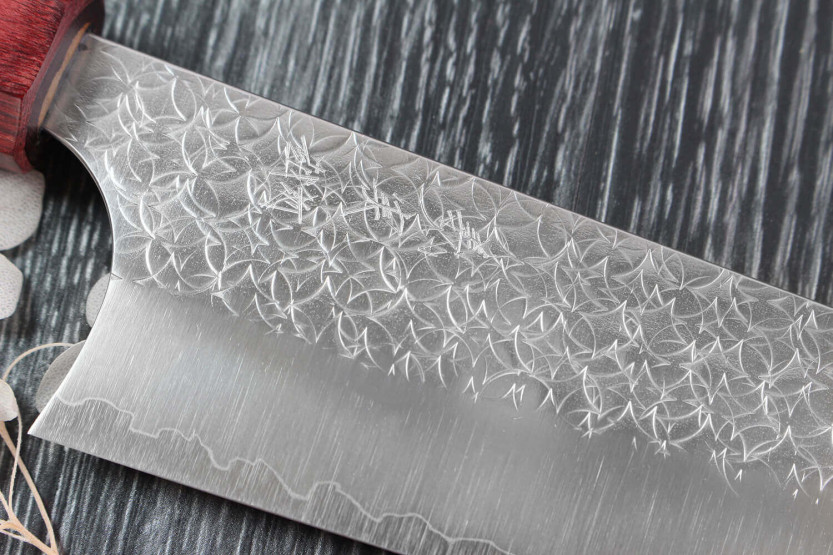
To create the San Maï structure, a softer steel than SG2 surrounds it, protecting it by sandwiching it. This difference in steel can be seen at the base of the blade: an irregular thread runs across the cutting surface, showing the bonding of the alloys.
On the upper part of the cutting surface, magnificent hammering in the form of rosettes is revealed. The rosettes intersect with refined, delicate lines. This gives the knife great character and inevitably attracts the eye.
To guarantee excellent cuts, the sharpening process is carried out by hand. The kanji on its surface are also engraved by hand.
A pleasant handle for all users:
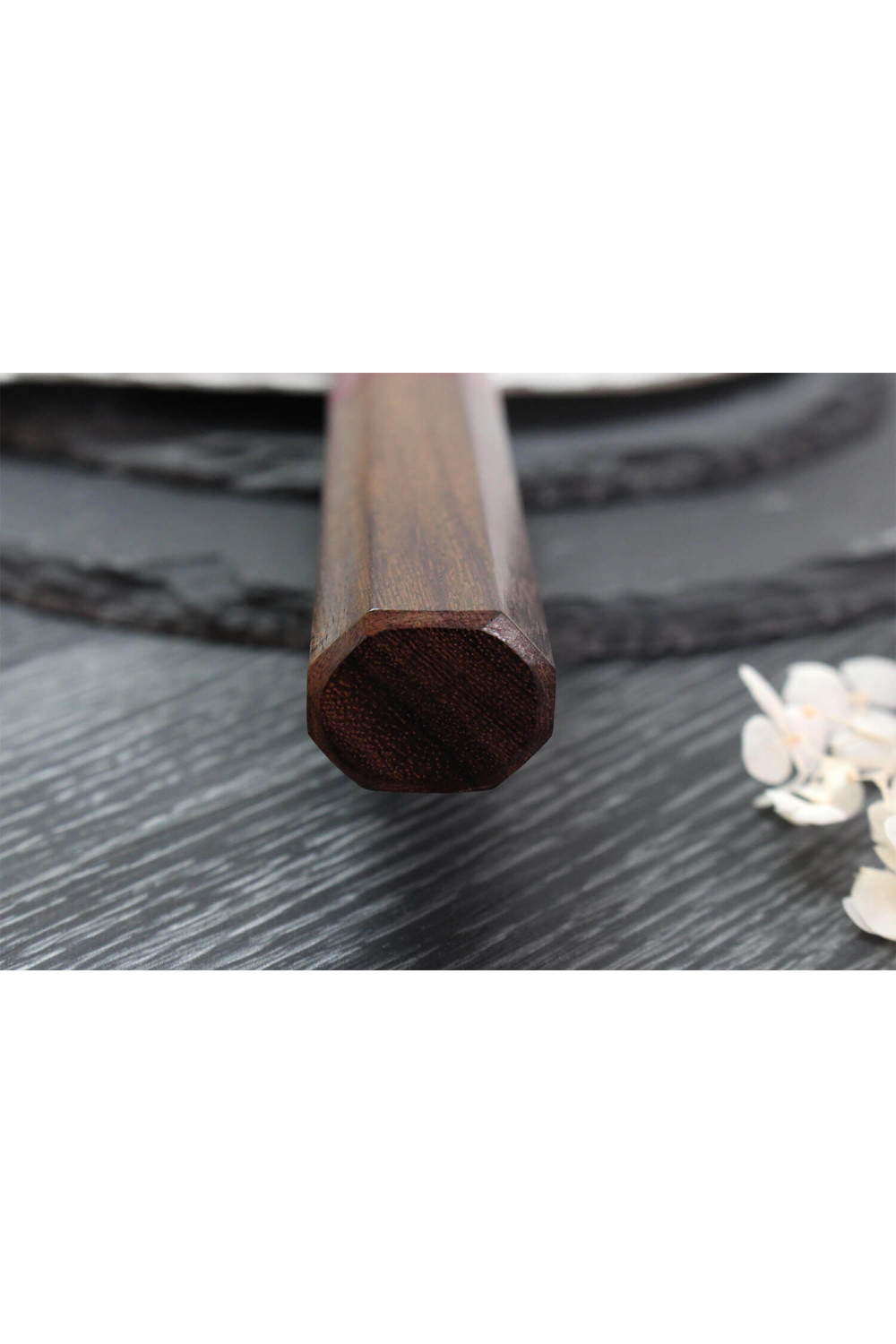
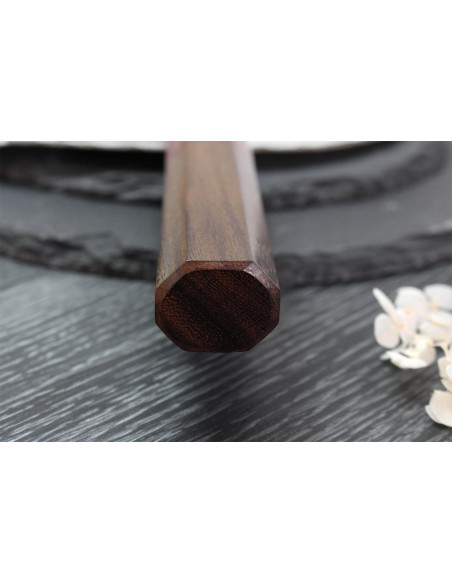
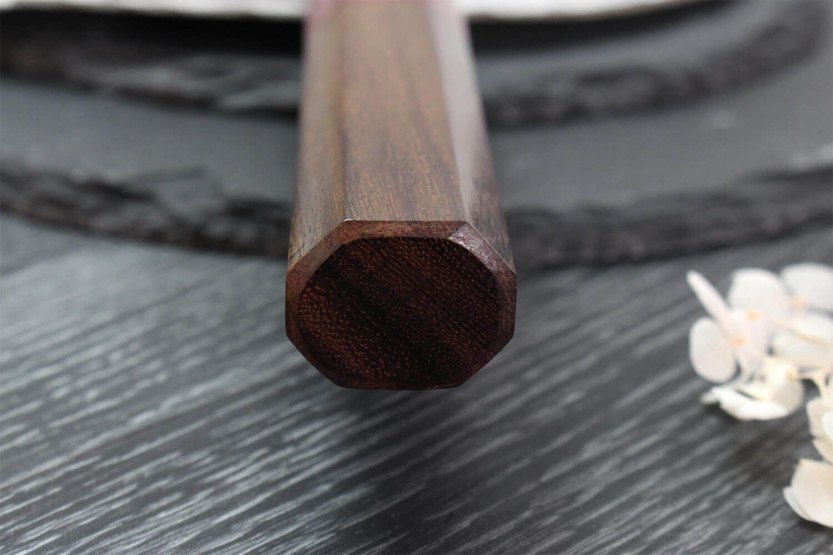
It's made from rosewood, a beautiful species whose nuances vary in warm tones. It's a dense wood with a fine, pleasant grit. It is resistant to humidity and its color can vary from one model to another.
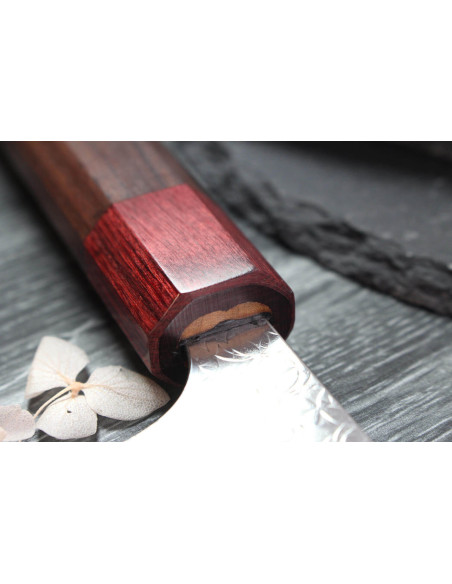
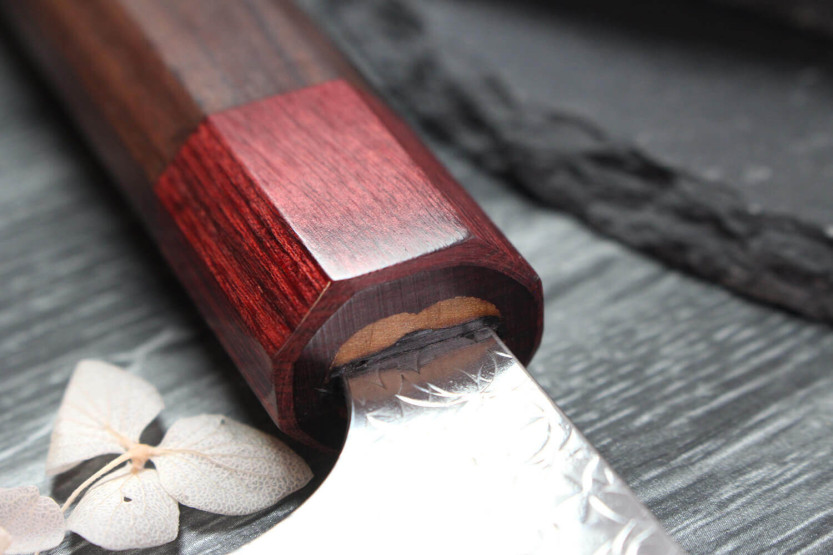
Its grain is unique to each piece. A pakka wood bolster joins it to the blade. Pakka wood (or Pakkawood) is a composite material that blends laminated wood with resin. The result is hard and resistant to knocks and humidity.
The blade is fixed to the handle with wood pulp, which protects the interior from water or food scraps.
The handle is shaped like an octagon to match the shape of your palm. Ambidextrous use.
Care: the knife should be washed by hand, to maintain its appearance and efficiency (no dishwasher). You can then wipe it with a soft cloth and store it in a dry place. It should not be left in contact with moisture for any length of time.
Want to sharpen your knife to perfection? Here's our selection of Japanese stones!




 By buying this product you can collect up to