The work of the Hado artisan knife workshop
TheHado workshop was recently created in Sakai, Japan. The idea for the workshop was born of collaboration between Ryuichiro Fukui, president of Sakai Fukui, and Tadataka Maruyama, former sales manager of the Japanese industrial knife company. Ryuichiro wanted to relaunch artisan knife production, and this coincided with Tadataka's long-held dream of becoming a craftsman. To realize their project, Tadataka Maruyama embarked on an intensive three-year training course, while Sakai Fukui prepared the creation of an in-house workshop. The opening of the Hado workshop in spring 2019 marks the beginning of a new artisanal era at Sakai Fukui.
Hado (刃道), which translates as "the road of blades" in Japanese, was chosen as the name to symbolize the very essence of the workshop. The name reflects the craftsmen's desire to achieve the highest quality, making continuous progress along the path that leads to forging excellence. The craftsmen invest all their tamashi (魂), their soul, in their work to create knives that are both aesthetically remarkable and of exceptional cutting performance. At Hado, every knife embodies the originality and uniqueness of the craftsmen.
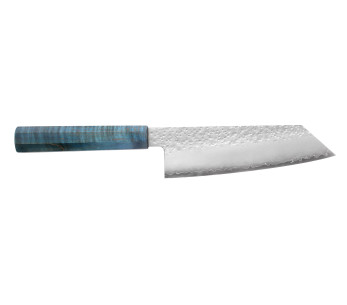
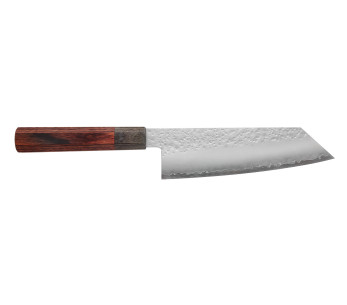
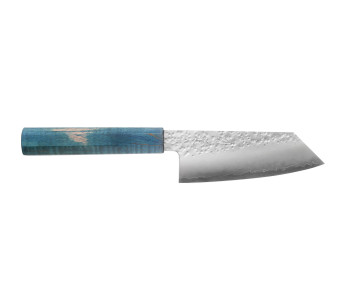
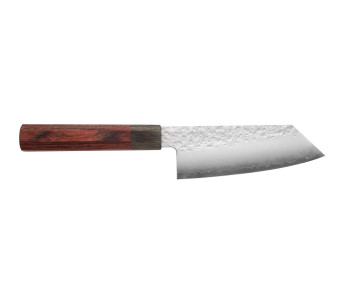
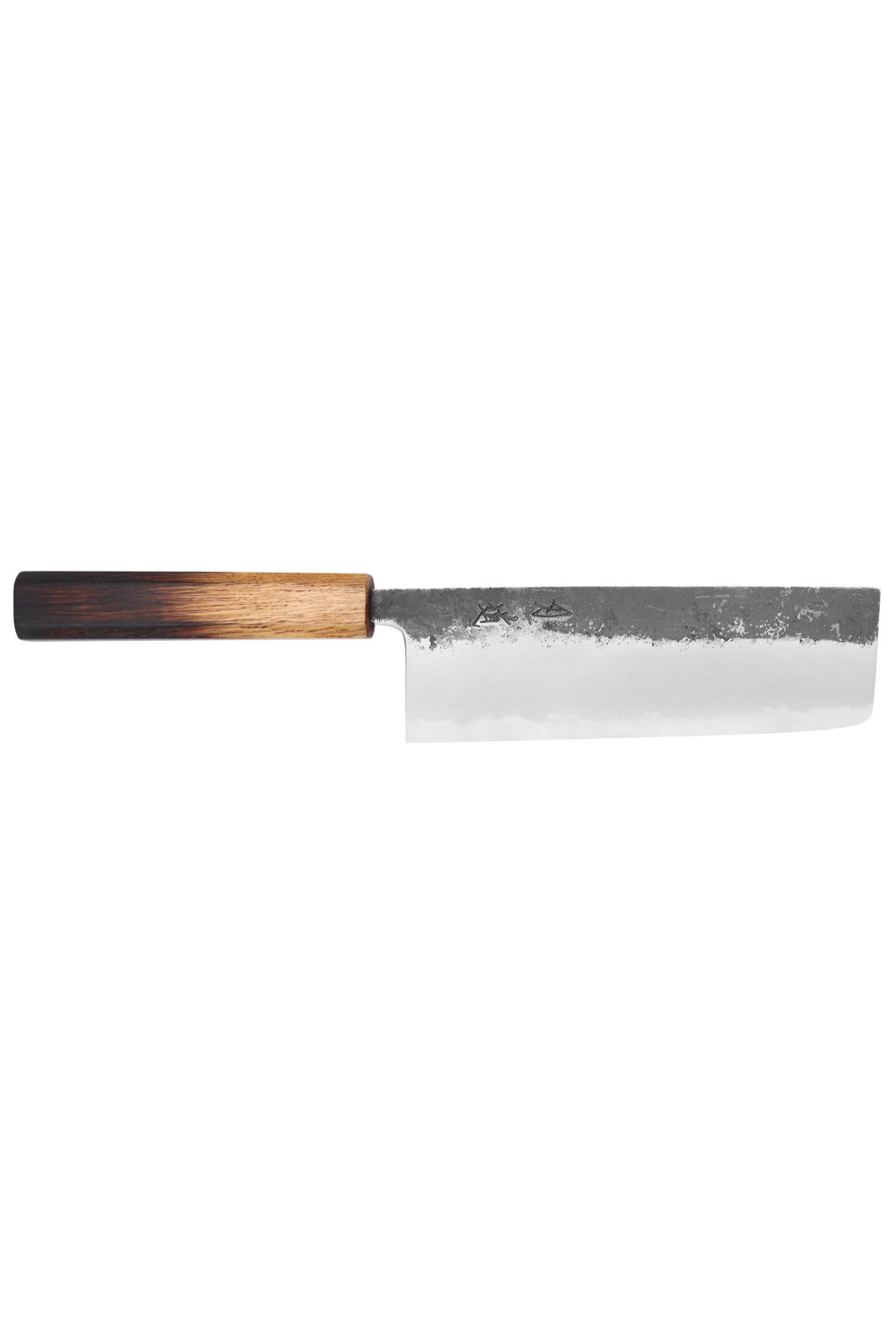
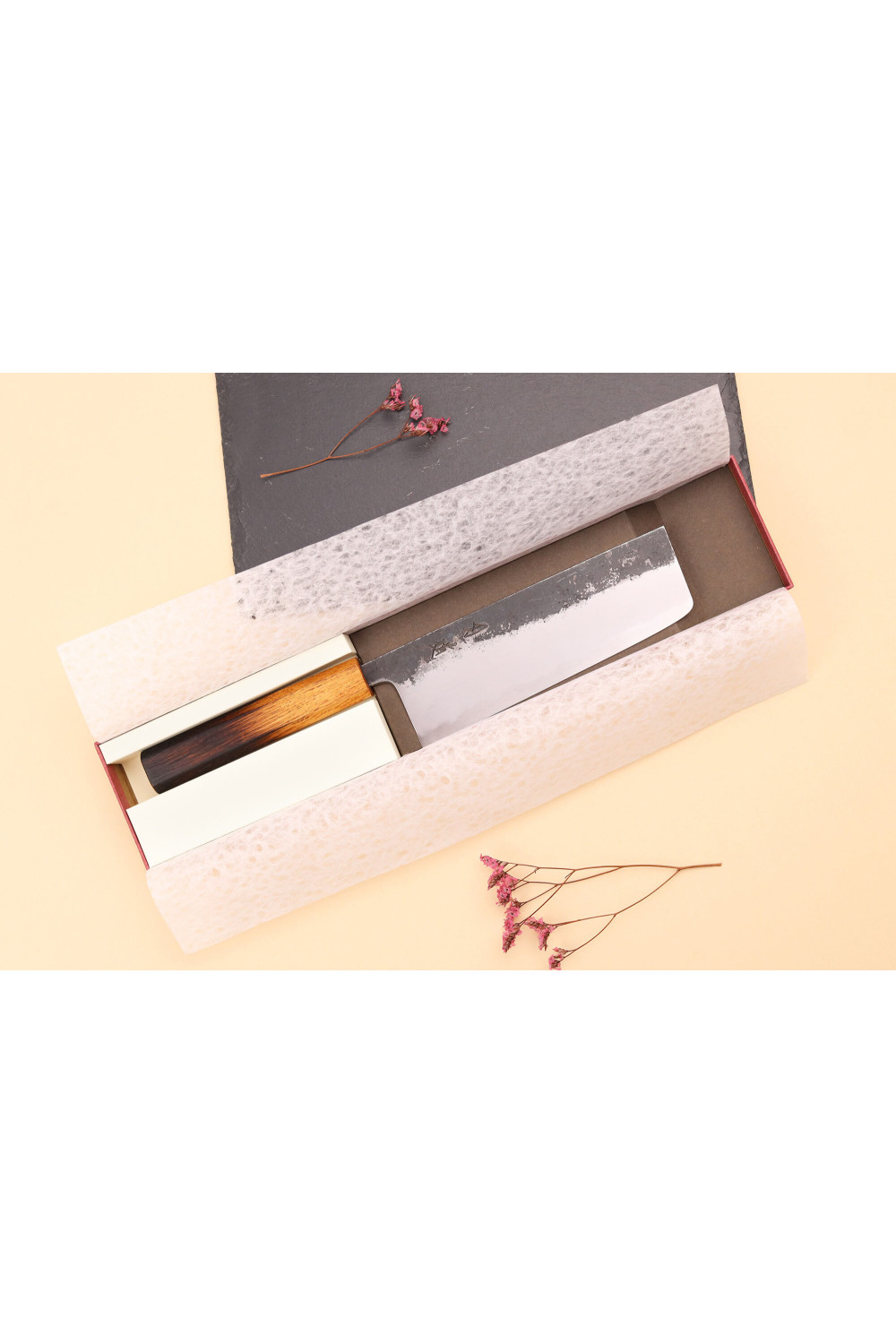
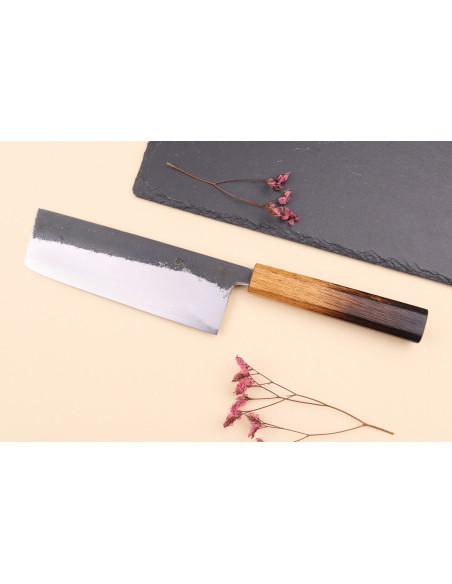
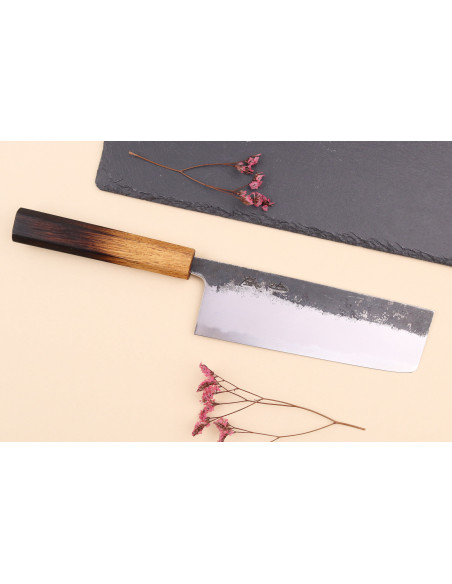
This nakiri knife was forged by Yoshikazu Tanaka, a renowned certified Traditional Master Craftsman from Sakai. As the workshop's fourth generation of blacksmiths, he is known for his exceptional skills in creating forged blades from superior materials, while giving them a traditional design. After forging, the knife was entrusted to the expert hands of Tadataka Maruyama, the workshop's head sharpener. Tadataka meticulously hand-sharpens the knife on a grinding wheel, guaranteeing exceptional sharpness. This attention to detail ensures that the Sumi nakiri is not only aesthetically remarkable, but also extremely efficient in every cut.
Yoshikazu Tanaka is on the left and Tadataka is on the right.
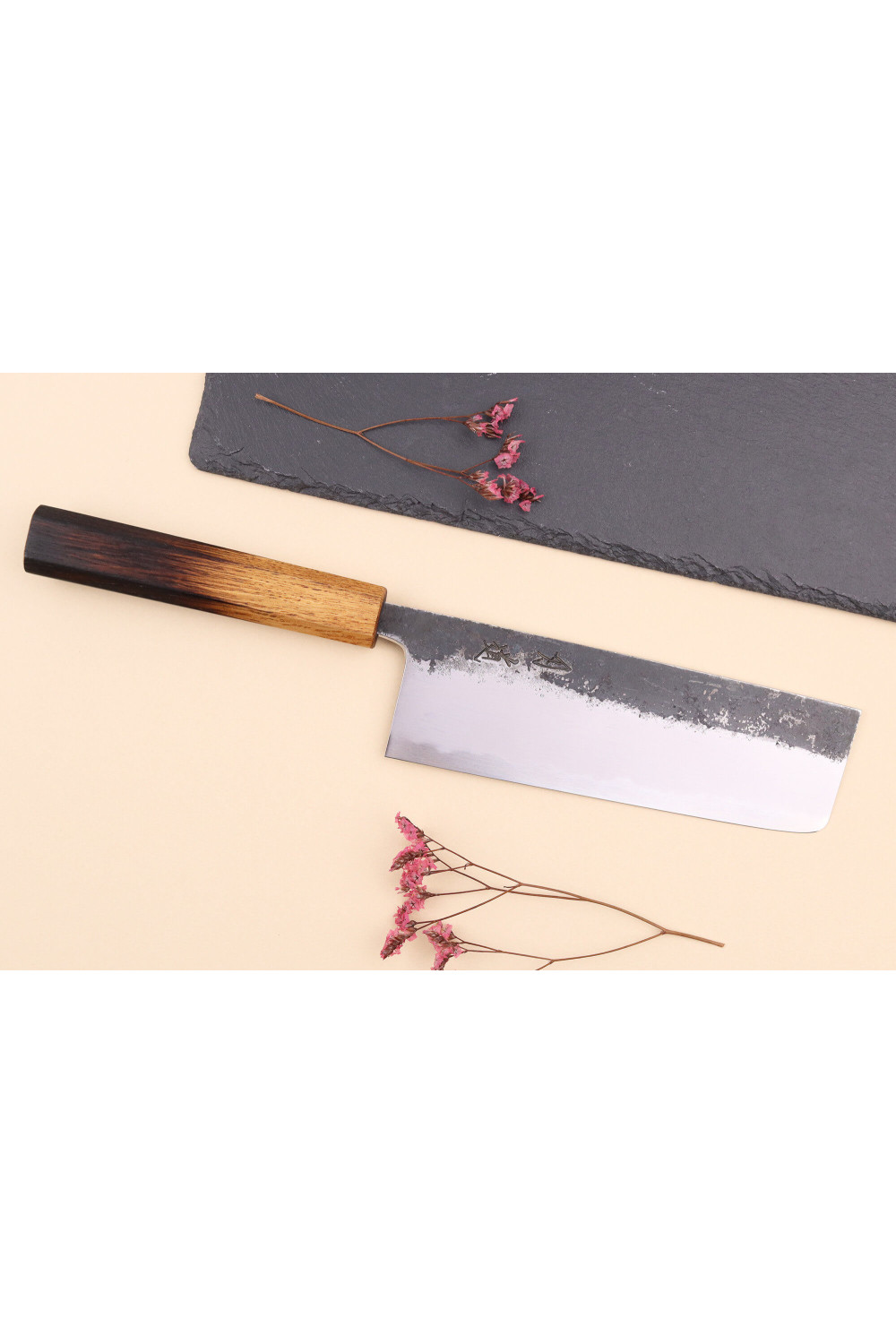
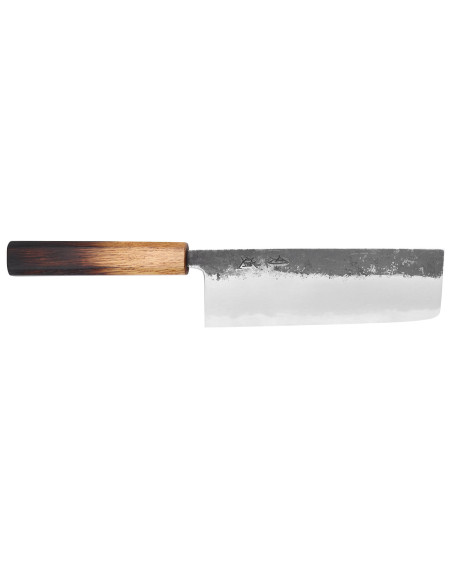
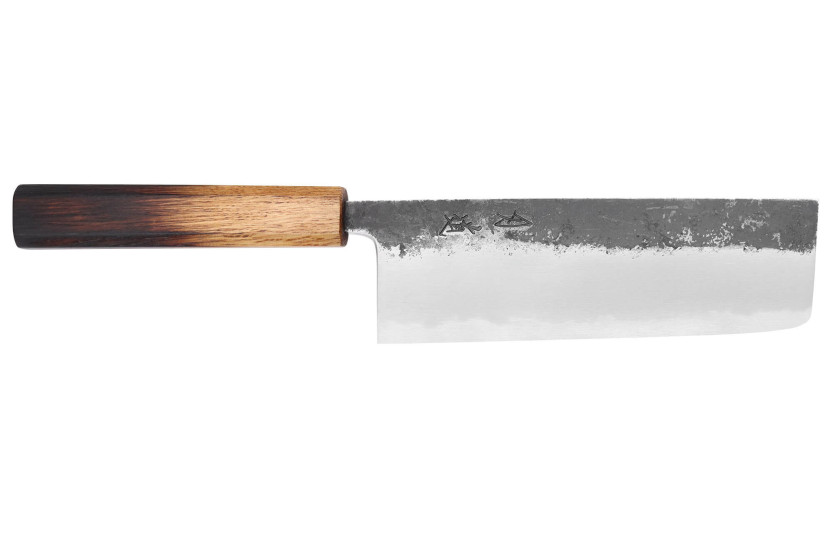
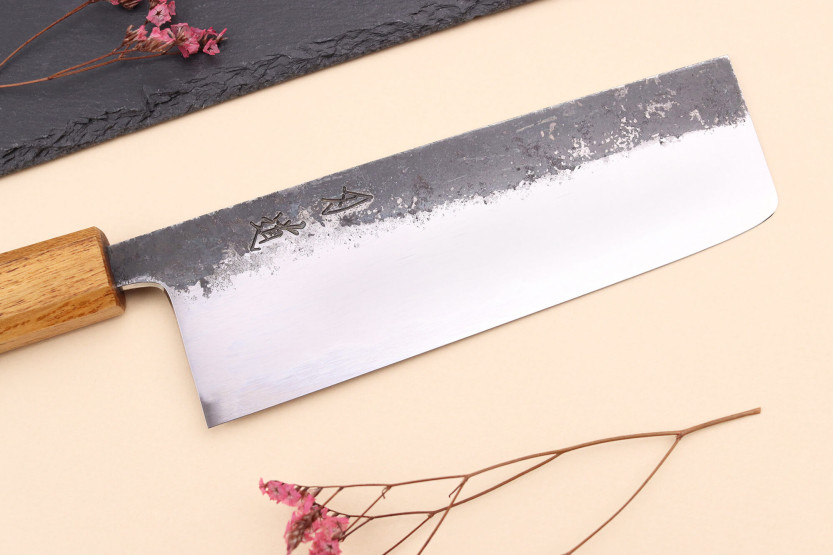
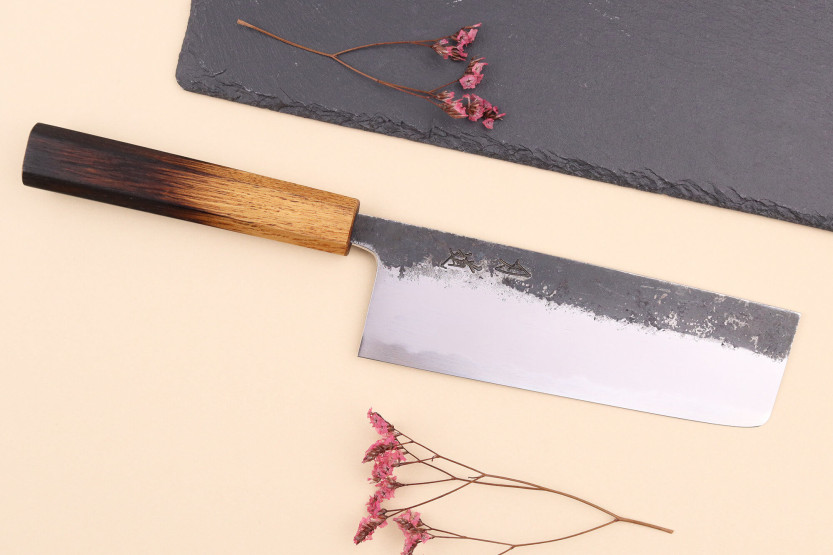
Japanese San Mai blade nakiri
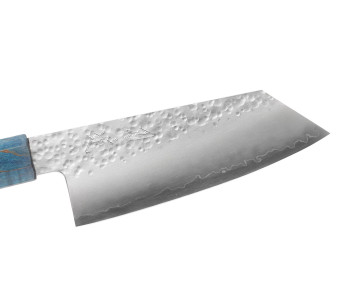
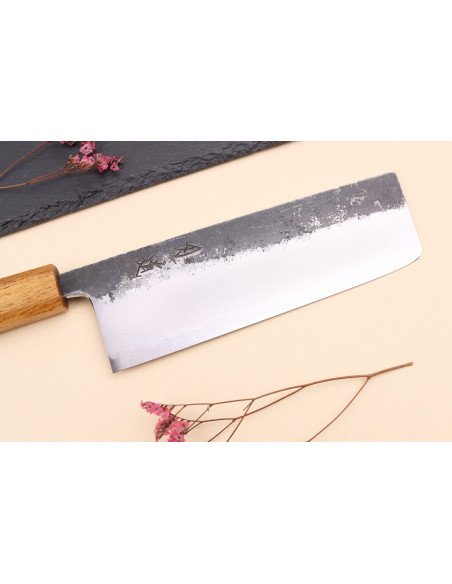
This handcrafted Japanese knife features a 16.5cm blade manufactured according to the traditional Japanese San Maï structure. This design involves surrounding a rigid steel core with a layer of softer steel, forming a 3-layer sandwich structure. This guarantees a blade with excellent balance and a protected core. "San Maï" literally translates as "three layers".
The core of the blade is made of Shirogami #2 steel, also known as White Steel 2. This alloy, highly prized by foodservice professionals, is produced by the world-renowned Japanese steelmaker Hitachi. Shirogami #2 steel is renowned for its purity and uniform structure, which can be observed under a microscope. It is considered the closest steel to tamahagane, the steel traditionally used to make Japanese swords. It contains around 1.3% carbon, giving it a hardness of 62 HRC. Despite this composition, it remains easy to sharpen, giving you exceptional cutting precision.
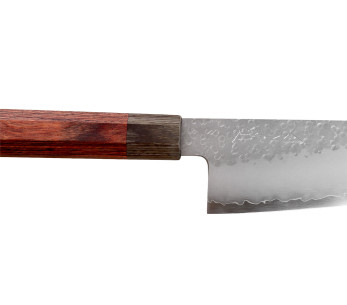
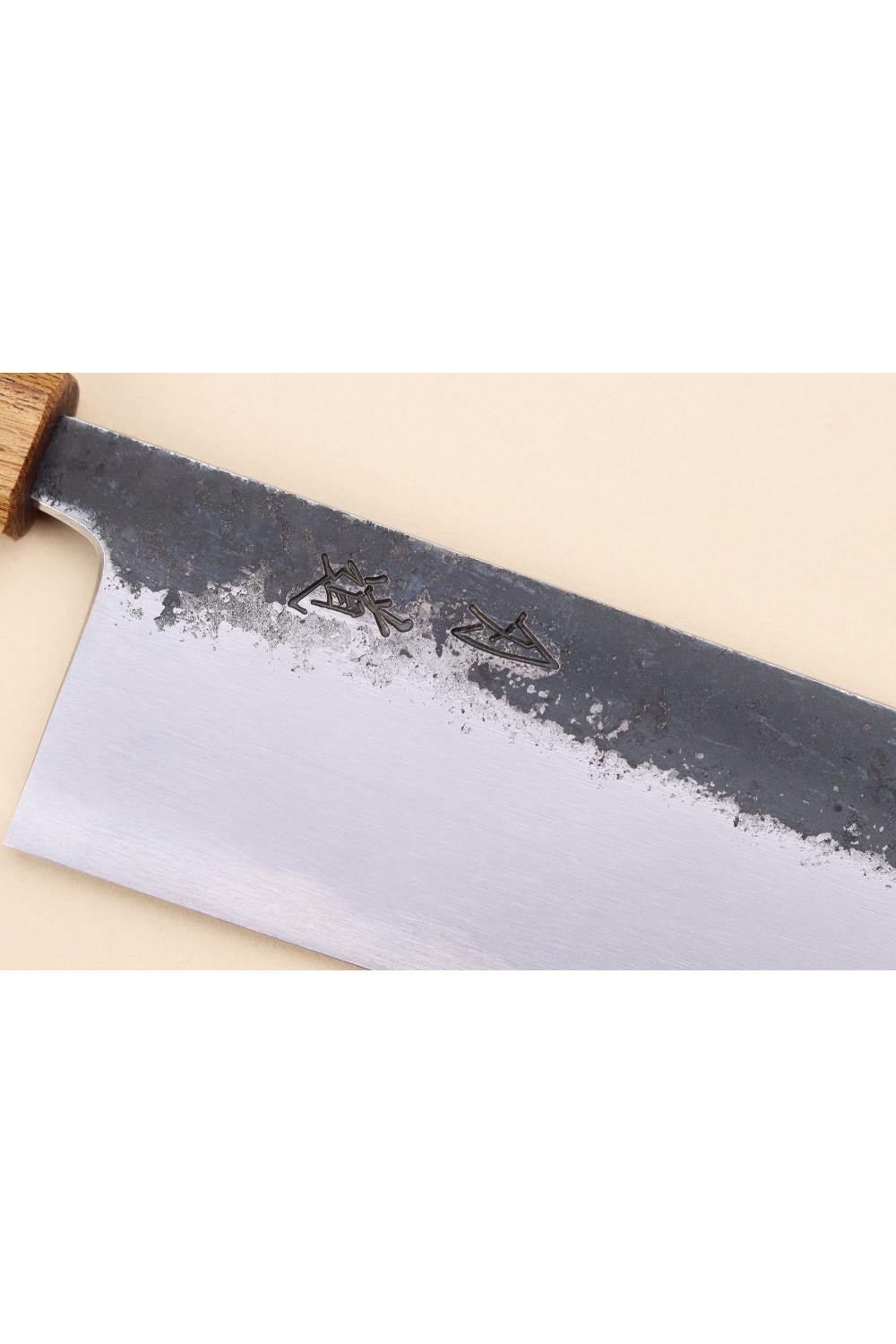
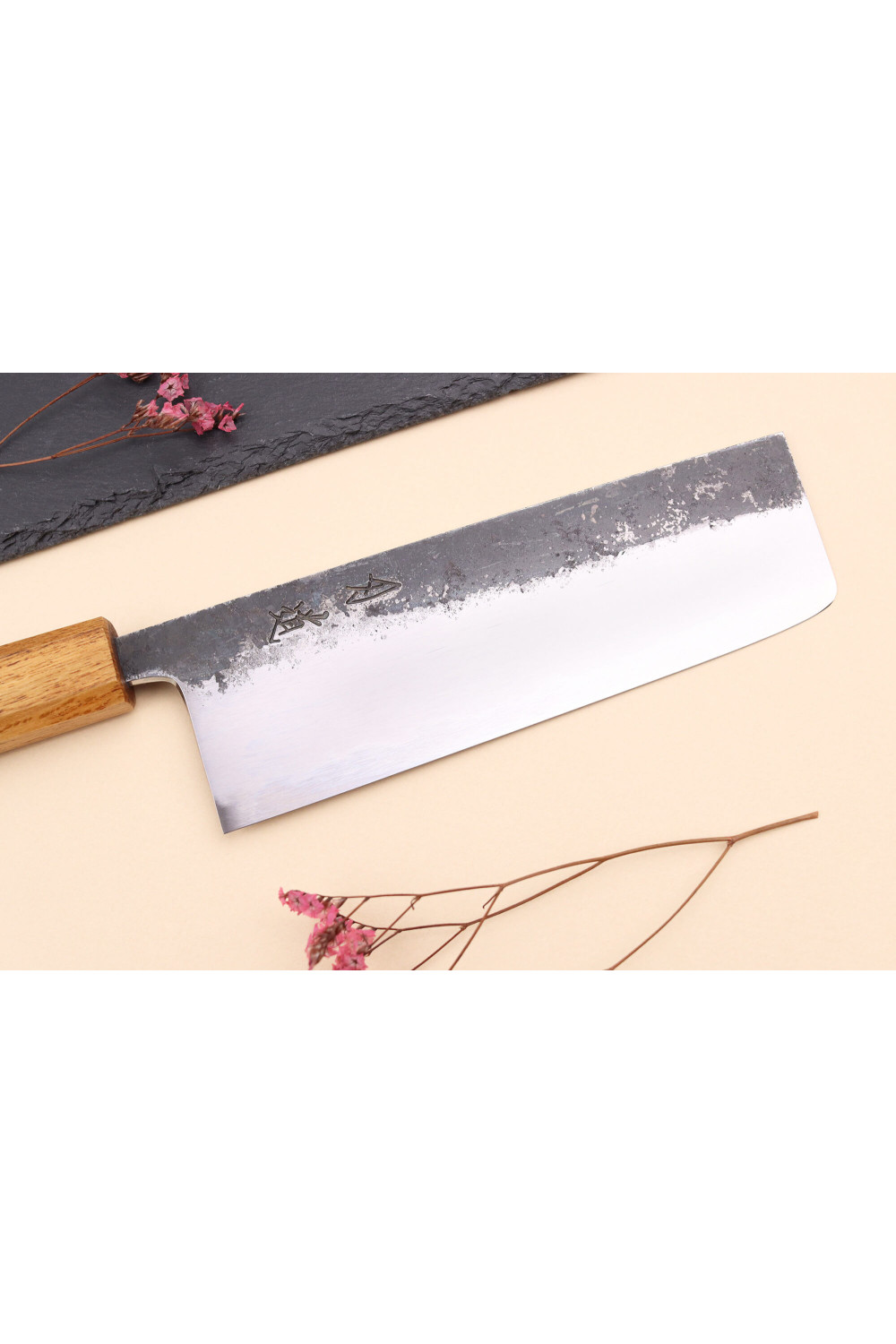
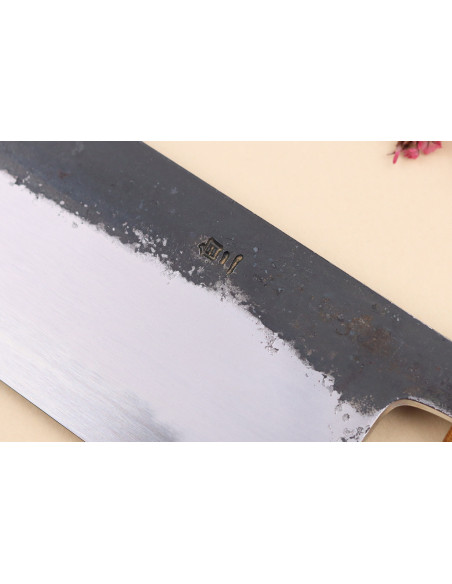
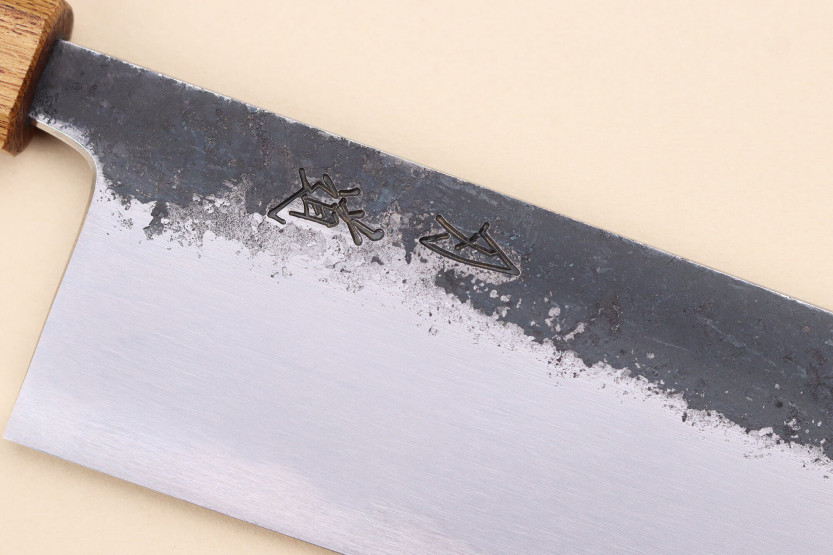
This core is then wrapped in a layer of softer iron, forming a "sandwich" folded on each side. This envelope adds flexibility to the core while protecting it, reducing its sensitivity to shocks and thus the risk of breakage when cutting. The different layers of steel superimposed along the edge create a random wavy line, adding a unique aesthetic to the blade.
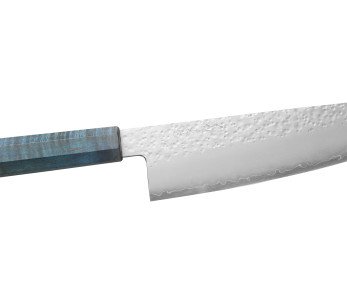
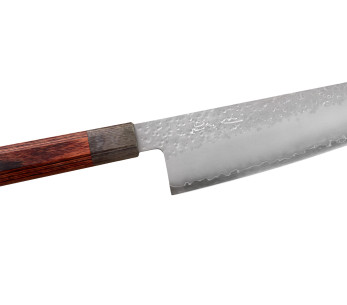
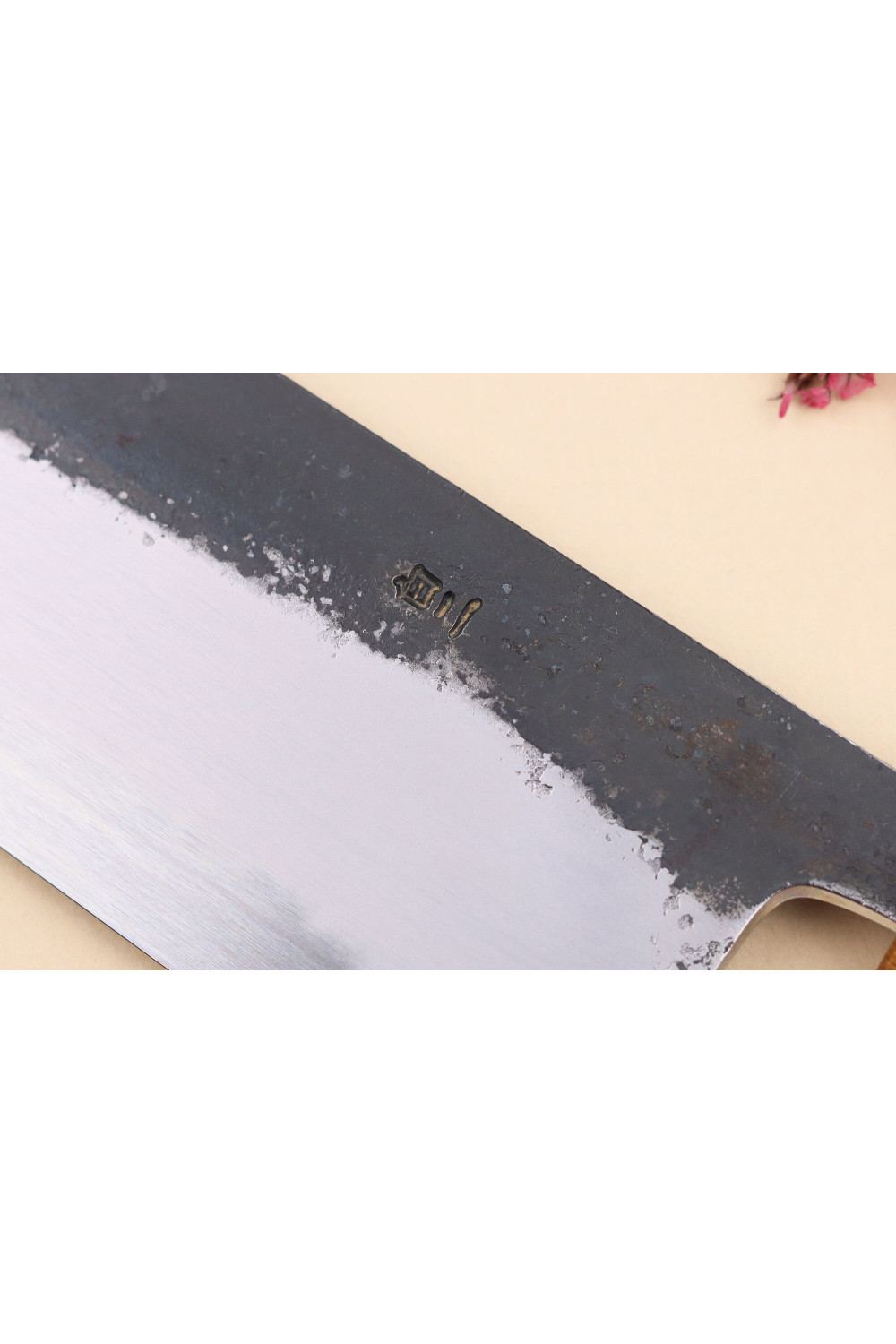
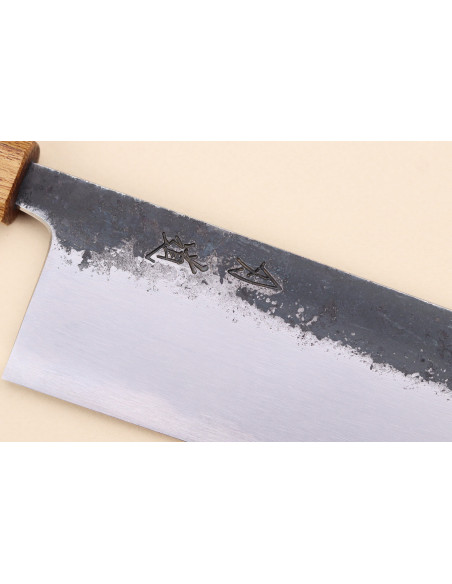
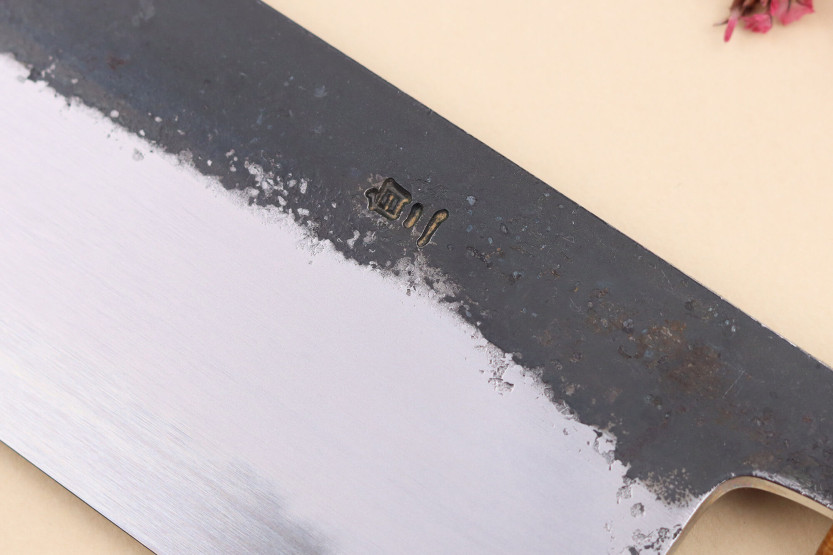
The upper part of the blade features a traditional brute forge finish, giving it an authentic character. Kanji are also engraved on each side of the blade, reinforcing its character.
This knife is part of the Sumi range, a name inspired by the Japanese Sumi ink, which is known for its deep, matte black, echoing the hue of the blade.
The superb burnt oak handle
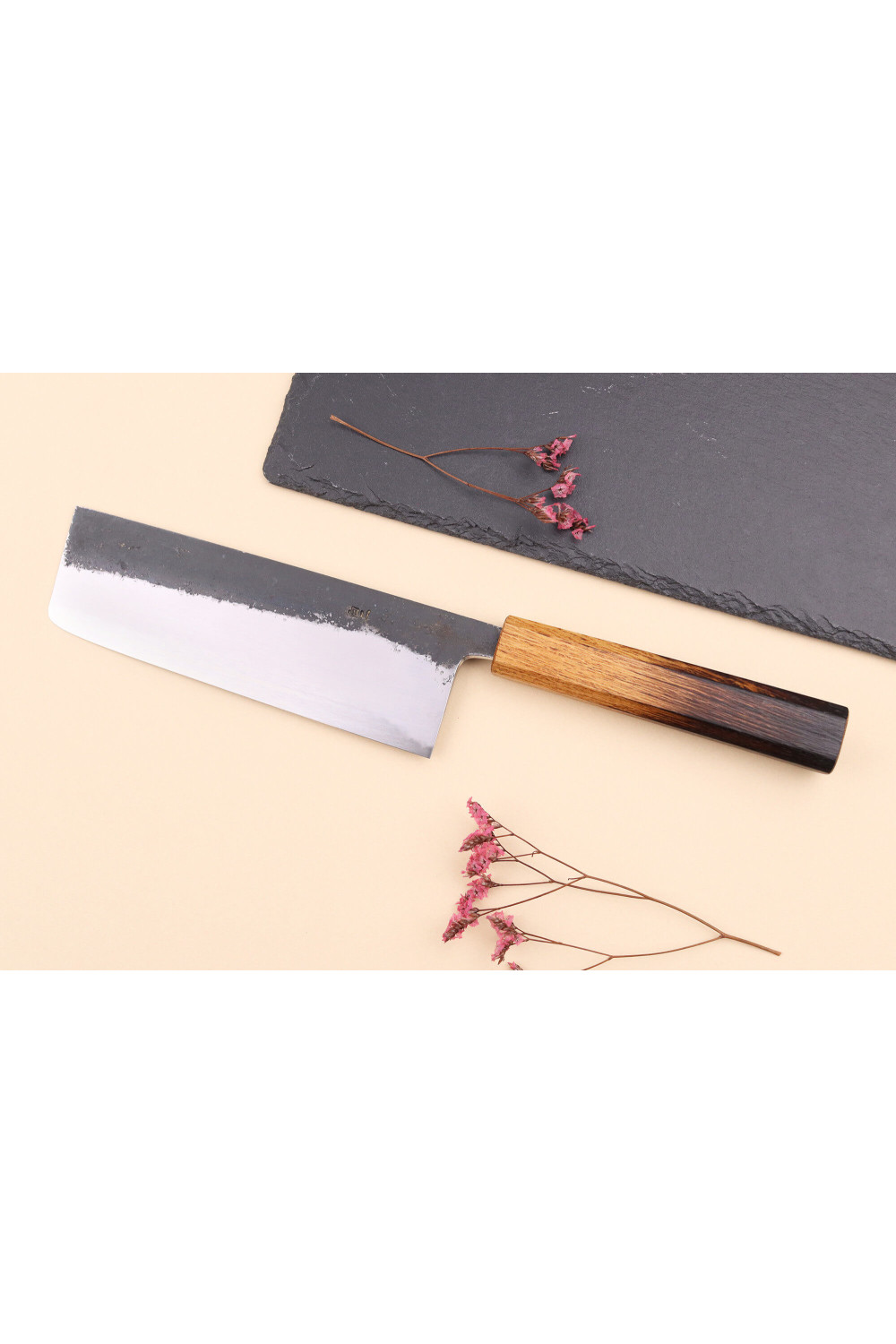
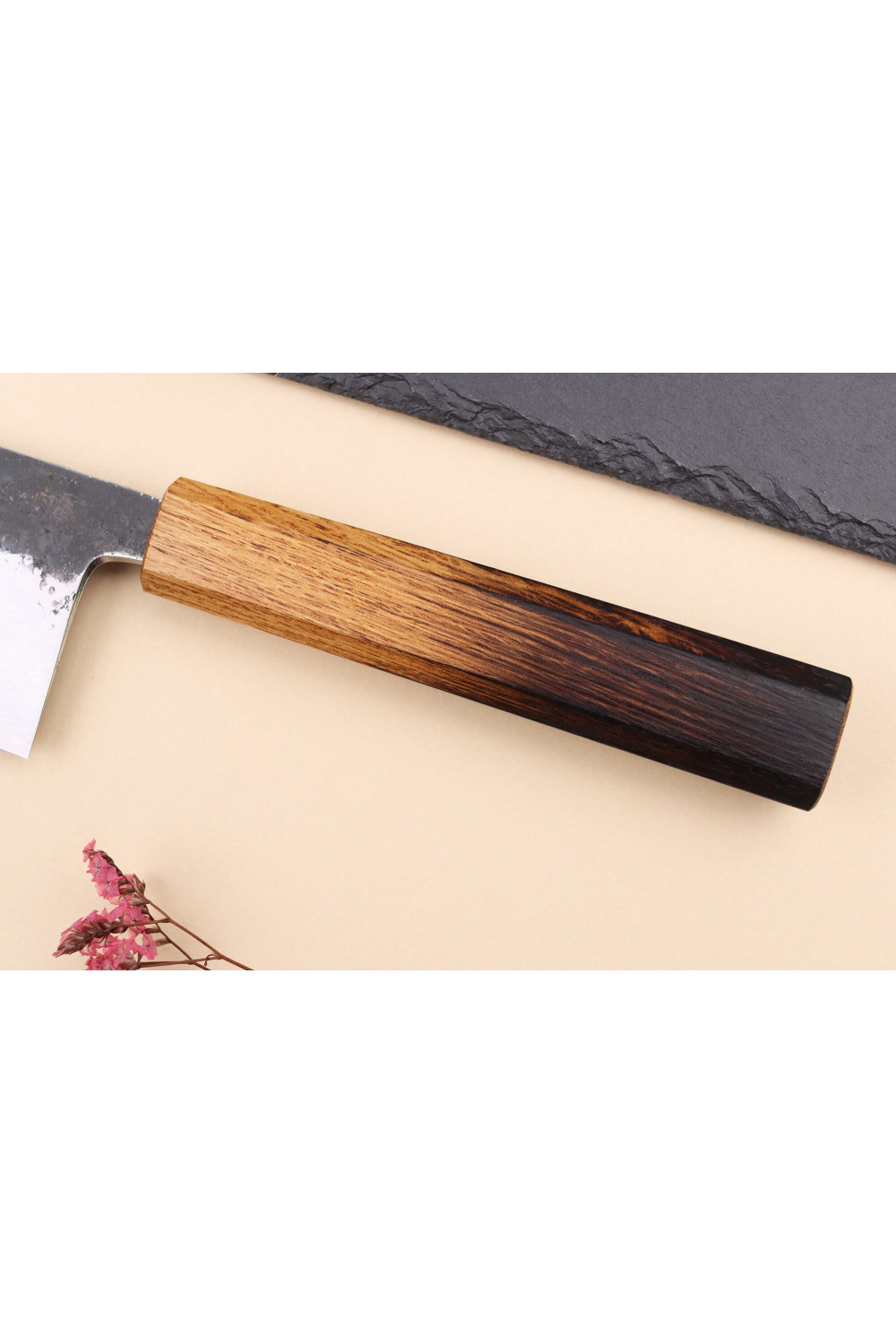
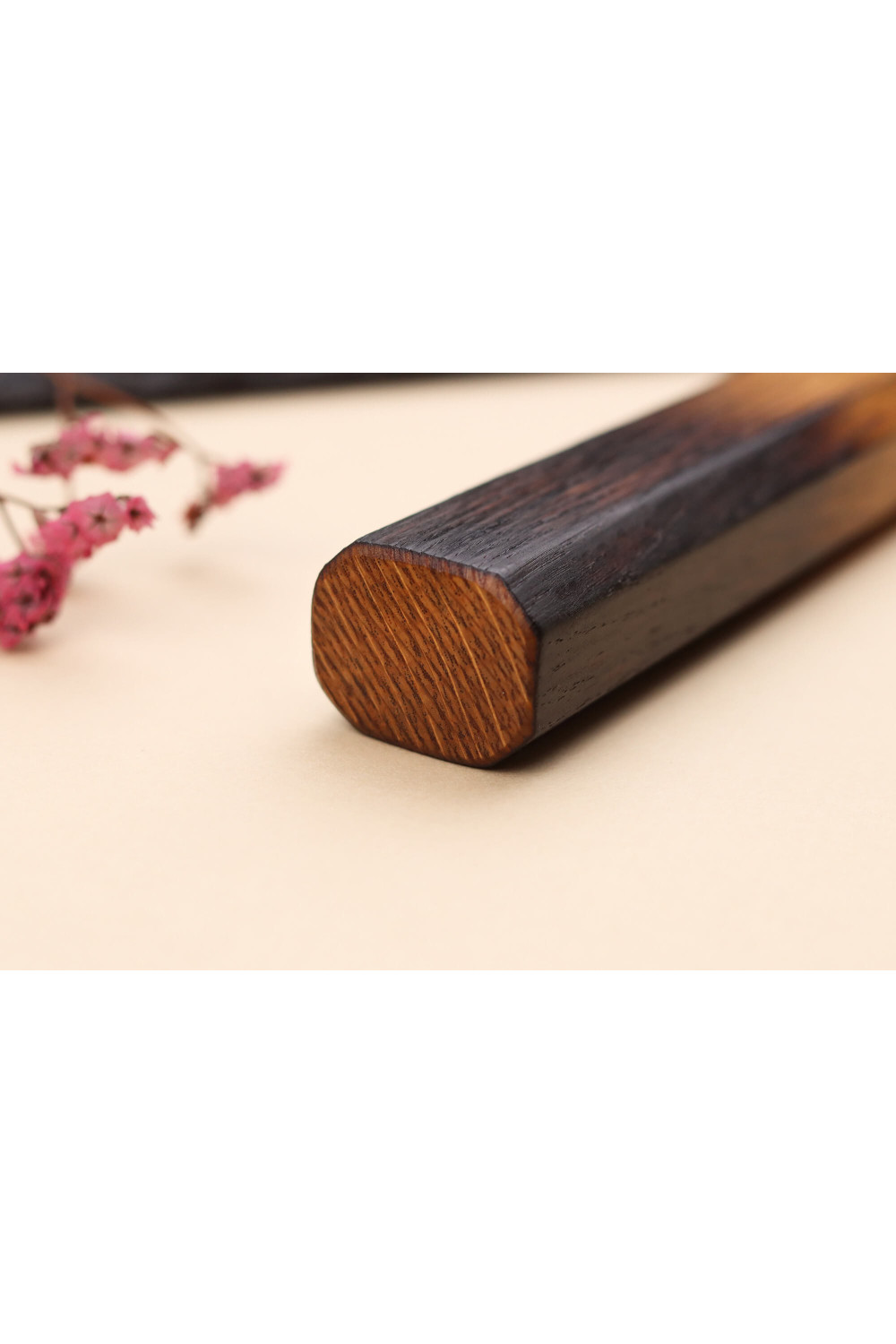
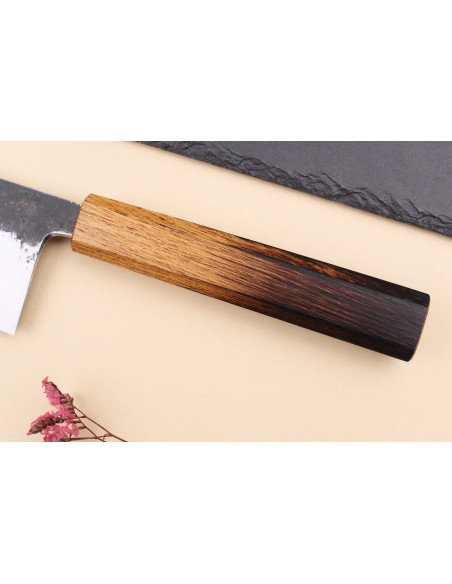
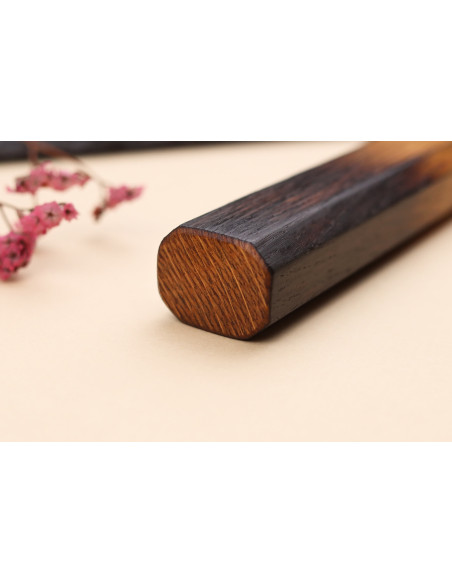
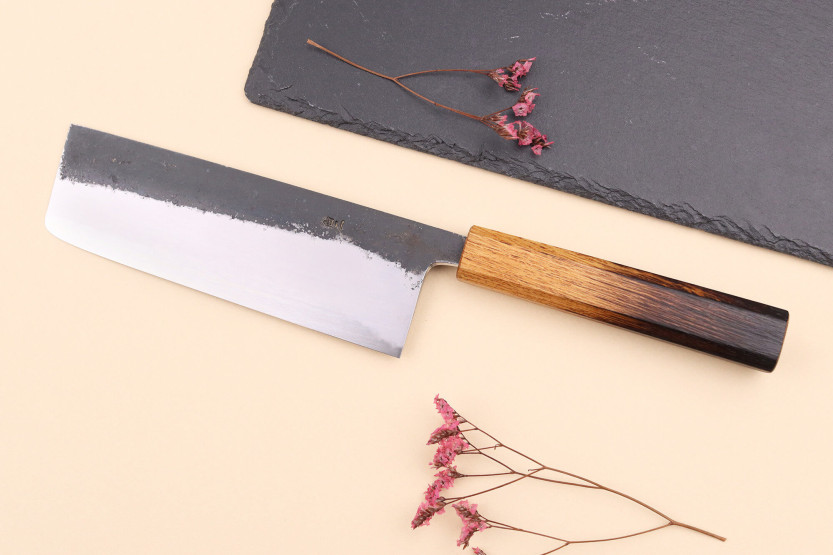
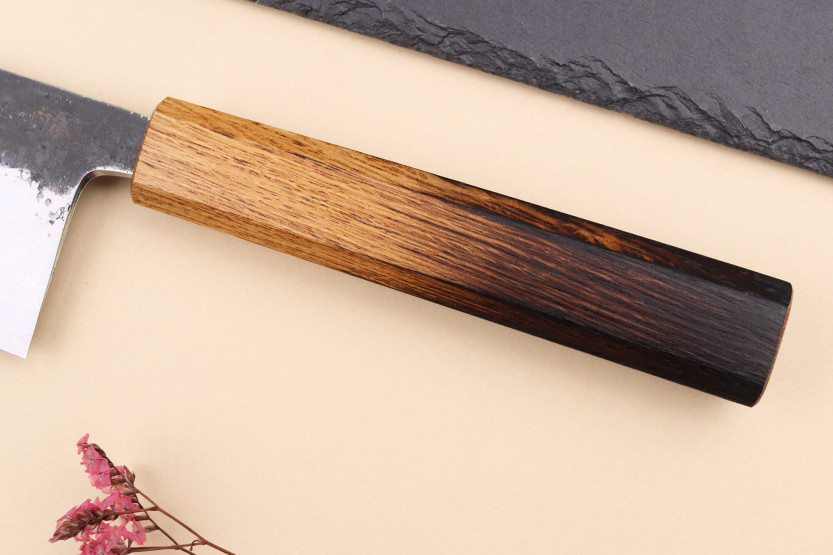
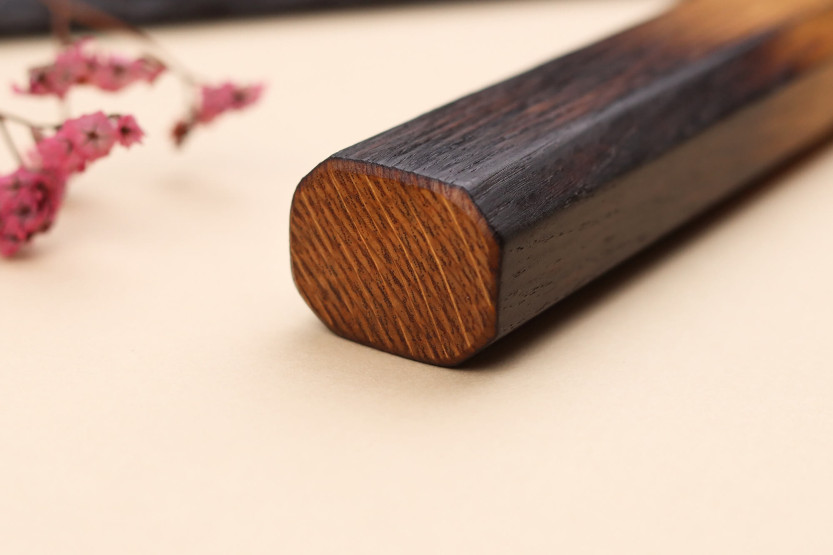
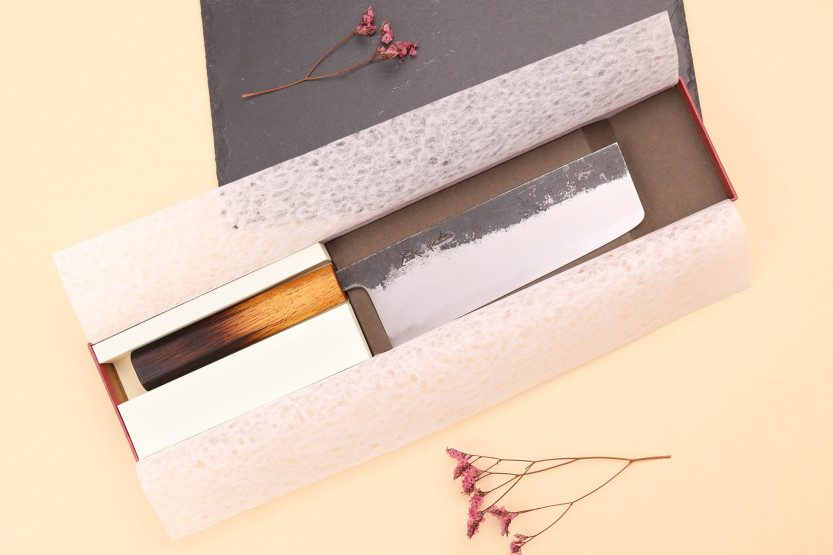
The nakiri's handle is made from burnt oak, a sturdy wood that is resistant to shock and humidity. The end of the handle has been burnt, which not only gives it a uniquely elegant look, but also reinforces its solidity.
Cut in an octagonal shape, the handle is suitable for both left- and right-handed cooks. This shape ensures excellent grip and comfort, for optimum handling when cutting intensively.
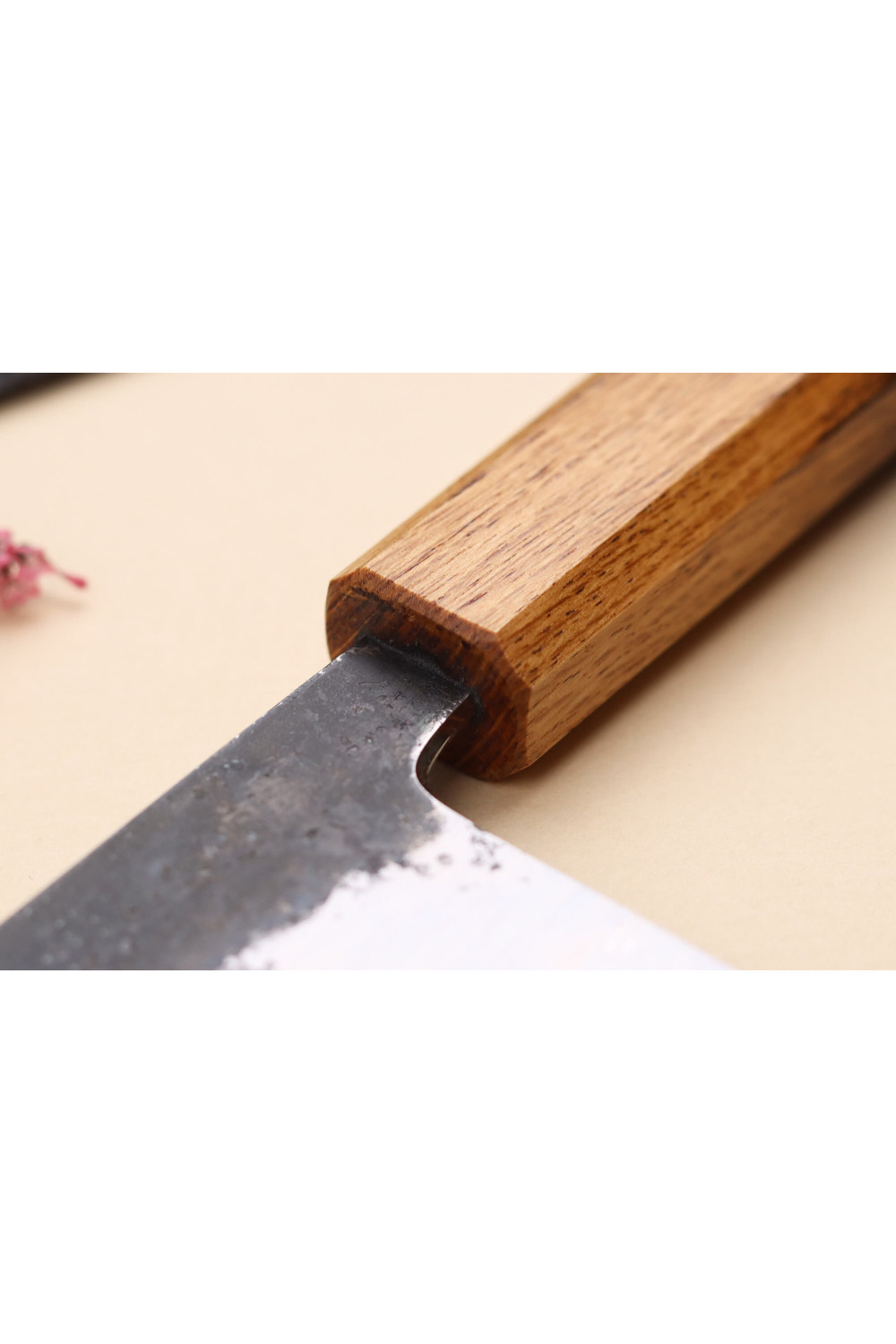
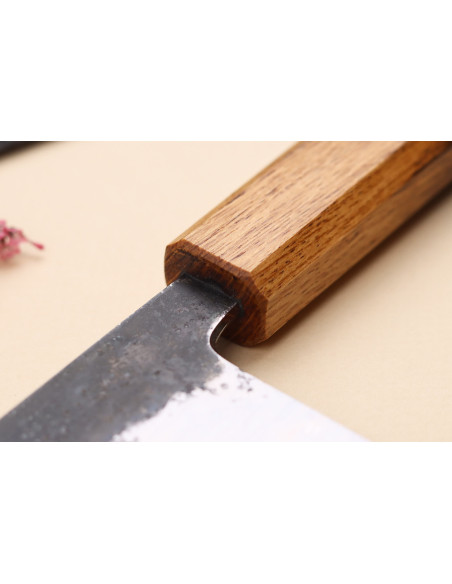
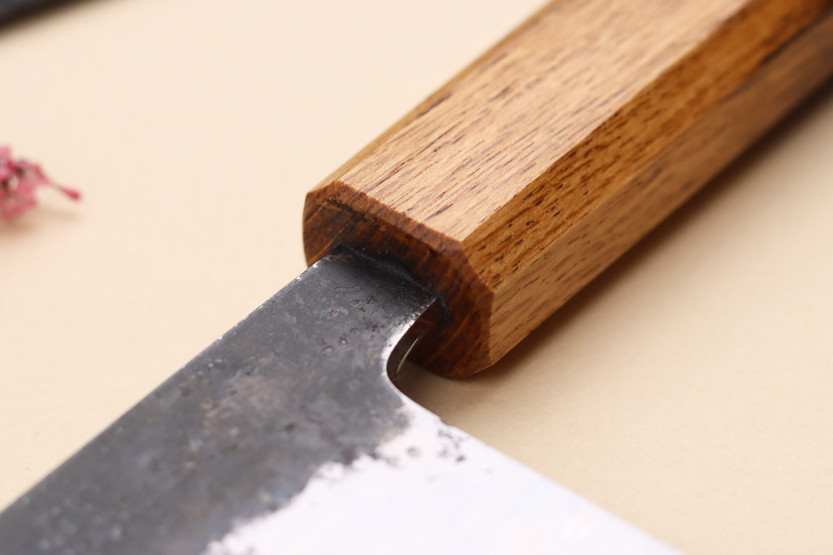
Wood paste completes the handle and fills the spaces where the blade is inserted. Its purpose is to make the whole unit perfectly watertight, preventing any infiltration of water or food residues.
As this knife is made from top-of-the-range materials, it requires regular and meticulous maintenance to preserve its exceptional value over the long term.
Due to the high carbon content of the blade, it must be cleaned exclusively by hand. Do not use the dishwasher or soak in the sink. We recommend using a non-abrasive sponge and a mild detergent, taking care not to wet the handle. After washing, the blade should be carefully and immediately wiped dry to remove all traces of water. Finally, the knife should be stored in a dry place for protection.
Even if you take the utmost care of your knife, it is normal for the color of the blade to change slightly with use. This is due to the high carbon content of the blade, which reacts to external elements such as the acidity of food or humidity in the air. To protect the blade, apply a littleblade oil from time to time.
Discover Hado Sumi handcrafted knives on KnifeLeader.eu!




 By buying this product you can collect up to