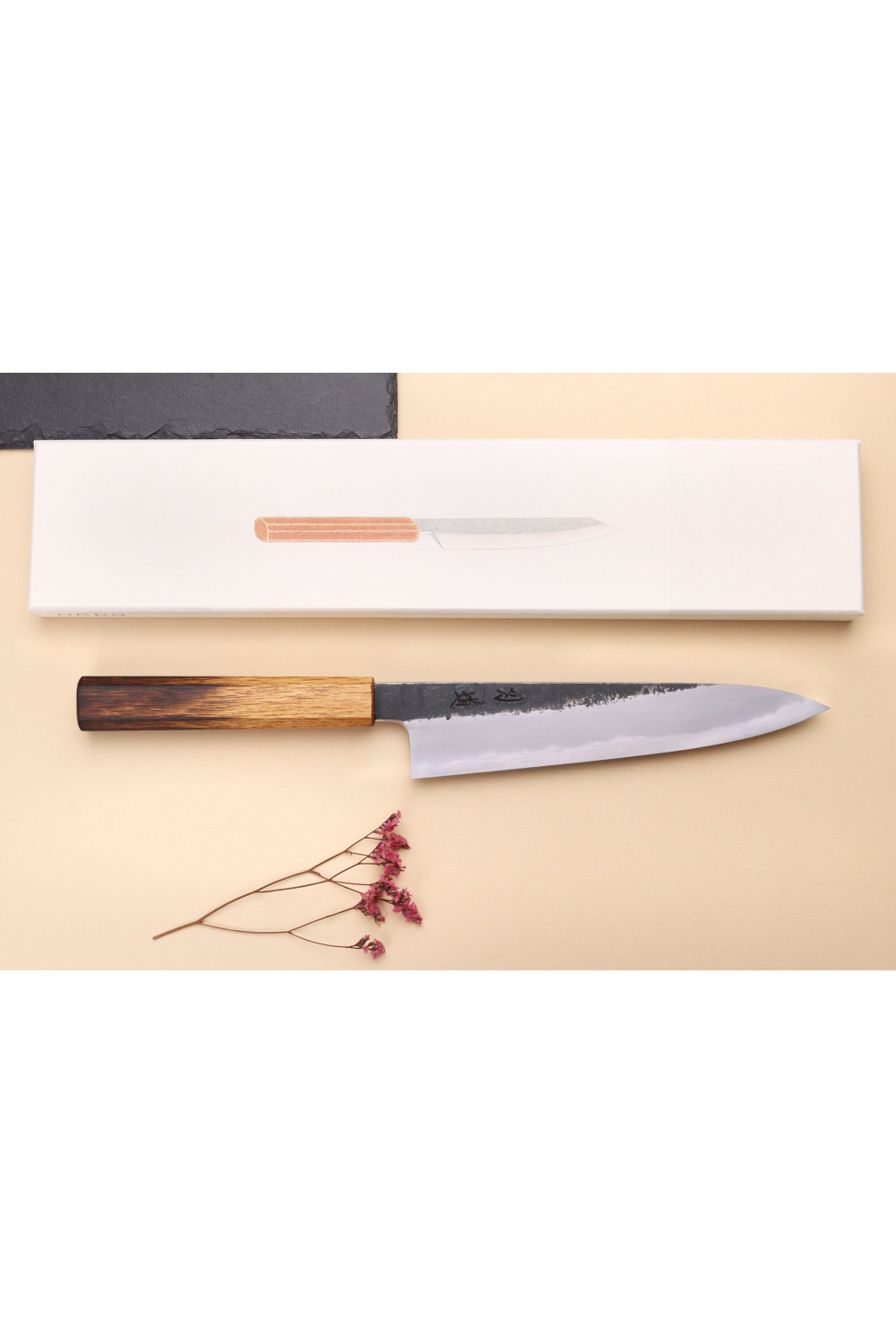
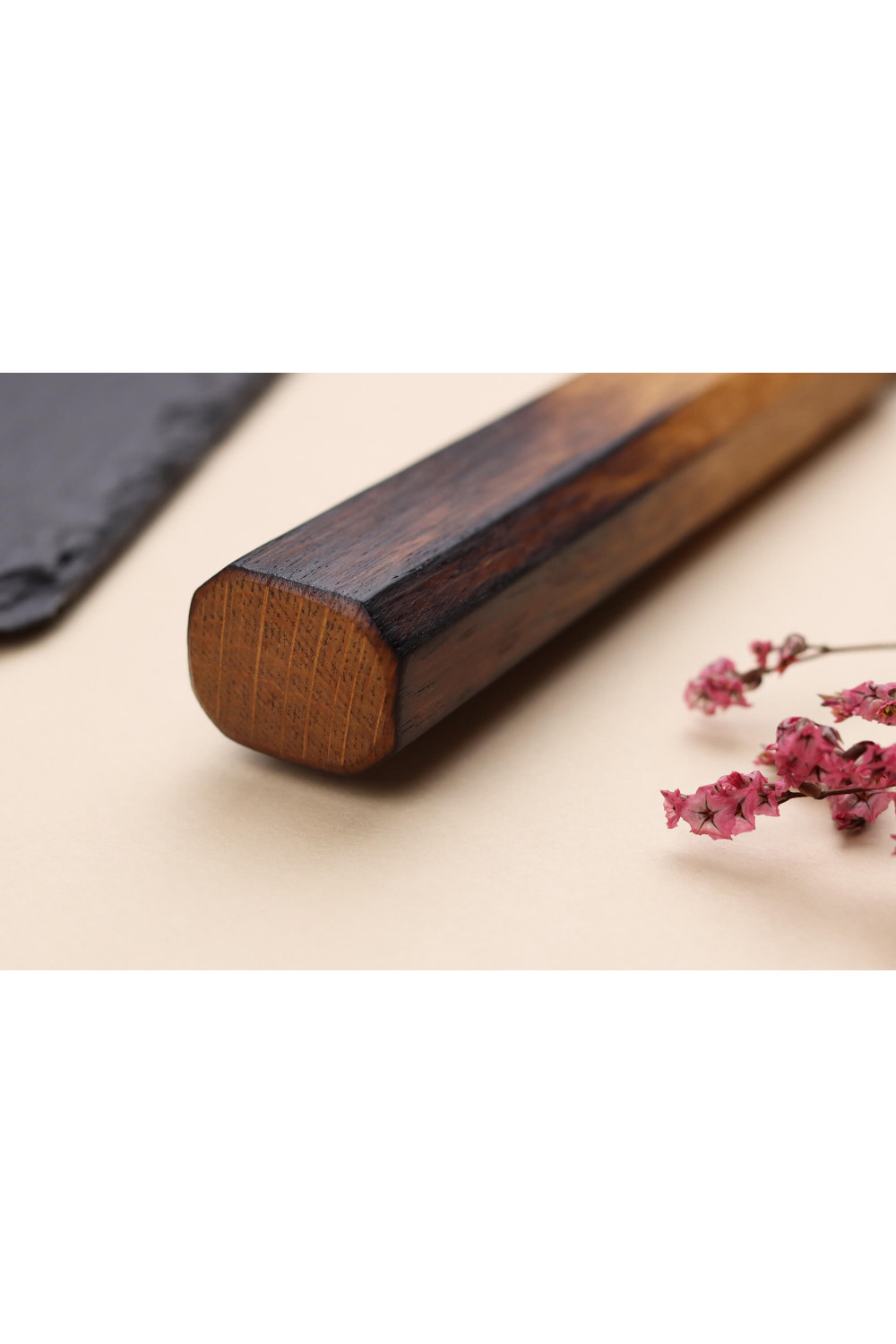
A superb octagonal handle in burnt oak
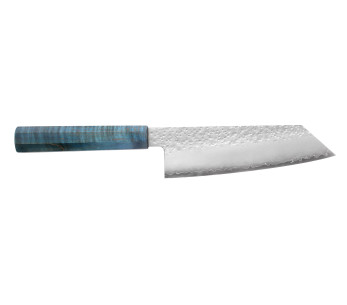
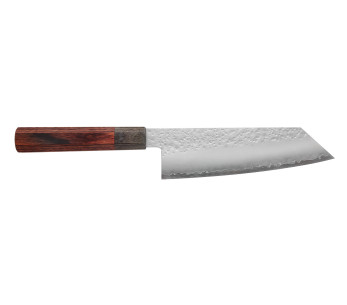
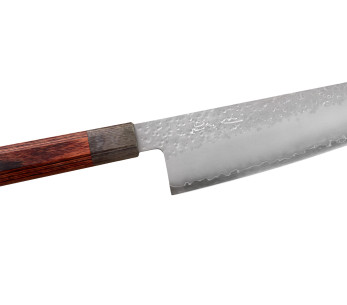
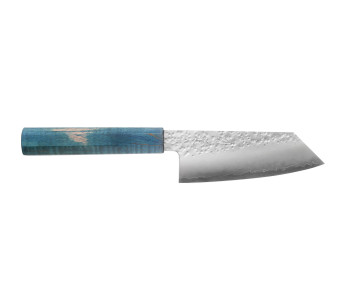
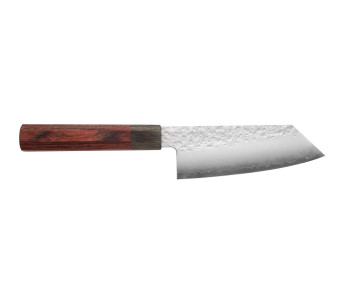
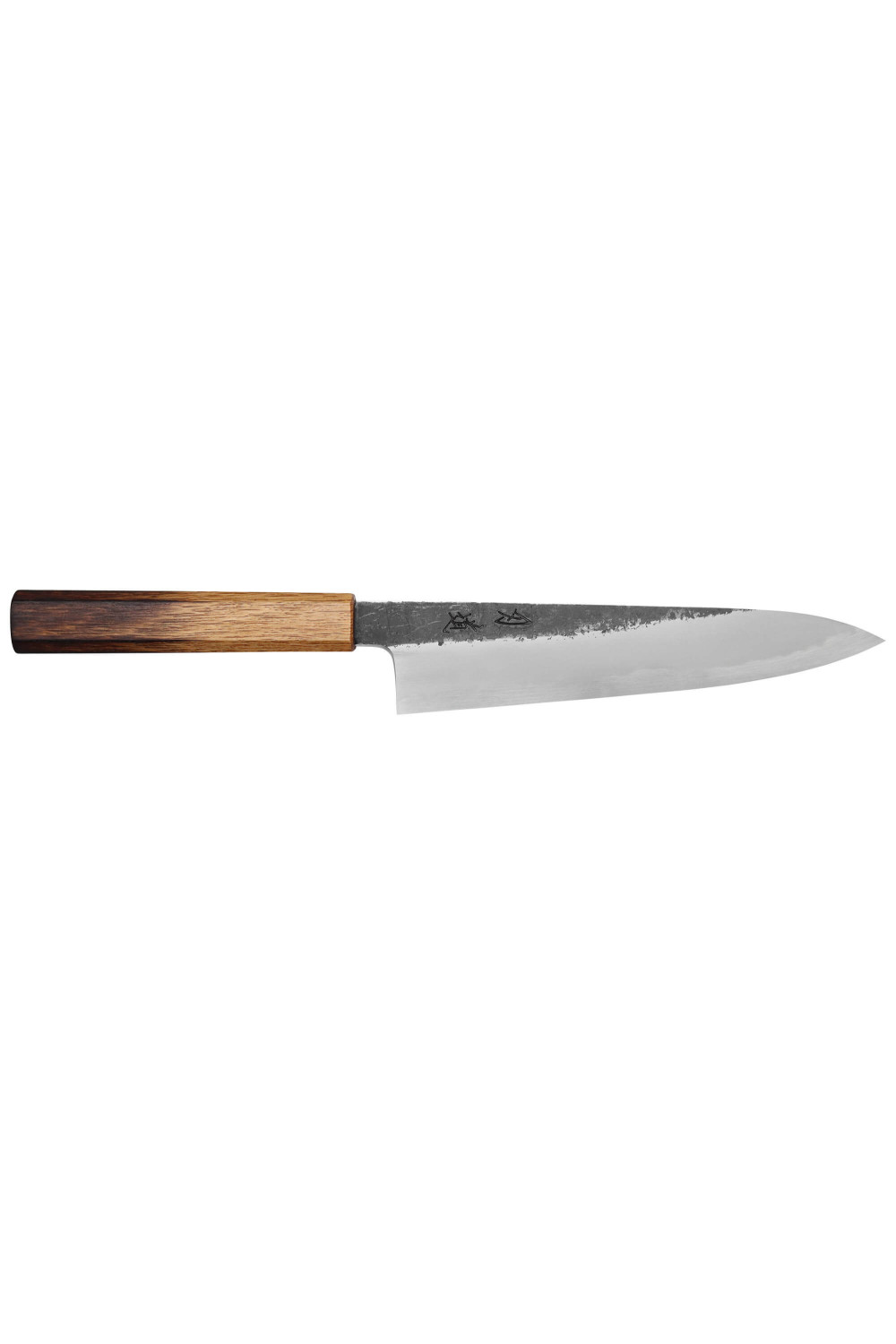
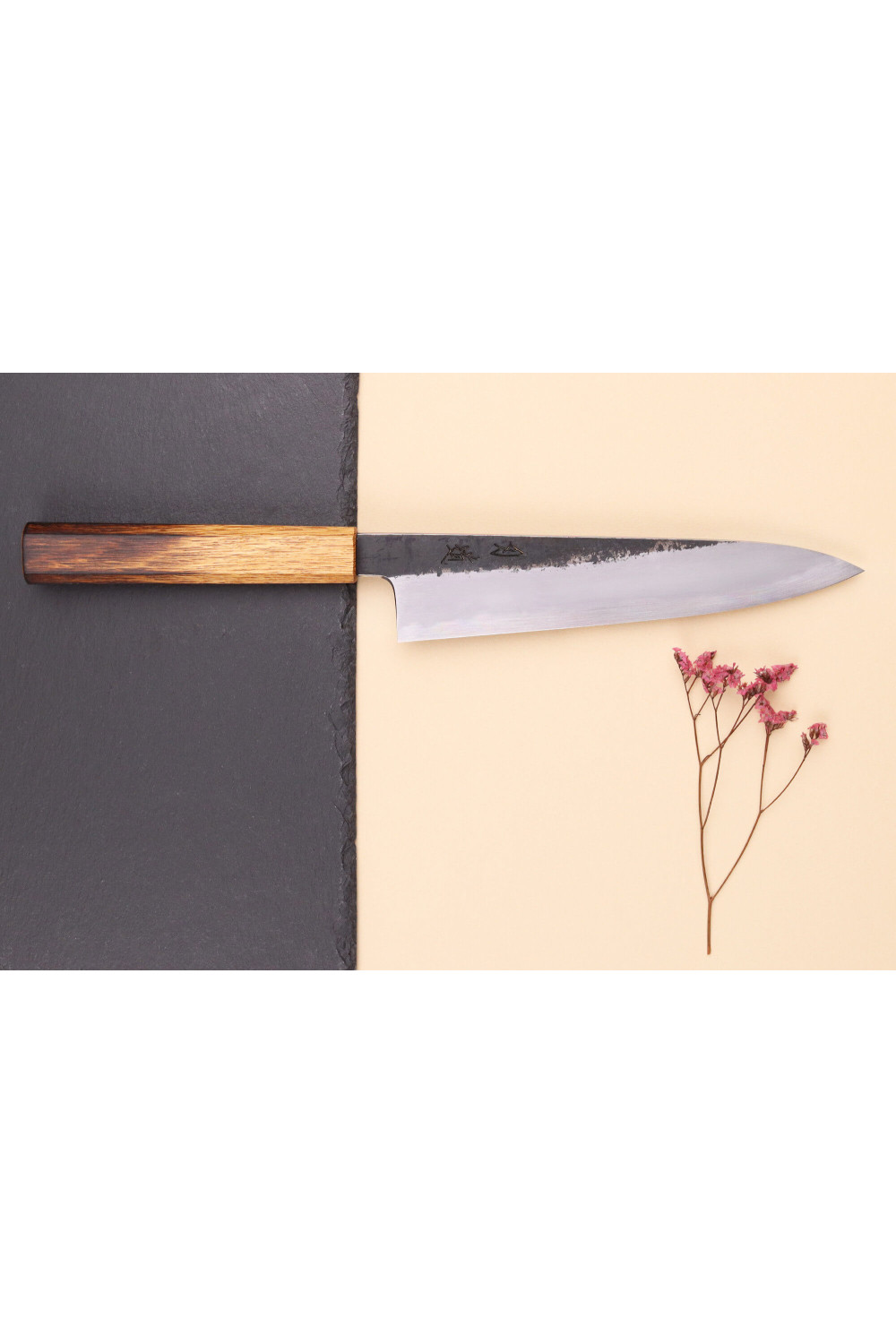
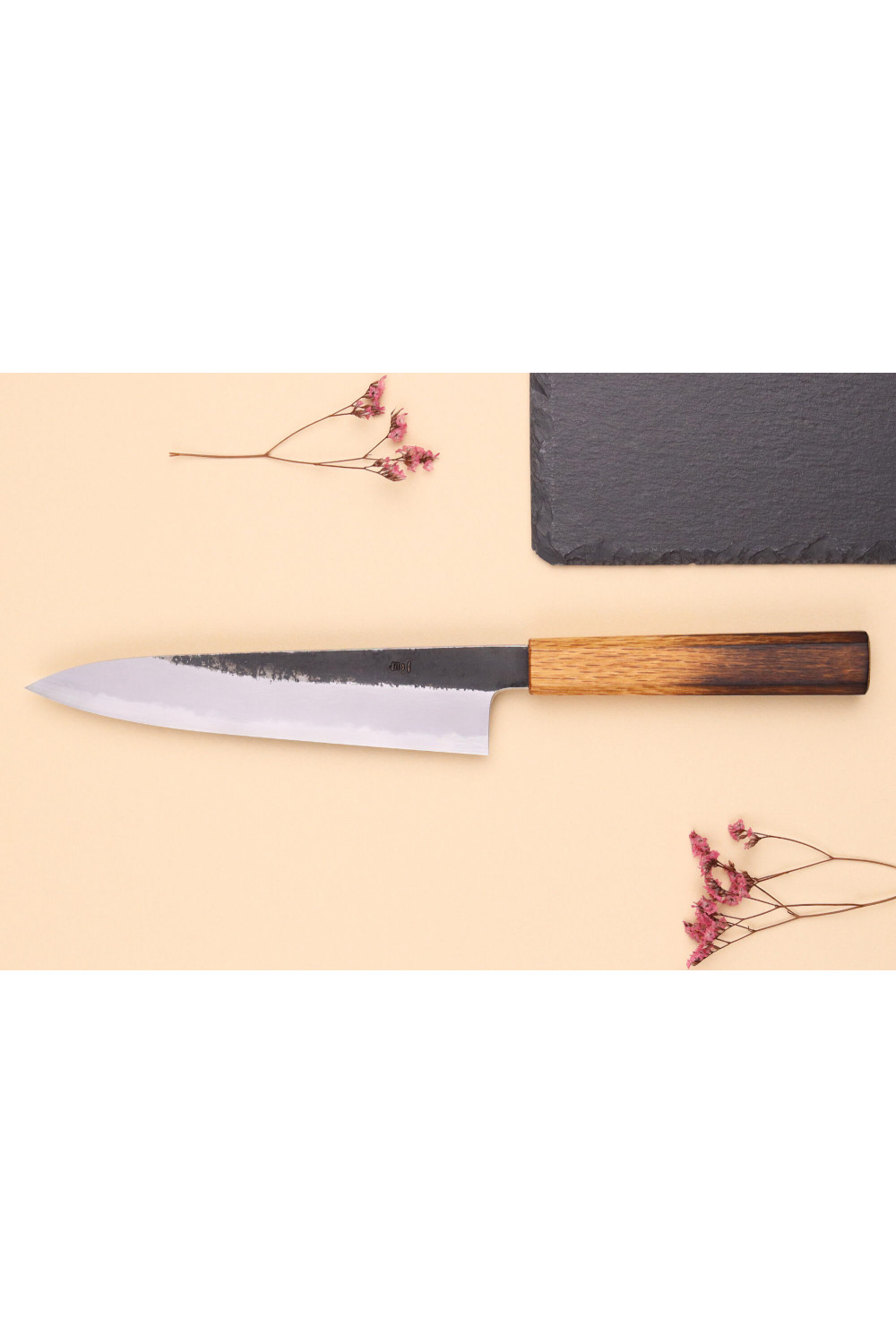
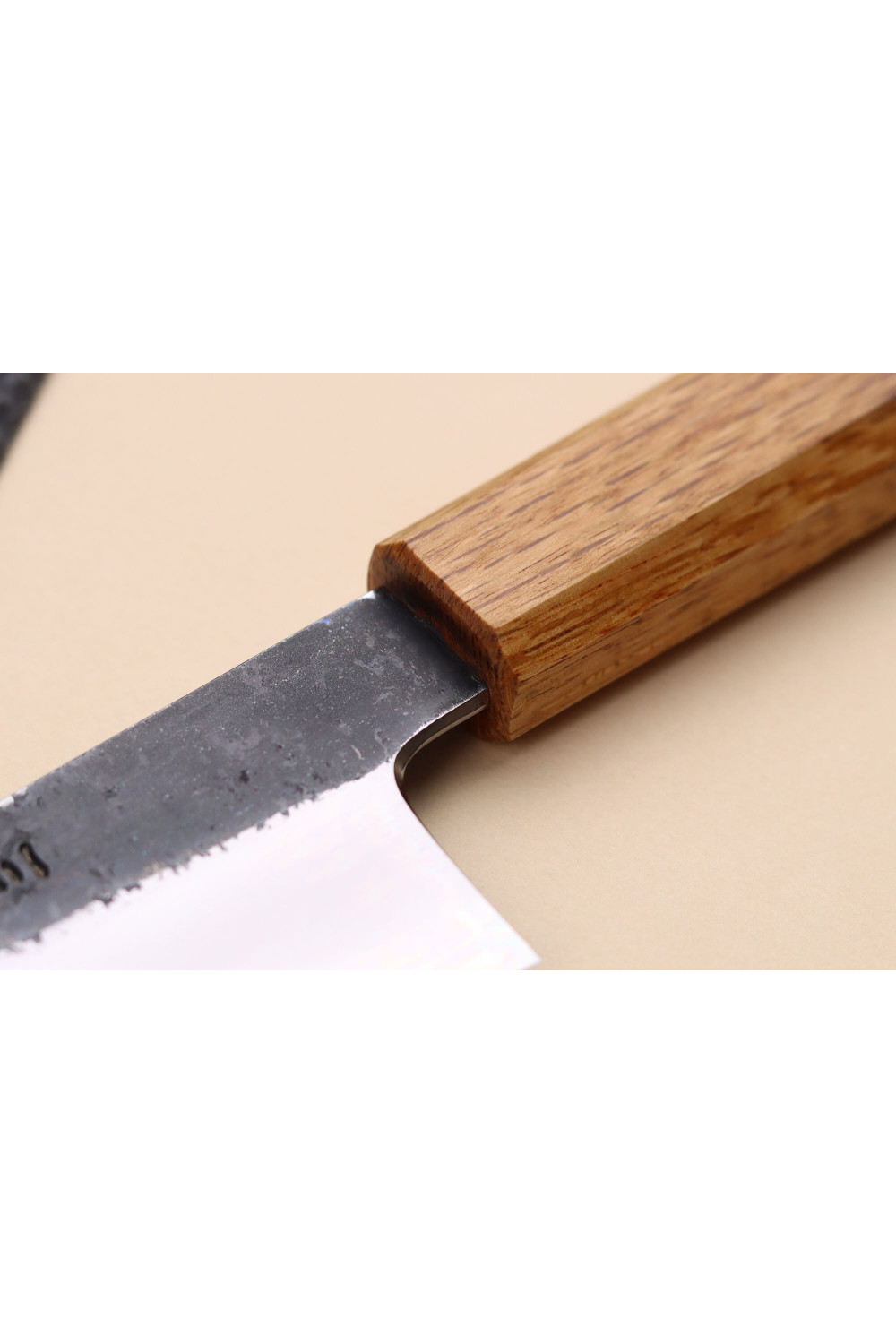
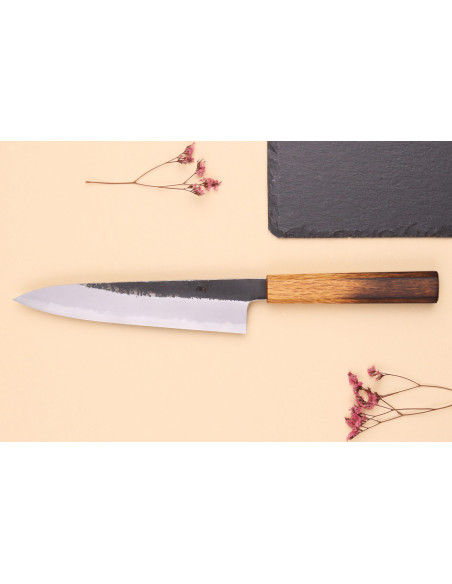
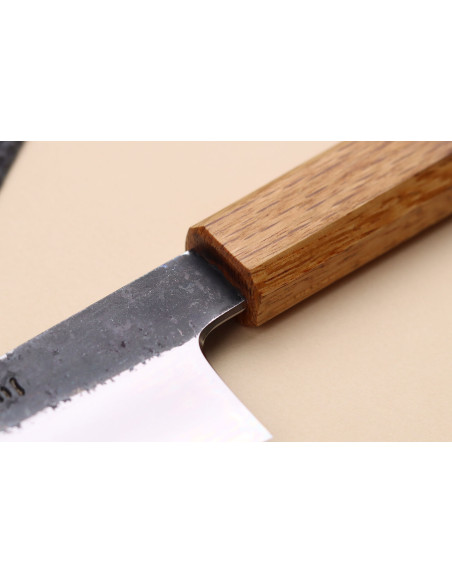
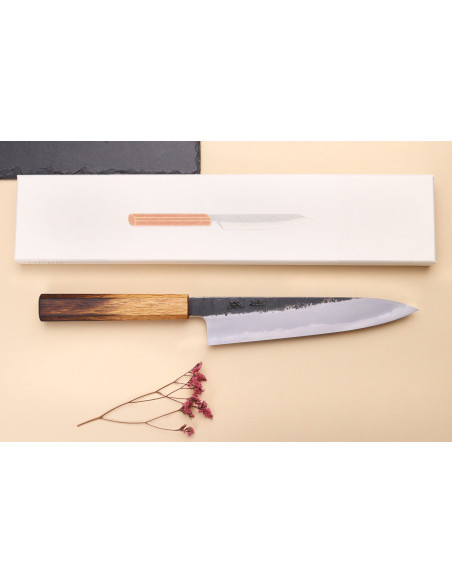
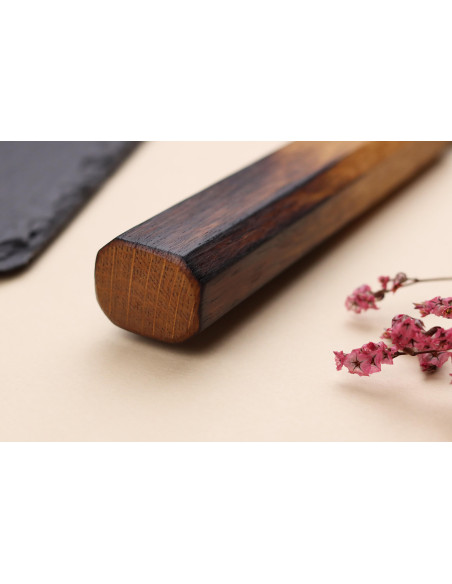
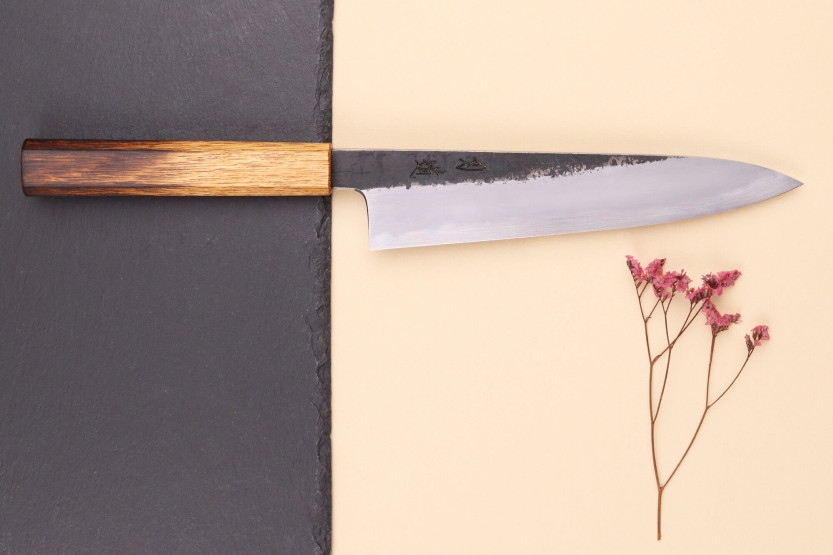
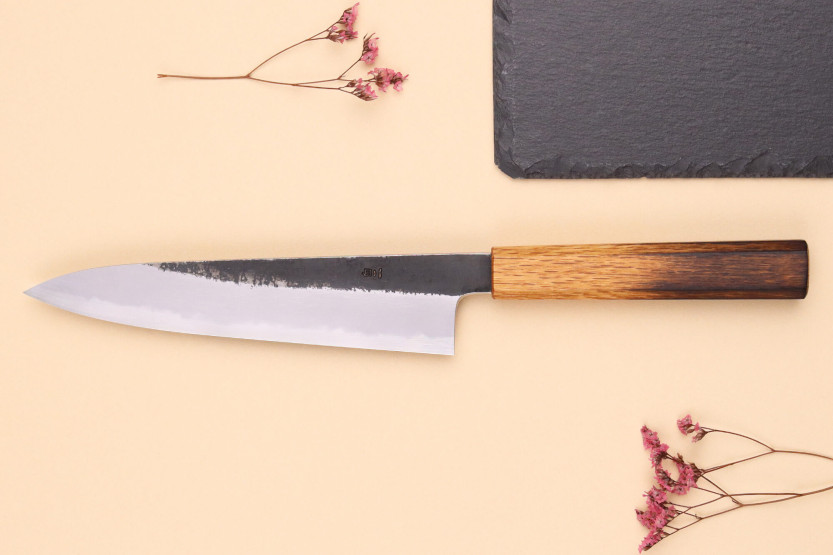
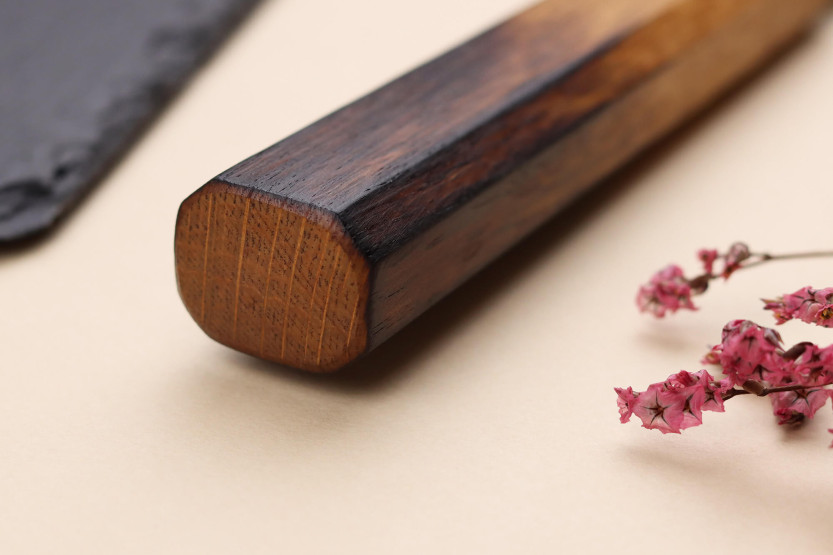
The knife's handle is made from burnt oak, an original choice that guarantees great resistance to humidity and shock. The end of the handle has been burnt for added strength and aesthetic appeal. The handle perfectly combines durability and aesthetics.
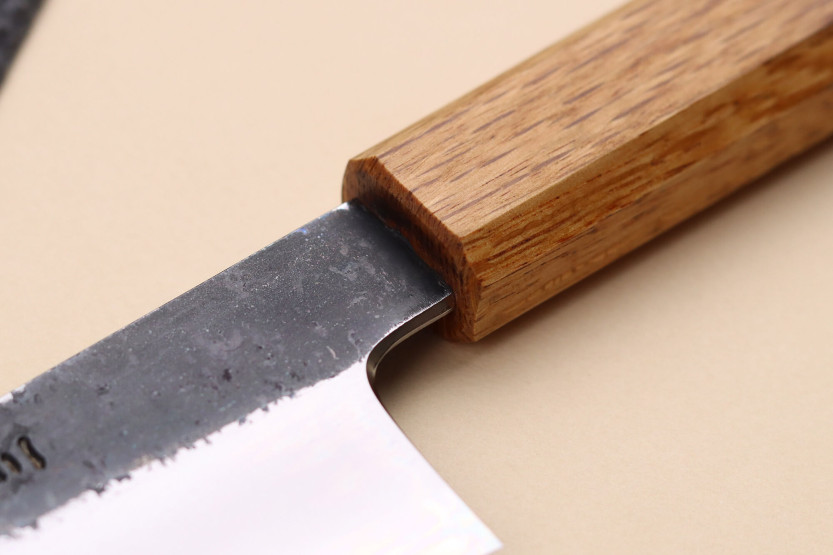
Cut in an octagonal shape, the handle is ideally shaped to suit all cooks, whether left- or right-handed. This shape gives you a perfect grip and plenty of comfort, making the knife handy and suitable for intensive cutting sessions.
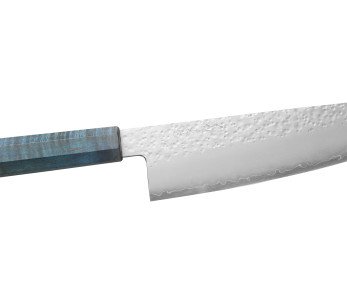
To fill the gaps where the blade fits into the handle, wood paste has been meticulously added. The aim is to provide you with a perfectly watertight knife, preventing any infiltration of water or food residues, and guaranteeing impeccable hygiene.
The top-of-the-range chef's knife blade
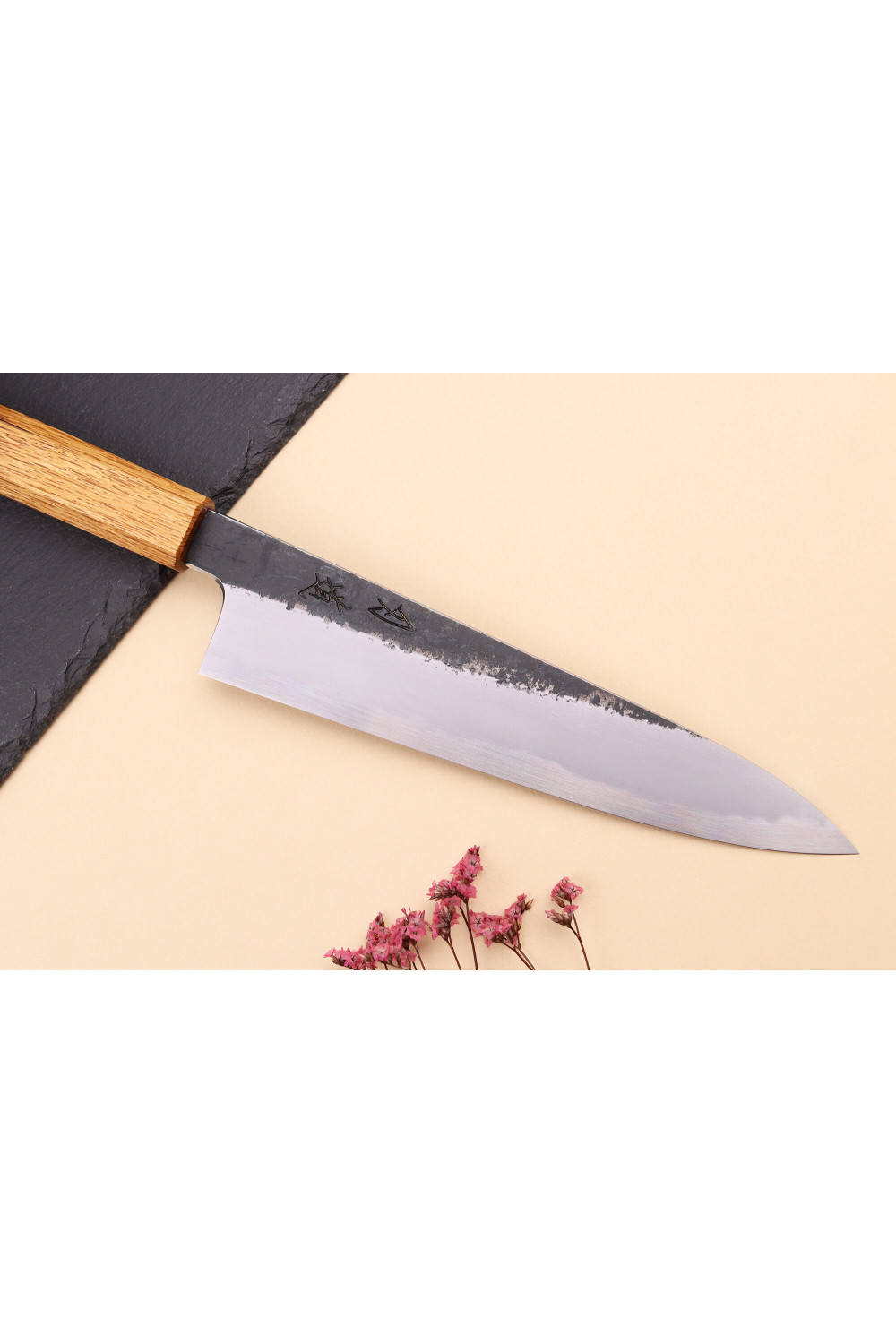
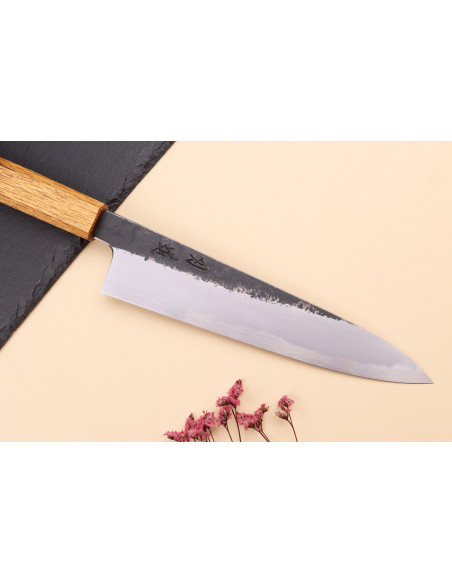
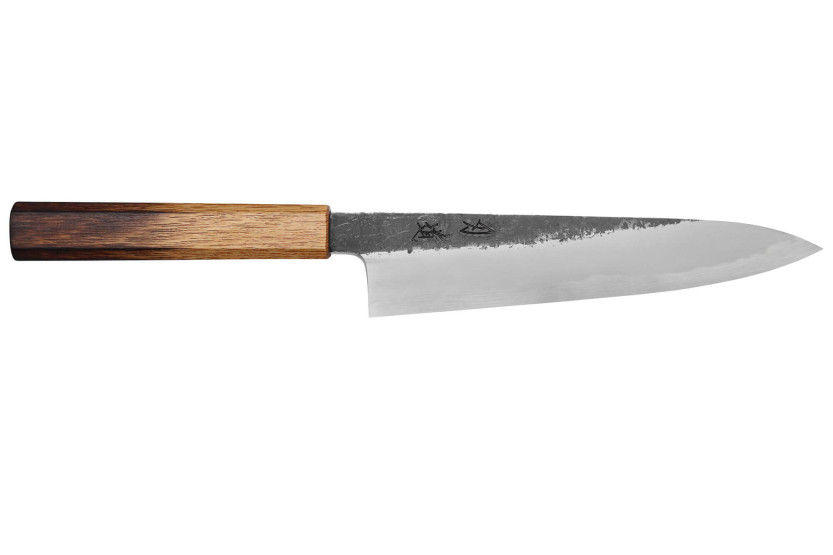
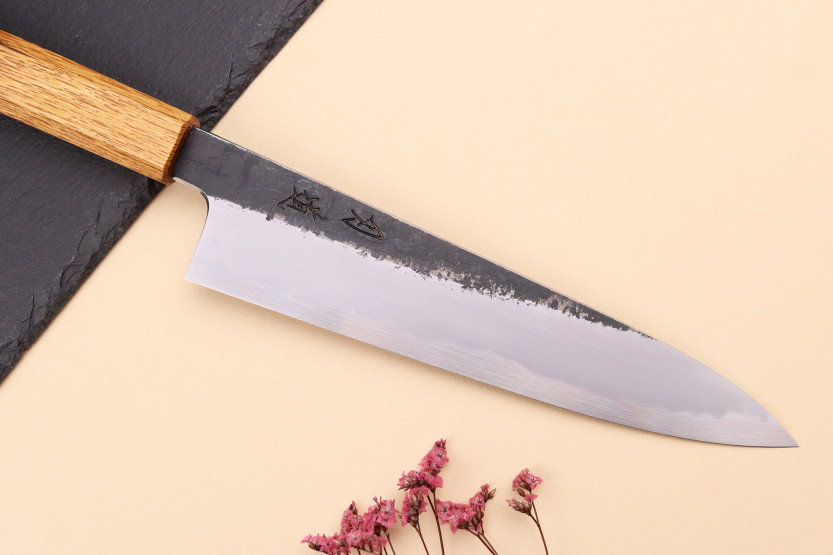
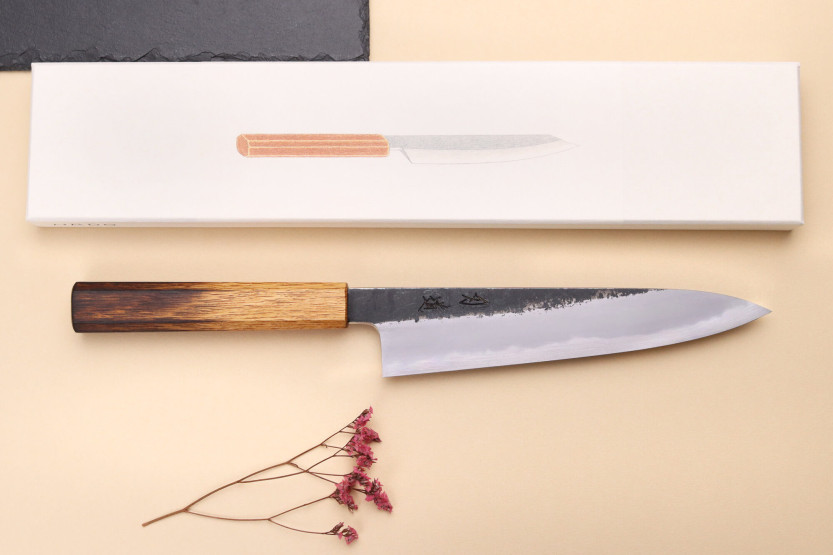
Your gyuto knife has a 21cm blade with a typically Japanese San Maï design. This consists of surrounding a blade core of rigid steel with an outer layer of softer steel. This creates a "sandwich" structure as the outer layer folds over the core. The aim is to protect the core while providing excellent balance. "San Maï" means "3 layers" in Japanese.
Here, the heart of the blade is made of Japanese Shirogami #2 steel, also known as White Steel 2. This alloy produced by Hitachi steelworks is highly appreciated by chefs. It is renowned for its high purity and homogeneous structure, which can be observed under a microscope. Shirogami #2 is considered the closest steel to tamahagane, traditionally used to forge swords. However, the alloy is easy to sharpen, enabling incredibly precise cutting. It contains almost 1.3% carbon, giving it a hardness of around 62 HRC on the Rockwell scale.
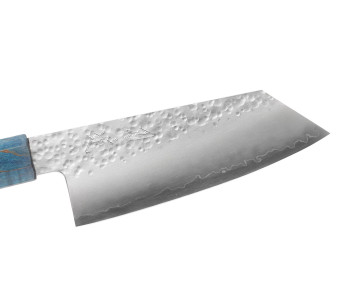
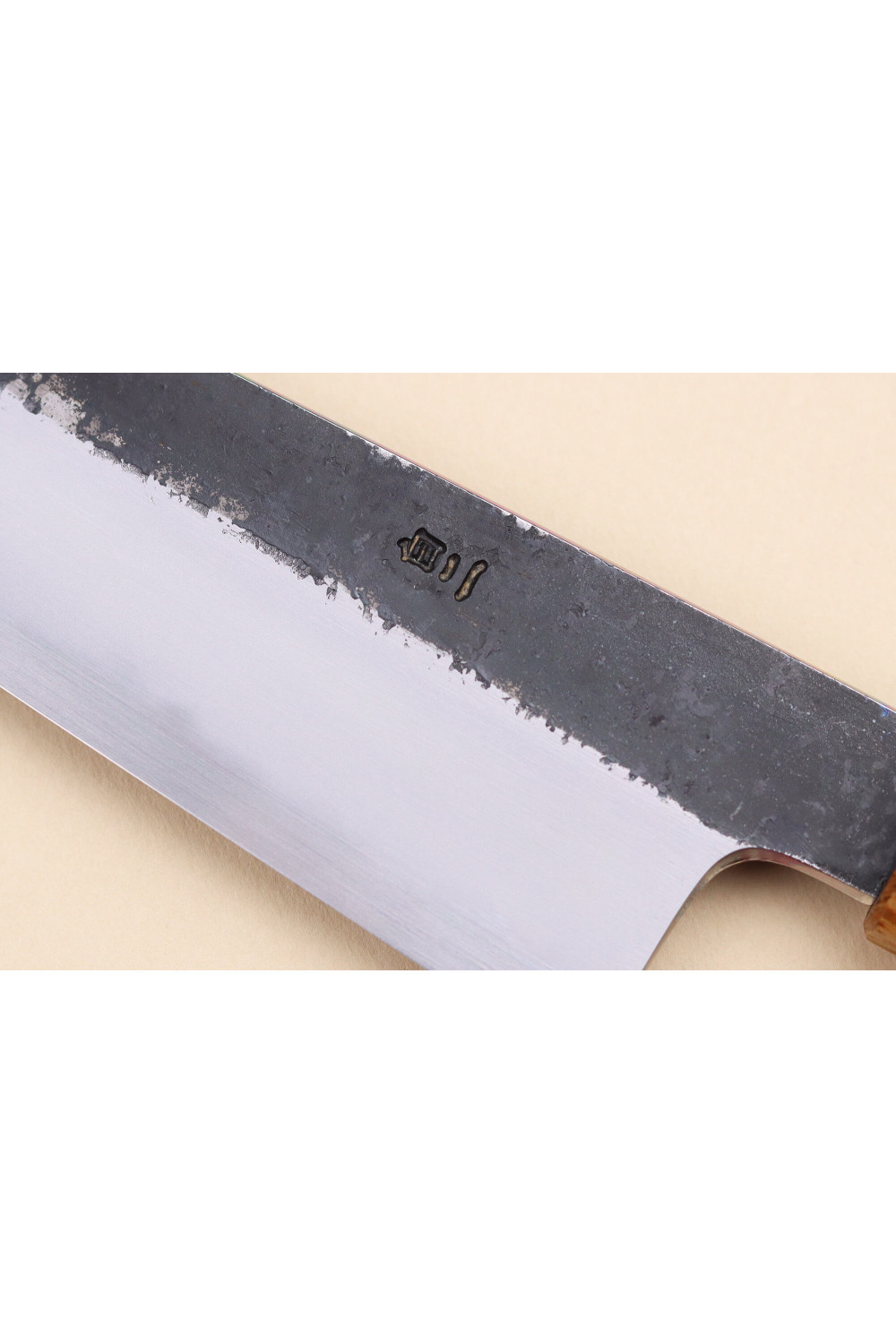
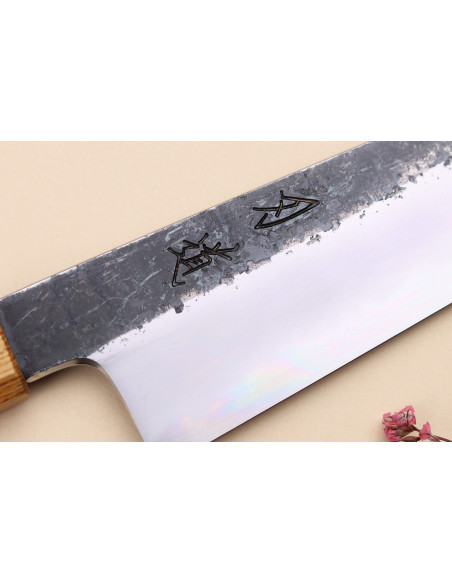
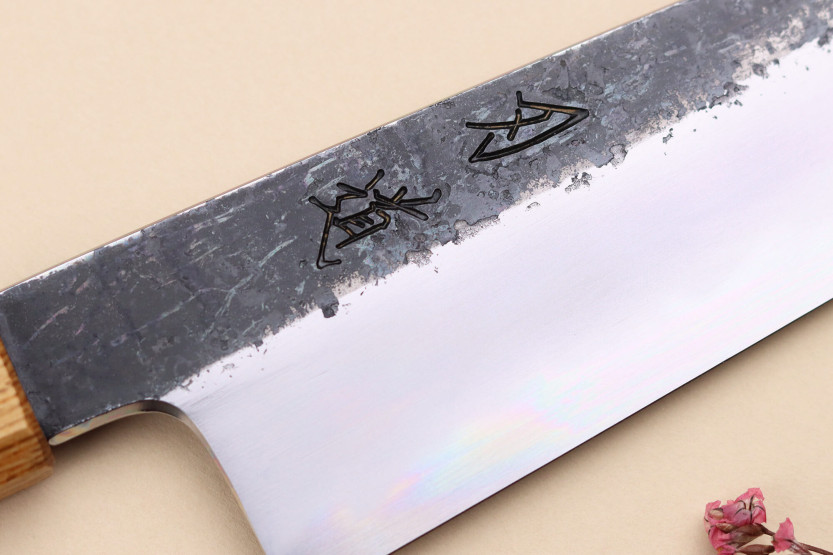
This hard core is enveloped bya layer of softer iron, forming a "sandwich" folded on either side. This gives us 3 layers. The outer layer protects the core and gives it a certain flexibility, making it more resistant to impact and breakage during cutting. The various superimposed layers of steel are visible along the edge, creating a random wavy pattern that gives the knife a unique visual appeal.
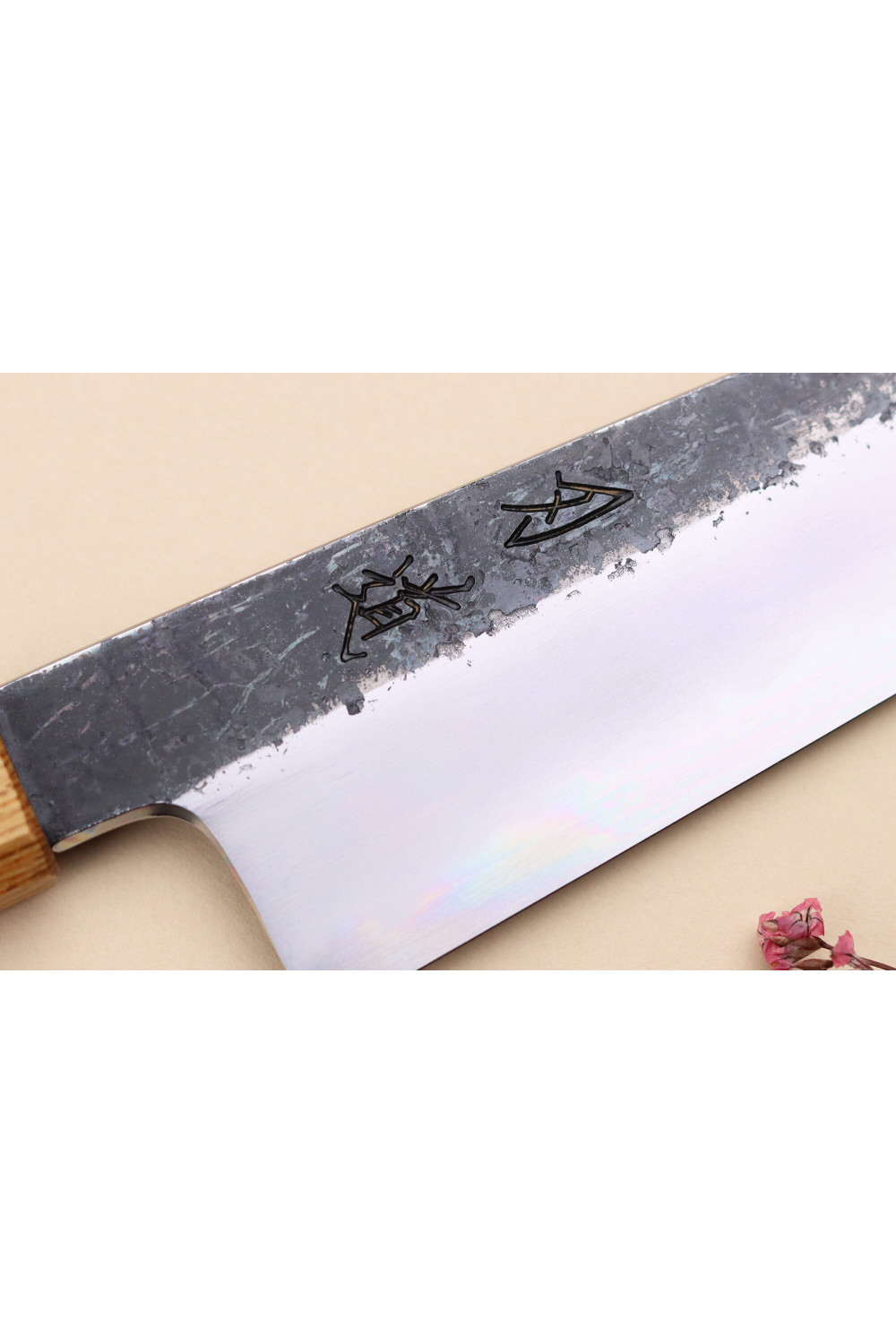
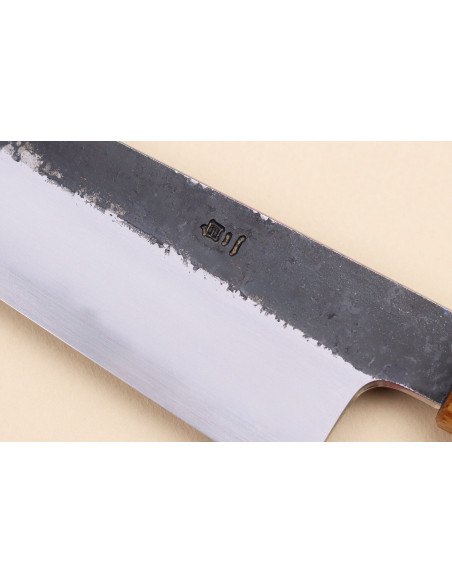
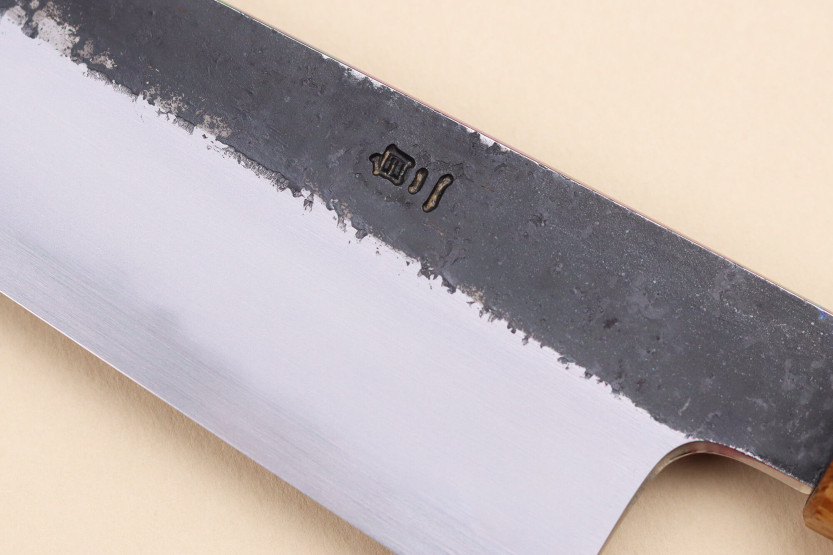
The top of the blade has a traditional rough forged finish that gives it great character. Kanji have been engraved on both sides of the blade, reinforcing its authenticity.
This top-of-the-range Japanese knife belongs to the Sumi series, whose name is inspired by Sumi Japanese ink, known for its deep, matte black hue, which echoes the color of the blade.
How do I care for my Japanese chef's knife?
As the knife is made from high-quality materials, it's important to take the utmost care to preserve its high value.
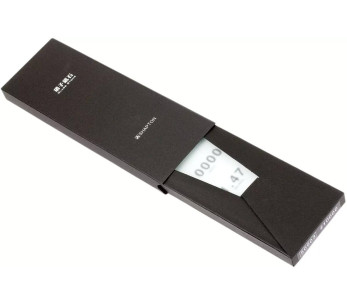
As the blade is enriched with carbon, both in the core and in the outer layer, it is essential to clean it by hand, avoiding soaking it in the sink or putting it in the dishwasher. Use a non-abrasive sponge and a suitable product, taking care not to wet the handle. After cleaning, the blade should be dried immediately to remove all traces of water. Then place the knife in a dry place, such as its elegant case, to protect it.
Even when taking the utmost care of your knife, it is normal to notice a slight change in the color of the blade over time. This is due to the high carbon content throughout the blade, which makes it highly reactive to external elements such as the acidity of certain foods or the humidity of the air. To preserve it, you can apply a small amount ofoil to the blade from time to time. This will help protect and nourish it, and maintain its original appearance.
Learn more about the Hado workshop and its craftsmen
Yoshikazu Tanaka is on the left; Tadataka Maruyama is on the right.
TheHado artisan workshop, recently founded in Sakai, Japan, is the fruit of collaboration between Tadataka Maruyama, former sales manager at Sakai Fukui, a company producing Japanese knives on an industrial scale, and Ryuichiro Fukui, its president. Ryuichiro Fukui had for some time been keen to relaunch artisanal production when Tadataka told him of his desire to become a craftsman. Ryuichiro encouraged Tadataka Maruyama to train for 3 years while he prepared the creation of the in-house workshop. As a result, the workshop opened in spring 2019, marking the beginning of a new artisanal era at Sakai Fukui.
Hado (刃道), a term meaning "the road of blades" in Japanese, was chosen as the name to represent the essence of the workshop. The name reflects the craftsmen's desire to achieve superior quality, constantly progressing along the path of forging. They put all their tamashi (魂), their soul, into their work to create knives that are both beautiful and endowed with very high cutting performance. At Hado, each knife is the fruit of the craftsmen's uniqueness and originality.
Yoshikazu Tanaka, Master Traditional Craftsman and 4th generation blacksmith at the workshop, forged your chef's knife. He is one of Sakai's finest blacksmiths, and his work is characterized by blades forged from high-end materials with a traditional look. The knife then passes through the expert hands of Tadataka Maruyama, the workshop's head sharpener, who carefully hand-sharpens it on a grinding wheel to give it incredible sharpness. This attention to detail ensures that the Sumi knife is not only beautiful, but also extremely efficient in every use.
Discover all Hado Japanese knives on our website!




 By buying this product you can collect up to