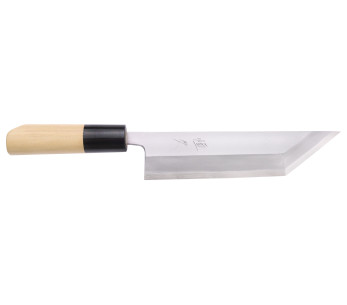
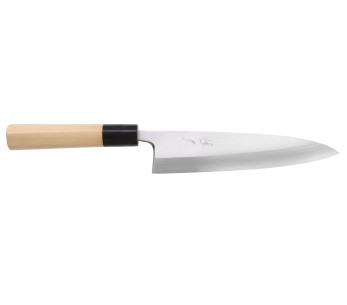
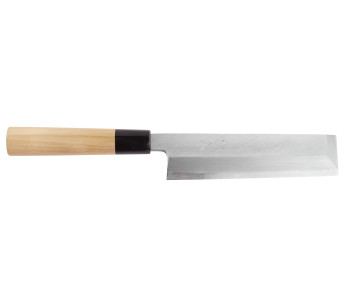
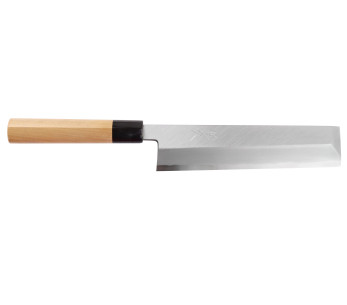
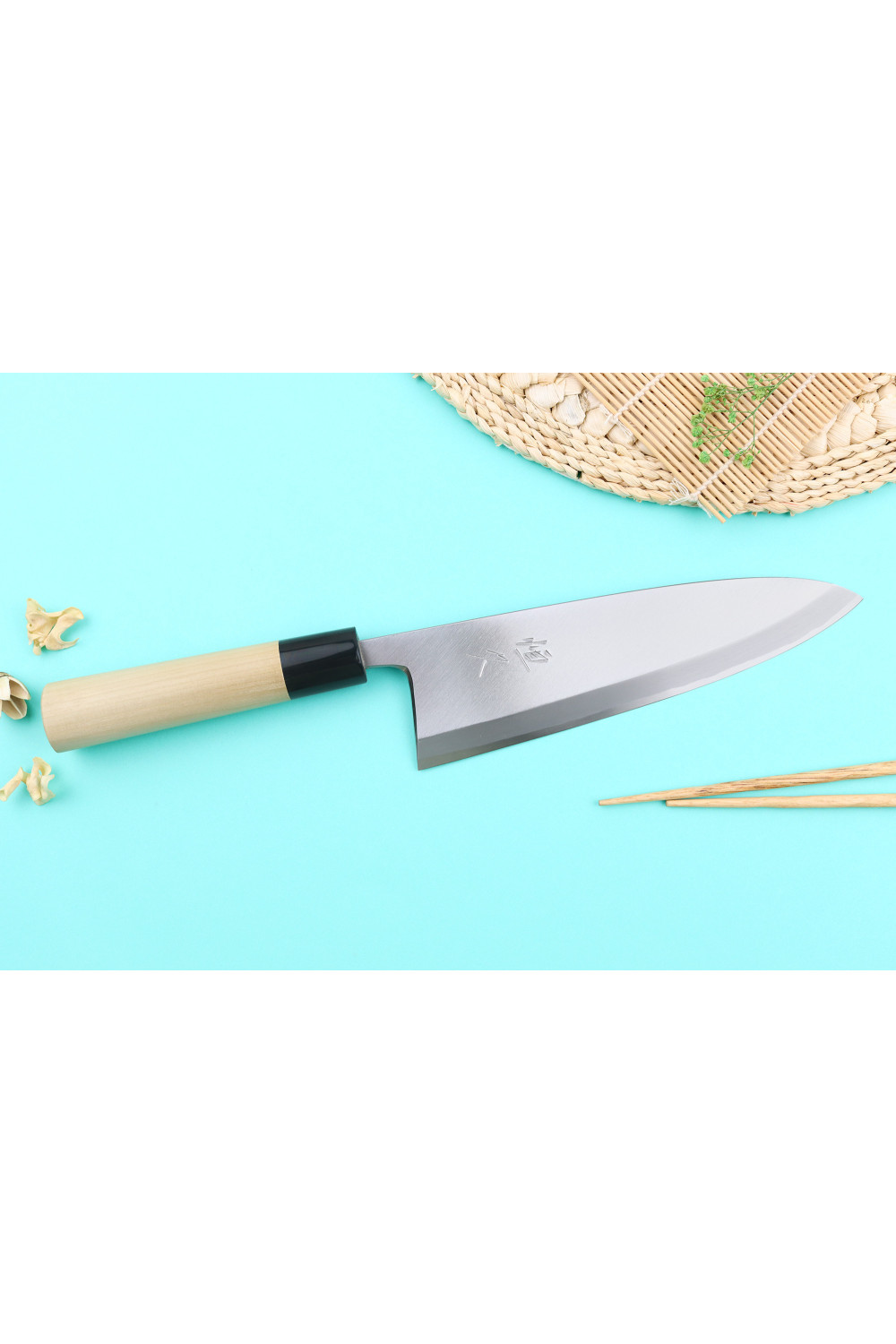
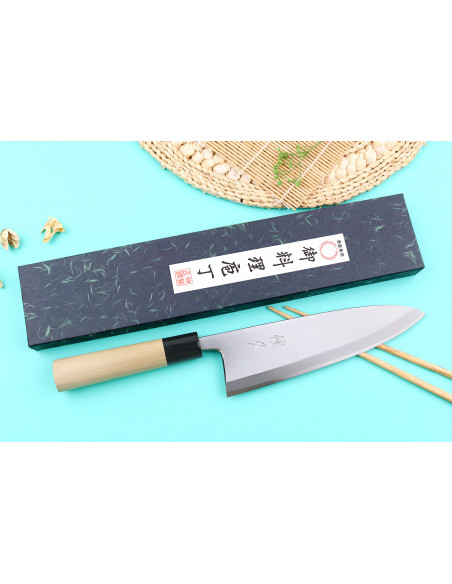
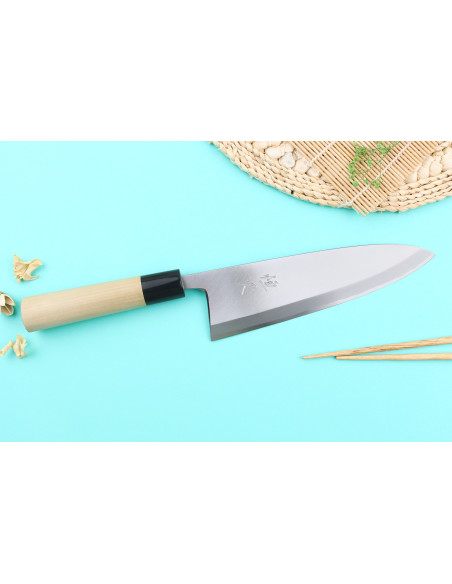
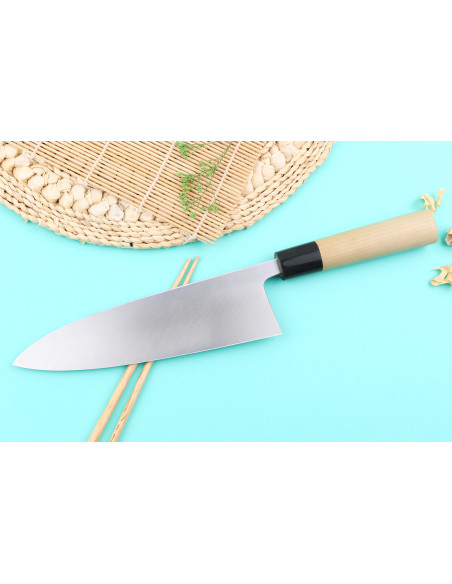
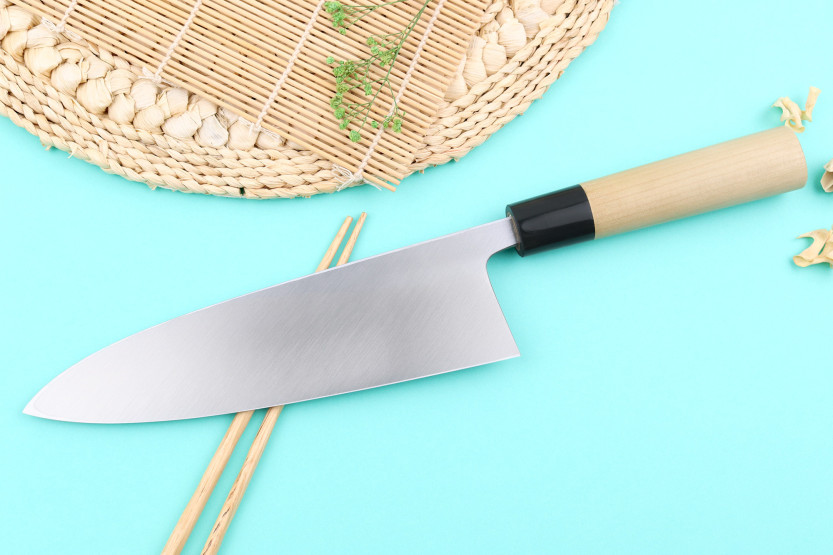
The deba knife with a traditional Japanese blade for technical cuts
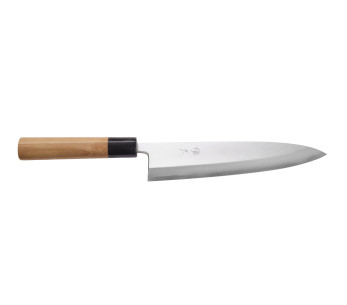
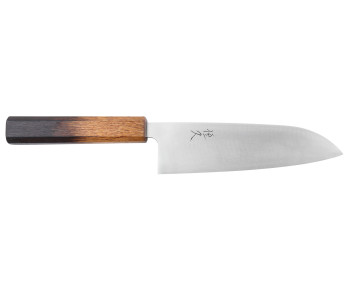
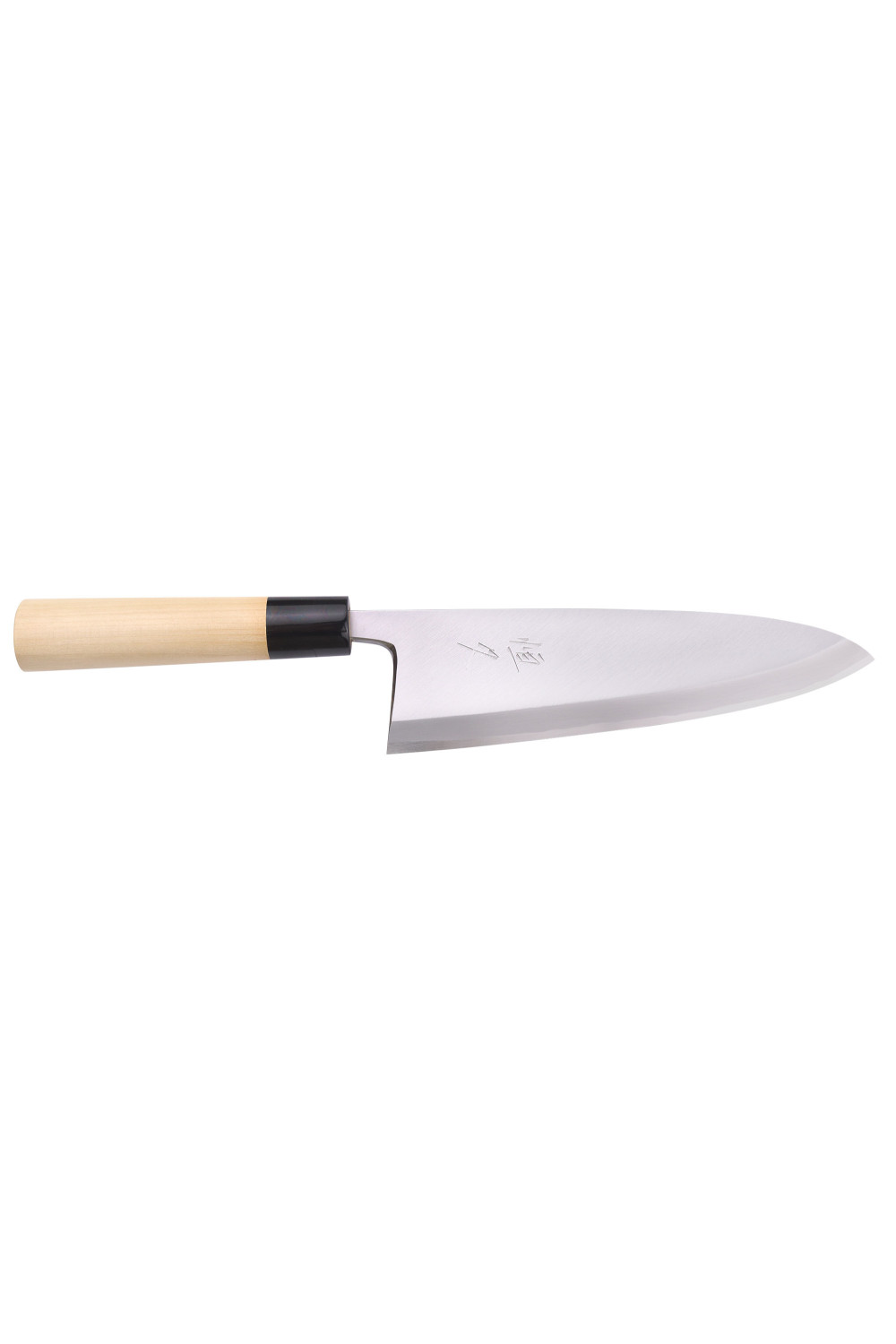
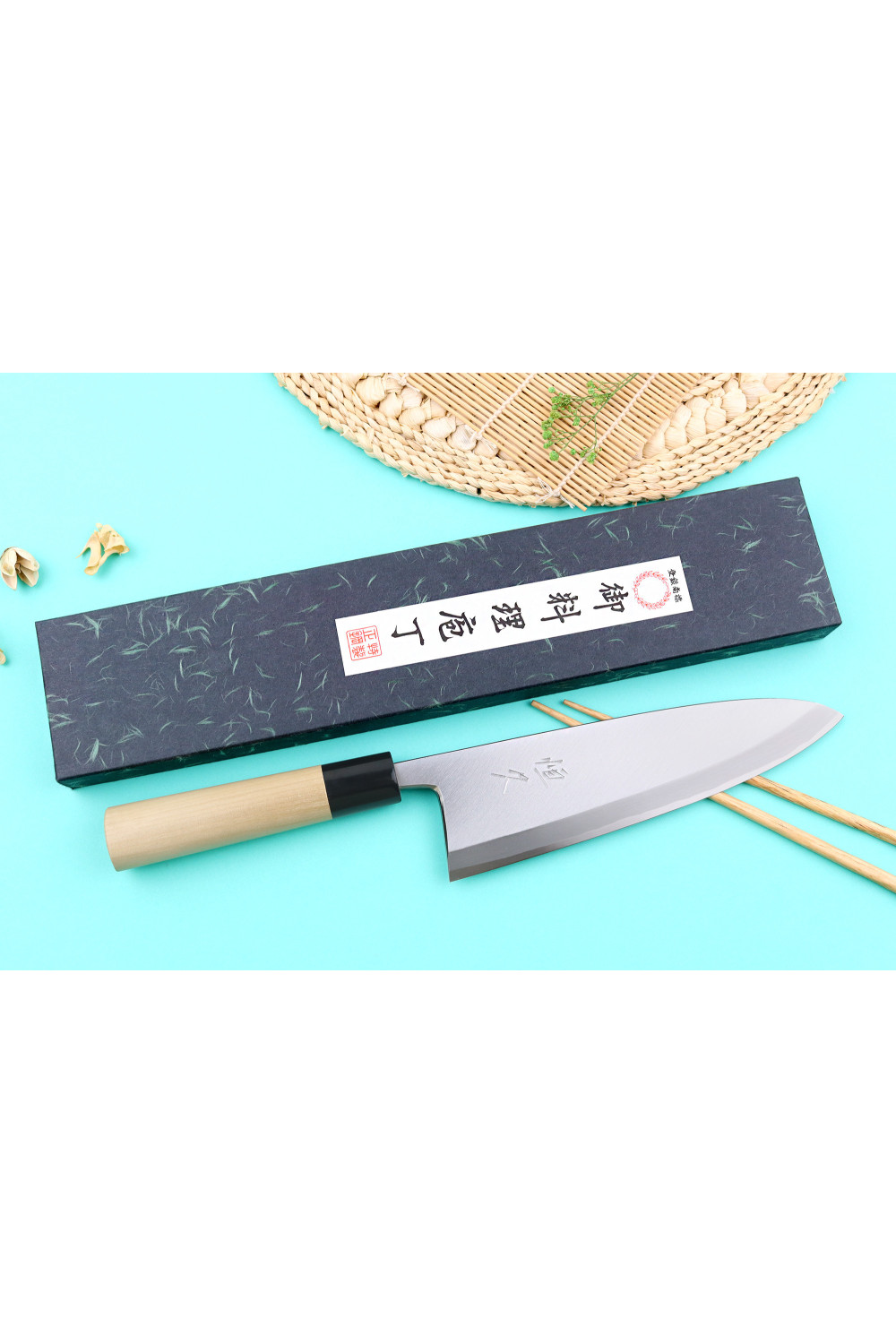
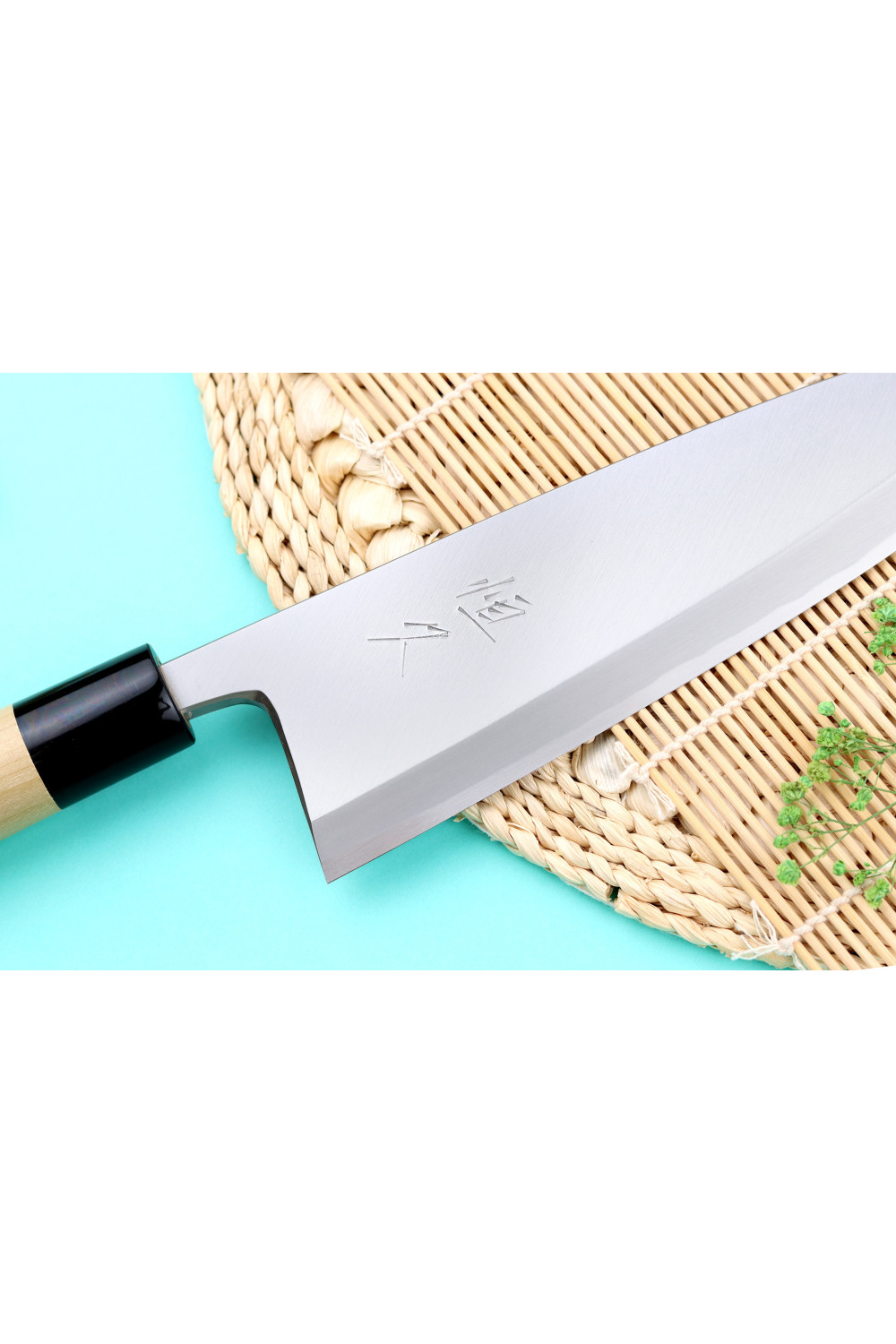
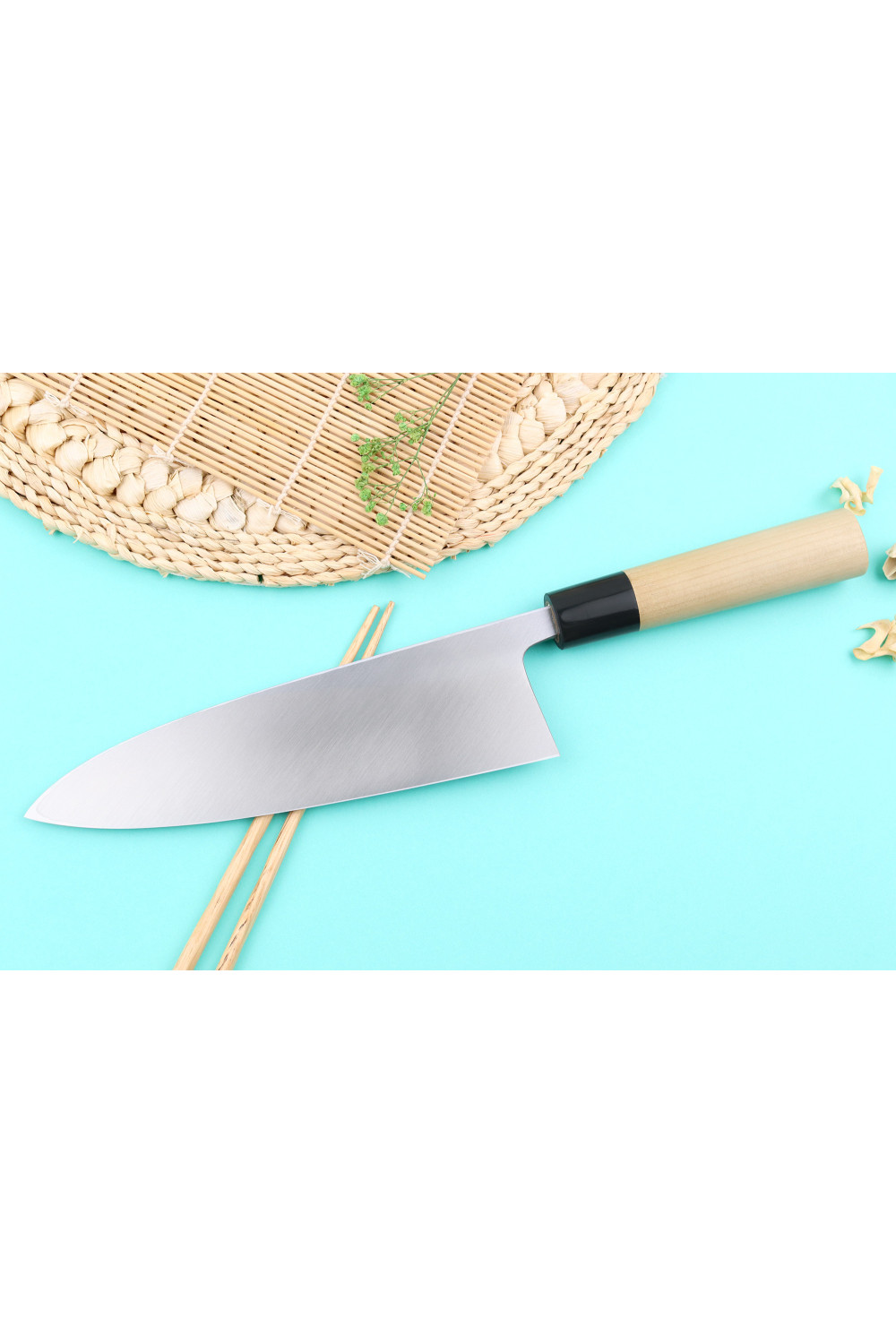
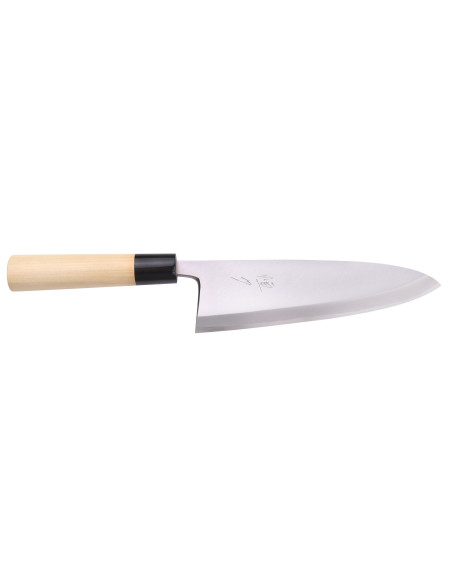
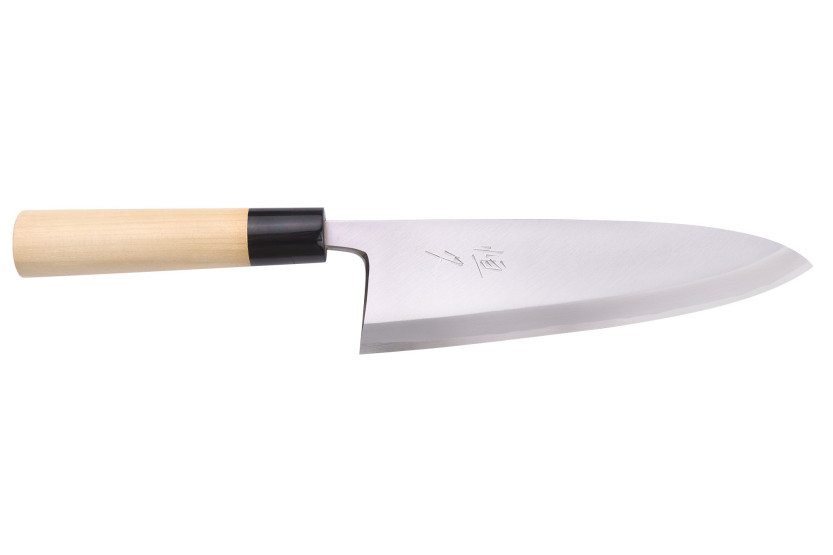
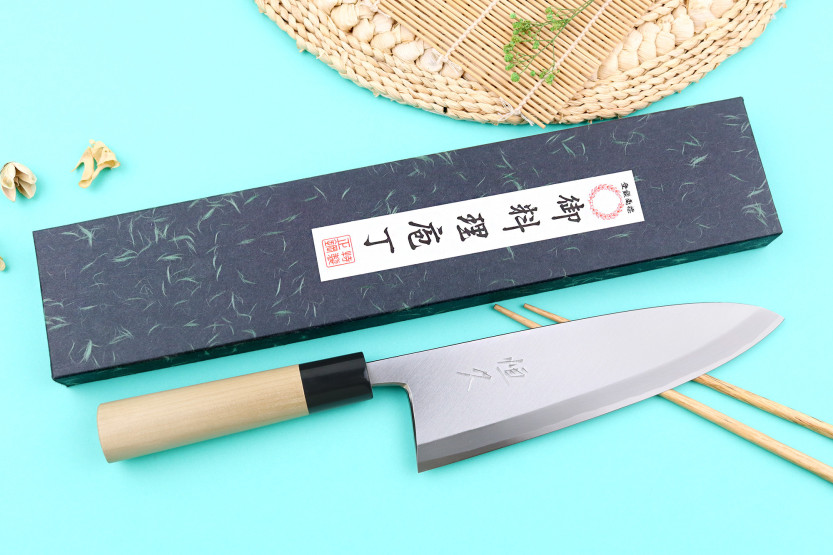
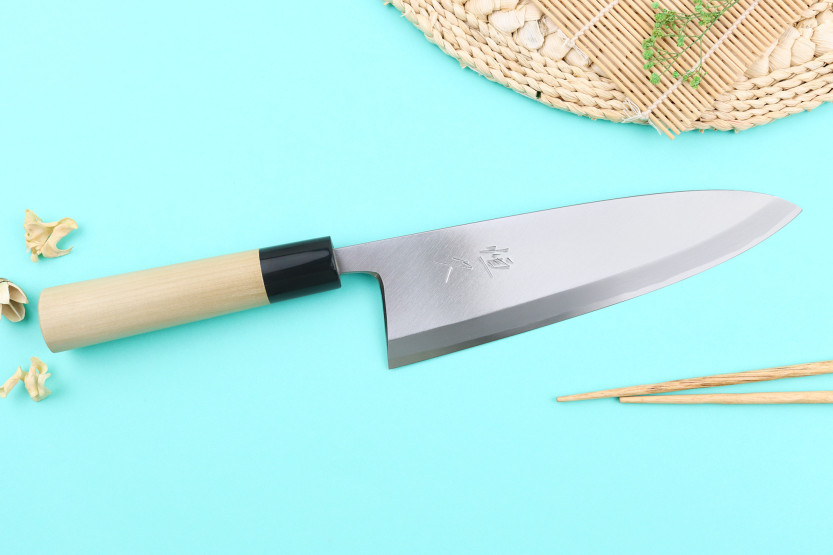
The blade of the Tsunehisa 21cm deba knife follows in the tradition of Japanese fish-cutting blades. Its San Maï structure combines three layers of steel: a central core of rigid steel, enveloped by two layers of softer steel that protect the blade while ensuring optimum hardness.
For this Japanese kitchen knife, the core in Shirogami #2 steel (also known as White Paper Steel #2) contains around 1.2% carbon, a high level that gives the blade a high hardness of 61HRC on the Rockwell scale. This composition produces an extremely fine, sharp edge, capable of very precise cuts, while remaining easy to resharpen with a stone. This steel is prized by Japanese blacksmiths for its purity and fine grain.
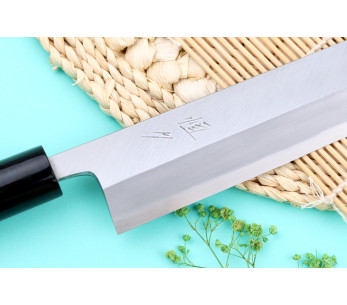
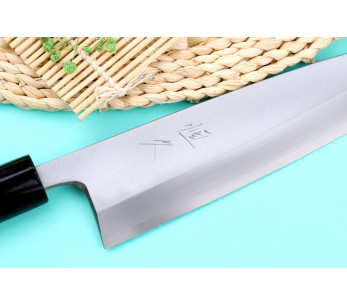
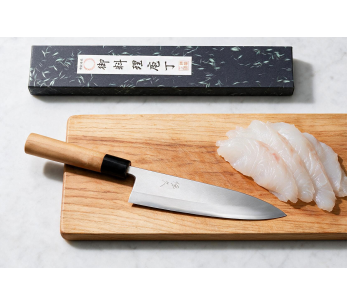
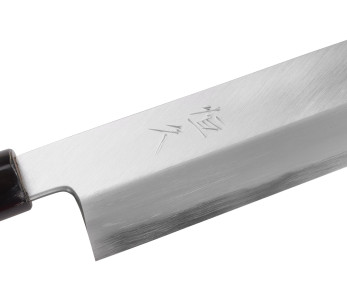
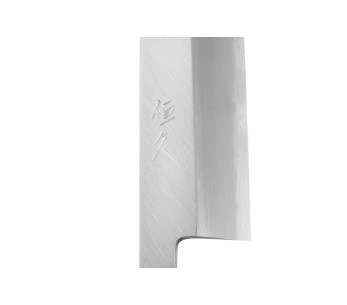
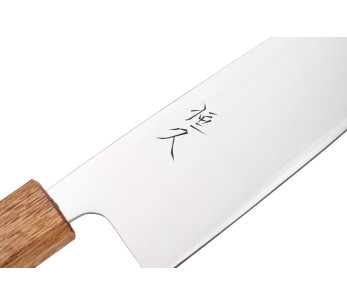
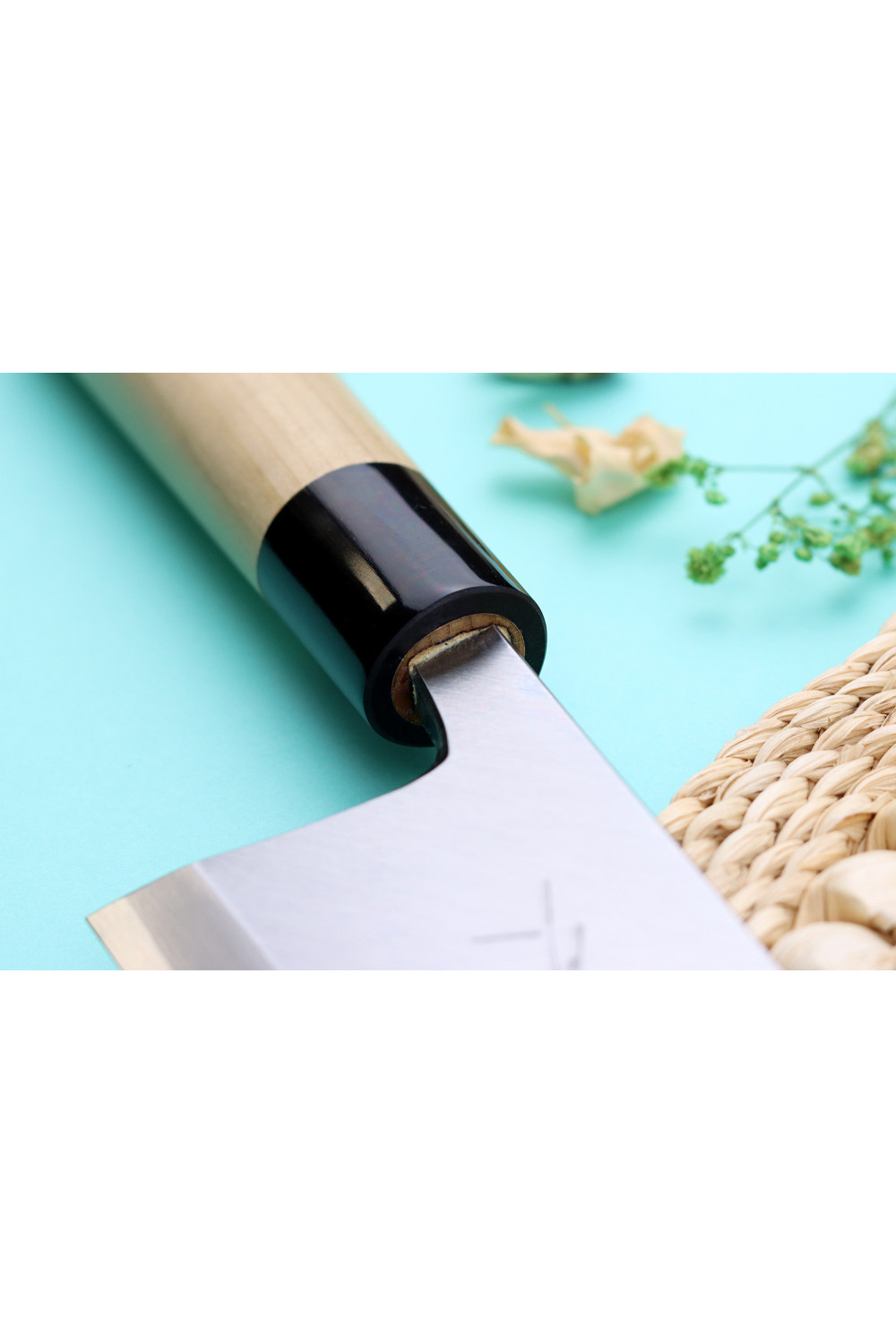
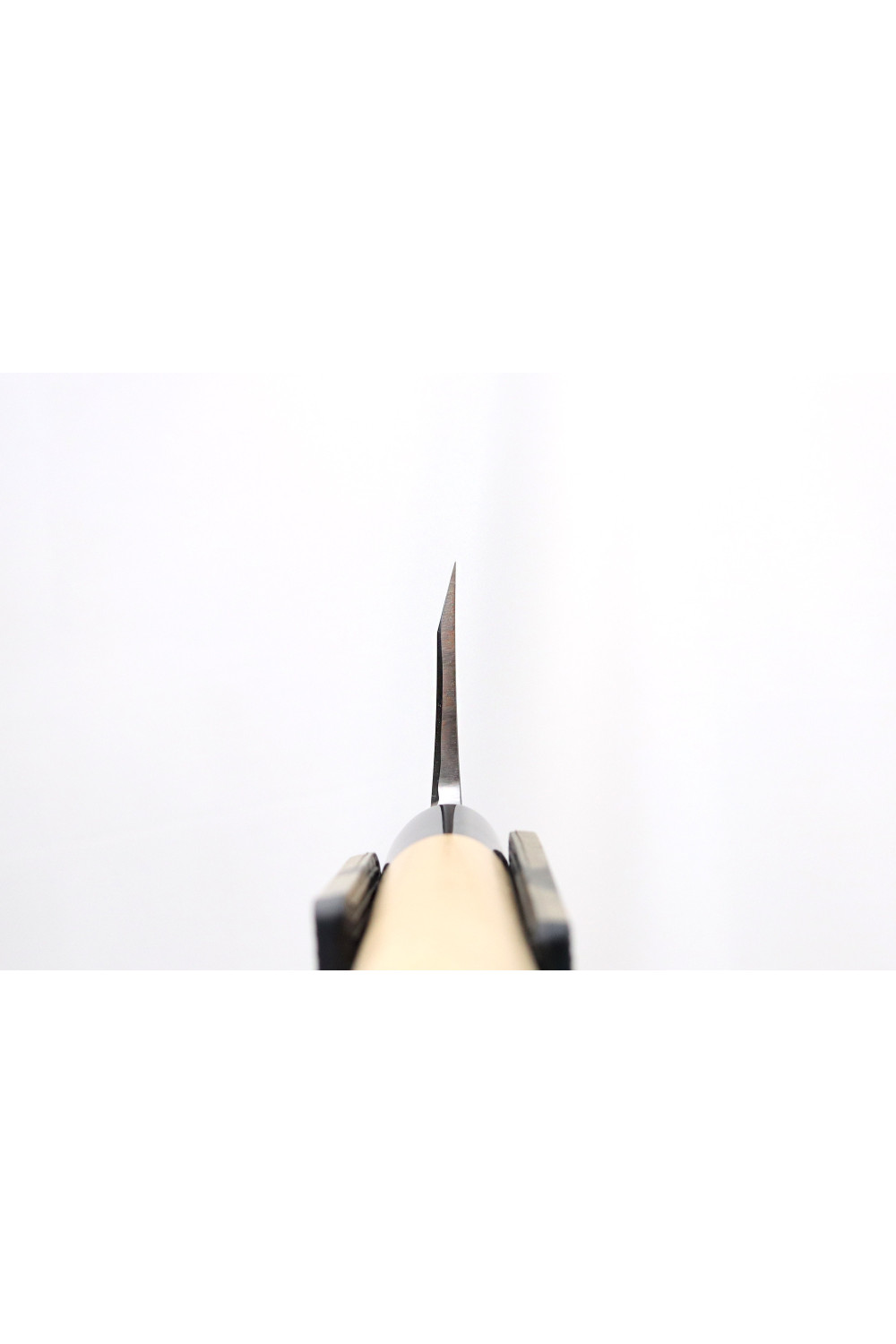
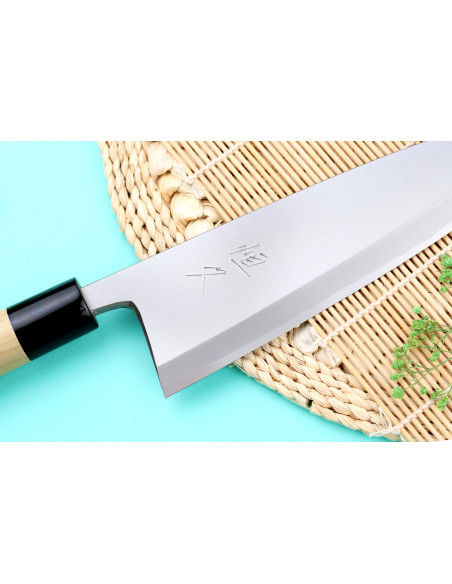
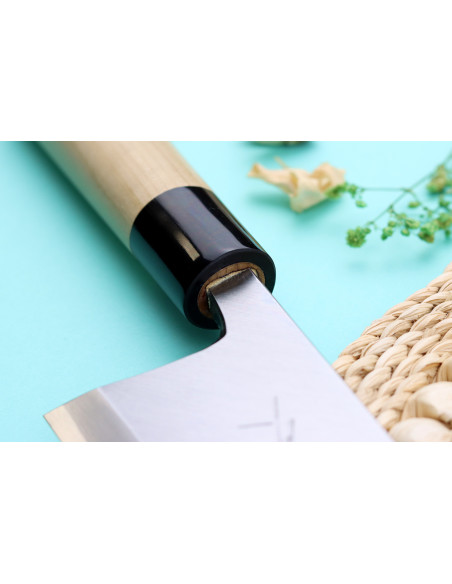
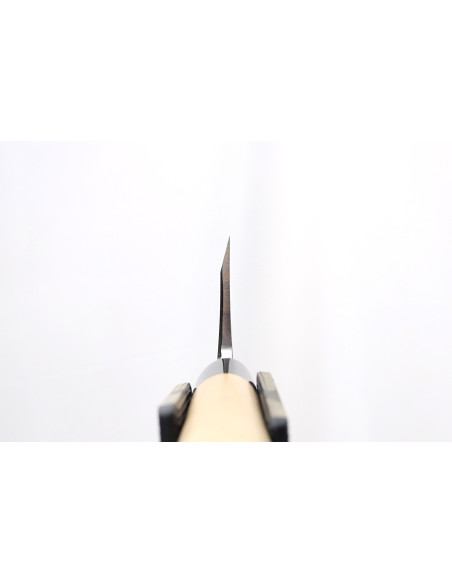
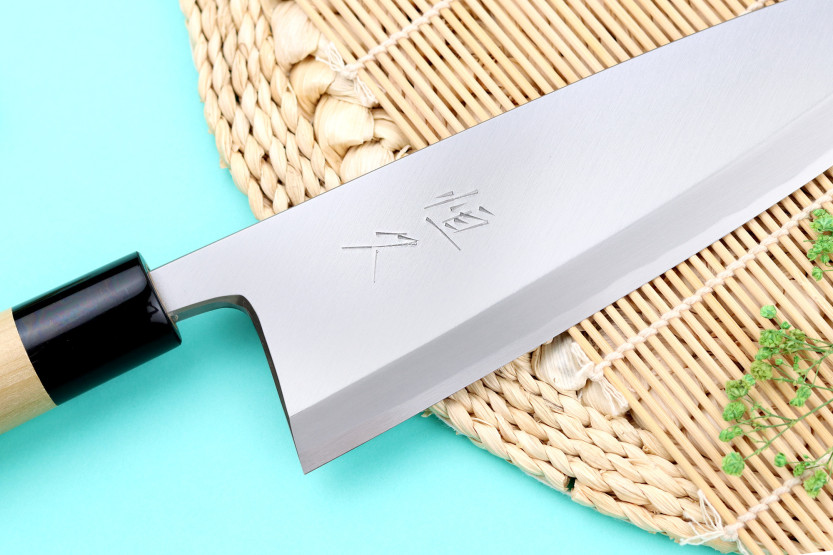
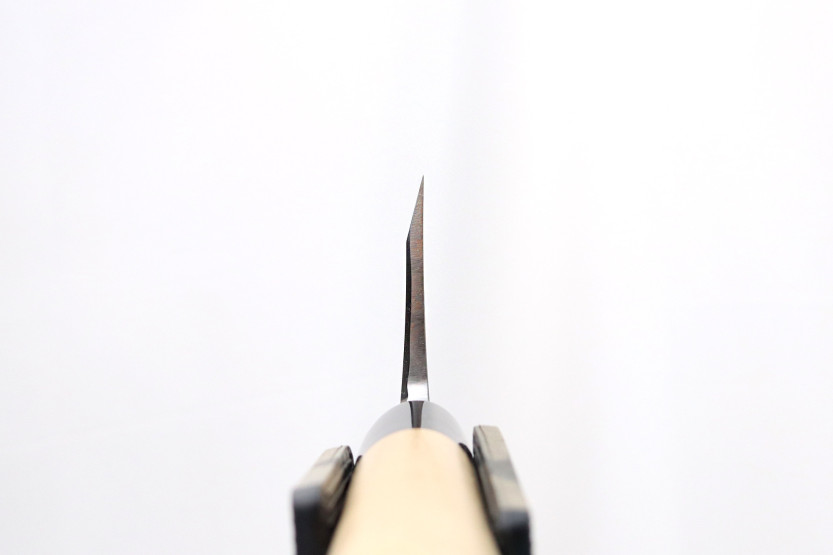
The blade features an asymmetrical cutting edge (beveled on one side only), characteristic of Japanese kitchen knives dedicated to cutting fish. This bevel enables clean cuts without tearing delicate flesh. It features a polished finish that accentuates the aesthetics of the steel, giving it a refined finish.
A traditional Japanese handle for a reliable grip
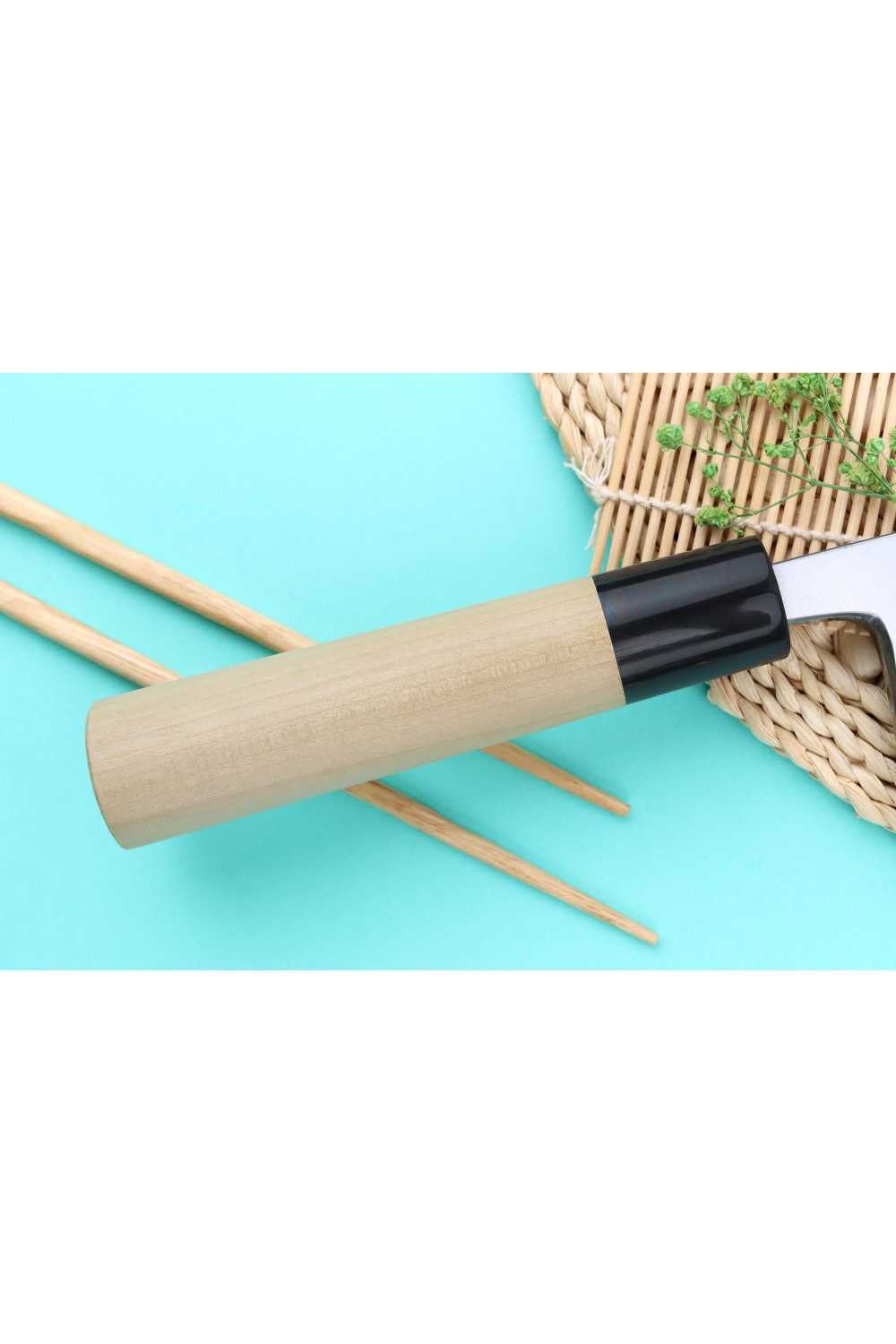
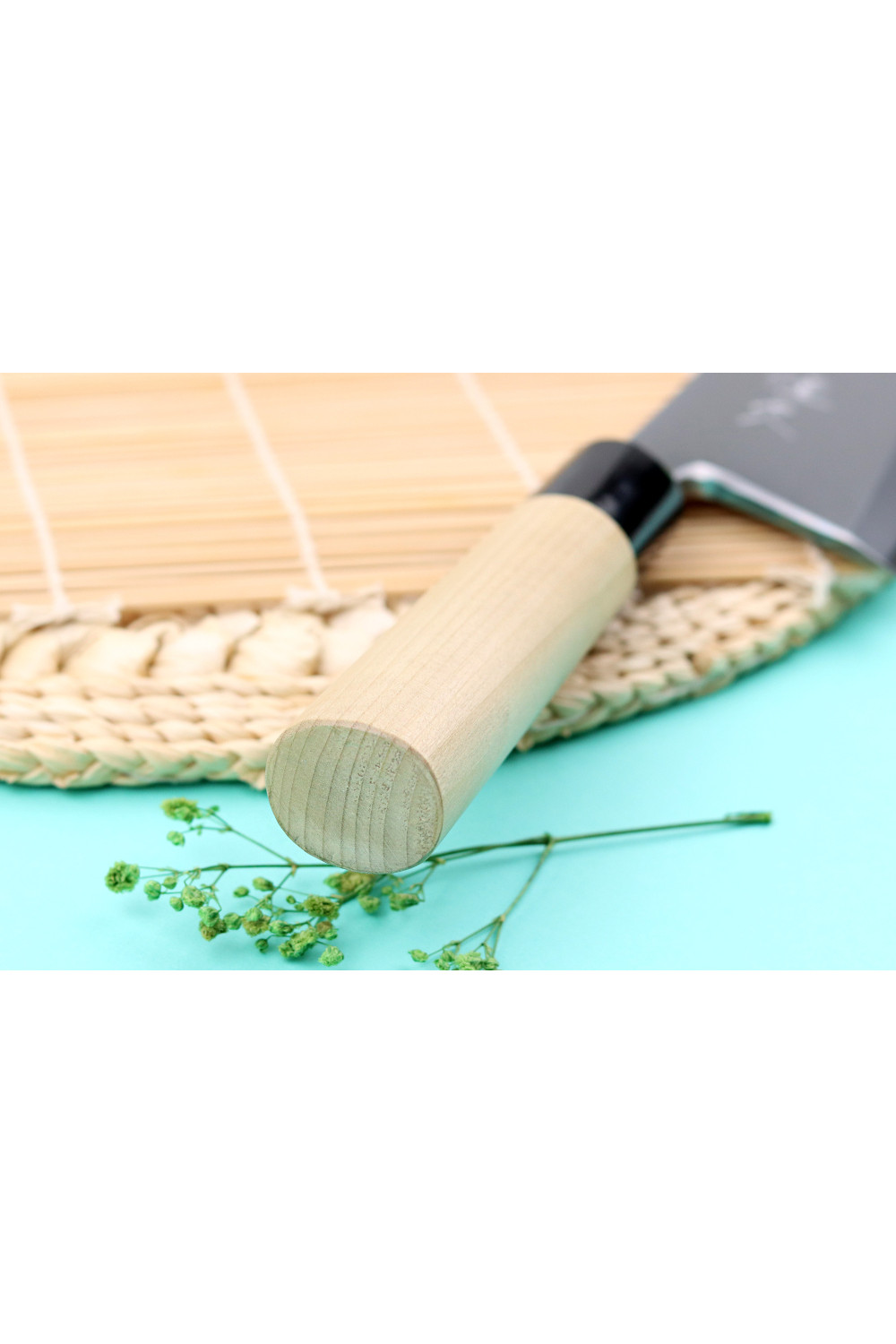
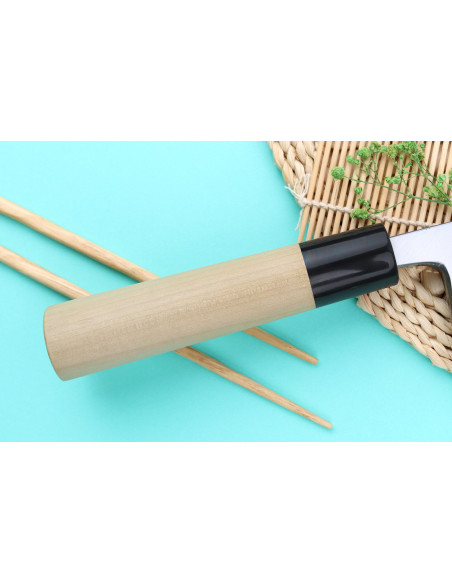
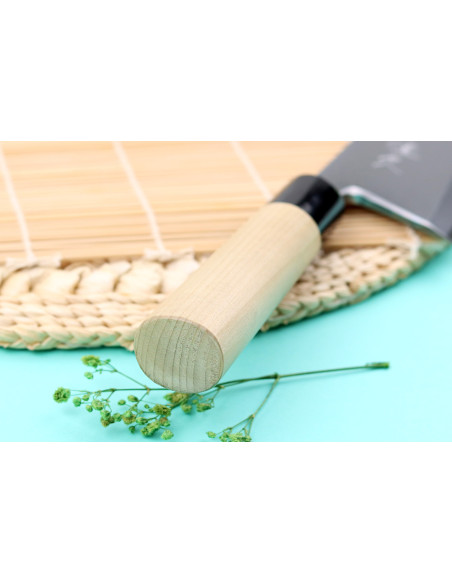
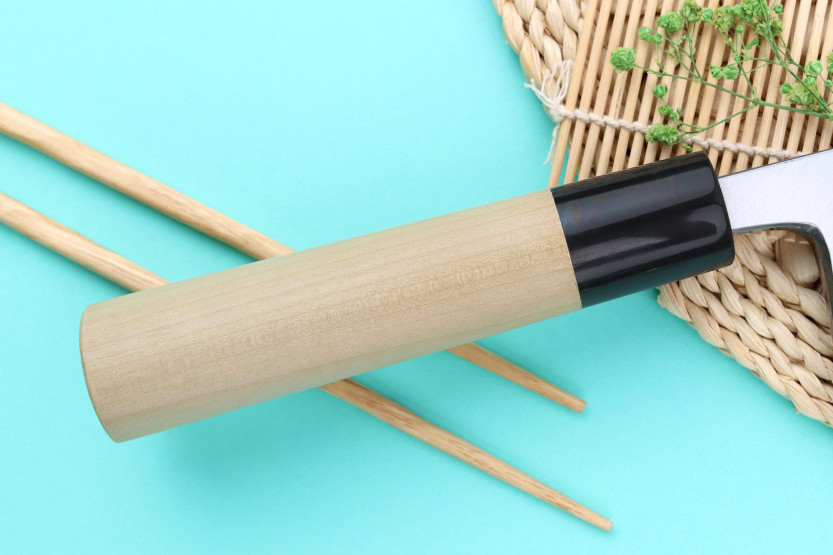
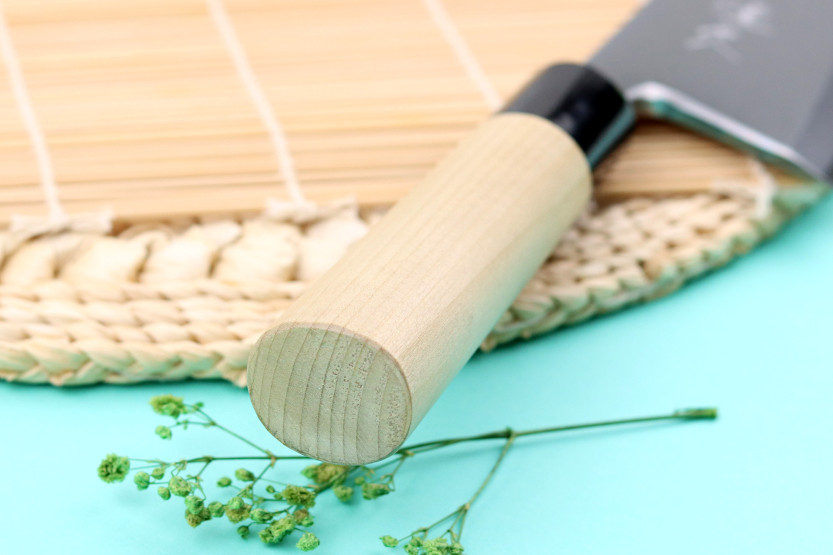
The handle of your Tsunehisa knife is made from magnolia wood, a material highly appreciated in Japanese cutlery for its lightness, softness to the touch and natural resistance to moisture. Magnolia is not very dense and absorbs little water, making it more hygienic and suitable for intensive use in the kitchen.
Its oval shape offers natural ergonomics for both right- and left-handed users, enabling fine control of the blade, especially when making long or precise cuts!
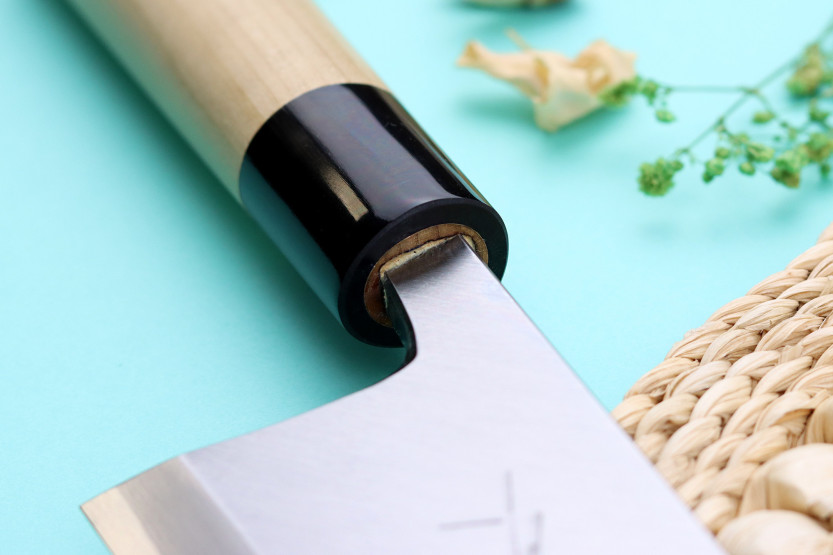
The black buffalo horn bolster provides a solid, aesthetic transition between the handle and the blade of your handcrafted Japanese knife. It reinforces the durability of the whole by stabilizing the junction. Wood paste prevents moisture infiltration between blade and handle.
Features and benefits of this Japanese kitchen knife
- 3-layer San Maï blade: balance between rigidity and flexibility
- Shirogami #2
core
- : precise, high-performance sharpening
- 61HRC
hardness
- : prolonged edge retention
- Bevelled edge: ultra-precise cutting
- Polished finish: elegant, refined finish
- Oval magnolia handle: light, stable and pleasant to use
Care instructions for your carbon knife
To care for your Japanese fish knife, wash by hand only, then dry immediately. It's important not to soak it in the sink or put it through the dishwasher. Keep it in a dry place.
Focus on the Tsunehisa craftsman
Tsunehisa Cutlery is located in Tosa, Kōchi Prefecture. The workshop produces Japanese kitchen knives combining traditional methods and modern techniques. Tsunehisa collaborates with local craftsmen to create blades that are high-performance, balanced and affordable. These Japanese blacksmiths have inherited their skills from the craftsmen of yesteryear who made Japan's famous katanas.
Discover the rest of our Tsunehisa WS2 Japanese knives on Knifeleader.eu!




 By buying this product you can collect up to