The work of young blacksmith Naoki Mazaki
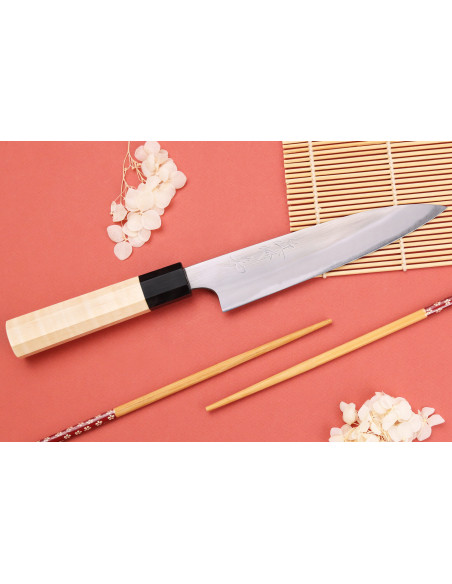
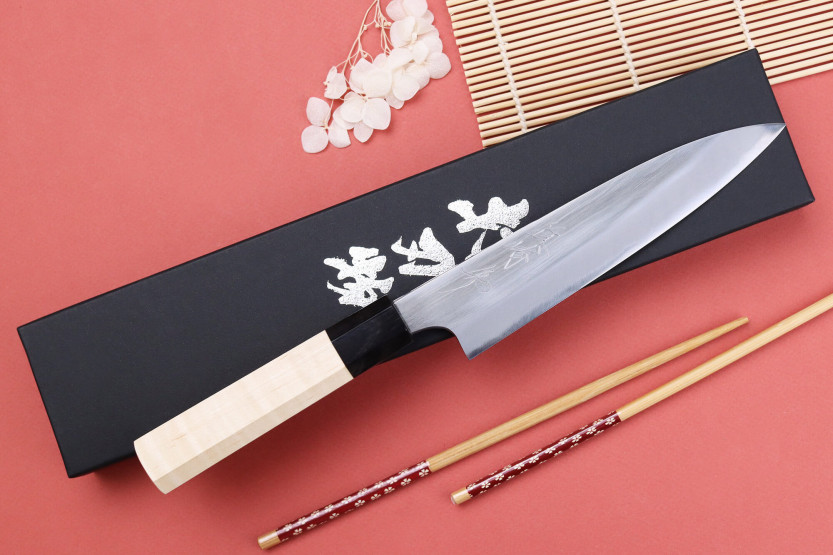
This Universal knife was created by Naoki Mazaki san, a young Japanese blacksmith. He works in his workshop in Niigata province, Japan. His atypical career path is worth sharing: when he was young and unsure of his professional future, he set off on a motorcycle journey across Japan to find his way! Arriving in Sanjo, Niigata province, he was captivated by the work of the local blacksmiths, and it was then that he decided to make blacksmithing his profession.
He then trained for five years with the Yoshikane brand, before setting up his own workshop, choosing to emphasize traditional forging techniques. Today, he forges his knives using mainly Aogami and Shirogami 2 steels, which he shapes in the traditional way, giving them an authentic finish. This approach is very important to him, as it gives his creations a very authentic look that is particularly important to him.
Naoki Mazaki san's reputation is such that the average waiting time for one of his knives is 2 years! This just goes to show the quality of his craftsmanship.
A top-quality San Maï blade
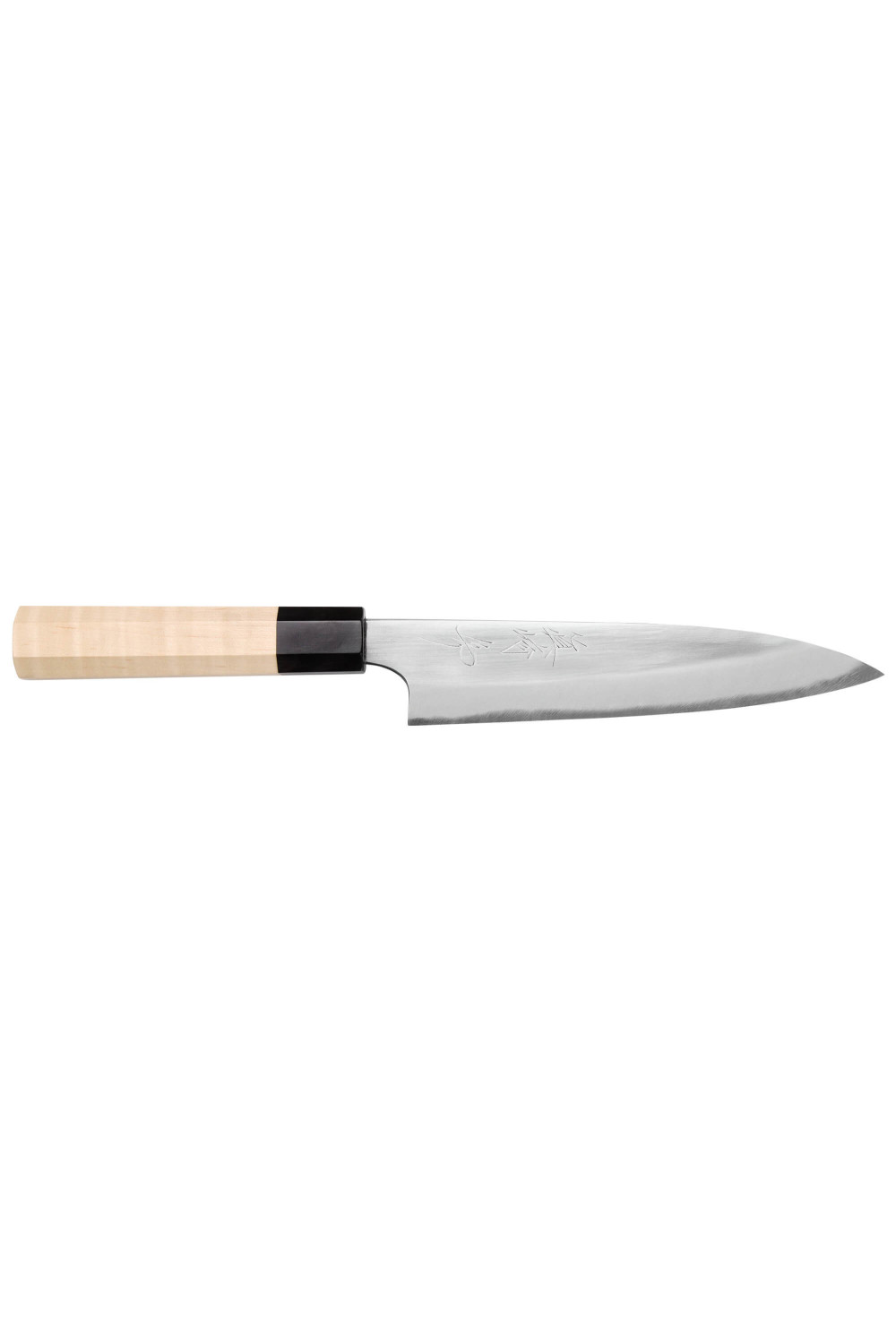
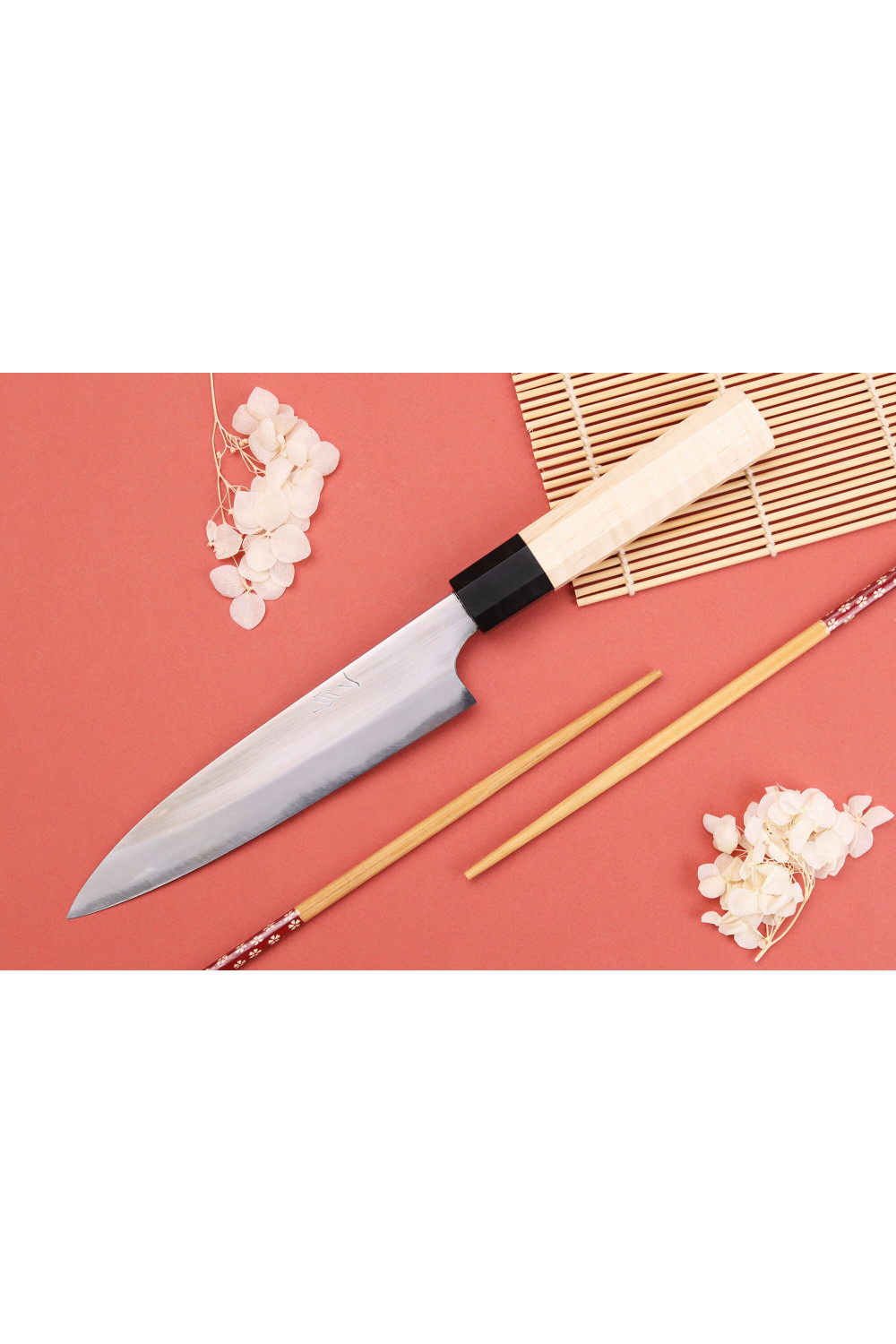
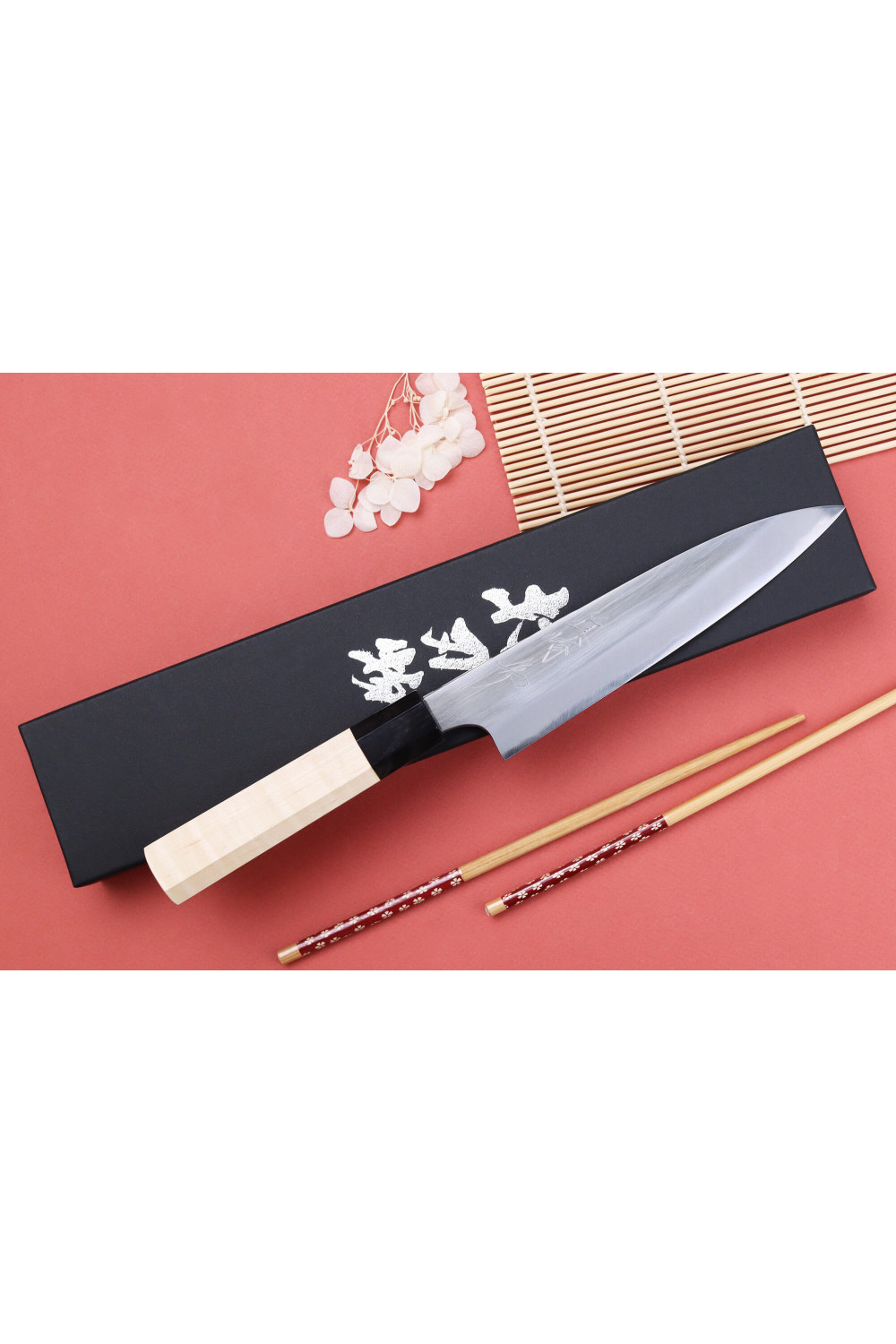
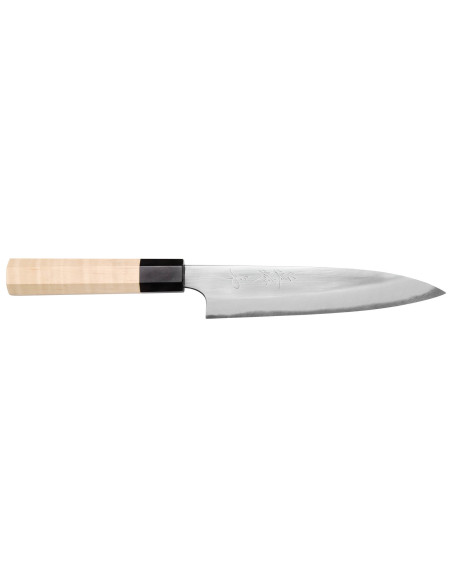
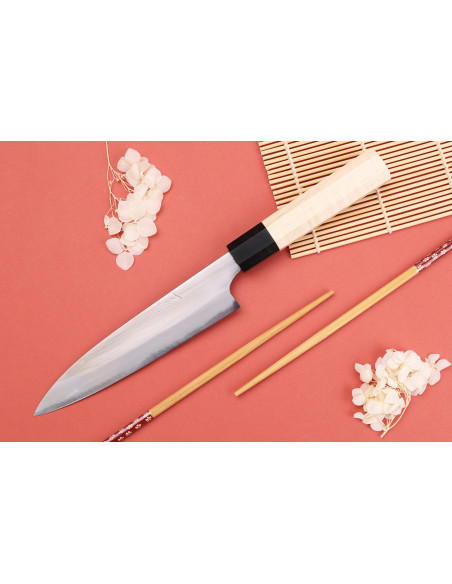
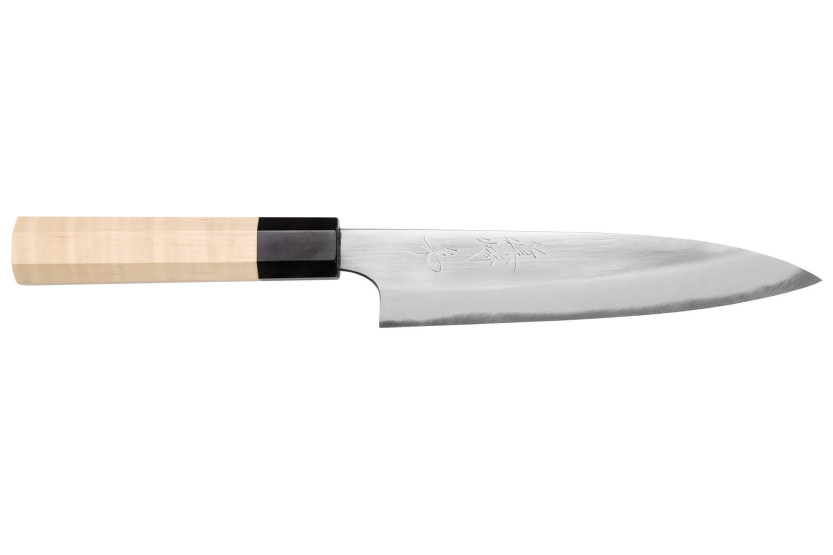
Your Universal knife features a 15cm blade with a structure known as San Maï, which means "3 layers" in French. The blade contains a core of rigid steel, surrounded on each side by a layer of softer steel folded into a sandwich: all 3 layers are present. This design ensures that the blade's core is protected and optimally balanced.
The blacksmith usedShirogami #2 steel to manufacture the core of the blade. This Japanese alloy is also known as White Steel 2, and is very popular with chefs. It is manufactured by the world-famous Hitachi steelworks, which supply many blacksmiths. This steel is renowned for its high purity, and its uniform structure can be observed under a microscope. It is considered the closest steel to tamahagane, used to forge traditional swords. What's more, this steel is easy to sharpen, making it possible to obtain an extremely precise cutting edge. With a carbon content of between 1.2% and 1.4%, it achieves a hardness of around 62 HRC.
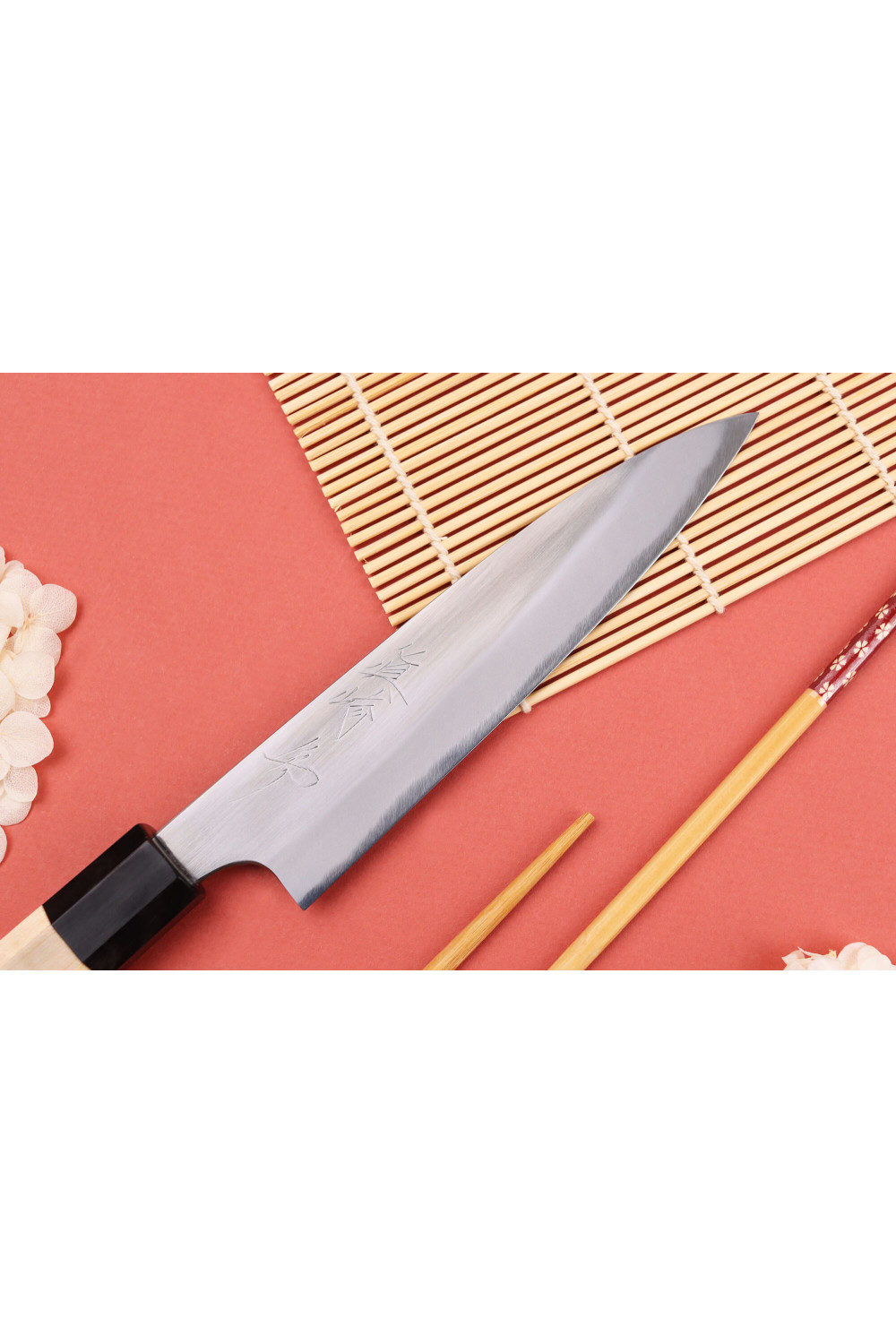
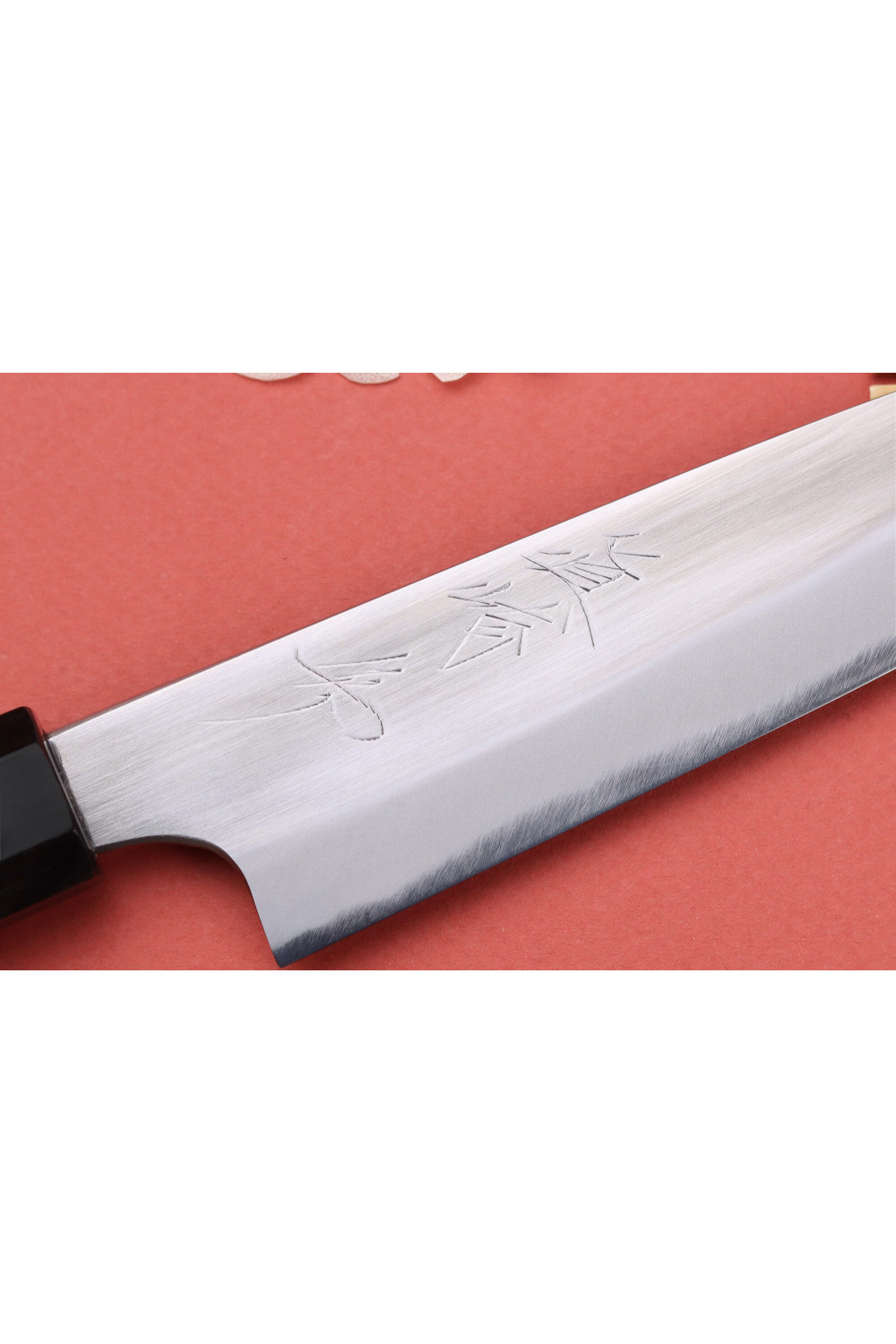
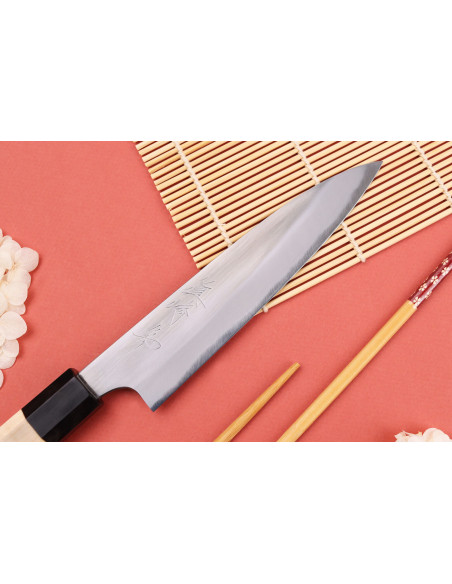
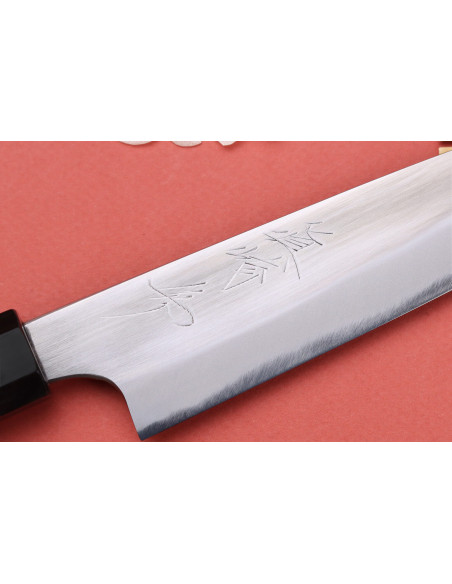
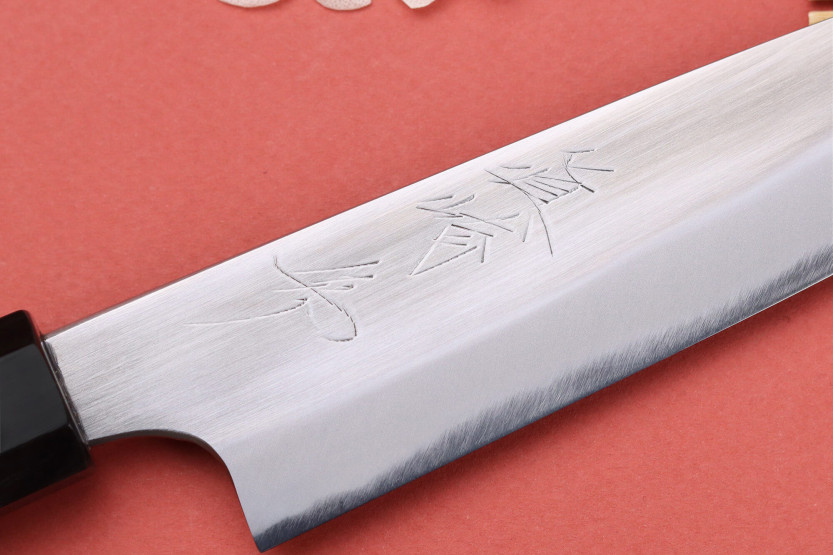
The blade's rigid core is then enveloped by a layer of softer steel, forming a sandwich folded on either side. This outer layer protects the core while adding a little flexibility. This makes the knife more resistant to impact and reduces the risk of breakage when cutting. The superimposed layers of steel form a random undulation along the cutting edge for an original visual effect.
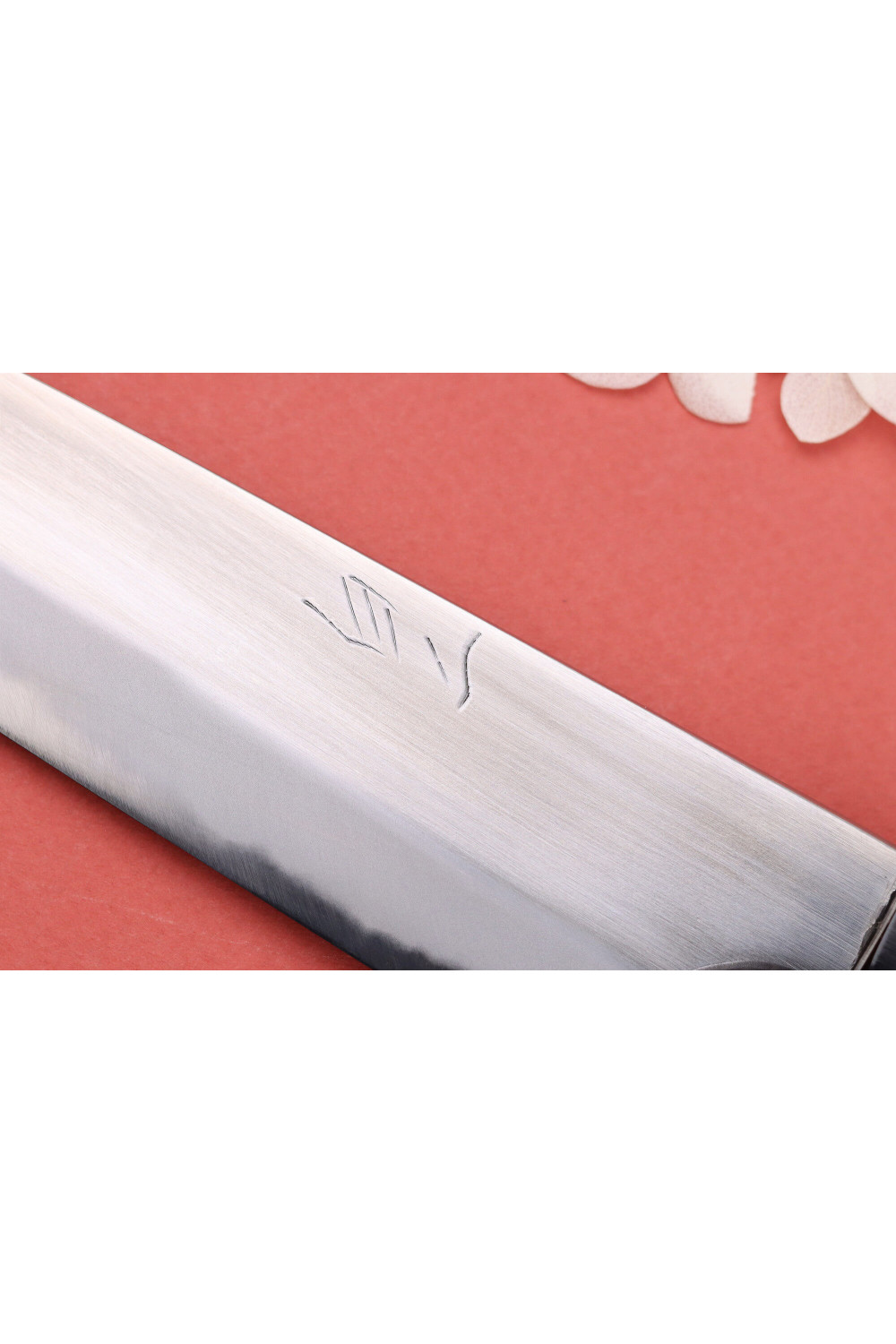
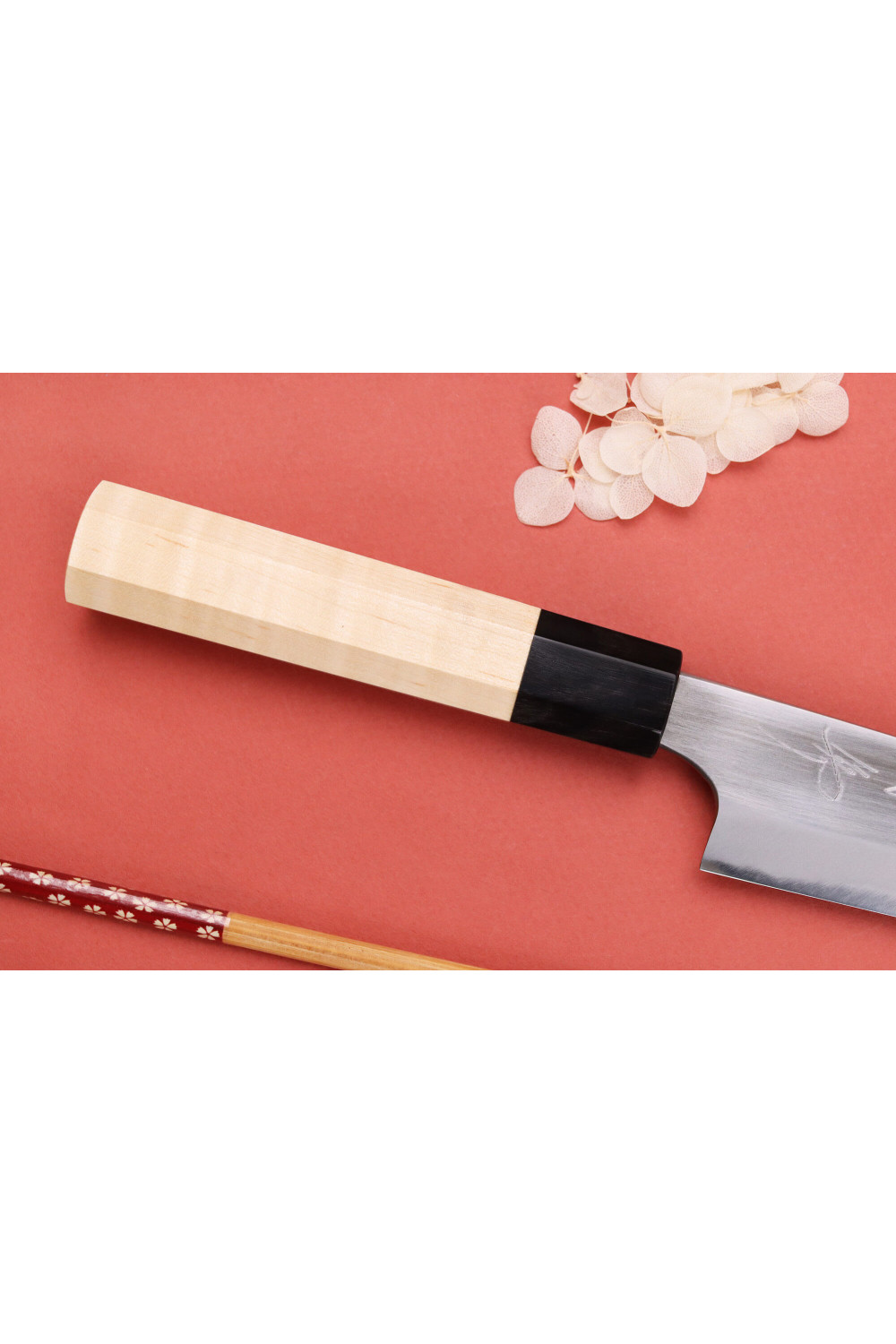
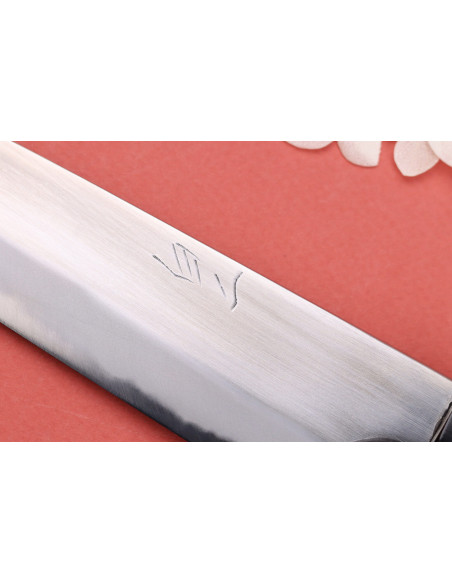
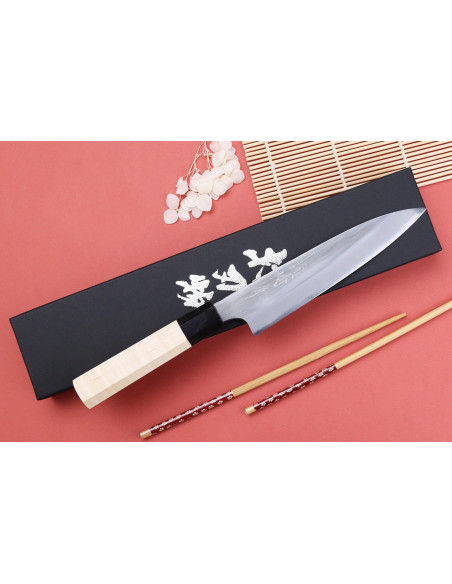
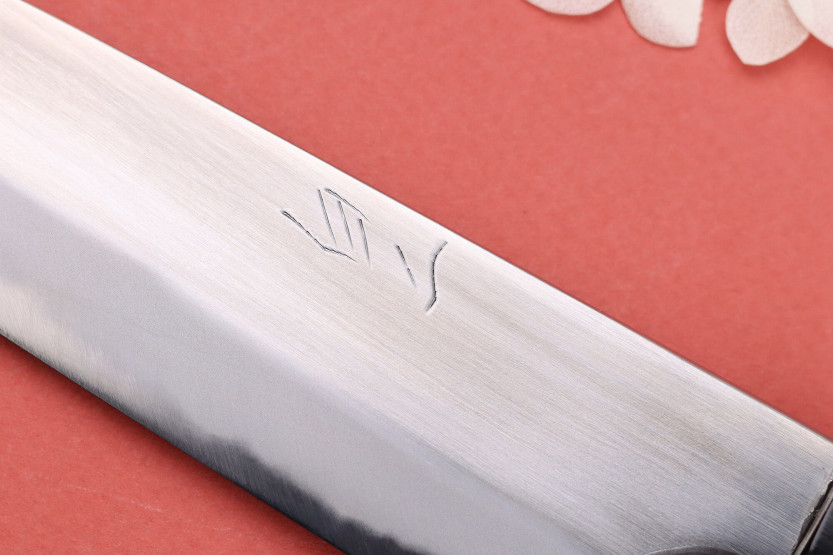
Superb kanji are engraved on the front and back of the blade, giving it an authentic character. The blade has also been hand-polished to an elegant mirror finish.
Last but not least, Naoki Mazaki is also a master sharpener, so it was he himself who sharpened the knife on various whetstones to give it a perfect edge. We strongly recommend that you sharpen your knife with a stone whenever necessary.
A superb laurel wood handle
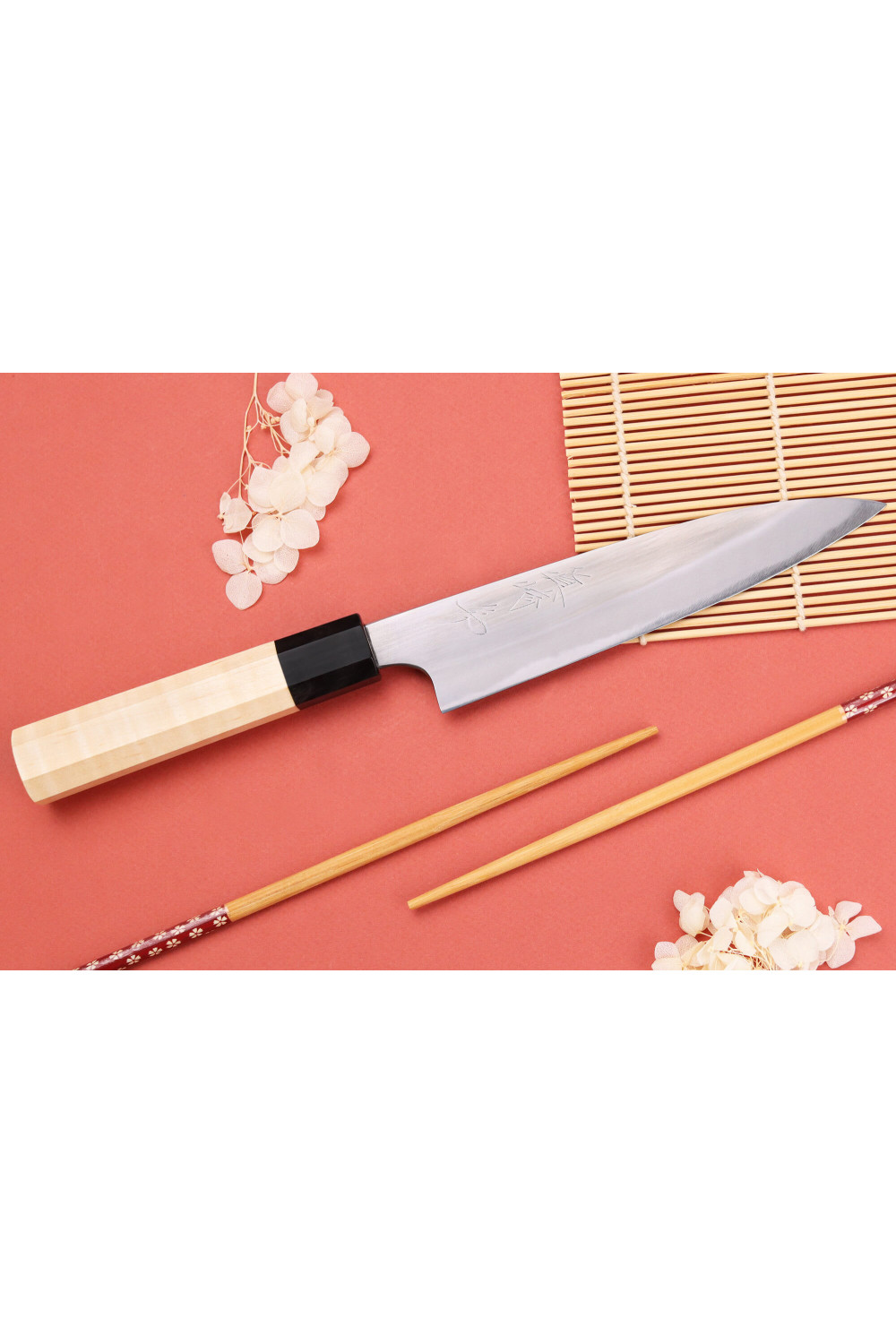
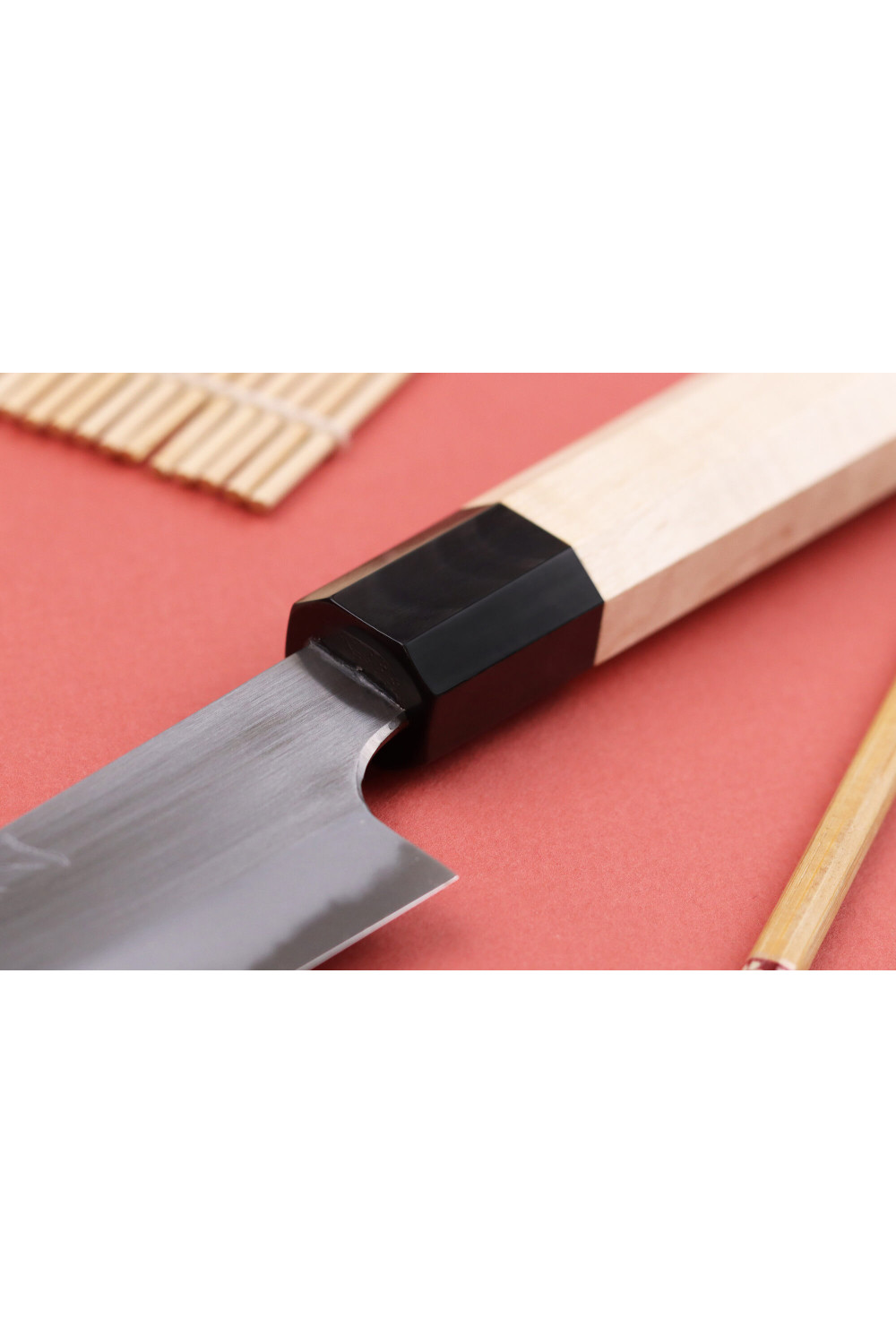
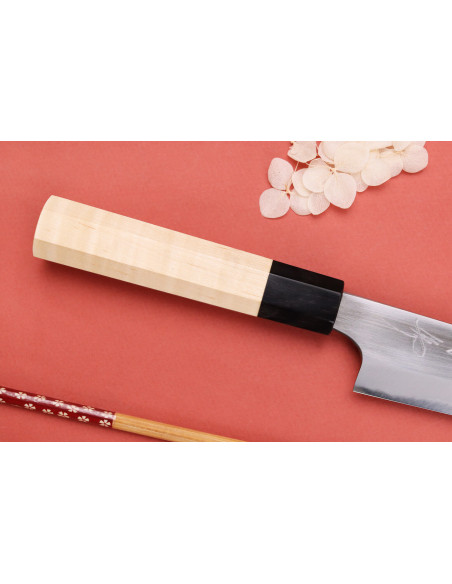
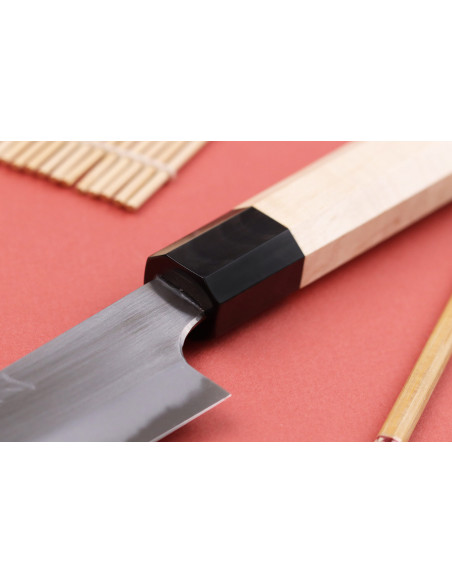
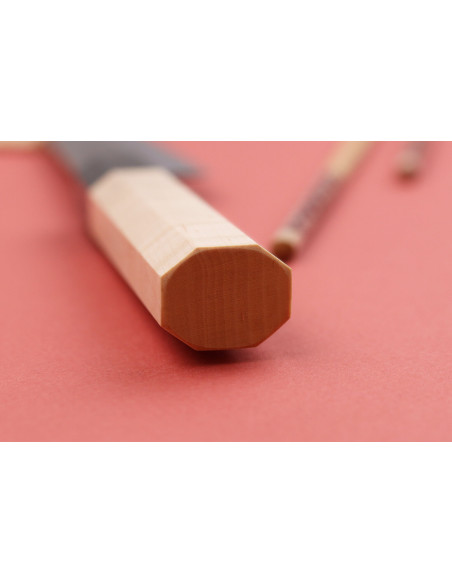
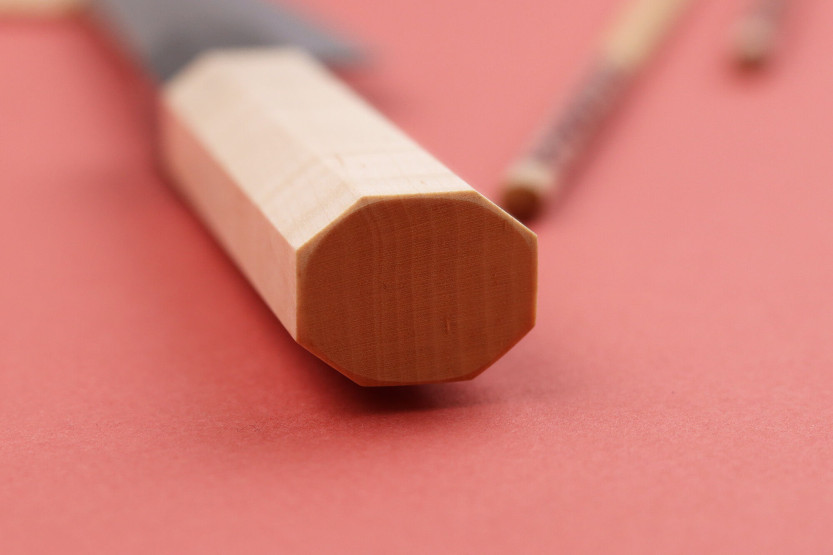
The Universal Kitchen Knife has a handle made from laurel wood, a light-colored wood with subtle veining. The species is easy to work with and has good strength, making it the perfect choice for creating knife handles. What's more, its soft touch is very pleasant. A black buffalo horn bolster has been added to complete the look, creating harmony with the blade and bringing balance to the whole.
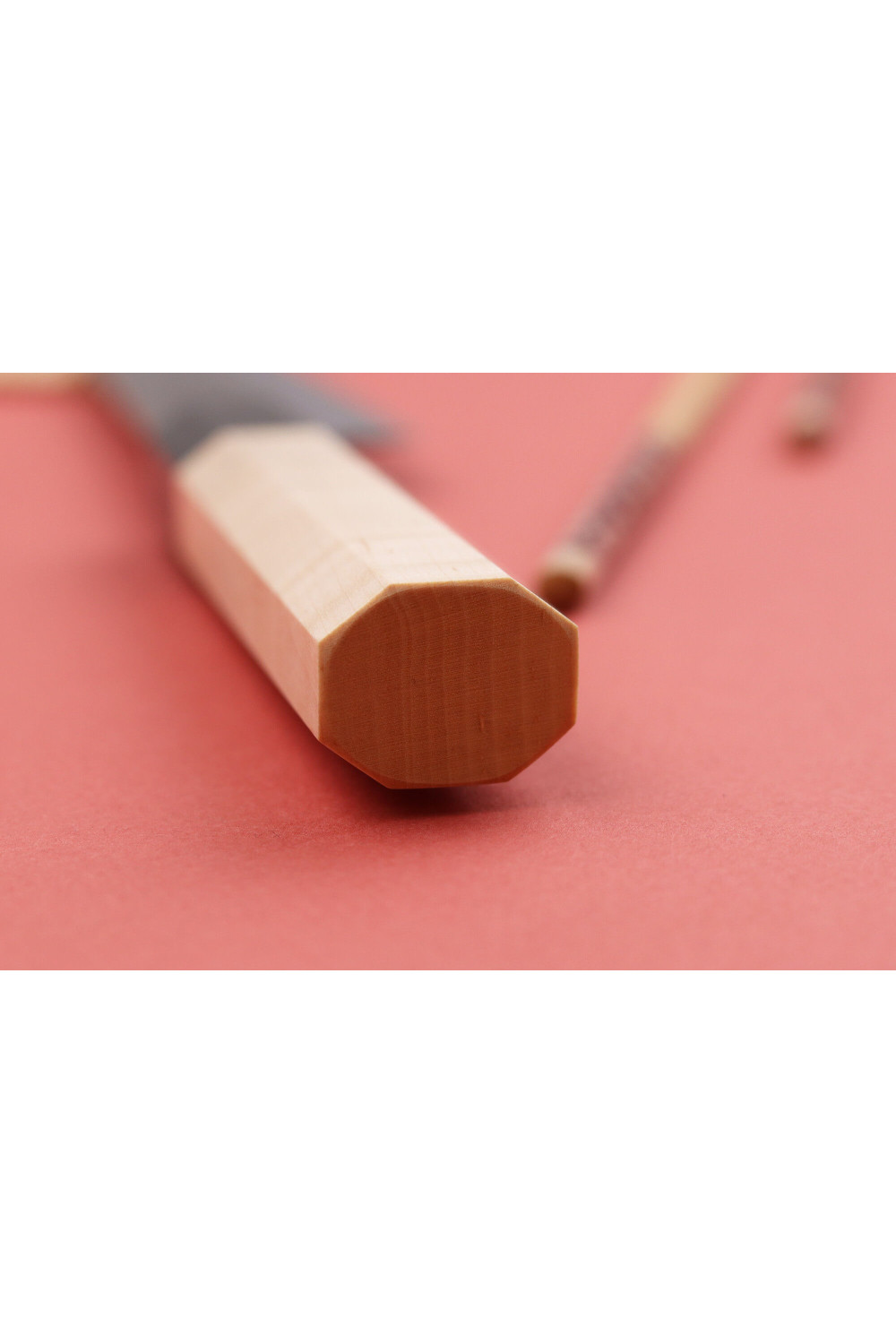
The knife's octagonal handle is both comfortable and suitable for left- and right-handed cooks. This shape ensures ideal handling and is ideal for long cutting sessions.
Finally, the space where the blade fits into the handle is filled with wood pulp, making it watertight. This prevents water from cleaning and food from entering the handle.
How do I care for a forged Japanese knife?
This top-of-the-range Japanese knife has been crafted from high-quality materials, and should therefore be maintained with the utmost care.
As the blade is enriched with carbon, it should be washed exclusively by hand, avoiding the dishwasher and soaking in the sink. Use a mild soap and a non-abrasive sponge, avoiding wetting the knife handle. After cleaning, dry the knife immediately to remove all traces of moisture, then store it in a dry place.
Even if you take the utmost care of your knife, note that its blade may naturally change color slightly over time. The presence of carbon in the blade makes it highly reactive to external elements such as the acidity of certain foods or the level of humidity in the air. To protect the blade, apply a small amount ofoil from time to time.
Naoki Mazaki WS2 handcrafted knives are waiting for you on our site!






 By buying this product you can collect up to